

Metallotheca: opus posthumum, auctoritate & munificentia Clementis undecimi pontificis maximi e tenebris in lucem eductum : opera autem & studio Joannis Mariæ Lancisii archiatri pontificii illustratum
- Hardcover
- Rome: Ex officina Jo. Mariæ Salvioni, 1717-, 1719
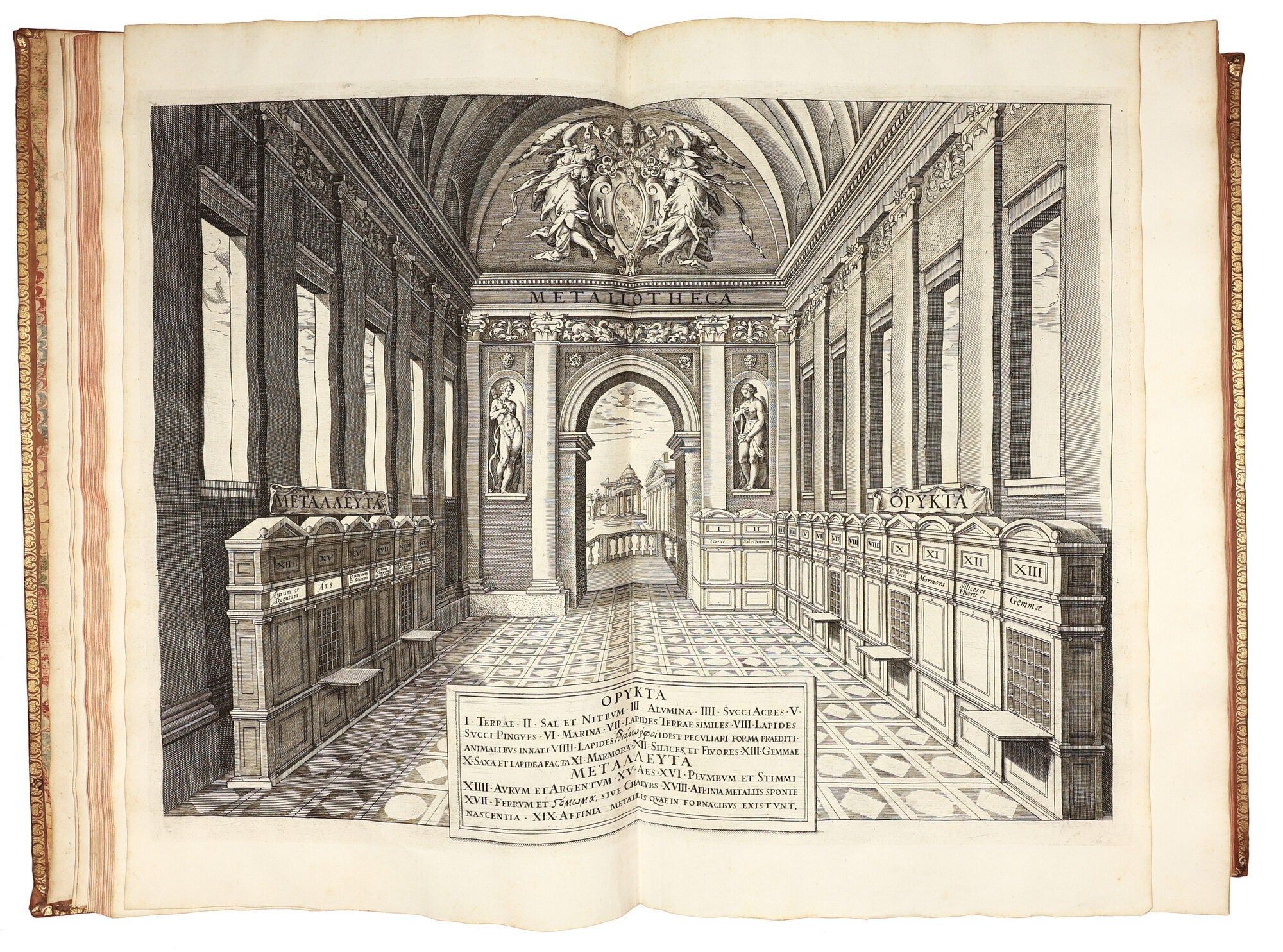
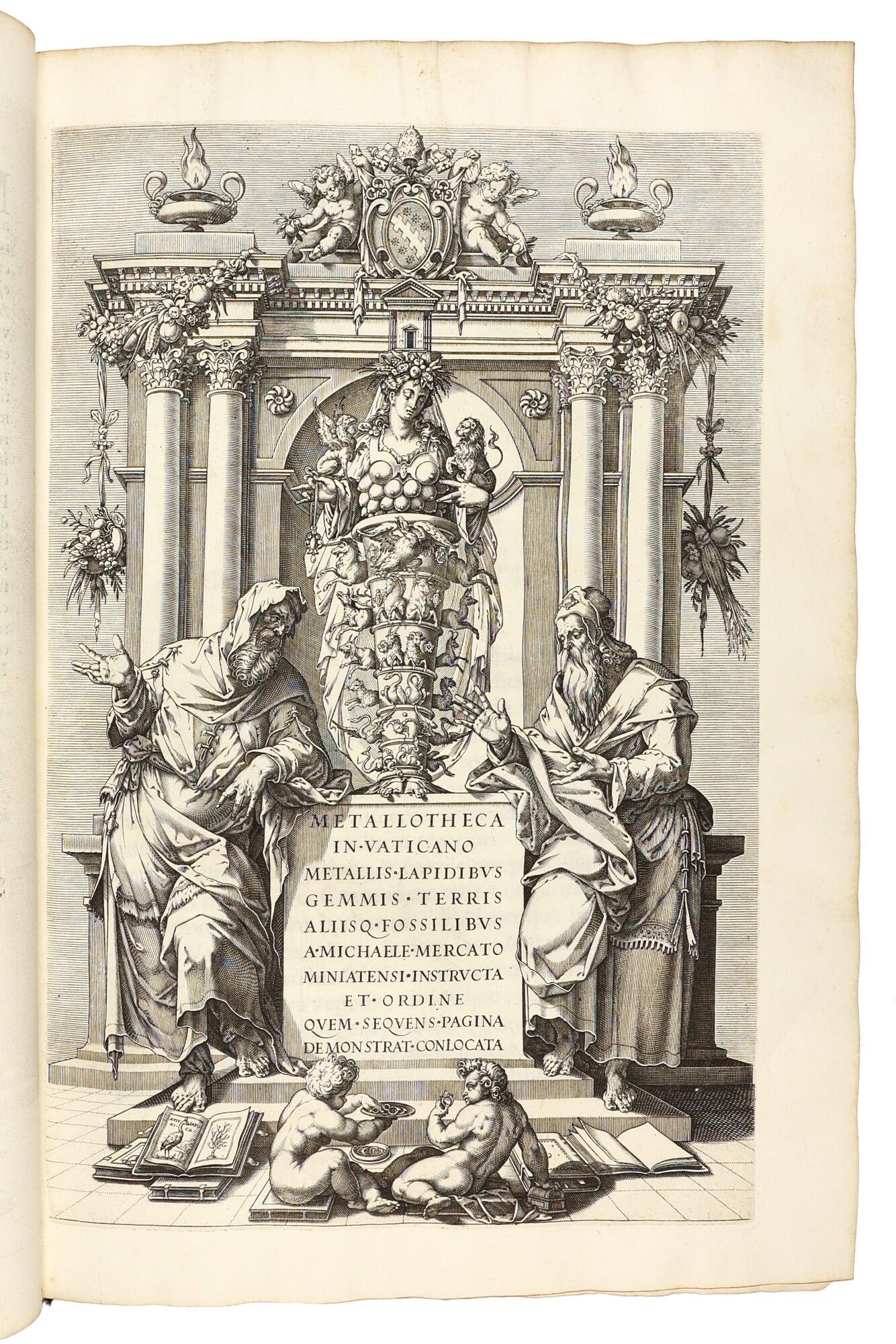
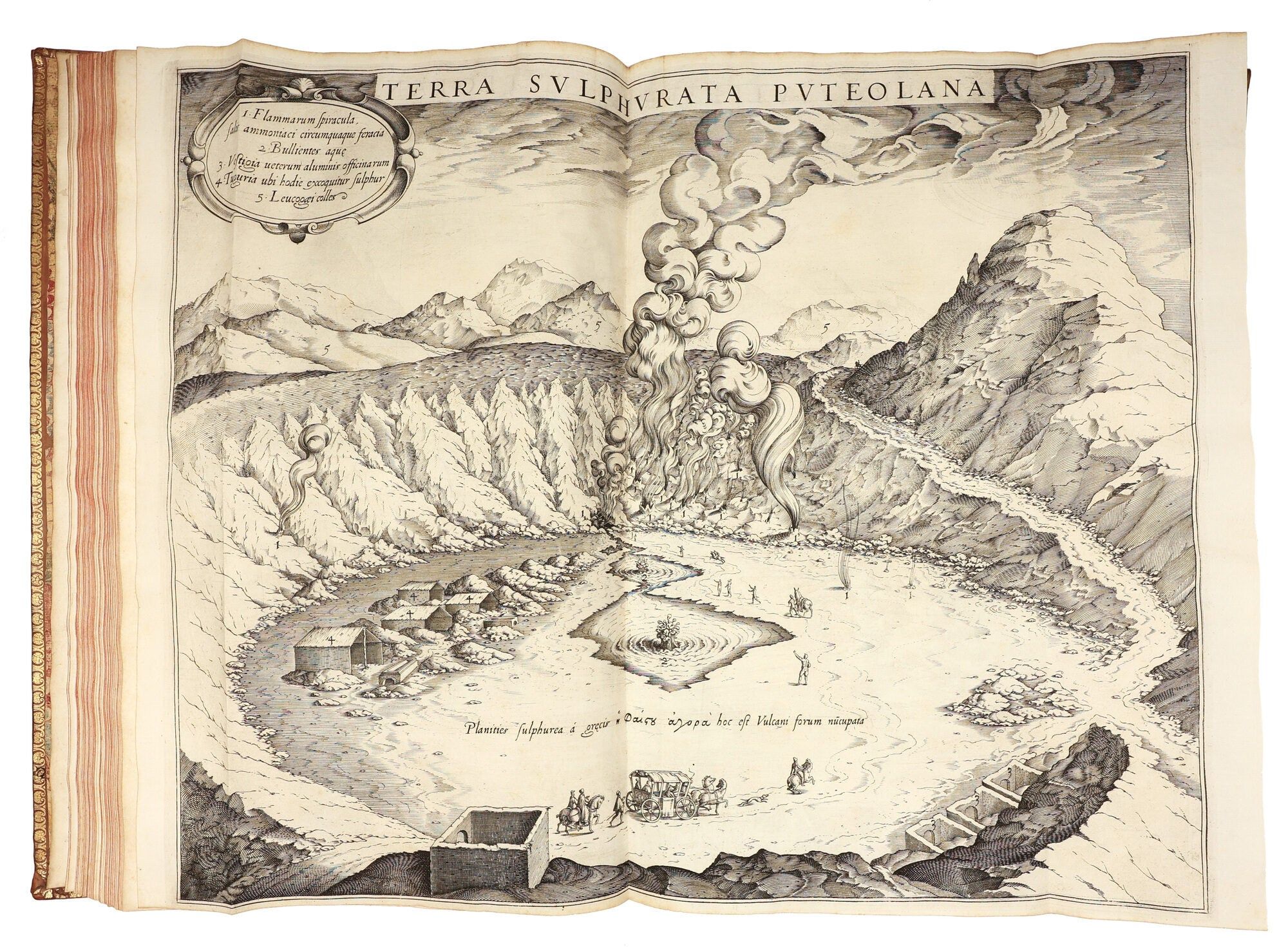
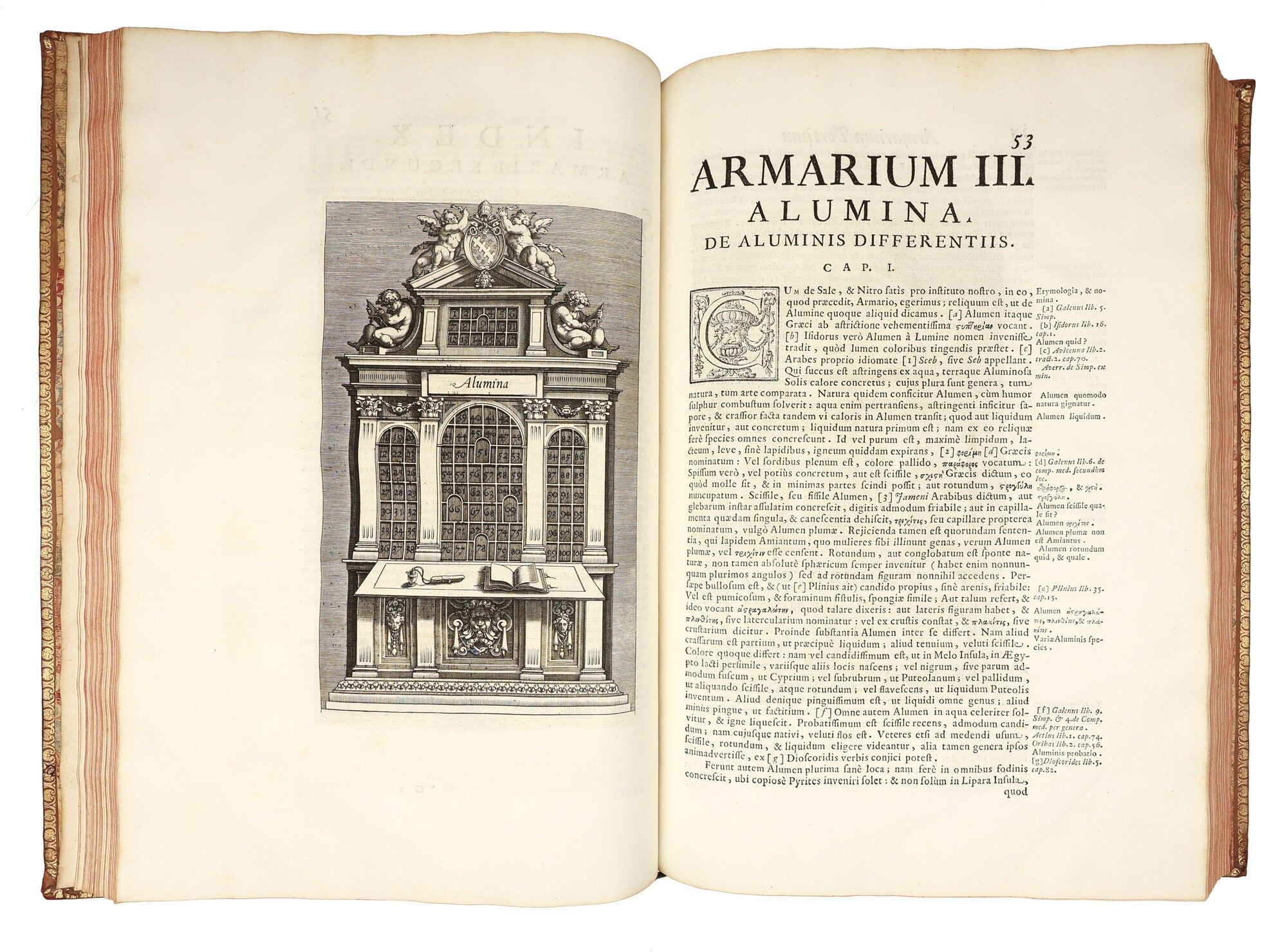
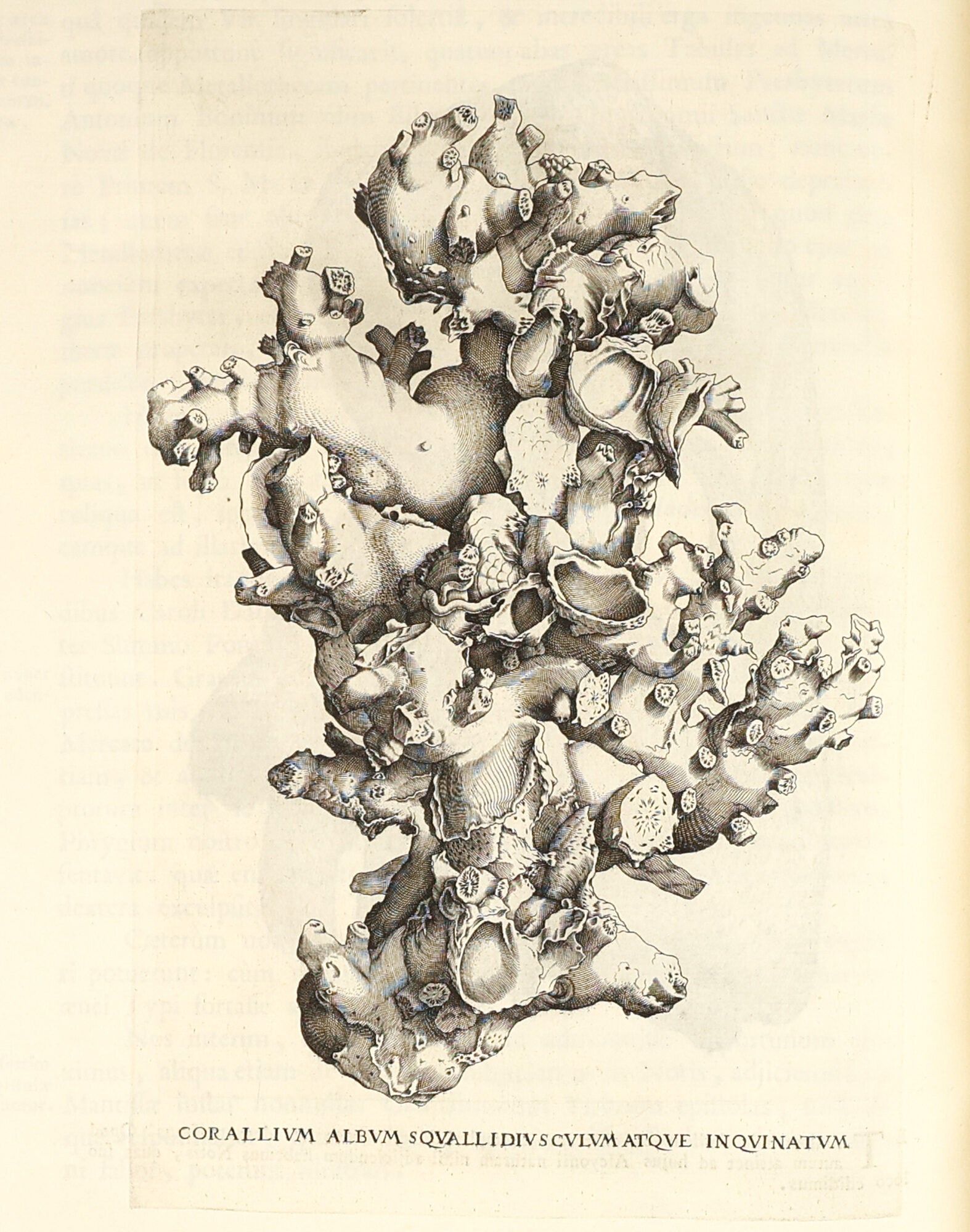
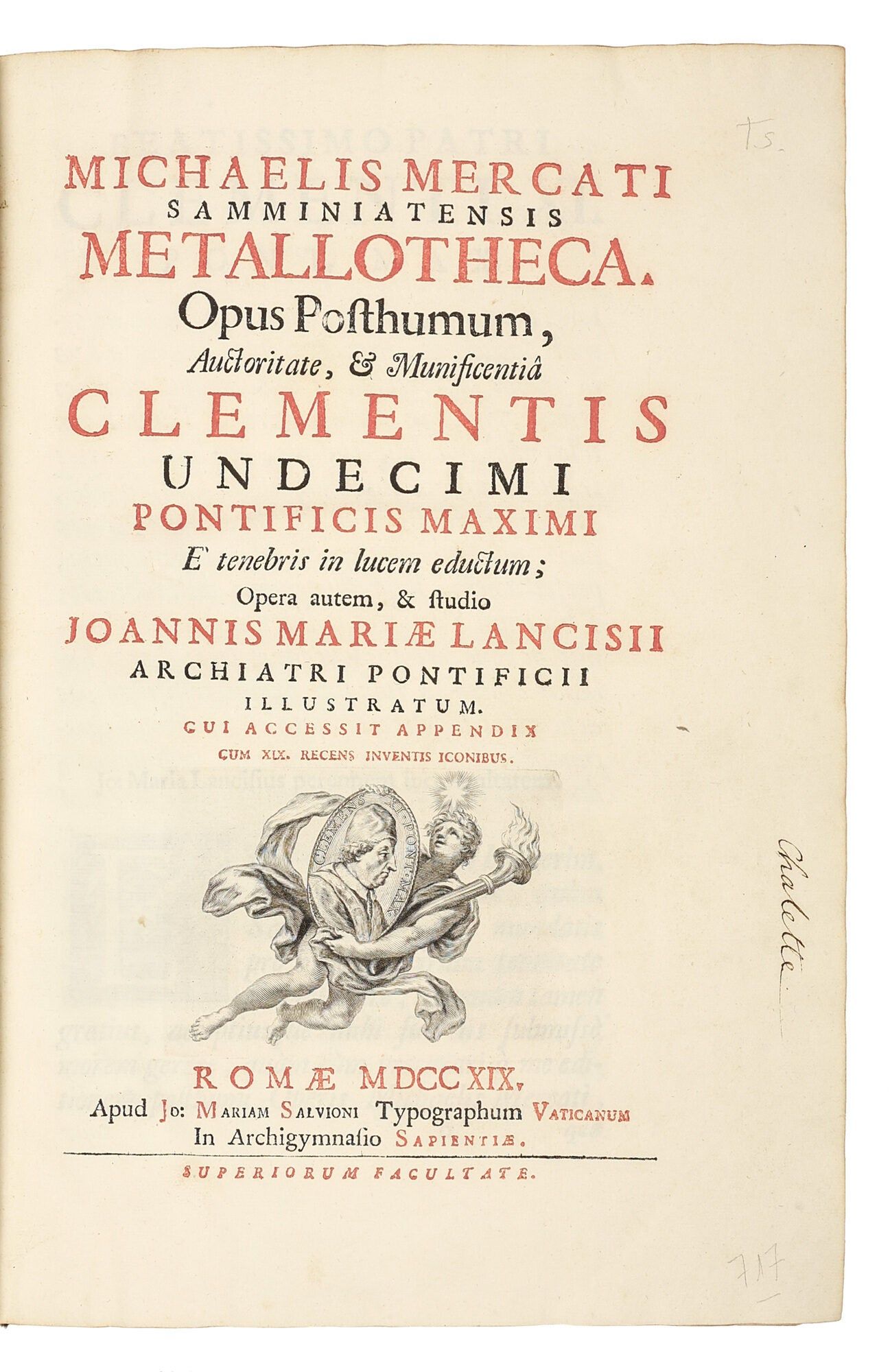
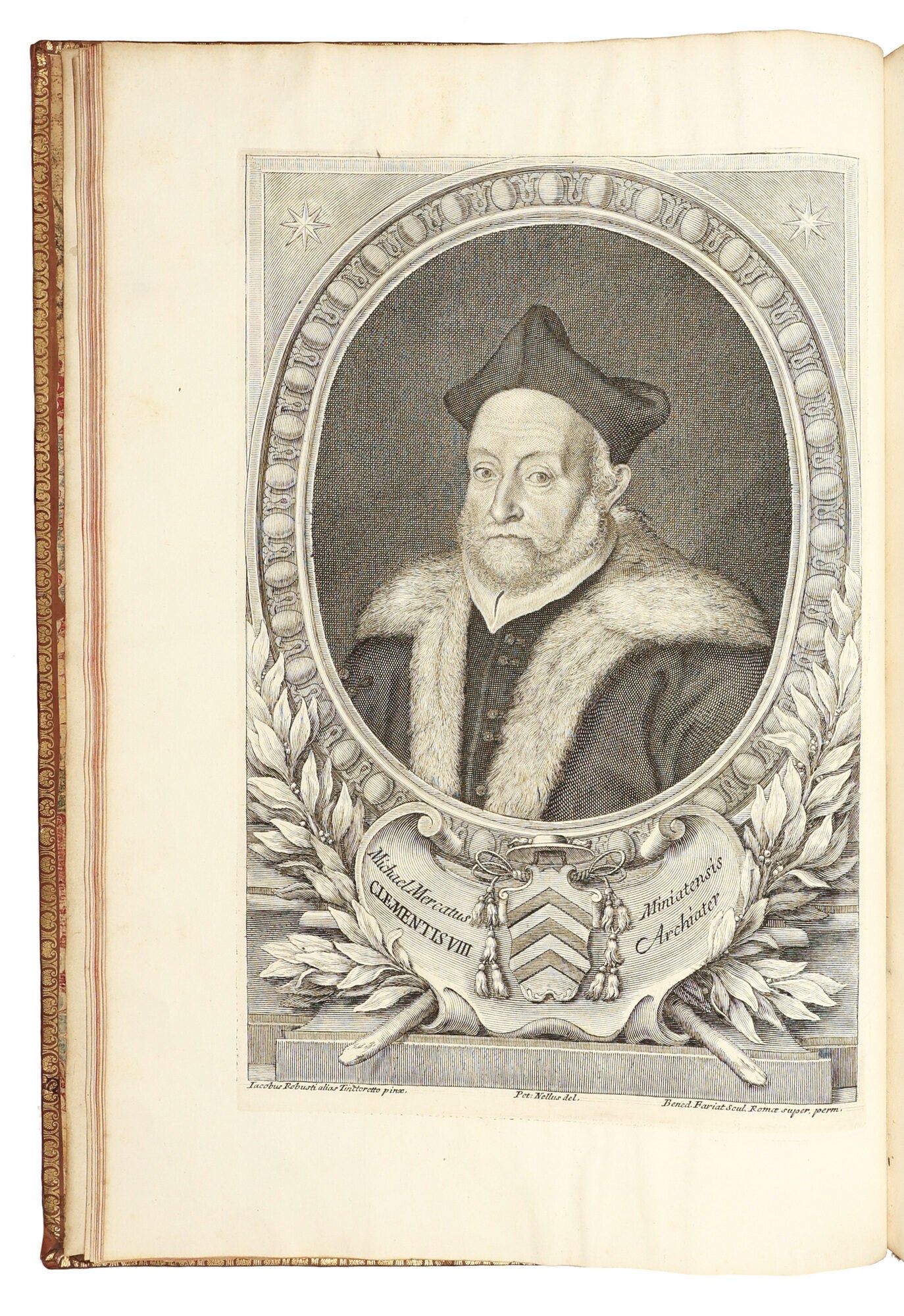
Rome: Ex officina Jo. Mariæ Salvioni, 1717-, 1719. SOLE EDITION. Second issue, with the 1719 cancel title page to the first part (to coordinate with the date of the 1719 supplement with which this copy is bound.). Hardcover. Fine. With added engraved plates: Part I: Portrait of Mercati, folding view of the museum, Cabinet I, folding view of the mines of Pozzuoli, a coral (at p. 101). Part II: portrait of Lancisi. (The engraved frontis. with portrait of Pope Clement XI, the engraved t.p., and the other armaria are printed on leaves integral to the collation). An excellent copy, with a little light toning to scattered leaves and sporadic faint soiling in the upper margin. Bound in contemporary blond calf, boards gilt ruled, spine gilt, deft repairs to the leather of the boards. First edition of Michele Mercati's illustrated catalogue of the Vatican mineralogical collection, "a pioneering endeavor in the organized display of scientific specimens" (Nancy Siraisi, Rome Reborn, p. 194). Mercati's book, although only half-finished at the author's death in 1593, offers a valuable example of the emerging genre of wunderkammern and museum catalogues. It is also valuable for comparison with the first published illustrated catalogue of a private collection of natural history specimens, Ferrante Imperato's "Historia Naturale" (Naples, 1599). Although the book remained in manuscript until the eighteenth-century, the "Metallotheca" is of great importance in the history of the establishment of collections of scientific specimens and the development of museums.
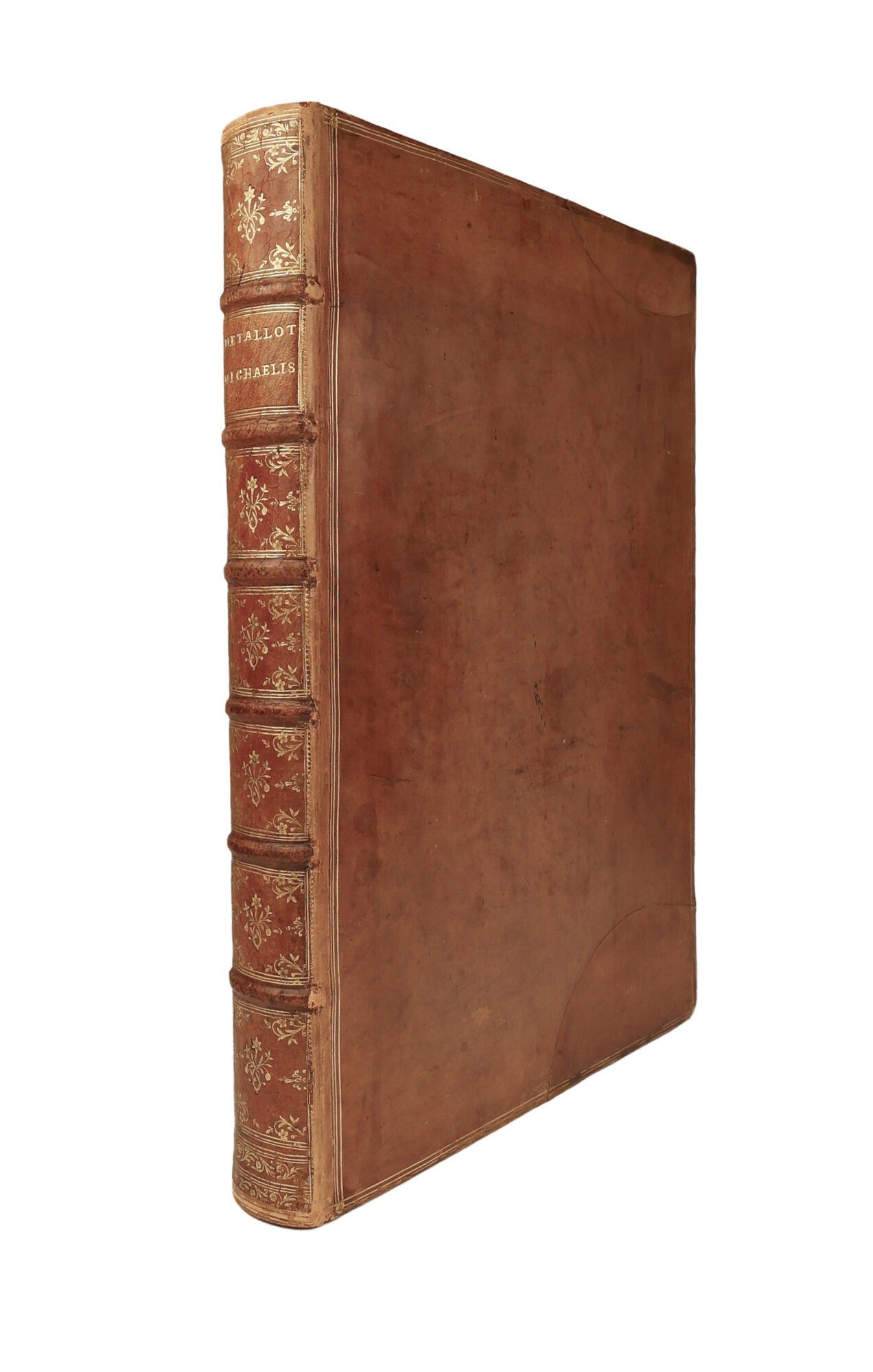
This is a large copy, bound in contemporary stiff vellum over boards (binding lightly soiled, corners bumped, split to foot of the front hinge), with the title and author's name tooled in gold in the second compartment of the spine. There is light foxing, mostly marginal, to a number of leaves, and some instances of heavier foxing or light browning (e.g. gatherings R-T, X-Y, Hh-Ii, Zz and the index); Leaf C1 is stained, the plate of Pozzuoli is lightly tanned.
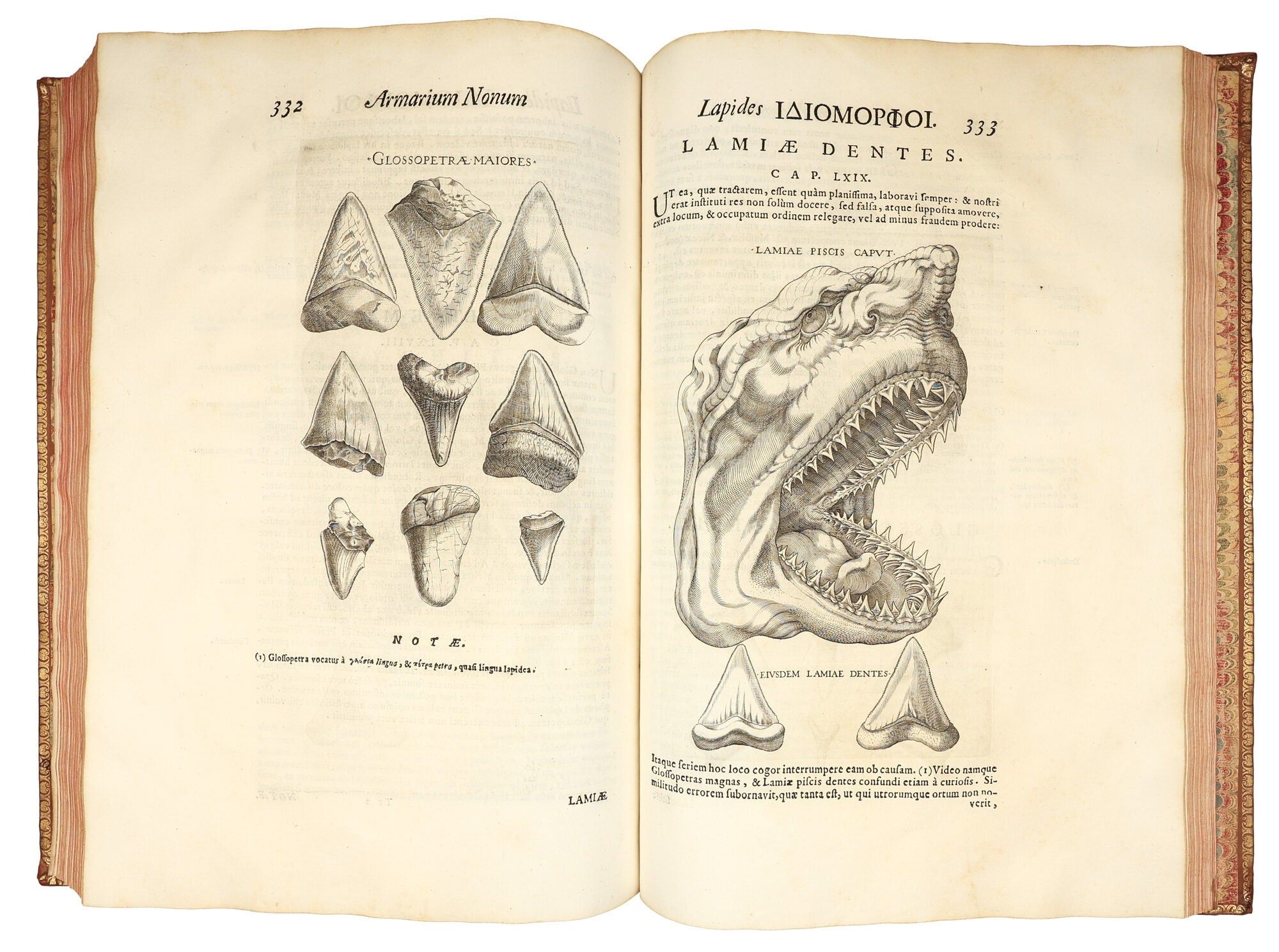
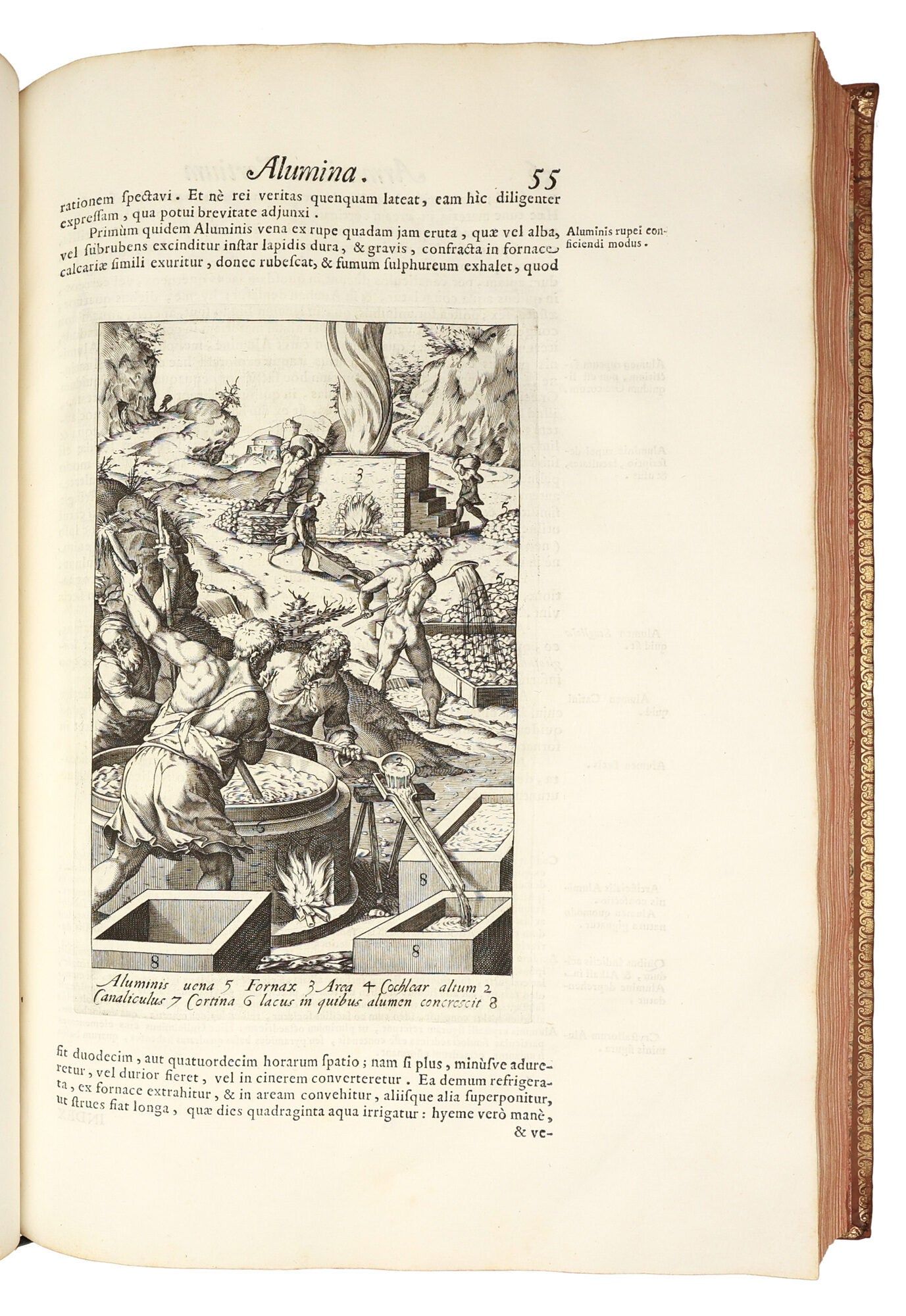
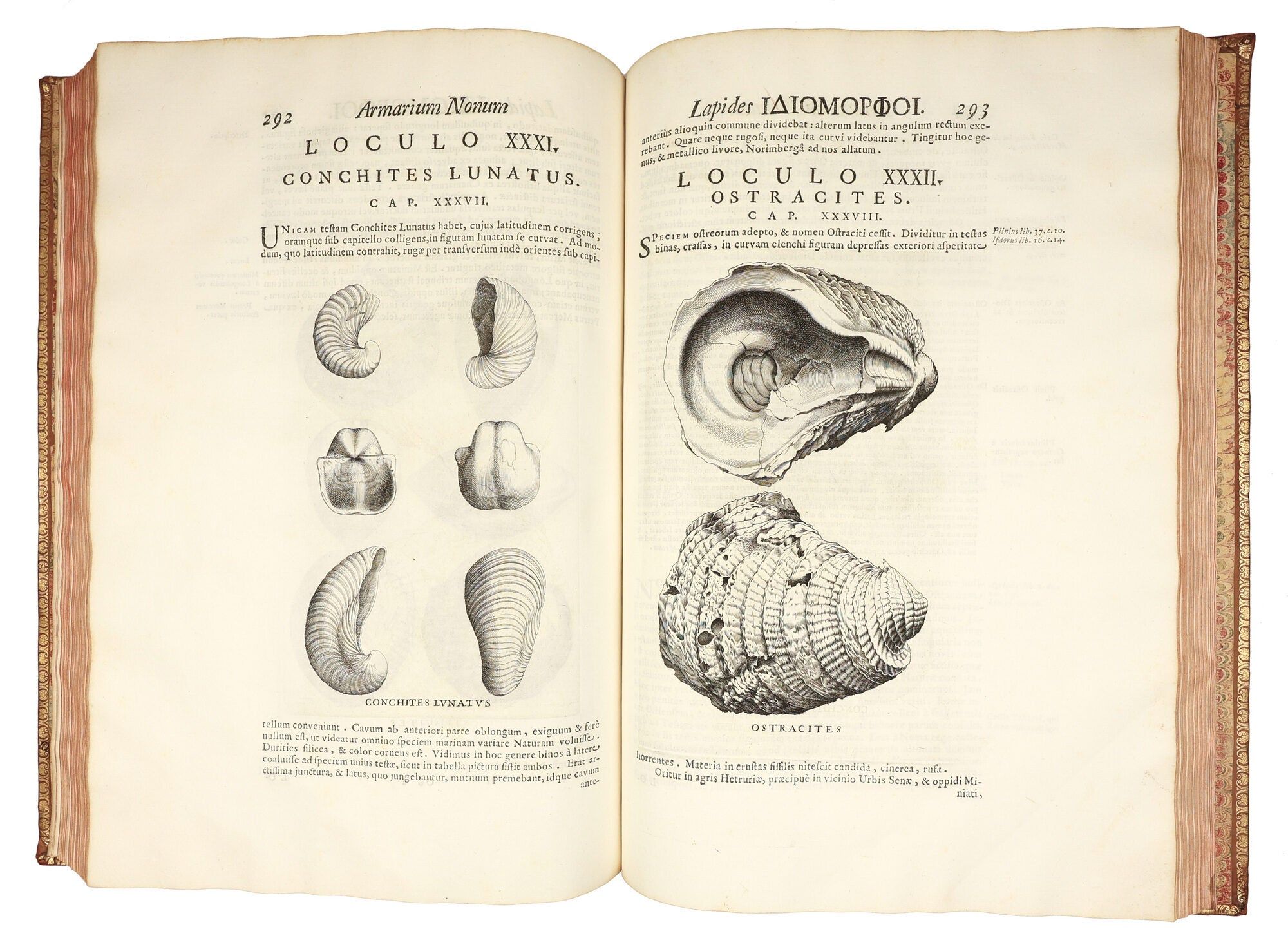
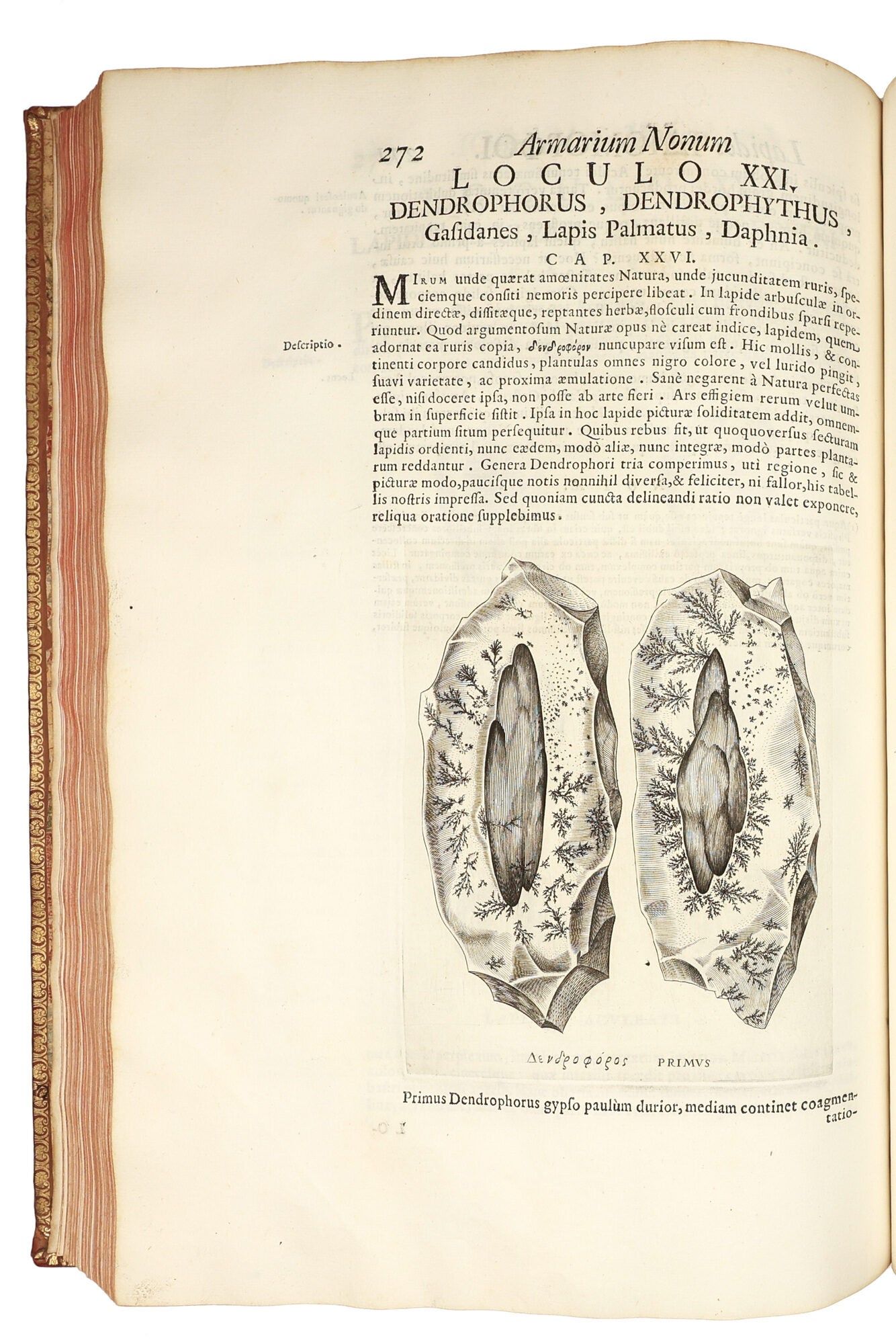
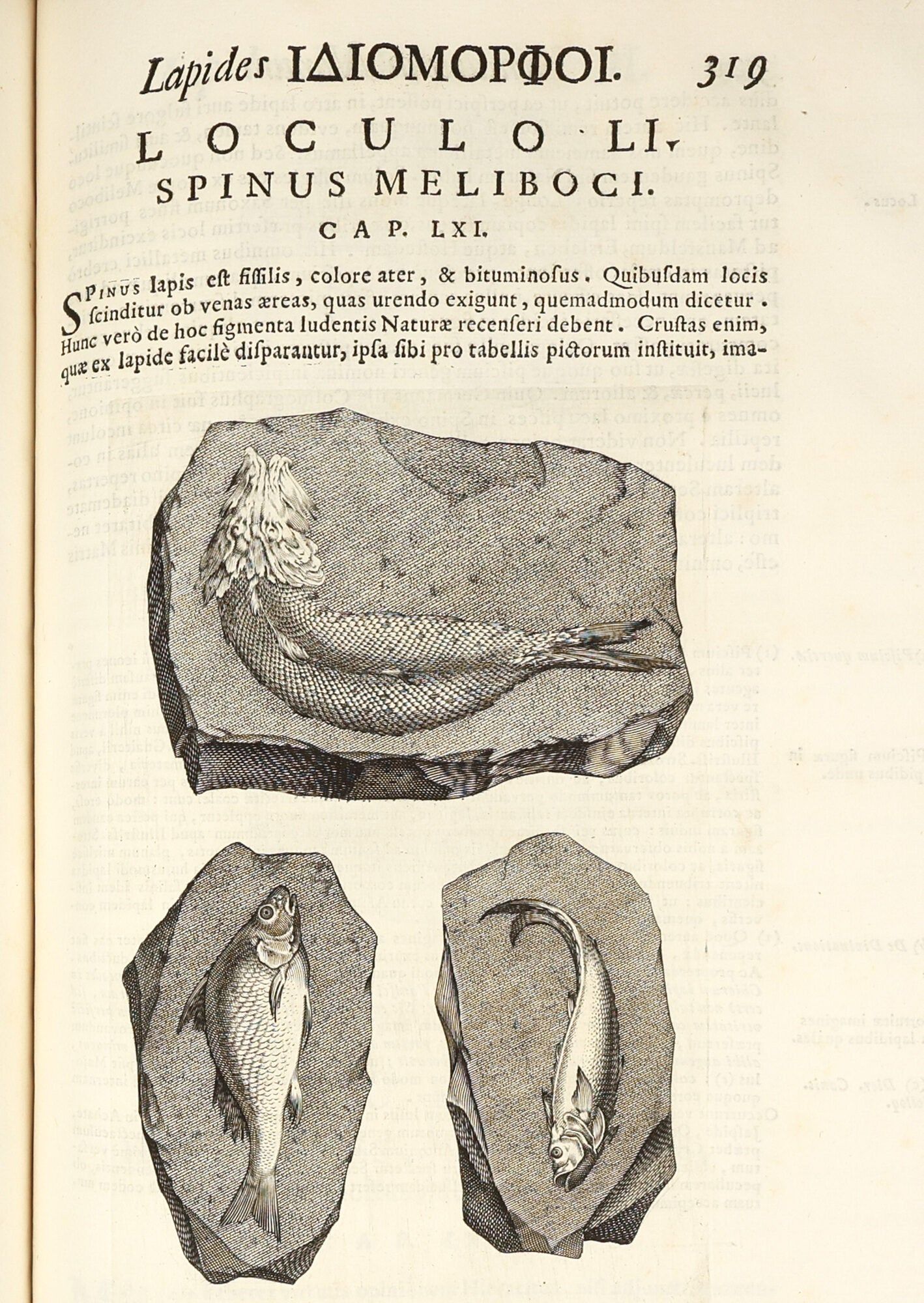
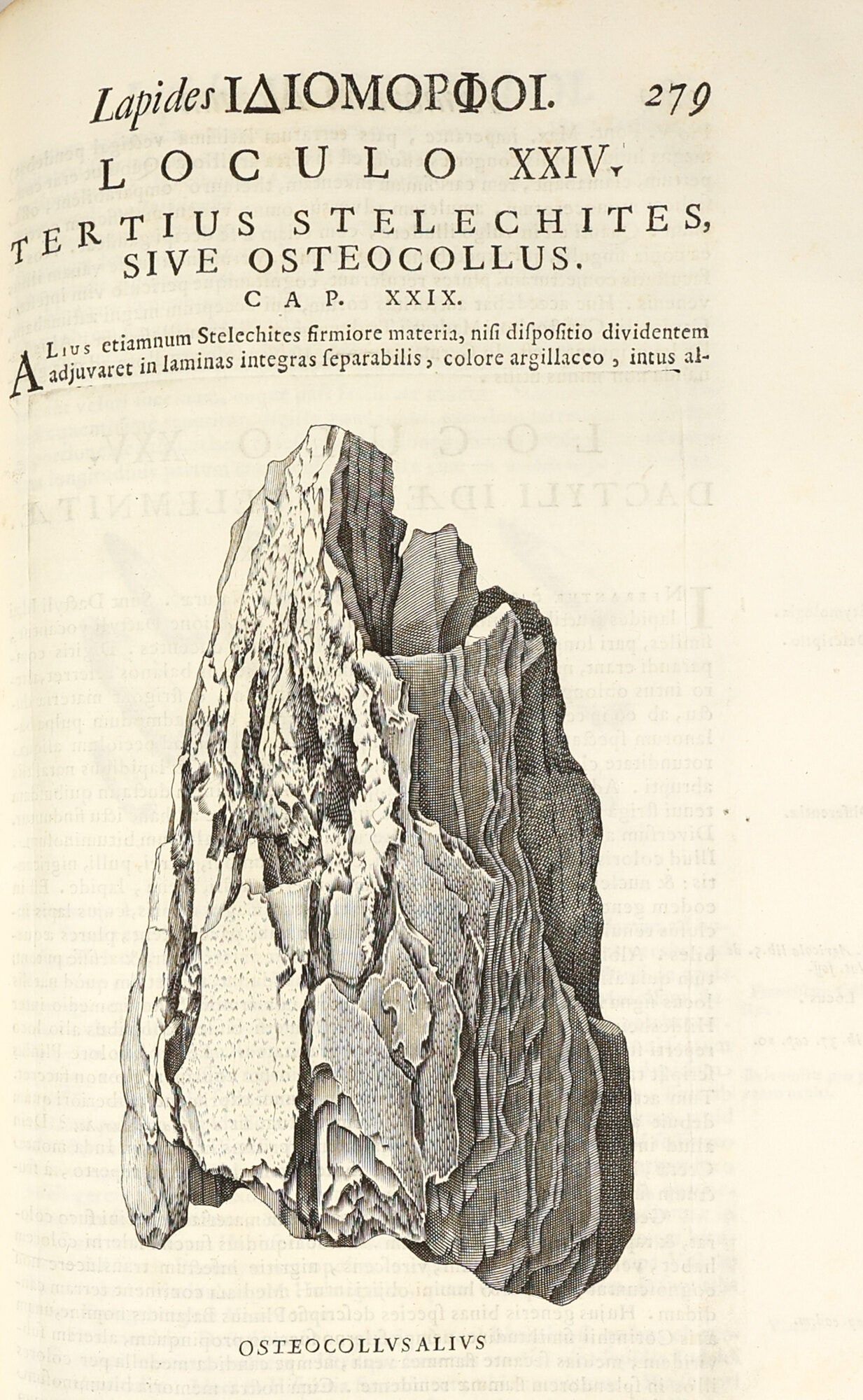
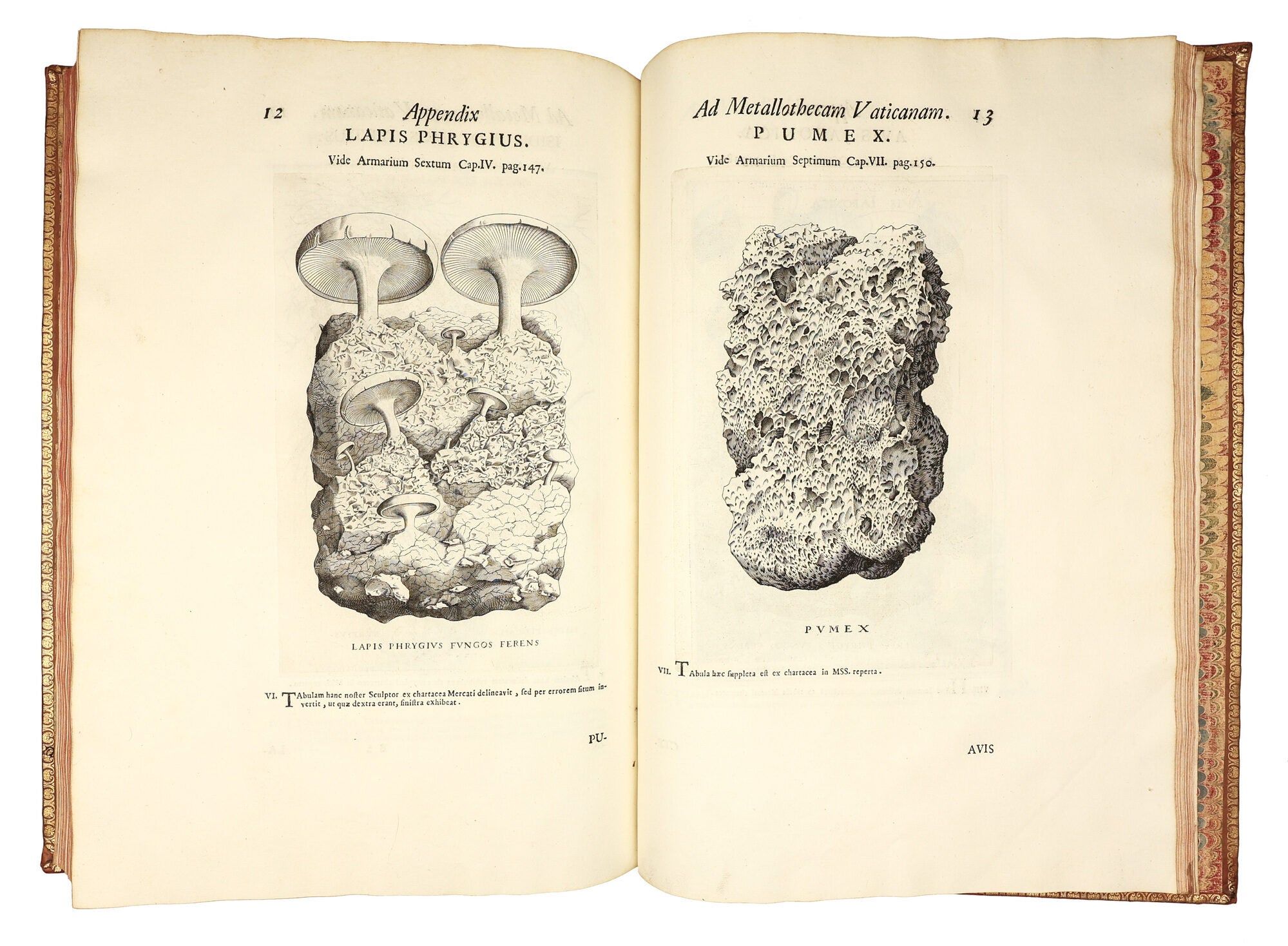
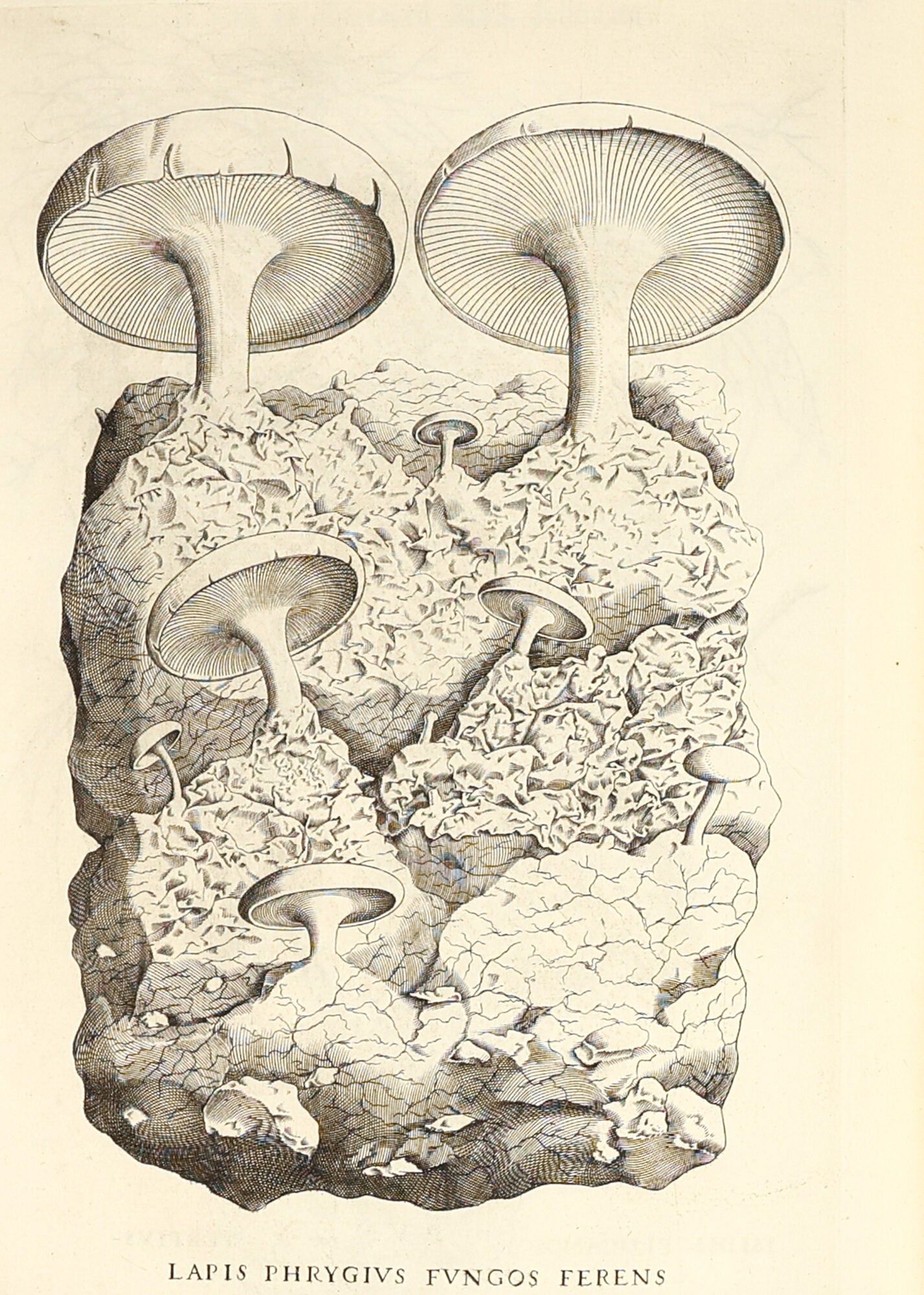
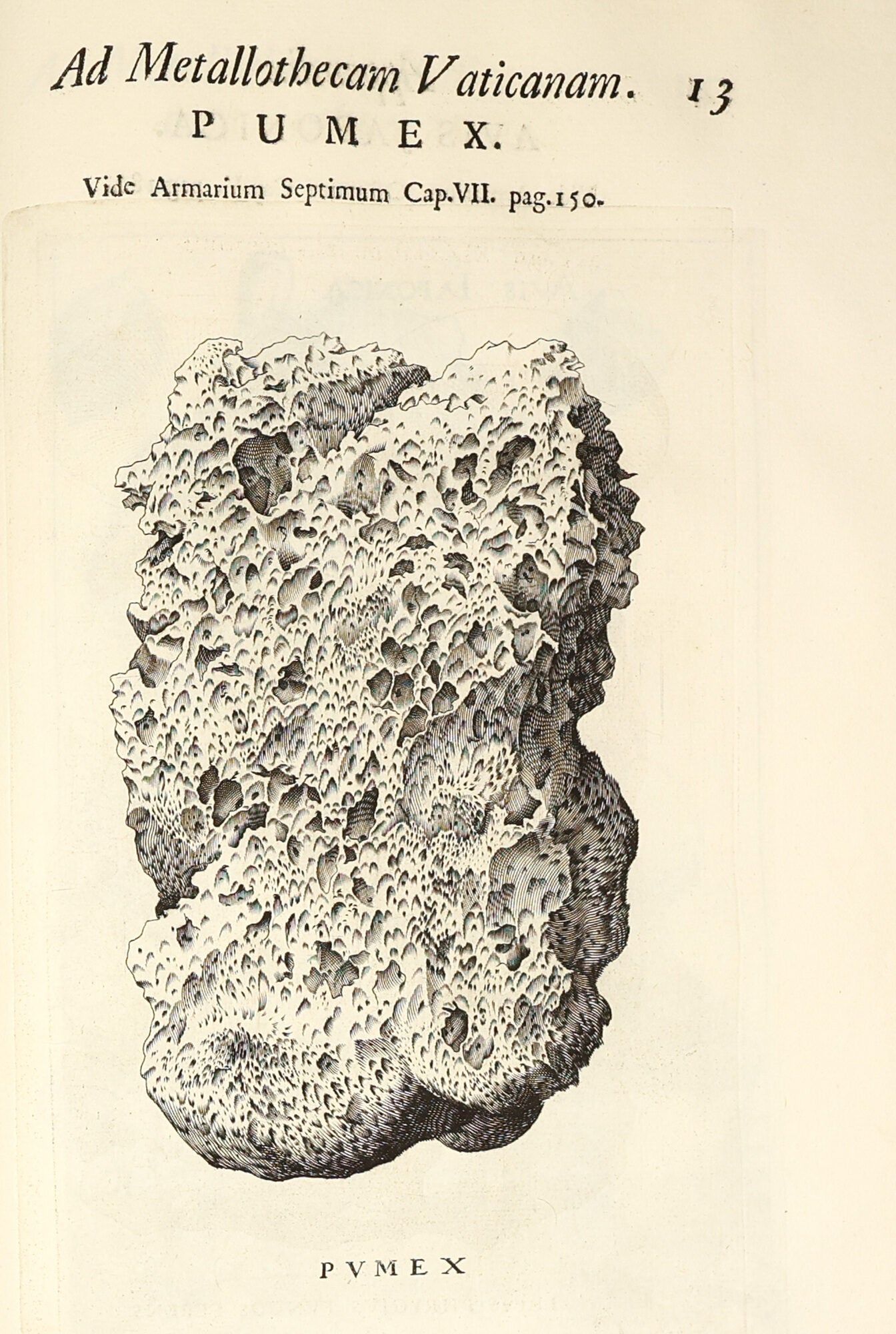
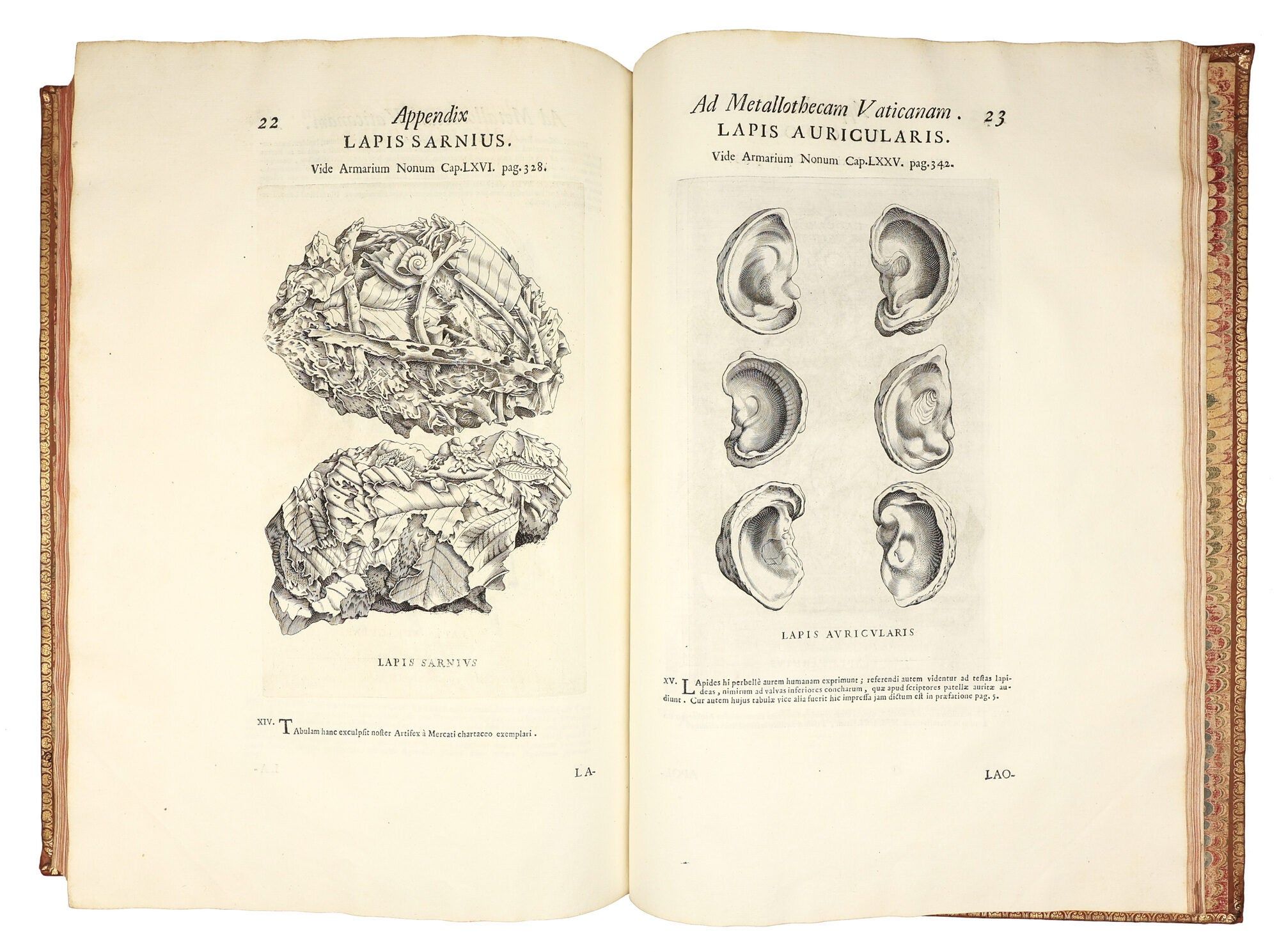
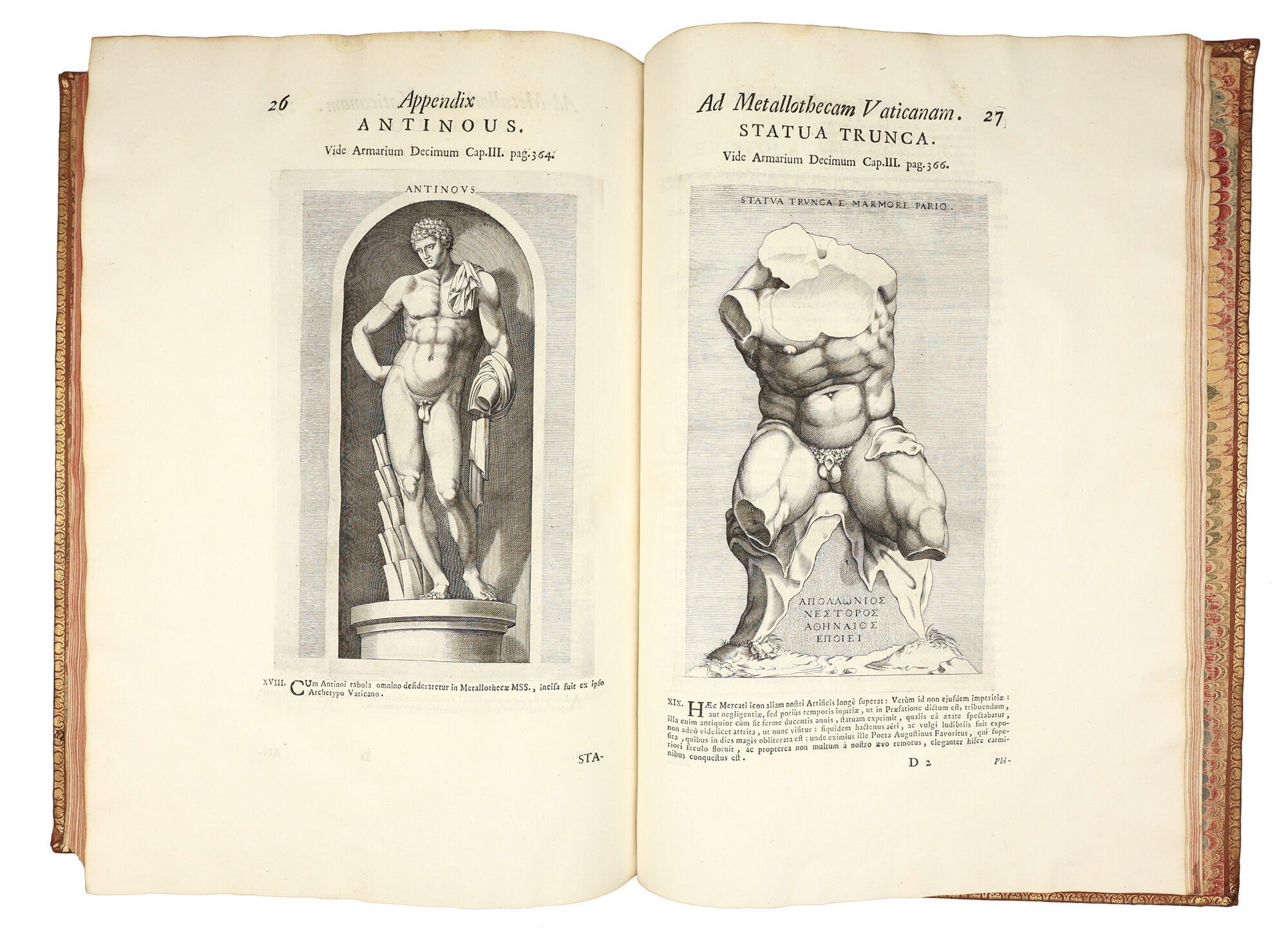
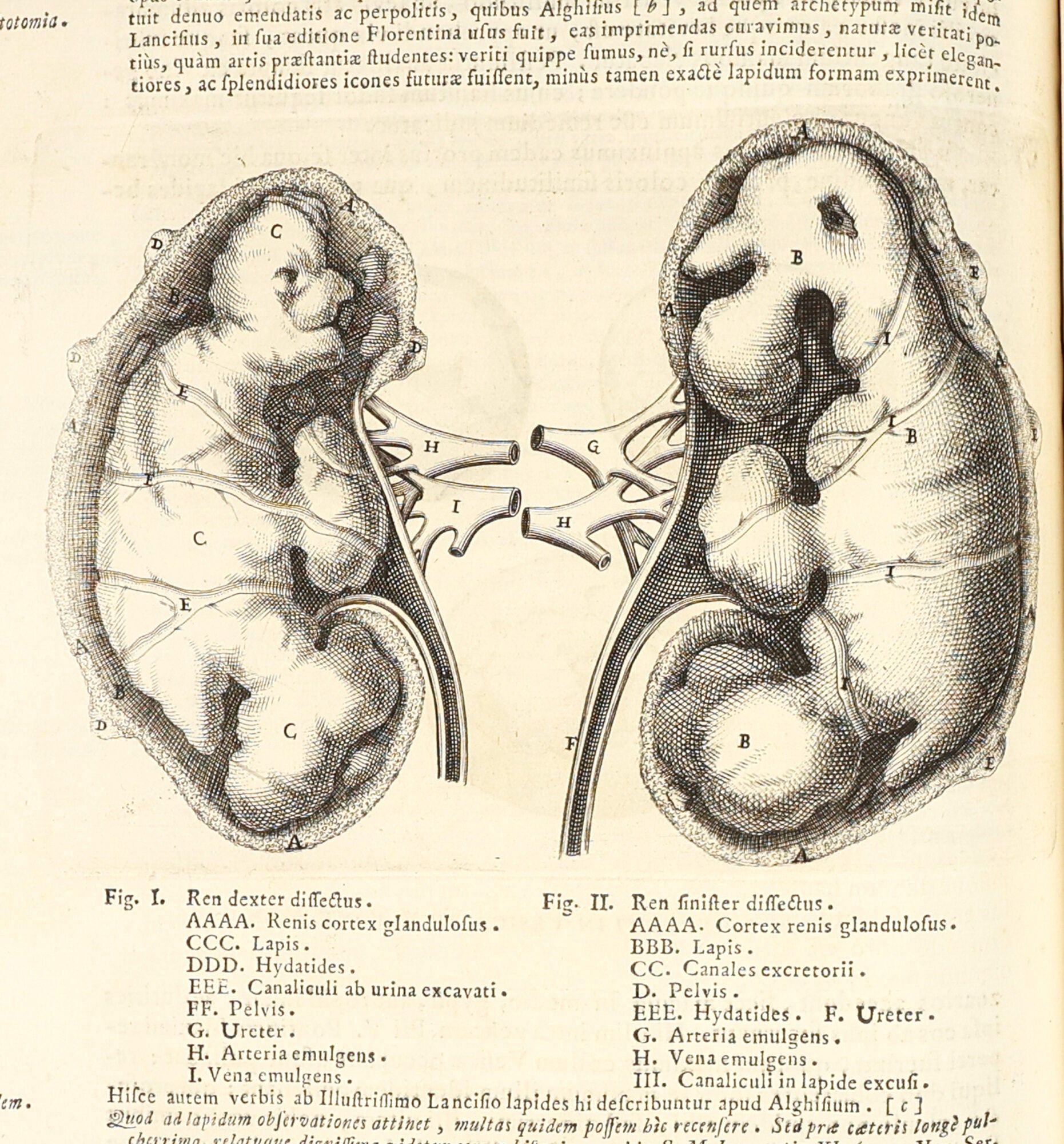
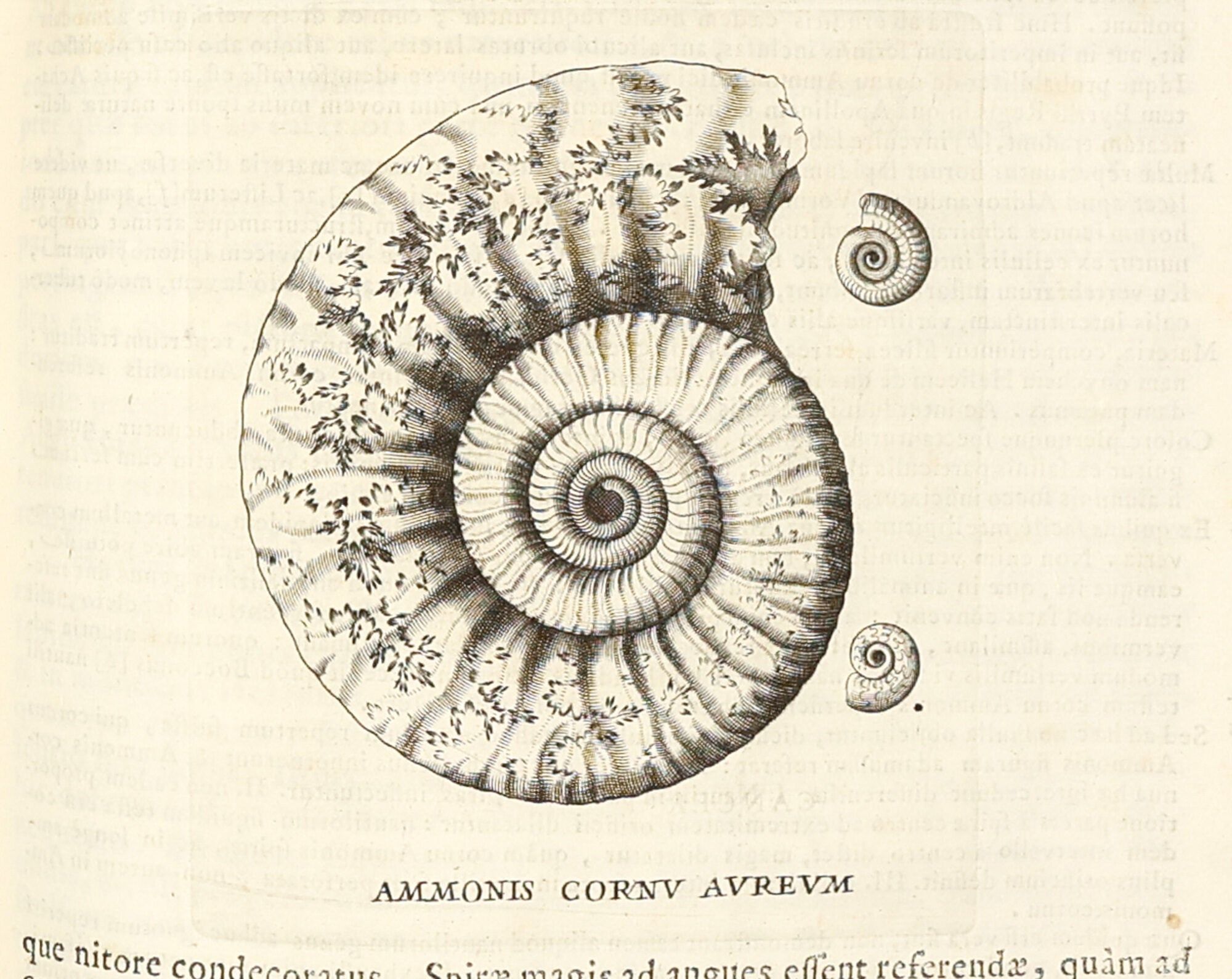
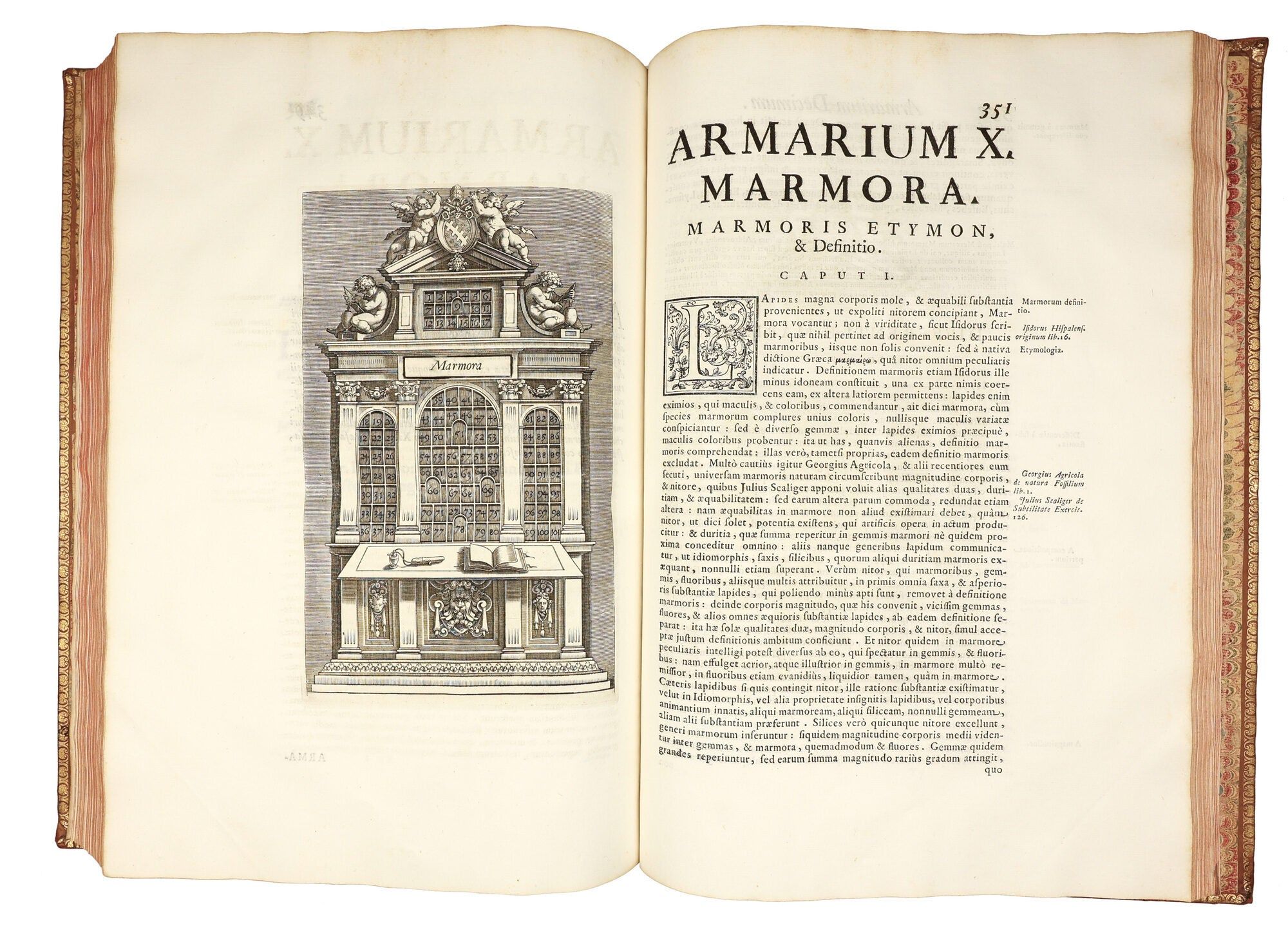
The text is illustrated with 150 fine engravings of rocks, minerals, fossils, and corals, all rendered in marvelous detail (the 20 in the supplement are repeated or re-engraved.) As this was the Vatican mineralogical collection, Mercati has included a number of marble statues from the Vatican collections, including the Belvedere torso and the Laocoön. The illustrations of glossopetrae (fossilized sharks' teeth) and the head of a shark (Lamia) are of particular importance as the original plates for the engravings, unpublished but available to artists and scientists, were used by Nicolaus Steno in his "Canis carcariae dissectum caput" (1667).
"Michele Mercati was born to a wealthy family in San Miniato, between Pisa and Florence, Italy. His father was a prominent physician and his grandfather was a noted humanist and philosopher who moved in the highest scholarly circles. Mercati studied first in San Miniato, then enrolled in the University of Pisa for his degree in Philosophy and Medicine. There he studied under Andrea Cesalpino (1519-1603), a celebrated physician and botanist, and later to be the author of De Metallicis ('On Minerals') (1596). The two became lifelong friends. Mercati earned his degree in 1561 and opened a medical practice in Rome, where he so distinguished himself during an epidemic there that Pope Pius V called him to the Vatican and offered him the post of Prefect of the Vatican Botanical Gardens. In 1577 Mercati was officially received among the "familiars" of Pope Gregory XIII who, having learned of Mercati's passion for mineralogy, suggested that he create a natural history museum inside the Vatican, focusing on minerals. Mercati was delighted by this idea and worked for many years building the collection while serving as Chief Physician under a succession of Popes. He had 19 large, expensive, custom-made cabinets constructed to house the collection in a room in the Pio-Clementine Museum. The collection eventually ranked among the largest and best in all of Europe.
"Mercati spent years writing a scholarly description of the collection and having 127 high-quality copper-plate engravings of specimens prepared, but by the time of his death he had managed to cover only the first nine cabinets containing the non-metallic minerals. His manuscript and engravings were claimed by his relatives and placed in storage, and his magnificent collection of minerals was eventually reduced to nothing by pilferage. The manuscript and its illustrations were rediscovered and published as Metallotheca Vaticana in 1717."(Mineralogical Record)
Collation: Part I: π4 (π1 blank, π 2 half-title, π3 engraved frontis., π4 letterpress t.p.), b-f4 (f4 engraved t.p.), g-h4, A-Z4, Aa-Zz4, Aaa-Ccc4, π2 (errata and register). Part II: π1, A-G4 (complete with blank leaf G4).
This is a large copy, bound in contemporary stiff vellum over boards (binding lightly soiled, corners bumped, split to foot of the front hinge), with the title and author's name tooled in gold in the second compartment of the spine. There is light foxing, mostly marginal, to a number of leaves, and some instances of heavier foxing or light browning (e.g. gatherings R-T, X-Y, Hh-Ii, Zz and the index); Leaf C1 is stained, the plate of Pozzuoli is lightly tanned.
The text is illustrated with 150 fine engravings of rocks, minerals, fossils, and corals, all rendered in marvelous detail (the 20 in the supplement are repeated or re-engraved.) As this was the Vatican mineralogical collection, Mercati has included a number of marble statues from the Vatican collections, including the Belvedere torso and the Laocoön. The illustrations of glossopetrae (fossilized sharks' teeth) and the head of a shark (Lamia) are of particular importance as the original plates for the engravings, unpublished but available to artists and scientists, were used by Nicolaus Steno in his "Canis carcariae dissectum caput" (1667).
"Michele Mercati was born to a wealthy family in San Miniato, between Pisa and Florence, Italy. His father was a prominent physician and his grandfather was a noted humanist and philosopher who moved in the highest scholarly circles. Mercati studied first in San Miniato, then enrolled in the University of Pisa for his degree in Philosophy and Medicine. There he studied under Andrea Cesalpino (1519-1603), a celebrated physician and botanist, and later to be the author of De Metallicis ('On Minerals') (1596). The two became lifelong friends. Mercati earned his degree in 1561 and opened a medical practice in Rome, where he so distinguished himself during an epidemic there that Pope Pius V called him to the Vatican and offered him the post of Prefect of the Vatican Botanical Gardens. In 1577 Mercati was officially received among the "familiars" of Pope Gregory XIII who, having learned of Mercati's passion for mineralogy, suggested that he create a natural history museum inside the Vatican, focusing on minerals. Mercati was delighted by this idea and worked for many years building the collection while serving as Chief Physician under a succession of Popes. He had 19 large, expensive, custom-made cabinets constructed to house the collection in a room in the Pio-Clementine Museum. The collection eventually ranked among the largest and best in all of Europe.
"Mercati spent years writing a scholarly description of the collection and having 127 high-quality copper-plate engravings of specimens prepared, but by the time of his death he had managed to cover only the first nine cabinets containing the non-metallic minerals. His manuscript and engravings were claimed by his relatives and placed in storage, and his magnificent collection of minerals was eventually reduced to nothing by pilferage. The manuscript and its illustrations were rediscovered and published as Metallotheca Vaticana in 1717."(Mineralogical Record)
Collation: Part I: π4 (π1 blank, π 2 half-title, π3 engraved frontis., π4 letterpress t.p.), b-f4 (f4 engraved t.p.), g-h4, A-Z4, Aa-Zz4, Aaa-Ccc4, π2 (errata and register). Part II: π1, A-G4 (complete with blank leaf G4).
Details
Title
Metallotheca: opus posthumum, auctoritate & munificentia Clementis undecimi pontificis maximi e tenebris in lucem eductum : opera autem & studio Joannis Mariæ Lancisii archiatri pontificii illustratum
Author
MUSEUMS. MINERALS. FOSSILS. Mercati, Michele (1541-1593)
Binding
Hardcover
Condition
Fine
Publisher
Ex officina Jo. Mariæ Salvioni, 1717-: Rome
Date
1719
Edition
SOLE EDITION. Second issue, with the 1719 cancel title page to t