

Del cibo pitagorico ovvero erbacceo per uso de’nobili, e de’letterati
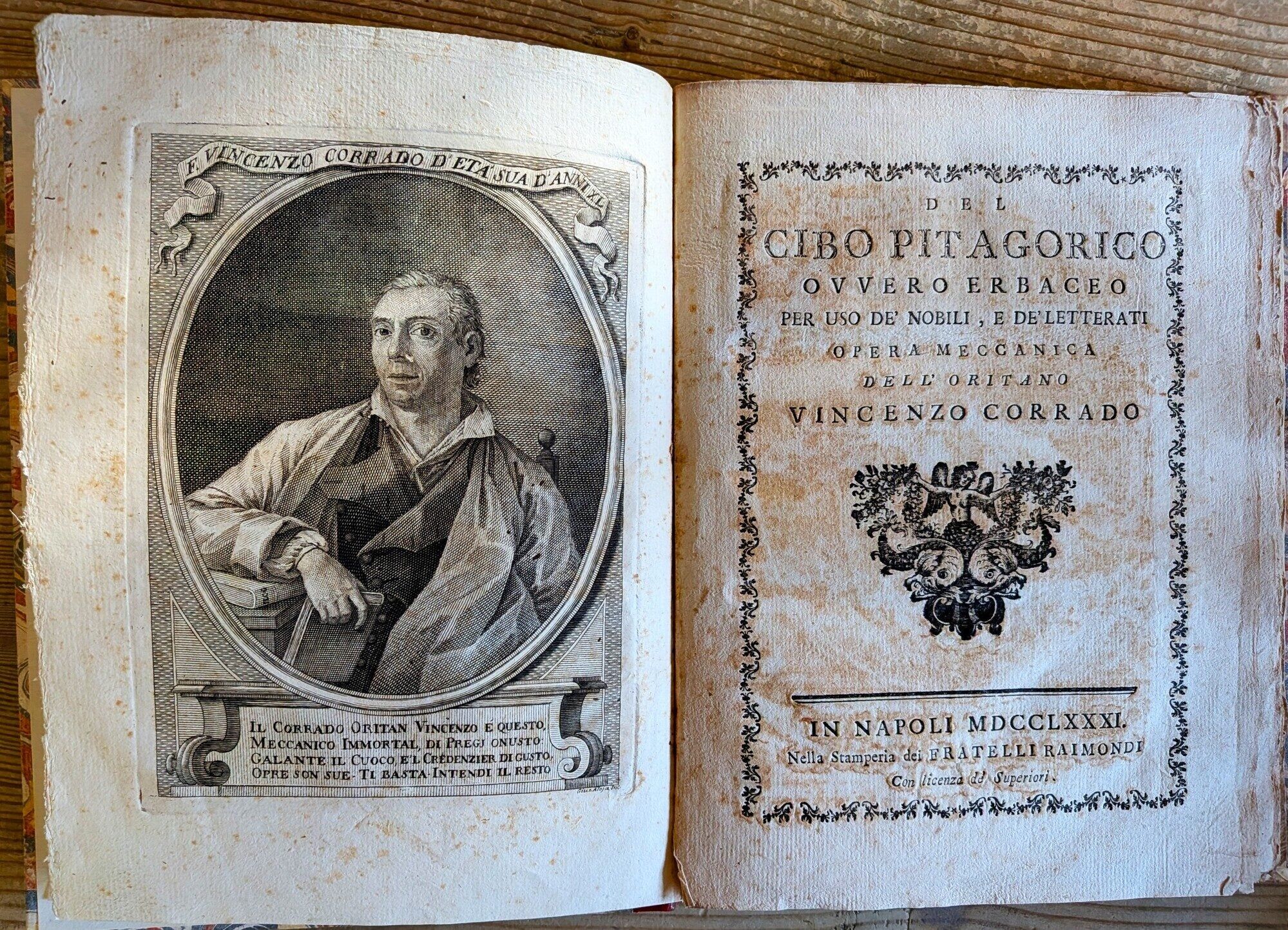
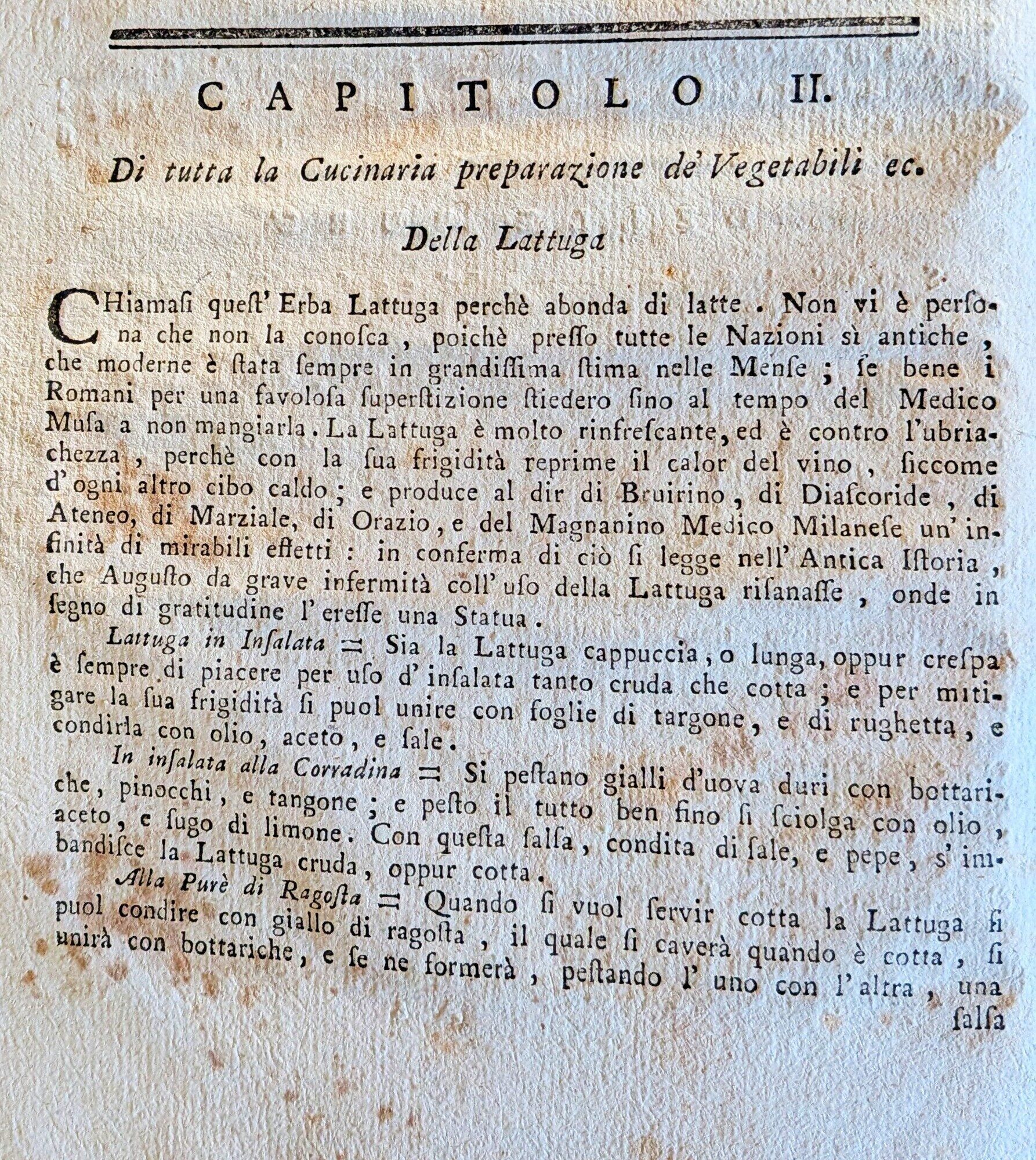
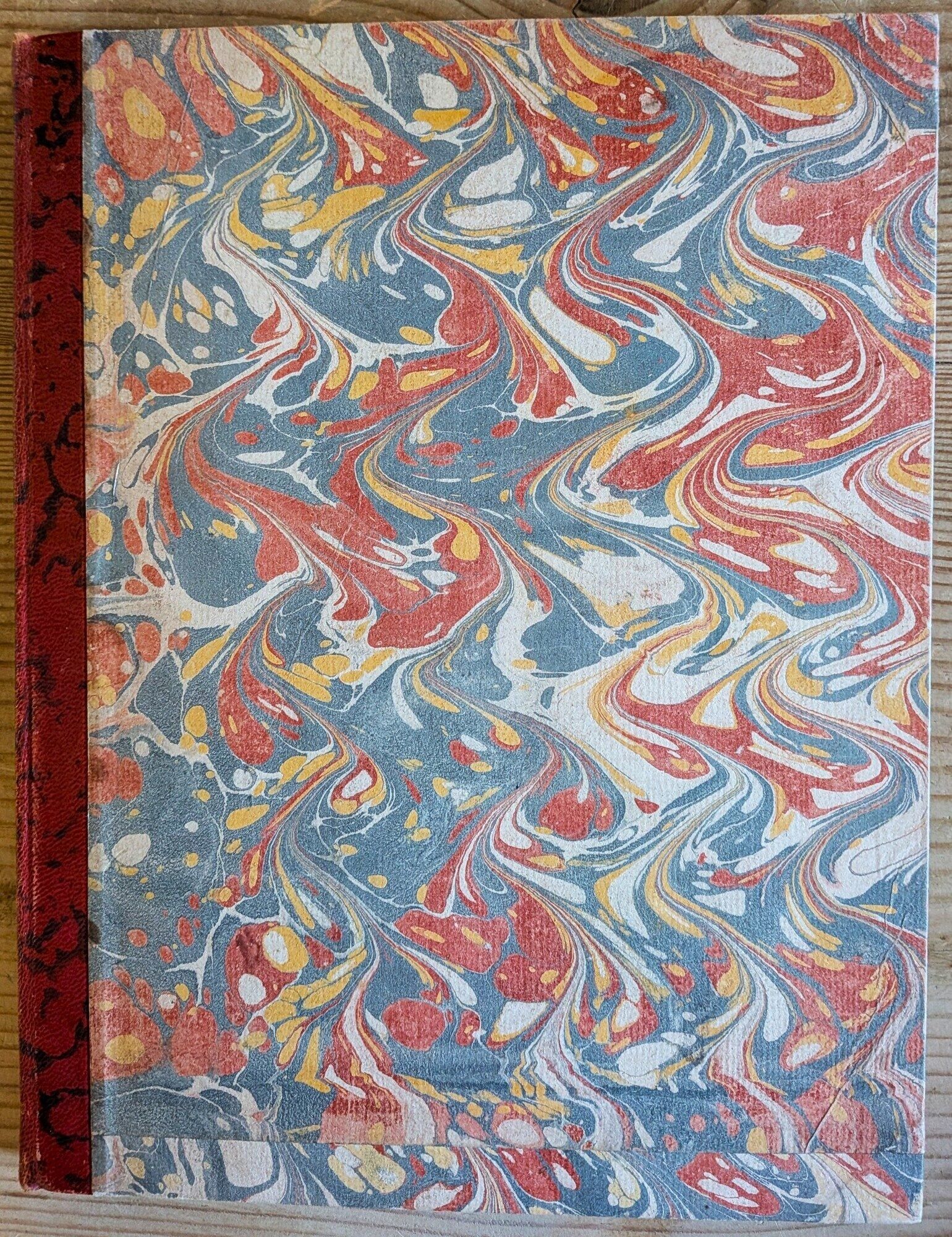
- Napoli: nella Stamperia dei Fratelli Raimondi, 1781
4to. 250 x 190 mm., [9 ¾ x 7 ½ inches]. [4] ff., 48 pp. Illustrated with an engraved portrait of the author by Giuseppe Aloja. Bound in early 20th century leather spine over marbled paper boards. Offset from portrait to the title-page, printed on thin paper with some foxing throughout. This copy with large margins and untrimmed.
First edition of Vincenzo Corrado’s (fl. 1773-1790) contribution to the enlightenment discussion of diet and health. For his attention to and appreciation of regional foods and for his recipes that required simple preparation and genuine ingredients, in his case foods from southern Italy, he is remembered as the father of the "Mediterranean diet" and a supporter of "vegetarian cuisine".
Corrado was a renowned chef, philosopher, and man of letters, who wrote numerous texts on gastronomic subjects, among which his well-known Cuoco galante published in 1773. This book gave particular emphasis tovitto pitagorico (pythagorean food). "Pythagorean food consists of fresh herbs, roots, flowers, fruits, seeds and all that is produced in the earth for our nourishment. It is so-called because Pythagoras, as is well known, only used such produce. There is no doubt that this kind of food appears to be more natural to man, and the use of meat is noxious" (Capatti). This book was the first to give the tomato a central role with 13 recipes.
The controversy over "vegetarianism" began in 1743 with the publication of Del Vitto Pitagorico by Antonio Cocchi, in which the author argues for the health benefits of a plant-based diet. His work elicited a rebuttal from Giovanni Bianchi the noted physician from Rimini, who in 1752 challenged the nutritional value of the vegetarian diet and questioned its suitable for the Italian people. Corrado was highly influenced by Cocchi and his Del cibo pitagorico is a testament to his devotion to health benefits of the vegetarian diet and a response to Bianchi’s claims.
The subject of vegetarianism was circulating in literary circles during mid-18th century and was highlighted in “Il Giorno” a satirical poem by the reformer and poet Giuseppe Parini (1729-1799). This work brought Parini to an international audience and propelled him into the literary society of Milan. In part of the poem Parini created a setting at a banquet and ferociously mocked the glutenous behavior of Milanese nobility and suggested they take up a diet of vegetables and grain, a more fitting regiment for a healthy society.
Rare in America: OCLC cites copies at Folger Library, Library of Congress, NYPL, and Lilly Library. Not cited in NUC.
Maria Paleari Henssler. Bibliografia Latino-Italiana di Gastronomia, p. 202. Lord Westbury. Handlist of Italian Cookery Books, p. 58. Katherin Bitting. Gastronomical Bibliography p. 101. Alberto Capatti and Massimo Montanari. Italian Cuisine: A Cultural History. Columbia University Press, 2003.
Details
Title
Del cibo pitagorico ovvero erbacceo per uso de’nobili, e de’letterati
Author
Corrado, Vincenzo
Condition
Unknown
Publisher
nella Stamperia dei Fratelli Raimondi: Napoli
Date
1781