

The Play of Animals
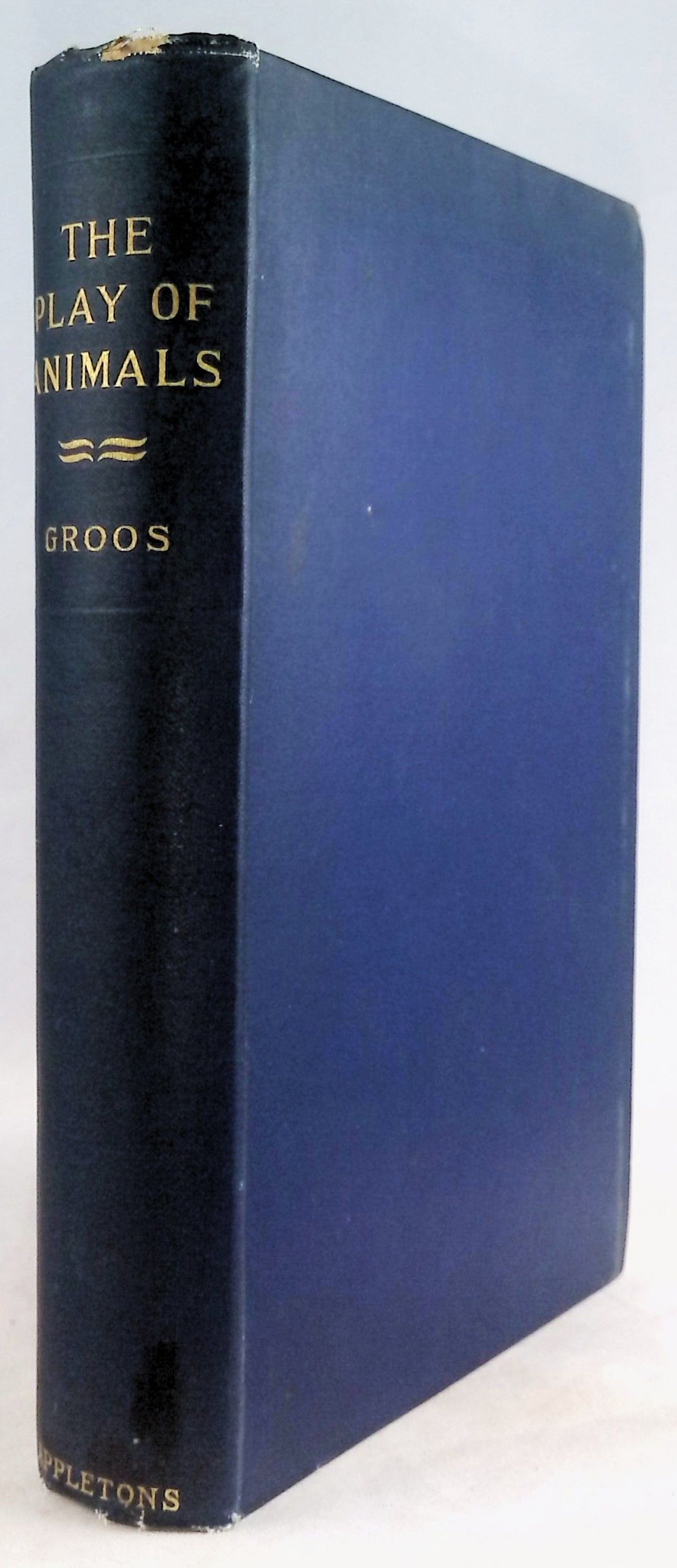
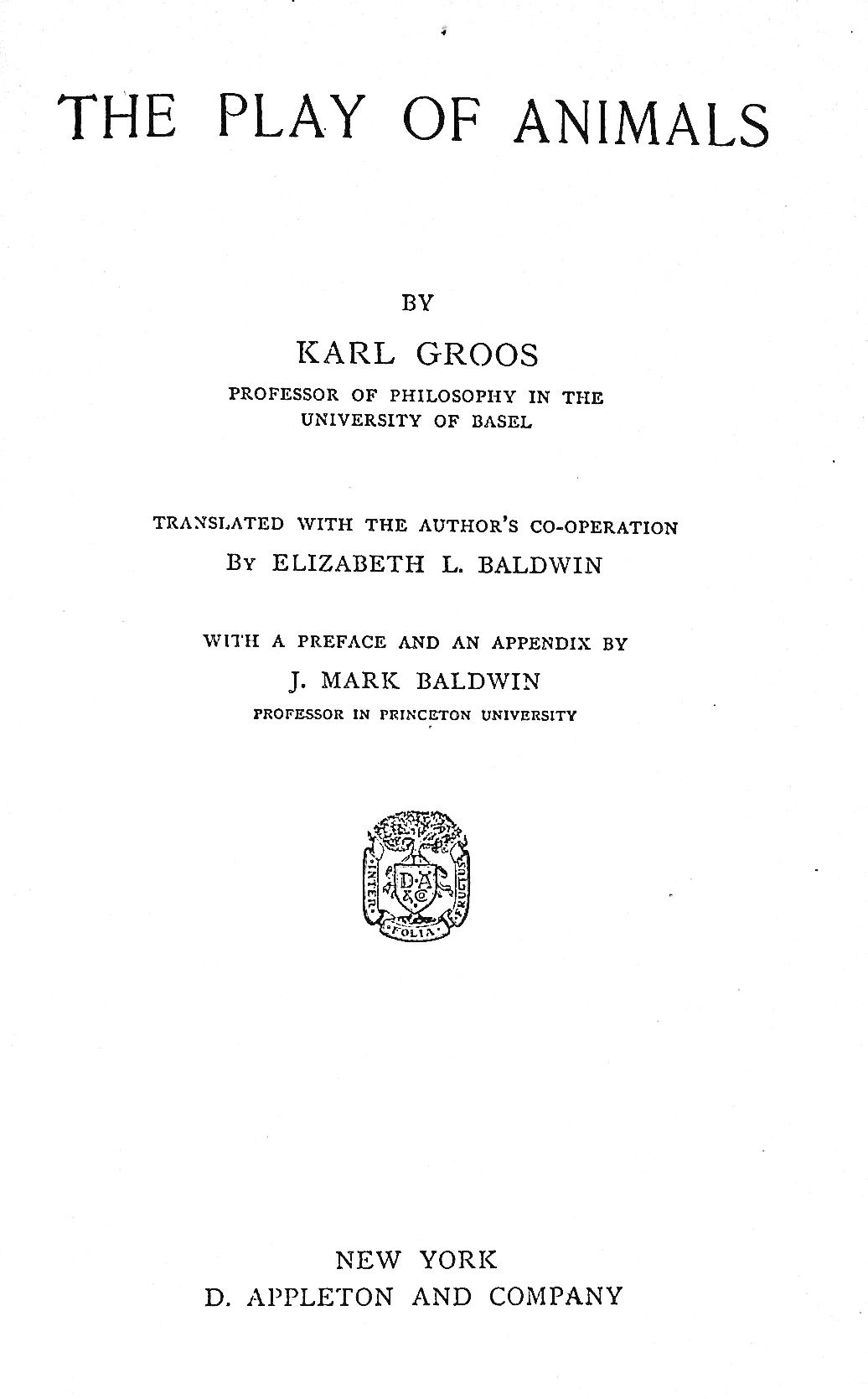
- Cloth binding
- New York: D. Appleton and Co., 1898
New York: D. Appleton and Co., 1898. First edition.
PIONEERING STUDY OF THE EVOLUTIONARY SIGNIFICANCE OF PLAY IN ANIMALS.
7 1/2 inches tall hardcover, blue cloth binding, gilt title to spine, i-xxvi, 341 pp. Corners bumped, spine ends worn, very good in custom archival mylar cover.
KARL GROOS (1861 – 1946) was a German philosopher and psychologist who proposed an evolutionary instrumentalist theory of play. His 1898 book on The Play of Animals suggested that play is a preparation for later life. His main idea was that play is basically useful, and so it can be explained by the normal process of evolution by natural selection. When animals 'play' they are practising basic instincts, such as fighting, for survival. This is translated from the original as "pre-tuning".
JAMES MARK BALDWIN (1861 – 1934) was an American philosopher and psychologist who was educated at Princeton under the supervision of Scottish philosopher James McCosh and who was one of the founders of the Department of Psychology at Princeton and the University of Toronto. He made important contributions to early psychology, psychiatry, and to the theory of evolution. In 1886 he became Instructor in French and German at the Princeton Theological Seminary. In 1889, he completed his doctoral degree, also from Princeton. In 1890 he went to the University of Toronto as the Chair of Logic and Metaphysics. During this creative phase Baldwin traveled to France (1892) to visit the important psychologists Jean-Martin Charcot, Hippolyte Bernheim, and Pierre Janet. In 1893 he was called back to his alma mater, Princeton University, where he was offered the Stuart Chair in Psychology and the opportunity to establish a new psychology laboratory. It was during this time that Baldwin wrote "A New Factor in Evolution" (June 1896/The American Naturalist) which later became known as the "Baldwin Effect". Baldwin proposed, against the neo-Lamarckians of his day (most notably Edward Drinker Cope), that there is a mechanism whereby epigenetic factors come to shape the congenital endowment as much as – or more than – natural selection pressures. In particular, human behavioral decisions made and sustained across generations as a set of cultural practices ought to be considered among the factors shaping the human genome.
Details
Title
The Play of Animals
Author
Groos, Karl, Baldwin, Elizabeth L. and Baldwin, J. Mark
Binding
Cloth binding
Condition
Unknown
Publisher
D. Appleton and Co.: New York
Date
1898
Edition
First edition