

Historia Musculorum Hominis
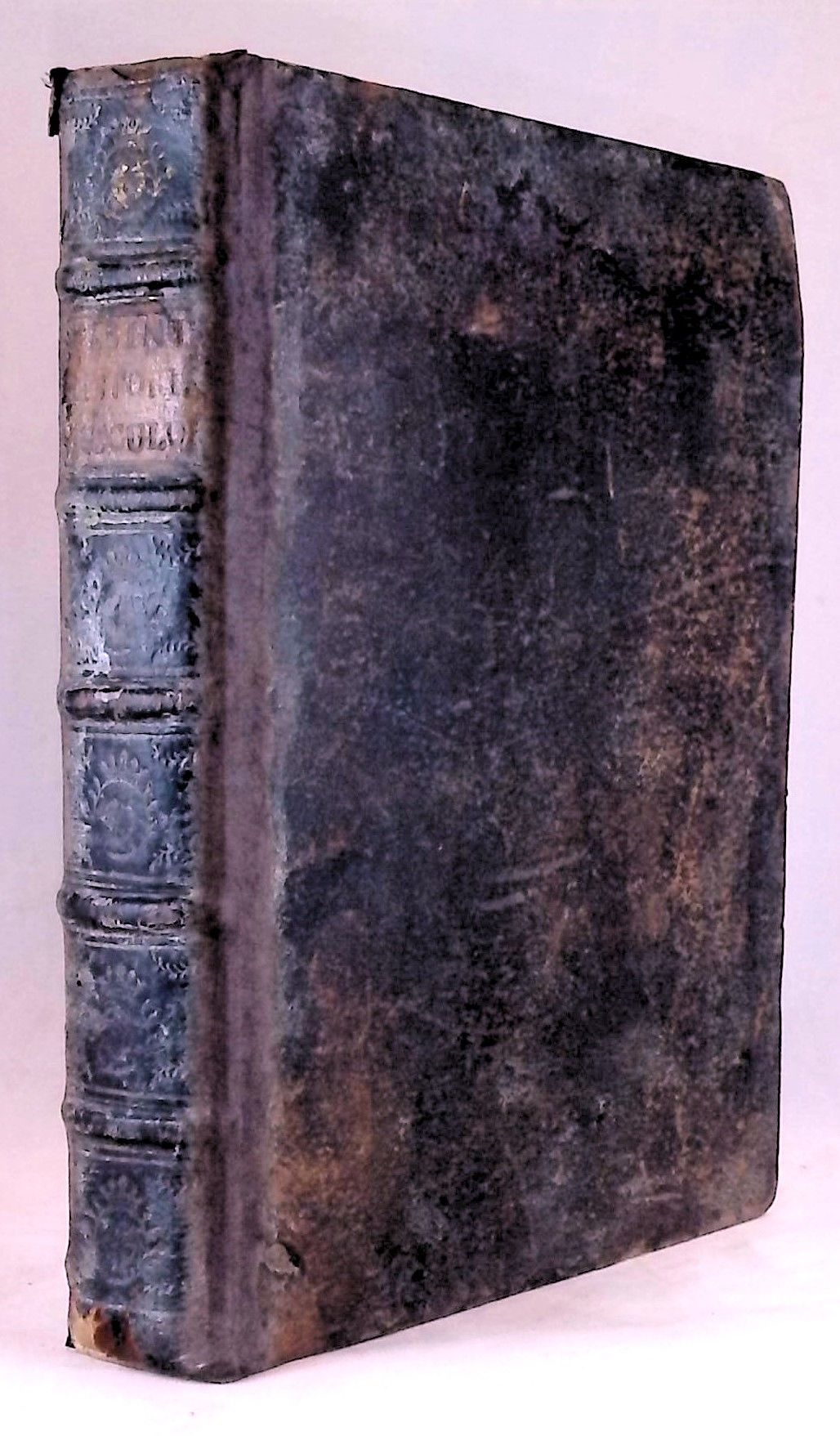
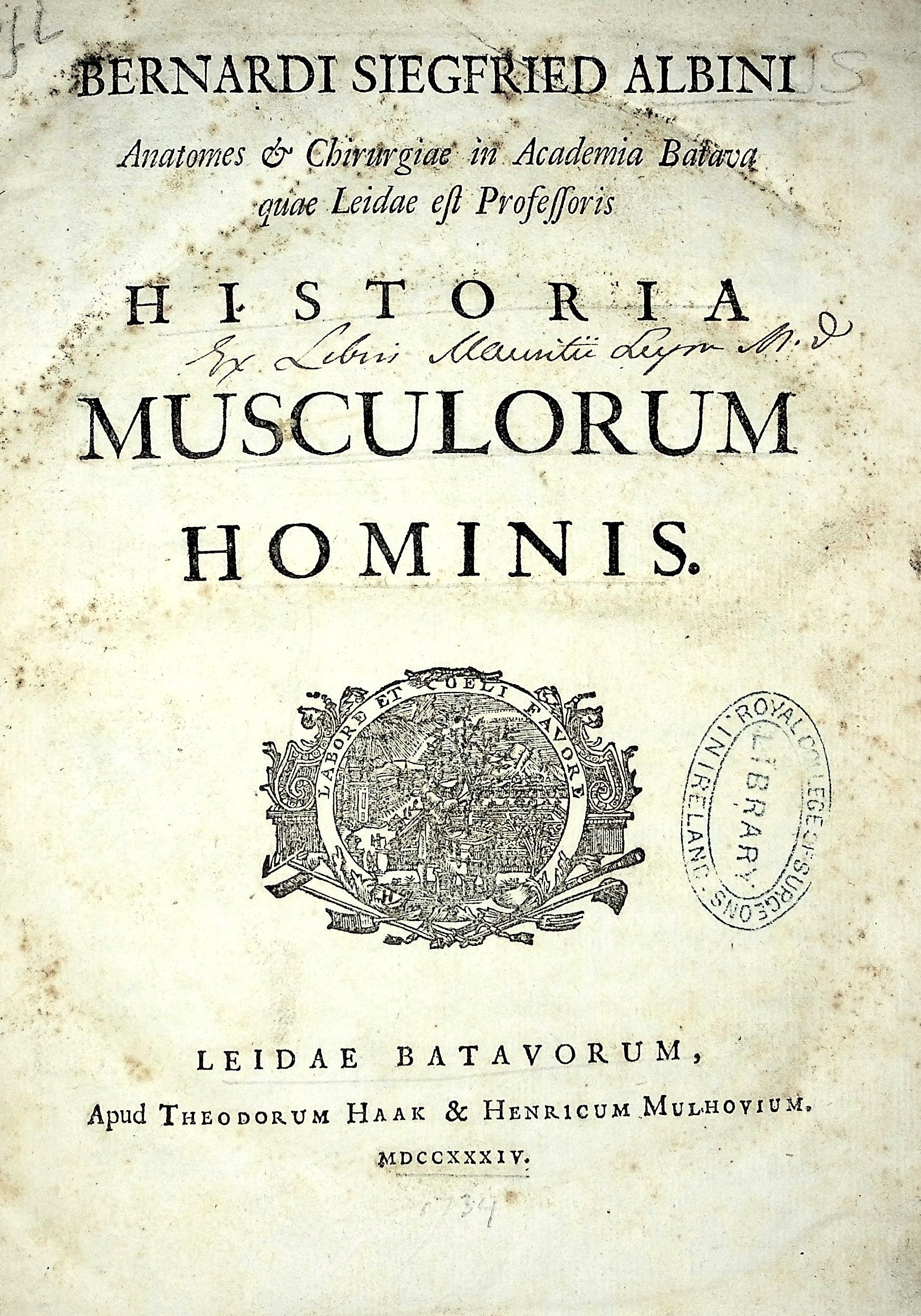
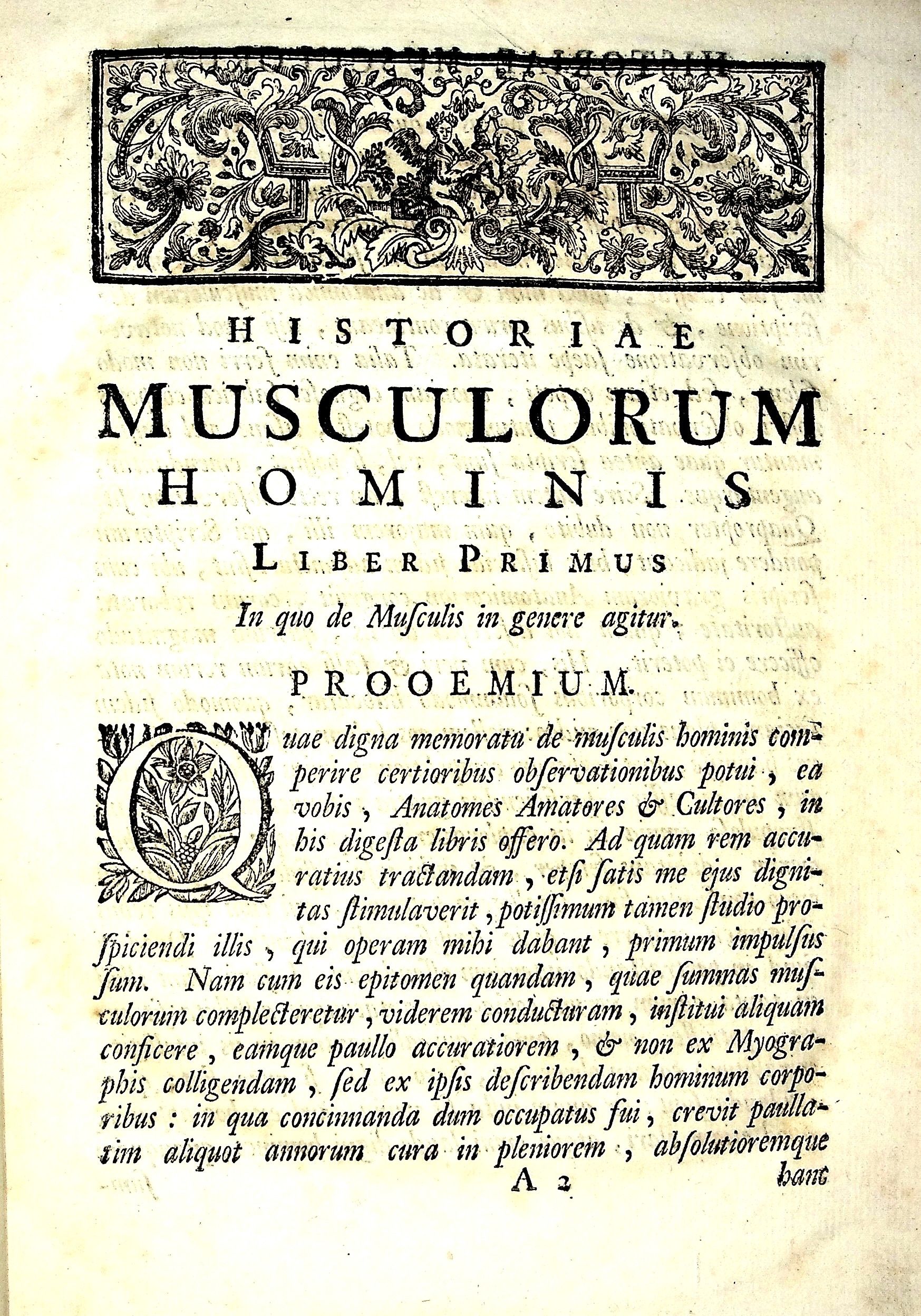
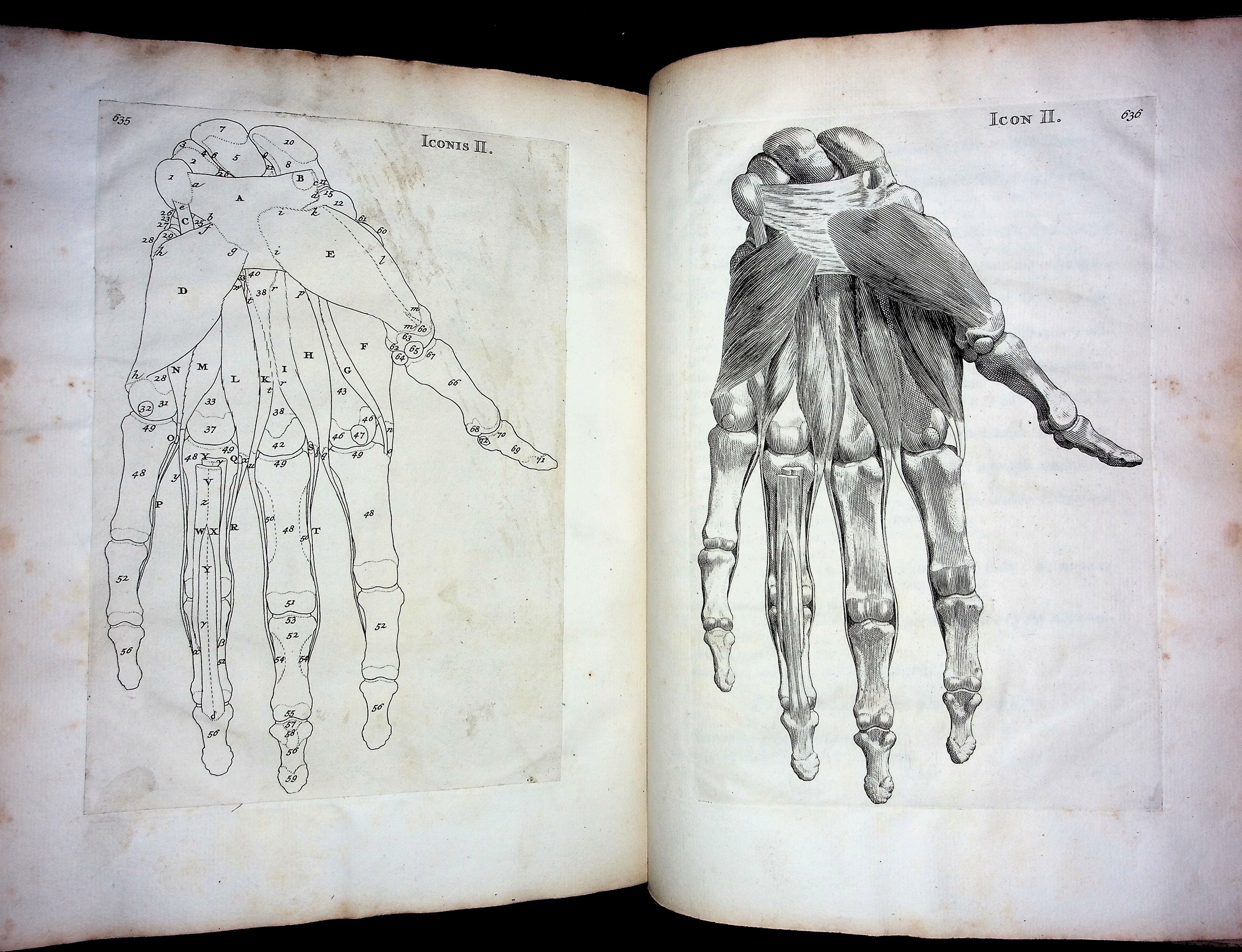
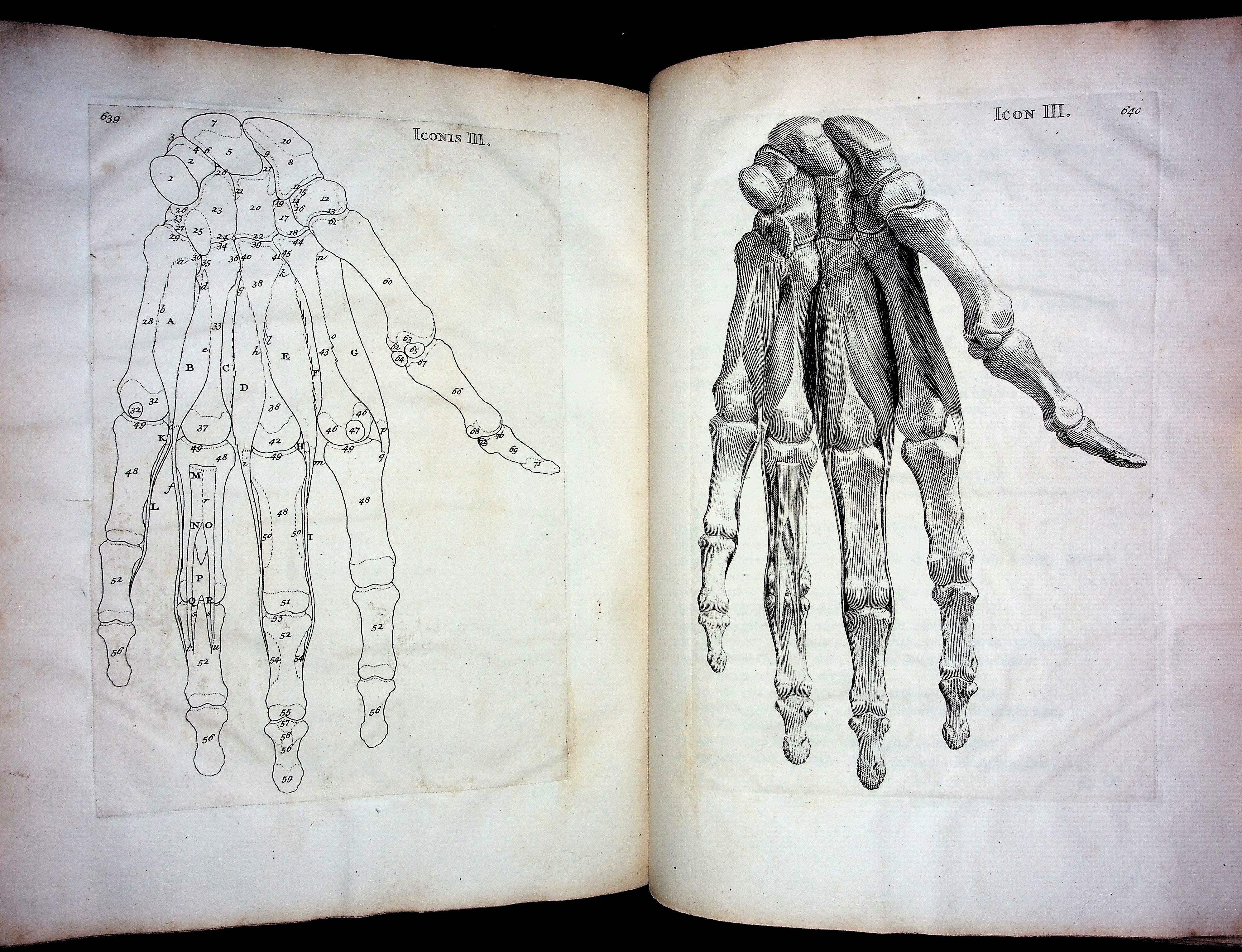
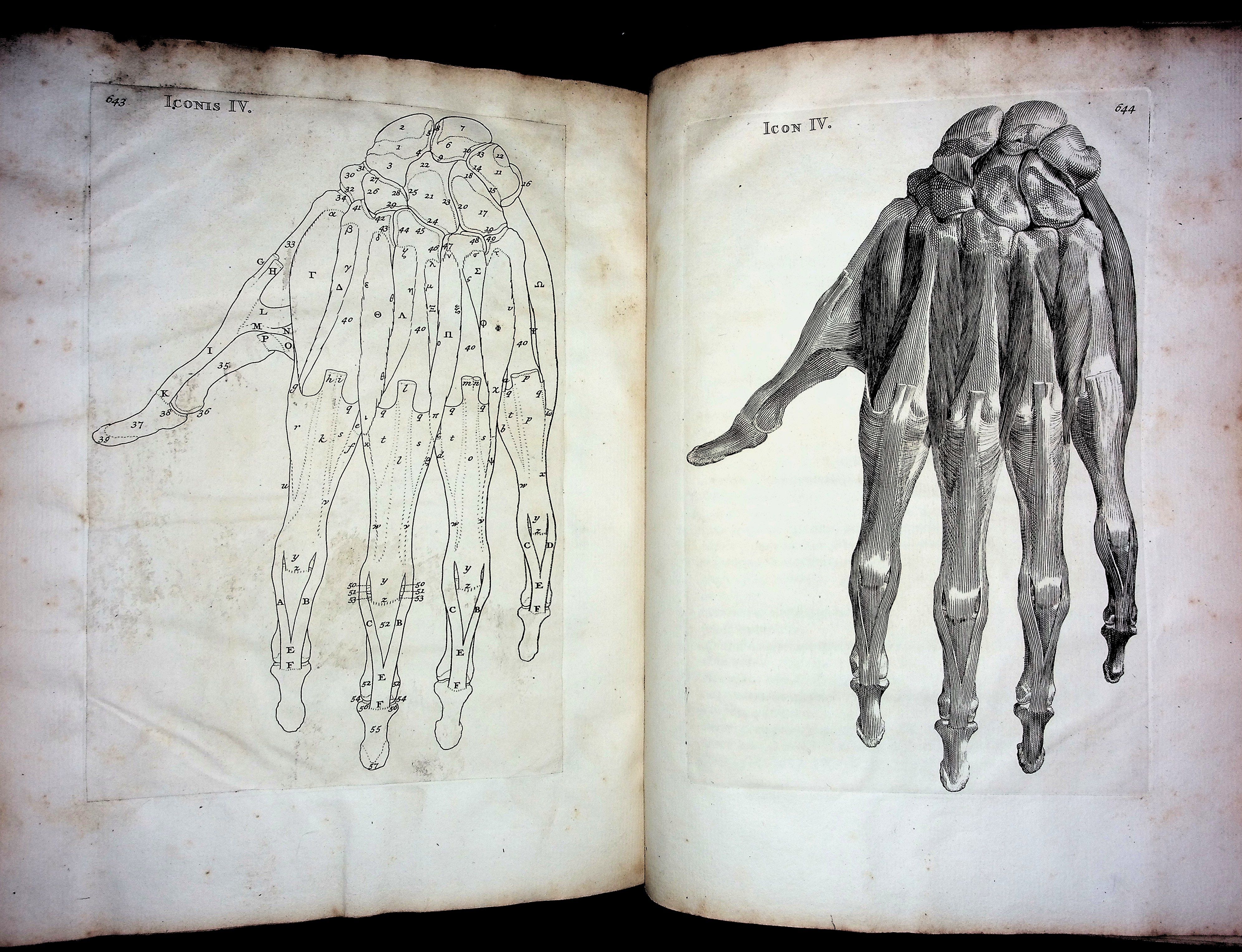
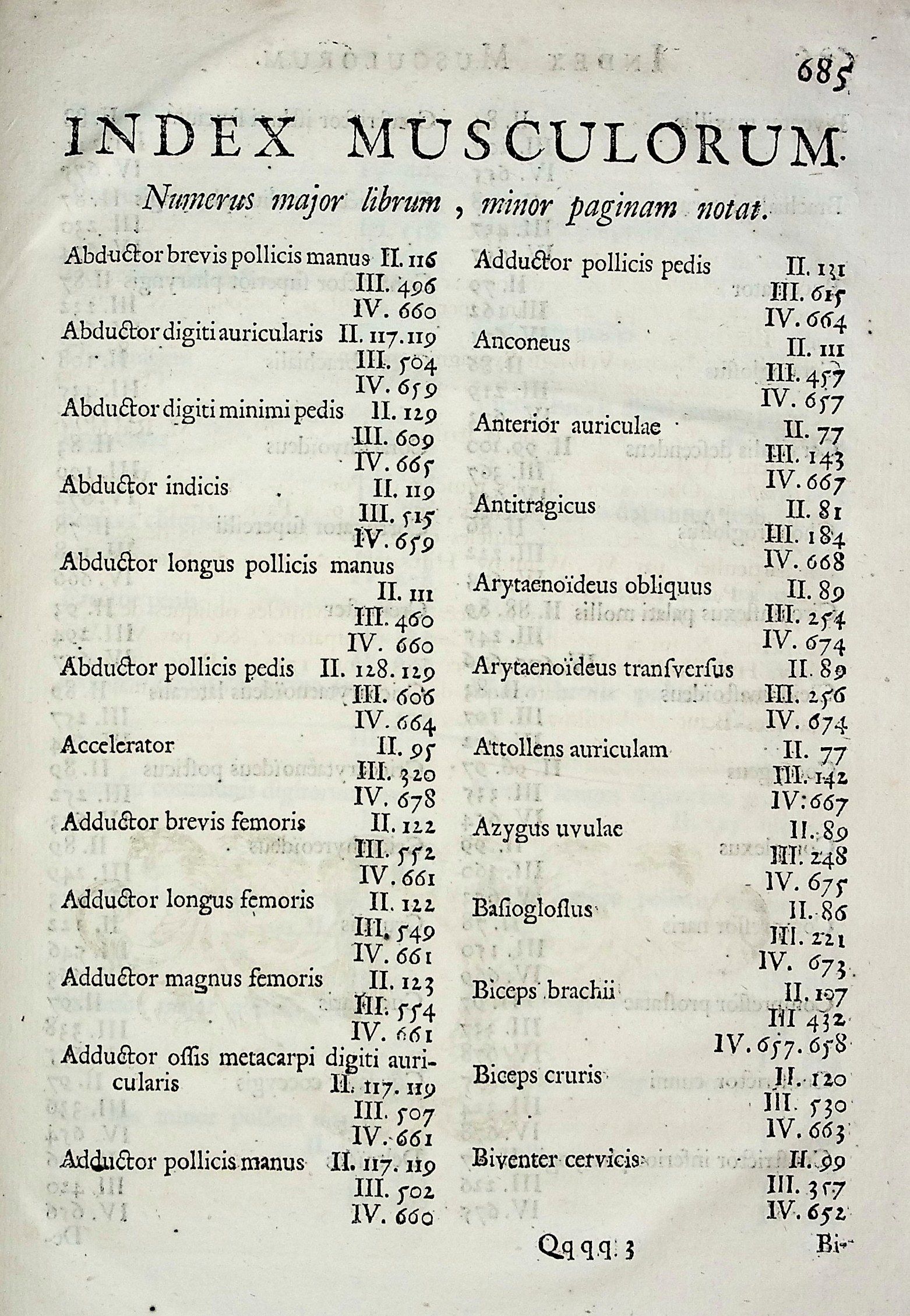
- full leather binding, spine with raised bands
- Leiden: Haak & Mulhovius, 1734
Leiden: Haak & Mulhovius, 1734. First edition.
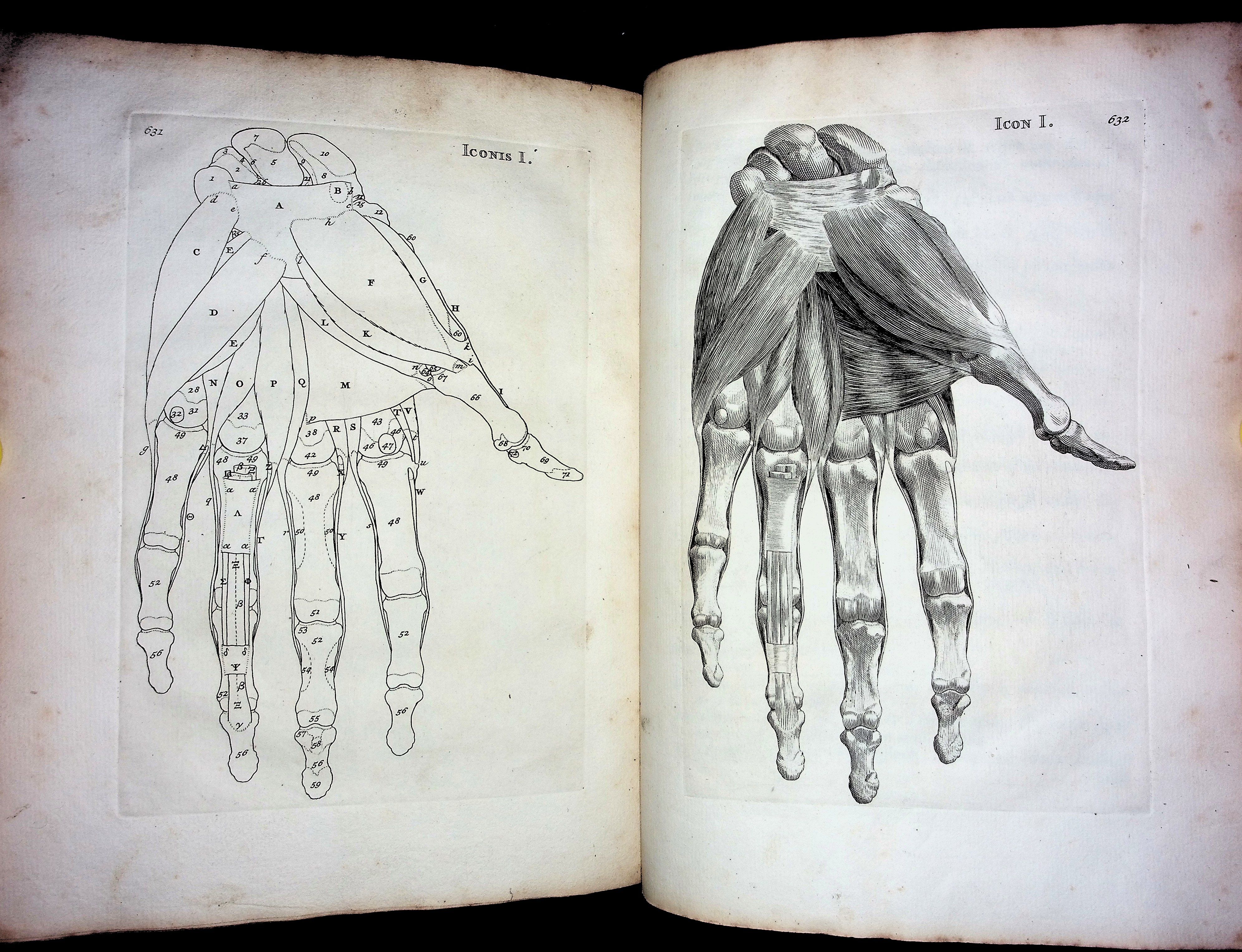
1734 MAGNIFICENT LIFE SIZE ENGRAVINGS OF THE HUMAN HAND SHOWING 4 STAGES OF DISSECTION OF THE MUSCULATURE.
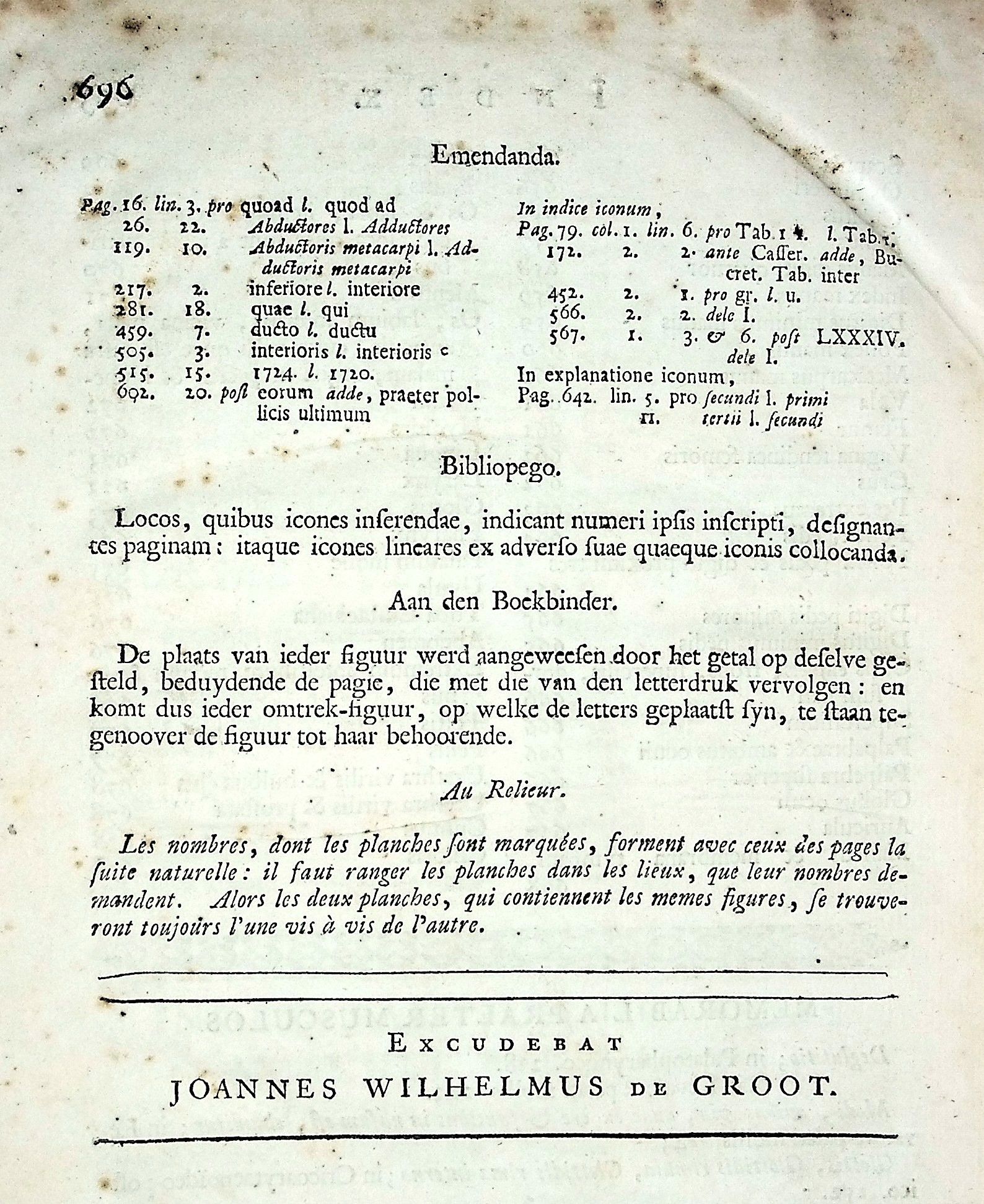
25.5 x 20 x 5 cm hardcover, original leather binding, rebacked, spine with raised bands, bookplate of Robert L Chevalier MD to front paste-down, remains of contemporary ink signature top of front free endpaper, small handstamp of Royal College of Surgeons in Ireland and contemporary ink sigature to title page, "Ex Libris (illegible ... M.D.)." 696 pp text in Latin. 12 plates of the hand drawn & engraved by Jan Wandelaar. There are 4 levels of dissection: Iconis I, II, and III showing palmar and IV dorsal life-size views of a hand. There are 3 plates for each icon: 2 identical prints of the same outline plate with letters and numbers matching the legend in descriptive text, printed facing back-to-back, followed by a finely detailed engraving. Wear to covers and spine, binding tight, browning and light foxing to page edges with some wrinkling, plates unmarked. A good+ copy of this important anatomical study.
The hand is shown life-size with all the muscles, tendons, ligaments, and according to Punt, these were the first plates In which Wandelaar "applied the 'architectonic' procedure of 'projective' transposition of the objects to paper with the aid of a pair of compasses and a ruler" (Punt, Albinus, p. 7; also see pp. 1-6). Boyes, On the Shoulders of Giants, pp. 10-11. noting that Albinus's Anatomical studies are still quoted, especially in regard to ttie intrinsic muscles.
Choulant 280. Norman 28. Heirs of Hippocrates 525. Roberts & Tomlinson, Fabric of the Body, p. 328.
BERNHARD SIEGFRIED ALBINUS (1697 - 1770) began his studies at Leiden University in 1709, at the age of 12, having for his teachers such men as Boerhaave and Bidloo. Having finished his studies at Leiden, he went to Paris in 1718, where he devoted himself especially to anatomy and botany. After a year's absence he was, on the recommendation of Boerhaave, recalled in 1719 to Leiden to be a lecturer on anatomy and surgery. Two years later, Albinus became rector of the medical school. In 1745 Albinus was appointed professor of the practice of medicine. "Albinus was the pioneer of a new epoch in human anatomy, an epoch during vhich all investigations, and especially those pertaining to osteology and myology, were carried out with the most perfect thoroughness and exactitude and with all the means then available. Anatomic representation, too, enters upon an epoch of high perfection during which the mere outward appearance, superficial investigations, or the mere copying of subjects observed prove insufficient. Artistic and faithful representations of the true form and connection of anatomic structures, discovered through repeated comparative studies, are now demanded. What demands Albinus made upon himself in this respect and how he exerted all his energies toward the conscientious preparation for publication of his anatomic Ilustrations, can best be learned from the preface to the first volume of his Annotationes Academicae (Choulant: History and Bibliography of Anatomic Illustration, p. 276, 283, Hafner, New York, 1962.
JAN WANDELAAR (1690–1759) was the artist and engraver with whom Albinus did nearly all of his work. A pupil of Johannes Jacobsz Folkema, Gilliam van der Gouwen, and Gerard de Lairesse, he became the teacher of Pieter Lyonet and Abraham Delfos.
Details
Title
Historia Musculorum Hominis
Author
Albinus, Bernard Siegfried
Binding
full leather binding, spine with raised bands
Condition
Unknown
Publisher
Haak & Mulhovius: Leiden
Date
1734
Edition
First edition