

The Living Substance as Such: and as Organism
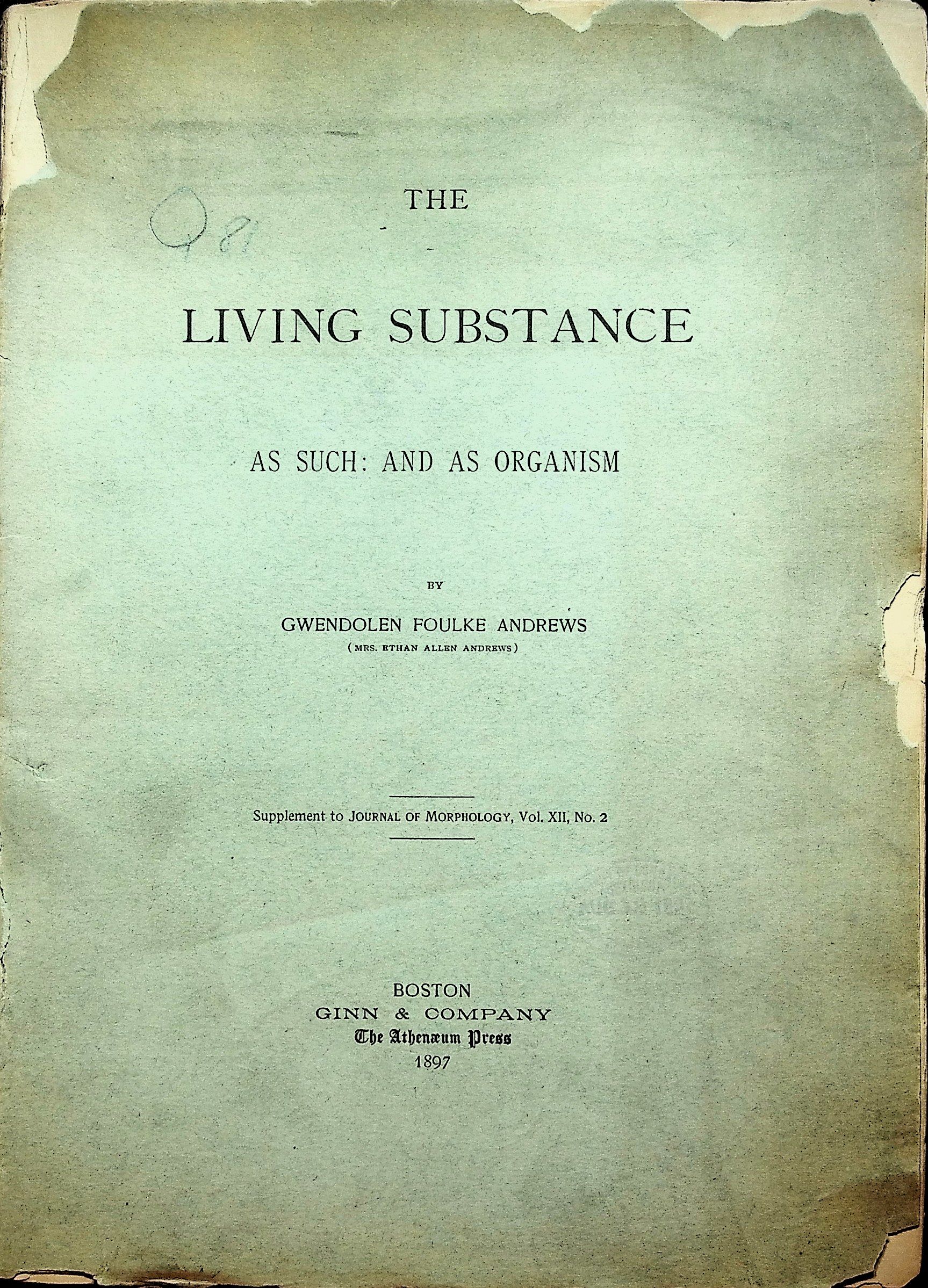
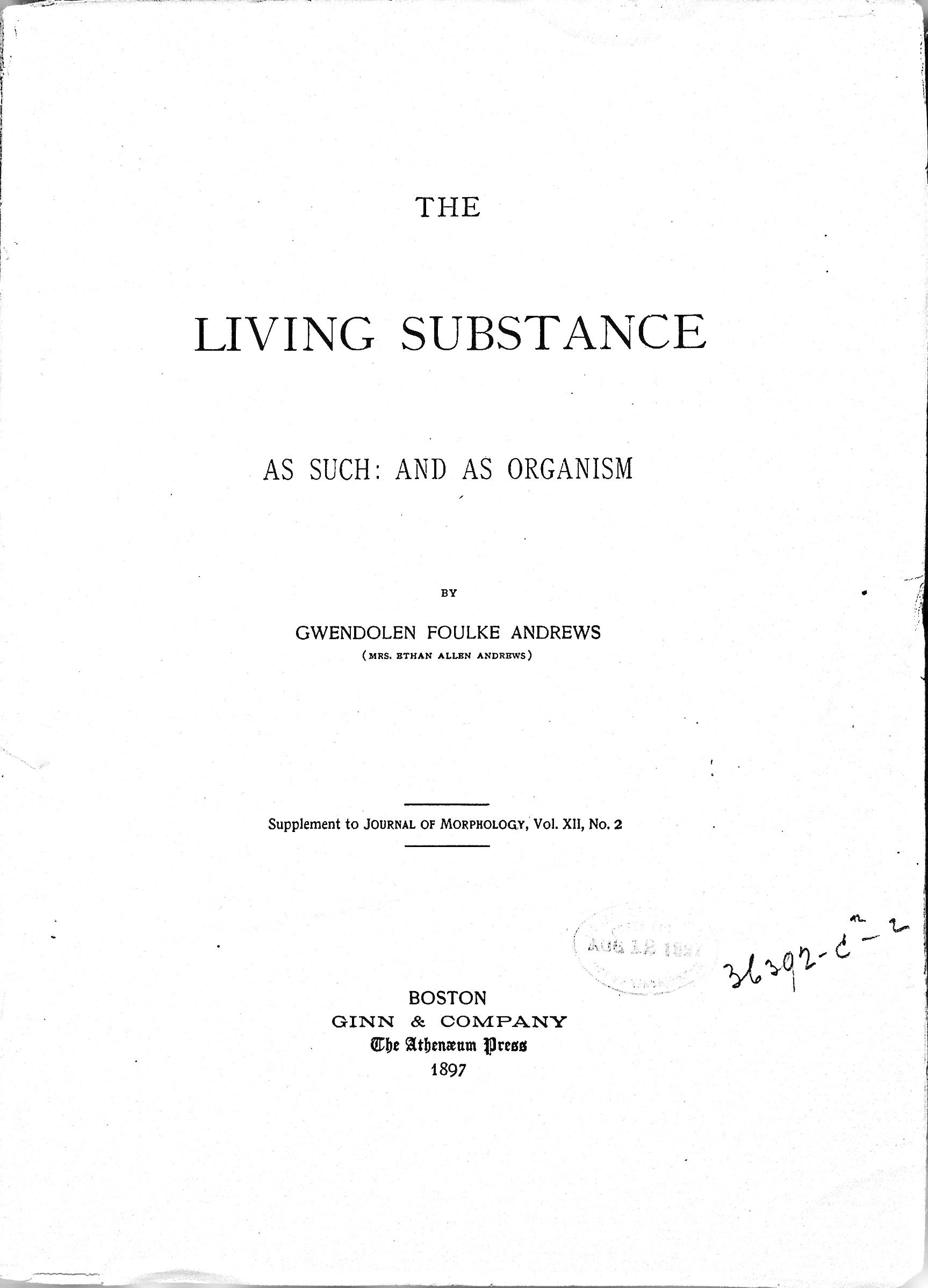
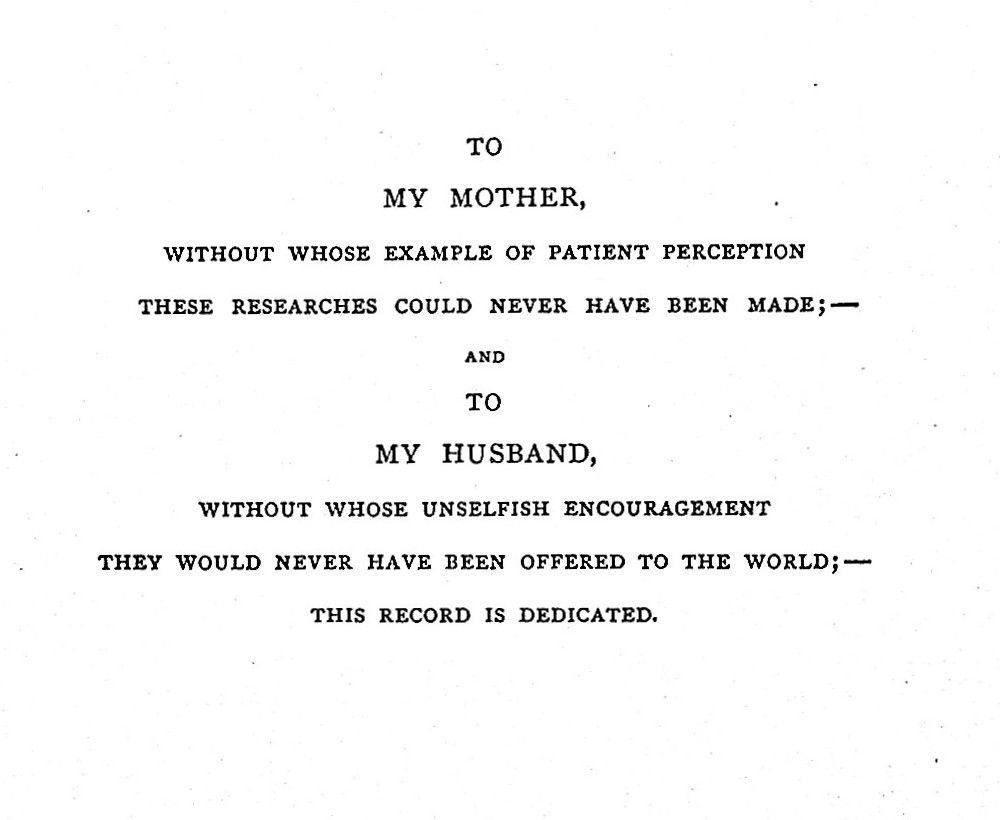
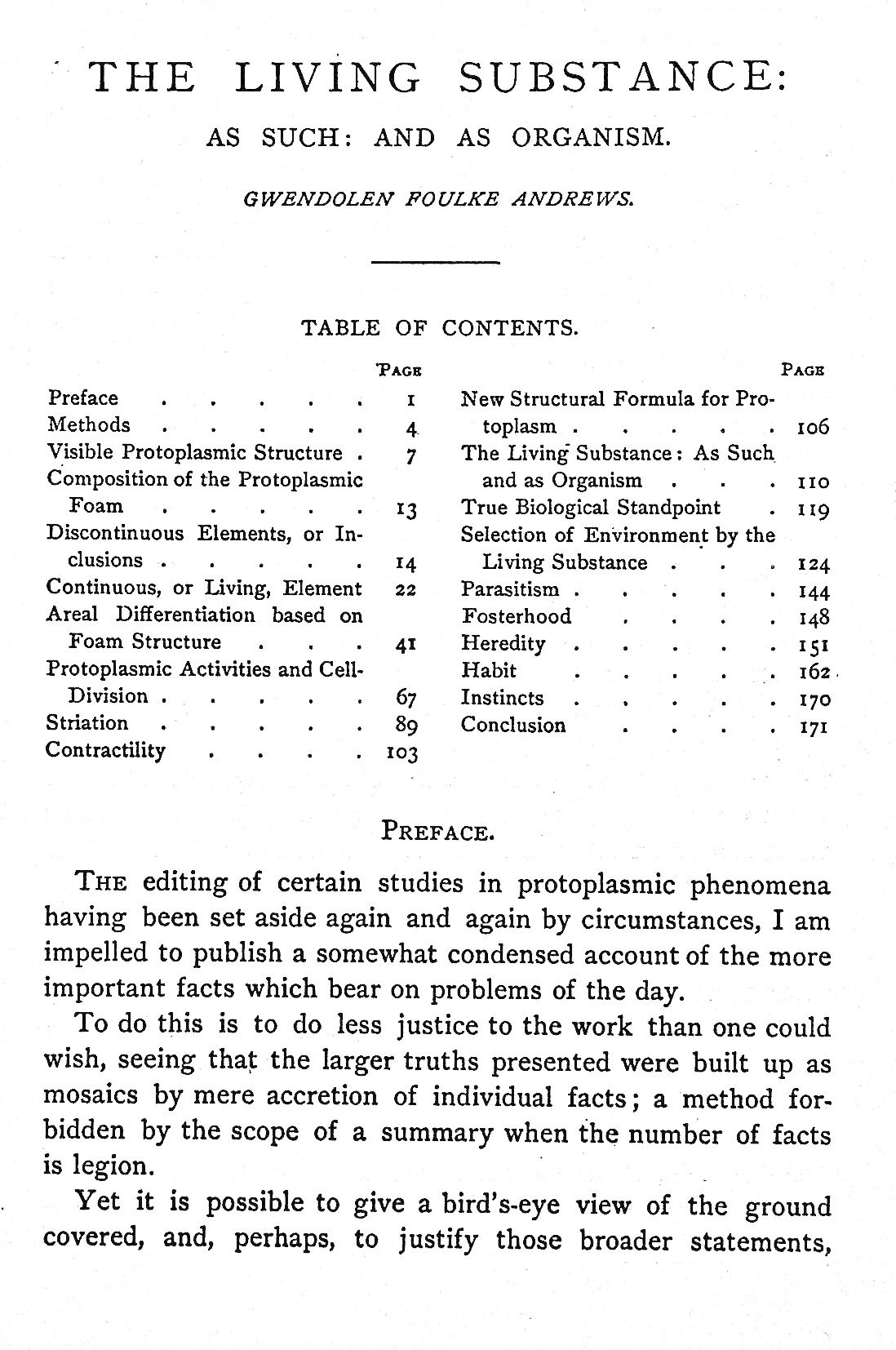
- printed paper wraps
- Boston: Ginn & Company, The Athenaeum Press, 1897
Boston: Ginn & Company, The Athenaeum Press, 1897. First edition.
1897. SCARCE PROVOCATIVE ESSAY ON THE NATURE OF PROTOPLASM BY PIONEERING FEMALE BIOLOGIST BEFORE THE RISE OF CELL AND MOLECULAR BIOLOGY.
25 x 18 cm volume in publisher's green printed paper wraps, [4], 176 pp. Covers detached with edges chipped, paper spine partially perished, binding secure, all pages present in a custom protective mylar cover. A complete copy of the first edition of this rare volume.
SARA GWENDOLEN FOULKES (1863 – 1936) was an American zoologist, marine biologist and poet. She was initially educated at private schools and subsequently attended Bryn Mawr College and the University of Pennsylvania. She conducted research at the Woods Hole Oceanographic Institution and at the Station Biologique de Roscoff. During the 1880s, Foulke focused her research on infusoria and rotifers, microscopic water inhabiting animals. She later focused on the properties of protoplasm, and in 1897 published The Living Substance as such, and as Organism as a supplement to The Journal of Morphology. Although initially harshly criticized, in writing her obituary, Henry Van Peters Wilson claimed it as a work of "genius". The book delves into the concept of life and the nature of living organisms. Andrews explores the idea that all living things are made up of a "living substance" that is different from non-living matter. She argues that this substance is capable of self-organization and self-regulation, and that it is the basis for all life on Earth. Andrews also discusses the role of this living substance in the development and evolution of organisms. She examines the ways in which living things adapt and change over time, and how they are able to maintain their integrity and identity despite these changes. Throughout the book, Andrews draws on a range of scientific and philosophical sources to support her arguments. She discusses the work of prominent scientists such as Charles Darwin and Ernst Haeckel, as well as the ideas of philosophers such as Immanuel Kant and Arthur Schopenhauer. The book offers a unique perspective on the subject that is still relevant today, more than a century after it was first published.
OBITUARY BY H. V. WILSON, Science No 158Feb 26, 1937 (condensed): "On December 13, 1936, there passed away a woman with the rare gift of genius, Mrs. Ethan Allen Andrews, the wife of Professor E. A. Andrews, of Johns Hopkins. Her earlier investigations dealt with infusoria and rotifers, but she became deeply interested in the structure and habits of protoplasm in general. And this is the theme of her classic memoir, "The Living Substance as Such: and as Organism," published as a special supplement of the Journal of Morphology in 1897, a memoir which carried her name and aroused admiration in biological circles throughout the world. It has both depth and a grasp of many ideas. And one can read to advantage and with pleasure to-day this record of the multifarious experiences of a very thoughtful mind and a remarkable pair of eyes, aided by the best microscopic equipment of the time, in an exploration of the appearance and behavior of living protoplasm in protozoa, myxomycetes, leucocytes of invertebrates, sea-urchin and starfish embryos, fish eggs and other things. The histological section of this notable work is followed by a survey of the various phenomena of living nature as exhibited by individual organisms, all looked on as the outcome of the activities of substances, species-plasms or idioplasms, conceived of as isomorphic, everywhere differentiative and directive, and not optically analyzable. All these are designated "substance organs." Whether such ideas are tenable time and the future history of our present concept of genes as persistent and self-perpetuative entities will show. However that may be, the reader turning the pages of this memoir, now forty years old and which did not come into its own at once but encountered some inept criticism, will readily recognize, employing the words of von Baer, that we have here "observations and reflections" of genius."--H. V. Wilson was the world's leading authority on the morphology, taxonomy and behavior of sponges for over three decades.
Details
Title
The Living Substance as Such: and as Organism
Author
Andrews, Gwendolen Foulke
Binding
printed paper wraps
Condition
Unknown
Publisher
Ginn & Company, The Athenaeum Press: Boston
Date
1897
Edition
First edition