

Eugenical Sterilization in the United States
- Cloth binding
- Chicago: Psychopathic Laboratory of the Municipal Court of Chicago, 1922 December
Chicago: Psychopathic Laboratory of the Municipal Court of Chicago, 1922 December. First edition.
RARE FIRST EDITION BLUEPRINT FOR COMPULSORY STERILIZATION IN THE US: A MODEL FOR NAZI GERMANY.
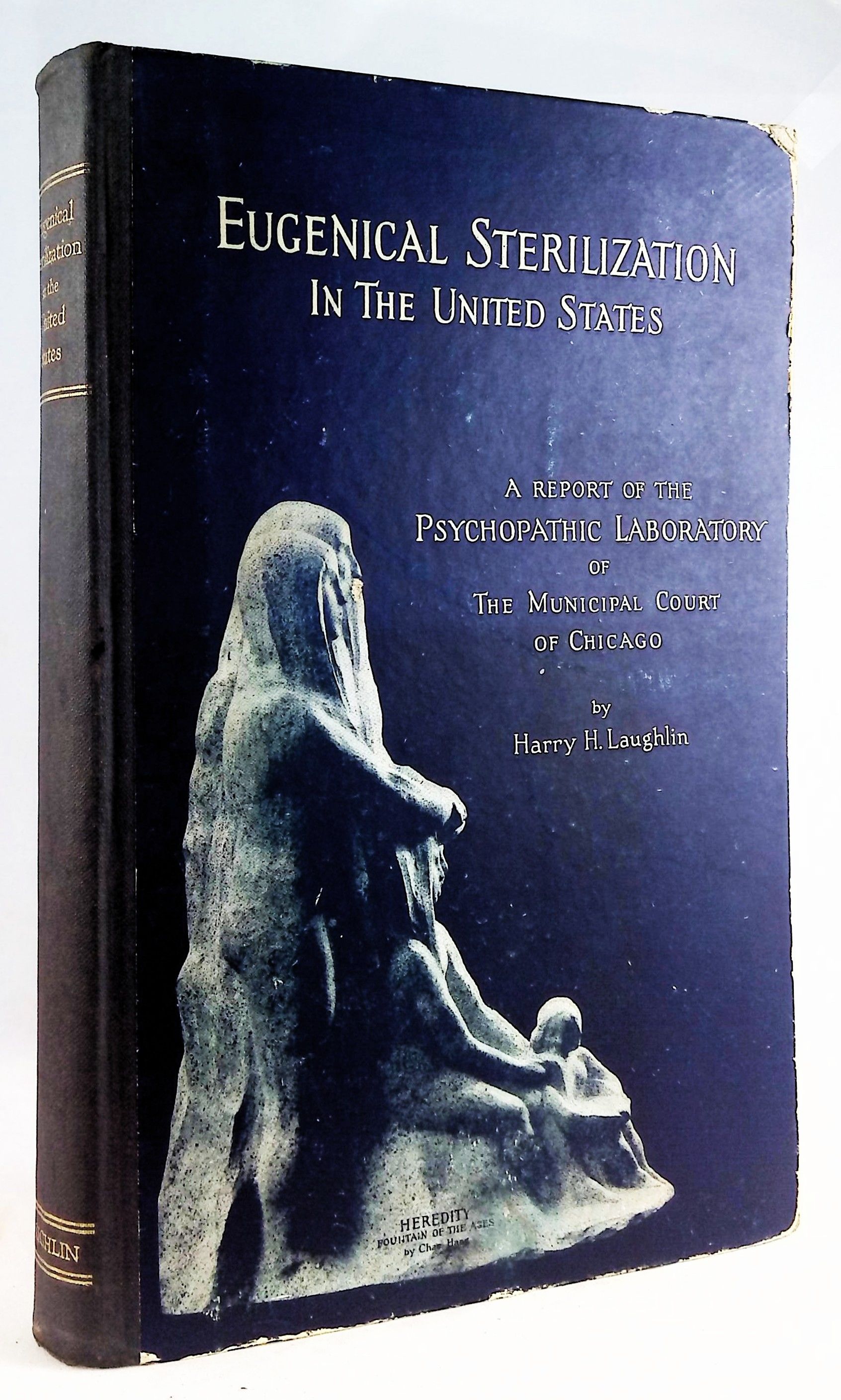
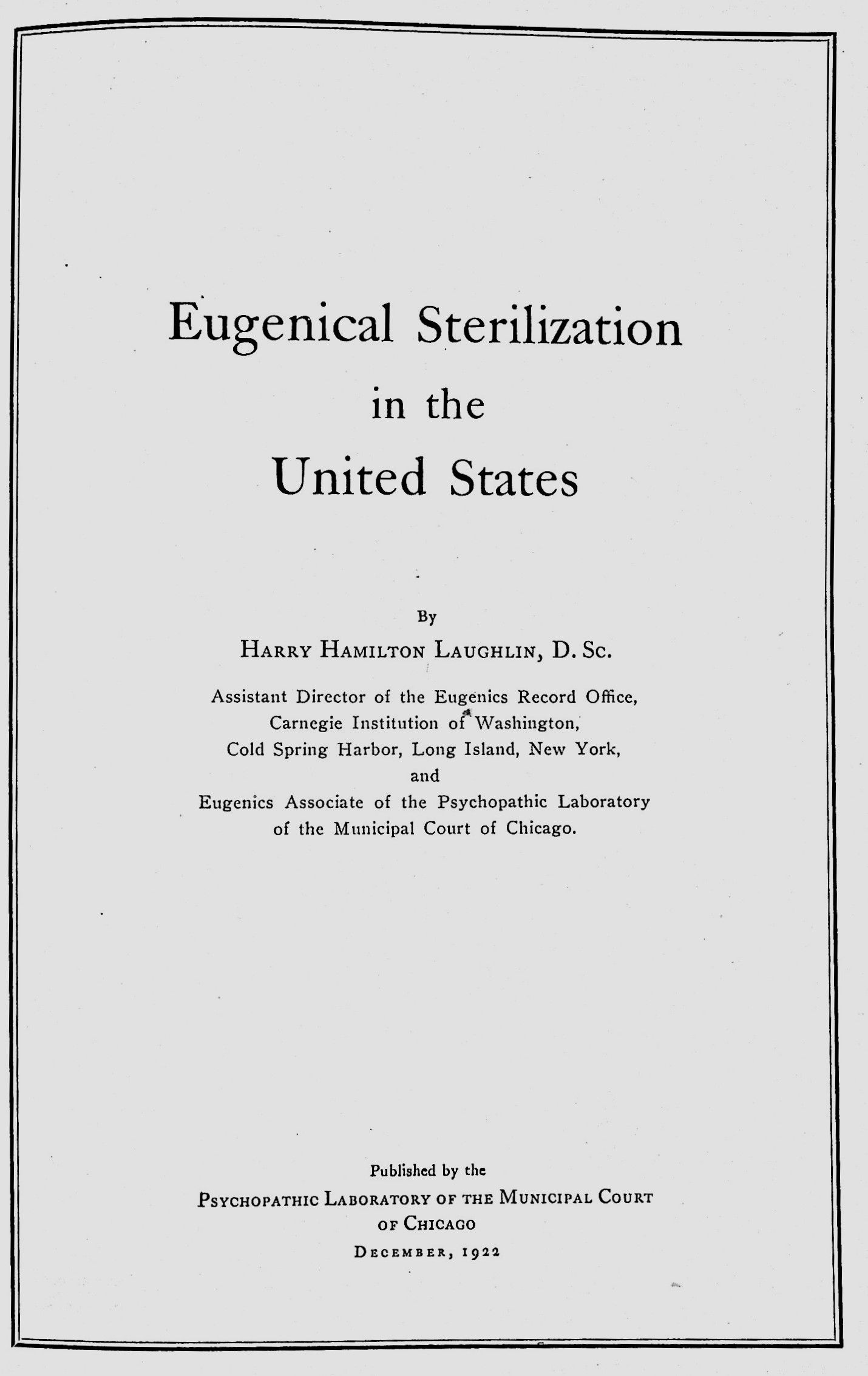
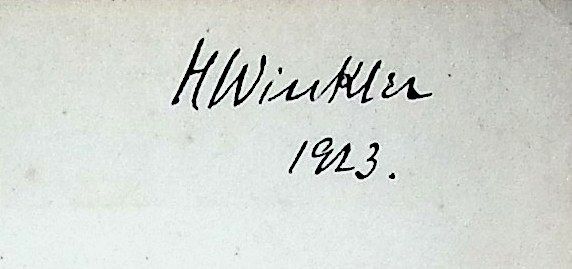
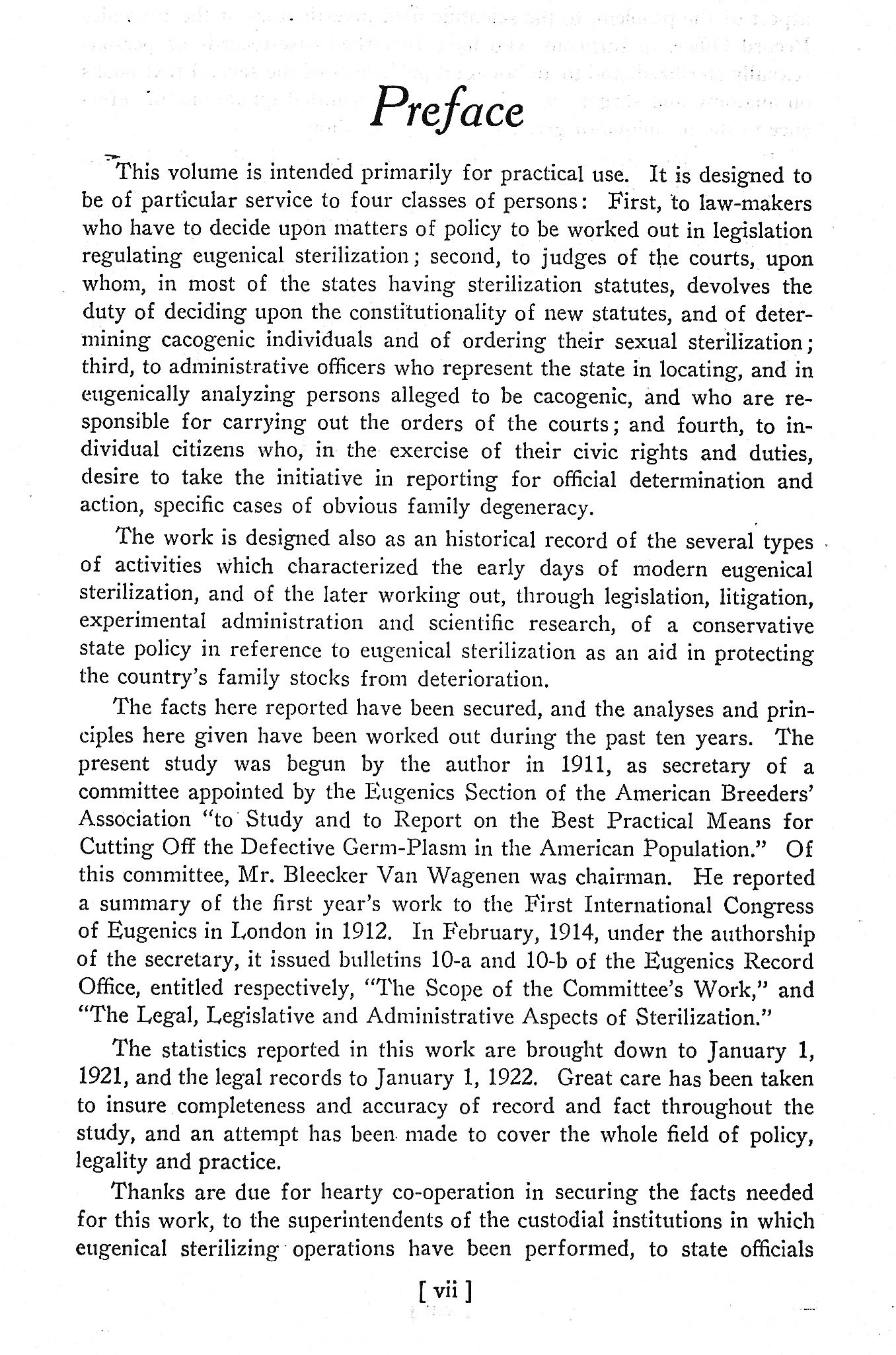
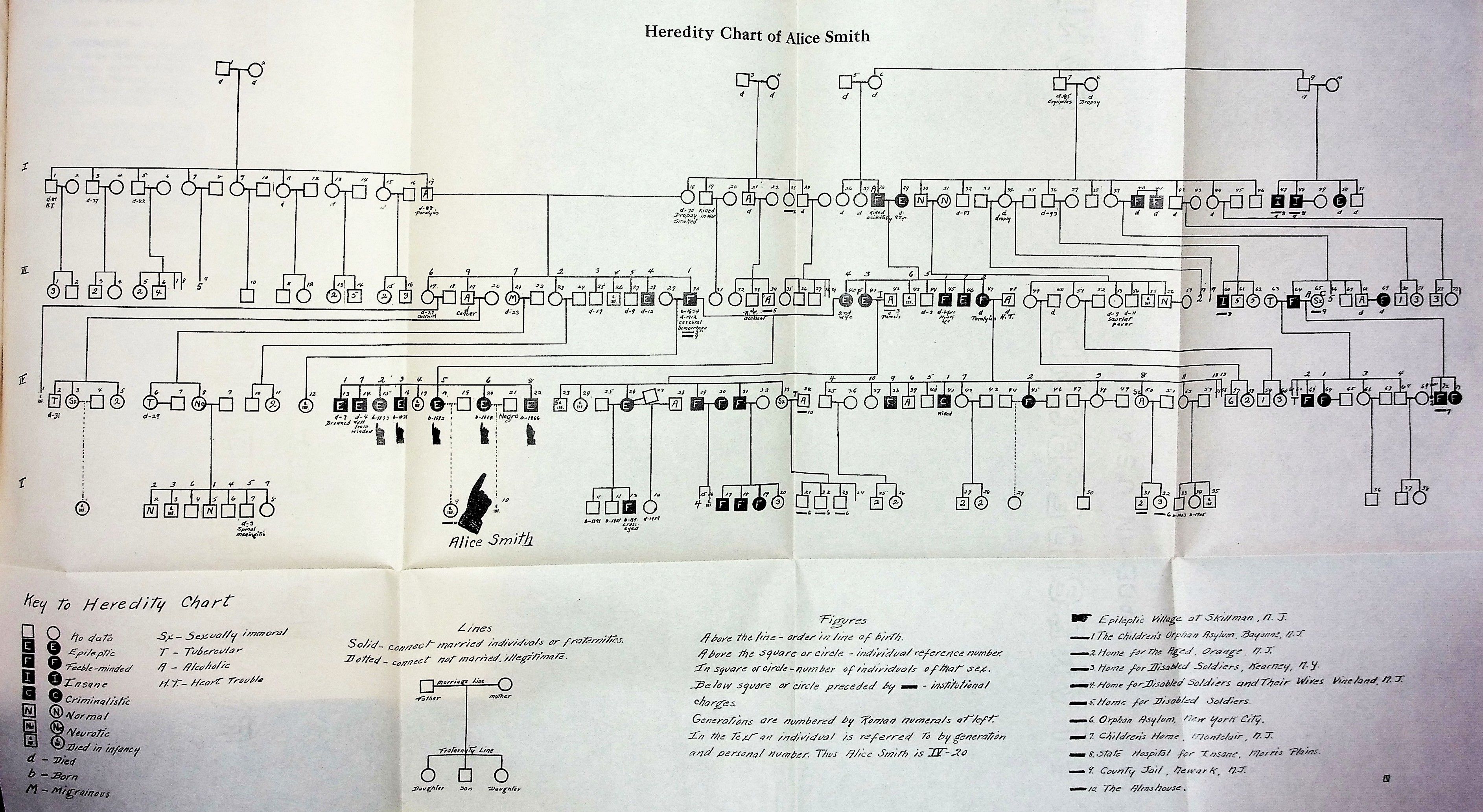
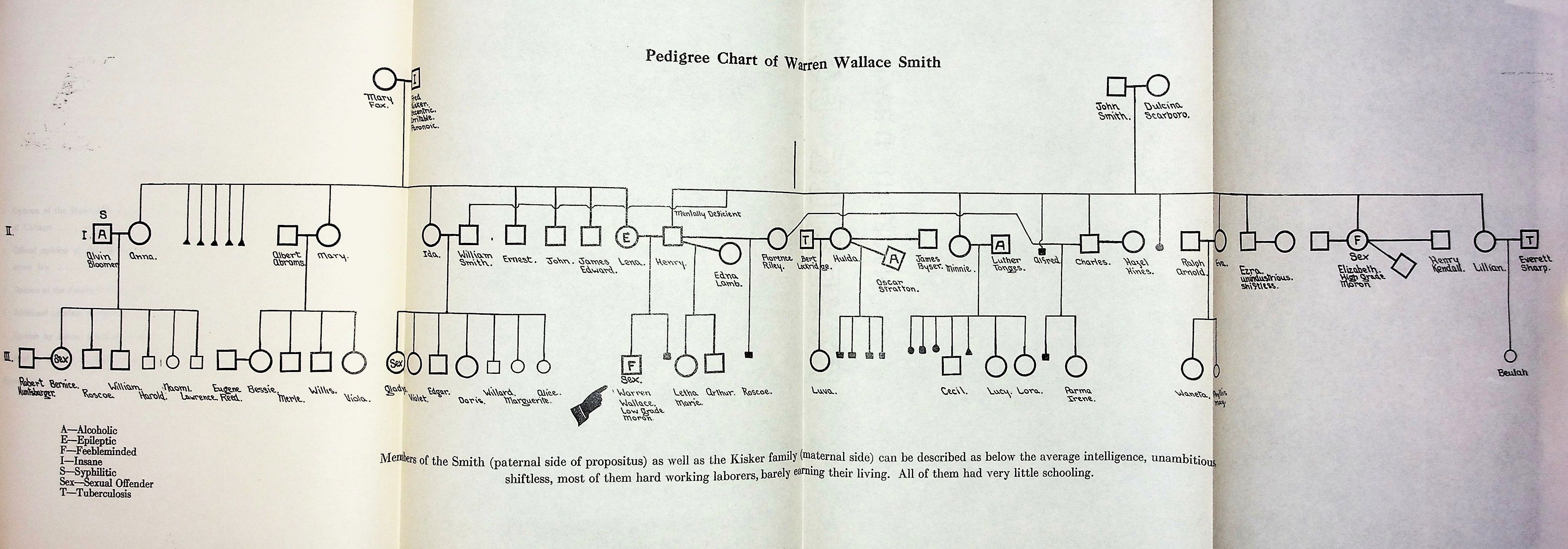
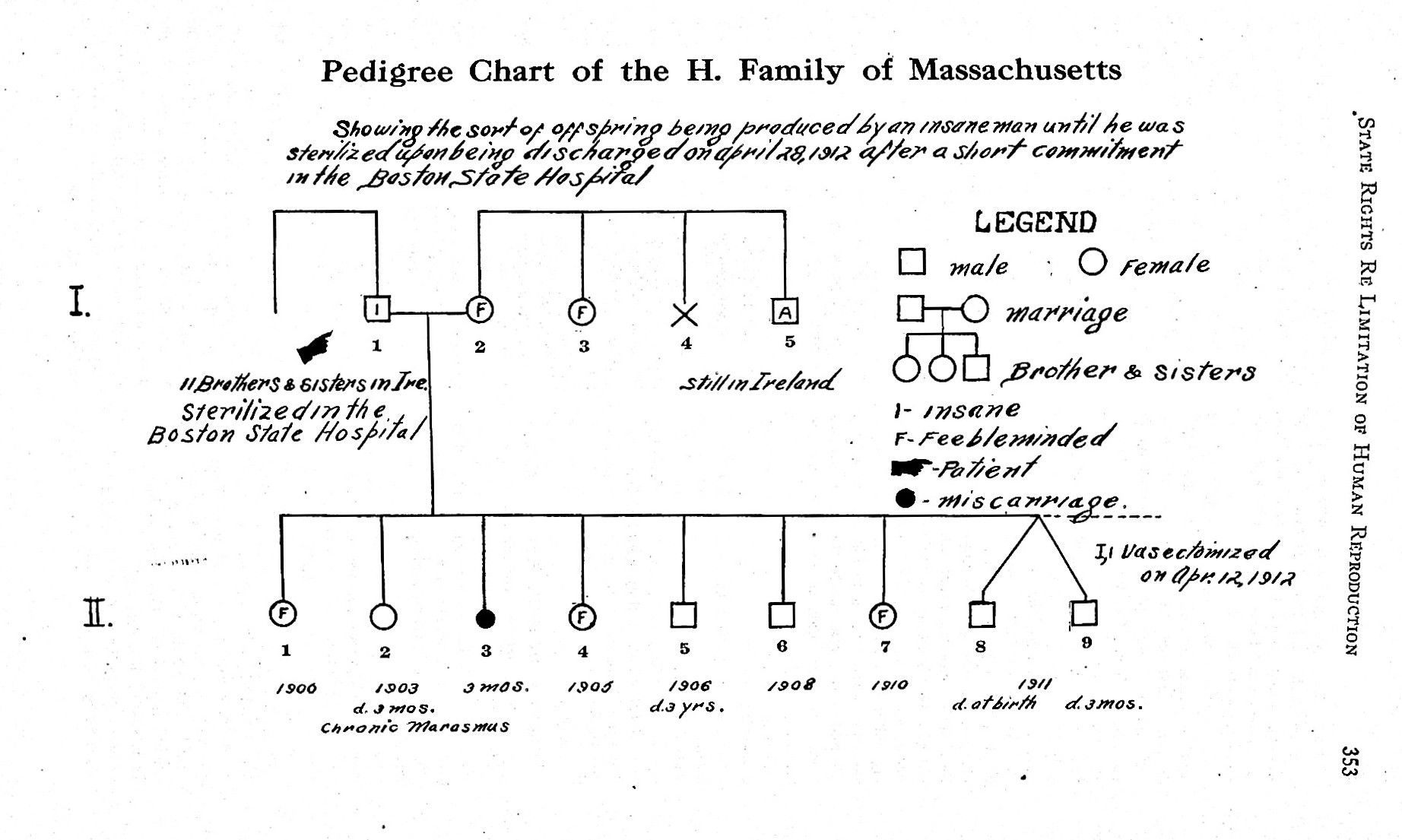
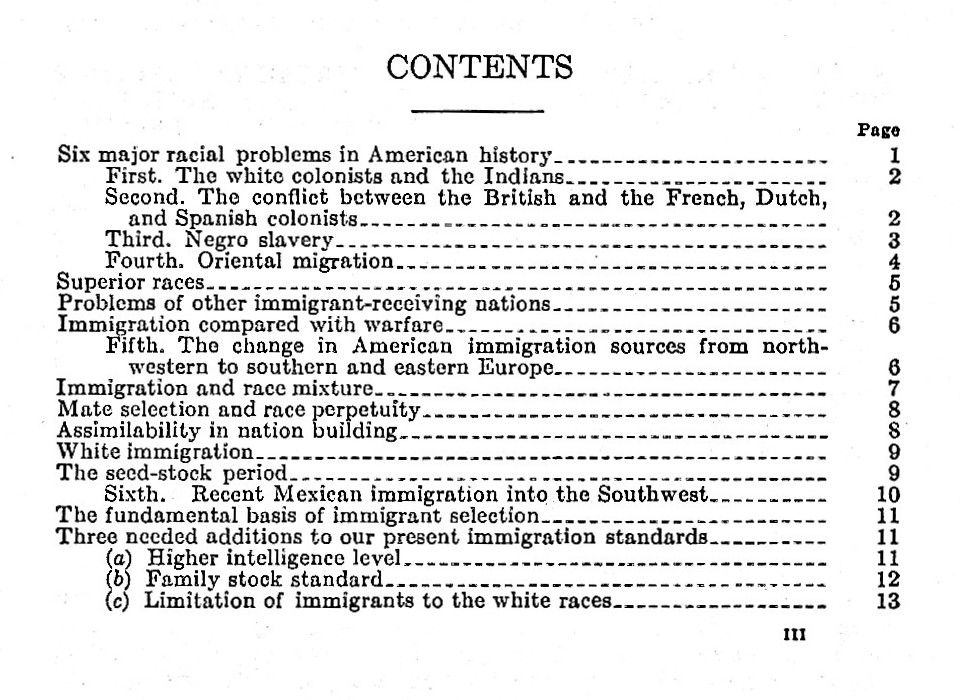
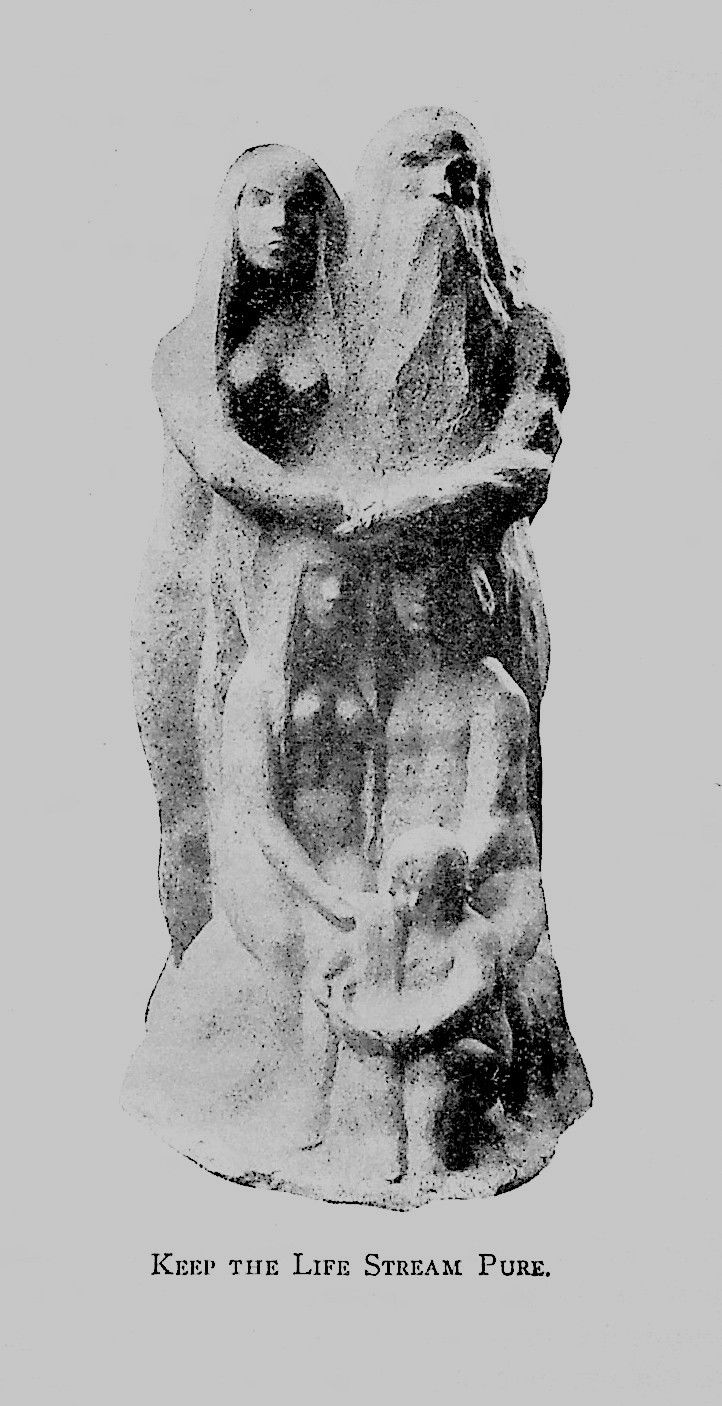
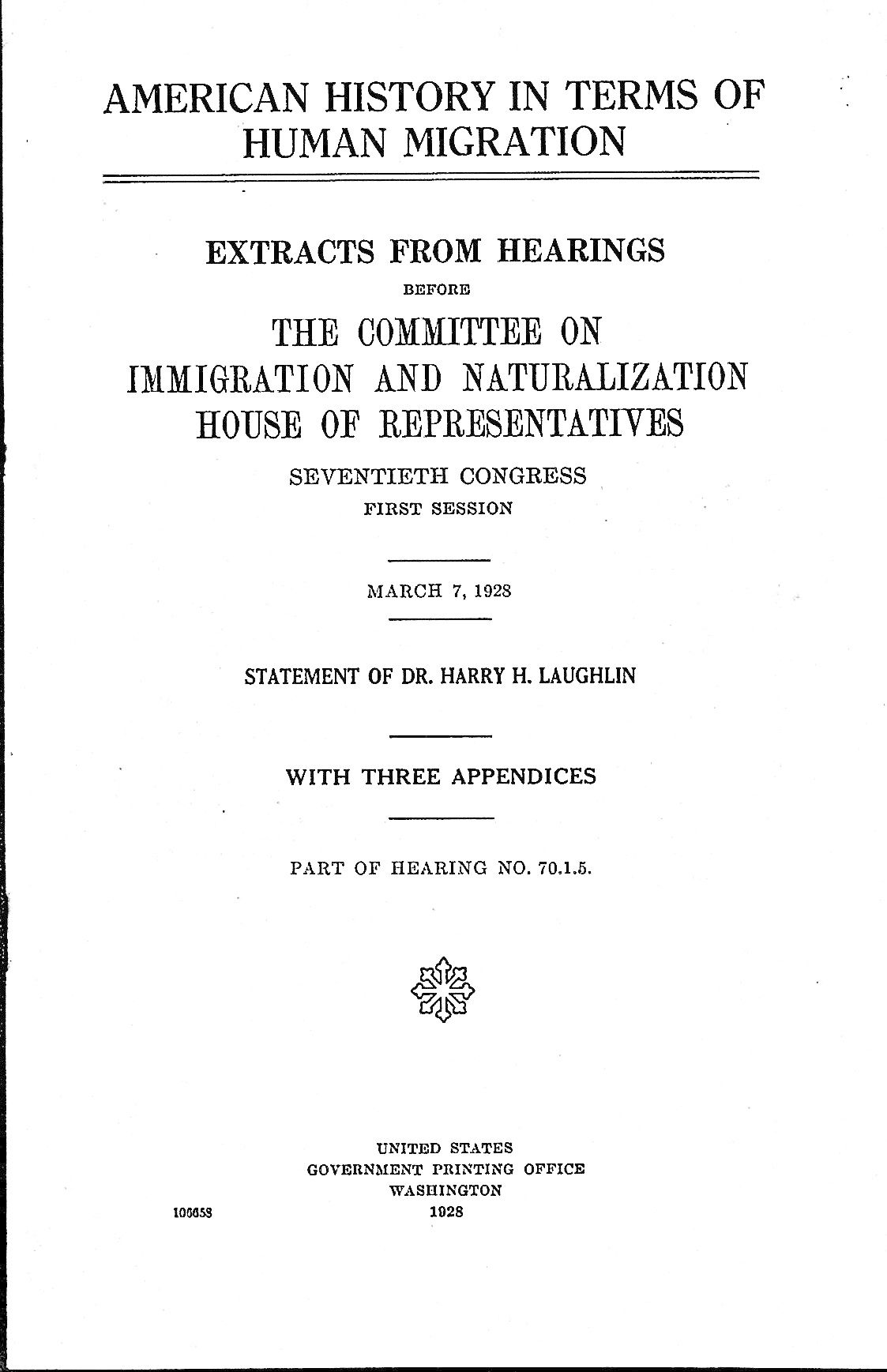
16.5x25.5 cm hardcover,printed paper covered boards, gilt title to green cloth spine, ink signature of H Winkler 1923 to front free endpaper, frontispiece statue of family titled, "Keep the life stream pure," i-xxiii, 502 pp, [1], 15 illustrations, large folding pedigree charts at p 304 and 320, full page pedigree chart p 353. Wear to corners and cover edges, light browning to pages, binding tight, text and folding charts crisp and unmarked. Very good minus in custom archival mylar cover. LAID IN 15 x 23 cm 21-page pamphlet, titled, American History in Terms of Human Migration. Extracts from Hearings before the Committee on Immigration and Naturalization House of Representative, Senventieth Congress, First Session, March 7, 1928, Statement of Dr. Harry H. Laughlin, with Three Appendices, US Government Printing Office, 1928.
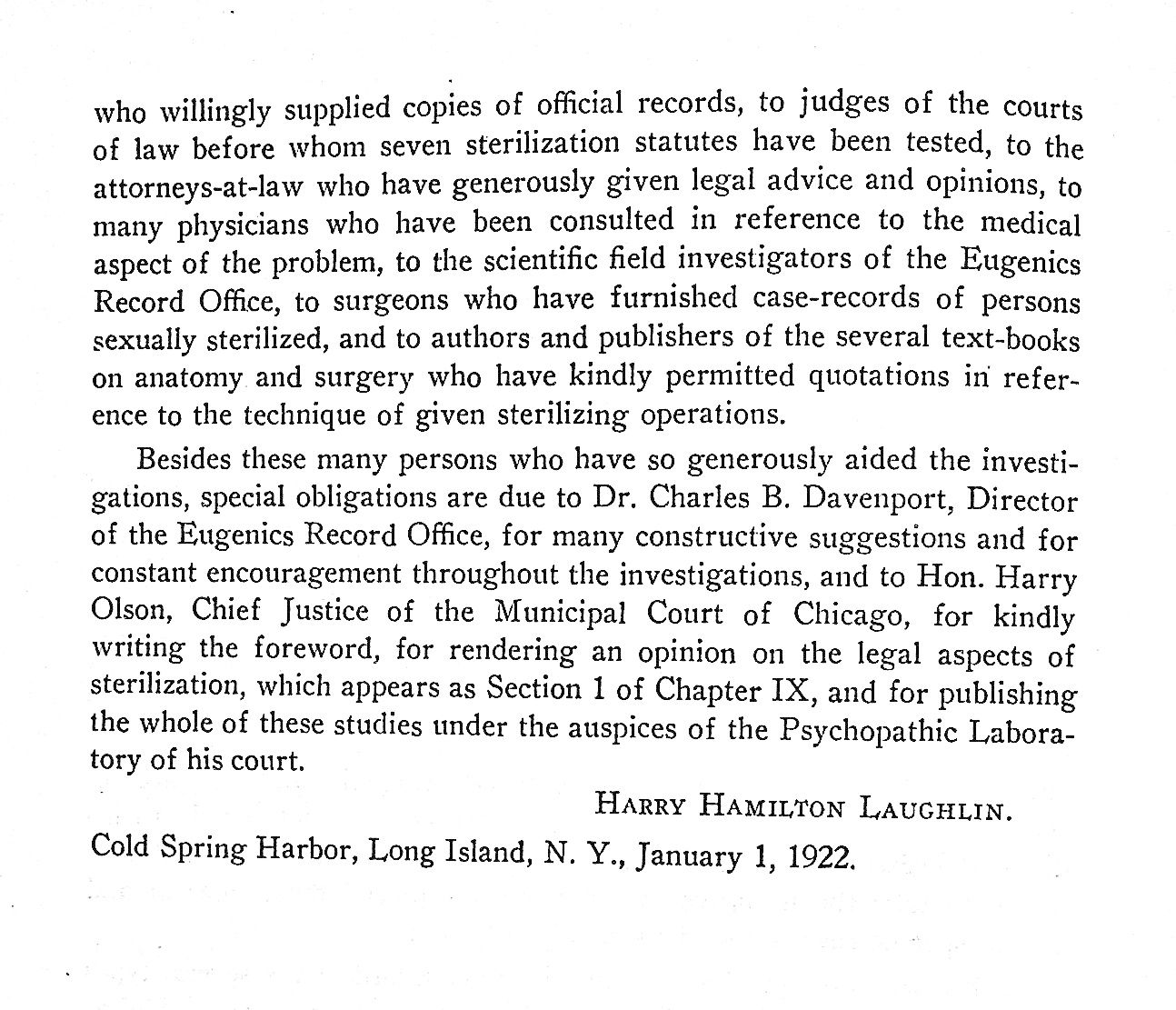
HARRY HAMILTON LAUGHLIN (1880 – 1943) was an American educator and eugenicist. He served as the superintendent of the Eugenics Record Office from its inception in 1910 to its closure in 1939 and was among the most active individuals influencing American eugenics policy, especially compulsory sterilization legislation. In 1917, he earned a Doctor of Science degree from Princeton University in the field of cytology. He worked as a high school teacher and principal before his interest turned to eugenics. This led to his correspondence with Charles Davenport, an early researcher into Mendelian inheritance in the United States. In 1910, Davenport asked Laughlin to move to Long Island, New York, to serve as the superintendent of his new research office. The Eugenics Record Office (ERO) was founded at Cold Spring Harbor, New York, by Davenport with support from the Carnegie Institution of Washington. Laughlin was appointed as managing director. He provided extensive statistical testimony to the United States Congress in support of the Johnson-Reed Immigration Act of 1924. He was eventually appointed as an expert eugenics agent to the Committee on Immigration and Naturalization (the 1924 law applied national-origin quotas on immigrants, which stopped the large Italian and Russian influx of the early 1900s). In 1927, the Eugenics Research Association, of which Laughlin was an officer, began a study of the heritage of U.S. Senators. Some senators were enthusiastic while others reluctantly complied. One of Laughlin's interests was to encourage the proliferation of compulsory sterilization legislation in the United States, to sterilize the "unfit" members of the population. He published his proposal for a model sterilization law in his 1922 study of Eugenical Sterilization in the United States (offered here). It included as subjects for eugenic sterilization: the feeble-minded, the insane, criminals, epileptics, alcoholics, blind persons, deaf persons, deformed persons, and indigent persons. The Reichstag of Nazi Germany passed the Law for the Prevention of Hereditarily Diseased Offspring in 1933, closely based on Laughlin's model. Between 35,000 and 80,000 persons were sterilized in the first full year alone (it is now known that over 350,000 persons were sterilized). Laughlin was awarded an honorary degree by the University of Heidelberg in 1936 for his work on behalf of the "science of racial cleansing." However, reports about the extensive use of compulsory sterilization in Germany began to appear in US newspapers. By the end of the decade, eugenics had become associated with Nazism and poor science.
CITED BY PA LOMBARDO, Three Generations, No Imbeciles. Eugenics, the Supreme Court, and Buck vs. Bell. (2008): "As secretary of the American Breeders Association, Davenport helped organize the First International Congress ot Eugenics at the University of London in 1912, where he met members of the German contingent, such as Alfred Ploetz. The potential for German legislation that would mandate sexual sierilization surfaced in 1914, the same year that Harry Laughlin's Model Law was first published in the United States. Laughlin declared that the pathbreaking national policy put Germany in the vanguard of "the great nations of the world" that recognized the "biological foundations of the national character." With the promulgation of the Nazi sterilization law, Laughlin's international standing among eugenicists increased. At home in Cold Spring Harbor, the situation was much less hospitable. From the time of his first declarations on the need to sterilize millions of Americans, Laughlin was a lightening rod for criticism. He had also been the subject of pejorative comments from prominent geneticists for his congressional testimony and other public statements during the debates on immigration restriction in the early 1920s."
Details
Title
Eugenical Sterilization in the United States
Author
Laughlin, Harry Hamilton
Binding
Cloth binding
Condition
Unknown
Publisher
Psychopathic Laboratory of the Municipal Court of Chicago: Chicago
Date
1922 December
Edition
First edition