

Sixteen Letters to John Hall Watson from Spring 1851, Describing Financial “bamboozl[ing]” by the Prominent Saunders Family of Lawrence, the “free soil stork rising”, and Business and Family Matters
- Sixteen letters totaling fifty-seven pages
- Massachusetts and New York , 1851
Massachusetts and New York, 1851. Sixteen letters totaling fifty-seven pages. Folded, else Fine.. A collection of sixteen letters written to John Hall Watson (1820–1901) from various family and friends shortly after Watson’s departure for Europe in March or April of 1851. Correspondents are his brother, Benjamin Franklin “Frank” Watson (1826–1905); family friends John H. Kimball (?–?) and Joshua Foster Burgess (1827–1908); and his wife Elizabeth Merrill Watson (1829–1859).
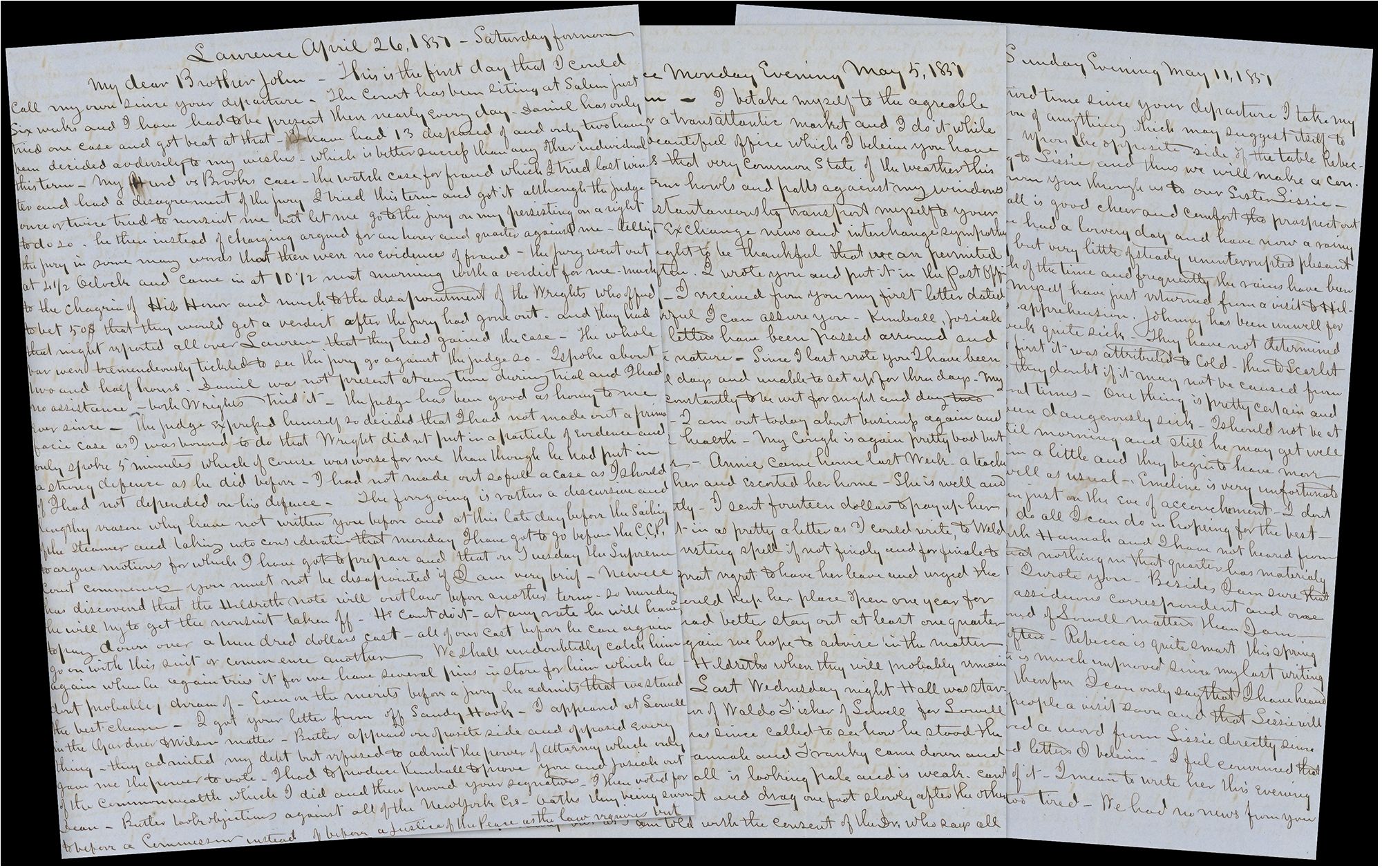
Frank Watson’s letters, which total ten pages, highlight the group. Watson was a prominent attorney in Lawrence, Massachusetts, was appointed the town’s Postmaster, elected City Solicitor, published the Democratic newspaper The Lawrence Sentinel, and was present as a Major in the 6th Massachusetts Regiment[1]—the first unit in the Union Army to suffer casualties, when they were fired upon by civilians during the 1861 Baltimore riot. At this time, however, the younger Watson had not yet attained this level of success. Instead, he was a trial lawyer working under Daniel Saunders, Jr.—son of one of Lawrence’s founders, and later the city’s mayor—about whom Watson has numerous complaints:
“I hardly know what to say to you about my business and prospects – I must confess that it seems to me that even if I remain in the law I had full as well separate from Saunders as to keep with him. He is selfish and grasping and has a powerful notion of his own importance and superiority which is decidedly more apparent to him than to any more distant observer. [...] I could put up with these things if I was getting a living from this business. It is clear that I am not – there is nominally from 10 to 1500$ coming to me this year but I shall not see $500 of it between this and next January. Daniel is in want of all the money he can get his hands hold of and he takes it without rendering any account therefore on the books and I trust luck to find it out. This is not done for the purpose of [?] cheating me I presume but I have no doubt that it is intentionally done for the purpose of useing the amount without my knowledge so that I may consider myself bound to share everything I receive in. [...] I am not going to be bamboozled by the Saunders tribe any longer – I am going to have my rights strictly, fully and as though they truly belonged to me or I am going to take a stand which will compel him to buy me out or remain in a very uncomfortable situation. [...] In the first place I am to devote every instant of time between 8 Oclock in the morning until 9 Oclock at night to the office business or else the office will have to be closed as I am of course the only one responsible in the concern.” (May 11)
Watson also provides his brother with much detail about the cases he was currently trying—noting that “Daniel has only tried one case and got beat at that”, while he “had 13 deposed of and only two have been decided” against him (April 26)—including a fraud case in which:
“the judge once or twice tried to resist me but let me go to the jury on my persisting on a right to do so, he then instead of charging argued for an hour and quarter against me, telling the jury in some many words that there were no evidence of fraud – the jury went out at 2 ½ Oclock and came in at 10 ½ next morning with a verdict for me – much to the chagrin of His Honor and much to the disappointment of the [opposing counsel] Wrights who offered to bet 50$ that they would get a verdict after the jury had gone out [...] The whole bar were tremendously tickled to see the jury go against the judge so. [...] The judge has been as good as honey to me ever since.” (April 26)
Despite fighting for the Union, Frank Watson was a Democrat, and comments on the April 1851 arrest of Thomas Sims:
“There has since your departure been a great excitement in Boston on the arrest of one Sims a ‘fugitive’ – the military were under arms during the trial which lasted over a week. He was safely taken off by water to Savannah where on landing the papers report that he made a speech thanking his stars that he had got out of the hands of the abolitionists.” (April 26)
On the subject of abolitionist politics, John Kimball writes:
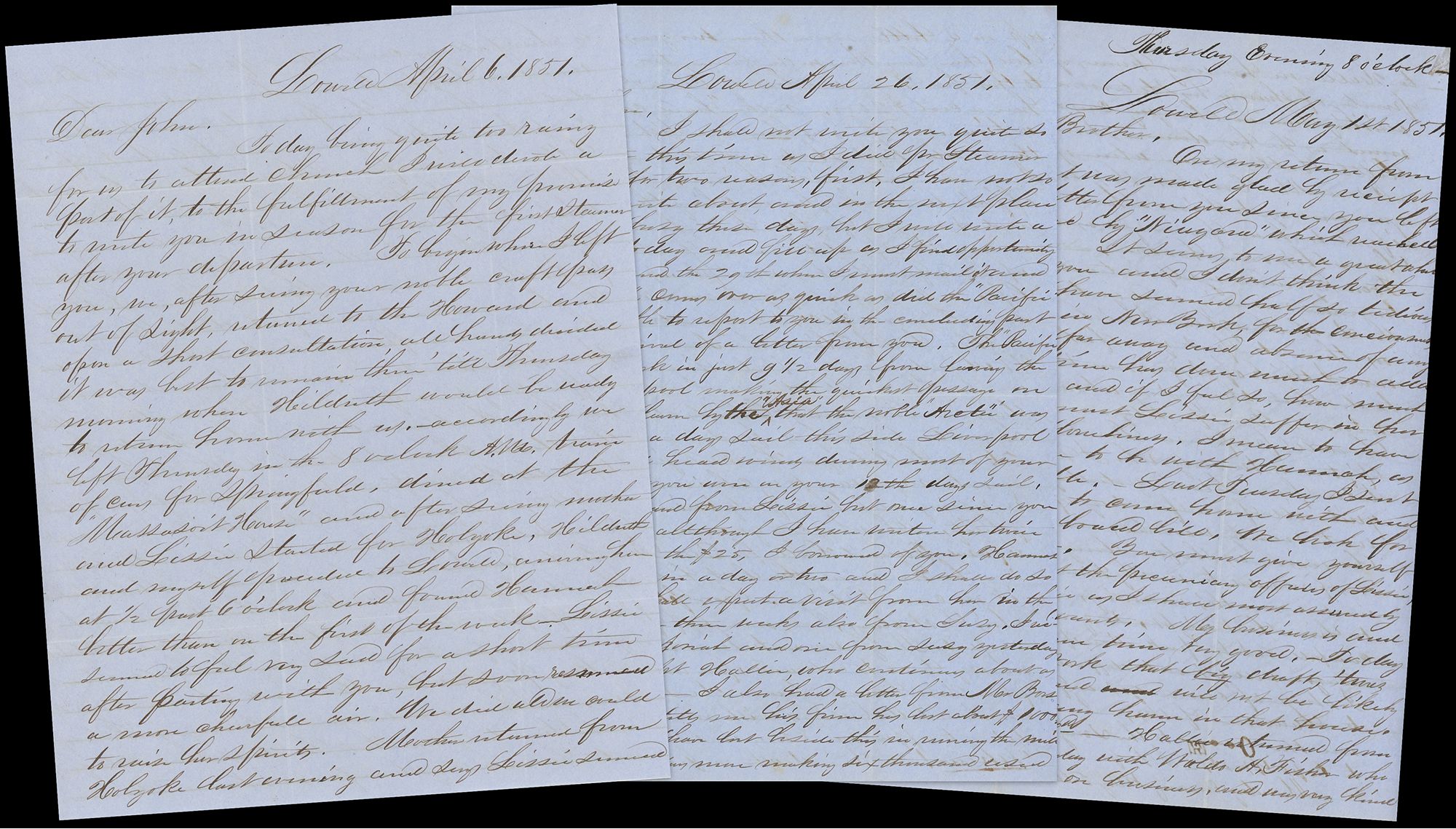
“Yesterday Charles Sumner was elected Senator to Congress for six years it being the 26th balloting. He had just the number of votes necessary to a choice; the free soil stork is rising and that party is in a high state of felicity. The whig city government of Boston have refused Faneuil Hall for Danl Webster to speak in – he has made his last bid for the Presidency & it no[t] come to him – poor fellow! he has seen his best days [...]” (April 26)
Webster had fallen from popularity, and been denied a speech at Faneuil Hall, in large part because of his support for the Compromise of 1850 and its Fugitive Slave Act, which had resulted in the arrest and re-enslavement of Thomas Sims, as Watson mentions.
Kimball also reports on a fire in a mill whose owner, “Mr Bois,” “wants the matter kept shady”, and on sales of cloth and clothing items—Kimball was located in Lowell. Joshua Burgess writes of the state of business in New York City:
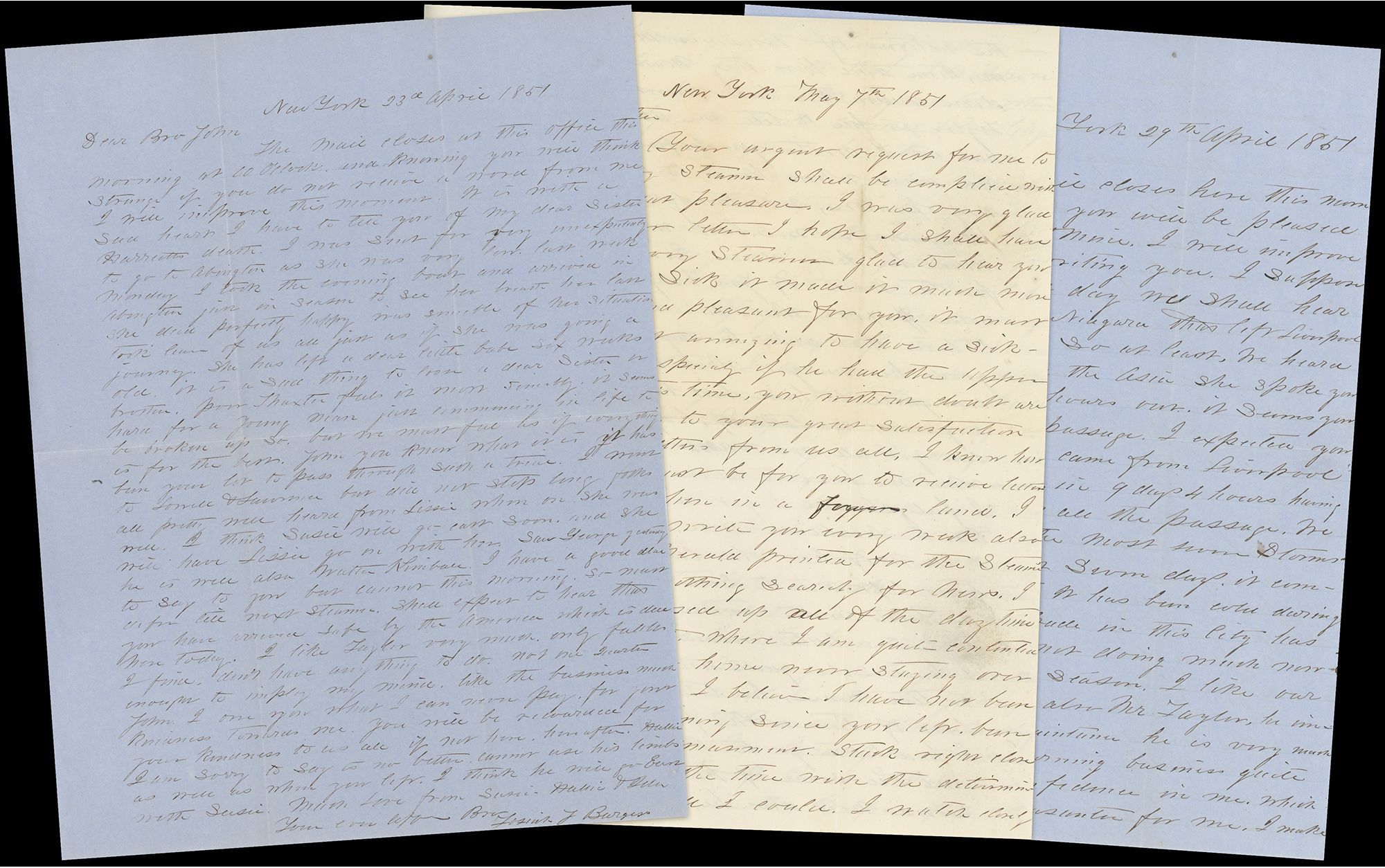
“Mr. Clark came in, and bo’t sixty dollars worth of collars, he is a hard old chap, beat us down, then said you could buy the same thing cheaper here than we offered to him, he went out, said he could get the same otherwheres for half the money, was gone about an hour, came back and took all we had at our price, he is worse than Lowell Factory Girls.” (April 29)
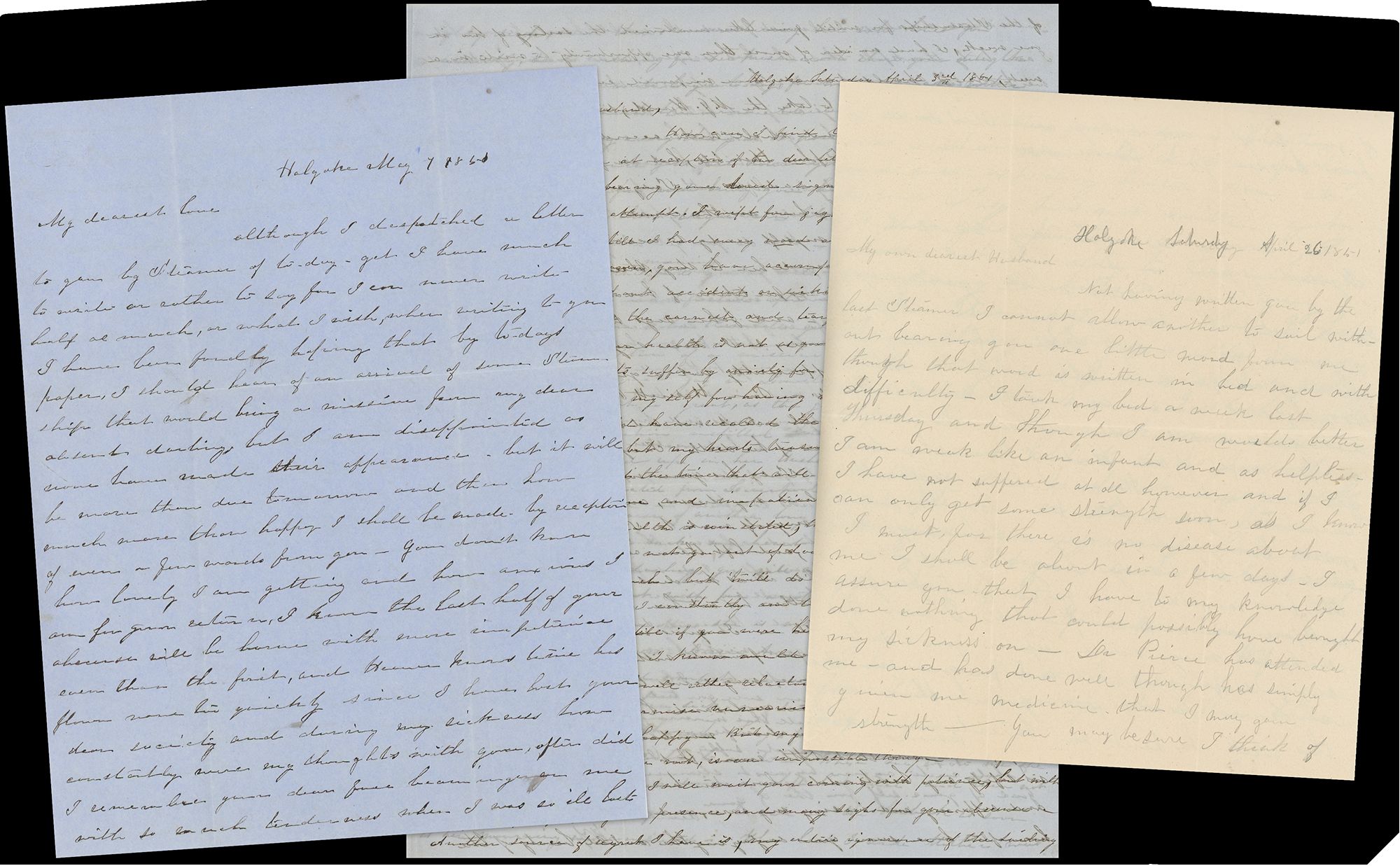
John Watson's wife Elizabeth writes from Holyoke, mainly updating him on her health and worries for his safety and “bless[ing] the inventor of steam navigation” and the telegraph (ND), though she also informs him that he is “allow[ed] to look at [the ladies] just look enough to gratify my curiosity” about how “lovely” they are (May 7).
Of interest to historians of the politics and industry of pre-war Massachusetts.
[1] Paul Russinoff, “A Savior of the Capitol,” Military Images Magazine, April 9, 2021.
Frank Watson’s letters, which total ten pages, highlight the group. Watson was a prominent attorney in Lawrence, Massachusetts, was appointed the town’s Postmaster, elected City Solicitor, published the Democratic newspaper The Lawrence Sentinel, and was present as a Major in the 6th Massachusetts Regiment[1]—the first unit in the Union Army to suffer casualties, when they were fired upon by civilians during the 1861 Baltimore riot. At this time, however, the younger Watson had not yet attained this level of success. Instead, he was a trial lawyer working under Daniel Saunders, Jr.—son of one of Lawrence’s founders, and later the city’s mayor—about whom Watson has numerous complaints:
“I hardly know what to say to you about my business and prospects – I must confess that it seems to me that even if I remain in the law I had full as well separate from Saunders as to keep with him. He is selfish and grasping and has a powerful notion of his own importance and superiority which is decidedly more apparent to him than to any more distant observer. [...] I could put up with these things if I was getting a living from this business. It is clear that I am not – there is nominally from 10 to 1500$ coming to me this year but I shall not see $500 of it between this and next January. Daniel is in want of all the money he can get his hands hold of and he takes it without rendering any account therefore on the books and I trust luck to find it out. This is not done for the purpose of [?] cheating me I presume but I have no doubt that it is intentionally done for the purpose of useing the amount without my knowledge so that I may consider myself bound to share everything I receive in. [...] I am not going to be bamboozled by the Saunders tribe any longer – I am going to have my rights strictly, fully and as though they truly belonged to me or I am going to take a stand which will compel him to buy me out or remain in a very uncomfortable situation. [...] In the first place I am to devote every instant of time between 8 Oclock in the morning until 9 Oclock at night to the office business or else the office will have to be closed as I am of course the only one responsible in the concern.” (May 11)
Watson also provides his brother with much detail about the cases he was currently trying—noting that “Daniel has only tried one case and got beat at that”, while he “had 13 deposed of and only two have been decided” against him (April 26)—including a fraud case in which:
“the judge once or twice tried to resist me but let me go to the jury on my persisting on a right to do so, he then instead of charging argued for an hour and quarter against me, telling the jury in some many words that there were no evidence of fraud – the jury went out at 2 ½ Oclock and came in at 10 ½ next morning with a verdict for me – much to the chagrin of His Honor and much to the disappointment of the [opposing counsel] Wrights who offered to bet 50$ that they would get a verdict after the jury had gone out [...] The whole bar were tremendously tickled to see the jury go against the judge so. [...] The judge has been as good as honey to me ever since.” (April 26)
Despite fighting for the Union, Frank Watson was a Democrat, and comments on the April 1851 arrest of Thomas Sims:
“There has since your departure been a great excitement in Boston on the arrest of one Sims a ‘fugitive’ – the military were under arms during the trial which lasted over a week. He was safely taken off by water to Savannah where on landing the papers report that he made a speech thanking his stars that he had got out of the hands of the abolitionists.” (April 26)
On the subject of abolitionist politics, John Kimball writes:
“Yesterday Charles Sumner was elected Senator to Congress for six years it being the 26th balloting. He had just the number of votes necessary to a choice; the free soil stork is rising and that party is in a high state of felicity. The whig city government of Boston have refused Faneuil Hall for Danl Webster to speak in – he has made his last bid for the Presidency & it no[t] come to him – poor fellow! he has seen his best days [...]” (April 26)
Webster had fallen from popularity, and been denied a speech at Faneuil Hall, in large part because of his support for the Compromise of 1850 and its Fugitive Slave Act, which had resulted in the arrest and re-enslavement of Thomas Sims, as Watson mentions.
Kimball also reports on a fire in a mill whose owner, “Mr Bois,” “wants the matter kept shady”, and on sales of cloth and clothing items—Kimball was located in Lowell. Joshua Burgess writes of the state of business in New York City:
“Mr. Clark came in, and bo’t sixty dollars worth of collars, he is a hard old chap, beat us down, then said you could buy the same thing cheaper here than we offered to him, he went out, said he could get the same otherwheres for half the money, was gone about an hour, came back and took all we had at our price, he is worse than Lowell Factory Girls.” (April 29)
John Watson's wife Elizabeth writes from Holyoke, mainly updating him on her health and worries for his safety and “bless[ing] the inventor of steam navigation” and the telegraph (ND), though she also informs him that he is “allow[ed] to look at [the ladies] just look enough to gratify my curiosity” about how “lovely” they are (May 7).
Of interest to historians of the politics and industry of pre-war Massachusetts.
[1] Paul Russinoff, “A Savior of the Capitol,” Military Images Magazine, April 9, 2021.
Details
Title
Sixteen Letters to John Hall Watson from Spring 1851, Describing Financial “bamboozl[ing]” by the Prominent Saunders Family of Lawrence, the “free soil stork rising”, and Business and Family Matters
Author
[Massachusetts – Antebellum Period – Politics – Law] Watson, Benjamin Franklin; Kimball, John H.; Burgess, Joshua F.; Watson, Elizabeth Merrill
Binding
Sixteen letters totaling fifty-seven pages
Condition
Fine
Publisher
Massachusetts and New York
Date
1851