

USE OF ANGERS
- Western France (Angers?) , ca. 1470
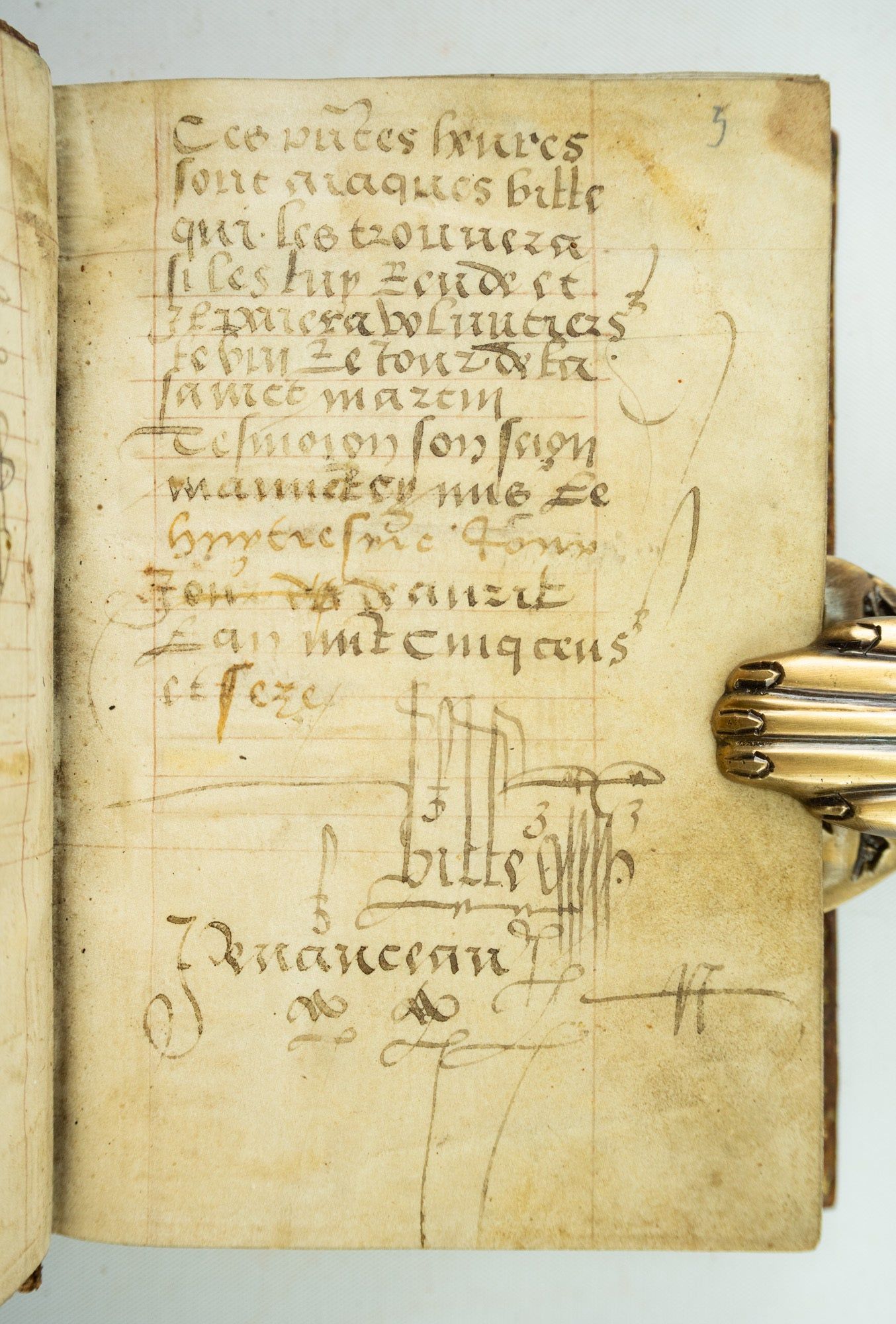
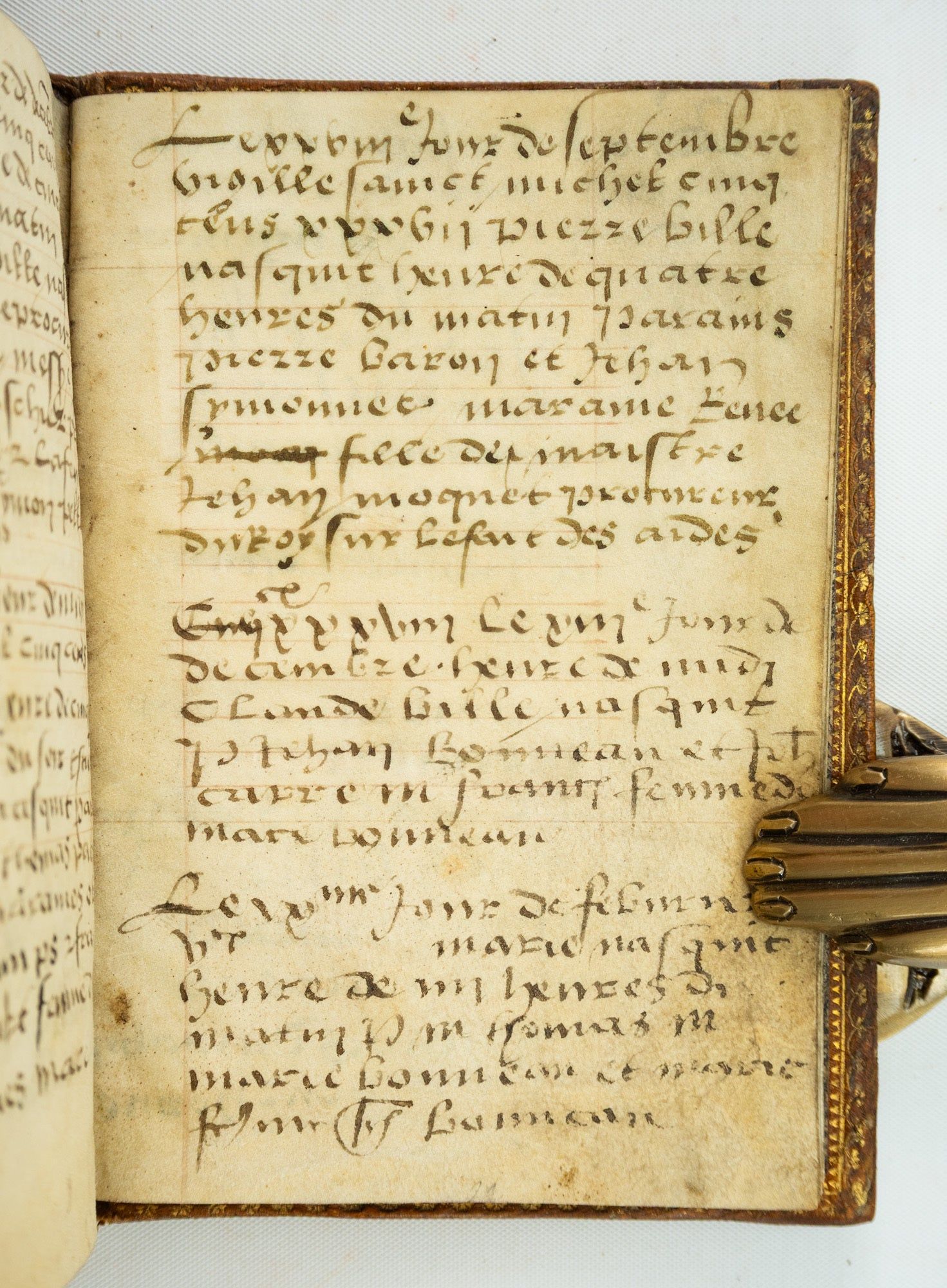
Western France (Angers?), ca. 1470. 122 x 88 mm. (4 3/4 x 3 1/2"). Single column, 15 lines in a neat bâtarde hand. 152 leaves (first and last three are ruled blank leaves; leaf count does not include the first blank endleaf erroneously included in the modern pencil foliation). COMPLETE. Contents: early ownership inscriptions (f. 2v), Calendar (f. 5r), Hours of the Virgin (f. 17r), Extract from the Gospel of John (f. 55v), Obsecro Te (f. 57r), Penitential Psalms and Litany (f. 61r), Office of the Dead (f. 78r), series of devotional prayers in Latin to the Virgin Mary, Christ, and the Archangel Michael (f. 115r), O Intemerata (f. 134v), series of devotional prayers in Latin (f. 138r), ruled blank leaves with family records of Jacques Bille (f. 150v).
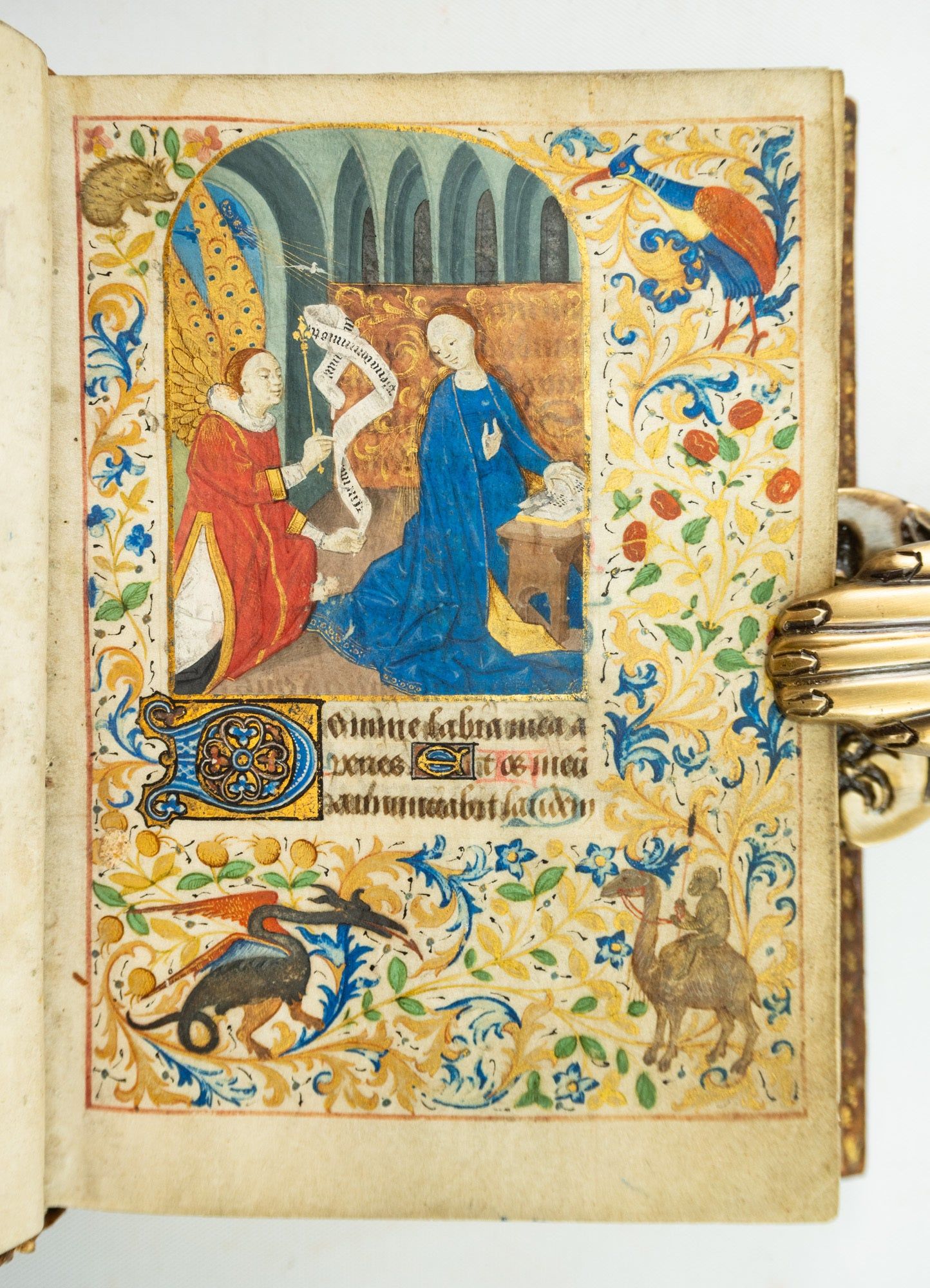
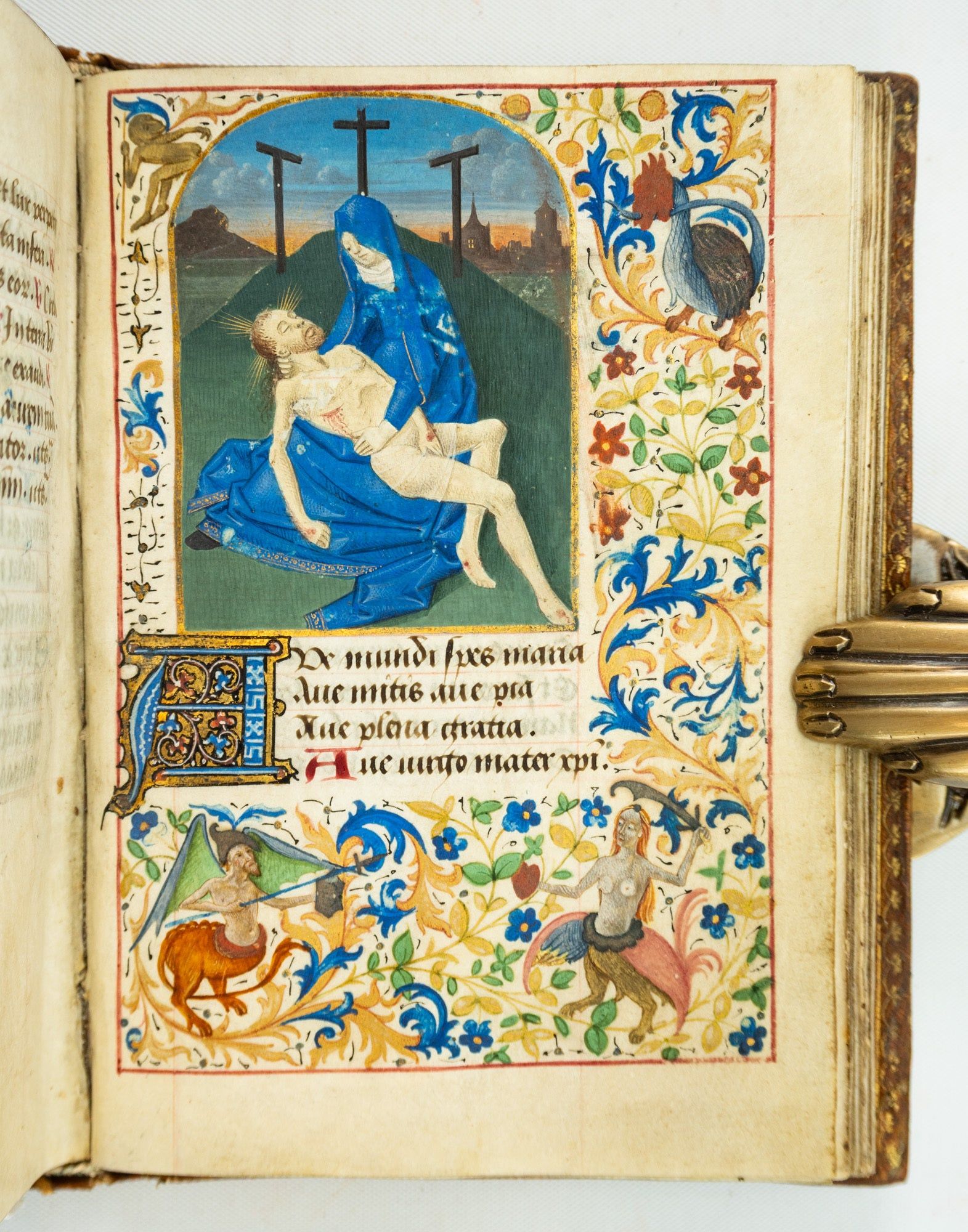
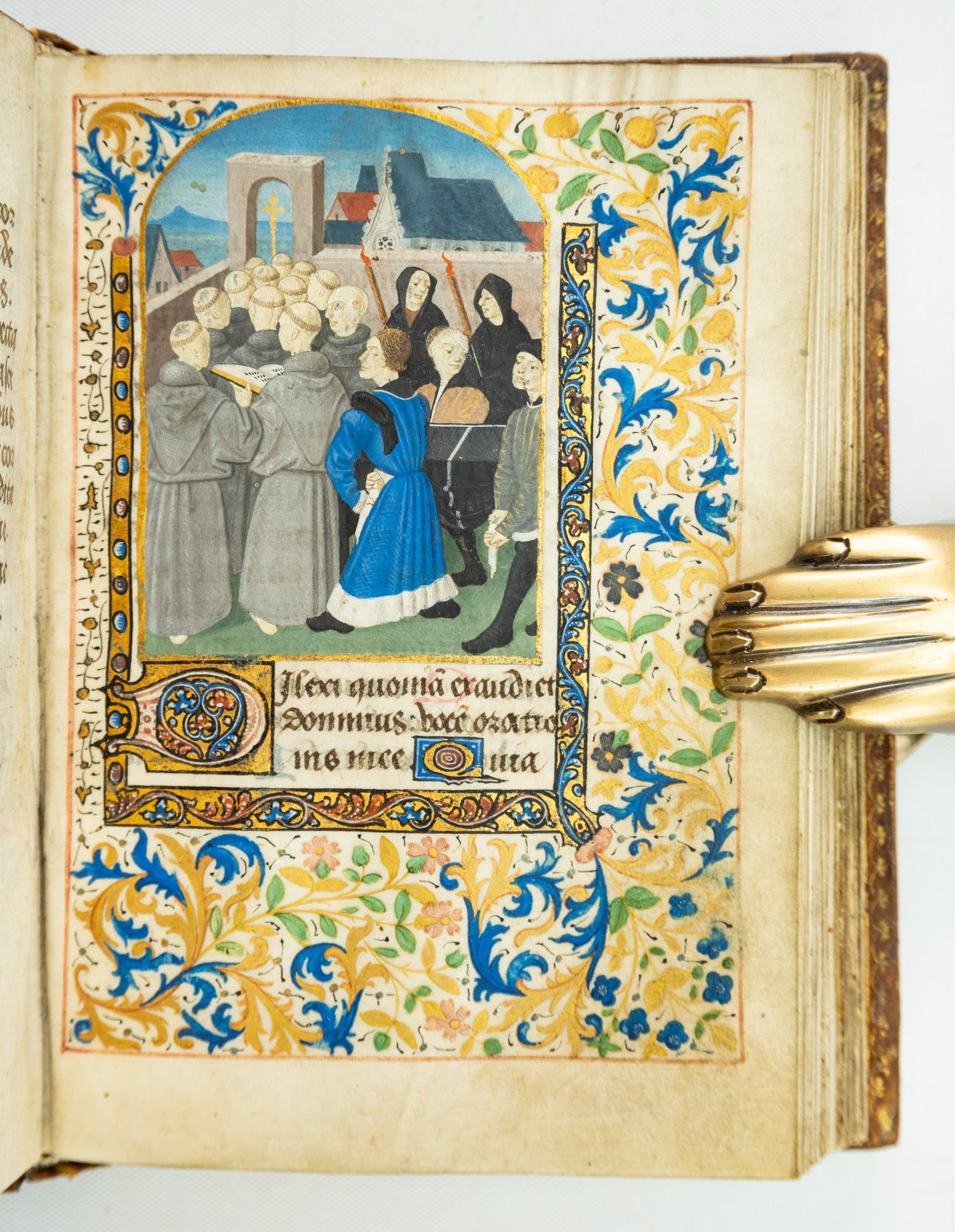
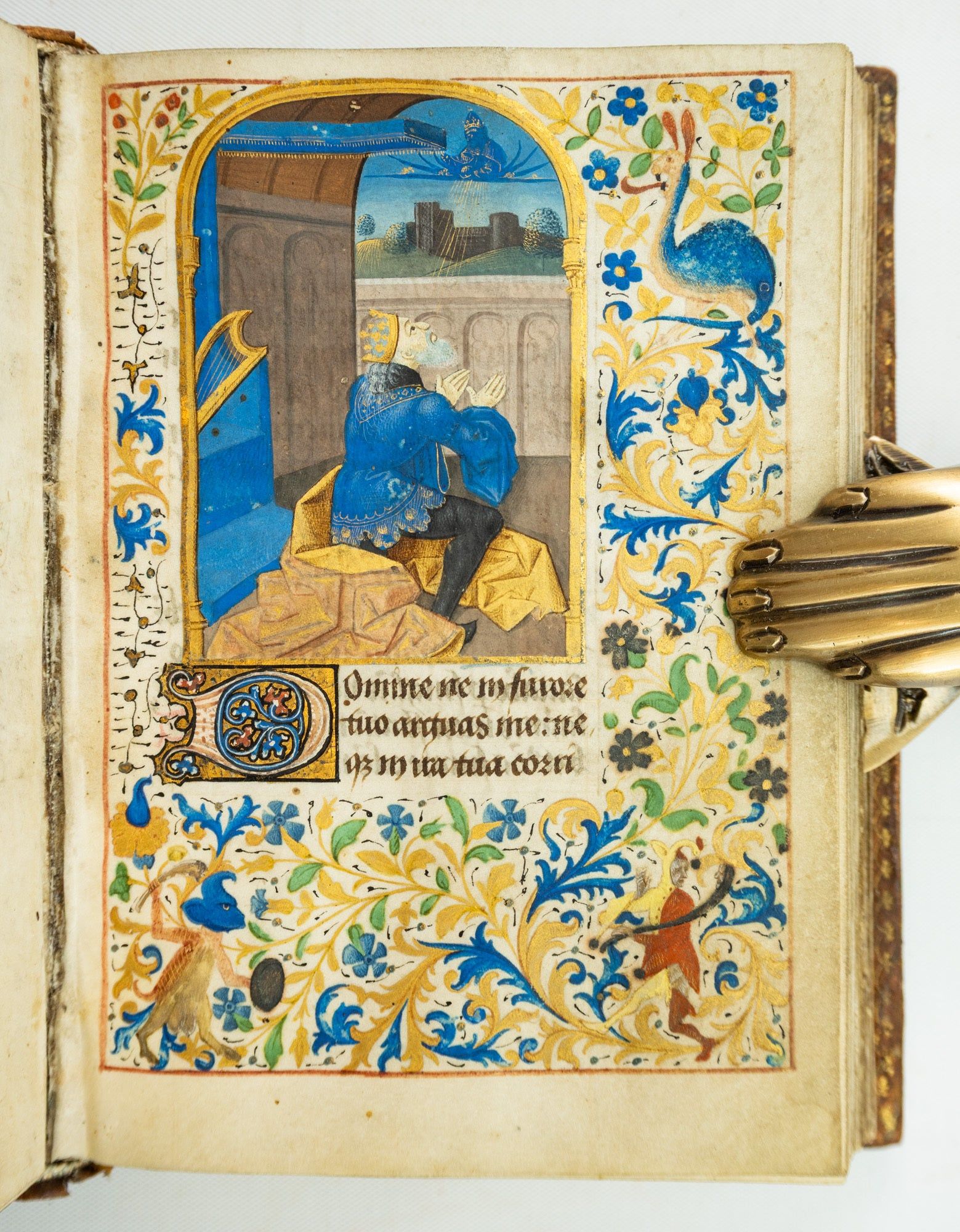
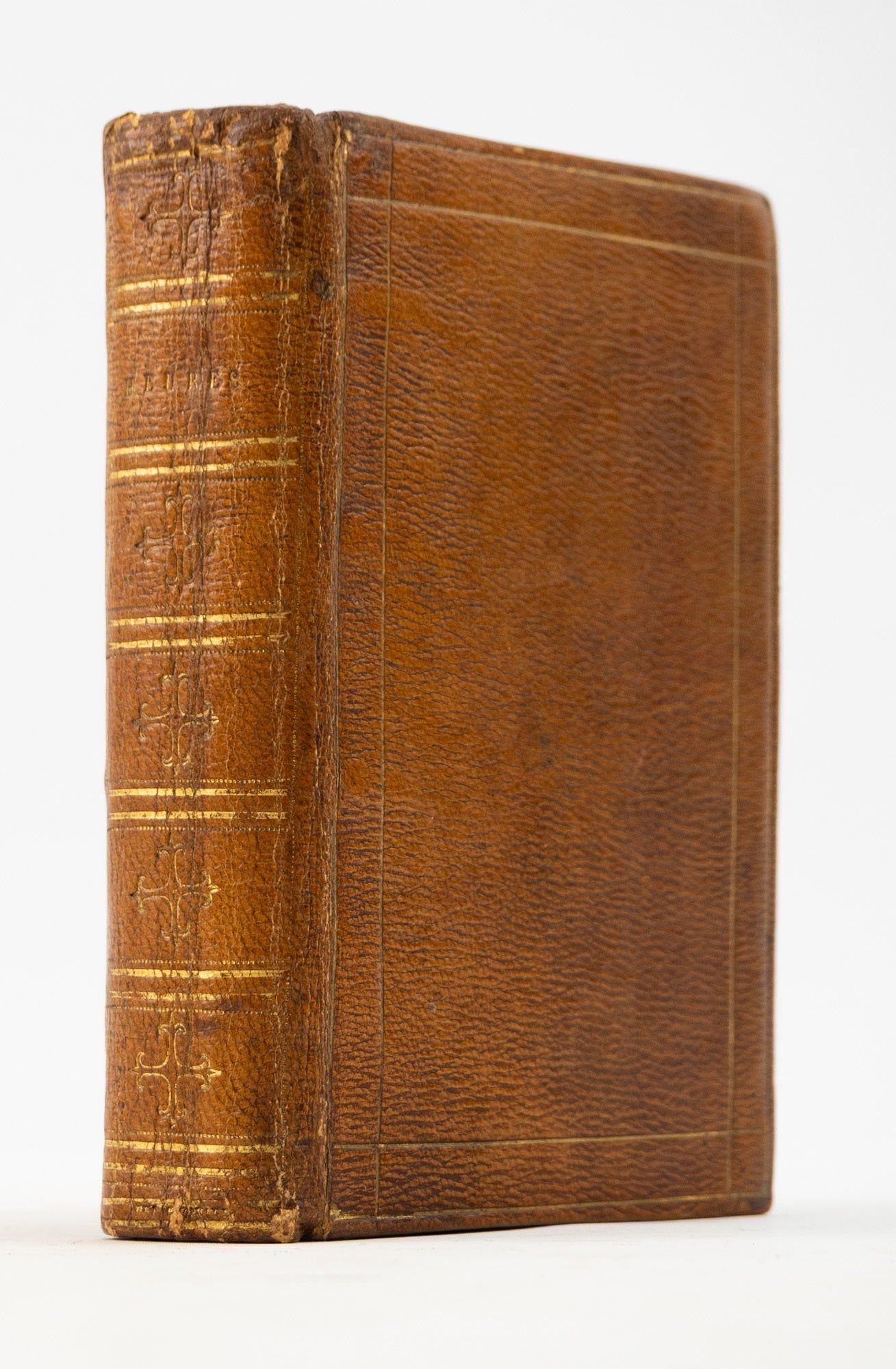
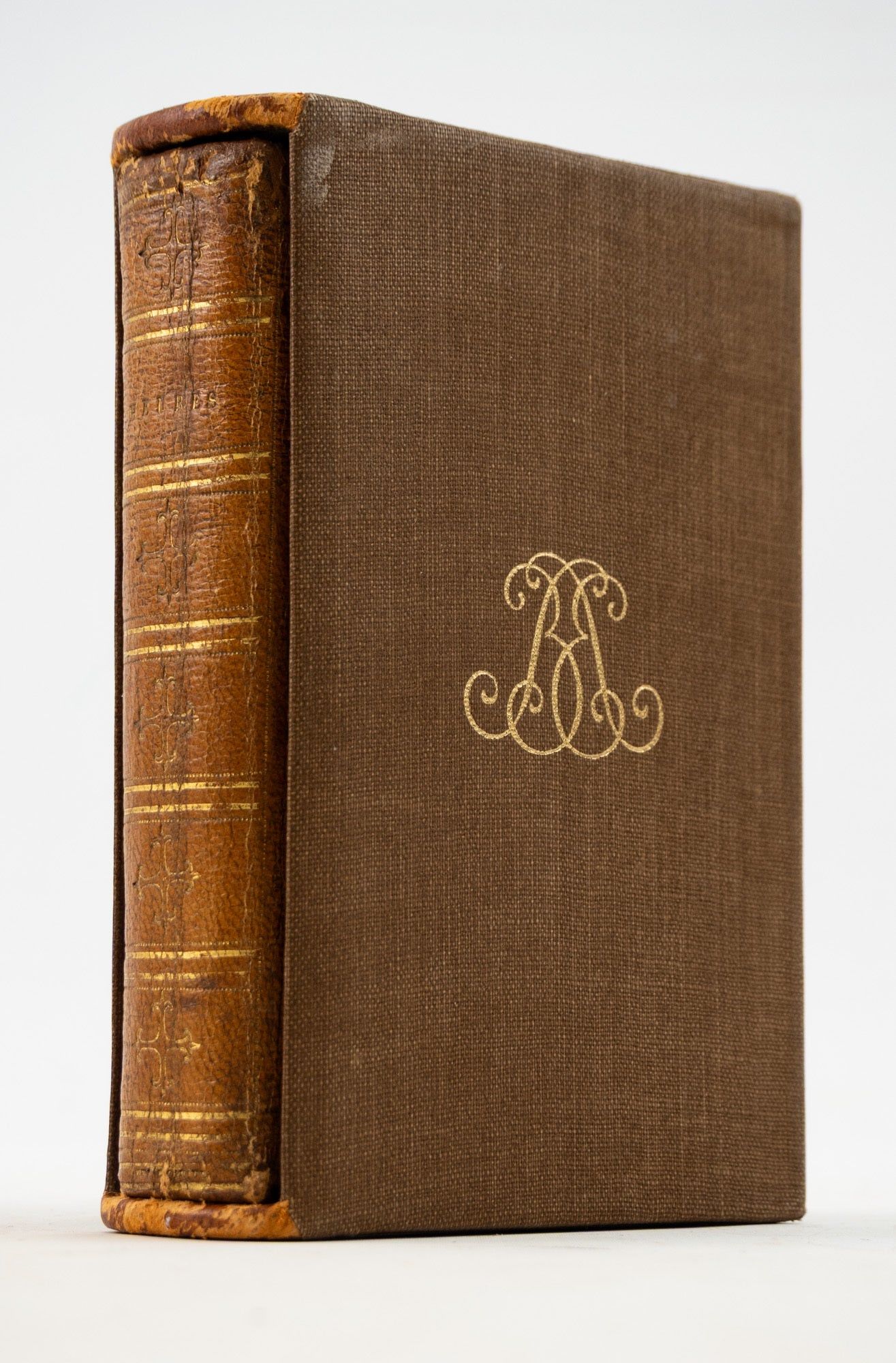
Pleasing early 19th century caramel colored straight-grain morocco, covers bordered with a double gilt rule, smooth spine gilt in compartments divided with a double gilt rule and dotted roll and cross centerpieces (neat early repair to head of spine), turn-ins gilt, marbled endpapers, all edges gilt. Housed in a 20th century felt-lined slipcase with a gilt monogram on front. Ruled in red, rubricated in red and blue, two one-line burnished gold initials on a blue or pink ground, one three-line blue and red penwork initial, eight three- to four-line initials in pink and blue filled with ivy leaves on a burnished gold ground, these pages with three-quarter borders of acanthus leaves, dense rinceaux, colorful fruit and flowers, gold ivy leaves, and bezants, and WITH FOUR ARCH-TOPPED MINIATURES above a three- or four-line initial painted blue or pink on gold ground, each surrounded by a full border of painted gold and brightly colored acanthus leaves, vines, and flowers, studded with burnished gold bezants, three borders inhabited with fantastical creatures, the subjects of the miniatures including the Annunciation (f. 17r); King David in Prayer (f. 61r); a funeral procession (f. 78r); and the Pietà (f. 115r). Verso of first leaf with signature of Jacques Bille (or Billes), and the following page with a note in a different contemporary hand (with the day and year erased and written over): "Ces p(rese)ntes heures sont a iaques bille qui les trouvera si les luy Rende et il paiera voluntriers le VIII le jour de la sainct martin. Tesmoion son seign manuel cy mis le huytiesme jour de Avril L'an mil cinqcens et seze" ("These present hours belong to Jaques Bille; whoever finds them should return them to him, and he will gladly pay on the eighth, the day of Saint Martin. Witness his manual signature placed here on the eighth day of April in the year one thousand five hundred and sixteen"), followed by Bille's signature; third blank leaf with the ownership inscription "Tussanus Philippus, Adeline Presbyter, anno 1763"; verso of final text leaf and next three blanks with family records (see below). Superficial crease to spine, other insignificant signs of use to the leather, but the binding sound and attractive. A hint of thumbing at lower corners of first half of the manuscript, miniatures with a few isolated minor spots of rubbing (not affecting faces), otherwise in very fine condition internally, the paint bright and fresh, and the vellum clean.
Almost certainly made in western France and with early ownership inscriptions tying it to that area, this Book of Hours contains four extraordinarily high-quality miniatures by an accomplished artist very likely related to one of the greatest French manuscript illuminators of the period. Stylistic markers here include drapery with crisp folds, figures with pale skin and high foreheads, simple but perfectly executed scenery, and a flair for detail. The latter talent is particularly evident on the various textiles and garments, which include almost impossibly fine gold trimmings and sophisticated draping. It was, in fact, on the basis of the extraordinary drapery that the manuscript had previously been associated with the circle of Jean Fouquet, called by Avril and Reynaud "the greatest French painter and illuminator of the 15th century." In a case of twin summits, recent scholarship suggests an alternative attribution to the similarly illustrious circle of Maître de Jouvenel des Ursins, a contemporary of Fouquet who, according to Avril and Reynaud, was "the most important illuminator of the mid 15th century in western France." Around him sprung up a group of artists collectively referred to as the "Jouvenel group," who were based primarily in the area between Tours, Nantes, and Angers. The illuminations in the present work are so skillful that with additional research it may be possible to pin down an attribution with more certainty; whatever the identity of the artists, the level of finishing in these illuminations--from the careful molding of the faces and bodies, to the expertly balanced compositions and elegant brushwork--are the hallmarks of a superior hand. When this item was sold at Sotheby's on 13 July 1977, the auction catalogue said that the miniatures "are painted with fine, clear colours with great delicacy in the modelling of faces and costumes. The finest miniature is that of the Pietà set against a deep green hill with a fiery sun setting behind dark mountains and buildings and lighting up the evening sky." Indeed, this image is a quiet masterpiece of illumination, and an excellent example of this artist's work. The naked figure of Christ exhibits a real command of anatomy and proportion, while subtle details, such as the foreshortening to Christ's face and the whisper-thin cloth clinging to the lower body, are done with an exquisite touch. The miniature of the funeral procession also stands out for its superior quality. The composition is quite different from the Pietà (being a large group of people rather than an intimate portrait of two figures), but it is approached with equal rigor and devotion to detail. The faces turning toward the viewer all show impressive individualization, with the figure dressed in blue being particularly well formed and highly differentiated from the crowd--so much so that this could possibly be considered a patron portrait. Three of the miniatures in this work contain borders with delightful examples of marginalia, including a court jester, a hedgehog, a male and female centaur wielding weapons, a monkey riding a camel, another monkey rubbing his posterior, and other whimsical hybrid creatures. These stand out because they are rendered with the characteristic skill and attention to detail found in the larger miniatures, so it is possible that they could also be the work of the miniature artist. Although the Calendar in this manuscript is fairly sparse, at least two unusual entries in red point toward western France: St. Julian, Bishop of Le Mans (27 January); and St. Maurilius, patron saint of Angers (13 September). Significantly, the Translation of St. Maurilius also appears on both 16 August and 19 of October, in black. Strengthening this association with the west are the early ownership inscriptions tying to the Bille family from at least the early 16th century, and possibly before. The final three leaves contain family records that include the date of Jacques Bille's wedding (8 April 1516) and the births of 15 children, written in two or three hands, between approximately 1520 and 1549. The name of our former owner was difficult to trace, with certainty, but we find mention of a Jacques Bille in the French National Archives, where he is listed as a notary in Bourg, in southwestern France. This would make sense, given Bille's complex signatures found on the first two leaves--the extra flourishes may well reflect notarial signatures that he used in his work. In modern times, our manuscript was sold at Sotheby's on 25 February 1946 (lot 57) to Maggs, who may well have sold it to Sven Ericcson, who is listed as the owner of this (and four other 15th century illuminated Books of Hours) when it was sold at Sotheby's in 1977 (for £3,200). According to RBH, it was purchased at that auction by "Malle," almost certainly Bernard Malle (1929-2008), brother of filmmaker Louis Malle and an eminent collector and bibliographer. In an elegant tribute to his late friend and mentor, Bernard Clavreuil calls Malle "one of the most discerning . . . collectors of the postwar era," someone who "never ceased to refine and improve in order to achieve an impossible perfection." Malle also acted as a private advisor to more than one major collection, and it is possible that he purchased the present manuscript on behalf of an unknown collector, rather than his own library. These former owners clearly looked after this Book of Hours carefully over the years, and for good reason: it is a work of considerable craftsmanship and beauty, with illuminations distinguished by very substantial artistic skill..
Pleasing early 19th century caramel colored straight-grain morocco, covers bordered with a double gilt rule, smooth spine gilt in compartments divided with a double gilt rule and dotted roll and cross centerpieces (neat early repair to head of spine), turn-ins gilt, marbled endpapers, all edges gilt. Housed in a 20th century felt-lined slipcase with a gilt monogram on front. Ruled in red, rubricated in red and blue, two one-line burnished gold initials on a blue or pink ground, one three-line blue and red penwork initial, eight three- to four-line initials in pink and blue filled with ivy leaves on a burnished gold ground, these pages with three-quarter borders of acanthus leaves, dense rinceaux, colorful fruit and flowers, gold ivy leaves, and bezants, and WITH FOUR ARCH-TOPPED MINIATURES above a three- or four-line initial painted blue or pink on gold ground, each surrounded by a full border of painted gold and brightly colored acanthus leaves, vines, and flowers, studded with burnished gold bezants, three borders inhabited with fantastical creatures, the subjects of the miniatures including the Annunciation (f. 17r); King David in Prayer (f. 61r); a funeral procession (f. 78r); and the Pietà (f. 115r). Verso of first leaf with signature of Jacques Bille (or Billes), and the following page with a note in a different contemporary hand (with the day and year erased and written over): "Ces p(rese)ntes heures sont a iaques bille qui les trouvera si les luy Rende et il paiera voluntriers le VIII le jour de la sainct martin. Tesmoion son seign manuel cy mis le huytiesme jour de Avril L'an mil cinqcens et seze" ("These present hours belong to Jaques Bille; whoever finds them should return them to him, and he will gladly pay on the eighth, the day of Saint Martin. Witness his manual signature placed here on the eighth day of April in the year one thousand five hundred and sixteen"), followed by Bille's signature; third blank leaf with the ownership inscription "Tussanus Philippus, Adeline Presbyter, anno 1763"; verso of final text leaf and next three blanks with family records (see below). Superficial crease to spine, other insignificant signs of use to the leather, but the binding sound and attractive. A hint of thumbing at lower corners of first half of the manuscript, miniatures with a few isolated minor spots of rubbing (not affecting faces), otherwise in very fine condition internally, the paint bright and fresh, and the vellum clean.
Almost certainly made in western France and with early ownership inscriptions tying it to that area, this Book of Hours contains four extraordinarily high-quality miniatures by an accomplished artist very likely related to one of the greatest French manuscript illuminators of the period. Stylistic markers here include drapery with crisp folds, figures with pale skin and high foreheads, simple but perfectly executed scenery, and a flair for detail. The latter talent is particularly evident on the various textiles and garments, which include almost impossibly fine gold trimmings and sophisticated draping. It was, in fact, on the basis of the extraordinary drapery that the manuscript had previously been associated with the circle of Jean Fouquet, called by Avril and Reynaud "the greatest French painter and illuminator of the 15th century." In a case of twin summits, recent scholarship suggests an alternative attribution to the similarly illustrious circle of Maître de Jouvenel des Ursins, a contemporary of Fouquet who, according to Avril and Reynaud, was "the most important illuminator of the mid 15th century in western France." Around him sprung up a group of artists collectively referred to as the "Jouvenel group," who were based primarily in the area between Tours, Nantes, and Angers. The illuminations in the present work are so skillful that with additional research it may be possible to pin down an attribution with more certainty; whatever the identity of the artists, the level of finishing in these illuminations--from the careful molding of the faces and bodies, to the expertly balanced compositions and elegant brushwork--are the hallmarks of a superior hand. When this item was sold at Sotheby's on 13 July 1977, the auction catalogue said that the miniatures "are painted with fine, clear colours with great delicacy in the modelling of faces and costumes. The finest miniature is that of the Pietà set against a deep green hill with a fiery sun setting behind dark mountains and buildings and lighting up the evening sky." Indeed, this image is a quiet masterpiece of illumination, and an excellent example of this artist's work. The naked figure of Christ exhibits a real command of anatomy and proportion, while subtle details, such as the foreshortening to Christ's face and the whisper-thin cloth clinging to the lower body, are done with an exquisite touch. The miniature of the funeral procession also stands out for its superior quality. The composition is quite different from the Pietà (being a large group of people rather than an intimate portrait of two figures), but it is approached with equal rigor and devotion to detail. The faces turning toward the viewer all show impressive individualization, with the figure dressed in blue being particularly well formed and highly differentiated from the crowd--so much so that this could possibly be considered a patron portrait. Three of the miniatures in this work contain borders with delightful examples of marginalia, including a court jester, a hedgehog, a male and female centaur wielding weapons, a monkey riding a camel, another monkey rubbing his posterior, and other whimsical hybrid creatures. These stand out because they are rendered with the characteristic skill and attention to detail found in the larger miniatures, so it is possible that they could also be the work of the miniature artist. Although the Calendar in this manuscript is fairly sparse, at least two unusual entries in red point toward western France: St. Julian, Bishop of Le Mans (27 January); and St. Maurilius, patron saint of Angers (13 September). Significantly, the Translation of St. Maurilius also appears on both 16 August and 19 of October, in black. Strengthening this association with the west are the early ownership inscriptions tying to the Bille family from at least the early 16th century, and possibly before. The final three leaves contain family records that include the date of Jacques Bille's wedding (8 April 1516) and the births of 15 children, written in two or three hands, between approximately 1520 and 1549. The name of our former owner was difficult to trace, with certainty, but we find mention of a Jacques Bille in the French National Archives, where he is listed as a notary in Bourg, in southwestern France. This would make sense, given Bille's complex signatures found on the first two leaves--the extra flourishes may well reflect notarial signatures that he used in his work. In modern times, our manuscript was sold at Sotheby's on 25 February 1946 (lot 57) to Maggs, who may well have sold it to Sven Ericcson, who is listed as the owner of this (and four other 15th century illuminated Books of Hours) when it was sold at Sotheby's in 1977 (for £3,200). According to RBH, it was purchased at that auction by "Malle," almost certainly Bernard Malle (1929-2008), brother of filmmaker Louis Malle and an eminent collector and bibliographer. In an elegant tribute to his late friend and mentor, Bernard Clavreuil calls Malle "one of the most discerning . . . collectors of the postwar era," someone who "never ceased to refine and improve in order to achieve an impossible perfection." Malle also acted as a private advisor to more than one major collection, and it is possible that he purchased the present manuscript on behalf of an unknown collector, rather than his own library. These former owners clearly looked after this Book of Hours carefully over the years, and for good reason: it is a work of considerable craftsmanship and beauty, with illuminations distinguished by very substantial artistic skill..
Details
Title
USE OF ANGERS
Author
A MEDIEVAL ILLUMINATED VELLUM MANUSCRIPT BOOK OF HOURS IN LATIN, WITH FOUR VERY FINE MINIATURES
Condition
Unknown
Publisher
Western France (Angers?)
Date
ca. 1470