

An investigation of the etiology of mumps
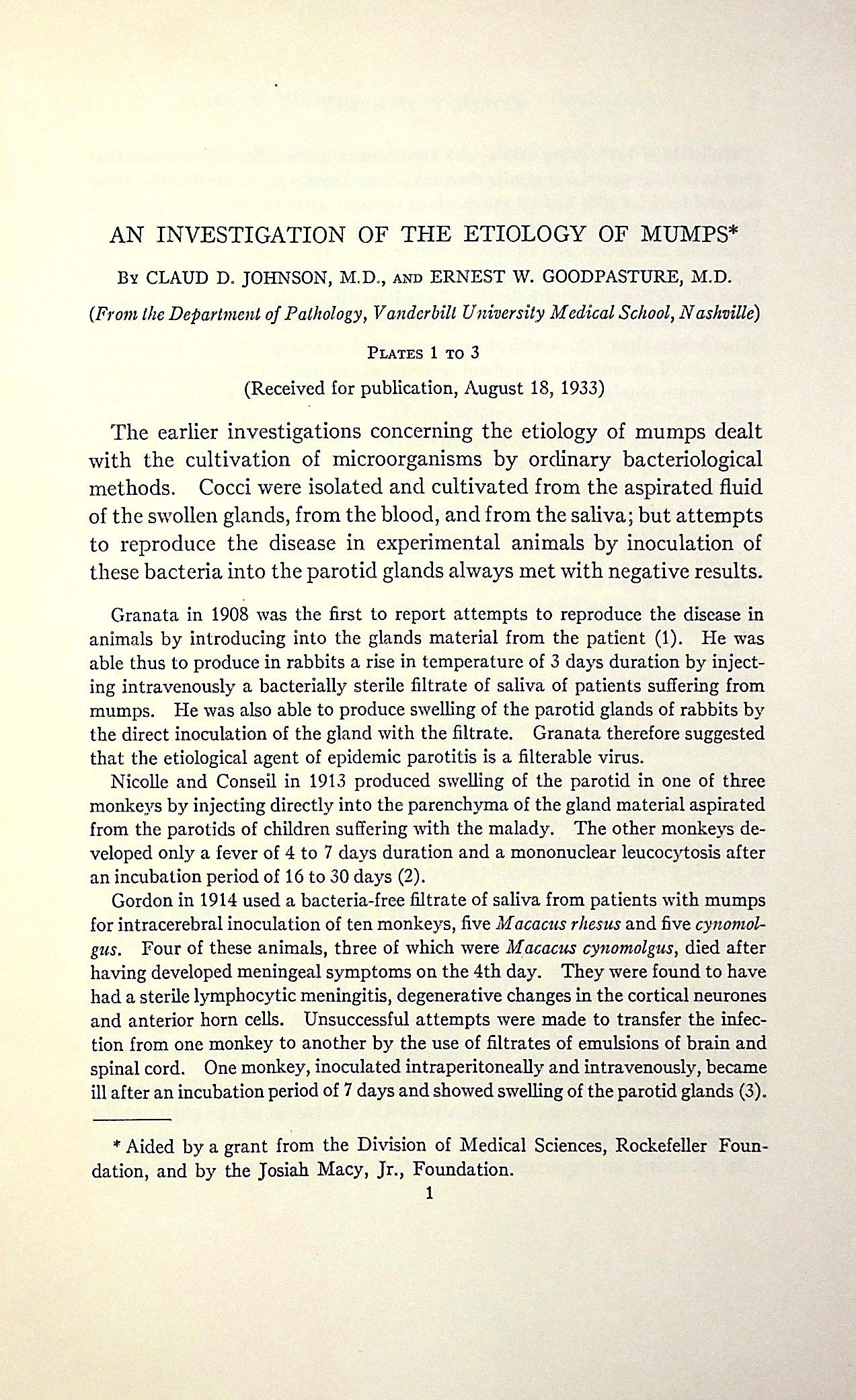
- clear polypropylene binder
- New York: Rockefeller University Press, 1934
New York: Rockefeller University Press, 1934. First edition.
GROUNDBREAKING STUDY PROVIDED DEFINITIVE PROOF OF DISCOVERY OF THE MUMPS VIRUS.
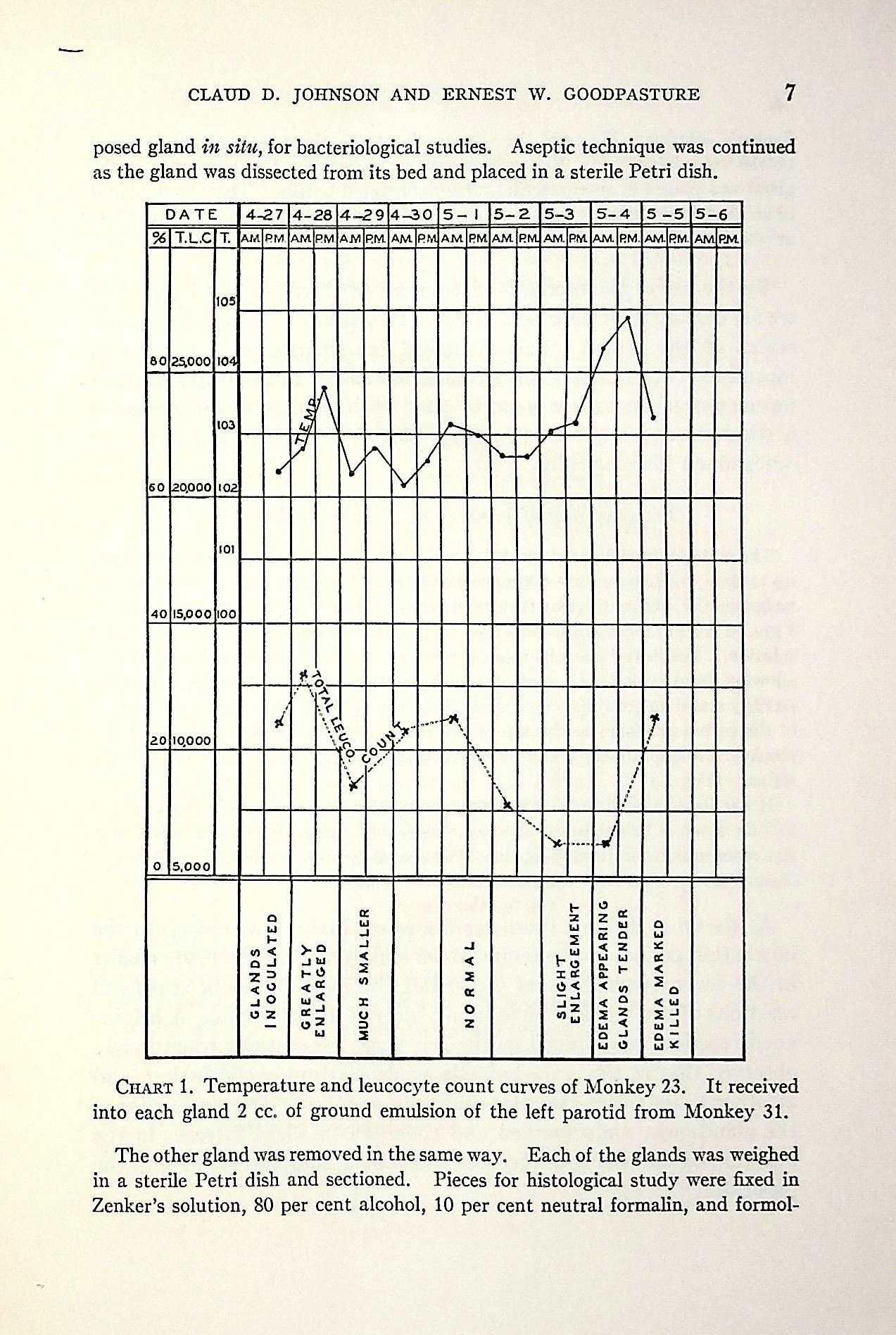
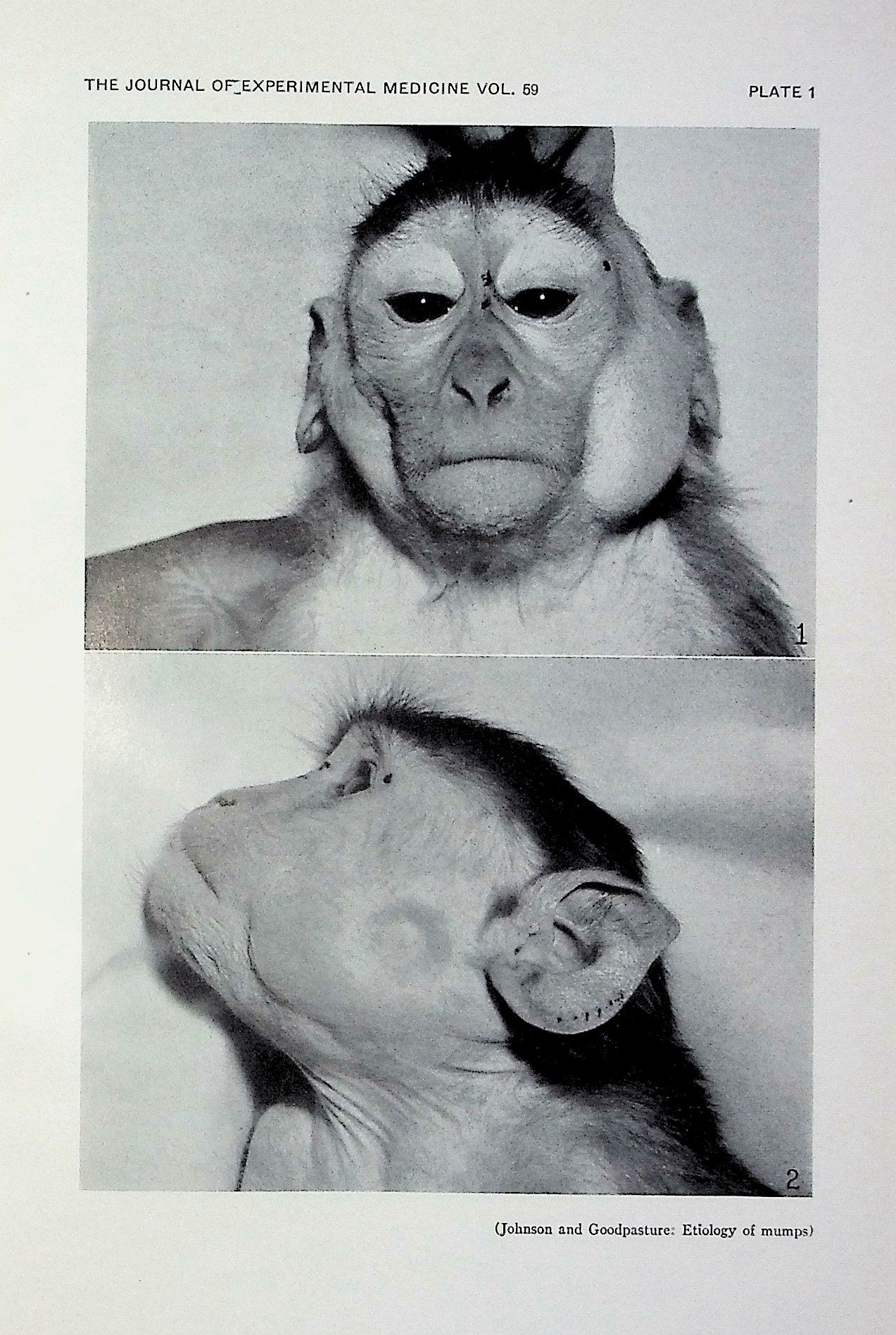
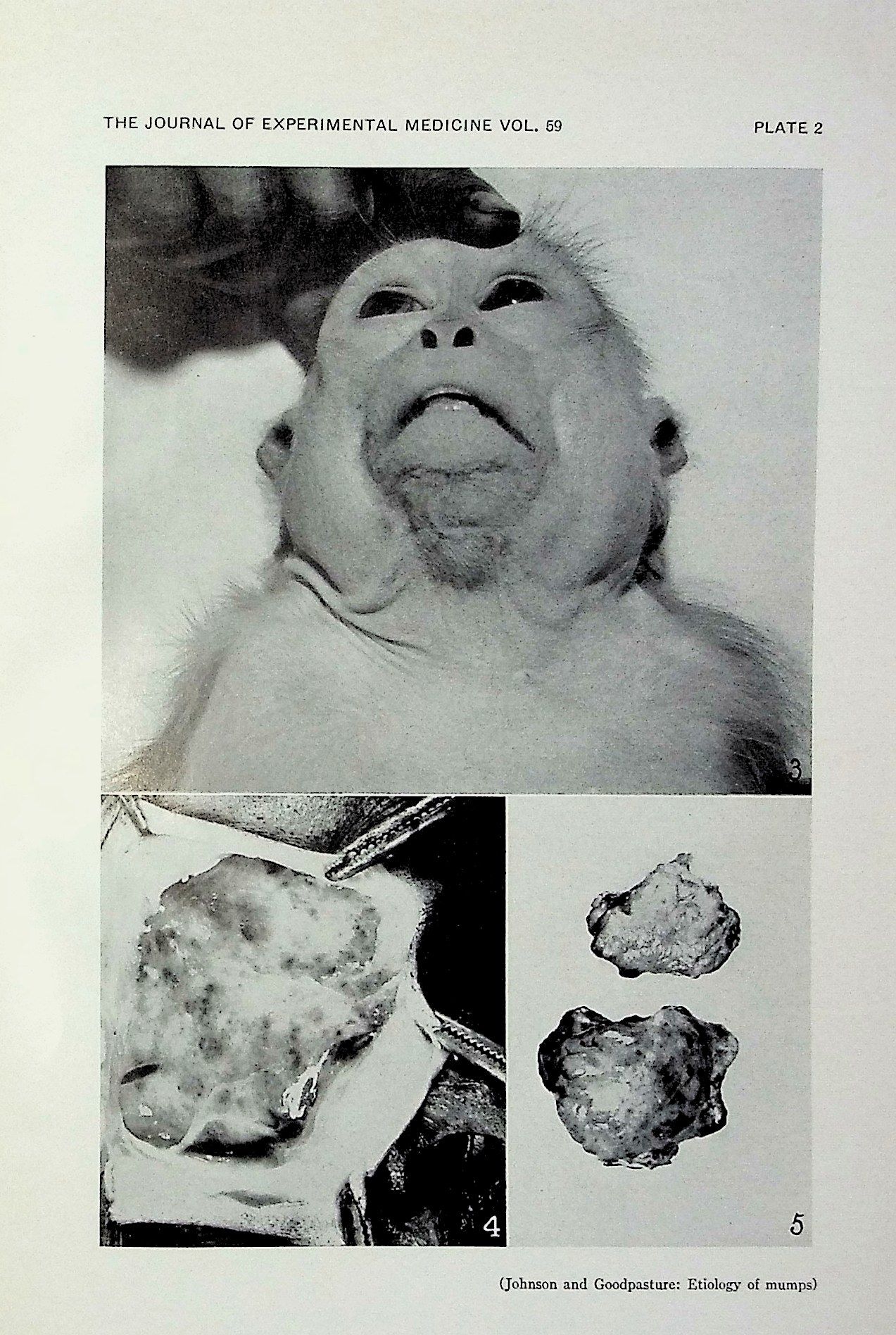
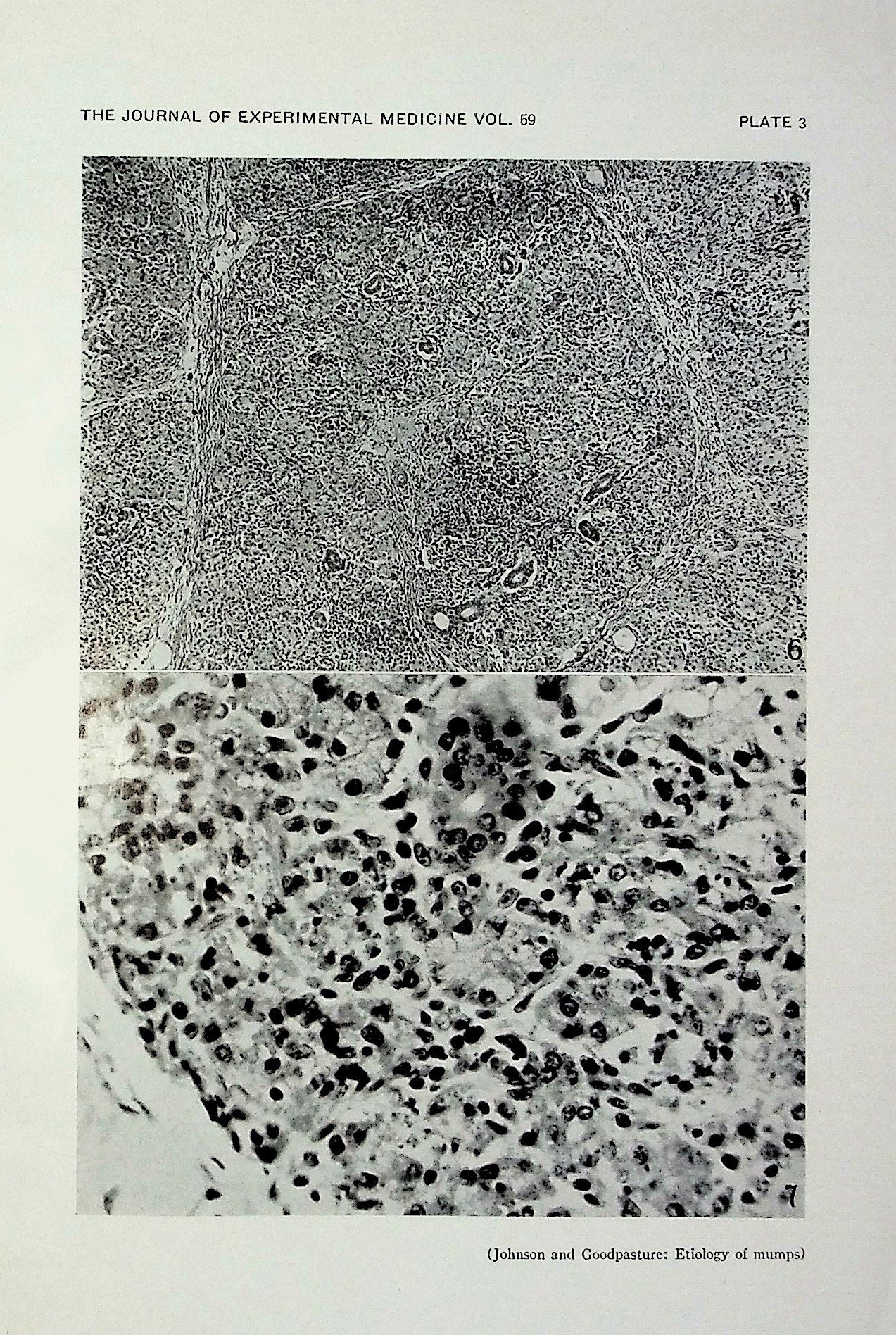
24.5 x 16.5 cm journal extract, pp 1-19 (including 3 charts, 2 tables), 3 plates. Near fine in archival custom clear polypropylene binder. ABSTRACT: From four out of six specimens of saliva from six cases of mumps in the early stages of the disease, a filterable cytotropic virus has been obtained which induces in M. rhesus monkeys, following inoculation of the parotid glands through Stensen's duct, an acute, non-suppurative parotitis analogous to mumps. 2. This virus has not been found in normal saliva, nor does it correspond to any known virus with which we are familiar. 3. The virus is free of demonstrable microorganisms including spirochetes. 4. It is judged that this virus is the causative agent of mumps.
GARRISON-MORTON No. 5543.
During the First World War, mumps was one of the most debilitating diseases among soldiers. In 1934, the etiology of the disease, the mumps virus, was discovered by Claude D. Johnson and Ernest William Goodpasture (offered here). They found that rhesus macaques exposed to saliva taken from humans in the early stages of the disease developed mumps. Furthermore, they showed that mumps could then be transferred to children via filtered and sterilized, bacteria-less preparations of macerated monkey parotid tissue, showing that it was a viral disease.
ERNEST WILLIAM GOODPASTURE (1886 – 1960) was an American pathologist and physician. Goodpasture advanced the scientific understanding of the pathogenesis of infectious diseases, parasitism, and a variety of rickettsial and viral infections. Goodpasture's scientific research principally concerned infectious diseases. He contributed to understanding the neural spread of herpes viruses, identification of the mumps virus, development of antiviral vaccines, and studies of rickettsial, fungal, and protozoan human diseases. In a major advance, he introduced the chicken embryo as an experimental host for investigation of microbial infections and for production of vaccines. This technique made possible the development and production of a wide range of vaccines against viral diseases.
Details
Title
An investigation of the etiology of mumps
Author
Johnson, Claud D. and Goodpasture, Ernest W.
Binding
clear polypropylene binder
Condition
Unknown
Publisher
Rockefeller University Press: New York
Date
1934
Edition
First edition