

This Side of Paradise (Presentation copy)
- SIGNED
- New York: Charles Scribner's Sons, 1931
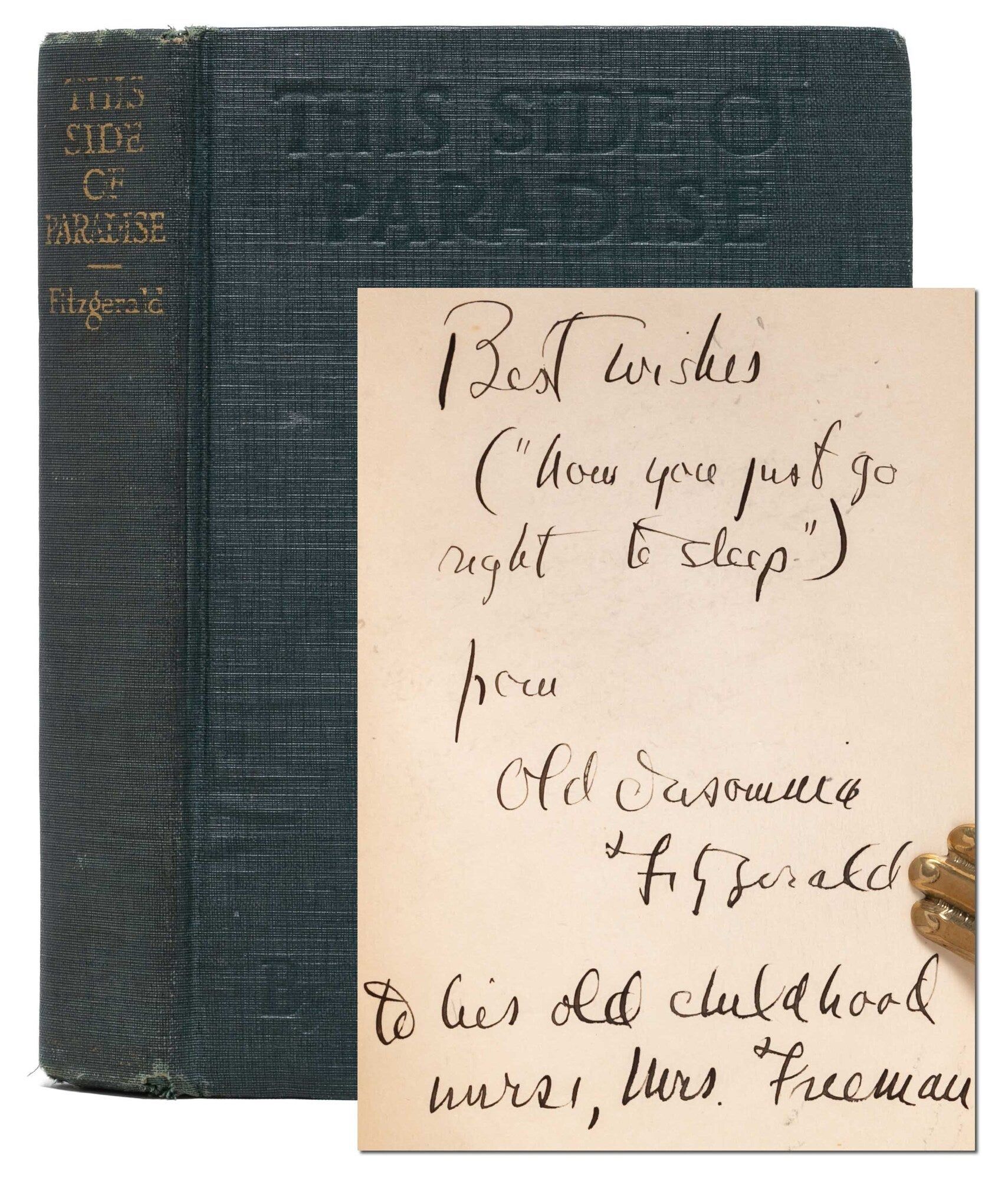
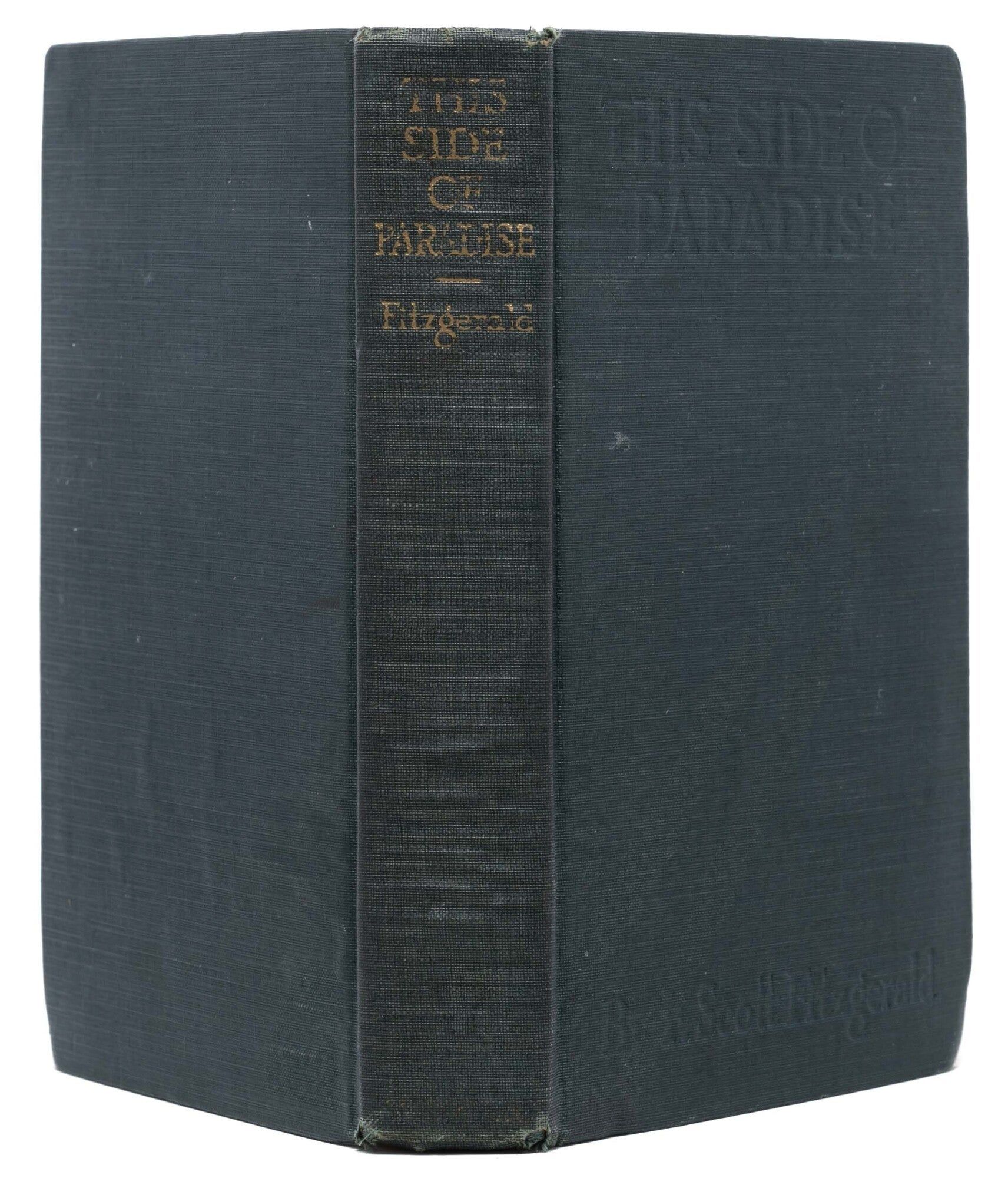
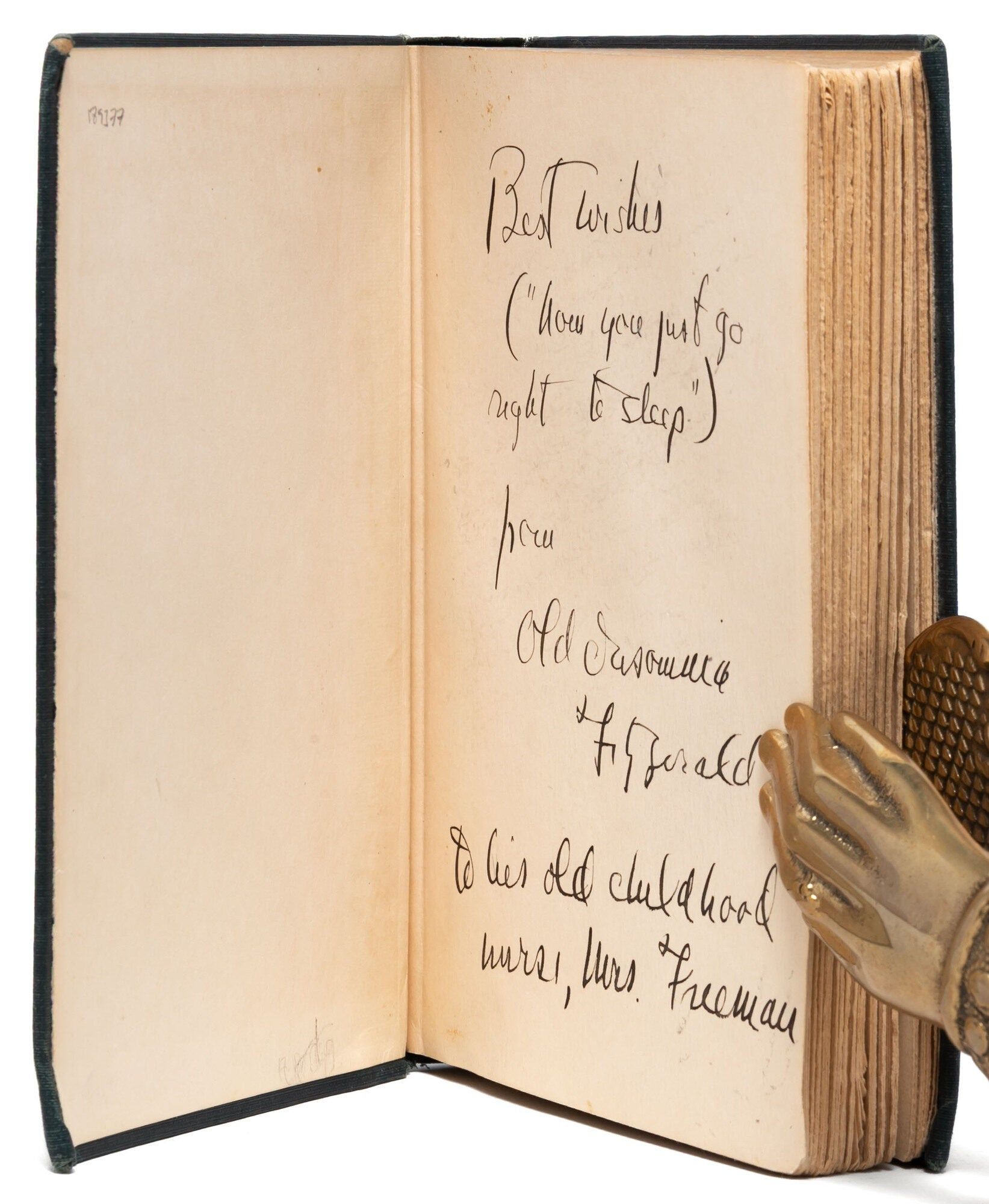
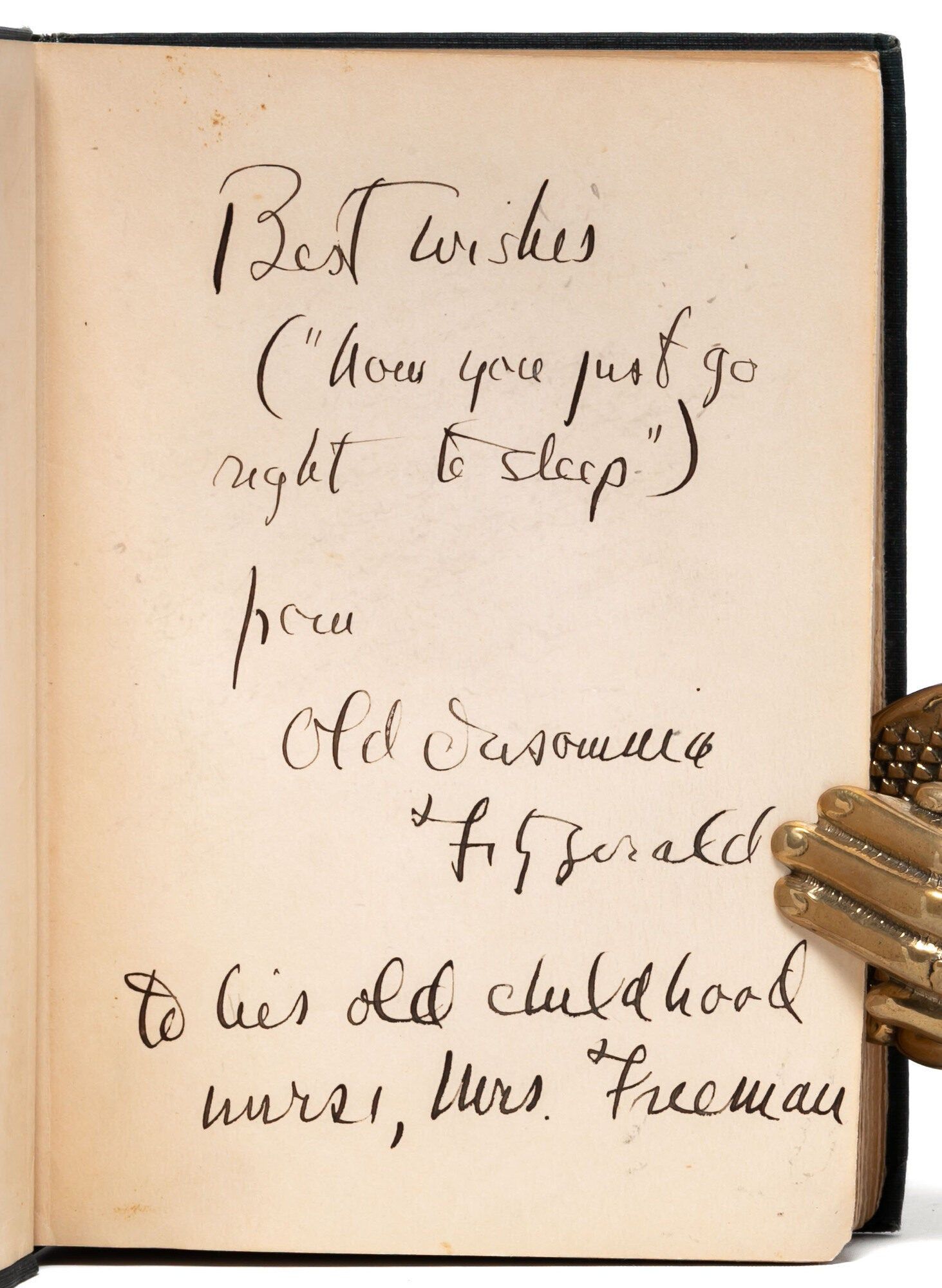
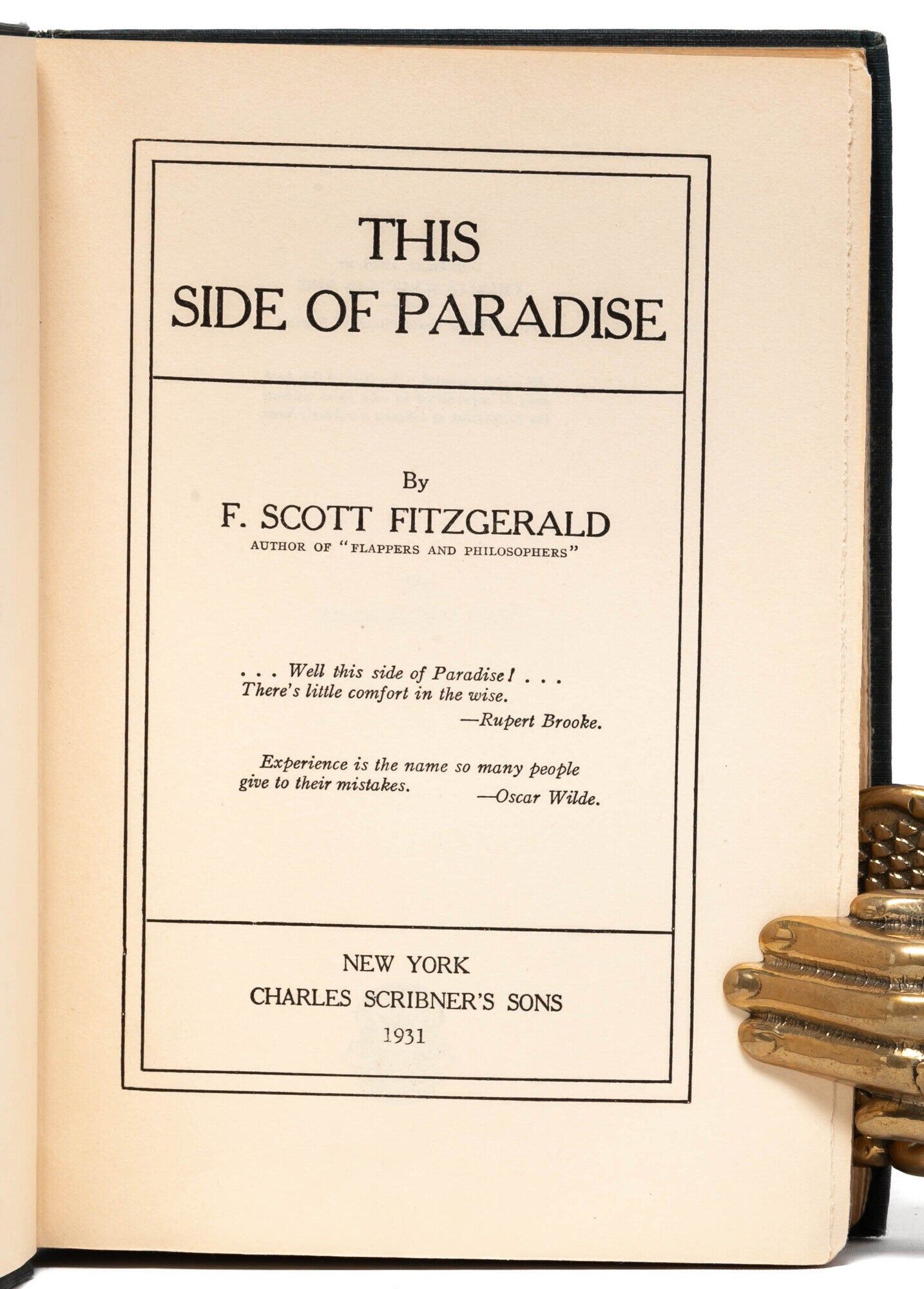
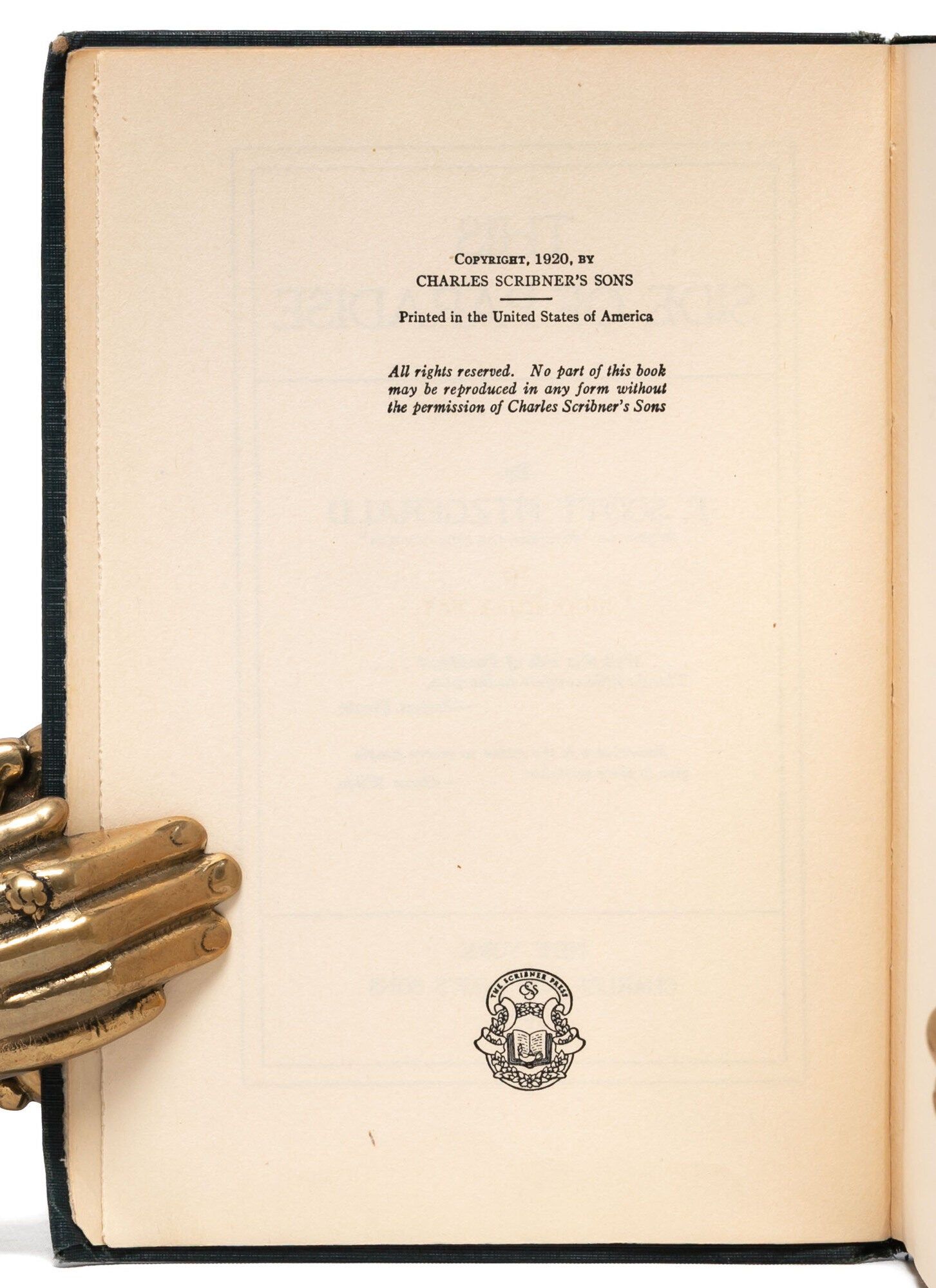
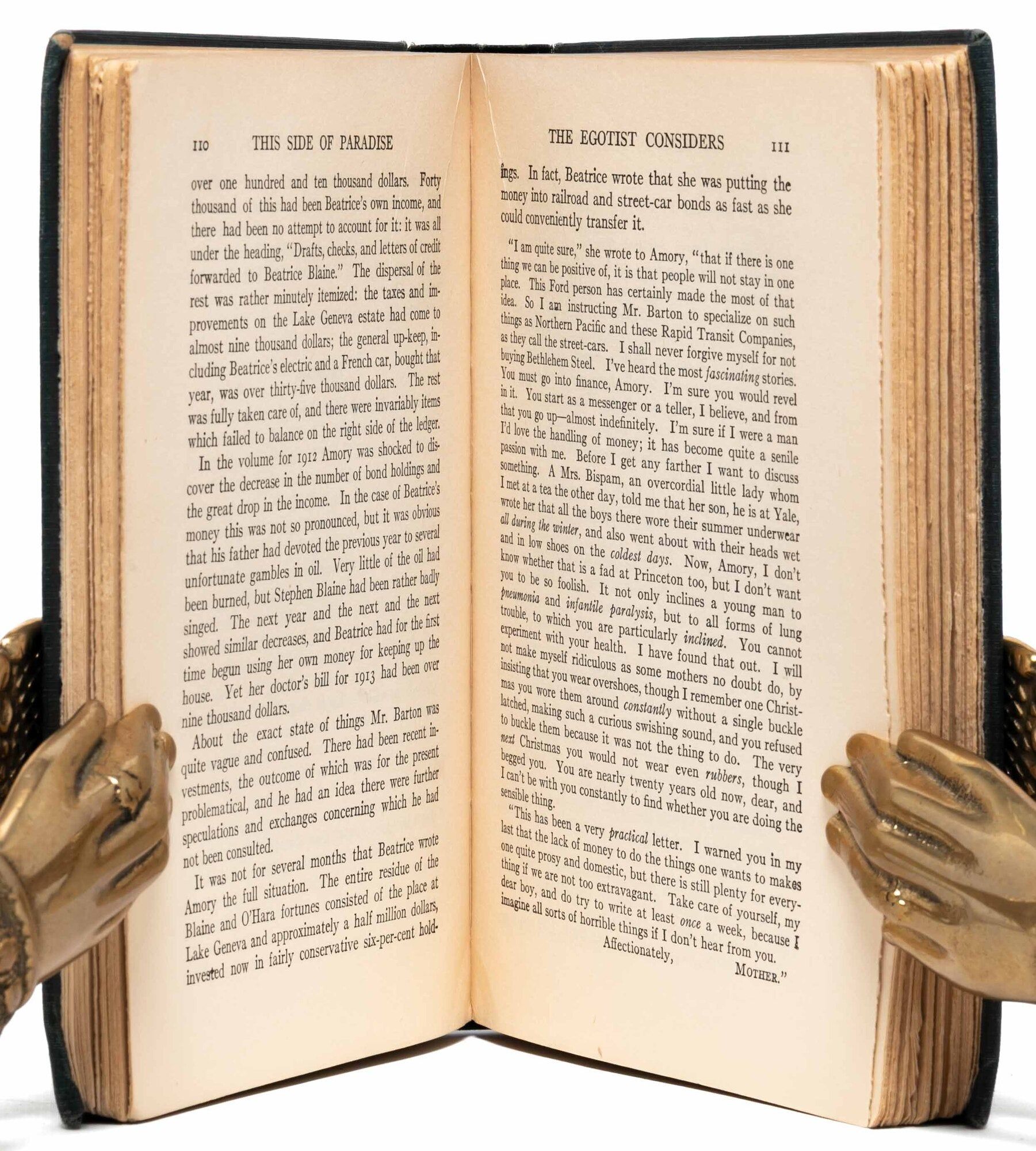
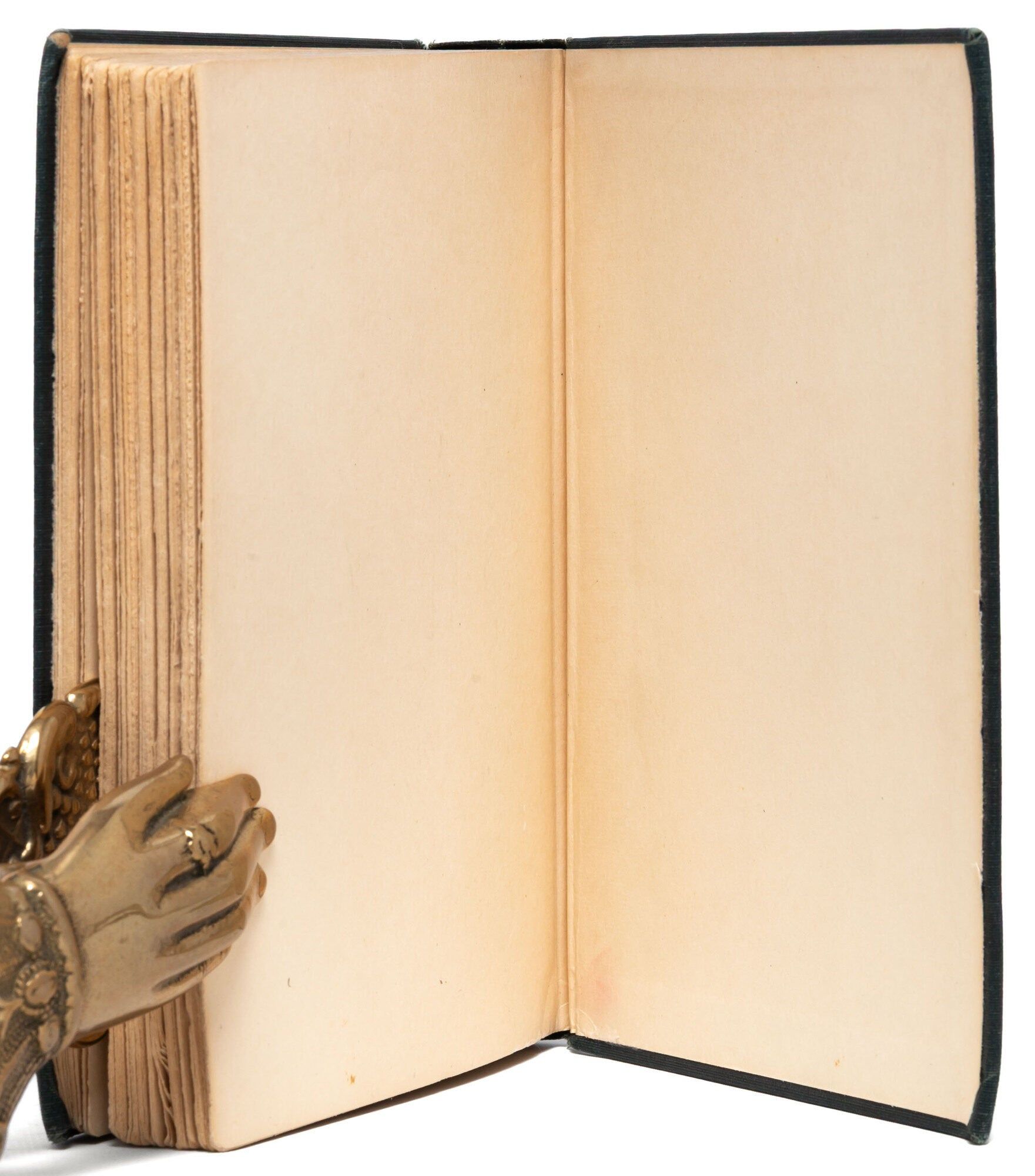
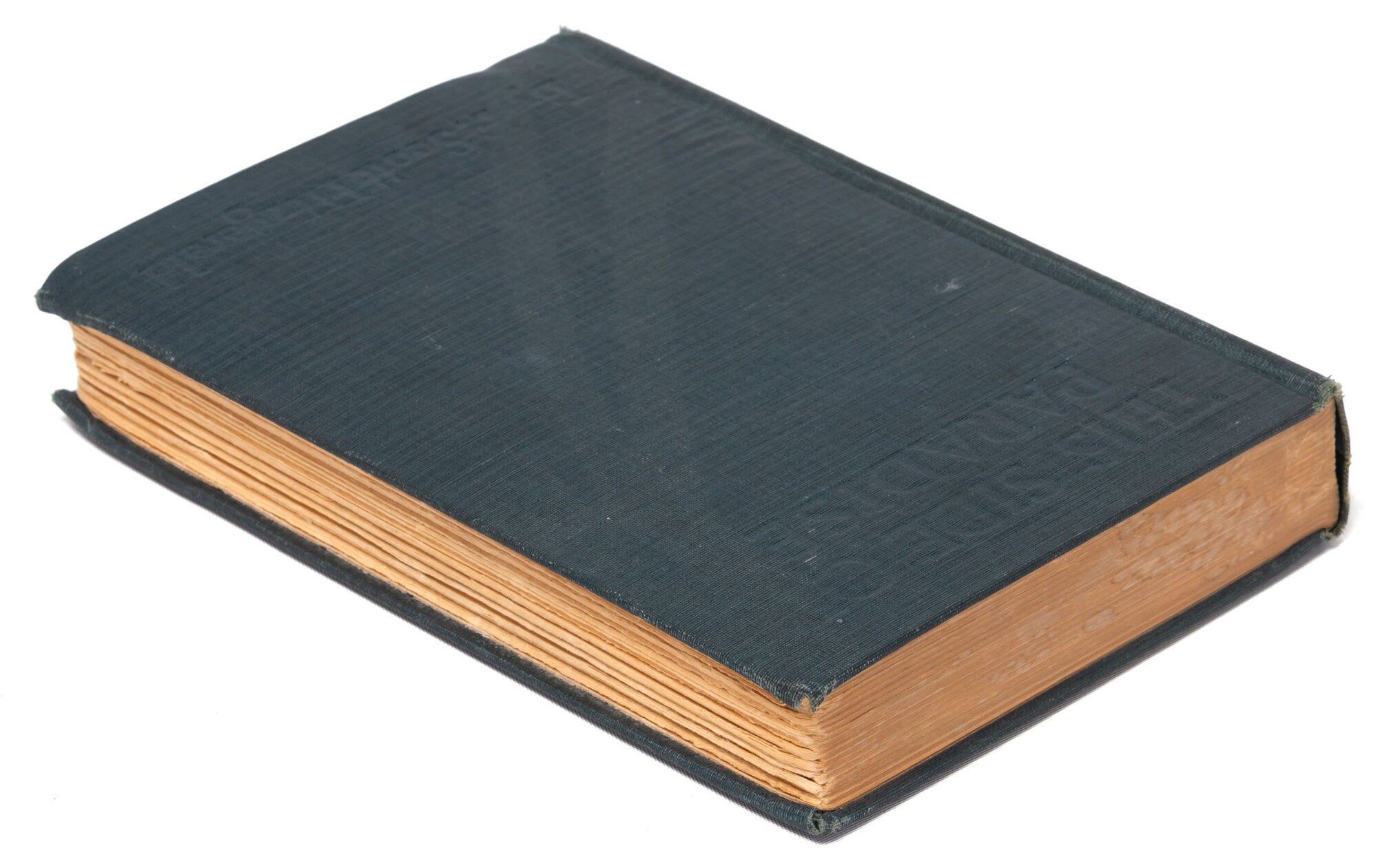
New York: Charles Scribner's Sons, 1931. Later printing. Very Good. Inscribed by Fitzgerald to Carma Freeman on the front free endpaper: "Best wishes ('Now you just go right to sleep') from Old Insomniac Fitzgerald to his old childhood nurse, Mrs. Freeman." A Very Good copy. Publisher's blindstamped dark blue-green cloth. Some edgewear and fraying. Minor toning to endpapers.
This copy of This Side of Paradise is a rare survival of the summer of 1934, one of the most difficult periods of Fitzgerald's life. At the time, Zelda was hospitalized at Sheppard-Pratt while Fitzgerald himself spent the summer in and out of Johns Hopkins Hospital. As Fitzgerald's friend, H.L. Mencken, wrote in his diary in June of that year: "the case of F. Scott Fitzgerald has become distressing. He is boozing in a wild manner and has become a nuisance. His wife, Zelda, who has been insane for years, is now confined at the Sheppard-Pratt Hospital, and he is living in Park Avenue with his little daughter, Scottie." While out of the hospital and recuperating at home, Fitzgerald's chilhood nurse Carma Kaufman Freeman cared for him. He inscribed his copy of This Side of Paradise to Freeman during that summer, employing her comforting phrase ("Now you just go right to sleep"), a line Fitzgerald would later echo in his 1936 essay "The Crack-Up."
First published in 1920, This Side of Paradise is Fitzgerald's somewhat autobiographical debut novel about a midwestern boy who goes east for his education at Princeton. Cobbled together from several bits and pieces of writing and rushed to print in an attempt by the lovestruck twenty-two-year-old Fitzgerald to entice Zelda with a life of literary celebrity, the couple wed the week after publication and began life among the cosmopolitan literati traversing Europe after the war. Yet, to believe Fitzgerald's assertion that the book was only "a Romance and a Reading List" is to oversimplify its central themes. "When Amory Blaine proclaimed all wars fought, all gods dead, all faiths in man shaken, the generation emerging in 1920 thought it a battle cry, a celebration of license and indulgence, and made This Side of Paradise their bible" (Gross). In this sense, the novel not only launched Fitzgerald's career and allowed for his marriage, it also founded the key tensions that would shape all of his future work - the push and pull between being a member of the Lost Generation with all its cynicism, and his deep moralism and his "need to impose order on a chaotic world...to struggle with love as both a unifying and divisive force" (Gross). Very Good.
This copy of This Side of Paradise is a rare survival of the summer of 1934, one of the most difficult periods of Fitzgerald's life. At the time, Zelda was hospitalized at Sheppard-Pratt while Fitzgerald himself spent the summer in and out of Johns Hopkins Hospital. As Fitzgerald's friend, H.L. Mencken, wrote in his diary in June of that year: "the case of F. Scott Fitzgerald has become distressing. He is boozing in a wild manner and has become a nuisance. His wife, Zelda, who has been insane for years, is now confined at the Sheppard-Pratt Hospital, and he is living in Park Avenue with his little daughter, Scottie." While out of the hospital and recuperating at home, Fitzgerald's chilhood nurse Carma Kaufman Freeman cared for him. He inscribed his copy of This Side of Paradise to Freeman during that summer, employing her comforting phrase ("Now you just go right to sleep"), a line Fitzgerald would later echo in his 1936 essay "The Crack-Up."
First published in 1920, This Side of Paradise is Fitzgerald's somewhat autobiographical debut novel about a midwestern boy who goes east for his education at Princeton. Cobbled together from several bits and pieces of writing and rushed to print in an attempt by the lovestruck twenty-two-year-old Fitzgerald to entice Zelda with a life of literary celebrity, the couple wed the week after publication and began life among the cosmopolitan literati traversing Europe after the war. Yet, to believe Fitzgerald's assertion that the book was only "a Romance and a Reading List" is to oversimplify its central themes. "When Amory Blaine proclaimed all wars fought, all gods dead, all faiths in man shaken, the generation emerging in 1920 thought it a battle cry, a celebration of license and indulgence, and made This Side of Paradise their bible" (Gross). In this sense, the novel not only launched Fitzgerald's career and allowed for his marriage, it also founded the key tensions that would shape all of his future work - the push and pull between being a member of the Lost Generation with all its cynicism, and his deep moralism and his "need to impose order on a chaotic world...to struggle with love as both a unifying and divisive force" (Gross). Very Good.
Details
Title
This Side of Paradise (Presentation copy)
Author
Fitzgerald, F. Scott
Condition
Very Good
Publisher
Charles Scribner's Sons: New York
Date
1931
Edition
Later printing