

Mansfield Park
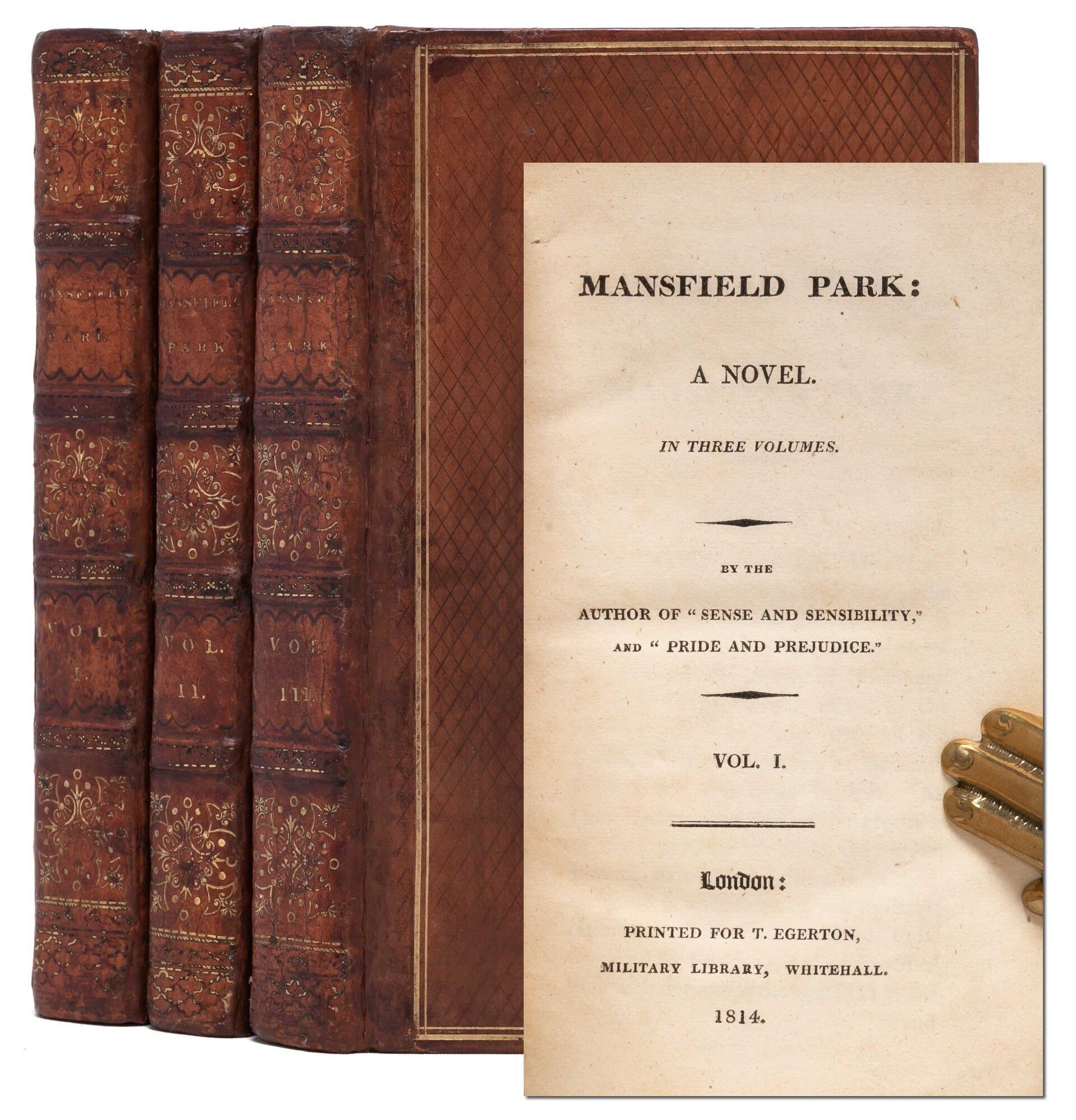
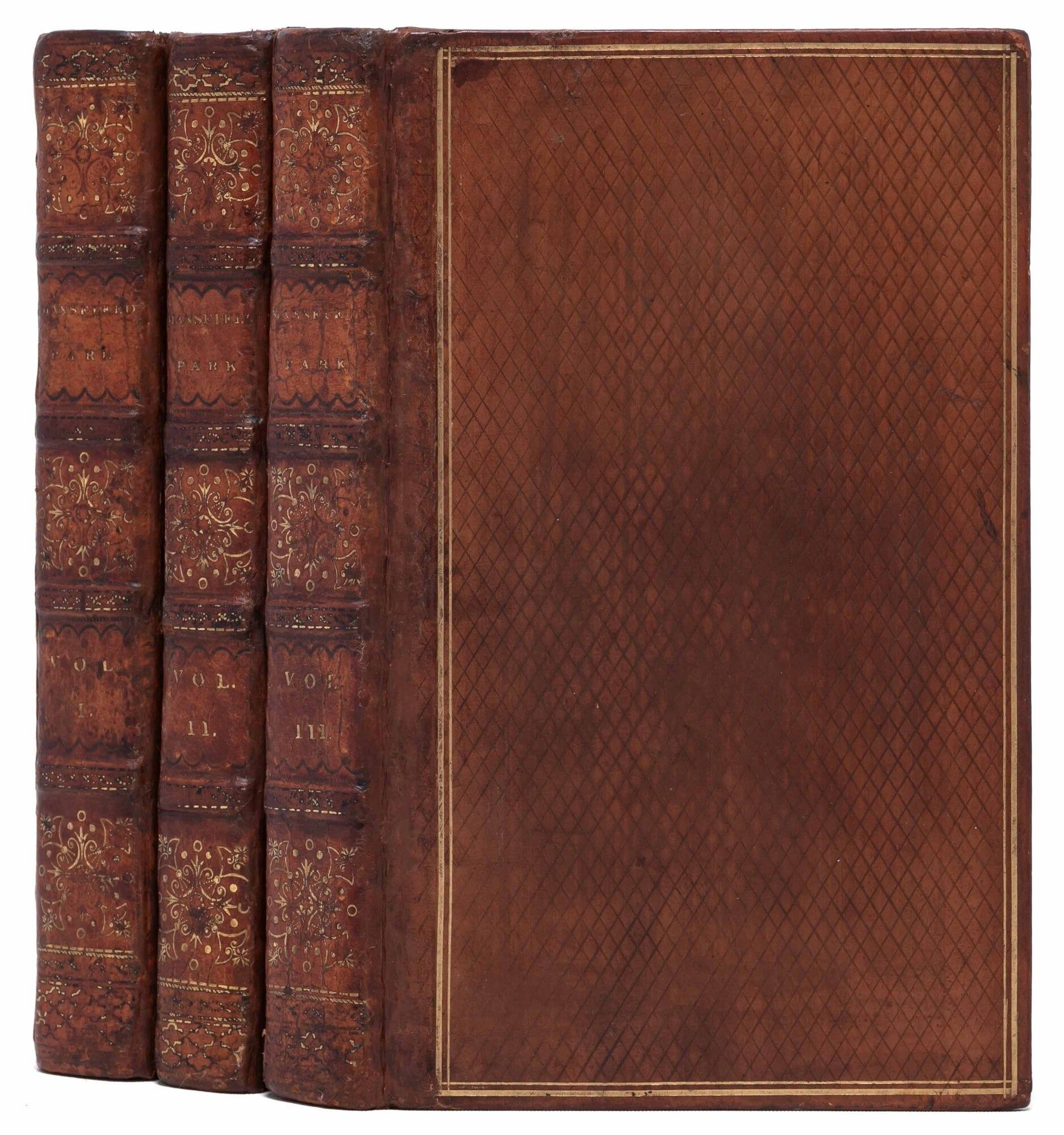
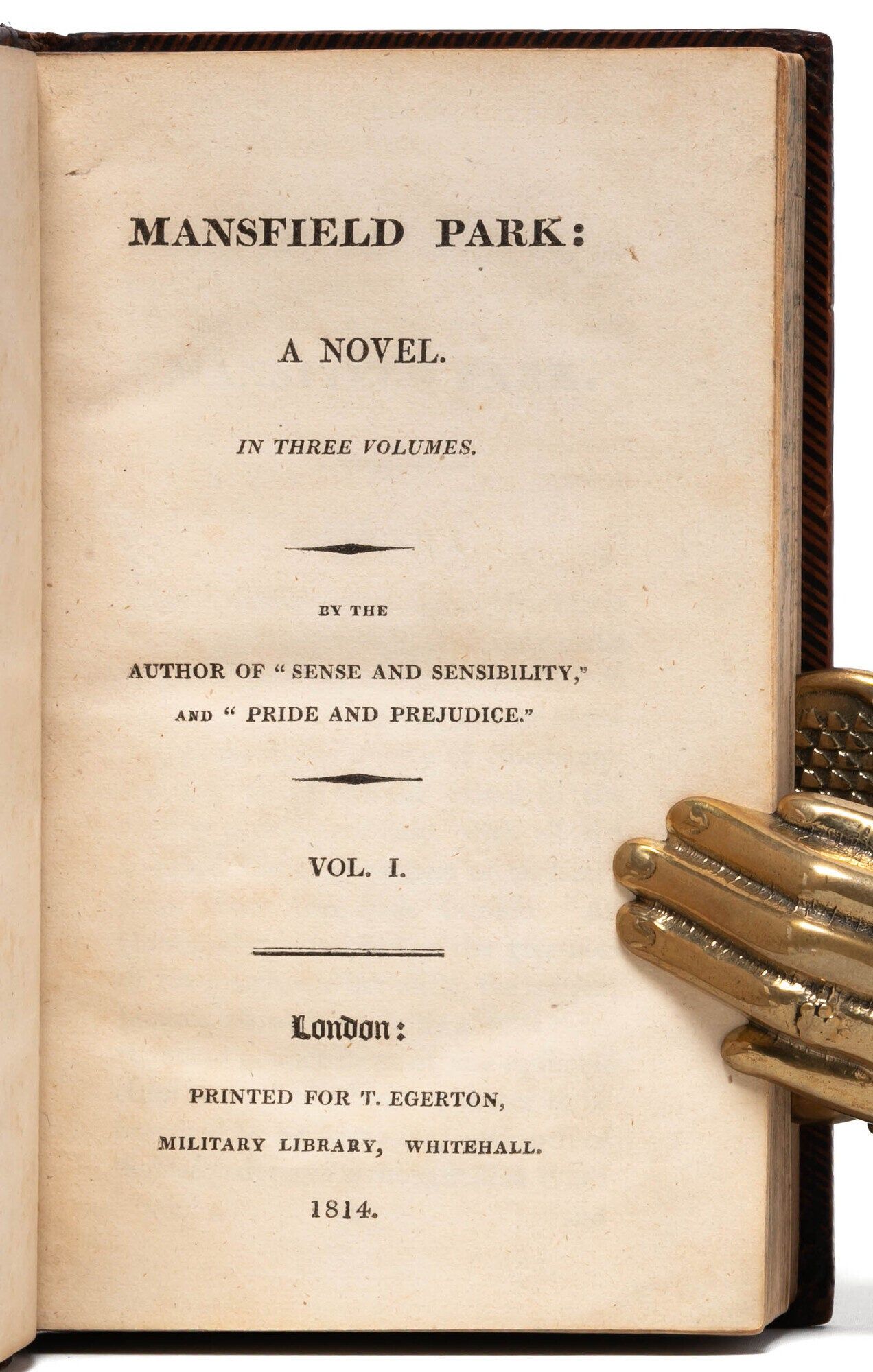
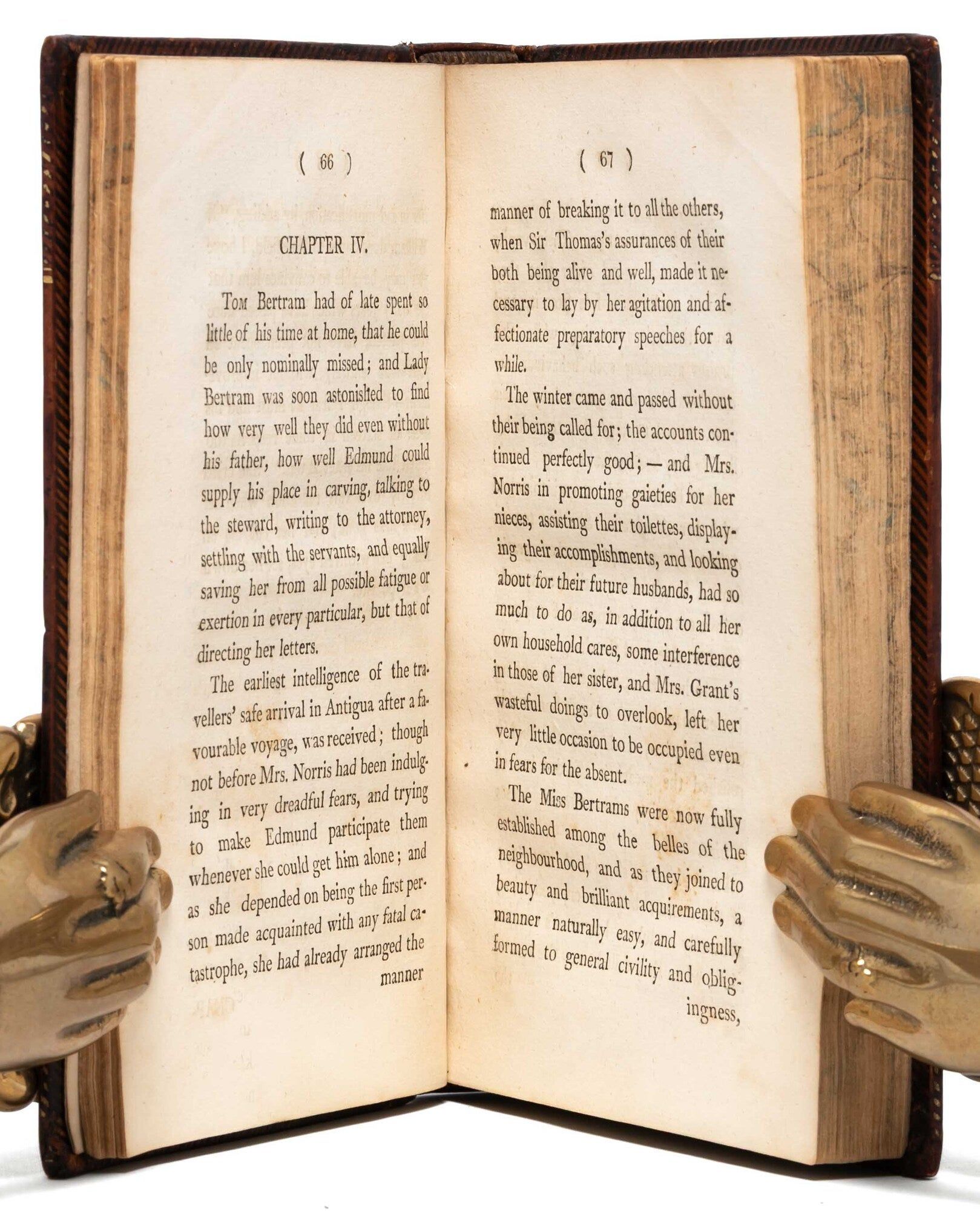
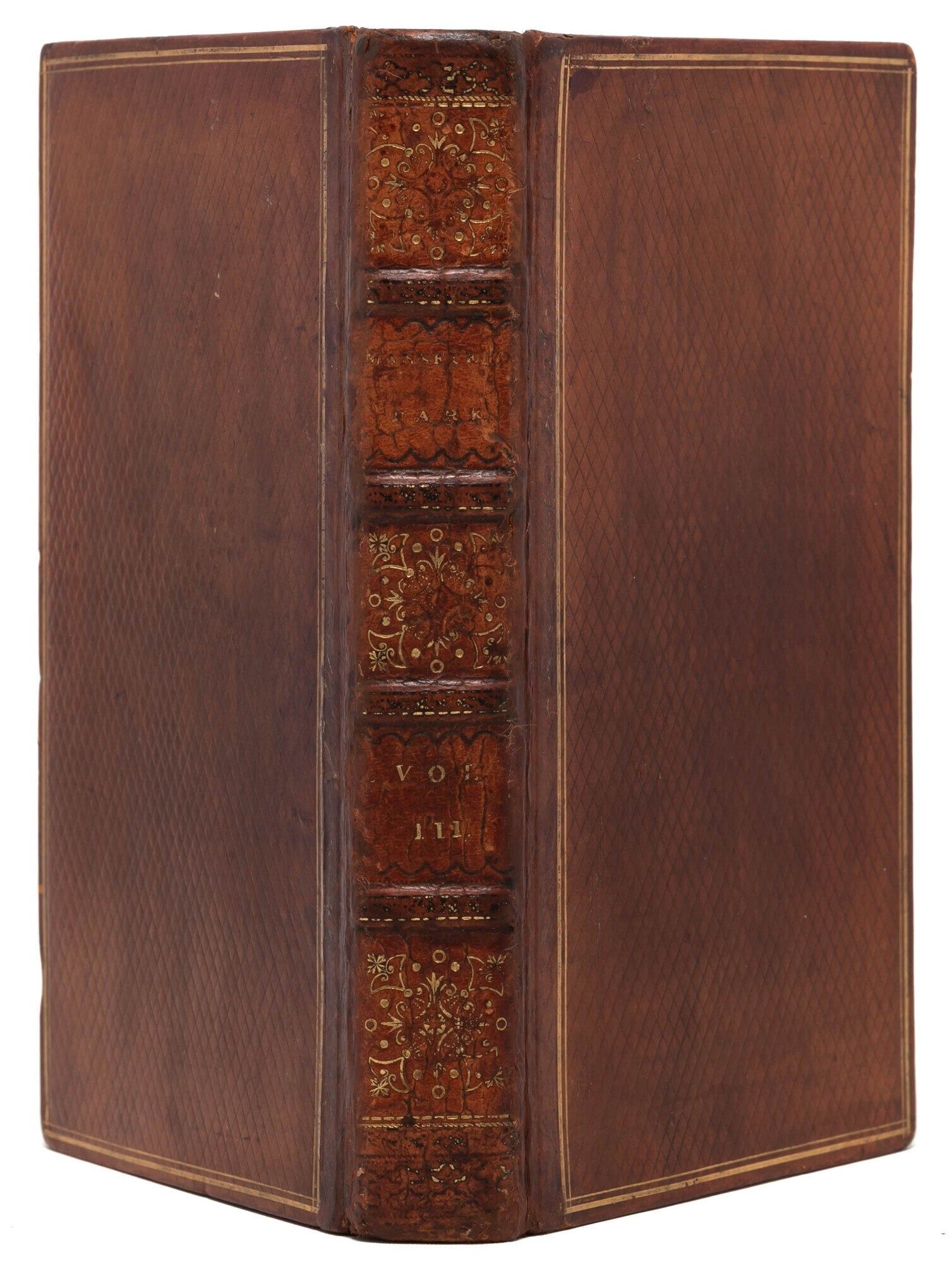
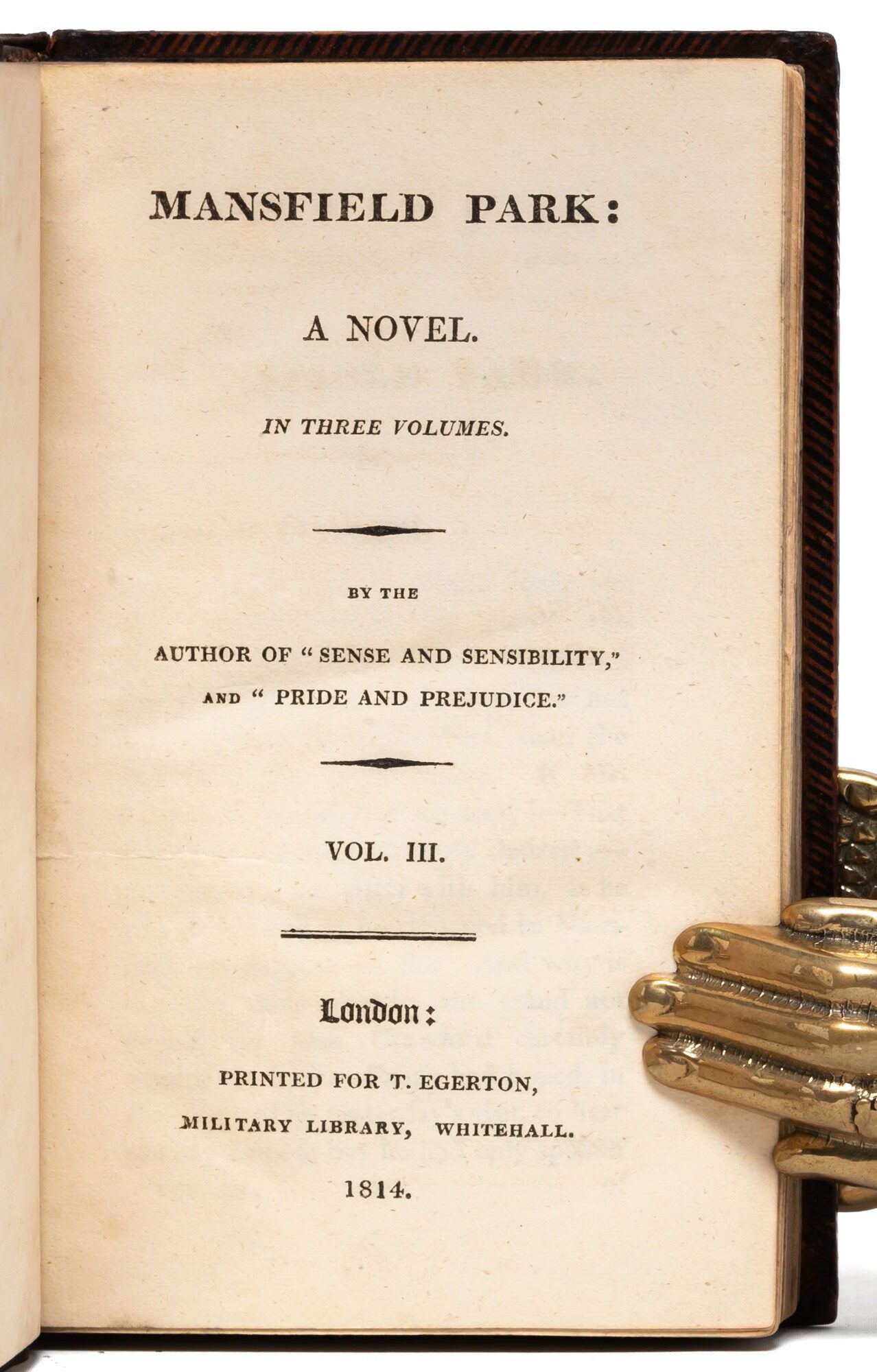
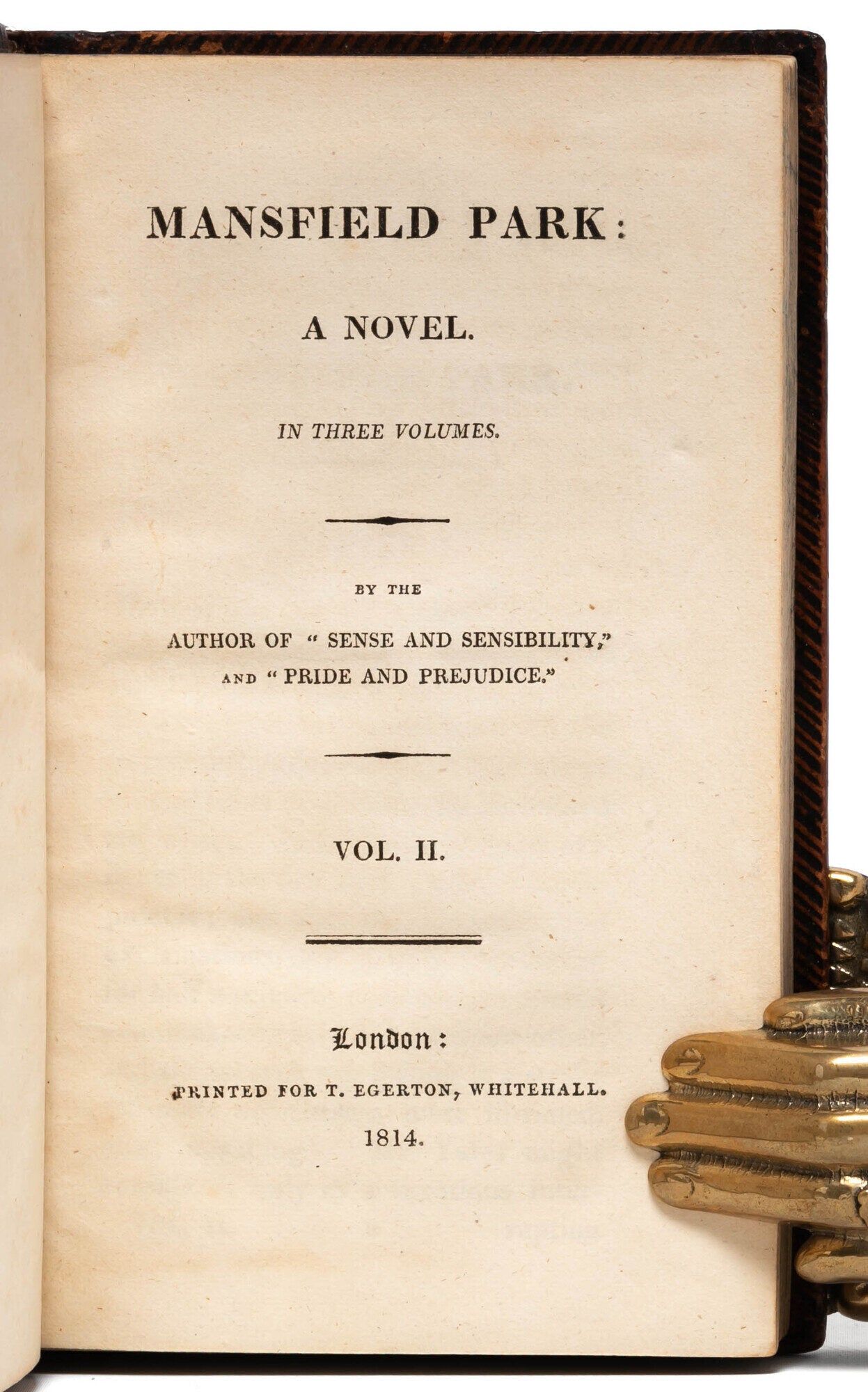
- London: Printed for T. Egerton, 1814
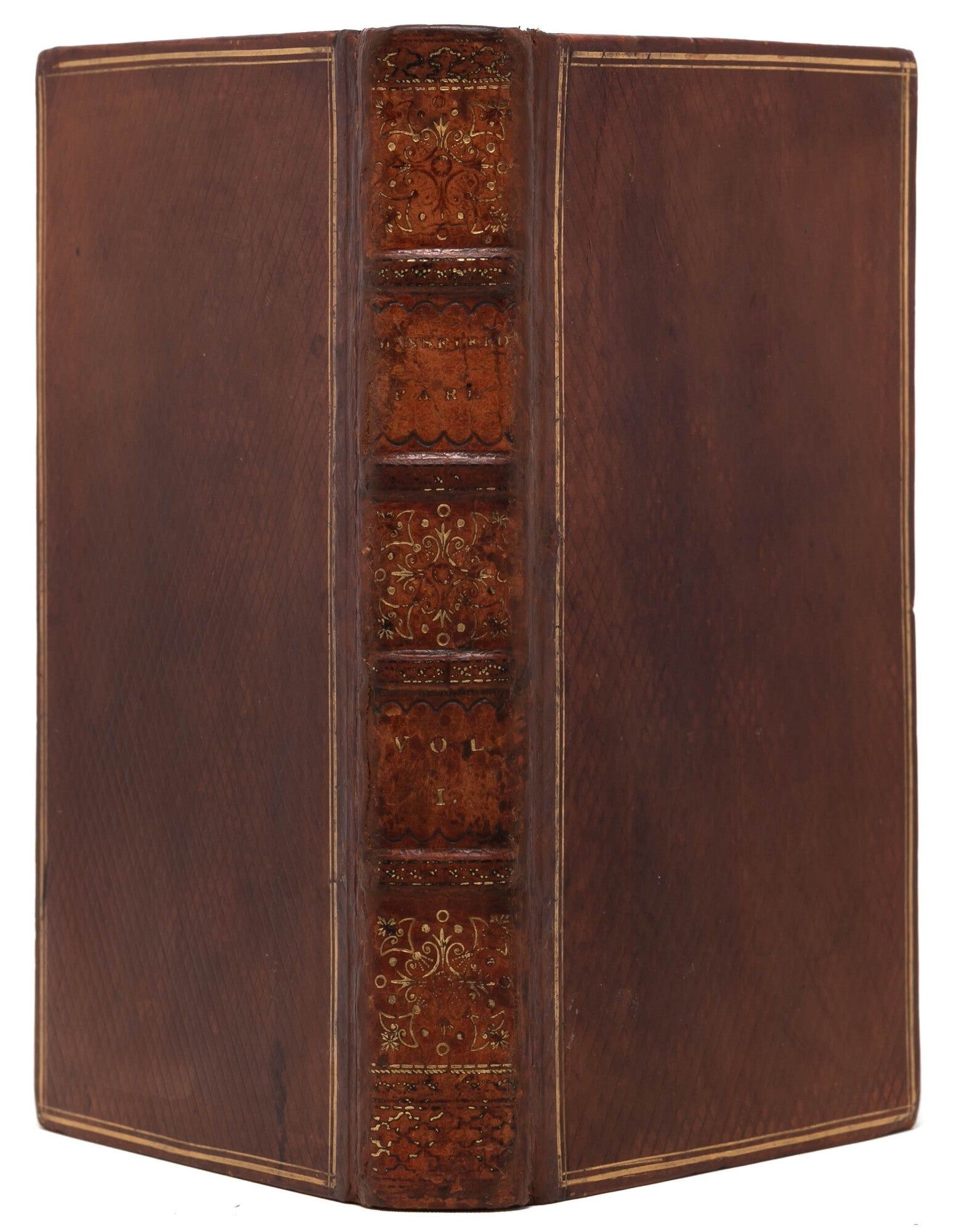
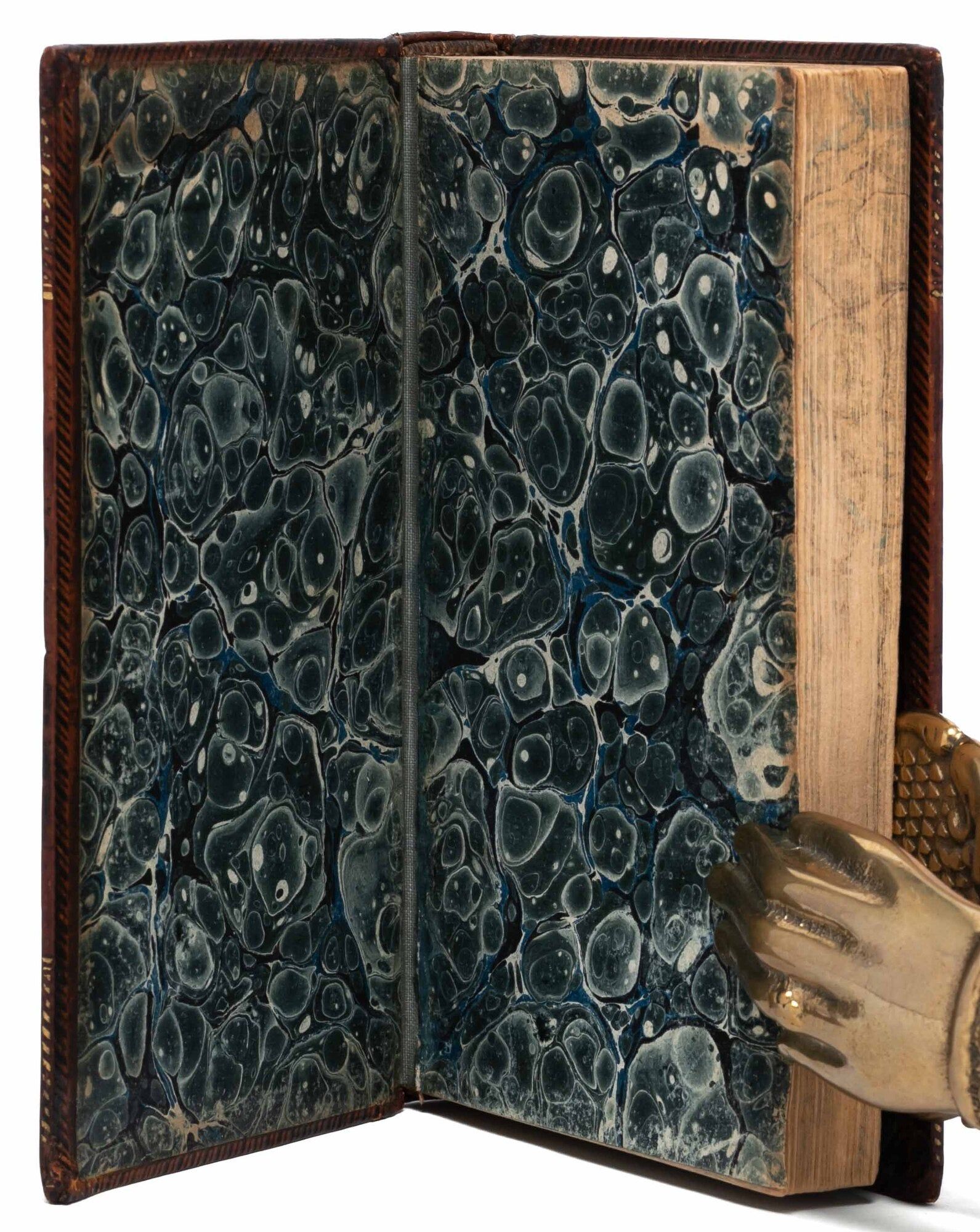
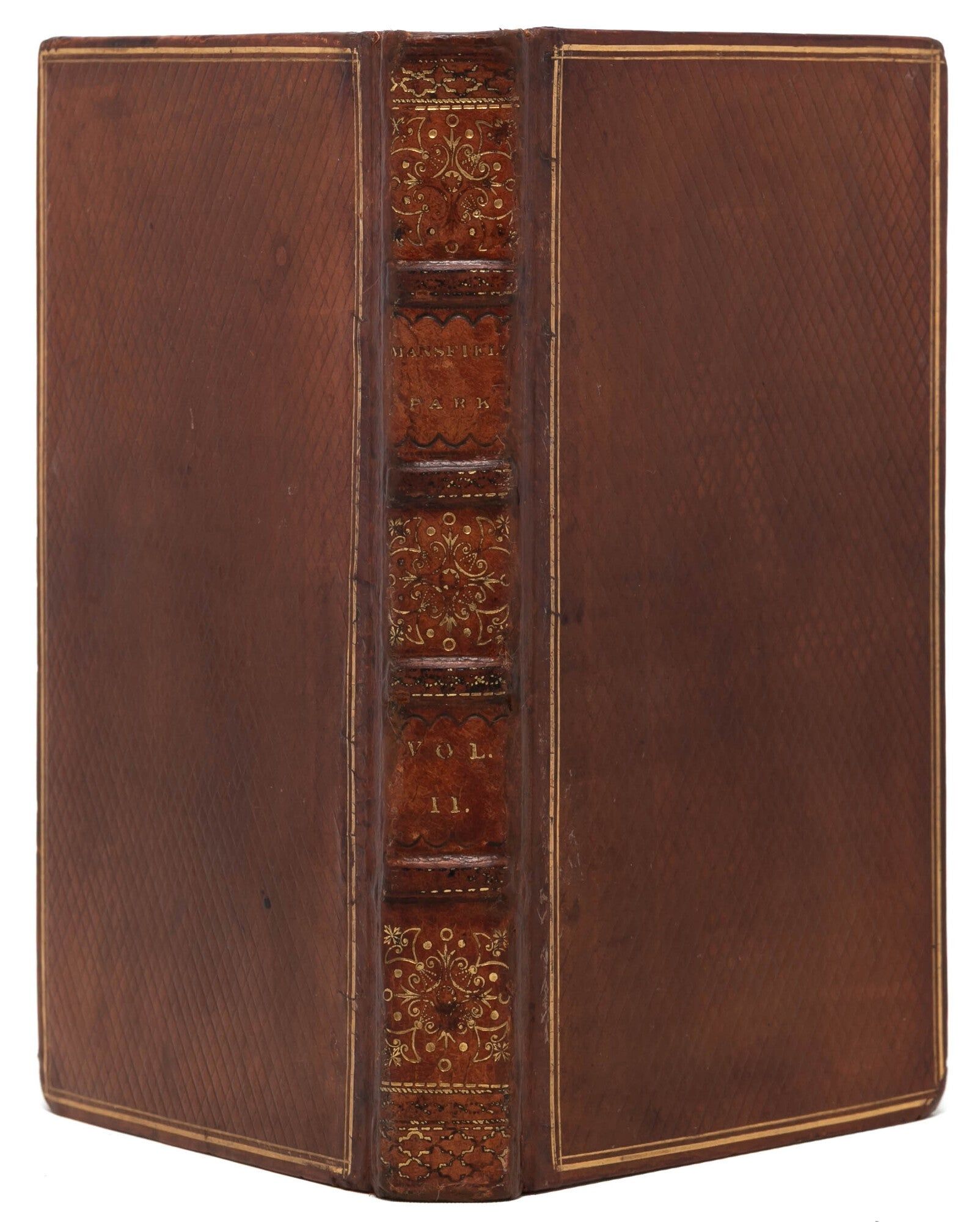
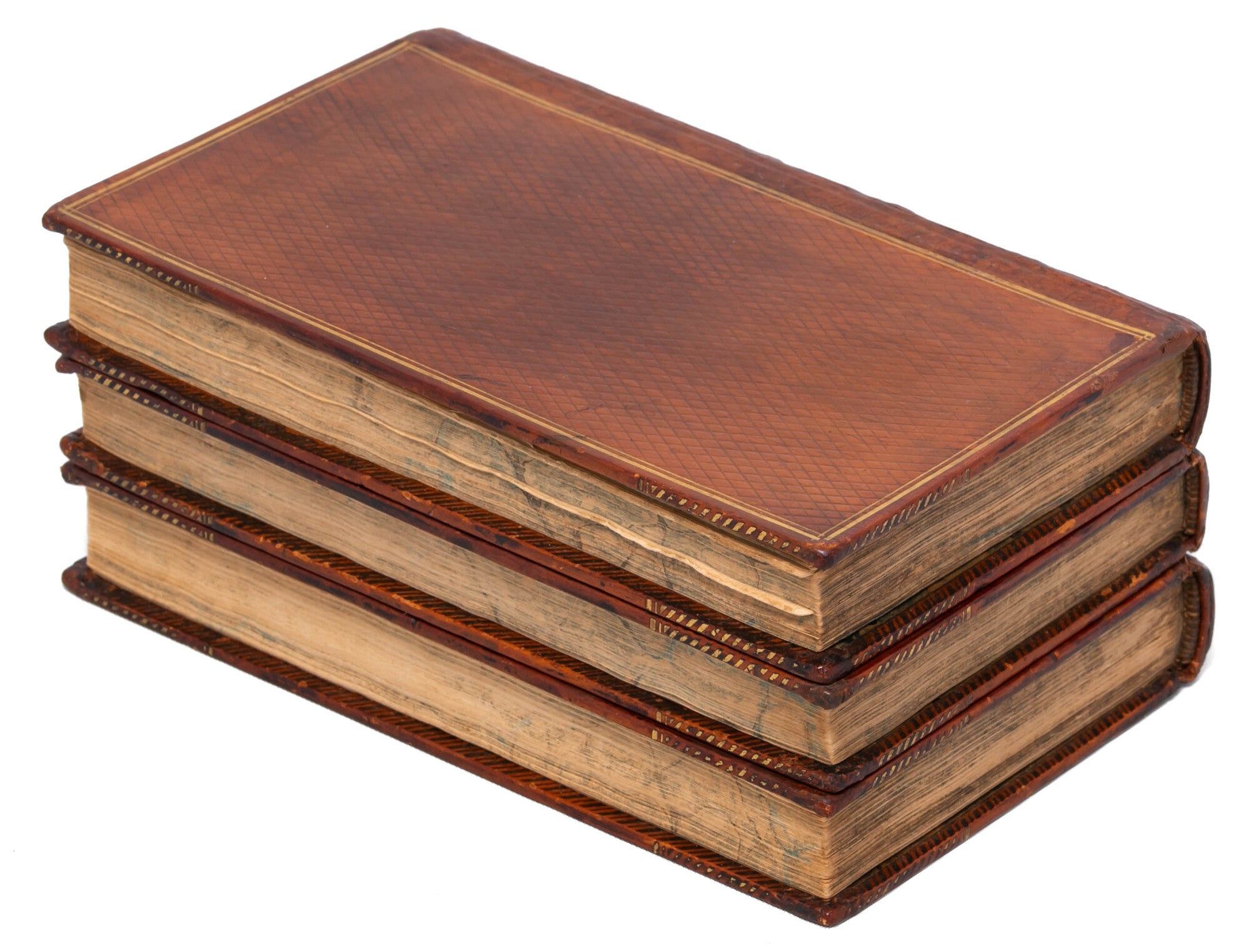
London: Printed for T. Egerton, 1814. First edition. Three volumes, duodecimo (180 x 110 mm), bound without half-titles. A Very Good copy. Contemporary diced russia, rebacked with the original spines laid down, spines lettered and decorated in gilt, twin gilt border to covers, marbled sides and endpapers. Occasional light foxing and finger-soiling to contents, leaf N6 of vol. I chipped with loss to a dozen letters and a few more slightly grazed, a couple of gatherings in vol. III slightly proud. A very appealing copy in a handsome contemporary binding.
Begun in early 1811, around the same time as Sense and Sensibility was accepted for publication, Mansfield Park was published in May 1814 in an edition of 1,250 copies. The publisher John Murray later "expressed astonishment that so small an edition of such a work should have been sent into the world"; he took over publication of the second edition and of Austen's subsequent novels.
Mansfield Park was not widely lauded by critics upon its publication; in fact, it proved quite controversial, in particular for its heroine Fanny Price. Contemporary readers praised the novel, however: Lady Anne Romilly wrote to Maria Edgeworth in November 1814, "Have you read Mansfield Park? It has been pretty generally admired [in London], and I think all novels must be that are true to life which this is, with a good strong vein of principle running thro' the whole." The next month, Edgeworth herself wrote, "We have been much entertained with Mansfield Park" (quoted in Gilson). In the two hundred years since its publication, Mansfield Park has rightfully ascended to canonical status alongside Austen's other novels, and is now recognized as a complex analysis of class, a young woman's inner world, and the relationship between person and place and rural England.
Gilson A6.
Begun in early 1811, around the same time as Sense and Sensibility was accepted for publication, Mansfield Park was published in May 1814 in an edition of 1,250 copies. The publisher John Murray later "expressed astonishment that so small an edition of such a work should have been sent into the world"; he took over publication of the second edition and of Austen's subsequent novels.
Mansfield Park was not widely lauded by critics upon its publication; in fact, it proved quite controversial, in particular for its heroine Fanny Price. Contemporary readers praised the novel, however: Lady Anne Romilly wrote to Maria Edgeworth in November 1814, "Have you read Mansfield Park? It has been pretty generally admired [in London], and I think all novels must be that are true to life which this is, with a good strong vein of principle running thro' the whole." The next month, Edgeworth herself wrote, "We have been much entertained with Mansfield Park" (quoted in Gilson). In the two hundred years since its publication, Mansfield Park has rightfully ascended to canonical status alongside Austen's other novels, and is now recognized as a complex analysis of class, a young woman's inner world, and the relationship between person and place and rural England.
Gilson A6.
Details
Title
Mansfield Park
Author
Austen, Jane
Condition
Unknown
Publisher
Printed for T. Egerton: London
Date
1814
Edition
First edition