

Poor Cinderella
- Folio sheet music, color pictorial cover. 5 pp, 9 ⅛ x 12 inches
- New York: Leo Feist Inc, 1934
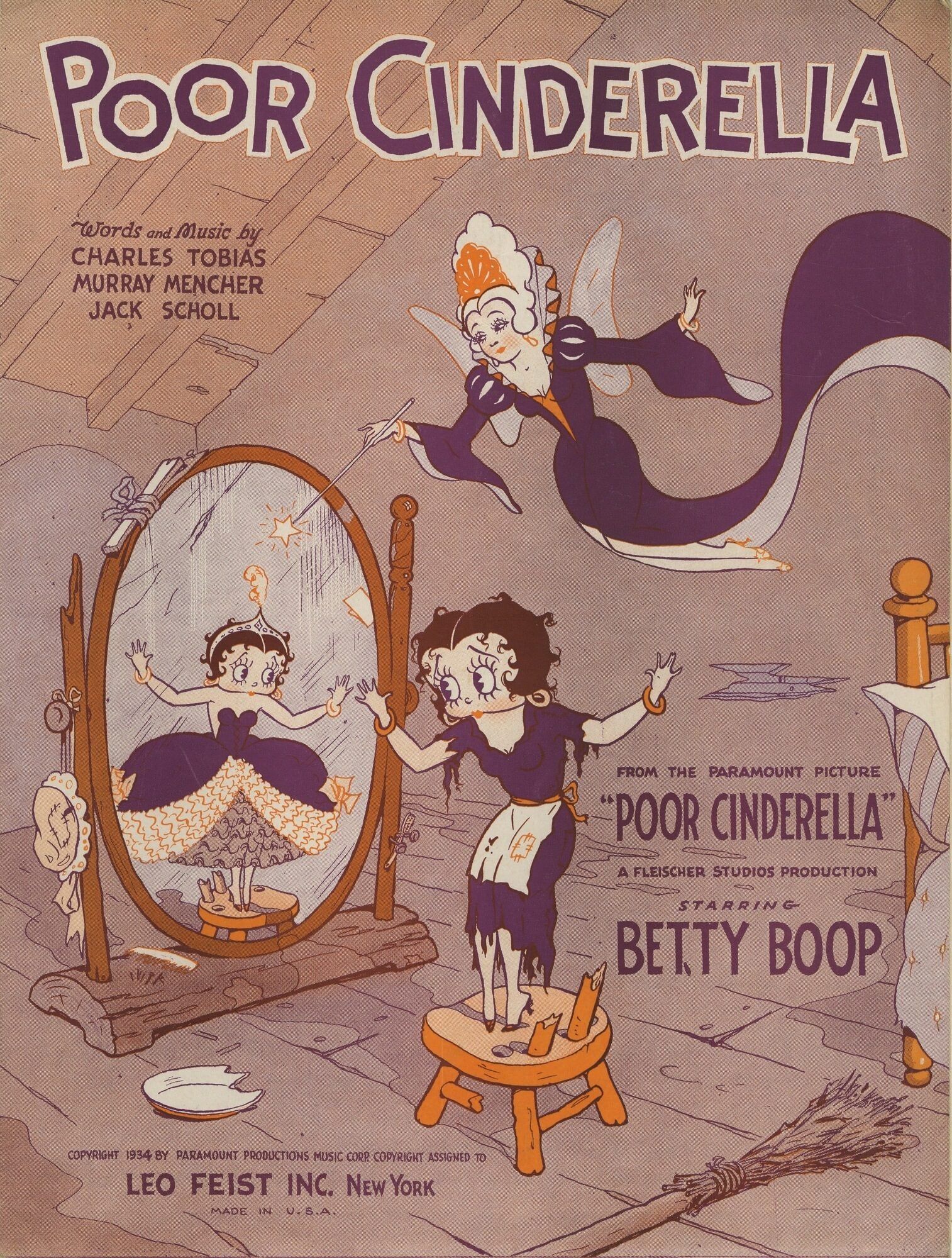
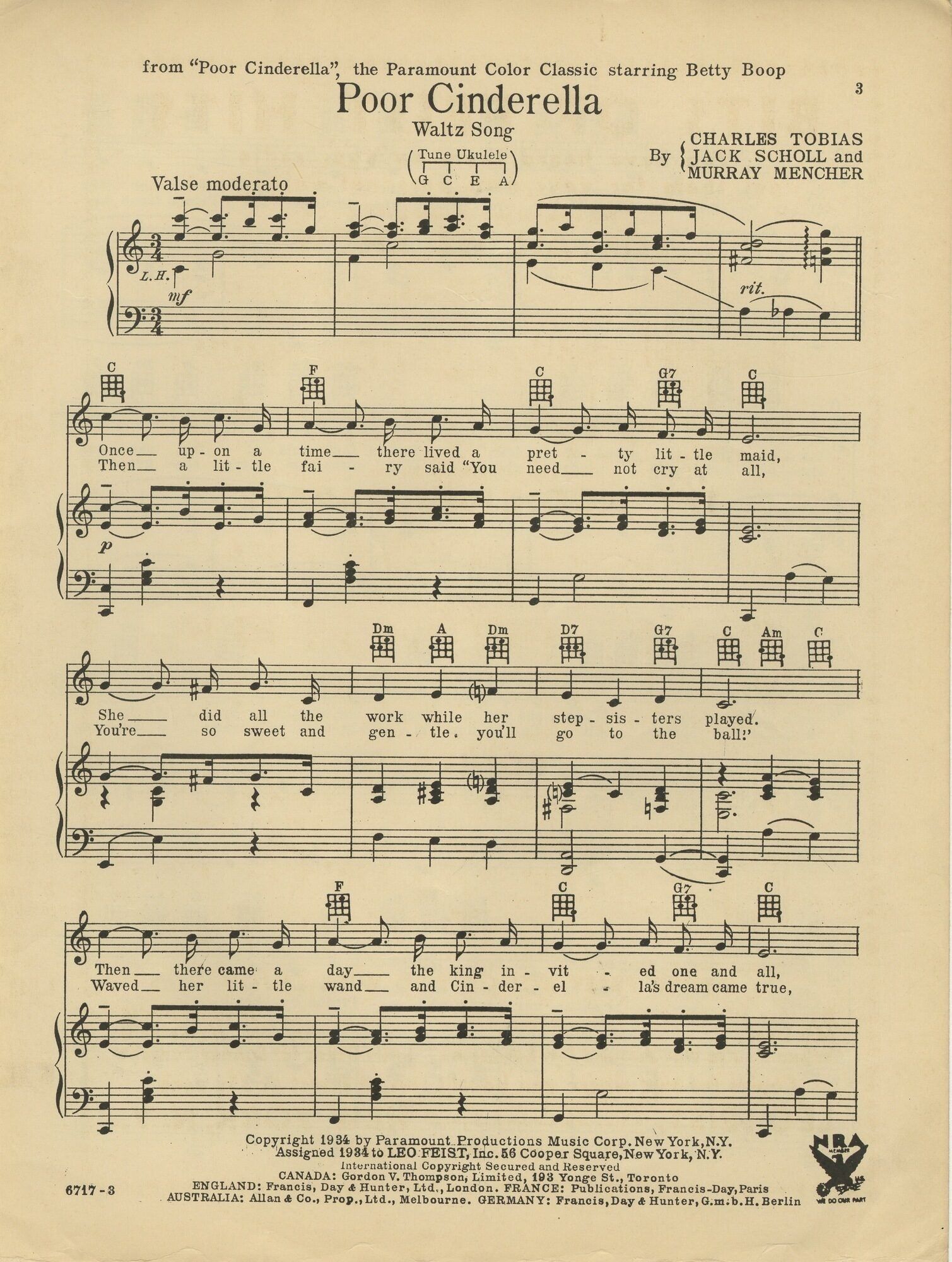
New York: Leo Feist Inc, 1934. Folio sheet music, color pictorial cover. 5 pp, 9 ⅛ x 12 inches. Near Fine.. Sheet music for the title song from the Fleischer Studios animated short Poor Cinderella, a 1934 Paramount production starring Betty Boop. Directed by Dave Fleischer and produced by Max Fleischer, the film was issued as part of the studio’s Color Classics series and is notable as the only Betty Boop cartoon originally produced in color during the Fleischer studio’s classic run. The cover illustration shows Betty in her ragged Cinderella costume before a mirror, the fairy godmother’s wand transforming her reflection into a princess, an image that captures both the Depression-era fairy-tale theme and the character’s Jazz Age style.
Although the cartoon itself contains no explicitly Black performers, the cultural origins of Betty Boop’s voice and persona emerged from Harlem nightclub entertainment and became the subject of a widely publicized 1934 lawsuit involving singer Helen Kane and the African American child performer Esther Jones, whose vocal style was introduced as evidence during the trial. Kane sued Fleischer Studios and Paramount claiming that Betty Boop’s distinctive “boop-oop-a-doop” singing style had been taken from her stage act. During the proceedings, however, theatrical manager Lou Bolton testified that the same vocal mannerism had been performed several years earlier by Jones in Harlem cabarets, undermining Kane’s claim of originality. The court ultimately ruled against Kane.[1]
Created in 1930, Betty Boop quickly evolved from an anthropomorphic cartoon figure into a humanized Jazz Age flapper and one of the earliest animated sex symbols. Early Fleischer cartoons frequently placed the character in adult urban settings: nightclubs, stage performances, and surreal jazz environments. The character’s exaggerated blend of innocence and sexuality, wide-eyed baby face combined with flapper dress and nightclub mannerisms, made Betty one of the most recognizable figures in early American animation. With the strict enforcement of the Motion Picture Production Code in 1934, Betty Boop’s image was softened: skirts were lengthened, risqué humor diminished, and the once flirtatious character gradually recast into a more domesticated and wholesome figure. Issued by the prolific Tin Pan Alley publisher Leo Feist Inc., the sheet is a representative and surprisingly scarce item from this period.
[1] Erin Blakemore, “The People v. Betty Boop,” The History Channel, https://www.history.com/articles/the-people-v-betty-boop, accessed March 11, 2026.
Although the cartoon itself contains no explicitly Black performers, the cultural origins of Betty Boop’s voice and persona emerged from Harlem nightclub entertainment and became the subject of a widely publicized 1934 lawsuit involving singer Helen Kane and the African American child performer Esther Jones, whose vocal style was introduced as evidence during the trial. Kane sued Fleischer Studios and Paramount claiming that Betty Boop’s distinctive “boop-oop-a-doop” singing style had been taken from her stage act. During the proceedings, however, theatrical manager Lou Bolton testified that the same vocal mannerism had been performed several years earlier by Jones in Harlem cabarets, undermining Kane’s claim of originality. The court ultimately ruled against Kane.[1]
Created in 1930, Betty Boop quickly evolved from an anthropomorphic cartoon figure into a humanized Jazz Age flapper and one of the earliest animated sex symbols. Early Fleischer cartoons frequently placed the character in adult urban settings: nightclubs, stage performances, and surreal jazz environments. The character’s exaggerated blend of innocence and sexuality, wide-eyed baby face combined with flapper dress and nightclub mannerisms, made Betty one of the most recognizable figures in early American animation. With the strict enforcement of the Motion Picture Production Code in 1934, Betty Boop’s image was softened: skirts were lengthened, risqué humor diminished, and the once flirtatious character gradually recast into a more domesticated and wholesome figure. Issued by the prolific Tin Pan Alley publisher Leo Feist Inc., the sheet is a representative and surprisingly scarce item from this period.
[1] Erin Blakemore, “The People v. Betty Boop,” The History Channel, https://www.history.com/articles/the-people-v-betty-boop, accessed March 11, 2026.
Details
Title
Poor Cinderella
Author
[Animation – Gender & Sexuality – African-Americana] Tobias, Charles; Mencher, Murray; Scholl, Jack
Binding
Folio sheet music, color pictorial cover. 5 pp, 9 ⅛ x 12 inches
Condition
Near Fine
Publisher
Leo Feist Inc: New York
Date
1934