

The Wearing of the Green, As Sung by J. E. McDonough in “Arrah Na Pogue.” / The Wearing of the Green, As Sung by H. T. Glenney as “Shaun the Post” in “Arrah Na Pogue.” [Two Pieces]
- 5 pp, good condition / New York: H.B,. Dodworth/T. Birch and Son, 1865, 5 pp, good. Two folio sheet music pieces with hand-color
- Philadelphia: Chas. W. Trumpler, 1865
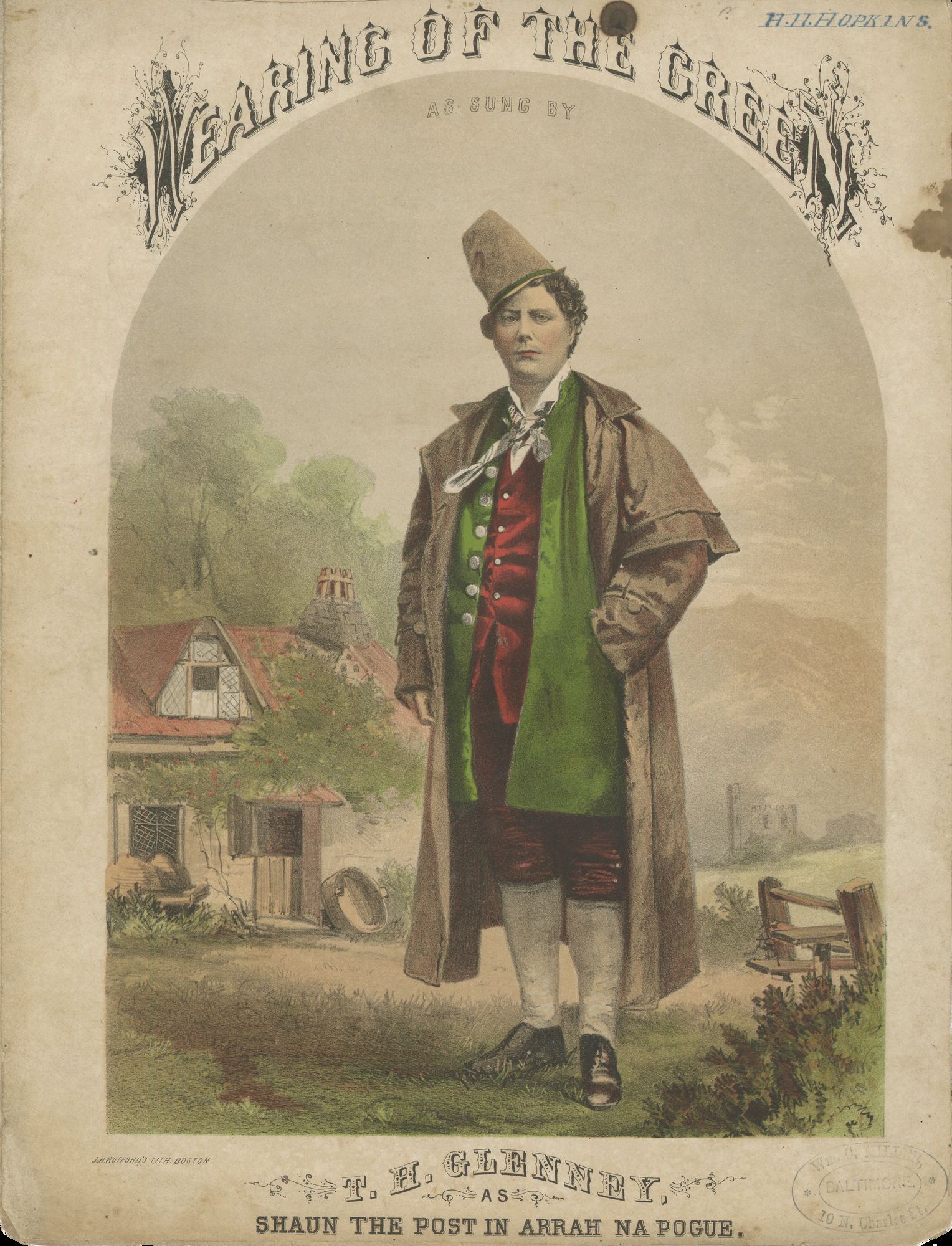
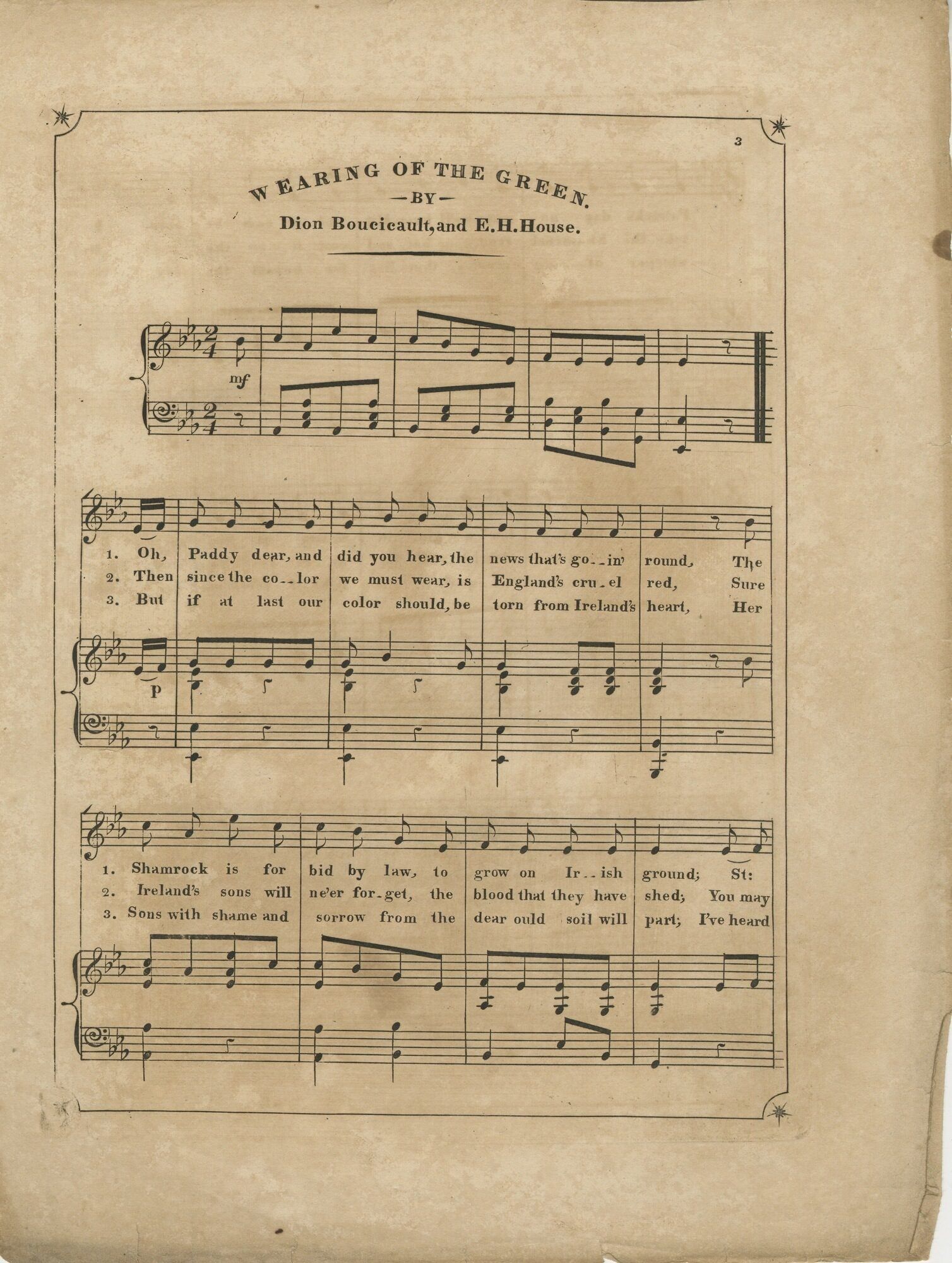
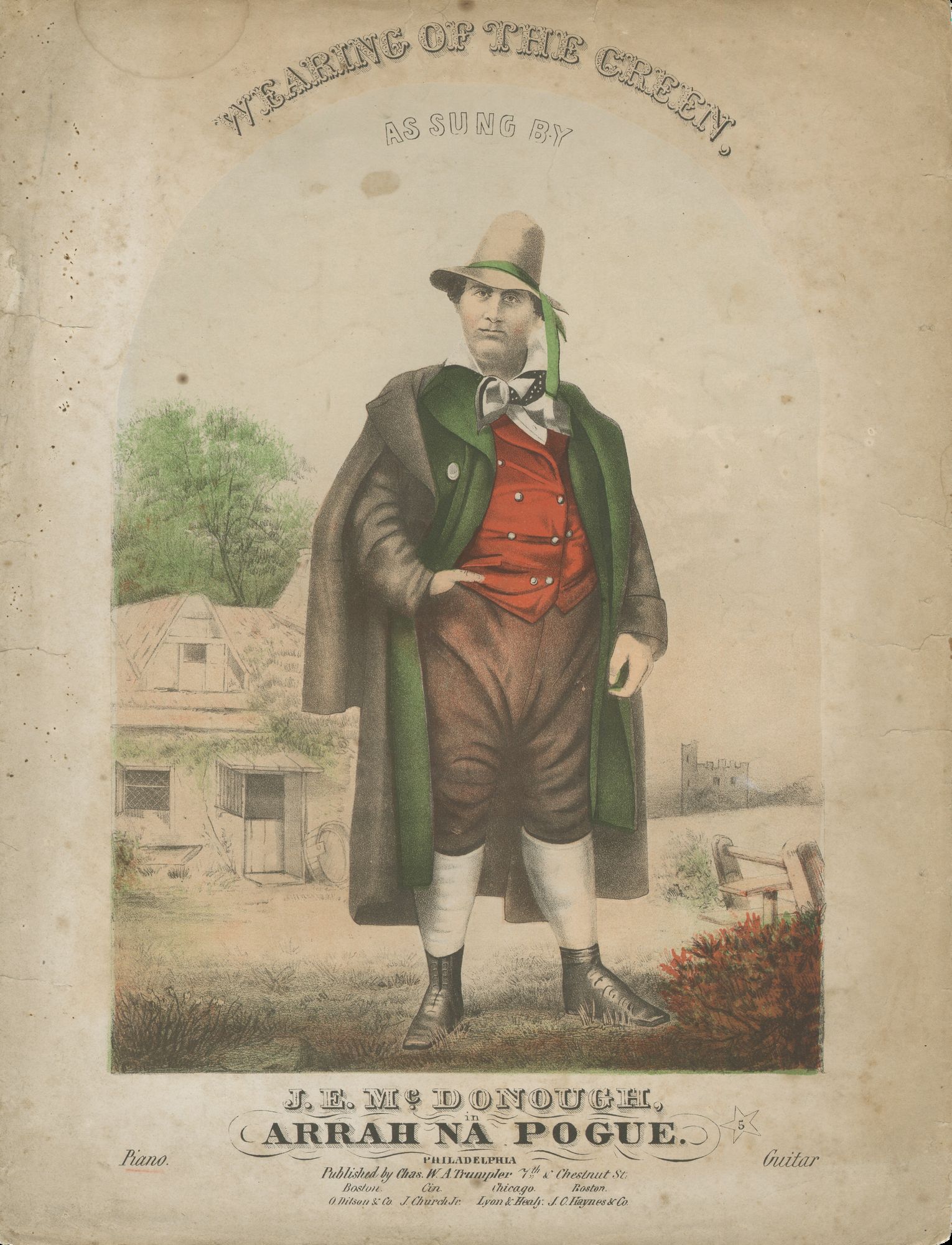
Philadelphia: Chas. W. Trumpler, 1865. 5 pp, good condition / New York: H.B,. Dodworth/T. Birch and Son, 1865, 5 pp, good. Two folio sheet music pieces with hand-colored pictorial covers, 13x10 and 14x11 inches. General age toning and scattered spotting, one with a small tack hole at upper margin; good overall.. A pair of Chicago-issued theatrical song sheets connected with Dion Boucicault’s popular Irish melodrama Arrah-na-Pogue (first produced 1864), one of the most frequently staged Irish plays in America during the later nineteenth century. Boucicault incorporated his own version of the patriotic ballad “The Wearing of the Green” into the drama, helping to popularize the song with theatre audiences in Britain and the United States. Each sheet bears a vivid hand-colored lithographic pictorial cover showing a performer in costume before a rustic Irish landscape. The first is “The Wearing of the Green, As Sung by J. E. McDonough in ‘Arrah Na Pogue,’” depicting McDonough full-length in stage dress with green scarf and hat ribbon. The second is “The Wearing of the Green, As Sung by H. T. Glenney as ‘Shaun the Post’ in ‘Arrah Na Pogue,’” likewise presenting the performer in costume; this example carries the imprint H. H. Hopkins at the upper right and retains a small tack hole at the top margin.
“The Wearing of the Green” itself originated as a nationalist ballad associated with the Irish Rebellion of 1798, when supporters of the United Irishmen adopted the color green as a symbol of resistance to British rule. After the rebellion was suppressed, wearing green clothing or shamrocks could mark a person as a rebel sympathizer and lead to arrest. The song lamented these persecutions and circulated widely in printed broadsides and songsters. Boucicault’s theatrical adaptation for Arrah-na-Pogue became the best-known nineteenth-century version, ensuring the song’s continued popularity on both the Irish and American stage.
“The Wearing of the Green” itself originated as a nationalist ballad associated with the Irish Rebellion of 1798, when supporters of the United Irishmen adopted the color green as a symbol of resistance to British rule. After the rebellion was suppressed, wearing green clothing or shamrocks could mark a person as a rebel sympathizer and lead to arrest. The song lamented these persecutions and circulated widely in printed broadsides and songsters. Boucicault’s theatrical adaptation for Arrah-na-Pogue became the best-known nineteenth-century version, ensuring the song’s continued popularity on both the Irish and American stage.
Details
Title
The Wearing of the Green, As Sung by J. E. McDonough in “Arrah Na Pogue.” / The Wearing of the Green, As Sung by H. T. Glenney as “Shaun the Post” in “Arrah Na Pogue.” [Two Pieces]
Author
[Irish-Americana – Lithography – Sheet Music] Boucicault, Dion
Binding
5 pp, good condition / New York: H.B,. Dodworth/T. Birch and Son, 1865, 5 pp, good. Two folio sheet music pieces with hand-color
Condition
Good
Publisher
Chas. W. Trumpler: Philadelphia
Date
1865