

The Memphis Blues (Or Mr. Crump). [Inscribed to Noble Sissle]
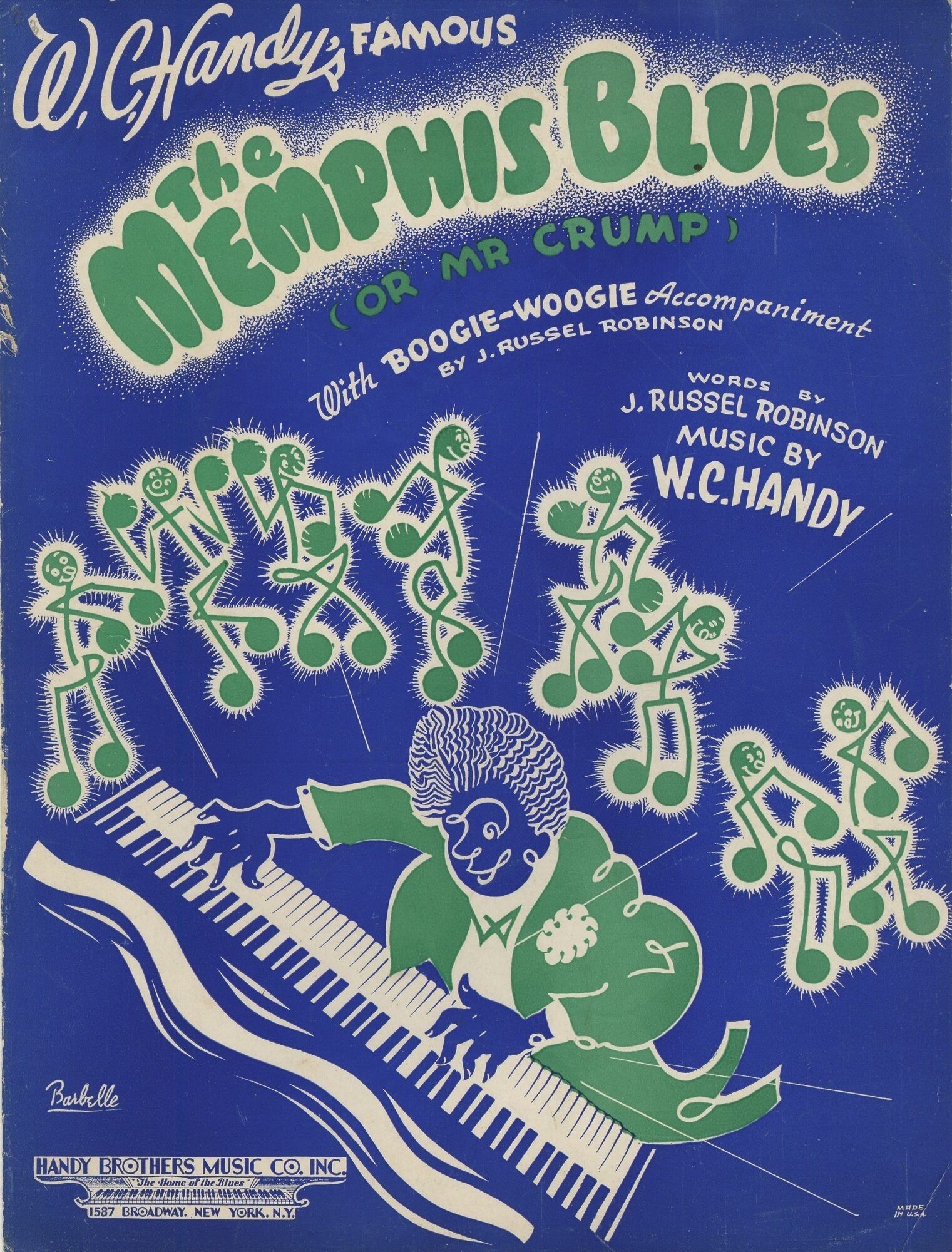
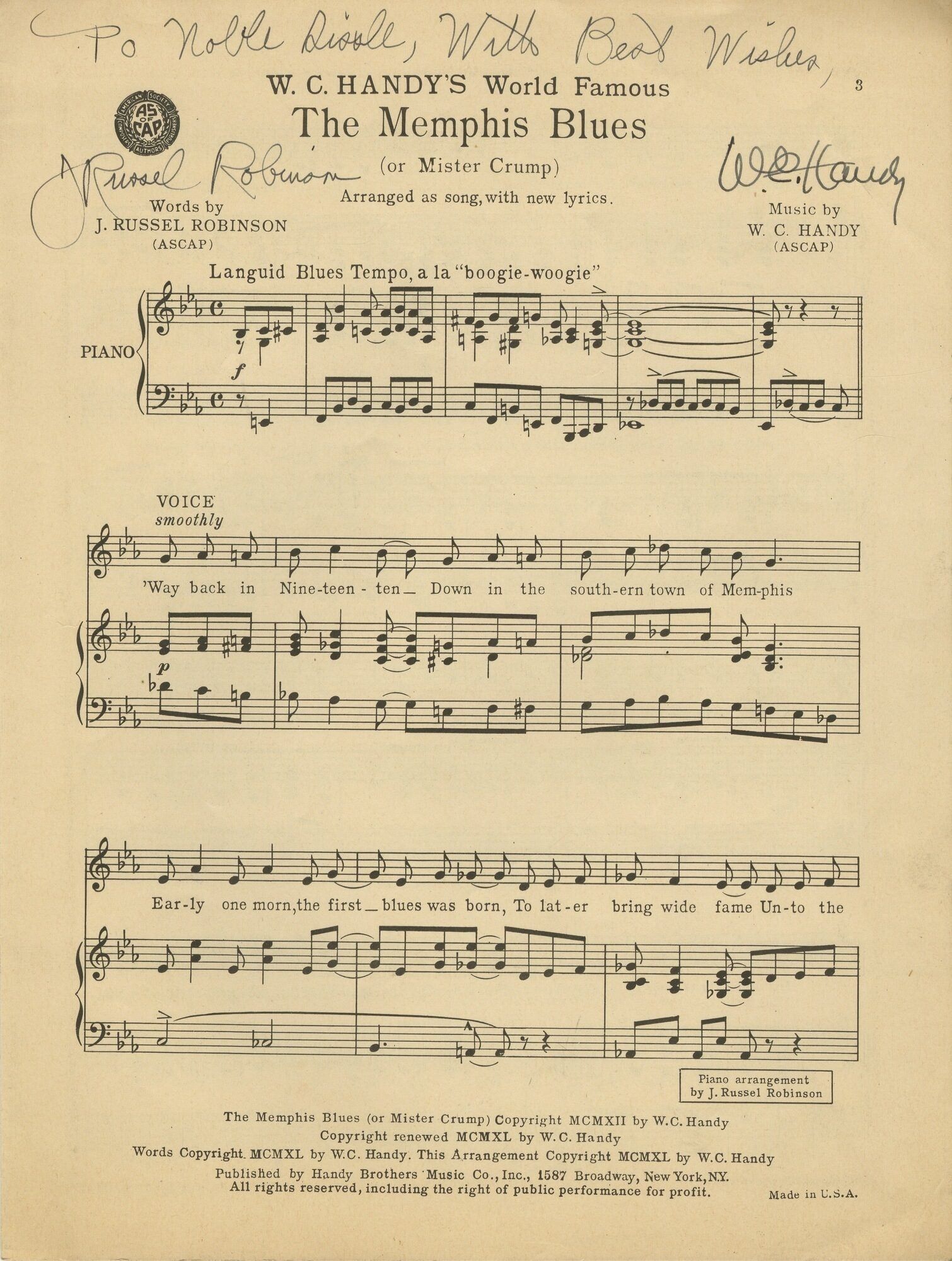
- SIGNED Folio sheet music, 8 pp. Inscribed to Noble Sissle and signed by both J. Russel Robinson and W. C. Handy
- New York: W.C. Handy, 1940
New York: W.C. Handy, 1940. Folio sheet music, 8 pp. Inscribed to Noble Sissle and signed by both J. Russel Robinson and W. C. Handy. Excellent condition.. The sheet music for one of the foundational publications of American blues, inscribed to Noble Sissle. Written by W. C. Handy with collaborator J. Russel Robinson and first issued in 1912, “The Memphis Blues (Or Mr. Crump)” is widely considered one of the first blues compositions to achieve broad popularity through commercial sheet music. The piece originated as a campaign song for Memphis political figure Edward H. “Boss” Crump but was quickly adapted for popular use.
Sissle (1889–1975), later known for the landmark Broadway musical Shuffle Along (1921) with Eubie Blake, was active in Black theatrical and orchestral music during the 1910s and 1920s and performed a number of Handy’s compositions. Sissle and Handy remained connected professionally over their careers. Sissle and his orchestra performed and recorded Handy’s “St. Louis Blues,” and he participated in recordings of Handy’s “Loveless Love” beginning in the early 1920s and again in later revival recordings during the 1930s. In later decades Sissle and Blake also involved Handy in projects celebrating early Black musical theatre and blues, including demonstrations and recordings prepared for a proposed revival of Shuffle Along in 1950. Their collaborations frequently centered on presenting Handy’s blues compositions in concert and recording contexts that highlighted the development of Black popular music. The song “Memphis Blues” was also quite significant in Sissle’s position as vocalist and drum major in the regimental band of the 369th Infantry Regiment during the First World War, where he performed with James Reese Europe. Sissle appeared as one of the band’s featured singers and helped present the group’s popular repertoire, “Memphis Blues” being one of their core pieces. This inscription happened after 1940, per the copyright renewal note on the sheet which we used to date it. Overall a fantastic association, linking Handy, Robinson and Sissle early in their careers.
Sissle (1889–1975), later known for the landmark Broadway musical Shuffle Along (1921) with Eubie Blake, was active in Black theatrical and orchestral music during the 1910s and 1920s and performed a number of Handy’s compositions. Sissle and Handy remained connected professionally over their careers. Sissle and his orchestra performed and recorded Handy’s “St. Louis Blues,” and he participated in recordings of Handy’s “Loveless Love” beginning in the early 1920s and again in later revival recordings during the 1930s. In later decades Sissle and Blake also involved Handy in projects celebrating early Black musical theatre and blues, including demonstrations and recordings prepared for a proposed revival of Shuffle Along in 1950. Their collaborations frequently centered on presenting Handy’s blues compositions in concert and recording contexts that highlighted the development of Black popular music. The song “Memphis Blues” was also quite significant in Sissle’s position as vocalist and drum major in the regimental band of the 369th Infantry Regiment during the First World War, where he performed with James Reese Europe. Sissle appeared as one of the band’s featured singers and helped present the group’s popular repertoire, “Memphis Blues” being one of their core pieces. This inscription happened after 1940, per the copyright renewal note on the sheet which we used to date it. Overall a fantastic association, linking Handy, Robinson and Sissle early in their careers.
Details
Title
The Memphis Blues (Or Mr. Crump). [Inscribed to Noble Sissle]
Author
[Music – Blues – Inscribed Copies] Handy, W. C.; Robinson, J. Russel
Binding
Folio sheet music, 8 pp. Inscribed to Noble Sissle and signed by both J. Russel Robinson and W. C. Handy
Condition
Unknown
Publisher
W.C. Handy: New York
Date
1940