

The Penitential Tyrant; or, Slave Trader Reformed: A Poem in Four Cantos
- New York: Samuel Wood, 1807
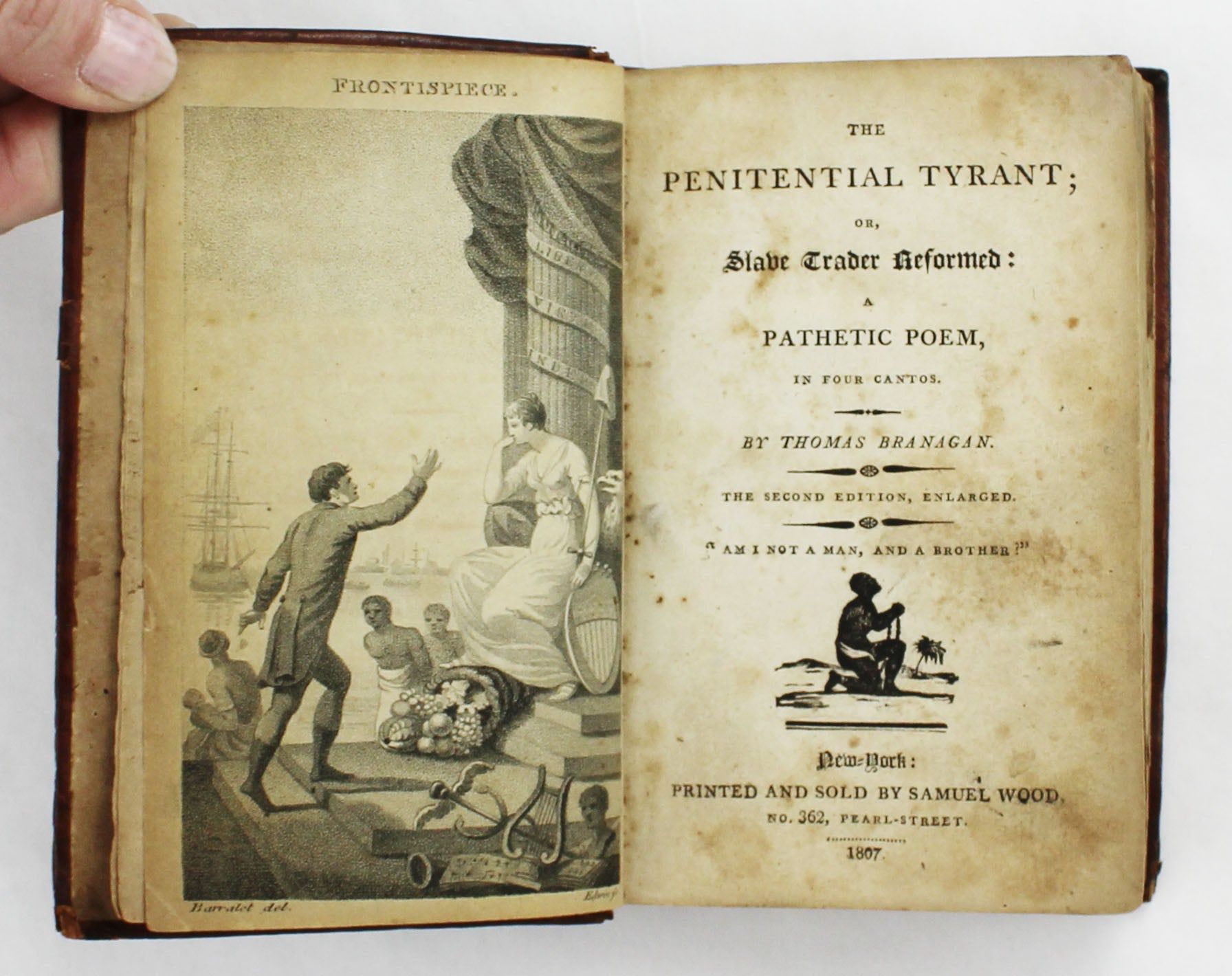
New York: Samuel Wood, 1807. Good plus.. xii,[4],290,[10]pp., plus stipple engraved frontispiece, and including several woodcut illustrations scattered throughout. 12mo. Contemporary mottled calf, spine gilt ruled with gilt leather label. Light wear to spine ends and hinges, corners bumped, and minor chipping along board edges. Scattered staining and moderate foxing internally. Second, enlarged edition of this anti-slavery literary work printed by early abolitionist and children's literature publisher Samuel Wood. The first edition was published in Philadelphia in two cantos, but the present edition is expanded to four, and also includes the following extracted, shorter abolitionist works : Notes to The penitential tyrant; Messiah: a sacred ecologue, in imitation of Virgil's Pollio [by Alexander Pope]; Buying stolen goods synonymous with stealing; or, The immorality of using the produce of slavery demonstrated. Addressed to all Christians of all denominations; A subject for conversation and reflection at the tea-table. Originally published in England [by William Cowper]; The method of procuring slaves on the coast of Africa ... Extracted from authentic documents, and exemplified by engravings; Extract from an essay in verse, entitled, Slavery. By Captain Marjoribanks, belonging to a British regiment which was stationed in the West-Indies.
The section titled, "The Method of Procuring Slaves on the Coast of Africa," includes a double-page depiction of the infamous plan of the slave ship Brooks lower deck, a provoking symbol of the abolitionist movement that brought out the horrors of the Middle Passage, and eight other woodcut illustrations, including one full-page of a slave in headframe and mouthpiece. The illustrated title page features an early American use of the kneeling slave image and the "Am I not a Man, and a Brother?" slogan, while the frontispiece engraving depicts a man appealing to a seated Lady Liberty, with bound slaves arriving into harbor in the background. At the rear is a nine-page list of subscribers and a publisher's advertisement for Wood's other offerings. A fascinating and relatively early work of antislavery literature.
Shaw 12202; LCP Afro-Americana 1480; Wegelin 879; Stoddard 838; Sabin 7383.
The section titled, "The Method of Procuring Slaves on the Coast of Africa," includes a double-page depiction of the infamous plan of the slave ship Brooks lower deck, a provoking symbol of the abolitionist movement that brought out the horrors of the Middle Passage, and eight other woodcut illustrations, including one full-page of a slave in headframe and mouthpiece. The illustrated title page features an early American use of the kneeling slave image and the "Am I not a Man, and a Brother?" slogan, while the frontispiece engraving depicts a man appealing to a seated Lady Liberty, with bound slaves arriving into harbor in the background. At the rear is a nine-page list of subscribers and a publisher's advertisement for Wood's other offerings. A fascinating and relatively early work of antislavery literature.
Shaw 12202; LCP Afro-Americana 1480; Wegelin 879; Stoddard 838; Sabin 7383.
Details
Title
The Penitential Tyrant; or, Slave Trader Reformed: A Poem in Four Cantos
Author
Branagan, Thomas
Condition
Good
Publisher
Samuel Wood: New York
Date
1807