

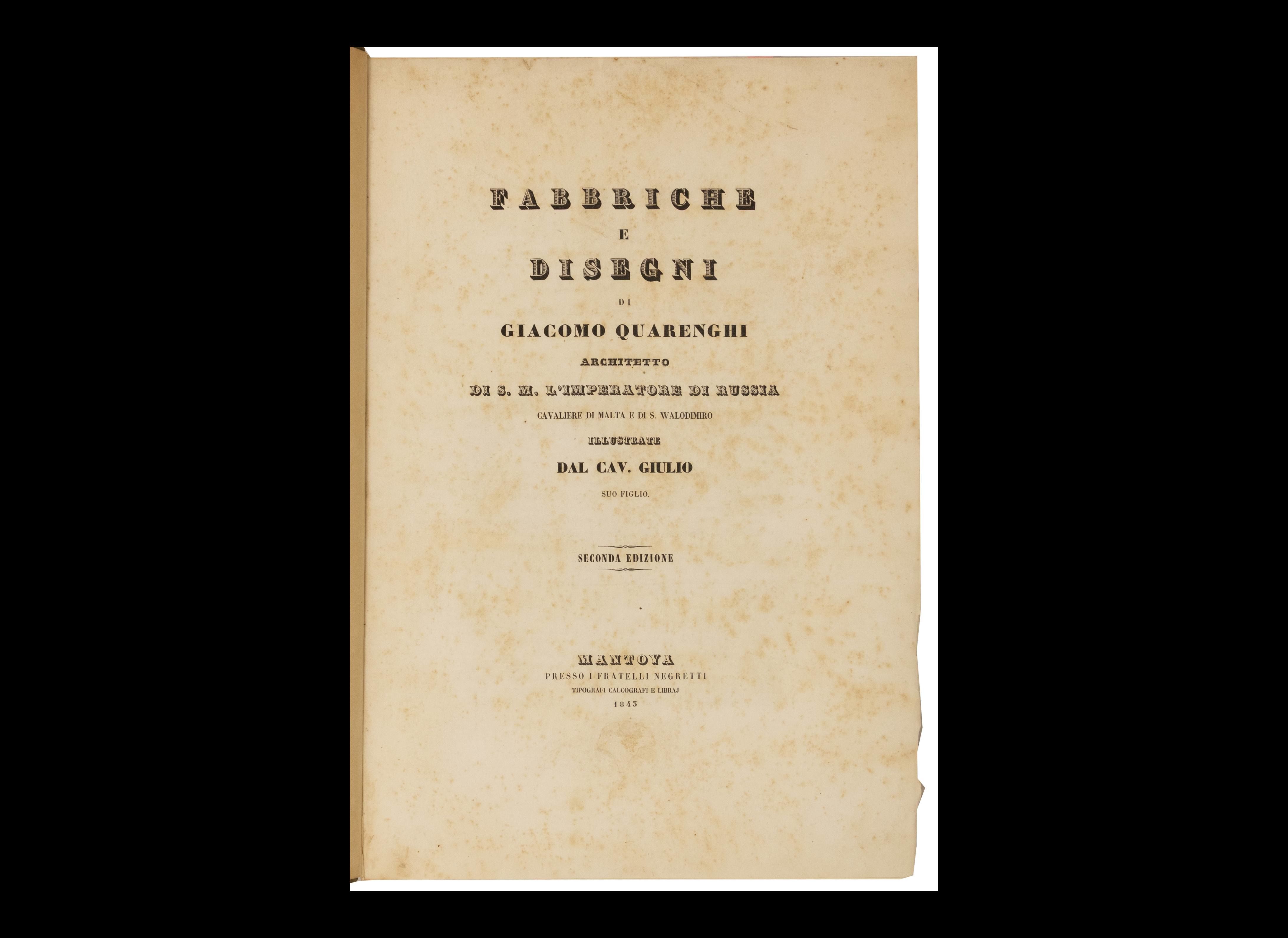
Fabbriche e disegni di Giacomo Quarenghi, architetto di S.M. l’Imperatore di Russia, Cavaliere di Malta e di S. Walodimiro, illustrate dal Cav. Giulio suo figlio. Seconda edizione
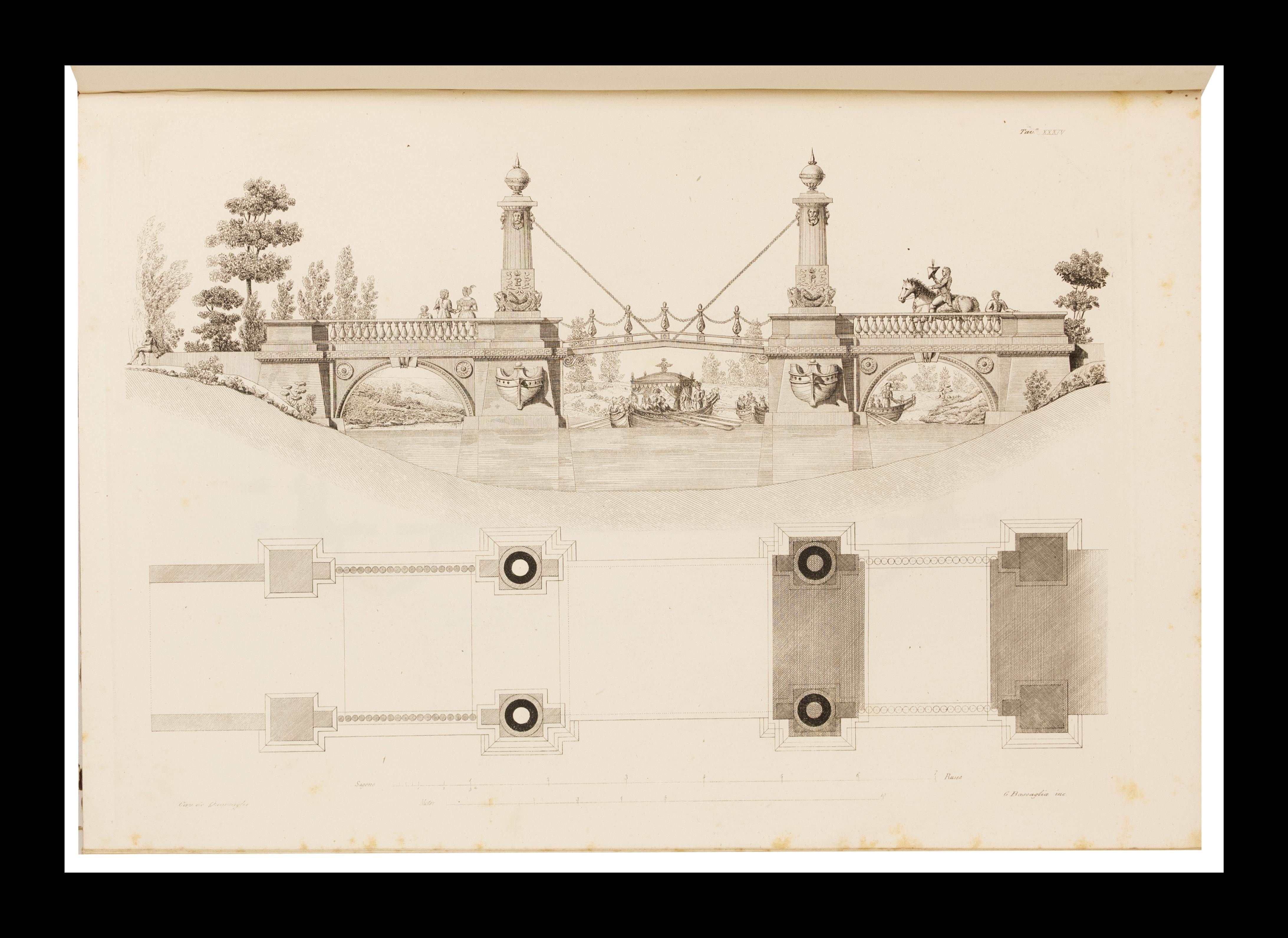
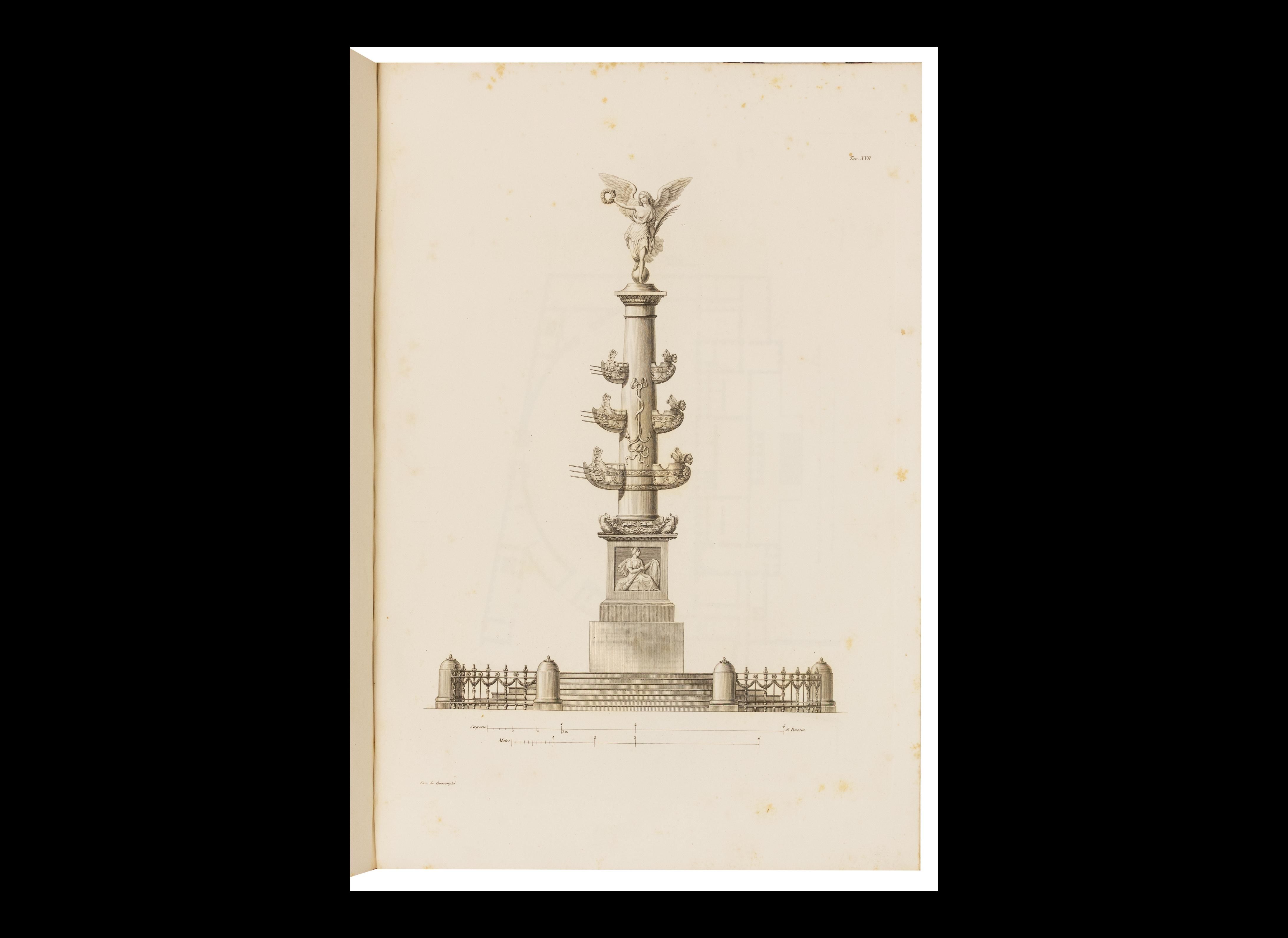
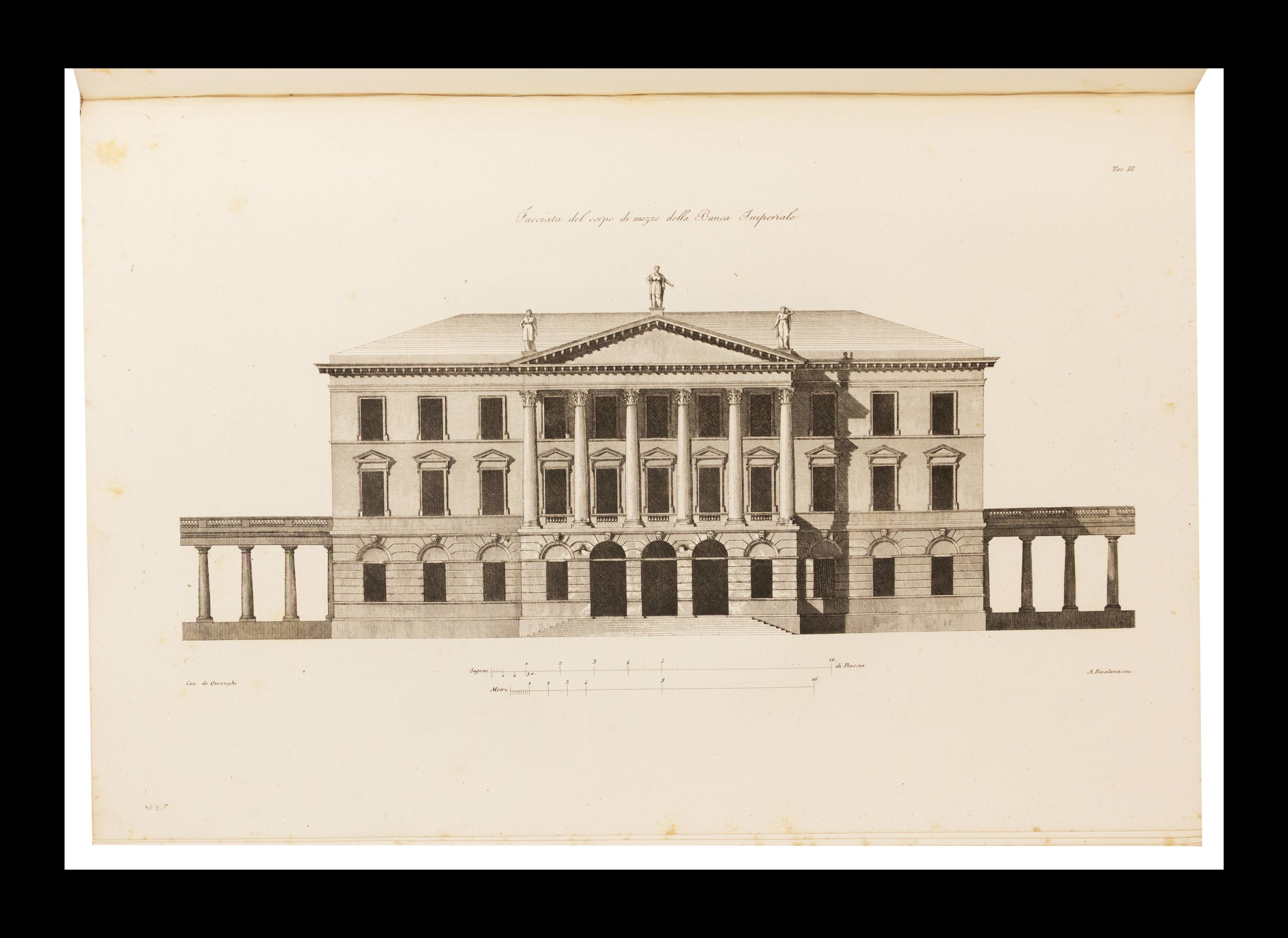
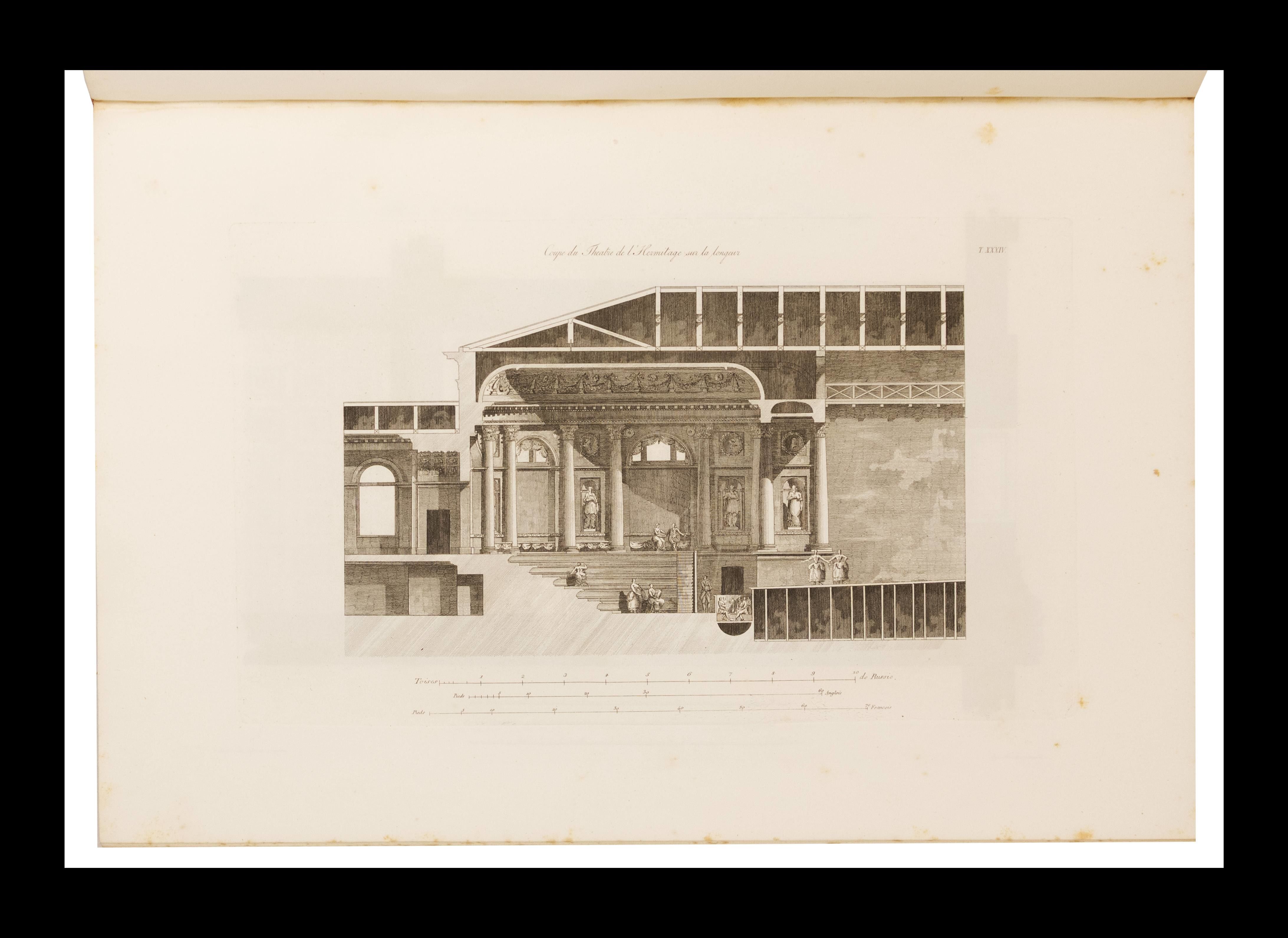
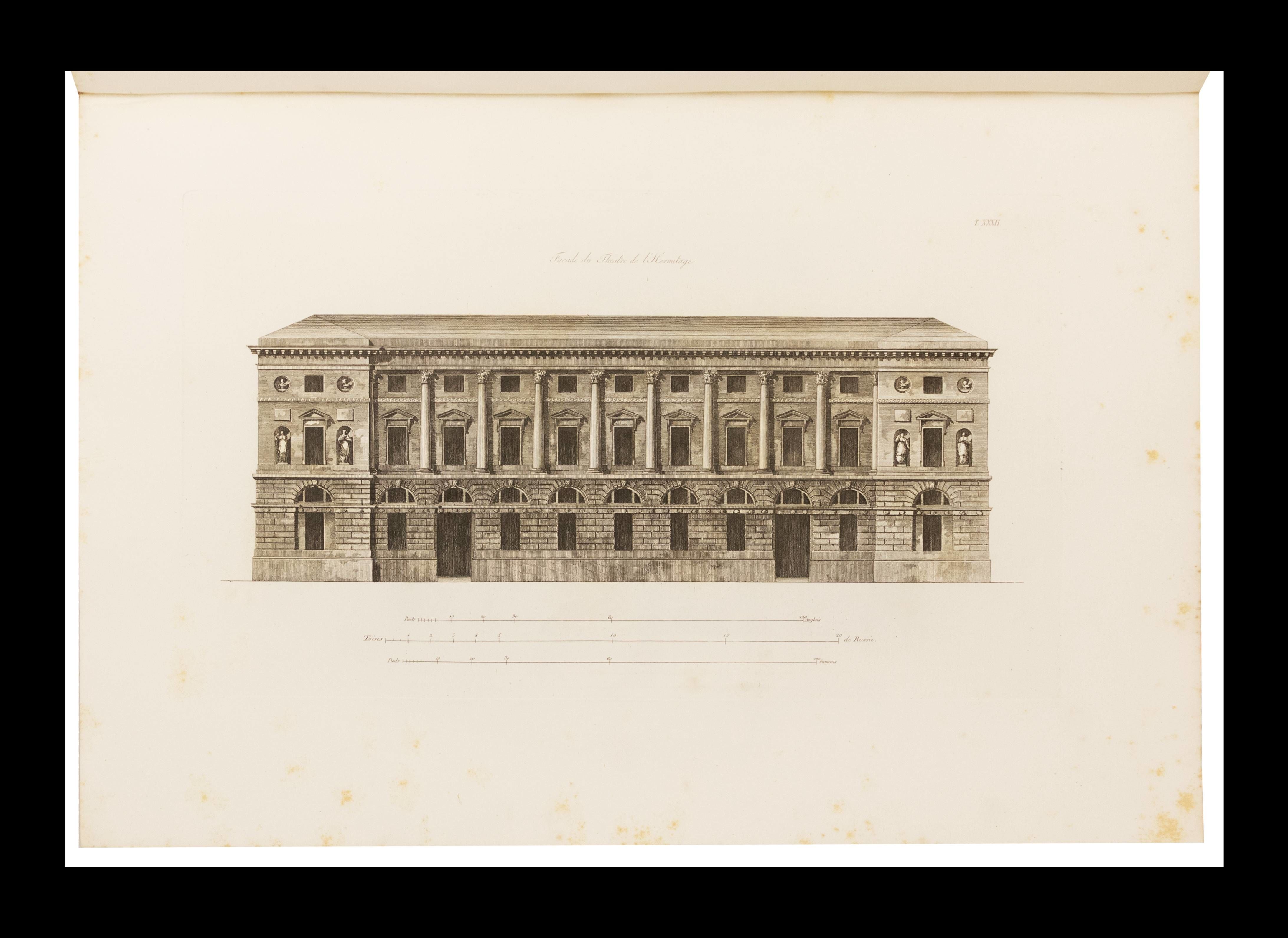
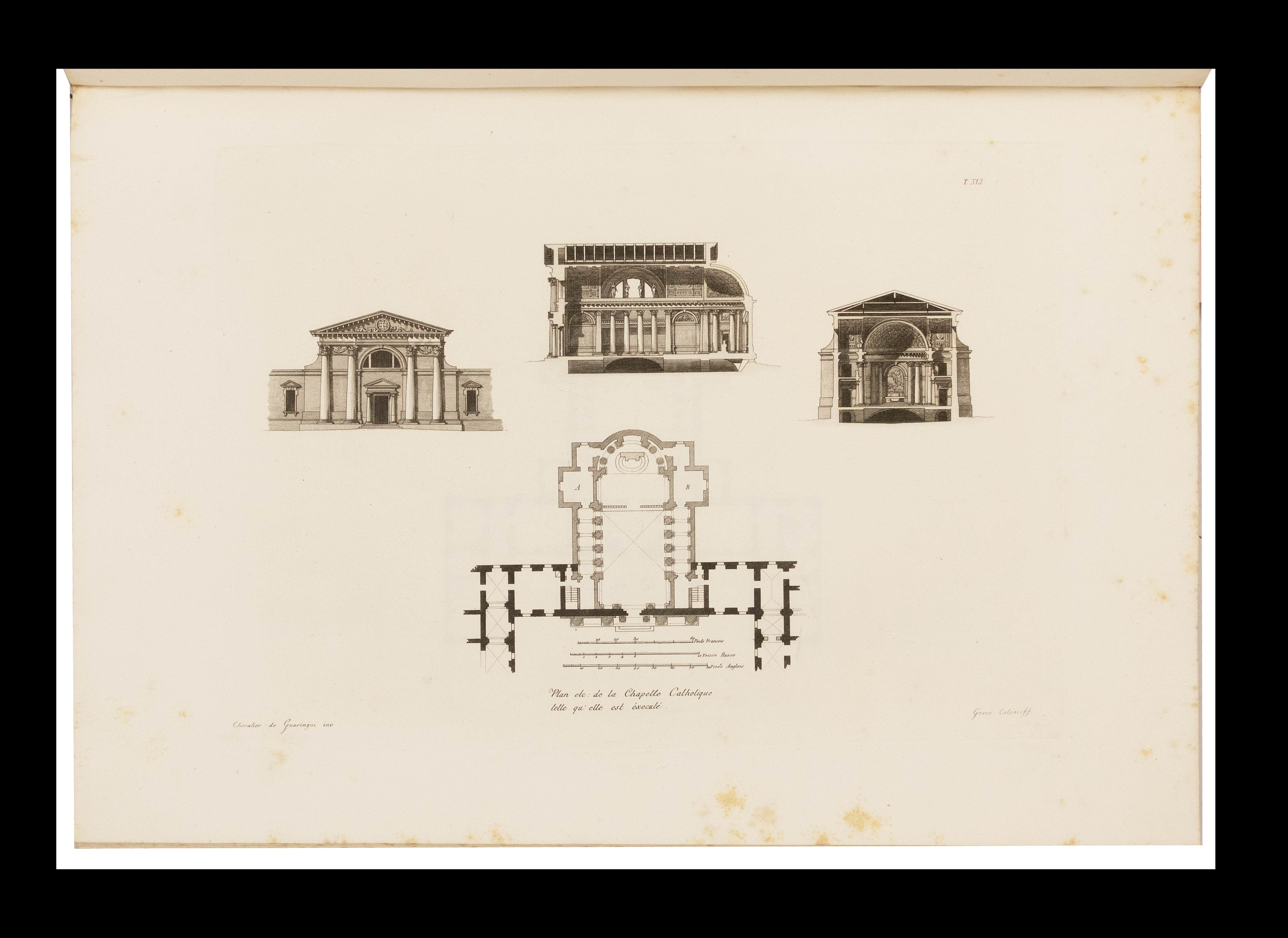
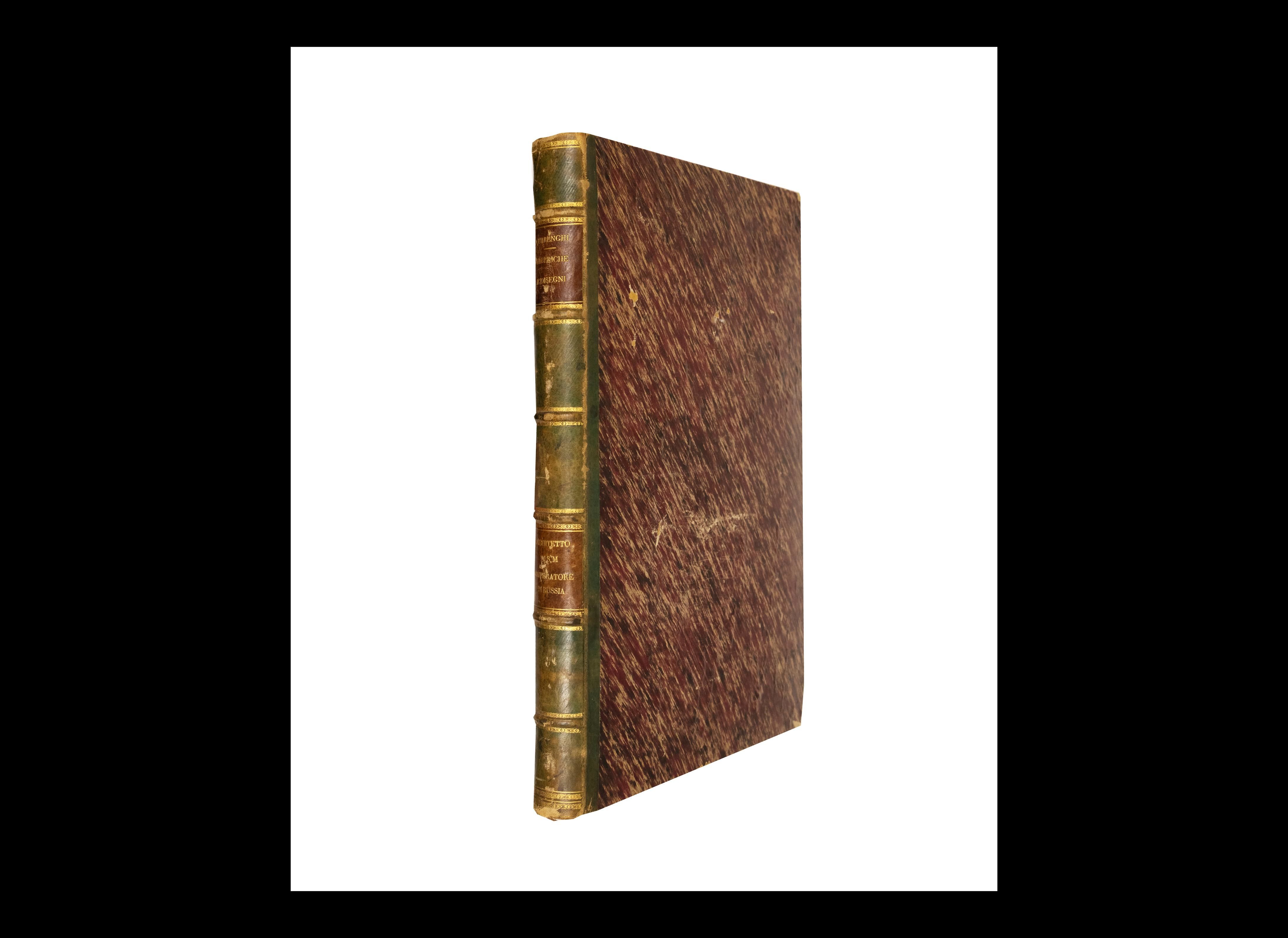
- Mantova: Fratelli Negretti, 1843-44
NEOCLASSICAL ARCHITECTURE IN IMPERIAL RUSSIA
LARGE FOLIO, WITH OVER 100 ENGRAVED ILLUSTRATIONS
Mantova, Fratelli Negretti, 1843-44.
Folio (46.4 x 31.4 cm). 2 parts in 1 vol.: 46, [2] pp., and 59 engraved plates (lacking the portrait of Quarenghi); and [2] leaves (color lithographed dedication leaf to the "Gran Duca, ereditario delle Russie" and color lithographed title dated 1844), [3] pp. (dedication to "Altezza Imperiale"), 5-32, [2] pp., and 66 engraved plates (title and dedication leaves misbound after text pages, and plates and 55 misbound before 62). Occasional scattered foxing, 12mm tear on upper margin of part I, plate 20 not affecting image, and 55mm tear on lower margin of part I, plate XL beyond platemark and not affecting image. Bound in contemporary quarter green calf gilt over marbled boards, raised bands, brown leather titling pieces; some wear.
Second Italian edition of Édifices construits à St.-Pétersbourg, originally published in 1810 by the Imprimerie du Senat-Dirigéant in Saint Petersburg. The Italian version of part I of this edition first appeared in 1821 and was published by Paolo Antonio Tosi in Milan.
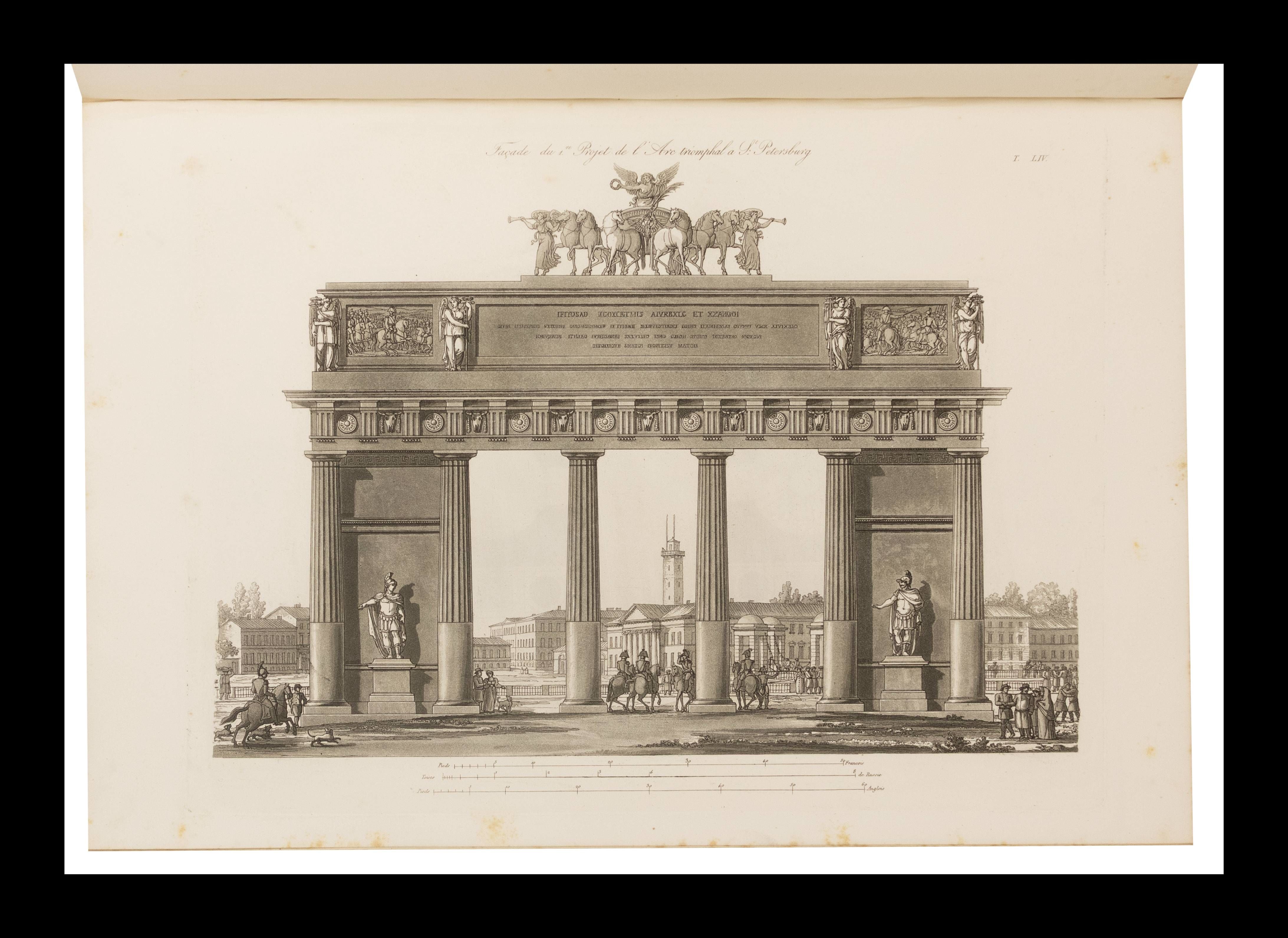
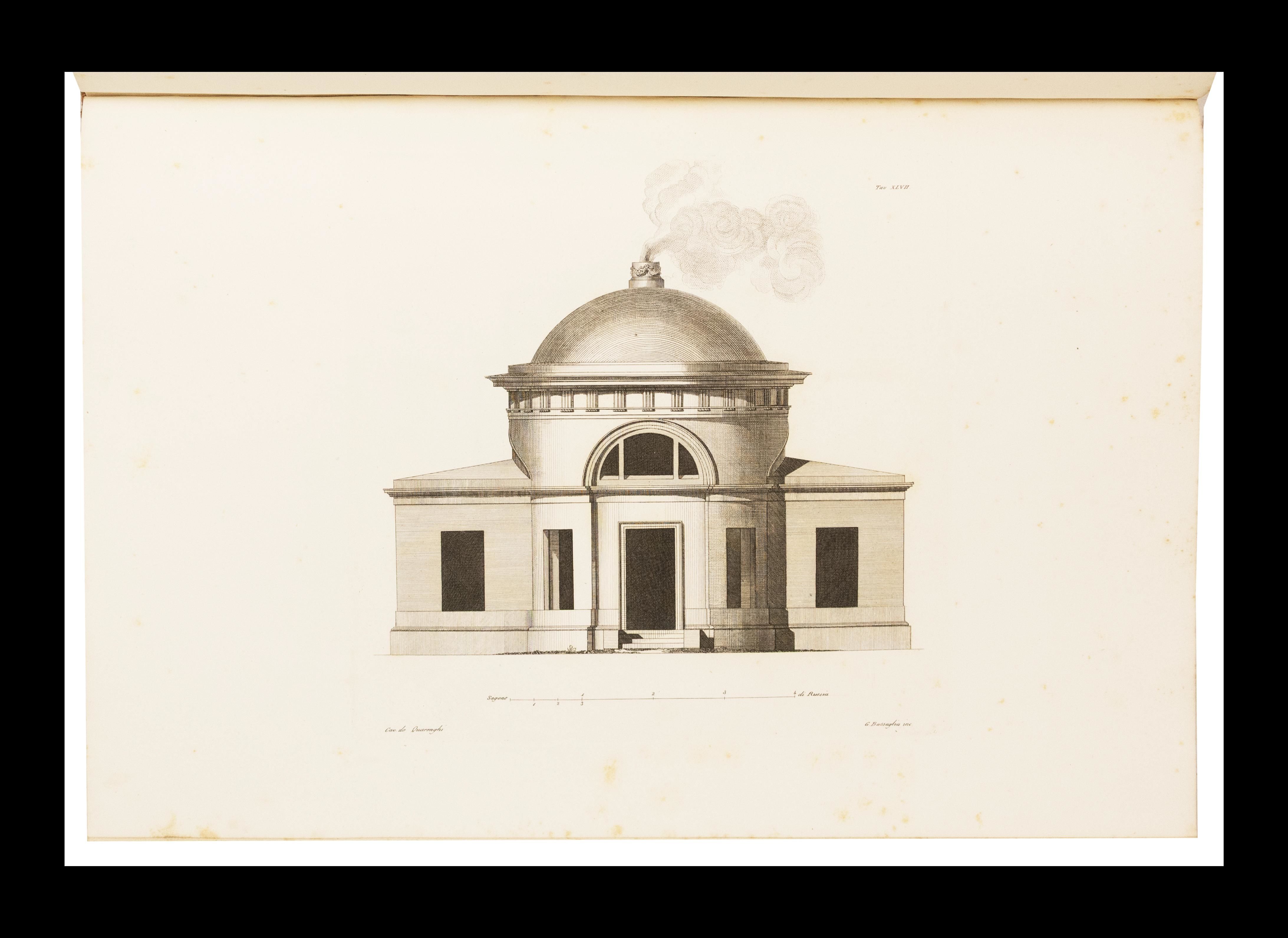
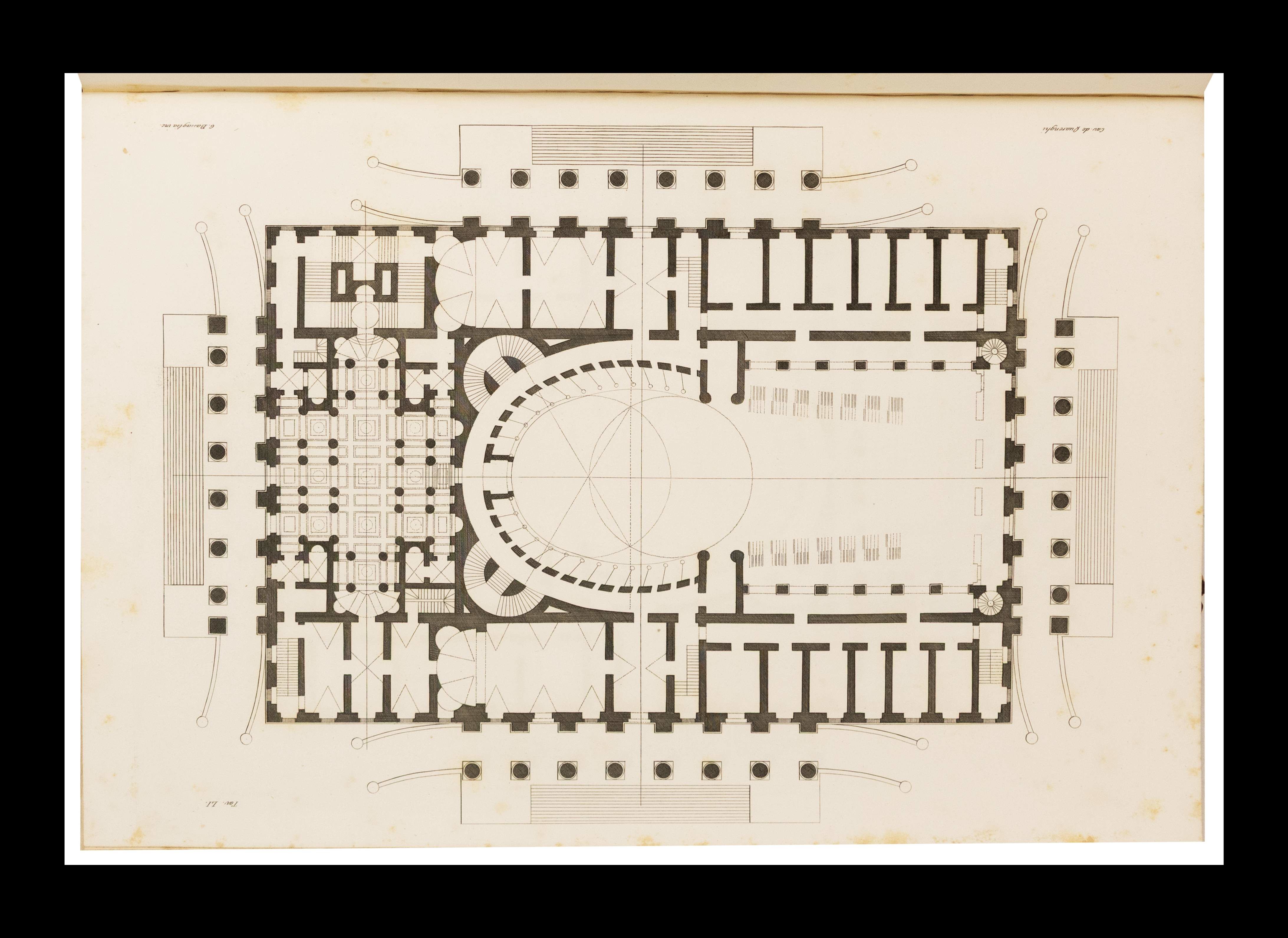
This 1843-44 edition is notable for including a second series of plates showcasing architectural works that were entirely omitted from the 1821 publication, and appear here for the first time, including the Imperial Bank, the Astronomical Observatory, additions to the Yusupov Palace, various bridges, and bath houses, coffee houses, theaters, monuments, and other small-scale structures. The engravings in part I are by Ivan Kolpakov except for plate 59 which is by Quarenghi; and in part II they are chiefly by G. Bassaglia, with A. Rivelanti, G. Biagi, M. Vinocchi, and A. Bernieri also contributing.
Giacomo Quarenghi (1744–1817) was an Italian architect influenced by Andrea Palladio's architecture who spent 38 years defining the Neoclassical landscape of Russia. While primarily known for shaping the architectural identity of St. Petersburg, he followed in the footsteps of Bartolomeo Rastrelli by extending his influence to Moscow. His prolific portfolio ranged from grand palaces and triumphal arches to functional military installations. Quarenghi's impact was so immediate that only five years after his arrival, Catherine the Great remarked that the city was filled with his "charming buildings" (Millard, p. 338). His notable contributions include the Hermitage Theater (1783–87), the stock exchange (1783-85, later demolished), the state bank (1783–99), the state Duma (1790s), and St. Petersburg's first shopping arcade (1797–98) and many more.
* Berlin Kat. 2776 (1821 ed.); Millard, Italian and Spanish 108 (1821 ed.); RIBA 2677 (1821 ed.).
Details
Title
Fabbriche e disegni di Giacomo Quarenghi, architetto di S.M. l’Imperatore di Russia, Cavaliere di Malta e di S. Walodimiro, illustrate dal Cav. Giulio suo figlio. Seconda edizione
Author
QUARENGHI, Giacomo
Condition
Unknown
Publisher
Fratelli Negretti: Mantova
Date
1843-44