

The U.S. Naval Astronomical Expedition to the Southern Hemisphere, during the Years 1849-'50-'51-'52
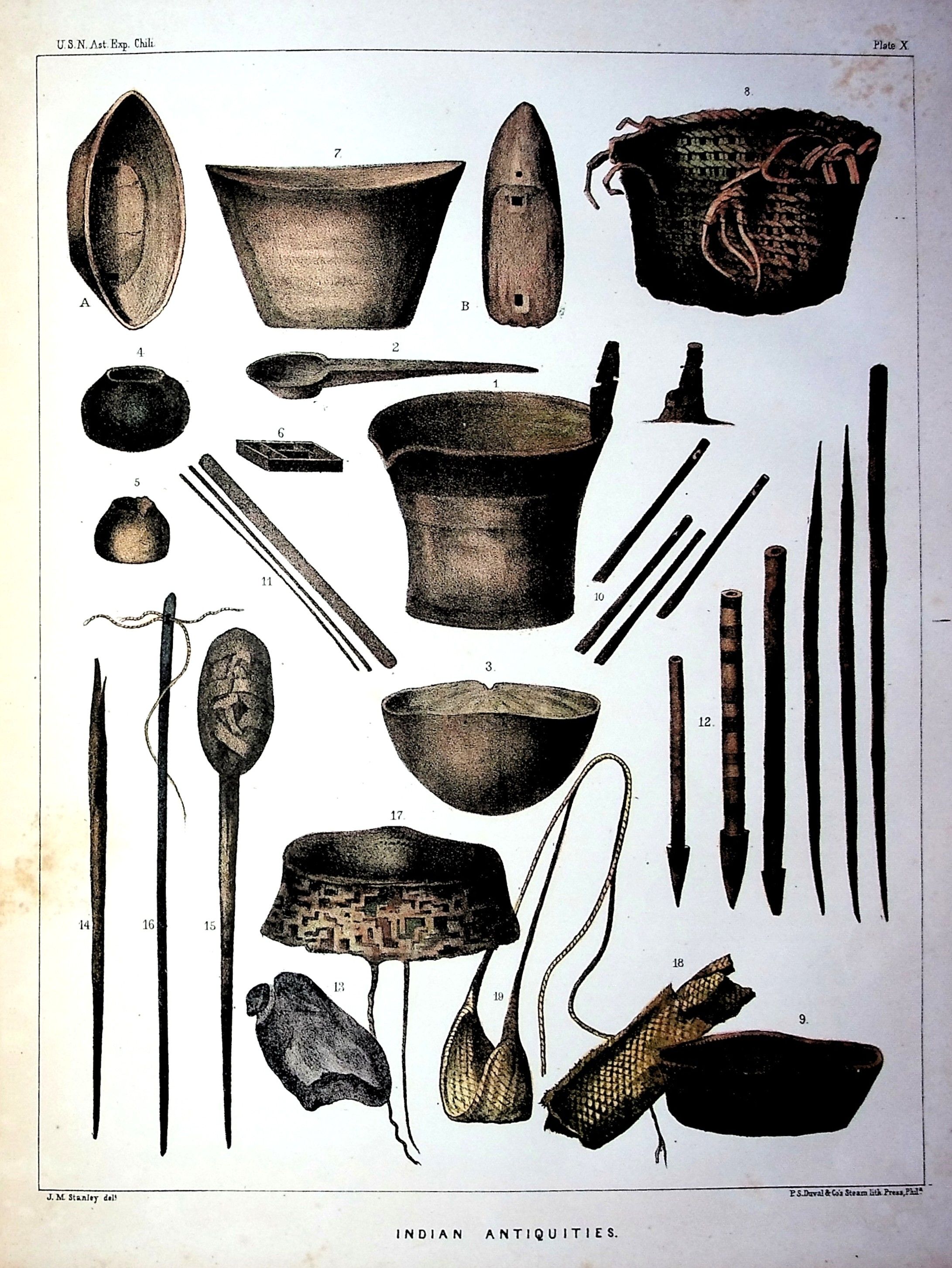
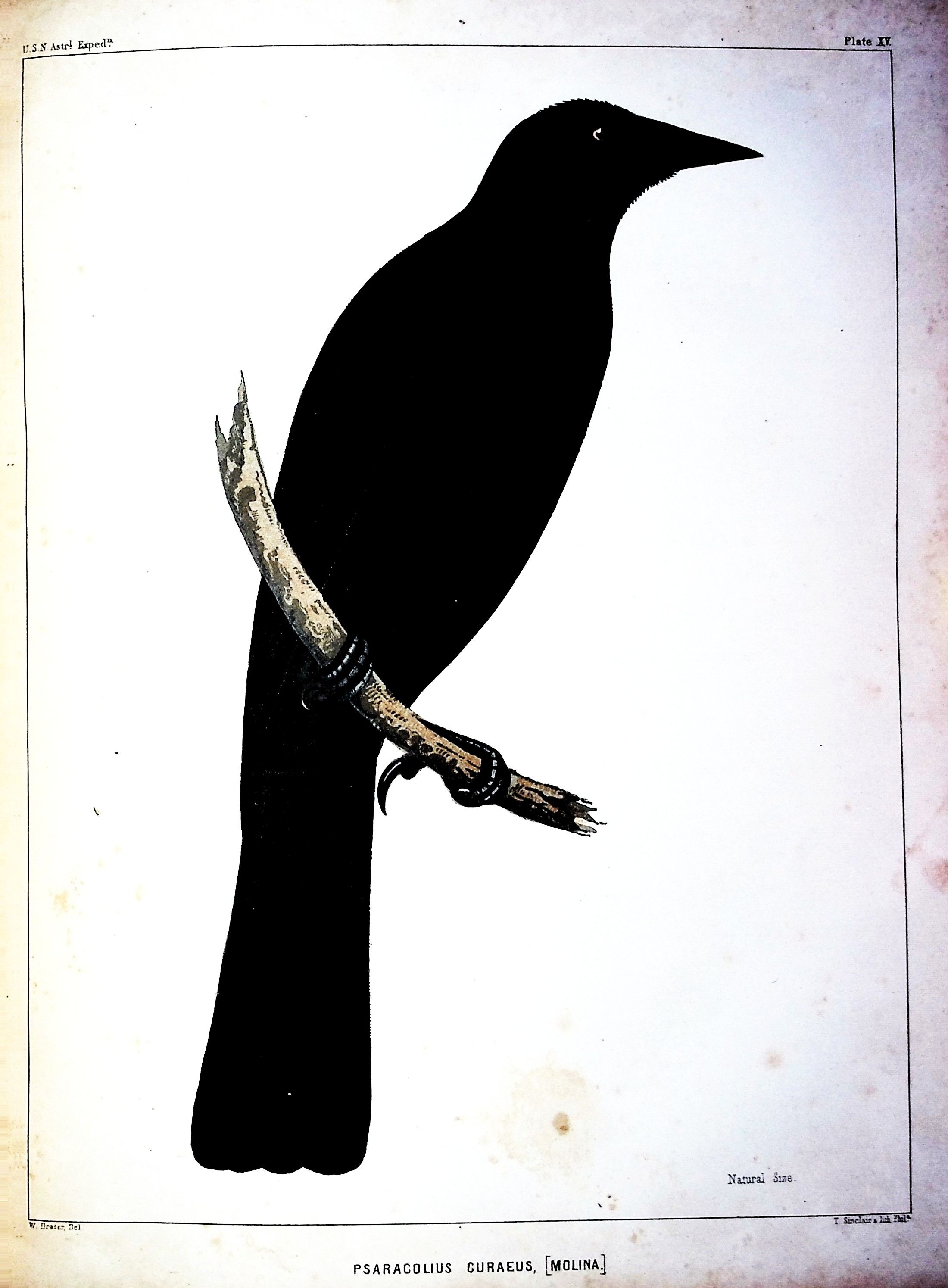
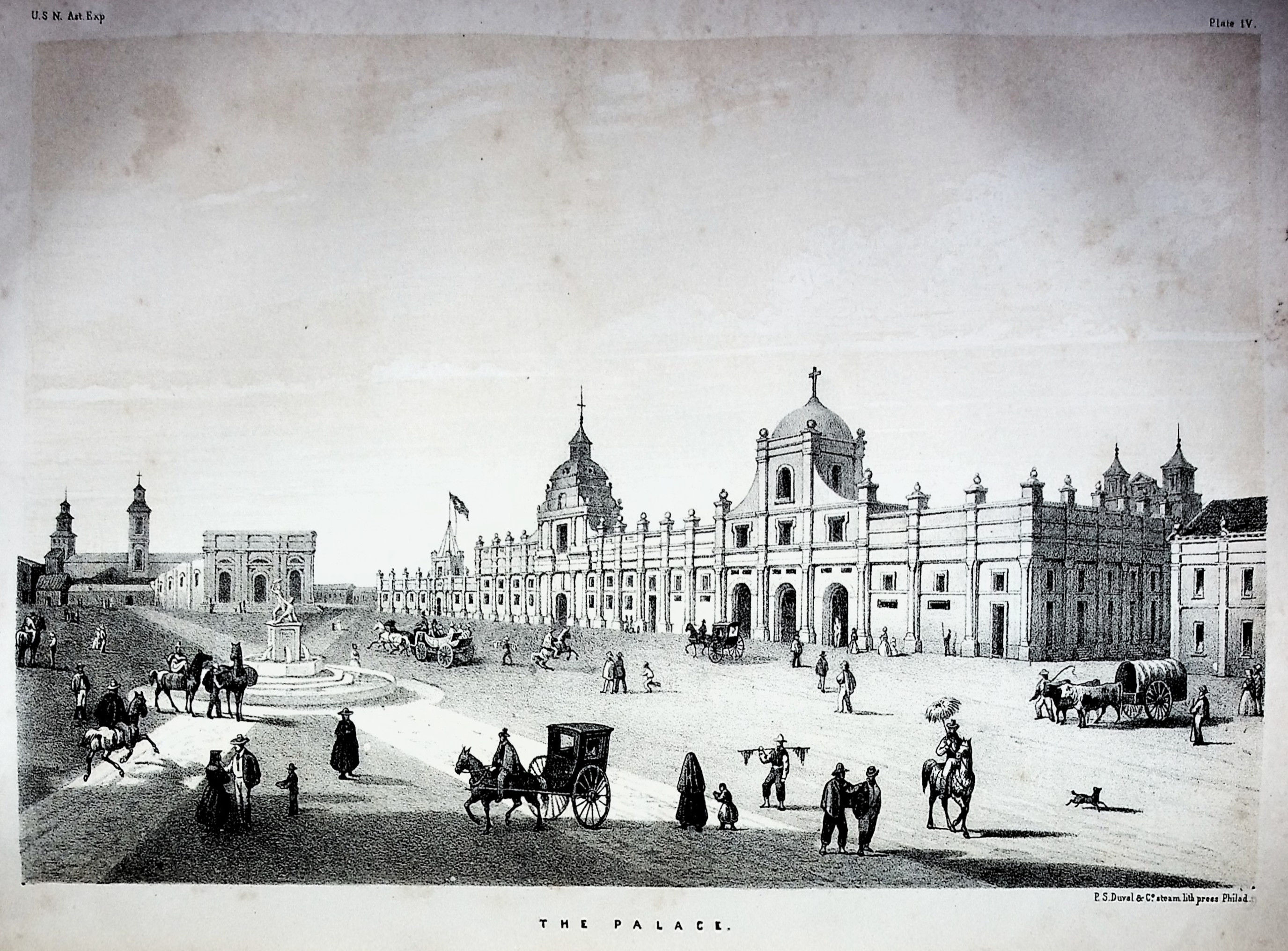
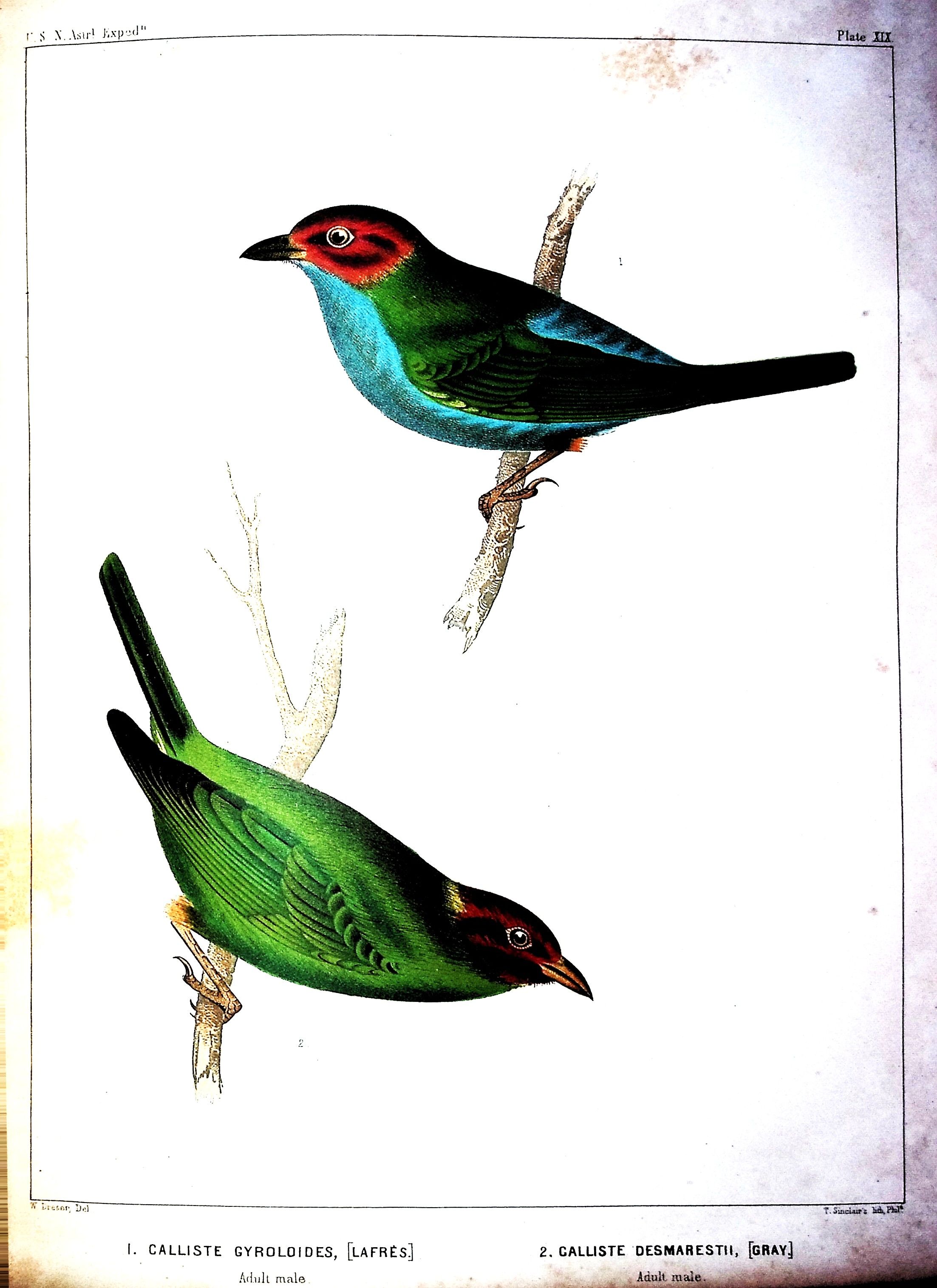
- Cloth binding
- Washington DC: A.O.P. Nicholson, Printer, 1855
Washington DC: A.O.P. Nicholson, Printer, 1855. First edition.
TWO LARGE ILLUSTRATED VOLUMES RECORD DISCOVERIES OF US NAVAL EXPEDITION TO CHILE IN MID-19TH CENTURY.
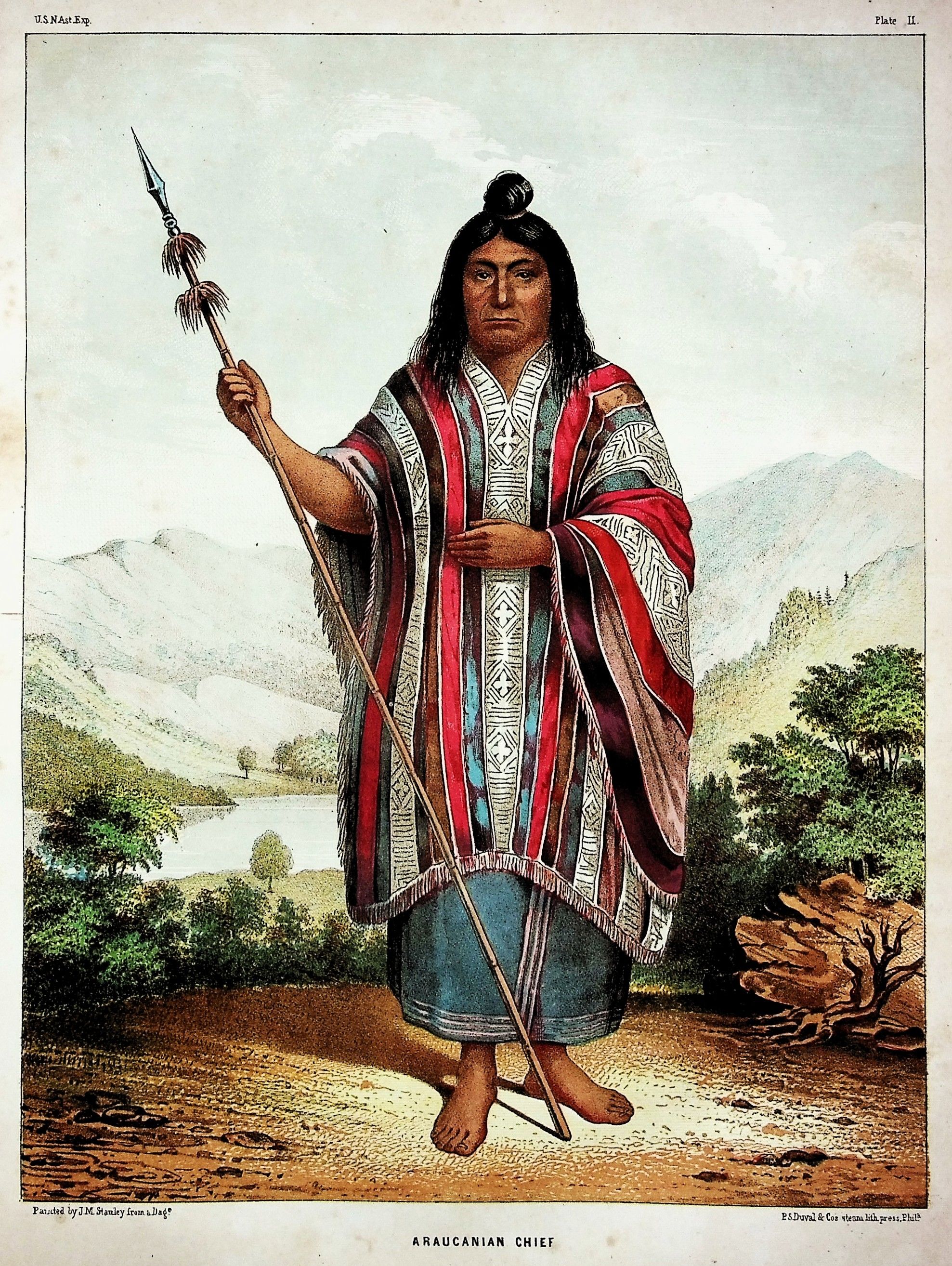
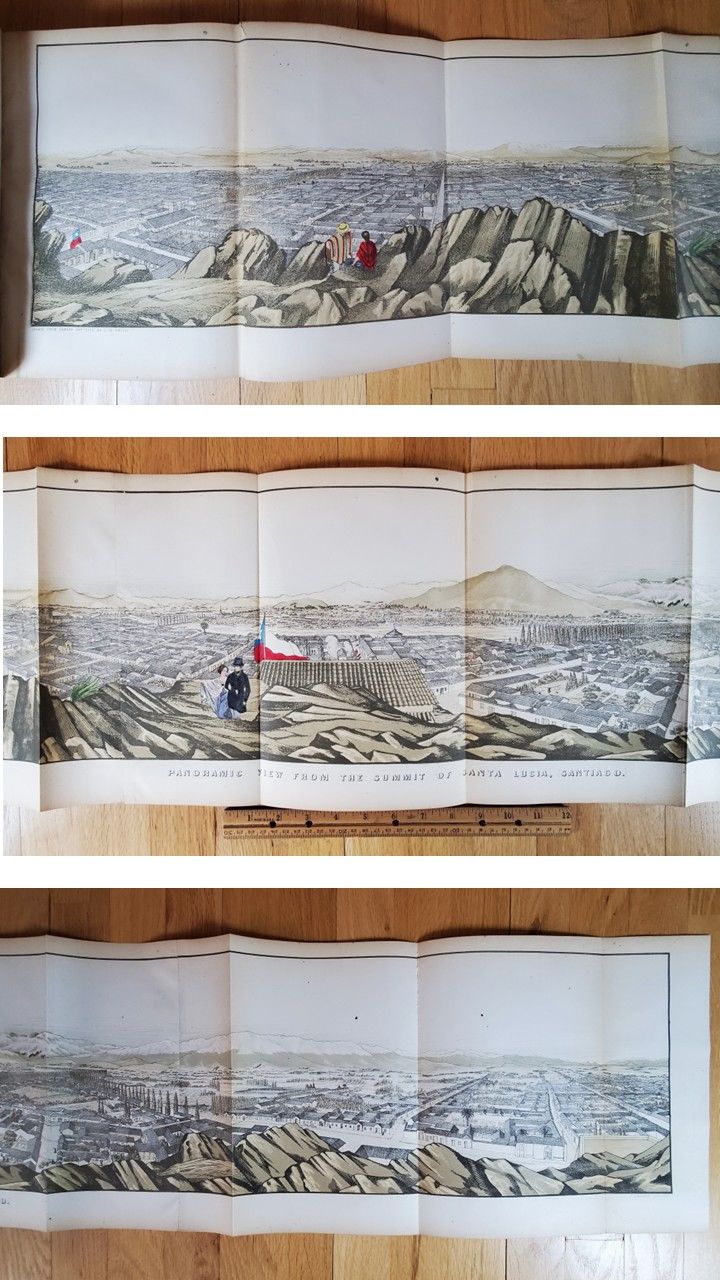
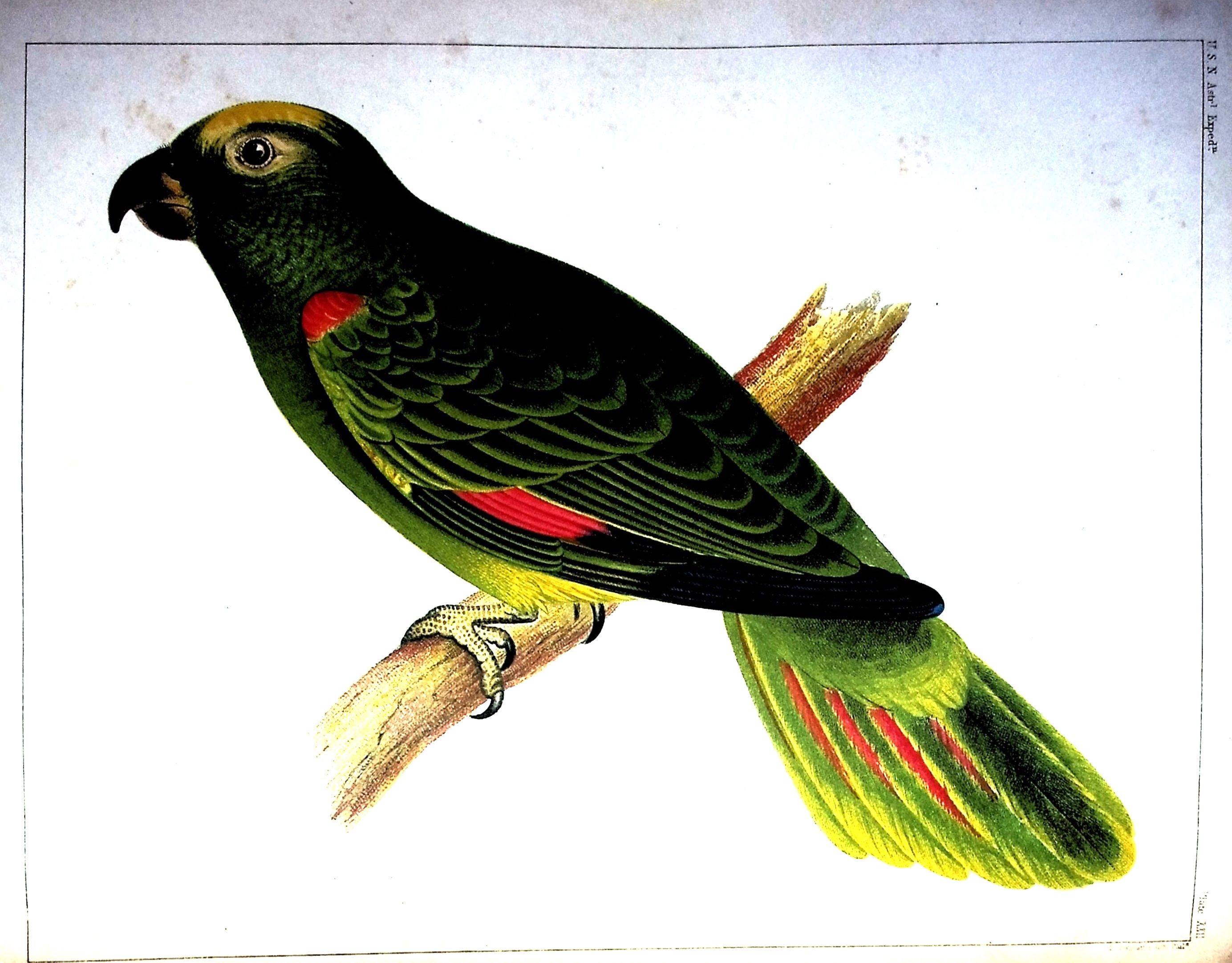
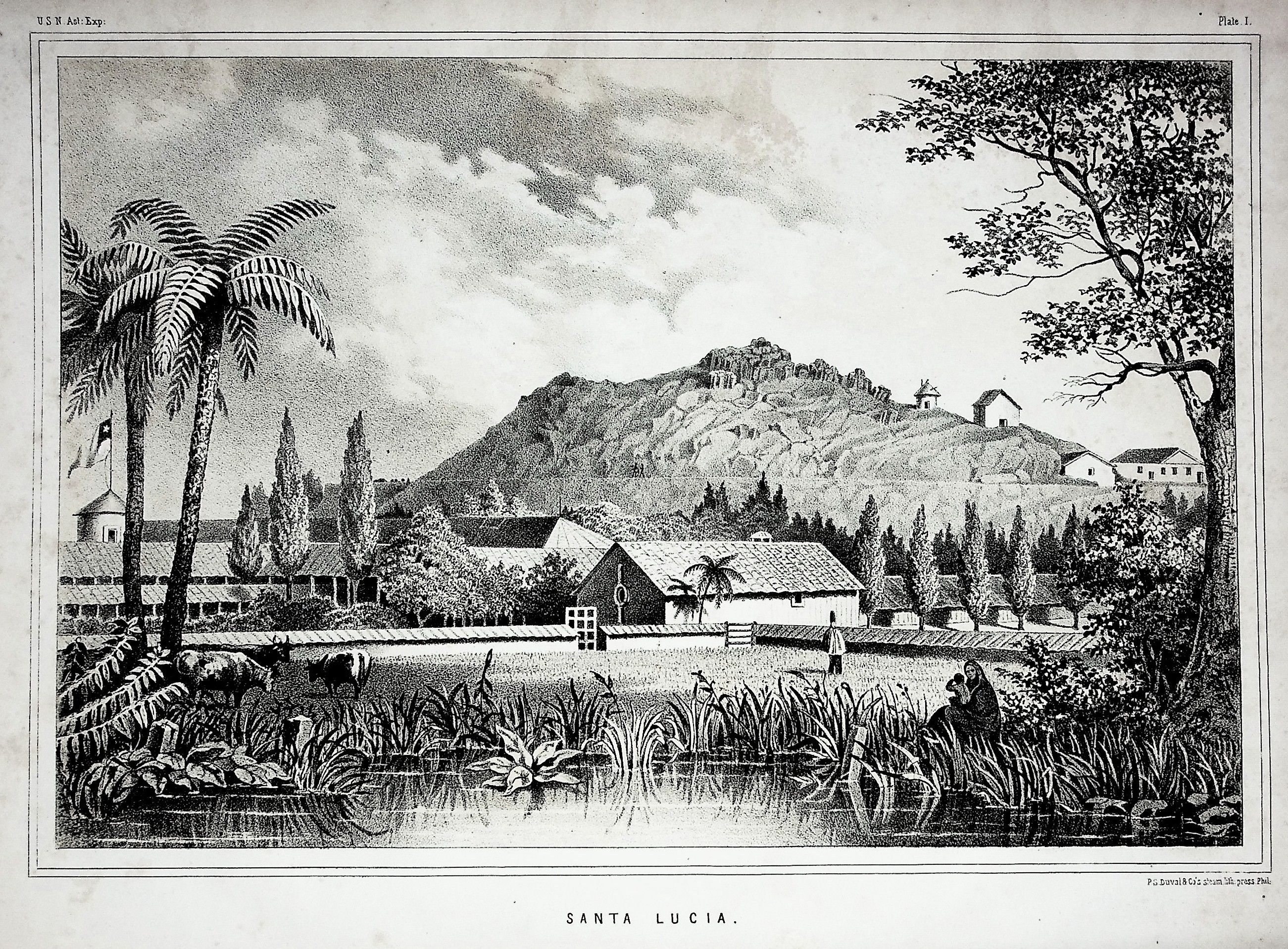
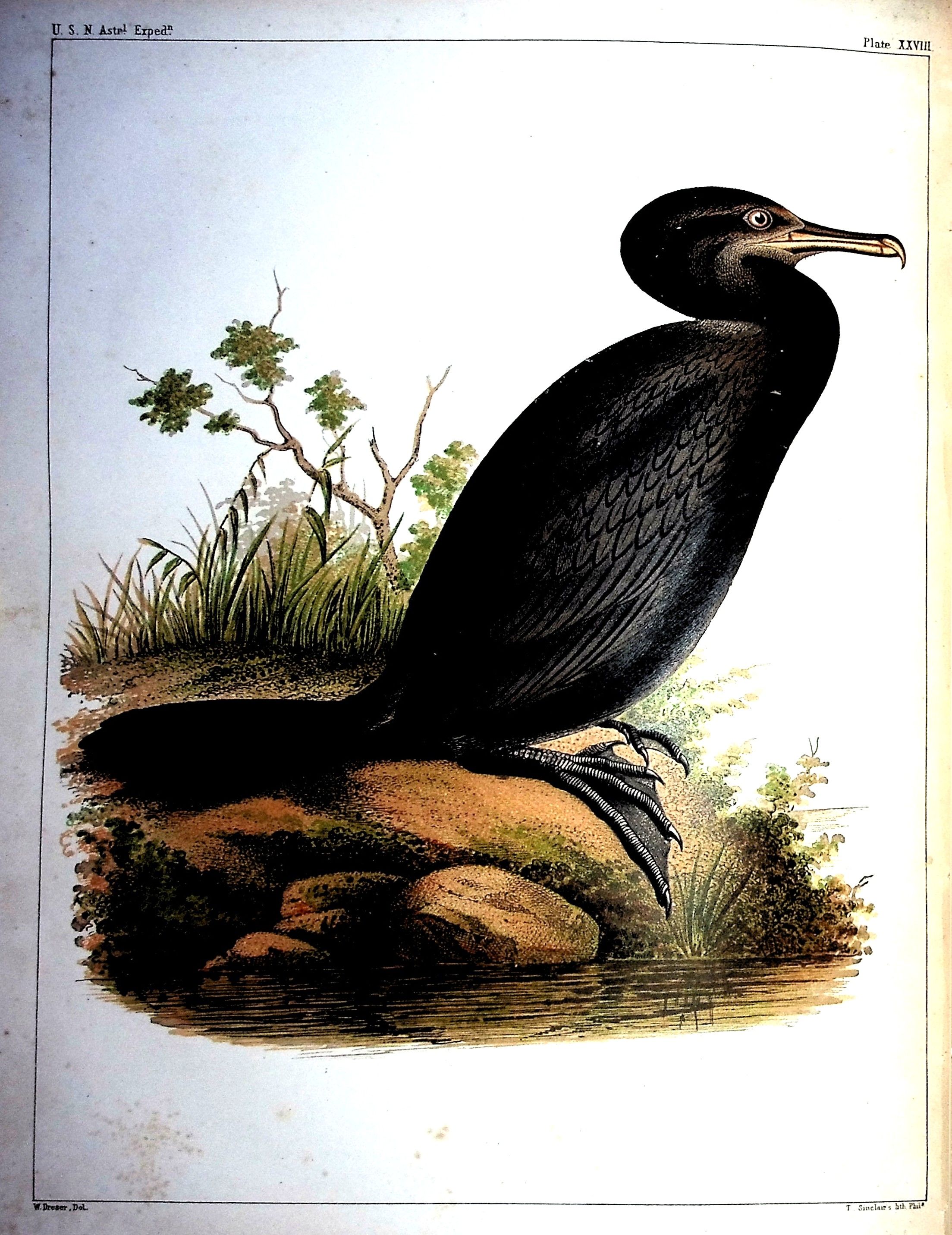
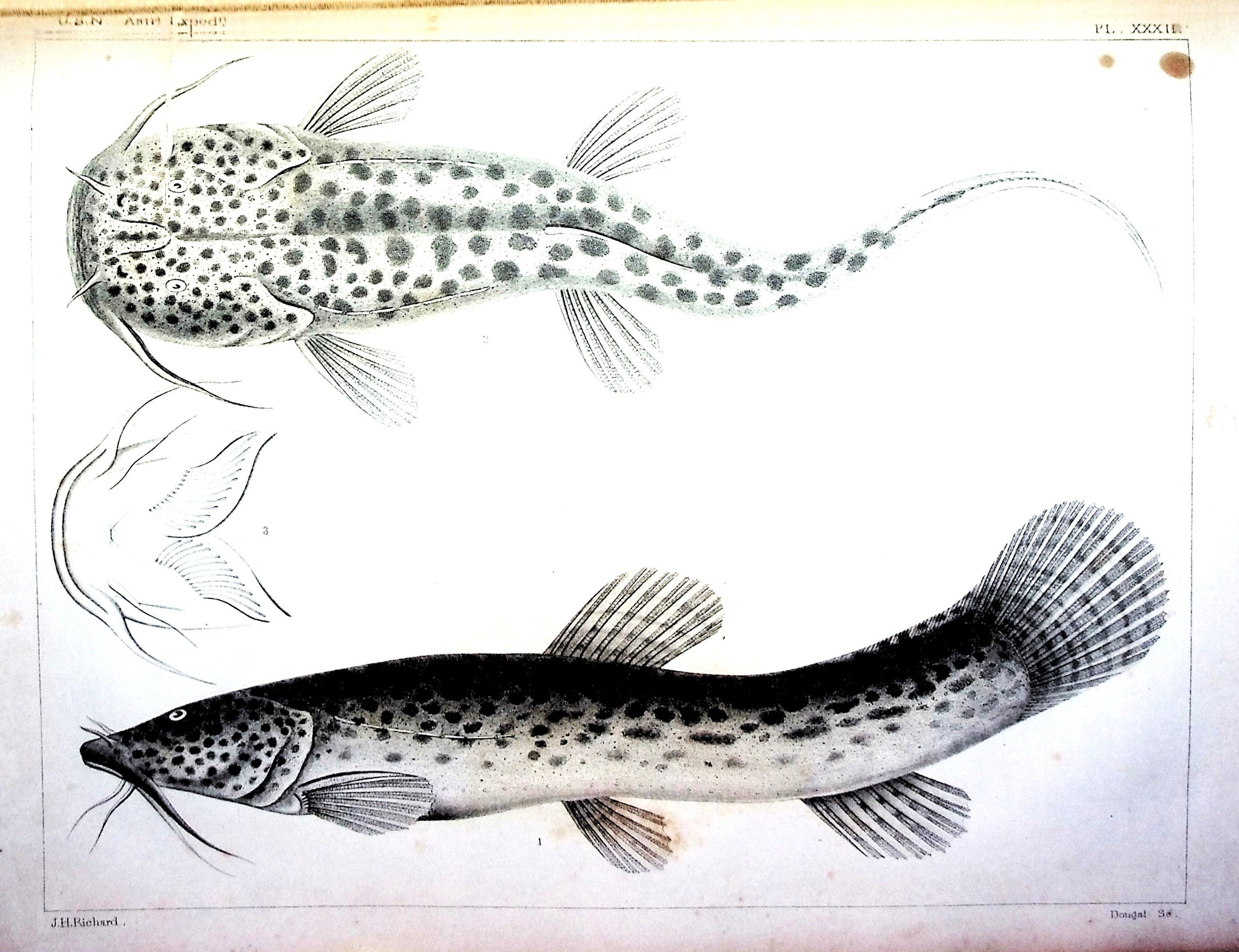
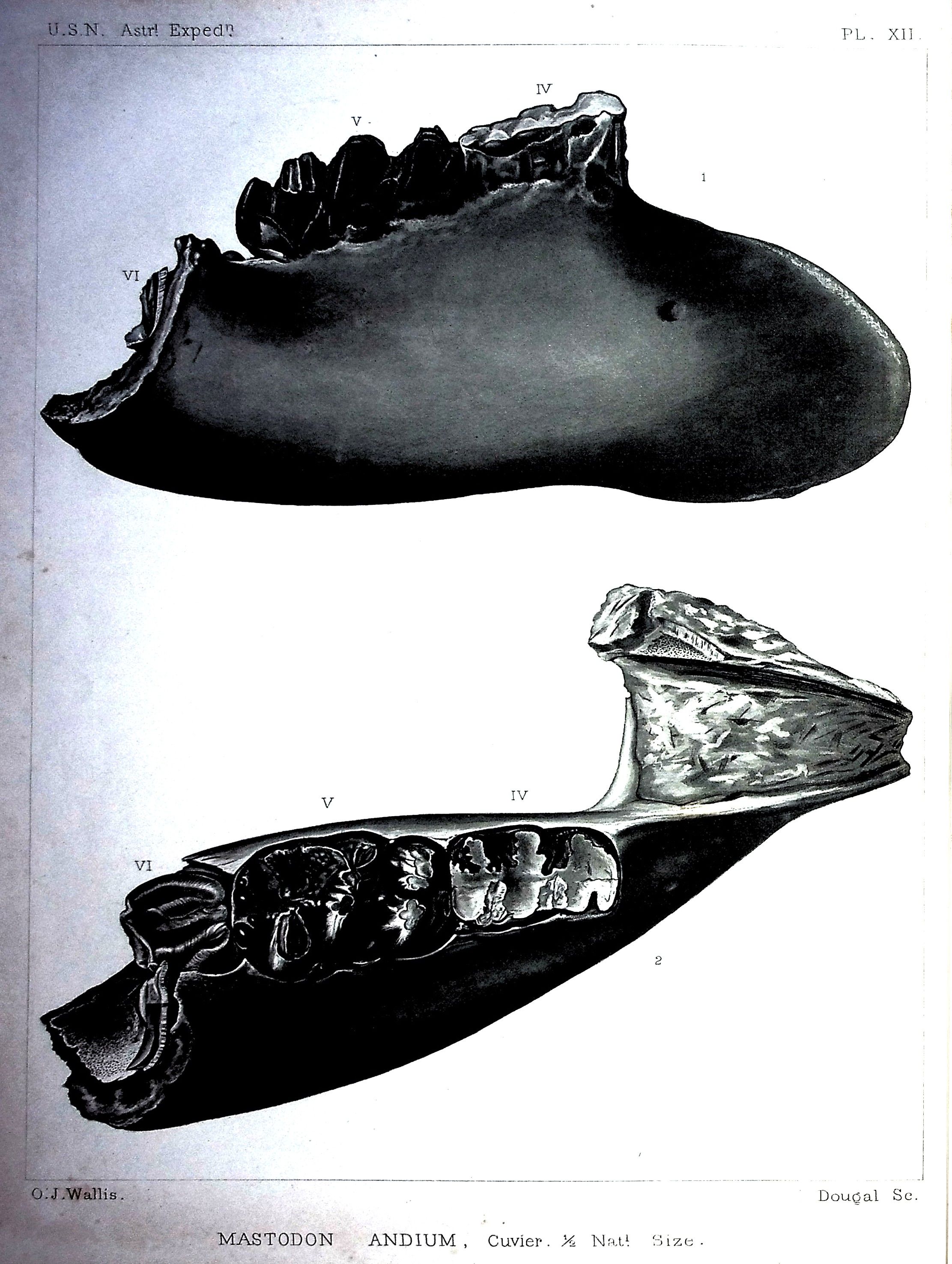
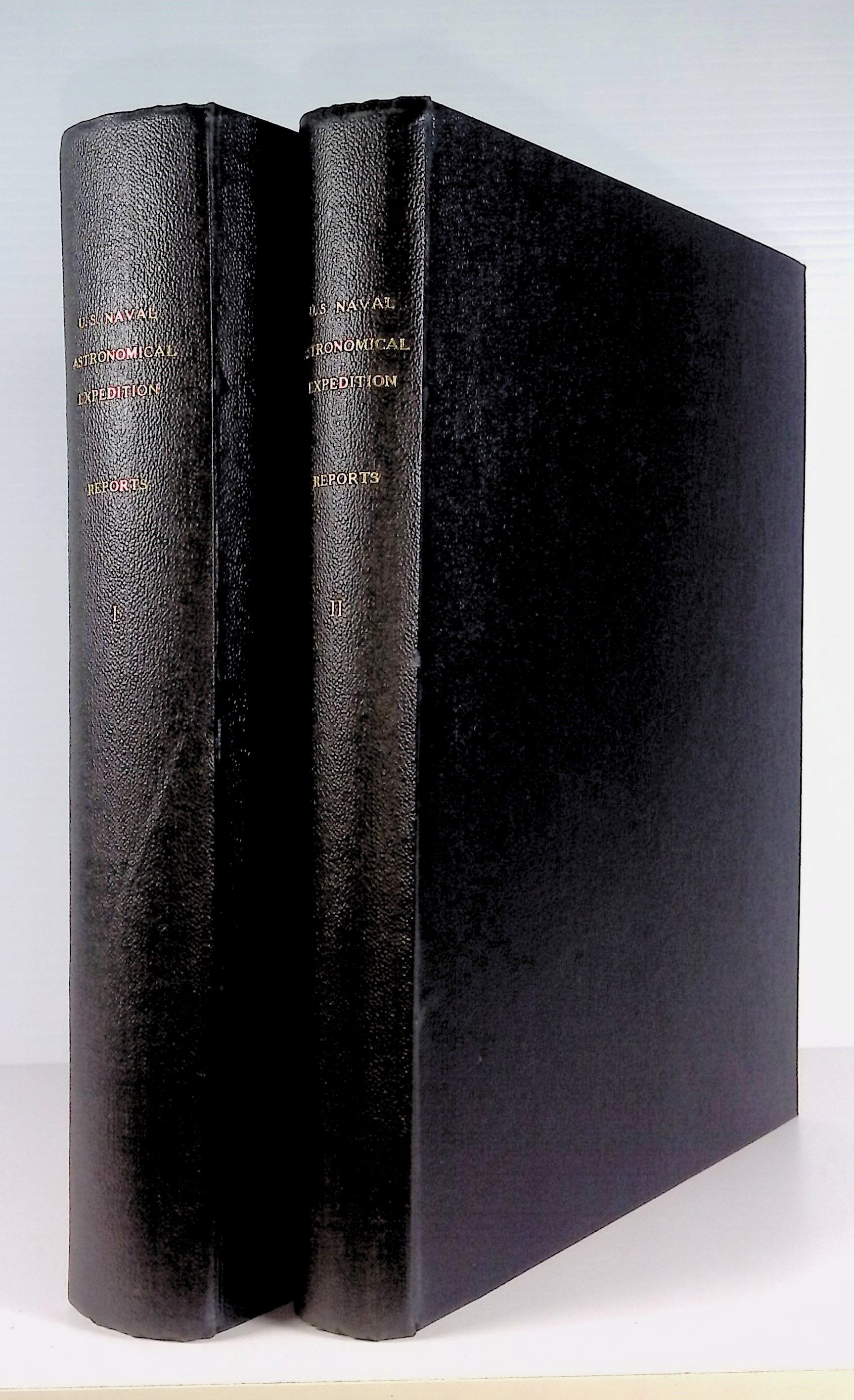
Two 22.5x29 cm hardcover volumes, recent black cloth binding, gilt title to spines, handstamp of Aquatic Research Institute to front free endpaper. Vol. I, frontispiece lithograph of Santa Lucia, i-xiii, [1], 556 pp, 3 maps of Chile, map of province of Santiago, 3 lithographic plates of city plans (Santiago, Valparaiso, Constitucion), 67-inch long folding hand-colored panoramic view from Santa Lucia (image shown here as composite of 3 overlapping high-resolution photos, stacked vertically), hand-colored lithographic portrait of Araucanian chief, and 4 lithographic plates of notable city and scenic views of Chile (total of 14 illustrations); Vol. II, i-ix, [2], 300 pp, 2 maps (1 folding), 34 lithographic plates (19 hand-colored), 11 wood engravings. Cover corners bumped, bindings tight, scattered foxing throughout except for large panoramic view. Good+ copy of this unique publication illustrated with lithographic plates by Peter Duval, "father of Philadelphia lithography."
JAMES MELVILLE GILLISS (1811 – 1865) was an astronomer, United States naval officer and founder of the United States Naval Observatory. In 1827, at age fifteen, he joined the United States Navy as a midshipman. In 1833, Gilliss requested a leave of absence and began his studies at the University of Virginia. Poor health forced him to leave after six months. He went to Paris for further studies in 1835 and in 1836 he was recalled to Washington to serve as an assistant at the Depot of Charts and Instruments , providing Gilliss with an opportunity to practice astronomy. Astronomical observations were necessary to determine the accuracy of the Navy's chronometers. In 1837, he was named officer-in-charge of the depot and began an extensive series of observations of the moon and stars for the purpose of longitude determination. Gilliss is most noted for his successful efforts to establish the U.S. Naval Observatory, the first national observatory in the United States. In 1848, he obtained $5,000 from Congress for a naval astronomical expedition to Chile in order to more precisely measure the solar parallax. Gilliss headed the expedition from August 1849 until his return in November 1852. They successfully completed the planned astronomical observations and also made valuable observations of the Earth's magnetic field, earthquakes, geography, politics and natural science. Gilliss dispatched Lieutenant ARCHIBALD MACRAE to explore the area from Uspalatta Pass to Buenos Aires in 1852-1853, where he collected scientific and anthropological artifacts. The specimens of fauna and flora brought back from Chile formed the earliest part of the Smithsonian collection from Latin America. These were curated by leading American naturalists, including Spencer Baird, Asa Gray, and Jeffries Wyman. The wide-ranging results of the expedition were published in the United States Astronomical Expedition to the Southern Hemisphere, published 1855–1896 (volumes I and II offered here). At the onset of the Civil War, Gilliss was placed in charge of the observatory, and he also became a founding member of the National Academy of Sciences.
PETER S. DUVAL (1804 - 1886), "father of Philadelphia lithography," left France for Philadelphia in 1831 to begin a lithographic career that would extend over 35 years. During his career, he produced lithographs of every genre while cultivating many of the city's premier lithographers. He also pioneered American chromolithography and introduced steam printing presses to the country.
Details
Title
The U.S. Naval Astronomical Expedition to the Southern Hemisphere, during the Years 1849-'50-'51-'52
Author
Gilliss, James Melville
Binding
Cloth binding
Condition
Unknown
Publisher
A.O.P. Nicholson, Printer: Washington DC
Date
1855
Edition
First edition