

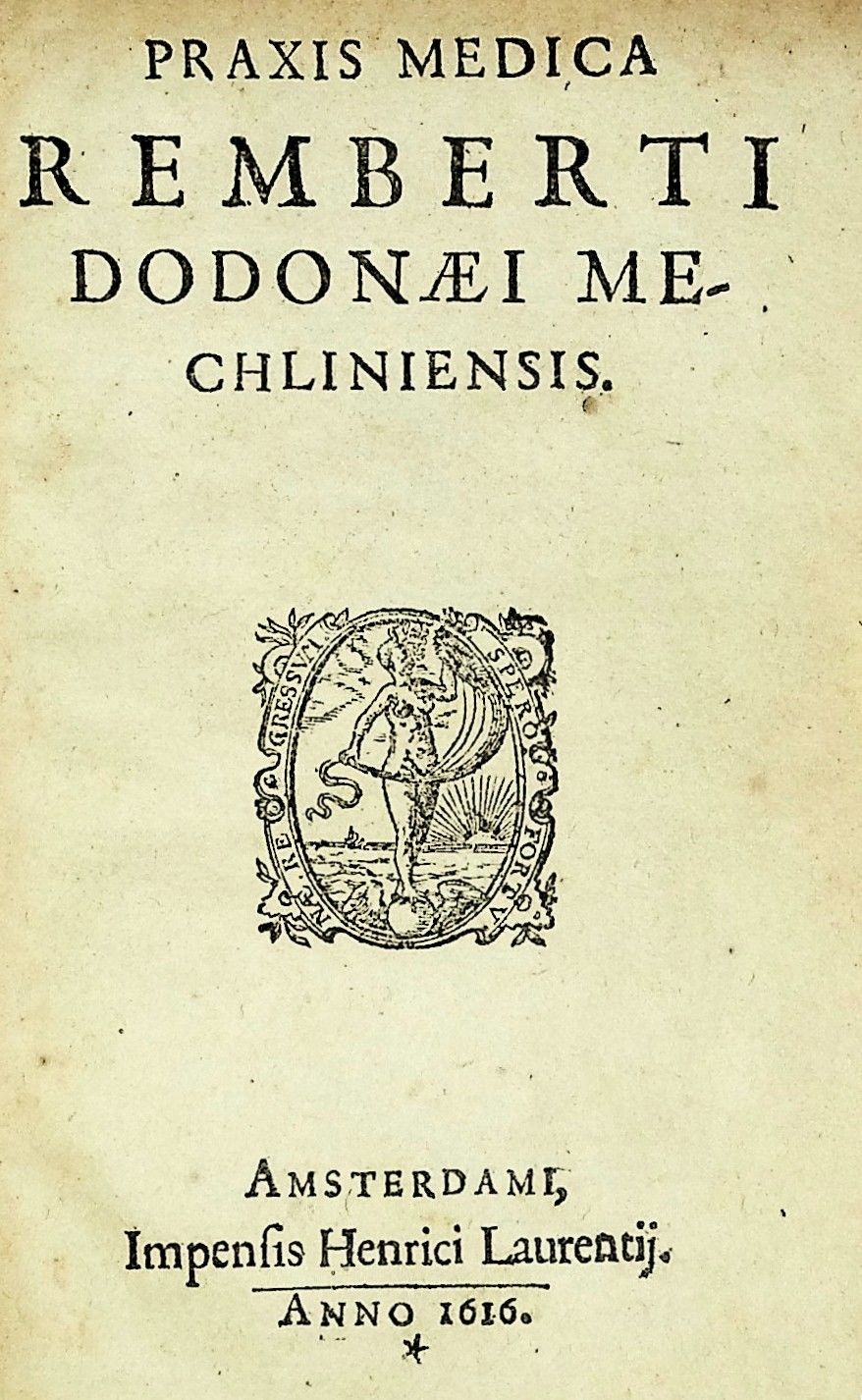
Praxis Medica Remberti Dodonaei Mechliniensis
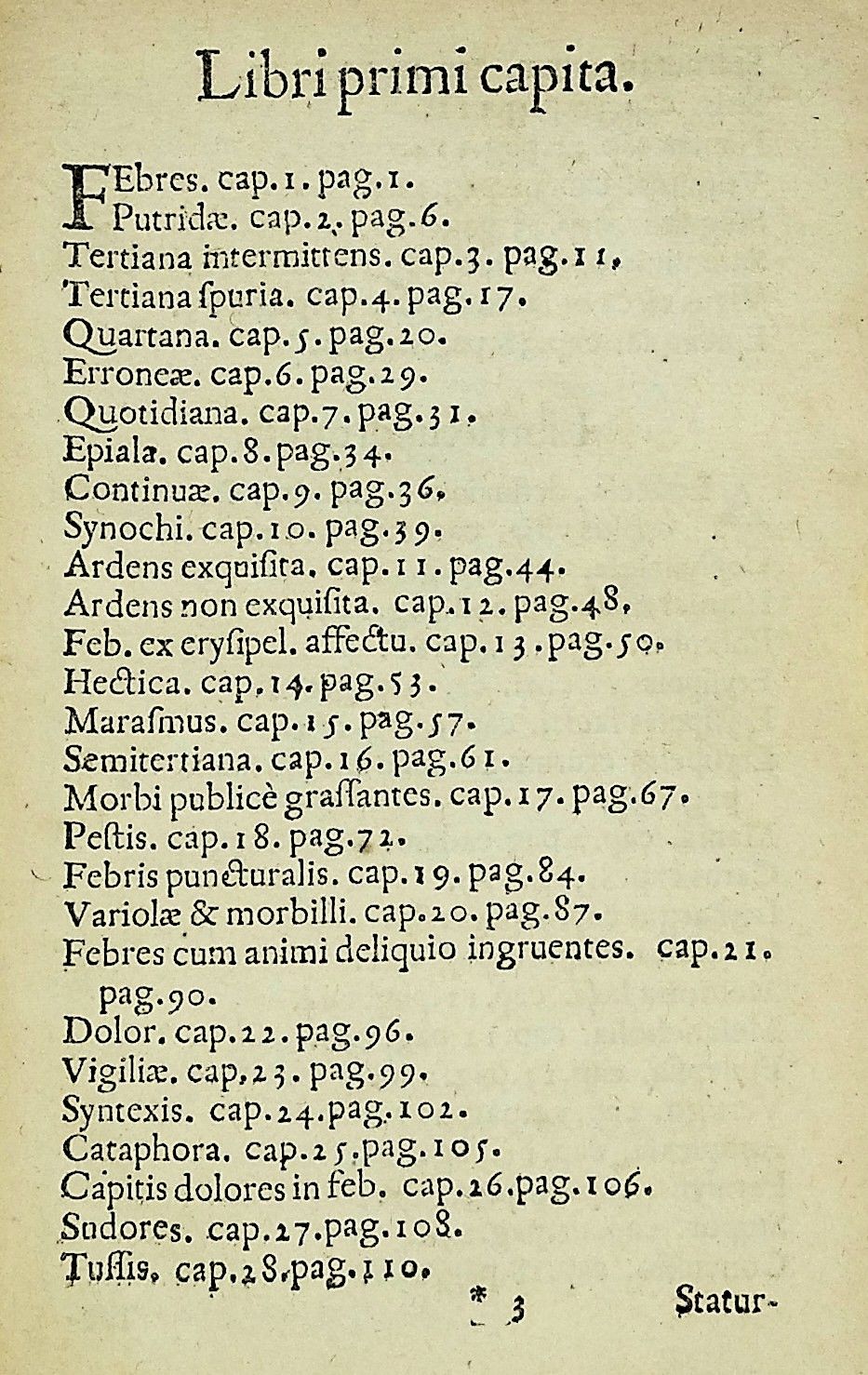
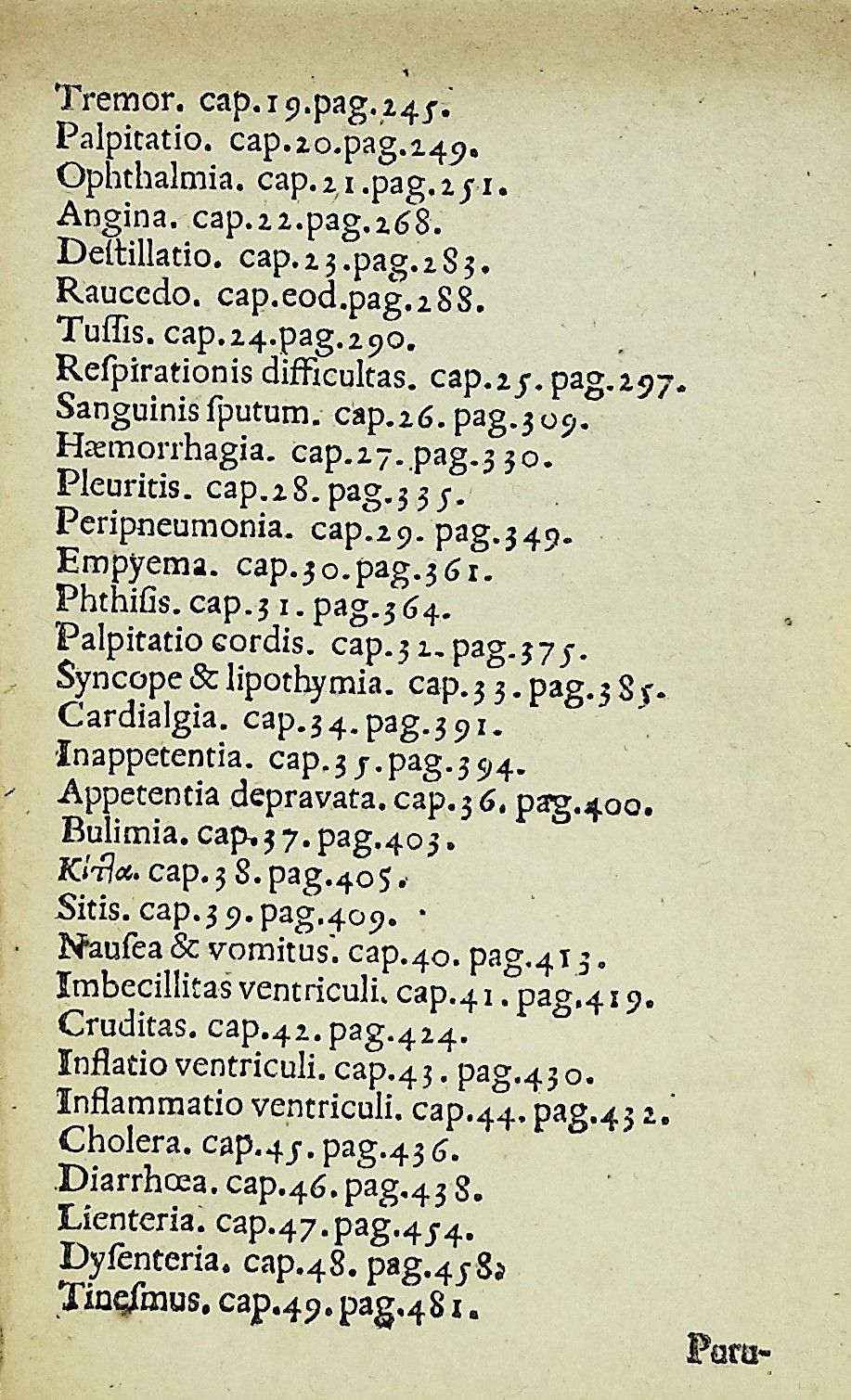
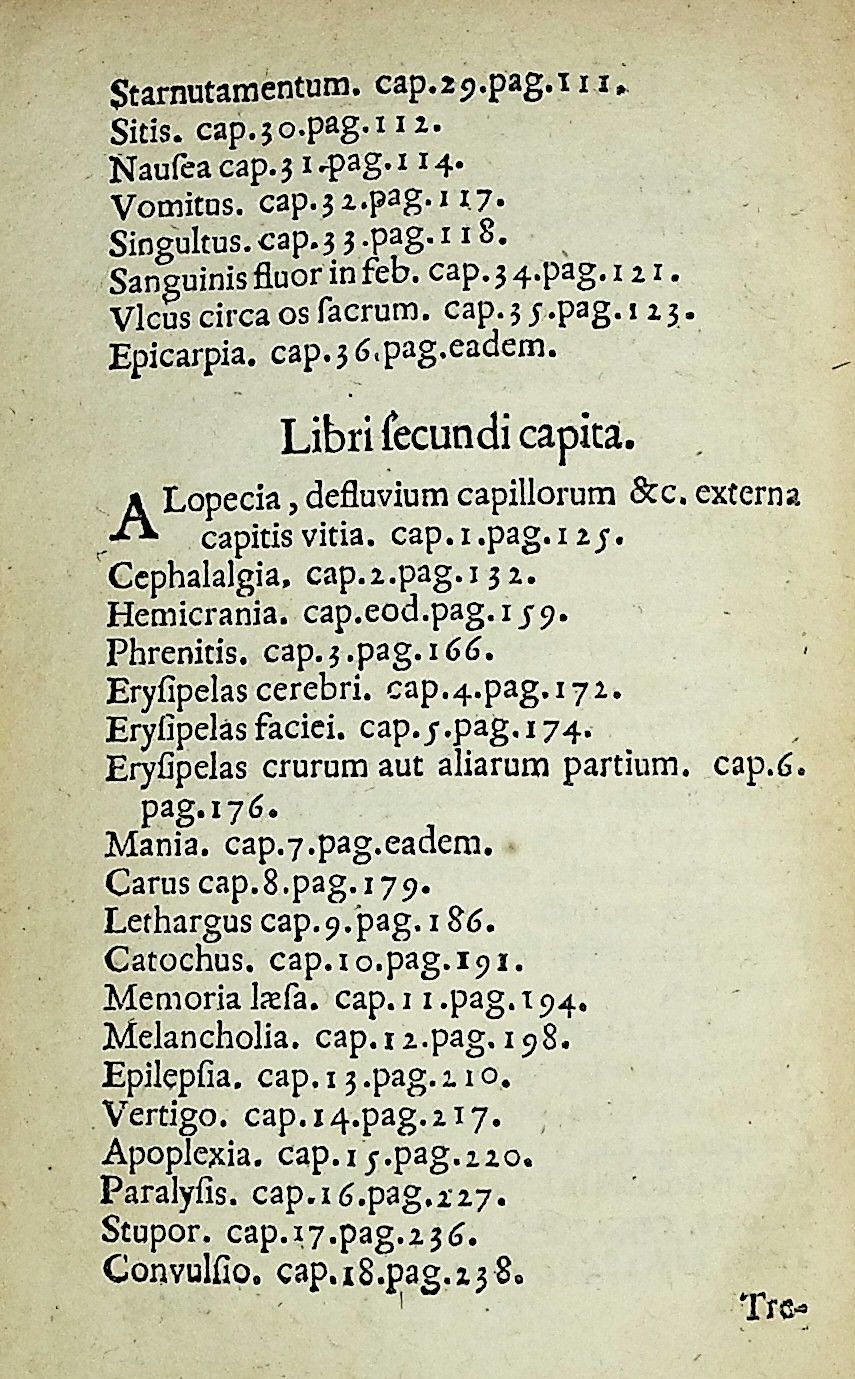
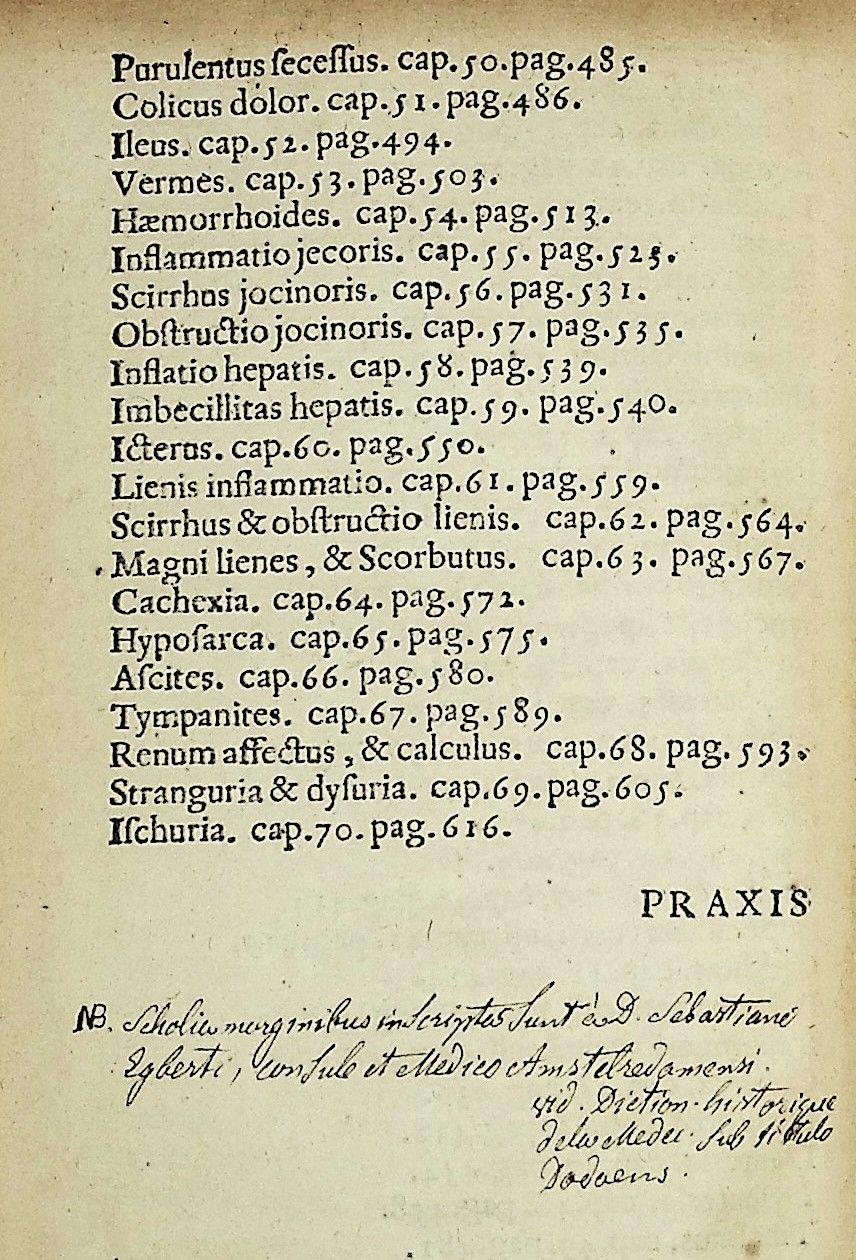
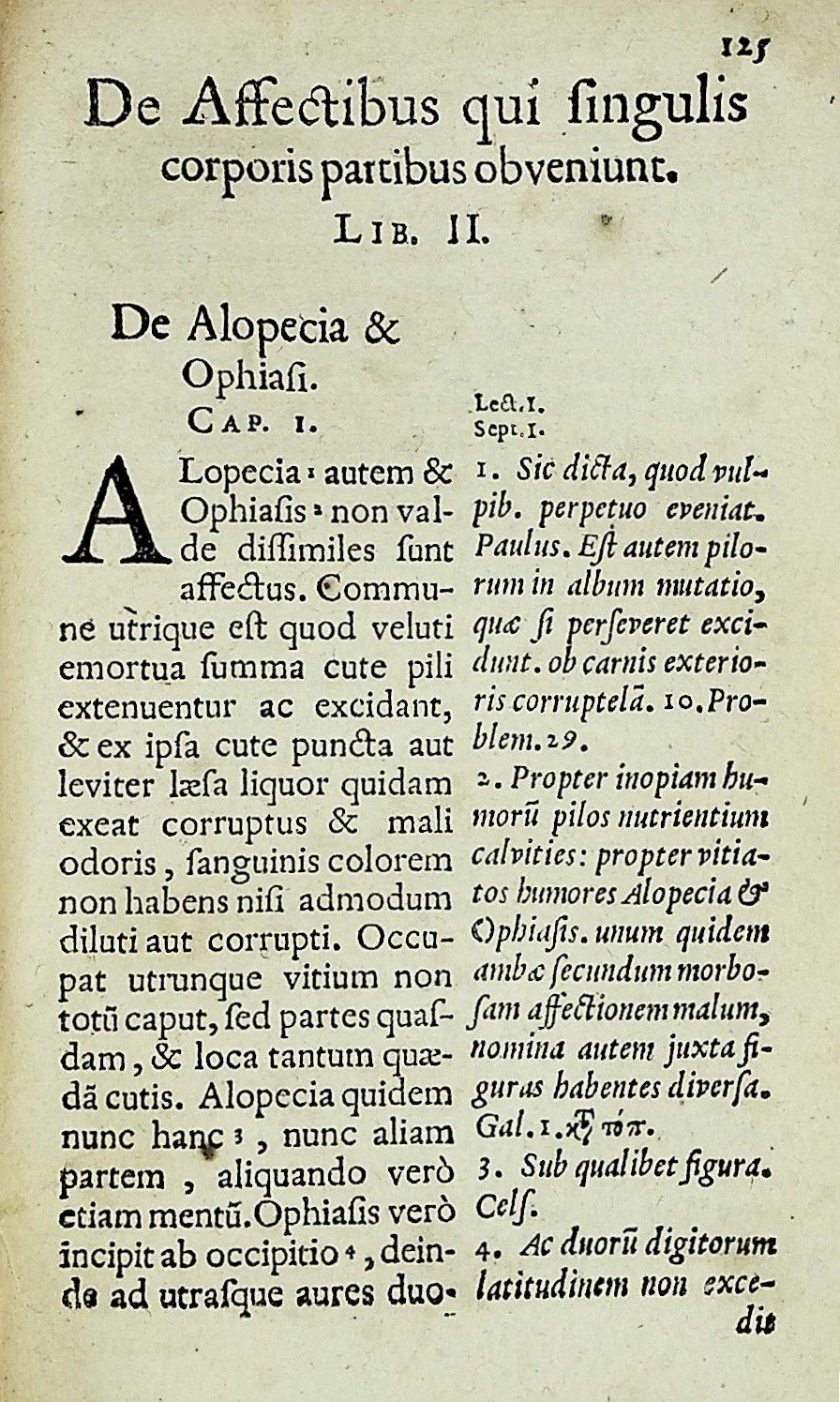
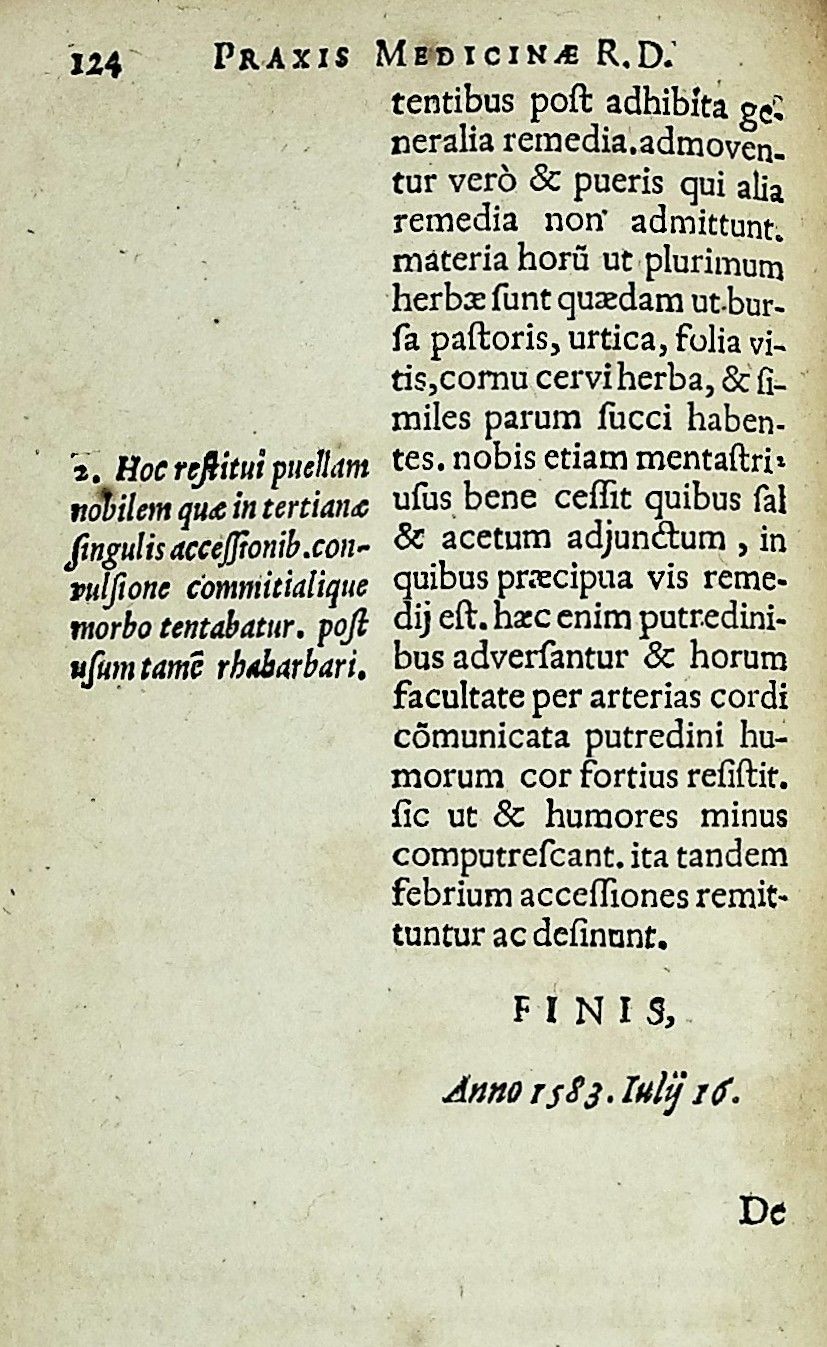
- vellum binding
- Amsterdam: Henrici Laurentij, 1616
Amsterdam: Henrici Laurentij, 1616. First posthumous edition edited and annotated by Sebastiaen Egbertsz.
MEDICAL TREATISE BY DUTCH PHYSICIAN TO EMPERORS--EDITED & ANNOTATED BY ANATOMIST PAINTED BY EMINENT DUTCH MASTERS.
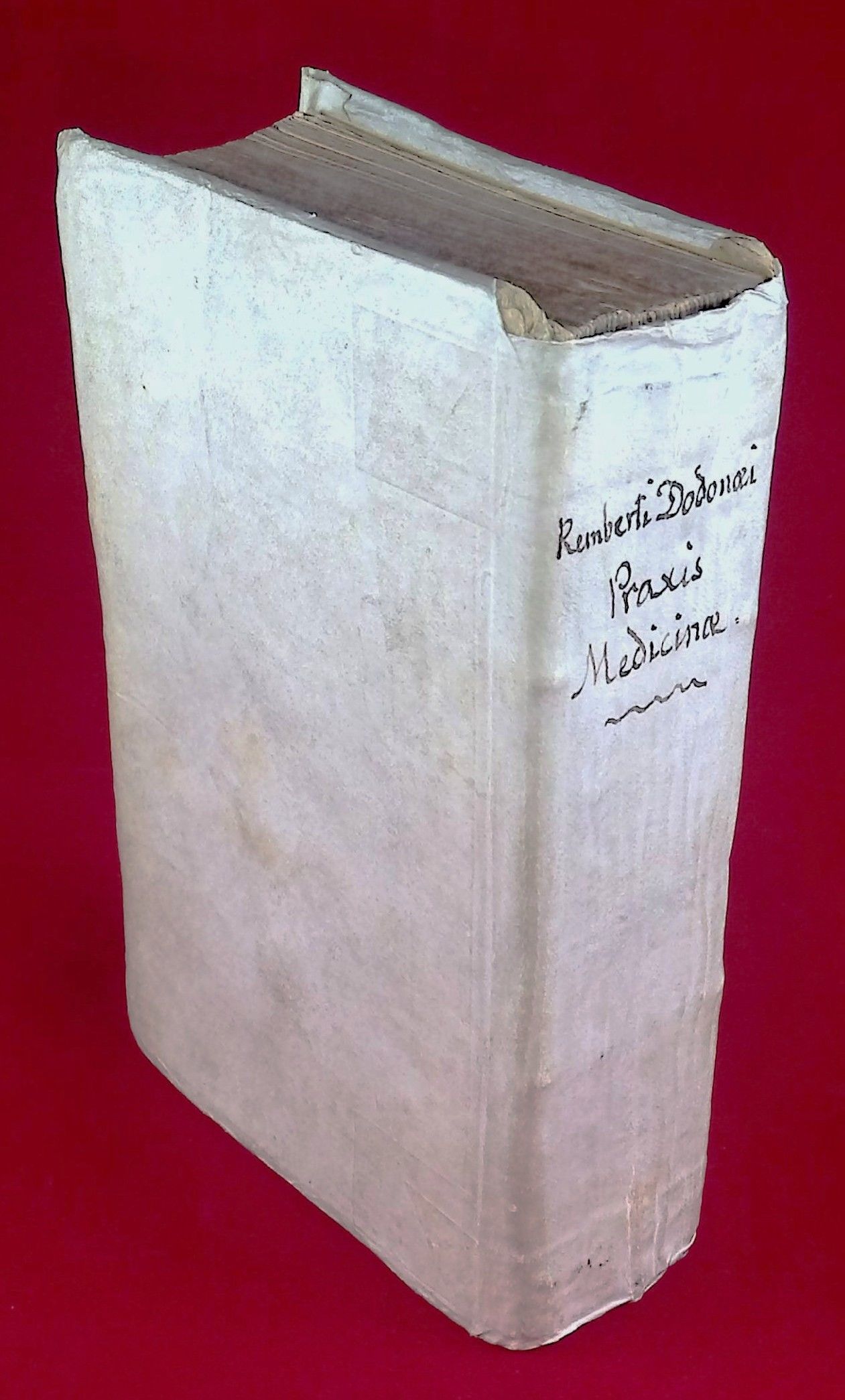
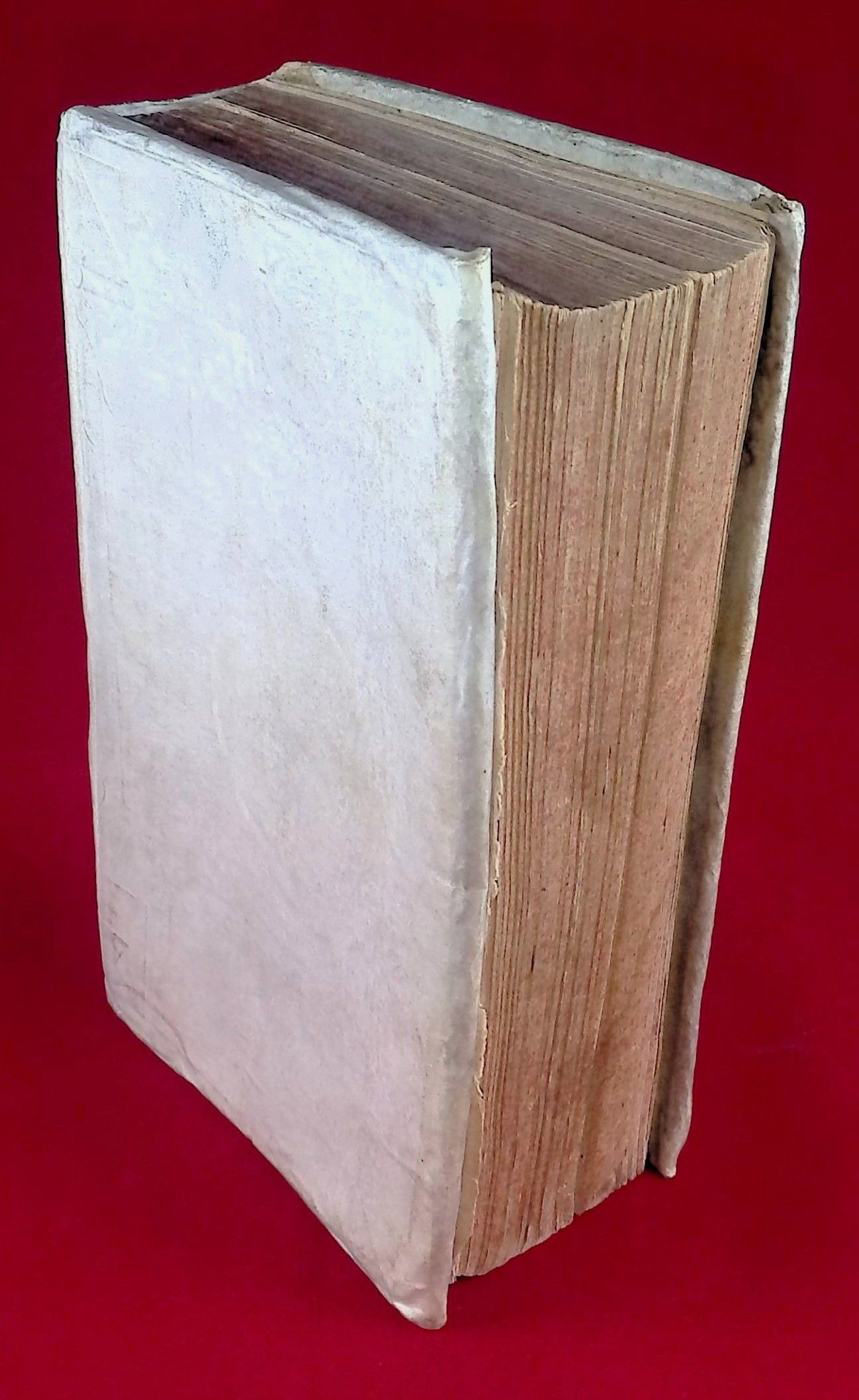
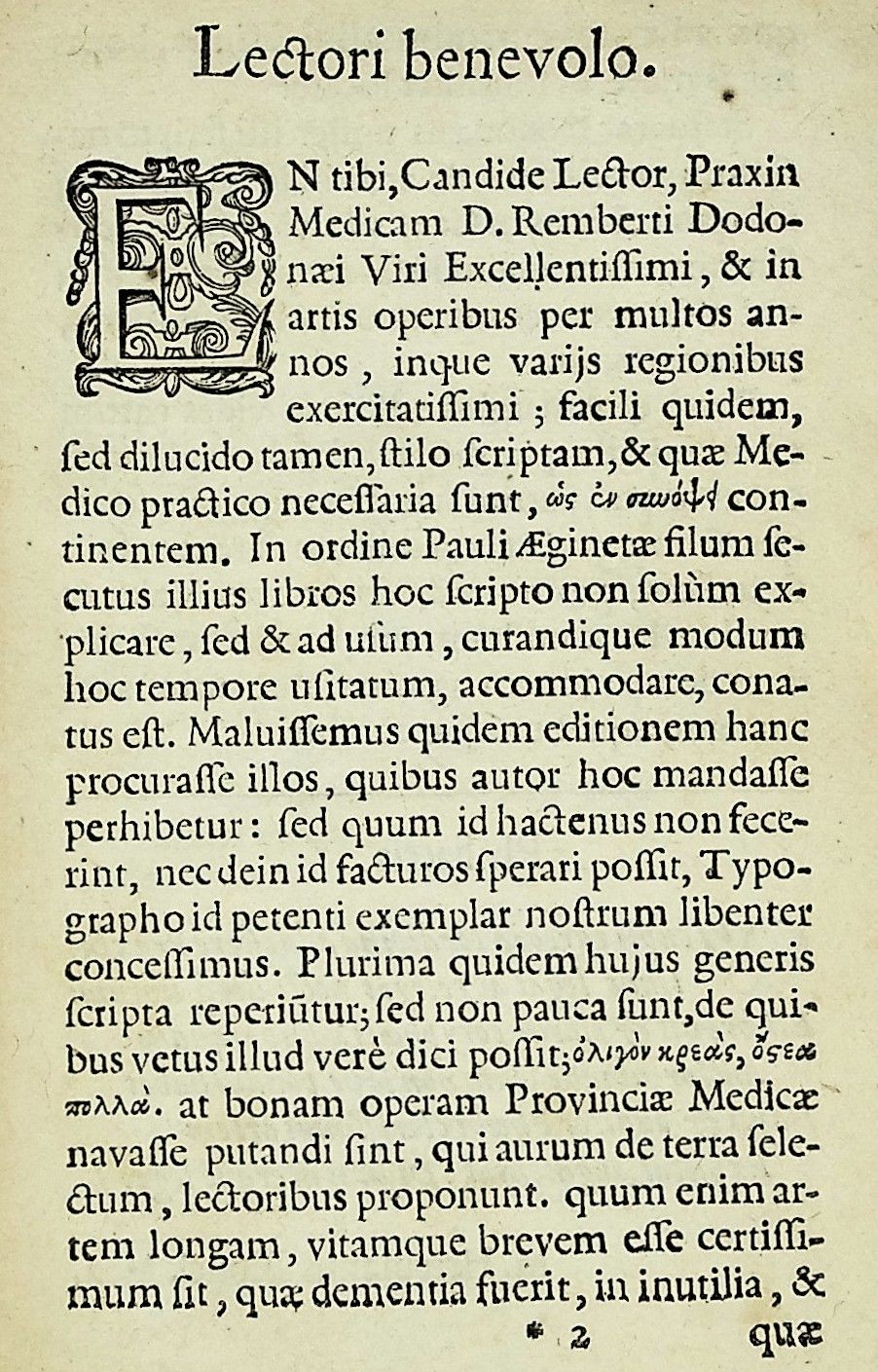
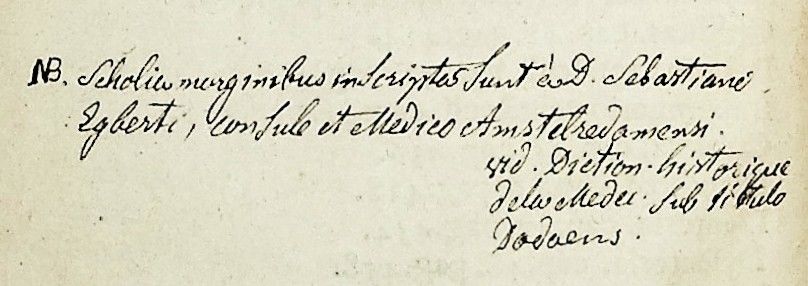
16 x 10 x 4 cm hardcover, vellum binding, ink manuscript title to spine, red stained page edges, [1], [6], 618 pp, [6], [1 blank]. Ink inscription bottom of Preface, "NB. Scholier marginabus inscriptus Sunt D. Sebastiani Egberti, consule et Medico Amstelredamensi. Ibid Diction. historique de la Medec. Subtitule Dodoens." [NB. A scholar is inscribed on the margins, Dr. Sebastian Egbert, consul and physician of Amsterdam. Ibid. Historical Dictionary of Medicine. Under the entry "Dodoens." Light soiling to covers, light browning and scattered foxing to pages, leaf p 9/10 lower corner expertly repaired with minimal loss of text, several other pages with edge repairs not affecting text, faint water stain lower corner of pages. Binding tight, pages unmarked. An excellent copy of Dodoens's 127 medical lectures edited and annotated by Sebastian Egbertsz: a rare edition bringing together Dutch medical knowledge of 16th and 17th centuries.
REMBERT DODOENS {1517 – 1585) was a Flemish physician and botanist, also known under his Latinized name Rembertus Dodonaeus. He has been called the "father of botany." Dodoens was born Rembert van Joenckema in Mechelen, then the capital of the Spanish Netherlands in 1517. His father was one of the municipal physicians in Mechelen and a private physician to Margaret of Austria, Governor of the Netherlands, in her final illness. Rembert later changed his last name to Dodoens. Dodoens was educated at the municipal college in Mechelen before beginning his studies in medicine, cosmography and geography at the age of 13 at the University of Leuven. He graduated with a licentiate in medicine in 1535, and as was the custom of the time, began extensive travels in Europe till 1546, including Italy, Germany, France, and a stay in Basel 1542–1546. In 1548, Dodoens followed in his father's footsteps by becoming one of the three municipal physicians in Mechelen together with Joachim Roelandts and Jacob De Moor. In 1575–1578, he was the court physician of the Holy Roman emperor Maximilian II and his successor Austrian emperor Rudolph II in Vienna. In 1582, he was appointed professor of medicine at the University of Leiden. He died in Leiden in 1585, and was buried at Pieterskerk, Leiden.
SEBASTIAEN EGBERTSZ (1563 – 1621), alias Sebastianus Egberti, was a professor of anatomy at the Atheneum Illustre in Amsterdam. He was a member of the Raed of Amsterdam from 1602 to 1618 and burgomaster in 1606 and 1608. He was the subject of the oldest known painting of an anatomy lesson. Anatomy lessons were a social event in the 17th century, taking place in lecture rooms that were actual theatres, with students, colleagues and the general public being permitted to attend on payment of an entrance fee. The spectators are appropriately dressed for this social occasion. The Amsterdam Historical Museum has a large collection of paintings of anatomy lessons, painted when surgeons followed the popular sixteenth century trend for group portraits. The very first, a painting of an anatomy lesson given by Sebastiaen Egbertsz de Vrij, was painted by Aert Pietersz (1550 - 1612) in 1601-1603. In this picture all of the master surgeons are gathered fraternally around the dissecting table, and Doctor Sebastiaen Egbertsz. is just about to begin the anatomy lesson. The picture recalls sixteenth-century group portraits of fraternities and civic guards, this time, however, the traditional banquet has been replaced by an anatomy lesson as the connecting element in the composition. The discreet placement of the cadaver on the table confirms that the sitters were interested primarily in their likenesses. Every single gaze is directed at the viewer. A second depiction of Dr. Egbertsz was painted by Nicolaes Pickenoy (1588 – 1656). The earliest picture ascribed to the artist is "Dr. Sebastiaen Egbertz de Vrij's Osteological Presentation" of 1619, now in Amsterdam Historisch Museum. Around 1638 he bought the house next to Rembrandt van Rijn, a house that was the center of Amsterdam portraiture for decades. In 1639 Rembrandt returned to the neighbourhood as he bought the house next to Pickenoys, on the site of the present day Rembrandthuis.
Details
Title
Praxis Medica Remberti Dodonaei Mechliniensis
Author
Dodoens, Rembert and Egbertsz, Sebastiaen
Binding
vellum binding
Condition
Unknown
Publisher
Henrici Laurentij: Amsterdam
Date
1616
Edition
First posthumous edition edited and annotated by Sebastiaen Egbe