

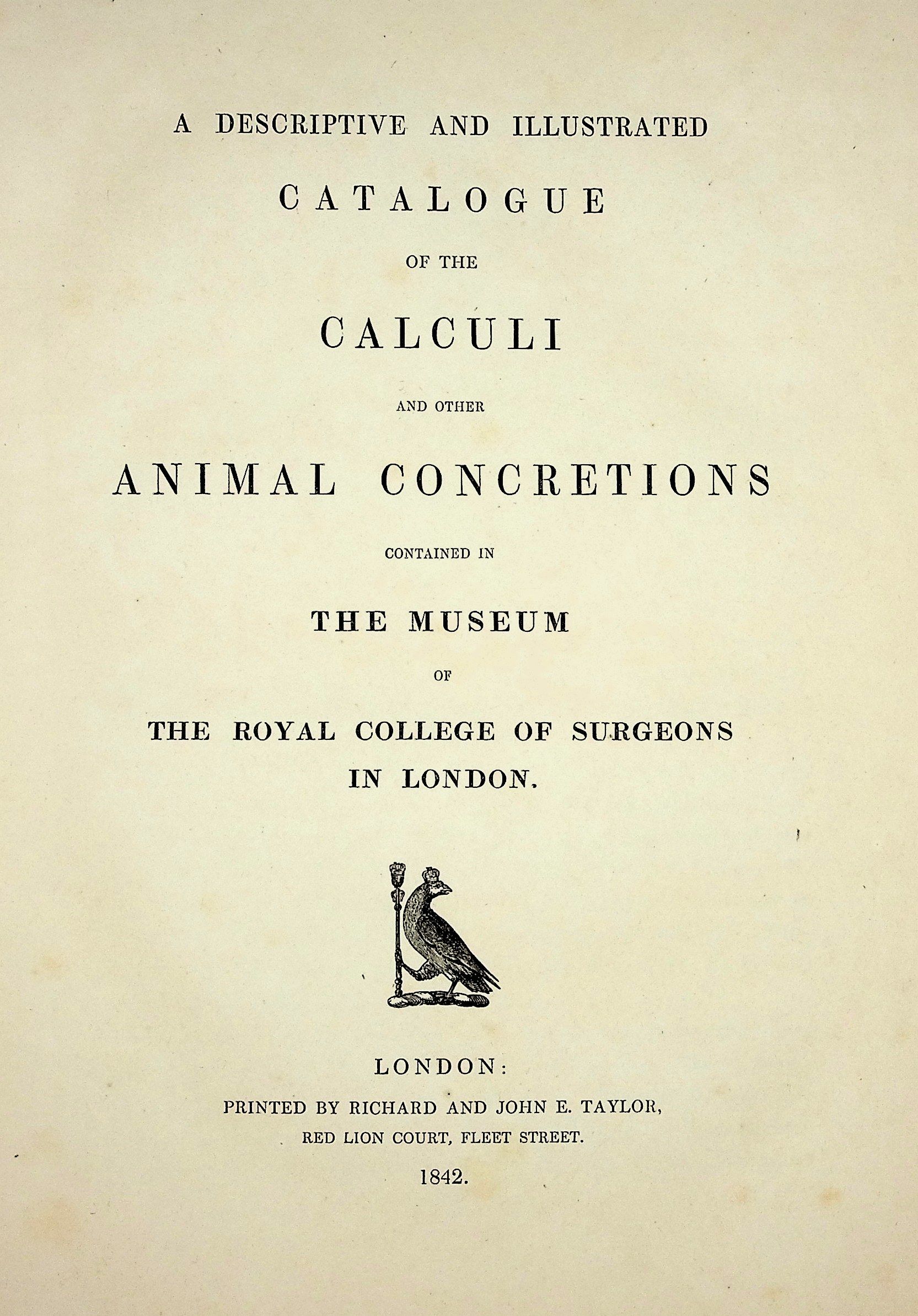
A Descriptive and Illustrated Catalogue of the Calculi and other Animal Concretions contained in the Museum of The Royal College of Surgeons in London (Parts 1 & 2)
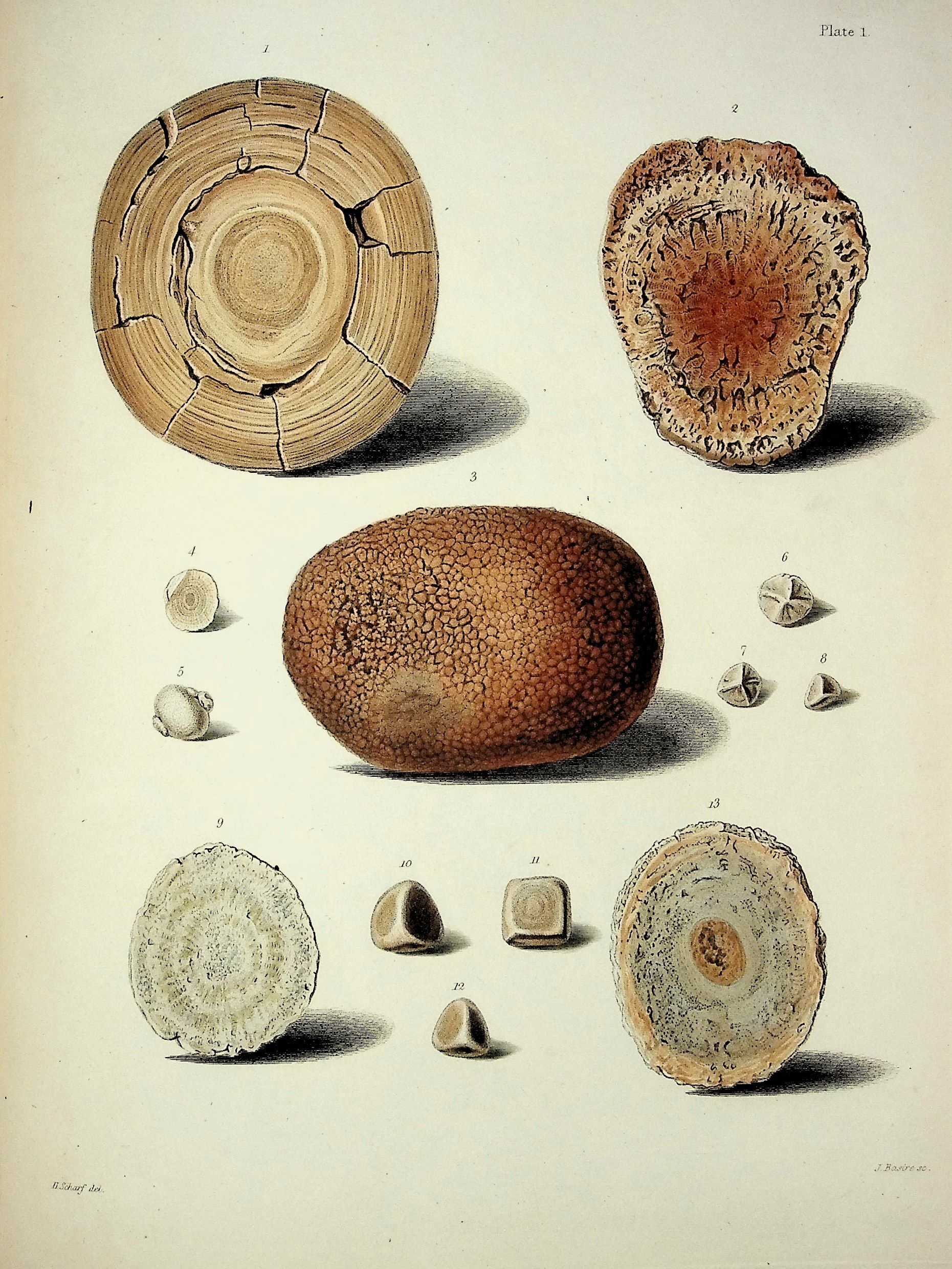
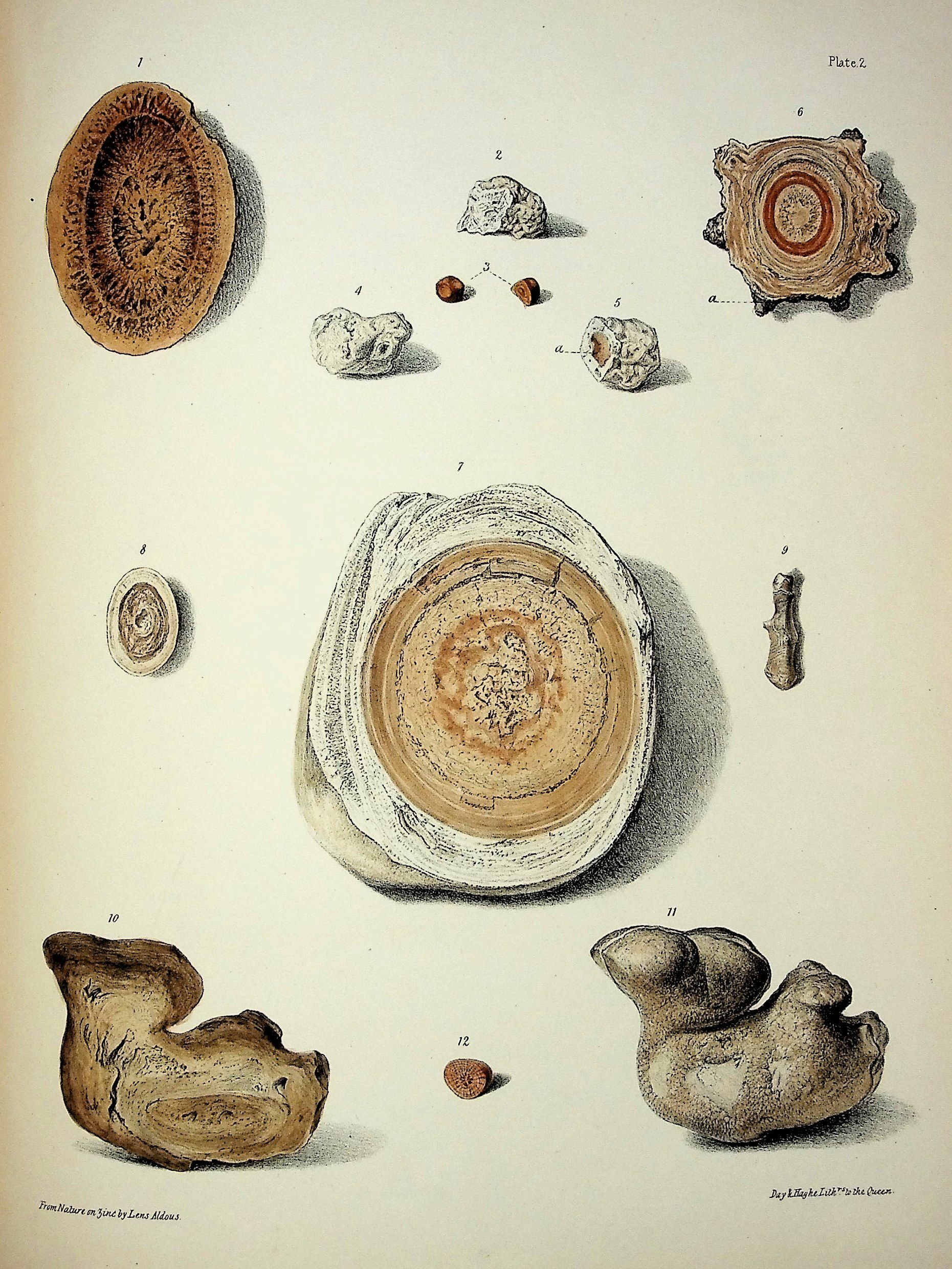
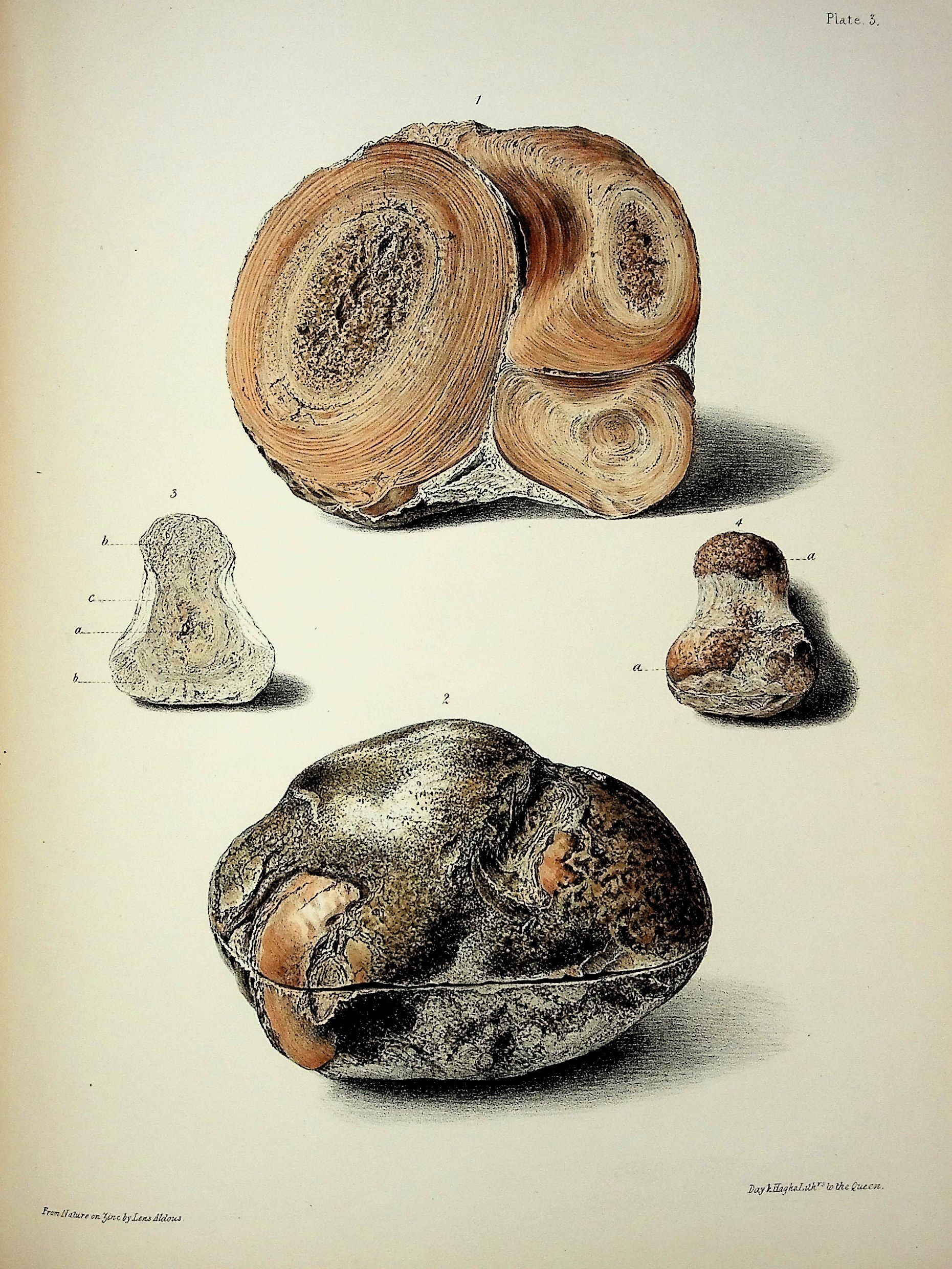
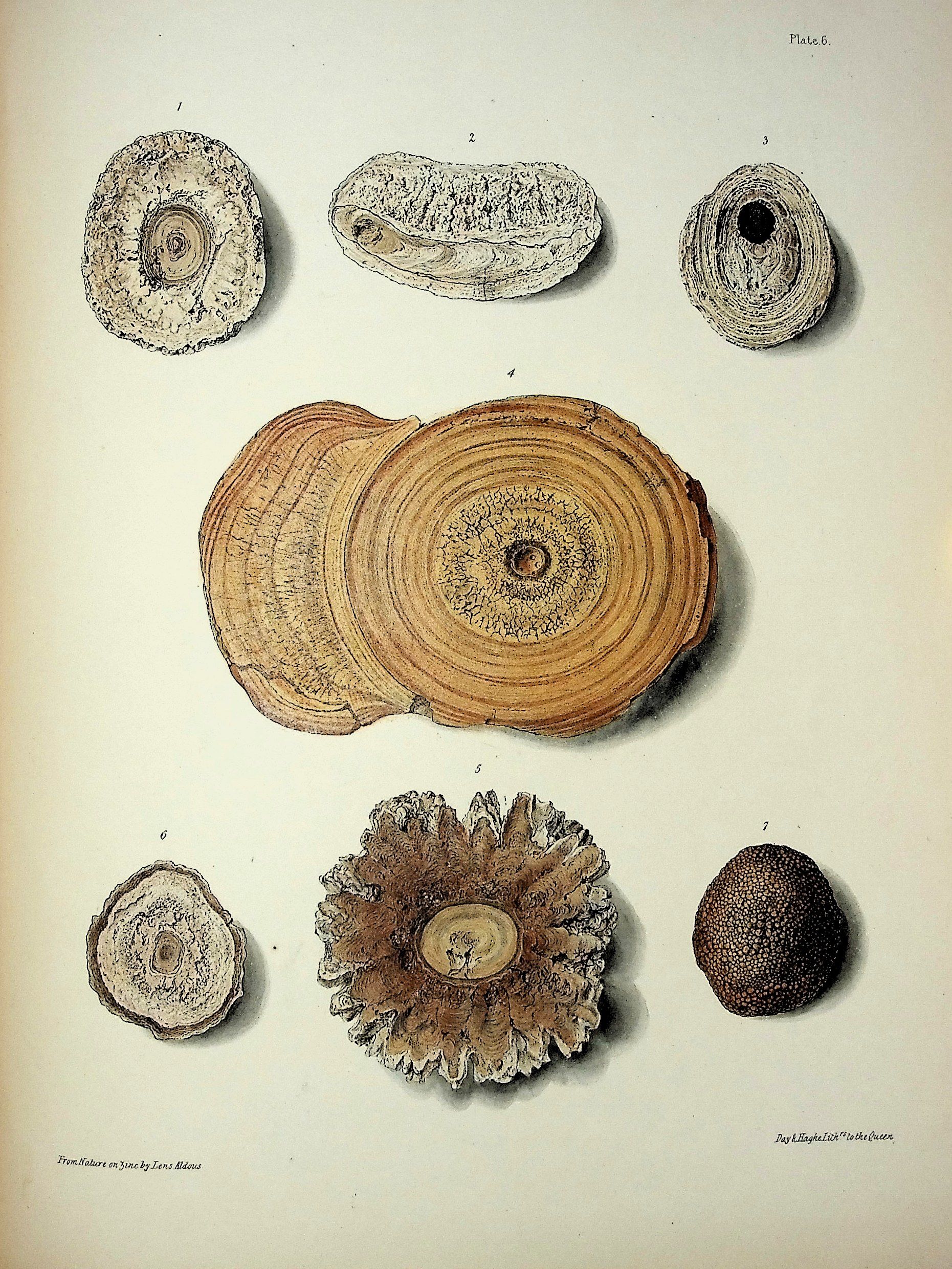
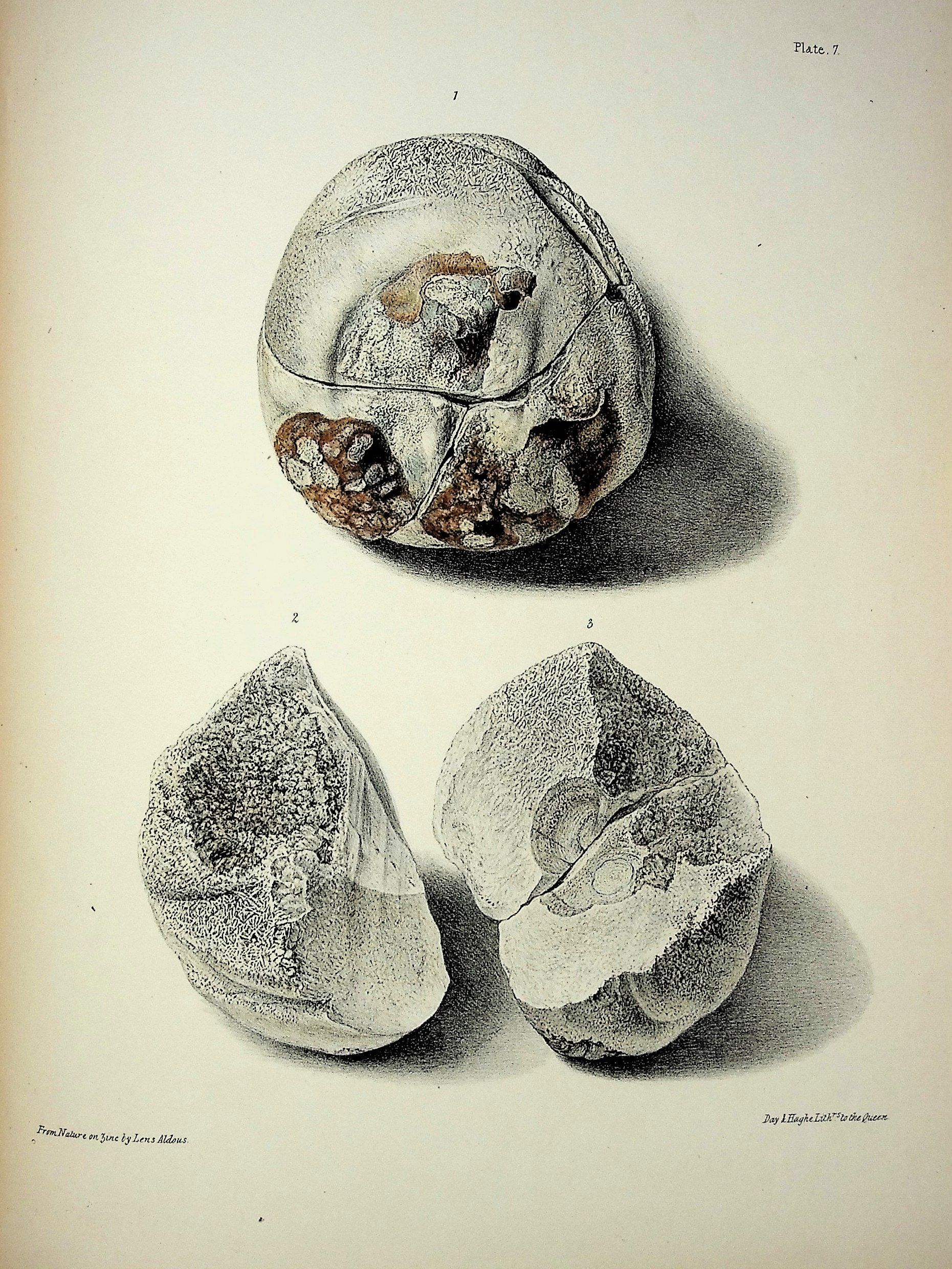
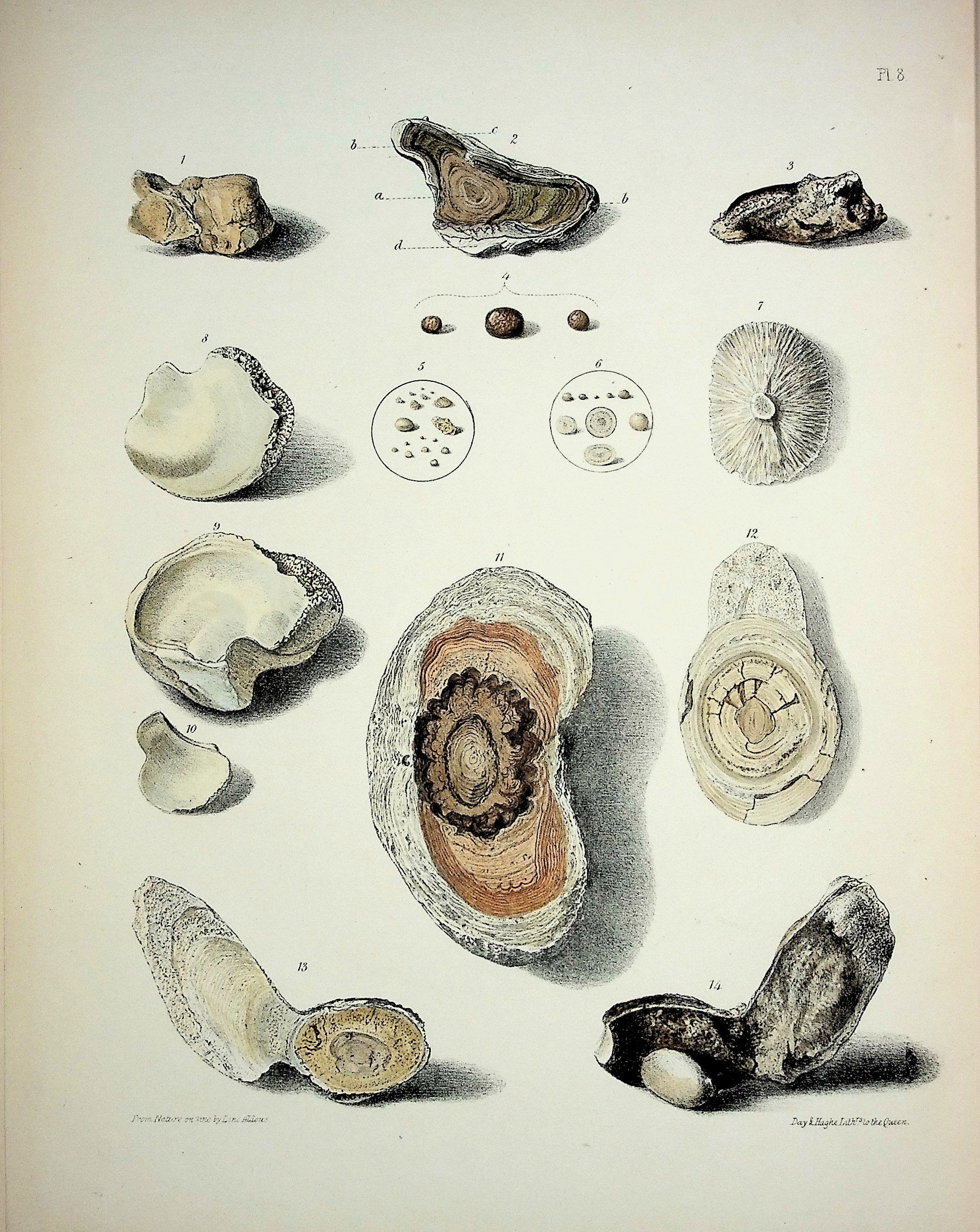
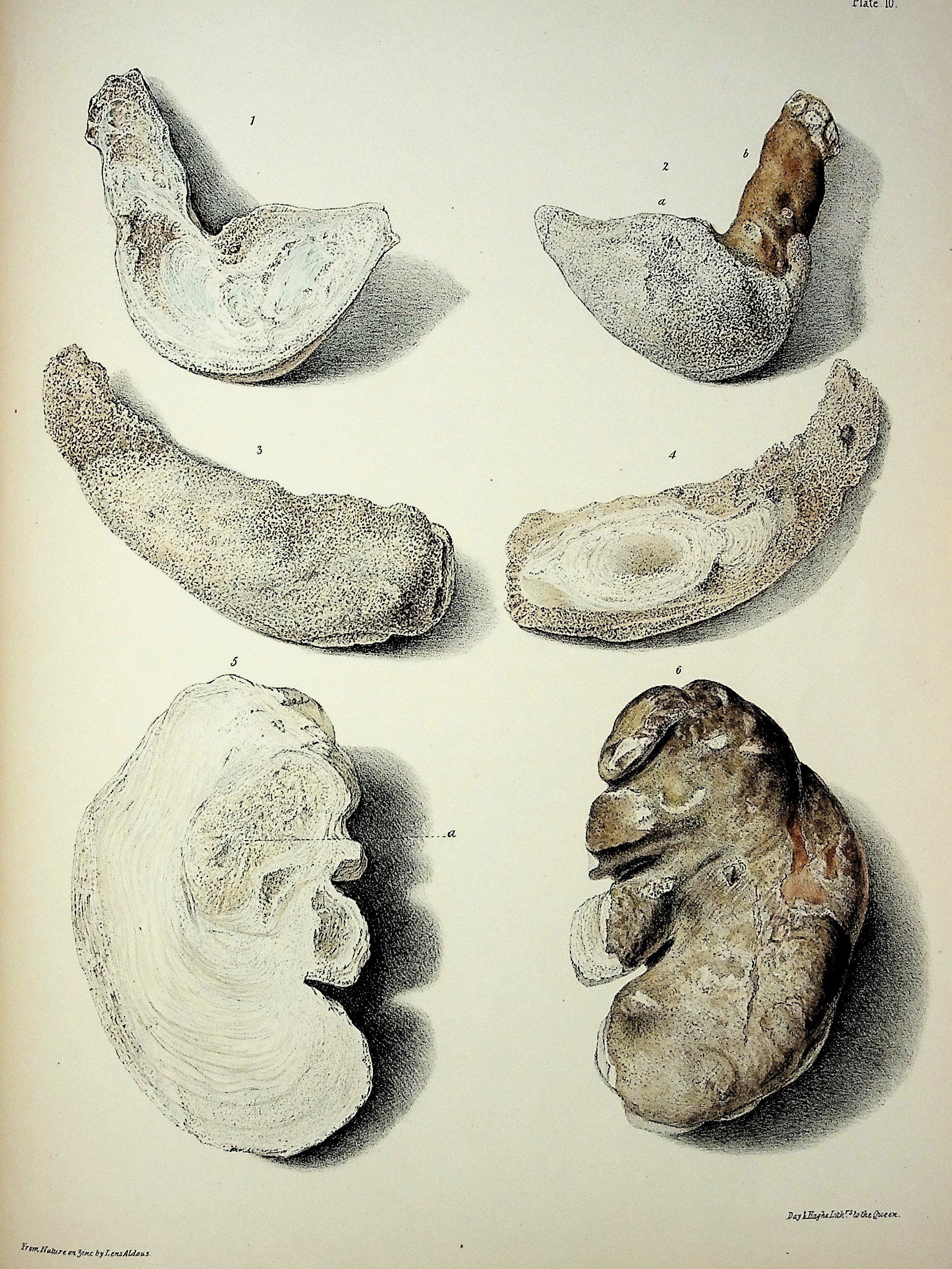
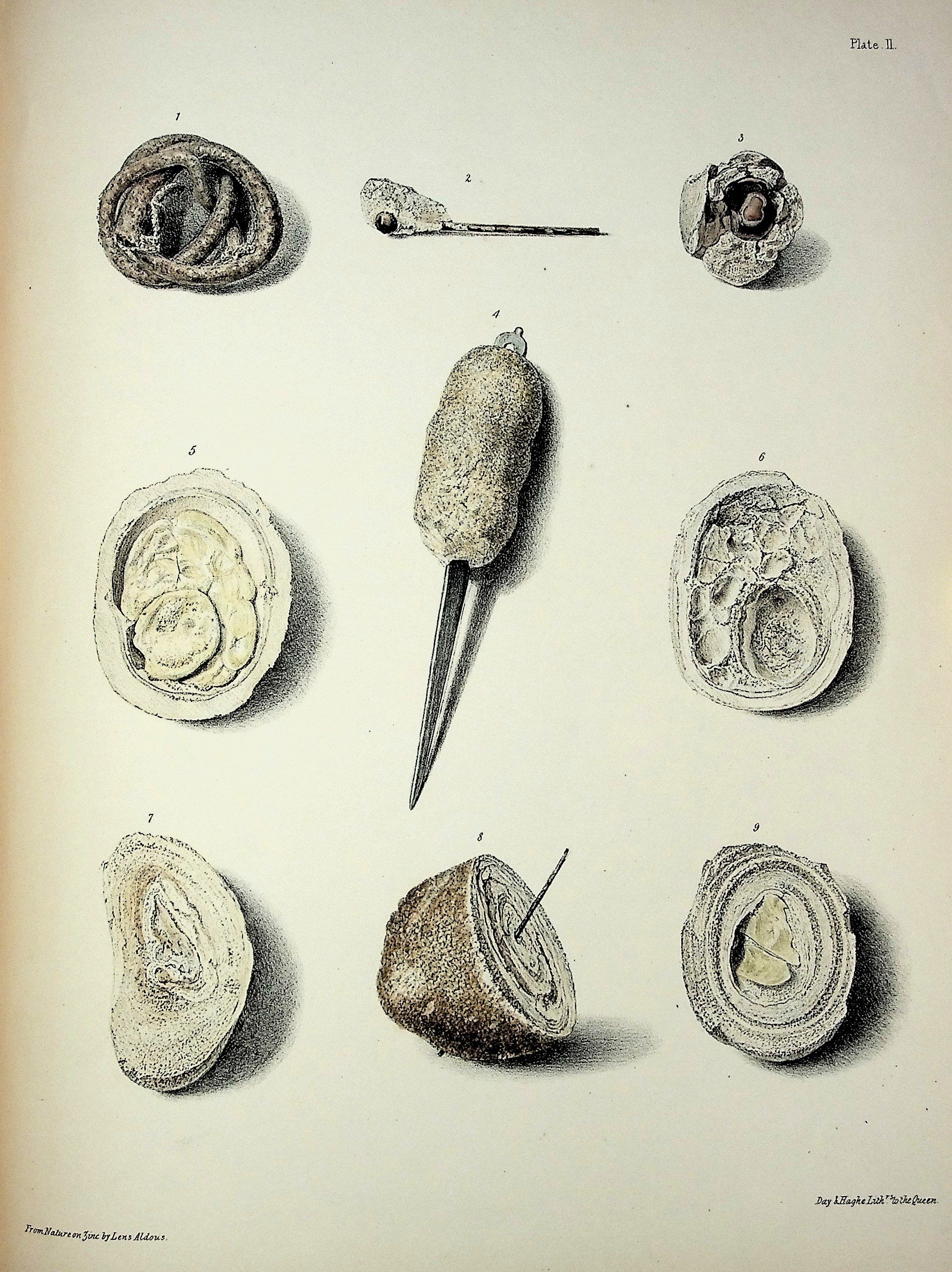
- Cloth binding
- London: Richard and John E. Taylor, 1842, 1845
London: Richard and John E. Taylor, 1842, 1845. First printing.
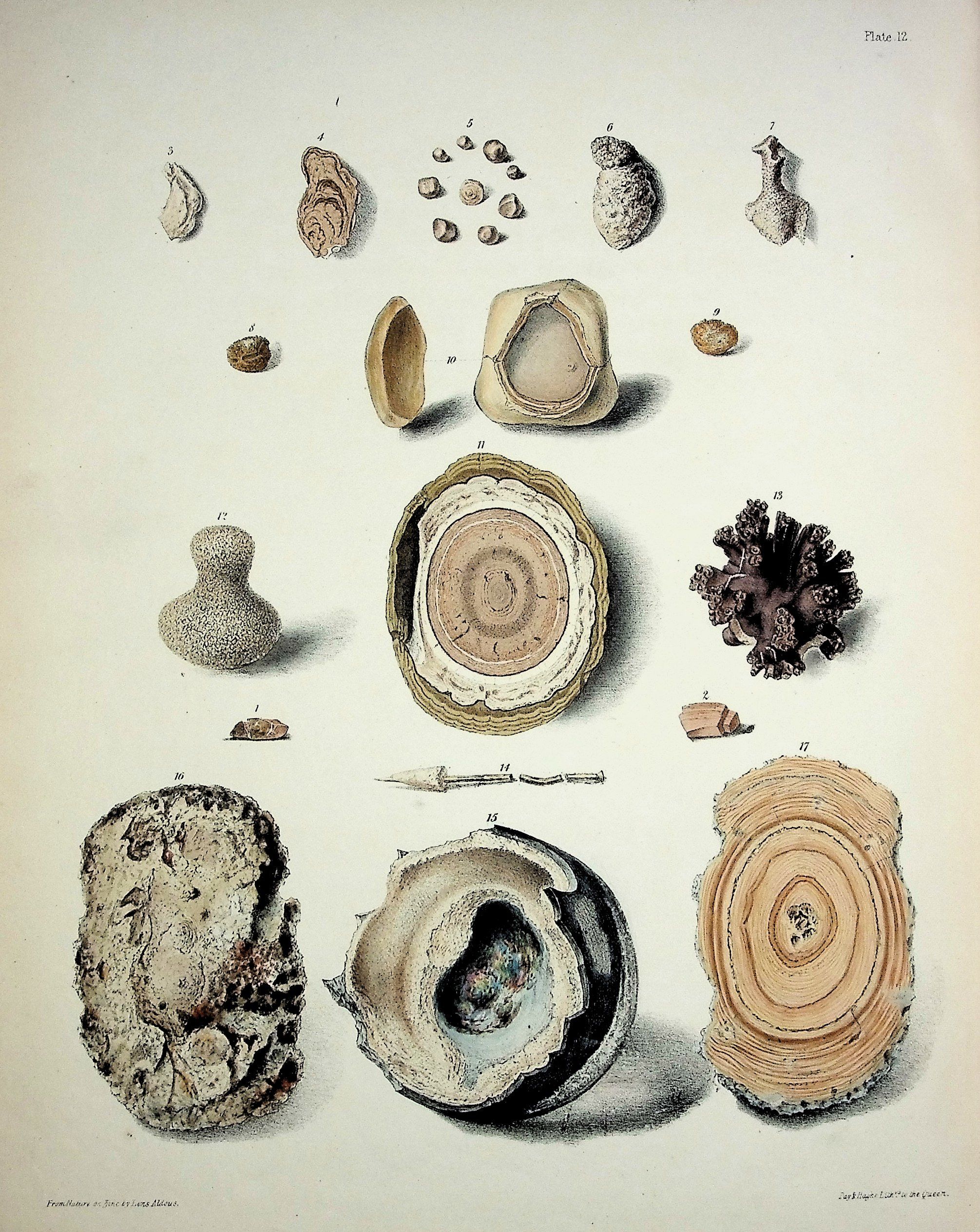
ATLAS OF HUMAN AND ANIMAL CONCRETIONS IN THE MUSEUM OF THE ROYAL COLLEGE OF SURGEONS, LONDON.
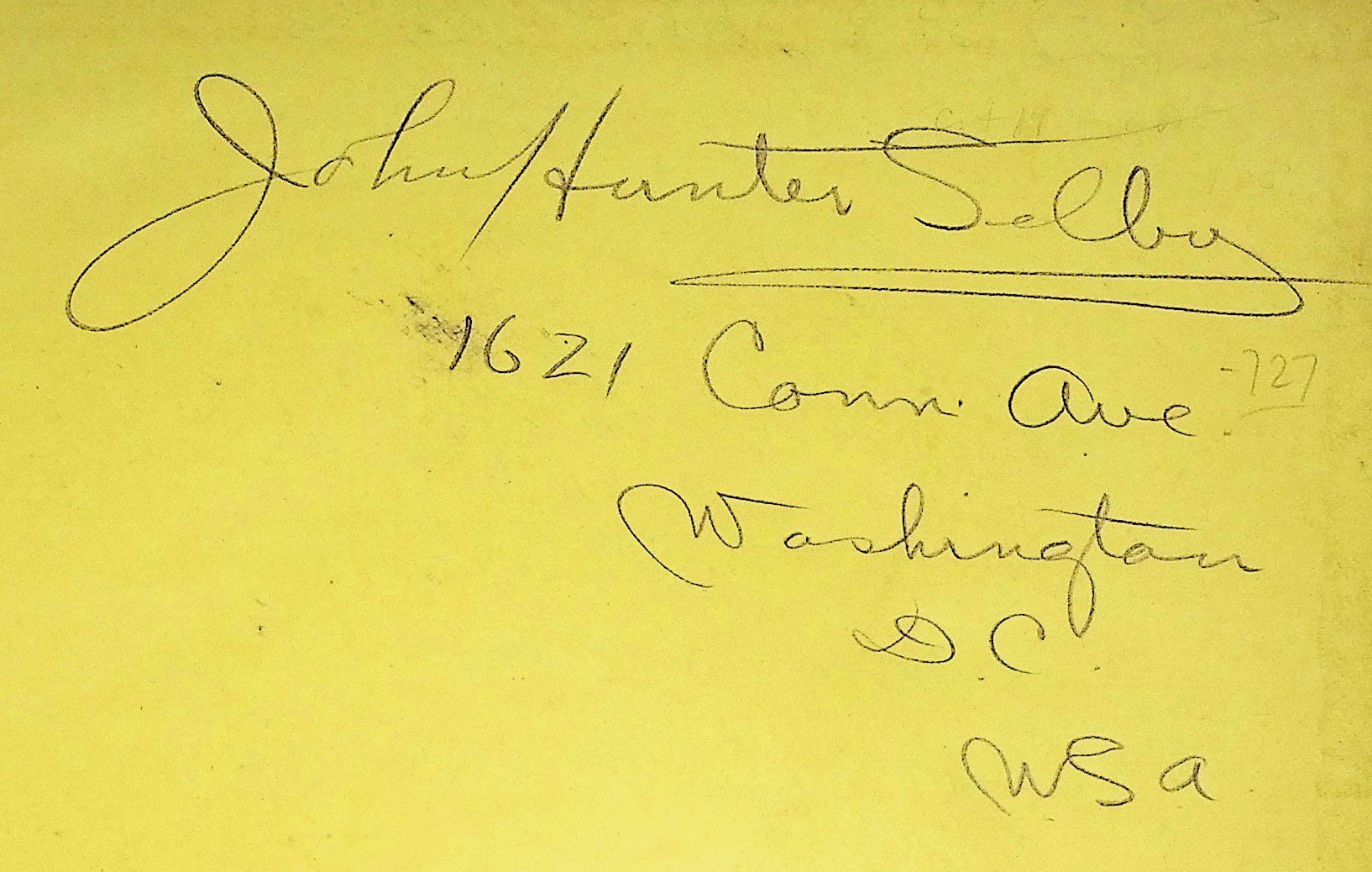
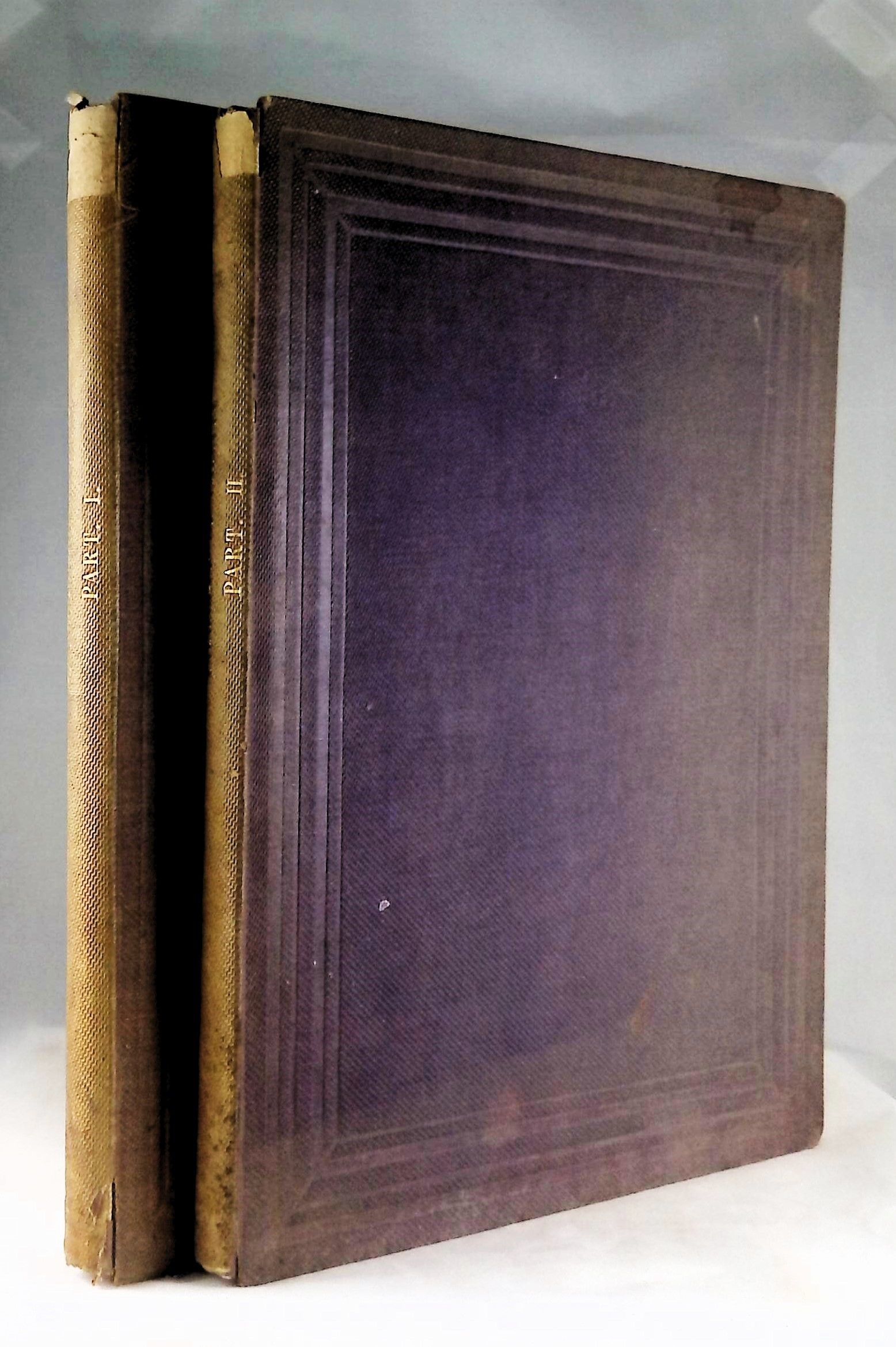
Two hardcover folio volumes 12 inches tall, brown cloth binding, blindstamped rulings to covers, gilt title to spines, small paper label top of each spine, each volume signed on front free endpaper, "John Hunter Selby/ 1621 Conn. Ave./ Washington DC. WSa." Vol. I, i-xix, [1], 138 pp, 12 color lithographic plates with facing descriptive text; Vol. II, [i-iv], [165] - 266. Lacking 5 plates with descriptive text, included in facsimile. Light wear to cover corners and spine ends, light browning to pages, very good in custom archival mylar covers. This scarce edition was bound as 1, 2, or 3 volumes, with either color or black & white plates.
MUSEUM OF THE ROYAL COLLEGE OF SURGEONS, otherwise known as the Hunterian Museum, is named after the 18th century surgeon anatomist John Hunter whose collection of anatomical specimens was given into the care of the Company of Surgeons (later the Royal College of Surgeons of England) in 1799. An independent group, 'The Board of Trustees of the Hunterian Collection,' was also established to oversee the collection's long term care. Hunter's collection of around 14,000 specimens and preparations was quickly added to and by the 1850s the Museum of the Royal College of Surgeons of England was one of the largest museums of comparative anatomy, pathology, osteology and natural history in the world.
PROVENANCE: DR. JOHN HUNTER SELBY (1878-1965) was born in Columbia, South Carolina, to Julian Augustus Selby and Alice Elizabeth Peers, and died in Marshall, Virginia. He married Delia Towles Slaughter in 1909, in Rochester, Minnesota. They had a son, John Hunter Selby Jr. (1922–1988). It is likely that Selby's namesake was the famous surgeon anatomist.
RICHARD AND JOHN EDWARD TAYLOR formed the London printing firm known for publishing scientific works, including Scientific Memoirs and natural history volumes. Richard Taylor (1781–1858) was a scientist and printer, member of the Linnean Society, while John Edward Taylor (1791–1844) was a member of the Manchester Literary and Philosophical Society and the founder of the Manchester Guardian.
Details
Title
A Descriptive and Illustrated Catalogue of the Calculi and other Animal Concretions contained in the Museum of The Royal College of Surgeons in London (Parts 1 & 2)
Author
Taylor, Richard and Taylor, John Edward
Binding
Cloth binding
Condition
Unknown
Publisher
Richard and John E. Taylor: London
Date
1842, 1845
Edition
First printing