

Chemical Embryology
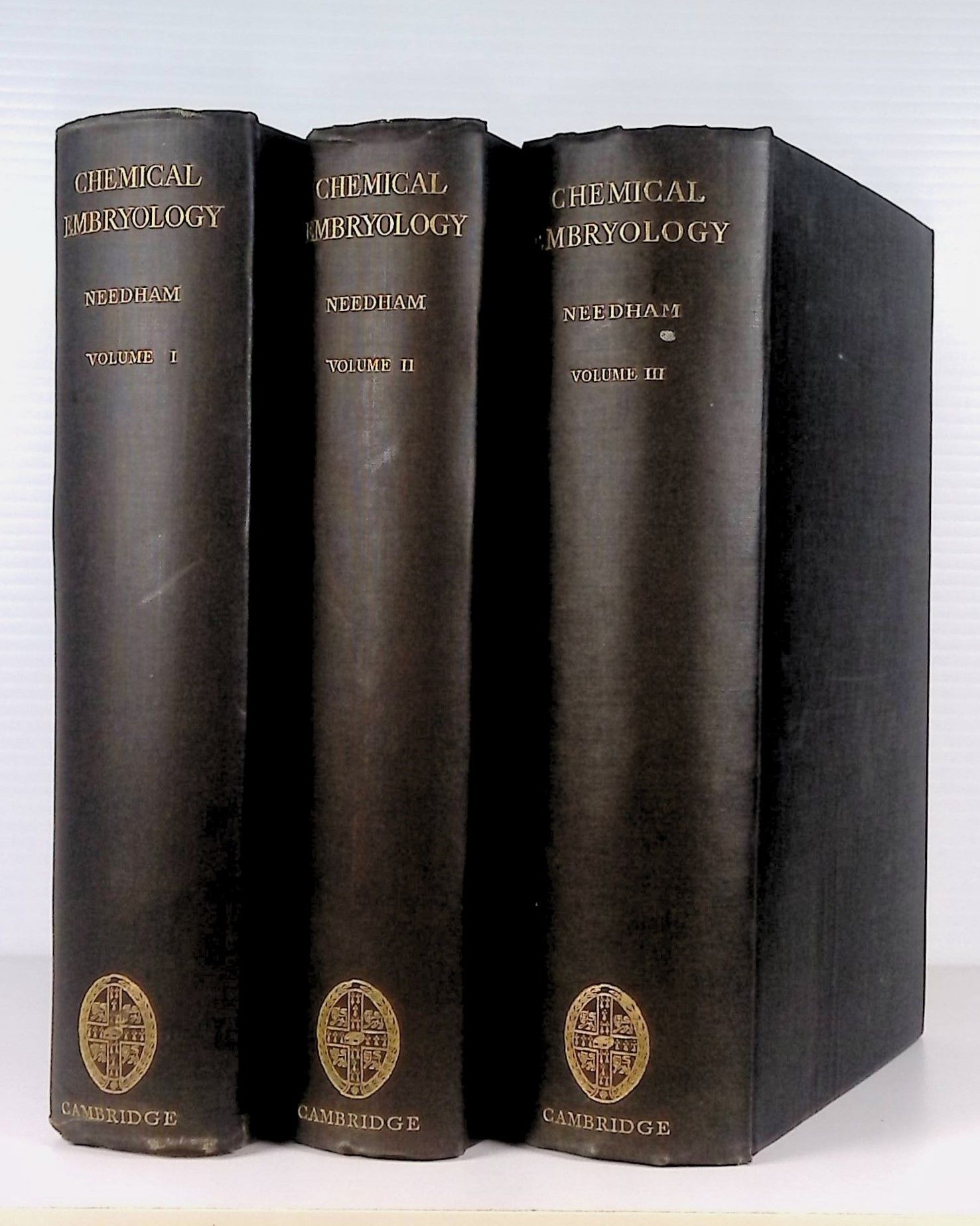
- Cloth binding
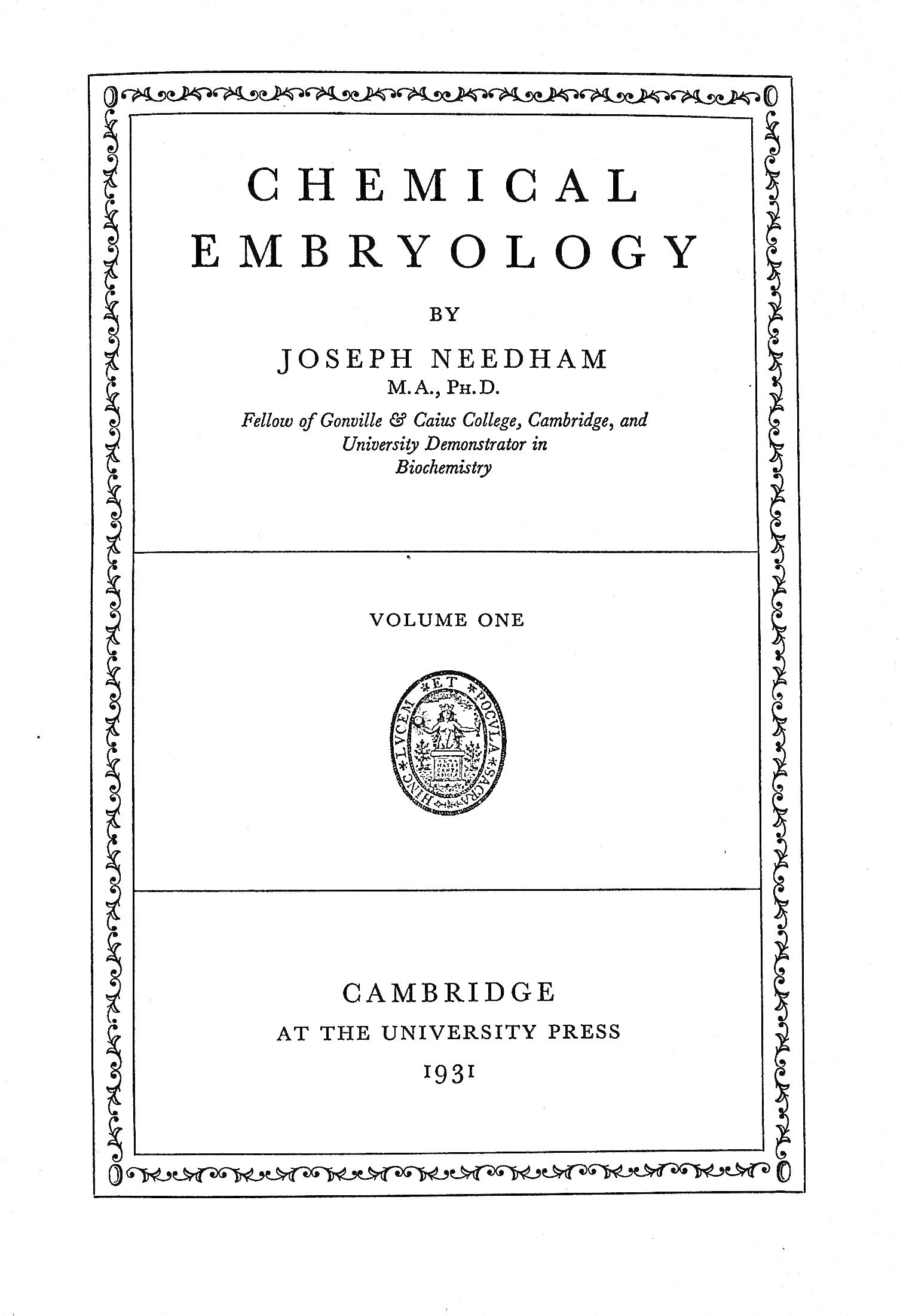
- Cambridge: Cambridge University Press, 1931
Cambridge: Cambridge University Press, 1931. First edition.
1931 MONUMENTAL 3-VOLUME, 2000+ PAGE MONOGRAPH BY POLYMATH JOSEPH NEEDHAM ESTABLISHED THE HISTORY AND FUTURE OF CHEMICAL EMBRYOLOGY.
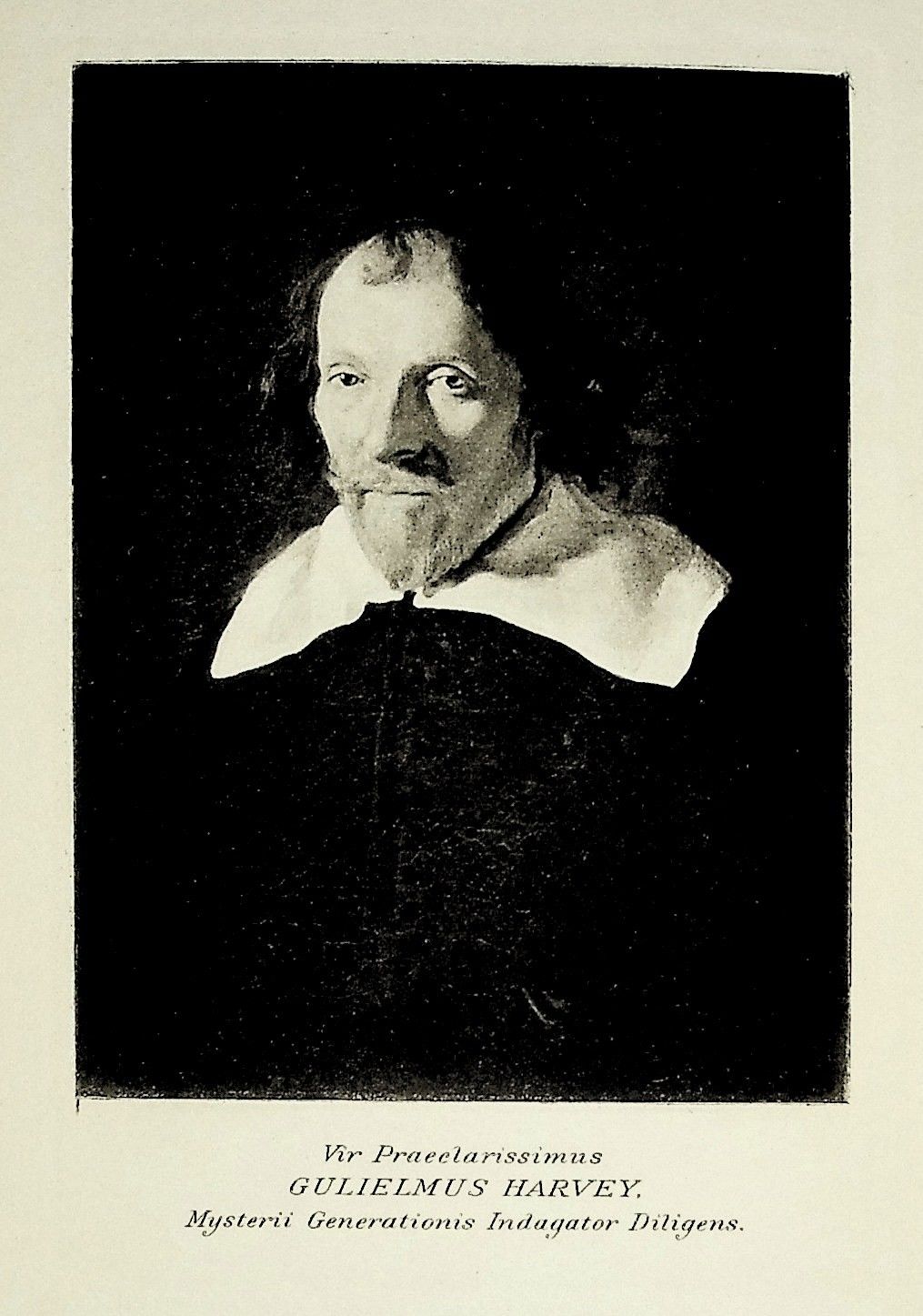
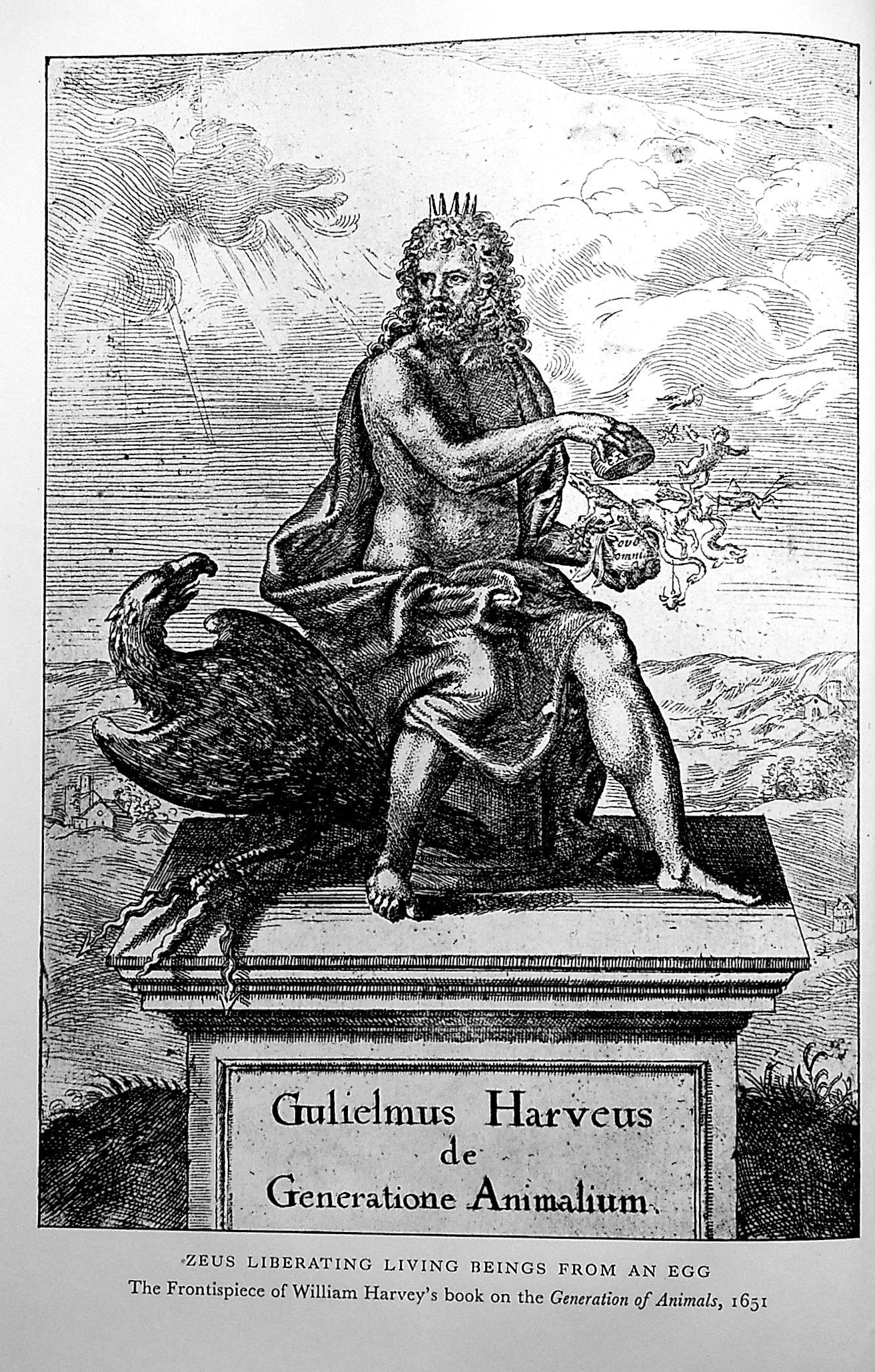
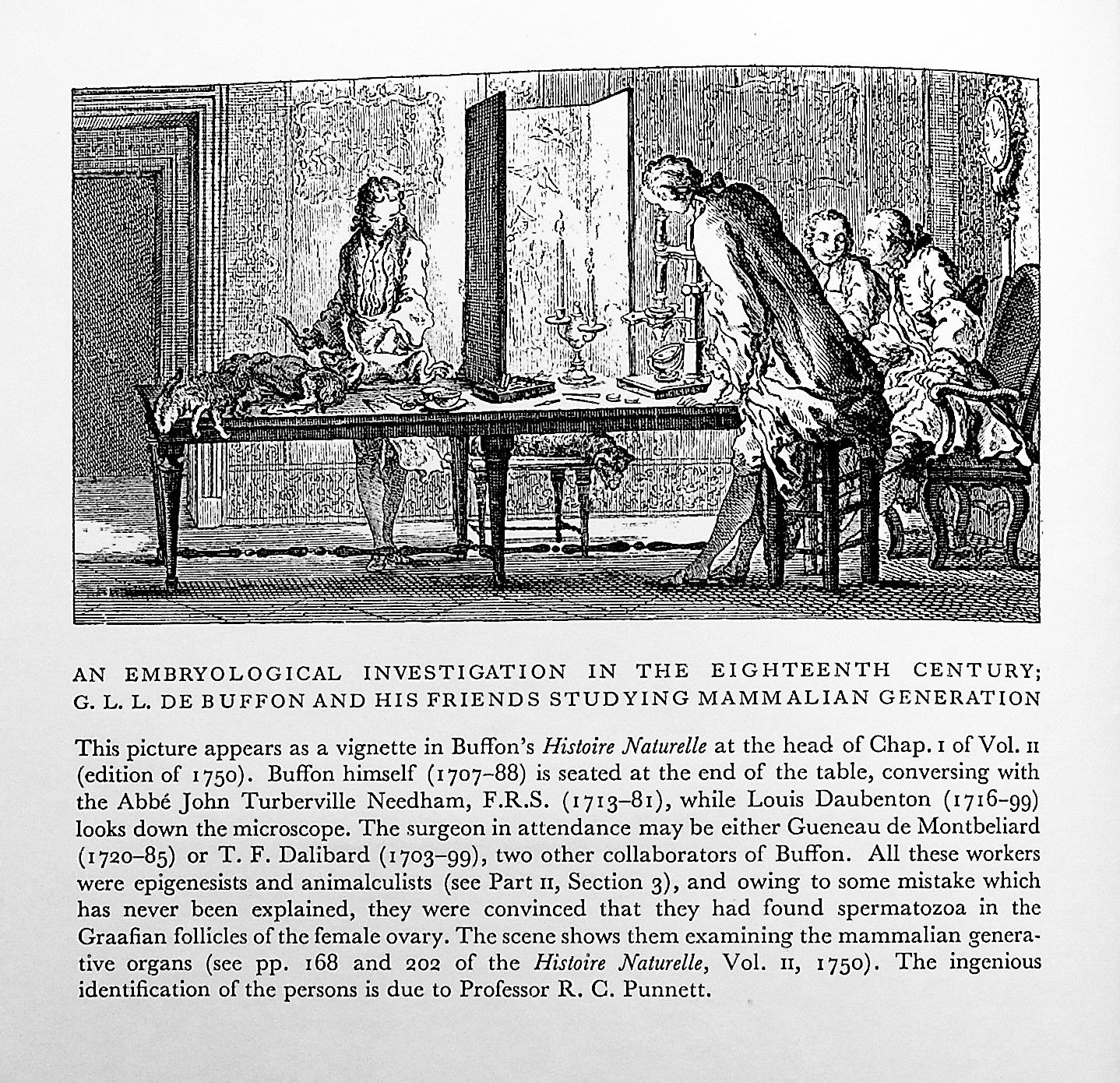
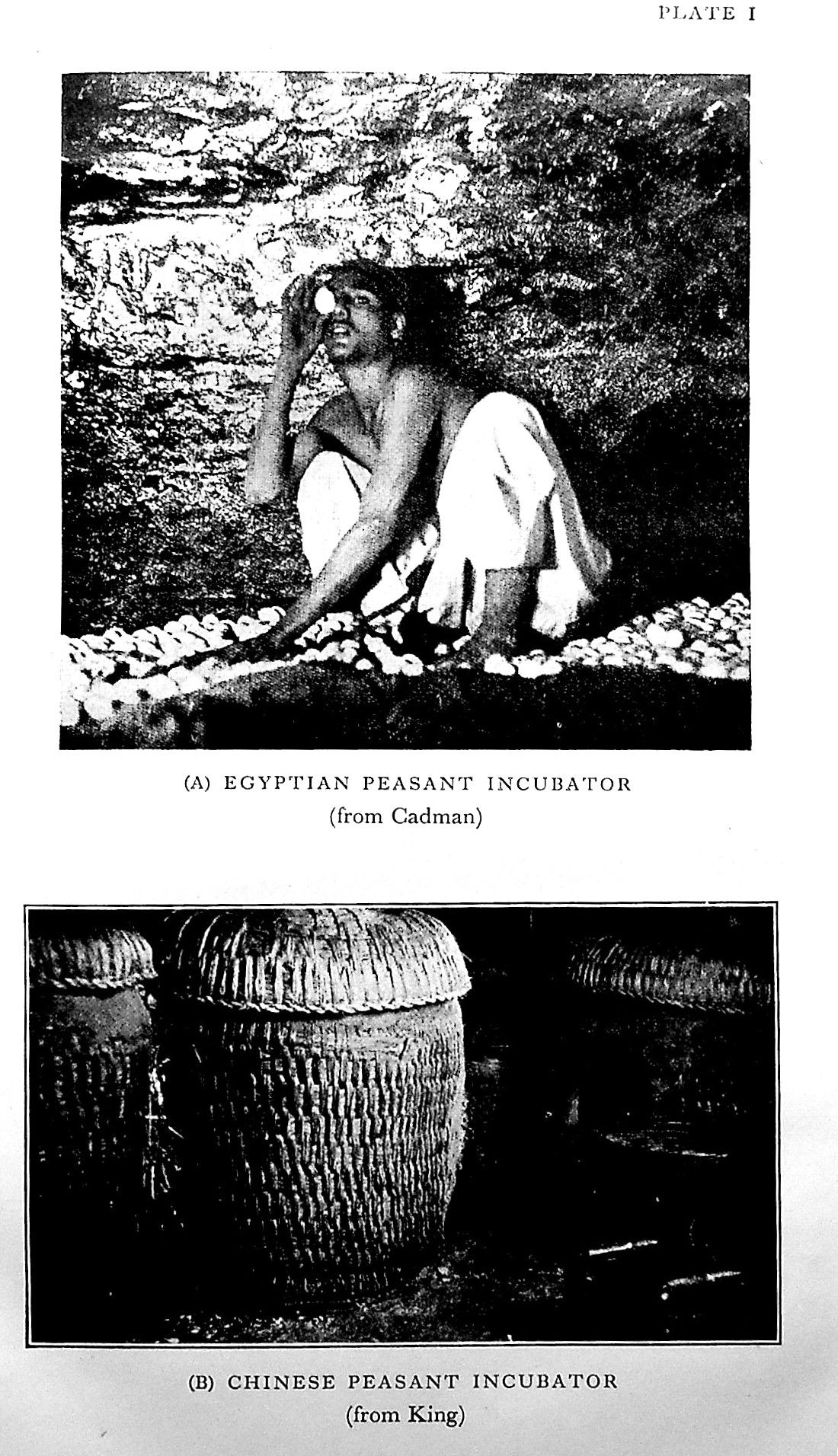
Three hardcover volumes, 24 x 16 x 4-5 cm, black cloth binding, gilt title to spines. Vol. I, ink signature top of front free endpaper, frontispiece portrait of William Harvey with tissue guard, i-xxi, 613 pp, figures 1-104, tables 1-77, charts I-IV, 9 plates, LAID IN: 1) 111 x 21 cm typescript German summary of Needham and Lehmann paper in Nature 1937; 2) publisher's flyer announcing publication of Perspectives in Biochemistry, 31 Essays presented to Sir Frederick Gowland Hopkins, edited by Joseph Needham and David E. Green, Cambridge University Press; Vol. II, frontispiece copy of Zeus Liberating Living Beings from an Egg, i-xiv, pp [614-615], 616-1253, figures 105-401, tables 78-177, 2 plates; Vol. III, frontispiece copy of engraving, An Embryological Investigation in the Eighteenth Century, i-xiv, pp [1254-1255], 1256-2021, figures 402-532, tables 178-259 (including 5 folding). Very slight wear to spine ends, covers clean, spines bright, bindings tight, light spotting to page edges of Vol. I, all text and plates unmarked. Very good in custom archival mylar covers.
GARRISON-MORTON No. 531.
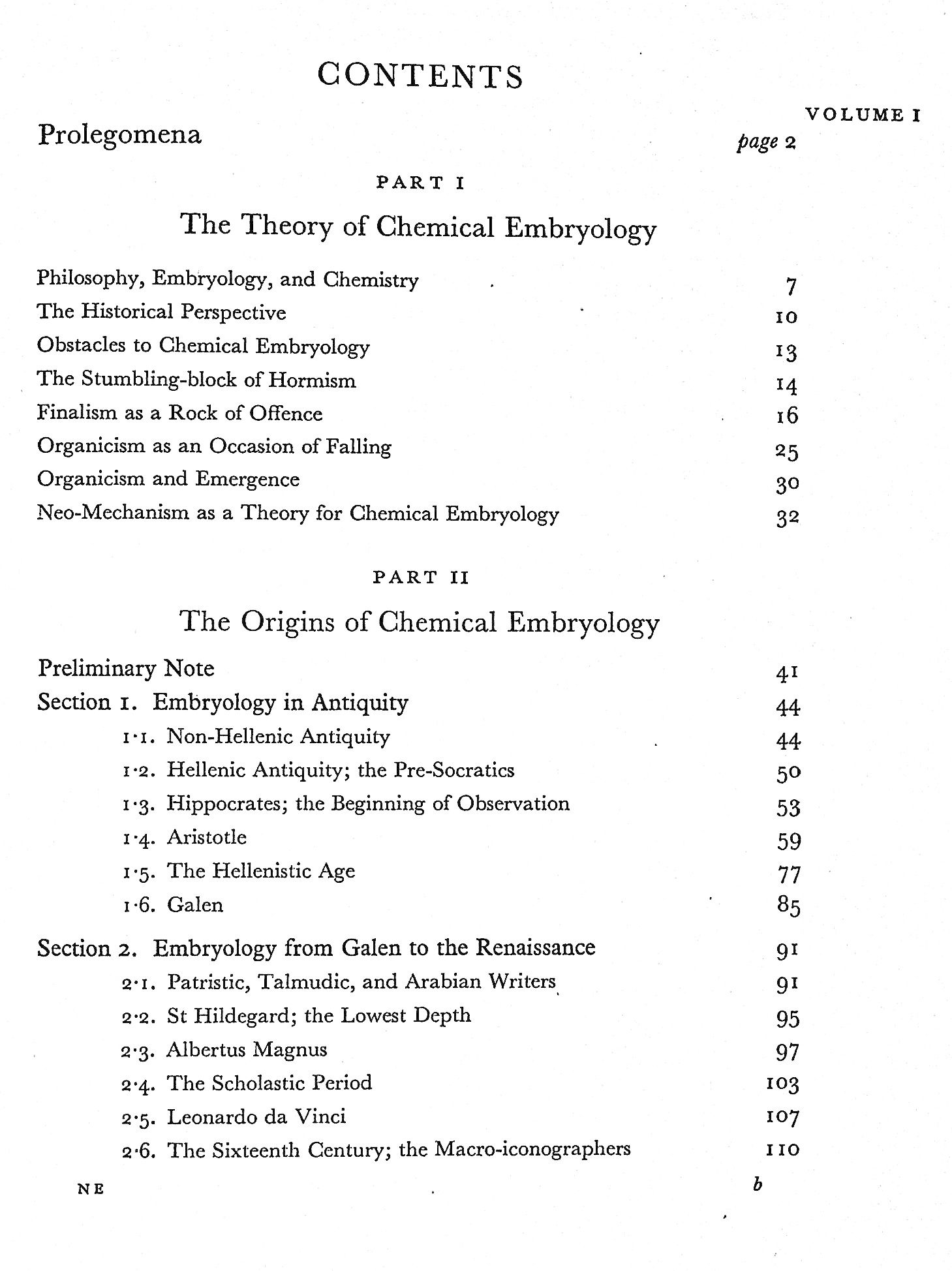
JOSEPH NEEDHAM (1900 - 1995) was a British biochemist, historian and sinologist known for his scientific research and writing on the history of Chinese science and technology. He was elected a fellow of the Royal Society in 1941, fellow of the British Academy in 1971. and in 1992, Queen Elizabeth II conferred on him the Companionship of Honour. He had intended to study medicine, but came under the influence of Frederick Hopkins, resulting in his switch to biochemistry. After graduation, Needham was elected to a fellowship at Gonville and Caius College and worked in Hopkins' laboratory at the University Department of Biochemistry, specializing in embryology and morphogenesis. His three-volume work Chemical Embryology, published in 1931, includes a history of embryology from Egyptian times up to the early 19th century, including quotations in most European languages. Needham, along with colleague Julian Huxley, was one of the founders of the United Nations Educational, Scientific, and Cultural Organization (UNESCO). Developed in 1945 with the help of Allied governments, UNESCO is an international organization that aims to bring education to regions that had been affected by Nazi occupation. Review by Hobe Schroder, "Classics Revisited," Placenta, 1992, "Chemical Embryology" was the work of a then 31-year-old biochemist that above all was written for 'the increase of knowledge itself', presenting '. . . the physico-chemical history of embryo development, from the egg-cel1 to the loosing of the individual into the activity of the postnatal life'. In the country of science Needham laid out the County of Embryology, complete with its own history, its cities and pathways to neighboring communities, ready to grow and prosper. This was a formidable task which is reflected in the size and structnre. The book consists of three volumes with a total of 2120 pages, 532 text figures and 11 plates, more than 4500 citations and 51 pages of index."
Details
Title
Chemical Embryology
Author
Needham, Joseph
Binding
Cloth binding
Condition
Unknown
Publisher
Cambridge University Press: Cambridge
Date
1931
Edition
First edition