

The Ballad of Reading Gaol

- London: Leonard Smithers, 1898
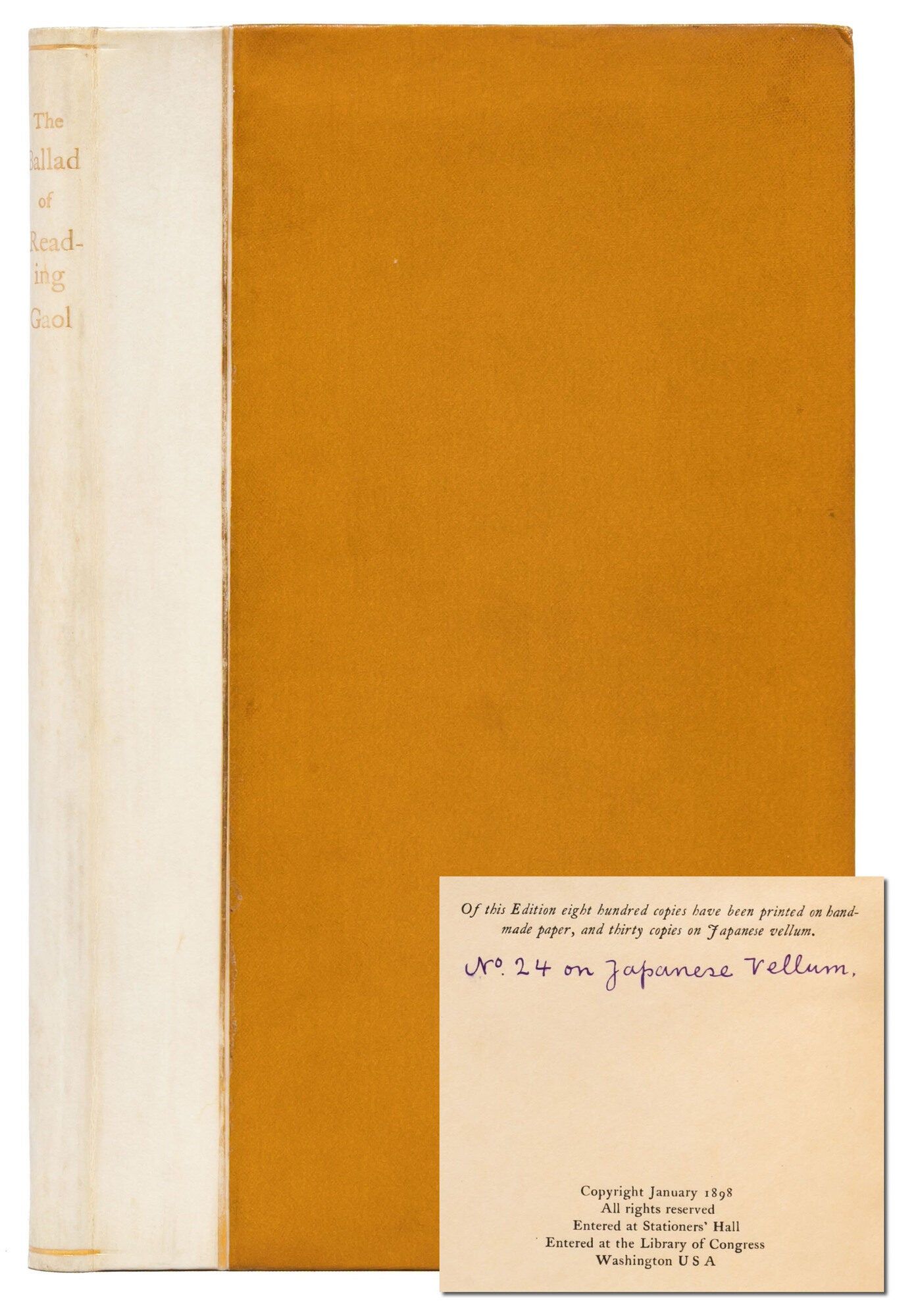
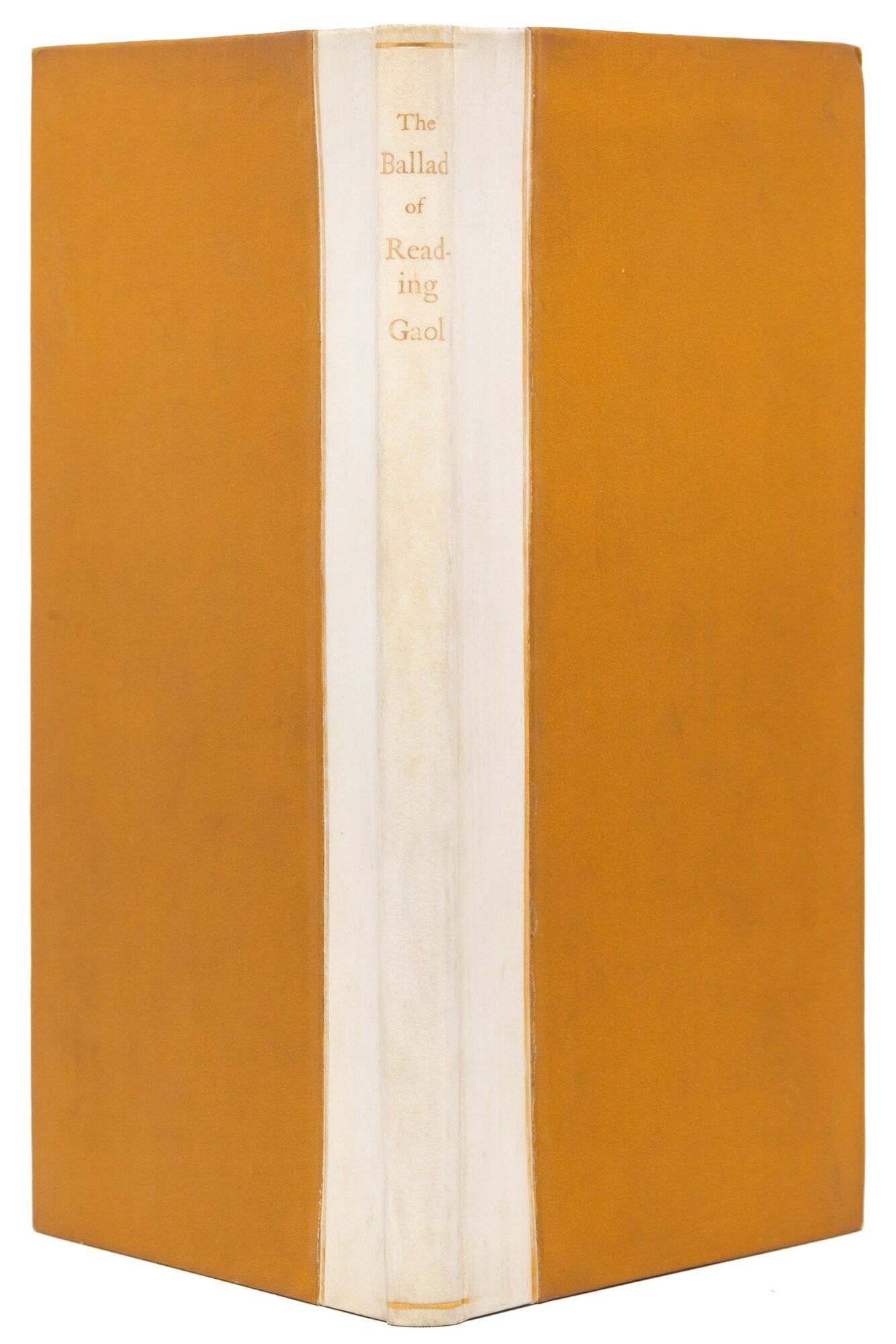
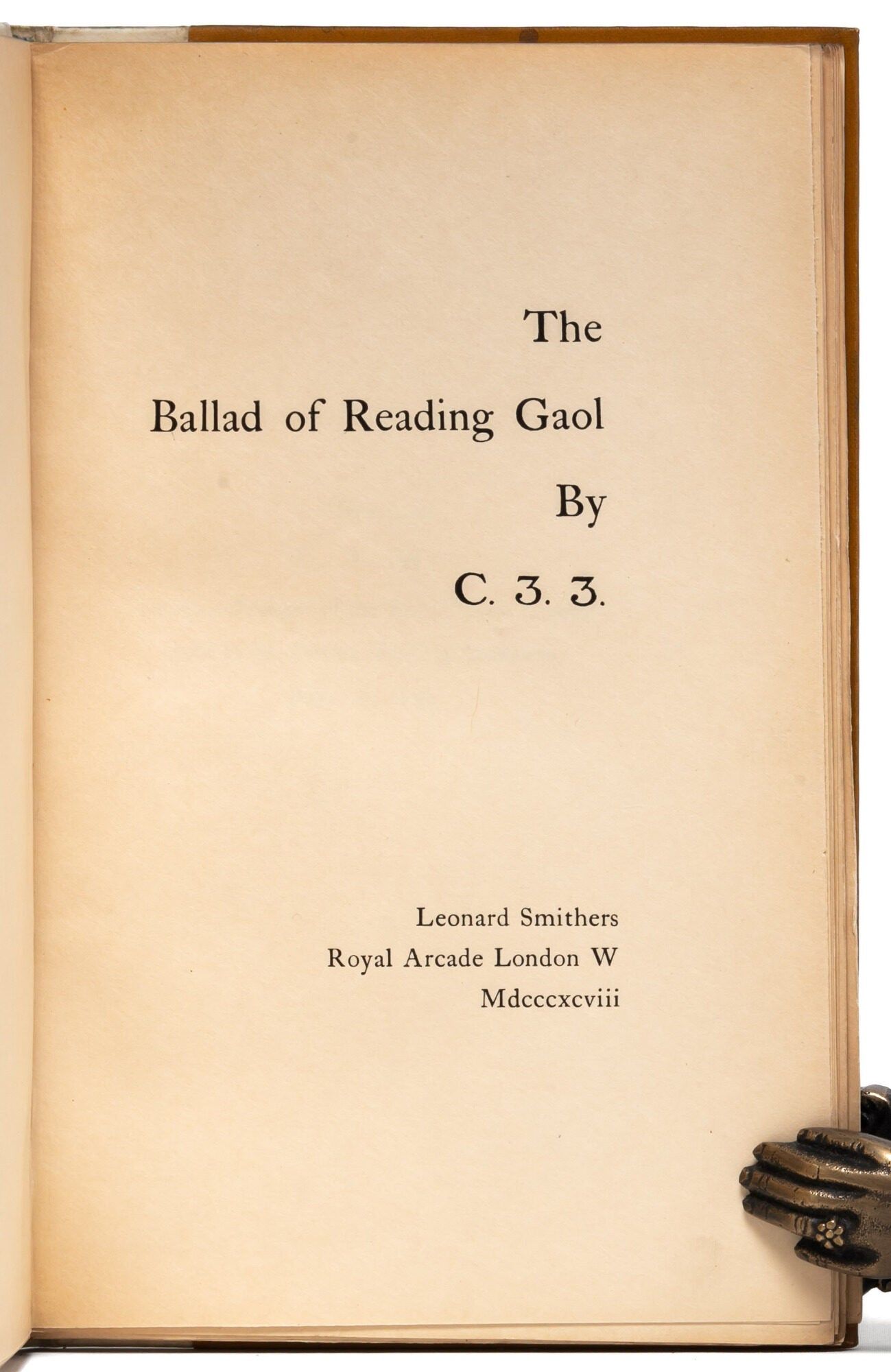
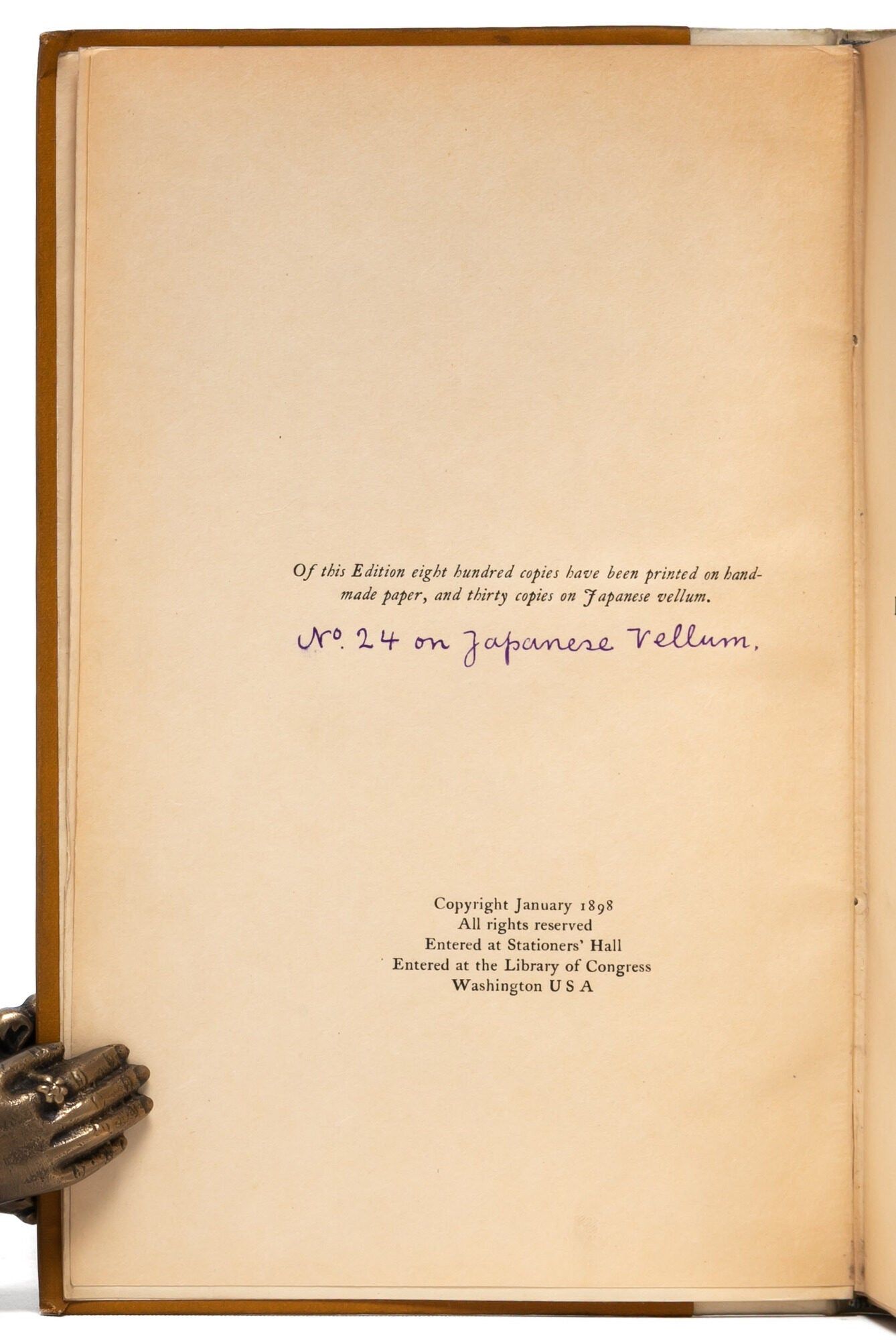
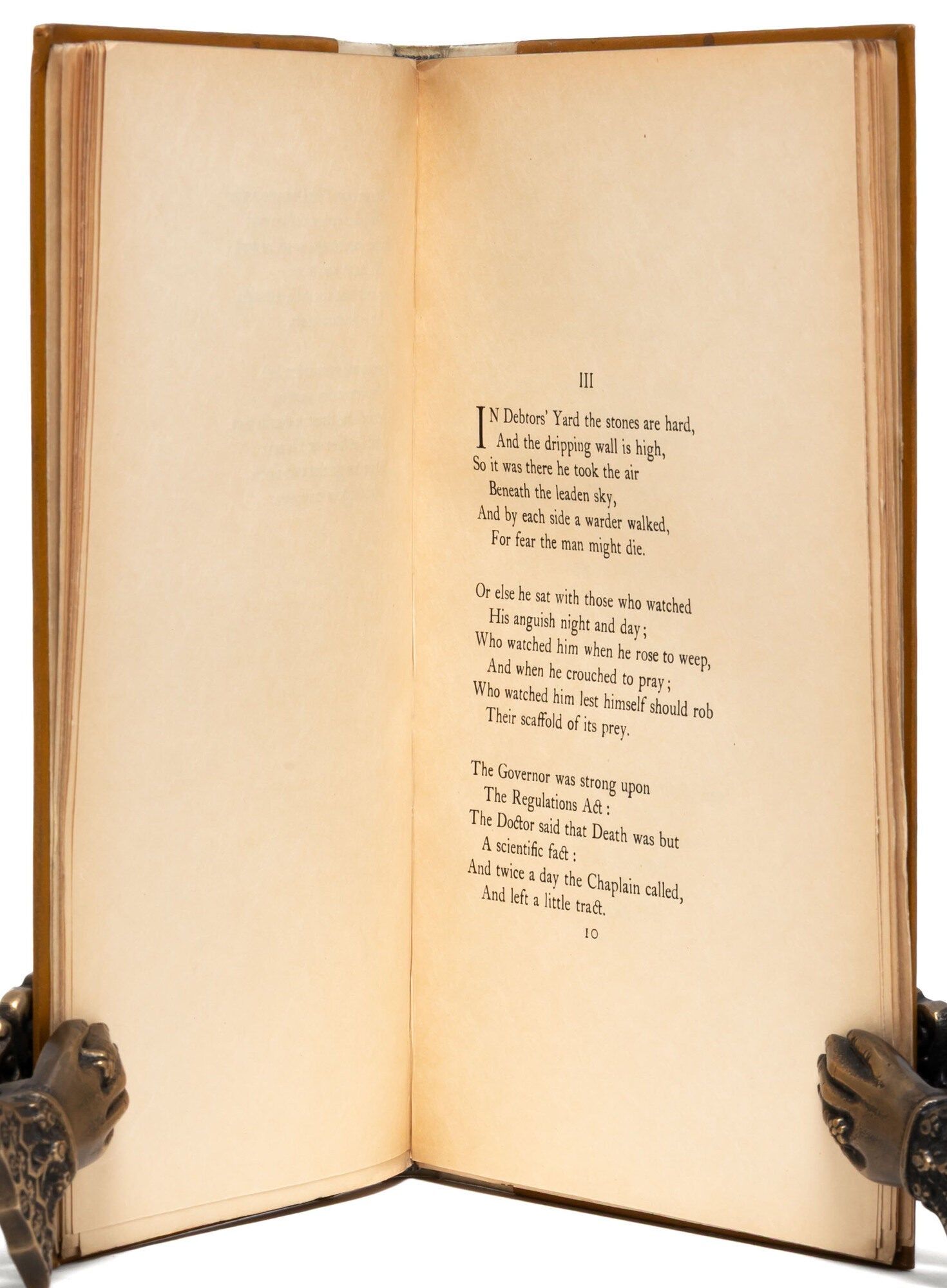
London: Leonard Smithers, 1898. First edition. Fine. One of thirty copies printed on Japanese vellum paper, this being copy twenty-four. Published under the pseudonym "C.3.3.," Wilde's cell number while he was at Reading Gaol, in an attempt to separate Wilde's then-notorious name from the publication. A lovely, Fine copy.
Wilde's long poem "The Ballad of Reading Gaol," published just two years before his death, draws on the experience of being imprisoned at Reading after his conviction for gross indecency in 1895. Wilde had, famously, faced a highly publicized trial that ended with a sentence of two years hard labor, which he served at Pentonville Prison, Wandsworth, and finally at Reading. The poem was directly inspired by Charles Thomas Woolridge, a fellow inmate who was executed at Reading after being convicted of murdering his wife. The crime was metaphorized by Wilde in his poem, which contains one his most famous lines: "Yet each man kills the thing he loves..."
In the last three years of his life, which he spent in exile in Naples and then in Paris, Wilde continued to edit and publish his plays - the first editions of An Ideal Husband and The Importance of Being Earnest were published during this period - but he wrote very little, having "lost the joy of writing" (Ellman, Oscar Wilde). "The Ballad of Reading Gaol," then, was the last new literary work of Wilde's career, and perhaps his most haunting. He concludes his poem with the elegiac stanza: "And all men kill the thing they love, / By all let this be heard, / Some do it with a bitter look, / Some with a flattering word, / The coward does it with a kiss, / The brave man with a sword." Fine.
Wilde's long poem "The Ballad of Reading Gaol," published just two years before his death, draws on the experience of being imprisoned at Reading after his conviction for gross indecency in 1895. Wilde had, famously, faced a highly publicized trial that ended with a sentence of two years hard labor, which he served at Pentonville Prison, Wandsworth, and finally at Reading. The poem was directly inspired by Charles Thomas Woolridge, a fellow inmate who was executed at Reading after being convicted of murdering his wife. The crime was metaphorized by Wilde in his poem, which contains one his most famous lines: "Yet each man kills the thing he loves..."
In the last three years of his life, which he spent in exile in Naples and then in Paris, Wilde continued to edit and publish his plays - the first editions of An Ideal Husband and The Importance of Being Earnest were published during this period - but he wrote very little, having "lost the joy of writing" (Ellman, Oscar Wilde). "The Ballad of Reading Gaol," then, was the last new literary work of Wilde's career, and perhaps his most haunting. He concludes his poem with the elegiac stanza: "And all men kill the thing they love, / By all let this be heard, / Some do it with a bitter look, / Some with a flattering word, / The coward does it with a kiss, / The brave man with a sword." Fine.
Details
Title
The Ballad of Reading Gaol
Author
[Wilde, Oscar] C. 3. 3
Condition
Fine
Publisher
Leonard Smithers: London
Date
1898
Edition
First edition