

GEISTLICHE ZUNGEN . . . VON DER GIFFTIGEN ZUNGEN DESS MENSCHEN
- Munich: N. Henricus, 1622
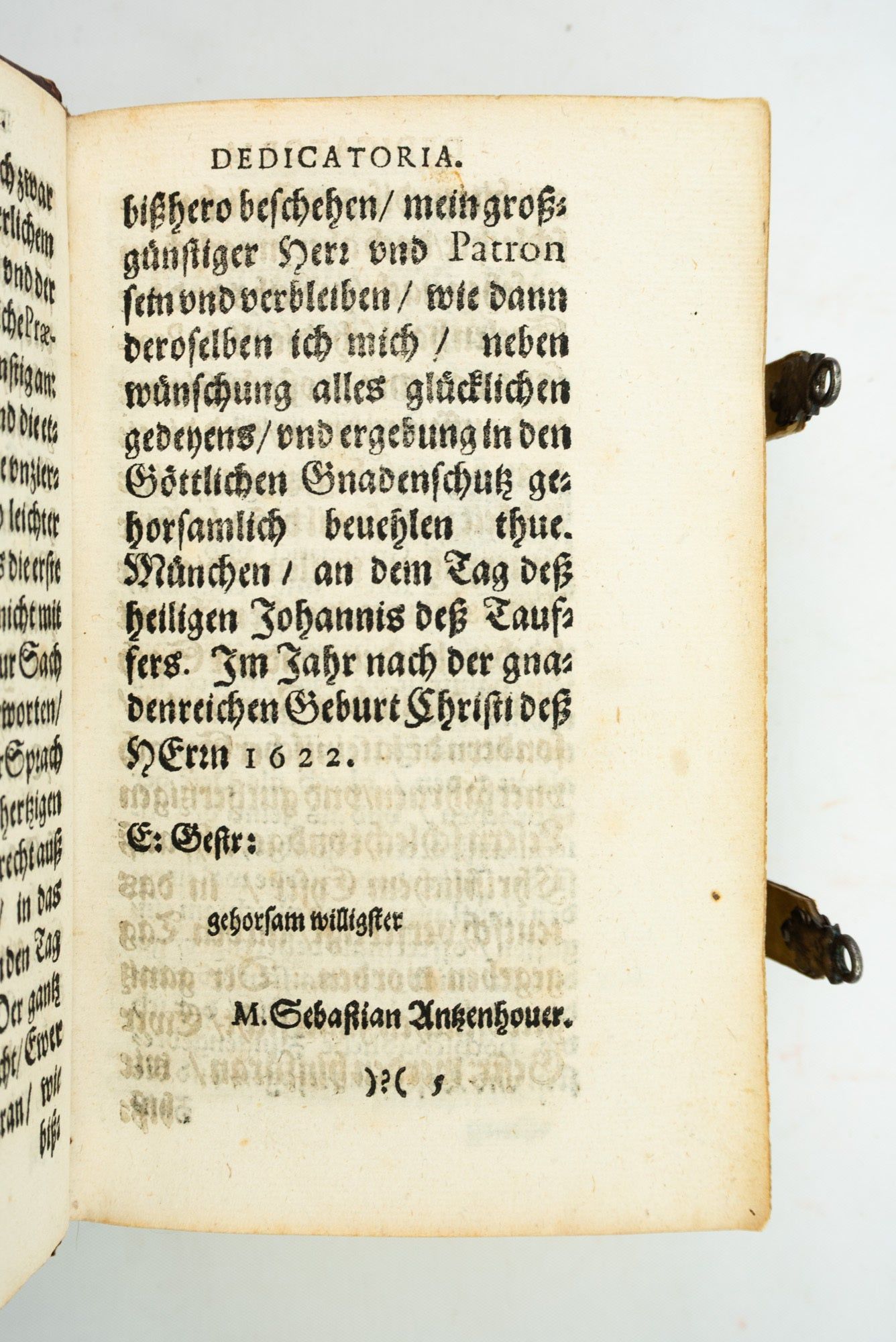
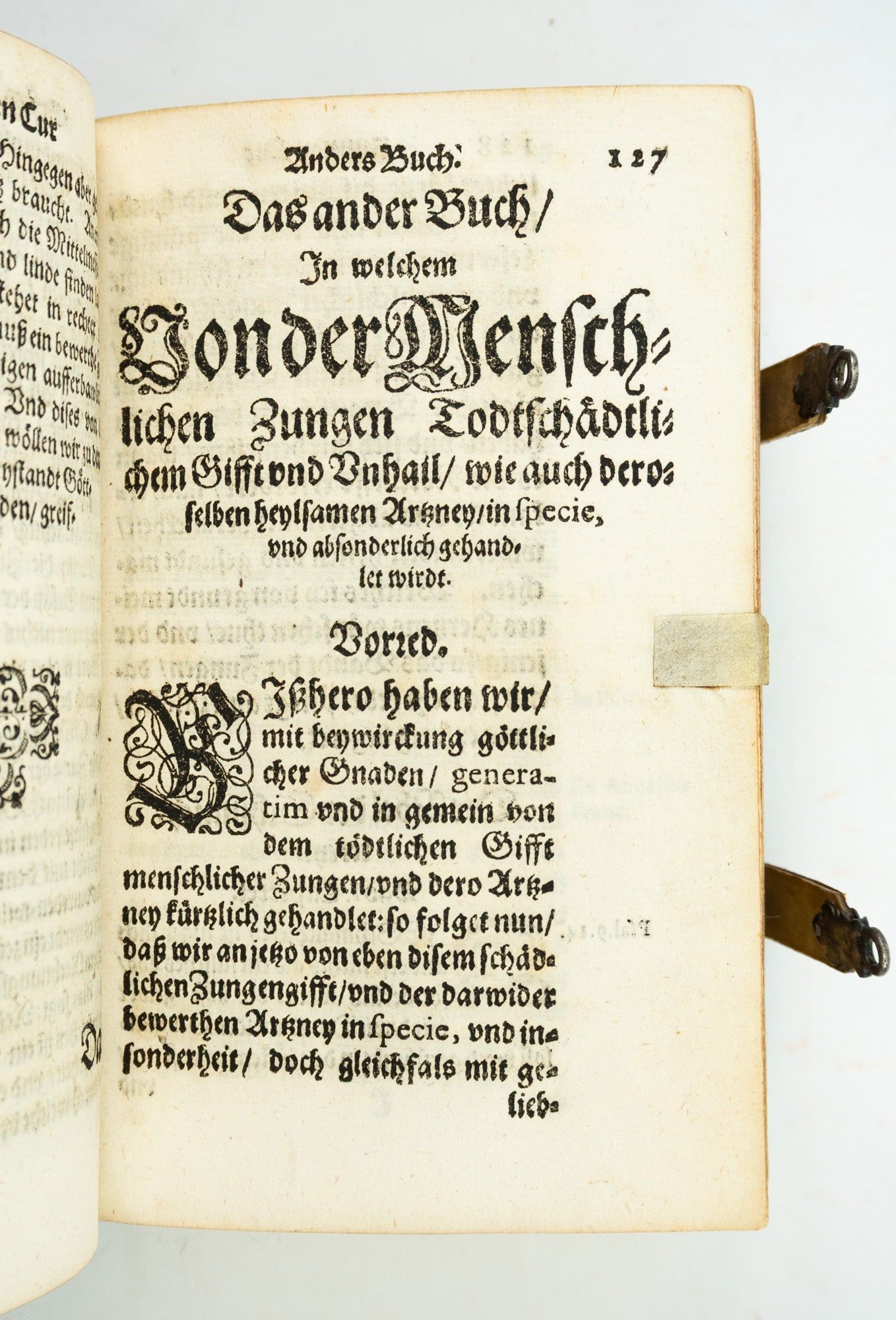
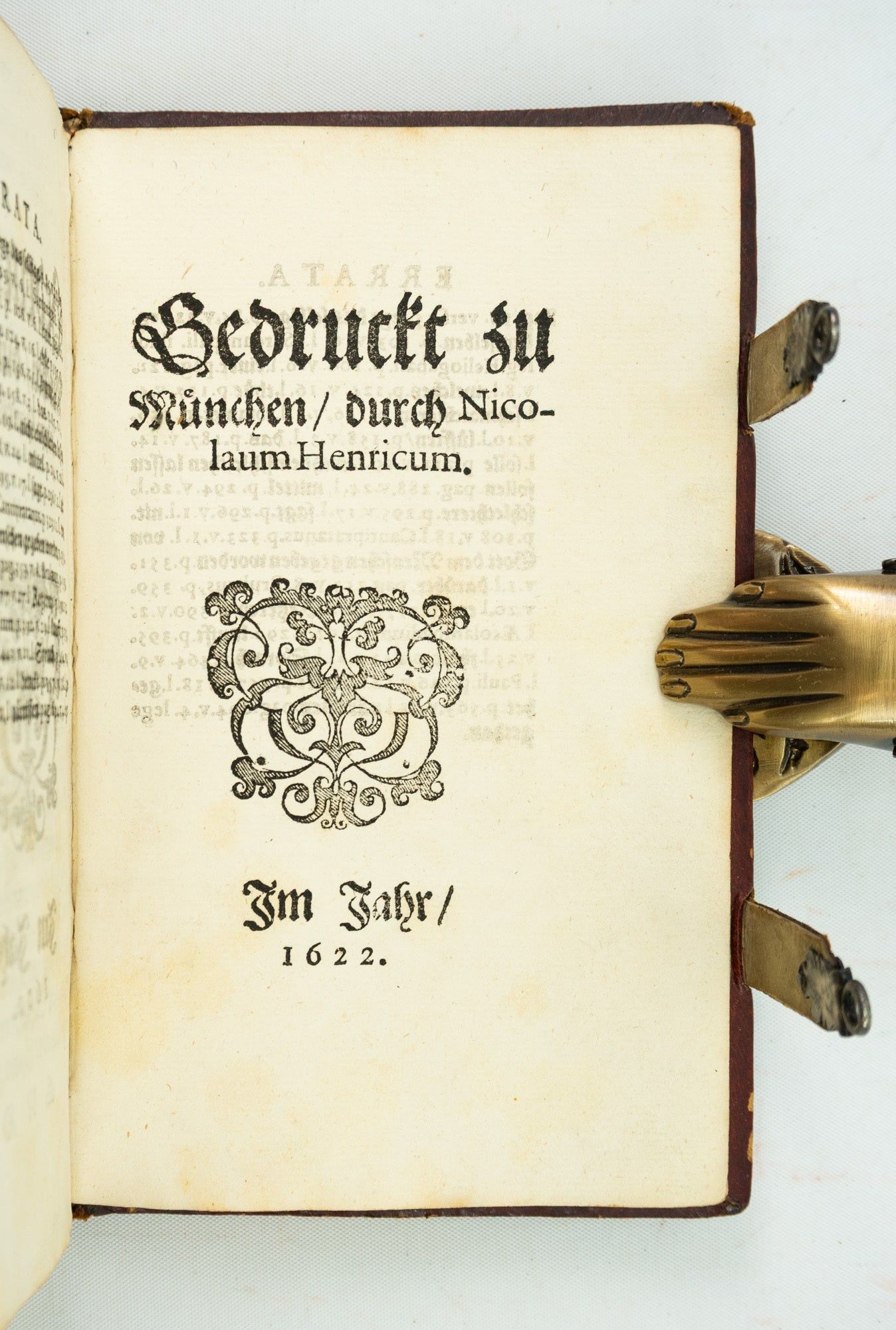
Munich: N. Henricus, 1622. First Edition in German. 160 x 100 mm. (6 1/4 x 4"). 16 p.l., 699, [3] pp. Translated from the Latin by Sebastian Äntzenhover.
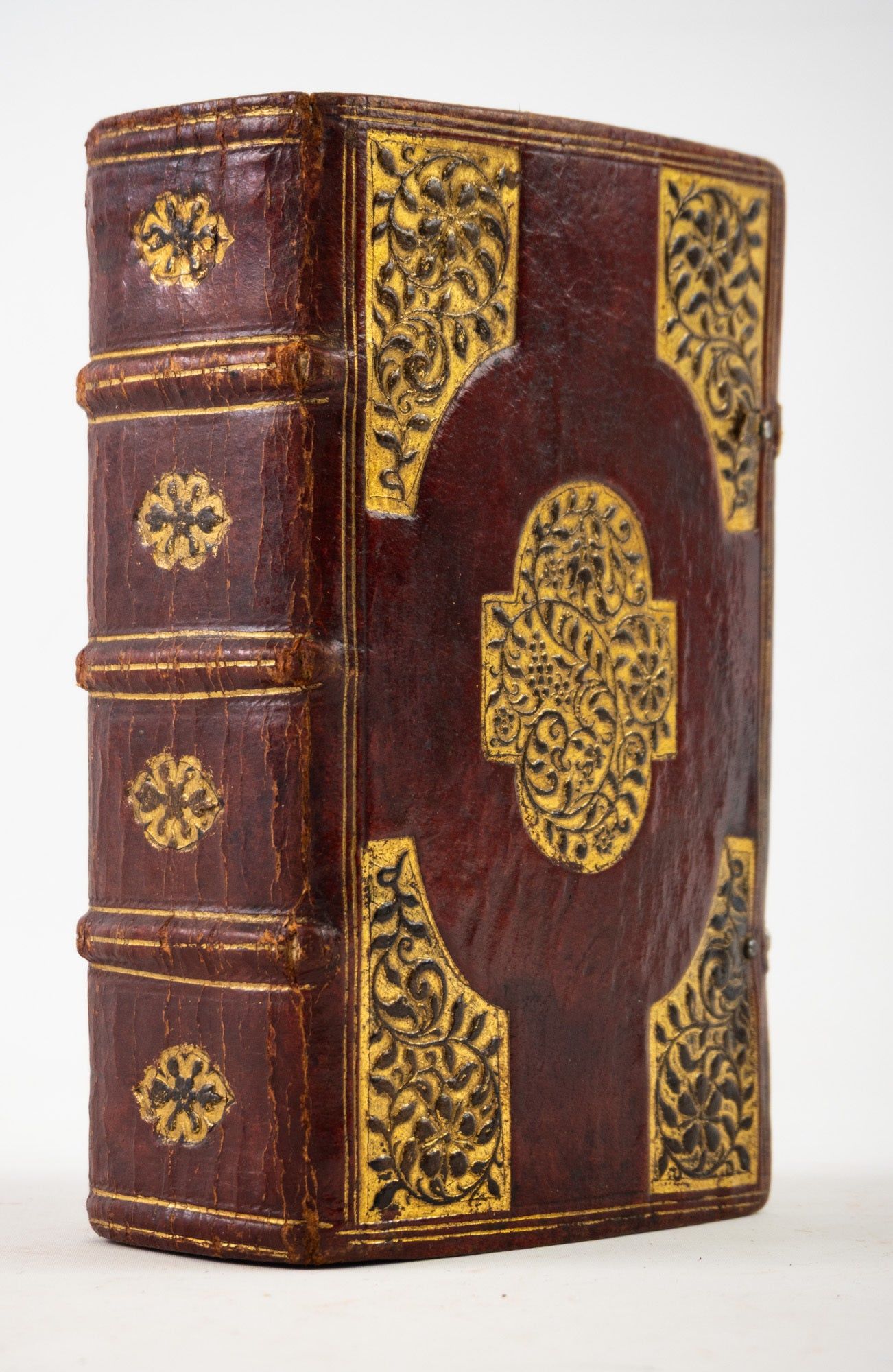
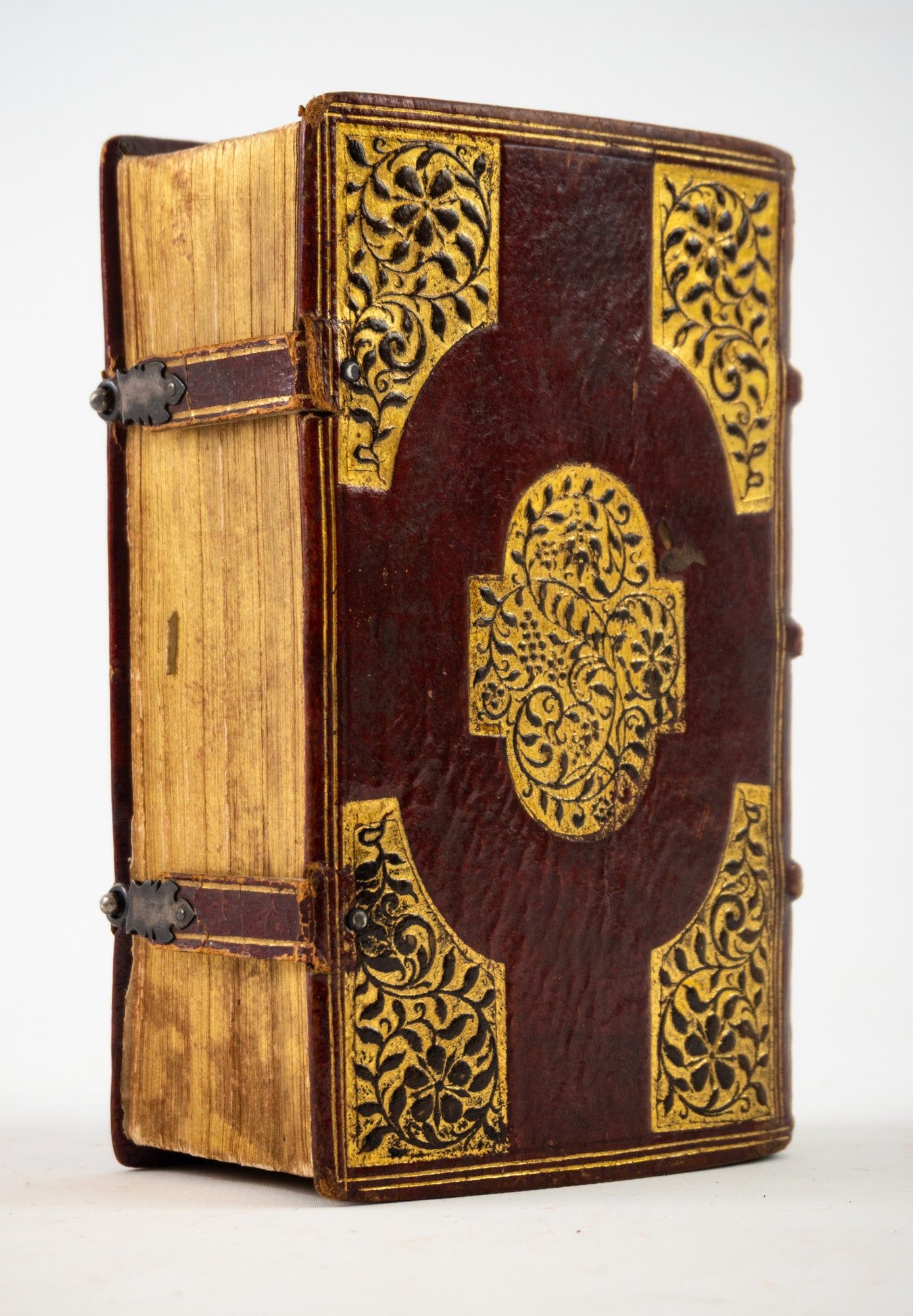
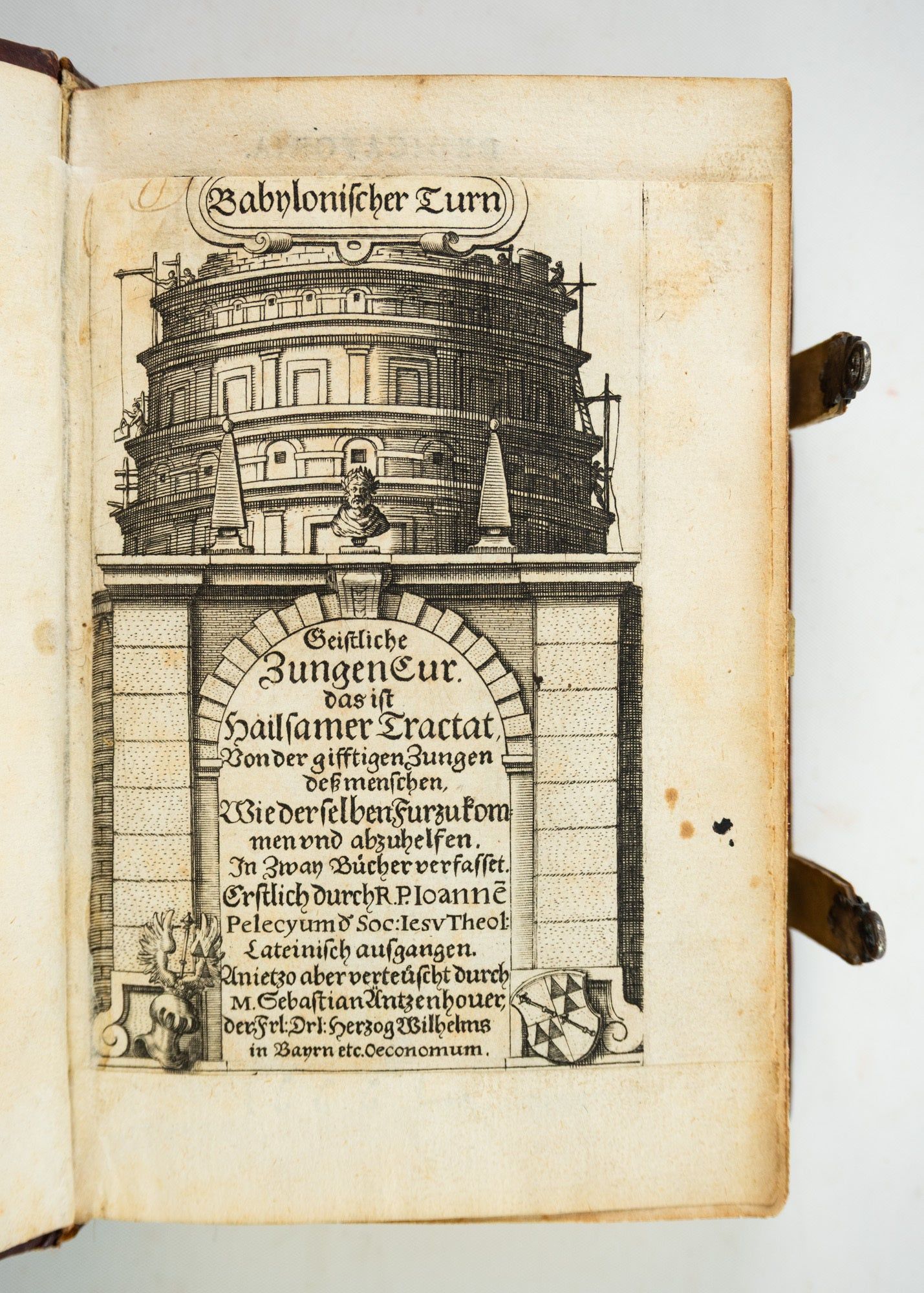
UNUSUAL AND QUITE BEAUTIFUL CONTEMPORARY GERMAN DARK RED MOROCCO, GILT, covers with gilt fillet border, central panel with onlaid corner pieces and centerpiece of black morocco stamped in relief to an Ottoman-inspired design of flowering vines, raised bands, spine panels with gilt centerpiece, two leather straps with silver clasps and catches, all edges gilt. Title page with engraving of the Tower of Babel. Top half inch of title page cut away (to remove owner inscription?). VD17 12:103845E; USTC 2019170. A touch of bowing to boards, spine a little crackled, joints and extremities a bit rubbed, occasional small, round marginal marks, apparently made with wax(!) and presumably meant to indicate textual importance, other trivial imperfections, but an excellent copy, clean and fresh, in an unrestored binding with lustrous boards glistening with gilt.
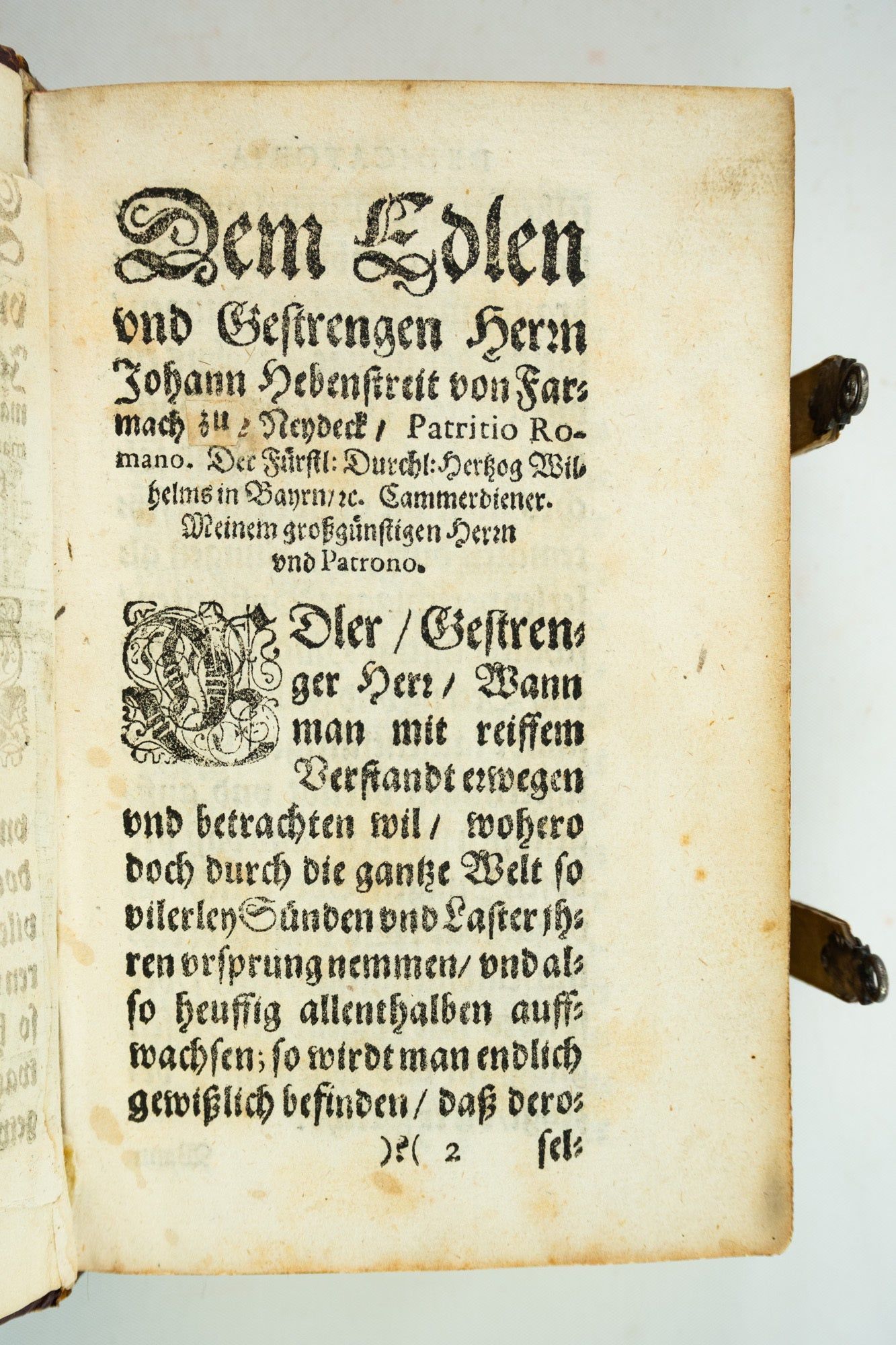
This rare work on sinning through the use of wicked words is offered here in a lovely binding that is quite out of the ordinary for its time and place and that may well have a very noble provenance. "Spiritual Tongues: That is, a Salutary Treatise Concerning the Poisonous Tongue of Man--How to Guard Against and Remedy It" is an examination of the sins committed through speaking written by Munich Jesuit Johannes Pelecyus (1545–1623) and first printed, in Latin, in 1620. Pelecyus addresses the evils of gossip, slander, indiscretion, cursing, mocking, and other injurious speech. The first part of the work is a general overview of the topic from a theological standpoint, while the second part is a more practical guide to types of harmful speech, and specific remedies for avoiding and correcting these offenses. Pelecyus concludes with a poem "The Devil's Disease and its Remedy." The binding here is remarkable in terms of its material makeup and the conjectural origin of its design. In the first part of the 17th century, morocco was not commonly used by German binders, who preferred sturdier pigskin, particularly for treatises like this, which could be expected to see much use (poisonous tongues have long been a fact of life and in need of being frequently read about). Morocco was generally reserved for presentation copies or ceremonial liturgical works. In addition to the material, the decoration here is unusually lavish for a text of this sort, with onlays, gilt adornment, and silver clasps that required time and skill from the artisan, and considerable expense for the patron. Significantly, the lovely relief centerpiece design on the boards here also appears on the covers of a Book of Hours originally created for Holy Roman Emperor Maximilian I (1459-1519). That volume was later acquired by another similarly named owner, Duke Maximilian I of Bavaria (and is now to be found in the Bavarian State Library: shelfmark BSB 2 L.impr.membr. 64). It is certainly well within the realm of possibility that our later Maximilian (1573-1651) could have owned the present poisoned tongue volume and had it dressed in its elaborate morocco attire in imitation of the original binding design on the emperor’s prayer book. Whoever was responsible for the binding, they surely did extremely fine work, and no doubt for an elite clientele. One other curious feature of this volume is the series of round wax dollops made in the margins, which an owner (the fastidious second Maximilian?) has used to mark passages of interest in the text. While they don't materially affect the value of the volume, they are intriguing in that they inevitably call up images for us of a careful early reader systematically marking with some kind of unknown implement the parts of the text that seemed important. "Spiritual Tongues" is a rare work: USTC and OCLC find just four copies outside Germany, none of them in North America, and we could trace just one copy sold at auction..
UNUSUAL AND QUITE BEAUTIFUL CONTEMPORARY GERMAN DARK RED MOROCCO, GILT, covers with gilt fillet border, central panel with onlaid corner pieces and centerpiece of black morocco stamped in relief to an Ottoman-inspired design of flowering vines, raised bands, spine panels with gilt centerpiece, two leather straps with silver clasps and catches, all edges gilt. Title page with engraving of the Tower of Babel. Top half inch of title page cut away (to remove owner inscription?). VD17 12:103845E; USTC 2019170. A touch of bowing to boards, spine a little crackled, joints and extremities a bit rubbed, occasional small, round marginal marks, apparently made with wax(!) and presumably meant to indicate textual importance, other trivial imperfections, but an excellent copy, clean and fresh, in an unrestored binding with lustrous boards glistening with gilt.
This rare work on sinning through the use of wicked words is offered here in a lovely binding that is quite out of the ordinary for its time and place and that may well have a very noble provenance. "Spiritual Tongues: That is, a Salutary Treatise Concerning the Poisonous Tongue of Man--How to Guard Against and Remedy It" is an examination of the sins committed through speaking written by Munich Jesuit Johannes Pelecyus (1545–1623) and first printed, in Latin, in 1620. Pelecyus addresses the evils of gossip, slander, indiscretion, cursing, mocking, and other injurious speech. The first part of the work is a general overview of the topic from a theological standpoint, while the second part is a more practical guide to types of harmful speech, and specific remedies for avoiding and correcting these offenses. Pelecyus concludes with a poem "The Devil's Disease and its Remedy." The binding here is remarkable in terms of its material makeup and the conjectural origin of its design. In the first part of the 17th century, morocco was not commonly used by German binders, who preferred sturdier pigskin, particularly for treatises like this, which could be expected to see much use (poisonous tongues have long been a fact of life and in need of being frequently read about). Morocco was generally reserved for presentation copies or ceremonial liturgical works. In addition to the material, the decoration here is unusually lavish for a text of this sort, with onlays, gilt adornment, and silver clasps that required time and skill from the artisan, and considerable expense for the patron. Significantly, the lovely relief centerpiece design on the boards here also appears on the covers of a Book of Hours originally created for Holy Roman Emperor Maximilian I (1459-1519). That volume was later acquired by another similarly named owner, Duke Maximilian I of Bavaria (and is now to be found in the Bavarian State Library: shelfmark BSB 2 L.impr.membr. 64). It is certainly well within the realm of possibility that our later Maximilian (1573-1651) could have owned the present poisoned tongue volume and had it dressed in its elaborate morocco attire in imitation of the original binding design on the emperor’s prayer book. Whoever was responsible for the binding, they surely did extremely fine work, and no doubt for an elite clientele. One other curious feature of this volume is the series of round wax dollops made in the margins, which an owner (the fastidious second Maximilian?) has used to mark passages of interest in the text. While they don't materially affect the value of the volume, they are intriguing in that they inevitably call up images for us of a careful early reader systematically marking with some kind of unknown implement the parts of the text that seemed important. "Spiritual Tongues" is a rare work: USTC and OCLC find just four copies outside Germany, none of them in North America, and we could trace just one copy sold at auction..
Details
Title
GEISTLICHE ZUNGEN . . . VON DER GIFFTIGEN ZUNGEN DESS MENSCHEN
Author
(BINDINGS - 17TH CENTURY GERMAN MOROCCO). PELECYUS, JOHANNES
Condition
Unknown
Publisher
N. Henricus: Munich
Date
1622
Edition
First Edition in German