

Two Papers on Radioactive Decay; From Le Radium: La Radioactivité, les Radiation
- Paris: Masson et Cie, 1907
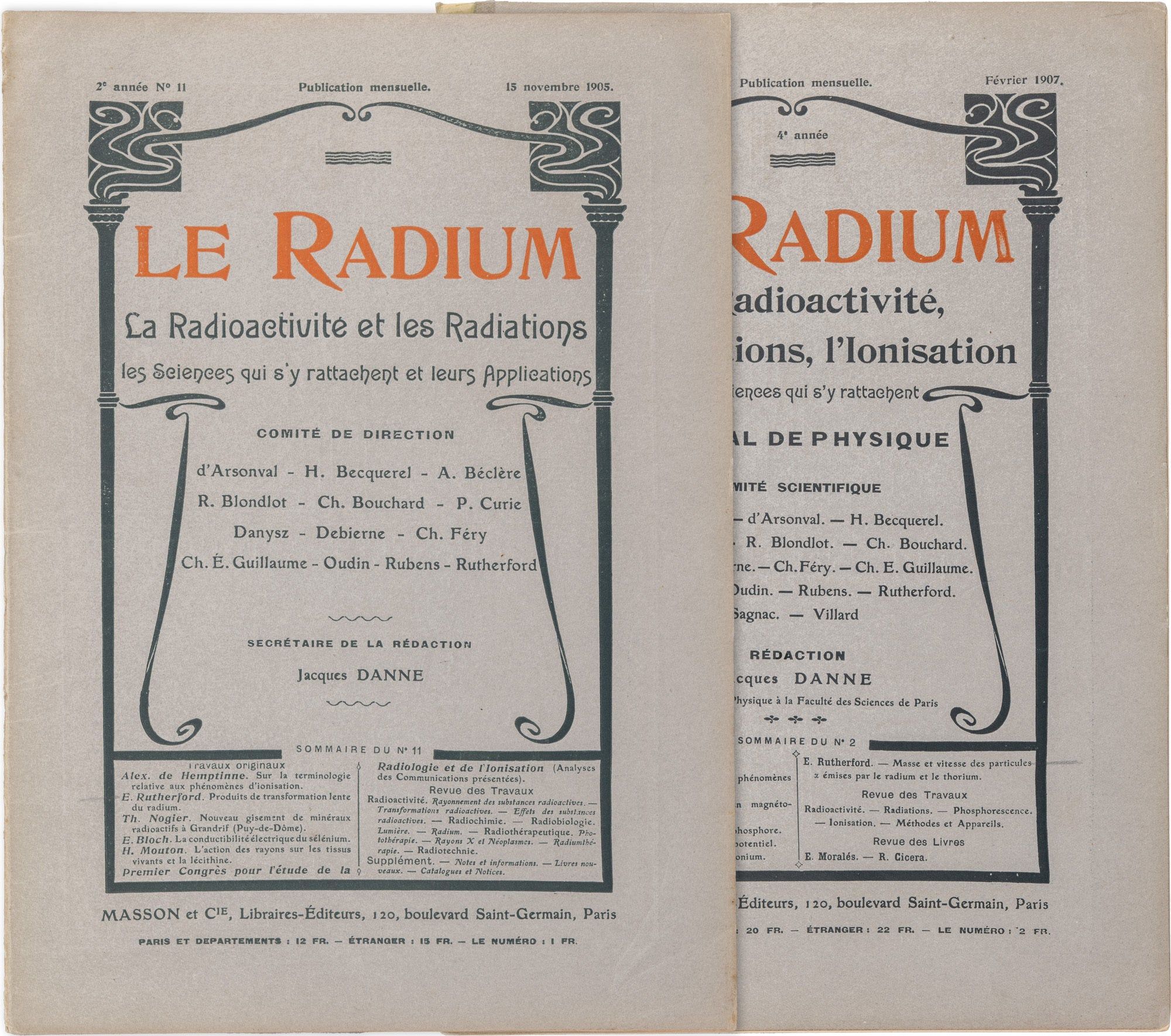
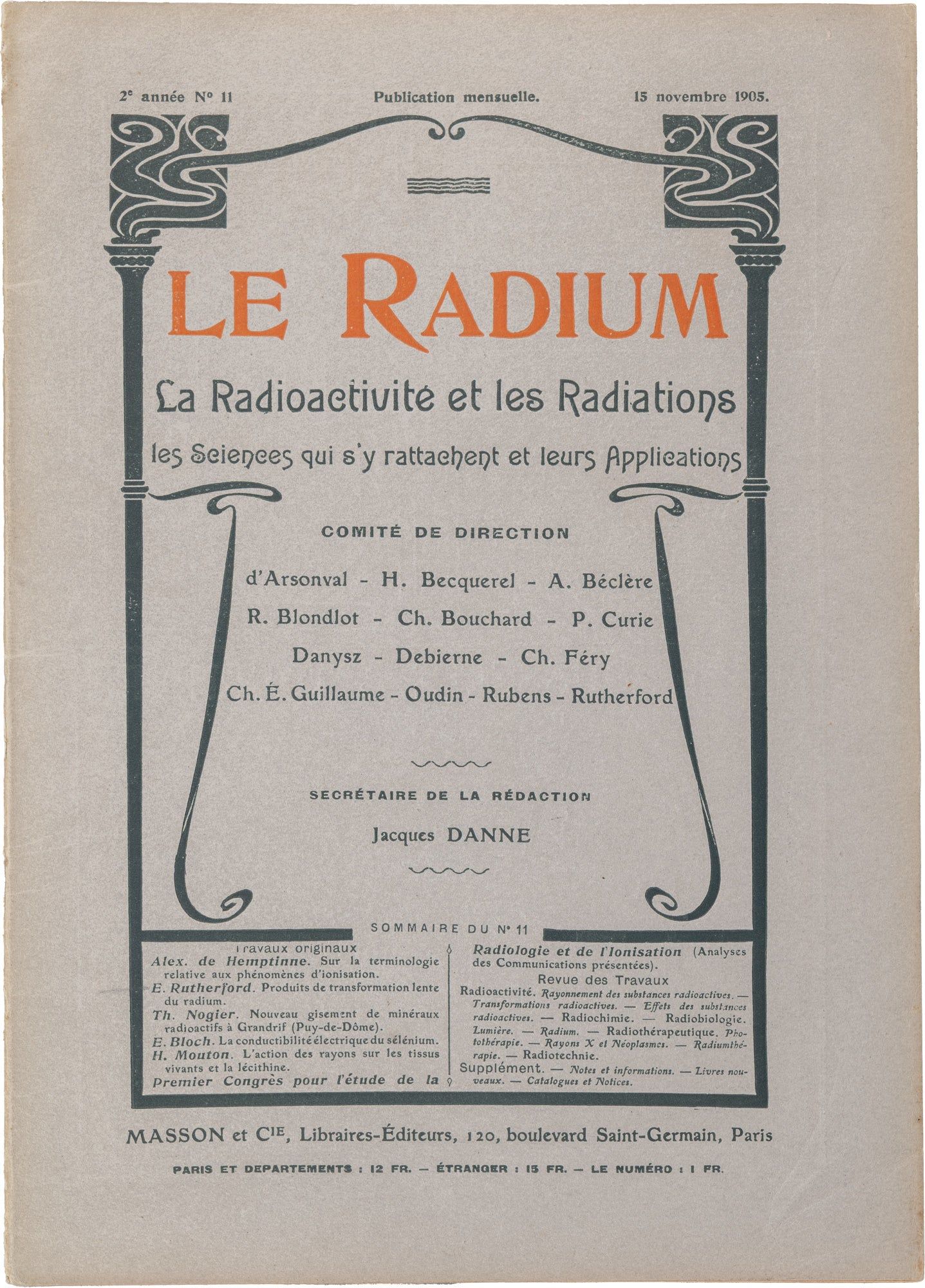
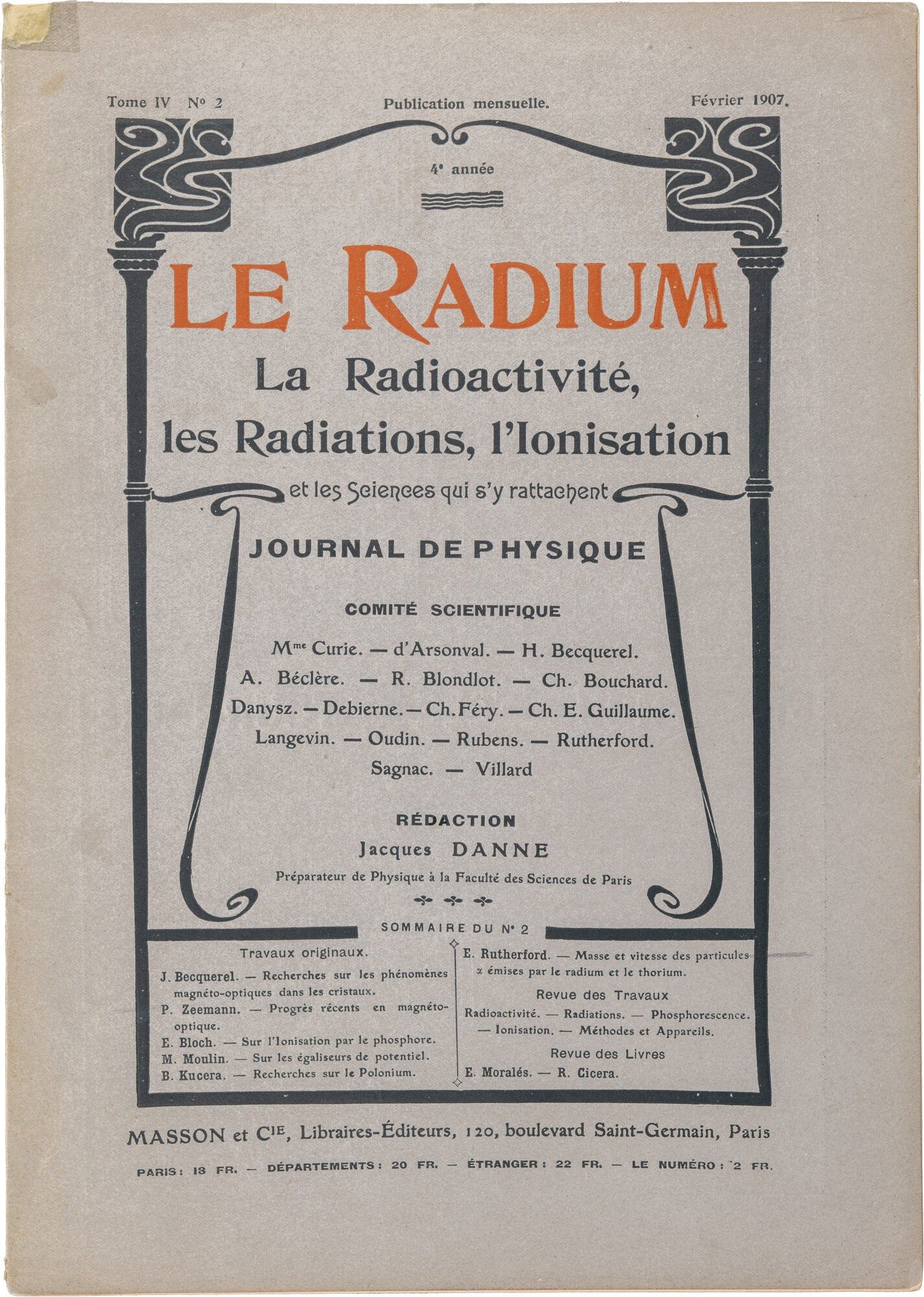
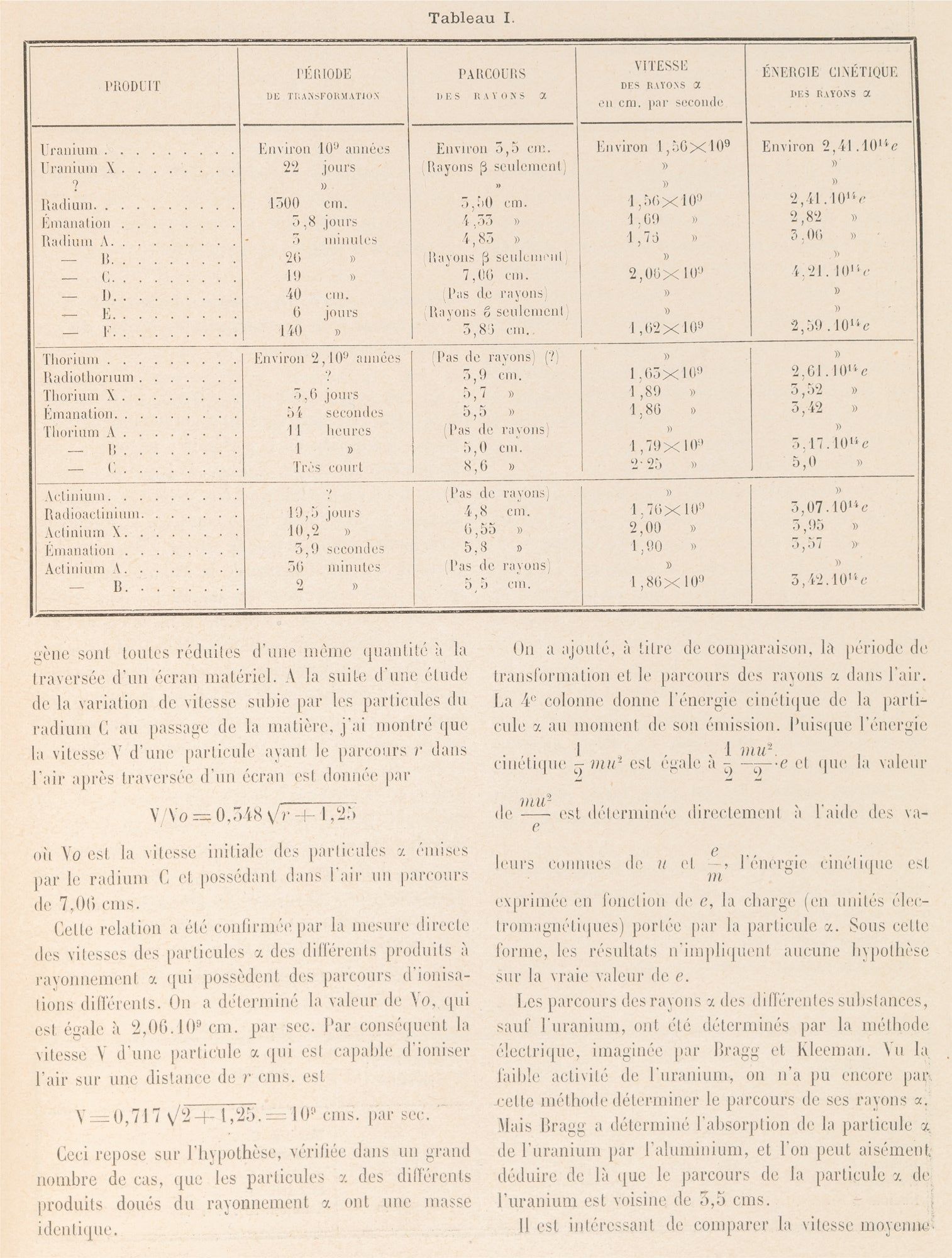
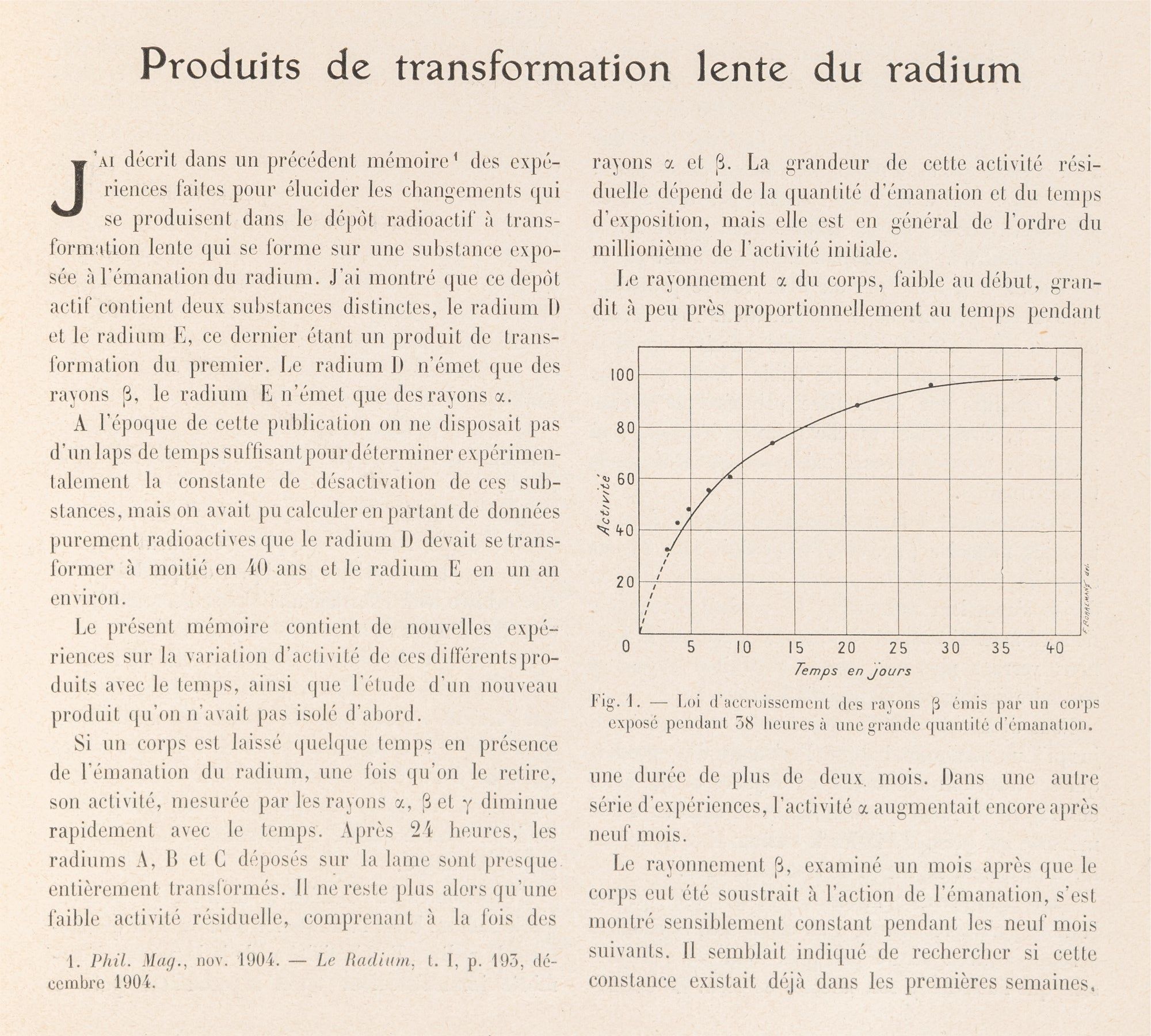
Paris: Masson et Cie, 1907. First Edition. Offprints, 8vo. "Produits de transformation lente du radium" (Slow Transformation Products of Radium), vol. 2, No. 11, Nov. 15, 1905, pp. 355–361; (292 x 210mm), pp. 2, 32, 2. “Vitesse et Energie des Particules" (Speed and Energy of Particles, vol. 4, No. 2, Feb. 1907, pp. 84–87; (295 x 210mm), pp. 2, 48, 2. French translations of papers originally published in the Philosophical Magazine (1904-1905) and Philosophical Magazine (1906). Ex–Dr. Myron Prinzmetal. Rutherford's systematic analysis of radium decay chains identified intermediate daughter products (radon, polonium) with distinct half-lives, demonstrating that radioactive elements undergo sequential spontaneous transmutations governed by first-order kinetics. His measurement of -particle velocities (approximately 1.6 × 10 m/s) and their kinetic energies (4-9 MeV) provided the first quantitative evidence that radioactive decay released energies millions of times greater per atom than chemical reactions.
These papers capture Rutherford at the height of his revolutionary investigations, proving that atoms were not immutable but could spontaneously transform through radioactive decay—overturning millennia of atomic theory. His experimental groundwork made possible the entire edifice of modern nuclear science, from particle accelerators to nuclear medicine. Rutherford's subsequent discovery of the atomic nucleus (1911) and his transmutation of nitrogen (1917) (the first artificial nuclear reaction) established him as the father of nuclear physics.
These papers capture Rutherford at the height of his revolutionary investigations, proving that atoms were not immutable but could spontaneously transform through radioactive decay—overturning millennia of atomic theory. His experimental groundwork made possible the entire edifice of modern nuclear science, from particle accelerators to nuclear medicine. Rutherford's subsequent discovery of the atomic nucleus (1911) and his transmutation of nitrogen (1917) (the first artificial nuclear reaction) established him as the father of nuclear physics.
Details
Title
Two Papers on Radioactive Decay; From Le Radium: La Radioactivité, les Radiation
Author
Rutherford, Ernest
Condition
Unknown
Publisher
Masson et Cie: Paris
Date
1907
Edition
First Edition