

The Child's Book on Slavery; or, Slavery Made Plain
- Cincinnati: American Reform Tract and Book Society, 1857
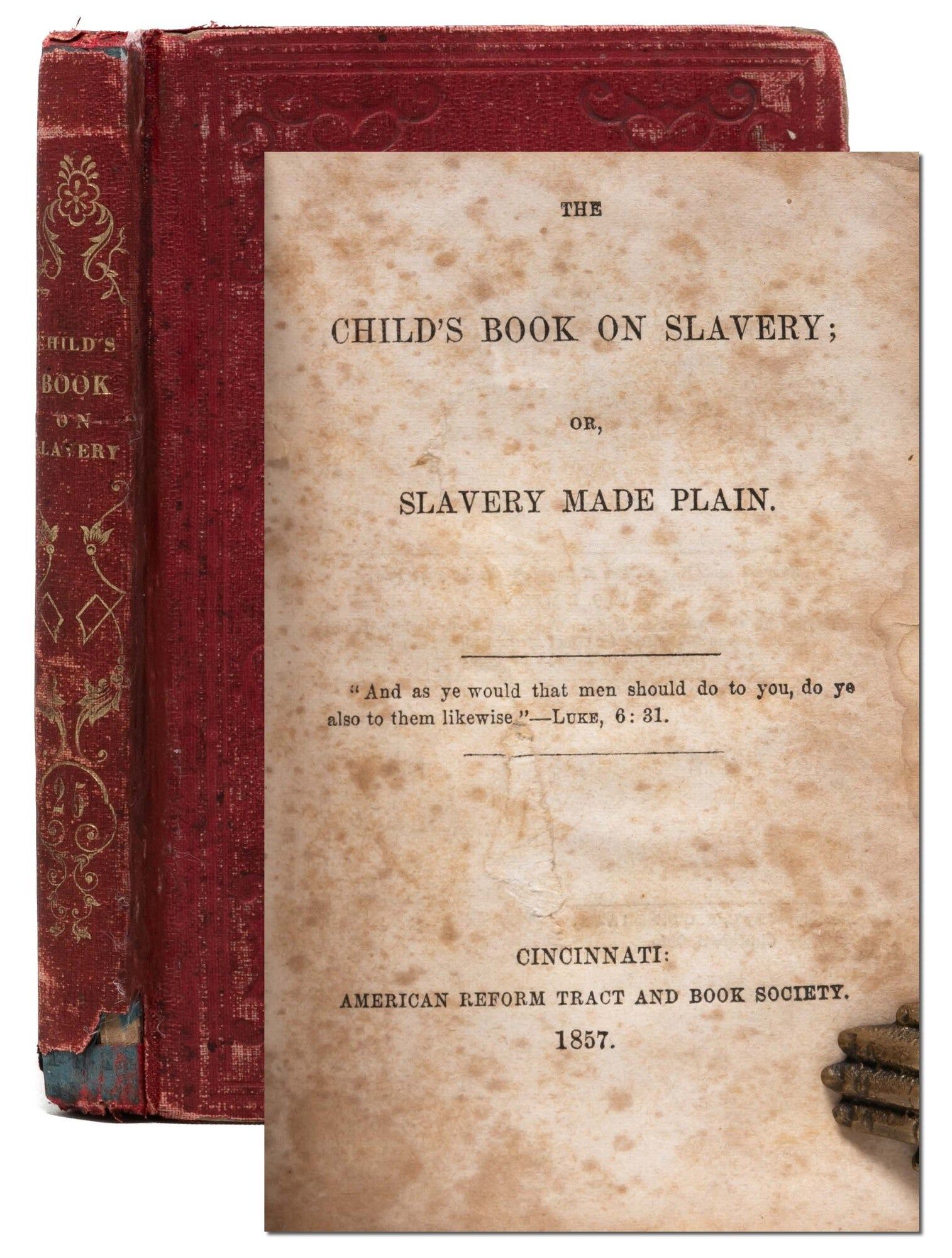
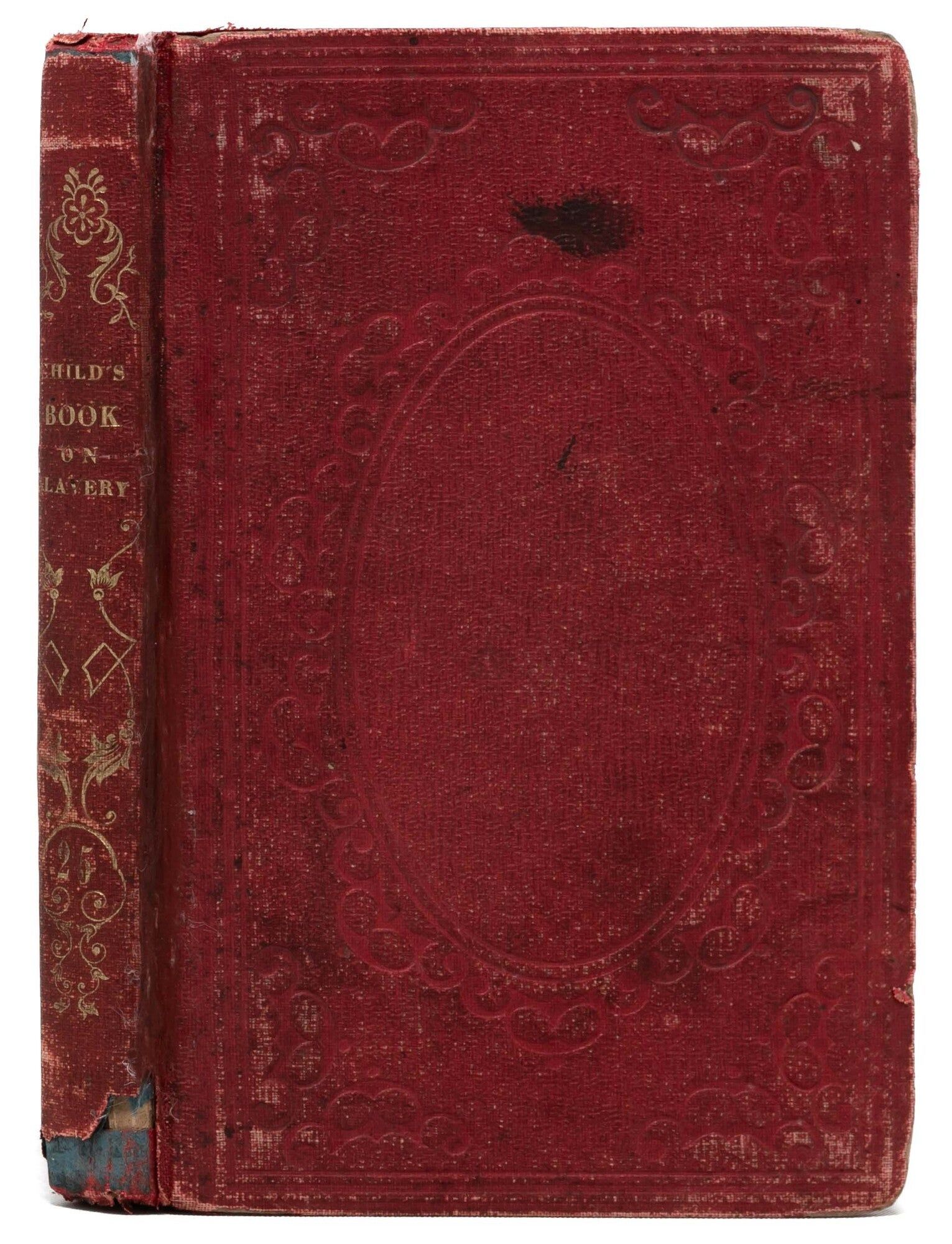
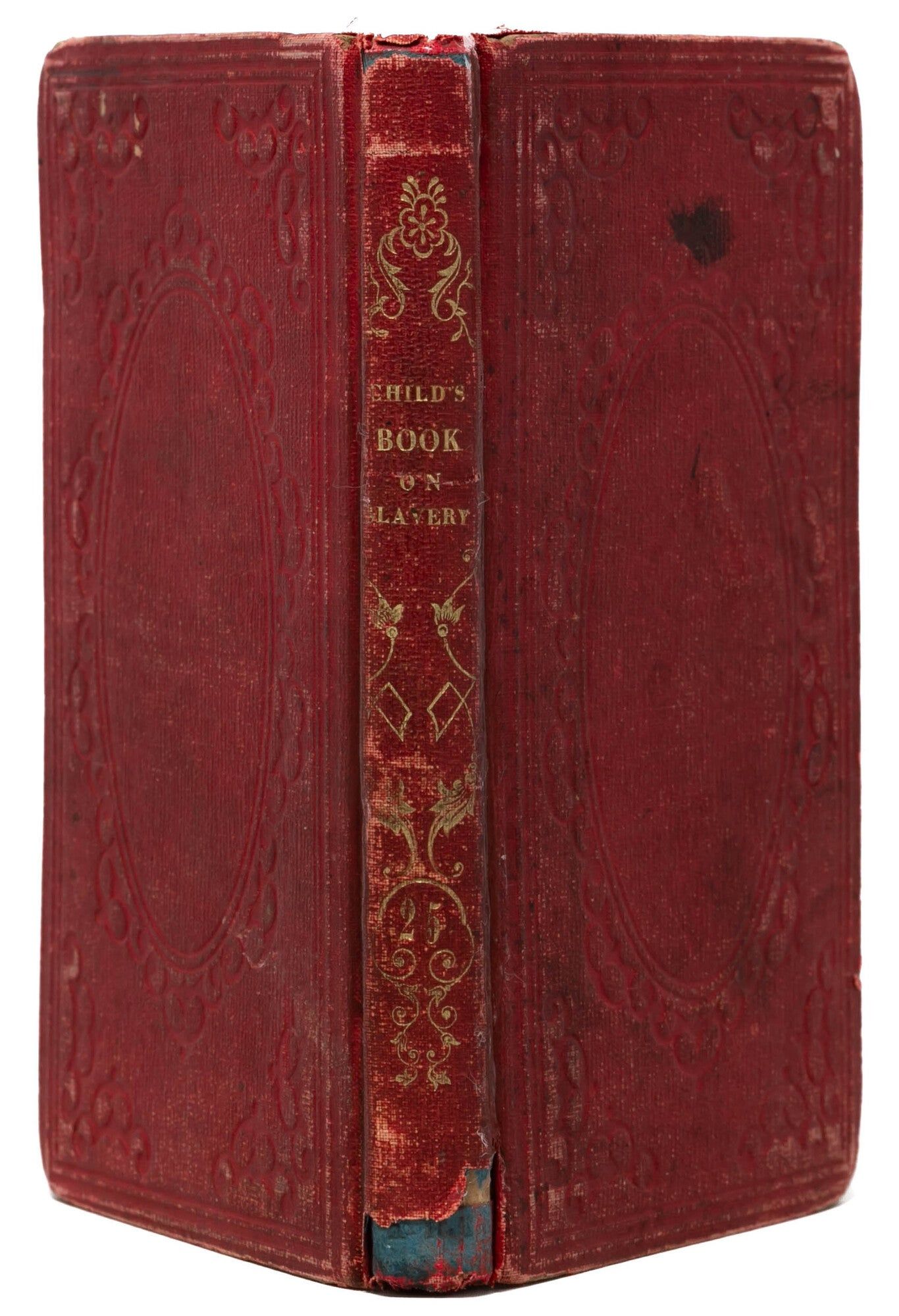
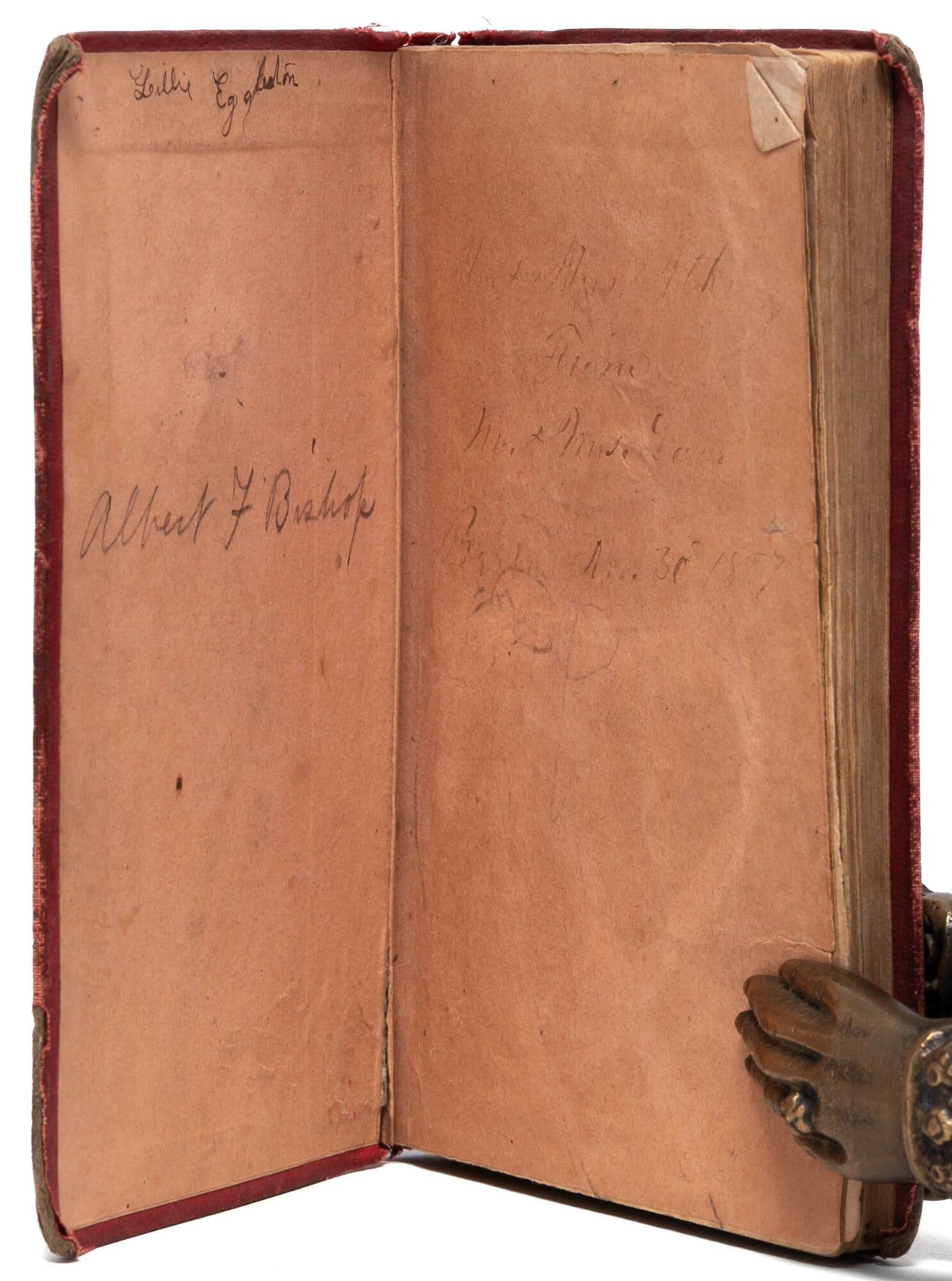
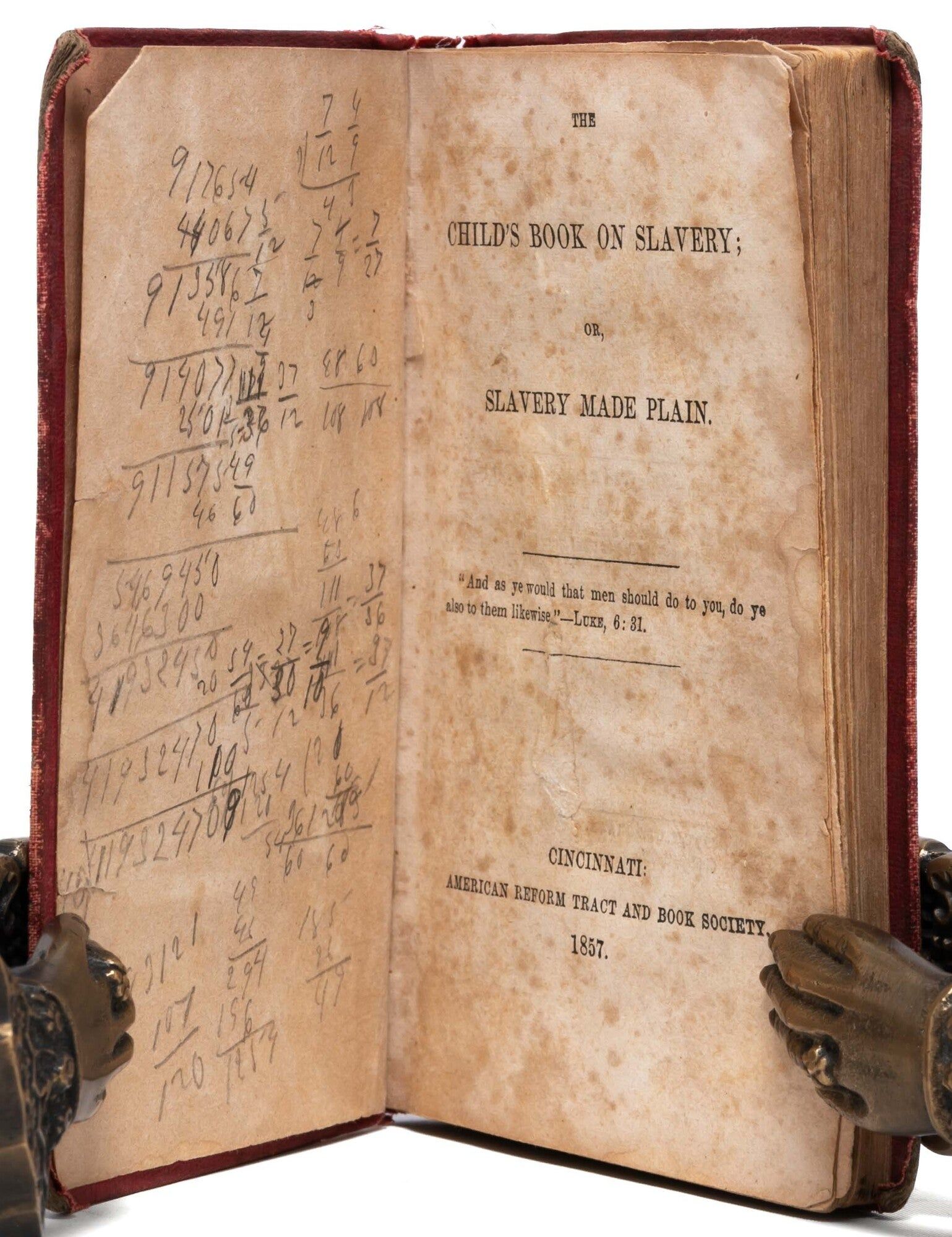
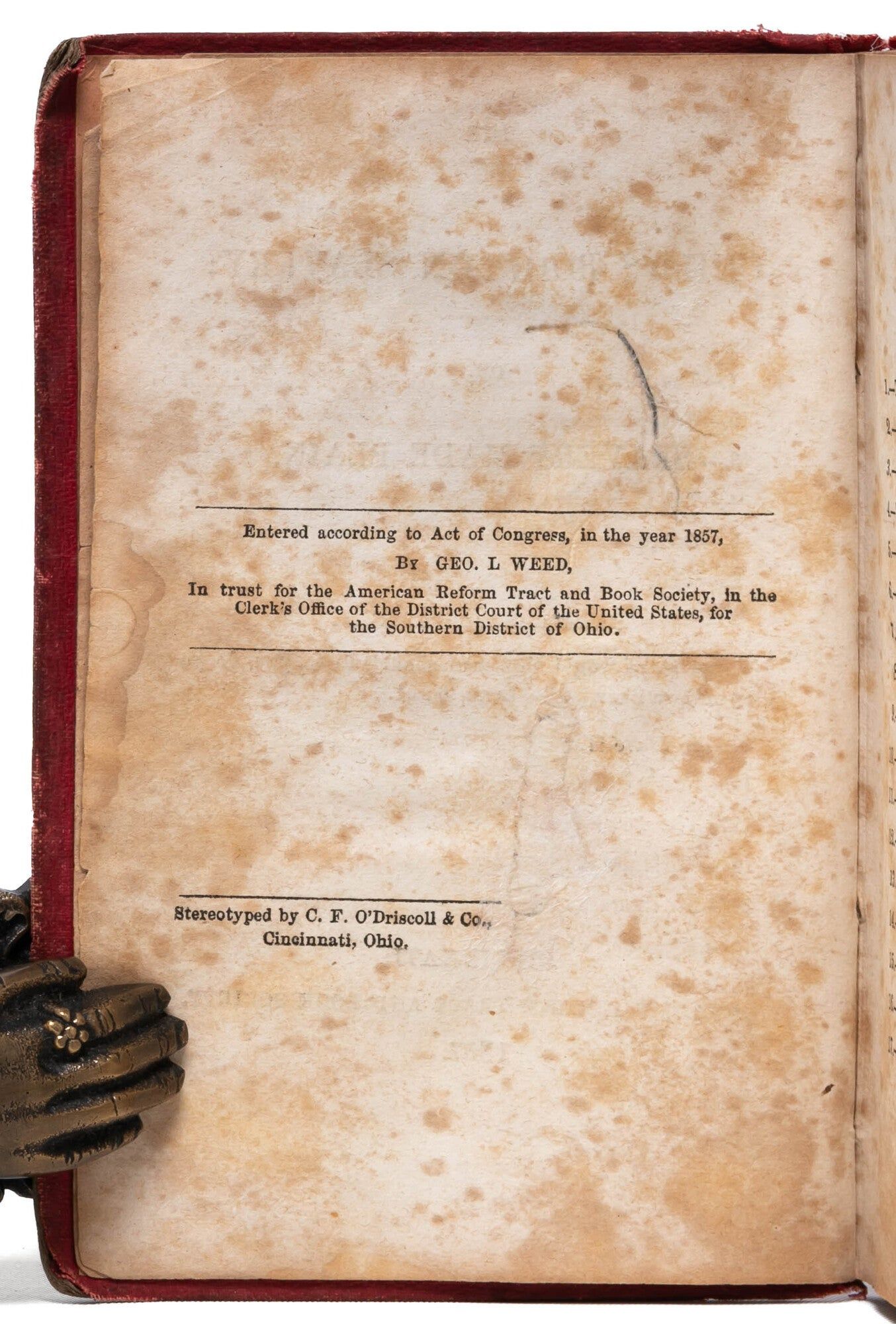
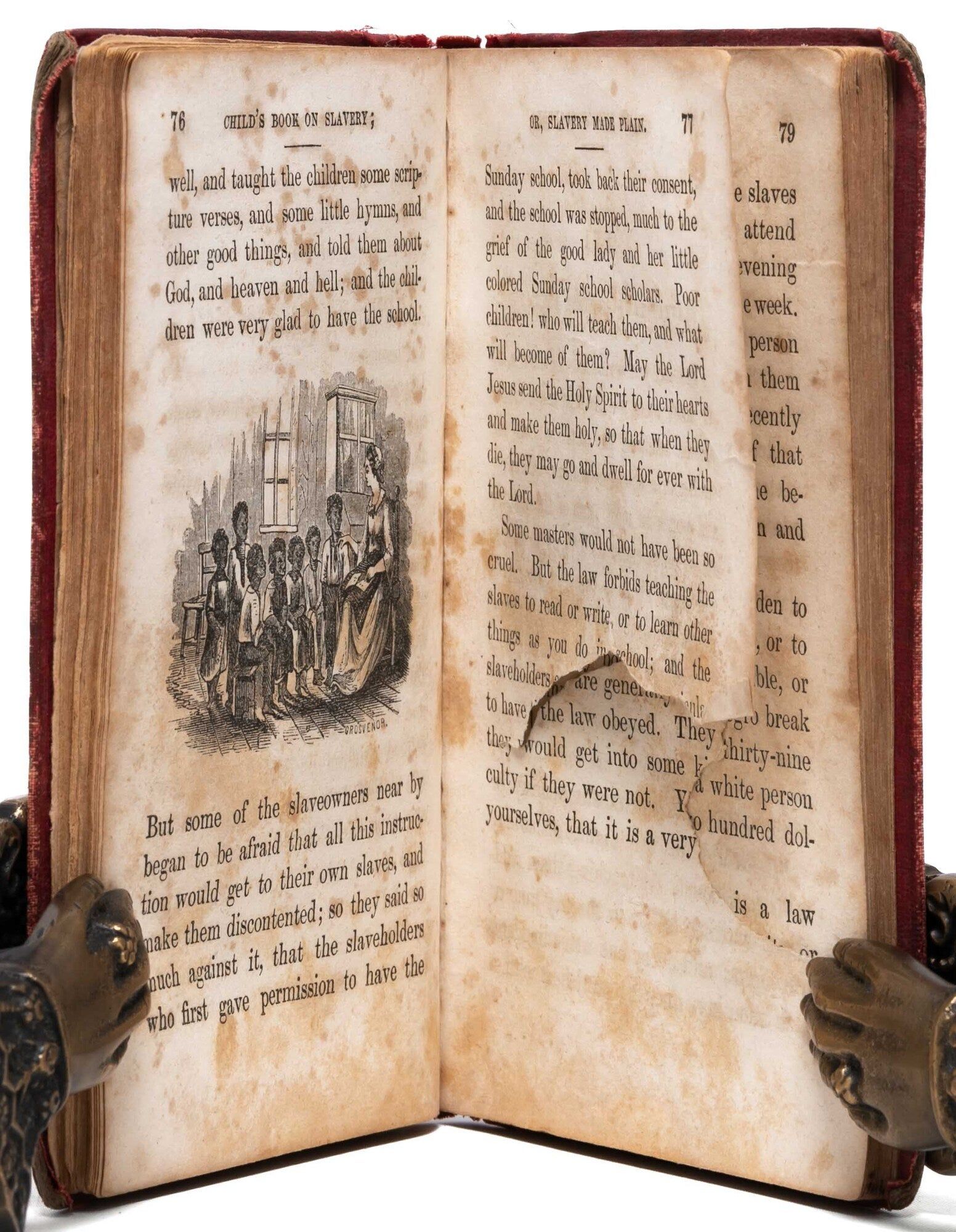
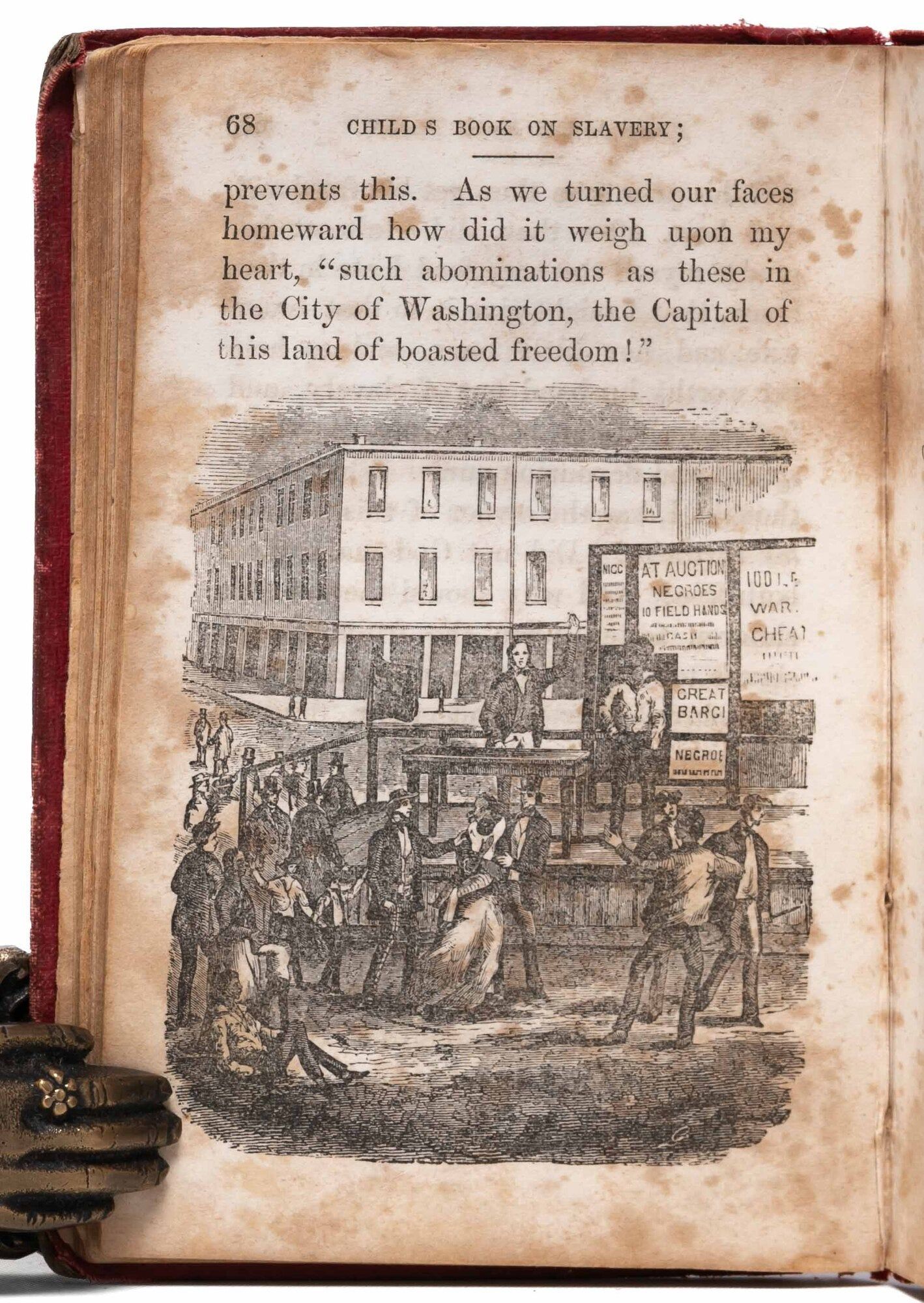
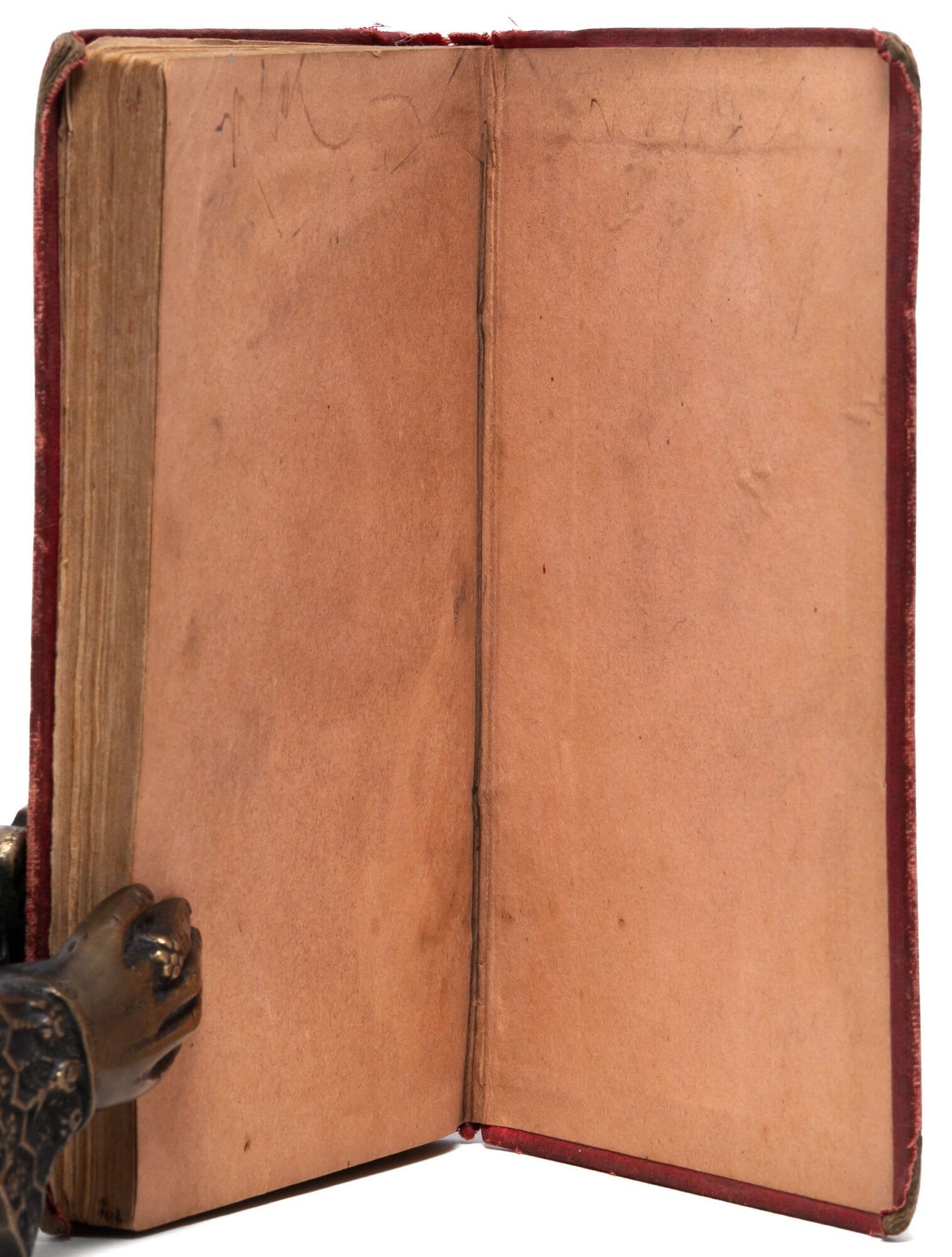
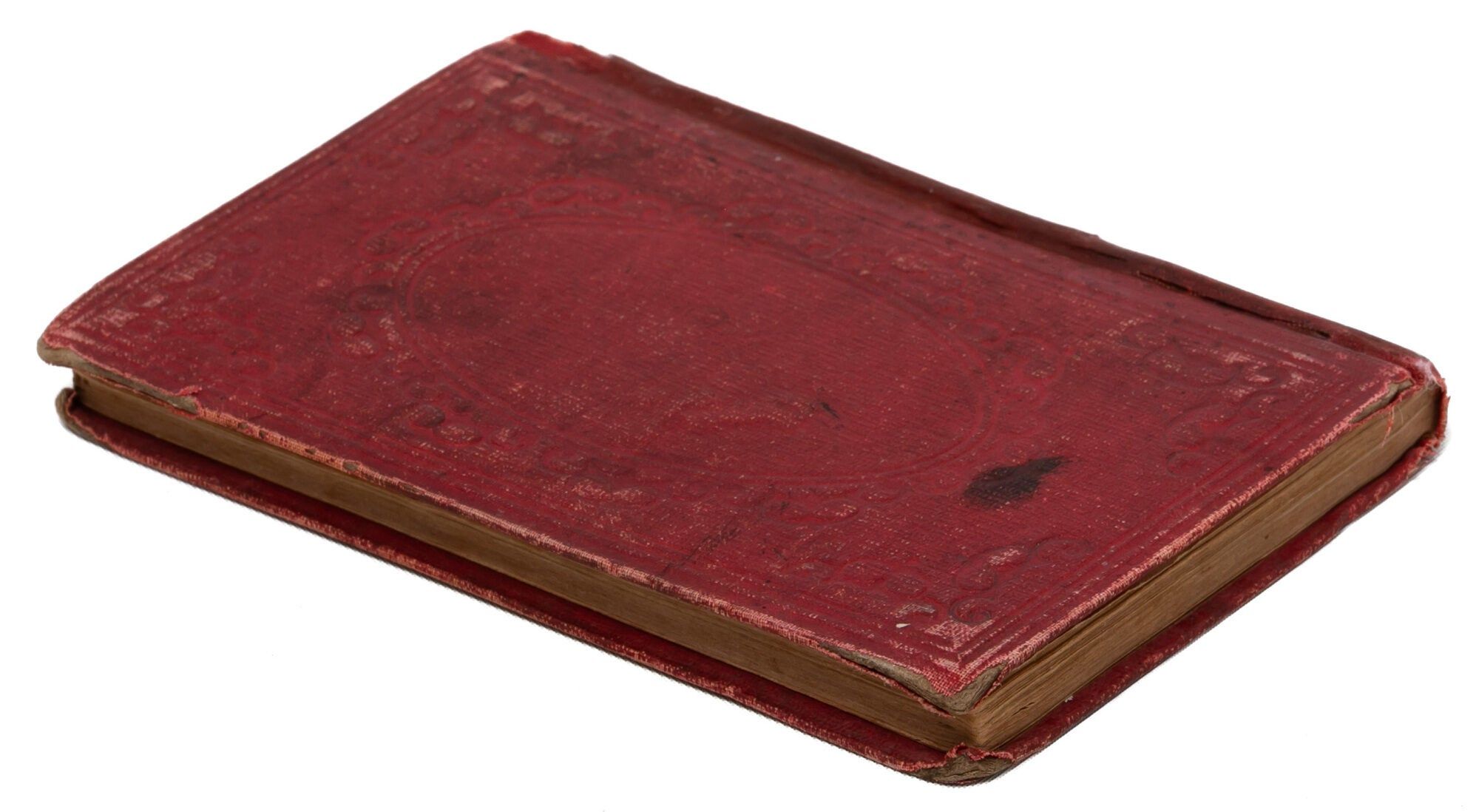
Cincinnati: American Reform Tract and Book Society, 1857. First edition. Poor. 143, [4] ads. Publisher's red cloth. A poor copy, with binding worn (piece missing at foot of spine) and foxing throughout. Contemporary pencil annotations to endpapers. Lacking preliminary blank. Also lacking portions of two text leaves: pp. 43-44 with top half of leaf torn away, and pp. 77-78 with loss to a few lines at fore-edge. A scarce book teaching abolitionist principles to children.
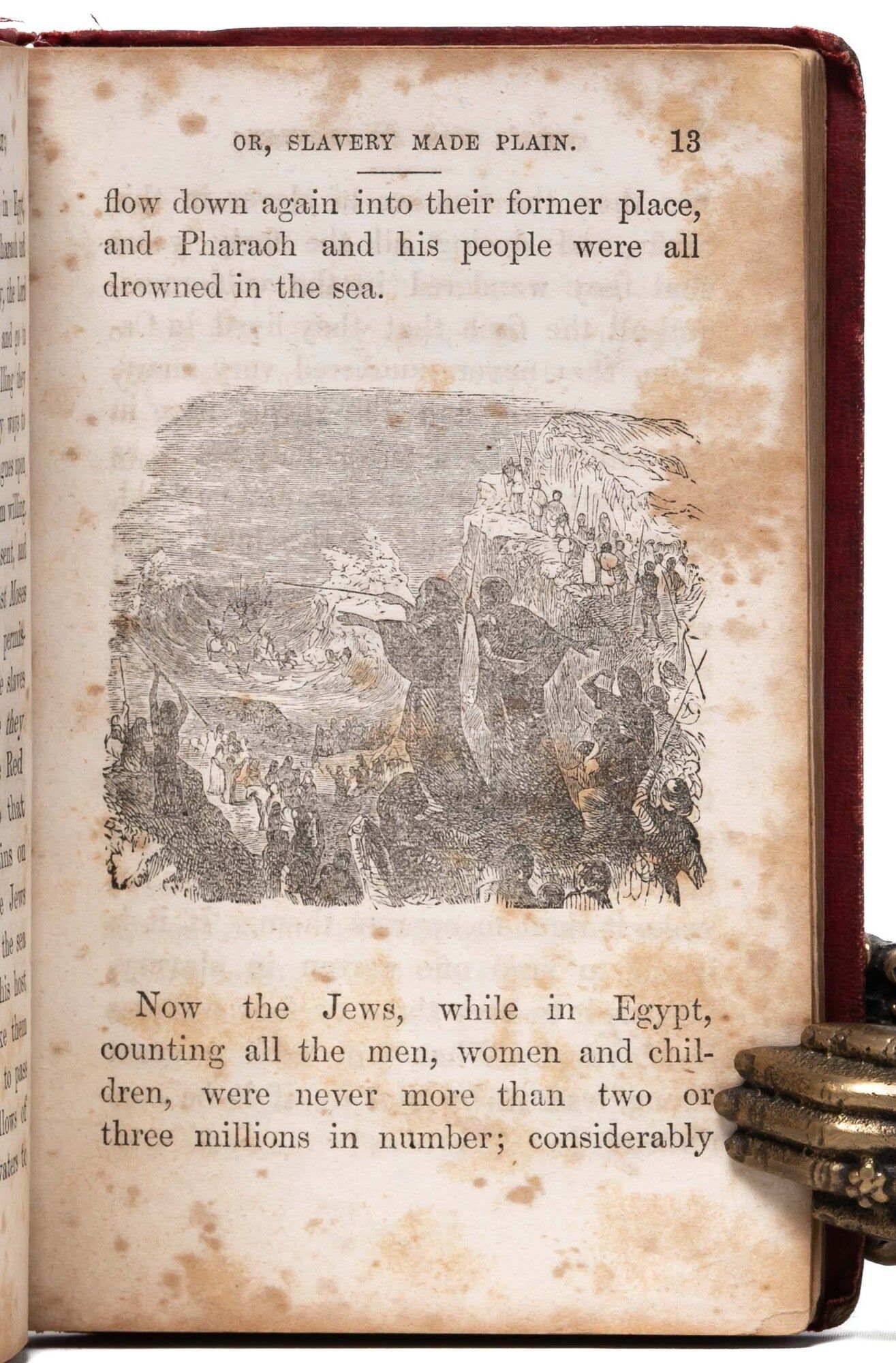
The Child's Book on Slavery is an ambitious attempt to explain the principles of the abolitionist movement to children. The work refutes common pro-slavery arguments, including Biblical justifications for slavery, the supposed moralizing or civilizing effects of slavery ("Shall we make men slaves to make them good?"), the myth of the "kind slaveholder," the false equivalence between slavery and a free person's labor ("A Slave is not a Hired Servant," "A Slave is not merely an Apprentice"). It also explains the duty to become educated about slavery and argues for the emancipation (and education) of enslaved people on both moral and religious grounds.
As slavery debates dominated American politics beginning in the 1830s, the abolitionist movement initiated a plan for educating the public about its moral, social, human, and economic tolls. Crucial to this project was the production of print books and pamphlets designed for juvenile readers, including the present work and The Child's Anti-Slavery Book (1859). By urging children to feel compassion for the enslaved and to think critically about the systems of racism within their country, abolitionists hoped to combat the pro-slavery movement at its root and raise "a new generation of supporters who accepted their arguments as established truths" (Women and the American Story).
Appropriately, the book seems to have been written for the children of abolitionists, with an intriguing reference to an abolitionist parent sheltering a fugitive: "In some of the books and papers you have read, you must have seen the words 'Slave' and 'Slavery;' and you have heard about slaves and slaveholders. But have you seen slavery? It may be that some slave has been at your father's house. Perhaps he kept away in some sly corner for fear his master would come and get him and after he had staid there long enough to eat, and sleep, and get some rest, it may be that he went on his journey again, so as to get into Canada, where his mster could not have the power to go and take him back again into slavery" (pp. 7-8)
The Child's Book on Slavery is sometimes attributed to the Connecticut abolitionist, clergyman, and writer William Deloss Love (1819 - 1898). Poor.
The Child's Book on Slavery is an ambitious attempt to explain the principles of the abolitionist movement to children. The work refutes common pro-slavery arguments, including Biblical justifications for slavery, the supposed moralizing or civilizing effects of slavery ("Shall we make men slaves to make them good?"), the myth of the "kind slaveholder," the false equivalence between slavery and a free person's labor ("A Slave is not a Hired Servant," "A Slave is not merely an Apprentice"). It also explains the duty to become educated about slavery and argues for the emancipation (and education) of enslaved people on both moral and religious grounds.
As slavery debates dominated American politics beginning in the 1830s, the abolitionist movement initiated a plan for educating the public about its moral, social, human, and economic tolls. Crucial to this project was the production of print books and pamphlets designed for juvenile readers, including the present work and The Child's Anti-Slavery Book (1859). By urging children to feel compassion for the enslaved and to think critically about the systems of racism within their country, abolitionists hoped to combat the pro-slavery movement at its root and raise "a new generation of supporters who accepted their arguments as established truths" (Women and the American Story).
Appropriately, the book seems to have been written for the children of abolitionists, with an intriguing reference to an abolitionist parent sheltering a fugitive: "In some of the books and papers you have read, you must have seen the words 'Slave' and 'Slavery;' and you have heard about slaves and slaveholders. But have you seen slavery? It may be that some slave has been at your father's house. Perhaps he kept away in some sly corner for fear his master would come and get him and after he had staid there long enough to eat, and sleep, and get some rest, it may be that he went on his journey again, so as to get into Canada, where his mster could not have the power to go and take him back again into slavery" (pp. 7-8)
The Child's Book on Slavery is sometimes attributed to the Connecticut abolitionist, clergyman, and writer William Deloss Love (1819 - 1898). Poor.
Details
Title
The Child's Book on Slavery; or, Slavery Made Plain
Author
[Slavery] [Abolition]
Condition
Poor
Publisher
American Reform Tract and Book Society: Cincinnati
Date
1857
Edition
First edition