

[MANUSCRIPT ARITHMETIC NOTEBOOKS, INCLUDING ONE WRITTEN BY A YOUNG WOMAN]
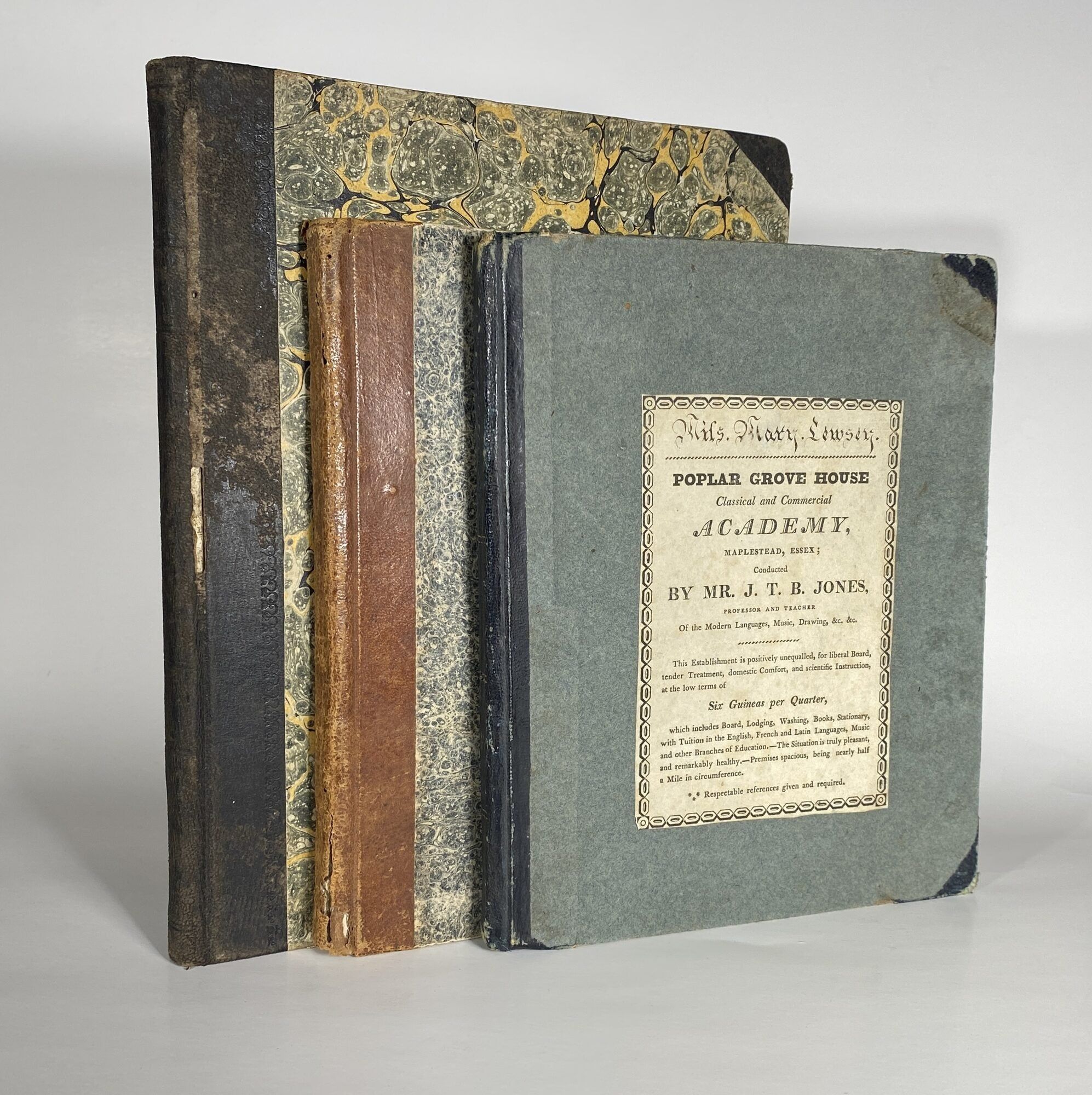
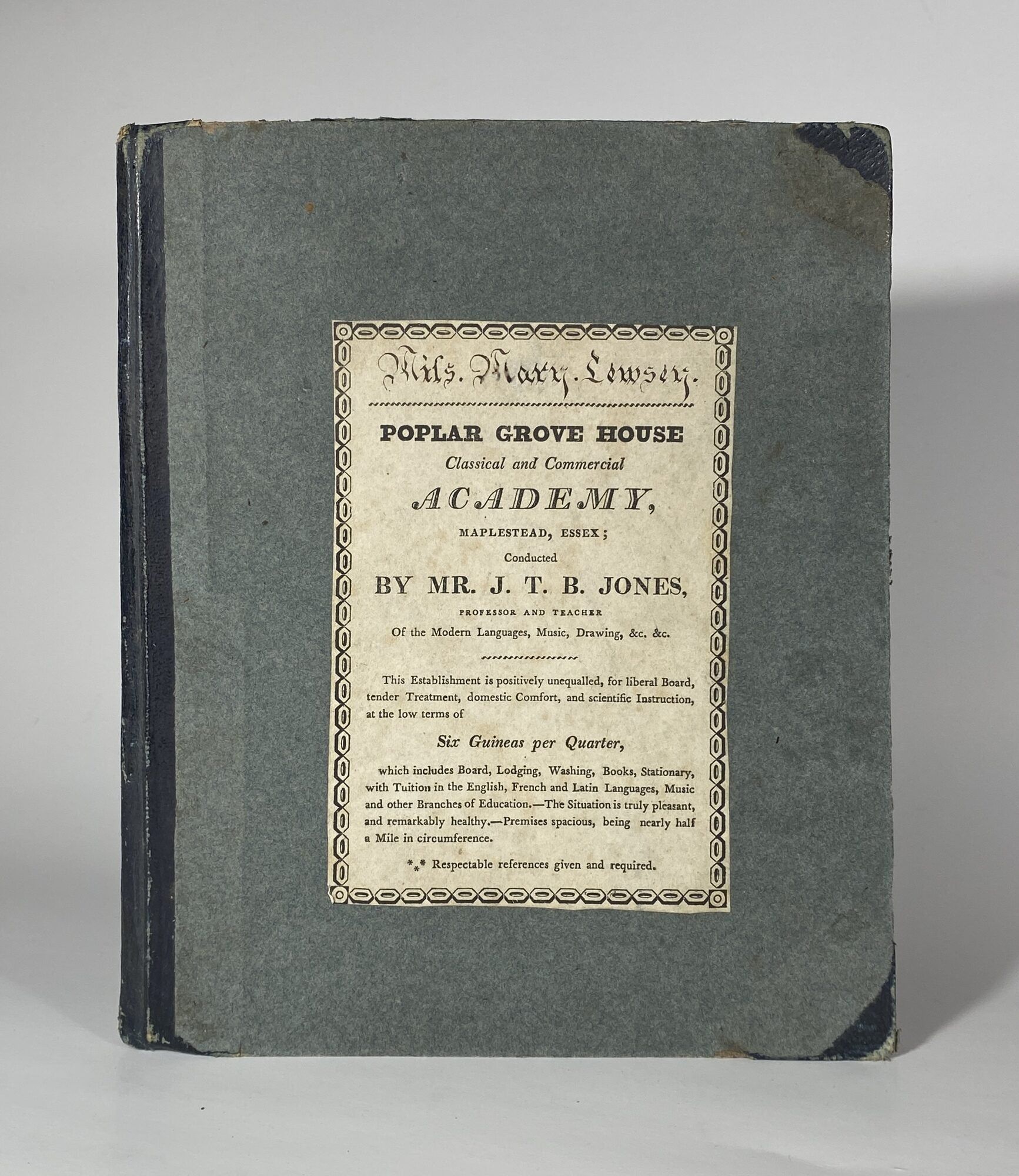
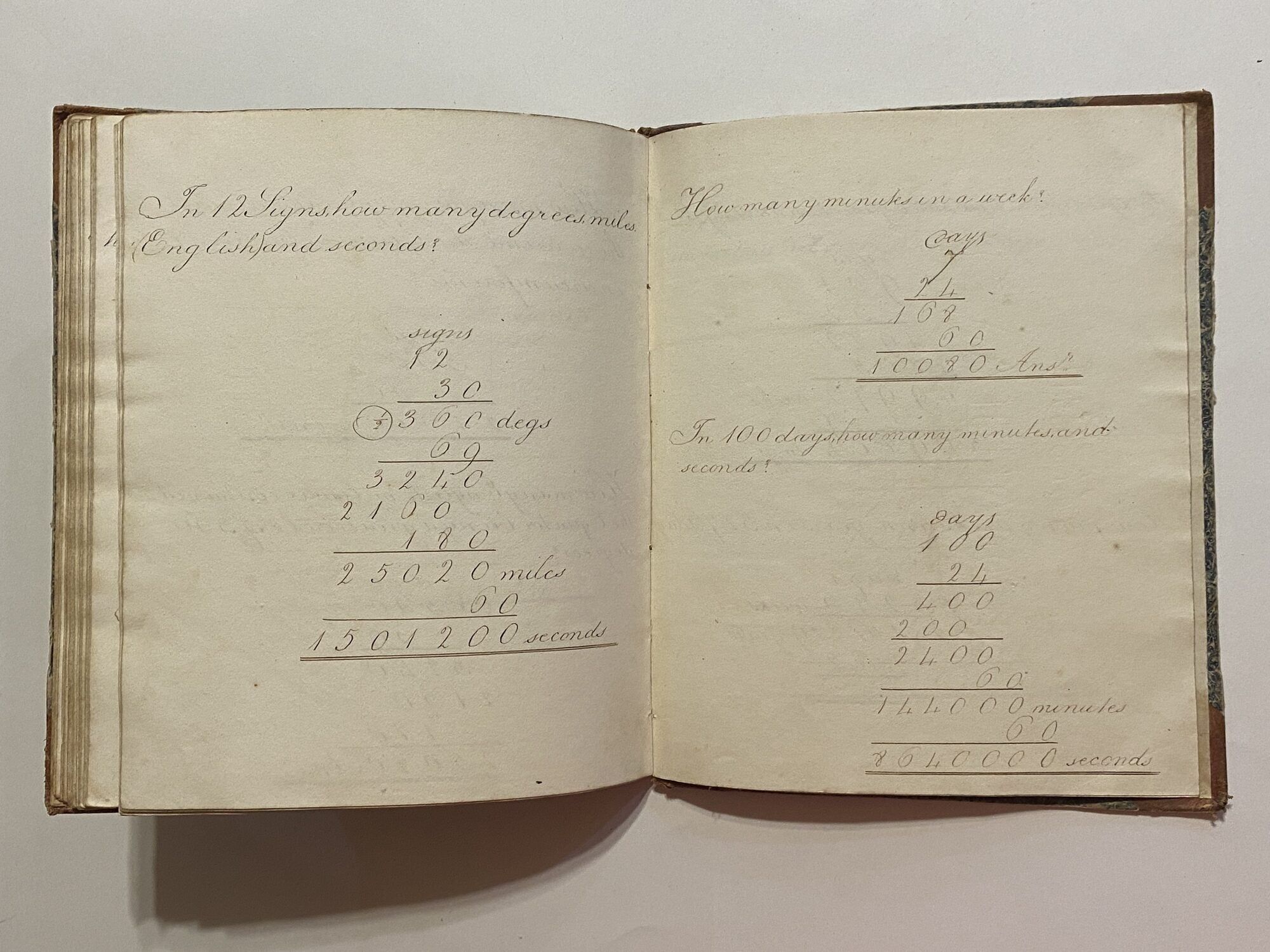
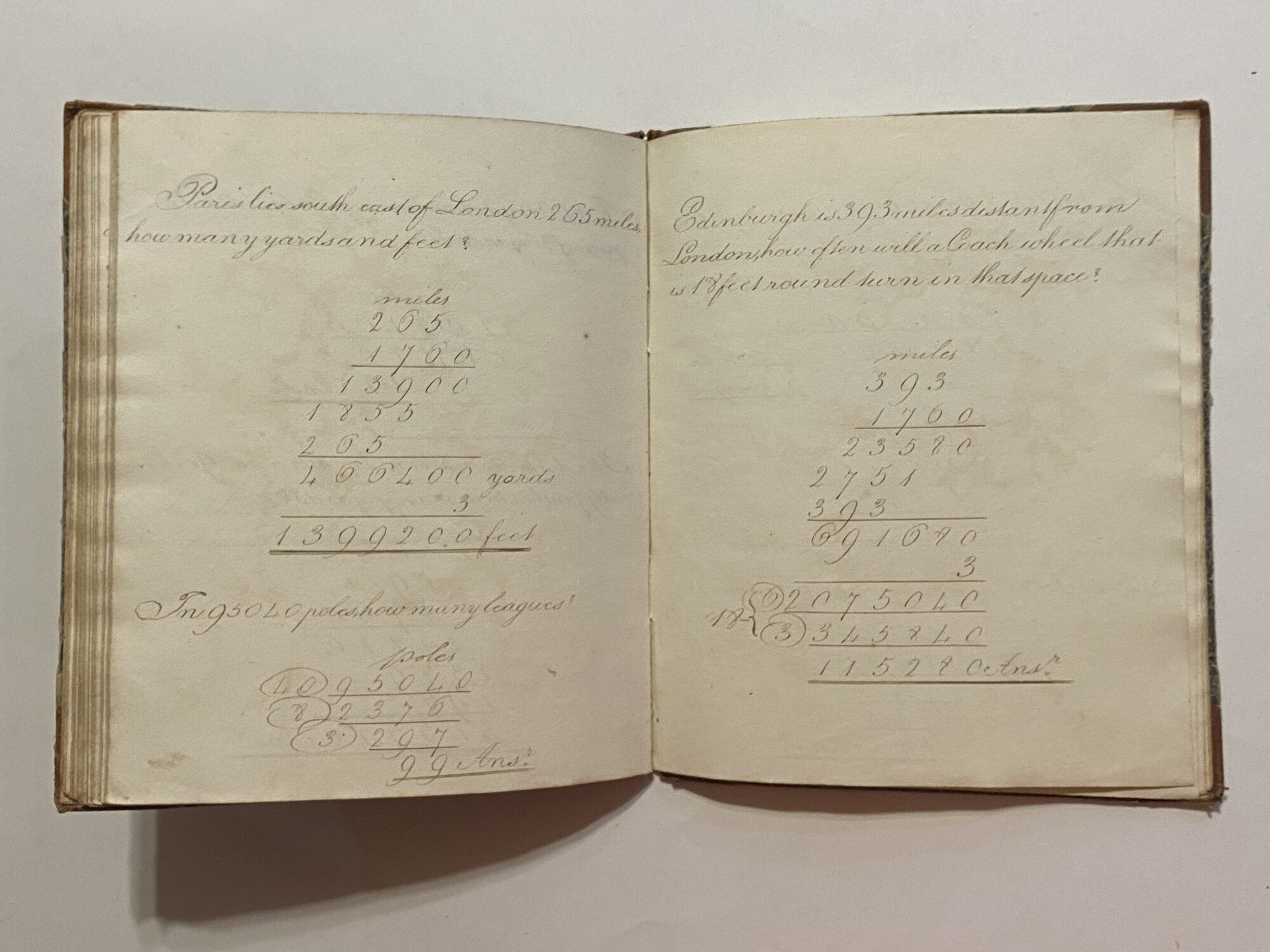
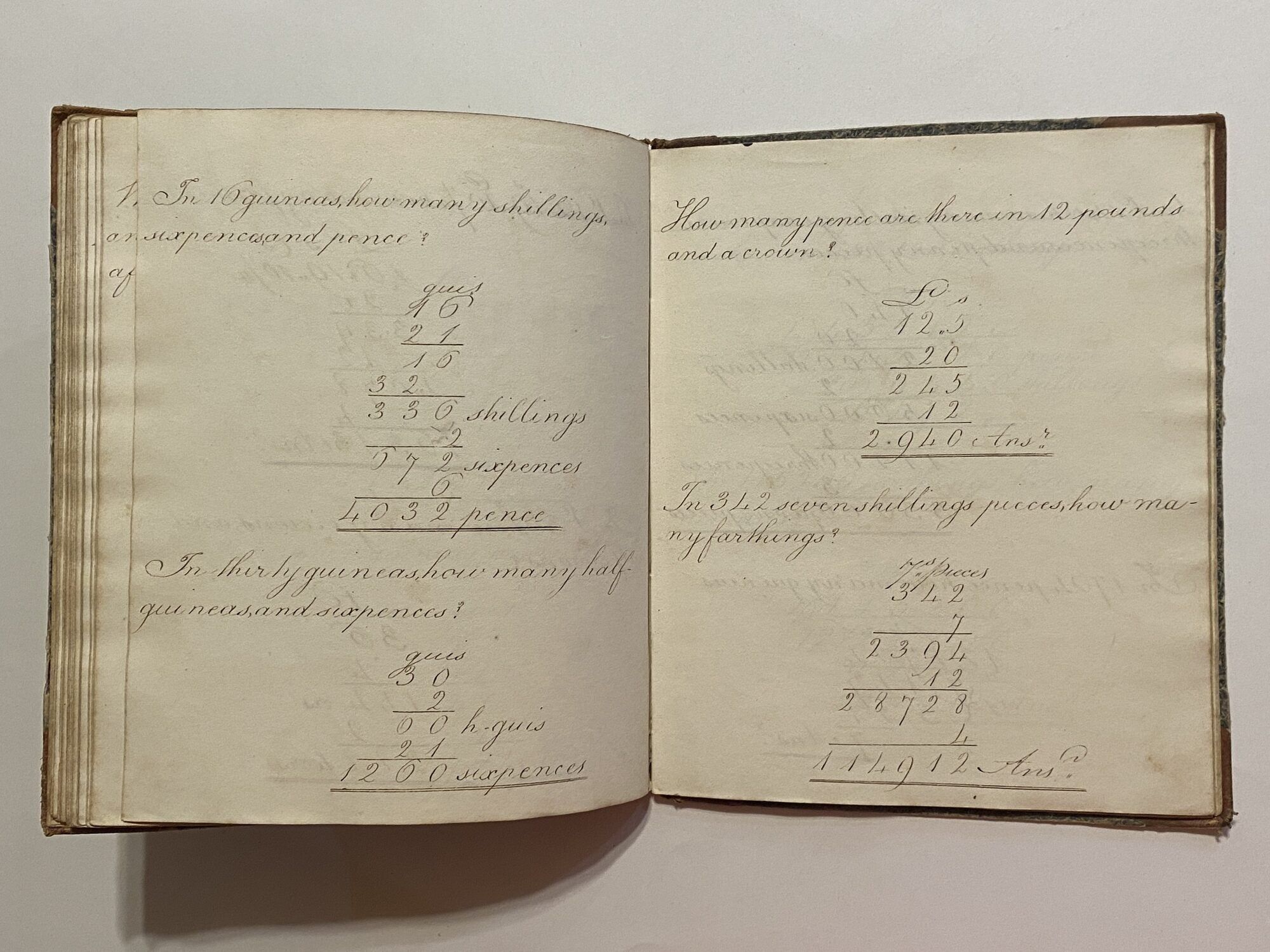
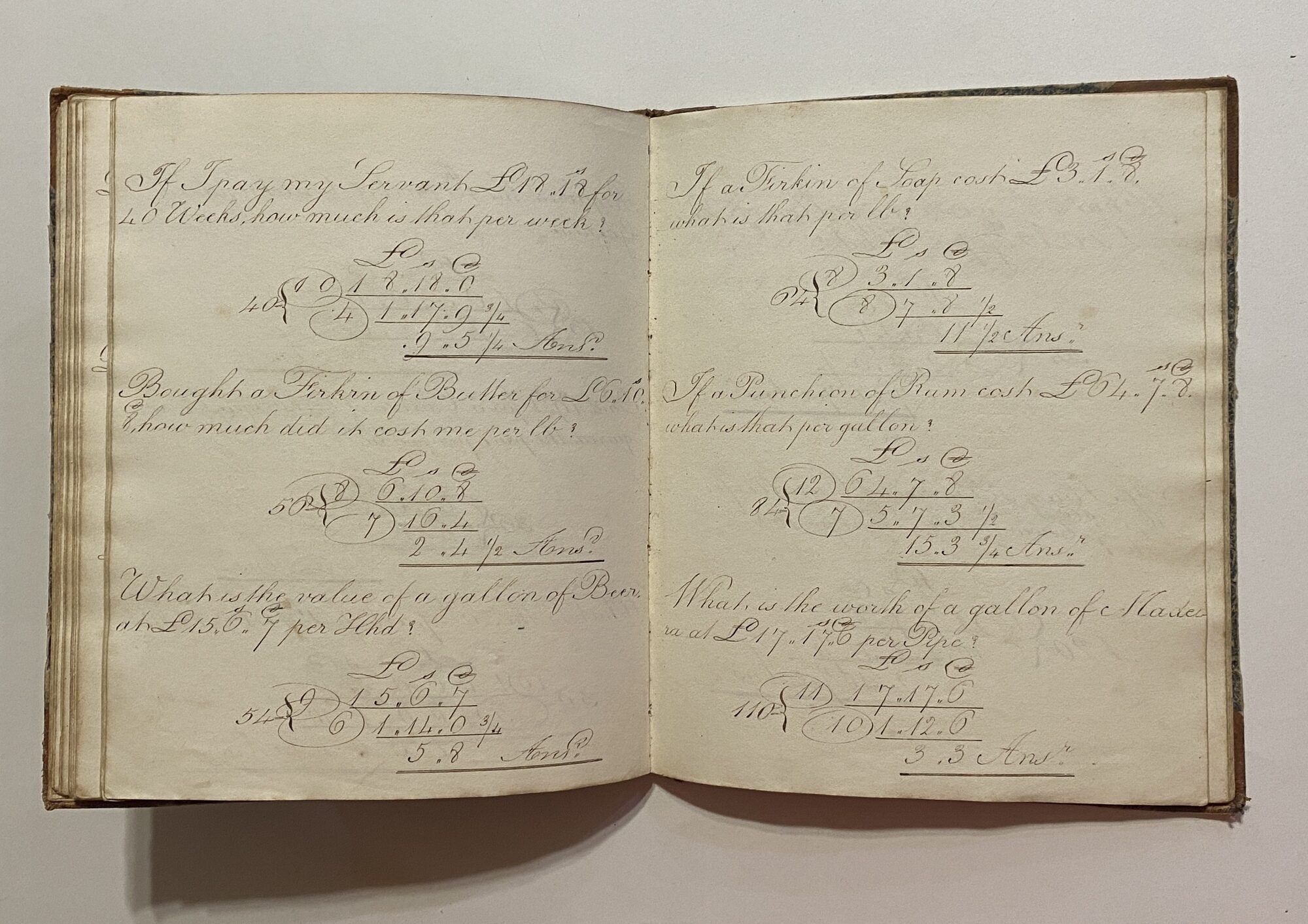
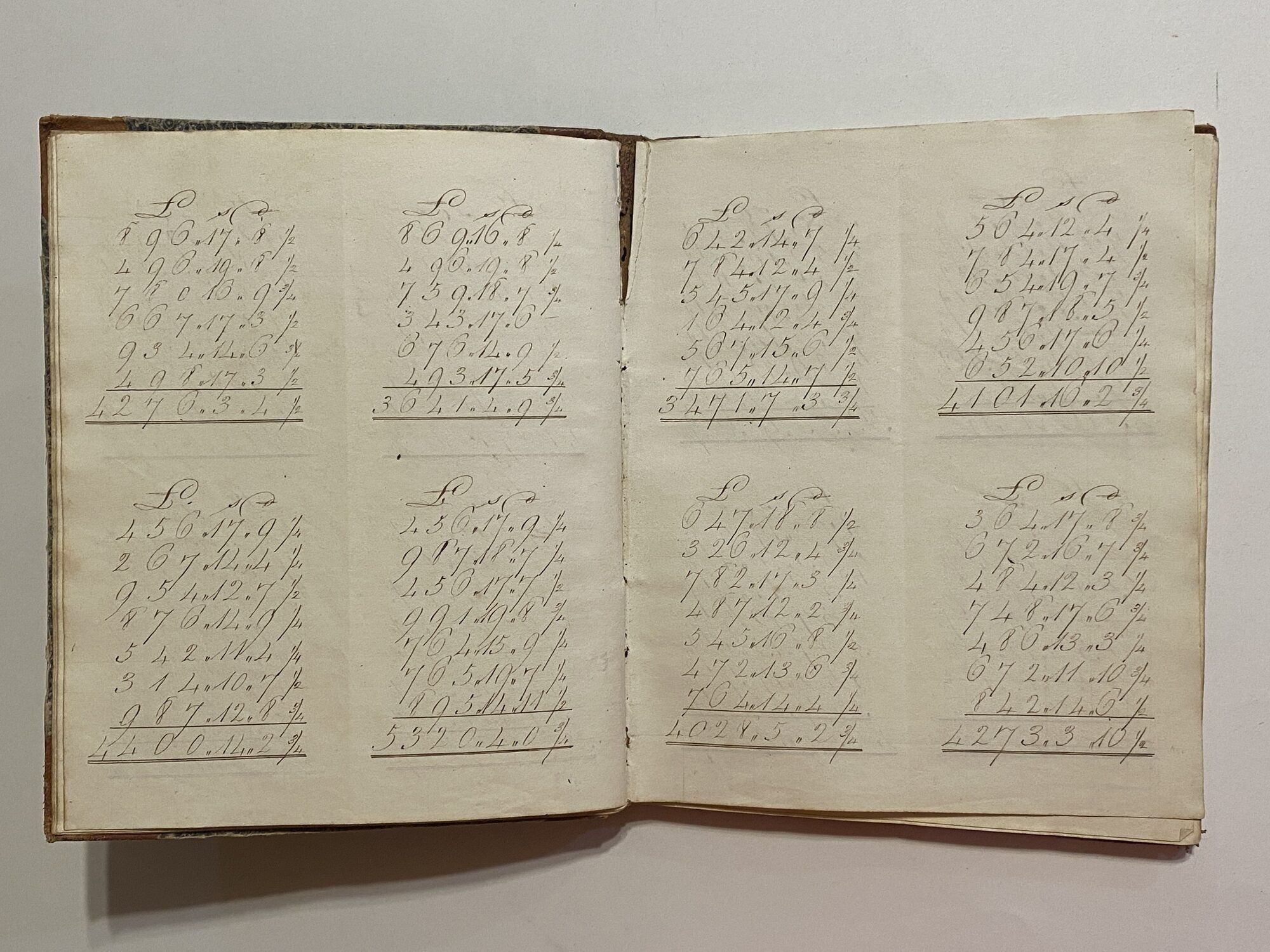
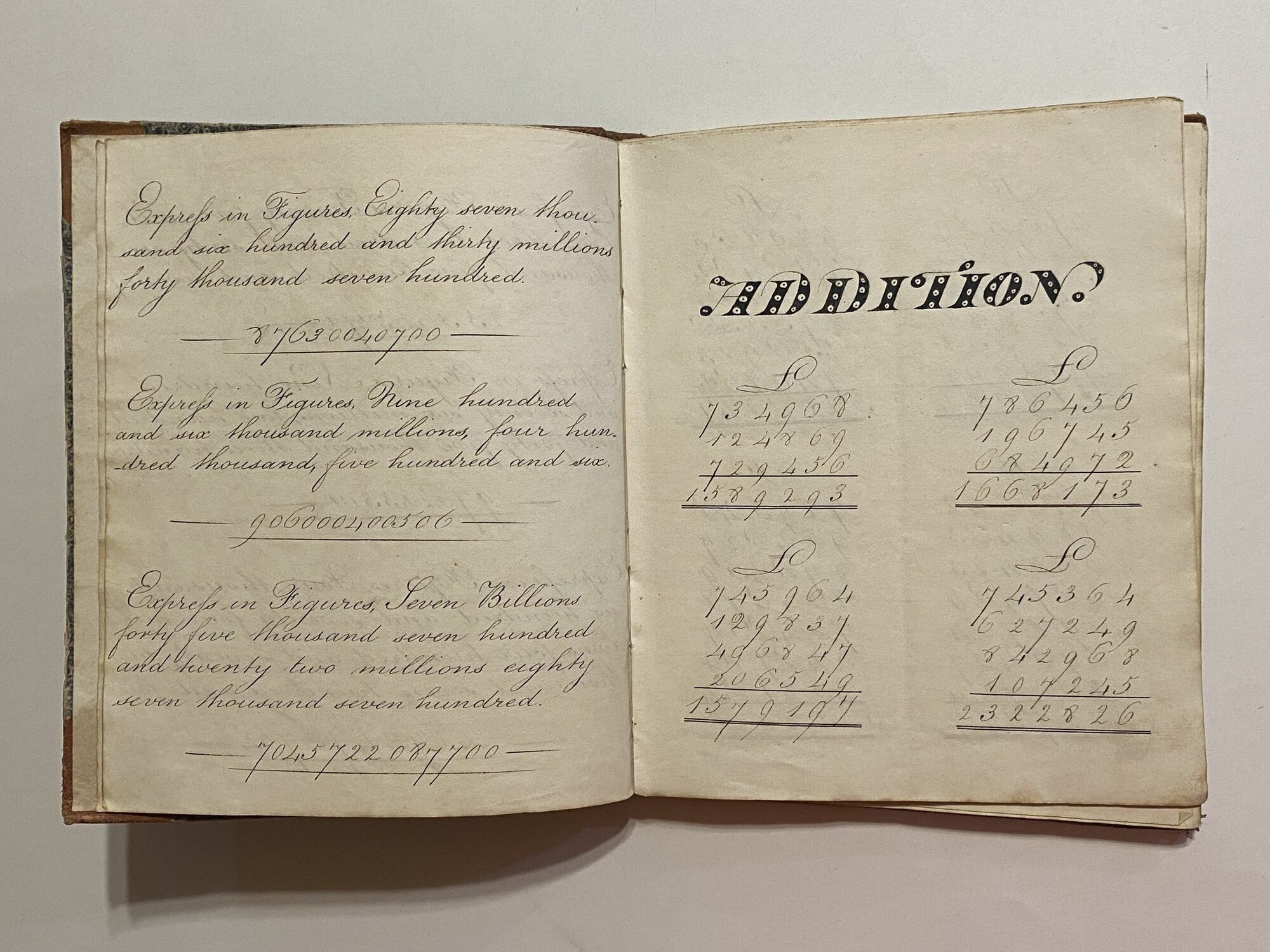
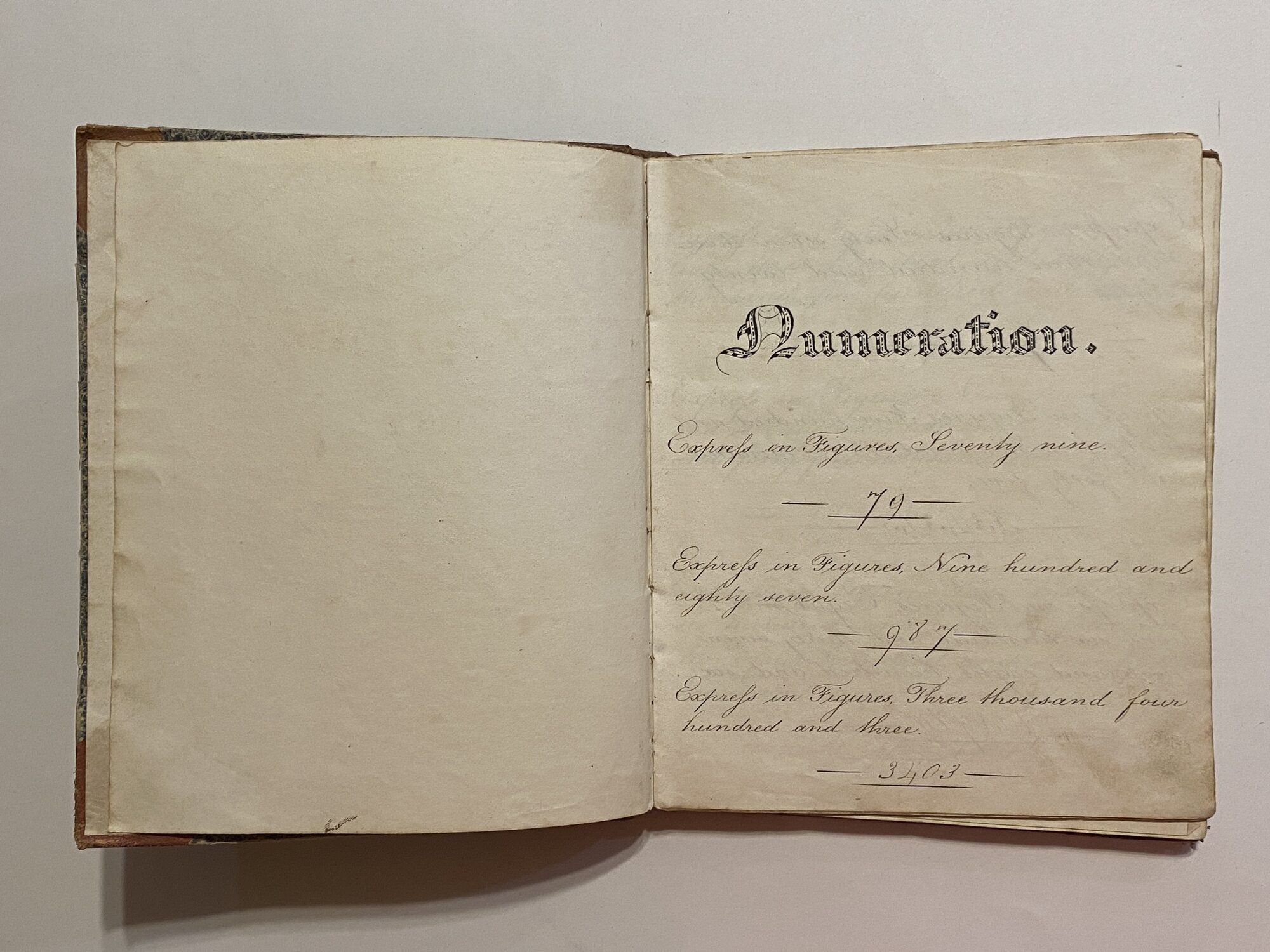
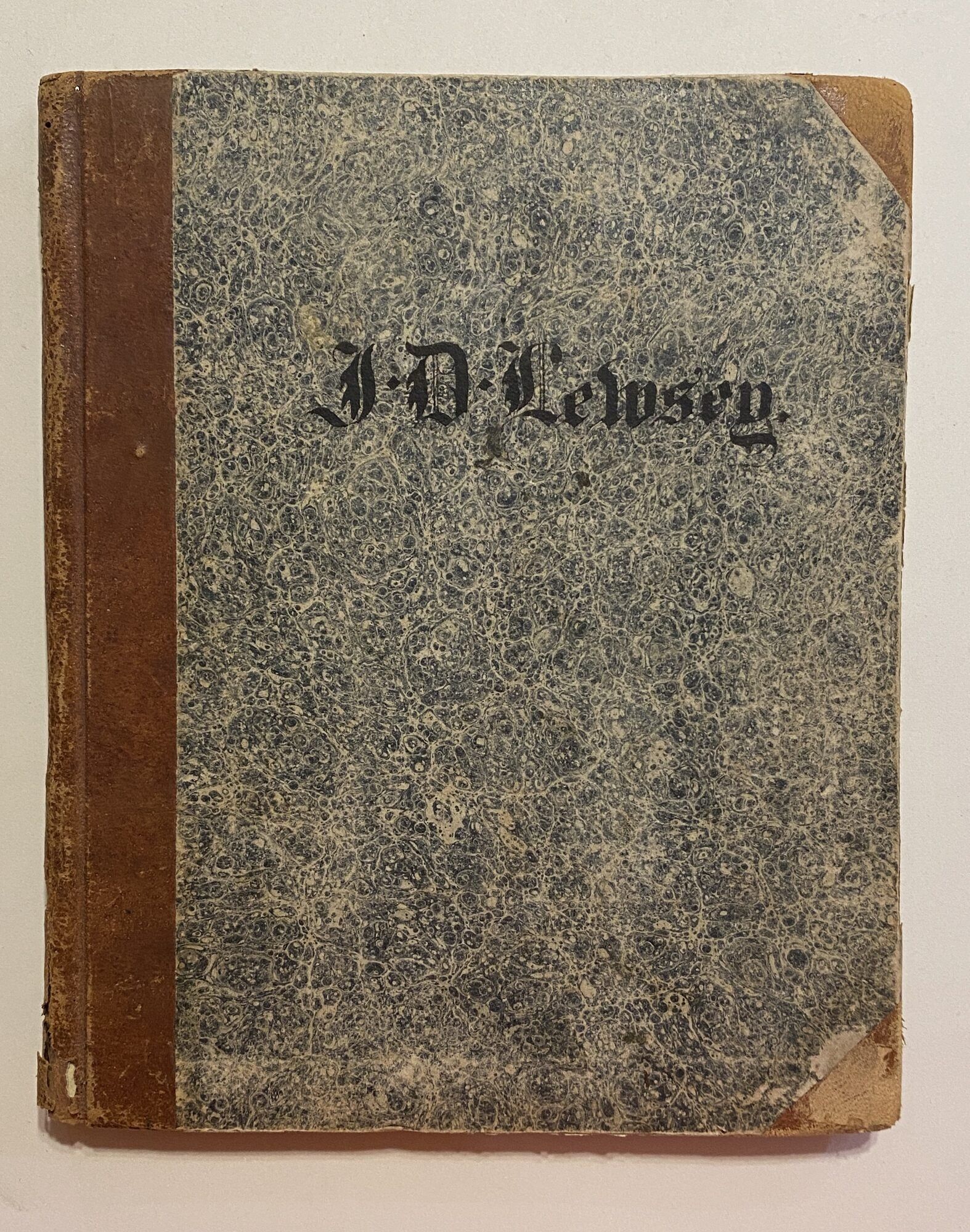
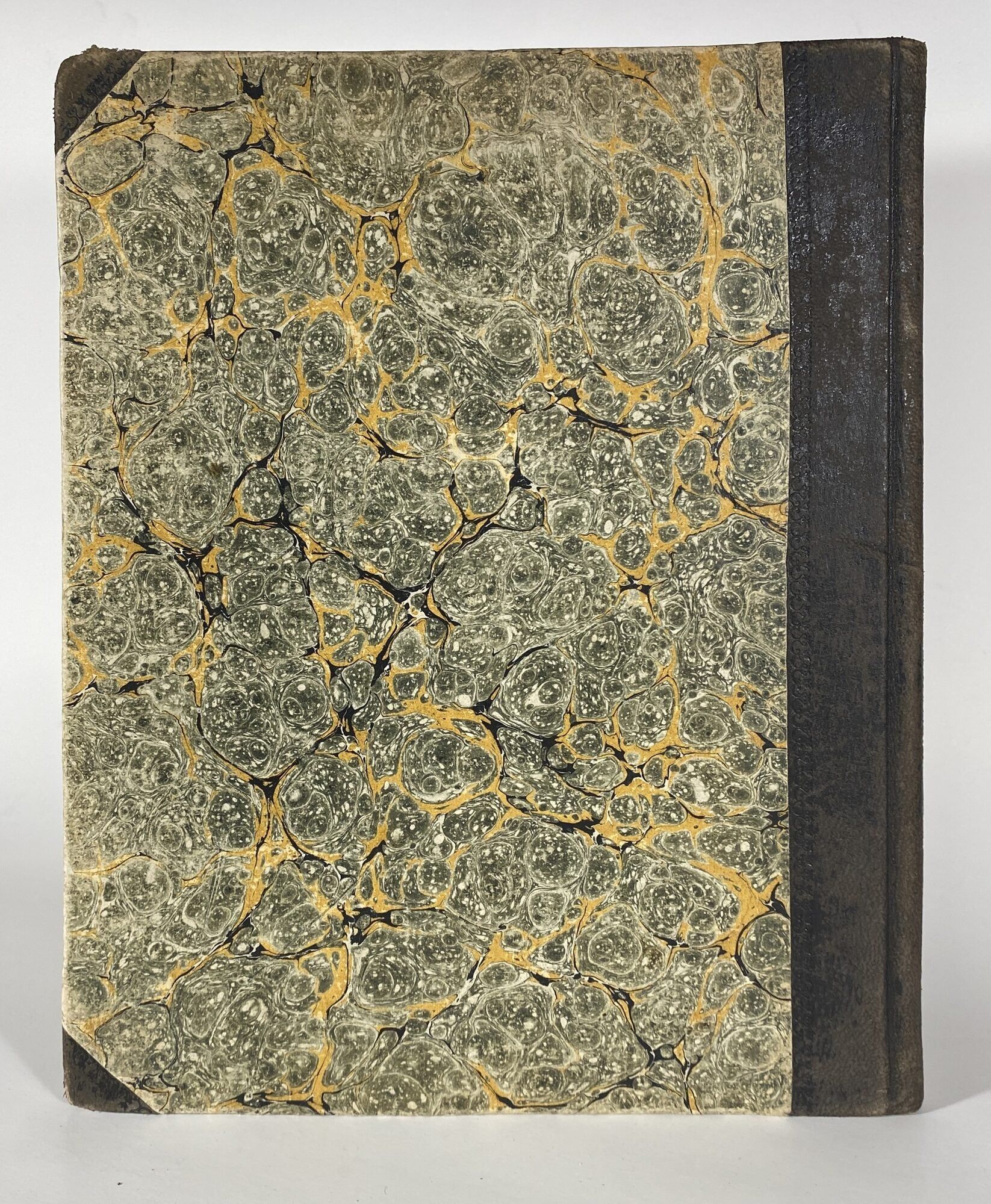
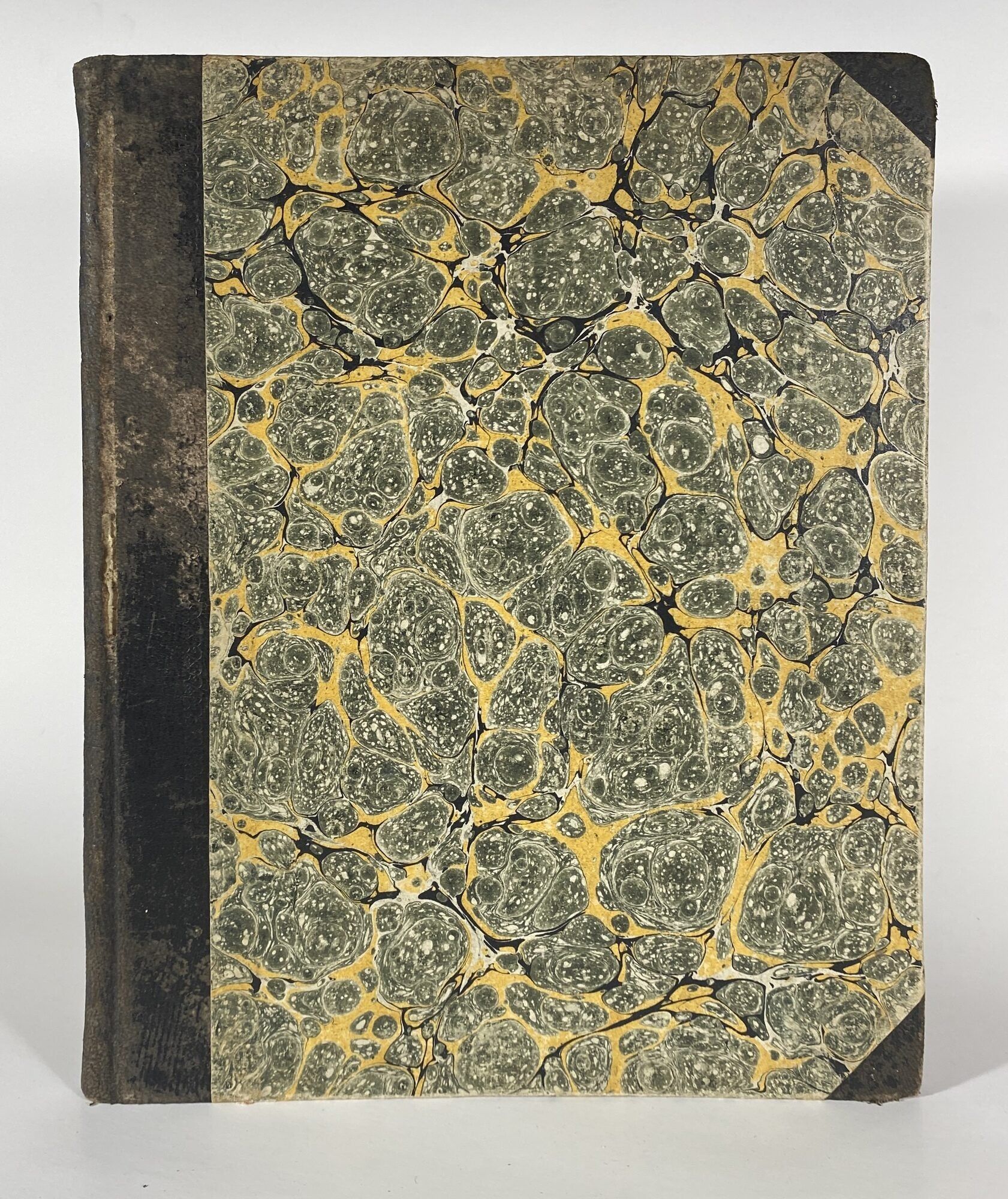
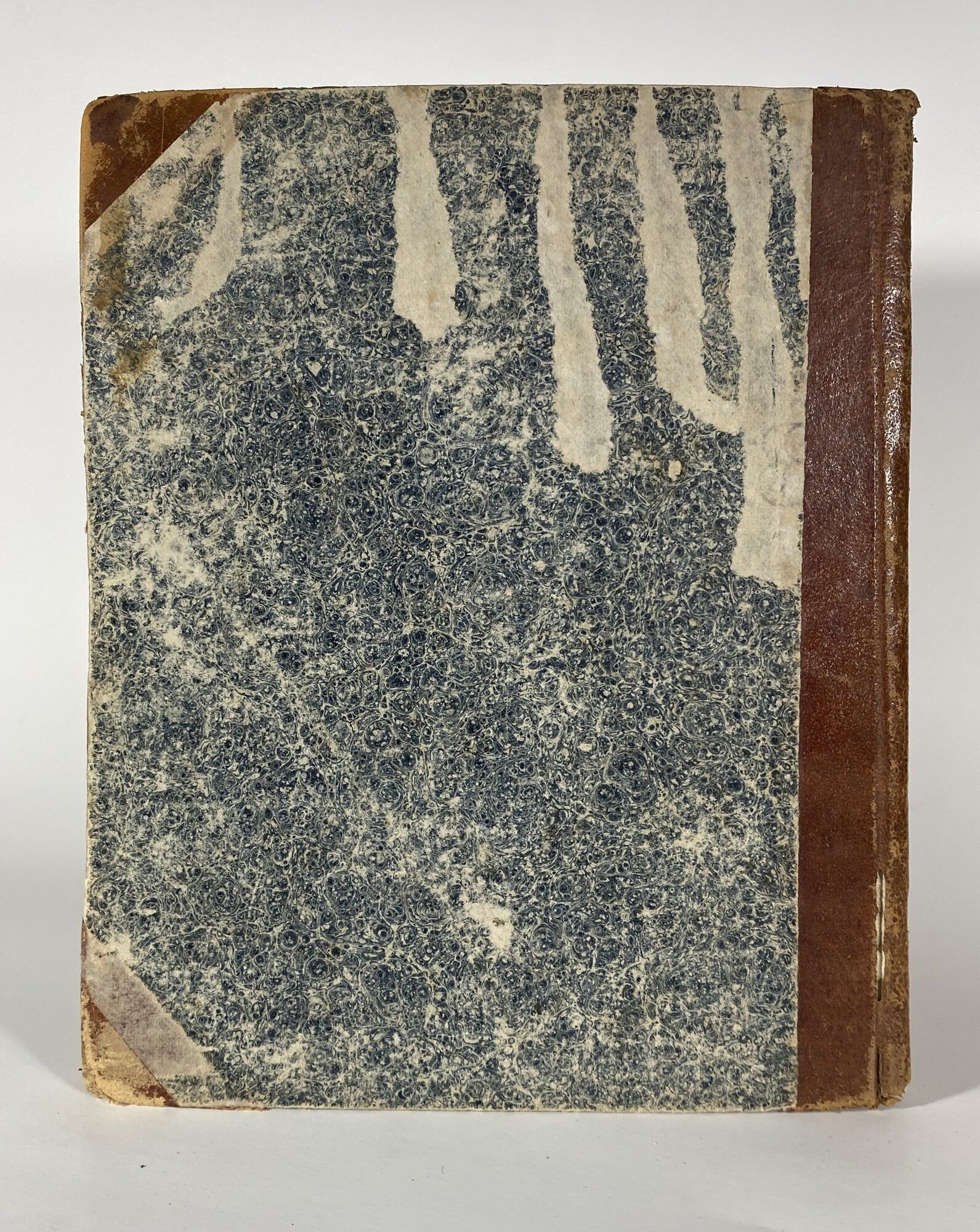
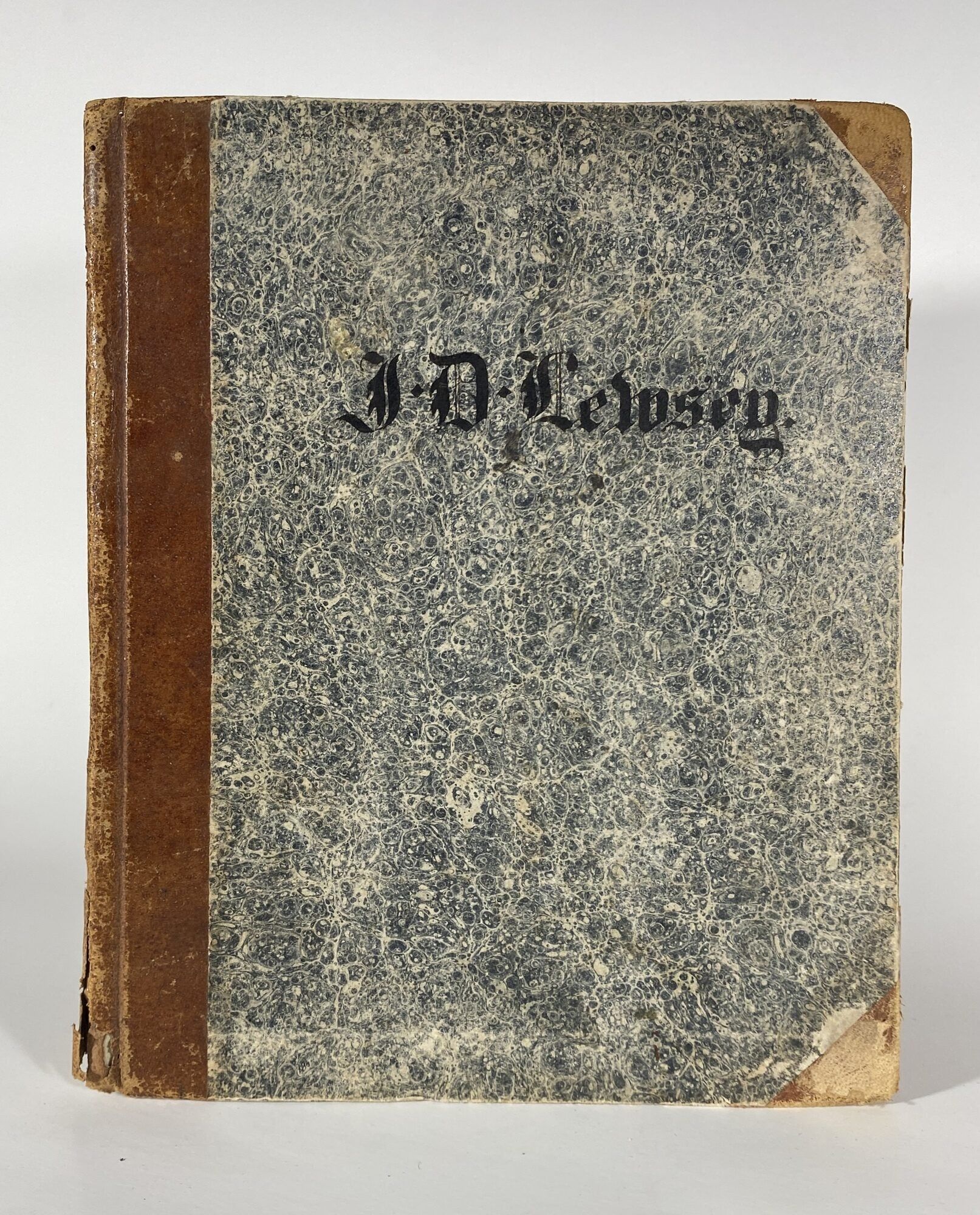
- Maplestead, Essex, UK: Poplar Grove House, 1822
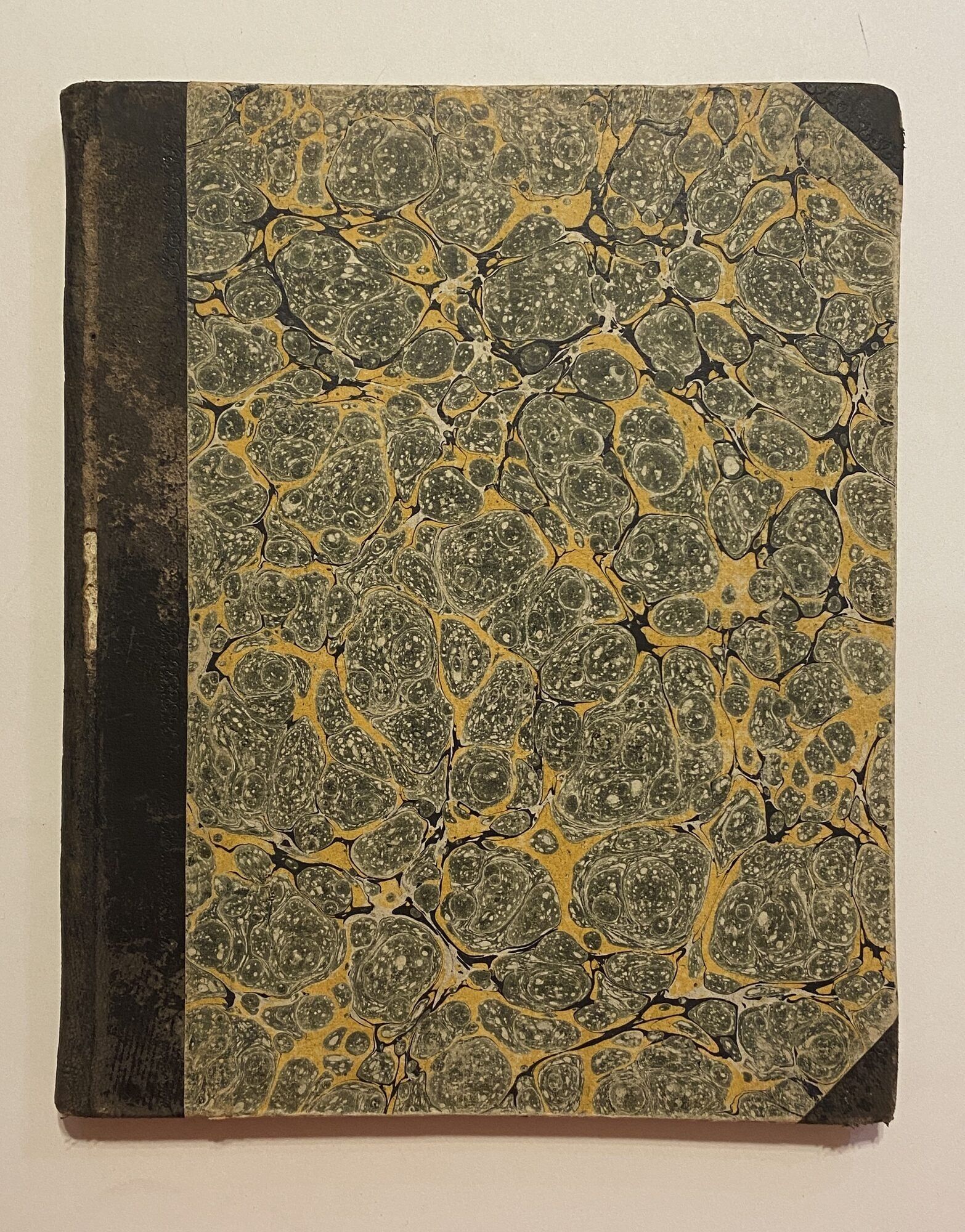
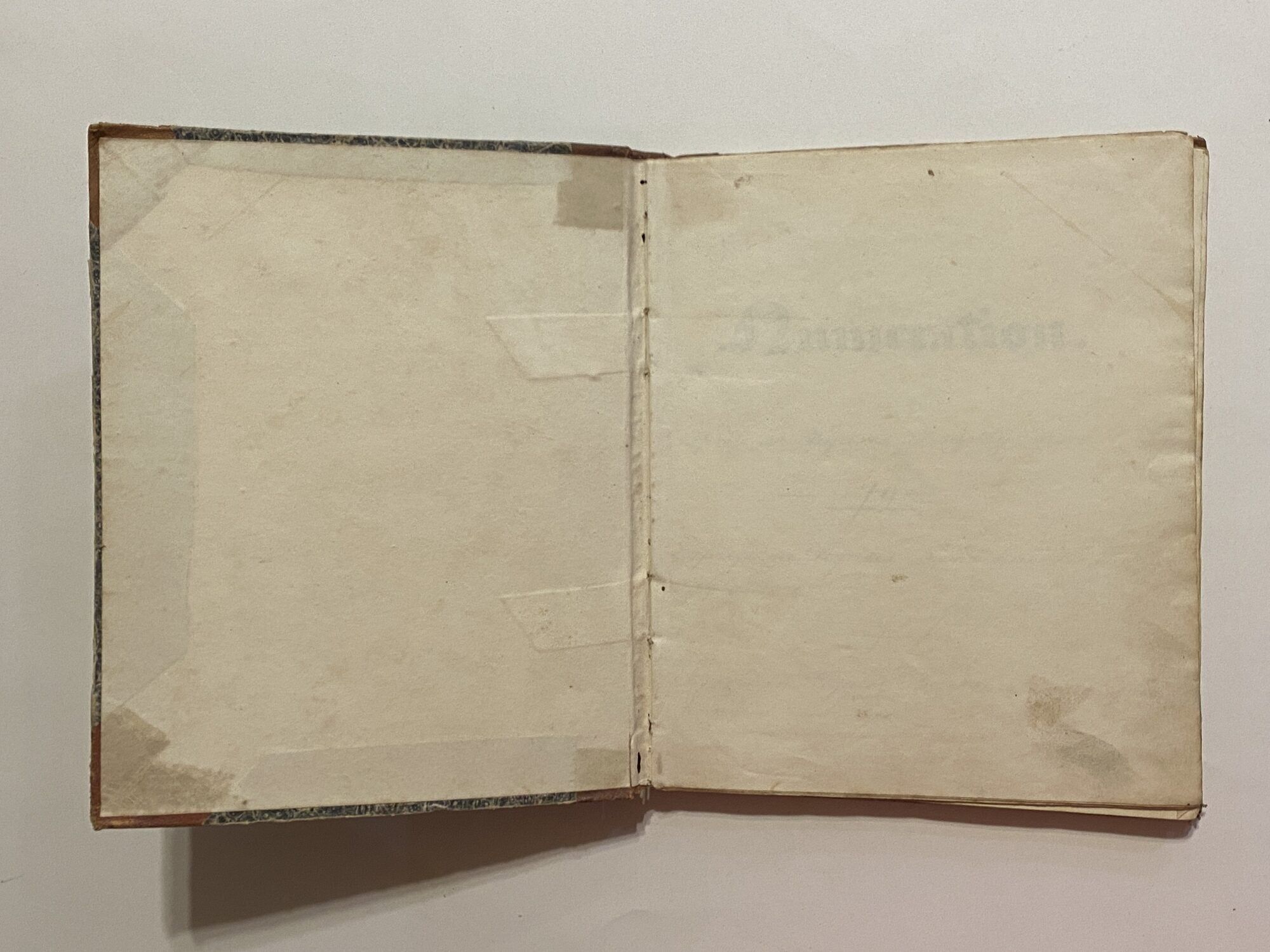
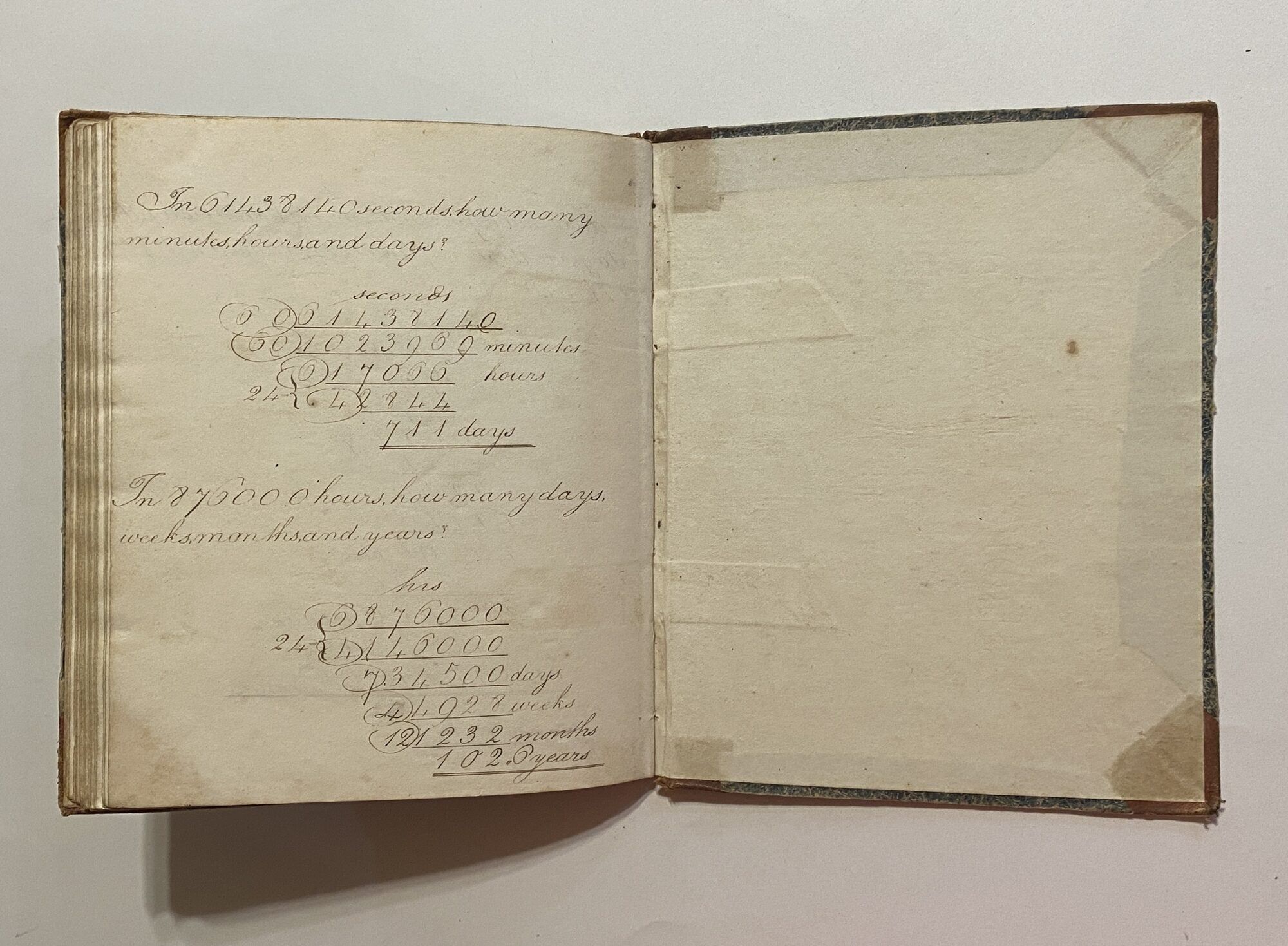
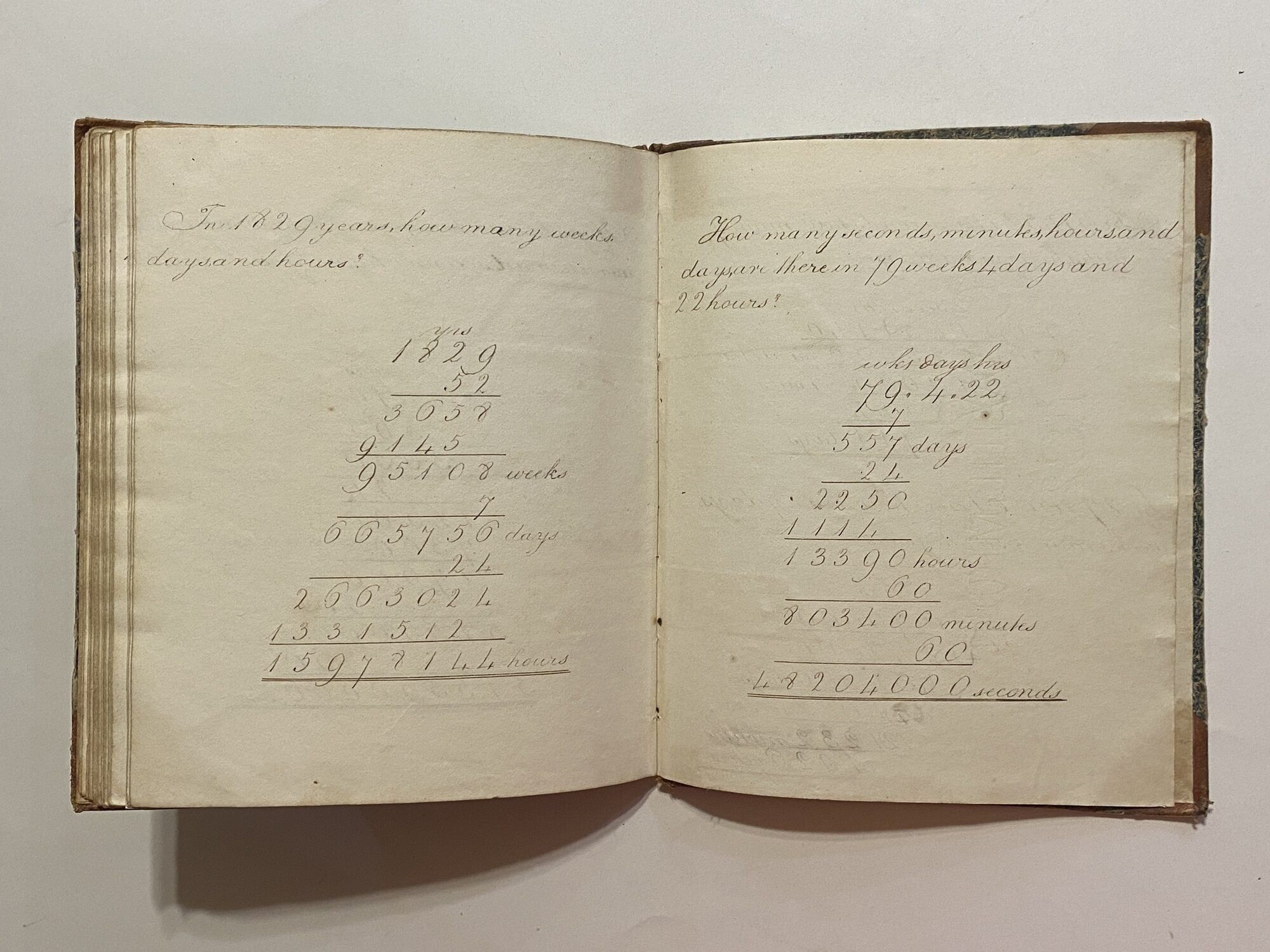
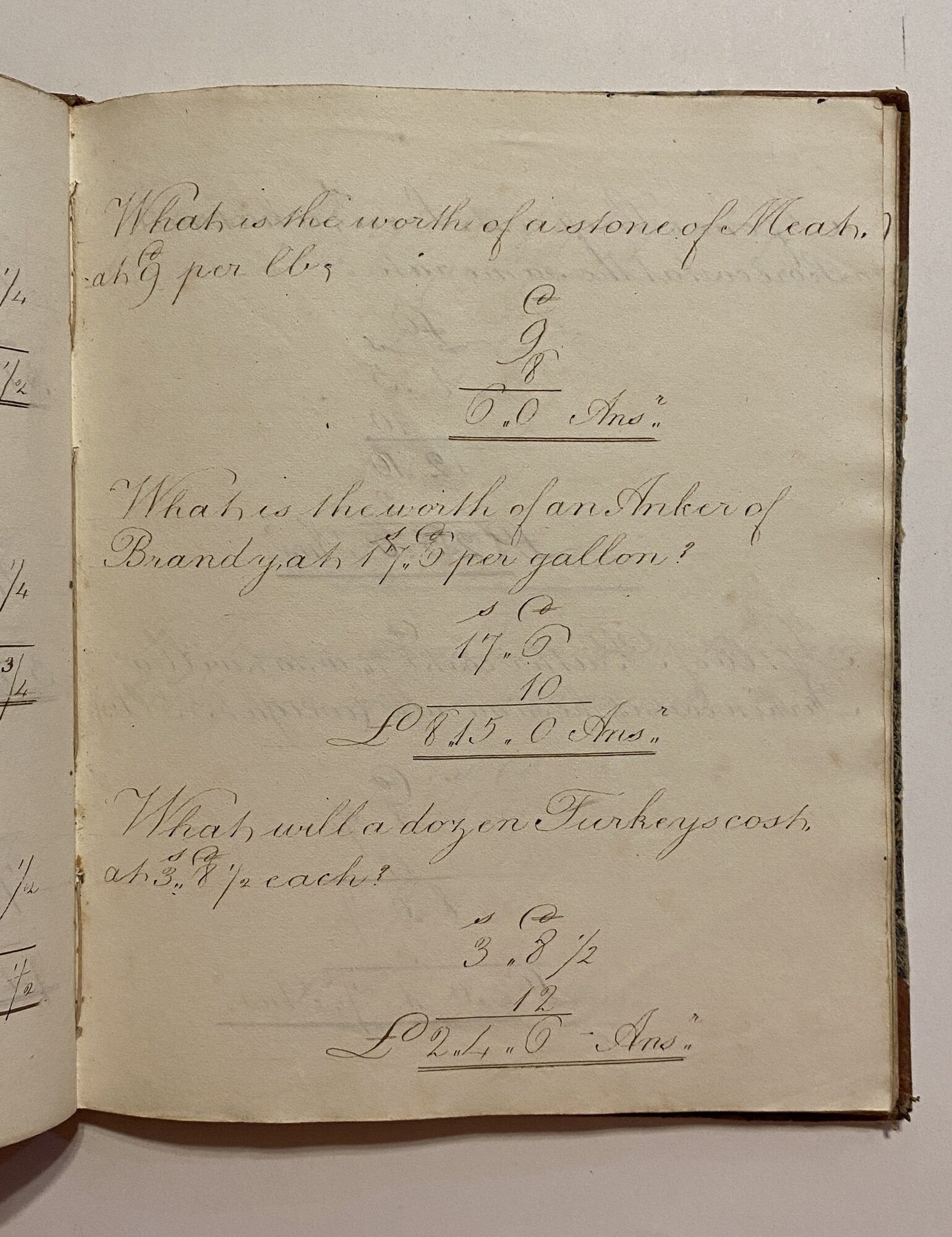
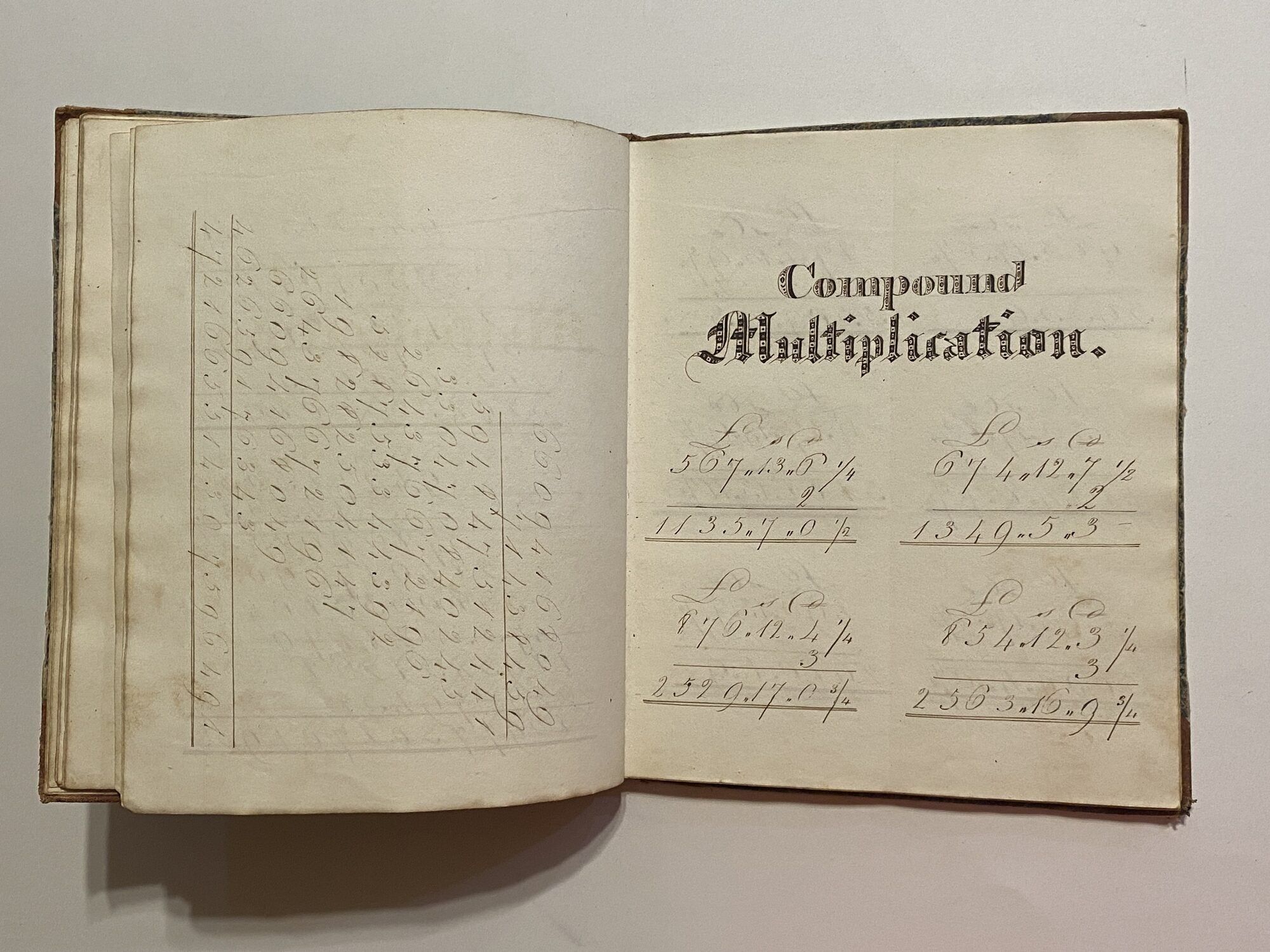
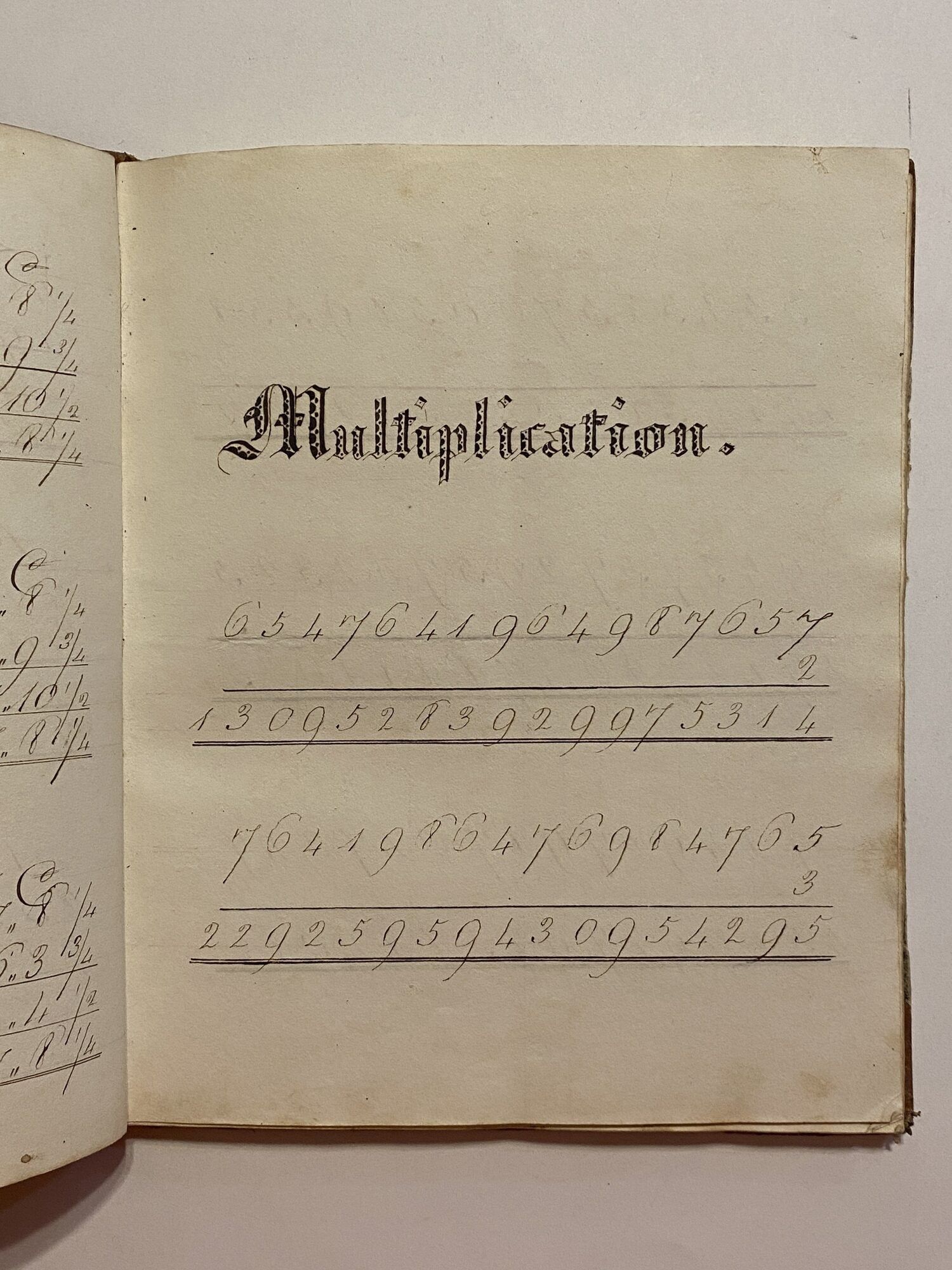
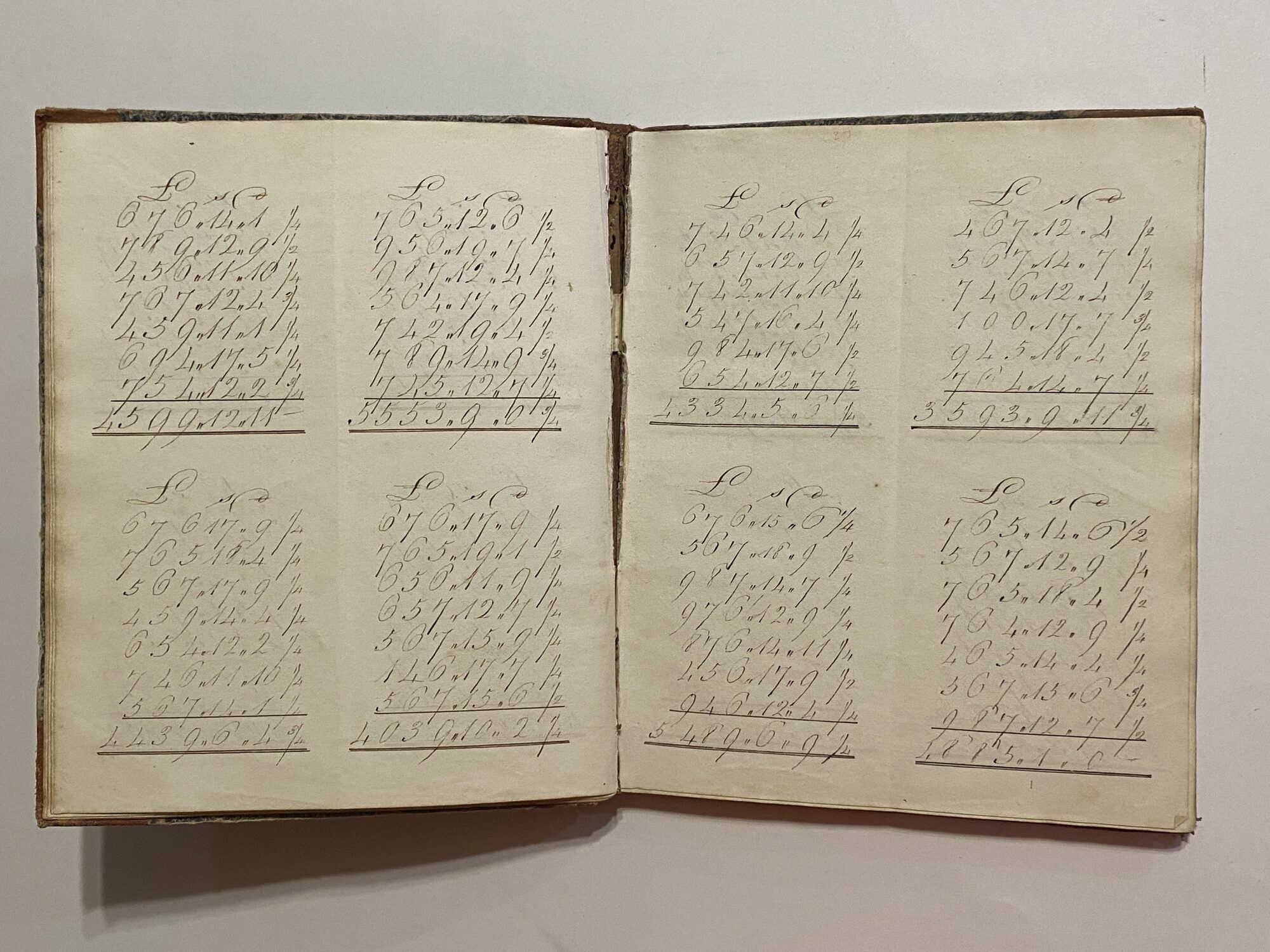
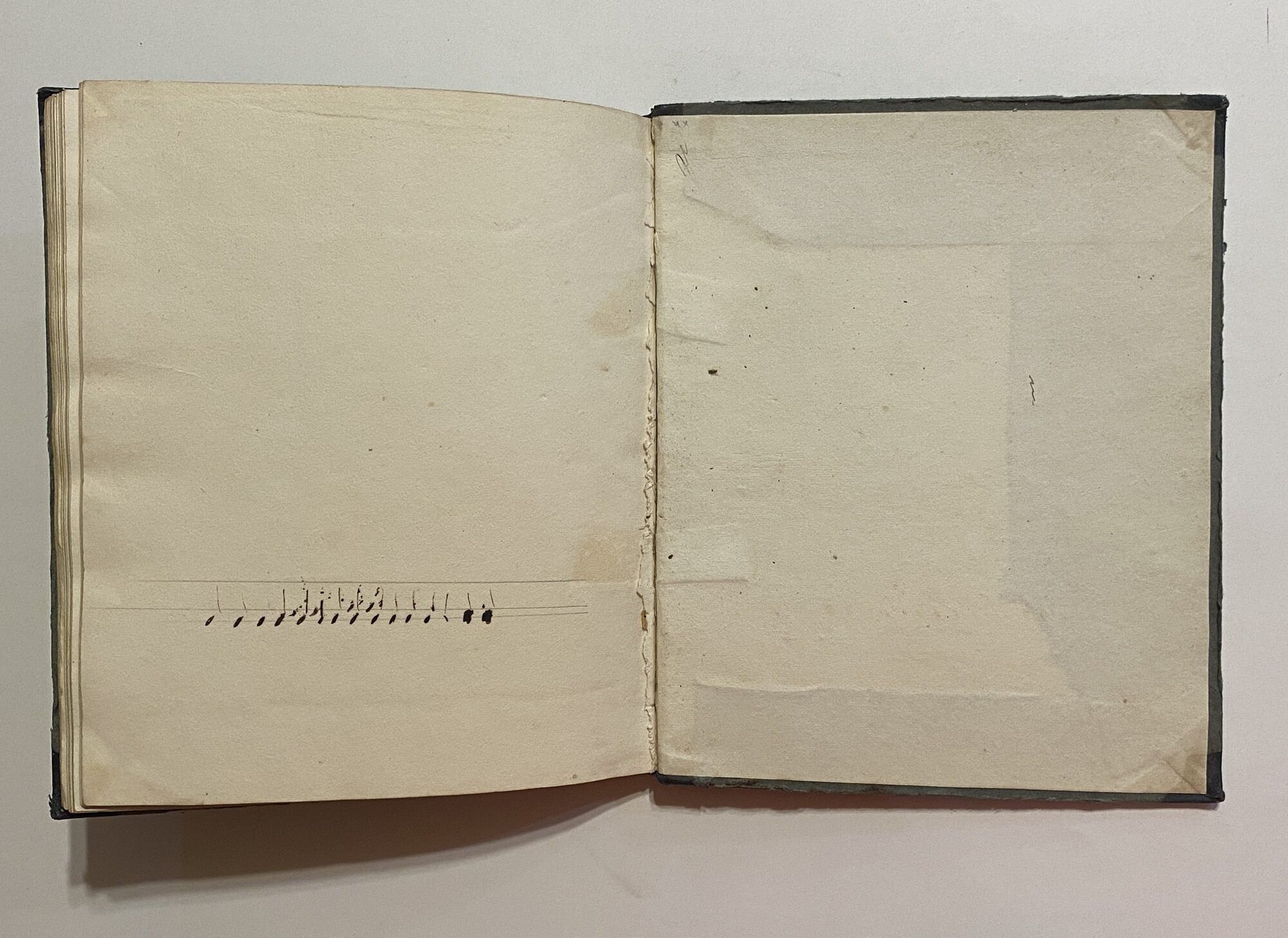
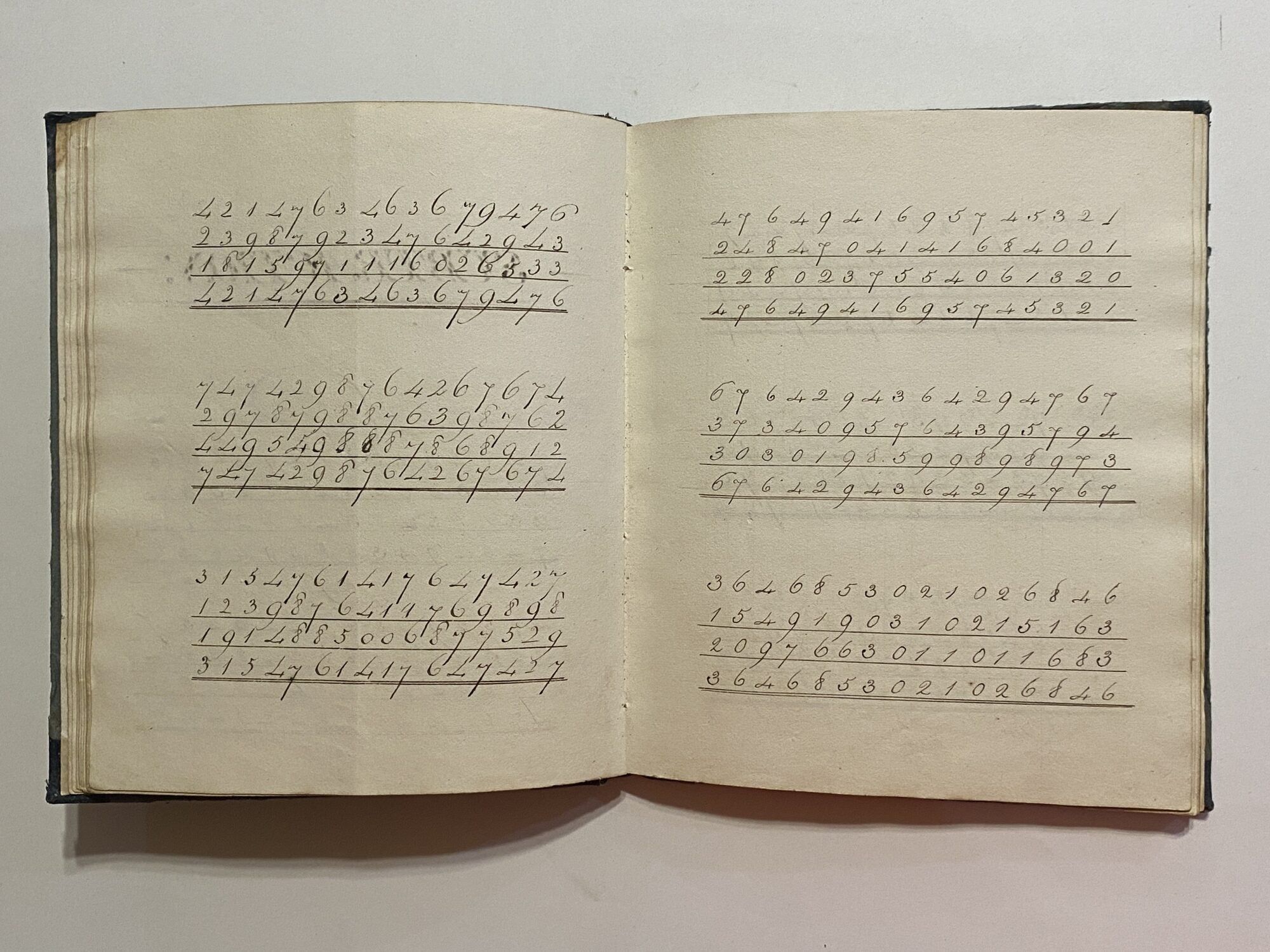
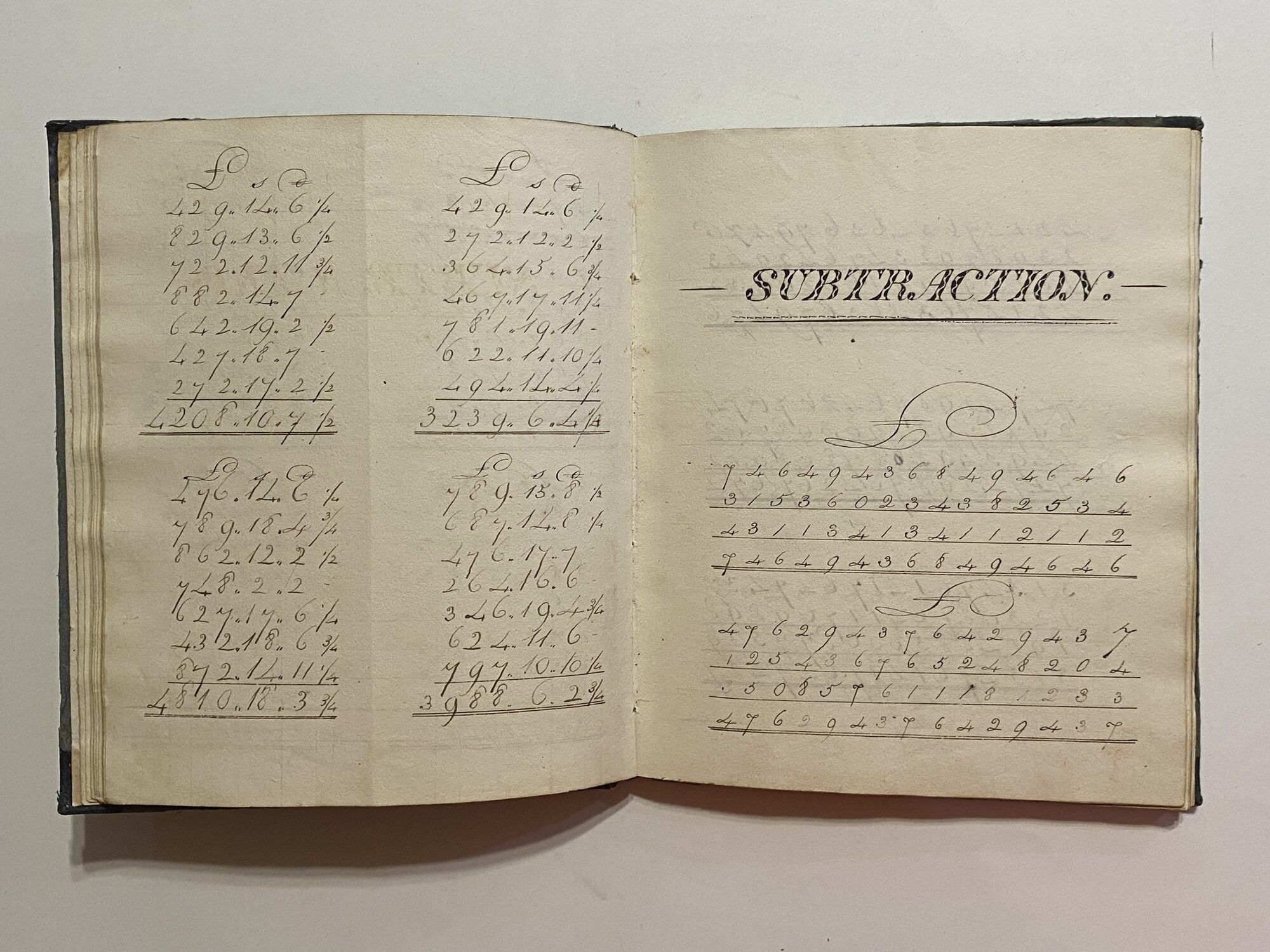
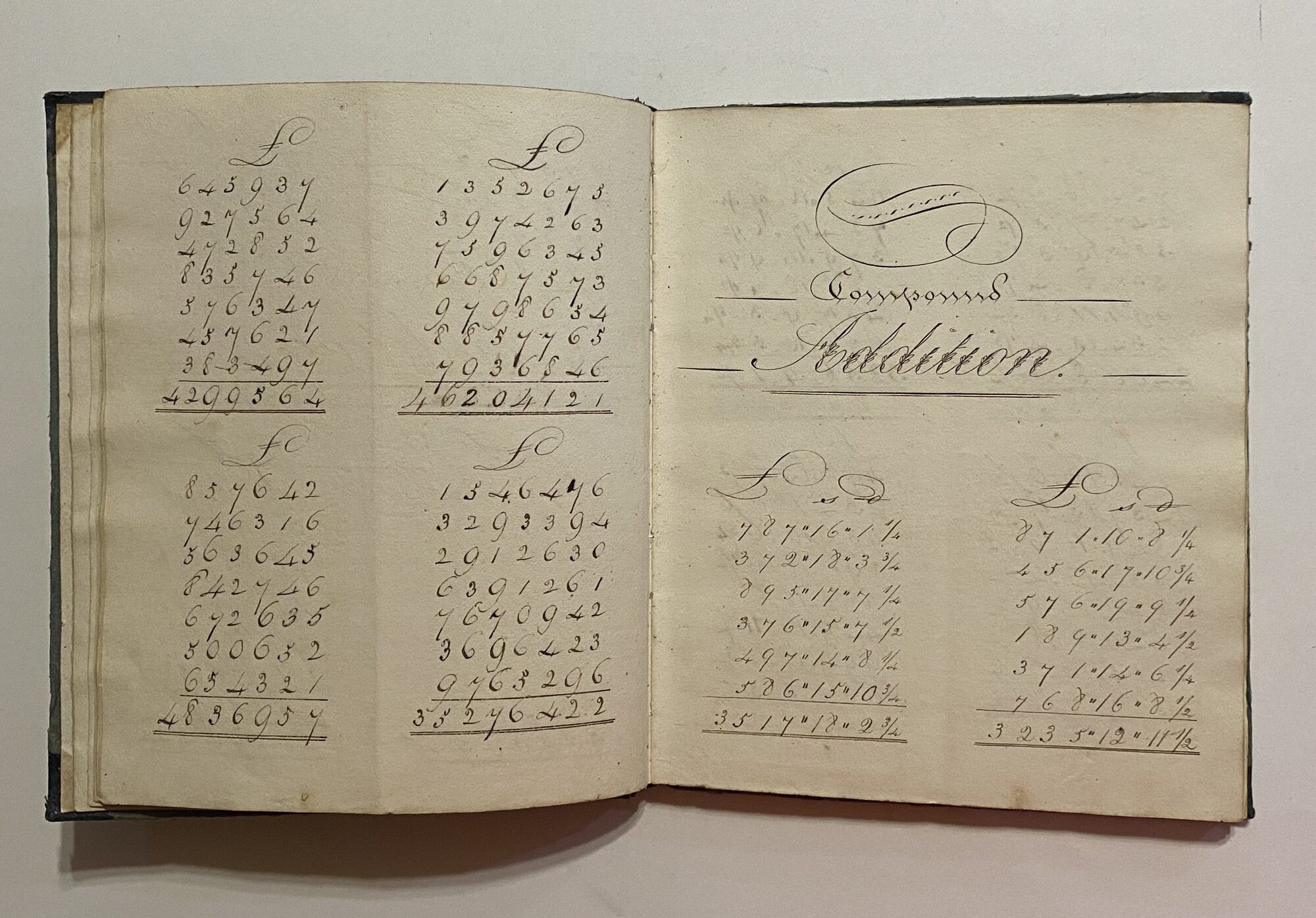
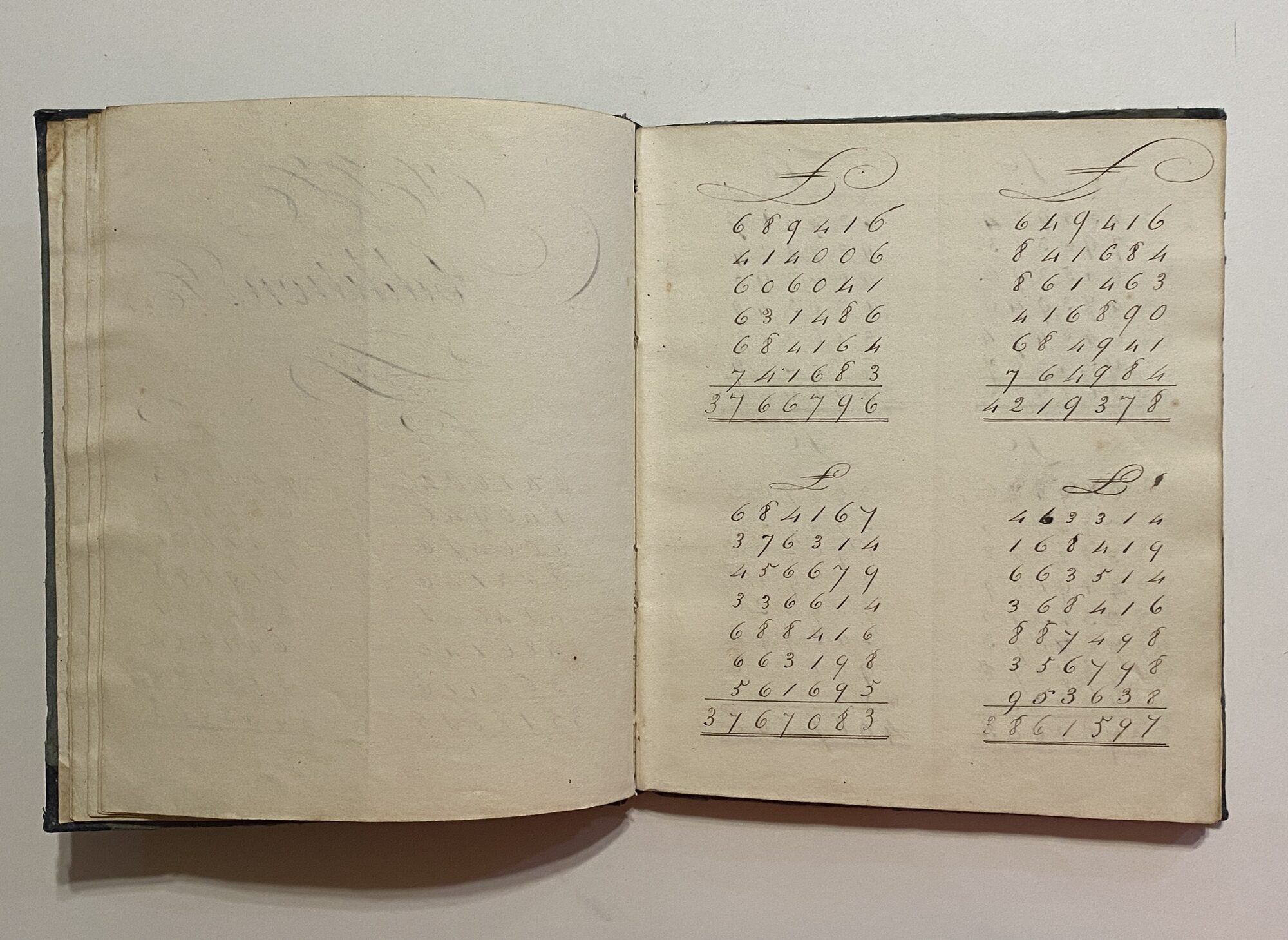
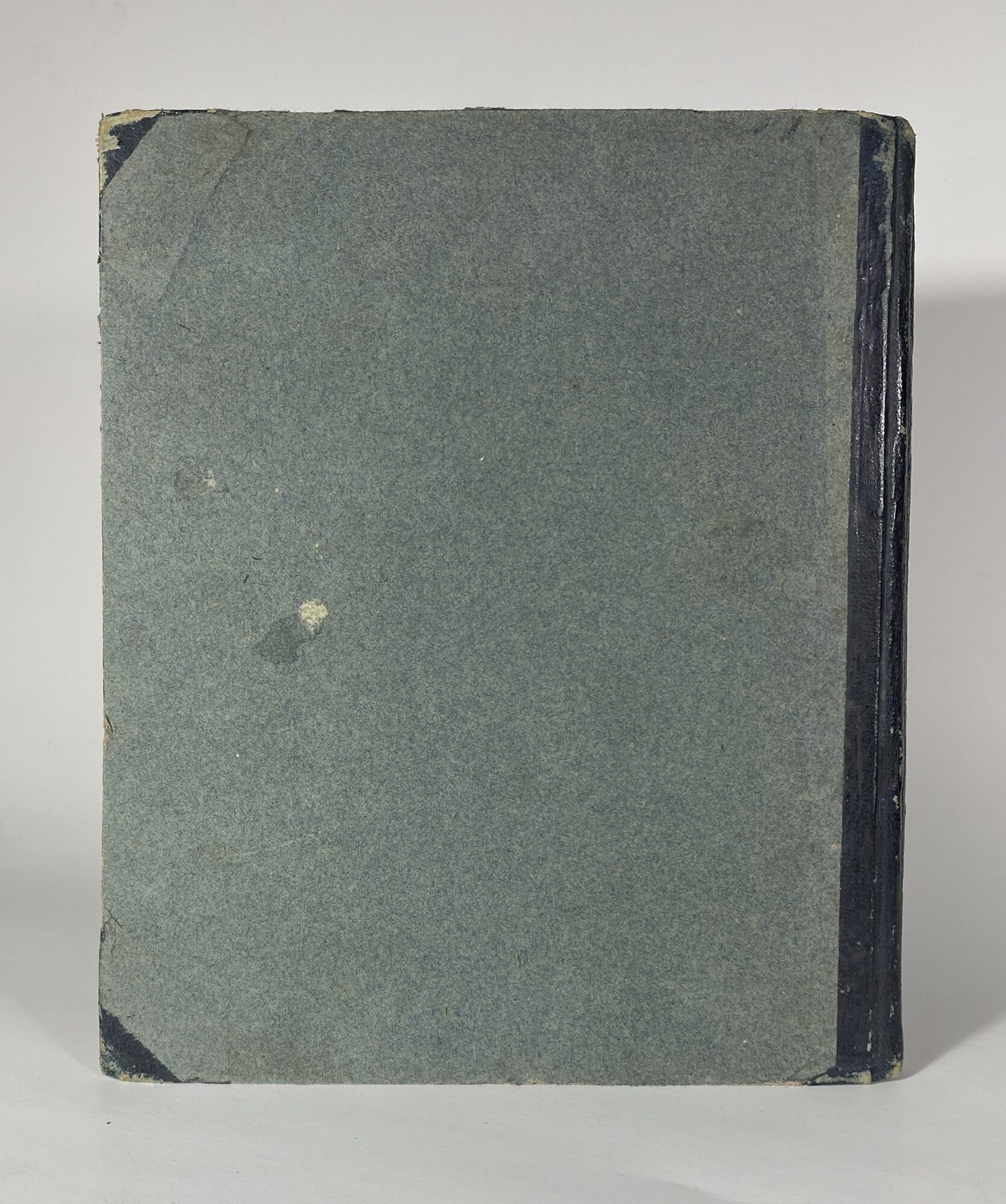
Maplestead, Essex, UK: Poplar Grove House, 1822. Very good. Small 4to. Together 3 manuscript notebooks. Ad 1 (Miss Mary Lewsey): Engraved title-page (blank) + [20] ff. written mainly on both sides, the remaining leaves blank. Paper stock watermarked "JE&A 1821." Printed label of Poplar Grove House (see below) pasted to the upper cover (several leaves excised at end). Ad 2 (J.D. Lewsey): [67] ff., written on both sides. Paper stock watermarked "C. WILMOT 1822." Textblock separating after fol. [9]. Ad 3 (Richard Davis): [34] ff., the remaining leaves blank (several excised at end). All three notebooks bound in original 3/4 roan over drab boards (vol. 1) or marbled boards (vols. 2-3). Expected wear to covers and edges but overall in very good condition, the paper stock clean, unmarked and unspoiled, and the bindings perfectly sound. SEE THE 65 IMAGES ON OUR WEBSITE. MARY LEWSEY'S MANUSCRIPT MATHEMATICS NOTEBOOK, WRITTEN AT A SHADOWY CO-ED ACADEMY, AND TWO OTHER SUCH MANUSCRIPT NOTEBOOKS, ALMOST CERTAINLY FROM THE SAME SCHOOL, NO DOUBT CONTEMPORANEOUSLY AS THE WATERMARKS ARE ALL DATED 1820-1822.
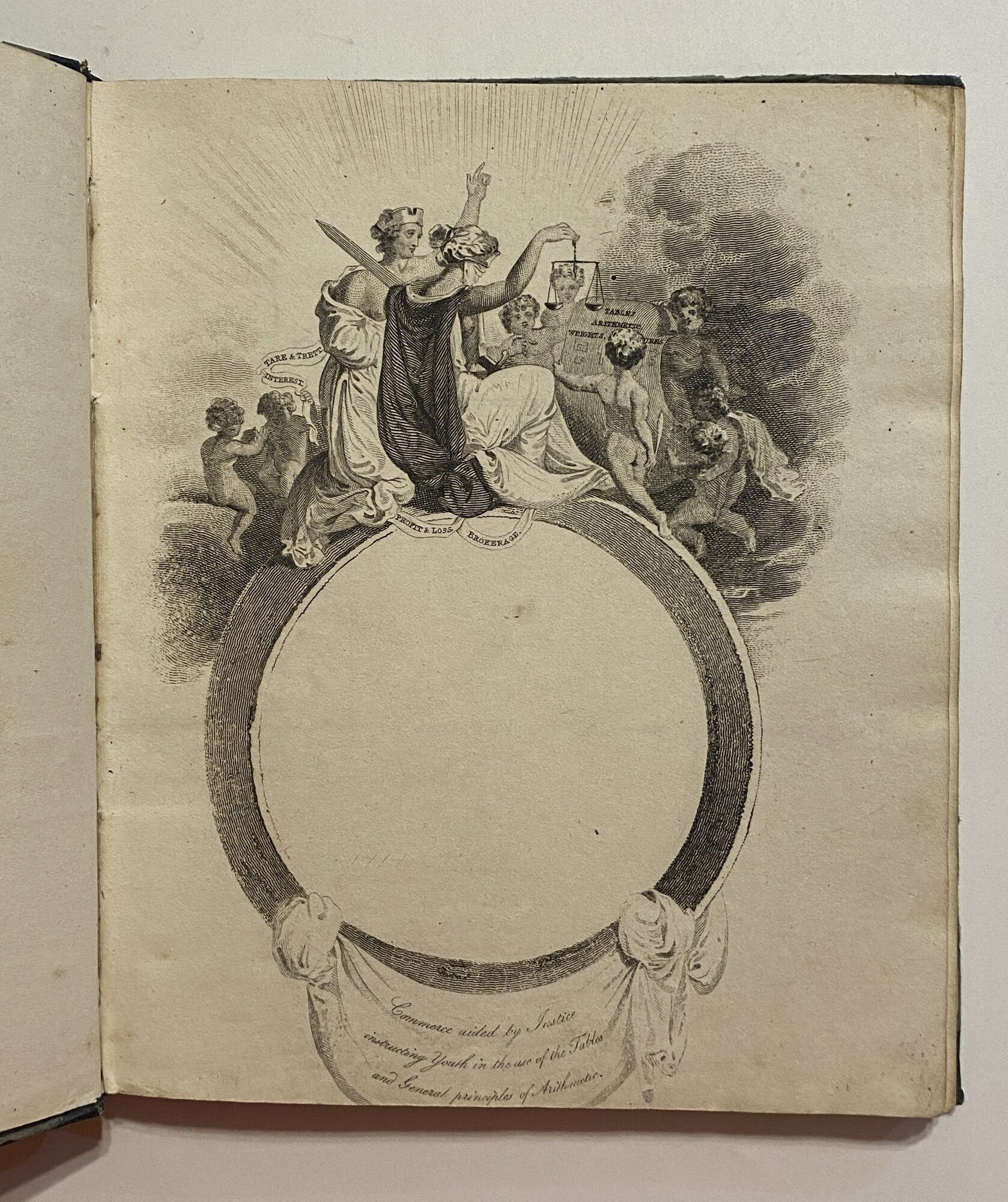
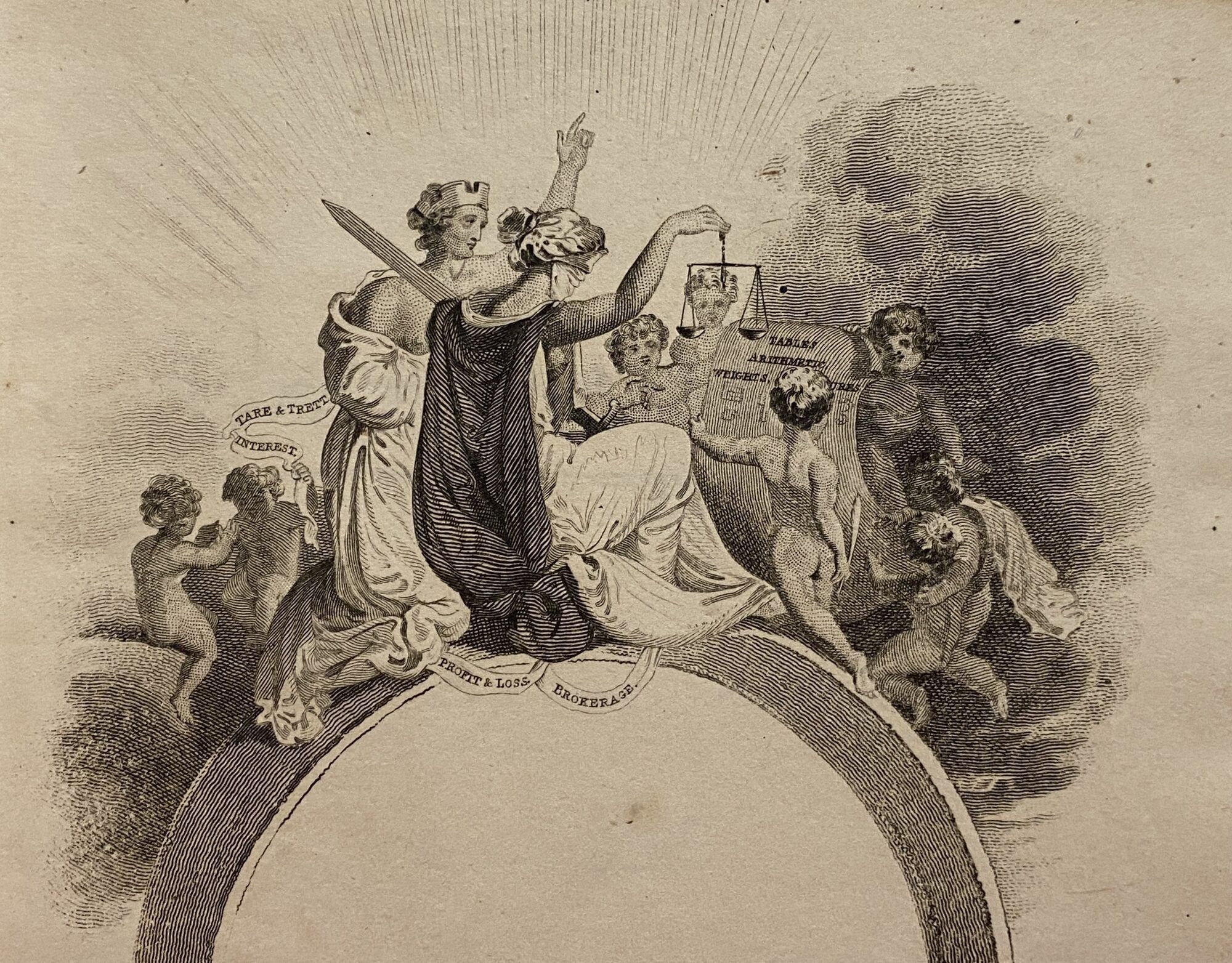
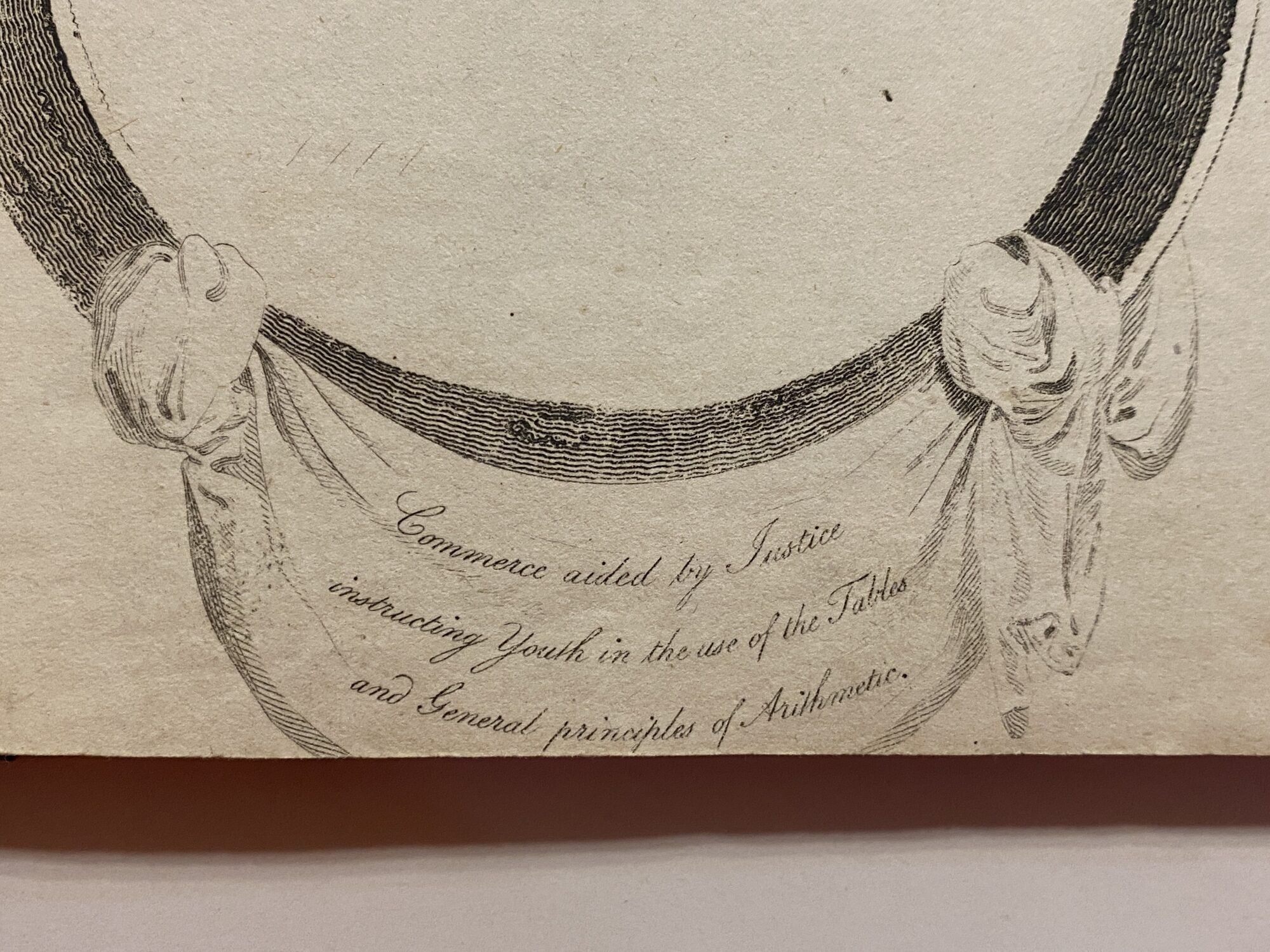
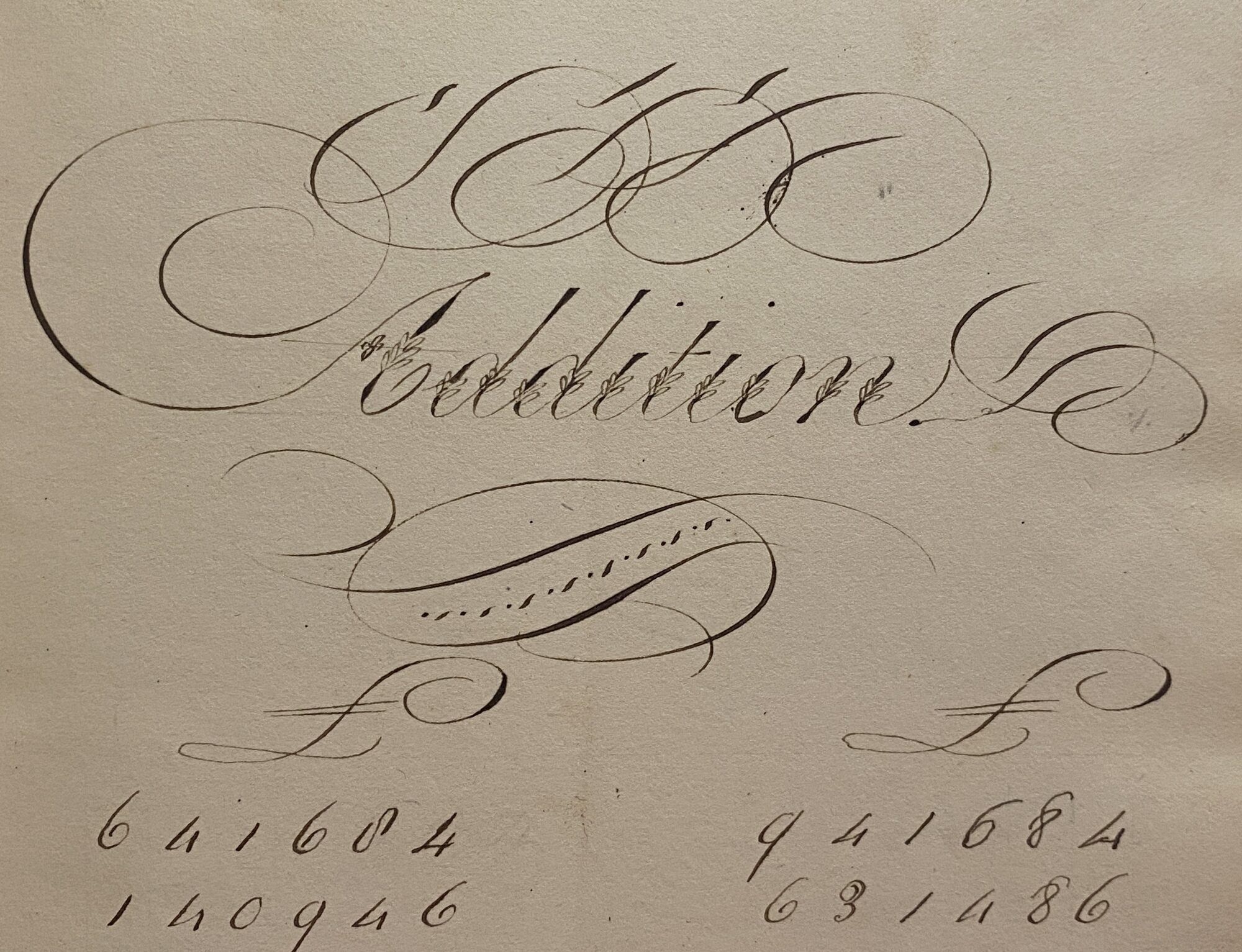
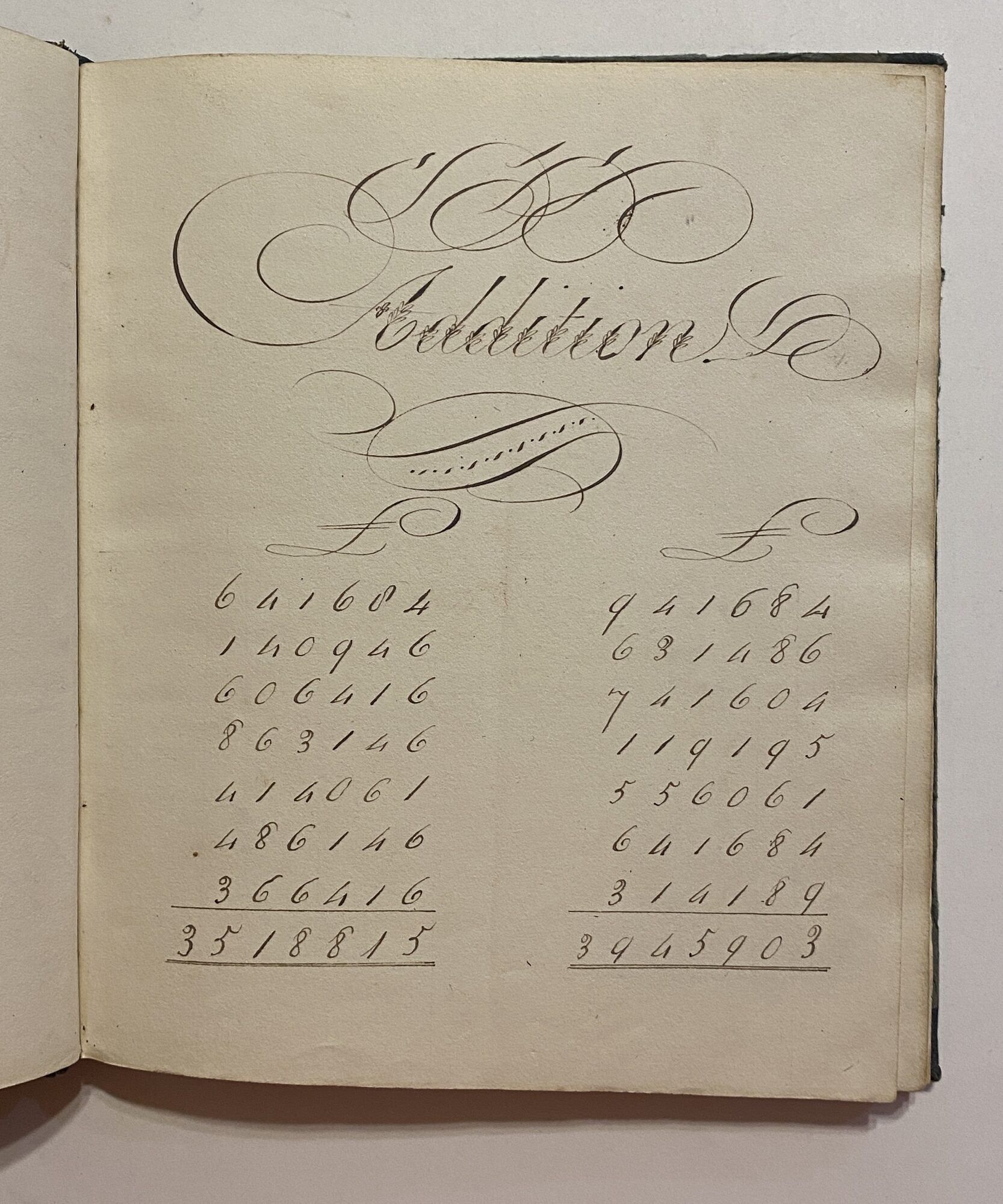
THE NOTEBOOKS: Mary Lewsey's notebook contains a remarkable engraved frontispiece which celebrates mathematics and arithmetic; it reads in part: "Commerce aided by Justice instructing Youth in the use of the Tables and General principles of Arithmetic." In the banderolles above: "Profit & Loss," "Brokerage," "Tables," etc. It is quite possible that "our" Mary Lewsey was born in 1807 in Woodham Ferrers, Essex which is 10 miles from Maplestead. Early mathematics notebooks written by girls are uncommon in private ownership.
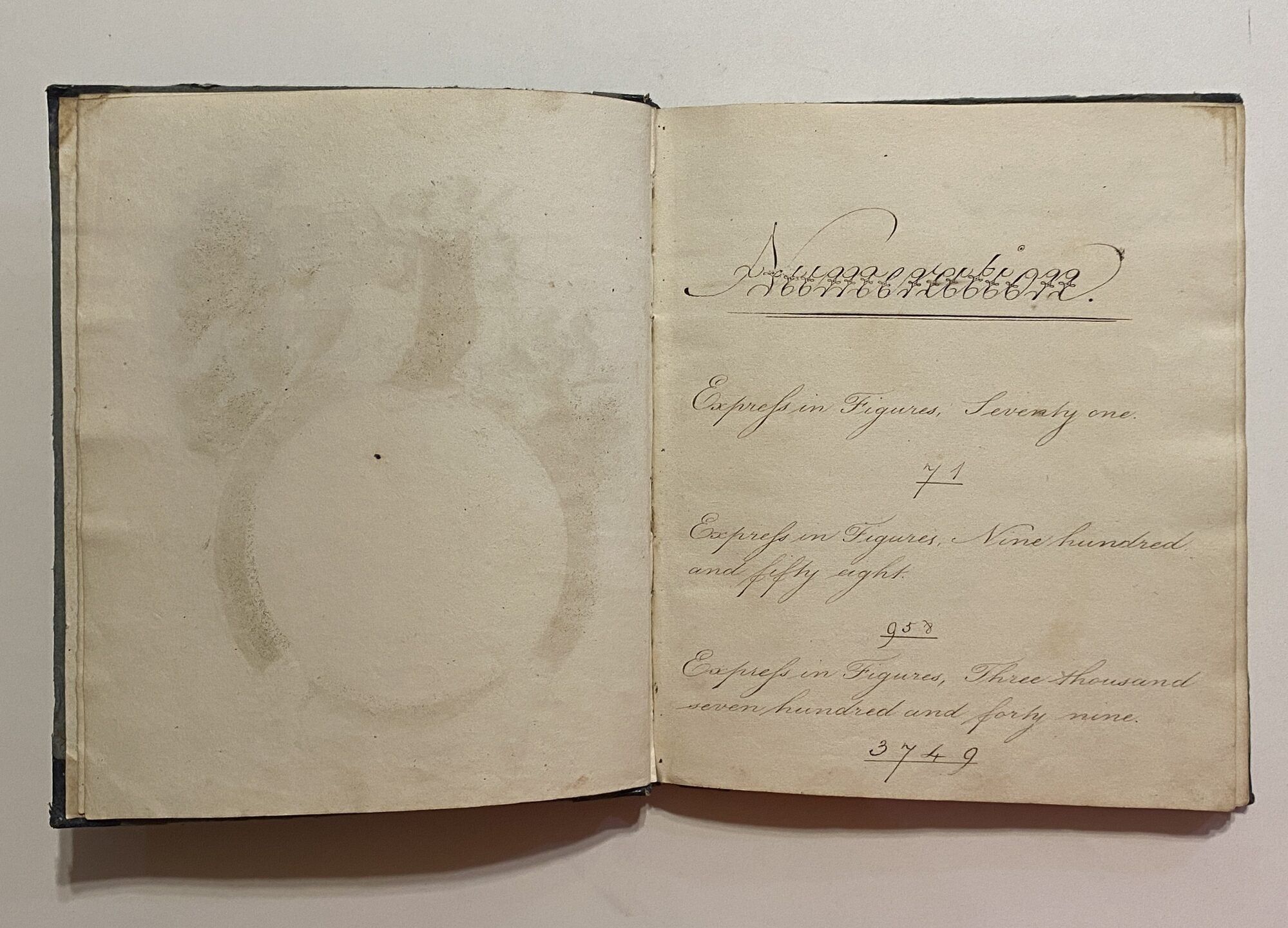
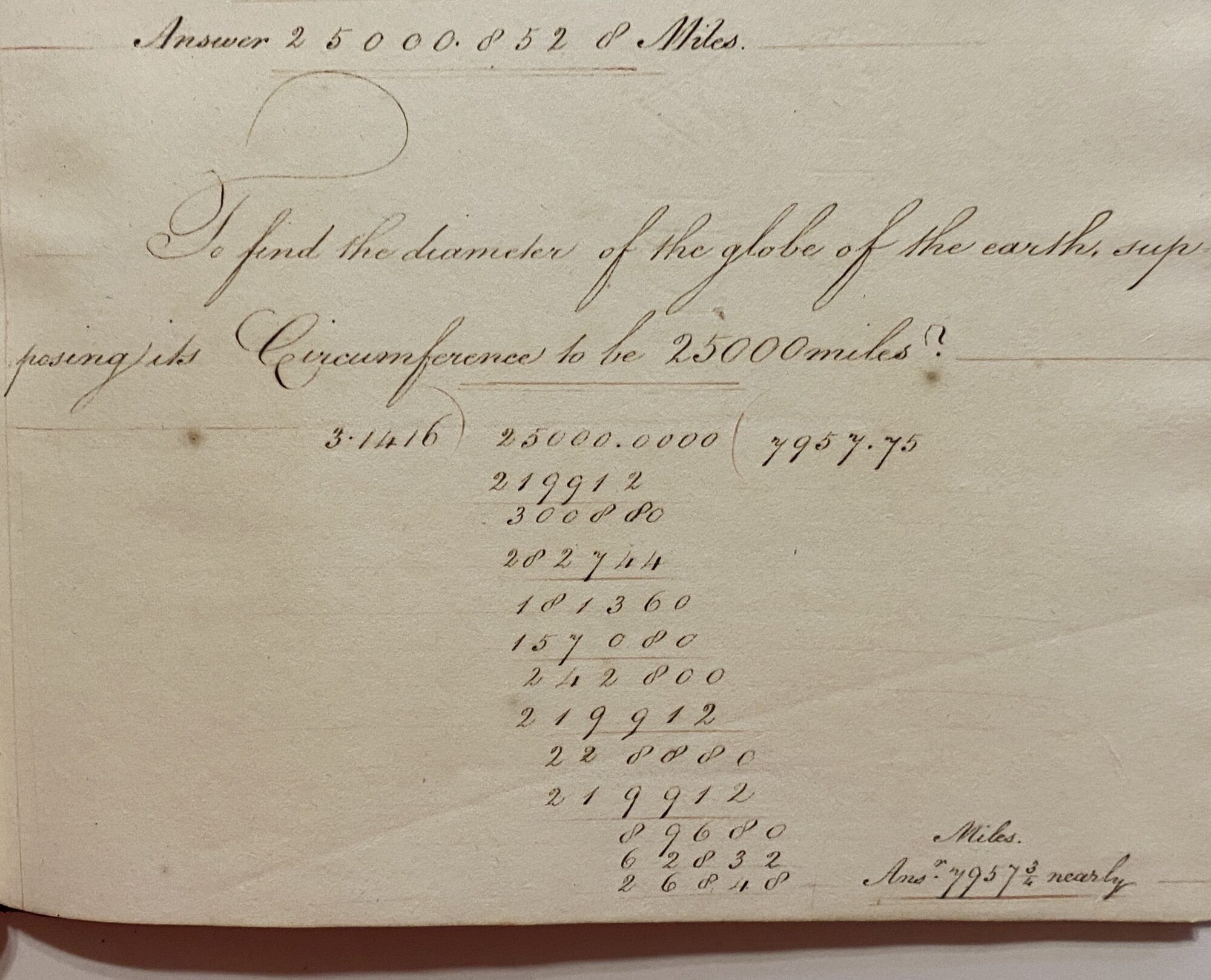
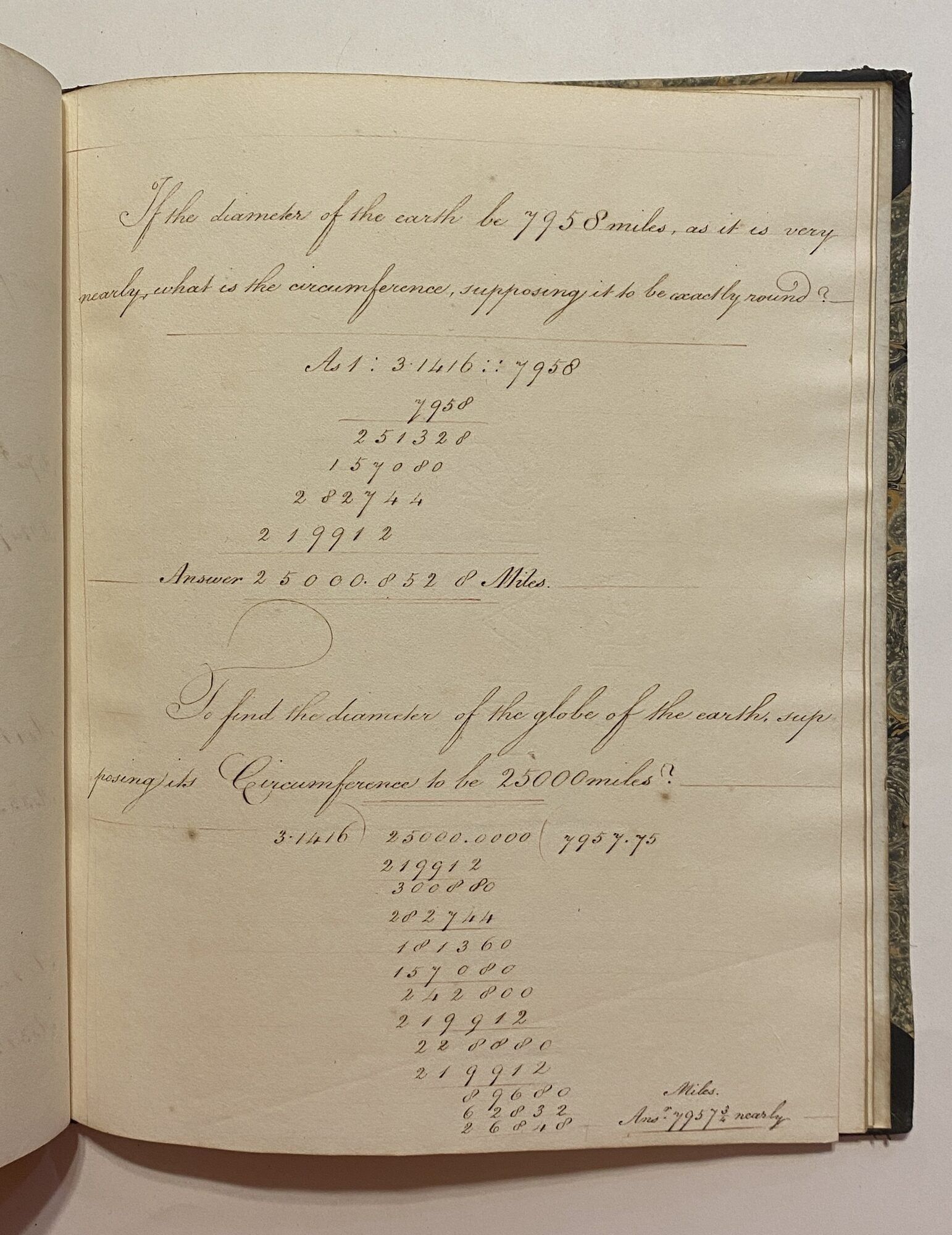
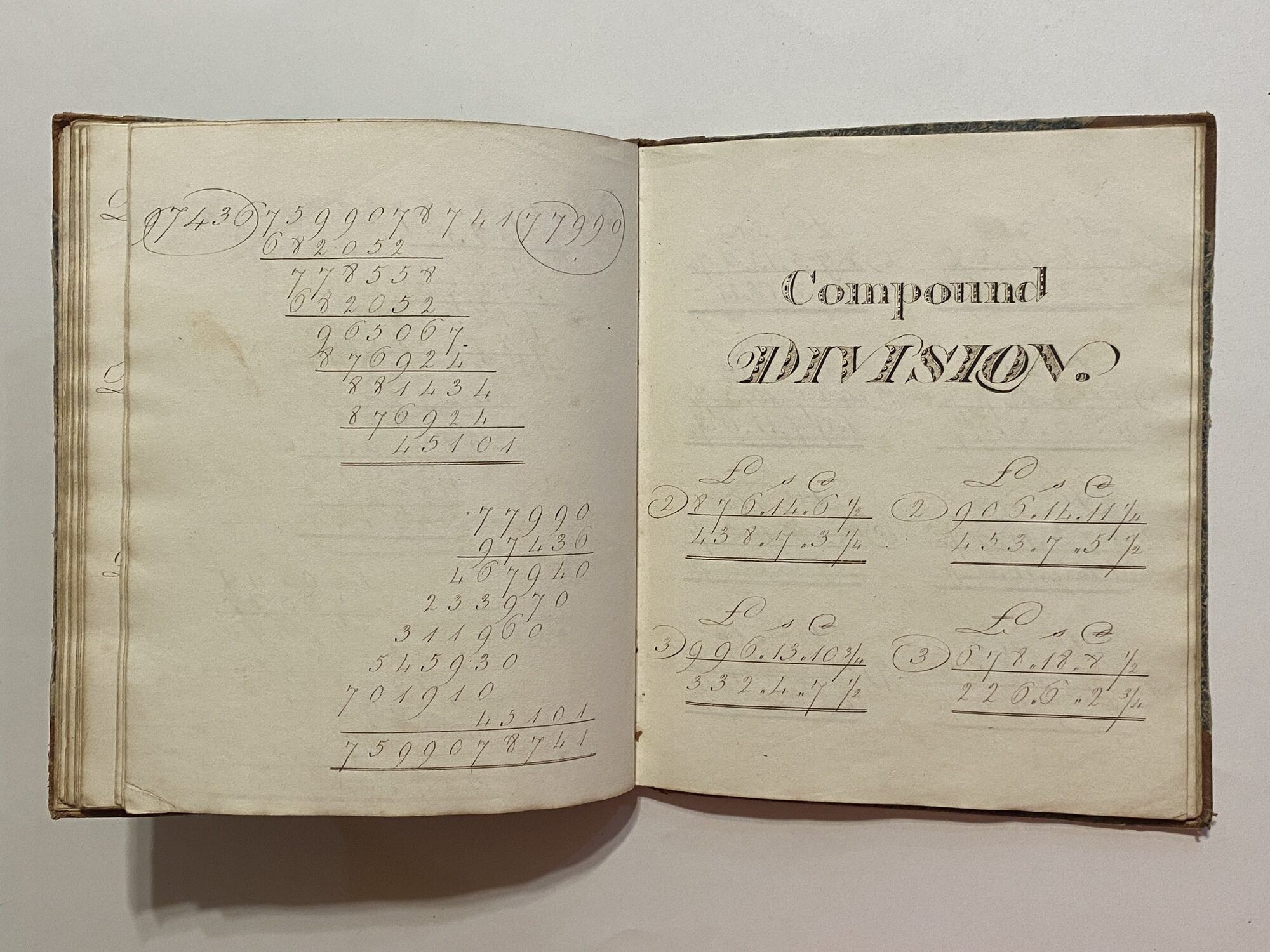
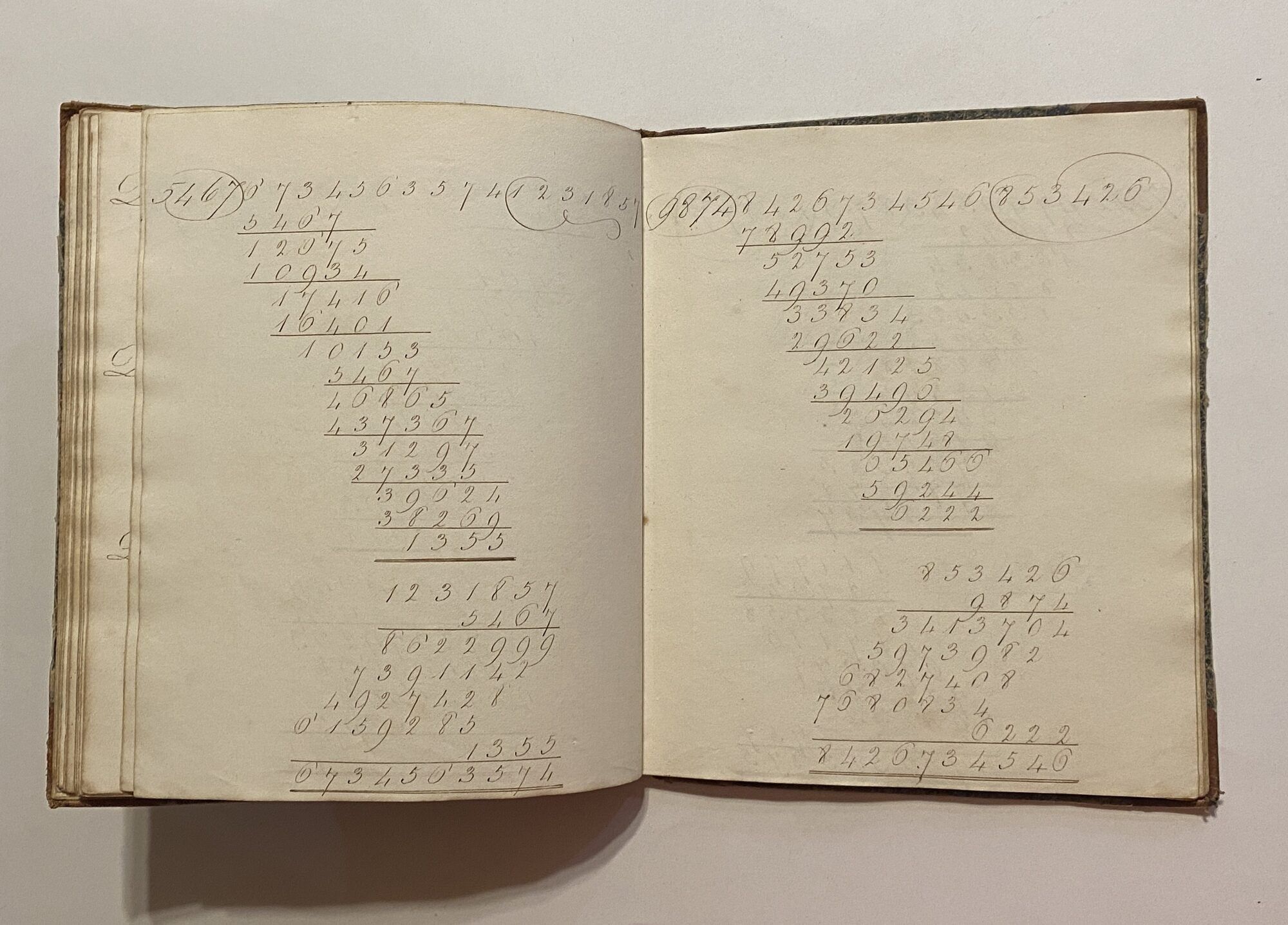
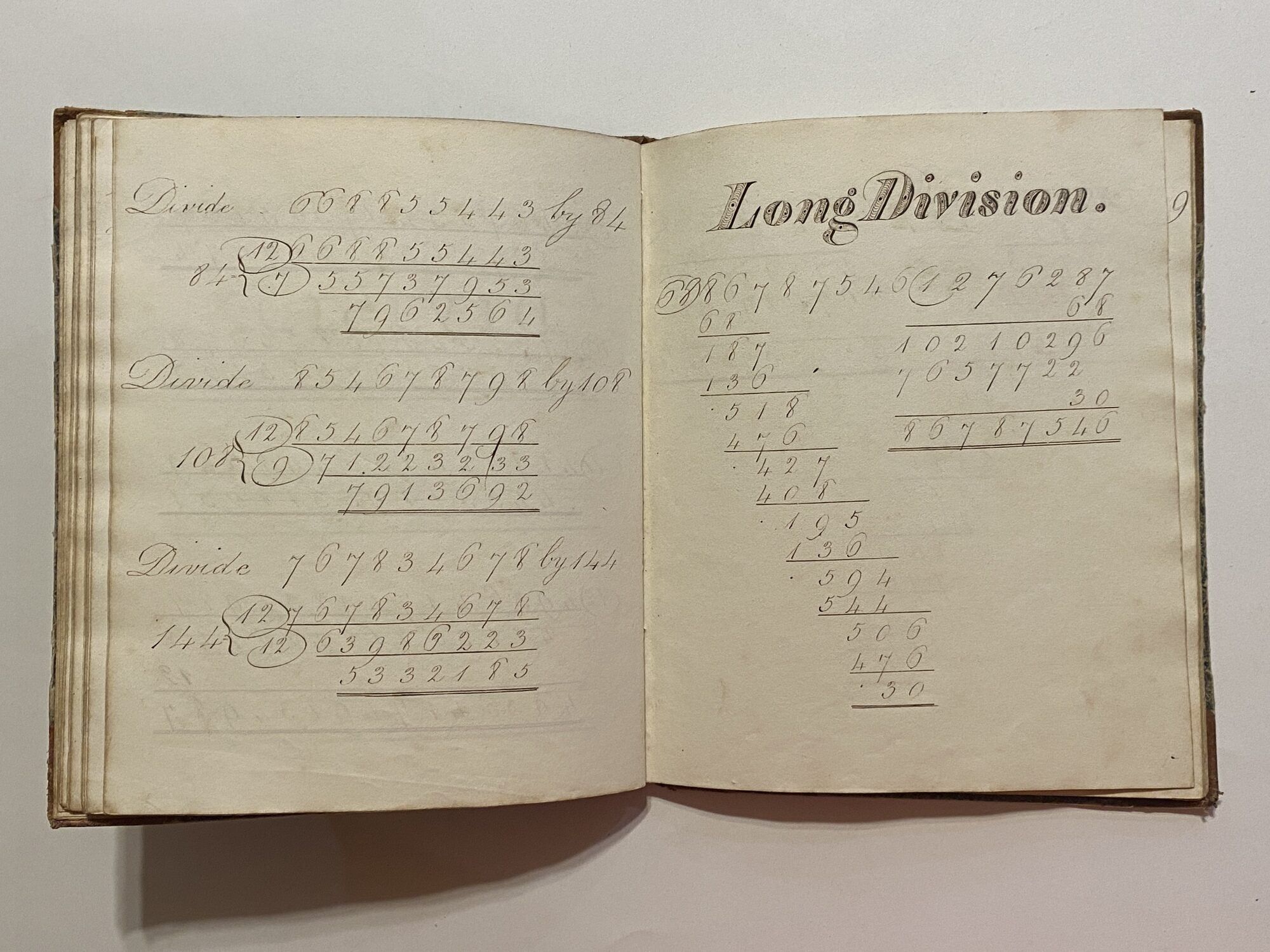
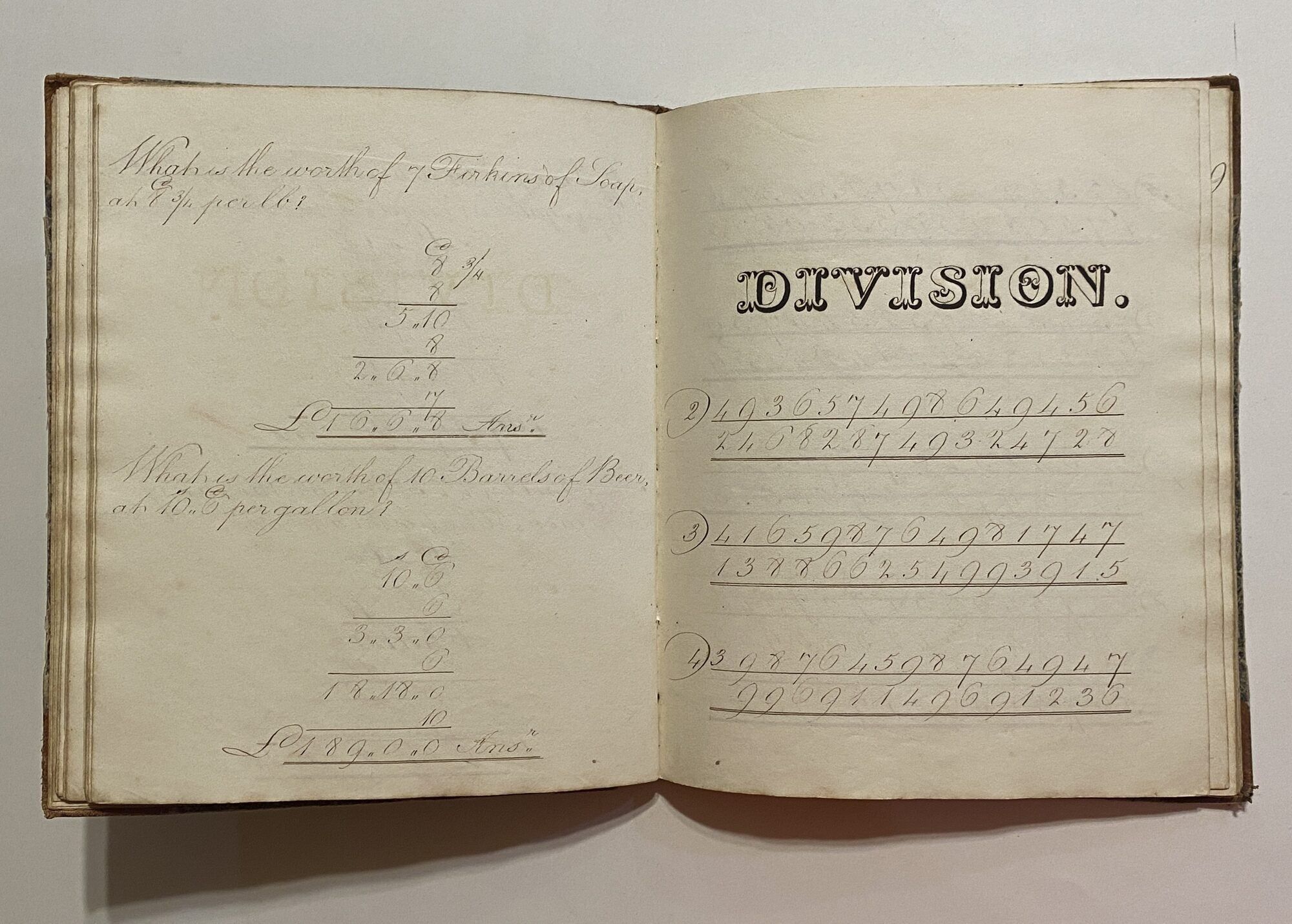
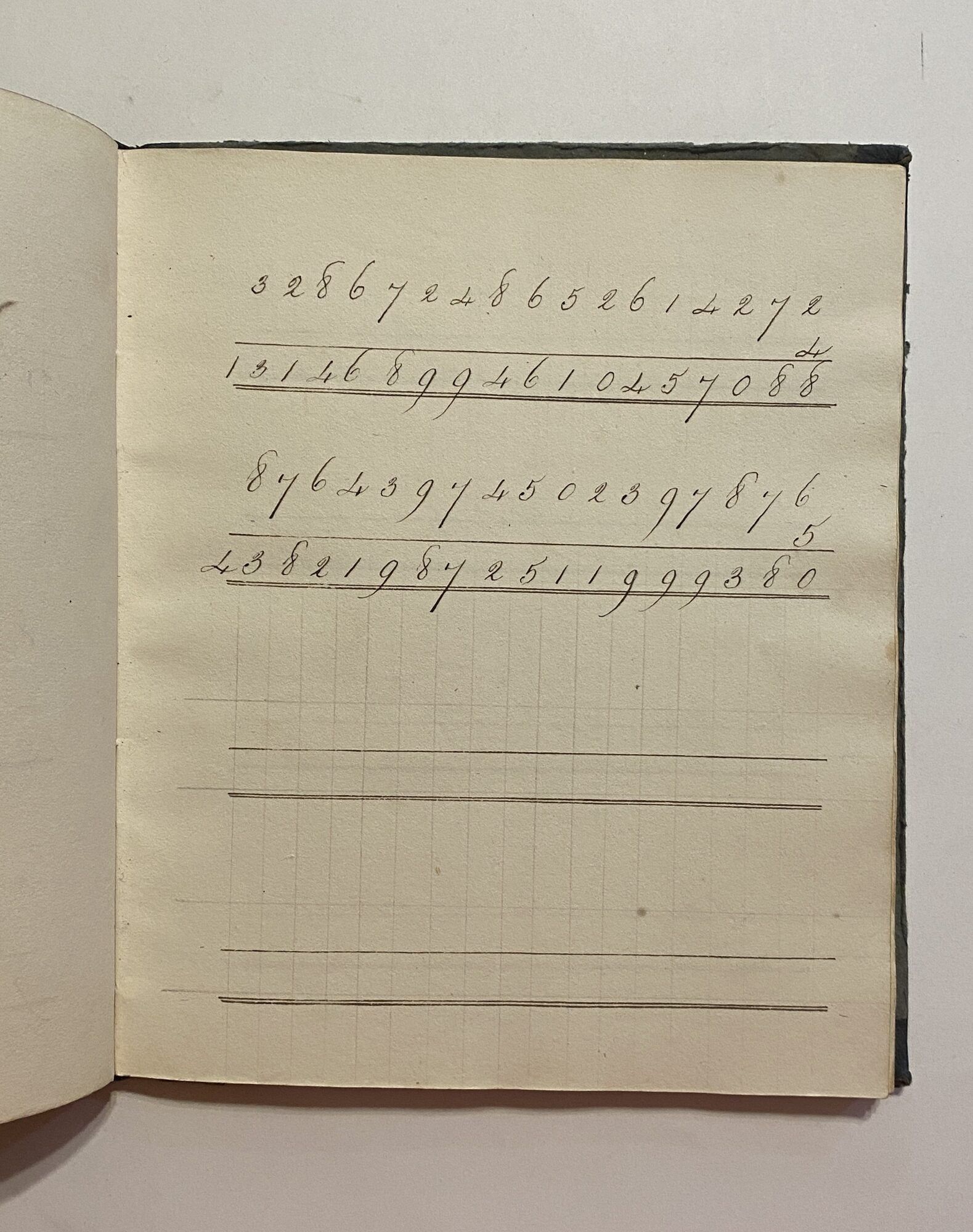
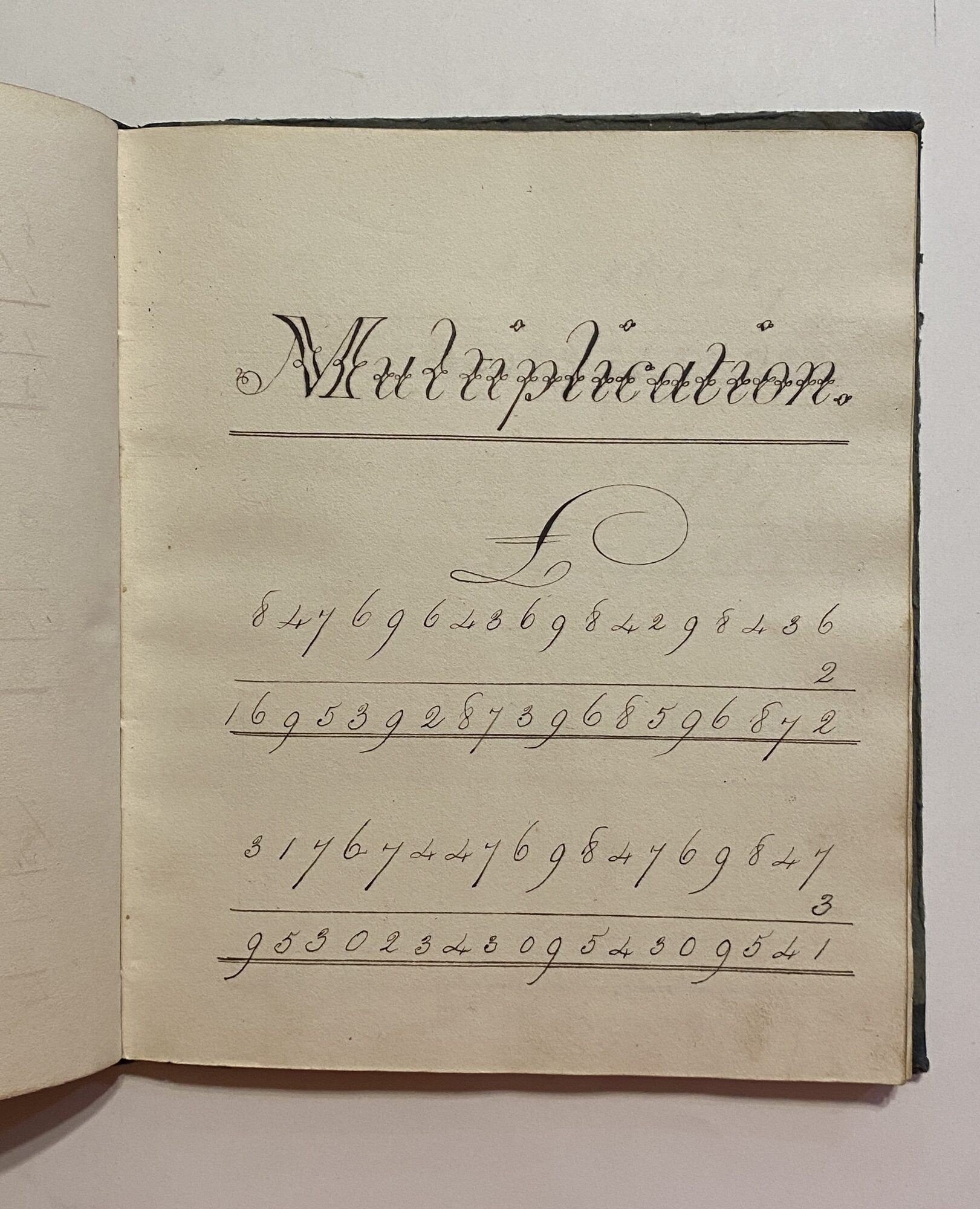
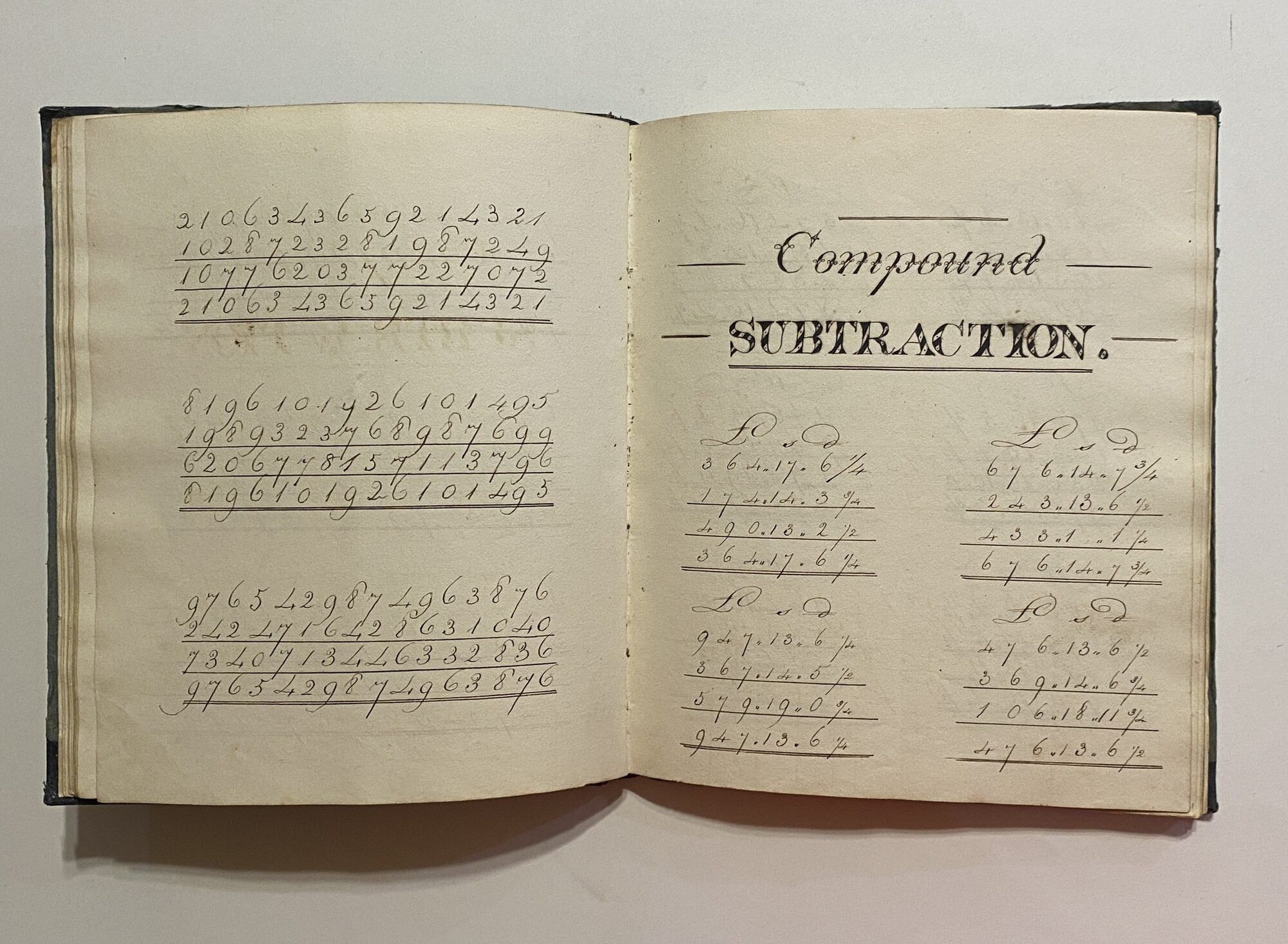
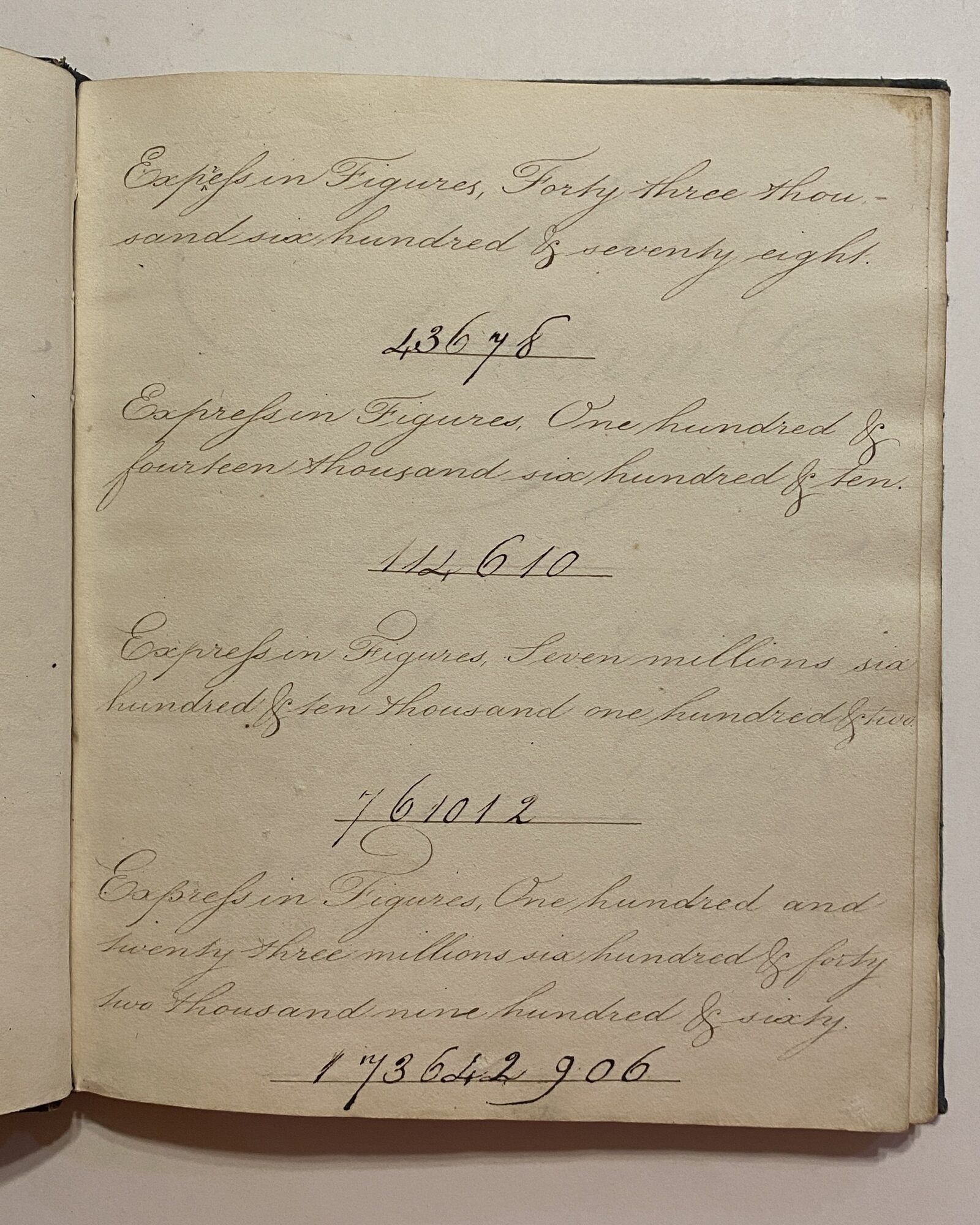
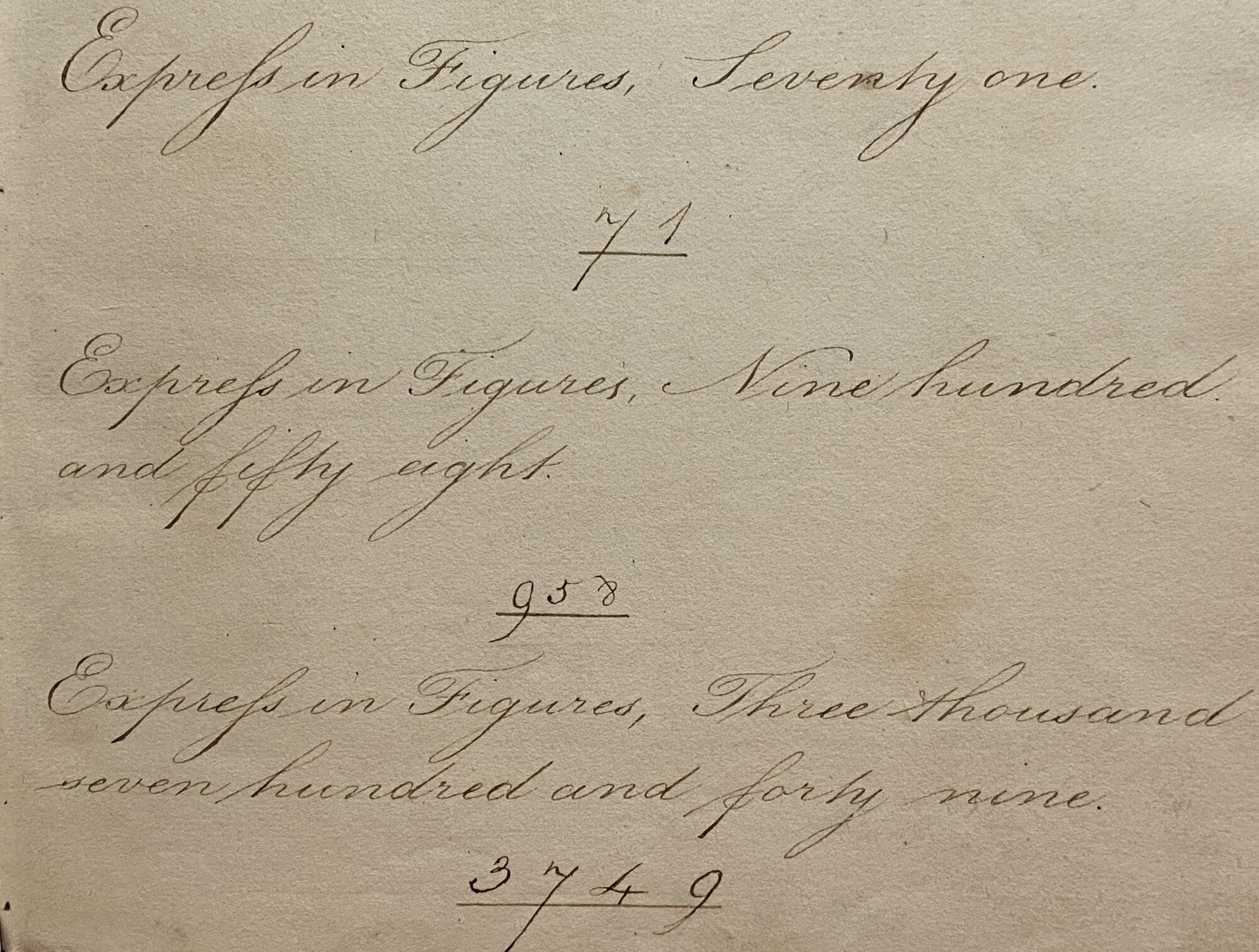
The notebooks of Mary Lewsey and J.D. Lewsey (her brother?) are very similar, having been partially written by a stationer in a very clear calligraphic hand. This stationer posed specific question for which the student was expected to answer (these answers are clearly discernible). The stationer also wrote elaborate section titles. In both notebooks we find Numeration, Addition, Compound Addition, Subtraction and Multiplication. There the notebooks diverge: Mary's Multiplication exercises end after just 1 1/2 pp., while J.D.'s notebook contains 7 pp. At this point the remaining leaves in Mary's notebook are blank; perhaps as a girl she was not required (or expected) to know more. Not the case for J.D., whose notebook is completely filled, with further sections on Compound Multiplication, Division, Long Division, Compound Division, and finally the most difficult: Reduction.
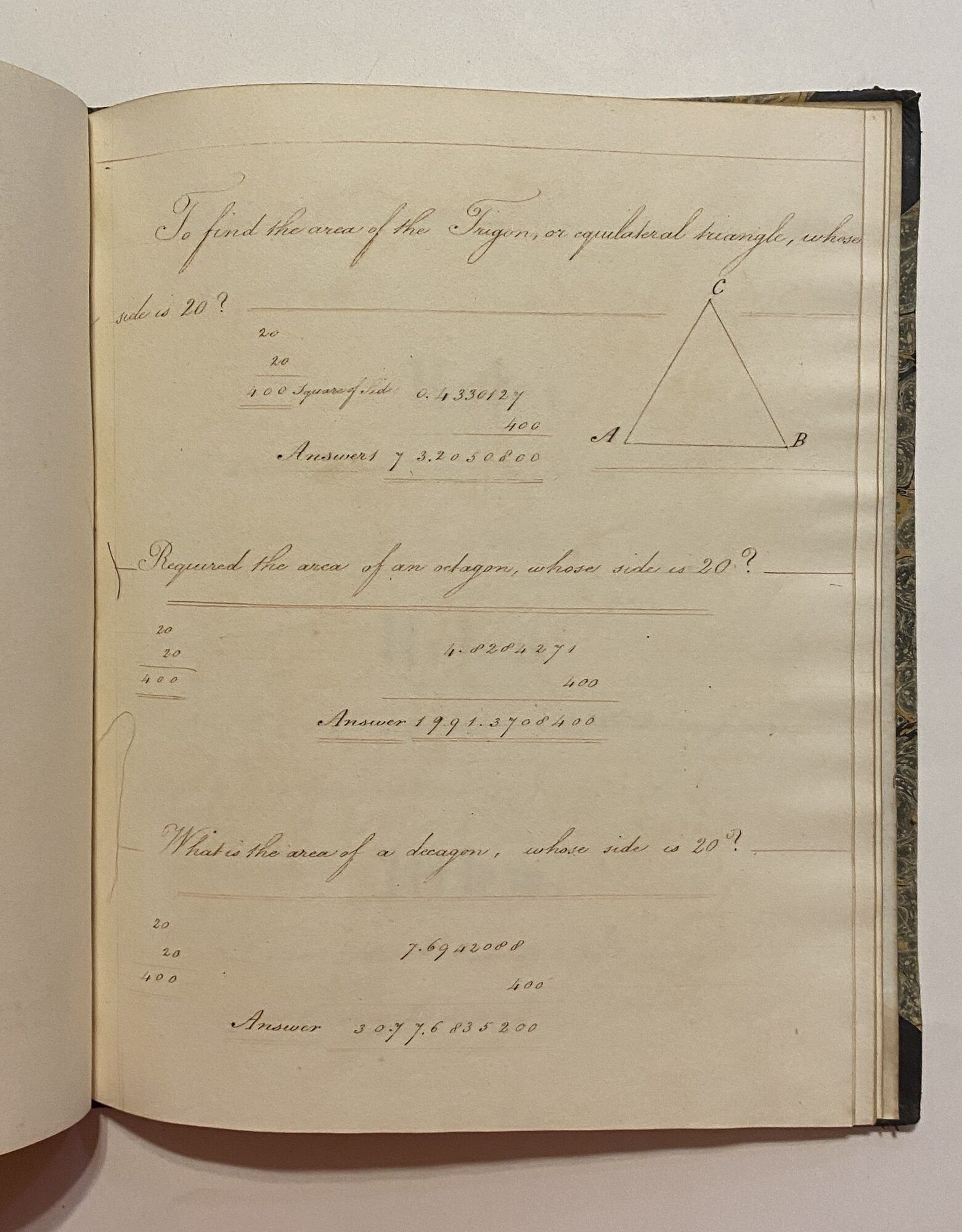
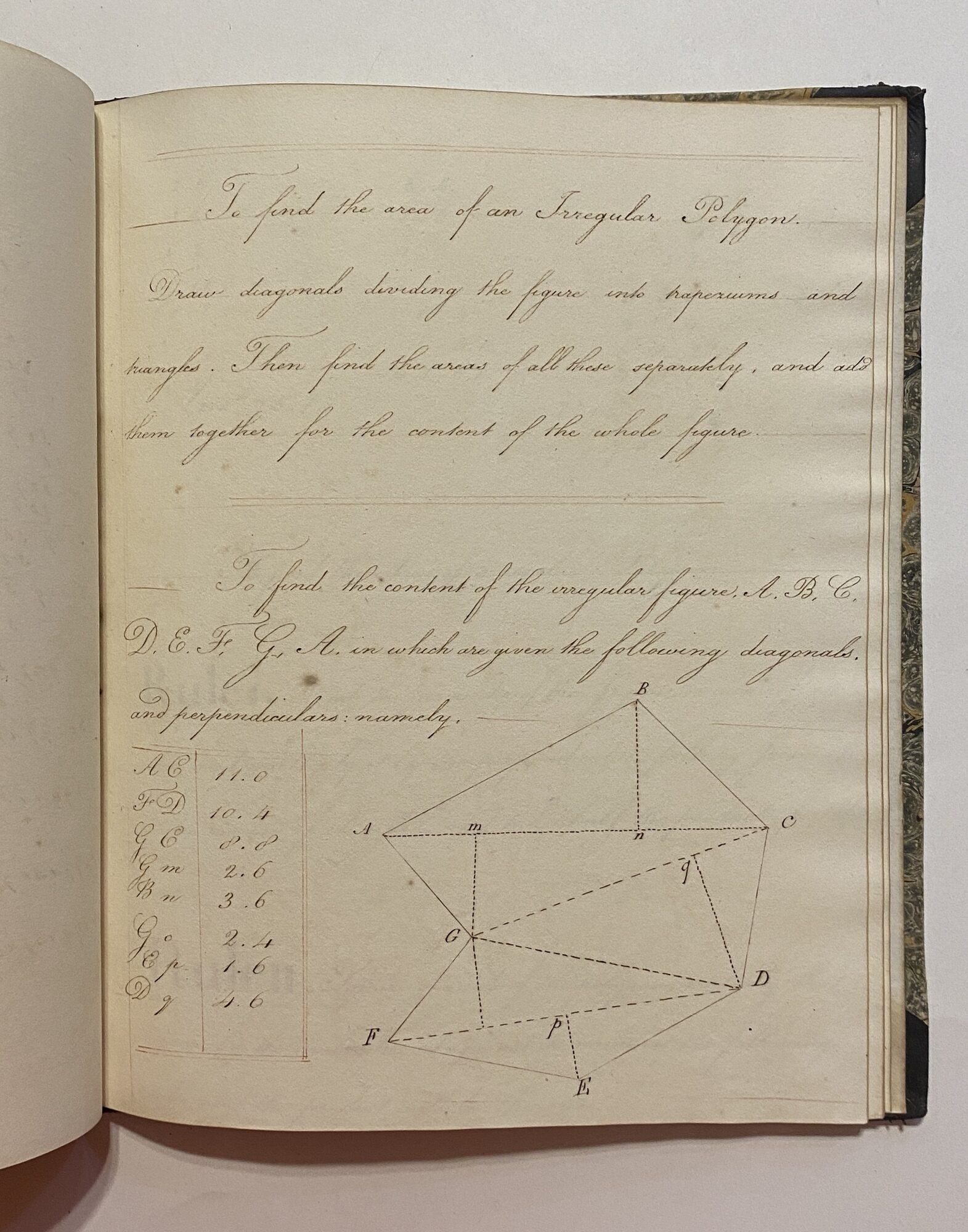
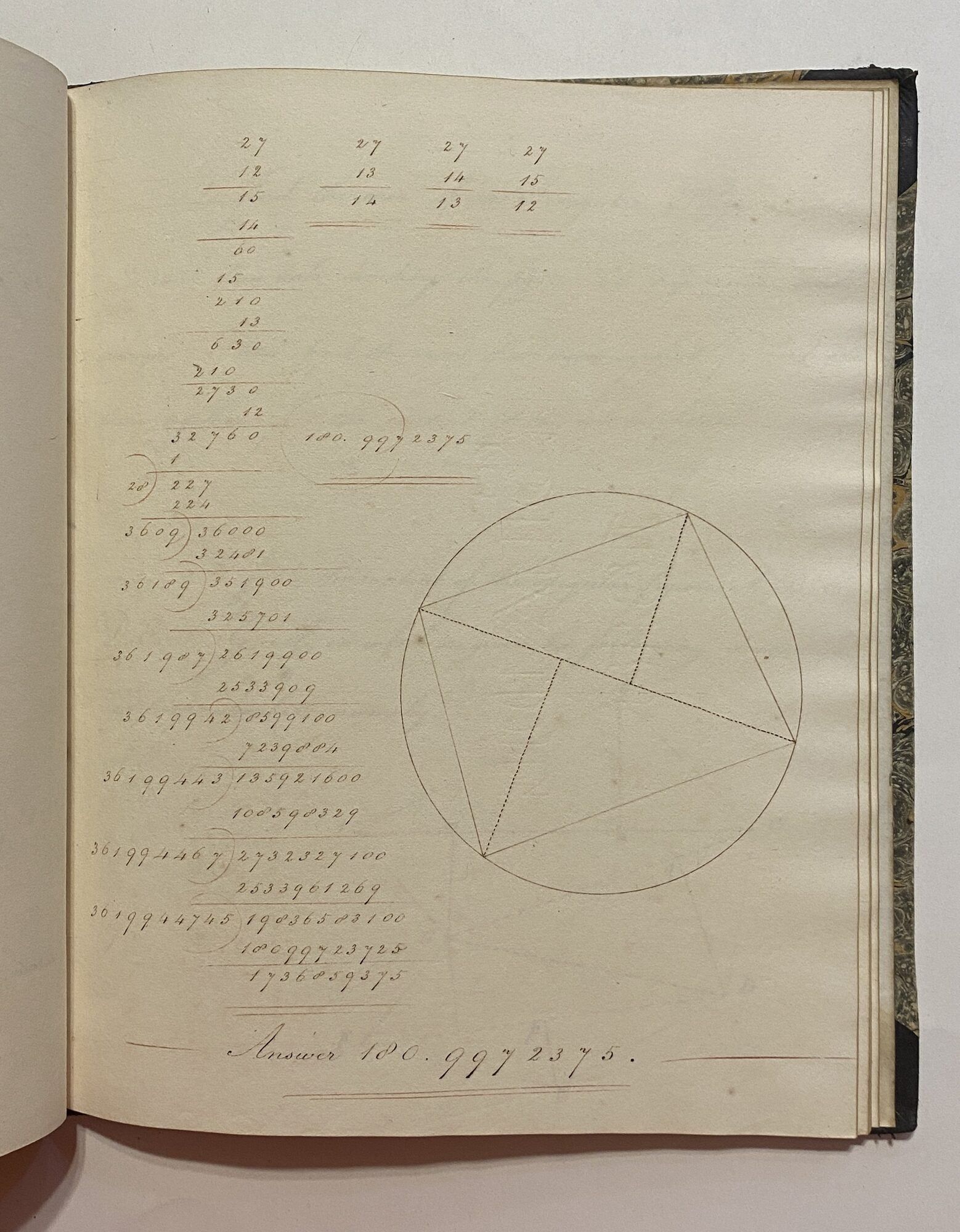
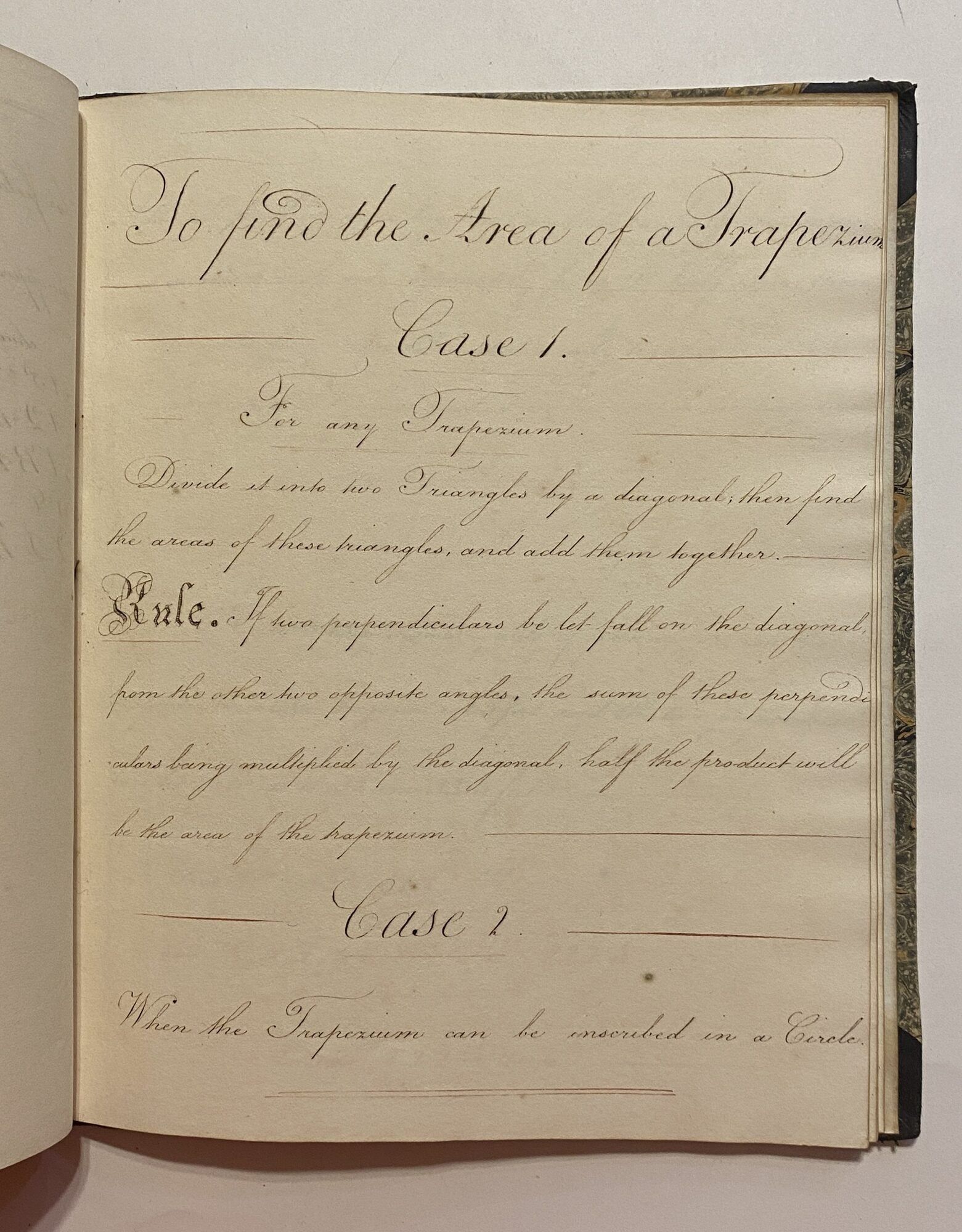
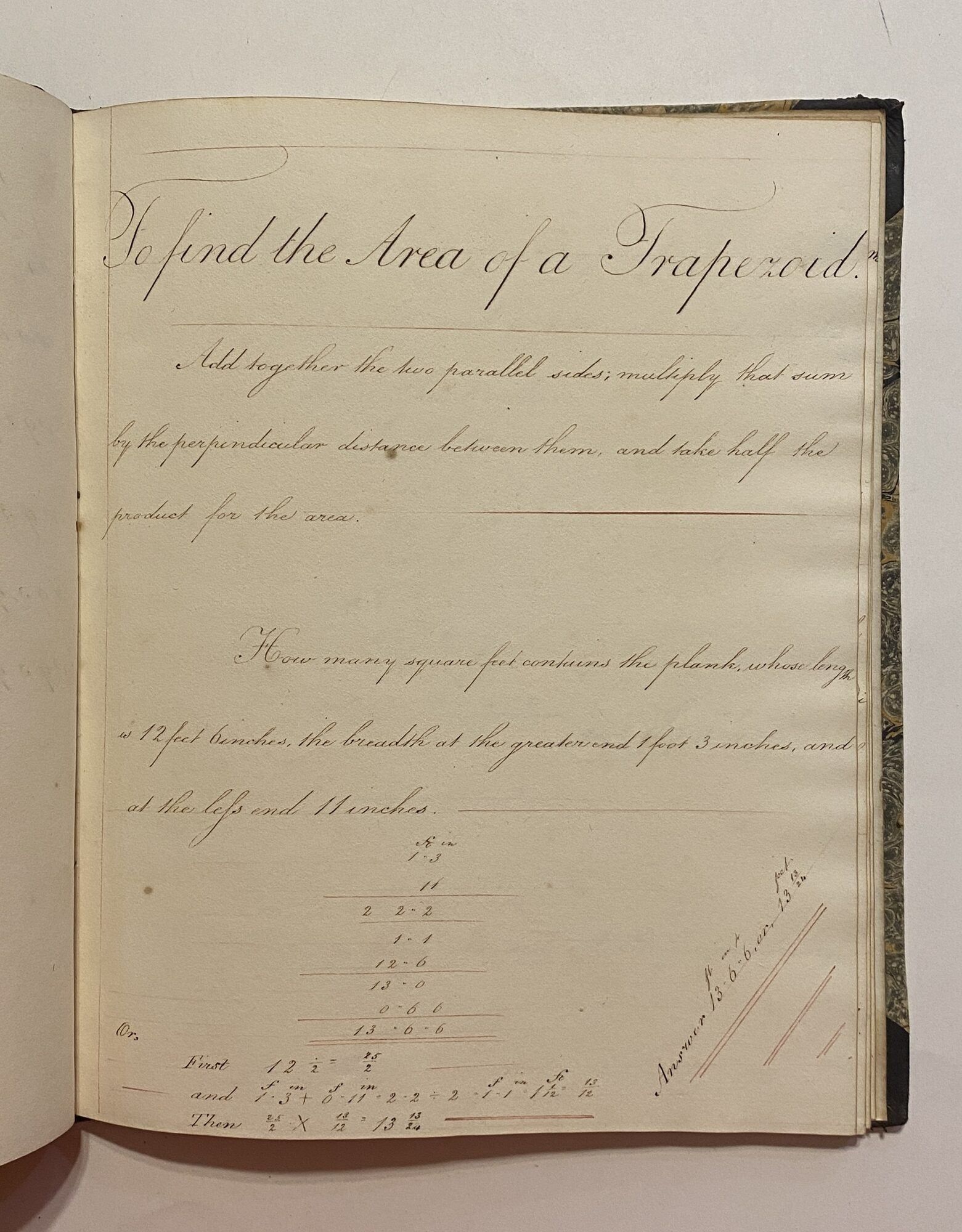
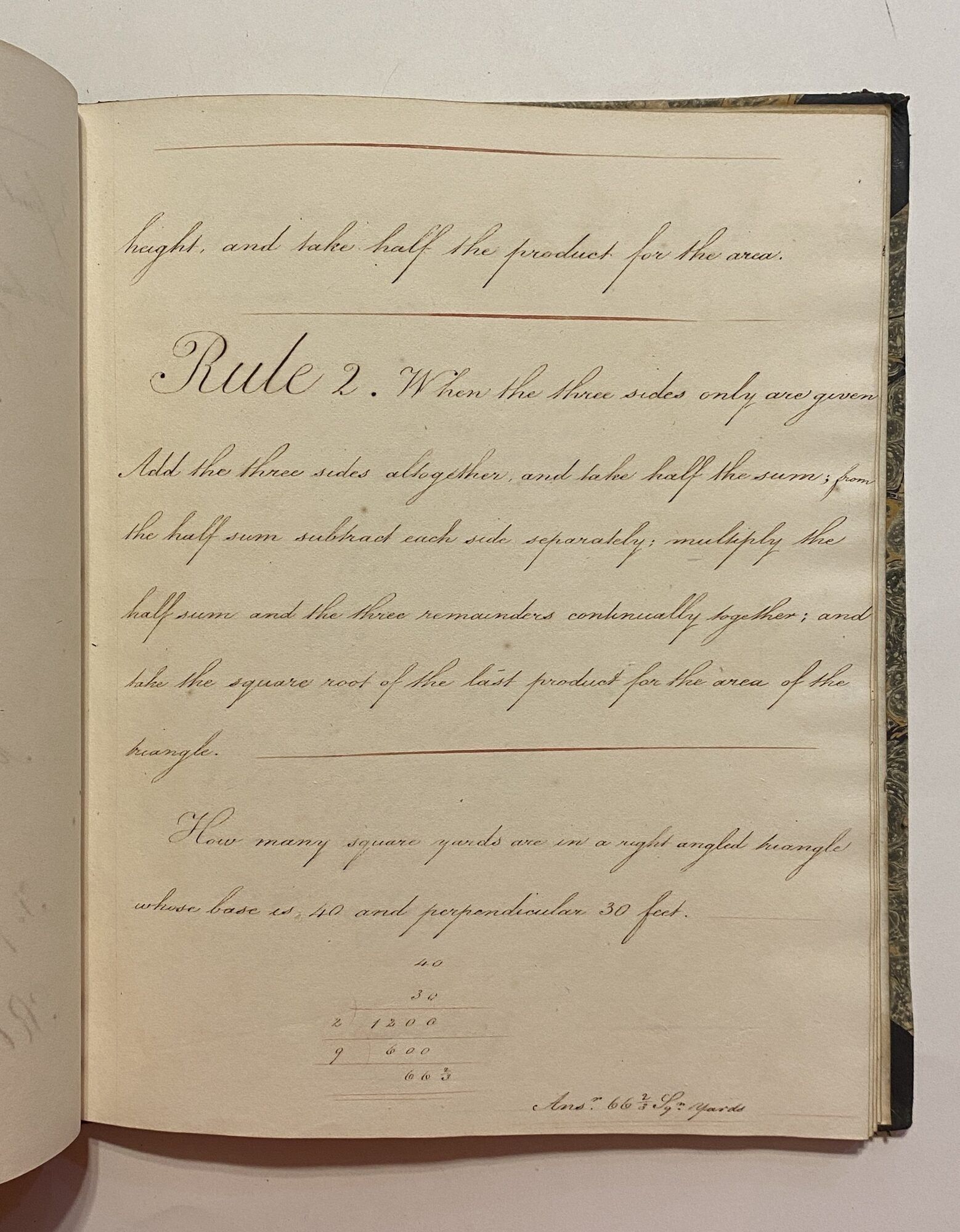
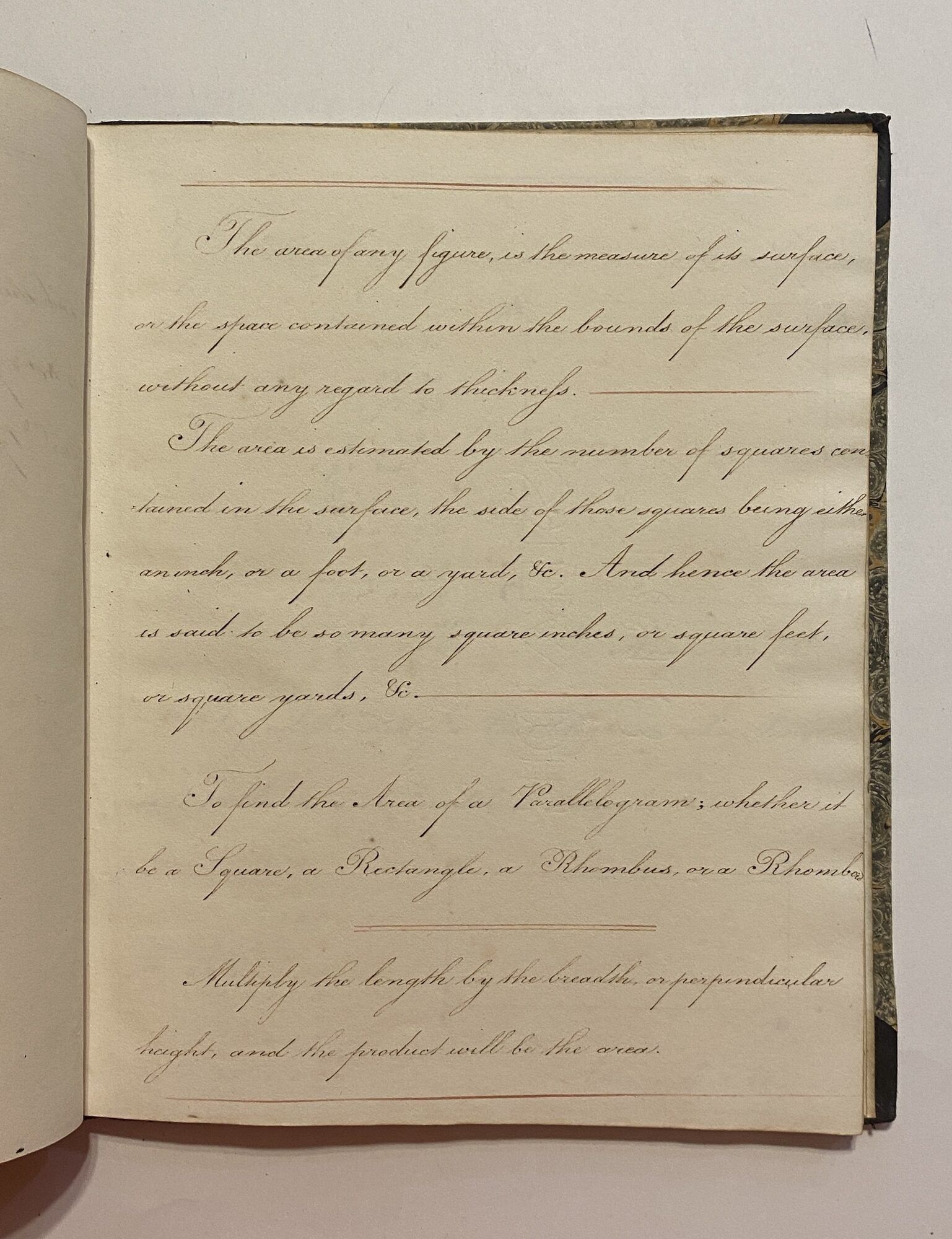
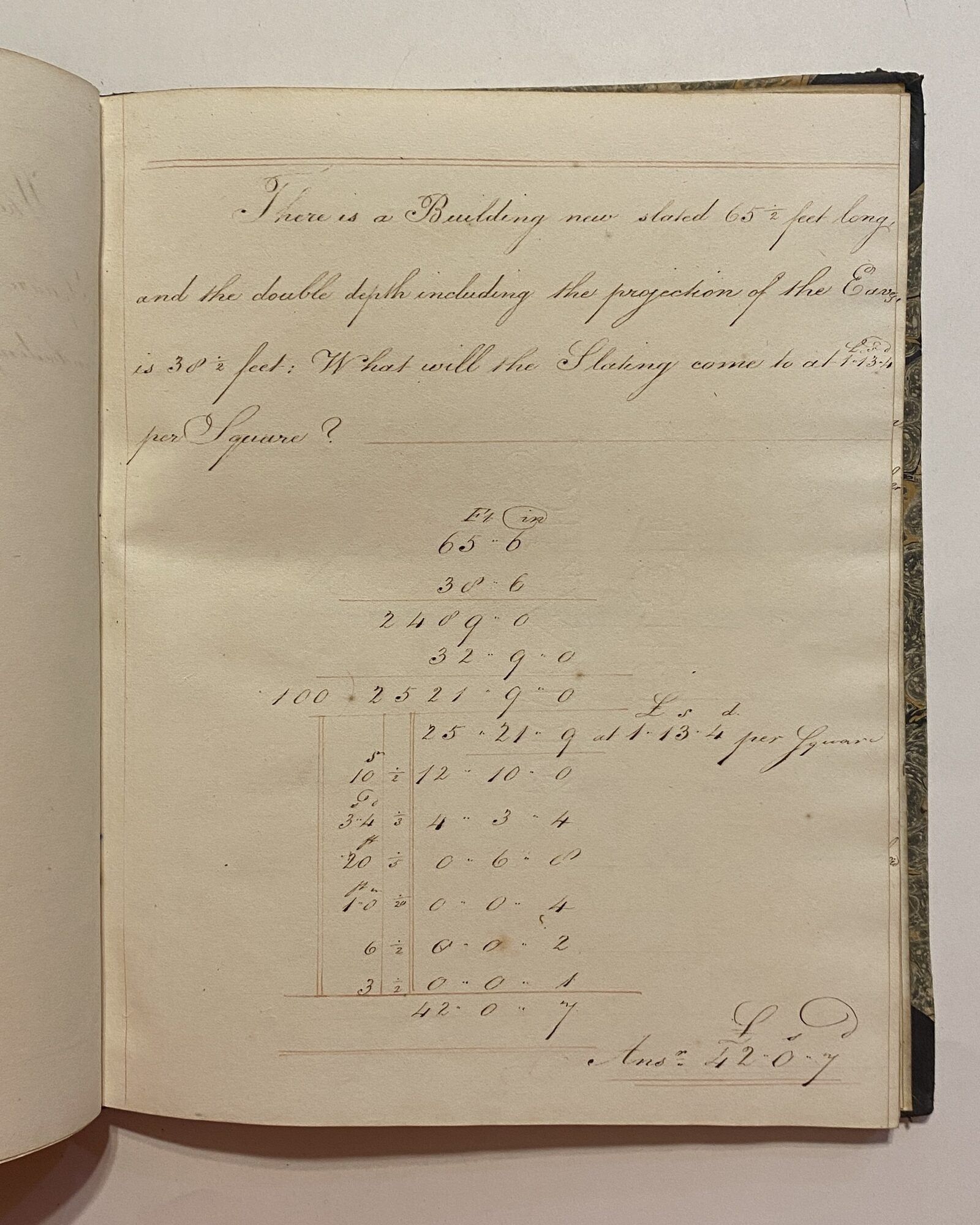
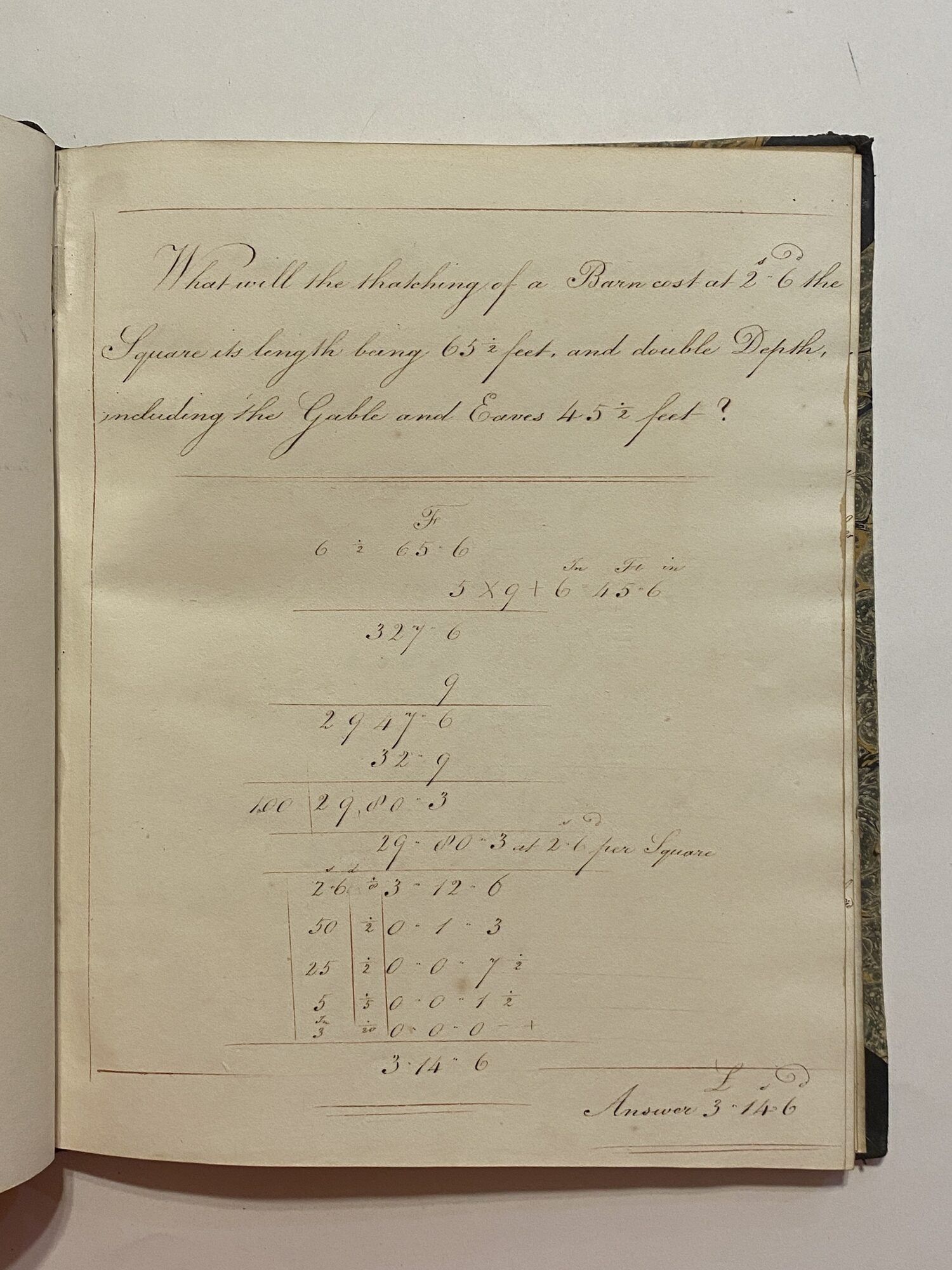
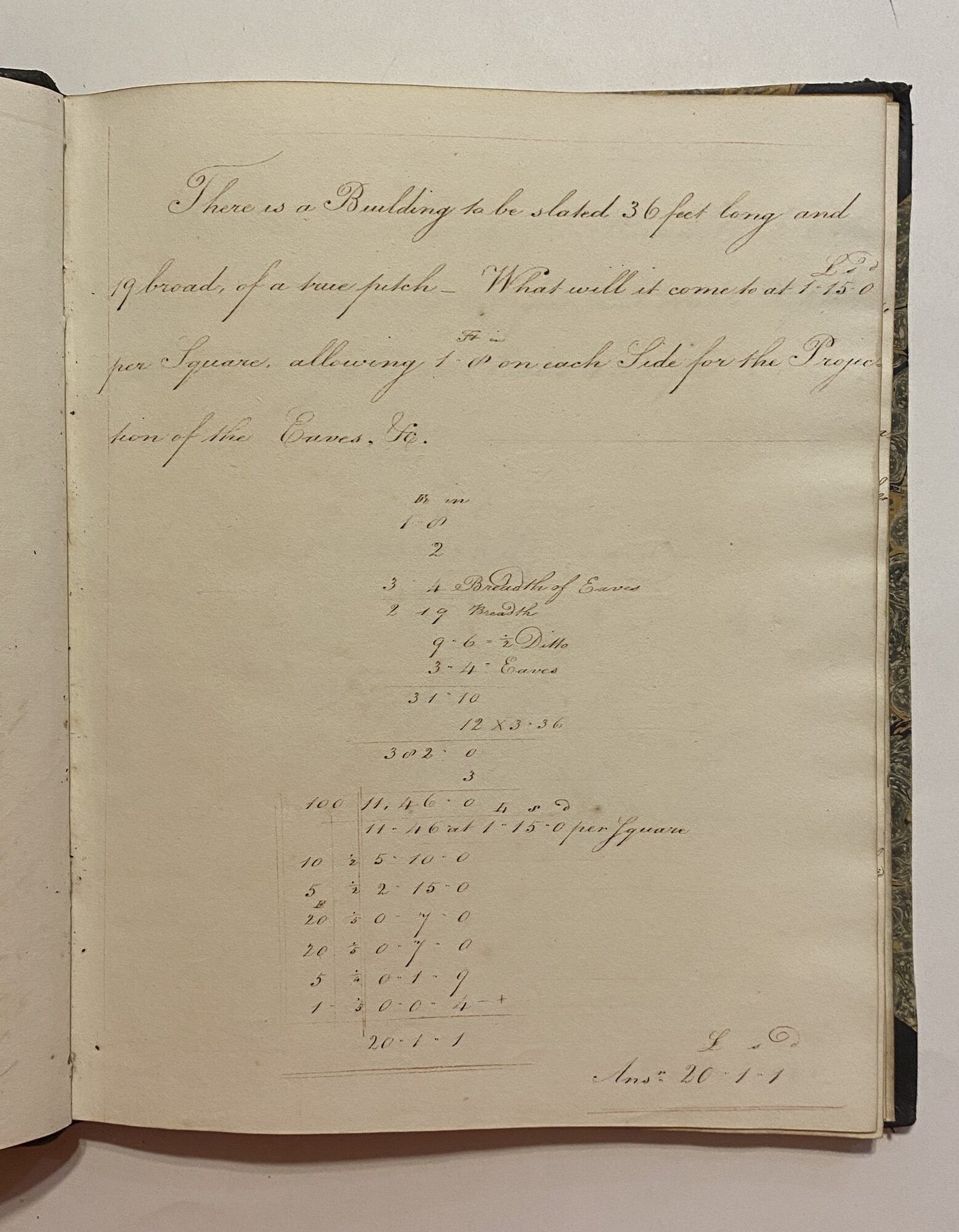
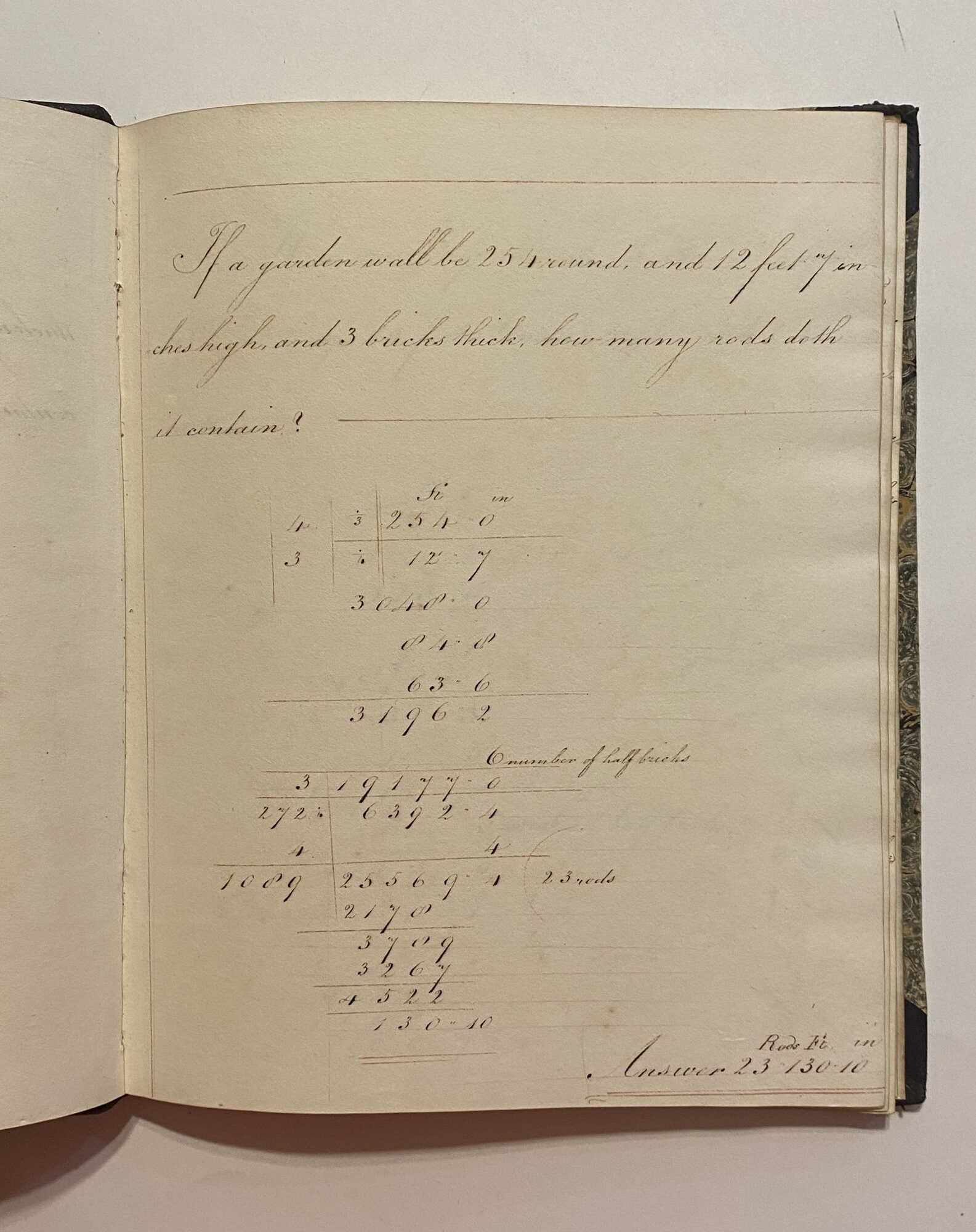
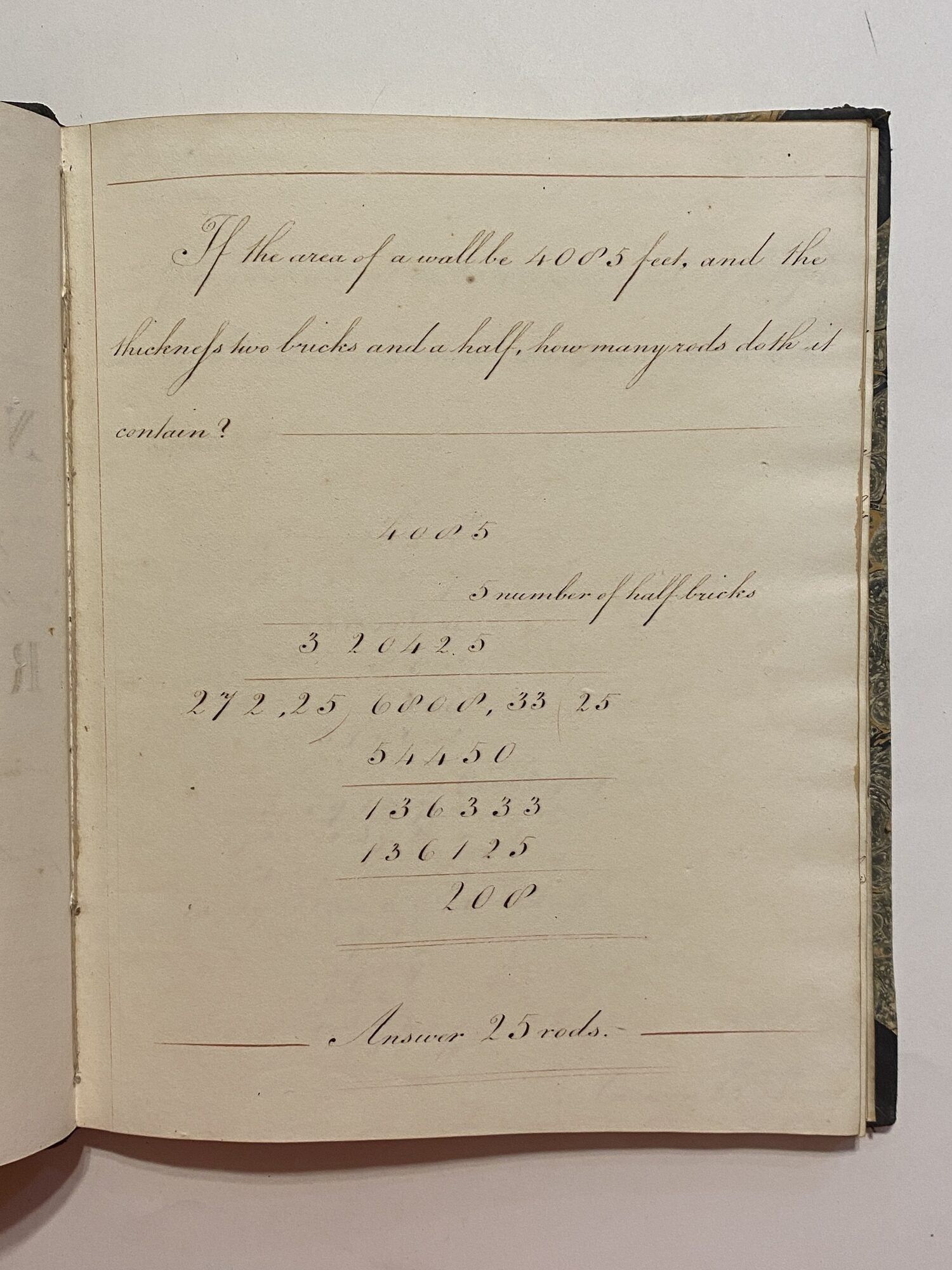
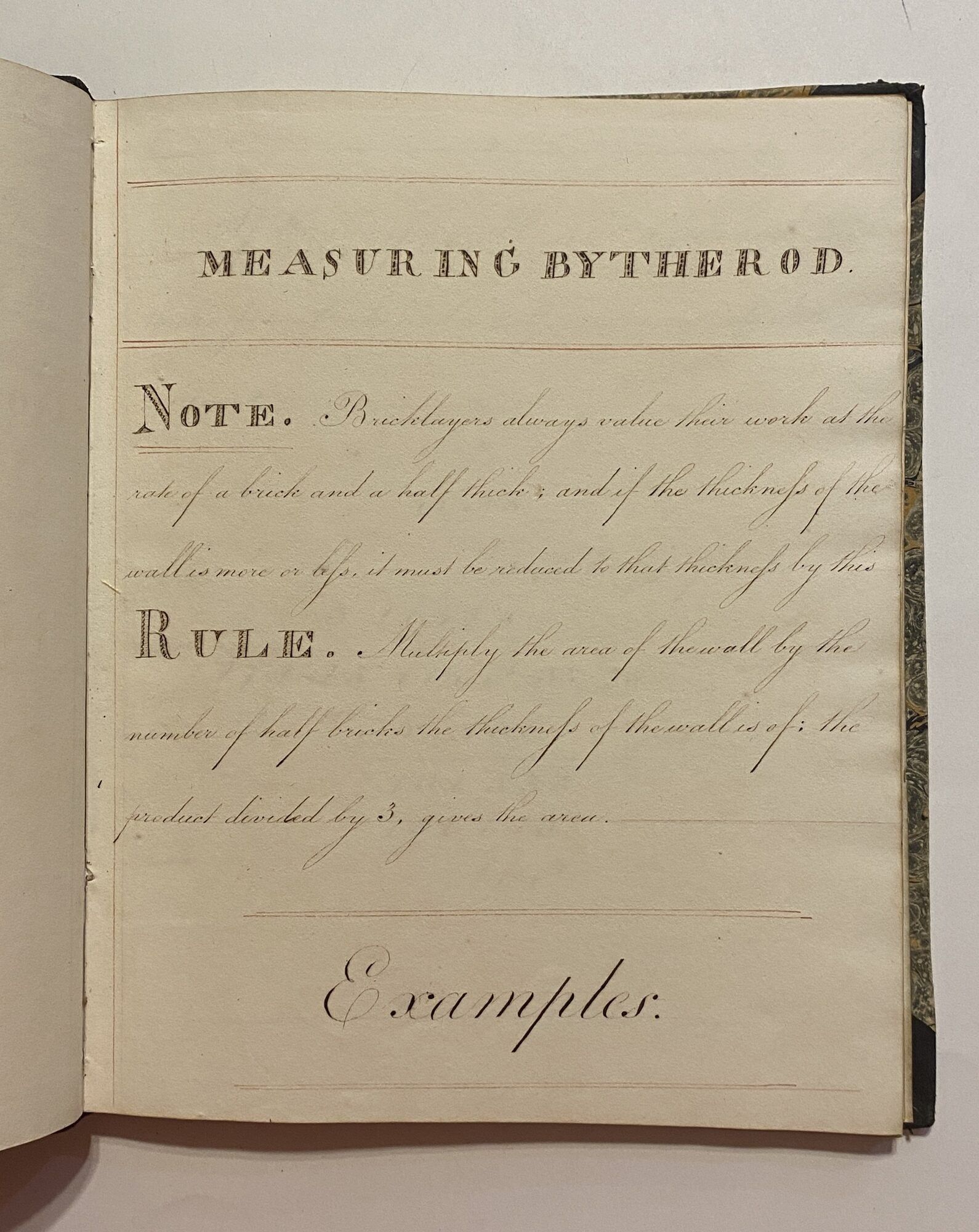
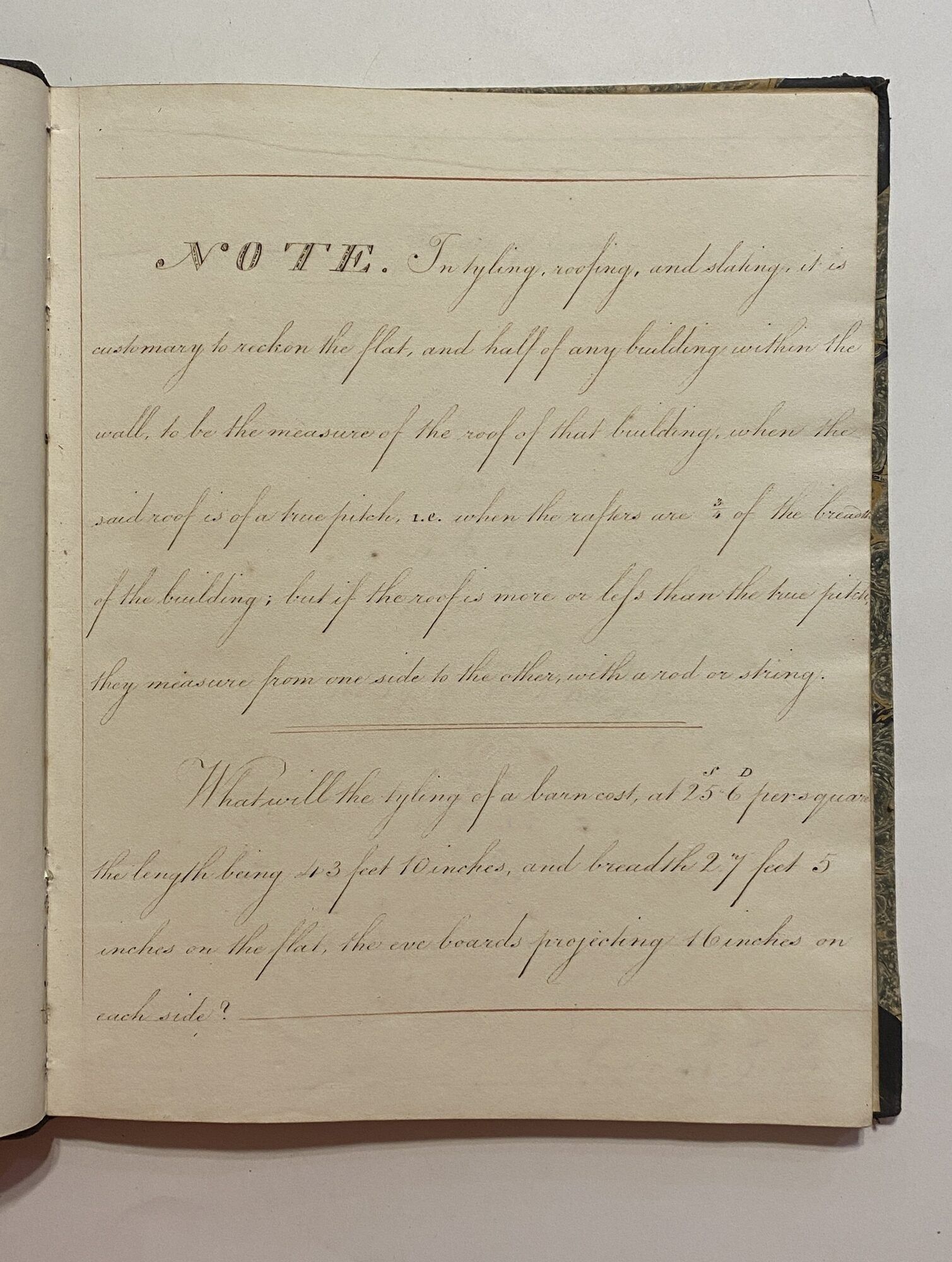
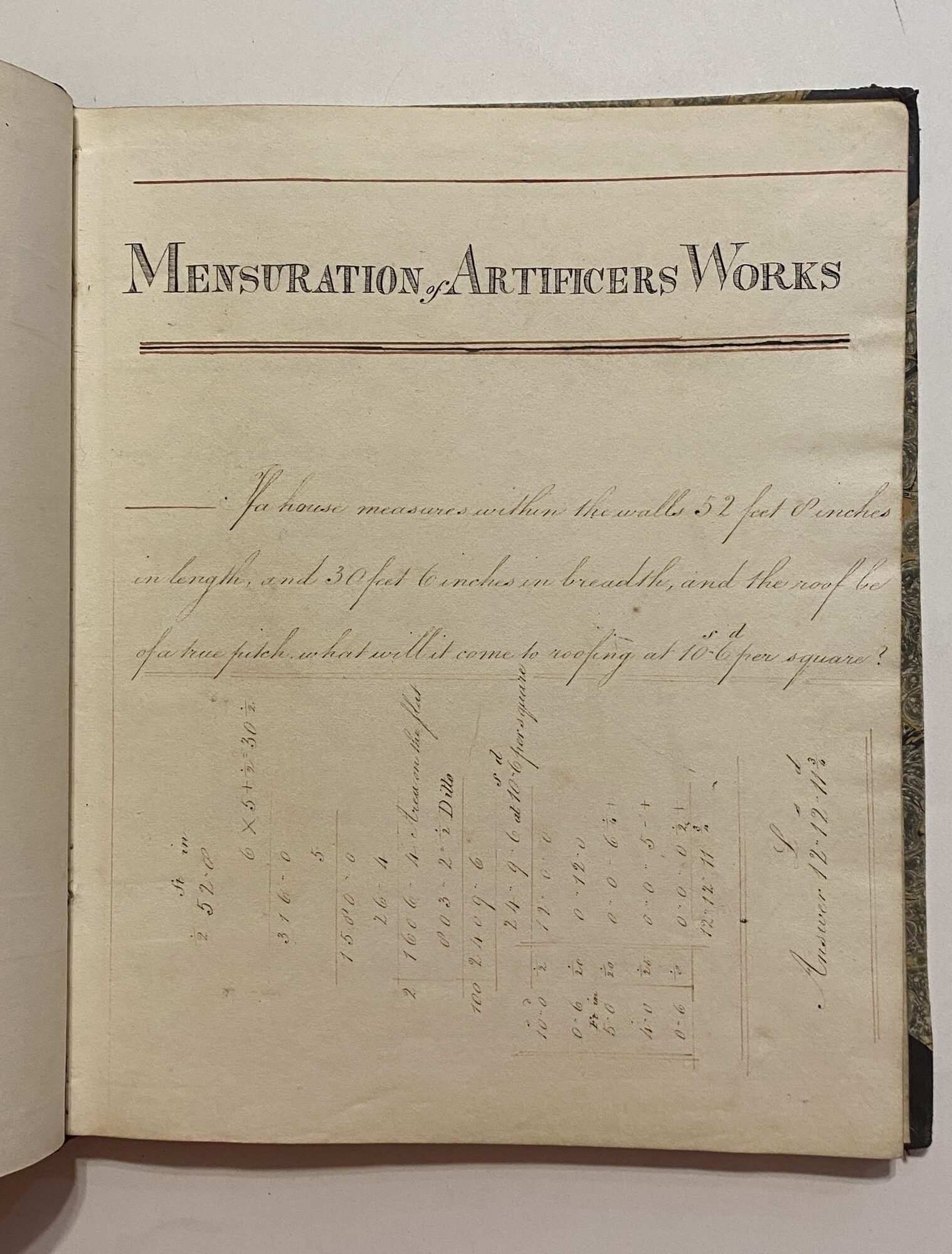
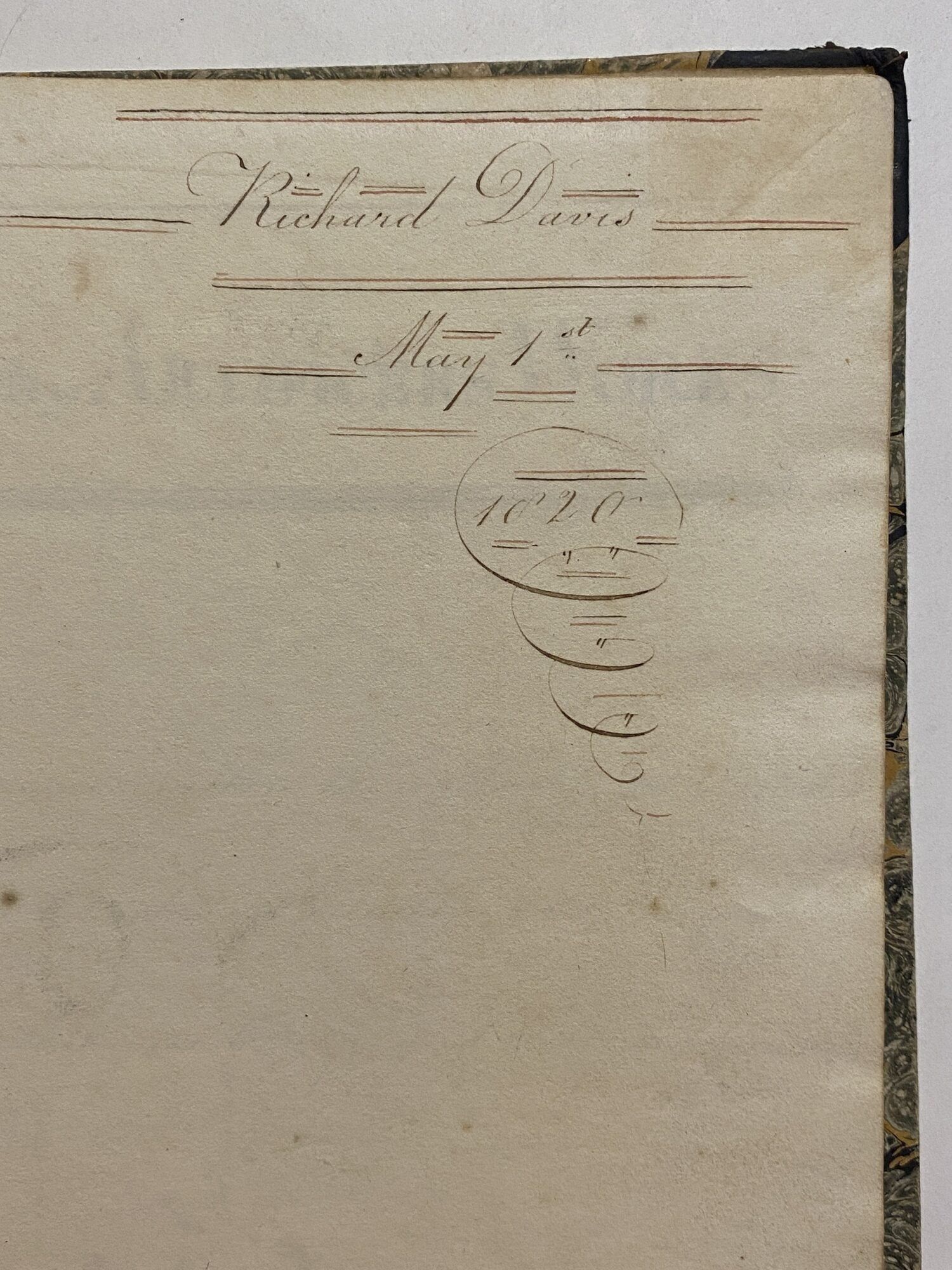
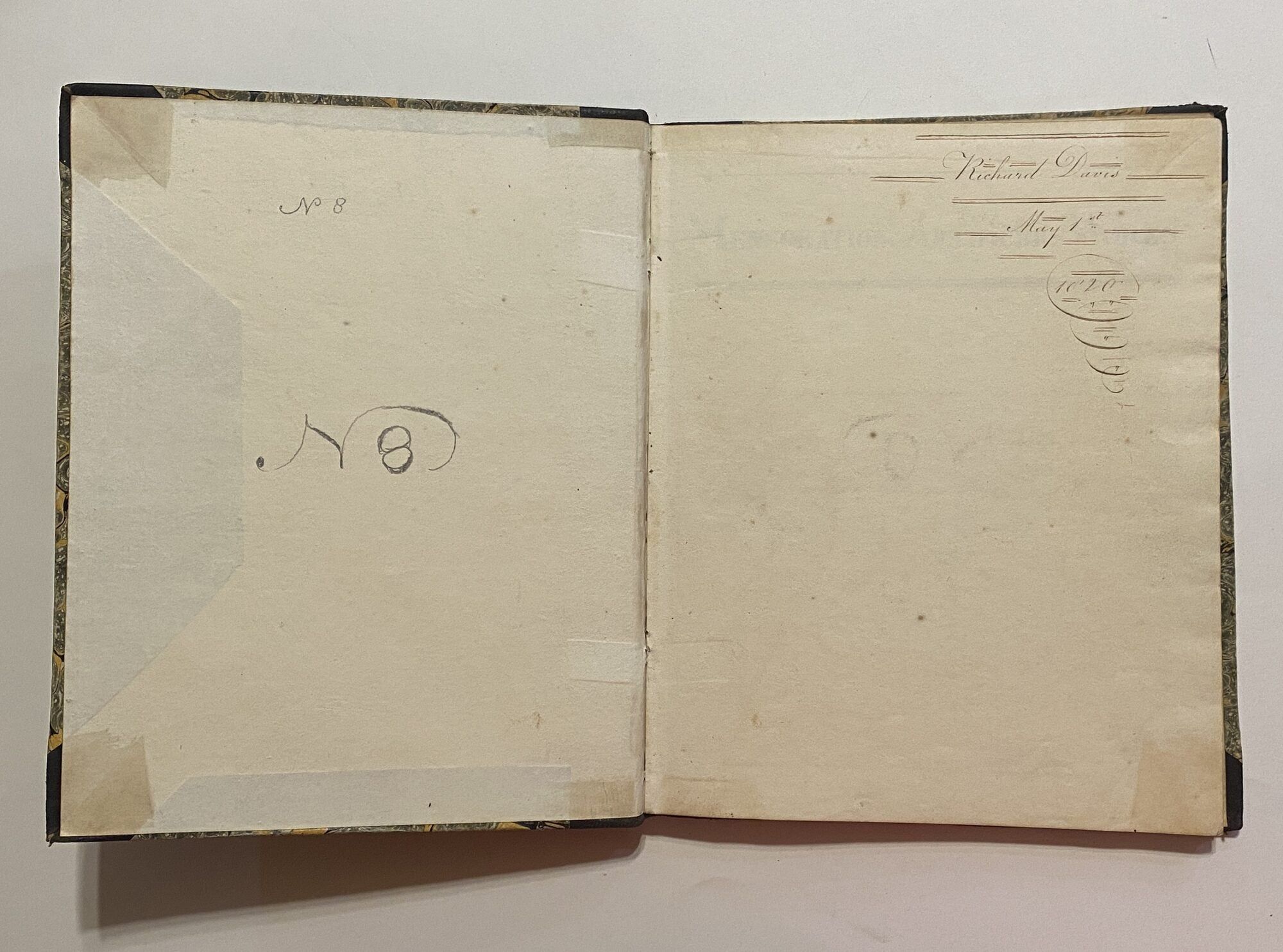
The notebook belonging to Richard Davis is dated 1820 and deals with mensuration, a critical, practical mathematical discipline, mainly in the service of COMMERCE. Mensuration focuses on calculating lengths, areas, and volumes for commerce, land surveying, and engineering. In the present notebook the stationer has likewise written questions in calligraphic MS, below which Davis provided the answers. It is interesting to see his methodology, now seemingly impossible to do without a calculator. We find mensuration extremely difficult. Examples: "Find the square yards of painting in a Rhomboid, whose length is 37 feet and breadth 54 feet." "How many square yards of paving are in the trapezium whose diagonal is 65 feet and the two perpendiculars let fall on it 28 and 33.5 feet." "What is the area of a trapezium inscribed in a circle whose four sizes being 12, 13, 14, 15" (etc.)
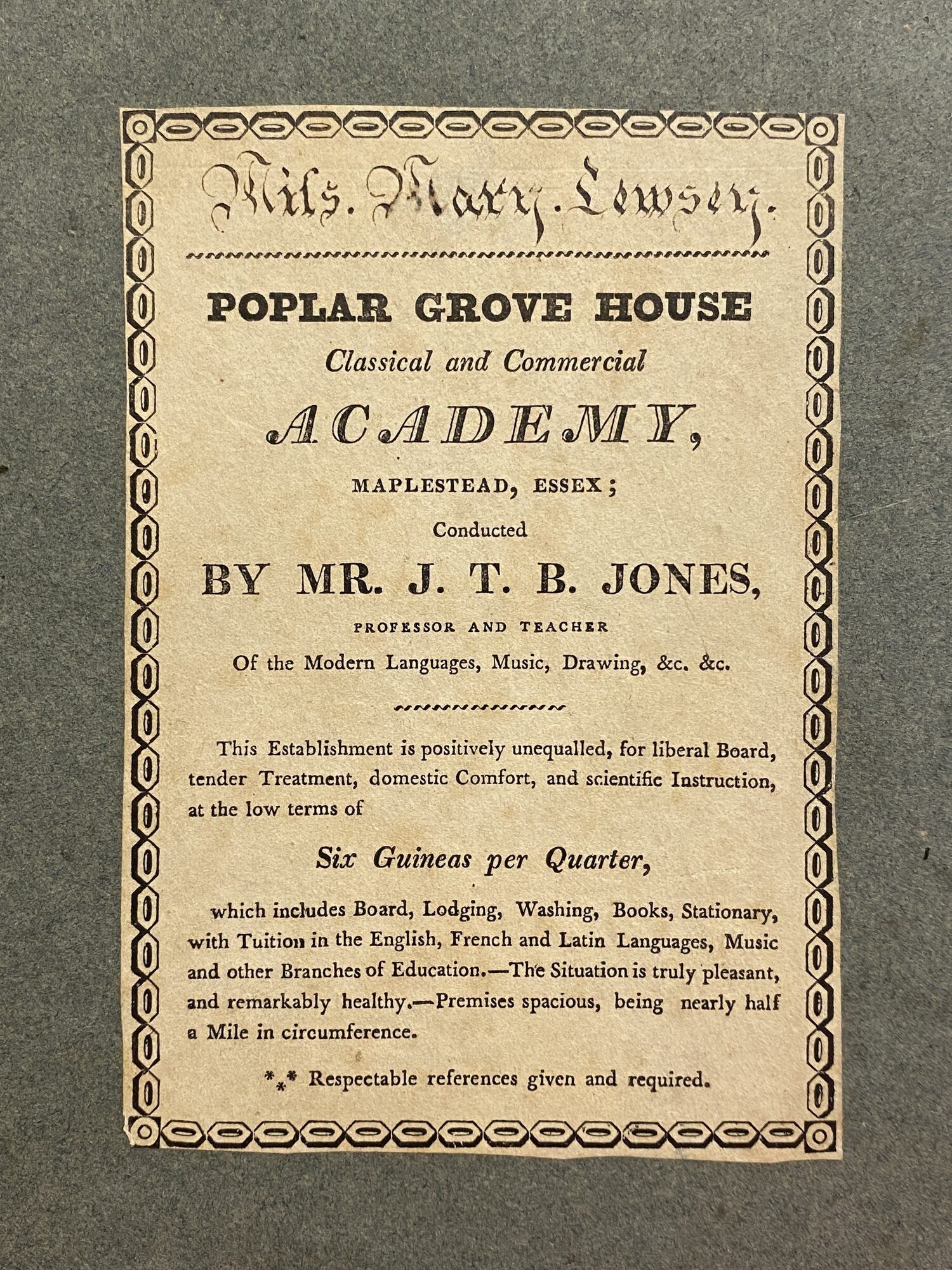
THE LITTLE-KNOWN CO-EDUCATIONAL ACADEMY: Pasted onto the front cover of Mary's notebook is a remarkable printed label which sets out the terms of Poplar Grove House "Classical and Commercial Academy. Located in Maplestead, Essex: "This establishment is positively unequaled for liberal board, tender treatment domestic comfort and scientific instruction at the low terms of six guineas per quarter, which includes Board, Lodging, Washing, Books, Stationary, with Tuition in the English, French and Latin Languages, Music and other Branches of Education. -- The Situation is truly pleasant, and remarkably healthy. -- Premises spacious, being nearly half a Mile in circumference. Respectable references given and required." We have been unable to find any record of a Poplar Grove House in Essex, or anywhere else for that matter. How is it possible that an Academy, which comprised "nearly half a mile in circumference," has disappeared?
But the co-ed Poplar Grove House Academy may not have disappeared completely; we believe it may have simply changed its name to the Maplestead Academy: in the Chelmsford Chronicle (July 1, 1836) "our" J.T.B. Jones is reported to have been operating the Maplestead Academy "near Halstead, Essex," and the Academy had been established 17 years prior (i.e. ca. 1819). Further information about the Maplestead Academy is given in the March 8, 1837 Bury and Suffolk Herald: "Maplestead Academy, Halstead, Essex. The terms are only £ 5 a quarter if under 10 years of age. Lessons include Latin, French, Dancing, Drilling, Washing. Books included. Provisions are provided and abundant. The situation is healthy and pleasant and are conducted by Mr J.T.Jones." This individual was Joseph Thomas Bethall Jones, the "Professor and Teacher" whose name appears so prominently on the label affixed to the cover of Mary Lewsey's notebook. It is not known when the Maplestead Academy ceased operation, and we have been unable to determine exactly where it was located.
THE NOTEBOOKS: Mary Lewsey's notebook contains a remarkable engraved frontispiece which celebrates mathematics and arithmetic; it reads in part: "Commerce aided by Justice instructing Youth in the use of the Tables and General principles of Arithmetic." In the banderolles above: "Profit & Loss," "Brokerage," "Tables," etc. It is quite possible that "our" Mary Lewsey was born in 1807 in Woodham Ferrers, Essex which is 10 miles from Maplestead. Early mathematics notebooks written by girls are uncommon in private ownership.
The notebooks of Mary Lewsey and J.D. Lewsey (her brother?) are very similar, having been partially written by a stationer in a very clear calligraphic hand. This stationer posed specific question for which the student was expected to answer (these answers are clearly discernible). The stationer also wrote elaborate section titles. In both notebooks we find Numeration, Addition, Compound Addition, Subtraction and Multiplication. There the notebooks diverge: Mary's Multiplication exercises end after just 1 1/2 pp., while J.D.'s notebook contains 7 pp. At this point the remaining leaves in Mary's notebook are blank; perhaps as a girl she was not required (or expected) to know more. Not the case for J.D., whose notebook is completely filled, with further sections on Compound Multiplication, Division, Long Division, Compound Division, and finally the most difficult: Reduction.
The notebook belonging to Richard Davis is dated 1820 and deals with mensuration, a critical, practical mathematical discipline, mainly in the service of COMMERCE. Mensuration focuses on calculating lengths, areas, and volumes for commerce, land surveying, and engineering. In the present notebook the stationer has likewise written questions in calligraphic MS, below which Davis provided the answers. It is interesting to see his methodology, now seemingly impossible to do without a calculator. We find mensuration extremely difficult. Examples: "Find the square yards of painting in a Rhomboid, whose length is 37 feet and breadth 54 feet." "How many square yards of paving are in the trapezium whose diagonal is 65 feet and the two perpendiculars let fall on it 28 and 33.5 feet." "What is the area of a trapezium inscribed in a circle whose four sizes being 12, 13, 14, 15" (etc.)
THE LITTLE-KNOWN CO-EDUCATIONAL ACADEMY: Pasted onto the front cover of Mary's notebook is a remarkable printed label which sets out the terms of Poplar Grove House "Classical and Commercial Academy. Located in Maplestead, Essex: "This establishment is positively unequaled for liberal board, tender treatment domestic comfort and scientific instruction at the low terms of six guineas per quarter, which includes Board, Lodging, Washing, Books, Stationary, with Tuition in the English, French and Latin Languages, Music and other Branches of Education. -- The Situation is truly pleasant, and remarkably healthy. -- Premises spacious, being nearly half a Mile in circumference. Respectable references given and required." We have been unable to find any record of a Poplar Grove House in Essex, or anywhere else for that matter. How is it possible that an Academy, which comprised "nearly half a mile in circumference," has disappeared?
But the co-ed Poplar Grove House Academy may not have disappeared completely; we believe it may have simply changed its name to the Maplestead Academy: in the Chelmsford Chronicle (July 1, 1836) "our" J.T.B. Jones is reported to have been operating the Maplestead Academy "near Halstead, Essex," and the Academy had been established 17 years prior (i.e. ca. 1819). Further information about the Maplestead Academy is given in the March 8, 1837 Bury and Suffolk Herald: "Maplestead Academy, Halstead, Essex. The terms are only £ 5 a quarter if under 10 years of age. Lessons include Latin, French, Dancing, Drilling, Washing. Books included. Provisions are provided and abundant. The situation is healthy and pleasant and are conducted by Mr J.T.Jones." This individual was Joseph Thomas Bethall Jones, the "Professor and Teacher" whose name appears so prominently on the label affixed to the cover of Mary Lewsey's notebook. It is not known when the Maplestead Academy ceased operation, and we have been unable to determine exactly where it was located.
Details
Title
[MANUSCRIPT ARITHMETIC NOTEBOOKS, INCLUDING ONE WRITTEN BY A YOUNG WOMAN]
Author
Miss Mary Lewsey (et al.)
Condition
Very Good
Publisher
Poplar Grove House: Maplestead, Essex, UK
Date
1822