

[Carcel de Amor - Italian, 1518]. Carcer Damore. Tradotto dal [...] Lelio de Manfredi Ferrarese de doma Spagno in Lingua Materna
![[Carcel de Amor - Italian, 1518]. Carcer Damore. T](https://d3525k1ryd2155.cloudfront.net/h/445/222/1743222445.0.x.jpg)
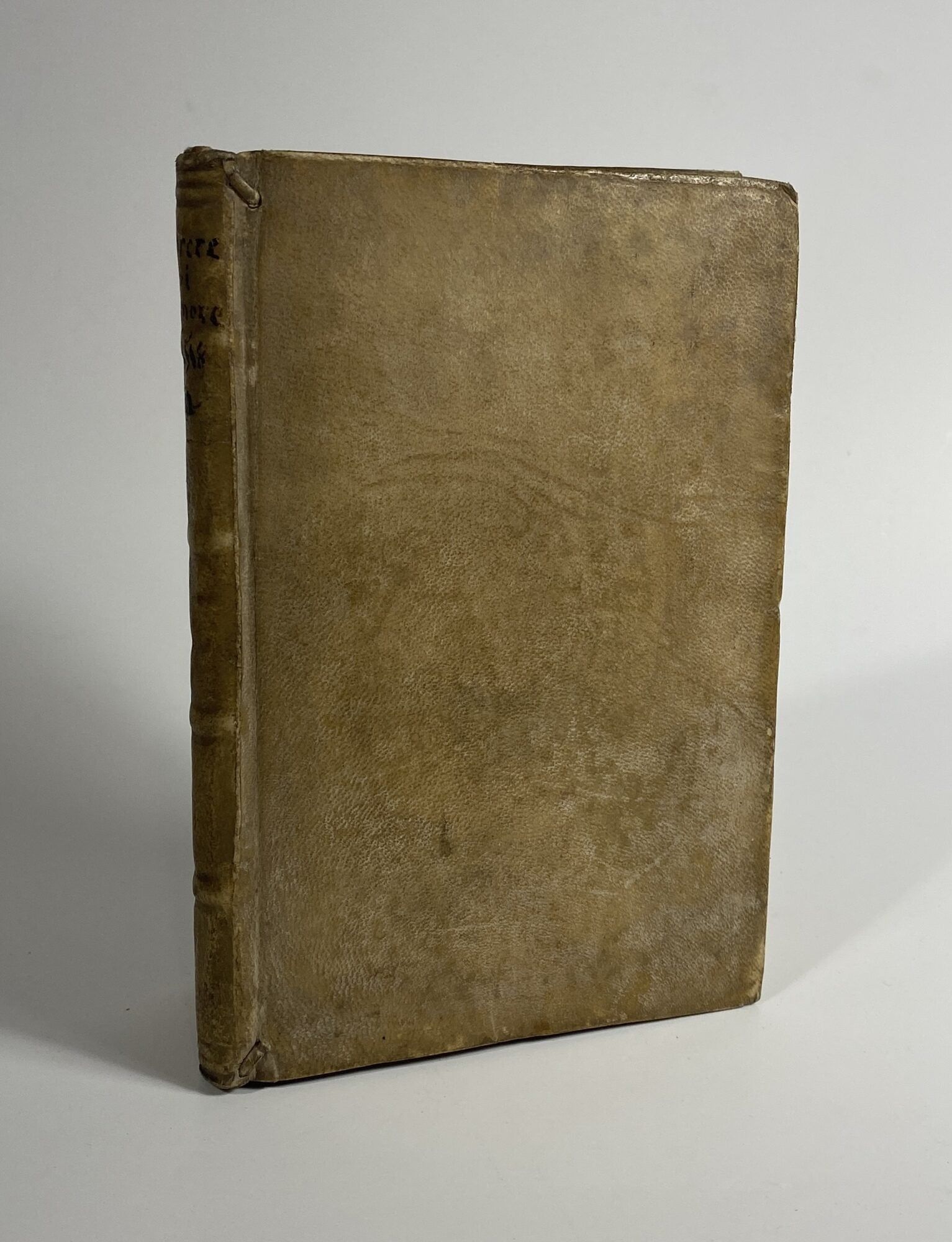
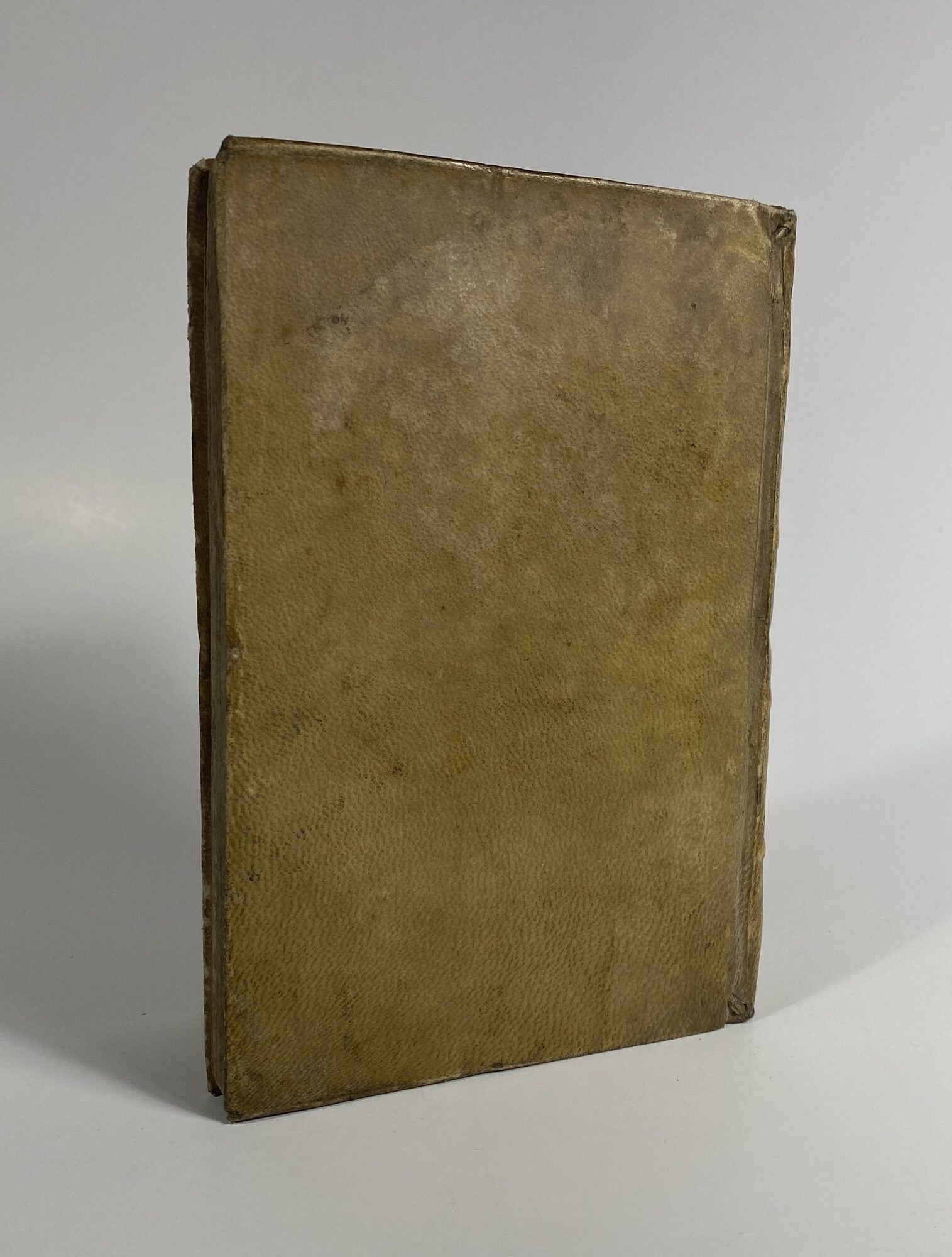
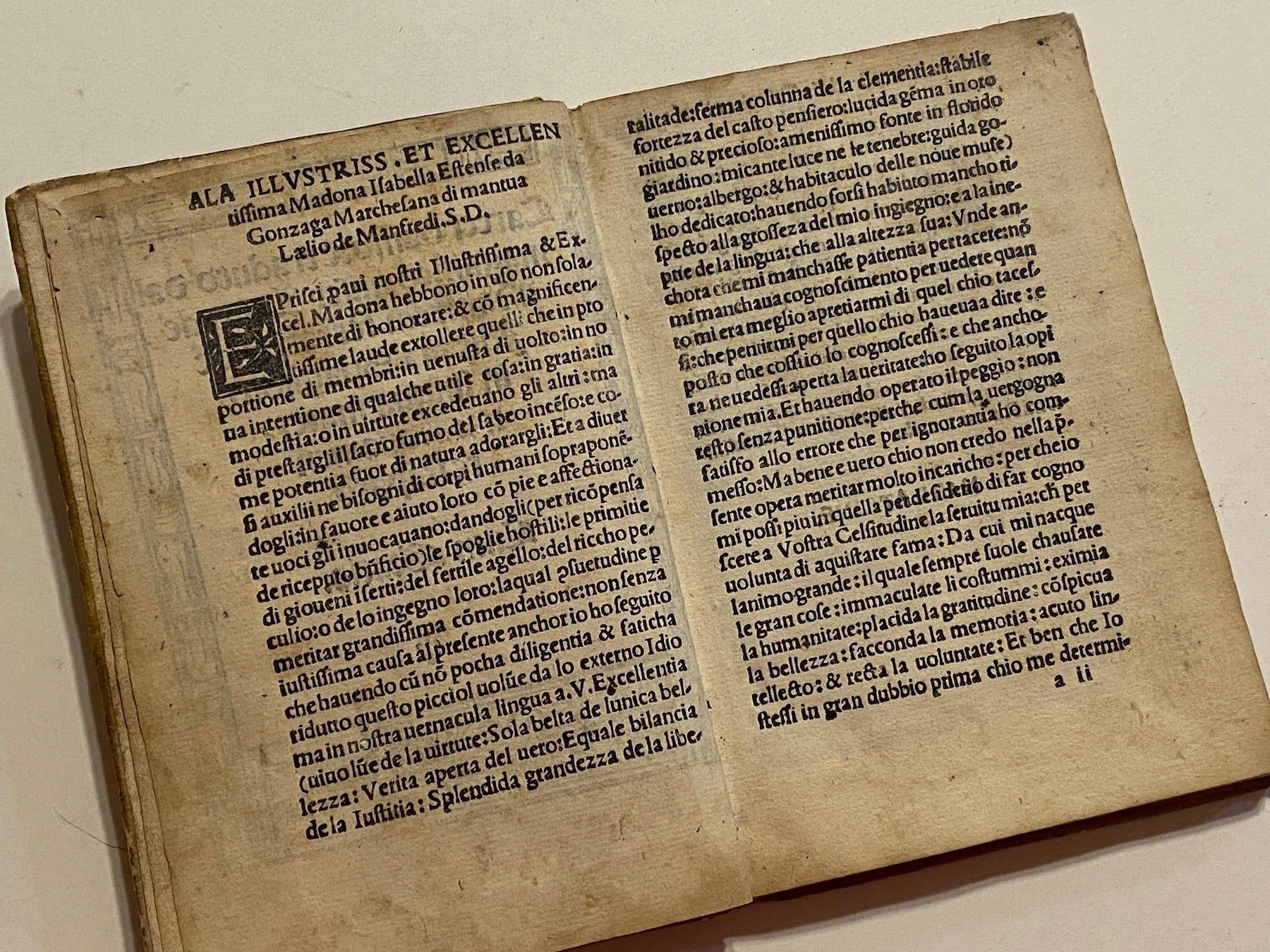
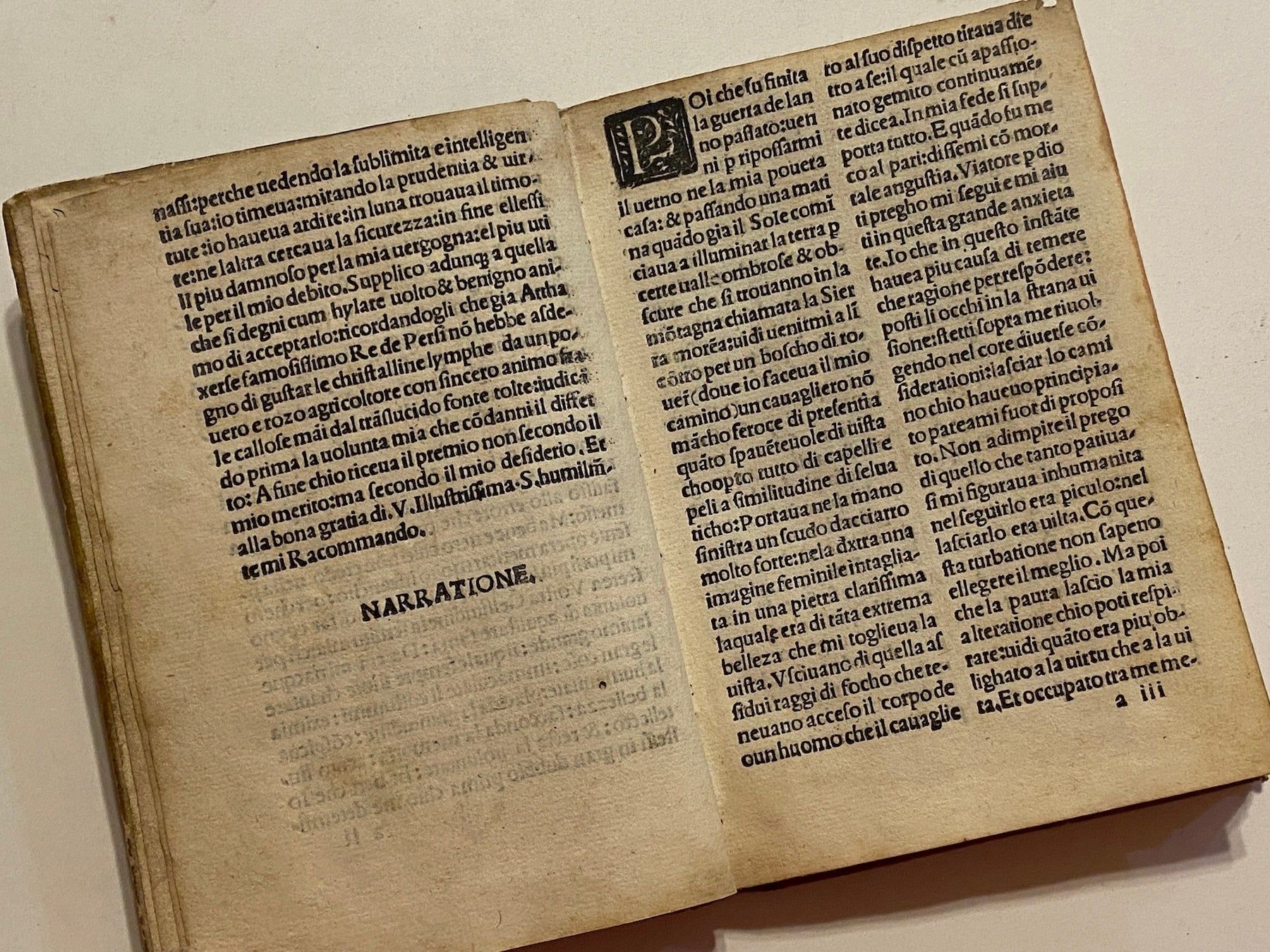
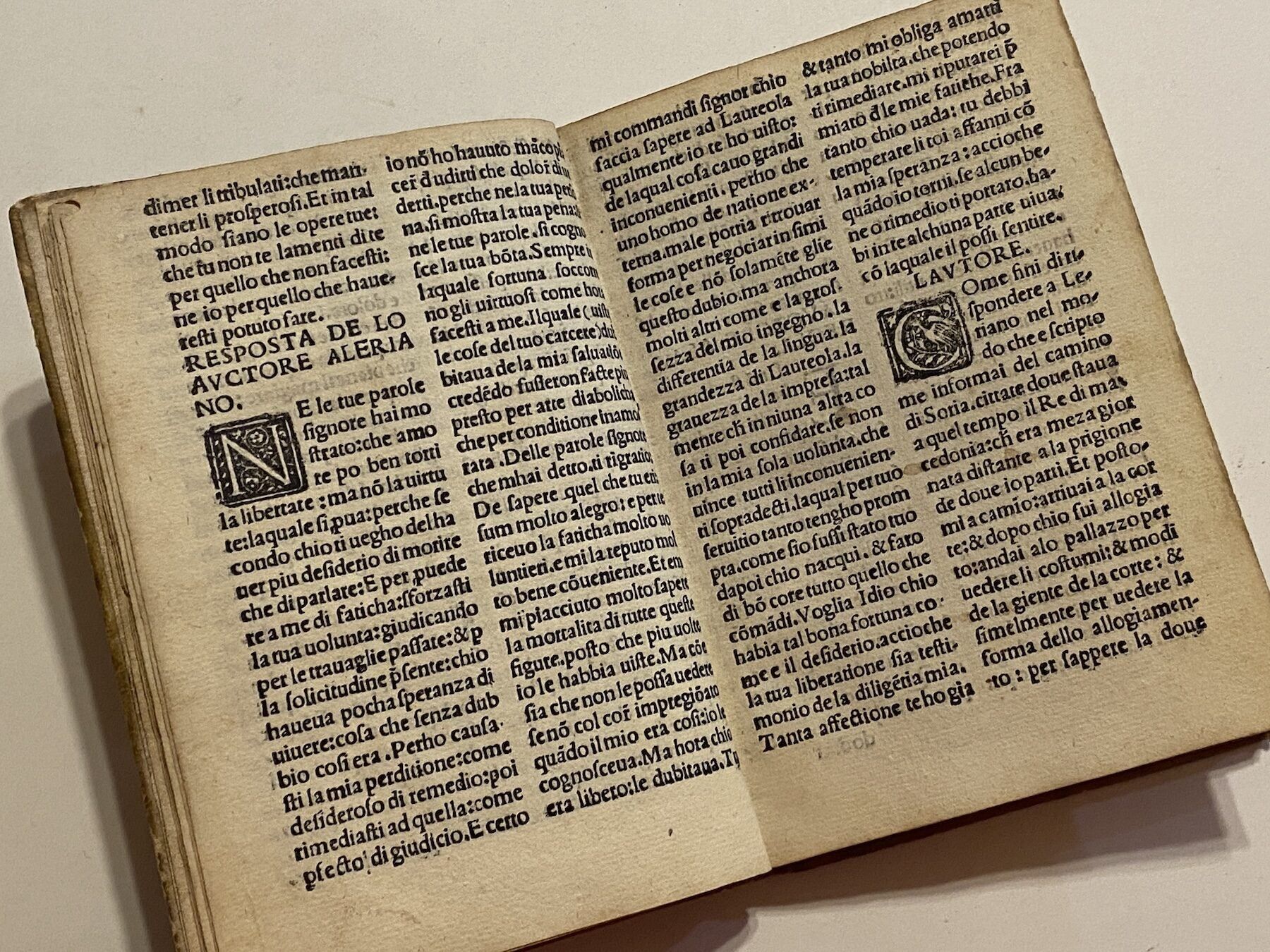
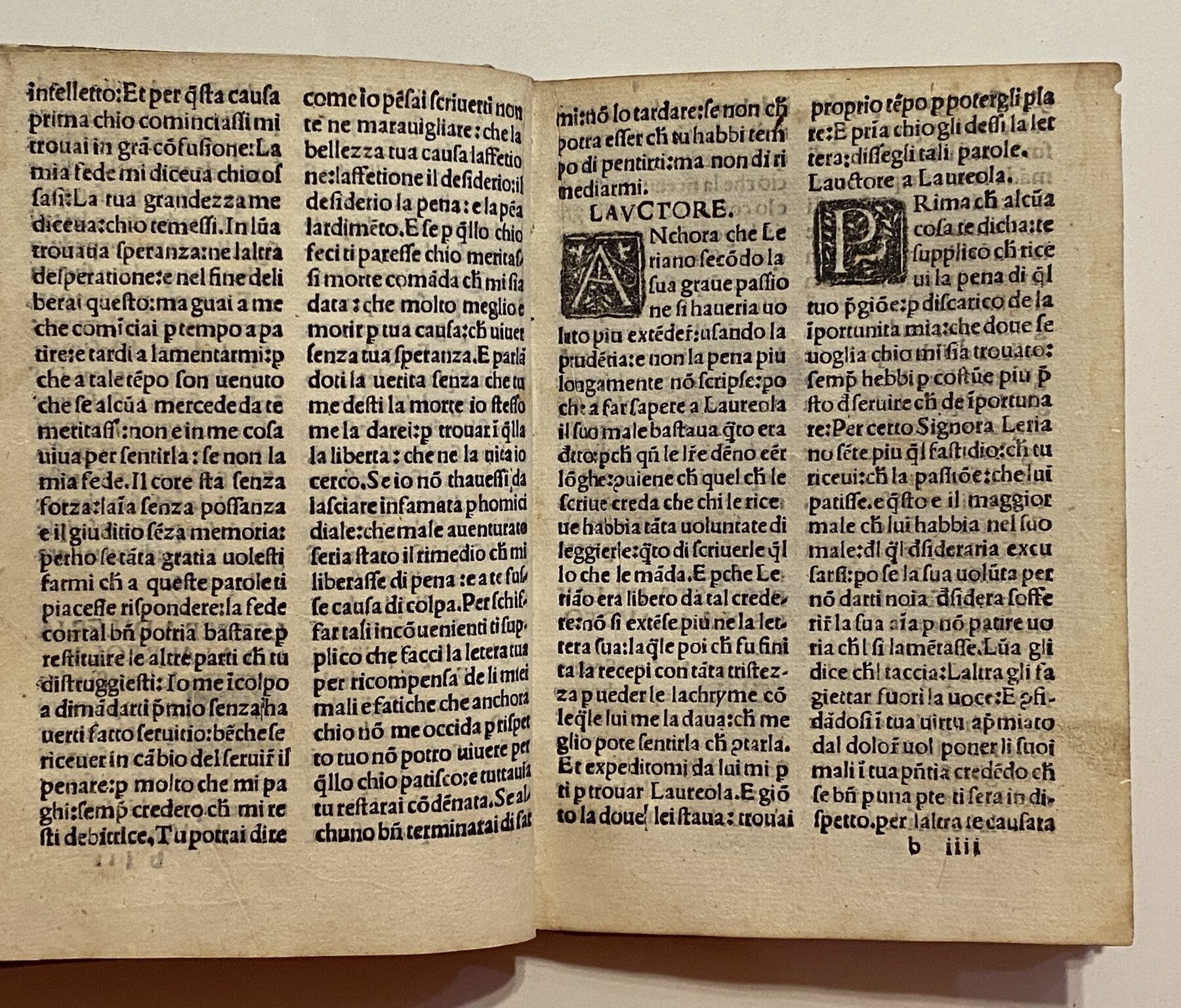
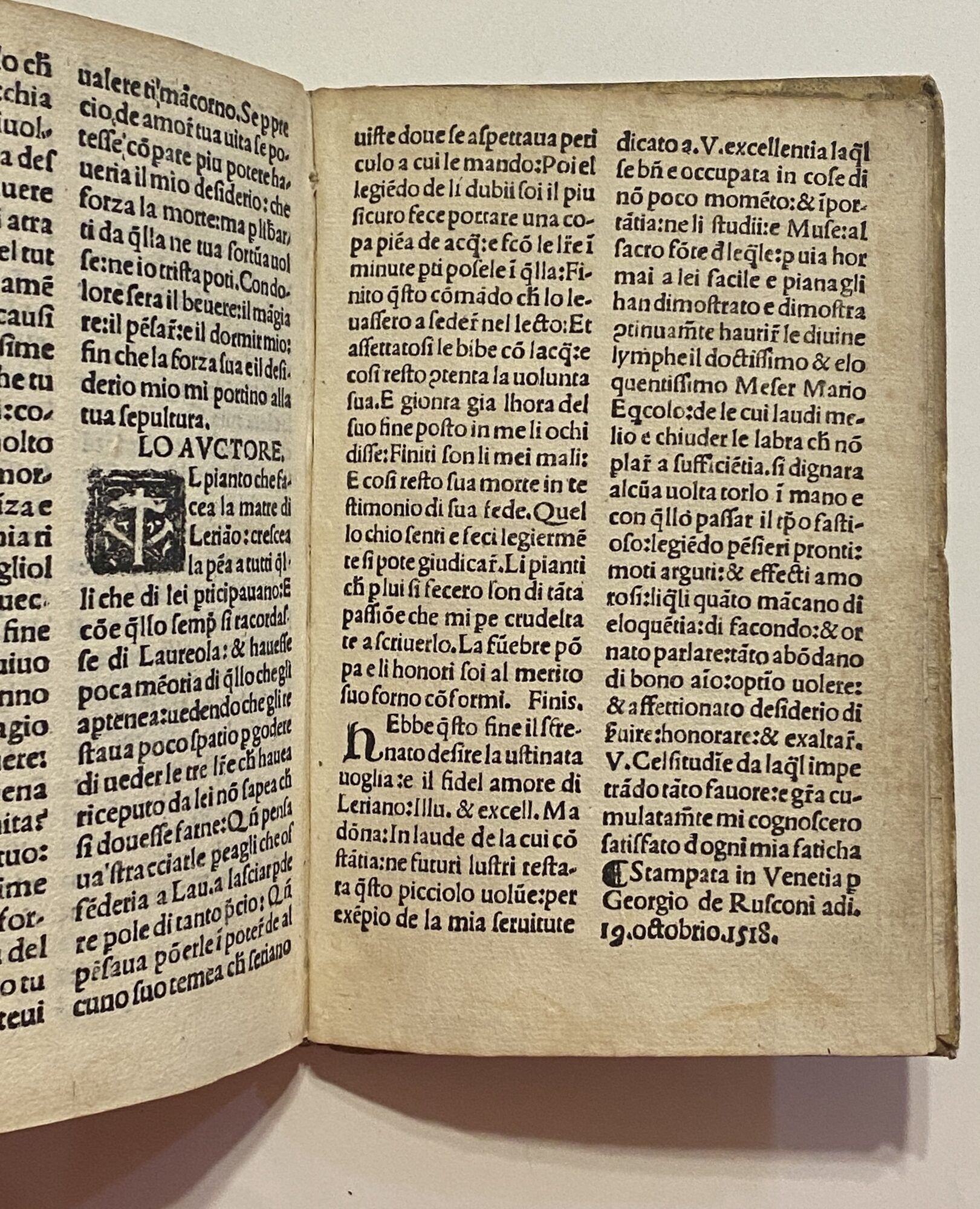
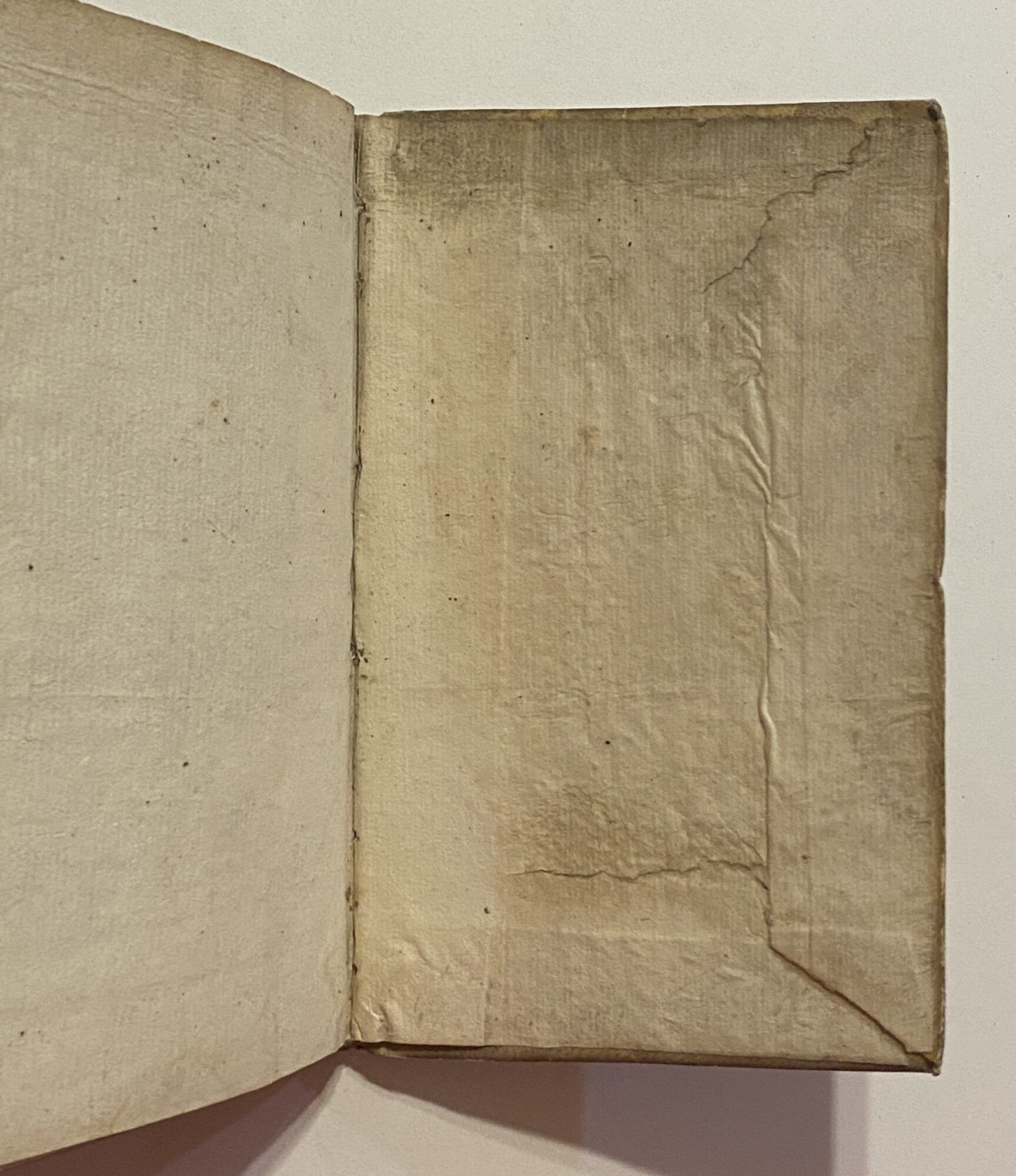
- Venice: Georgio de Rusconi, 1518
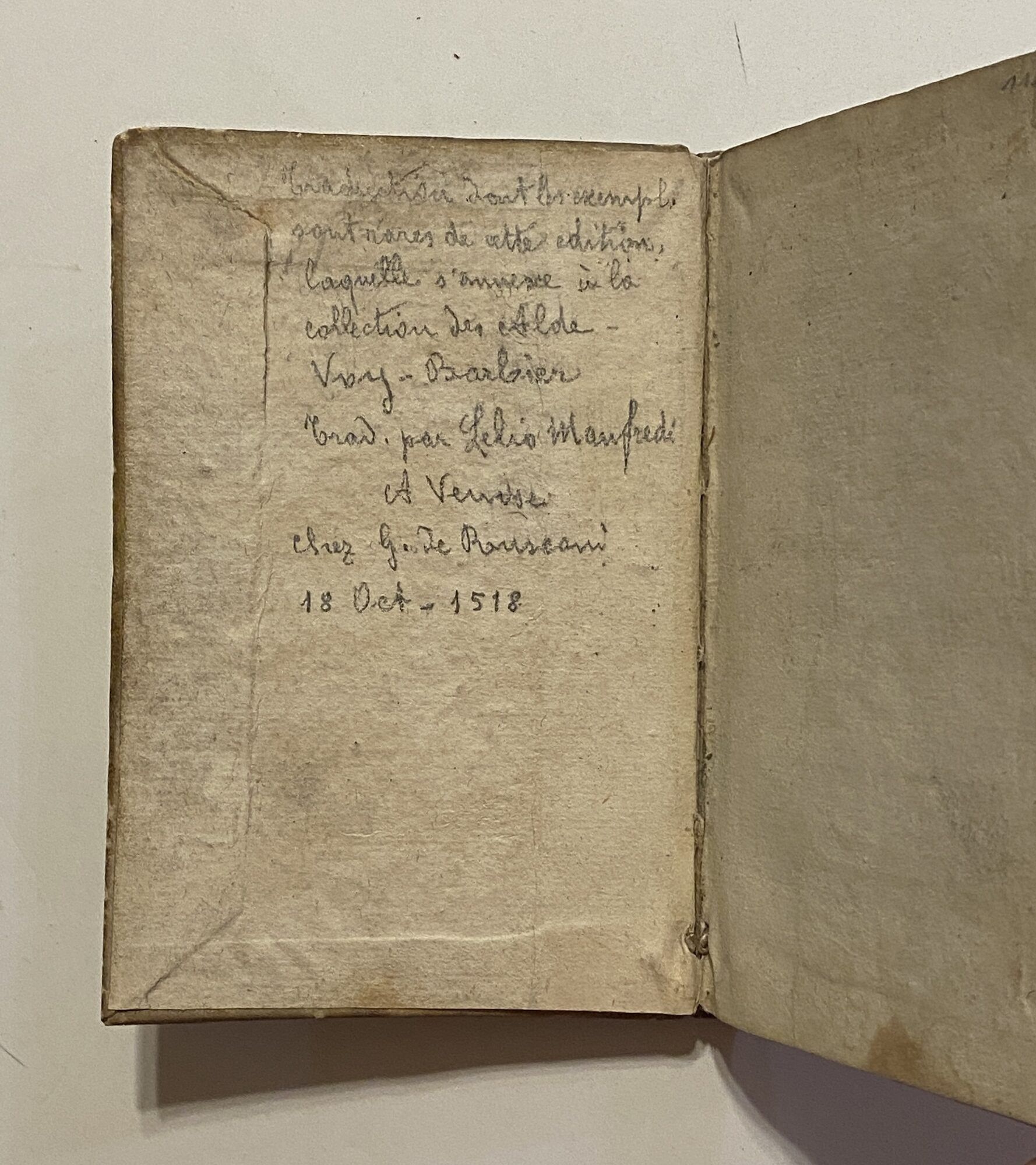
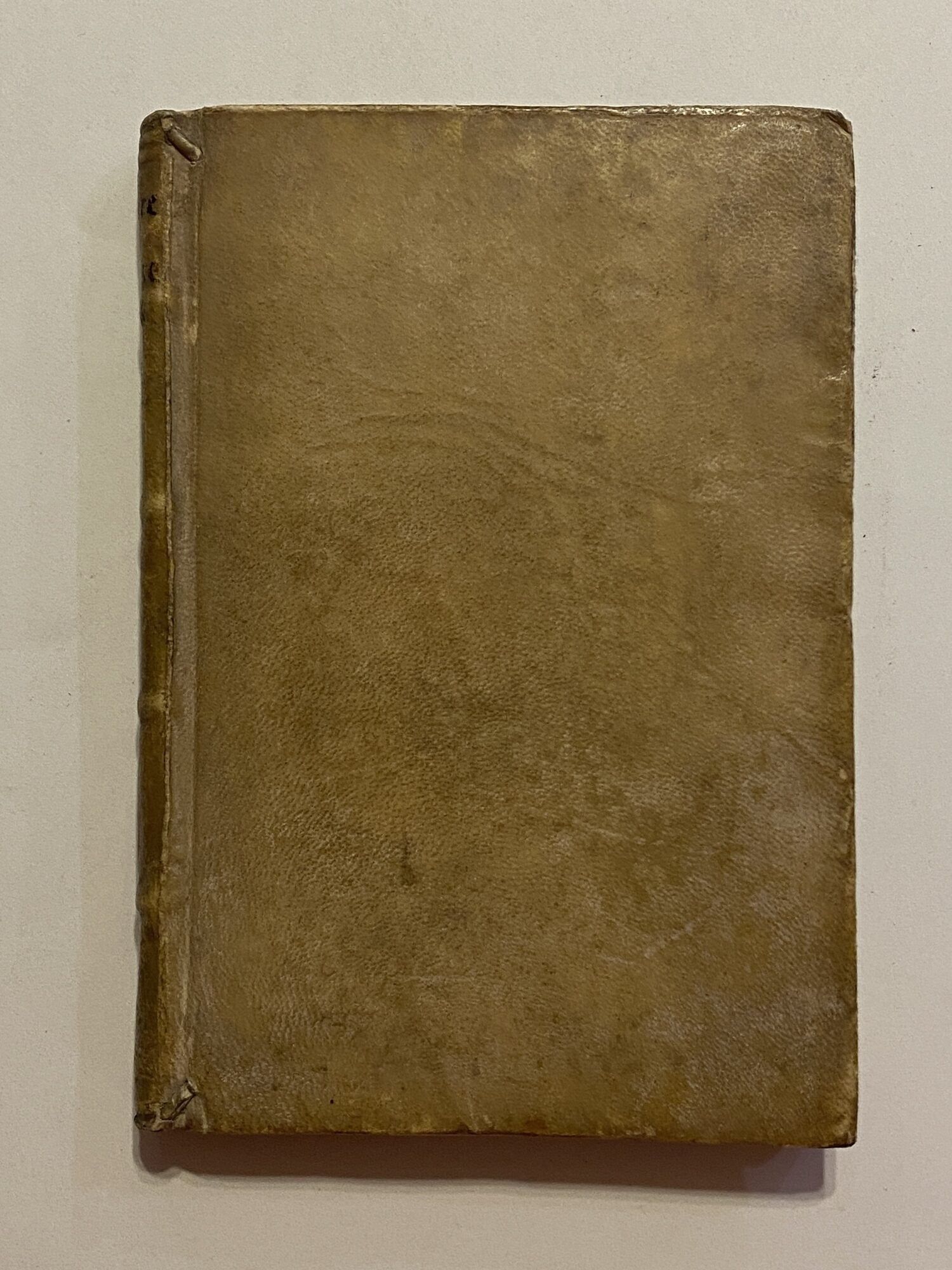
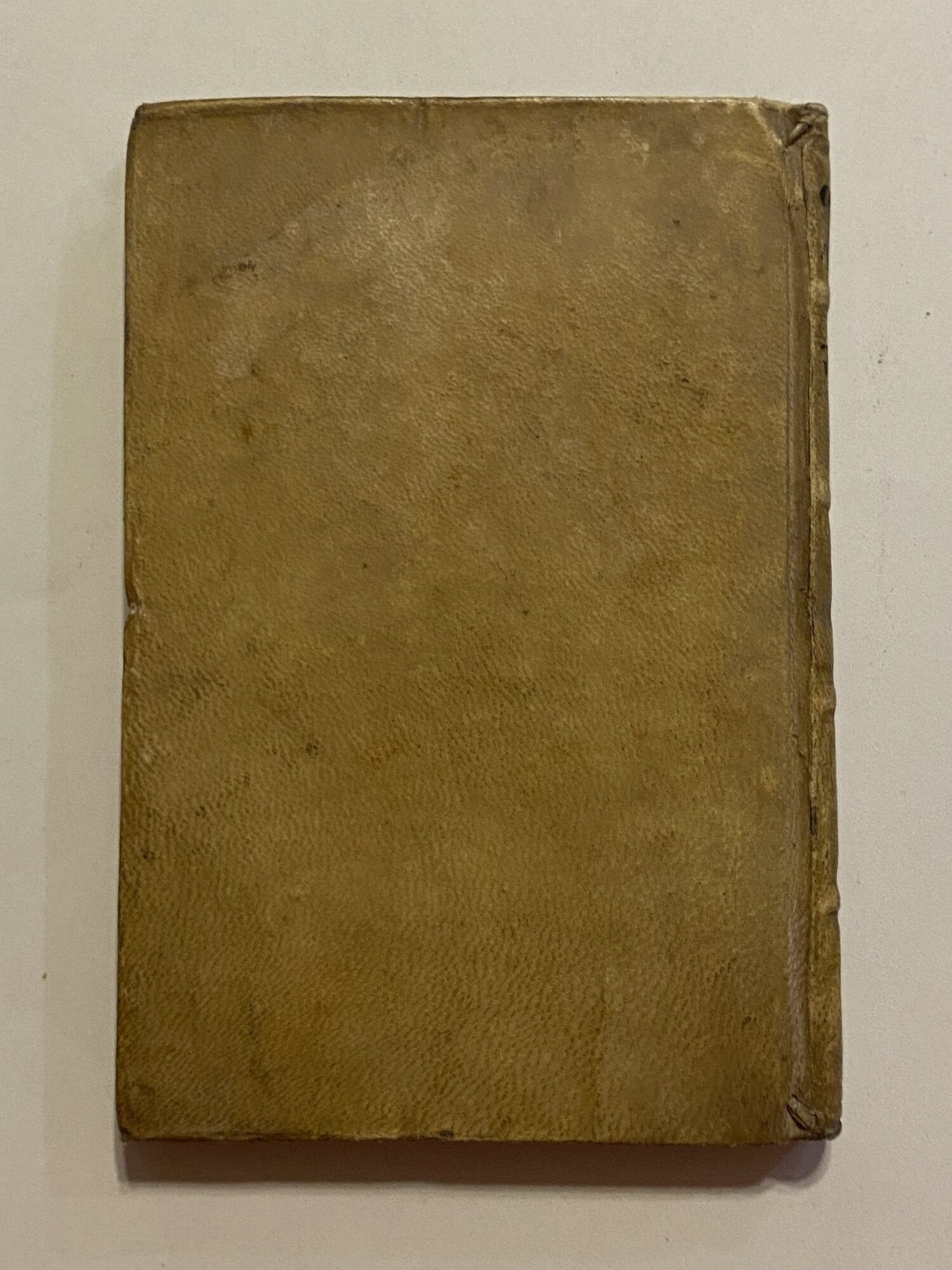
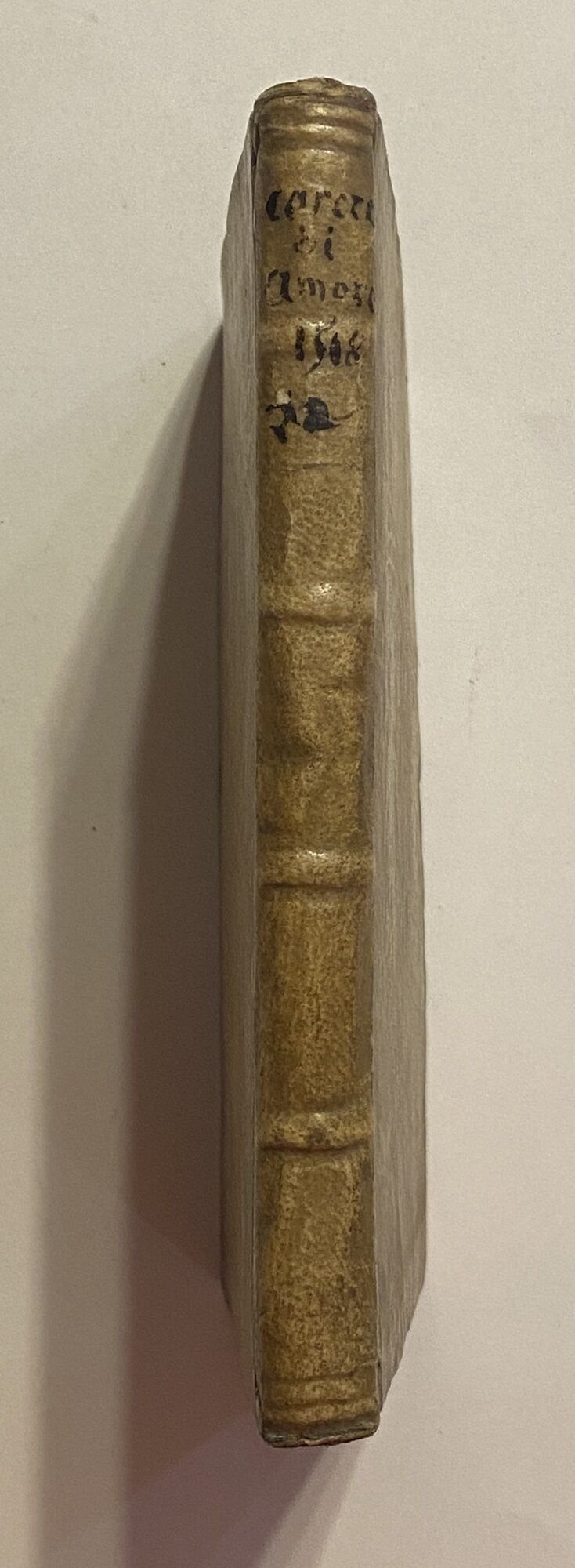
Venice: Georgio de Rusconi, 1518. Very good. Small 8vo (145 x 97 mm). [48] ff. Collation: A-F8, COMPLETE (some soiling, traces of damp in outer margins of D1-F8 for which SEE IMAGES). Old (18th-century?) vellum. In excellent unsophisticated condition. ITALIAN POST-INCUNABLE EDITION OF THE CARCEL DE AMOR, THE MOST IMPORTANT SPANISH NOVEL OF COURTLY LOVE.
Written in the late 15th century, the work is a key example of the "star-crossed lovers" romance tradition. It combines allegory with chivalric narrative, while its epistolary form intensifies the themes of miscommunication and emotional crisis. Widely popular, it was quickly translated and circulated across Europe, as is attested by this Italian translation, published in Venice in 1518. The story continues to be celebrated for its emotional intensity and its refined articulation of courtly love.
The romance was first translated from the Spanish into Italian by Lelio de Manfredi of Ferrara in 1514, and represents a moment when literature, language, and print culture intersected across political and cultural borders. For years the story was reshaped and redistributed in Renaissance Europe and contributed to a shared literary tradition. On the title-page of our edition we find only Manfredi's name and the dedicatee is Isabella d'Esta (his former pupil). The translator has added his own closing epistle to the Carcel de Amor which praises Isabella; the author's name (Diego de San Pedro) is nowhere to be found.
The Carcel de amor is told almost entirely through letters, speeches, and monologues rather than dialogue. It centers on Leriano, a young nobleman in love with Laureola, daughter of the King of Macedonia. His condition is figured as an allegorical "PRISON OF LOVE," and he communicates with her only through a mediator. A rival, Persio (sometimes Theseus/Perseus), accuses Laureola of having an affair, leading to her imprisonment. Leriano rescues her and kills his rival, but Laureola ultimately rejects him in a letter. In despair, he chooses to starve himself to death, but not before delivering a speech in praise of women.
CATALOGUER'S NOTE: Italian translations of the Carcel de Amor ("Carcer Damore") are uncommon. We have located just three copies of ANY Italian language post-incunable edition at auction in the last century:
1518: sold at Ader, Paris (2024)
1521: sold at Sotheby's London (1970)
1518: sold through Quaritch Catalogue 494 (1934).
EDIT16 CNCE 66997.
Written in the late 15th century, the work is a key example of the "star-crossed lovers" romance tradition. It combines allegory with chivalric narrative, while its epistolary form intensifies the themes of miscommunication and emotional crisis. Widely popular, it was quickly translated and circulated across Europe, as is attested by this Italian translation, published in Venice in 1518. The story continues to be celebrated for its emotional intensity and its refined articulation of courtly love.
The romance was first translated from the Spanish into Italian by Lelio de Manfredi of Ferrara in 1514, and represents a moment when literature, language, and print culture intersected across political and cultural borders. For years the story was reshaped and redistributed in Renaissance Europe and contributed to a shared literary tradition. On the title-page of our edition we find only Manfredi's name and the dedicatee is Isabella d'Esta (his former pupil). The translator has added his own closing epistle to the Carcel de Amor which praises Isabella; the author's name (Diego de San Pedro) is nowhere to be found.
The Carcel de amor is told almost entirely through letters, speeches, and monologues rather than dialogue. It centers on Leriano, a young nobleman in love with Laureola, daughter of the King of Macedonia. His condition is figured as an allegorical "PRISON OF LOVE," and he communicates with her only through a mediator. A rival, Persio (sometimes Theseus/Perseus), accuses Laureola of having an affair, leading to her imprisonment. Leriano rescues her and kills his rival, but Laureola ultimately rejects him in a letter. In despair, he chooses to starve himself to death, but not before delivering a speech in praise of women.
CATALOGUER'S NOTE: Italian translations of the Carcel de Amor ("Carcer Damore") are uncommon. We have located just three copies of ANY Italian language post-incunable edition at auction in the last century:
1518: sold at Ader, Paris (2024)
1521: sold at Sotheby's London (1970)
1518: sold through Quaritch Catalogue 494 (1934).
EDIT16 CNCE 66997.
Details
Title
[Carcel de Amor - Italian, 1518]. Carcer Damore. Tradotto dal [...] Lelio de Manfredi Ferrarese de doma Spagno in Lingua Materna
Author
San Pedro, Diego de
Condition
Very Good
Publisher
Georgio de Rusconi: Venice
Date
1518