

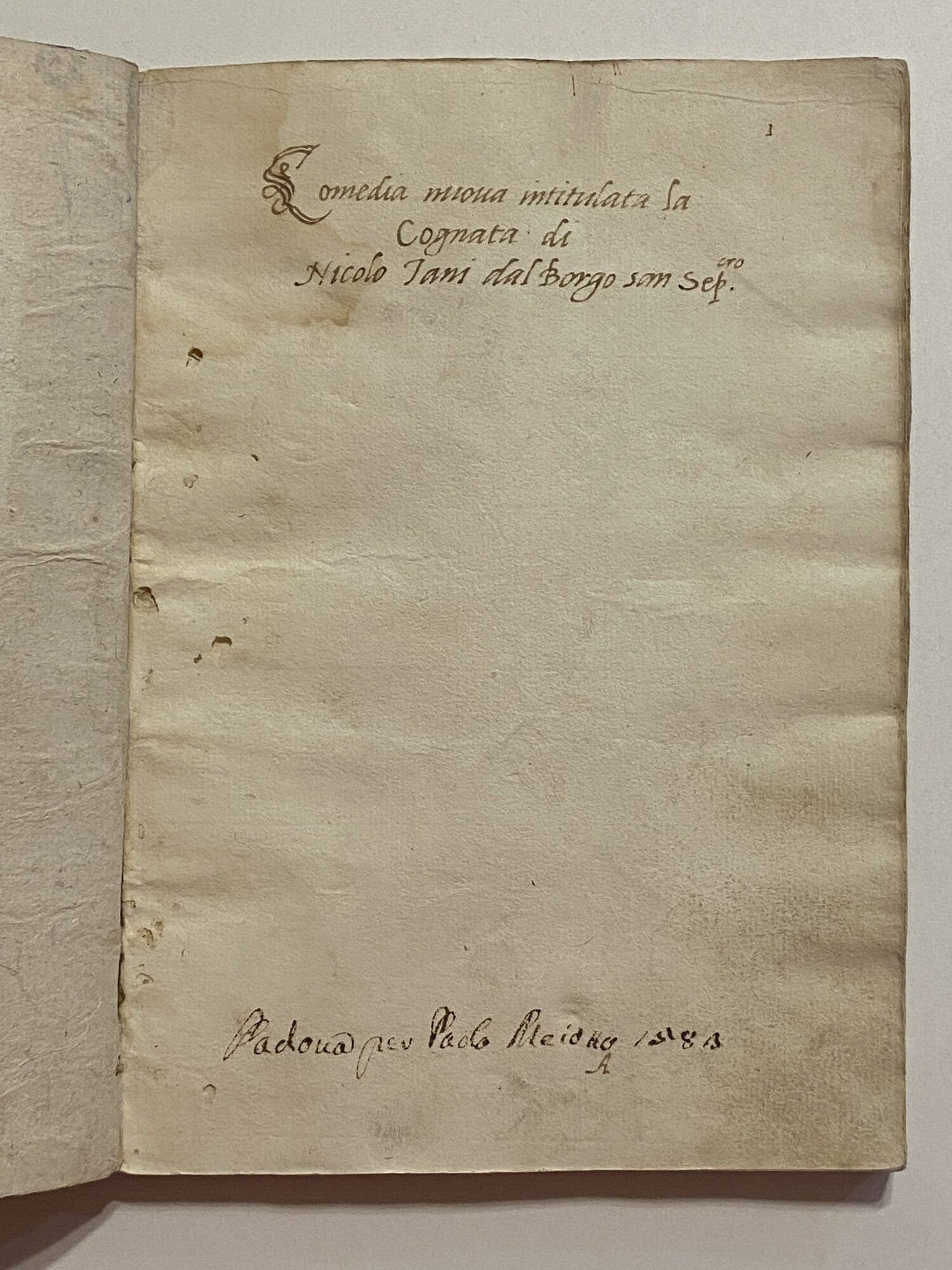
[MANUSCRIPT FAIR-COPY OF A FORGOTTEN 16TH CENTURY ITALIAN "CROSS-DRESSING" PLAY]. Comedia nuova intitulata la Cognata di Nicolo Tani dal borgo San Sepolcro
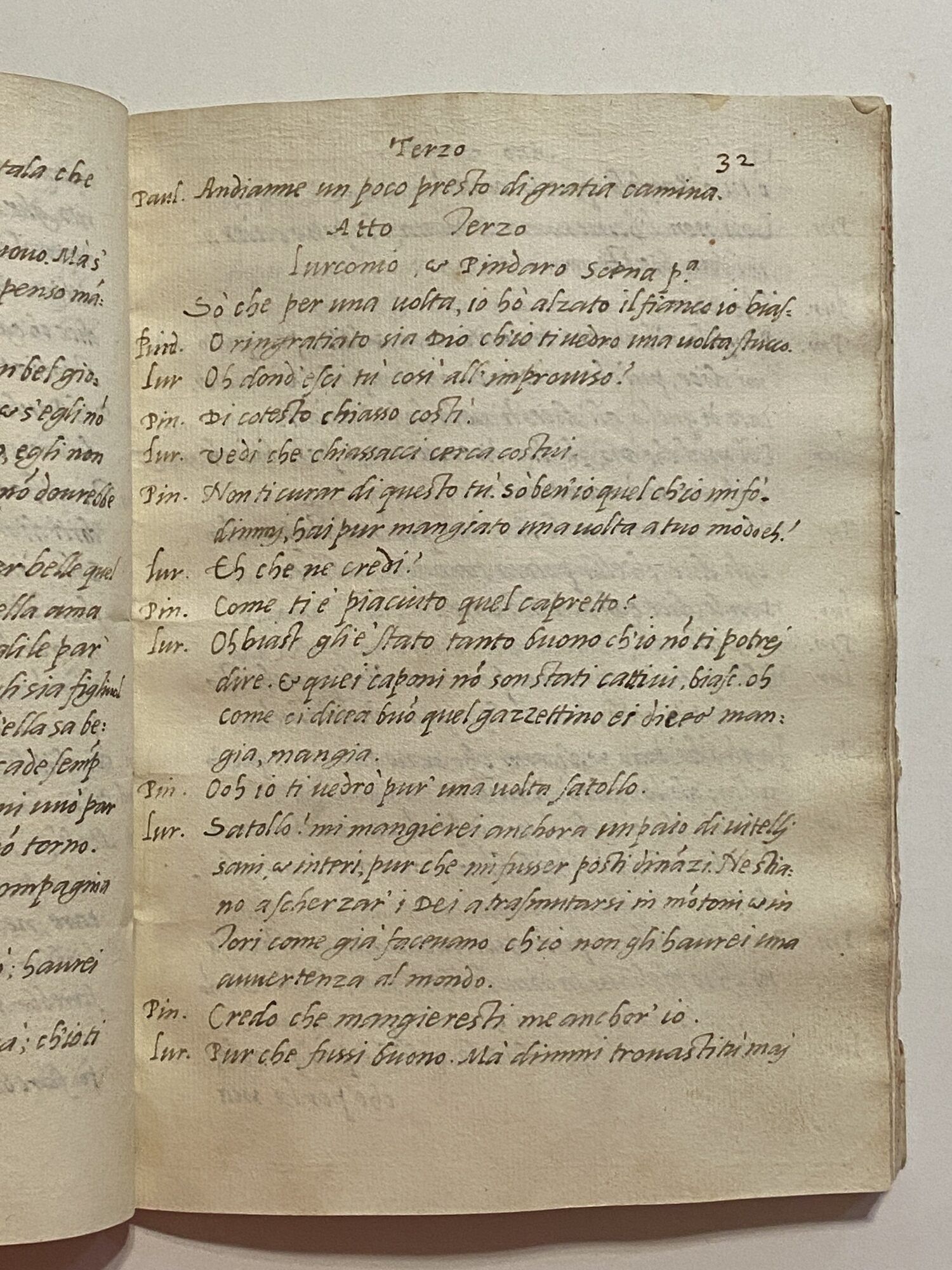
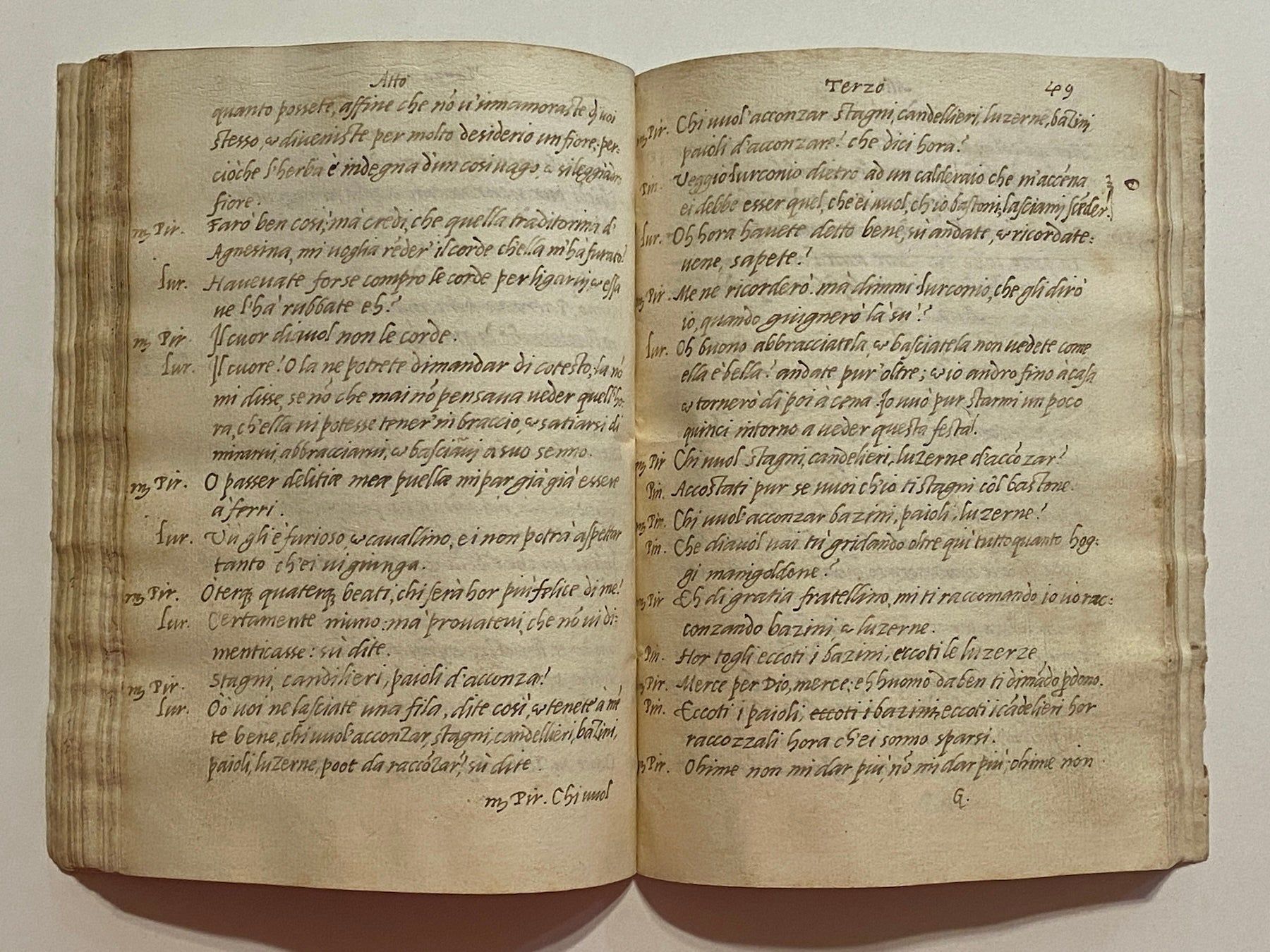
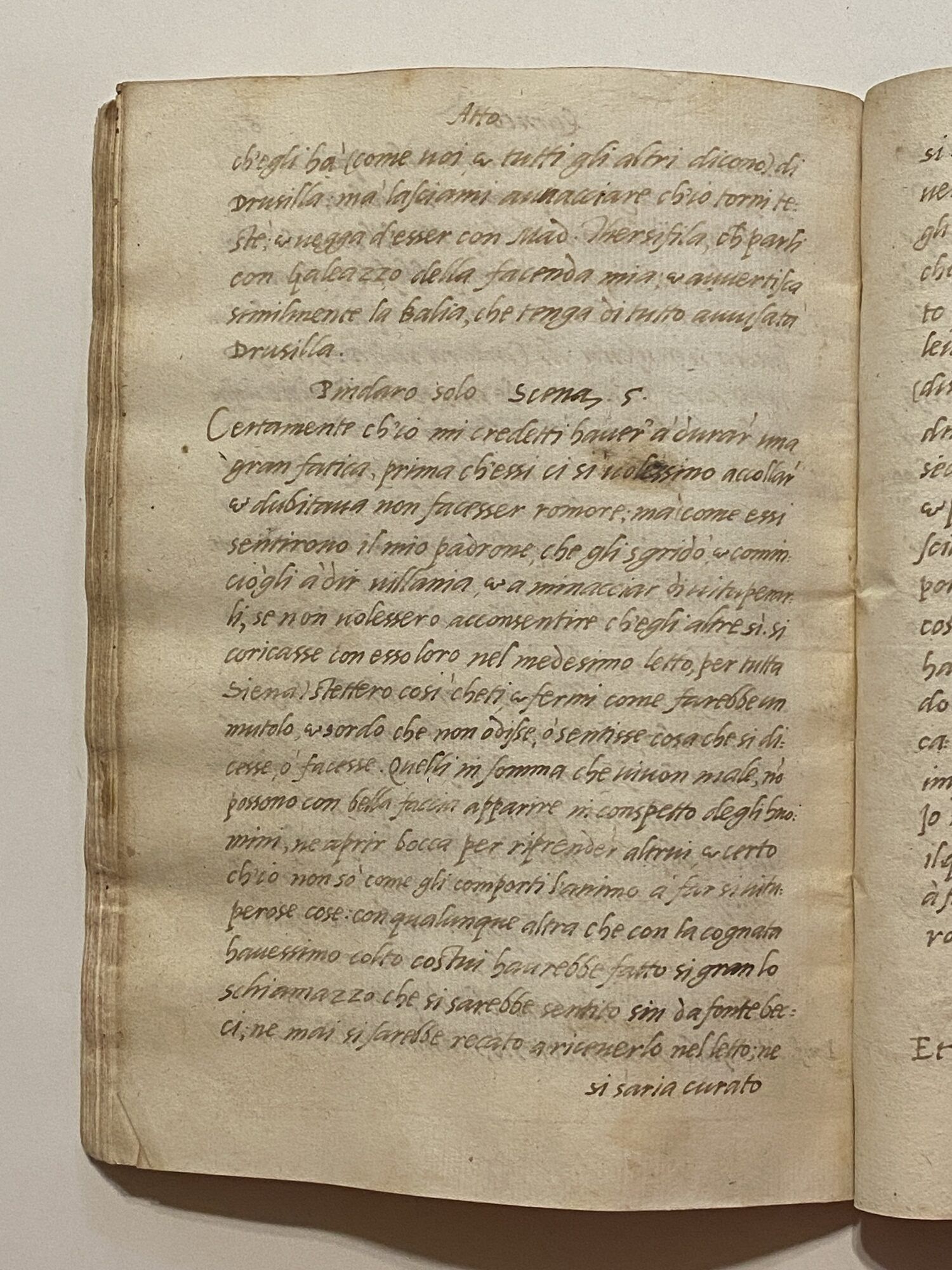
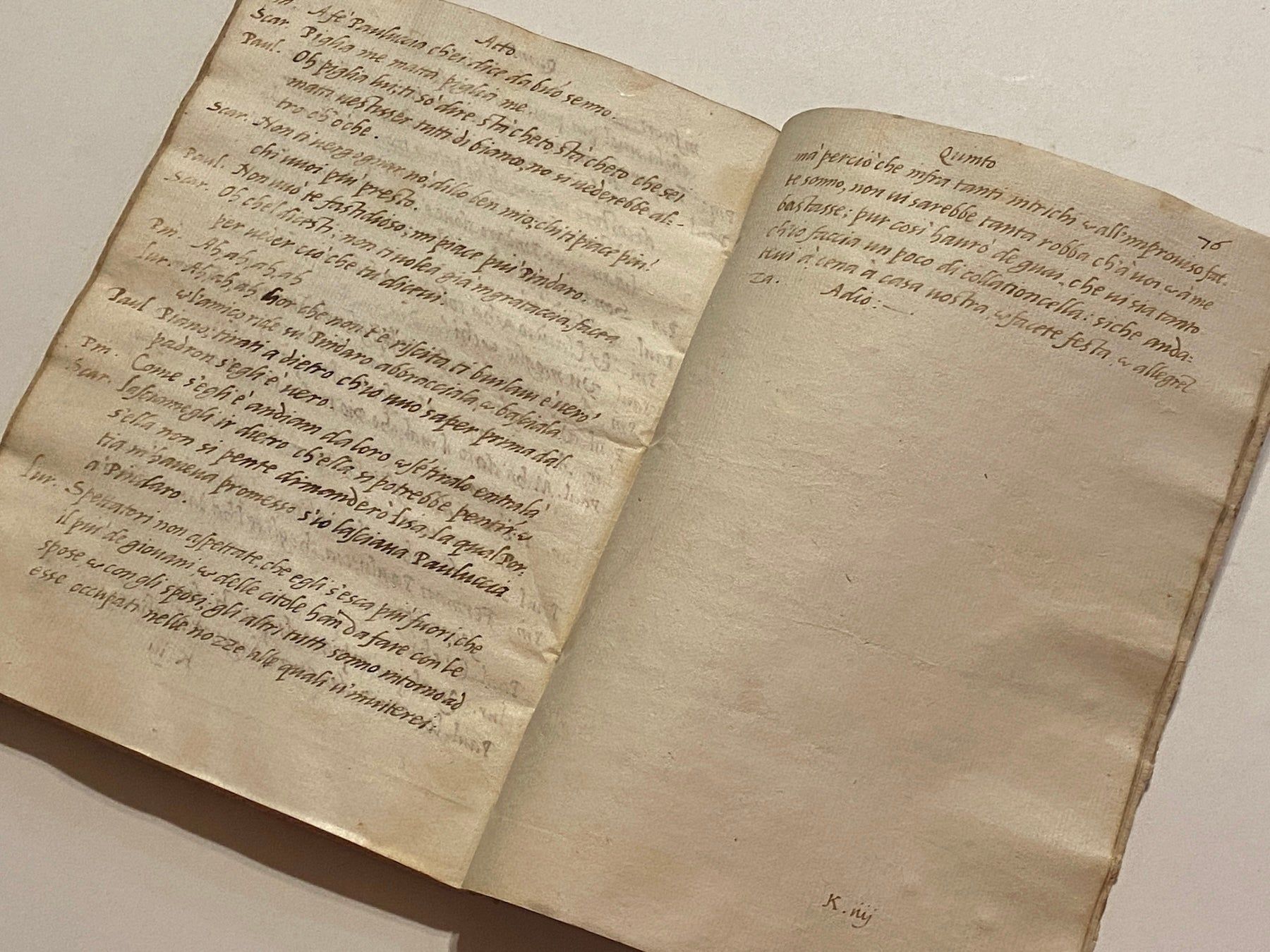
- S.l. , 1583
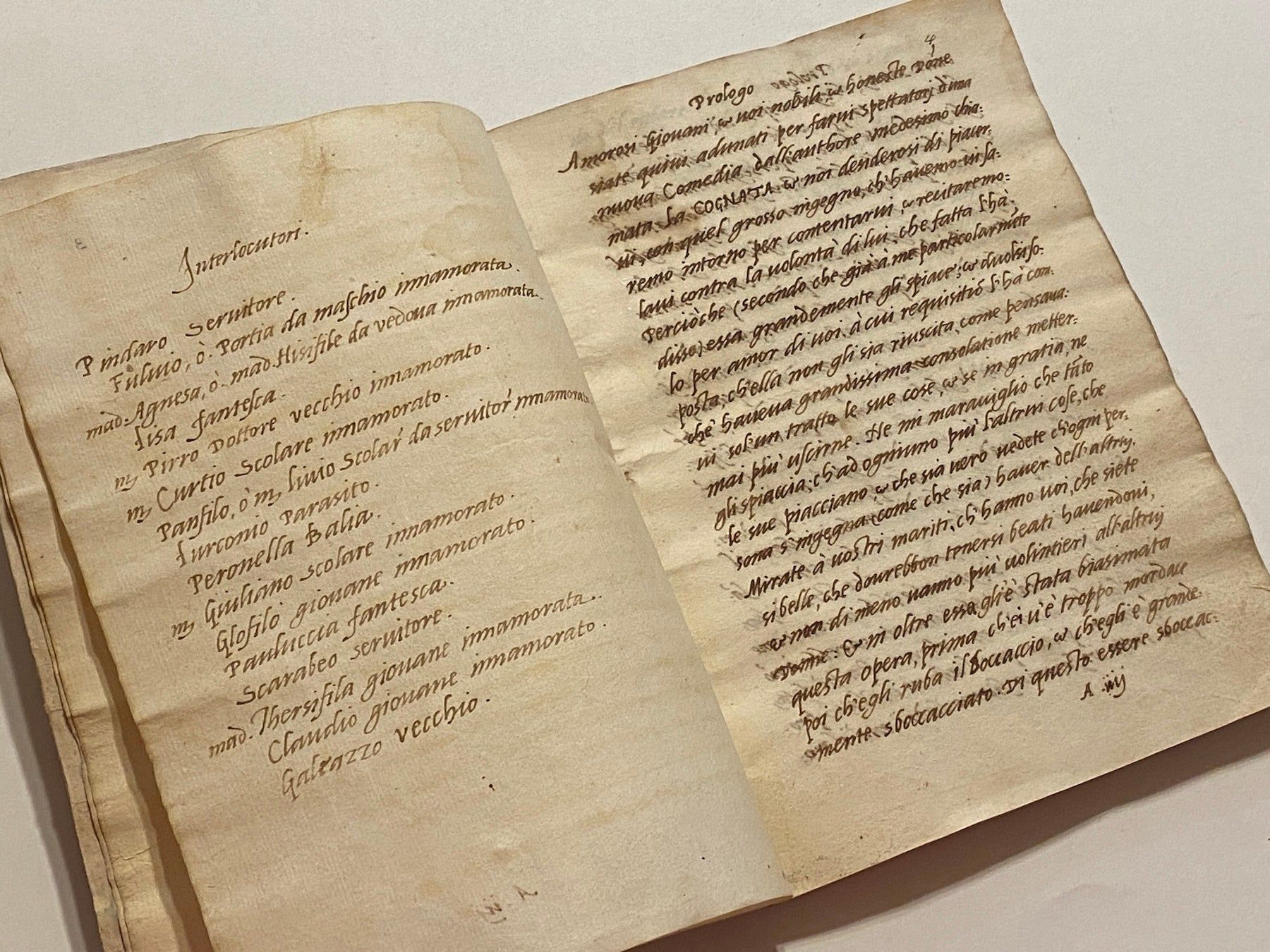
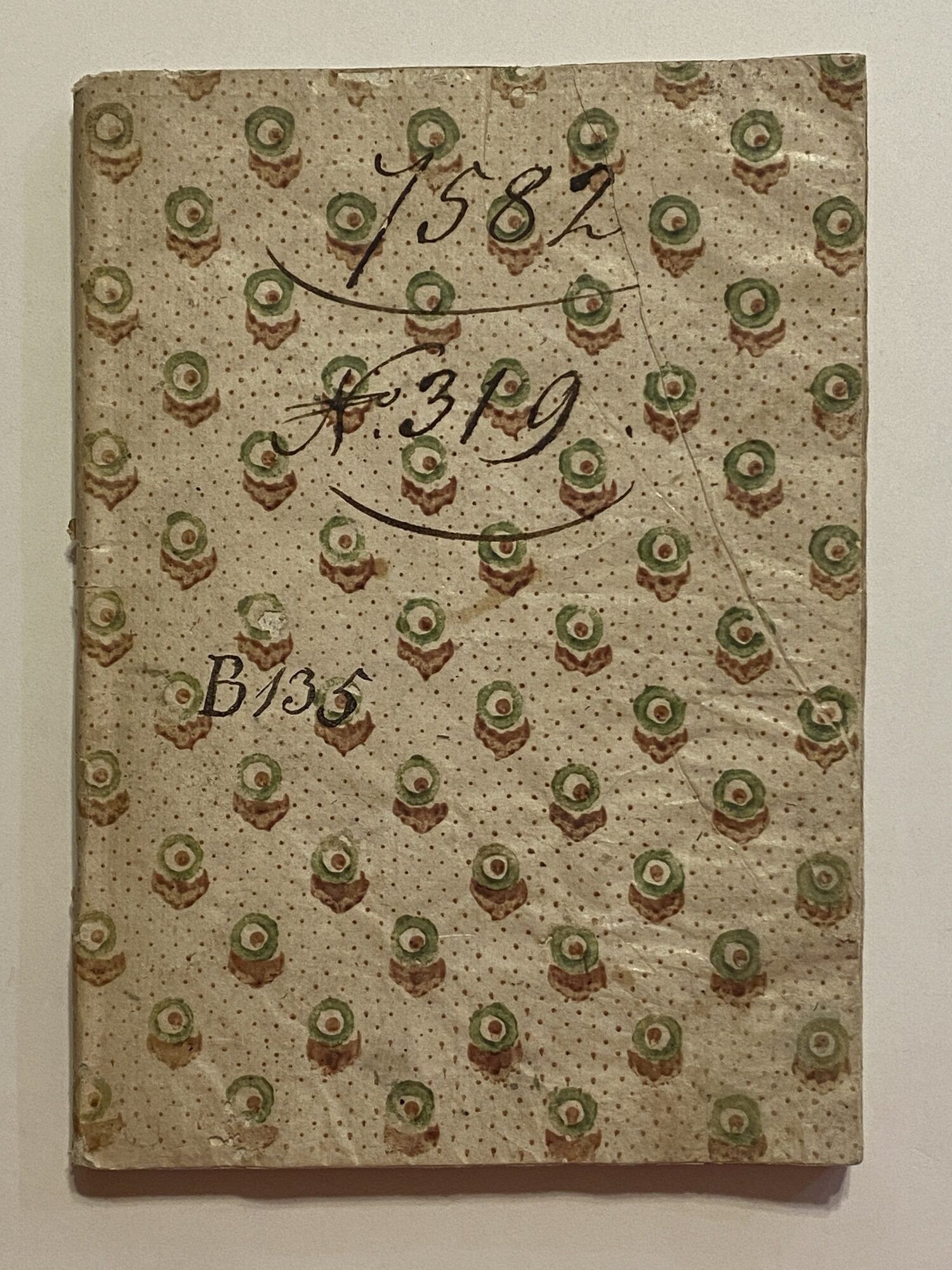
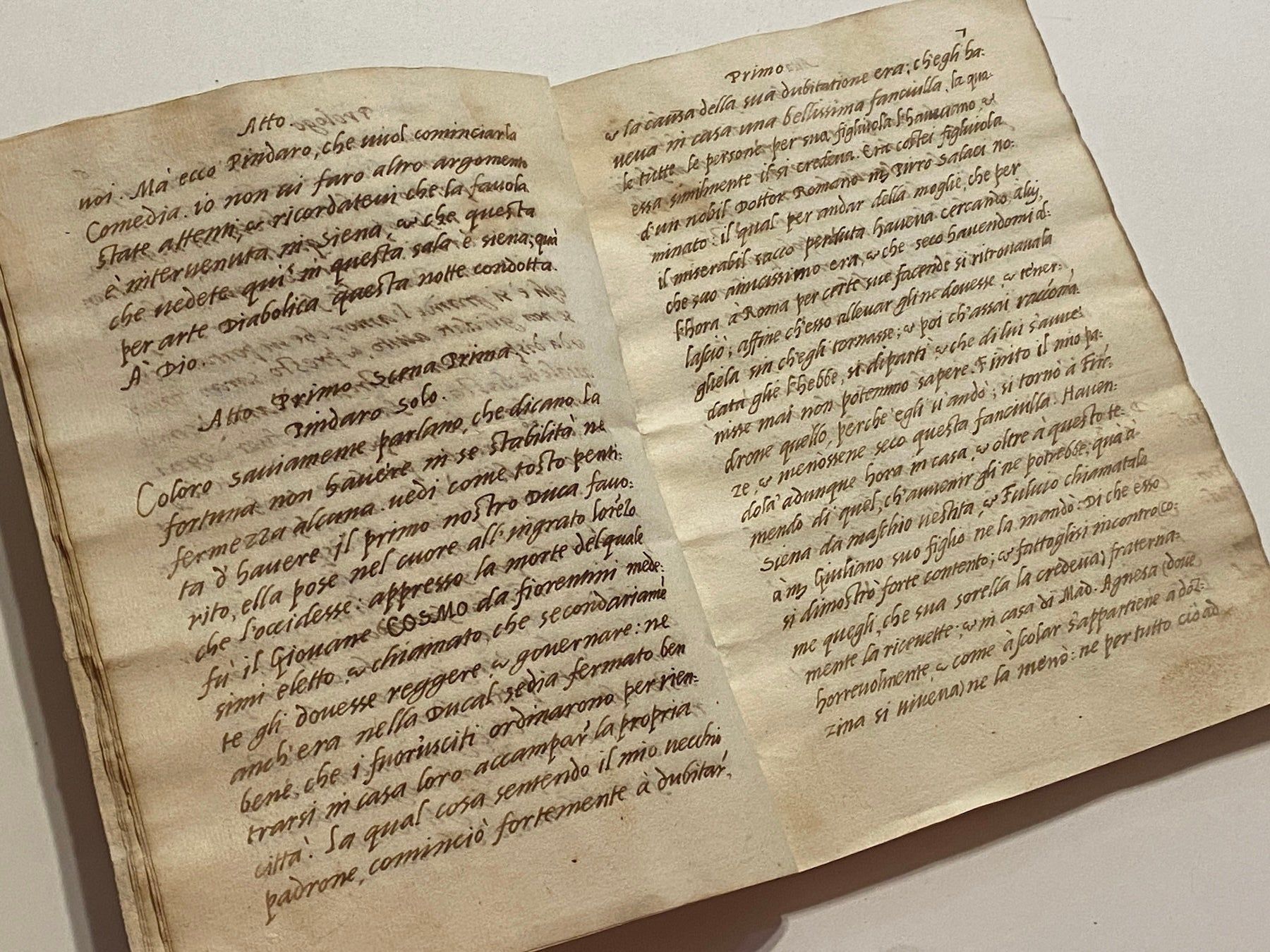
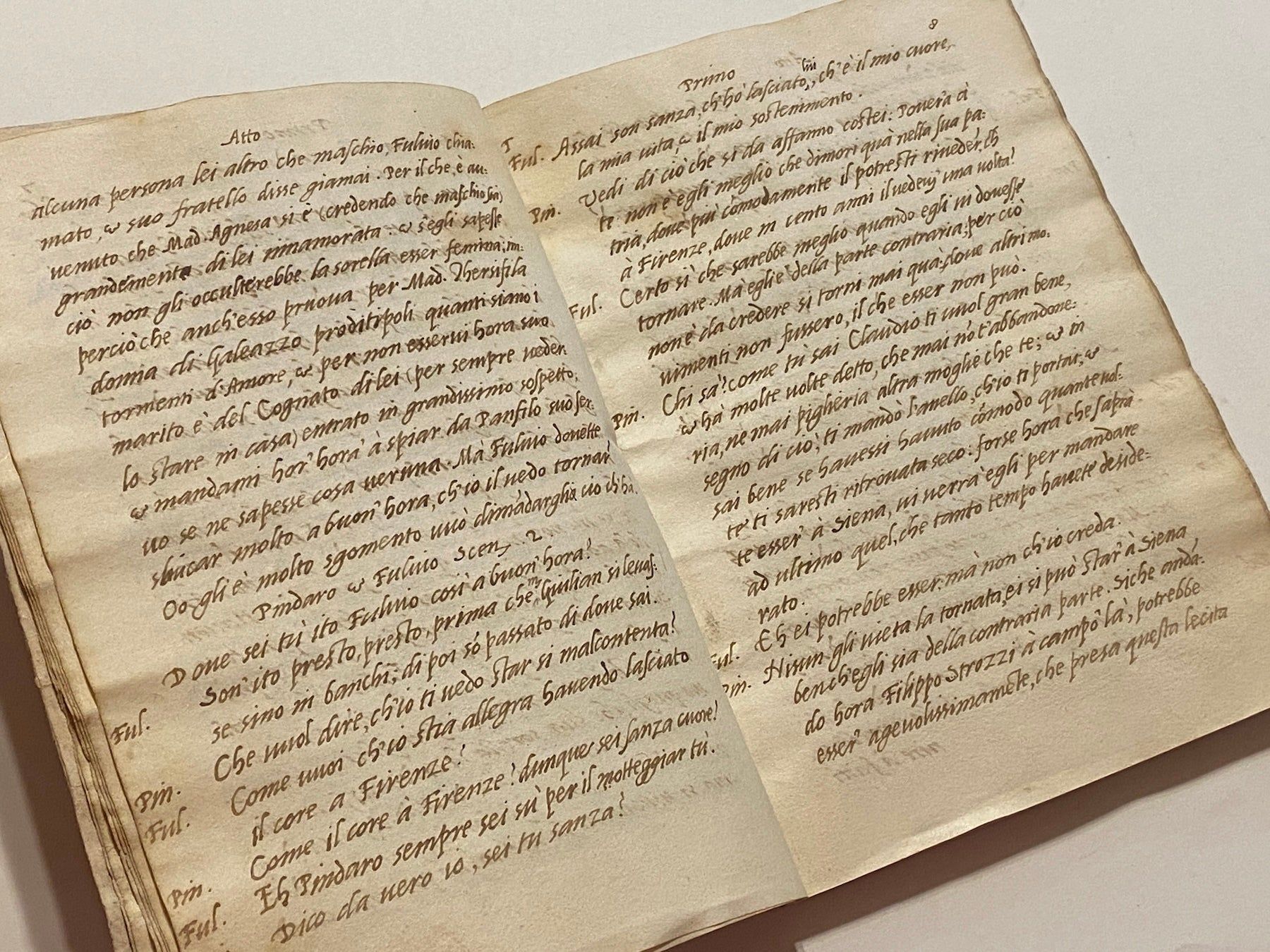
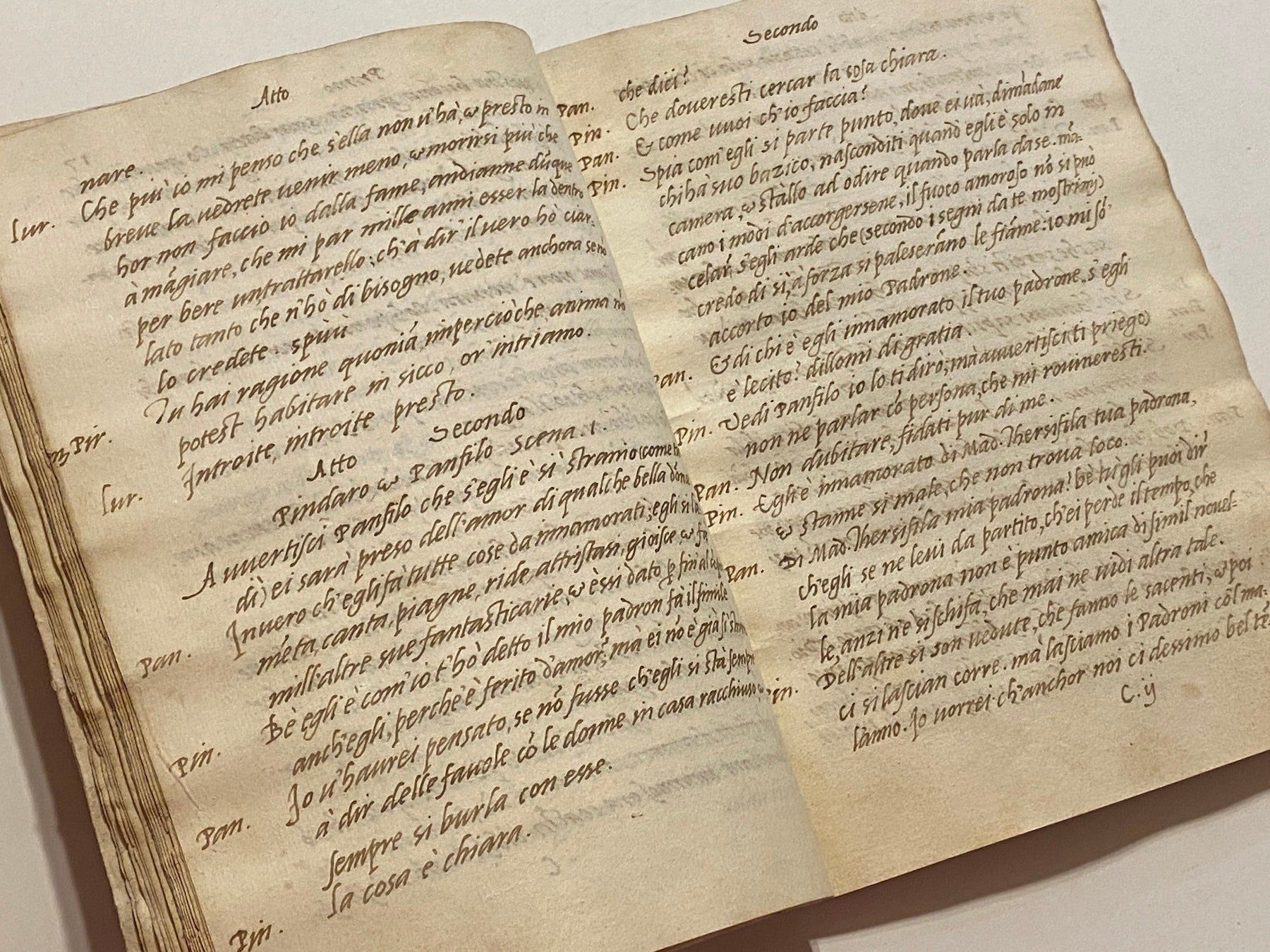
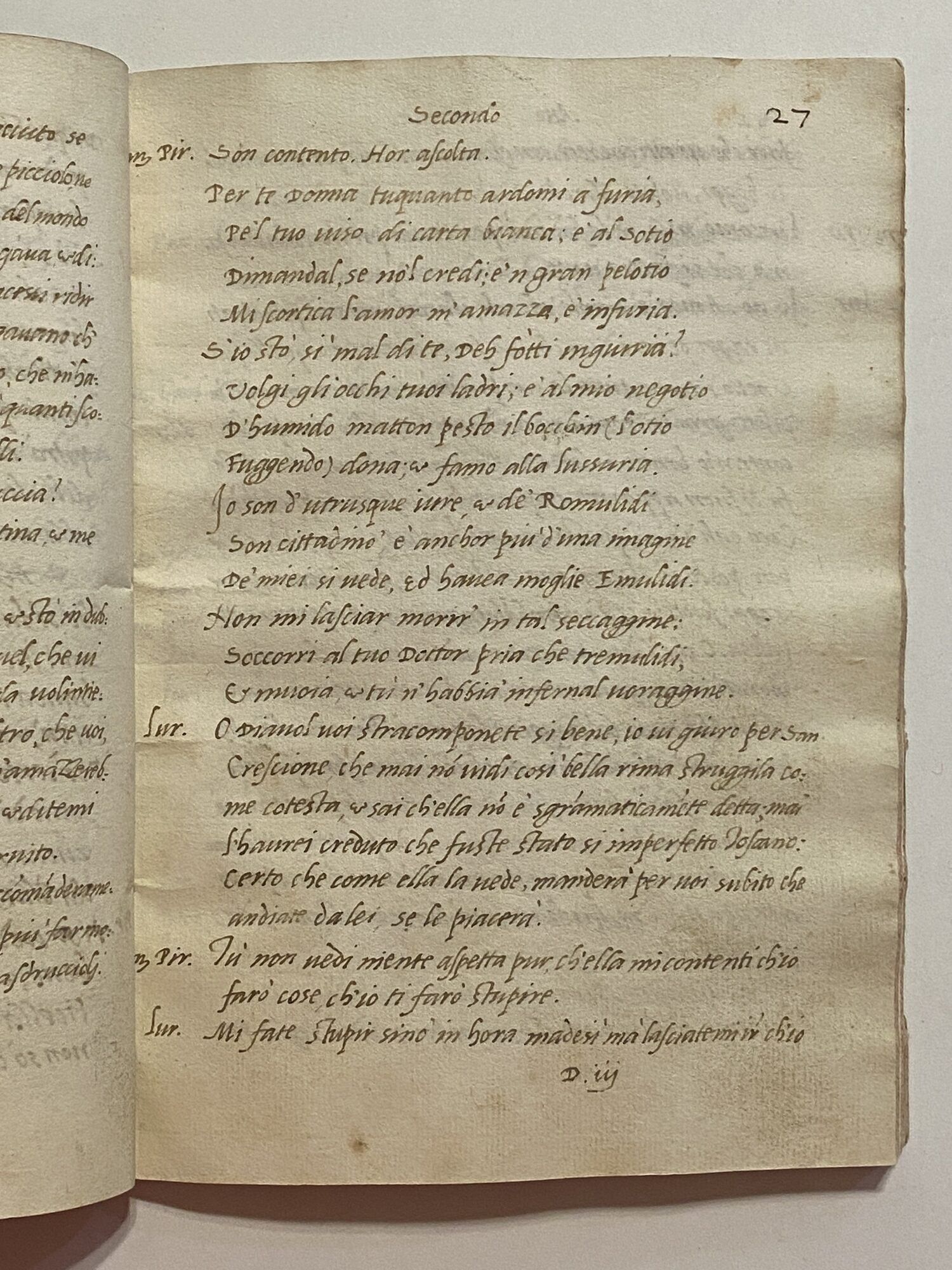
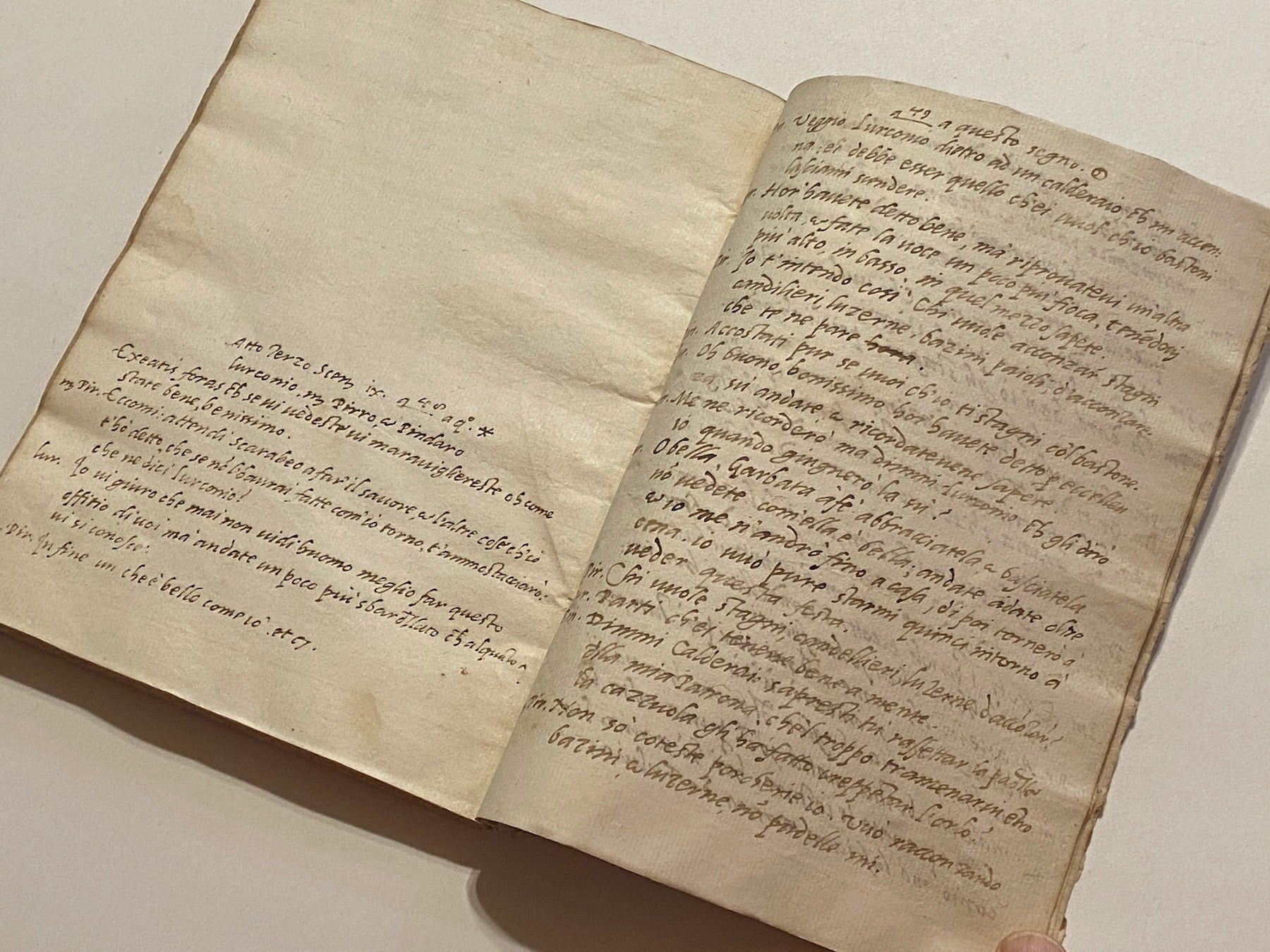
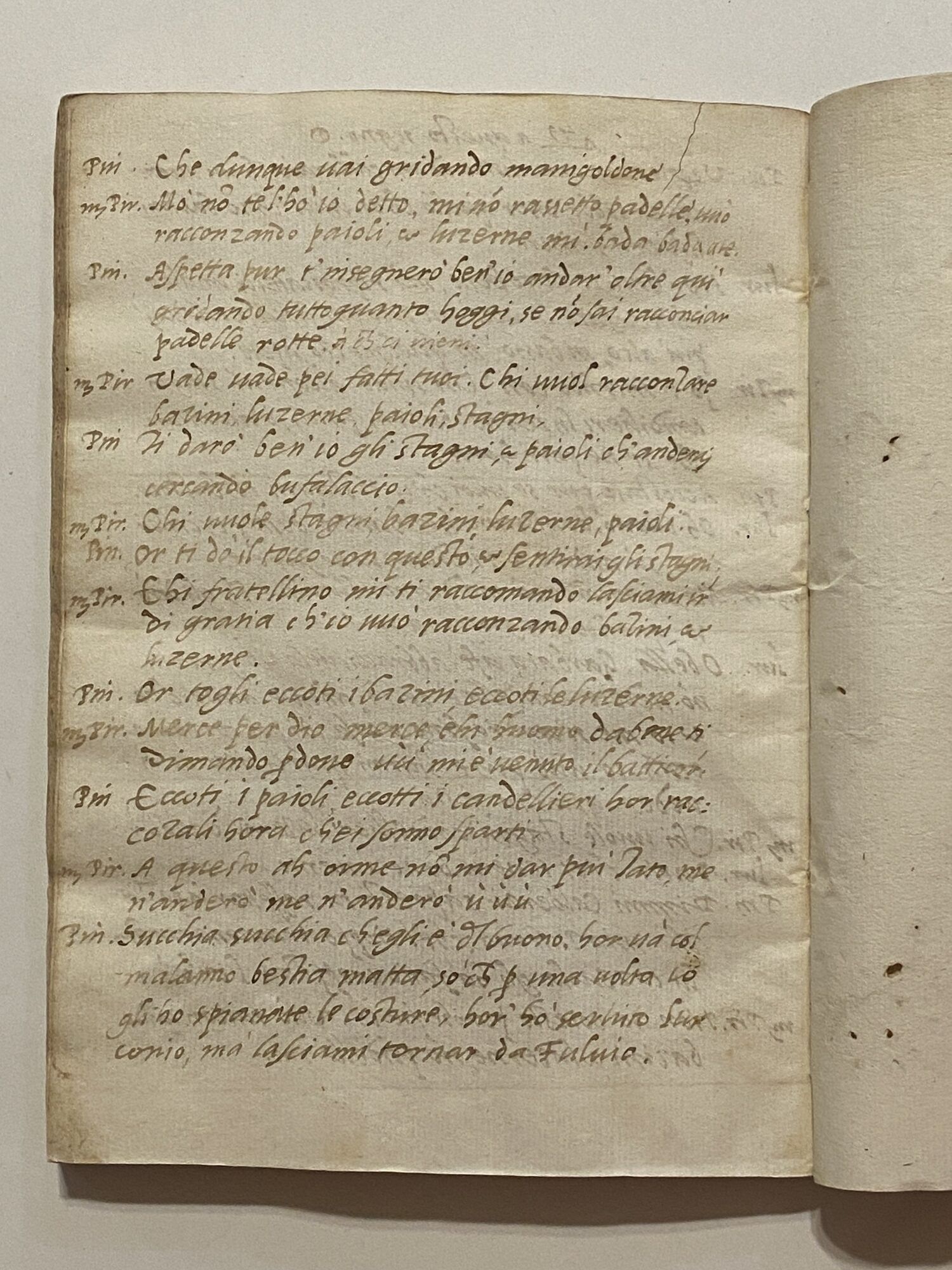
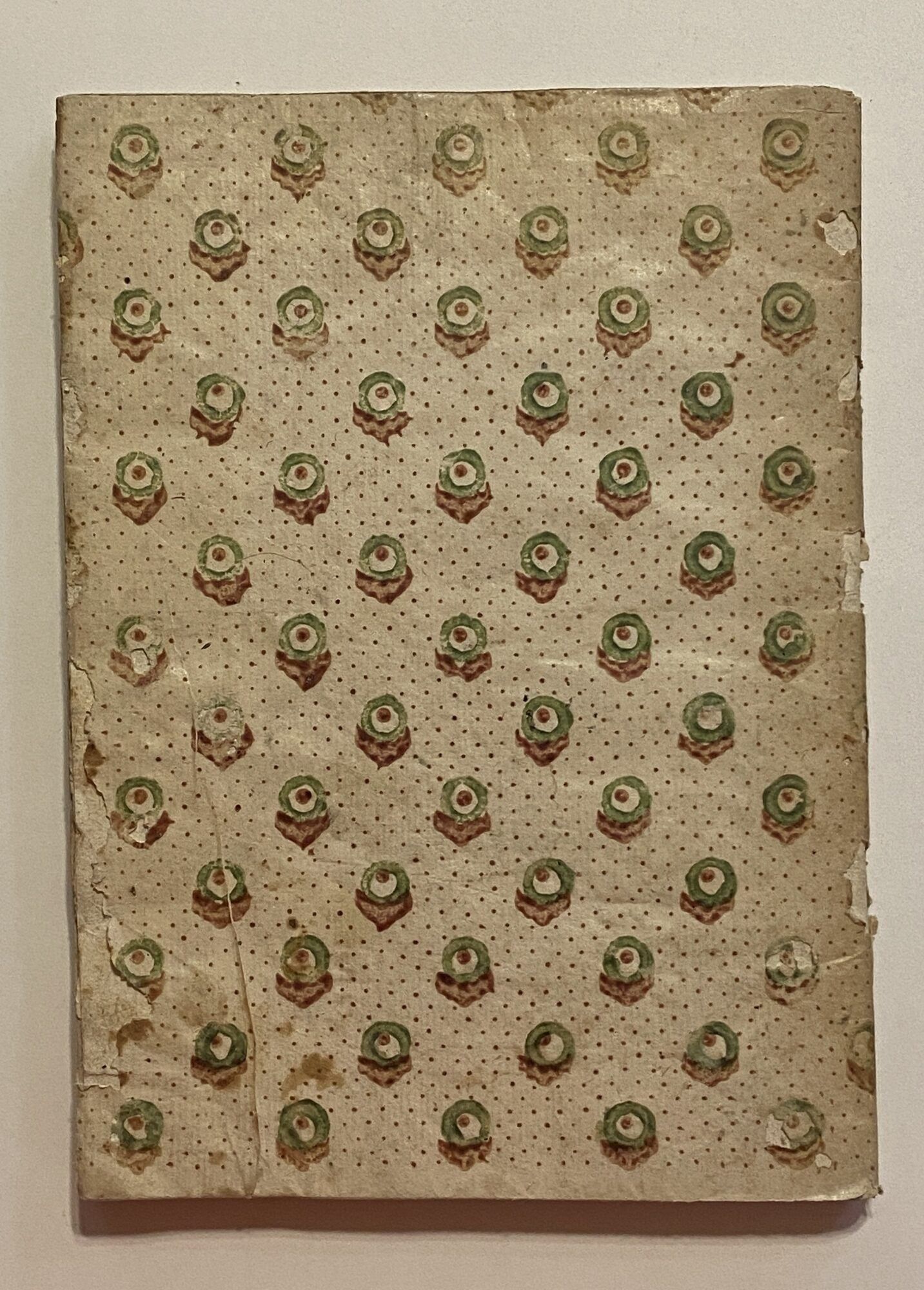
S.l., 1583. Very good. MANUSCRIPT ON PAPER. Small 4to (193 x 140 mm). 76, [2] ff. COLLATION: A-K8 including final 2 blank ff., COMPLETE. On the verso of fol. [77] is text that omitted by the scribe from fol. 40r; on the recto and verso of fol. [78] is text omitted from 49f. WATERMARK: fleur-de-lis within a circle, surmounted by an estoile (type of Heywood 7117 = Florence 1530). Bound in late 18th-century Italian block-printed paper wrappers, edges sprinkled red, old shelf-marks in MS on upper cover: "1582 / No. 319 / B135." Final two blank leaves with unimportant wormholes, textblock and wrappers a little shaken. An excellent copy, the beautiful handwriting perfectly clear. DESTABILIZING GENDER NORMS, AN EARLY MANUSCRIPT FAIR COPY OF A FASCINATING BUT VERY LITTLE-KNOWN ITALIAN PLAY THAT DEPICTS PORTIA, A CROSSED-DRESSED HEROINE IN THE TRADITION OF BOCCACCIO, WHO INVITES COMPARISON WITH SHAKESPEARE'S PORTIA IN "THE MERCHANT OF VENICE" (1600). INDEED, BOTH CHARACTERS ARE VEHICLES FOR THE EXPLORATION OF FEMALE GENDER AND POWER.
Both Portias adopt male identities as students, enter forbidden spaces, and reveal truth through disguise. These two Portias show two evolutionary stages of the Renaissance heroine. More than "The Merchant of Venice," our play involves erotic ambiguity, same-sex desire, and layered confusion of attraction (even incestuous).
"Our" Portia presents the hidden woman navigating danger in a male world, whereas Shakespeare's Portia is the woman who masters that world using her own rules. To our knowledge, no useful study (or even summary) of the present play has been published in English, and so we offer the following:
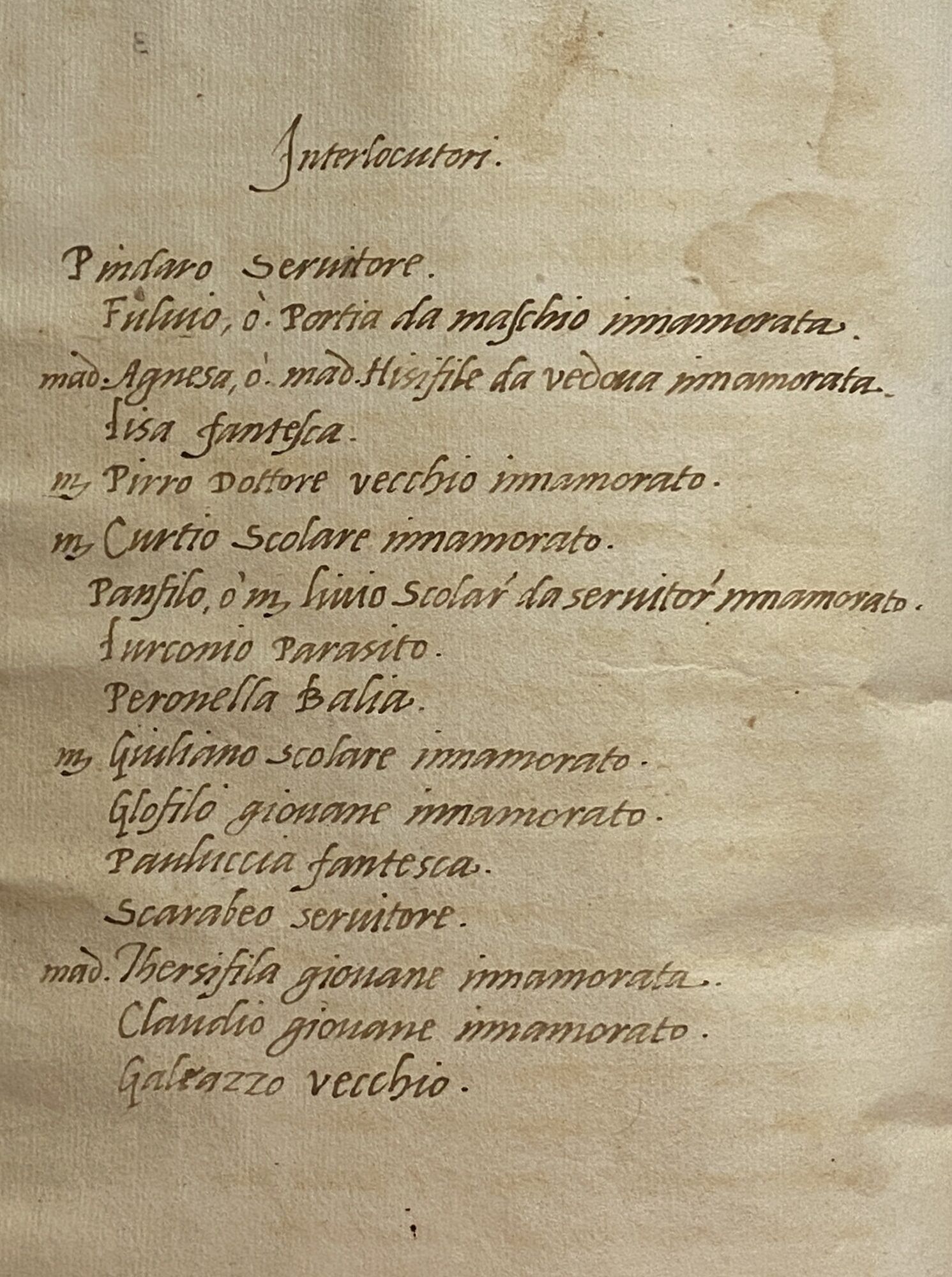
La Cognata ("The Sister-in-Law") is a comedy of deception, gender disguise, erotic intrigue, mistaken identity, and the dangers of crossing moral boundaries (i.e. love for a sister-in-law), and its prologue clearly states that it follows in the tradition of Boccaccio's novelle. At the center of the plot is a young woman (Portia). After war and chaos in Rome, she has been sent by her father to live as a male student ("Fulvio") in Siena, without her true identity being known. Much of the action takes place in the house of Madonna Agnese, a widow, who runs a boarding house for students. Agnese becomes a major character of erotic intrigue as she falls in love with Portia (thinking she is male), and actively schemes to satisfy her desires. Naturally there are other intrigues, such as her love of Claudio, from her previous life as a female, who recognizes her in her male disguise. Ultimately Portia's true identity is revealed and she is united with her rightful beloved. In "La Cognata, we find that human identity and desire are unstable, and social norms are easily broken.
CATALOGUER'S NOTE: Owing to the catastrophic (and irreparable?) failure by OCLC to conflate ebooks with "real" books, it is simply not possible to determine exactly which U.S. library own a copy of the 1583 first edition, although we have confirmed that there are copies at Huntington, Folger, Yale and Harvard.
RARITY OF THE FIRST EDITION ON THE MARKET: Only a single copy has sold at auction in the last century according to Rare Book Hub (Sotheby's 2/3/1947 lot 153, to Eisemann).
PROVENANCE: purchased by us through a U.K. dealer 2026. This manuscript conveys with export license from the Arts Council of England.
EARLY MANUSCRIPT FAIR-COPIES OF SIXTEENTH-CENTURY ITALIAN PLAYS ARE RARE ON THE OPEN MARKET.
Both Portias adopt male identities as students, enter forbidden spaces, and reveal truth through disguise. These two Portias show two evolutionary stages of the Renaissance heroine. More than "The Merchant of Venice," our play involves erotic ambiguity, same-sex desire, and layered confusion of attraction (even incestuous).
"Our" Portia presents the hidden woman navigating danger in a male world, whereas Shakespeare's Portia is the woman who masters that world using her own rules. To our knowledge, no useful study (or even summary) of the present play has been published in English, and so we offer the following:
La Cognata ("The Sister-in-Law") is a comedy of deception, gender disguise, erotic intrigue, mistaken identity, and the dangers of crossing moral boundaries (i.e. love for a sister-in-law), and its prologue clearly states that it follows in the tradition of Boccaccio's novelle. At the center of the plot is a young woman (Portia). After war and chaos in Rome, she has been sent by her father to live as a male student ("Fulvio") in Siena, without her true identity being known. Much of the action takes place in the house of Madonna Agnese, a widow, who runs a boarding house for students. Agnese becomes a major character of erotic intrigue as she falls in love with Portia (thinking she is male), and actively schemes to satisfy her desires. Naturally there are other intrigues, such as her love of Claudio, from her previous life as a female, who recognizes her in her male disguise. Ultimately Portia's true identity is revealed and she is united with her rightful beloved. In "La Cognata, we find that human identity and desire are unstable, and social norms are easily broken.
CATALOGUER'S NOTE: Owing to the catastrophic (and irreparable?) failure by OCLC to conflate ebooks with "real" books, it is simply not possible to determine exactly which U.S. library own a copy of the 1583 first edition, although we have confirmed that there are copies at Huntington, Folger, Yale and Harvard.
RARITY OF THE FIRST EDITION ON THE MARKET: Only a single copy has sold at auction in the last century according to Rare Book Hub (Sotheby's 2/3/1947 lot 153, to Eisemann).
PROVENANCE: purchased by us through a U.K. dealer 2026. This manuscript conveys with export license from the Arts Council of England.
EARLY MANUSCRIPT FAIR-COPIES OF SIXTEENTH-CENTURY ITALIAN PLAYS ARE RARE ON THE OPEN MARKET.
Details
Title
[MANUSCRIPT FAIR-COPY OF A FORGOTTEN 16TH CENTURY ITALIAN "CROSS-DRESSING" PLAY]. Comedia nuova intitulata la Cognata di Nicolo Tani dal borgo San Sepolcro
Author
Tani, Nicolo
Condition
Very Good
Publisher
S.l.
Date
1583