

The Official Central Avenue District Directory: A Business and Professional Guide
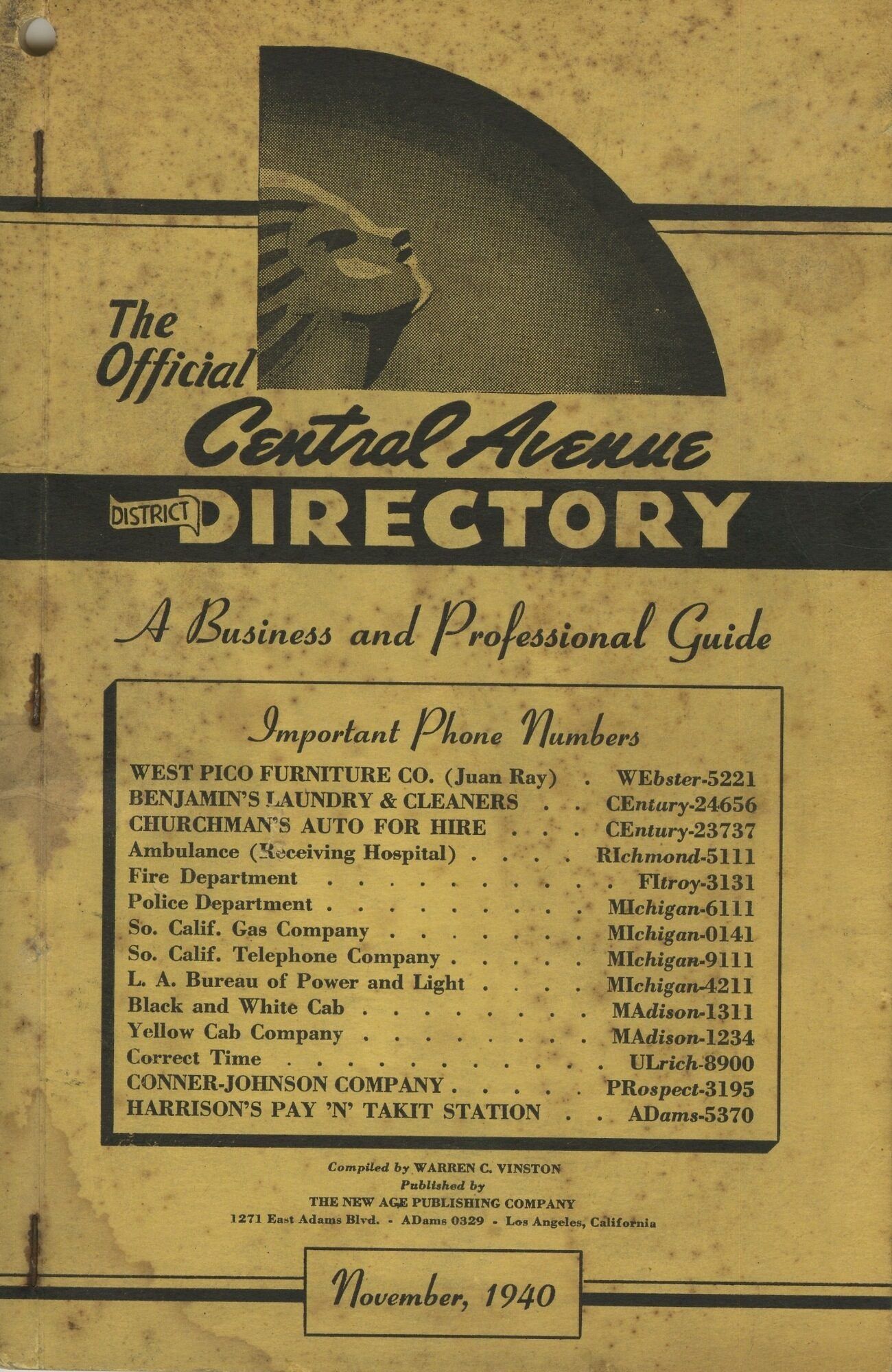
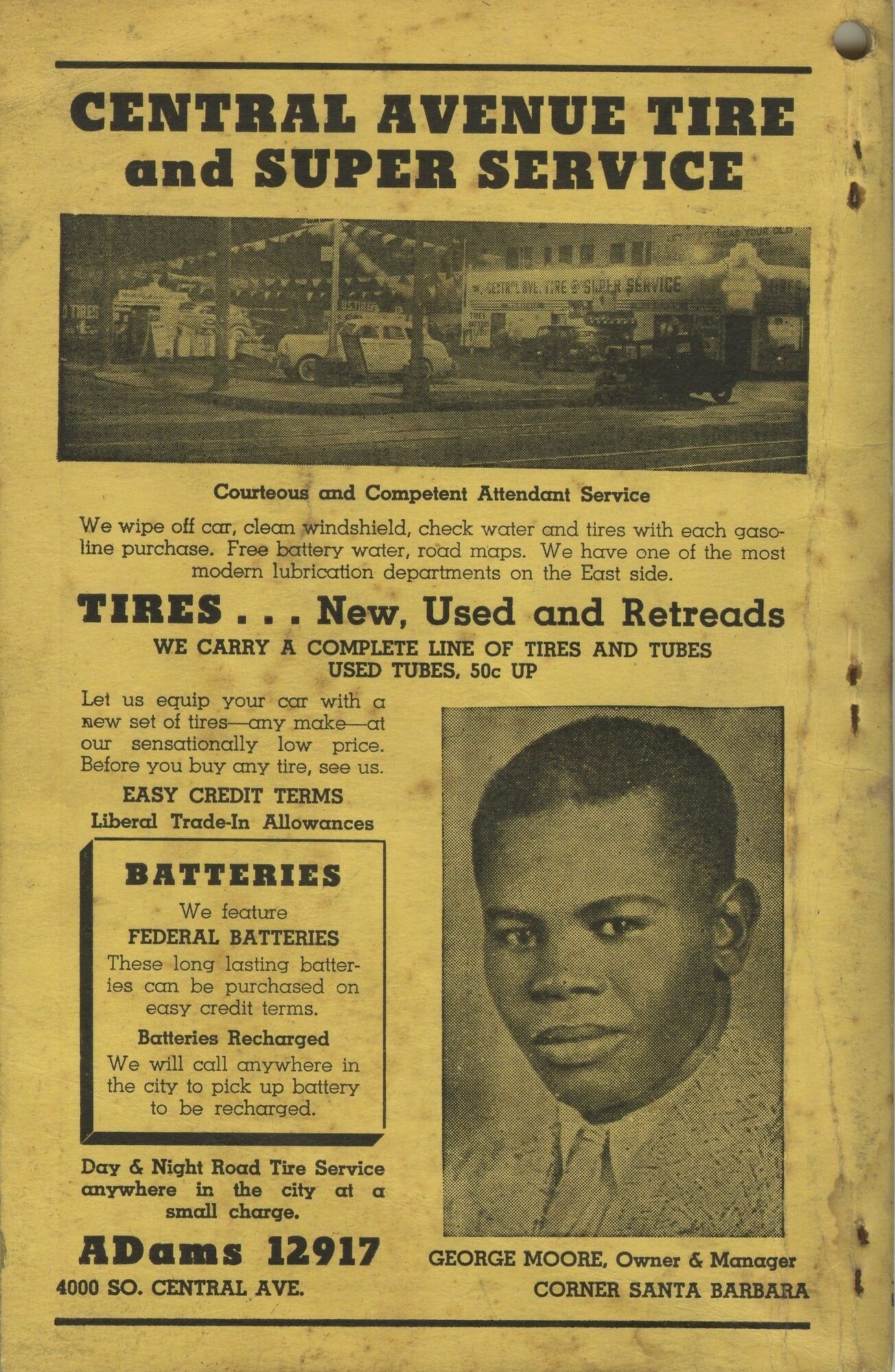
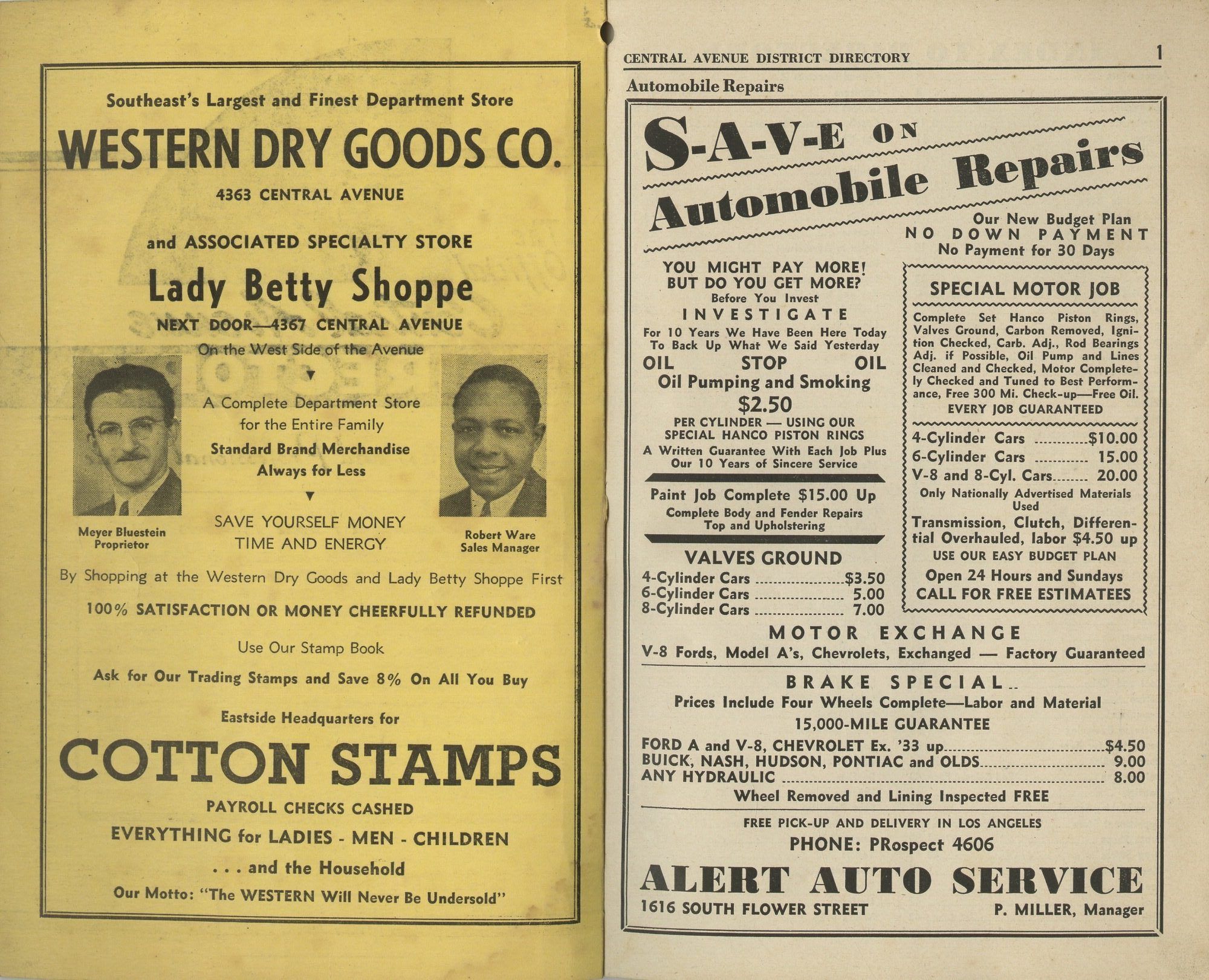
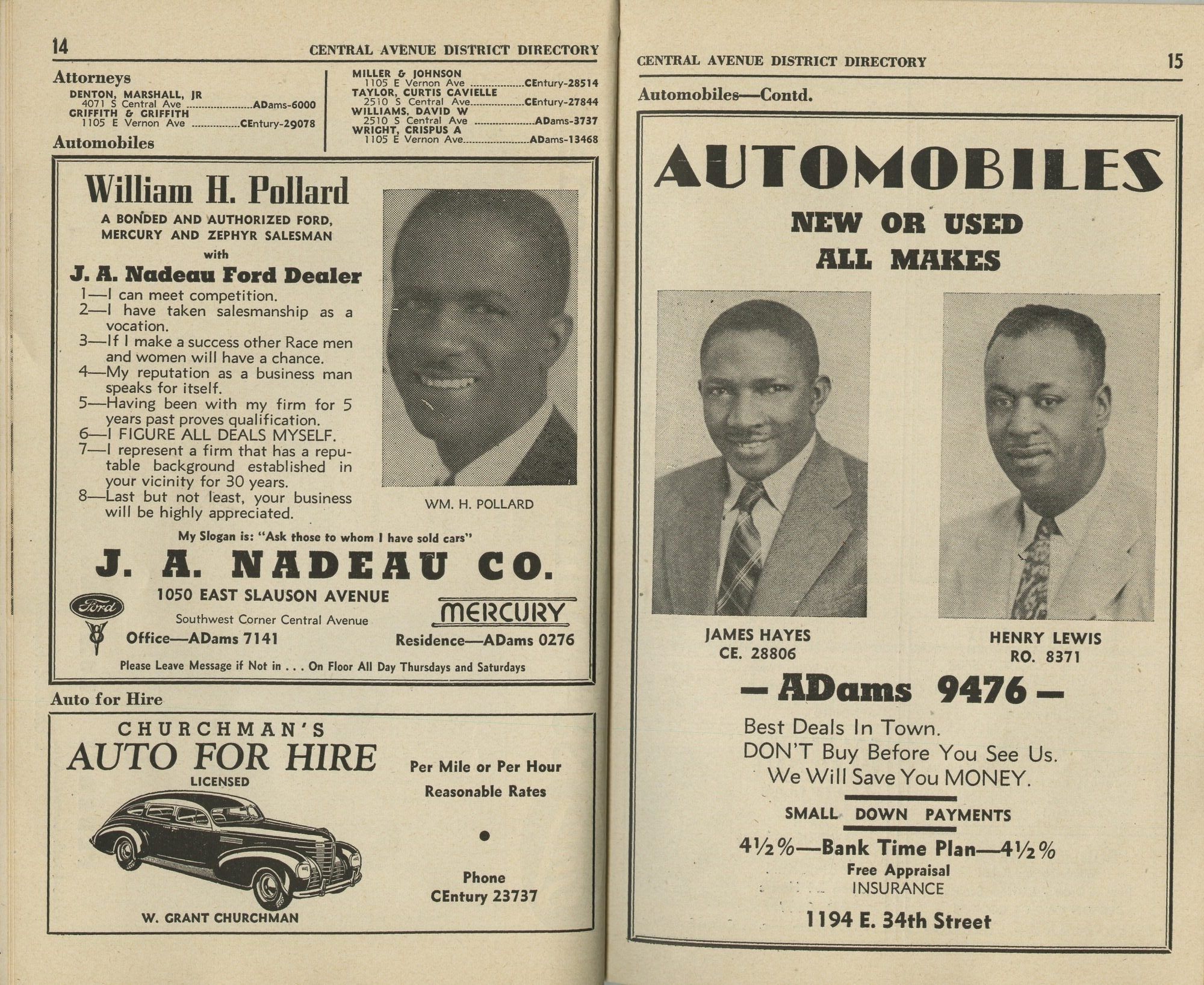
- Printed yellow wraps, staple-bound. Good, with moderate wear, soiling, and fading to covers, one corner of a page missing presum
- Los Angeles, California: New Age Publishing Company, 1940
Los Angeles, California: New Age Publishing Company, 1940. Printed yellow wraps, staple-bound. Good, with moderate wear, soiling, and fading to covers, one corner of a page missing presumably from a business advertisement cut out near the time of publication. Contents otherwise excellent, quite attractive internally.. A scarce directory documenting the Central Avenue District at its wartime height, when the neighborhood had fully emerged as the center of African American life in Los Angeles. By the early twentieth century, Central Avenue had been shaped in large part by exclusion, concentrating Black settlement along a corridor bounded roughly by San Pedro and Alameda streets. By 1920 the district had extended south to Jefferson Boulevard, and by the 1940s its commercial center had shifted further south to the intersection of 41st Street and Central Avenue, reflecting the rapid growth of the community.
The directory captures this environment in detail. The Avenue, long described as the “heart of the African-American community” in Los Angeles, had by the 1920s become its social and commercial center, with Black-owned businesses, churches, and institutions forming a dense and self-sustaining network. Listings include professional offices, insurance firms, clubs, churches, and civic organizations, alongside extensive period advertising. A double-page map identifies points of interest across the district, while a “Who’s Who” section provides names and addresses of individuals “serving and building the district through the capacities in which they serve.”
Five pages are devoted to headshots and short biographies of Black performers active in the district’s entertainment world, including Cleo Desmond, Thaddeus Jones, Jesse A. Graves, Ernest Whitman, and Laura Bowman, reflecting the prominence of Central Avenue as a center of performance and nightlife. The concentration of clubs and venues along the Avenue—many clustered near the Dunbar Hotel—formed a well-documented entertainment corridor during the 1920s through 1940s.
Not listed in OCLC, we find one other copy on the market at the time of writing (offered for $5,000). One copy in auction records, in the 2017 Swann African-Americana sale.
See:
California State University, Northridge, “Central Avenue District,” Peek in the Stacks, accessed March 30, 2026, https://library.csun.edu/sca/peek-stacks/central-avenue-district.
Los Angeles Conservancy, “Central Avenue,” accessed March 30, 2026, https://www.laconservancy.org/save-places/issues/central-avenue/.
The directory captures this environment in detail. The Avenue, long described as the “heart of the African-American community” in Los Angeles, had by the 1920s become its social and commercial center, with Black-owned businesses, churches, and institutions forming a dense and self-sustaining network. Listings include professional offices, insurance firms, clubs, churches, and civic organizations, alongside extensive period advertising. A double-page map identifies points of interest across the district, while a “Who’s Who” section provides names and addresses of individuals “serving and building the district through the capacities in which they serve.”
Five pages are devoted to headshots and short biographies of Black performers active in the district’s entertainment world, including Cleo Desmond, Thaddeus Jones, Jesse A. Graves, Ernest Whitman, and Laura Bowman, reflecting the prominence of Central Avenue as a center of performance and nightlife. The concentration of clubs and venues along the Avenue—many clustered near the Dunbar Hotel—formed a well-documented entertainment corridor during the 1920s through 1940s.
Not listed in OCLC, we find one other copy on the market at the time of writing (offered for $5,000). One copy in auction records, in the 2017 Swann African-Americana sale.
See:
California State University, Northridge, “Central Avenue District,” Peek in the Stacks, accessed March 30, 2026, https://library.csun.edu/sca/peek-stacks/central-avenue-district.
Los Angeles Conservancy, “Central Avenue,” accessed March 30, 2026, https://www.laconservancy.org/save-places/issues/central-avenue/.
Details
Title
The Official Central Avenue District Directory: A Business and Professional Guide
Author
[African-Americana – California] Vinson, Warren (compiler)
Binding
Printed yellow wraps, staple-bound. Good, with moderate wear, soiling, and fading to covers, one corner of a page missing presum
Condition
Unknown
Publisher
New Age Publishing Company: Los Angeles, California
Date
1940