

Story of Doctor Dolittle, The
- New York: Frederick A. Stokes Company, 1920
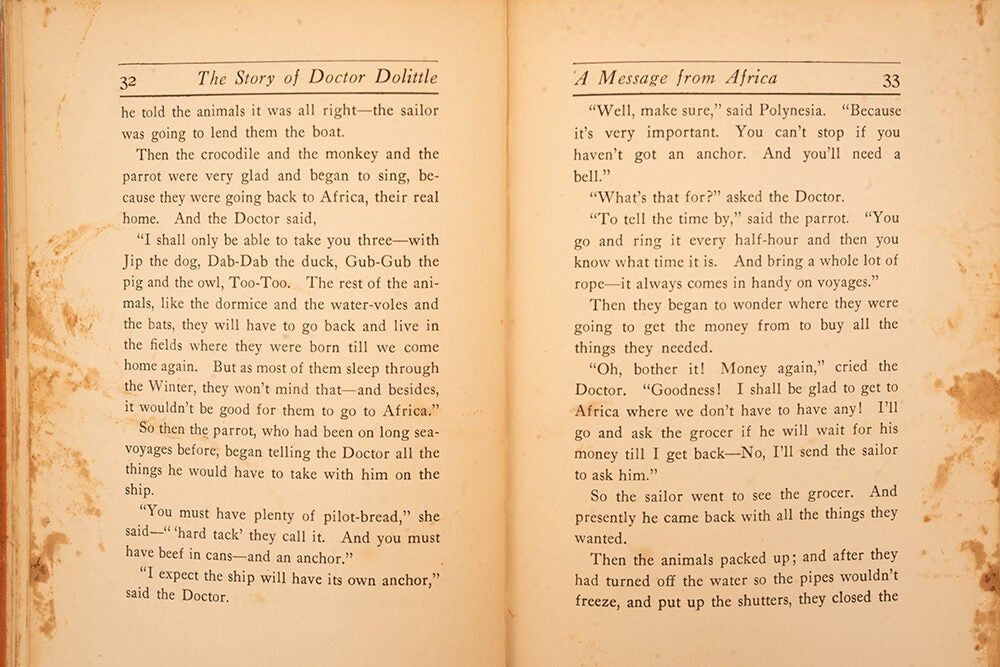
New York: Frederick A. Stokes Company, 1920. Money," he said, "is a terrible nuisance. But it's nice not to have to worry."
First Edition of Doctor Dolittle
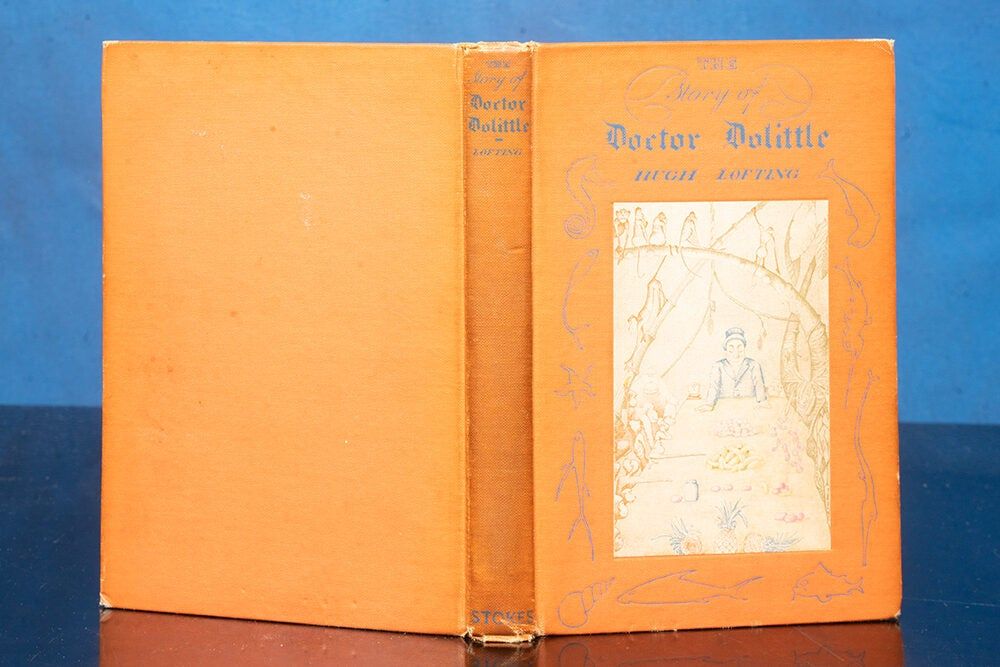
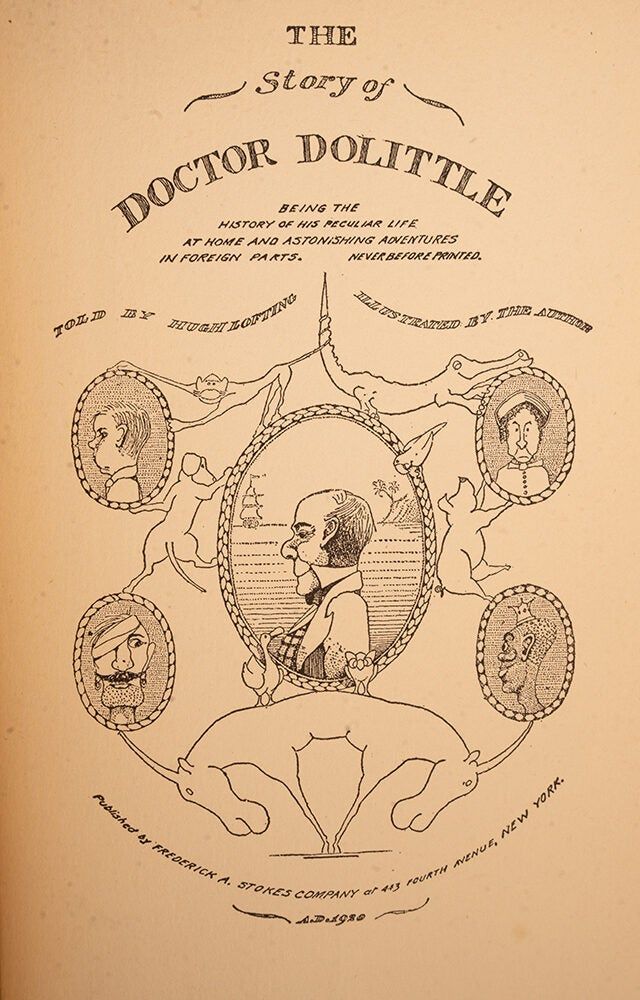
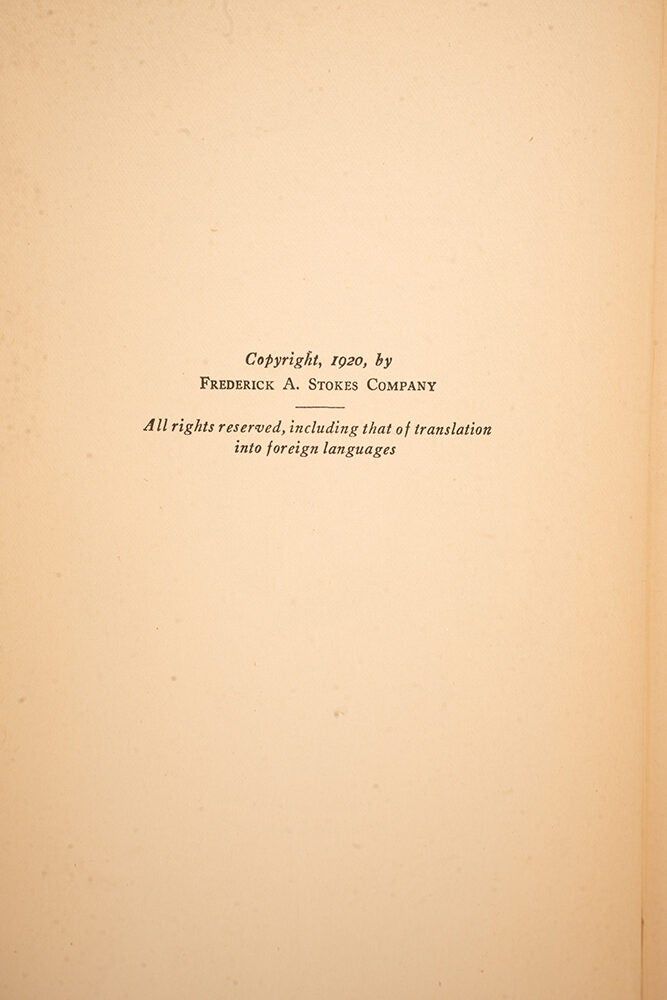
LOFTING, Hugh. The Story of Doctor Dolittle. Being the history of his peculiar life at home and astonishing adventures in foreign Parts. Never before printed. New York: Frederick A. Stokes Company, 1920.
First edition of the First Doctor Dolittle Book.
Octavo (8 x 5 1/4 inches; 203 x 134 mm.). [xii], 180 pp. Inserted color frontispiece with original tissue-guard, three inserted black and white plates, and numerous line illustrations, many full-page, all by Hugh Lofting.
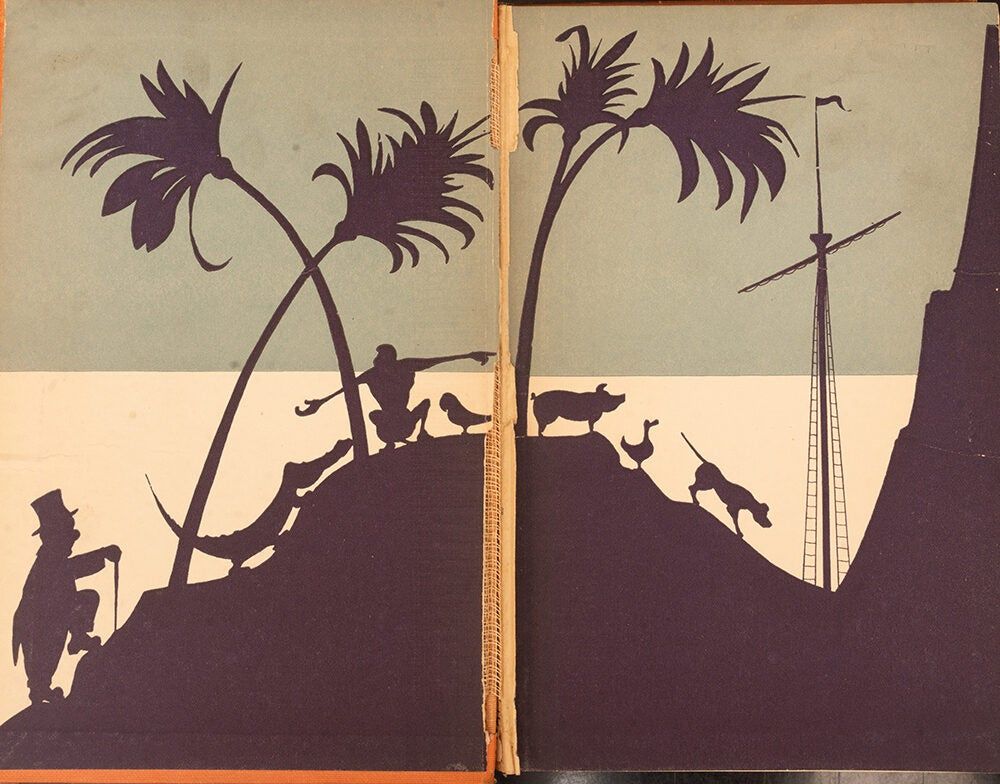
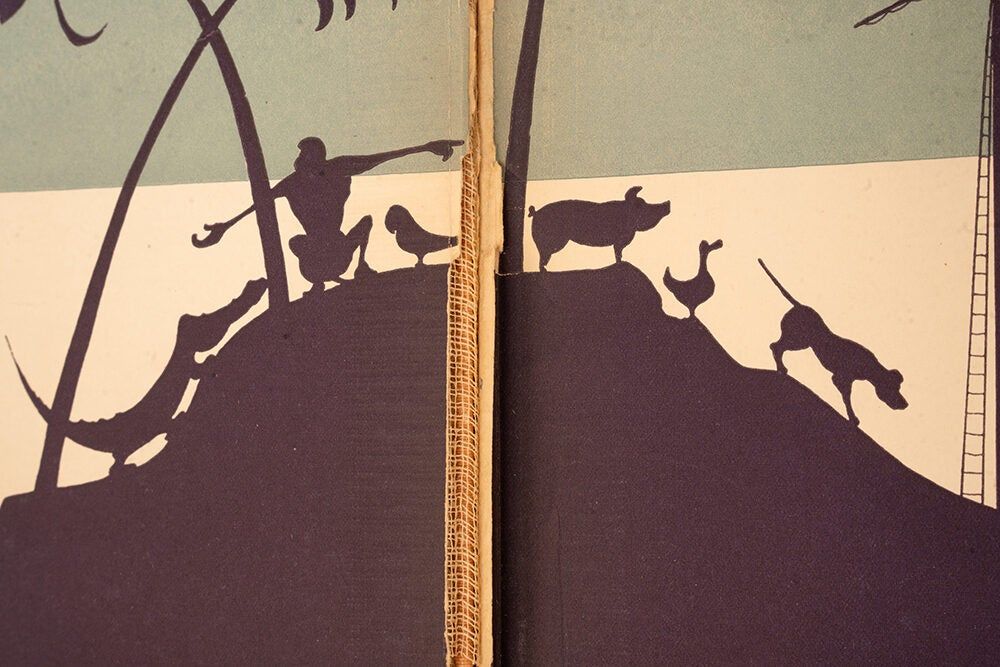
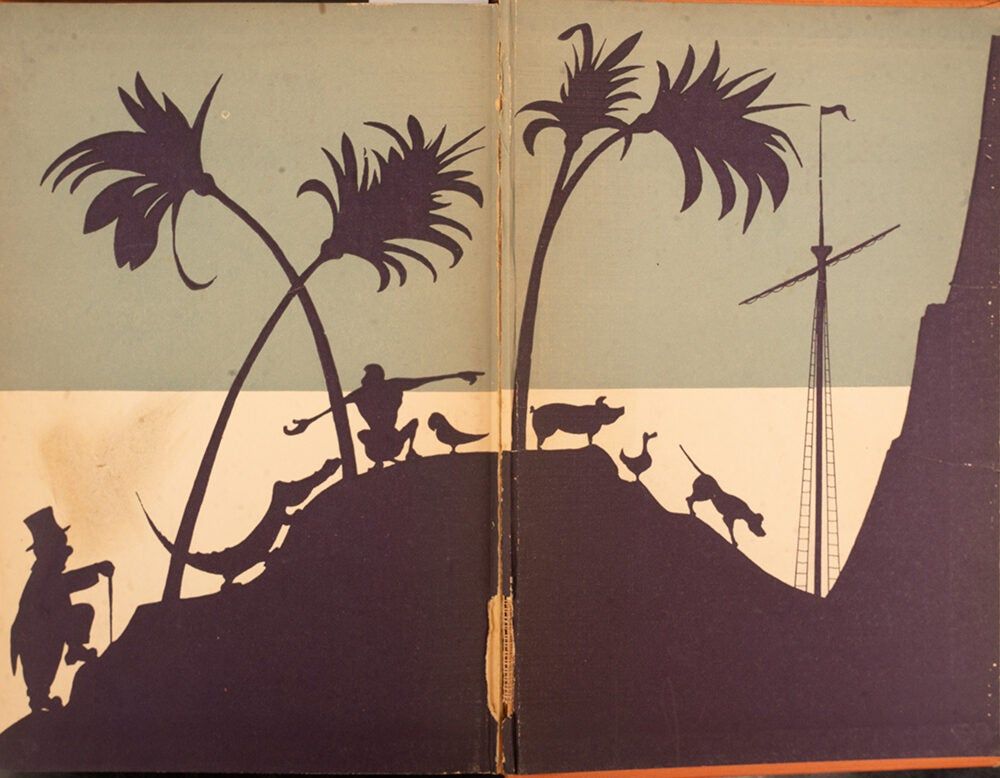
Publisher's orange cloth, front cover decorated and lettered in blue and with a duplicate of the color frontispiece laid on. Spine lettered in blue, three-color pictorial end-papers. Small library stamp on half title, some staining to a few pages, most significantly on pp. 29-37, small blank corner (1 x 1 inch) torn away from dedication leaf, inner hinges repaired, spine darkened. A fair copy of the first edition at a reasonable price.
Hugh John Lofting (14 January 1886 - 26 September 1947) was a British author, trained as a civil engineer, who created the character of Doctor Dolittle, one of the classics of children's literature. He traveled widely as a civil engineer, before enlisting in the Irish Guards regiment of the British Army to serve in the First World War. Not wishing to write to his children about the brutality of the war, he wrote imaginative letters which later became the foundation of the successful Doctor Dolittle novels for children.
Hugh Lofting's character of Doctor John Dolittle, was an English physician from Puddleby-on-the-Marsh in the West Country - who could speak to animals. The character first saw light in the author's illustrated letters to children, written from the trenches during the War of 1914 to 1918, when actual news, he later said, was either too horrible or too dull. The stories are set in early Victorian England in the 1820s-1840s (The Voyages of Doctor Dolittle gives a date of 1839).
The Story of Doctor Dolittle: Being the History of His Peculiar Life at Home and Astonishing Adventures in Foreign Parts Never Before Printed (1920) began the series and won the Lewis Carroll Shelf Award in 1958. The sequel The Voyages of Doctor Dolittle (1922) won Lofting the prestigious Newbery Medal. Eight more books followed, and after Lofting's death two more volumes appeared, composed of short unpublished pieces.
The internal chronology of the books is somewhat different from the publishing order. The first book is followed by Doctor Dolittle's Post Office (1923), Doctor Dolittle's Circus (1924) and Doctor Dolittle's Caravan (1926). Only then follows the second book, The Voyages of Doctor Dolittle (1922), continued by Doctor Dolittle's Zoo (1925). After that, the publishing order is restored; Doctor Dolittle's Garden (1927) is followed by Doctor Dolittle in the Moon (1928) and Doctor Dolittle's Return (1933), ending with Doctor Dolittle and the Secret Lake (1948).
The series has been adapted for film and television many times, for stage twice, and for radio too.
Our great friend of nearly fifty years, Leslie Bricusse wrote the song "Talk to the Animals" for which he won the Oscar for 'Best original Song' at the 1968 academy awards.
"If we could talk to the animals, learn all their languages,
Maybe take an animal degree,
We'd study elephant and eagle, buffalo and beagle,
Alligator, guinea pig, and flea!"
Peter Parley to Penrod, p. 138.
First Edition of Doctor Dolittle
LOFTING, Hugh. The Story of Doctor Dolittle. Being the history of his peculiar life at home and astonishing adventures in foreign Parts. Never before printed. New York: Frederick A. Stokes Company, 1920.
First edition of the First Doctor Dolittle Book.
Octavo (8 x 5 1/4 inches; 203 x 134 mm.). [xii], 180 pp. Inserted color frontispiece with original tissue-guard, three inserted black and white plates, and numerous line illustrations, many full-page, all by Hugh Lofting.
Publisher's orange cloth, front cover decorated and lettered in blue and with a duplicate of the color frontispiece laid on. Spine lettered in blue, three-color pictorial end-papers. Small library stamp on half title, some staining to a few pages, most significantly on pp. 29-37, small blank corner (1 x 1 inch) torn away from dedication leaf, inner hinges repaired, spine darkened. A fair copy of the first edition at a reasonable price.
Hugh John Lofting (14 January 1886 - 26 September 1947) was a British author, trained as a civil engineer, who created the character of Doctor Dolittle, one of the classics of children's literature. He traveled widely as a civil engineer, before enlisting in the Irish Guards regiment of the British Army to serve in the First World War. Not wishing to write to his children about the brutality of the war, he wrote imaginative letters which later became the foundation of the successful Doctor Dolittle novels for children.
Hugh Lofting's character of Doctor John Dolittle, was an English physician from Puddleby-on-the-Marsh in the West Country - who could speak to animals. The character first saw light in the author's illustrated letters to children, written from the trenches during the War of 1914 to 1918, when actual news, he later said, was either too horrible or too dull. The stories are set in early Victorian England in the 1820s-1840s (The Voyages of Doctor Dolittle gives a date of 1839).
The Story of Doctor Dolittle: Being the History of His Peculiar Life at Home and Astonishing Adventures in Foreign Parts Never Before Printed (1920) began the series and won the Lewis Carroll Shelf Award in 1958. The sequel The Voyages of Doctor Dolittle (1922) won Lofting the prestigious Newbery Medal. Eight more books followed, and after Lofting's death two more volumes appeared, composed of short unpublished pieces.
The internal chronology of the books is somewhat different from the publishing order. The first book is followed by Doctor Dolittle's Post Office (1923), Doctor Dolittle's Circus (1924) and Doctor Dolittle's Caravan (1926). Only then follows the second book, The Voyages of Doctor Dolittle (1922), continued by Doctor Dolittle's Zoo (1925). After that, the publishing order is restored; Doctor Dolittle's Garden (1927) is followed by Doctor Dolittle in the Moon (1928) and Doctor Dolittle's Return (1933), ending with Doctor Dolittle and the Secret Lake (1948).
The series has been adapted for film and television many times, for stage twice, and for radio too.
Our great friend of nearly fifty years, Leslie Bricusse wrote the song "Talk to the Animals" for which he won the Oscar for 'Best original Song' at the 1968 academy awards.
"If we could talk to the animals, learn all their languages,
Maybe take an animal degree,
We'd study elephant and eagle, buffalo and beagle,
Alligator, guinea pig, and flea!"
Peter Parley to Penrod, p. 138.
Details
Title
Story of Doctor Dolittle, The
Author
LOFTING, Hugh
Condition
Unknown
Publisher
New York: Frederick A. Stokes Company, 1920