

Le Grand palais de la Miséricorde, Orné et tapissé de belles et riches pièces des vii oeuvres de l'aumosne corporelle

- Douai: Baltazar Bellere, 1606
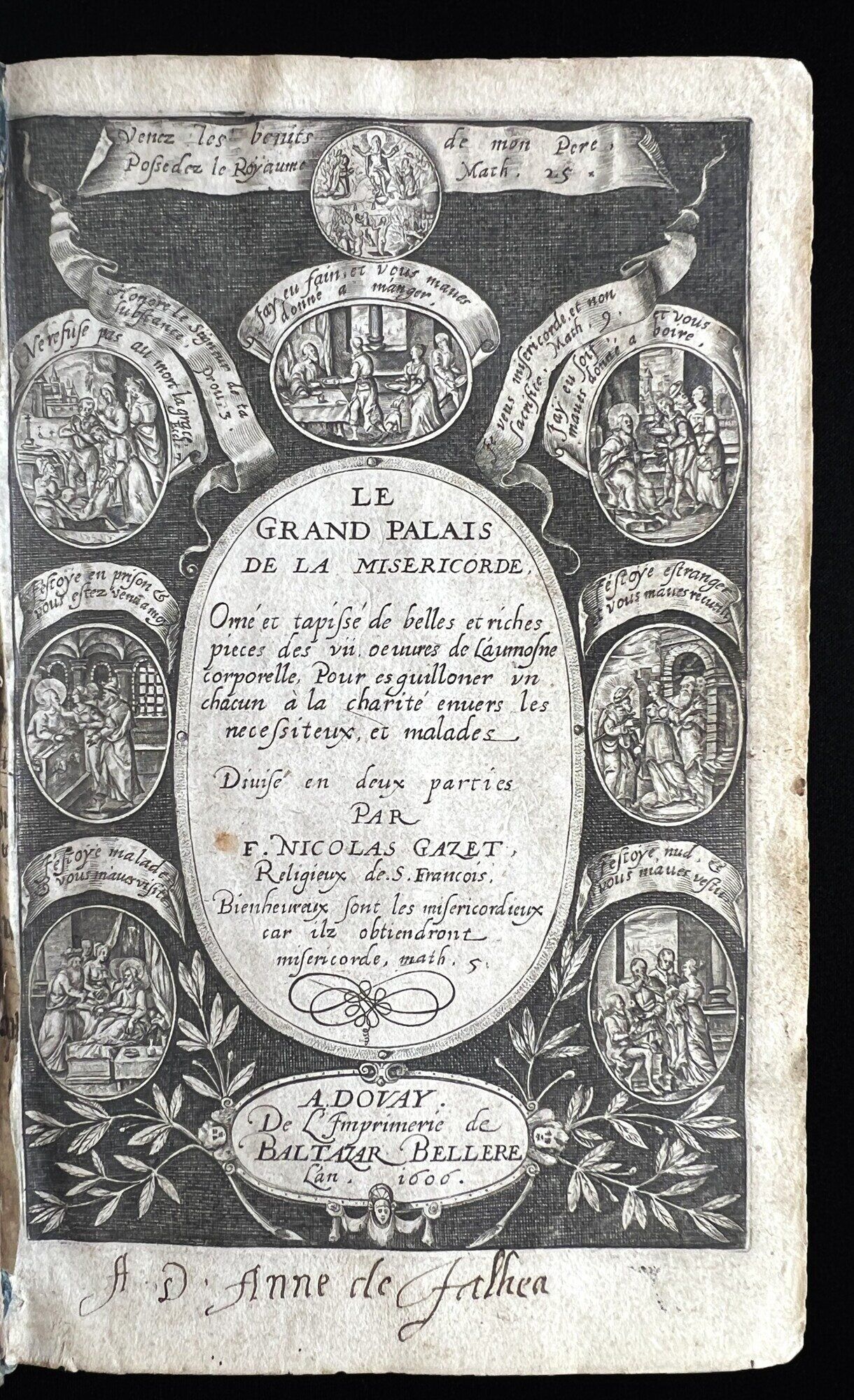
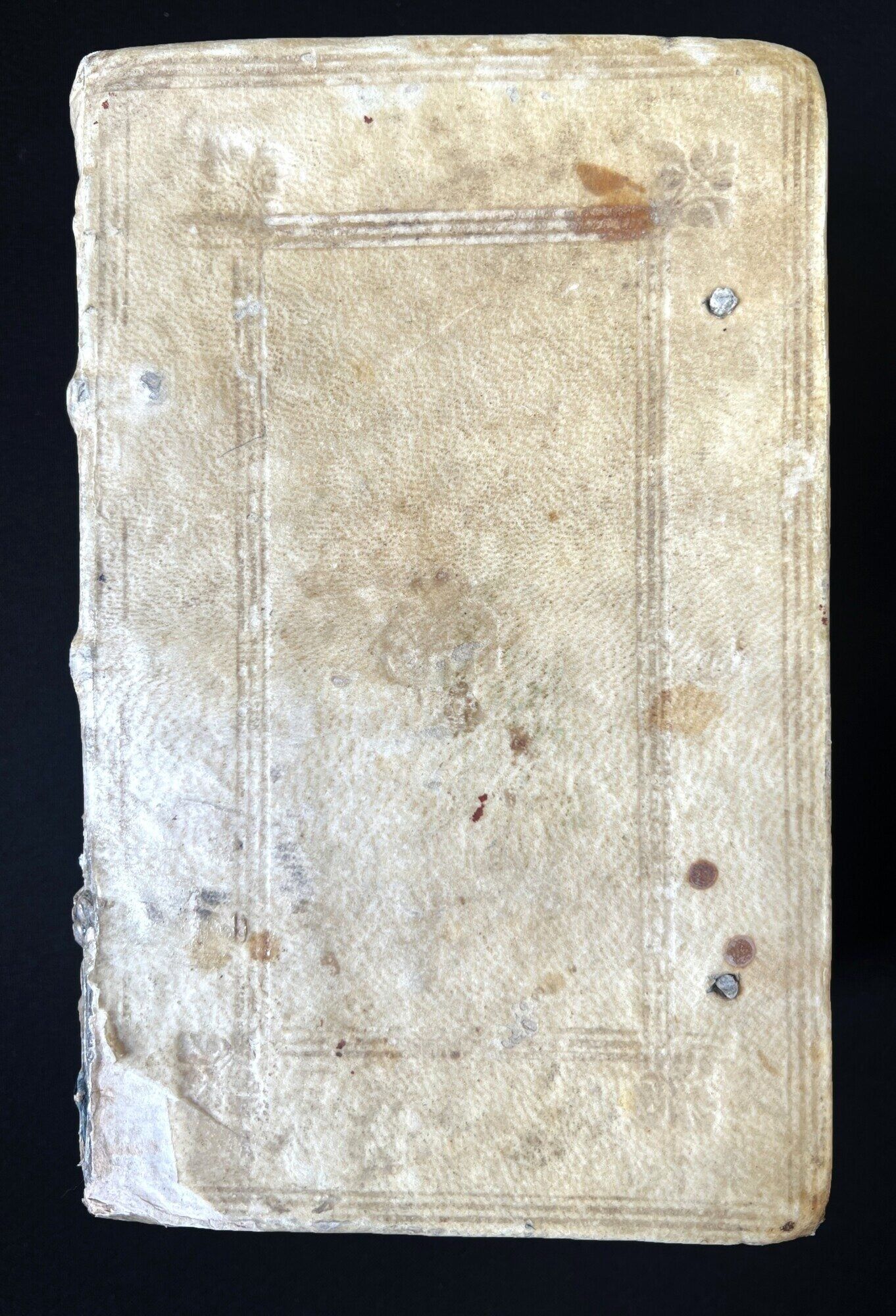
Douai: Baltazar Bellere, 1606. 8vo (159 x 100 mm). 2 parts, separately paginated; part 1: [40], 334, [2 blank] pp.; part 2: 3-570 pp. (but complete). Additional engraved title, repeated in part 2 with slightly different central text, ten full-page engravings, most signed or monogrammed by Jean Waldor [Valdor] of Liège, woodcut initials, woodcut and type-ornament tail-pieces, typographic head-pieces. (Small marginal stain to second leaf, slight fraying at foot of final leaf, but an appealing copy.) Contemporary alum-tawed sheepskin(?) over pasteboards, sides blind-paneled, inner panel with fleurons at angles, IHS stamp at center of upper cover, illegible stamp on lower cover (quite rubbed), evidence of two fore-edge ties, vellum spine liners from an early manuscript (spine defective, lacking upper compartment, front free endleaf torn). Provenance: A. D[ame?]. Anne de Jalhea, 17th-century inscription on title.***
First edition of a very rare Counter-Reformation devotional work on the works of charity, illustrated with fine engravings by the Liège engraver Jean Valdor the elder (ca. 1580-1632), a student of Jérôme Wierix who also worked in Nancy and Paris, and whose son was one of the chosen court artists of Louis XIV.
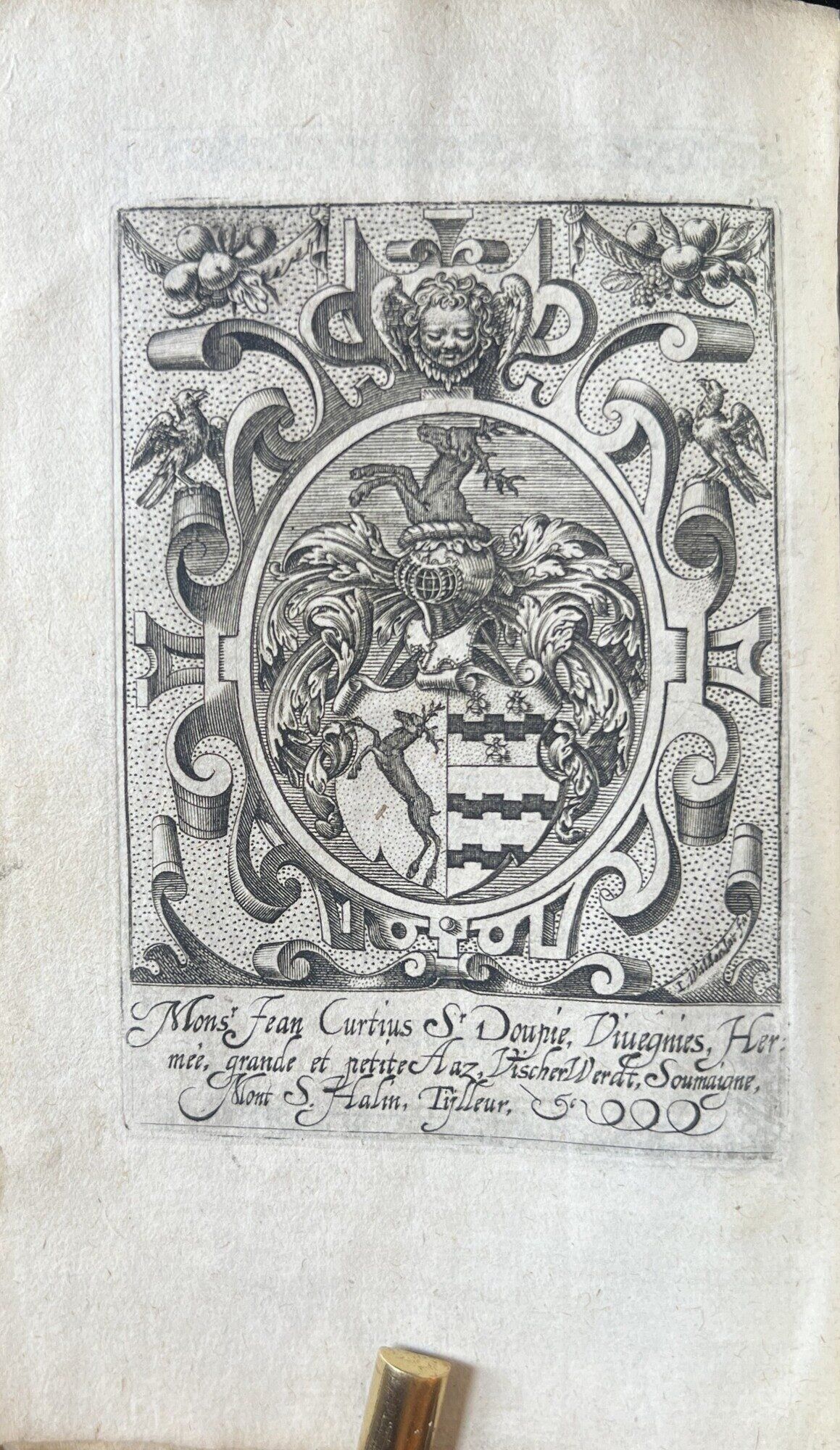
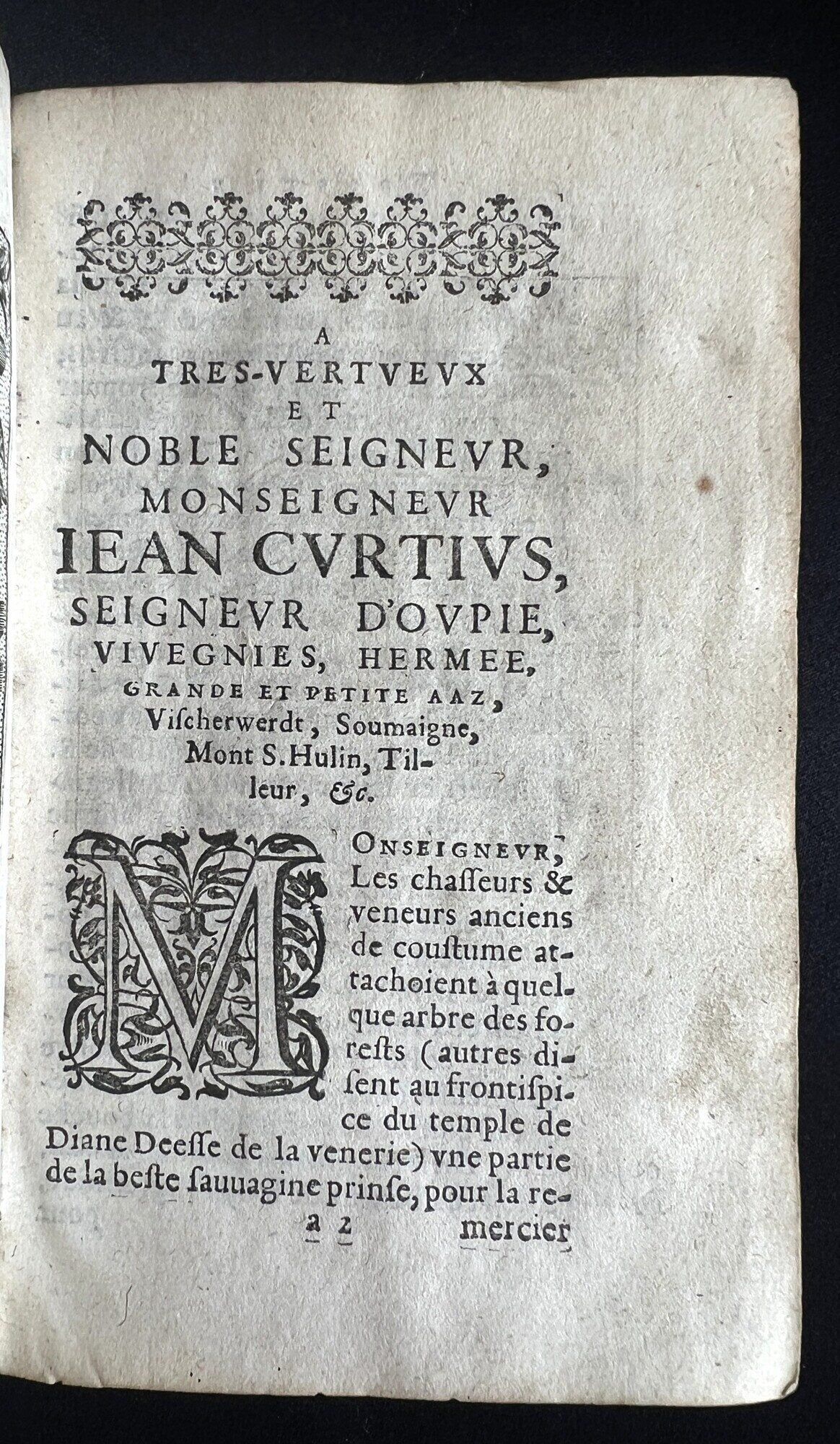
The author, a Franciscan Recollect from Arras, taught theology to members of his order, and served successively as confessor in various monasteries, in Arras, Béthune, Liège, and Namur. At the time this work appeared he was spiritual director of the convent of the Annonciades in Béthune, as indicated in his signature to the interesting dedication to the Liège industrialist Jean Curtius, the principal armorer of the Spanish army, who made a fortune in the production of gunpowder and weapons.
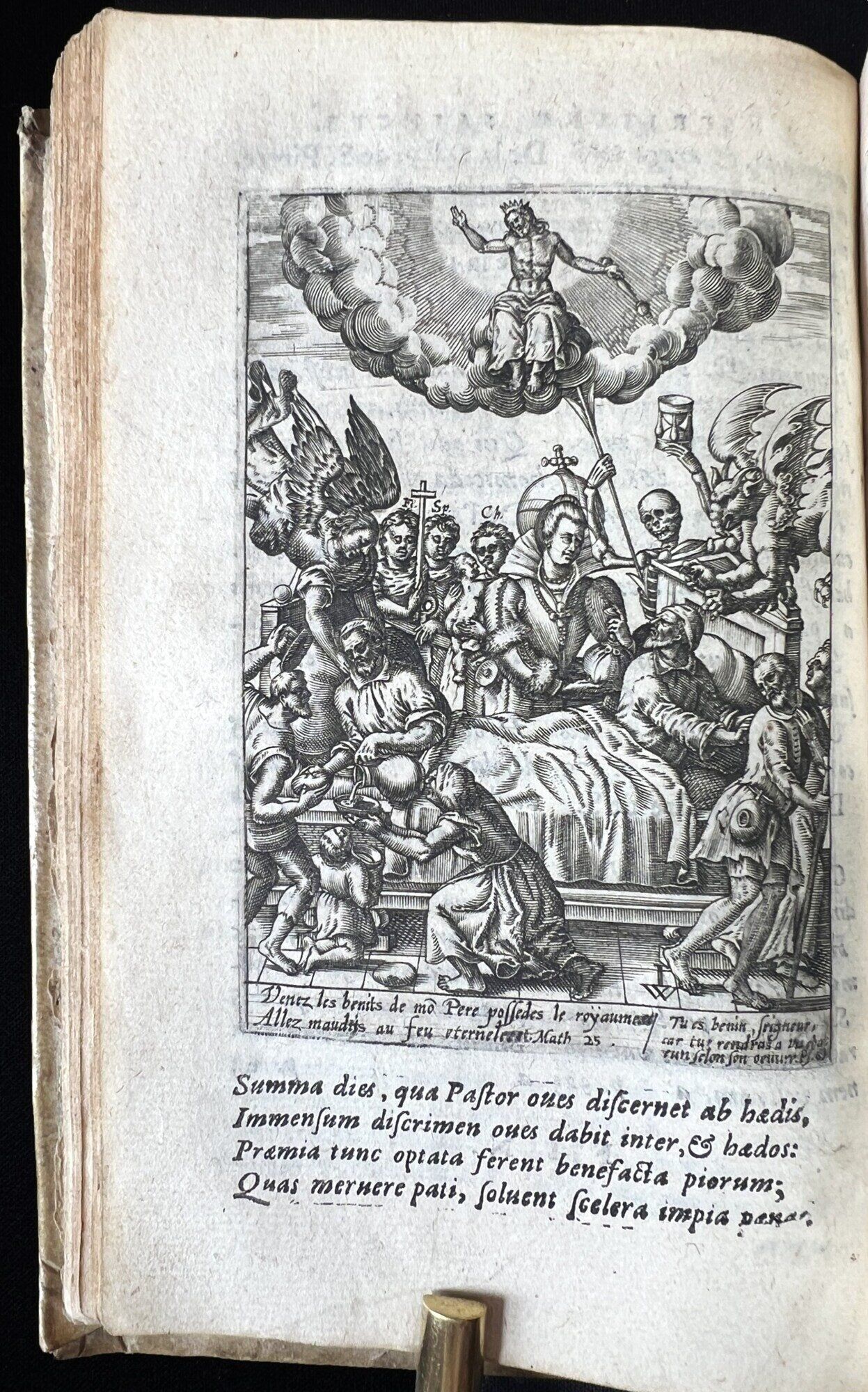
In the dedication Gazet explains that Curtius, who was a zealous proponent of (Catholic) religion, and who served as Master of the Confraternity of Mercy of Liège, had heard him preach in Liege in 1603, and had praised his sermon as being “worth its weight in gold.” Having heard this, Gazet was inspired to write the present exhaustive expansion of his sermon, but he was delayed by his move to Béthune. The first part of the work is largely devoted to the regulations of and philosophy behind the Confraternity of Mercy of Liège, which had been founded by Prince-Bishop Ernest of Bavaria in 1602. The long preliminaries (whose contents are detailed in Bibliotheca Belgica) are illustrated with the arms of the dedicatee and of the prince-bishop, and an unusual allegorical engraving representing the Last Judgment: Two men lie in a shared deathbed, their heads in different directions. The one on the left is shown providing charity: alms to poor, food to the hungry, etc. Behind him are arrayed Faith, Hope and Charity, and an angel is reaching down to take up his soul. The man on the right is turning his head from and pushing away two beggars, while looming over him a large luxuriously attired woman (Vanity or Greed) hands him a money bag, while behind his head a hideous devil is about to seize him with its claws.
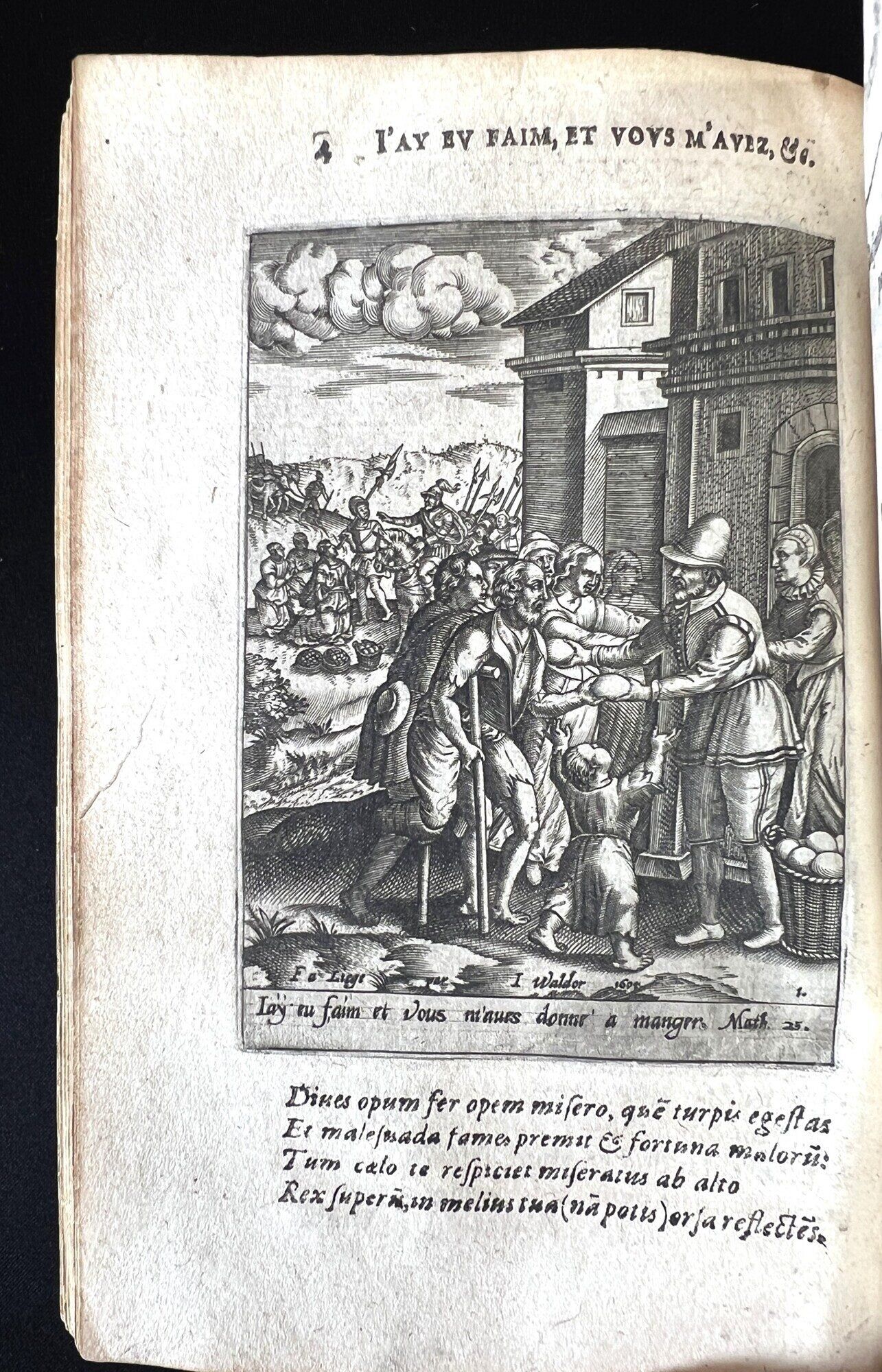
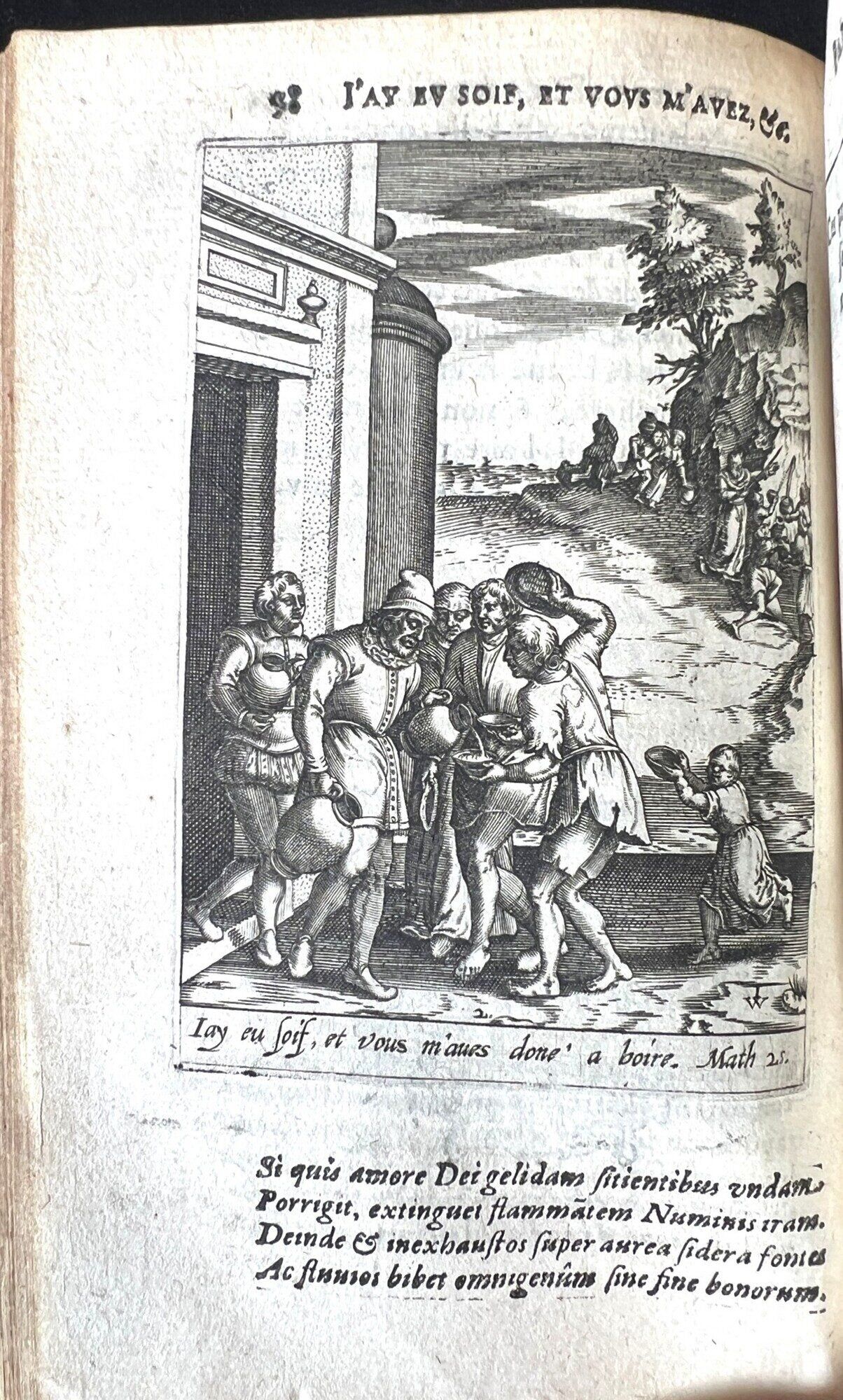
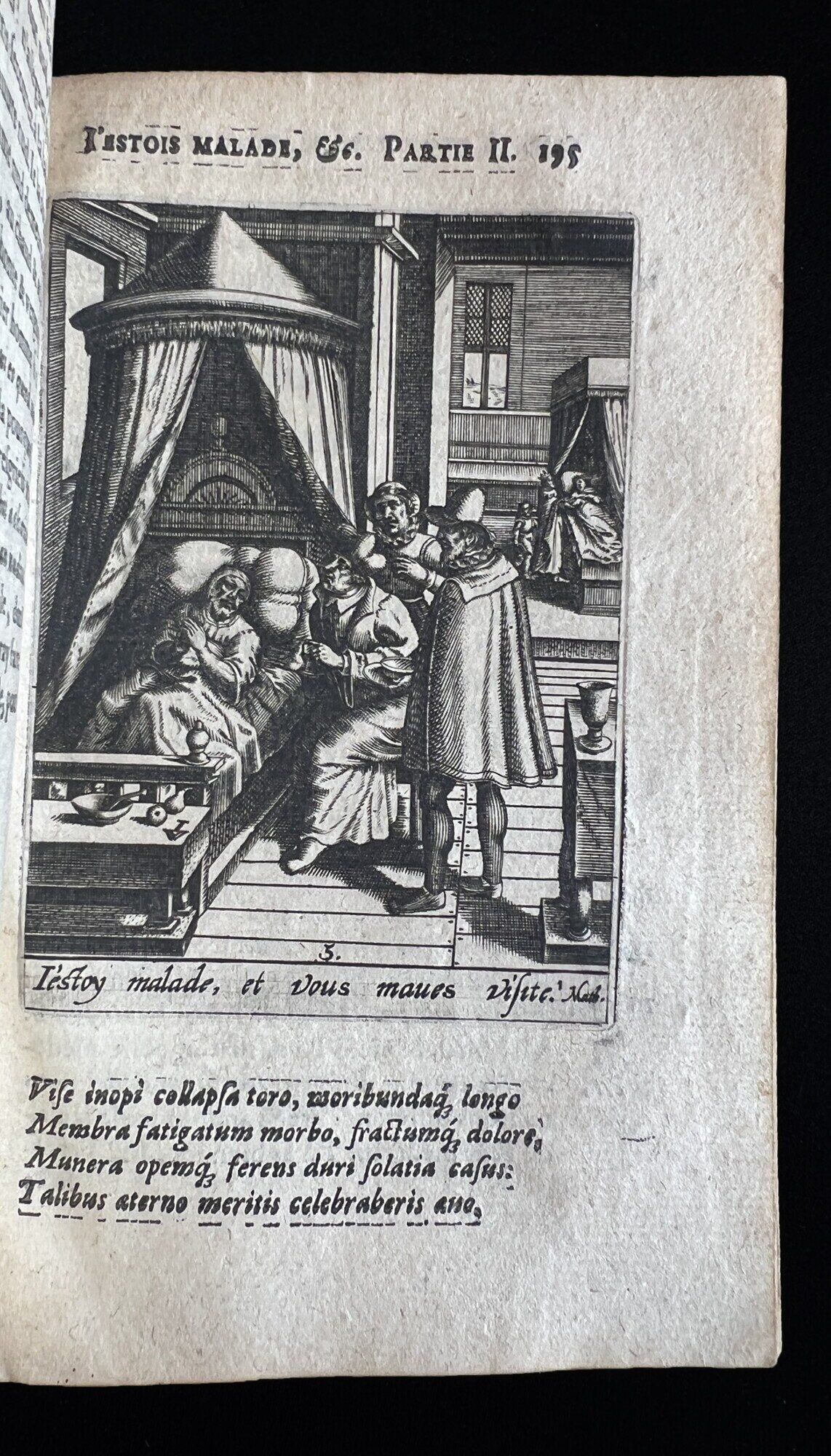
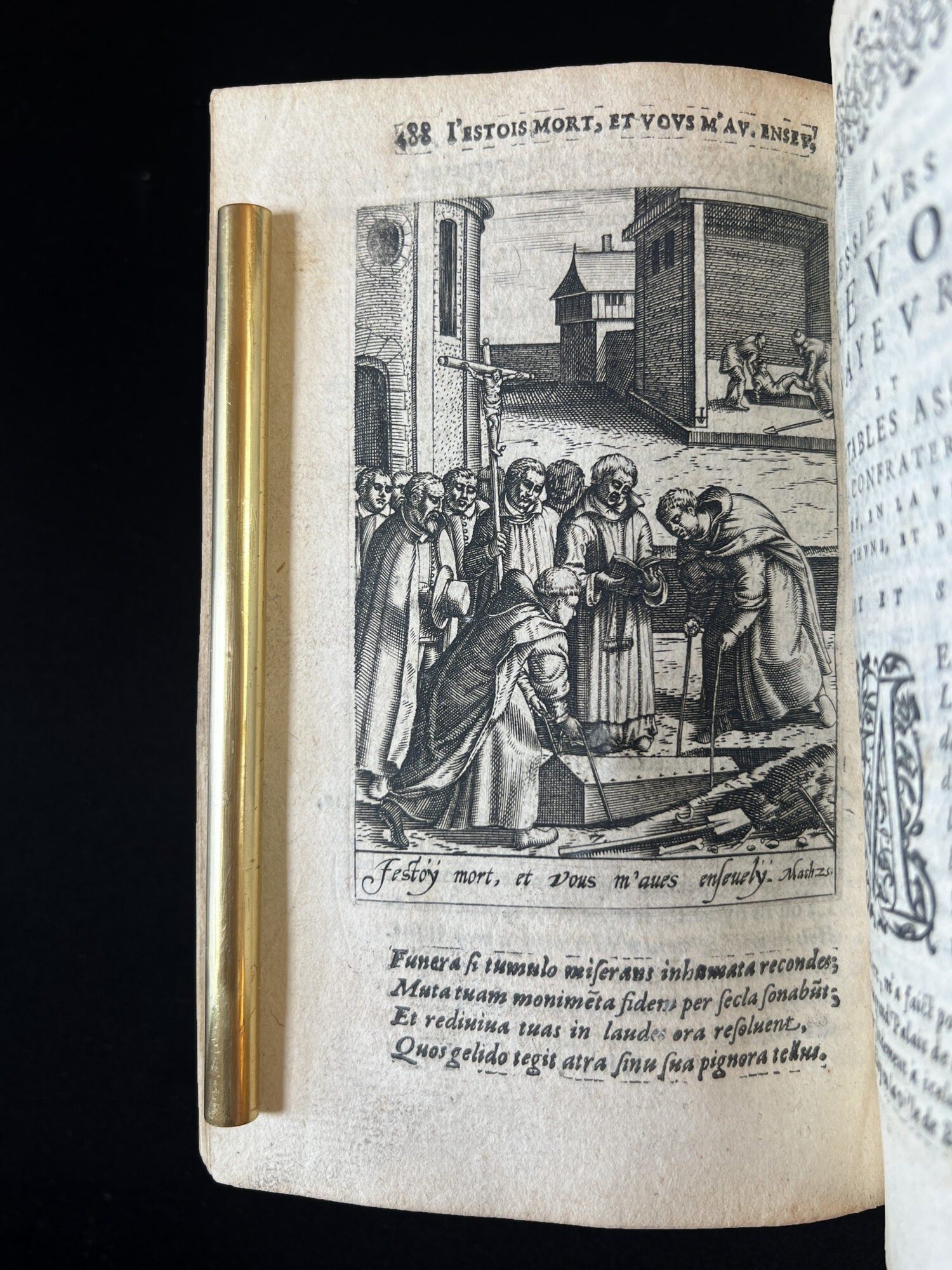
Part 2 contains seven sections, on each of the seven corporal works of mercy; an engraving commences each section (on pp. 4, 58, 92, 150, 195, 440 and 488). In Valdor’s engravings the charity-givers and takers are shown in action, in contemporary dress, in rural or urban settings or indoors (the dying and the prisoners). Seven tiny scenes on the same subjects appear in roundels in the engraved titles, which are surmounted by a roundel of the Last Judgment.
A description of another confraternity, of St -Eloi, concludes the work. Its members’ primary duty was the care of the dead and those who were “contagious” (self-sacrificing charity indeed).
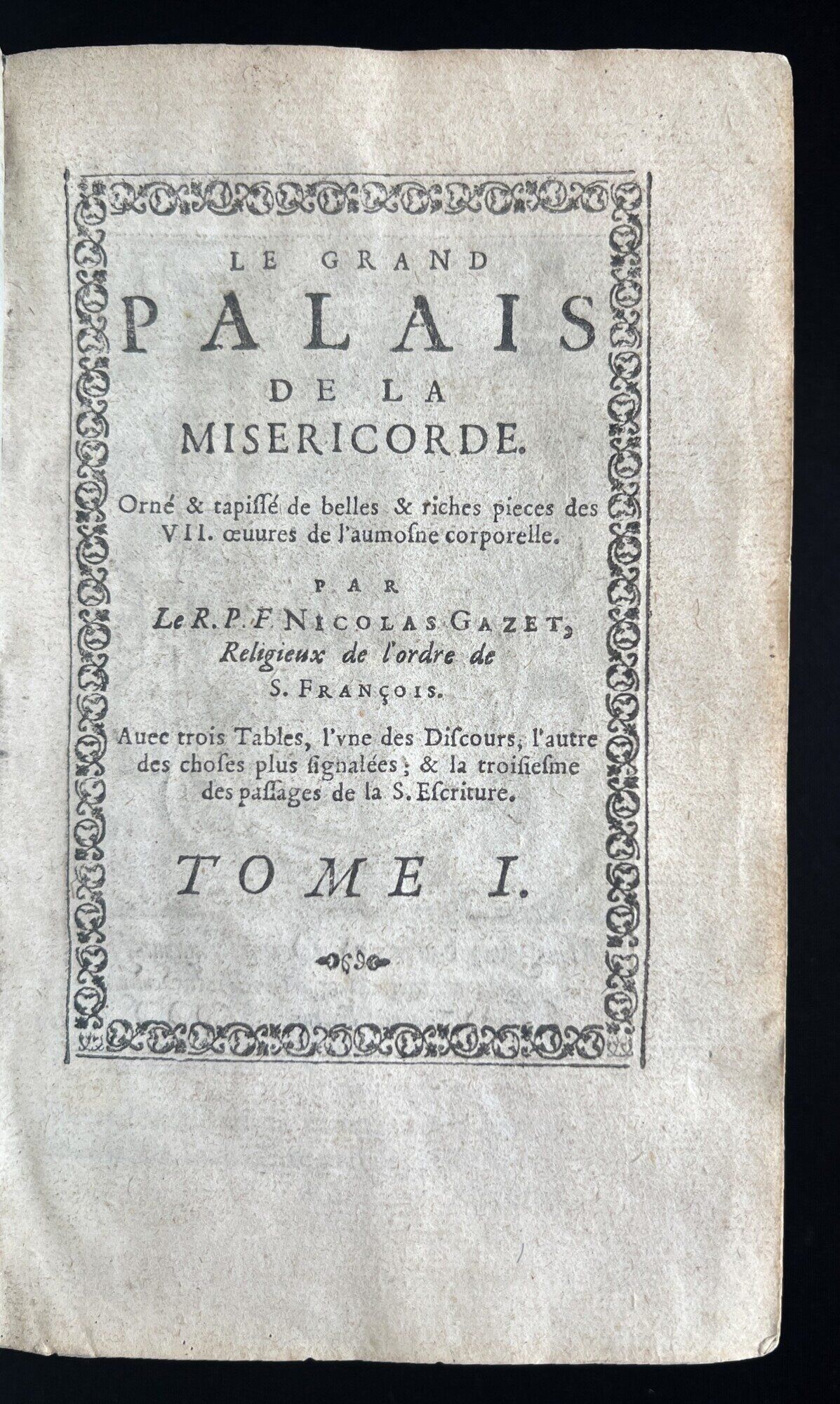
The edition collates a-e8; A-X8 (X8 blank); Aa-Zz Aaa-Mmm8 Nnn6 (this copy lacks Nnn6 blank). The general engraved title is on a separate leaf, not part of the first quire, but the engraved title to part 2 appears to be printed on unsigned and unpaginated Aa1; Bibliotheca Belgica calls for no letterpress title and matches this copy.
Anne de Jalhea, who signed the first title, was possibly the nun with that name who was recorded in 1635 as liturgical cantor of the Abbey of Notre Dame Du Vivier de Marche-les-Dames in Namur, in the abbey’s archives (online post of the Société archéologique de Namur).
This is a rare book. The only North American copy, at McMaster University, contains the first volume only. USTC and OCLC together give 6 other locations, in Belgium. France and Switzerland.
USTC 1116751 (erroneous pagination); Bibliotheca Belgica first series, vol. 10 (1880-1890): pp. 533-545; Duthilloeul, Bibliographie douaisienne, vol. 1, no. 1780, p. 459 (incorrectly mentioning a contemporaneous Latin ed.: in fact the first Latin edition was published in Trier in 1618).
First edition of a very rare Counter-Reformation devotional work on the works of charity, illustrated with fine engravings by the Liège engraver Jean Valdor the elder (ca. 1580-1632), a student of Jérôme Wierix who also worked in Nancy and Paris, and whose son was one of the chosen court artists of Louis XIV.
The author, a Franciscan Recollect from Arras, taught theology to members of his order, and served successively as confessor in various monasteries, in Arras, Béthune, Liège, and Namur. At the time this work appeared he was spiritual director of the convent of the Annonciades in Béthune, as indicated in his signature to the interesting dedication to the Liège industrialist Jean Curtius, the principal armorer of the Spanish army, who made a fortune in the production of gunpowder and weapons.
In the dedication Gazet explains that Curtius, who was a zealous proponent of (Catholic) religion, and who served as Master of the Confraternity of Mercy of Liège, had heard him preach in Liege in 1603, and had praised his sermon as being “worth its weight in gold.” Having heard this, Gazet was inspired to write the present exhaustive expansion of his sermon, but he was delayed by his move to Béthune. The first part of the work is largely devoted to the regulations of and philosophy behind the Confraternity of Mercy of Liège, which had been founded by Prince-Bishop Ernest of Bavaria in 1602. The long preliminaries (whose contents are detailed in Bibliotheca Belgica) are illustrated with the arms of the dedicatee and of the prince-bishop, and an unusual allegorical engraving representing the Last Judgment: Two men lie in a shared deathbed, their heads in different directions. The one on the left is shown providing charity: alms to poor, food to the hungry, etc. Behind him are arrayed Faith, Hope and Charity, and an angel is reaching down to take up his soul. The man on the right is turning his head from and pushing away two beggars, while looming over him a large luxuriously attired woman (Vanity or Greed) hands him a money bag, while behind his head a hideous devil is about to seize him with its claws.
Part 2 contains seven sections, on each of the seven corporal works of mercy; an engraving commences each section (on pp. 4, 58, 92, 150, 195, 440 and 488). In Valdor’s engravings the charity-givers and takers are shown in action, in contemporary dress, in rural or urban settings or indoors (the dying and the prisoners). Seven tiny scenes on the same subjects appear in roundels in the engraved titles, which are surmounted by a roundel of the Last Judgment.
A description of another confraternity, of St -Eloi, concludes the work. Its members’ primary duty was the care of the dead and those who were “contagious” (self-sacrificing charity indeed).
The edition collates a-e8; A-X8 (X8 blank); Aa-Zz Aaa-Mmm8 Nnn6 (this copy lacks Nnn6 blank). The general engraved title is on a separate leaf, not part of the first quire, but the engraved title to part 2 appears to be printed on unsigned and unpaginated Aa1; Bibliotheca Belgica calls for no letterpress title and matches this copy.
Anne de Jalhea, who signed the first title, was possibly the nun with that name who was recorded in 1635 as liturgical cantor of the Abbey of Notre Dame Du Vivier de Marche-les-Dames in Namur, in the abbey’s archives (online post of the Société archéologique de Namur).
This is a rare book. The only North American copy, at McMaster University, contains the first volume only. USTC and OCLC together give 6 other locations, in Belgium. France and Switzerland.
USTC 1116751 (erroneous pagination); Bibliotheca Belgica first series, vol. 10 (1880-1890): pp. 533-545; Duthilloeul, Bibliographie douaisienne, vol. 1, no. 1780, p. 459 (incorrectly mentioning a contemporaneous Latin ed.: in fact the first Latin edition was published in Trier in 1618).
Details
Title
Le Grand palais de la Miséricorde, Orné et tapissé de belles et riches pièces des vii oeuvres de l'aumosne corporelle
Author
GAZET, Nicolas
Condition
Unknown
Publisher
Baltazar Bellere: Douai
Date
1606