

US Soldier in Colonial Algeria & North Africa During World War II., Sgt. T. Mansker Photo Album, of 274 images c. 1940s
- 1942
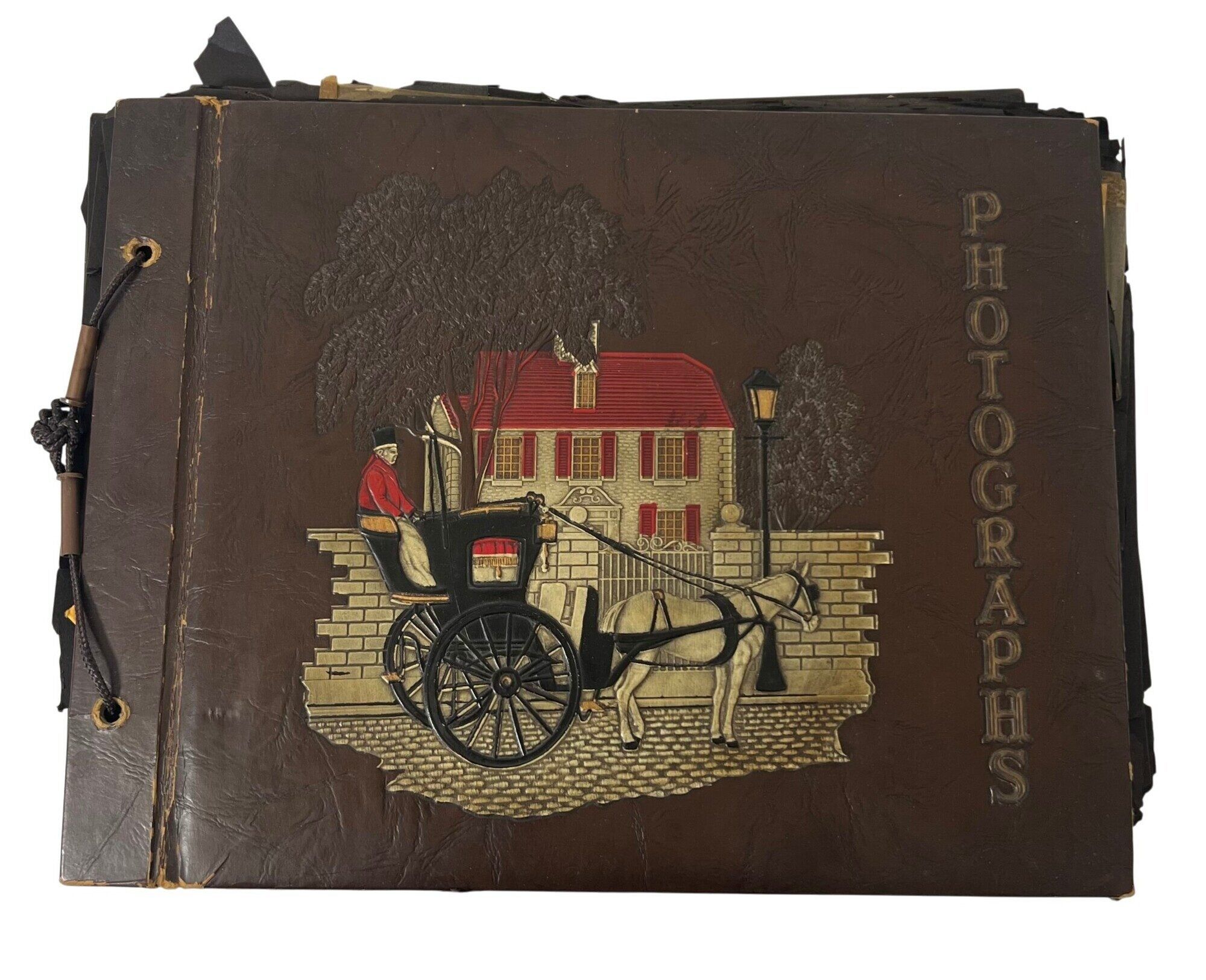
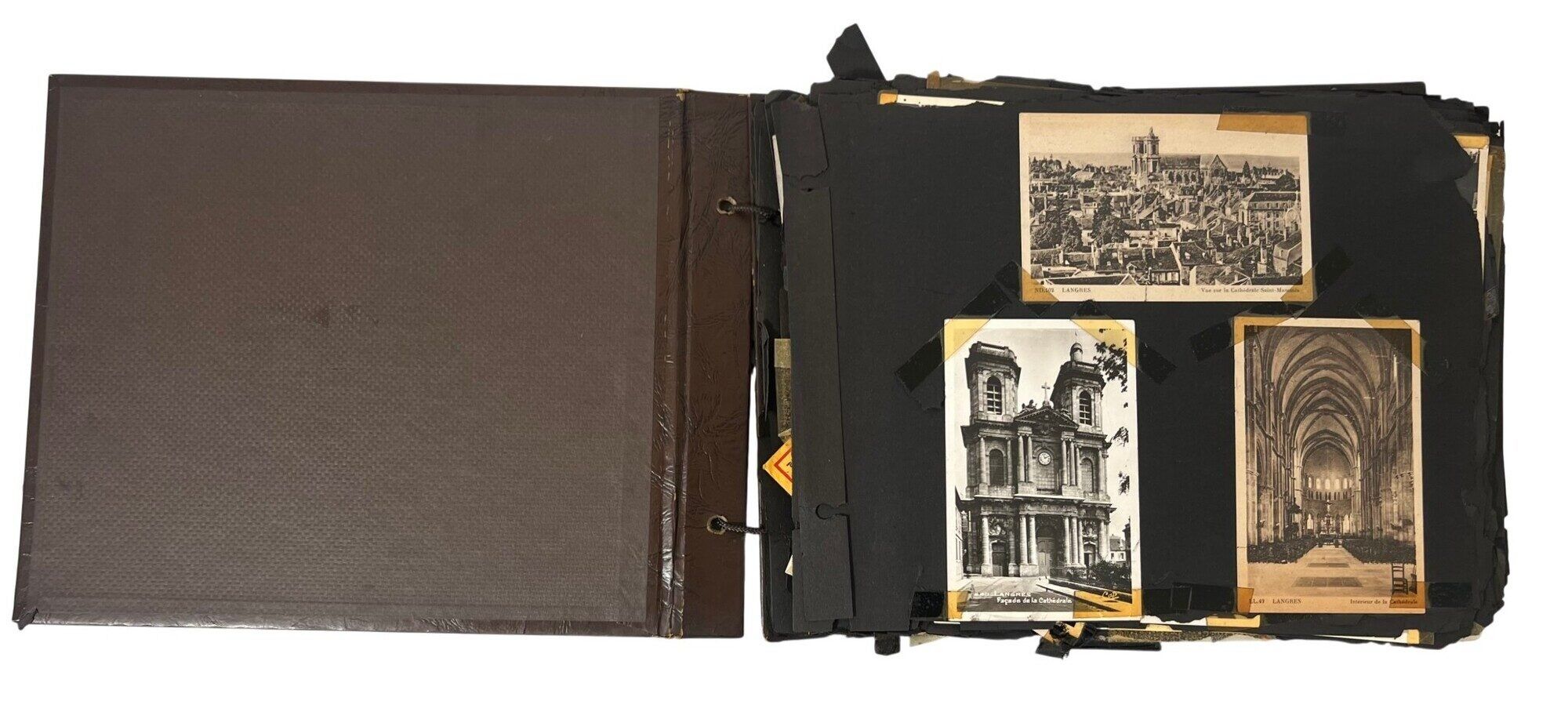
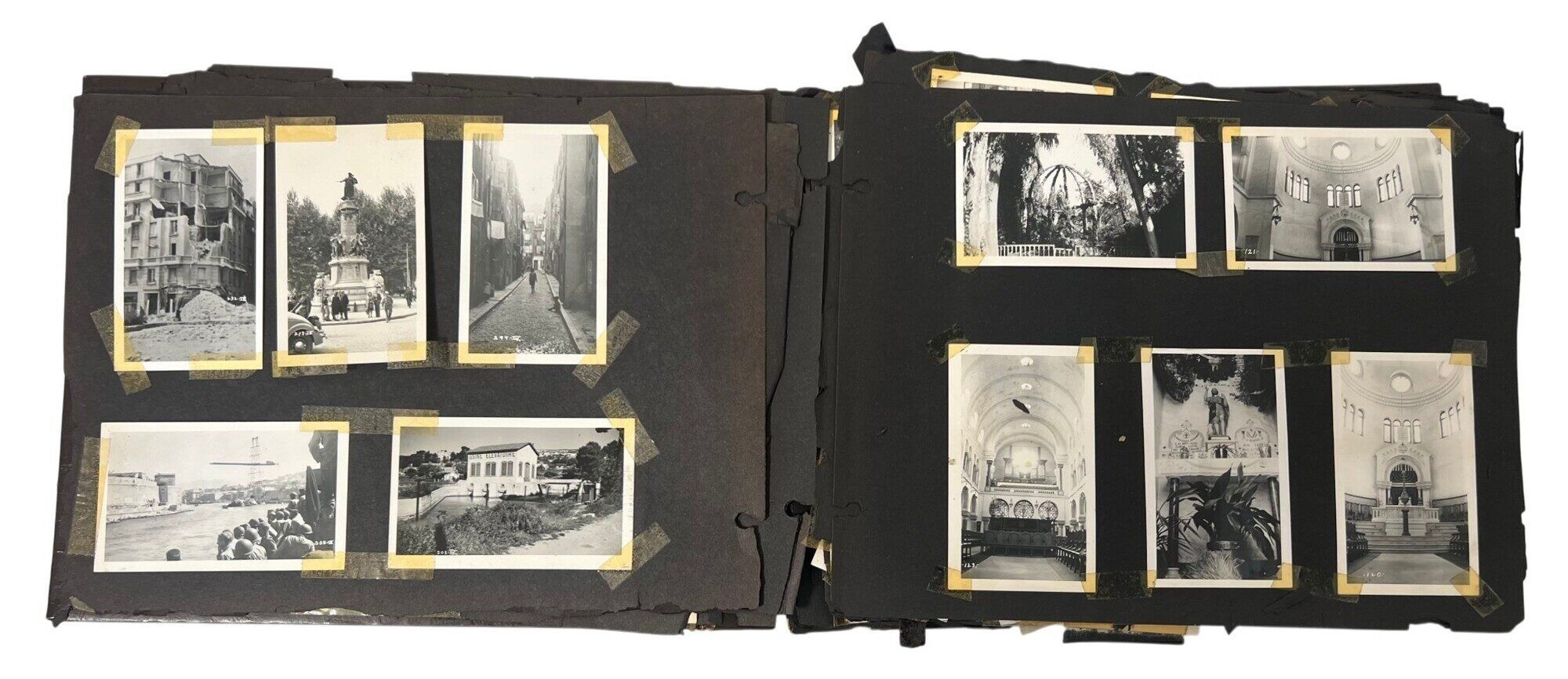
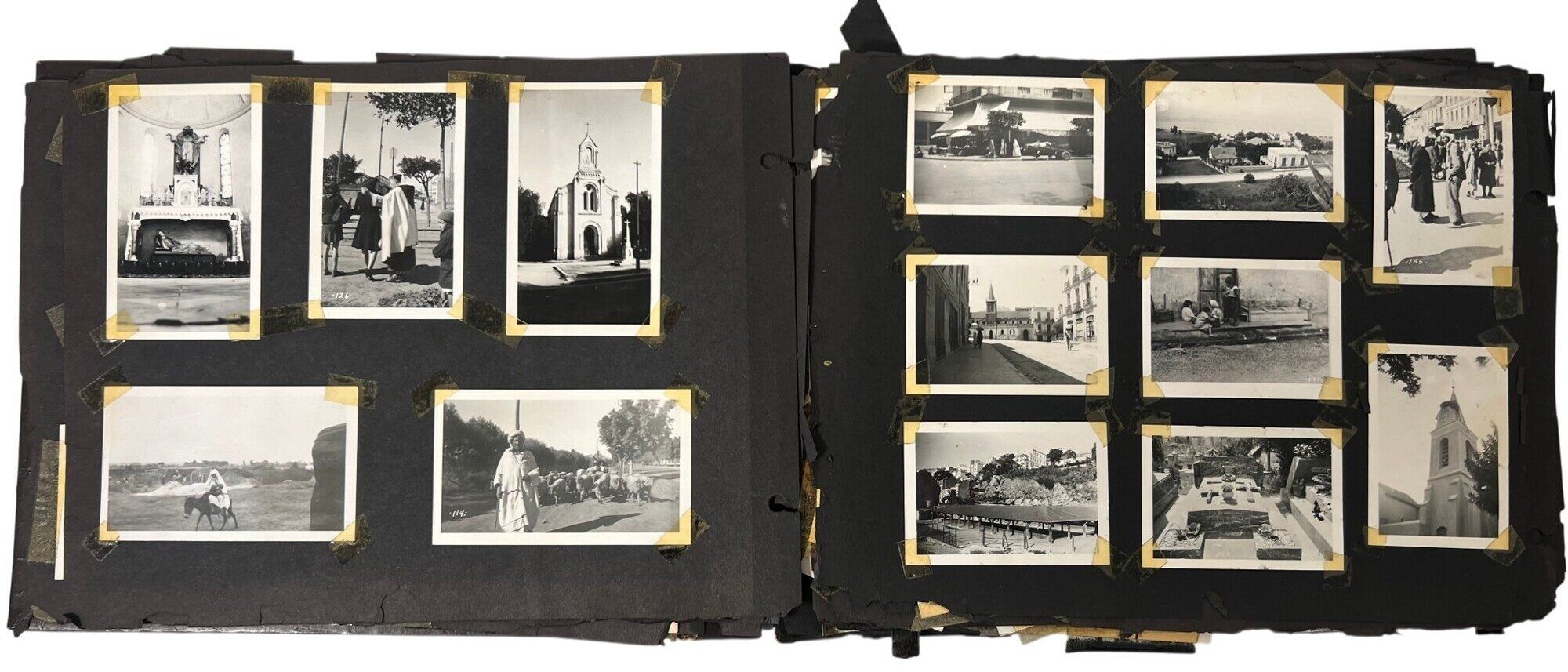
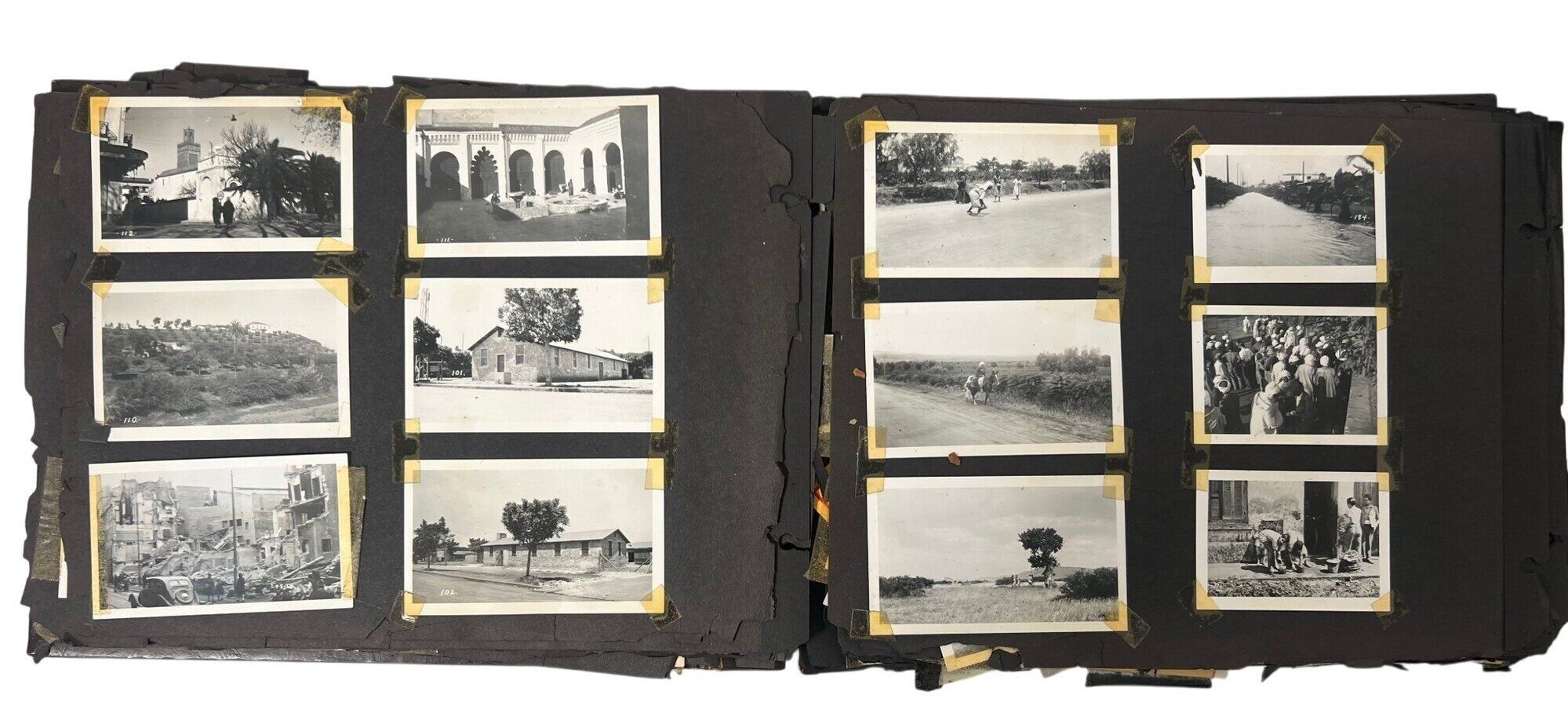
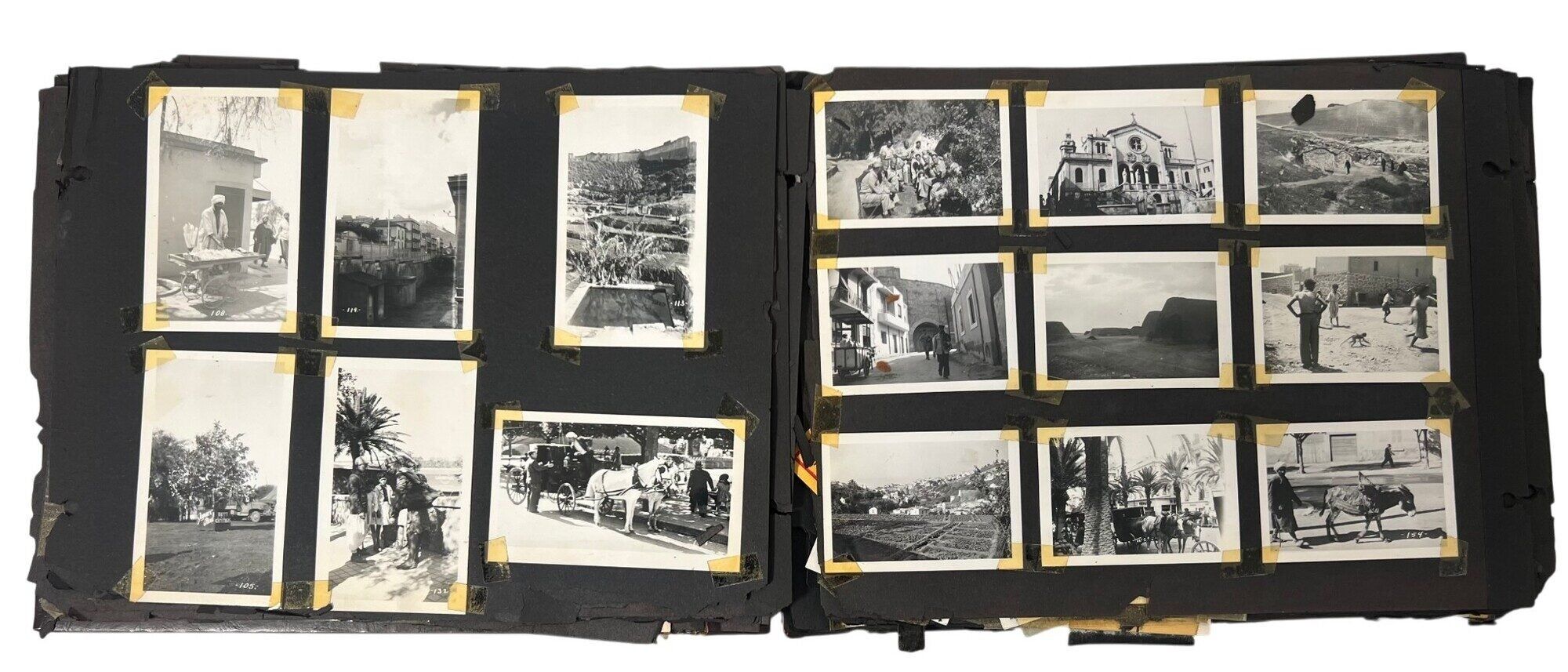
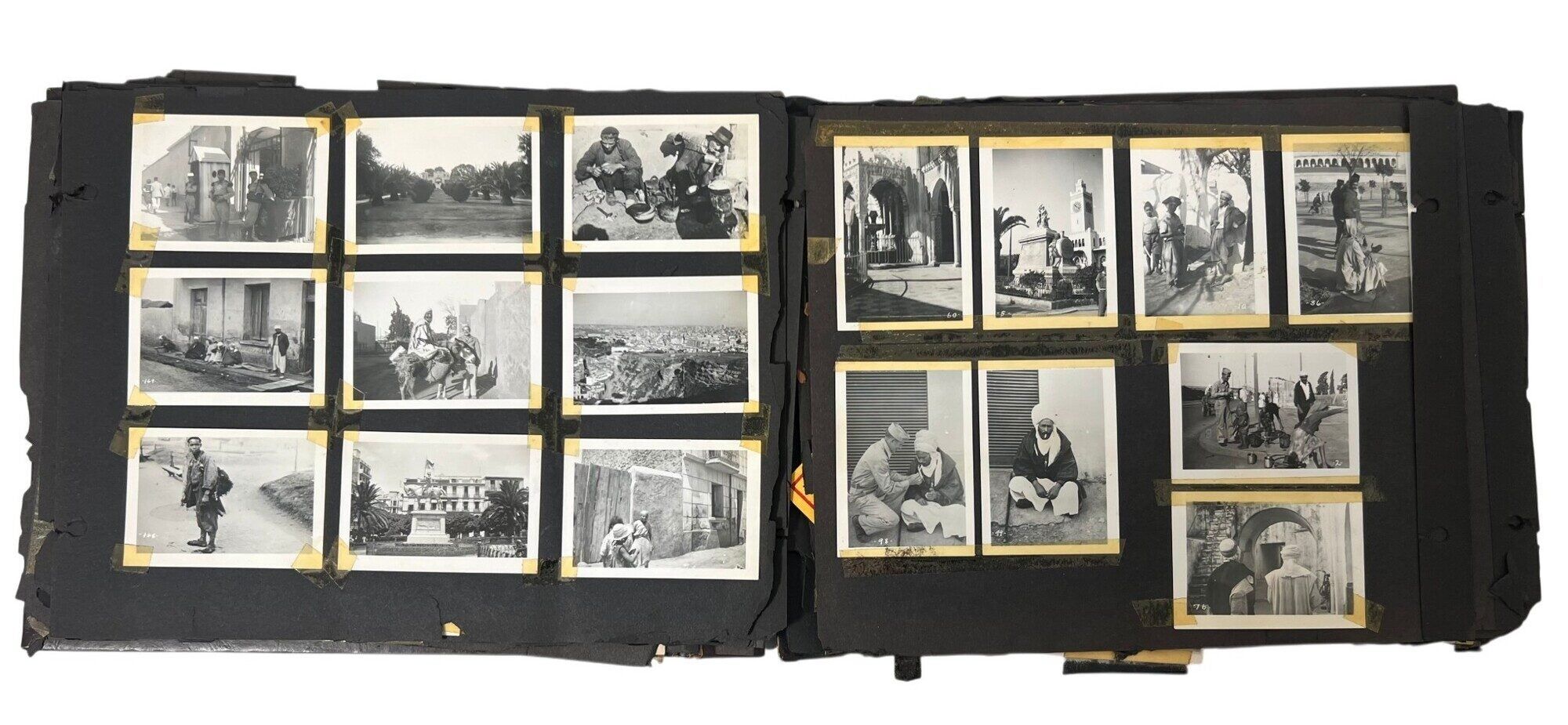
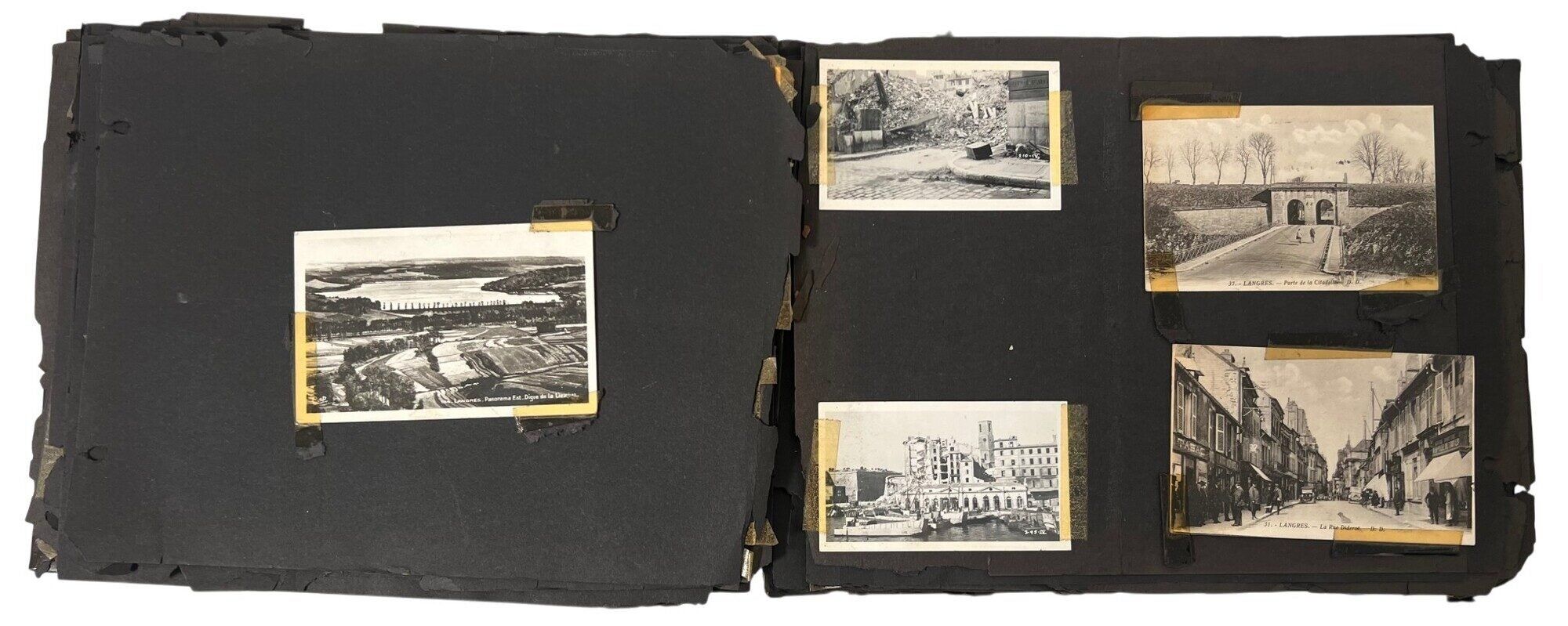
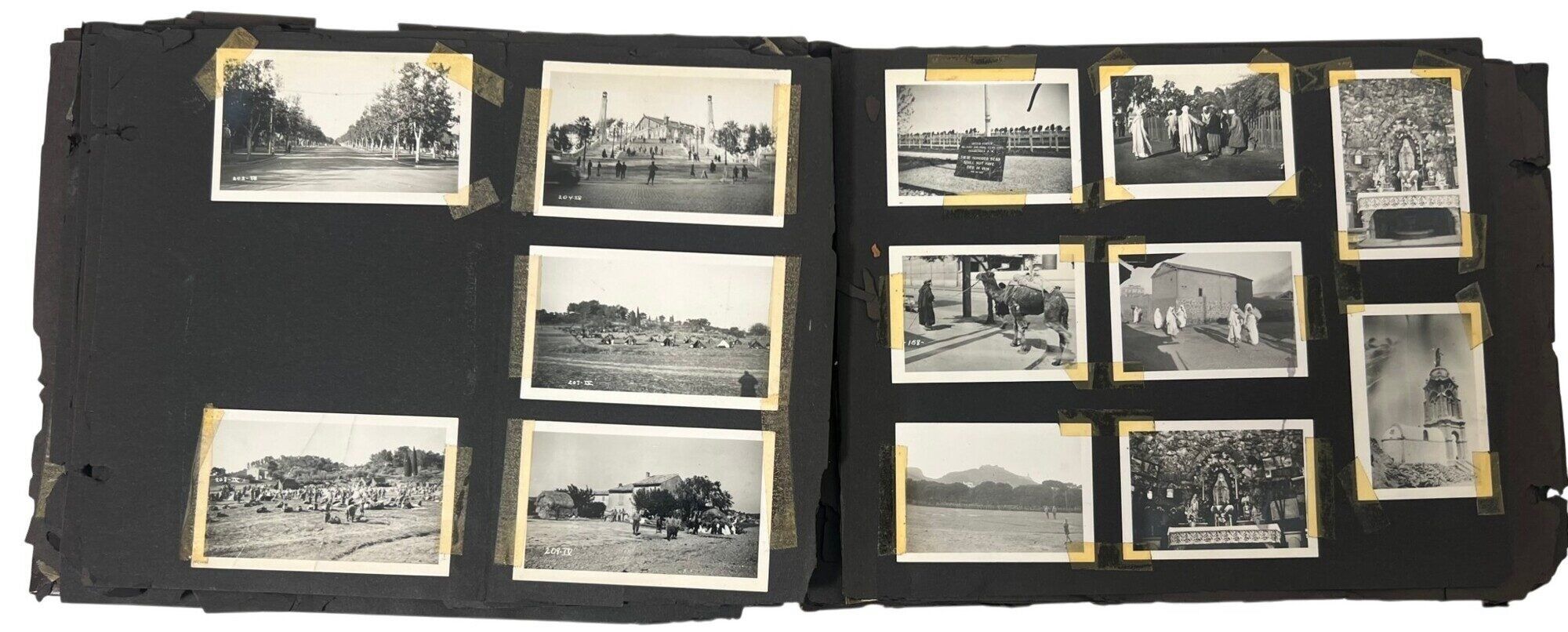
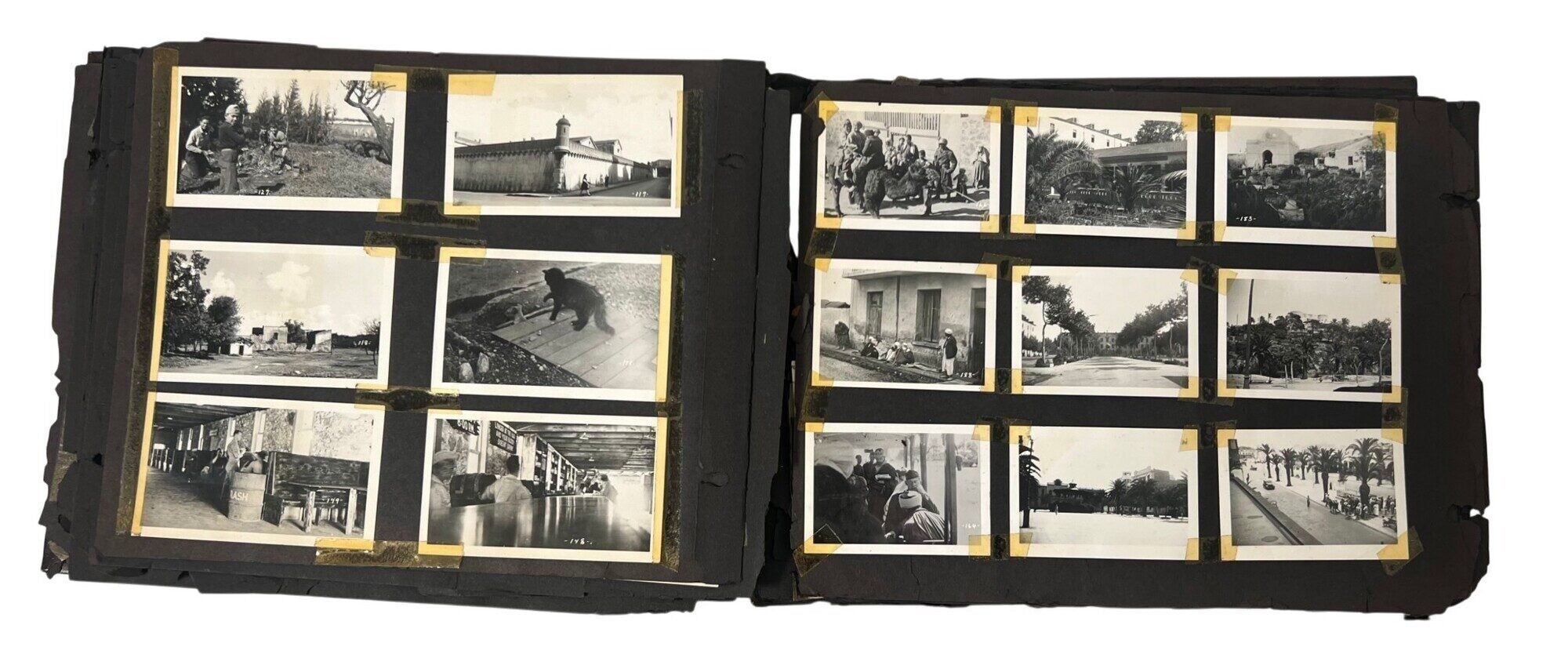
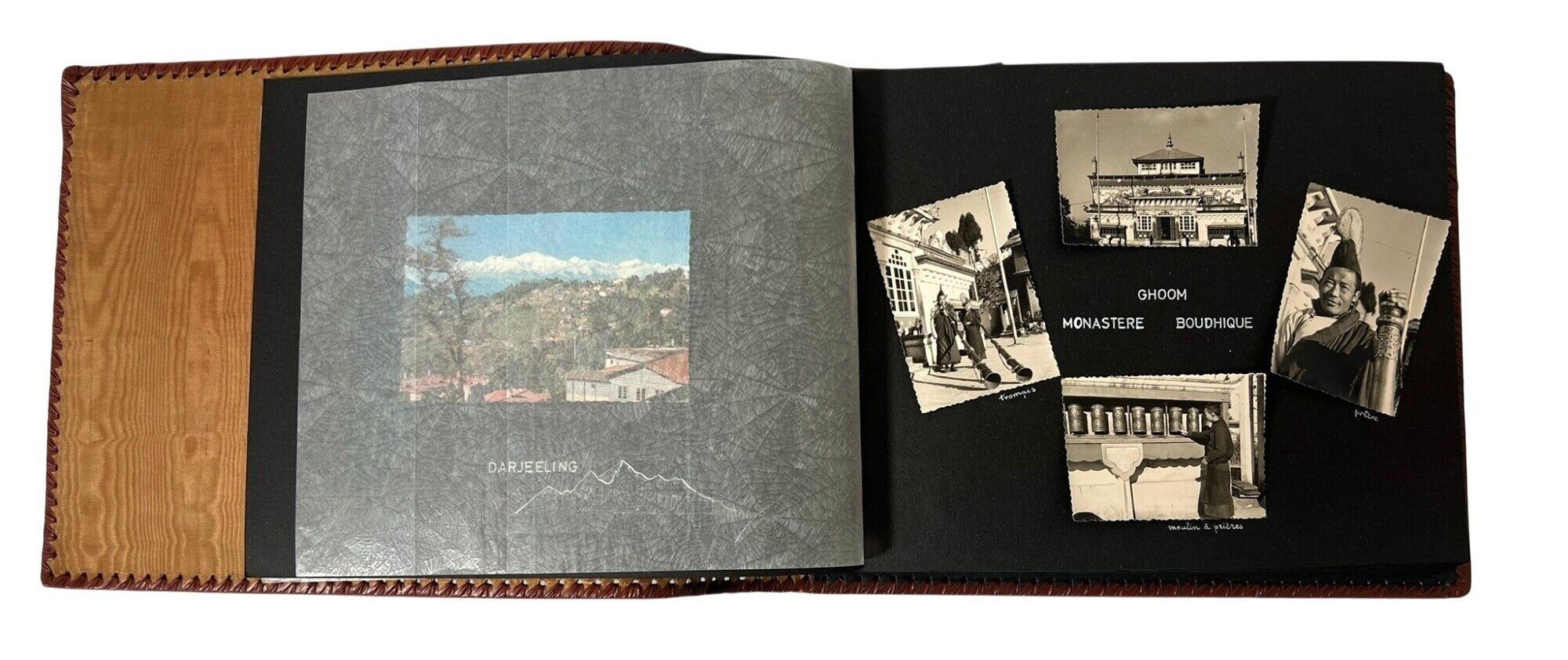
1942. American serviceman's Sgt. T. Mansker's photo album, compiled from experience moving between France and French colonial Algeria, circa 1942-1945, A majority of the approx. 270 photographs take place in wartime Algeria under Allied military presence in French colonial Algeria. The album centers on occupied Algerian street life, public space, transport, and military circulation in North Africa, preserving roughly 100 views of of colonial Algeria, spanning religious sites, social street views, and commercial districts shaped by foreign military presence during the war. Real photo postcards addressed by Mansker to Mrs. T. Mansker in Chicago place the album as depicting Mansker's time in France, stamped and sent in November 1944 through the US Army's mailing system, while the larger body of photographs are numbered North African and Algerian views, indicating a commercial photographic market serving foreigners in North Africa.
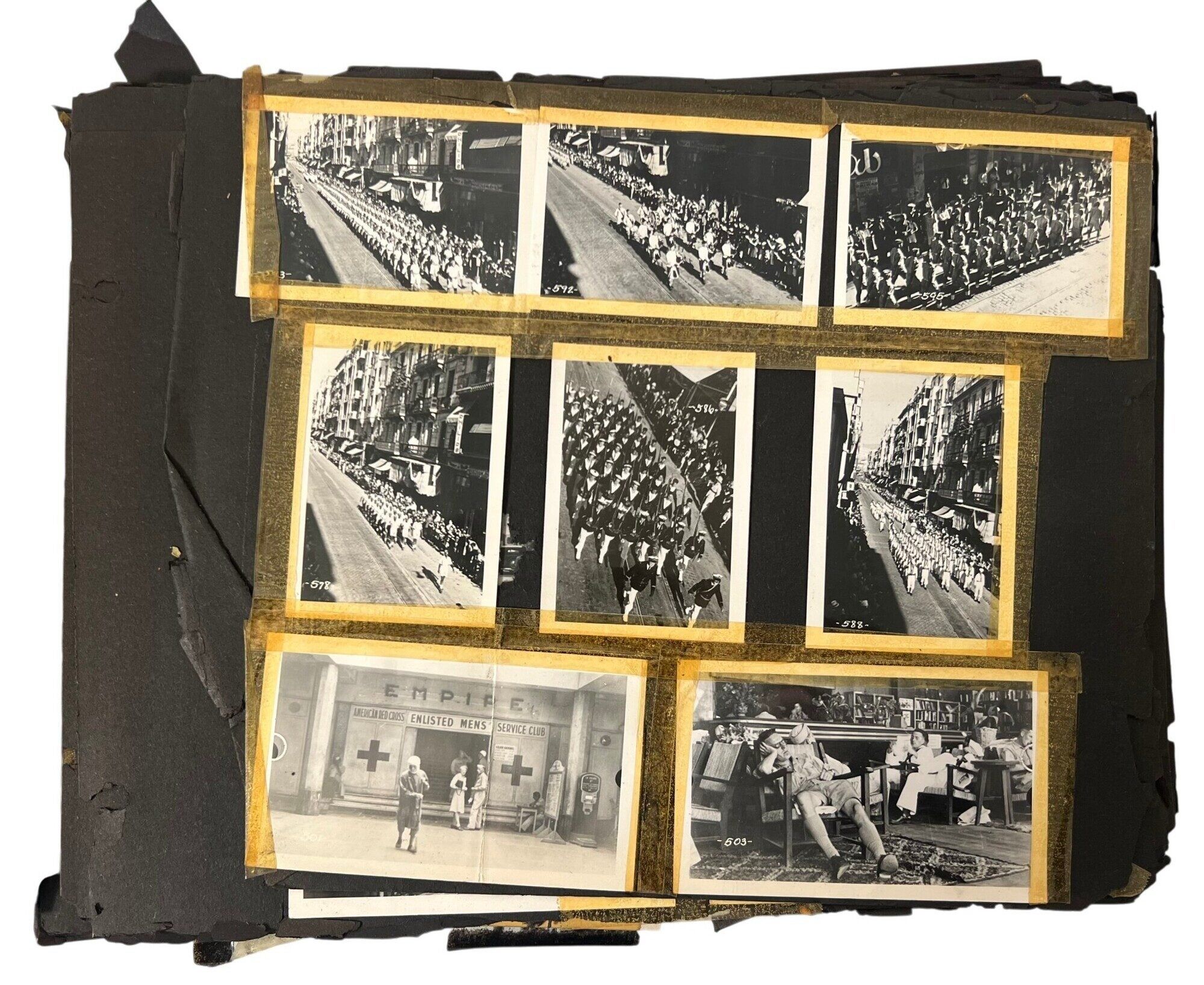
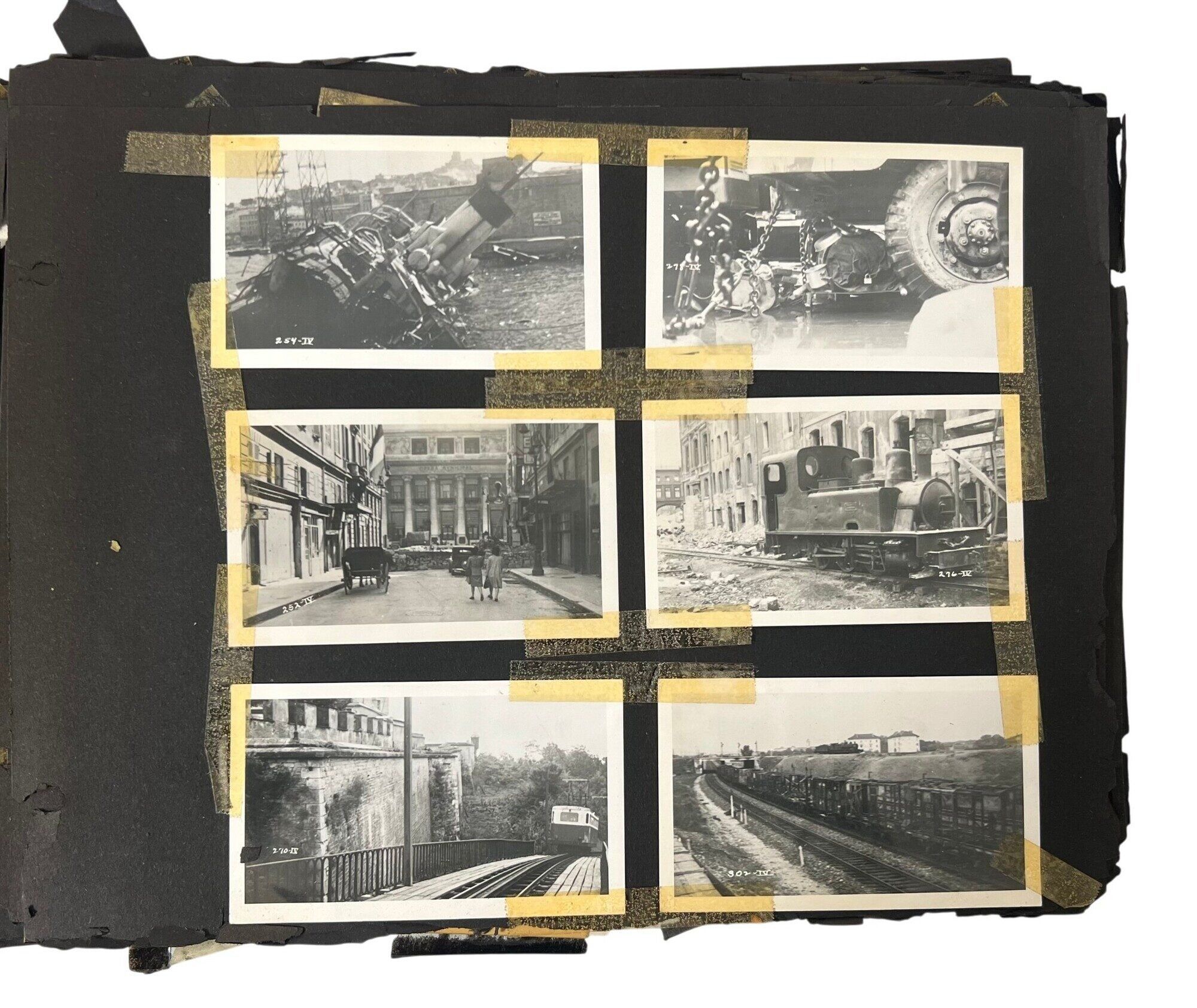
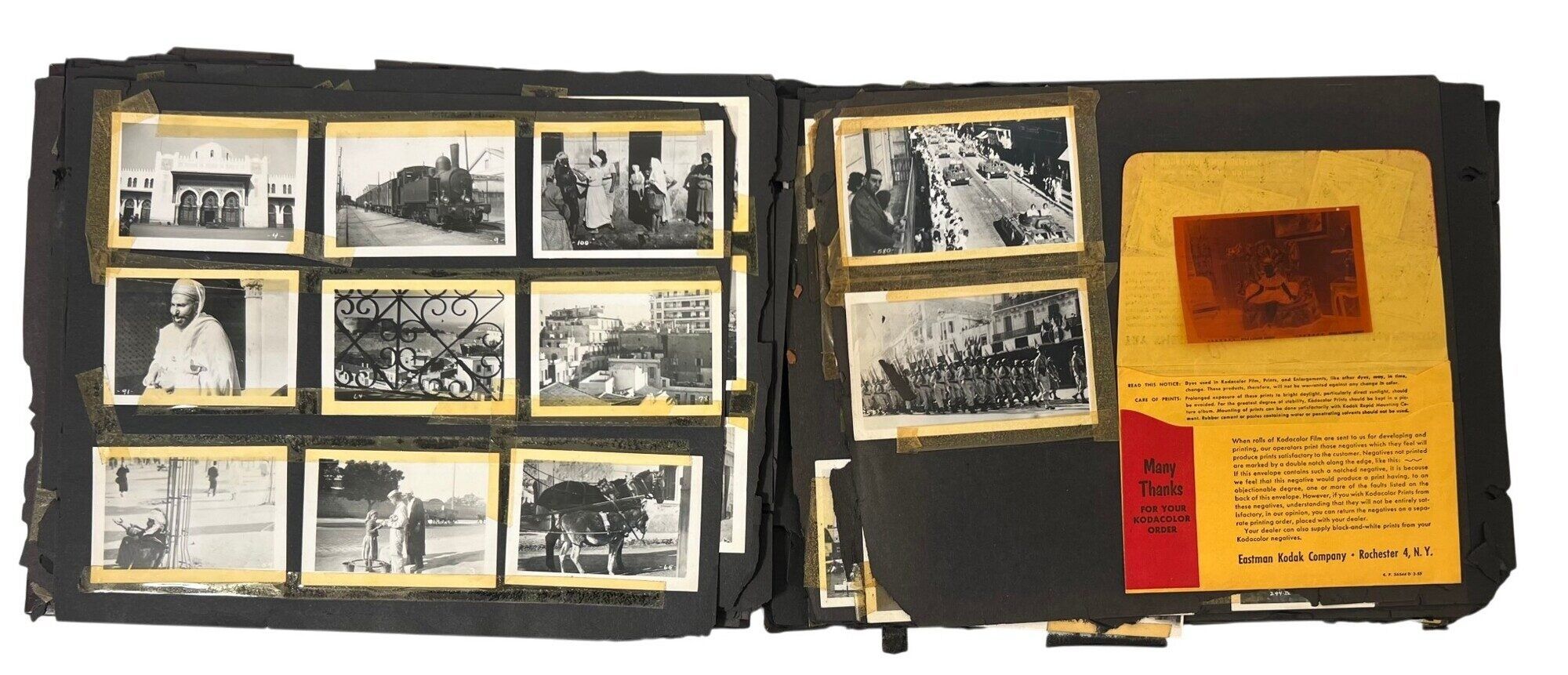
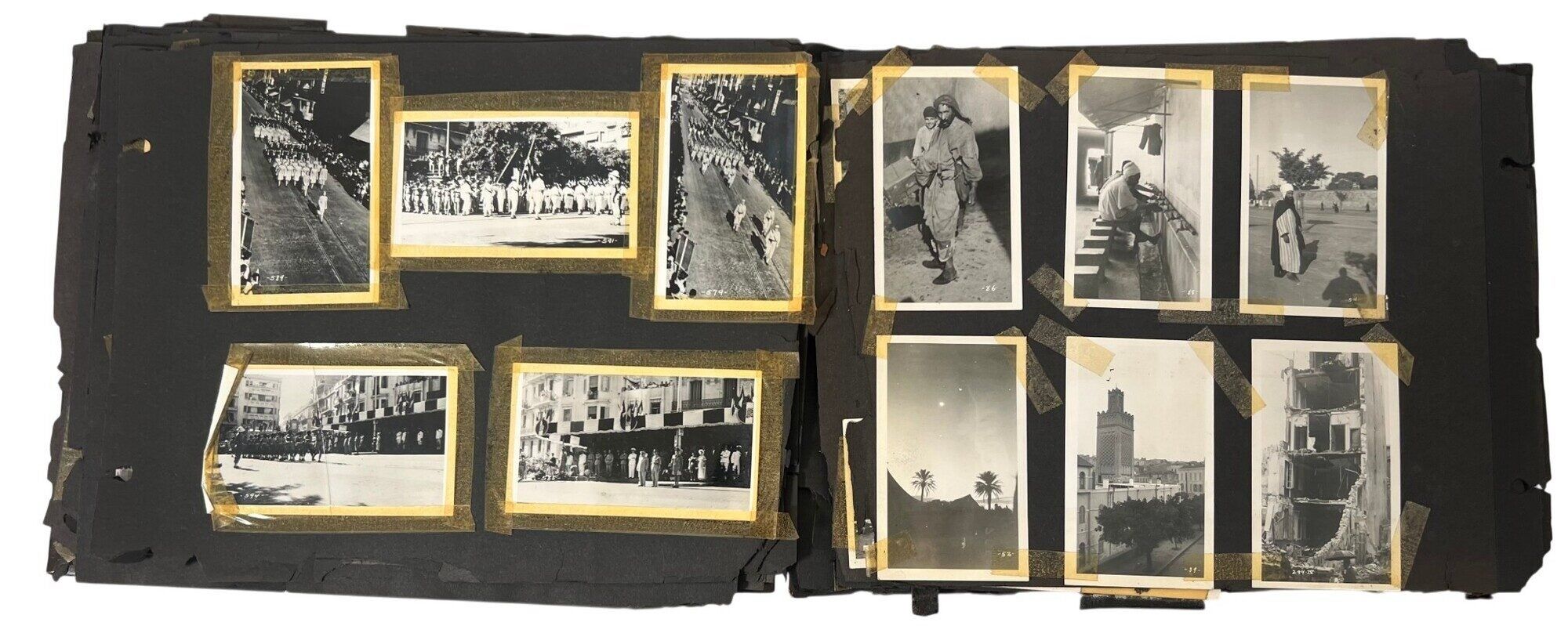
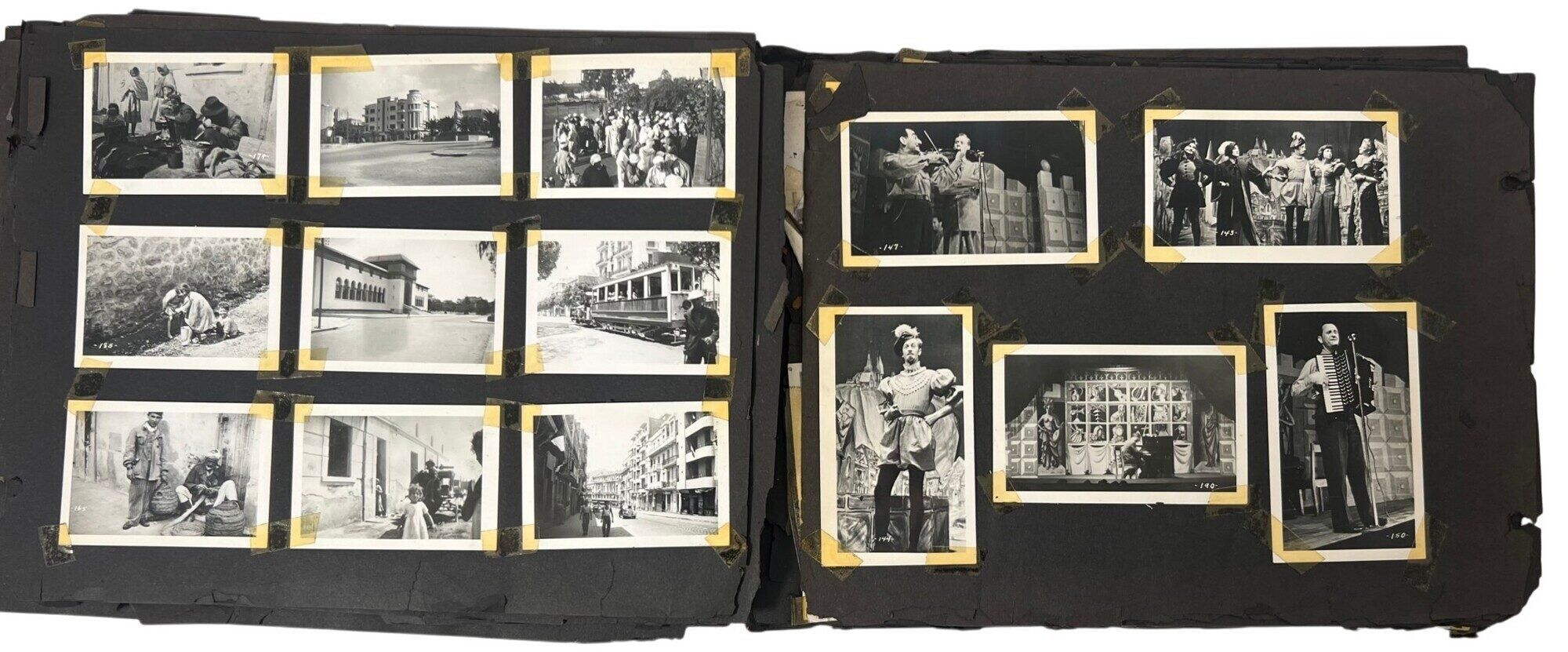
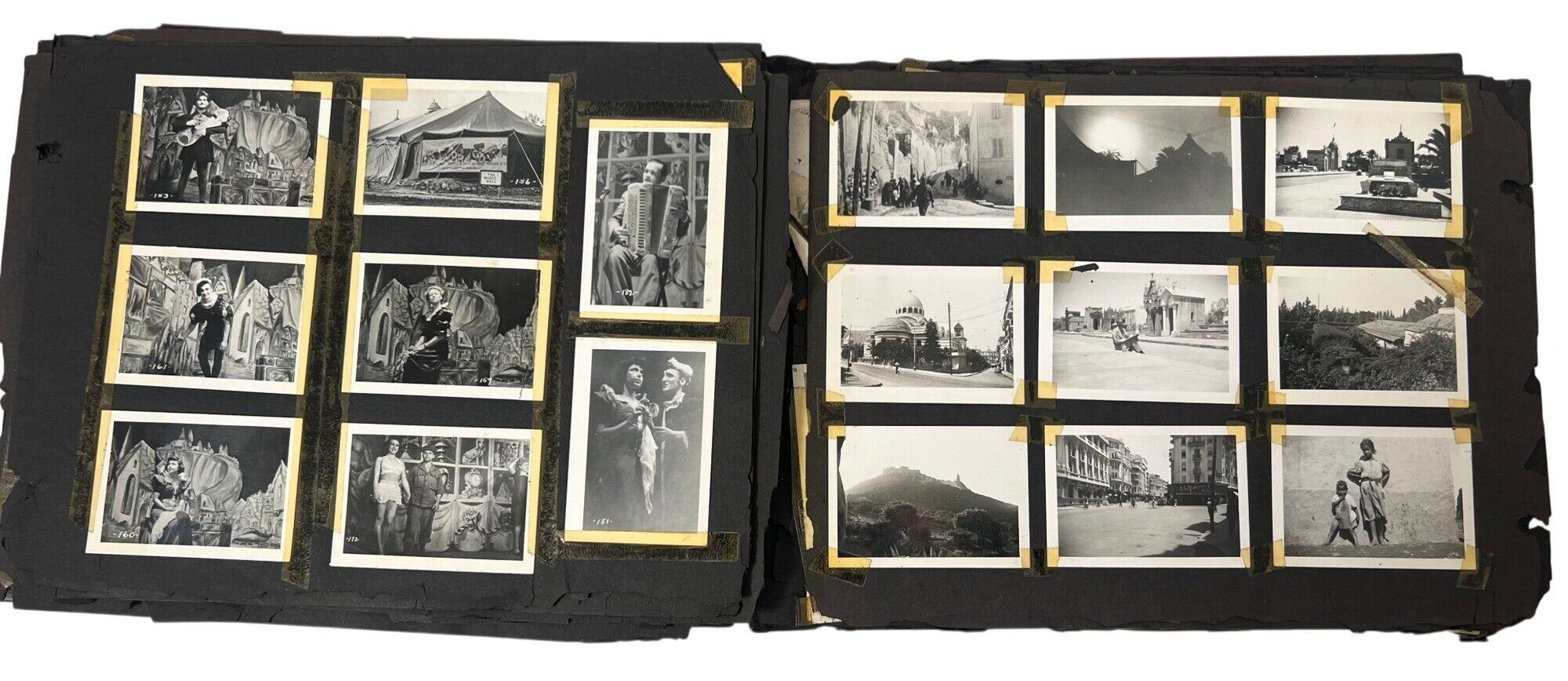
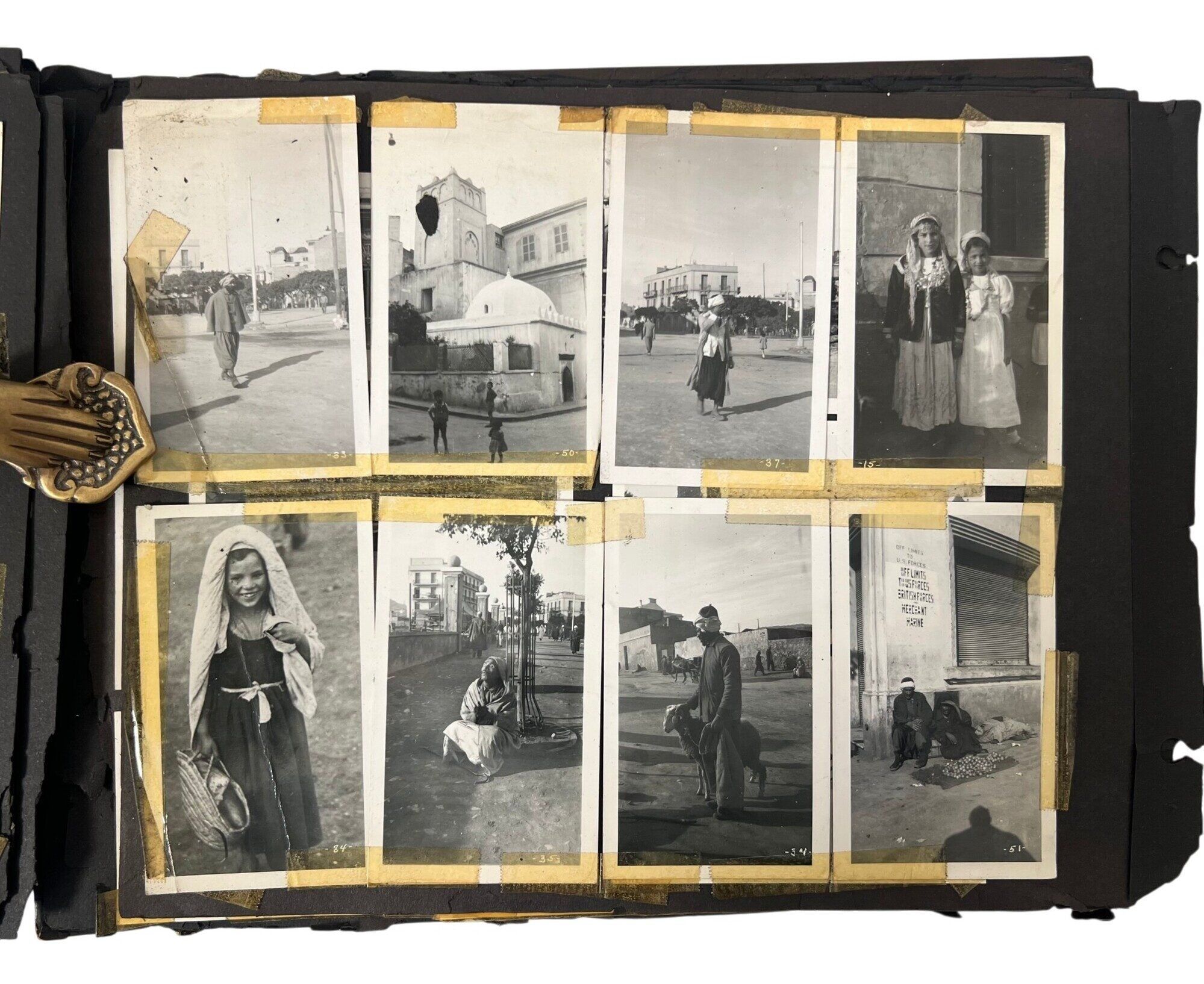
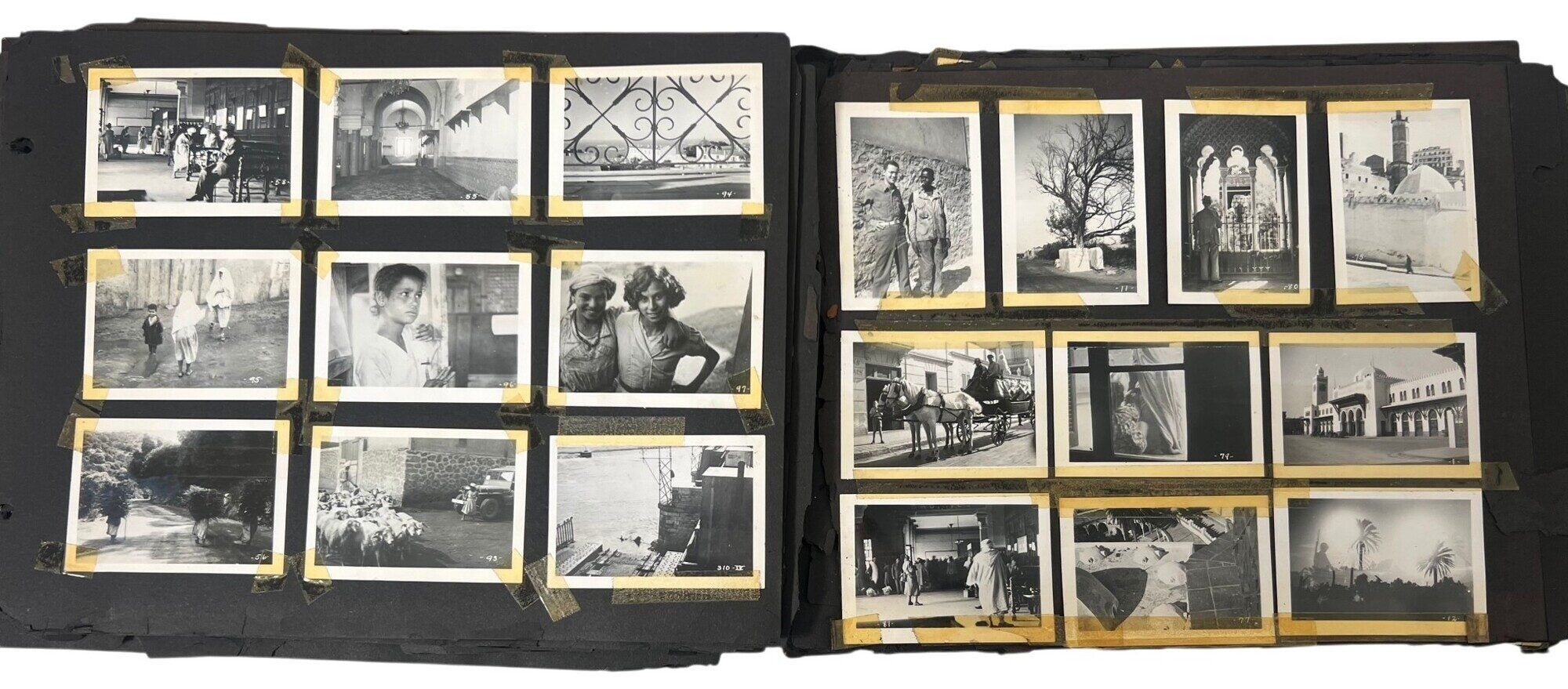
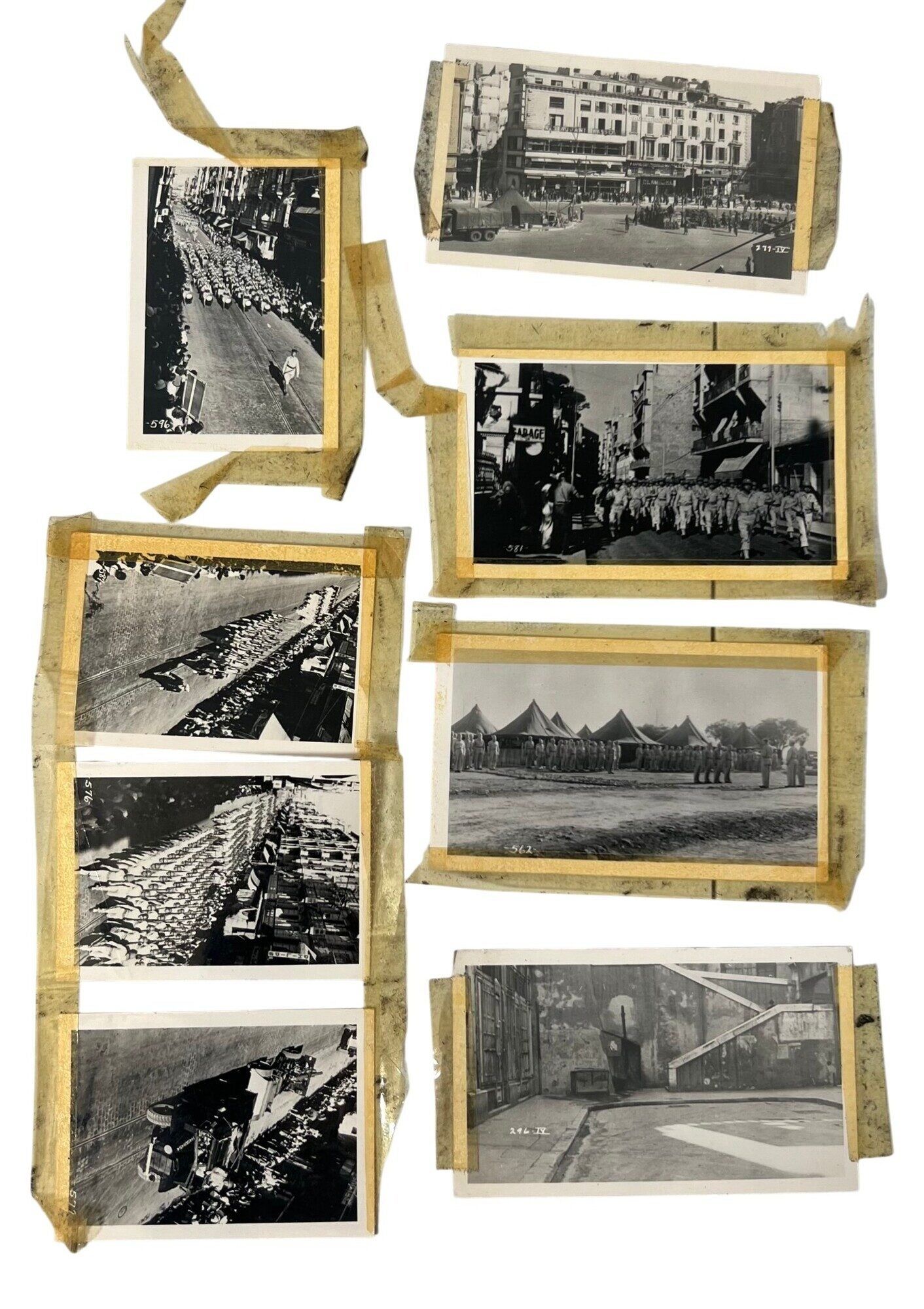
Photo archive of 274 items, including 268 silver gelatin photographs and real photo postcards, one press photograph, and 5 unique negatives, North Africa and France, circa 1942-1945. The album begins with mailed postcards from France to Mansker's wife and continues with a dense run of black and white photographs mounted on black paper leaves, many of the Algerian images uniformly numbered and consistent with commercial views sold to soldiers. Content includes parade formations marching through city streets lined with civilian spectators; a Red Cross "Enlisted Men's Service Club" entrance; harbor and rail scenes with locomotives, freight cars, wrecked machinery, and transport corridors; bomb-damaged streets, rubble, and collapsed masonry in French urban settings; mosque and church exteriors and interiors; shrines, cemeteries, gardens, monuments, and civic buildings; palm-lined boulevards and colonial public architecture; and numerous Algerian street scenes with robed men, children posed in portraits, merchants and vendors, donkey and horse transport, roadside labor, shepherding, courtyard gatherings, and small groups seated or standing beneath walls and arcades. Several street views also retain wartime control signs in the background, including one reading "British Personnel Only" and another marked "Off Limits to U.S. Forces," giving direct visual evidence of restricted military space and overlapping Allied jurisdictions within the urban environment of wartime Algeria. Many photos record everyday business and movement continuing in streets and market spaces amid military passage, colonial institutions. Some photos depict servicemen's entertainment and staged theatrical performance, extending the album's wartime scope beyond transport and occupation into the organized leisure and morale culture surrounding Allied military life.
French colonial Algeria served as a port, staging ground, administrative center, and transportation hub after the North African landings, with routes linking North Africa, southern France, and the wider Mediterranean war. The album's Algerian majority includes street commerce, religious sites, child portraiture, transport routes, and public ceremonies alongside Allied military presence in cities and towns under French colonial administration during the war. Black-paper leaves heavily worn with crumbling edges, worn and delicate spine, lots of tape residue, lifted and loose photos, and loose pages; photographs generally remain in good condition, RPPCs remain legible. Mansker's postcards and the album's large numbered Algerian sequence anchor the material in the overlap of U.S. military movement, colonial Algeria, and wartime commercial photography.
Photo archive of 274 items, including 268 silver gelatin photographs and real photo postcards, one press photograph, and 5 unique negatives, North Africa and France, circa 1942-1945. The album begins with mailed postcards from France to Mansker's wife and continues with a dense run of black and white photographs mounted on black paper leaves, many of the Algerian images uniformly numbered and consistent with commercial views sold to soldiers. Content includes parade formations marching through city streets lined with civilian spectators; a Red Cross "Enlisted Men's Service Club" entrance; harbor and rail scenes with locomotives, freight cars, wrecked machinery, and transport corridors; bomb-damaged streets, rubble, and collapsed masonry in French urban settings; mosque and church exteriors and interiors; shrines, cemeteries, gardens, monuments, and civic buildings; palm-lined boulevards and colonial public architecture; and numerous Algerian street scenes with robed men, children posed in portraits, merchants and vendors, donkey and horse transport, roadside labor, shepherding, courtyard gatherings, and small groups seated or standing beneath walls and arcades. Several street views also retain wartime control signs in the background, including one reading "British Personnel Only" and another marked "Off Limits to U.S. Forces," giving direct visual evidence of restricted military space and overlapping Allied jurisdictions within the urban environment of wartime Algeria. Many photos record everyday business and movement continuing in streets and market spaces amid military passage, colonial institutions. Some photos depict servicemen's entertainment and staged theatrical performance, extending the album's wartime scope beyond transport and occupation into the organized leisure and morale culture surrounding Allied military life.
French colonial Algeria served as a port, staging ground, administrative center, and transportation hub after the North African landings, with routes linking North Africa, southern France, and the wider Mediterranean war. The album's Algerian majority includes street commerce, religious sites, child portraiture, transport routes, and public ceremonies alongside Allied military presence in cities and towns under French colonial administration during the war. Black-paper leaves heavily worn with crumbling edges, worn and delicate spine, lots of tape residue, lifted and loose photos, and loose pages; photographs generally remain in good condition, RPPCs remain legible. Mansker's postcards and the album's large numbered Algerian sequence anchor the material in the overlap of U.S. military movement, colonial Algeria, and wartime commercial photography.
Details
Title
US Soldier in Colonial Algeria & North Africa During World War II., Sgt. T. Mansker Photo Album, of 274 images c. 1940s
Author
Sgt. T. Mansker; French Occupied Algeria
Condition
Unknown
Date
1942