

Harmonices Mundi Libri V.


- Hardcover
- Linz: J. Planck for G. Tampach, 1619
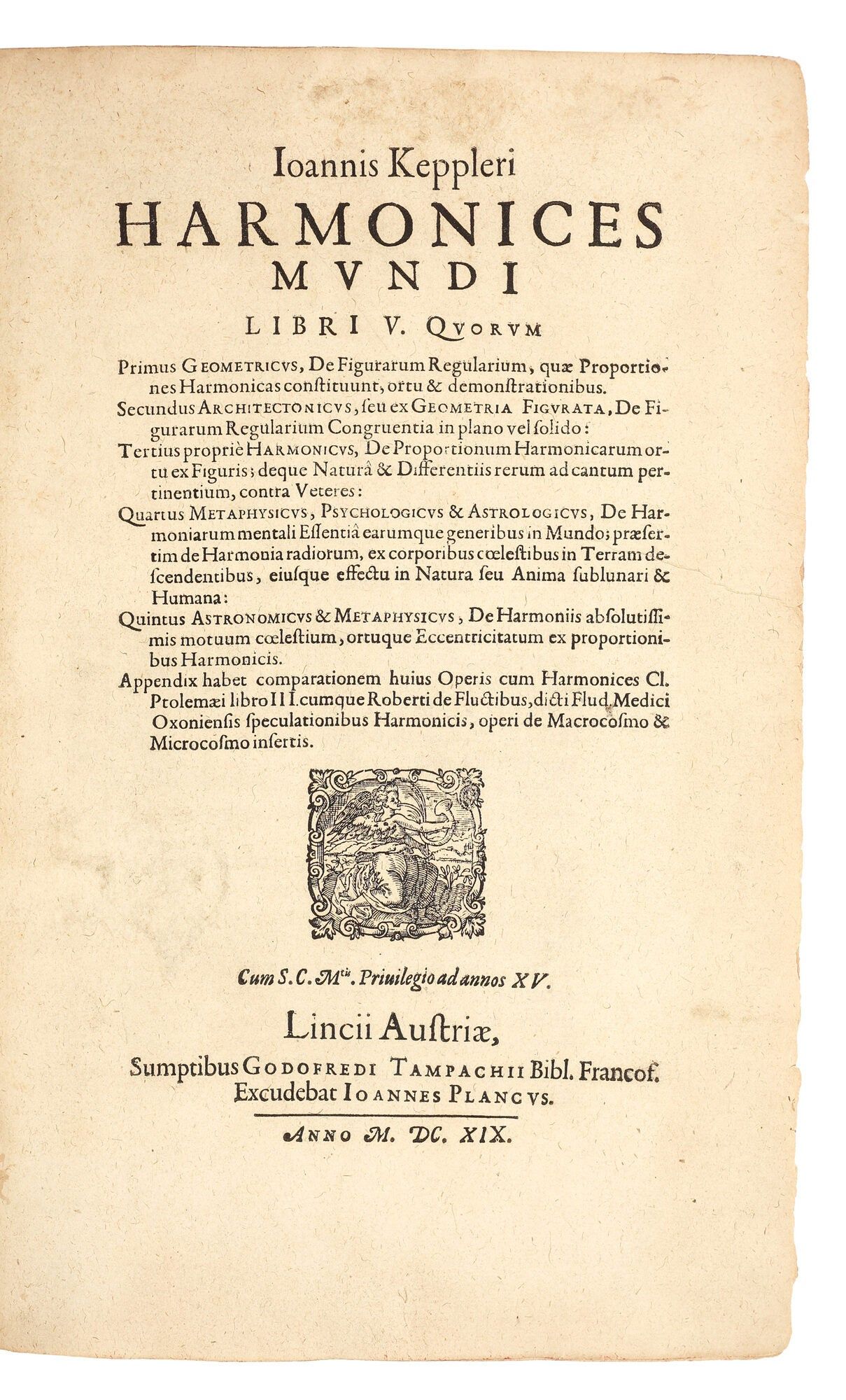
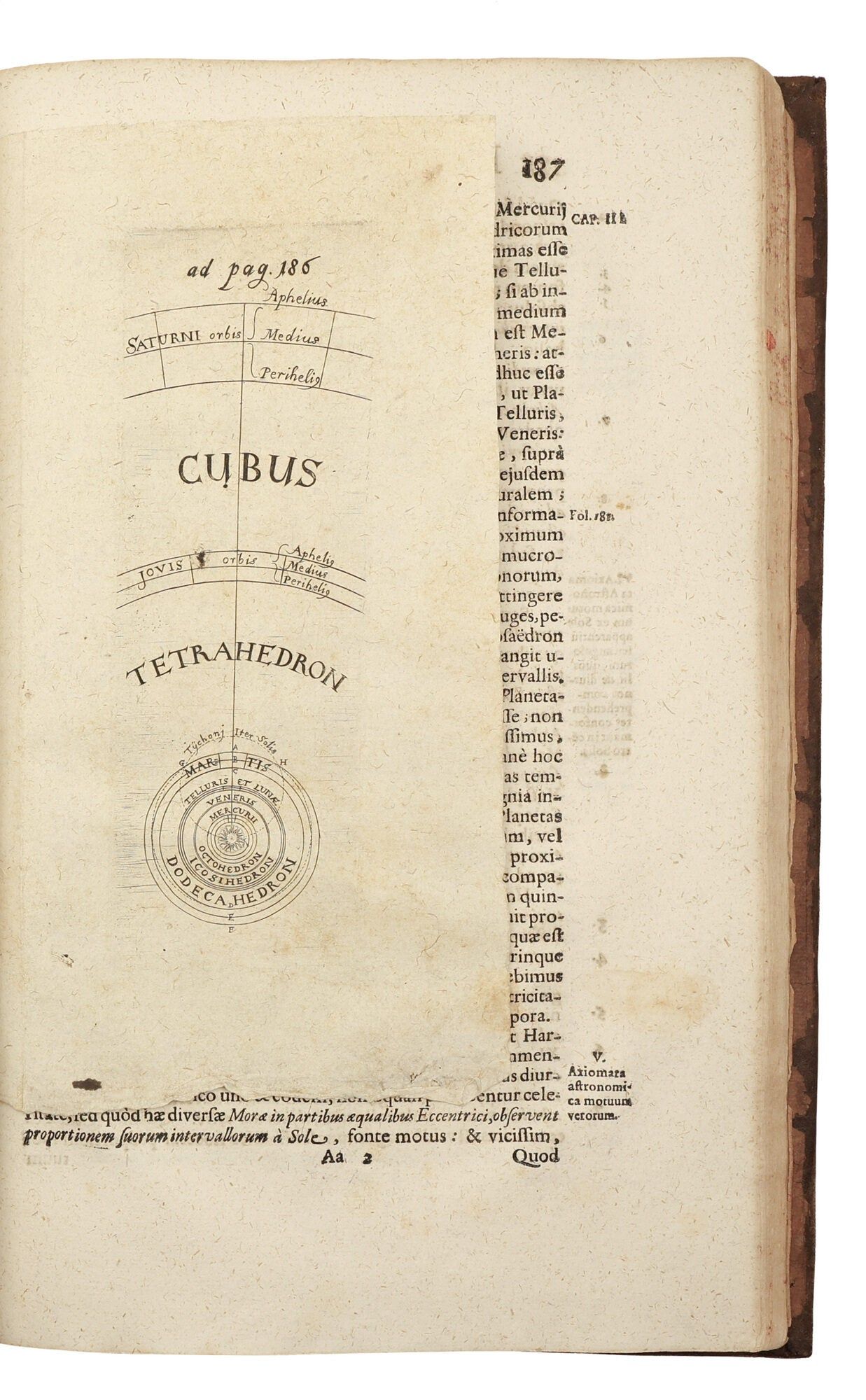
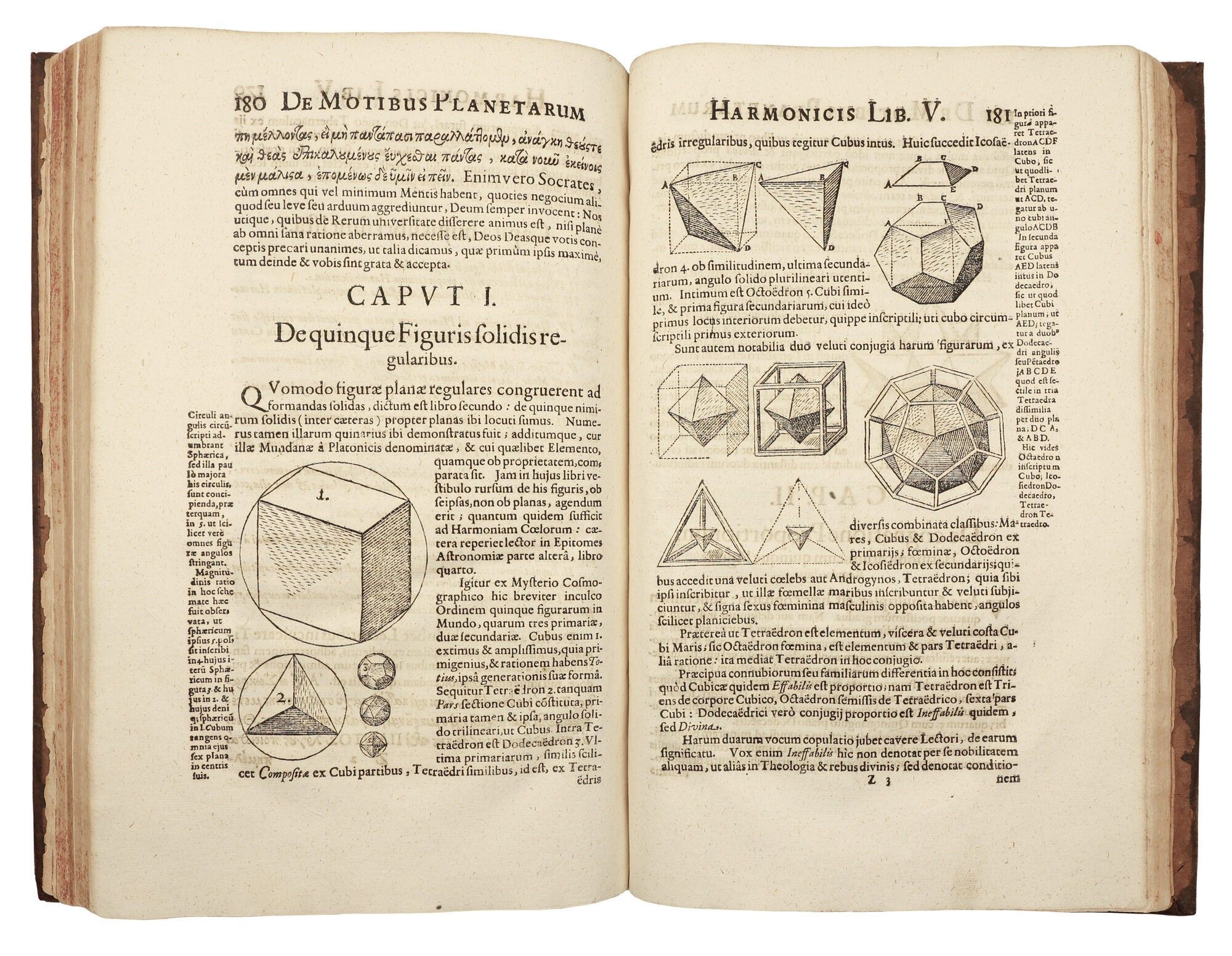
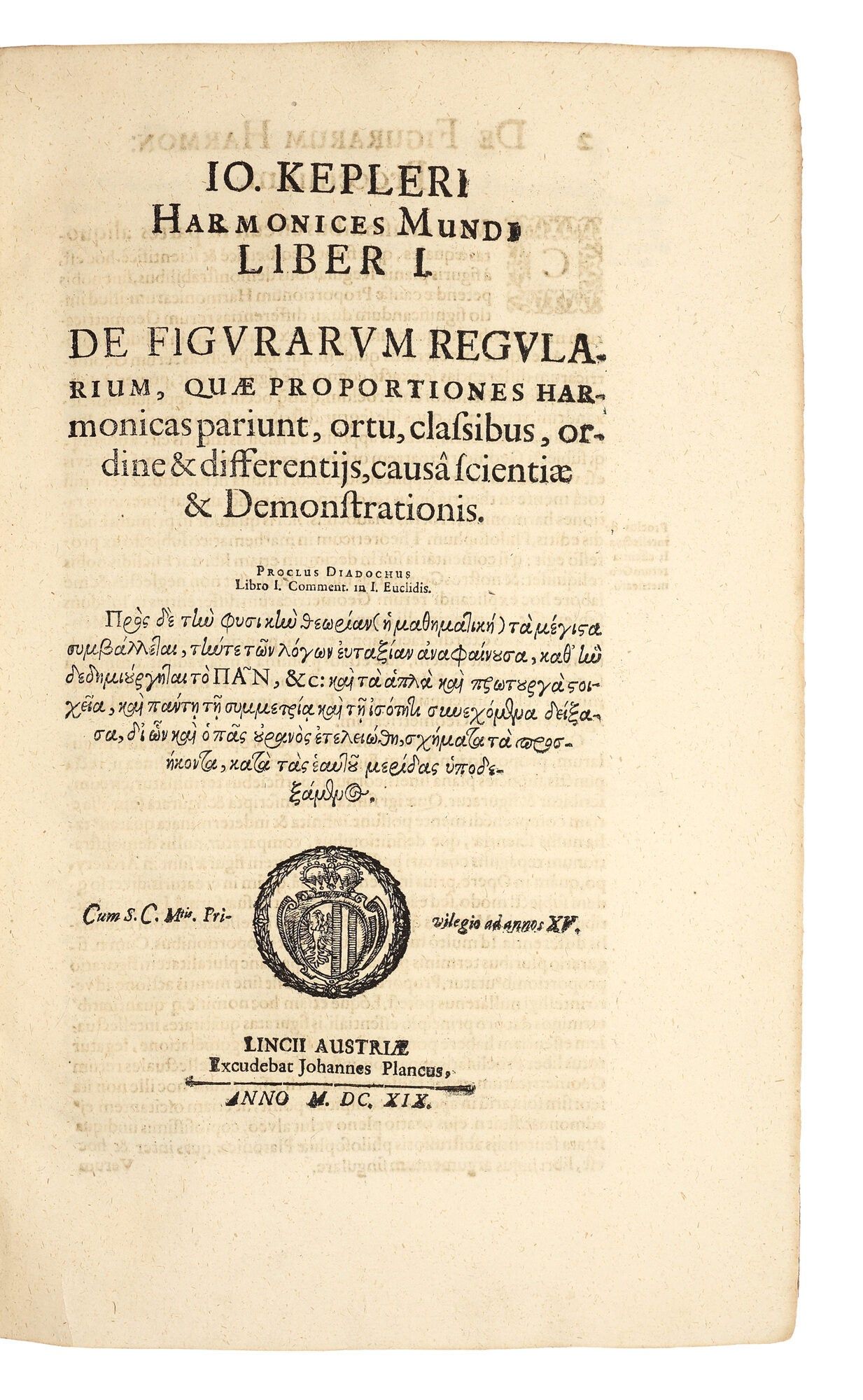
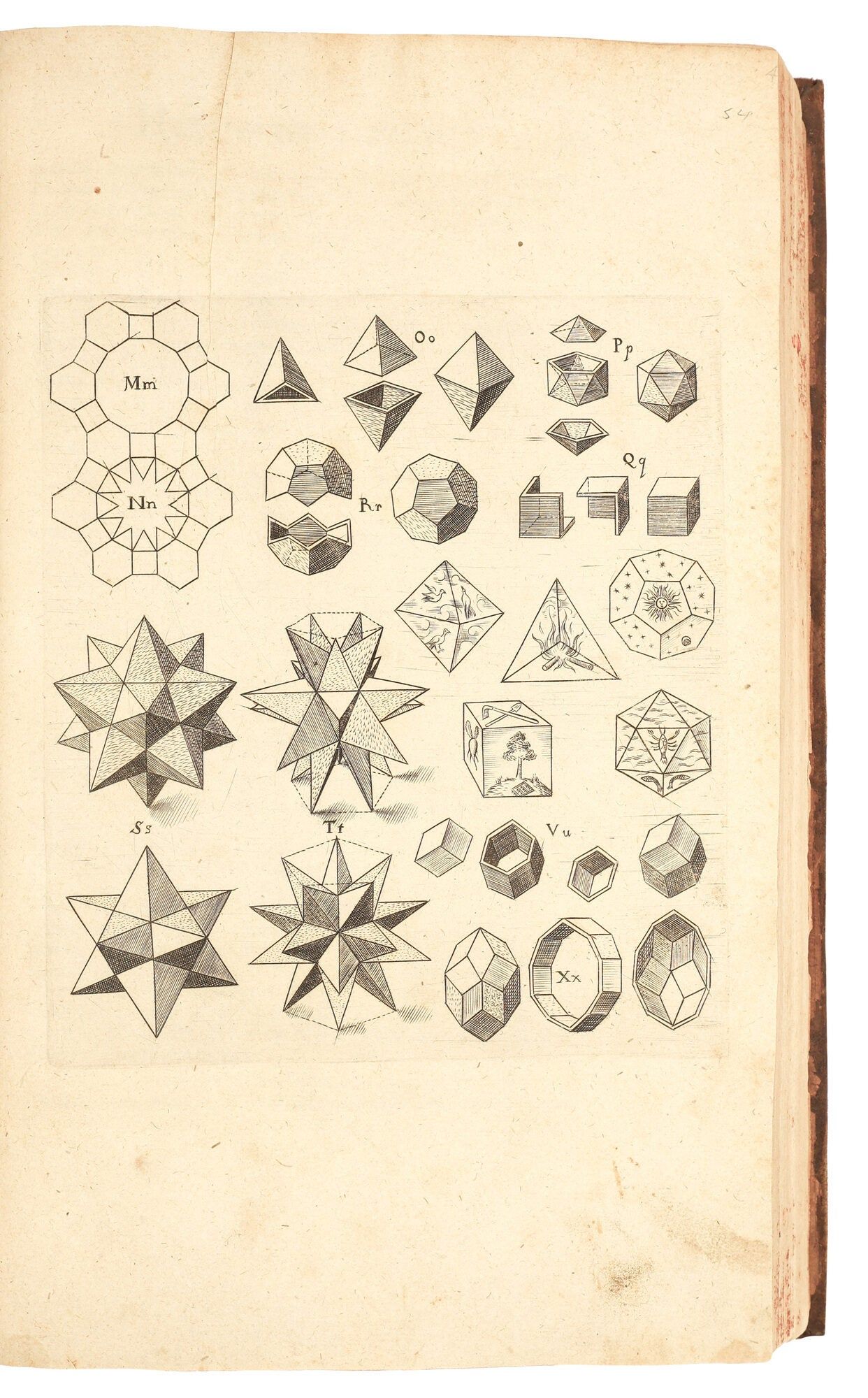
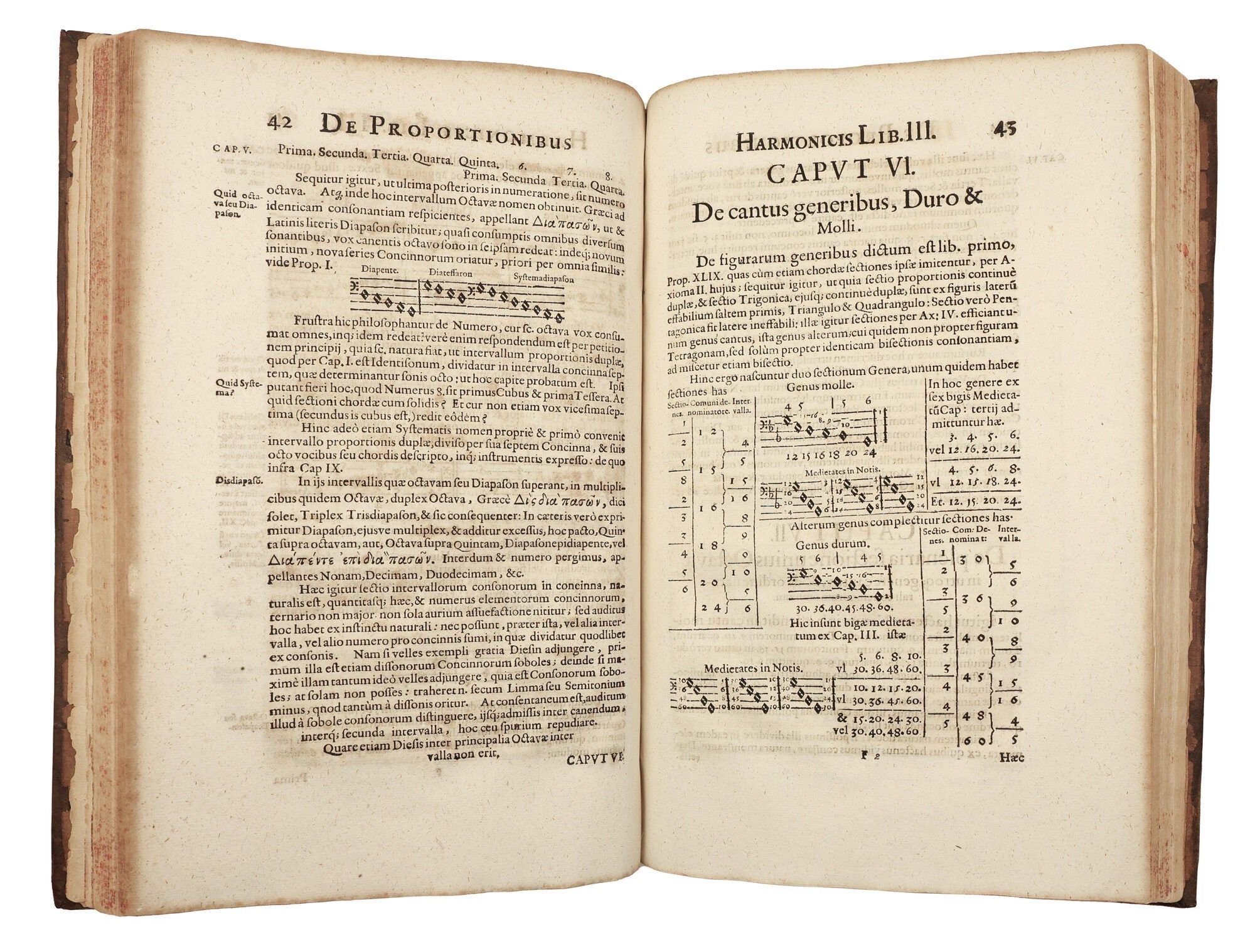
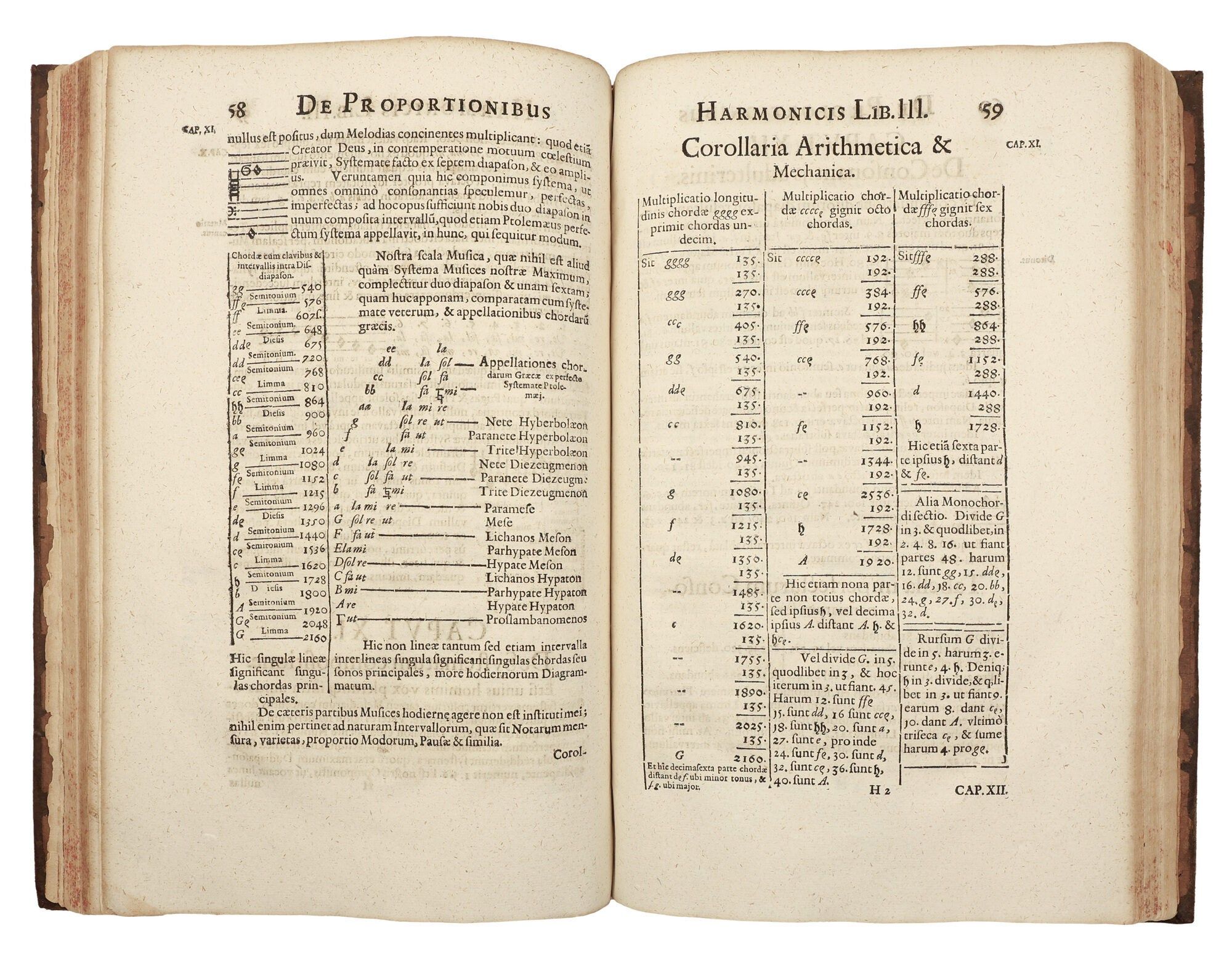
Linz: J. Planck for G. Tampach, 1619. FIRST EDITION, first issue (see below). Hardcover. Fine. The Norman copy of Kepler's great cosmological treatise. Bound in contemporary reversed English calf, rebacked and re-sewn. A fine copy. Very slight fraying to outer margin of title, clean tears (not entering the text in the upper margin of leaf f2 and leaf C1; a third clean tear to the inner blank margin of leaf S2. In addition to the engraved illustrations on the added sheets, there are numerous woodcut diagrams & illustrations in the text. Caspar's probable first issue, the title with allegorical device, and with the sometimes suppressed dedication to James I. Copies of this issue are distinctly rare. This epochal work contains Kepler's discovery of the third law of planetary motion. Kepler regarded this work as his crowning achievement in elucidating the harmonic regularities of the universe. It was Kepler's three laws that formed the basis of Newton's principle of universal gravitation.
An ardent Copernican, Kepler accepted that the sun was near the center of the universe, but he went farther, attributing physical force to the sun. In his earliest published work, the 'Mysterium cosmographicum' (1596), Kepler had investigated the number, the dimensions, and the motions of the celestial orbs; in the 'Harmonices mundi' he explains the harmony of the universe, the natural correspondence between the cosmos and the individual. He imposes a neo-Platonic theology on stringent geometric analysis of the universe.
In contrast to the poetic cosmic harmony propounded by his contemporary Robert Fludd, of whom Kepler was openly critical, Kepler provided "a detailed and coherent explanation of the structure of the cosmos in terms of a divine harmony based on geometry. He investigates harmony in four areas: geometry, music, astrology and astronomy. Books I and II are concerned with the geometrical foundation of universal harmony, beginning with a detailed exposition of Euclid's 'Elements'. He discusses polygons and polyhedrons and -- for the first time -- stellated dodecahedrons, which Louis Poinsot was to rediscover in 1810; four of them are today known as Kepler-Poinsot solids.
Book III investigates harmonic proportions and music theory, while Book IV contains the fullest expression of his astrological views. Book V "On the Harmony of Celestial Motion," is devoted to astronomy and contains Kepler's third law of planetary motion, which stated that the square of the period of time of a planet is proportional to the cube of its mean distance from the sun."(Dibner, Heralds of Science)
"In the 'Mysterium cosmographicum', the young Kepler had been satisfied with the rather approximate planetary spacings predicted by his nested polyhedrons and spheres; now [in 1619], imbued with a new respect for data, he could no longer dismiss its 5 percent error. In the astronomical Book V of the 'Harmonices Mundi', he came to grips with this central problem: By what secondary principles did God adjust the original archetypal model based on the regular solids?...
"In the course of this investigation, Kepler hit upon the relation now called his third or 'harmonic' law: The ratio that exists between the periodic times of any two planets is precisely the ratio of the 3/2 power of the mean distances...the law gave him great pleasure, for it so neatly linked the planetary distances with their velocities or periods, thus fortifying the 'a priori' premises of the 'Mysterium' and the 'Harmonices'."(Gingerich, D.S.B., VII, pp. 301-02)
Kepler's announcement of his 3rd law is found in Book V, Chapter 3, Proposition VIII: "What is the Proportion of the Periodic times to the Distances from the Sun of any pair of Planets?"
Kepler writes:
"Up until now we have dealt with the various elapsed times of arcs of one and the same planet. Now we must deal with the motions of pairs of planets compared with each other... A part of my 'Mysterium Cosmographicum' put on hold 22 years ago because it was not yet clear is to be completed here, and brought in at this point. For after I had discovered the true intervals of the orbits by long and ceaseless toil over Brahe's observational data, finally, finally, the true proportion of the periodic times to the proportion of the orbits "showed herself to me". It came to me on March 8th of this year, 1618, but I was unlucky when I inserted it into the calculation, and so rejected it as false. But the idea returned on May 15th and, adopting a new line of attack, it stormed the darkness of my mind. So strong was the support from the combination of my seventeen years of labor on Brahe's observations and this, my present study that at first I believed I was dreaming and was just assuming this conclusion among my basic premises. But it is absolutely certain and exact that:
"The proportion between the periodic times of any two planets is precisely one and a half times the proportion of the mean distances of their orbits.
"Though with this in mind: that the arithmetic mean between the two diameters of the elliptical orbit is a little less than the long diameter. Thus, if one takes one third of the proportion from the period, for example, of the Earth, which is one year, and the same from the period of Saturn, thirty years, that is, the cube roots, and one doubles that proportion by squaring the roots, he has in the resulting numbers the exactly correct proportion of the mean distances of the Earth and Saturn from the Sun. For the cube root of 1 is 1, and the square of that is 1. Also, the cube root of 30 is greater than 3, and therefore the square of that is greater than 9. And Saturn at its average distance from the Sun is a little higher than nine times the average distance of the Earth from the Sun."(pp. 189-190).
An ardent Copernican, Kepler accepted that the sun was near the center of the universe, but he went farther, attributing physical force to the sun. In his earliest published work, the 'Mysterium cosmographicum' (1596), Kepler had investigated the number, the dimensions, and the motions of the celestial orbs; in the 'Harmonices mundi' he explains the harmony of the universe, the natural correspondence between the cosmos and the individual. He imposes a neo-Platonic theology on stringent geometric analysis of the universe.
In contrast to the poetic cosmic harmony propounded by his contemporary Robert Fludd, of whom Kepler was openly critical, Kepler provided "a detailed and coherent explanation of the structure of the cosmos in terms of a divine harmony based on geometry. He investigates harmony in four areas: geometry, music, astrology and astronomy. Books I and II are concerned with the geometrical foundation of universal harmony, beginning with a detailed exposition of Euclid's 'Elements'. He discusses polygons and polyhedrons and -- for the first time -- stellated dodecahedrons, which Louis Poinsot was to rediscover in 1810; four of them are today known as Kepler-Poinsot solids.
Book III investigates harmonic proportions and music theory, while Book IV contains the fullest expression of his astrological views. Book V "On the Harmony of Celestial Motion," is devoted to astronomy and contains Kepler's third law of planetary motion, which stated that the square of the period of time of a planet is proportional to the cube of its mean distance from the sun."(Dibner, Heralds of Science)
"In the 'Mysterium cosmographicum', the young Kepler had been satisfied with the rather approximate planetary spacings predicted by his nested polyhedrons and spheres; now [in 1619], imbued with a new respect for data, he could no longer dismiss its 5 percent error. In the astronomical Book V of the 'Harmonices Mundi', he came to grips with this central problem: By what secondary principles did God adjust the original archetypal model based on the regular solids?...
"In the course of this investigation, Kepler hit upon the relation now called his third or 'harmonic' law: The ratio that exists between the periodic times of any two planets is precisely the ratio of the 3/2 power of the mean distances...the law gave him great pleasure, for it so neatly linked the planetary distances with their velocities or periods, thus fortifying the 'a priori' premises of the 'Mysterium' and the 'Harmonices'."(Gingerich, D.S.B., VII, pp. 301-02)
Kepler's announcement of his 3rd law is found in Book V, Chapter 3, Proposition VIII: "What is the Proportion of the Periodic times to the Distances from the Sun of any pair of Planets?"
Kepler writes:
"Up until now we have dealt with the various elapsed times of arcs of one and the same planet. Now we must deal with the motions of pairs of planets compared with each other... A part of my 'Mysterium Cosmographicum' put on hold 22 years ago because it was not yet clear is to be completed here, and brought in at this point. For after I had discovered the true intervals of the orbits by long and ceaseless toil over Brahe's observational data, finally, finally, the true proportion of the periodic times to the proportion of the orbits "showed herself to me". It came to me on March 8th of this year, 1618, but I was unlucky when I inserted it into the calculation, and so rejected it as false. But the idea returned on May 15th and, adopting a new line of attack, it stormed the darkness of my mind. So strong was the support from the combination of my seventeen years of labor on Brahe's observations and this, my present study that at first I believed I was dreaming and was just assuming this conclusion among my basic premises. But it is absolutely certain and exact that:
"The proportion between the periodic times of any two planets is precisely one and a half times the proportion of the mean distances of their orbits.
"Though with this in mind: that the arithmetic mean between the two diameters of the elliptical orbit is a little less than the long diameter. Thus, if one takes one third of the proportion from the period, for example, of the Earth, which is one year, and the same from the period of Saturn, thirty years, that is, the cube roots, and one doubles that proportion by squaring the roots, he has in the resulting numbers the exactly correct proportion of the mean distances of the Earth and Saturn from the Sun. For the cube root of 1 is 1, and the square of that is 1. Also, the cube root of 30 is greater than 3, and therefore the square of that is greater than 9. And Saturn at its average distance from the Sun is a little higher than nine times the average distance of the Earth from the Sun."(pp. 189-190).
Details
Title
Harmonices Mundi Libri V.
Author
Kepler, Johannes (1571-1630)
Binding
Hardcover
Condition
Fine
Publisher
J. Planck for G. Tampach: Linz
Date
1619
Edition
FIRST EDITION, first issue (see below)