

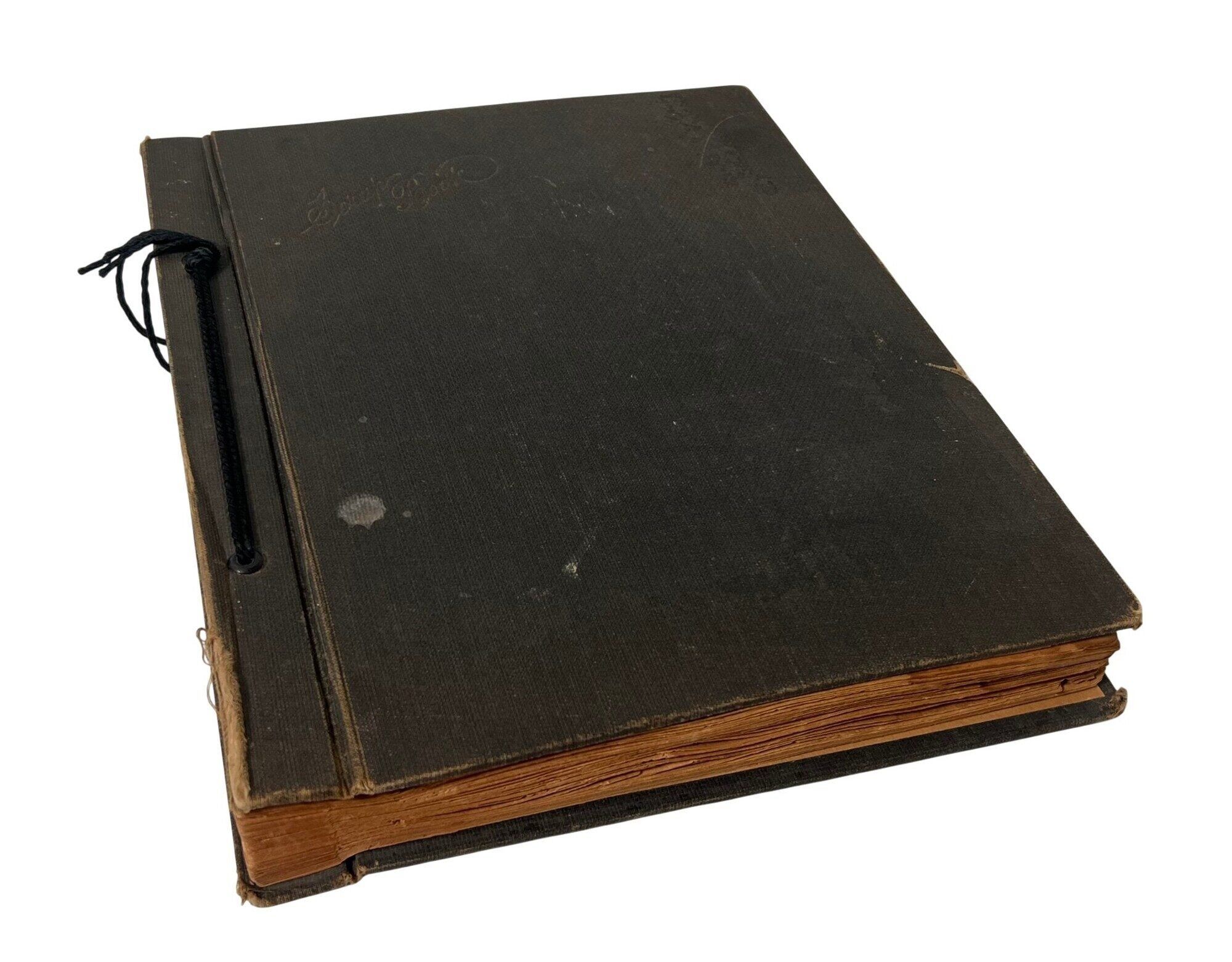
Extensively, annotated photo album, documenting Travel and Leisure in Southern Pines, Cape Cod, and Boy Scout Camp during WWII
- 1941
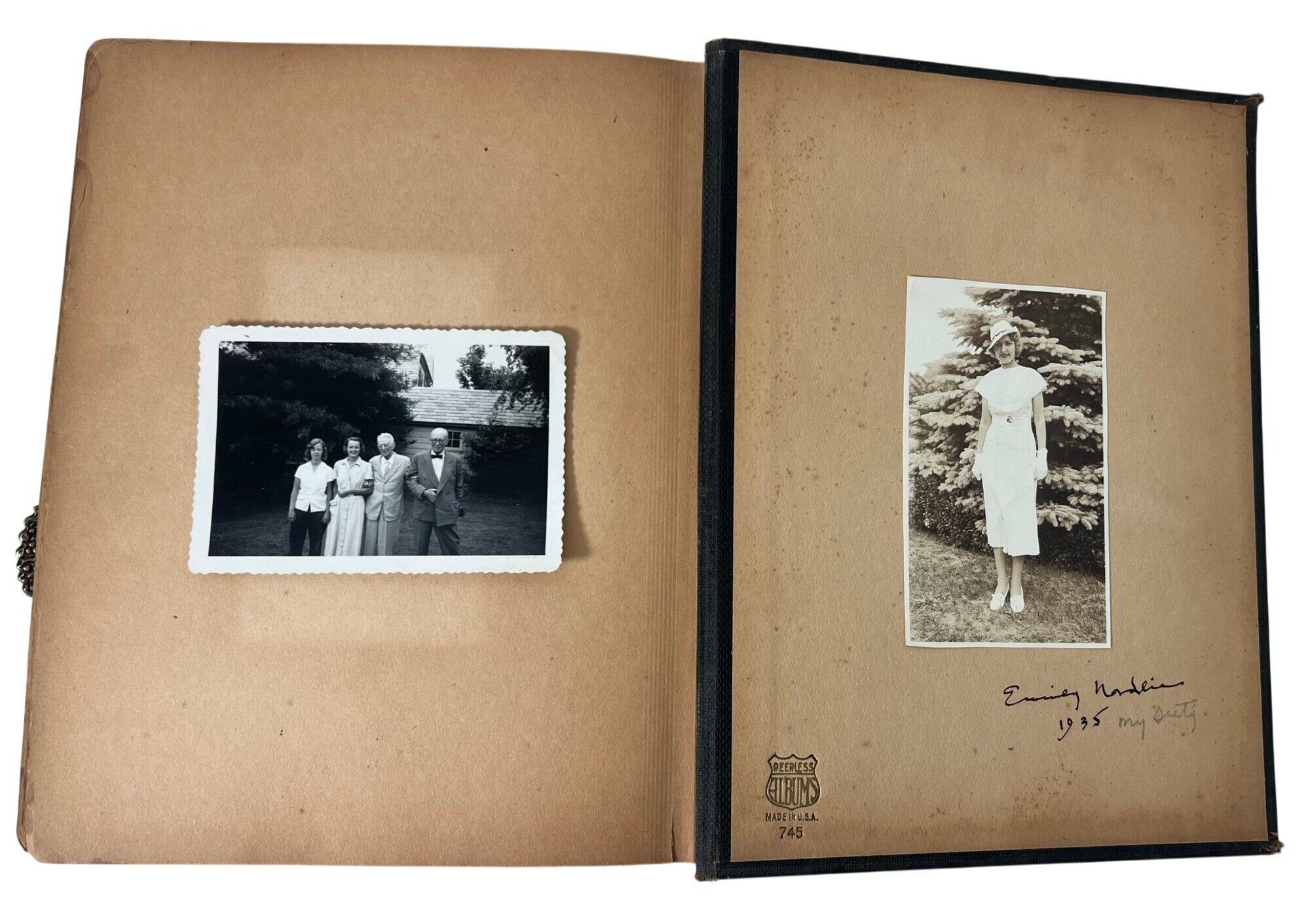
1941. East Coast resort and camp photograph album documenting leisure travel, scouting, rail movement, and social life across North Carolina, Cape Cod, Prouts Neck, and other eastern locations, circa 1941 to 1944, with direct evidence of how wartime era recreation and home life continued throughout WWII. The album contains handwritten place identifications, individual's names, both industrial and natural scenes, along with a dated April 1944 train wreck near Pinehurst. Rather than functioning as a generic family snapshot book, it records the physical network of eastern resort culture and organized recreation through named sites, transportation routes, and recurring movement between institutional and leisure spaces.
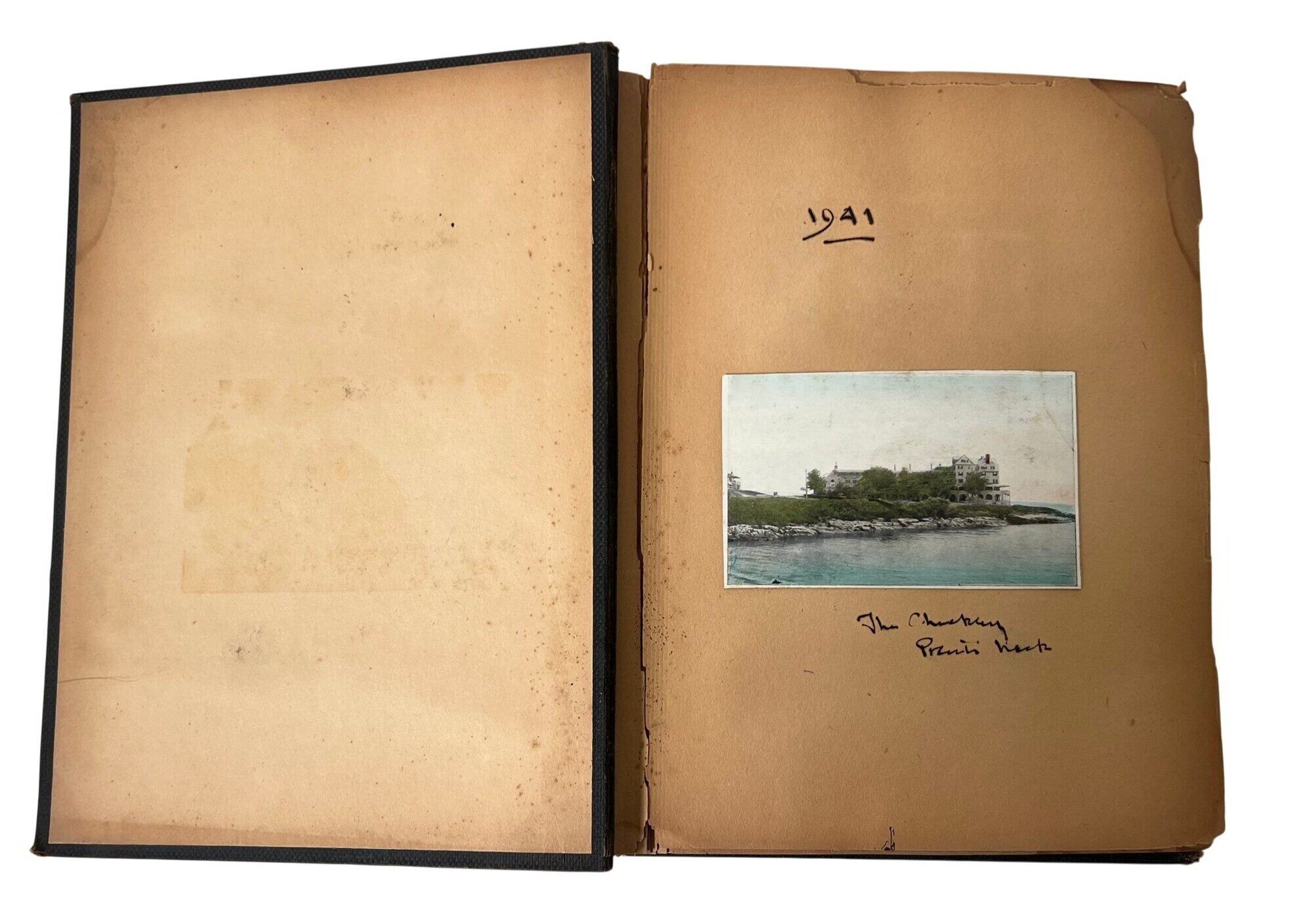
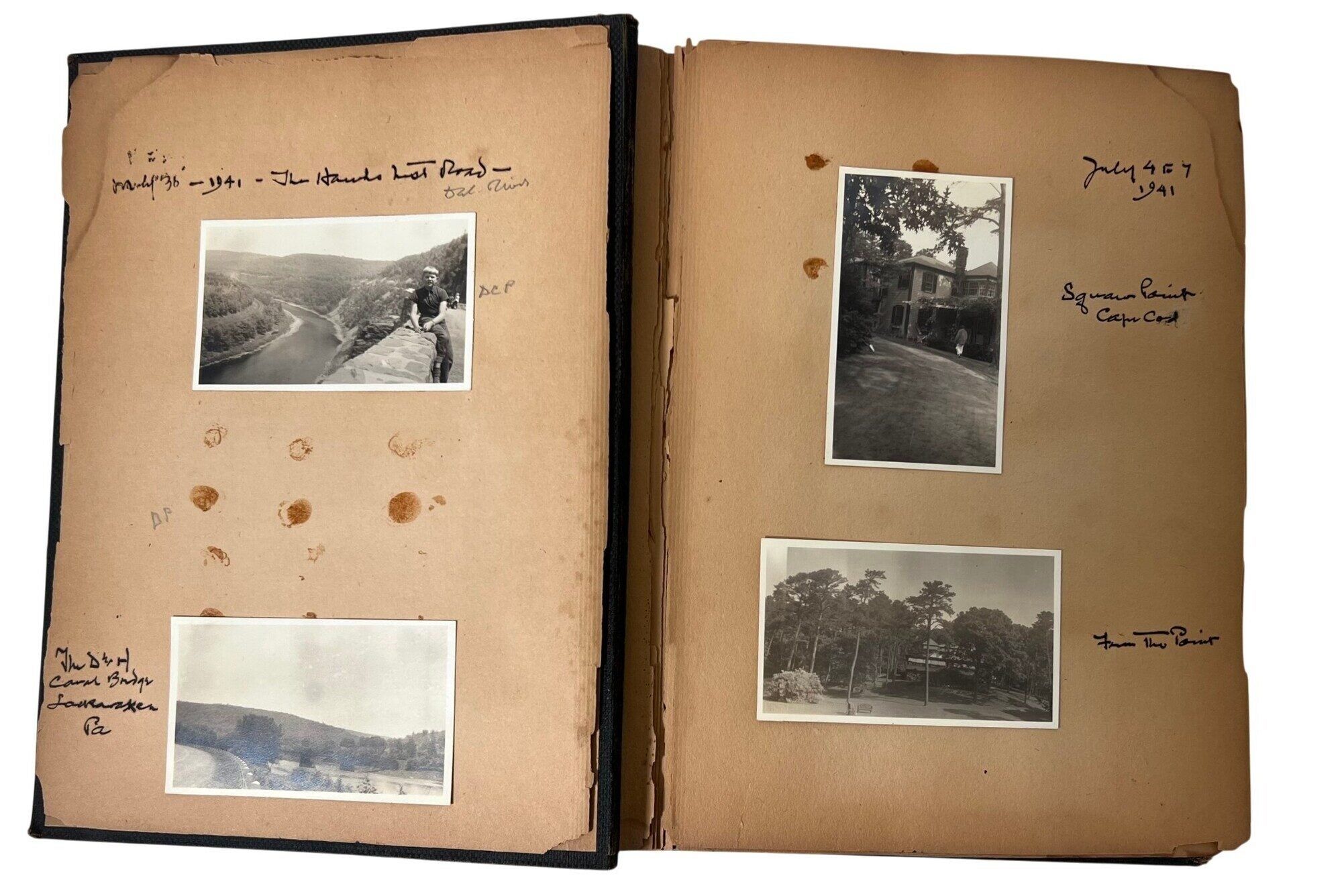
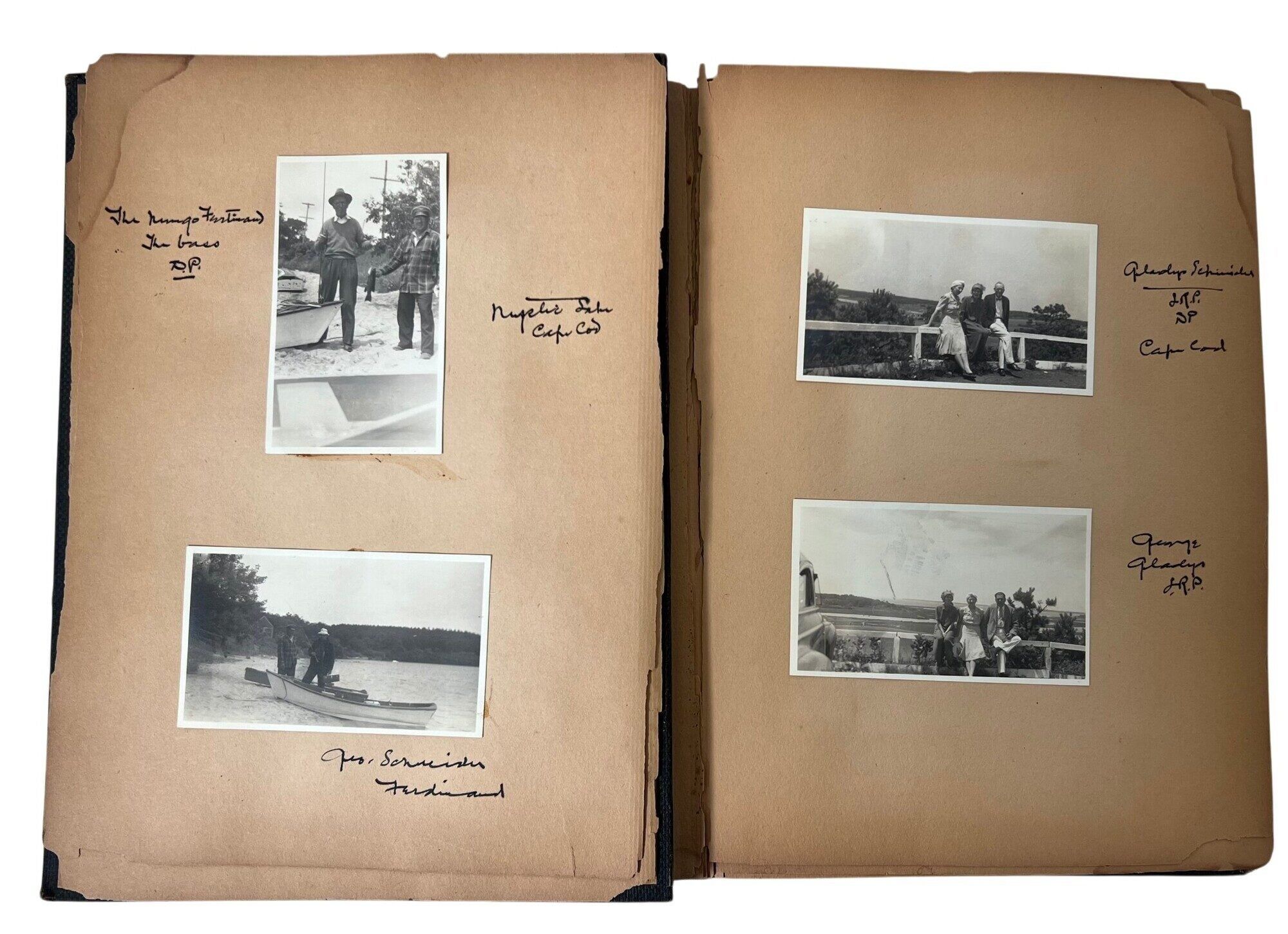
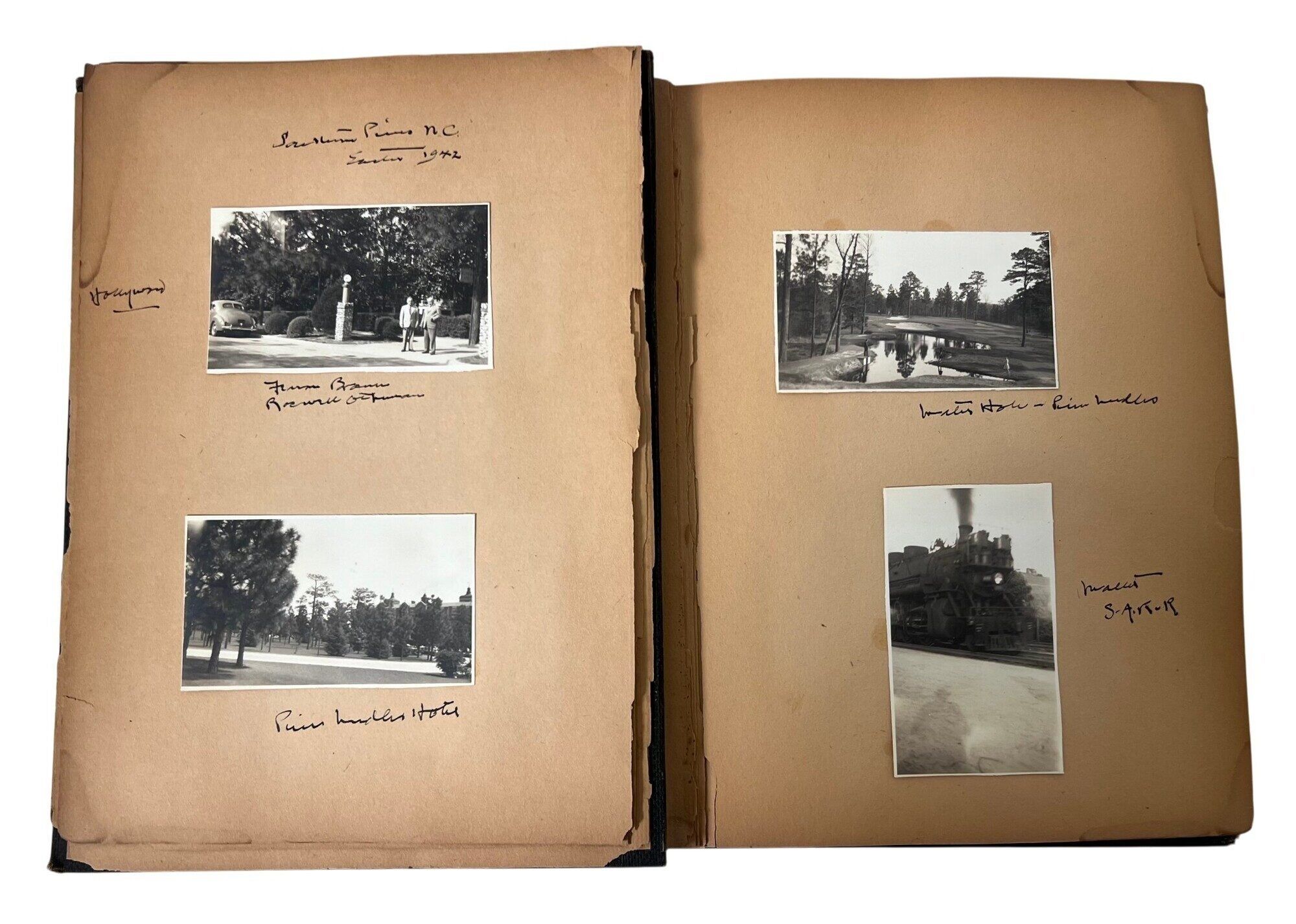
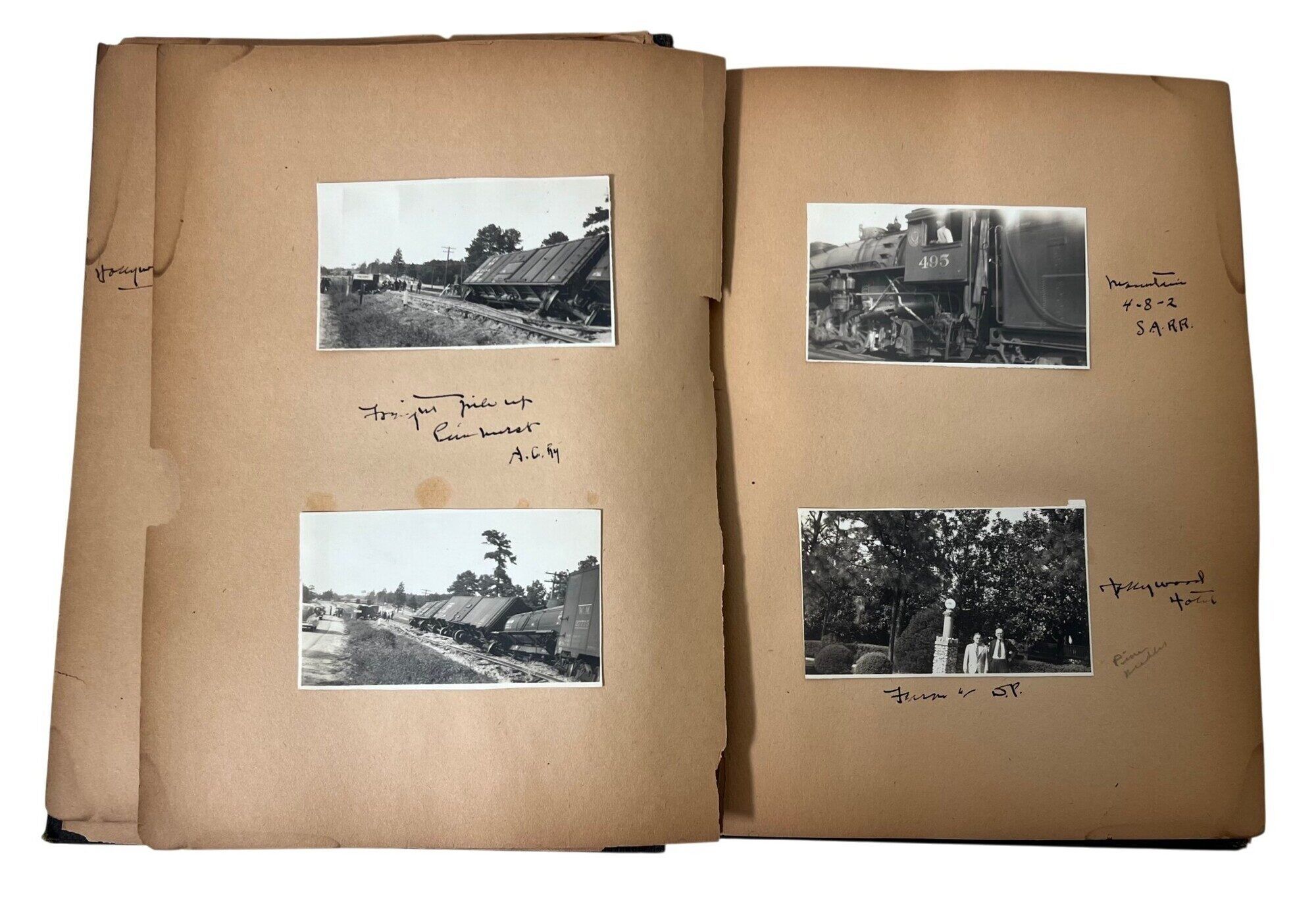
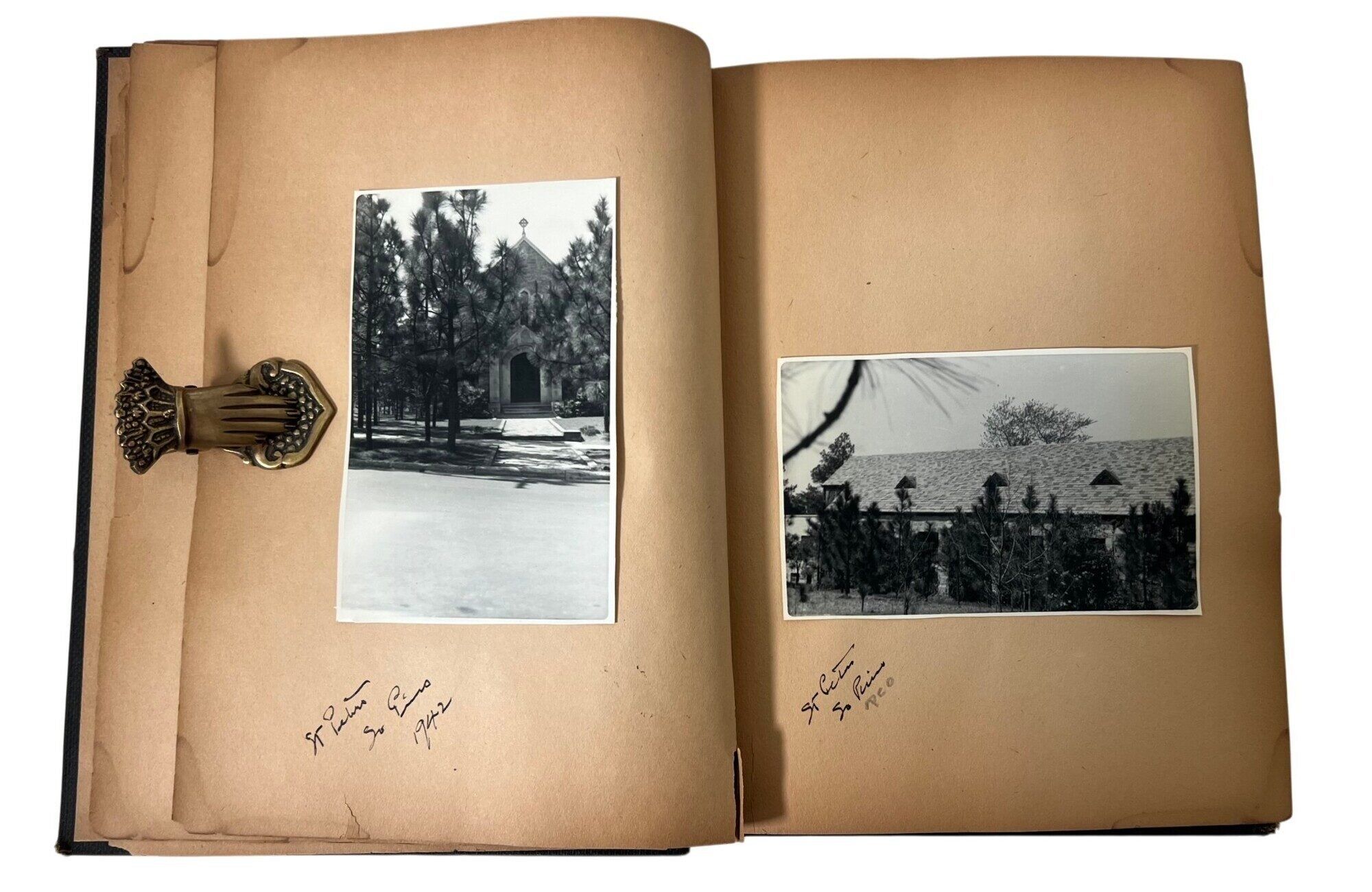
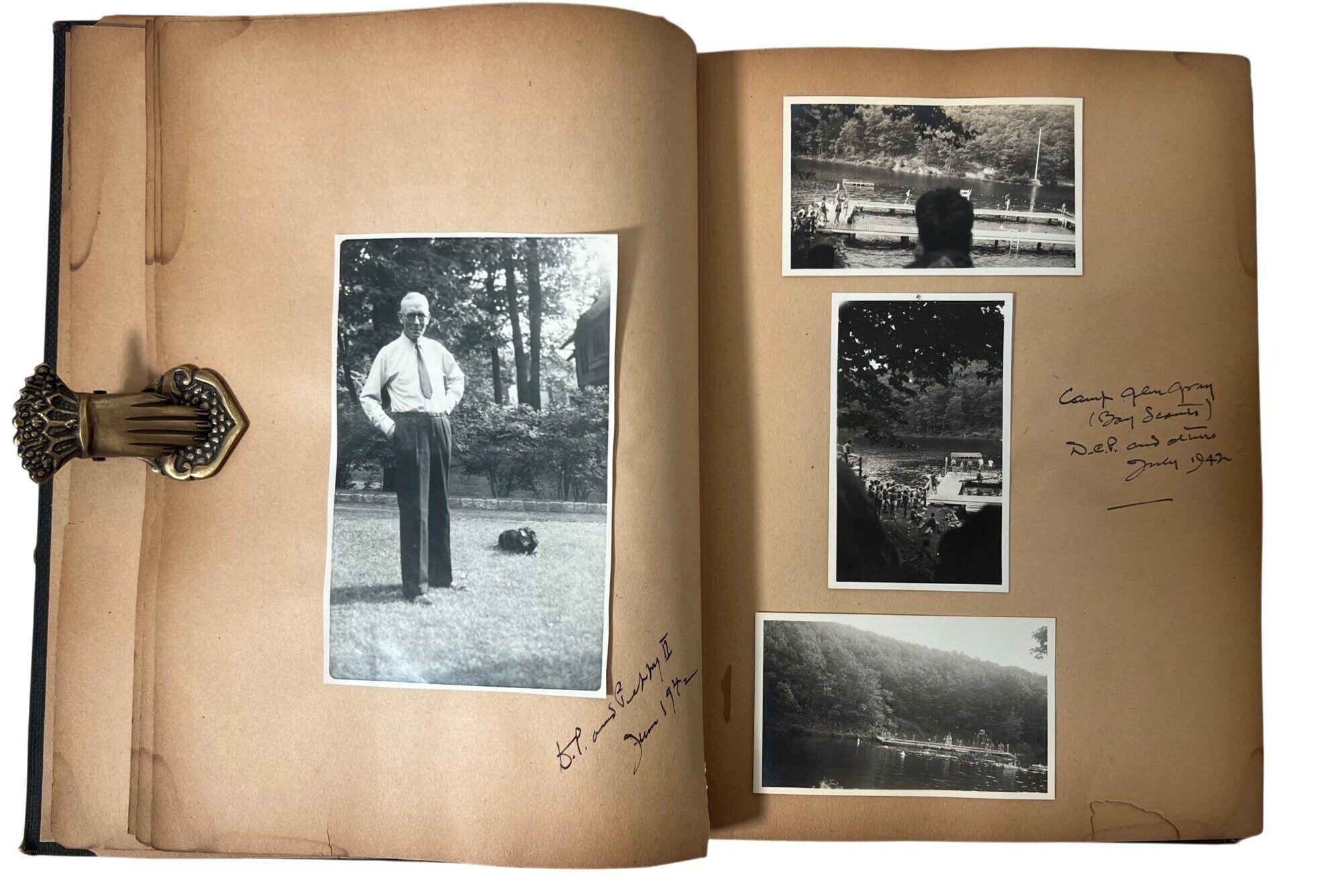
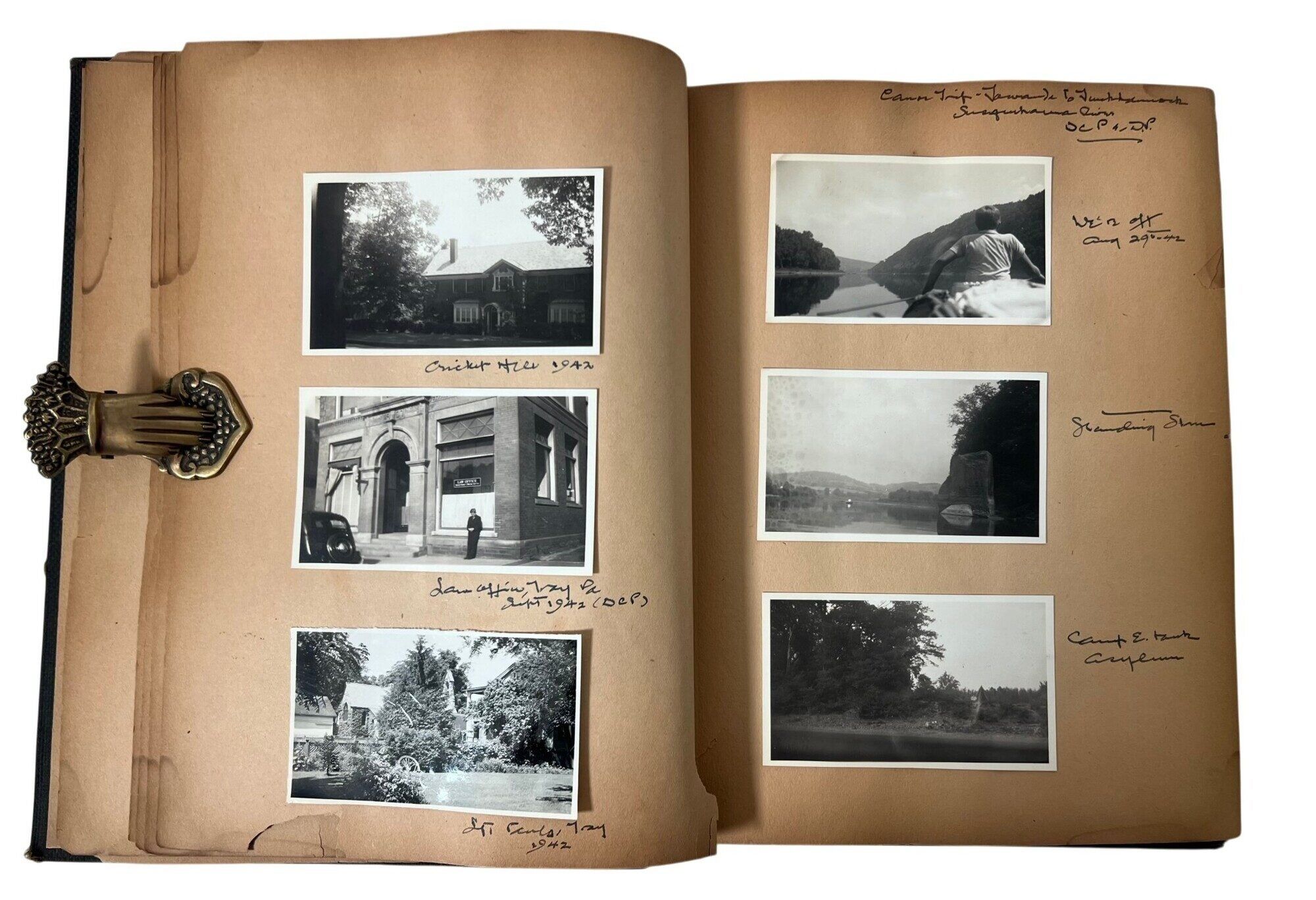
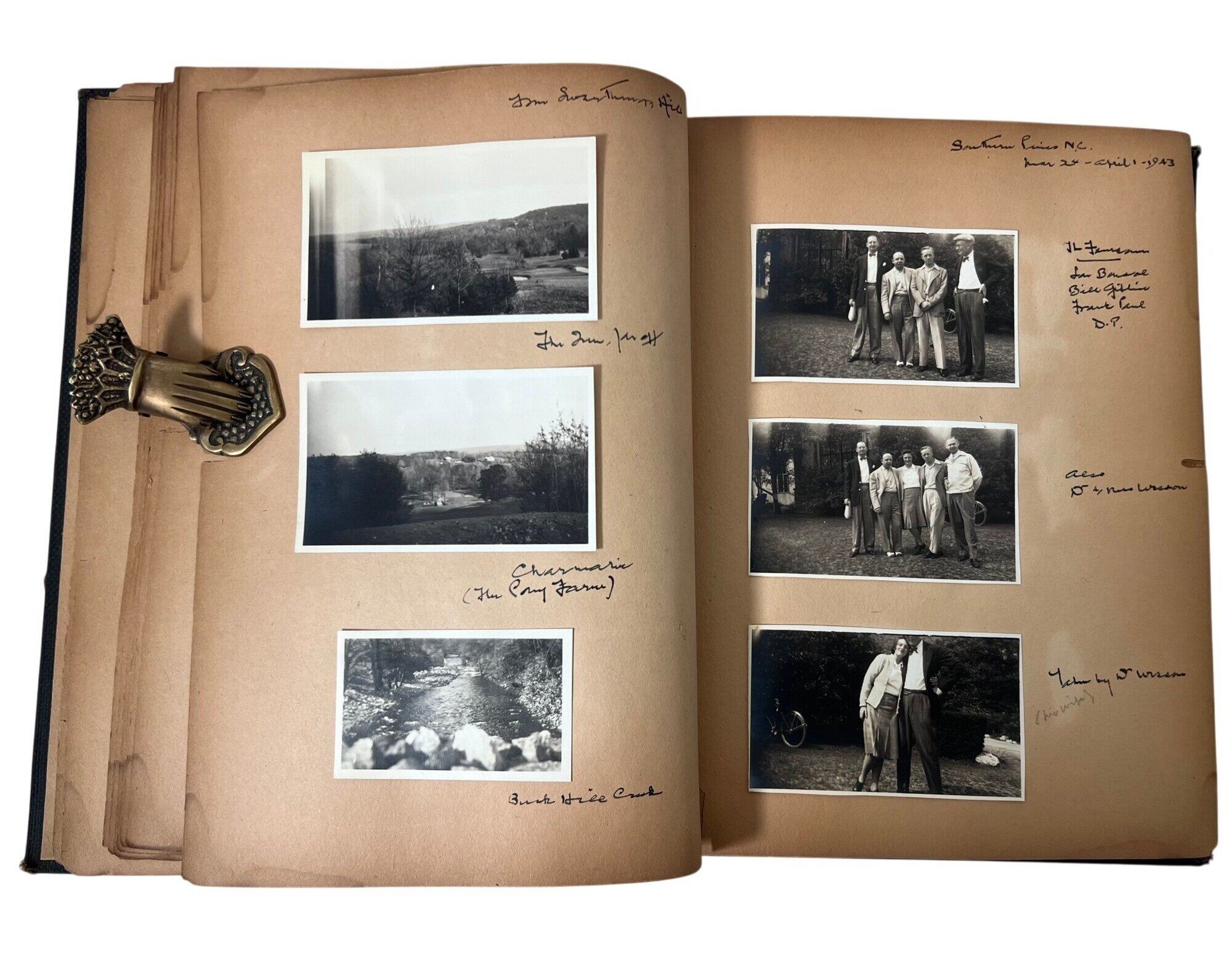
Photo archive of over 160 silver gelatin snapshot photographs, ranging from 2.5" x 4.5" to 6.5" x 3" inches, primarily North Carolina and northeastern United States locations, 1941 to 1944. Mounted throughout a large black cloth album, the photographs include captioned views of St. Peter's Church in Pine, North Carolina, Pine Needles and Southern Pines hotel and grounds, a page identified as "Camp Glen Gray (Boy Scouts) D.E.P. and others July 1942," canoe views on the Susquehanna River, shoreline and house views at Prouts Neck and Cape Cod, and multiple portraits of men and women posed on lawns, terraces, and near bicycles and automobiles. Several pages center on landscape and built environment rather than portraiture, including wooded roads, golf course or resort grounds, rivers, streams, and hotel or club buildings; others turn to transportation, most notably a steam locomotive marked "495," wrecked rail cars captioned as a train pile up near Pinehurst in April 1944, and additional rail scenes captioned S.A.R.R. Handwritten annotations recur throughout in ink, often naming individuals by surname or initials, dating specific visits, and locating otherwise ordinary snapshots within a precise geography of camps, resorts, churches, and travel stops.
The album spans the years when eastern resort communities, summer camps, and rail lines continued to structure domestic movement during World War II. During World War II, summer and sleep-away camps helped manage major changes in American family and social life. They kept children in supervised settings while many parents worked longer hours in war industries or managed households shaped by military service and rationing. Camps also became home-front institutions where patriotism, discipline, health, and citizenship were actively taught through routines, ceremonies, and group activities. In some cases, they also reinforced religious, ethnic, or community identity during a period of national anxiety and rapid social change. The inclusion of summer camp references in this album points to that larger American war time trend. Pine Needles and Southern Pines place part of the album within one of North Carolina's best known golf and resort districts, while the Camp Glen Gray page, canoe photographs, church views, and Pinehurst derailment connect organized recreation, religious architecture, and transportation infrastructure within the same personal record. Worn black cloth album with rubbing and stains to covers; pages toned and brittle with edge chipping, corner losses, and scattered staining; mounted photographs generally present and legible. The combination of extensive handwritten identification, named resort sites, Boy Scout material, and the dated railroad accident gives the album stronger documentary value than an ordinary midcentury family album.
Photo archive of over 160 silver gelatin snapshot photographs, ranging from 2.5" x 4.5" to 6.5" x 3" inches, primarily North Carolina and northeastern United States locations, 1941 to 1944. Mounted throughout a large black cloth album, the photographs include captioned views of St. Peter's Church in Pine, North Carolina, Pine Needles and Southern Pines hotel and grounds, a page identified as "Camp Glen Gray (Boy Scouts) D.E.P. and others July 1942," canoe views on the Susquehanna River, shoreline and house views at Prouts Neck and Cape Cod, and multiple portraits of men and women posed on lawns, terraces, and near bicycles and automobiles. Several pages center on landscape and built environment rather than portraiture, including wooded roads, golf course or resort grounds, rivers, streams, and hotel or club buildings; others turn to transportation, most notably a steam locomotive marked "495," wrecked rail cars captioned as a train pile up near Pinehurst in April 1944, and additional rail scenes captioned S.A.R.R. Handwritten annotations recur throughout in ink, often naming individuals by surname or initials, dating specific visits, and locating otherwise ordinary snapshots within a precise geography of camps, resorts, churches, and travel stops.
The album spans the years when eastern resort communities, summer camps, and rail lines continued to structure domestic movement during World War II. During World War II, summer and sleep-away camps helped manage major changes in American family and social life. They kept children in supervised settings while many parents worked longer hours in war industries or managed households shaped by military service and rationing. Camps also became home-front institutions where patriotism, discipline, health, and citizenship were actively taught through routines, ceremonies, and group activities. In some cases, they also reinforced religious, ethnic, or community identity during a period of national anxiety and rapid social change. The inclusion of summer camp references in this album points to that larger American war time trend. Pine Needles and Southern Pines place part of the album within one of North Carolina's best known golf and resort districts, while the Camp Glen Gray page, canoe photographs, church views, and Pinehurst derailment connect organized recreation, religious architecture, and transportation infrastructure within the same personal record. Worn black cloth album with rubbing and stains to covers; pages toned and brittle with edge chipping, corner losses, and scattered staining; mounted photographs generally present and legible. The combination of extensive handwritten identification, named resort sites, Boy Scout material, and the dated railroad accident gives the album stronger documentary value than an ordinary midcentury family album.
Details
Title
Extensively, annotated photo album, documenting Travel and Leisure in Southern Pines, Cape Cod, and Boy Scout Camp during WWII
Author
Camp Glen Gray; Pine Hurst
Condition
Unknown
Date
1941