

Musaeum Kircherianum sive Musaeum A.P. Athanasio Kirchero in Collegio Romano Societatis Jesu iam pridem incoeptum nuper restitutum, auctum, descriptum, & Iconibus illustratum
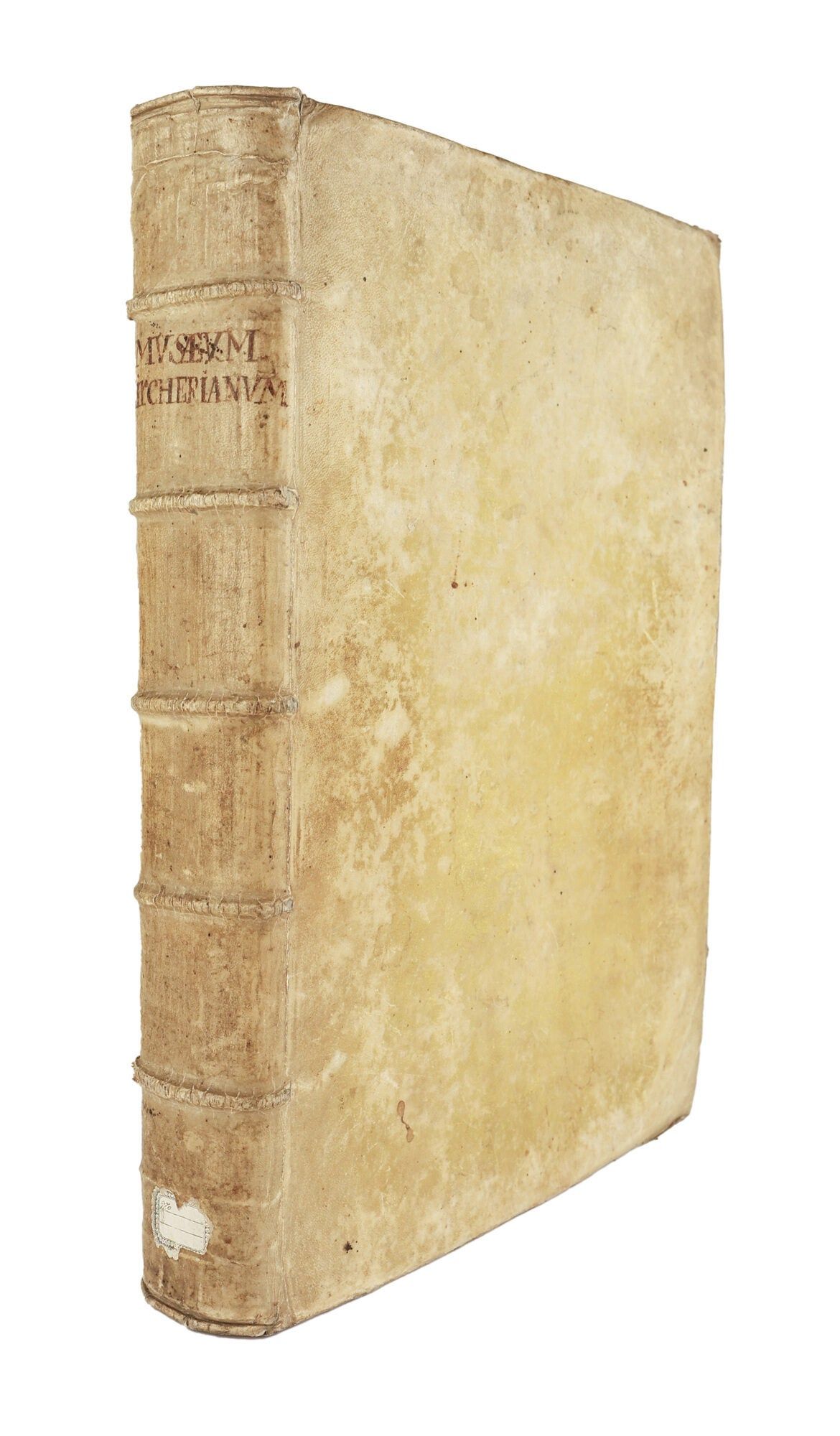
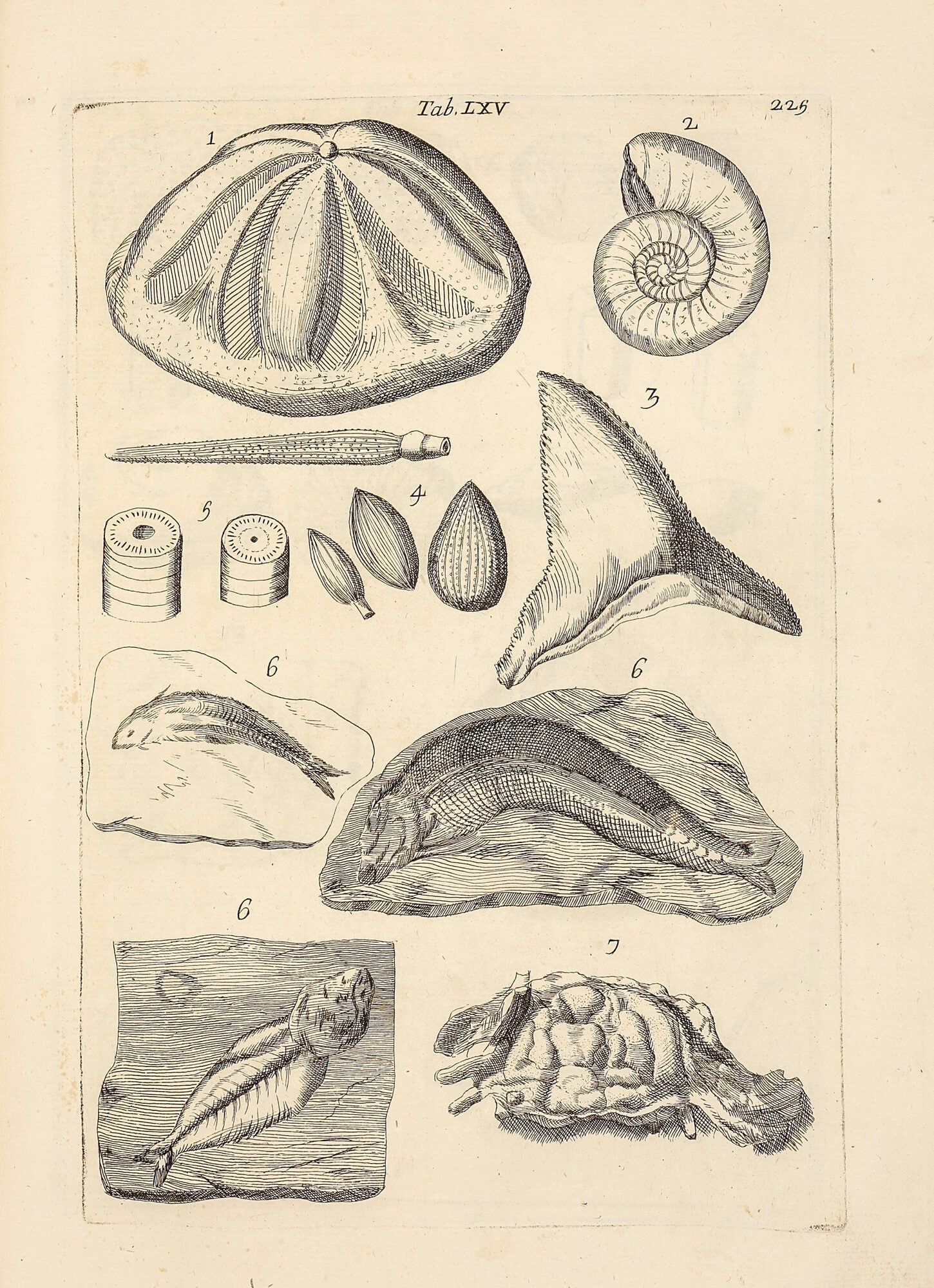
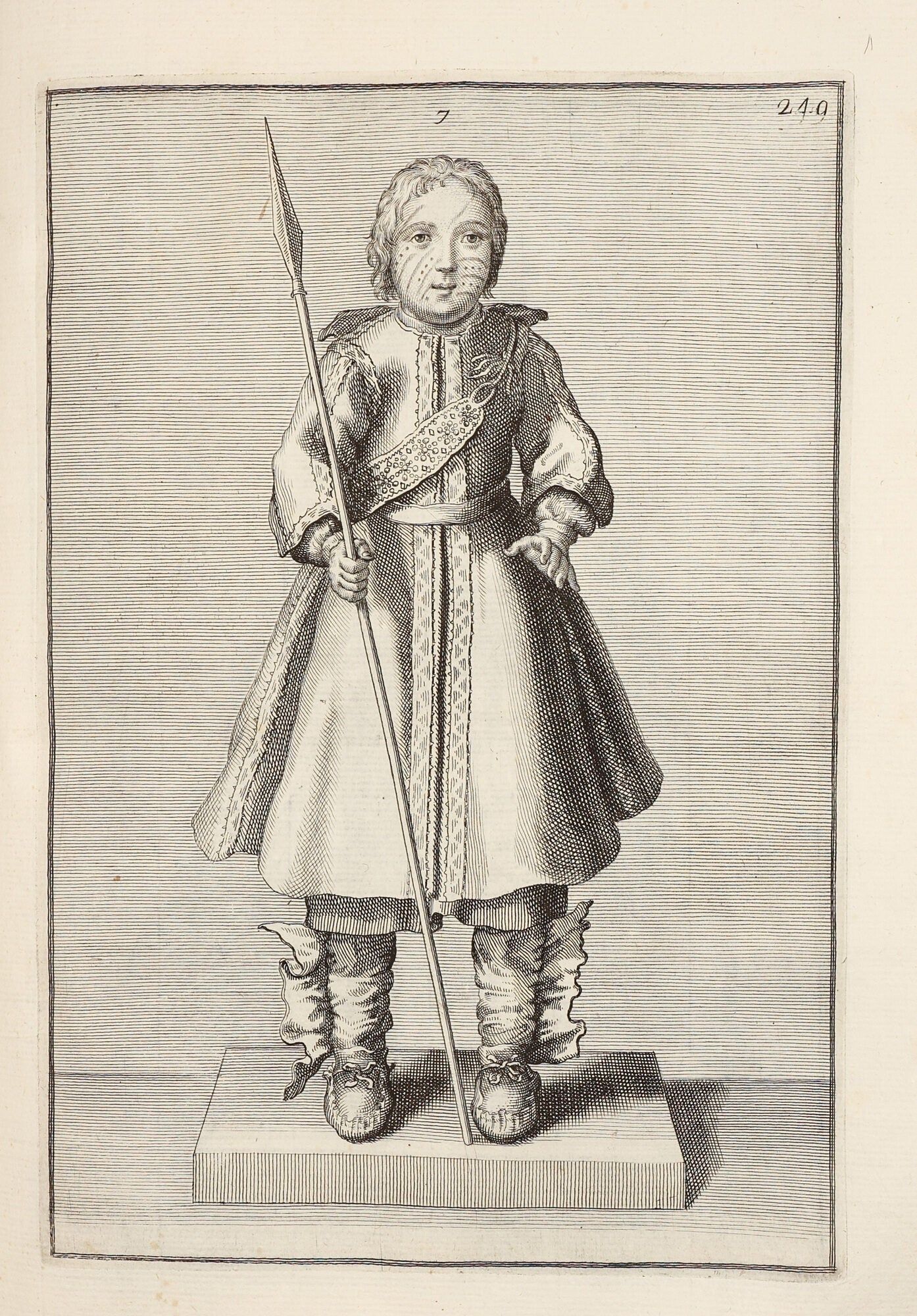
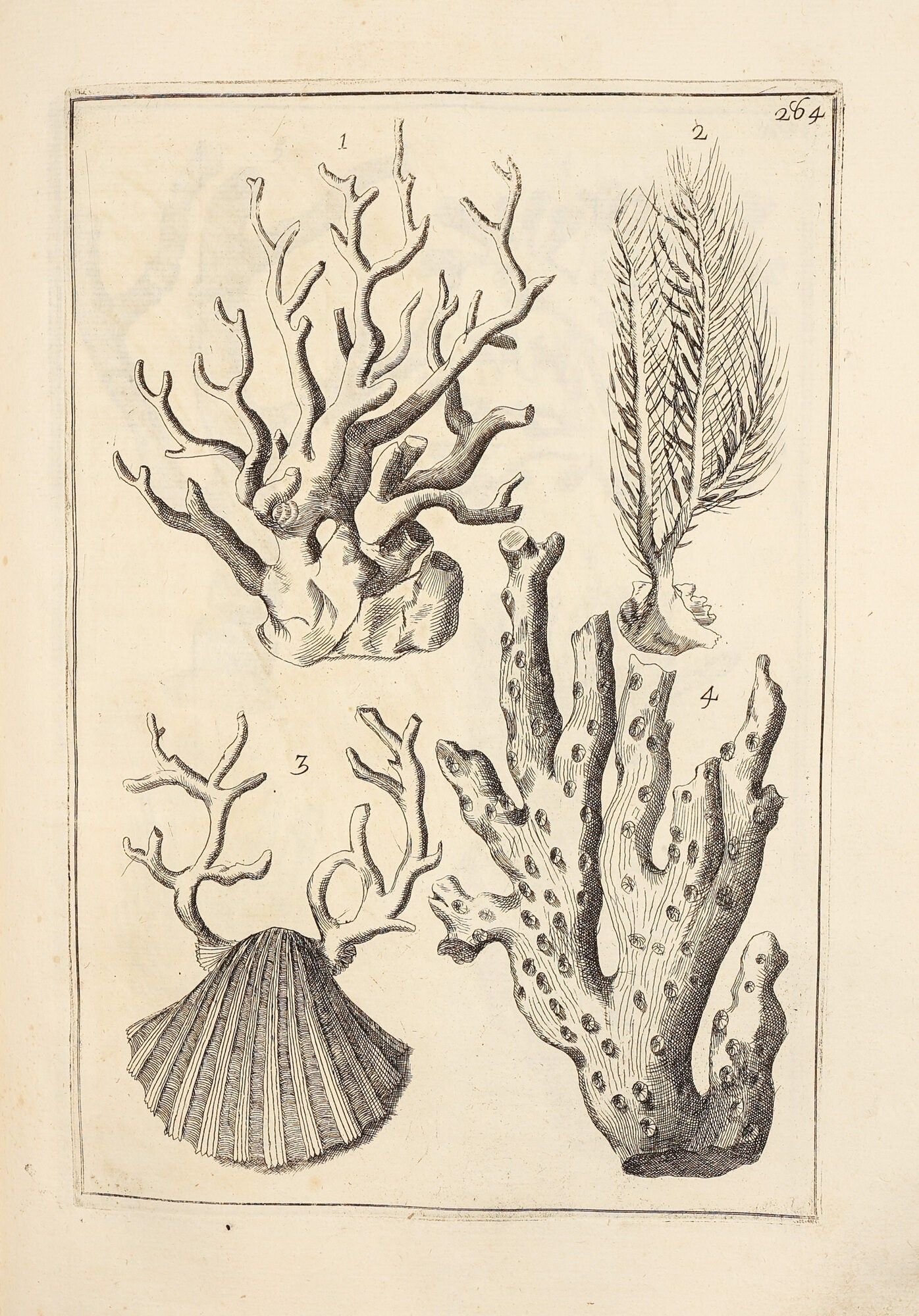
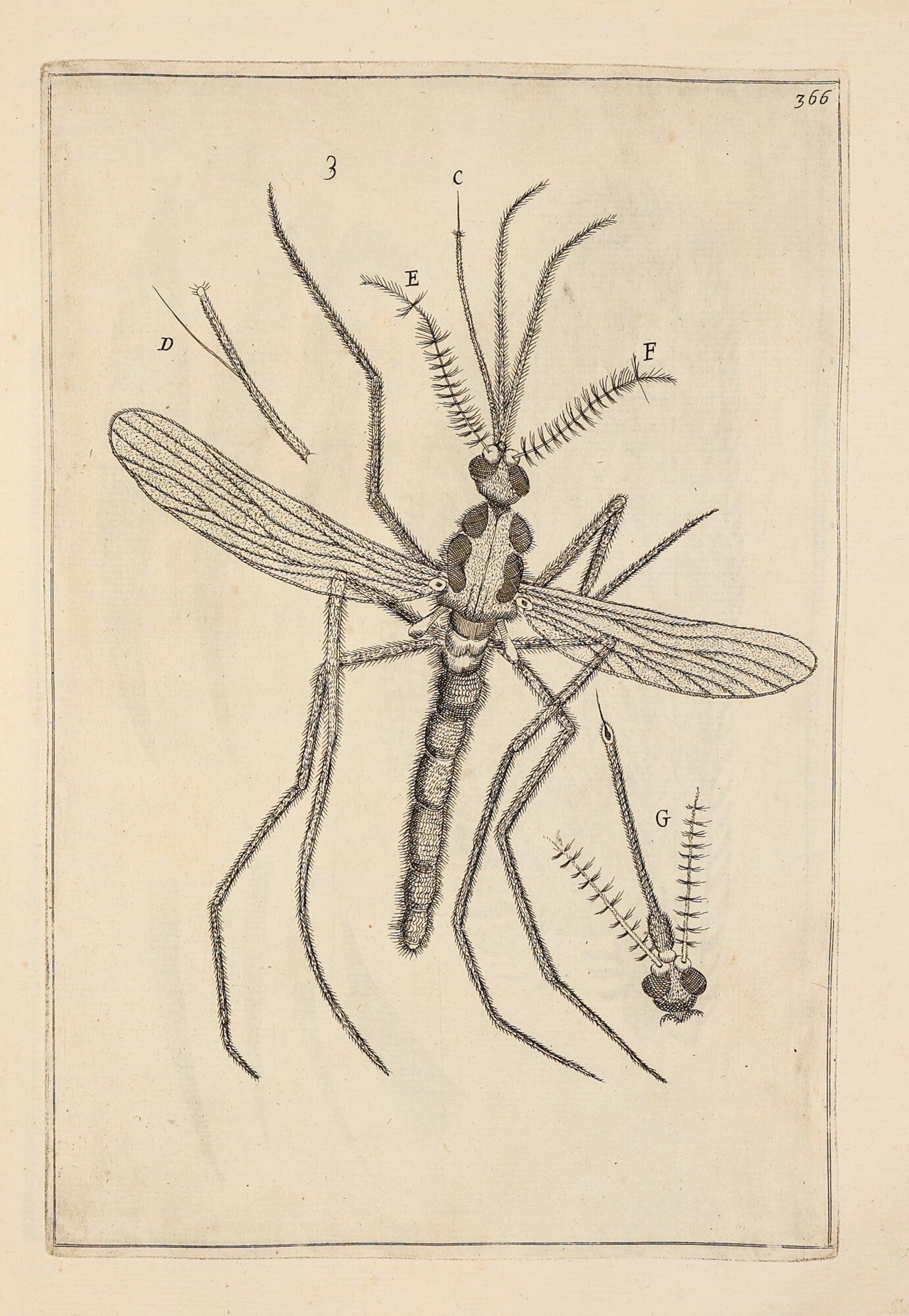
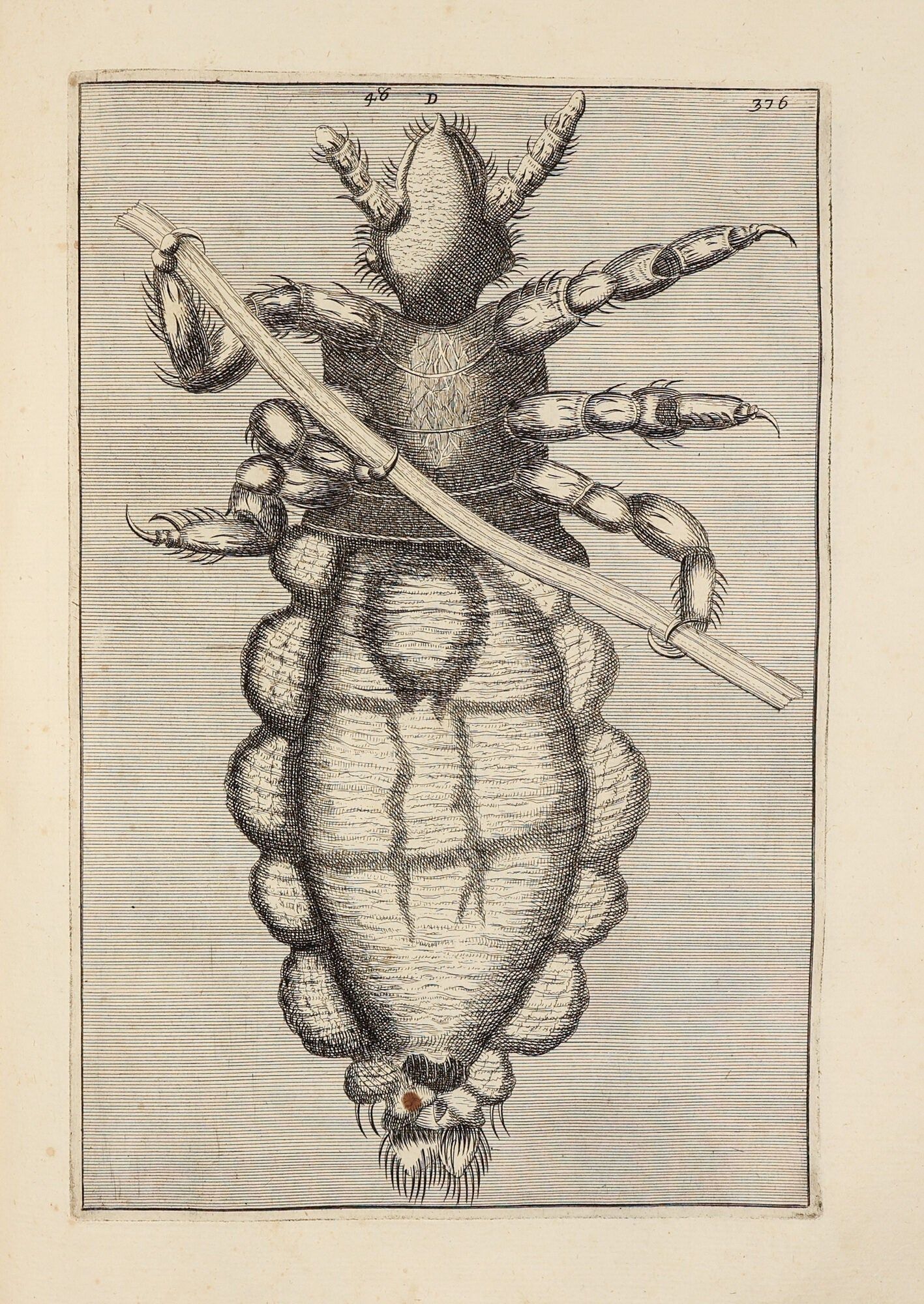
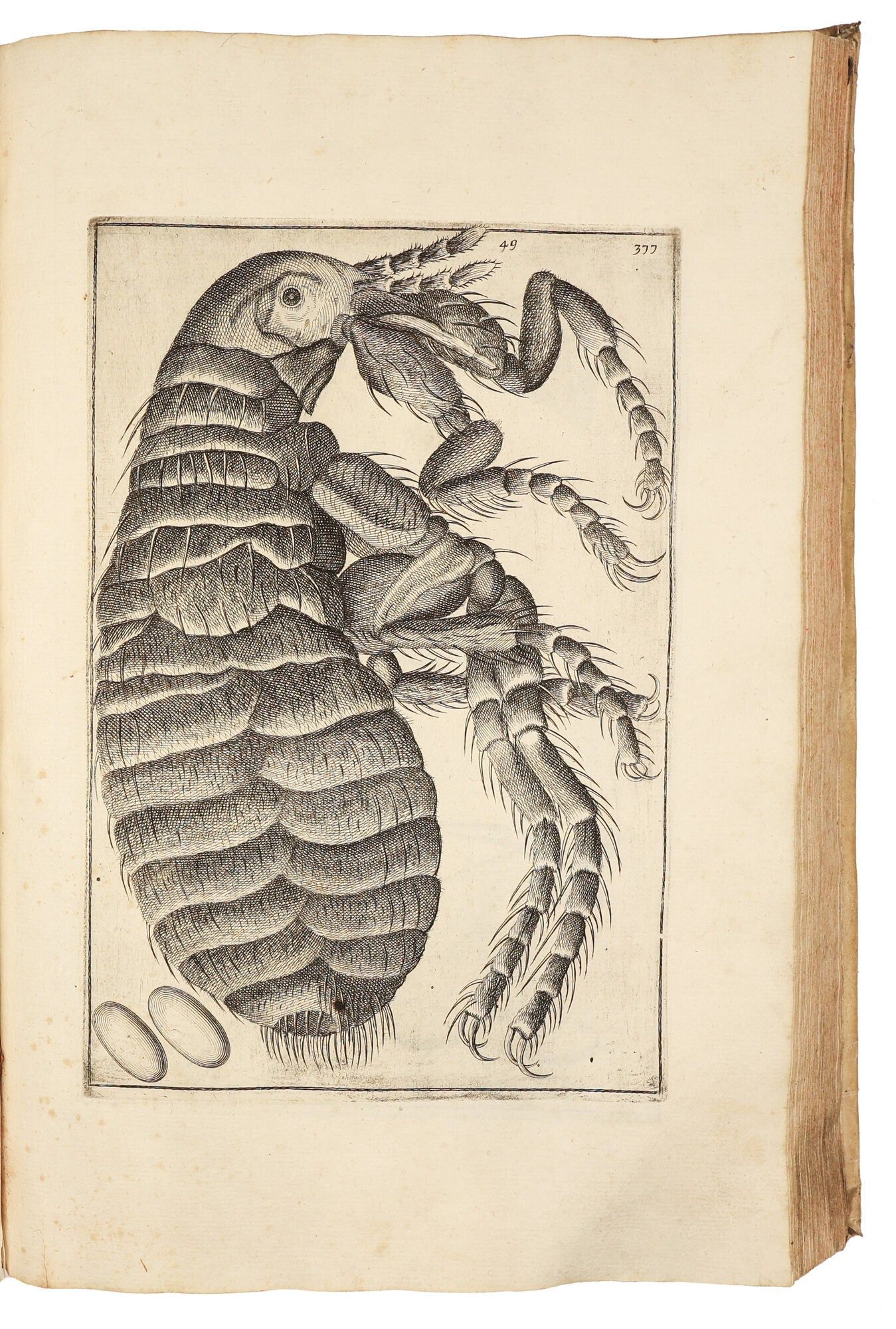
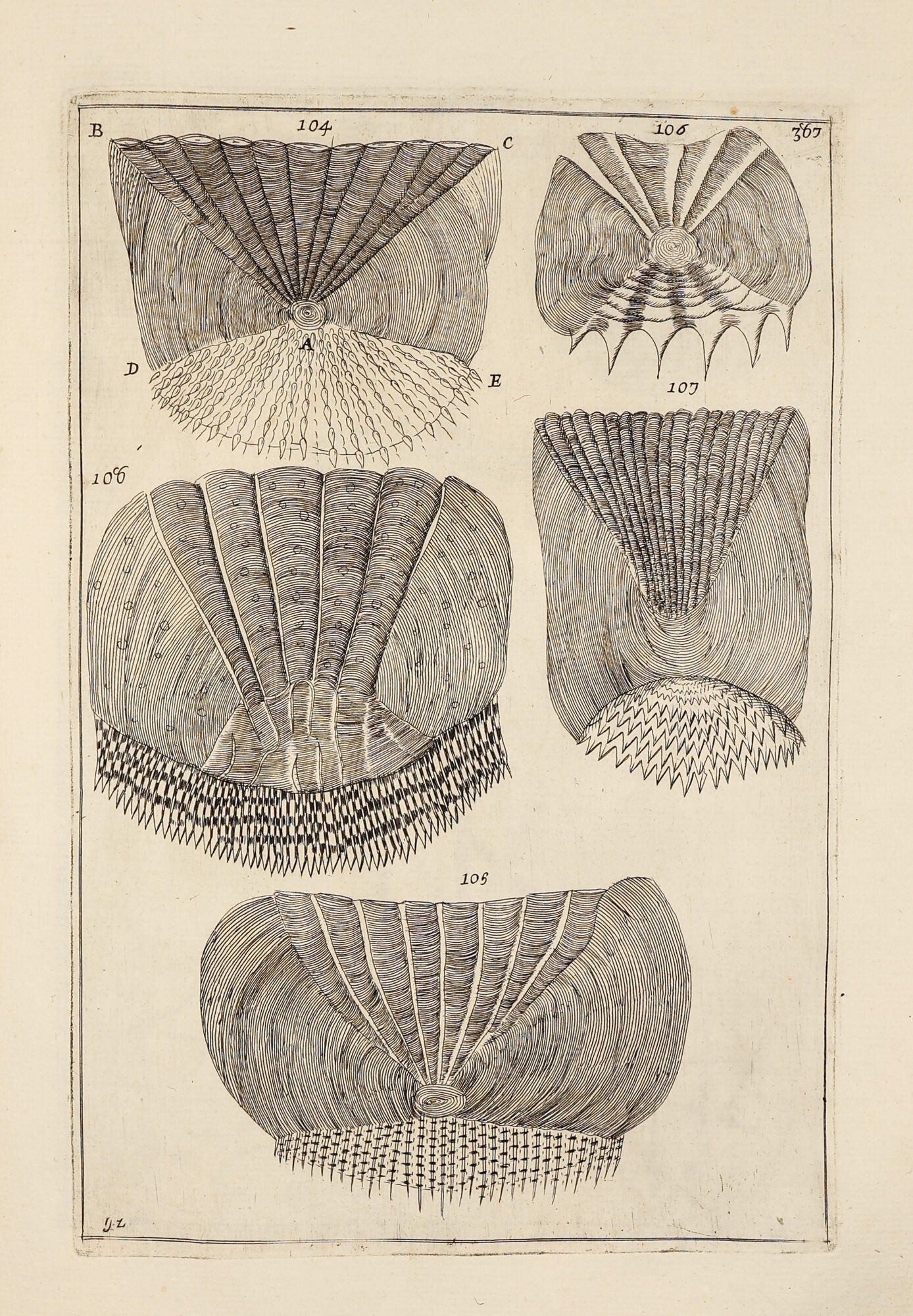
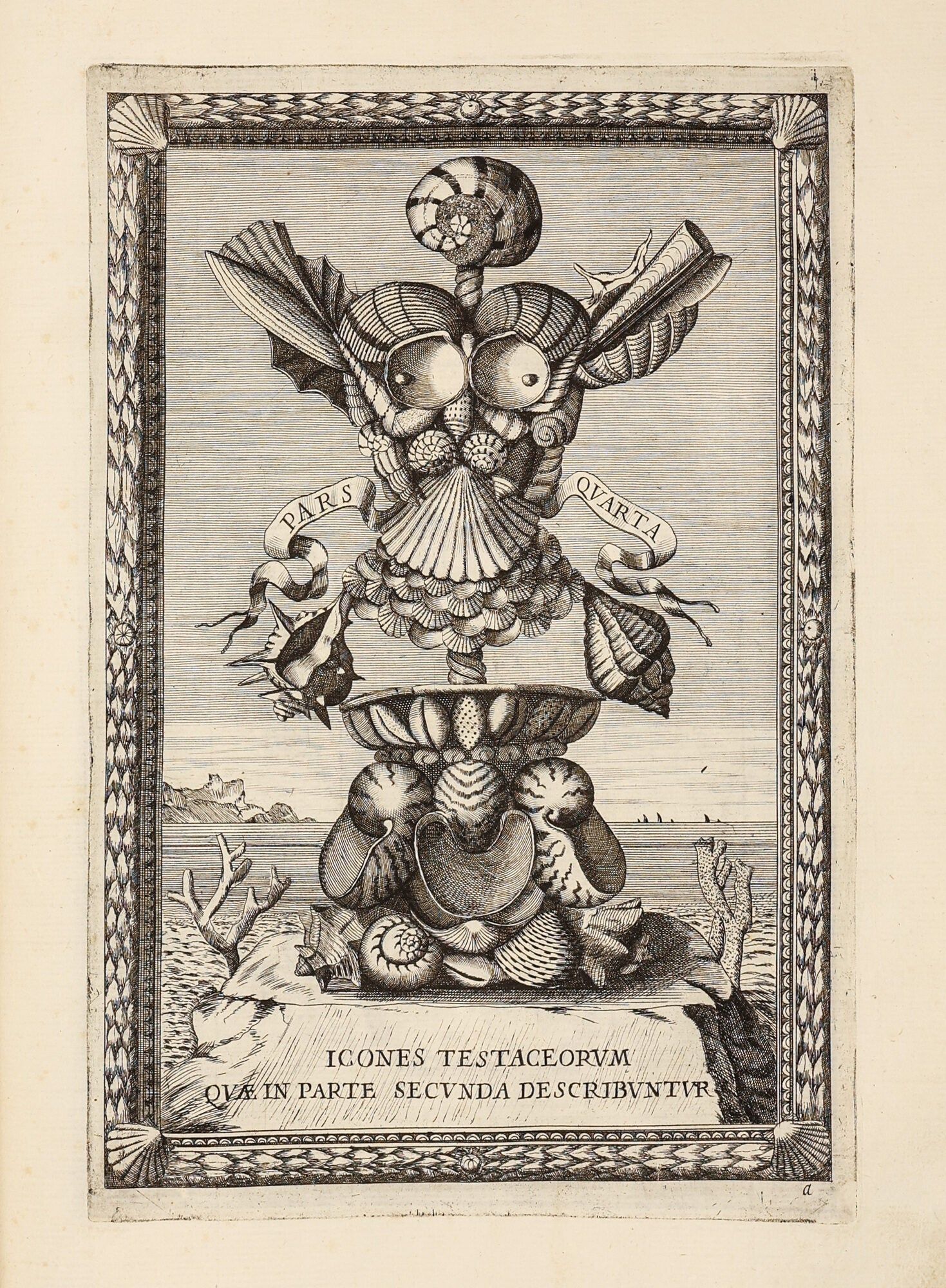
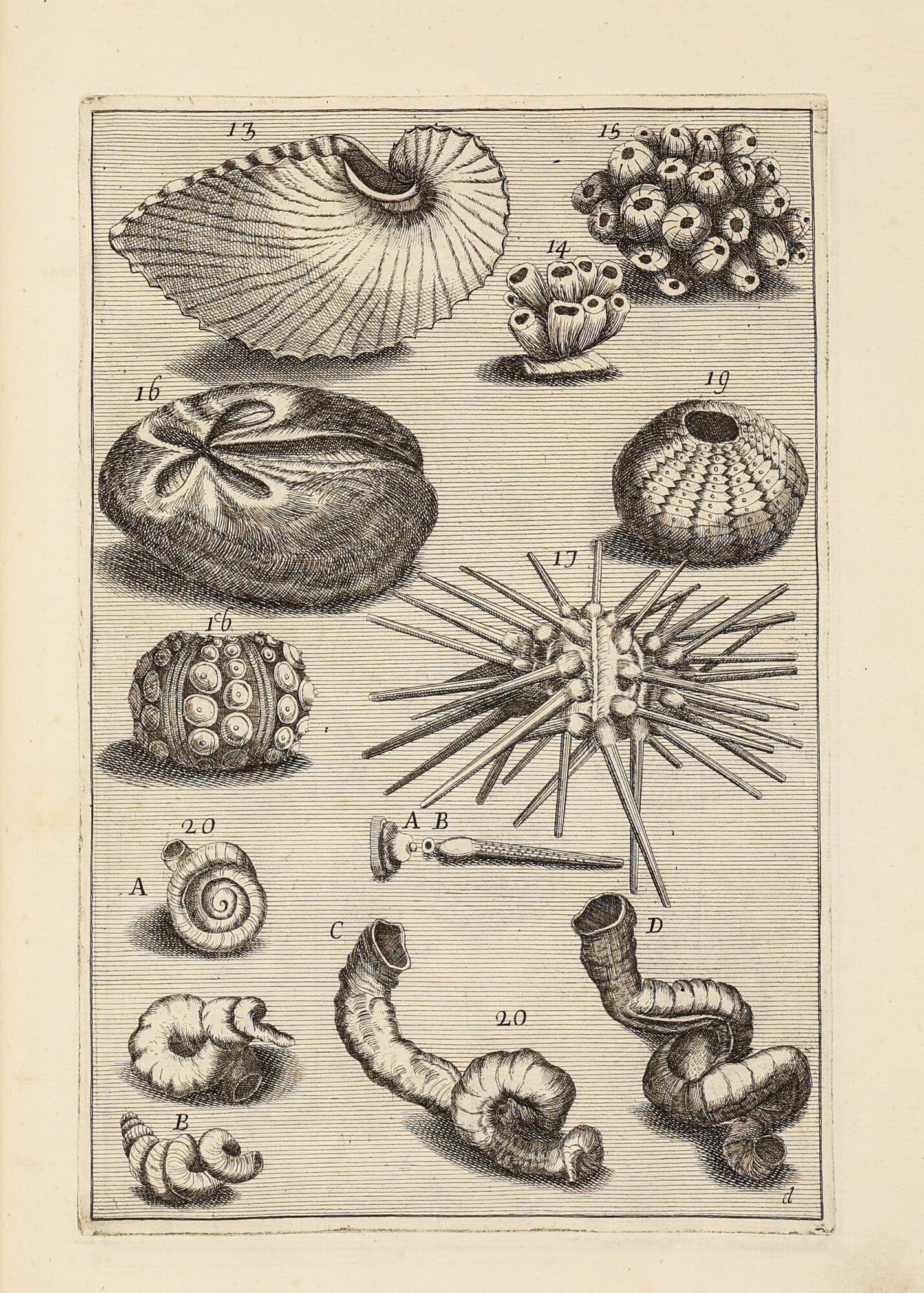
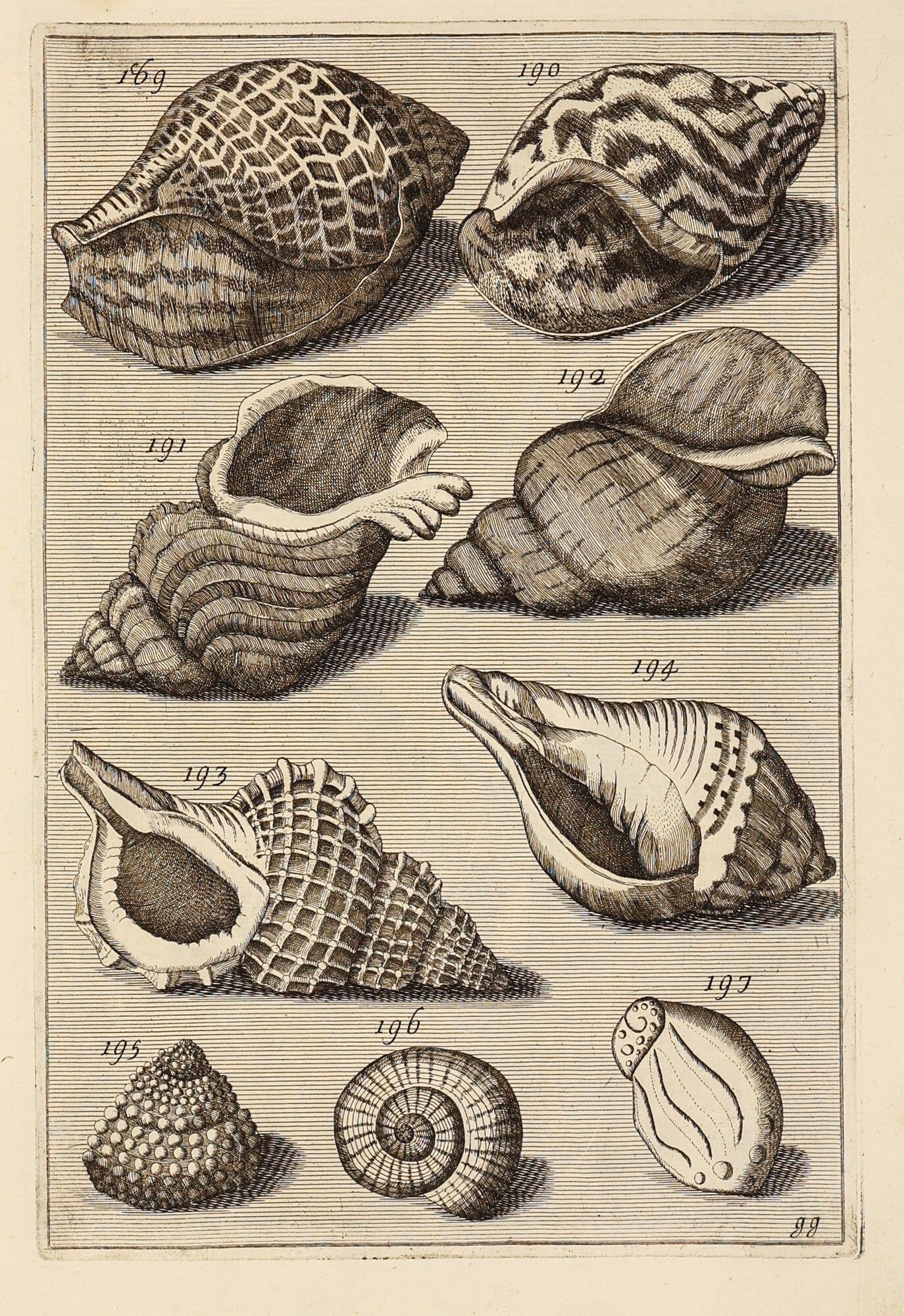
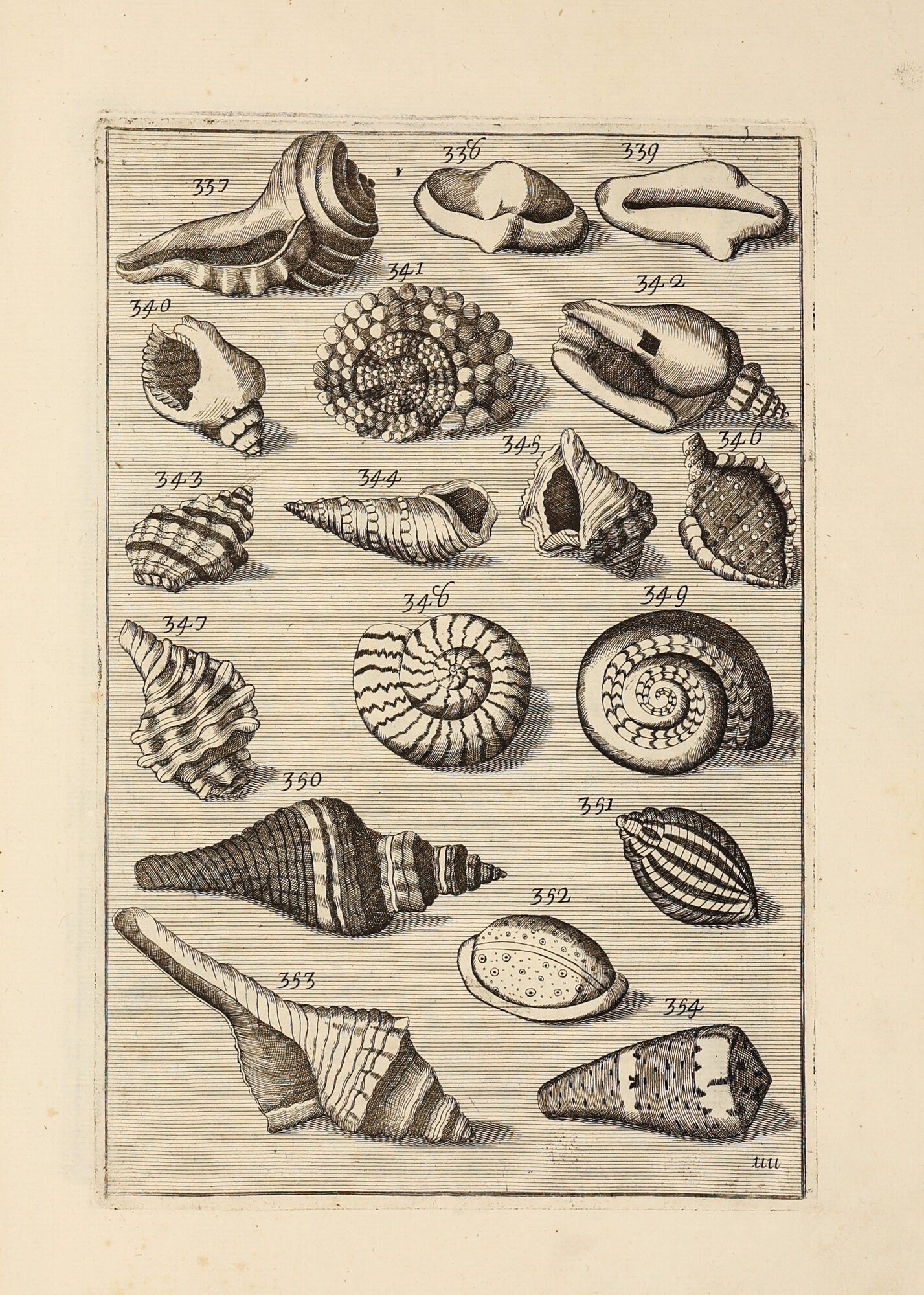
- Hardcover
- Rome: Typis G. Palchi, 1709
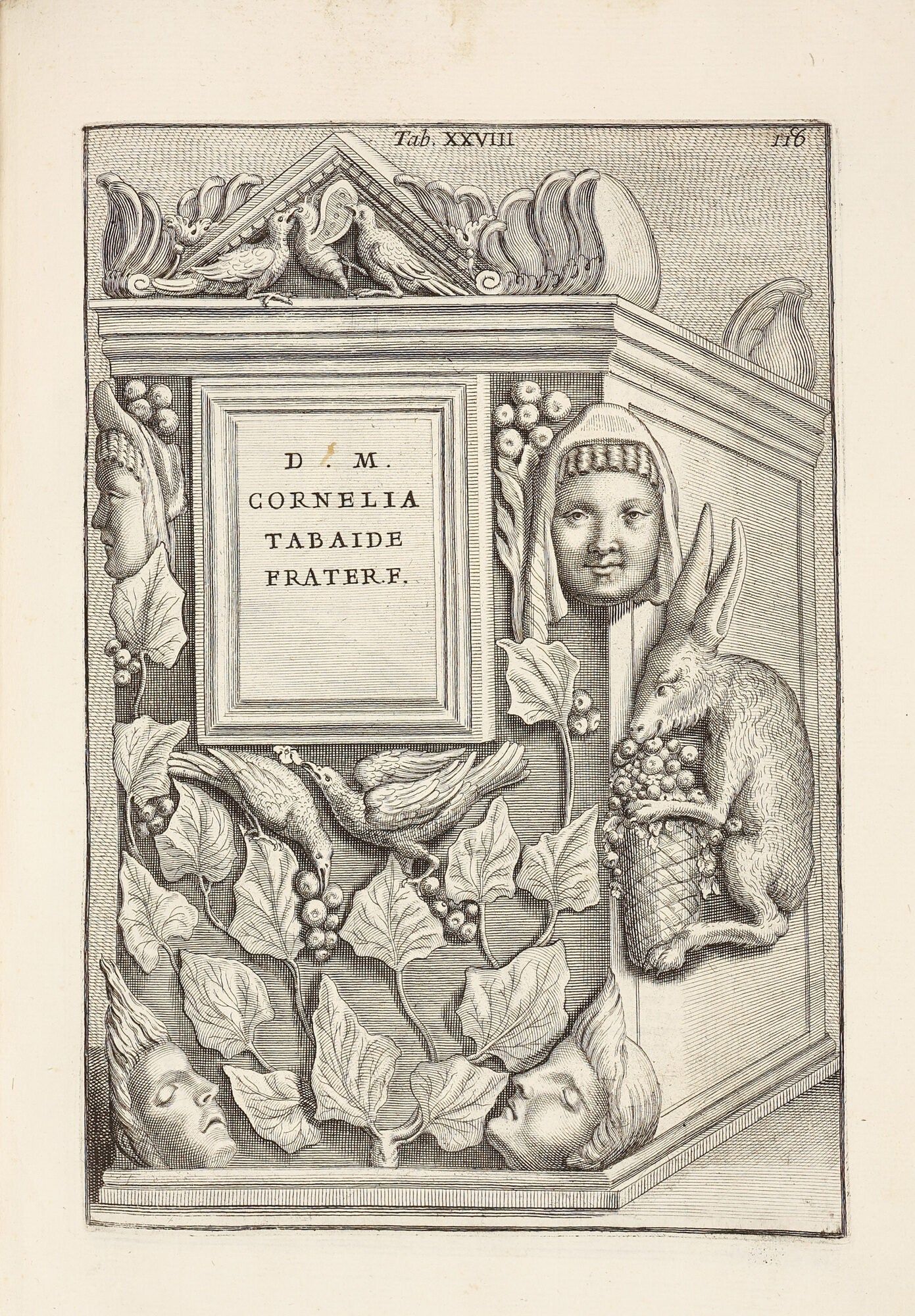
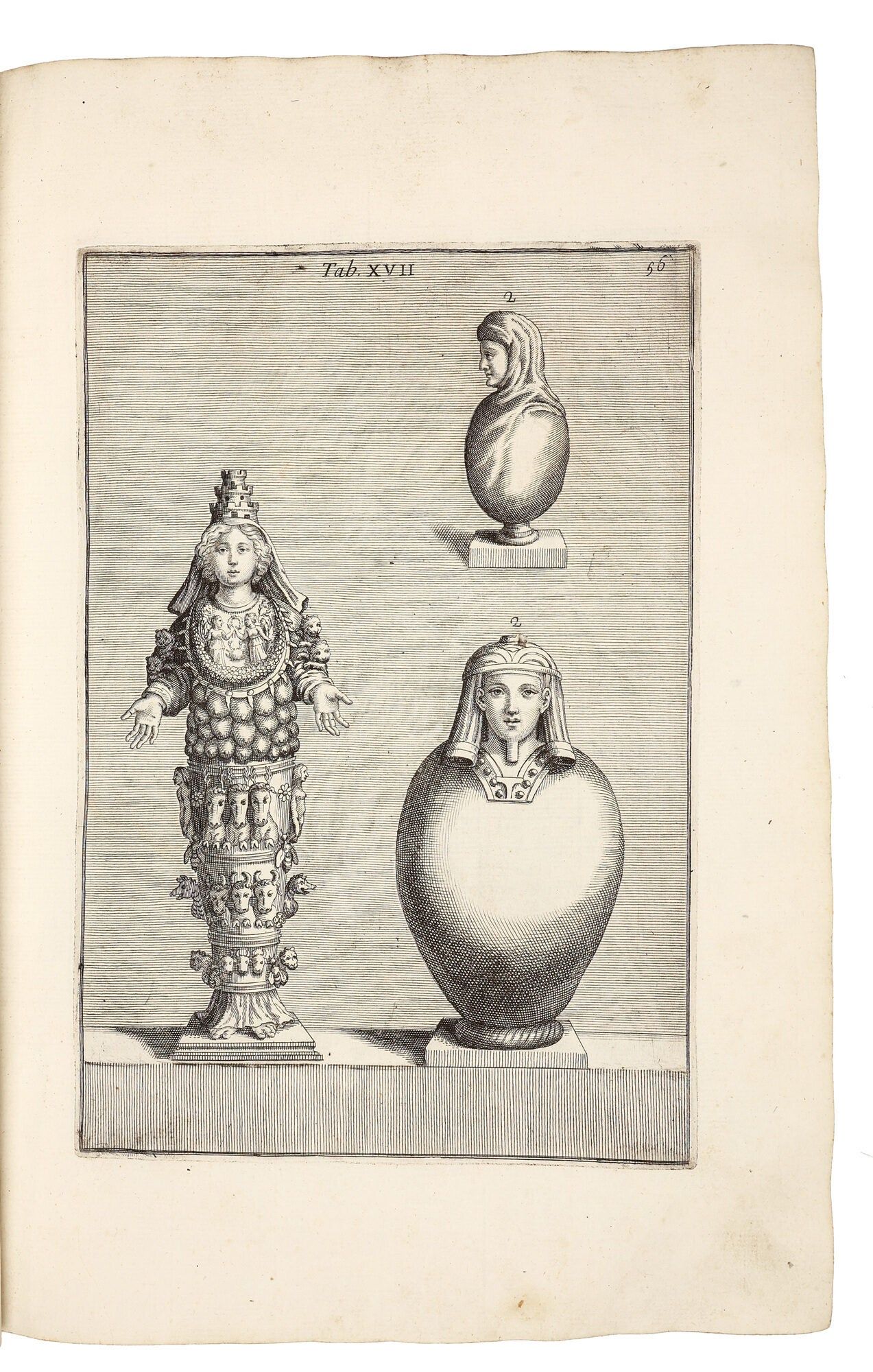
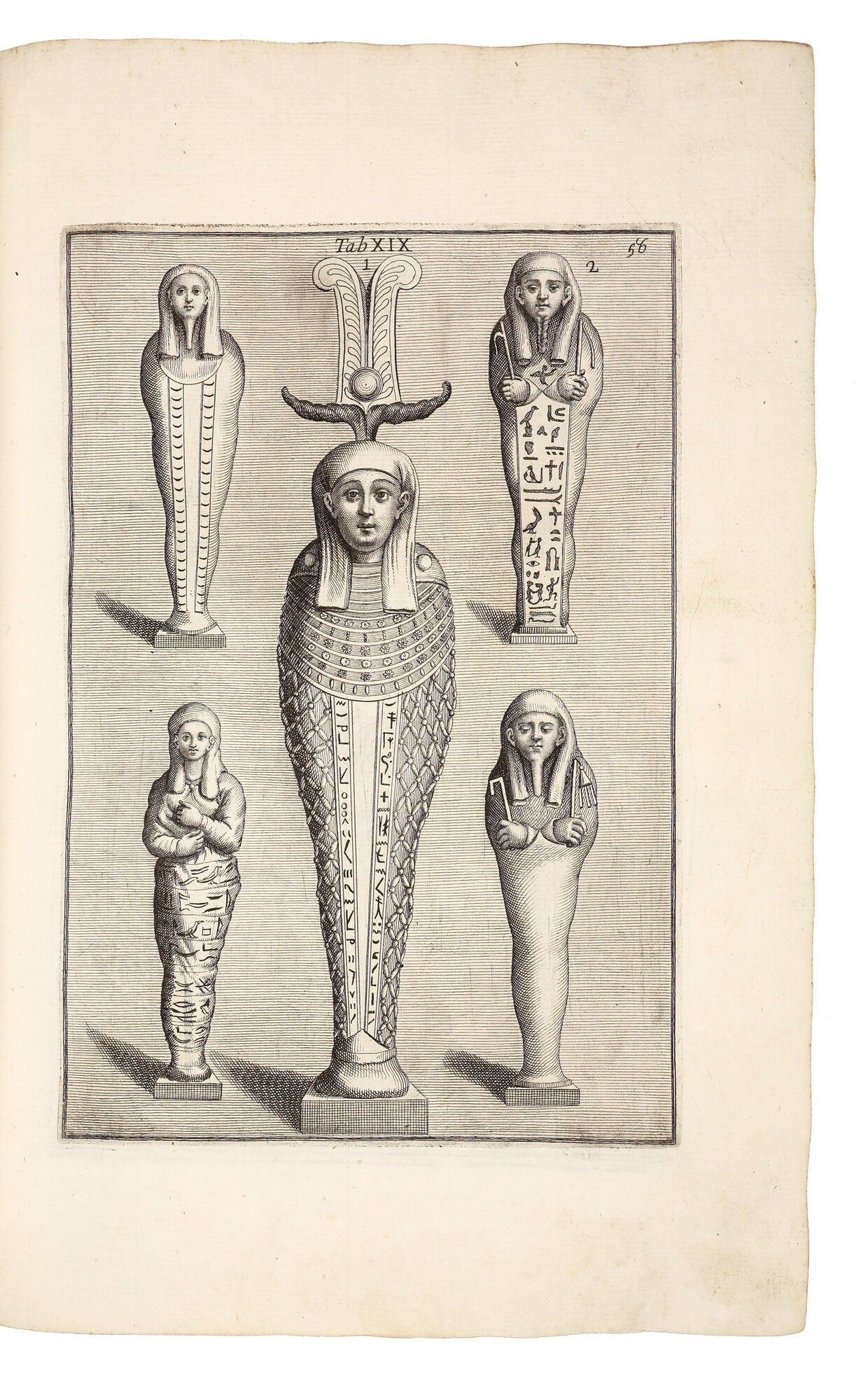
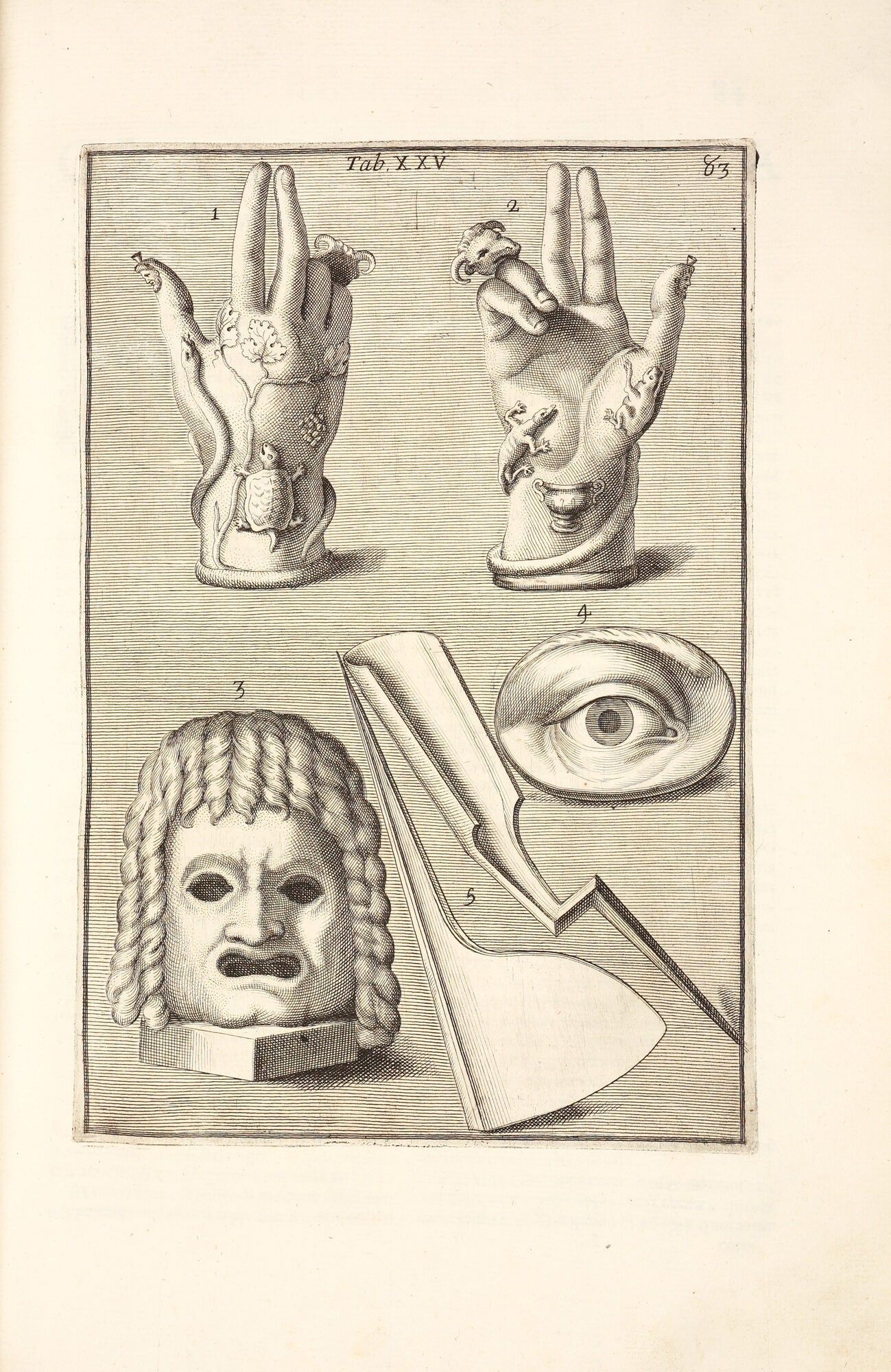
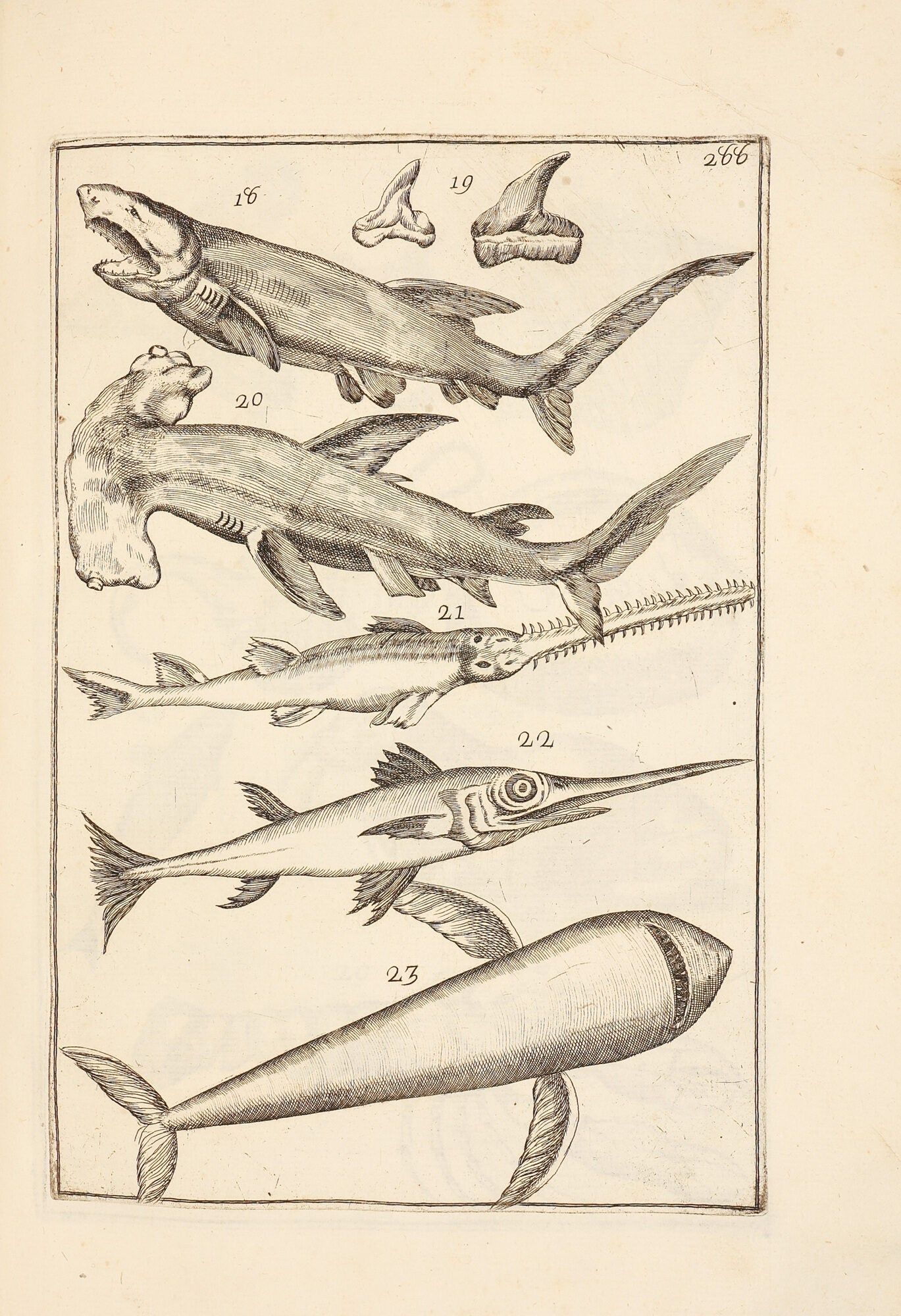
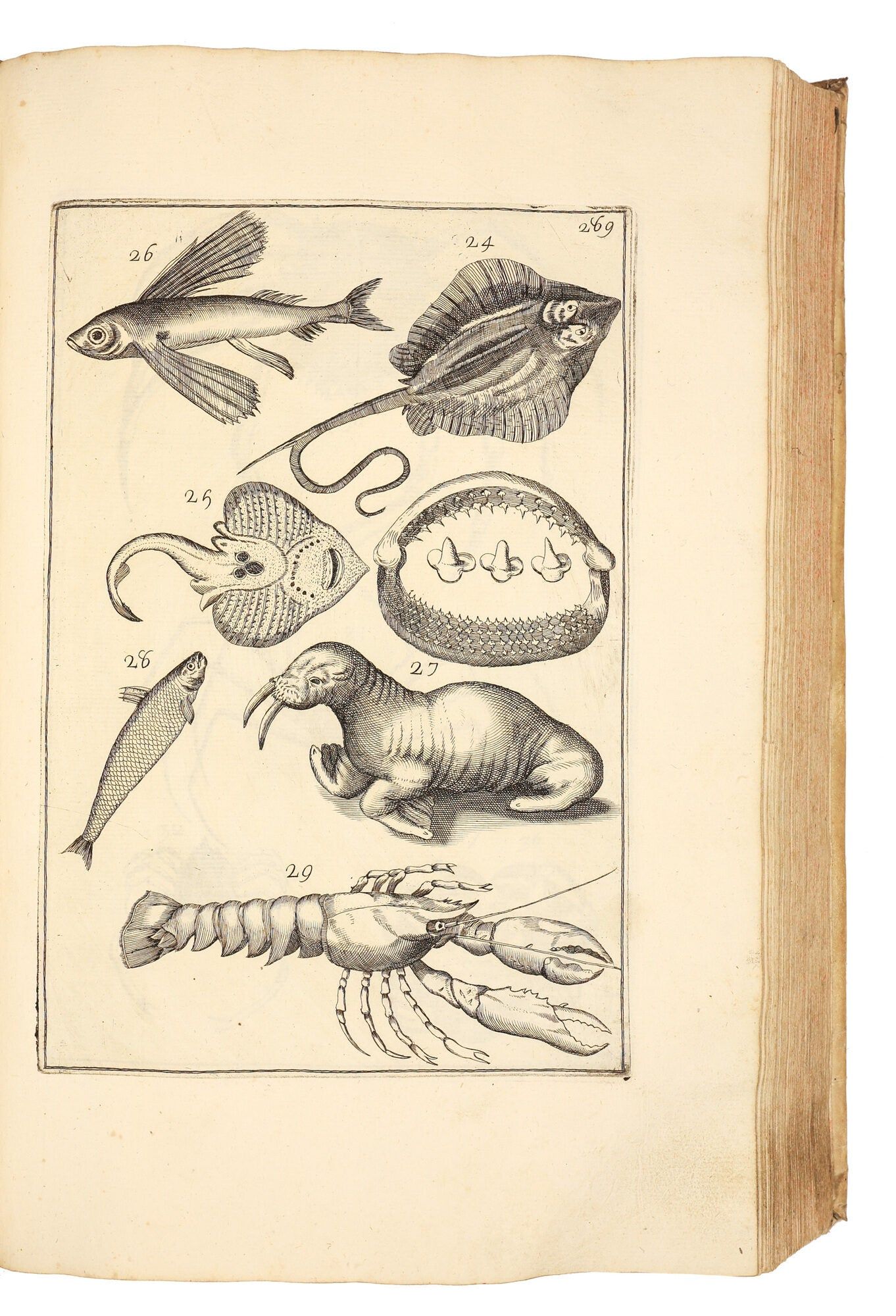
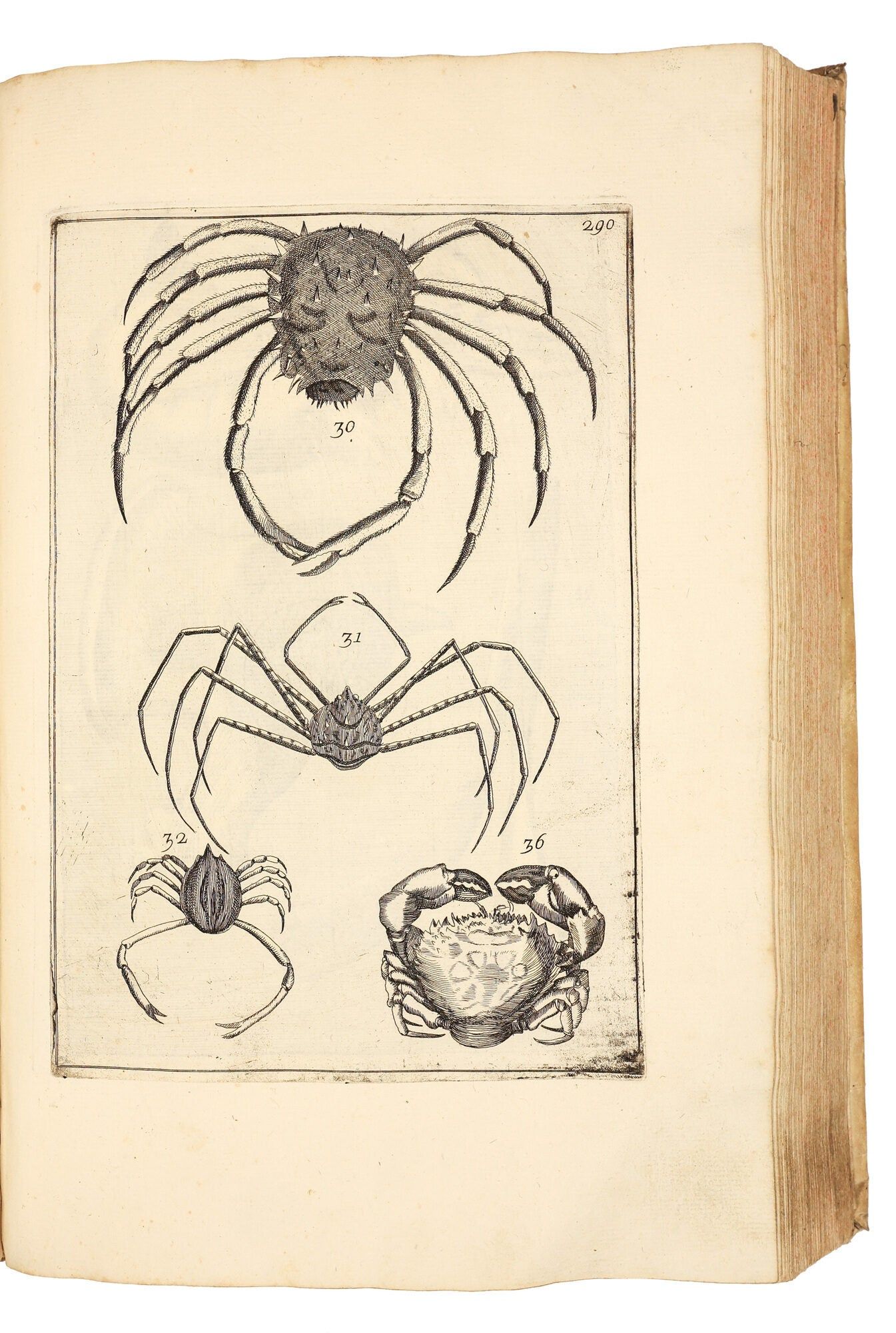
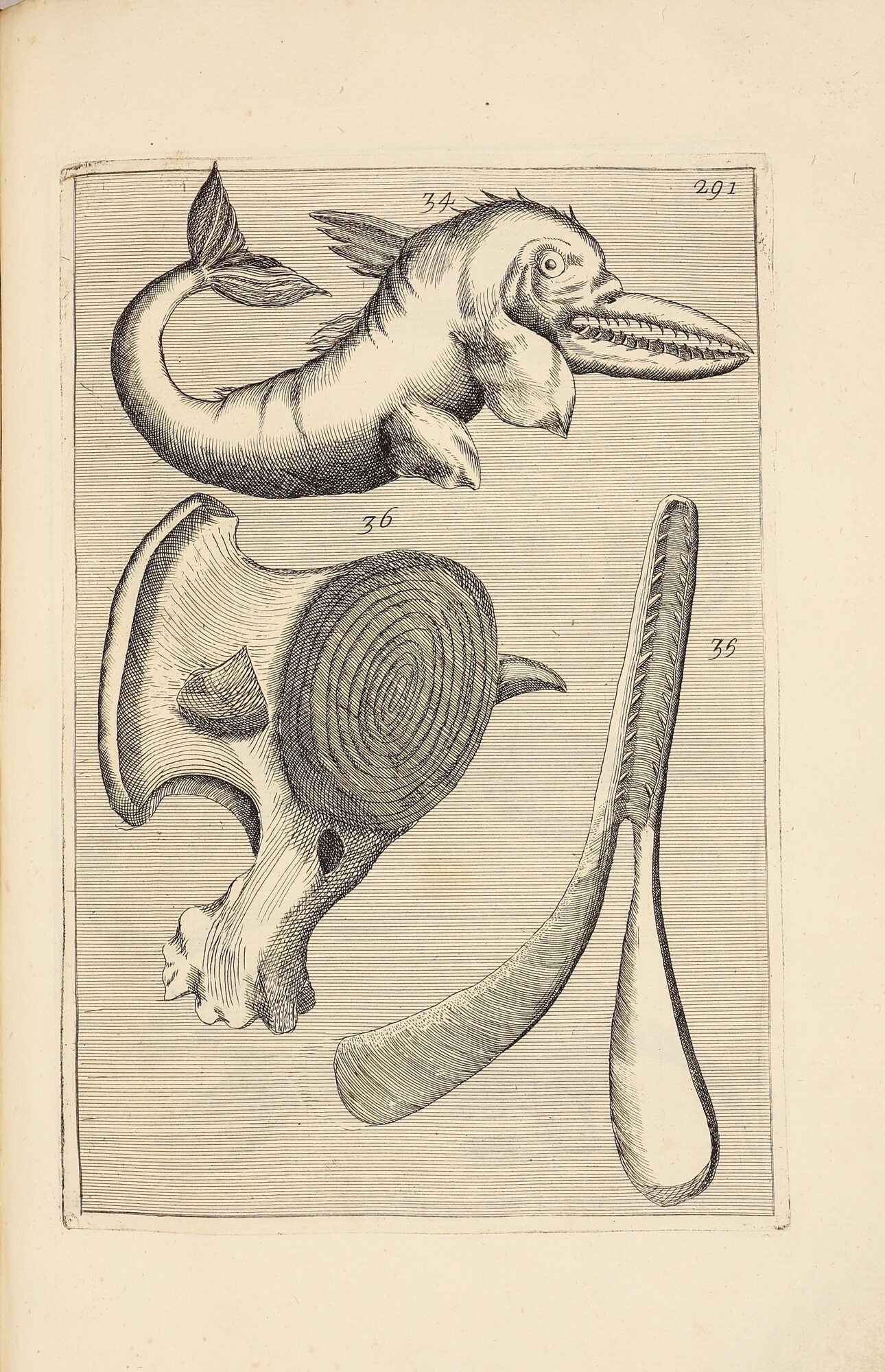
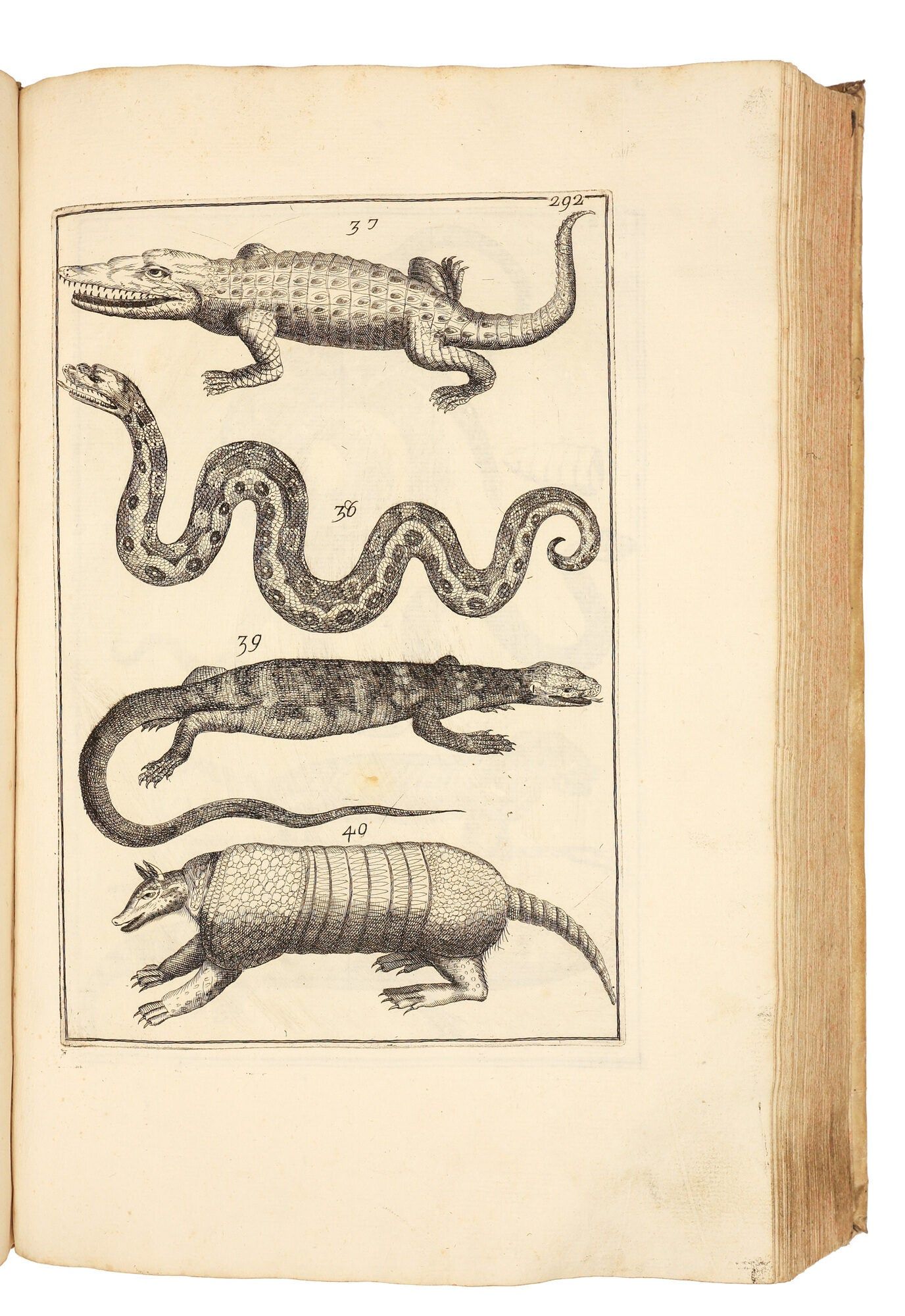
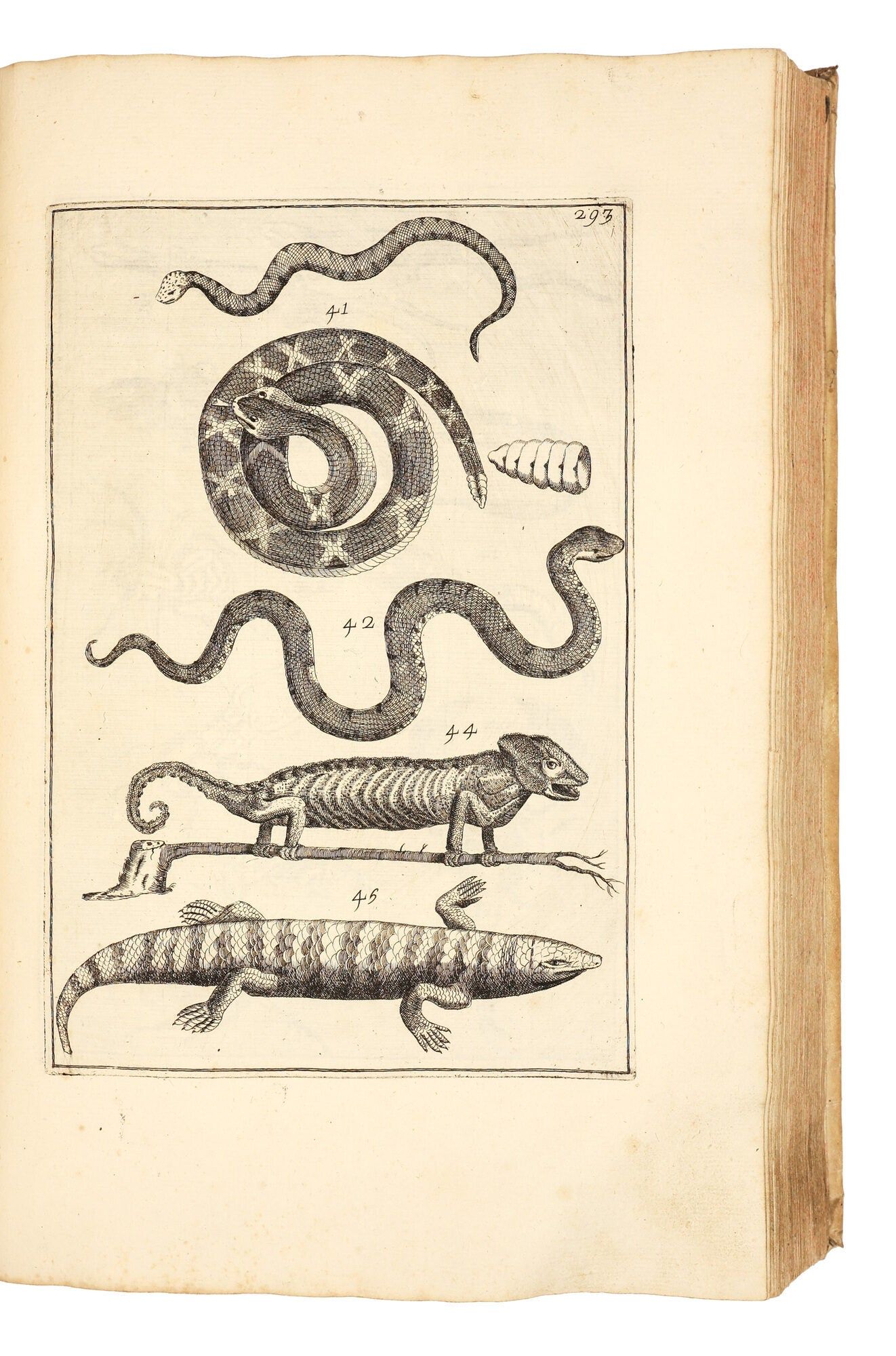
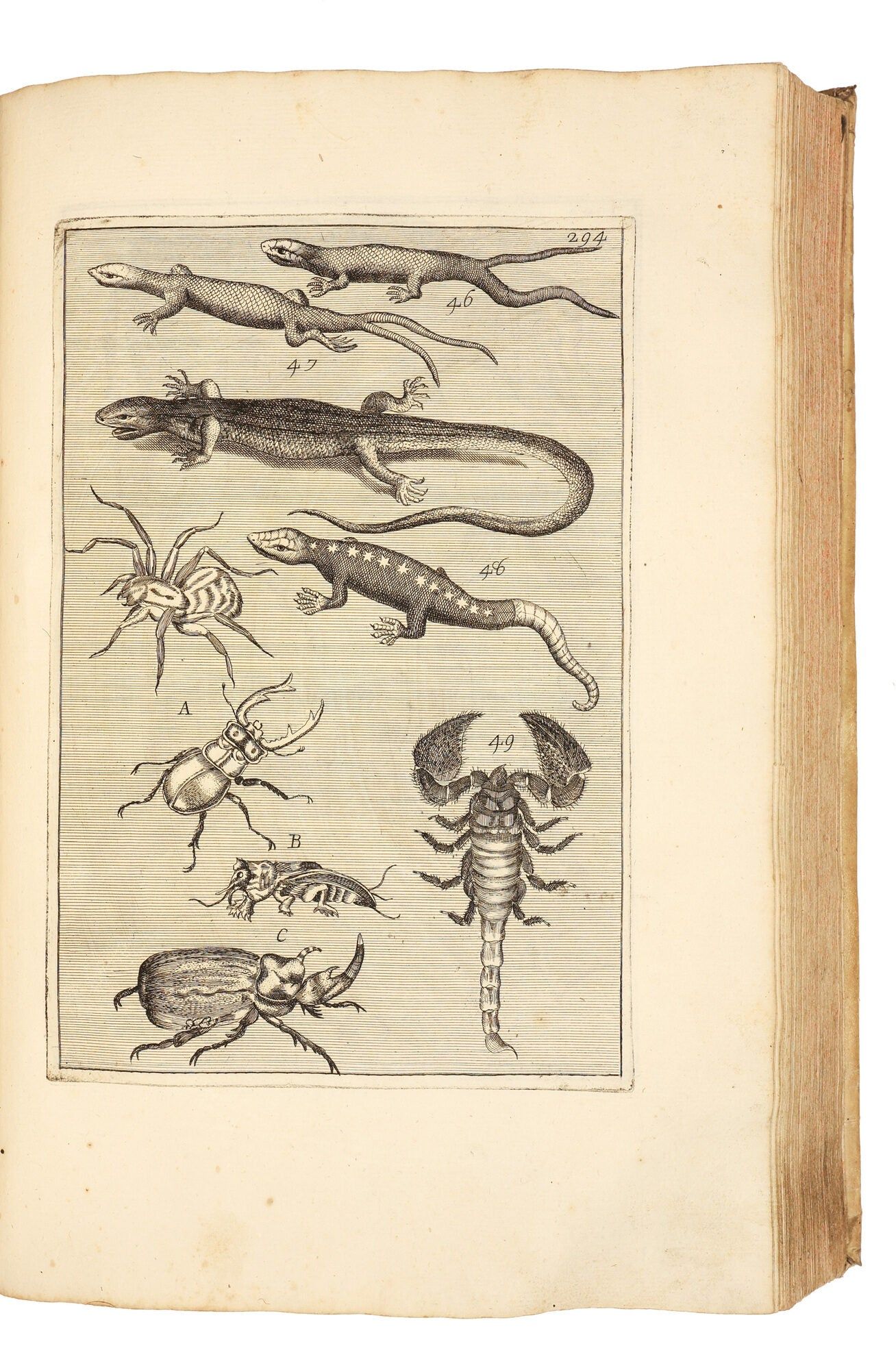
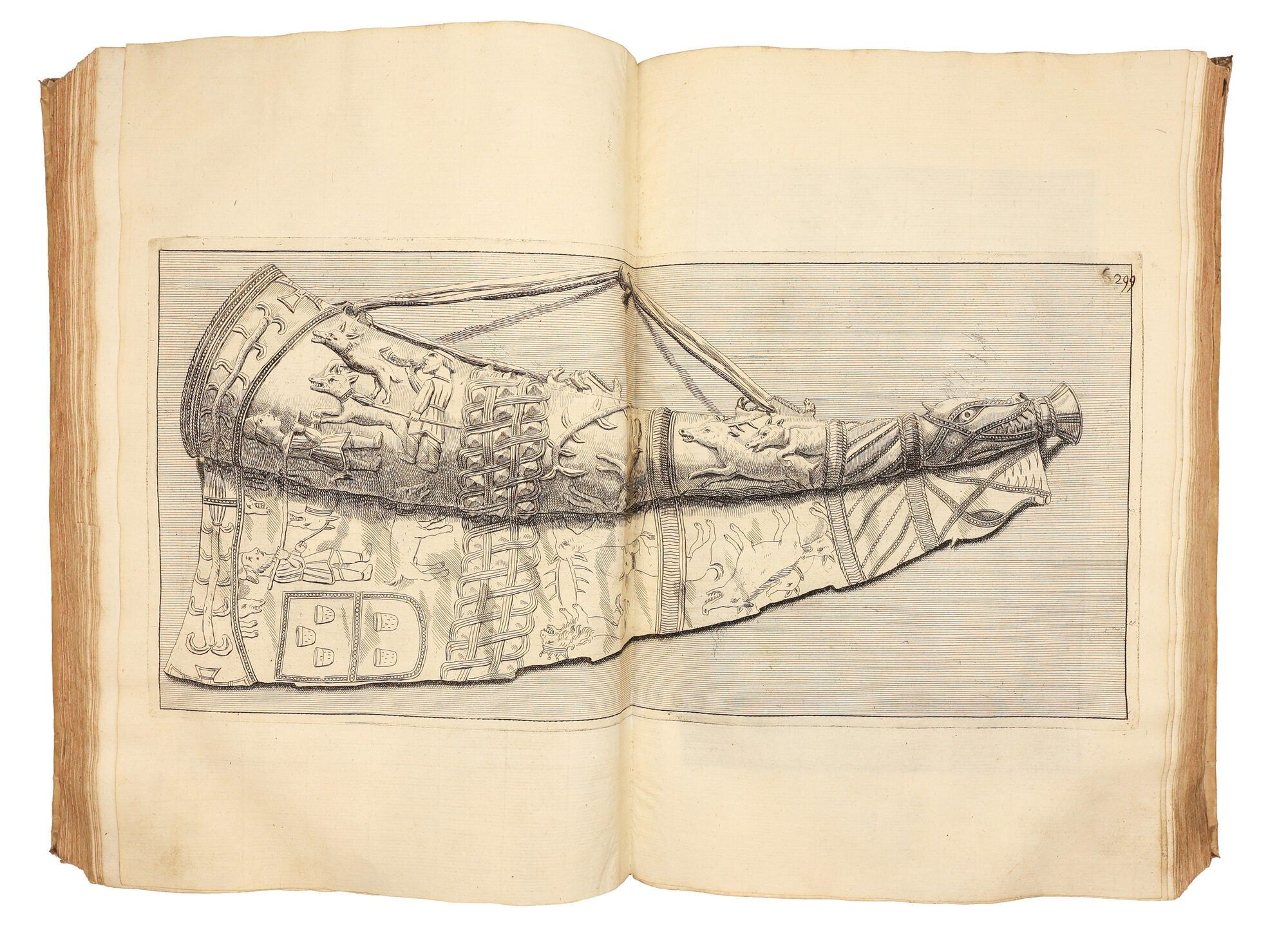
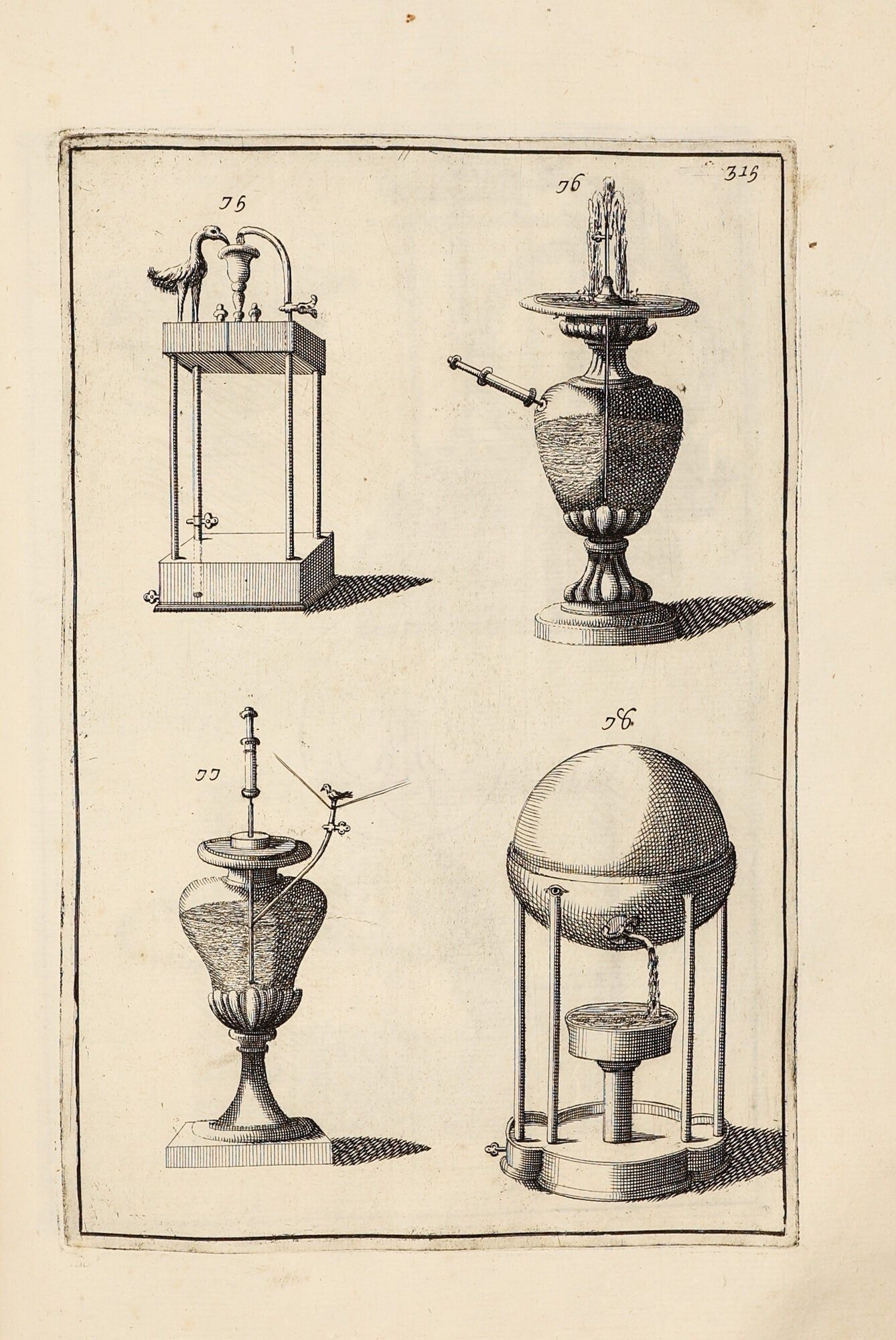
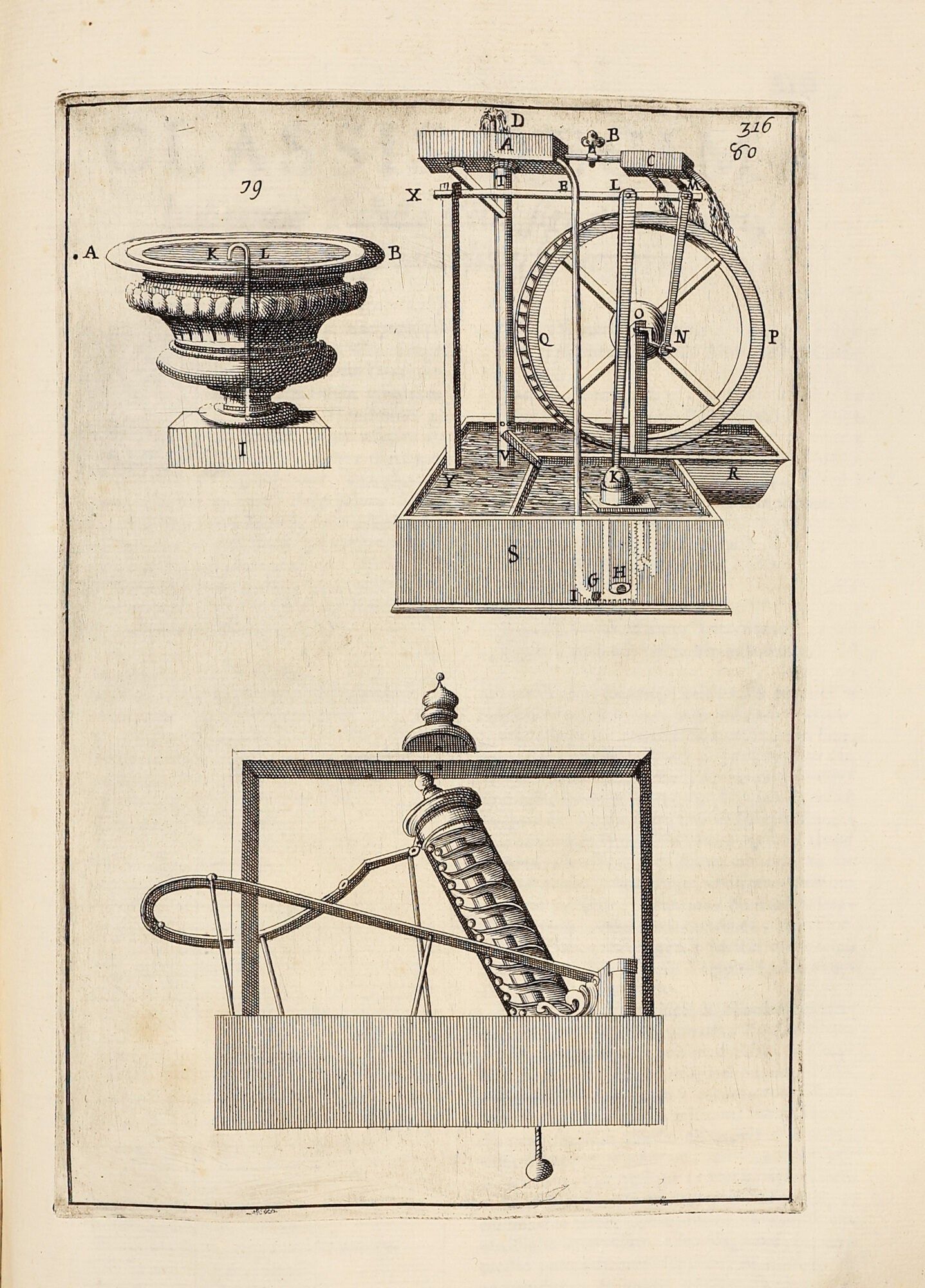
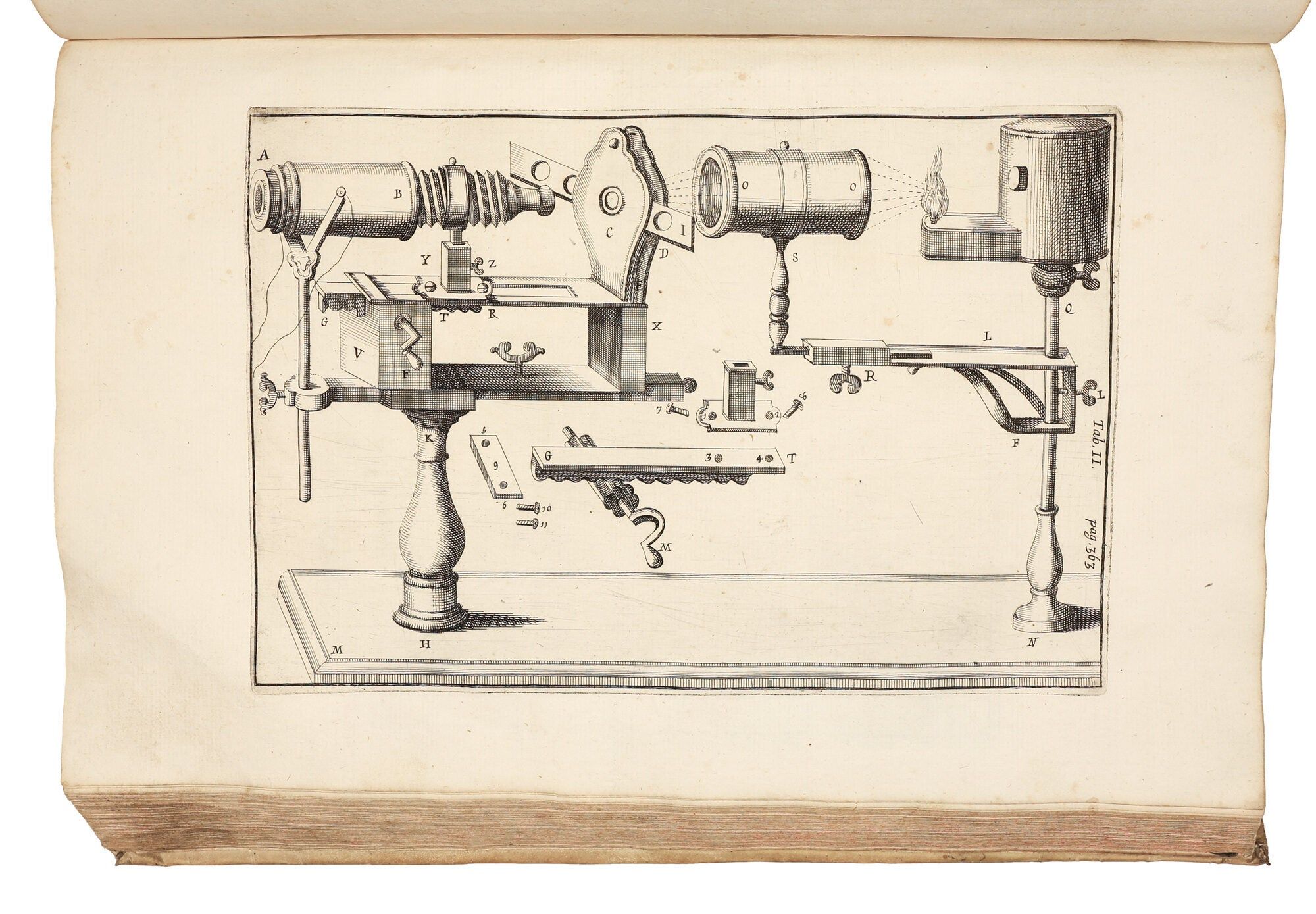
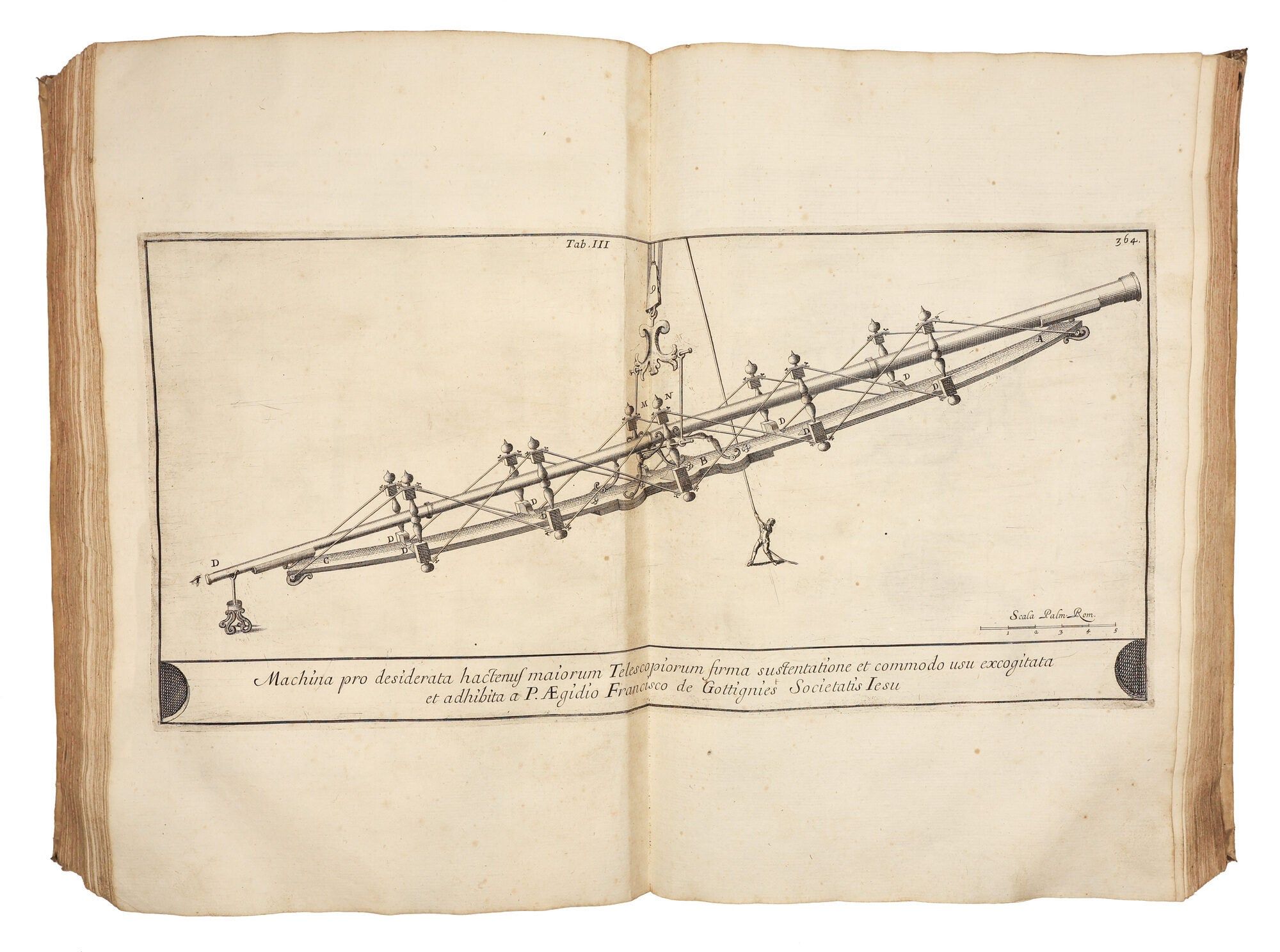
Rome: Typis G. Palchi, 1709. FIRST EDITION. Hardcover. Fine. Complete with all 172 full-paged engraved plates of specimens from the museum's collections and the portrait of the dedicatee, Francesco Ruspoli. Bound in contemporary vellum over boards (soiled, corners bumped, wear to the lower edges of the covers with some exposure of the boards. A nice copy with minor soiling and occasional small spots. There is a small stain in the upper blank margin of the final four index leaves and the blank versos of the final 3 plates. First edition of Filippo Buonanni's sumptuous catalogue of Athanasius Kircher's renowned museum at the Collegio Romano in Rome. "Buonanni was one of the most learned Jesuits of his time, was a pupil of Athanasius Kircher, and in 1680 succeeded his master as teacher of mathematics at the Collegium Romanum; erudite in a number of fields, including conchology, numismatics, and ecclesiastical history (writing on all three subjects), Buonanni made extensive studies in the natural sciences; he constructed his own microscope with three lenses which proved to be an ingenious mechanism for continual observation."(DSB II, 591) Buonanni was appointed curator of Kircher's museum in 1698. He inherited the museum in a disorganized and dilapidated state. He spent the next ten years painstakingly restoring and greatly expanding the numerous collections, ultimately publishing his catalogue of the "Museum Kircherianum" in 1709.
I. Kircher's Museum:
"[A large group of Egyptian artifacts, presented to Kircher by the noted Nicolas Claude Fabri de Peiresc] formed the original nucleus of what became the Museo Kircheriano. To them Kircher gradually added mathematical instruments which he used in his research and teaching at the Collegio, thus forming his own "cabinet" which he eventually expanded with acquisitions of other scientific instruments, largely relating to physics and astronomy, as well as mechanisms and devices of his own invention. Each of his preoccupations was reflected in the additions he made to the collections. Peiresc later sent Kircher gifts of other materials which became part of the growing museum. From his Egyptian research he added models of obelisks and his investigations into music produced musical instruments and hydraulic organs. Clocks, scientific instruments, ethnographic materials, natural history specimens, all became the raw materials for his studies as he ventured into one new subject area after another. On each of his travels, such as his journey to Sicily and Malta, Kircher sought materials for study and eventual display as he continued to build the museum with skeletons and preserved examples of birds and animals, geological specimens, and works of art representing aspects of culture. Not the least of the collections were those relating to mechanics and other aspects of technology that captured his attention.
"Kircher first accommodated his "cabinet" with the College library in a relatively small hall made available to him for the purpose. When in 1651 the secretary of the Roman senate Alfonso Donnini dies and bequeathed his collection of classical antiquities to the Collegio Romano, it was added to Kircher's "cabinet" and additional space was required.
"An additional productive source of acquisitions for the Museo Kircheriano were materials which Jesuit missionaries sent back or brought back to their headquarters in Rome from all parts of the world and provided Kircher additional opportunities for his studies. One of his best informants was Martino Martini of Trent, from whom he obtained some of his finest Chinese artifacts. As he acquired more and more material from missionaries, the little museum in the Collegio emerged as the most extensive and celebrated private ethnographical collection of the seventeenth-century in Europe.
"In time it became necessary for Kircher to acquire specialized assistance for his scientific experiments, preserving specimens, constructing models and mechanisms, and organizing and displaying his collections. Best known was Georgio de Sepi, described by Kircher as "custos musaei et in machinis elaborandis artifex." Another who assisted Kircher in the museum was the former student Francesco Terzi Lana, who later developed his own small museum at the college at Brescia where he taught.
"In 1678 the first published catalogue of the Museo Kircheriano was produced by Sepi. It was arranged in accordance with the physical disposition of the collections and it described and illustrated Egyptian and classical artifacts, early lighting devices, musical instruments, plants and grasses, insects, and scientific apparatus.
"Distinguished visitors who came from abroad to see the famous museum included the English diarist John Evelyn who saw it during its early period in 1644. He reported that Kircher had conducted him through various parts of the Collegio including his own study, "where, with Dutch patience, he shew'd his perpetual motions, catoptrics, magnetical experiments, models, and a thousand other crochets and devices."
II. Buonanni and the Restoration of the Museum after Kircher's death:
"The years immediately following Kircher's death in 1680 witnessed the beginning of the decline of the museum which had reached its apogee shortly before. With no one to attend them, the collections were grossly neglected for a considerable period, during which many objects were stolen, and others were destroyed or lost.
"The museum remained in total chaos until 1698, when the Jesuit Filippo Buonanni was assigned responsibility for it and began the slow process of reorganization and cataloguing. He found that the construction of the new church for the Collegio (begun in the year of Kircher's death) had rendered the hall adjacent to the library unfit for maintaining the collections, and he sought new quarters for them. He transferred the museum to a corridor on the upper floor facing the garden. He managed to have a large terrace covered over to form a special gallery, but the collection still lacked adequate security. Despite his efforts it continued to be vandalized and finally Pope Clement XI issued an edict threatening grave punishment and even excommunication to anyone violating the museum.
"Encouraged by the Collegio's rector Giovanbattista Tolomei, later cardinal, Buonanni gradually enlarged the space for the collections by usurping an adjacent corridor and several small rooms. Tolomei furnished funds for making the required structural changes and for purchasing new acquisitions, and after his death he left a legacy for the museum.
"In time the Museo Kircheriano again prospered under the deft management of Buonanni. He expanded the number of cabinets to sixty, with new acquisitions including machines of physics, mathematical instruments, as well as important ethnographic and natural history specimens.
"The collections were divided by Buonanni into a new arrangement of twelve classes. In one he classified Greek and Roman antiquities, house-hold utensils, weights and measures, and in another he categorized flora and fauna that had come Jesuit missions abroad, such as exotic fruit, seeds, plants, preserved birds and animals including the little chameleon from Palestine about which Kircher had written. He assigned one class to 'Observations of minute bodies made with a microscope' made by Kircher with his own instruments. Perpetual motion machines, hydraulic organs, burning glasses, and Babylonian and Coptic sundials were in other groupings, and mechanics were represented by models.
"In 1709 Buonanni published a well-illustrated catalogue arranged in accordance with his reorganization of the museum. He remained in charge until his death in 1725. The collections were ultimately dispersed by the Italian government, in 1870, after the unification of Italy." (Silvio Bedini, "Citadels of Learning" in "Enciclopedismo in Roma Barocca: Athanasius Kircher e il Museo del Collegio Romano tra Wunderkammer e museo scientifico", pp. 258-262)
Contents: Classis prima. Continens idola & instrumenta ad sacrificia ethnicorum spectantia -- Classis secunda. Continens tabellas votivas & anathematha -- Classis tertia. Continens sepulchra & inscriptiones sepulchrales -- Classis quarta. Continens lucernas sepulchrales -- Classis quinta. Fragmenta eruditae antiquitatis -- Classis sexta. Continens lapides, fossilia, aliasqueglebas, à natura effigie aliqua donatas -- Classis septima. Apparatum habet rerum pergrinarum, ex variis orbis plagis collectum -- Classis octava. Exponuntur plantae marinae, frutices, & animalia tum mariana, tum terrestria -- Classis nona. Instrumenta mathematica -- Classis decima. Indicantur tabulae pictae, signa marmorea, & numismata diversi generis -- Classis undecima. Continet observationes rerum minimarum ope microscopii factas -- Classis duodecima. Continens animalia testacea -- Pars secunda. Describuntur testacea in parte quarta delineata -- Pars tertia. Continent varia problemata menti proposita in observatione testaceorum.
Only some of the plates are numbered. The final series of plates are lettered. The bracketed numbers that follow are for unnumbered plates: I-XXXVII, [14], LI-LIX, [1], LXI-LXIII, [2], LXV-LXVI, [5], [17], [4], [2], I-III, [24], [1]; a-z (i.e. 23 plates), aa-zz (i.e. 23 plates), aa-bb (i.e. 2 plates).
I. Kircher's Museum:
"[A large group of Egyptian artifacts, presented to Kircher by the noted Nicolas Claude Fabri de Peiresc] formed the original nucleus of what became the Museo Kircheriano. To them Kircher gradually added mathematical instruments which he used in his research and teaching at the Collegio, thus forming his own "cabinet" which he eventually expanded with acquisitions of other scientific instruments, largely relating to physics and astronomy, as well as mechanisms and devices of his own invention. Each of his preoccupations was reflected in the additions he made to the collections. Peiresc later sent Kircher gifts of other materials which became part of the growing museum. From his Egyptian research he added models of obelisks and his investigations into music produced musical instruments and hydraulic organs. Clocks, scientific instruments, ethnographic materials, natural history specimens, all became the raw materials for his studies as he ventured into one new subject area after another. On each of his travels, such as his journey to Sicily and Malta, Kircher sought materials for study and eventual display as he continued to build the museum with skeletons and preserved examples of birds and animals, geological specimens, and works of art representing aspects of culture. Not the least of the collections were those relating to mechanics and other aspects of technology that captured his attention.
"Kircher first accommodated his "cabinet" with the College library in a relatively small hall made available to him for the purpose. When in 1651 the secretary of the Roman senate Alfonso Donnini dies and bequeathed his collection of classical antiquities to the Collegio Romano, it was added to Kircher's "cabinet" and additional space was required.
"An additional productive source of acquisitions for the Museo Kircheriano were materials which Jesuit missionaries sent back or brought back to their headquarters in Rome from all parts of the world and provided Kircher additional opportunities for his studies. One of his best informants was Martino Martini of Trent, from whom he obtained some of his finest Chinese artifacts. As he acquired more and more material from missionaries, the little museum in the Collegio emerged as the most extensive and celebrated private ethnographical collection of the seventeenth-century in Europe.
"In time it became necessary for Kircher to acquire specialized assistance for his scientific experiments, preserving specimens, constructing models and mechanisms, and organizing and displaying his collections. Best known was Georgio de Sepi, described by Kircher as "custos musaei et in machinis elaborandis artifex." Another who assisted Kircher in the museum was the former student Francesco Terzi Lana, who later developed his own small museum at the college at Brescia where he taught.
"In 1678 the first published catalogue of the Museo Kircheriano was produced by Sepi. It was arranged in accordance with the physical disposition of the collections and it described and illustrated Egyptian and classical artifacts, early lighting devices, musical instruments, plants and grasses, insects, and scientific apparatus.
"Distinguished visitors who came from abroad to see the famous museum included the English diarist John Evelyn who saw it during its early period in 1644. He reported that Kircher had conducted him through various parts of the Collegio including his own study, "where, with Dutch patience, he shew'd his perpetual motions, catoptrics, magnetical experiments, models, and a thousand other crochets and devices."
II. Buonanni and the Restoration of the Museum after Kircher's death:
"The years immediately following Kircher's death in 1680 witnessed the beginning of the decline of the museum which had reached its apogee shortly before. With no one to attend them, the collections were grossly neglected for a considerable period, during which many objects were stolen, and others were destroyed or lost.
"The museum remained in total chaos until 1698, when the Jesuit Filippo Buonanni was assigned responsibility for it and began the slow process of reorganization and cataloguing. He found that the construction of the new church for the Collegio (begun in the year of Kircher's death) had rendered the hall adjacent to the library unfit for maintaining the collections, and he sought new quarters for them. He transferred the museum to a corridor on the upper floor facing the garden. He managed to have a large terrace covered over to form a special gallery, but the collection still lacked adequate security. Despite his efforts it continued to be vandalized and finally Pope Clement XI issued an edict threatening grave punishment and even excommunication to anyone violating the museum.
"Encouraged by the Collegio's rector Giovanbattista Tolomei, later cardinal, Buonanni gradually enlarged the space for the collections by usurping an adjacent corridor and several small rooms. Tolomei furnished funds for making the required structural changes and for purchasing new acquisitions, and after his death he left a legacy for the museum.
"In time the Museo Kircheriano again prospered under the deft management of Buonanni. He expanded the number of cabinets to sixty, with new acquisitions including machines of physics, mathematical instruments, as well as important ethnographic and natural history specimens.
"The collections were divided by Buonanni into a new arrangement of twelve classes. In one he classified Greek and Roman antiquities, house-hold utensils, weights and measures, and in another he categorized flora and fauna that had come Jesuit missions abroad, such as exotic fruit, seeds, plants, preserved birds and animals including the little chameleon from Palestine about which Kircher had written. He assigned one class to 'Observations of minute bodies made with a microscope' made by Kircher with his own instruments. Perpetual motion machines, hydraulic organs, burning glasses, and Babylonian and Coptic sundials were in other groupings, and mechanics were represented by models.
"In 1709 Buonanni published a well-illustrated catalogue arranged in accordance with his reorganization of the museum. He remained in charge until his death in 1725. The collections were ultimately dispersed by the Italian government, in 1870, after the unification of Italy." (Silvio Bedini, "Citadels of Learning" in "Enciclopedismo in Roma Barocca: Athanasius Kircher e il Museo del Collegio Romano tra Wunderkammer e museo scientifico", pp. 258-262)
Contents: Classis prima. Continens idola & instrumenta ad sacrificia ethnicorum spectantia -- Classis secunda. Continens tabellas votivas & anathematha -- Classis tertia. Continens sepulchra & inscriptiones sepulchrales -- Classis quarta. Continens lucernas sepulchrales -- Classis quinta. Fragmenta eruditae antiquitatis -- Classis sexta. Continens lapides, fossilia, aliasqueglebas, à natura effigie aliqua donatas -- Classis septima. Apparatum habet rerum pergrinarum, ex variis orbis plagis collectum -- Classis octava. Exponuntur plantae marinae, frutices, & animalia tum mariana, tum terrestria -- Classis nona. Instrumenta mathematica -- Classis decima. Indicantur tabulae pictae, signa marmorea, & numismata diversi generis -- Classis undecima. Continet observationes rerum minimarum ope microscopii factas -- Classis duodecima. Continens animalia testacea -- Pars secunda. Describuntur testacea in parte quarta delineata -- Pars tertia. Continent varia problemata menti proposita in observatione testaceorum.
Only some of the plates are numbered. The final series of plates are lettered. The bracketed numbers that follow are for unnumbered plates: I-XXXVII, [14], LI-LIX, [1], LXI-LXIII, [2], LXV-LXVI, [5], [17], [4], [2], I-III, [24], [1]; a-z (i.e. 23 plates), aa-zz (i.e. 23 plates), aa-bb (i.e. 2 plates).
Details
Title
Musaeum Kircherianum sive Musaeum A.P. Athanasio Kirchero in Collegio Romano Societatis Jesu iam pridem incoeptum nuper restitutum, auctum, descriptum, & Iconibus illustratum
Author
KIRCHER, ATHANASIUS (1602-1680)]; Buonanni, Filippo (1638-1725)
Binding
Hardcover
Condition
Fine
Publisher
Typis G. Palchi: Rome
Date
1709
Edition
FIRST EDITION