

De Naturae Divinis Characterismis; seu Raris & admirandis spectaculis, causis, indiciis, proprietatibus rerum in partibus singulis universi, Libri II. Auctore D. Corn. Gemma, Louaniensi, Regio Medicinae professore. Peculiarem partis utriusque materiem vel argumentum sequens pagina planius explicabit
- Hardcover
- Antwerp: Ex officina Christophori Plantini, 1575
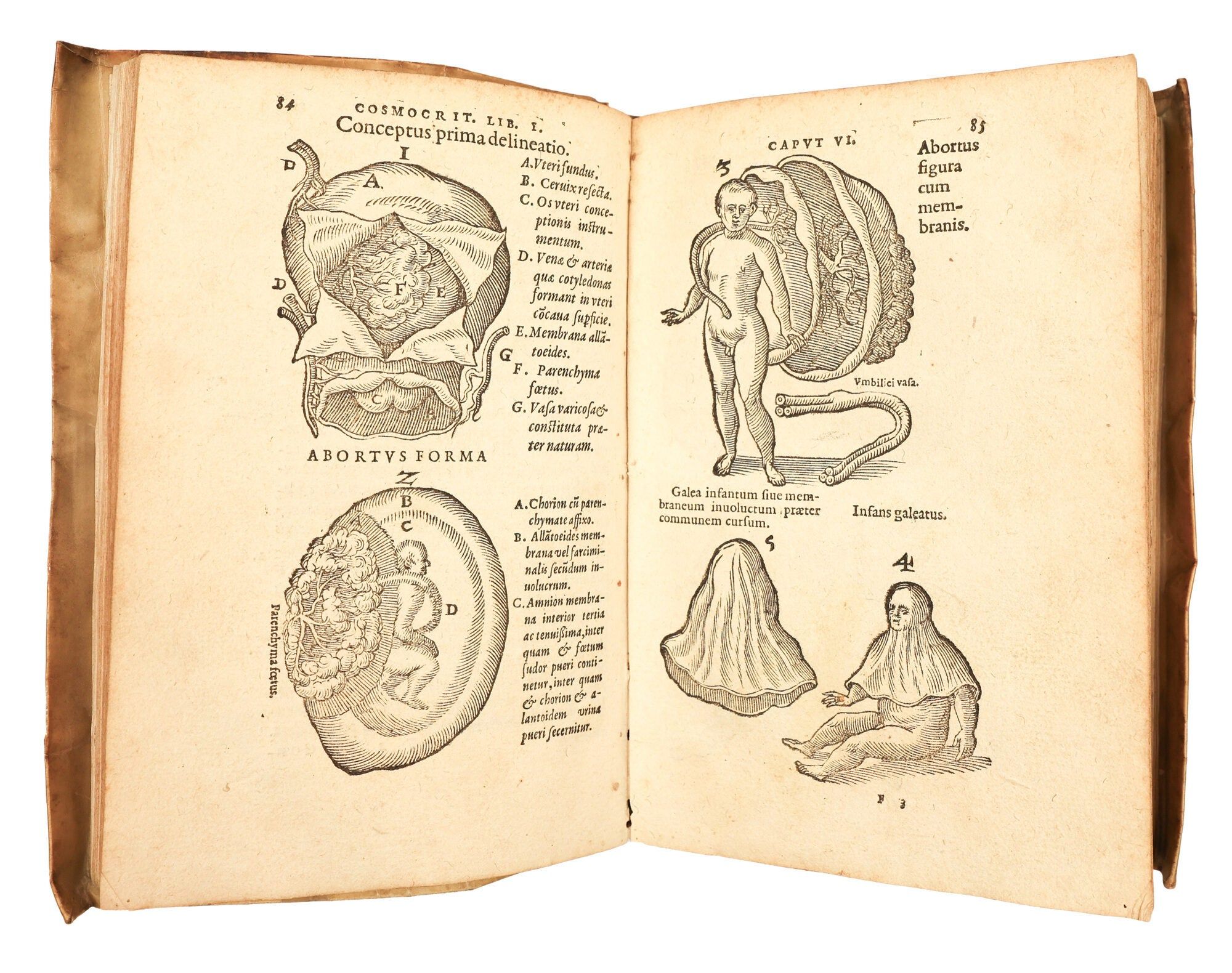
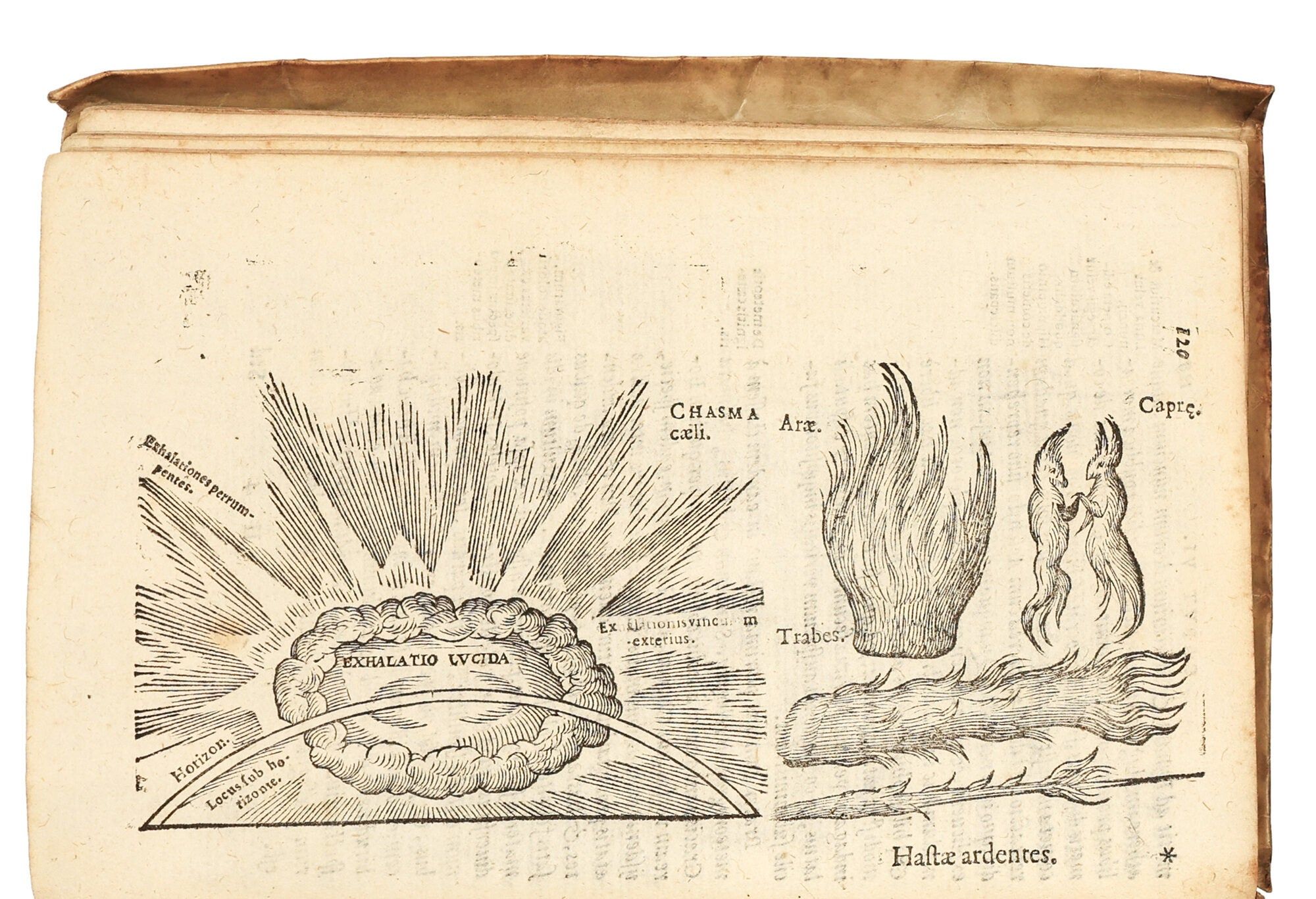
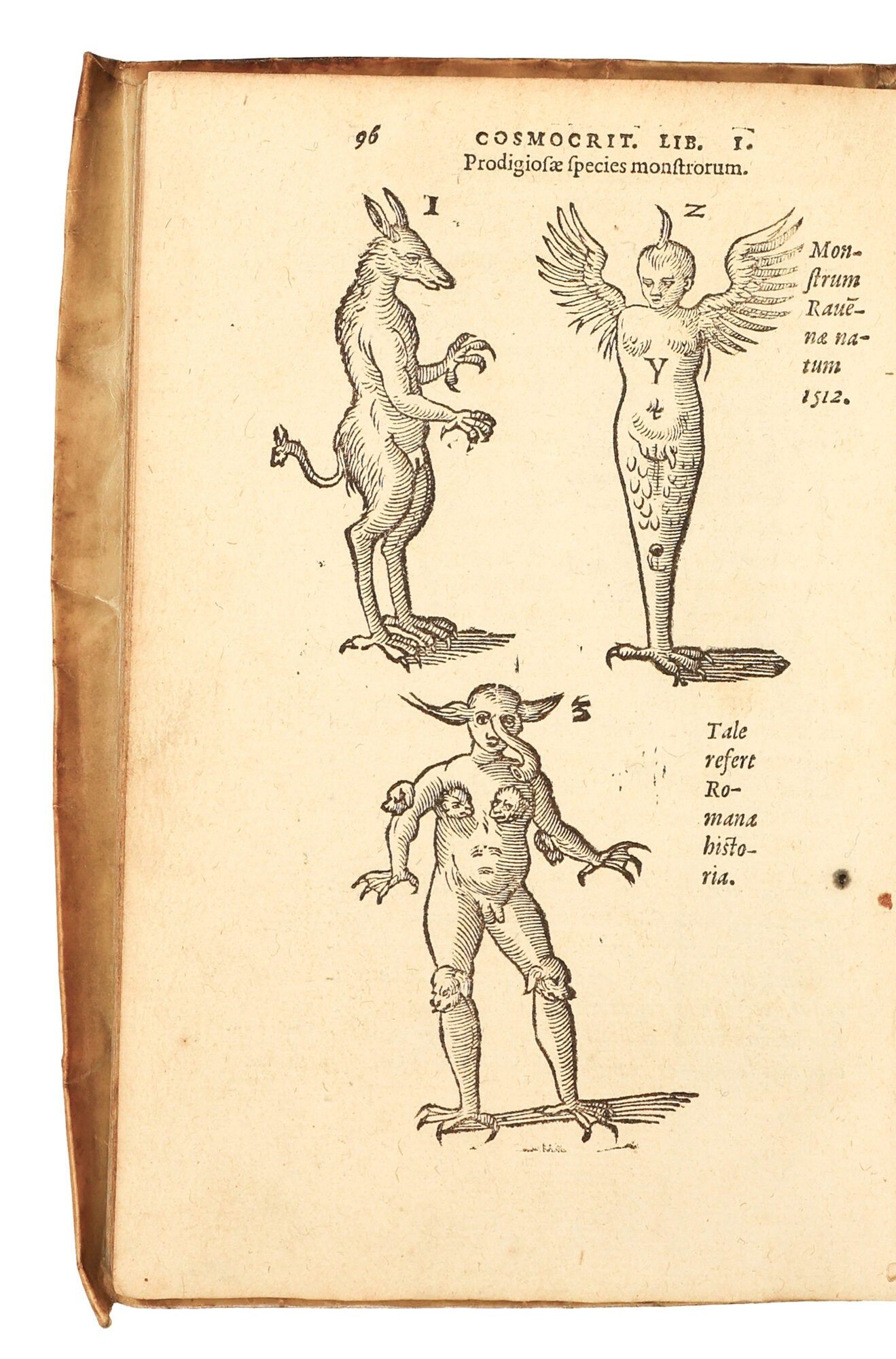
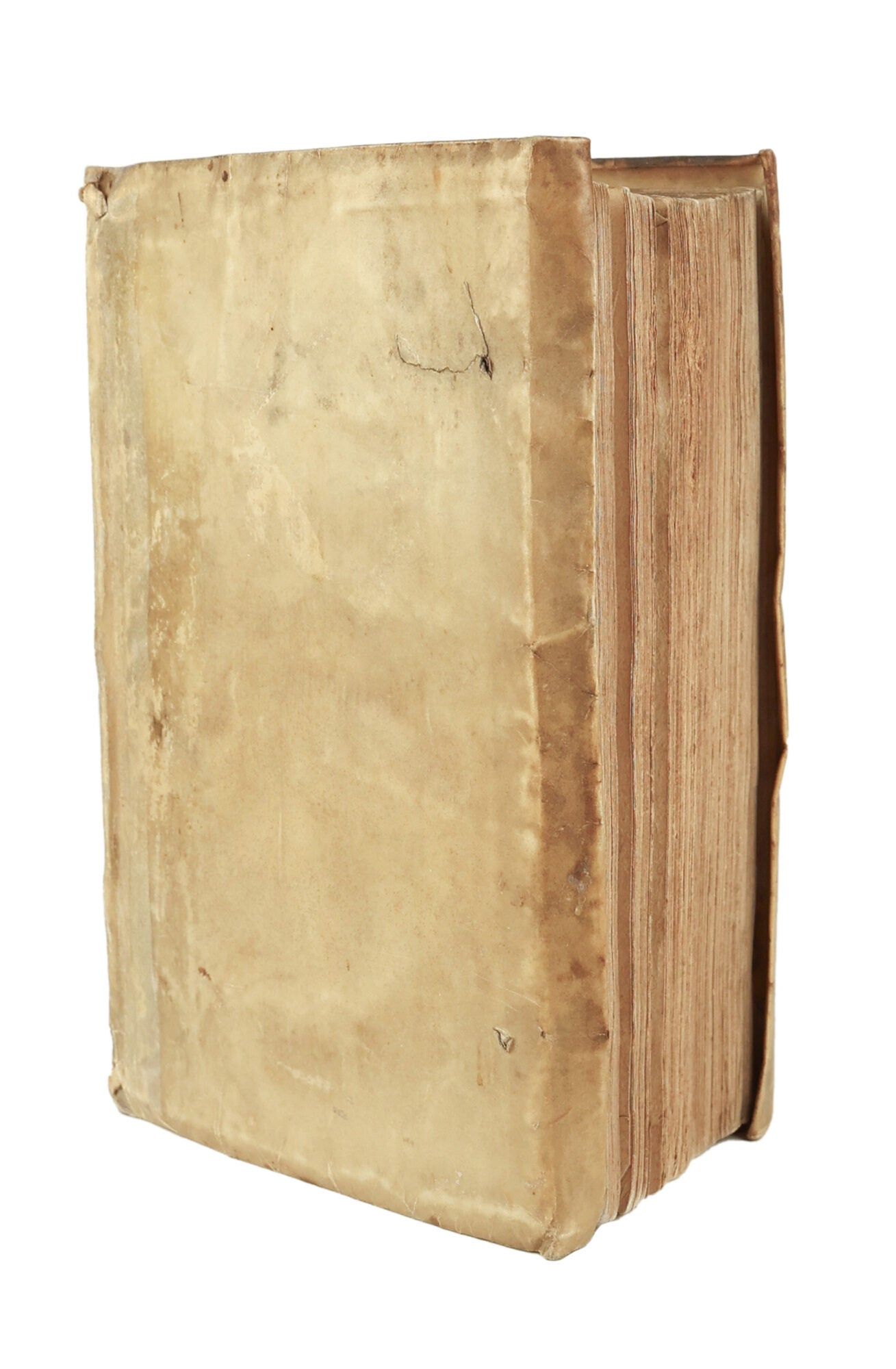
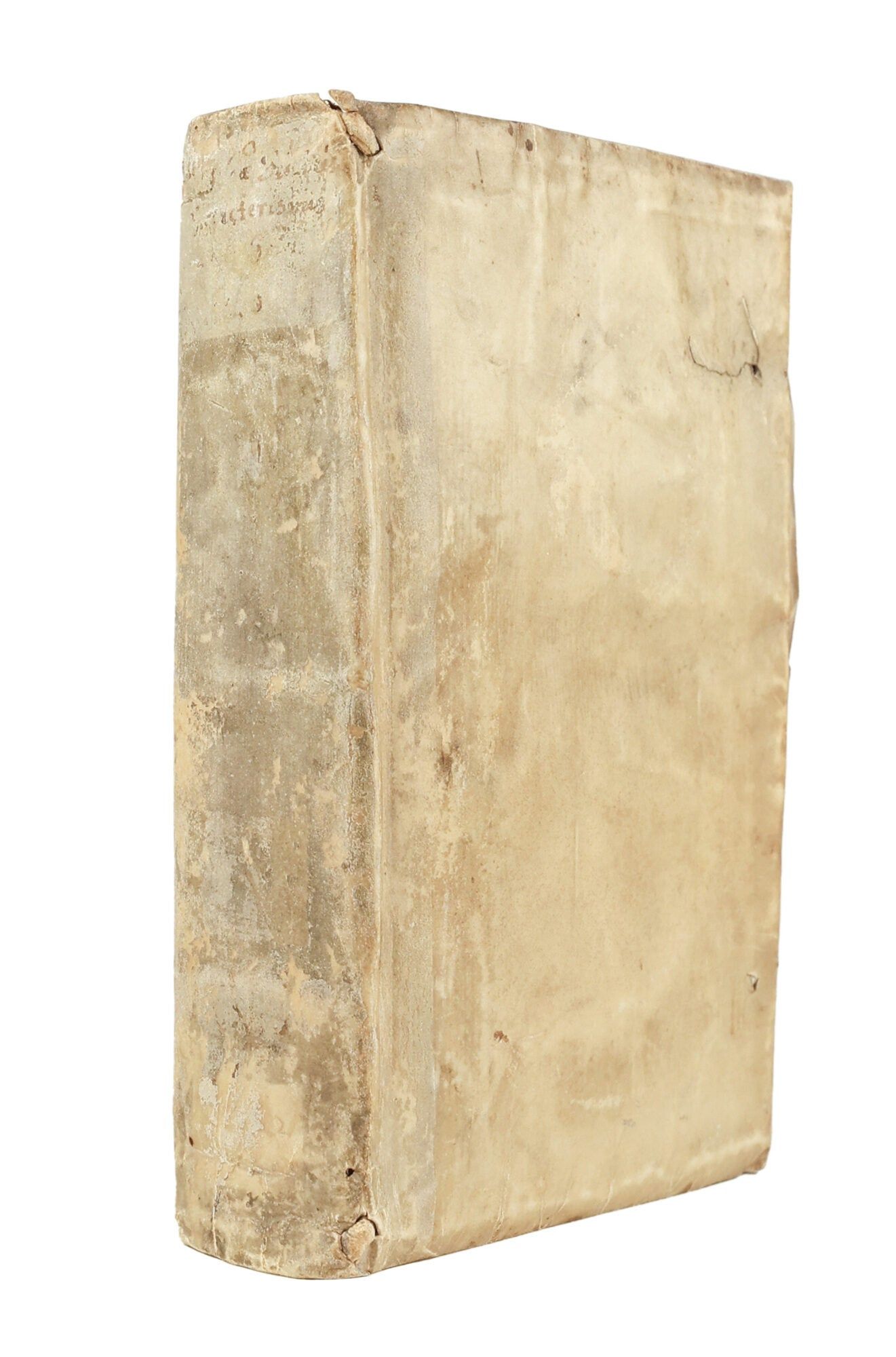
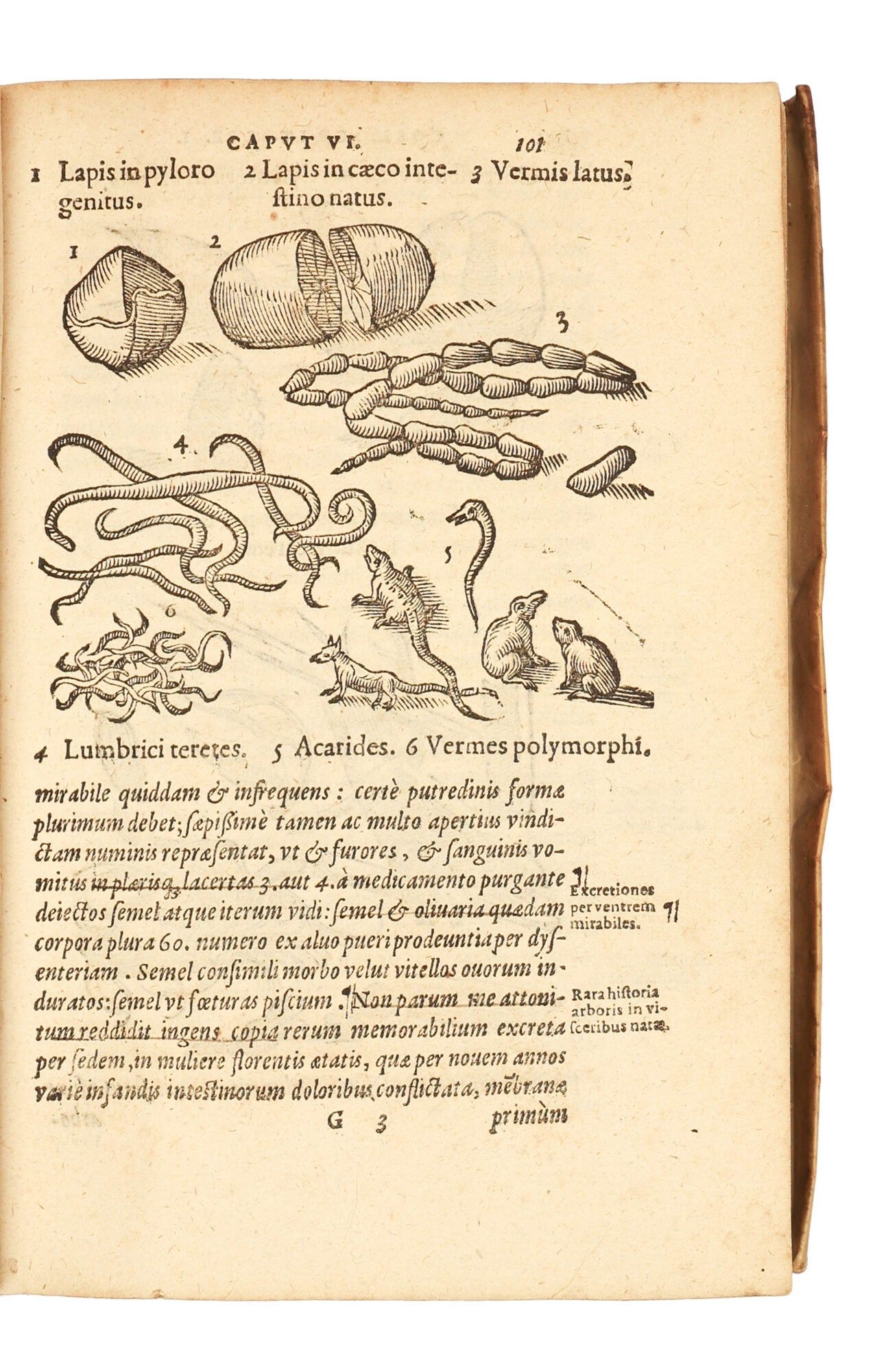
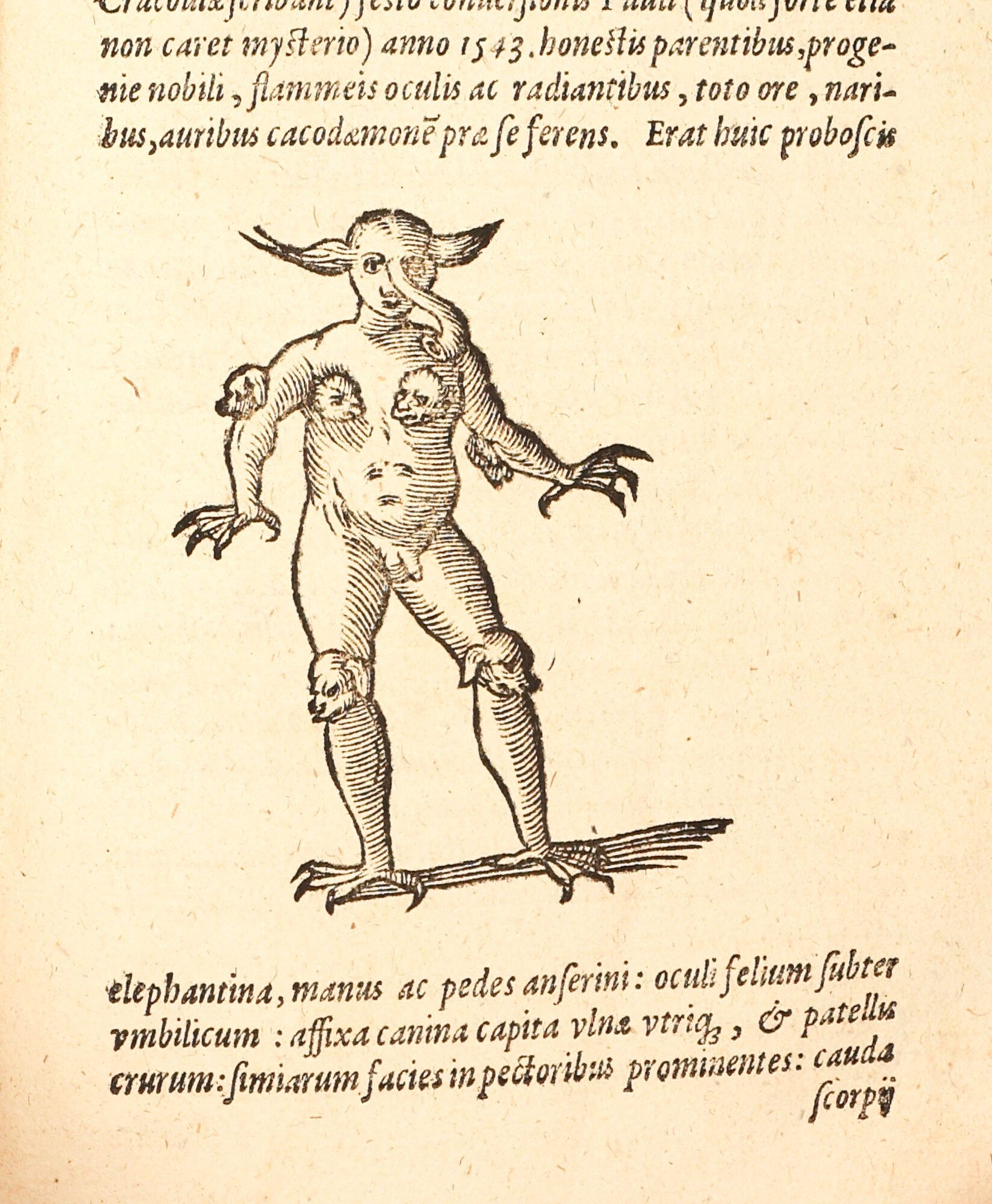
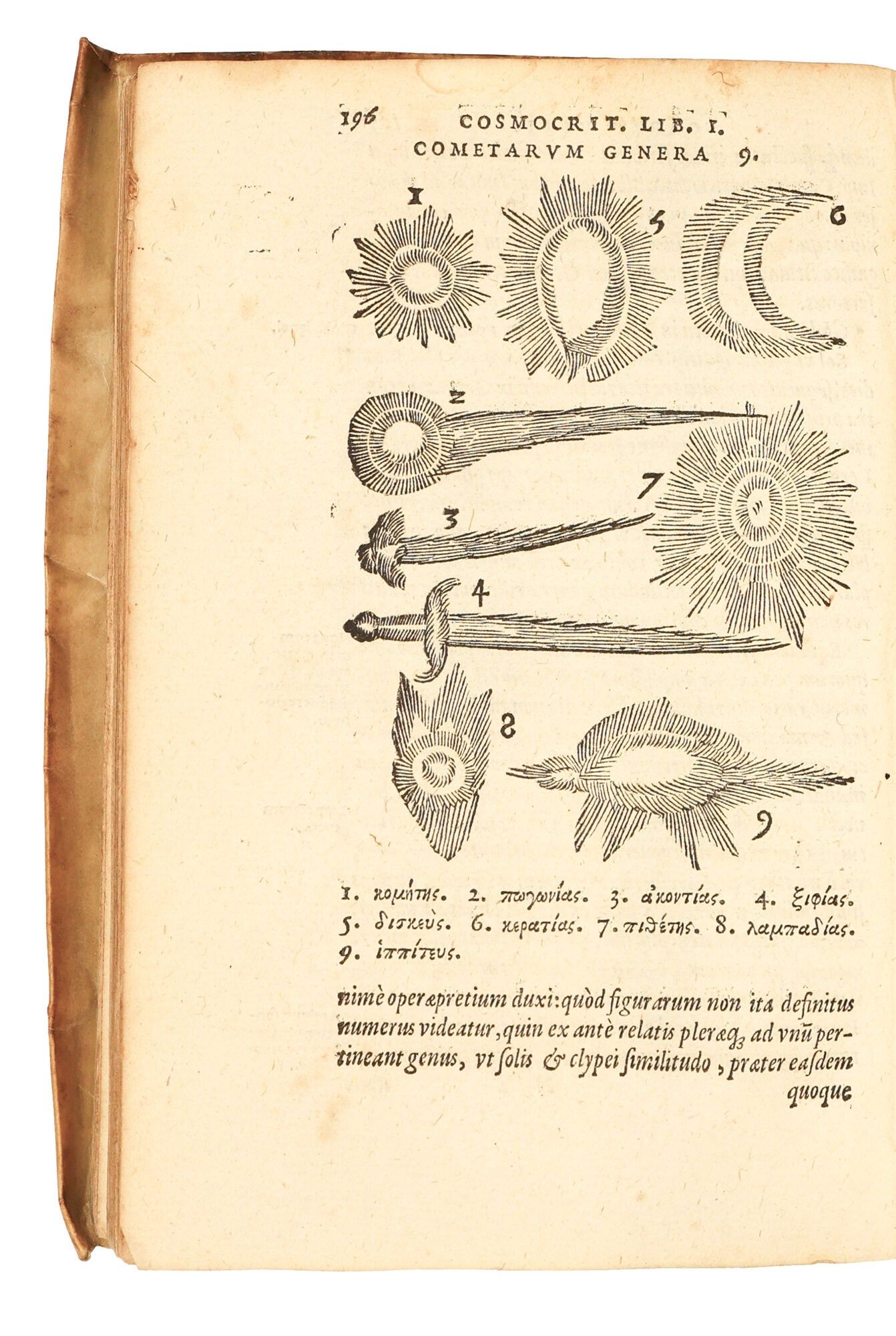
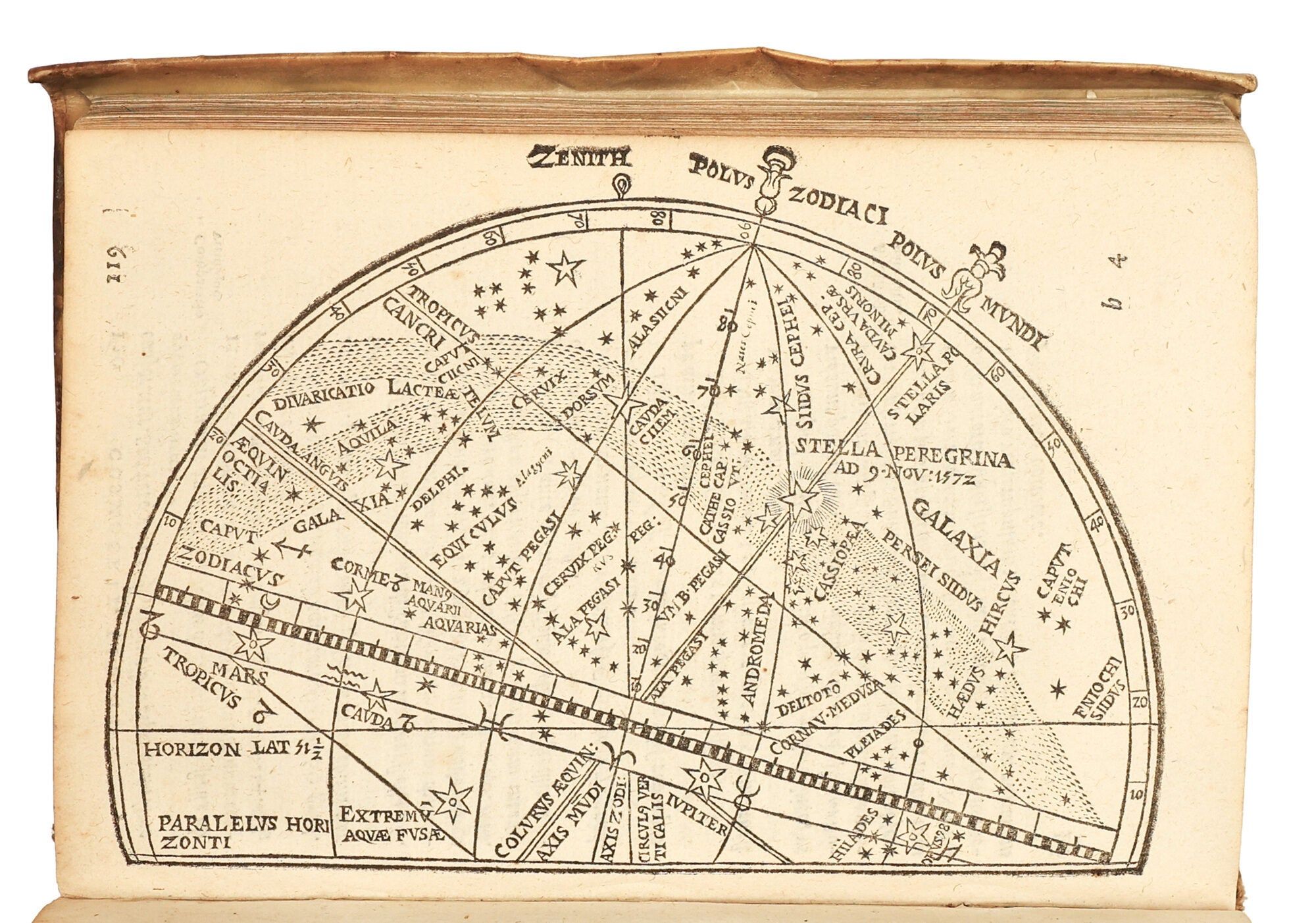
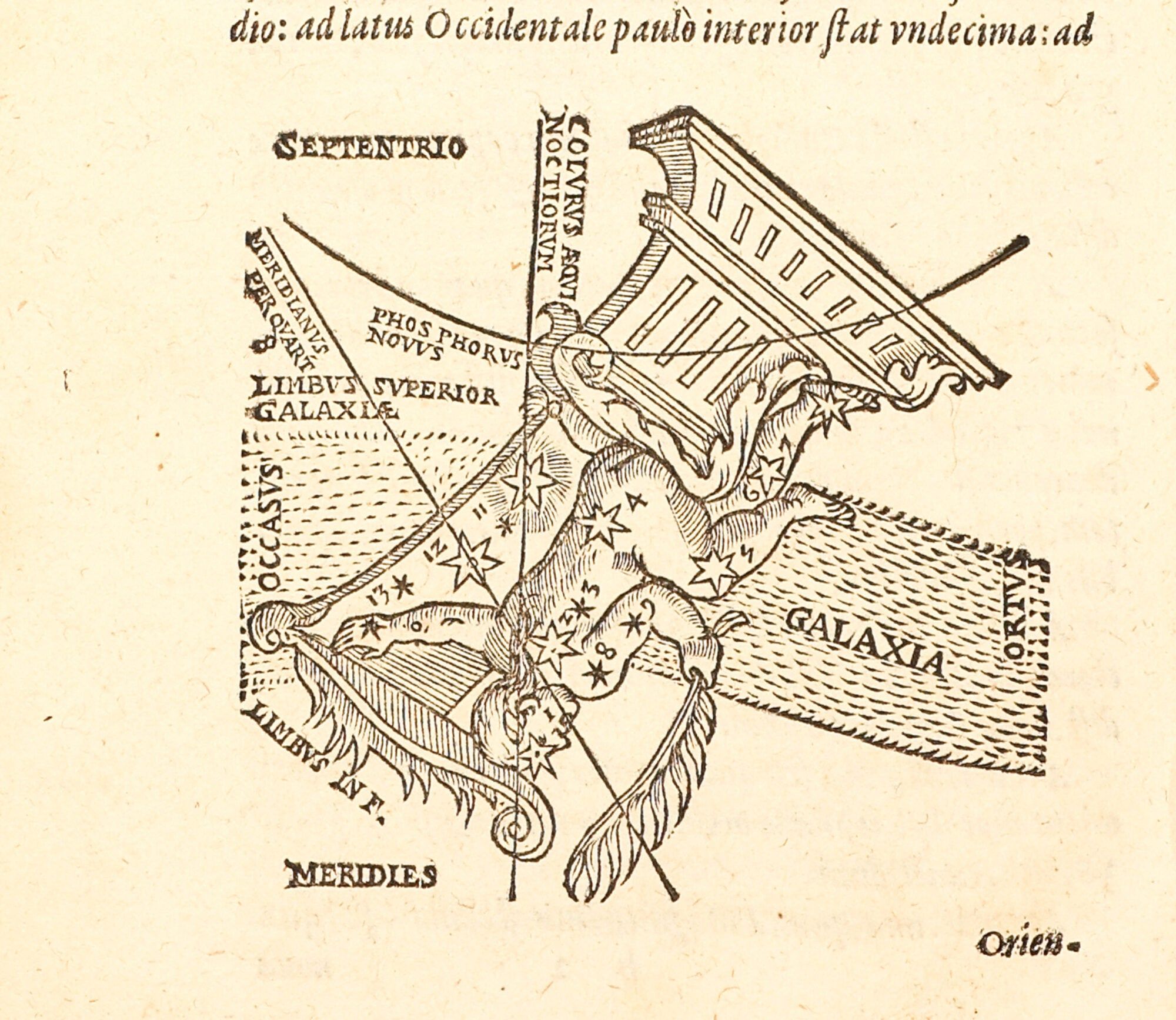
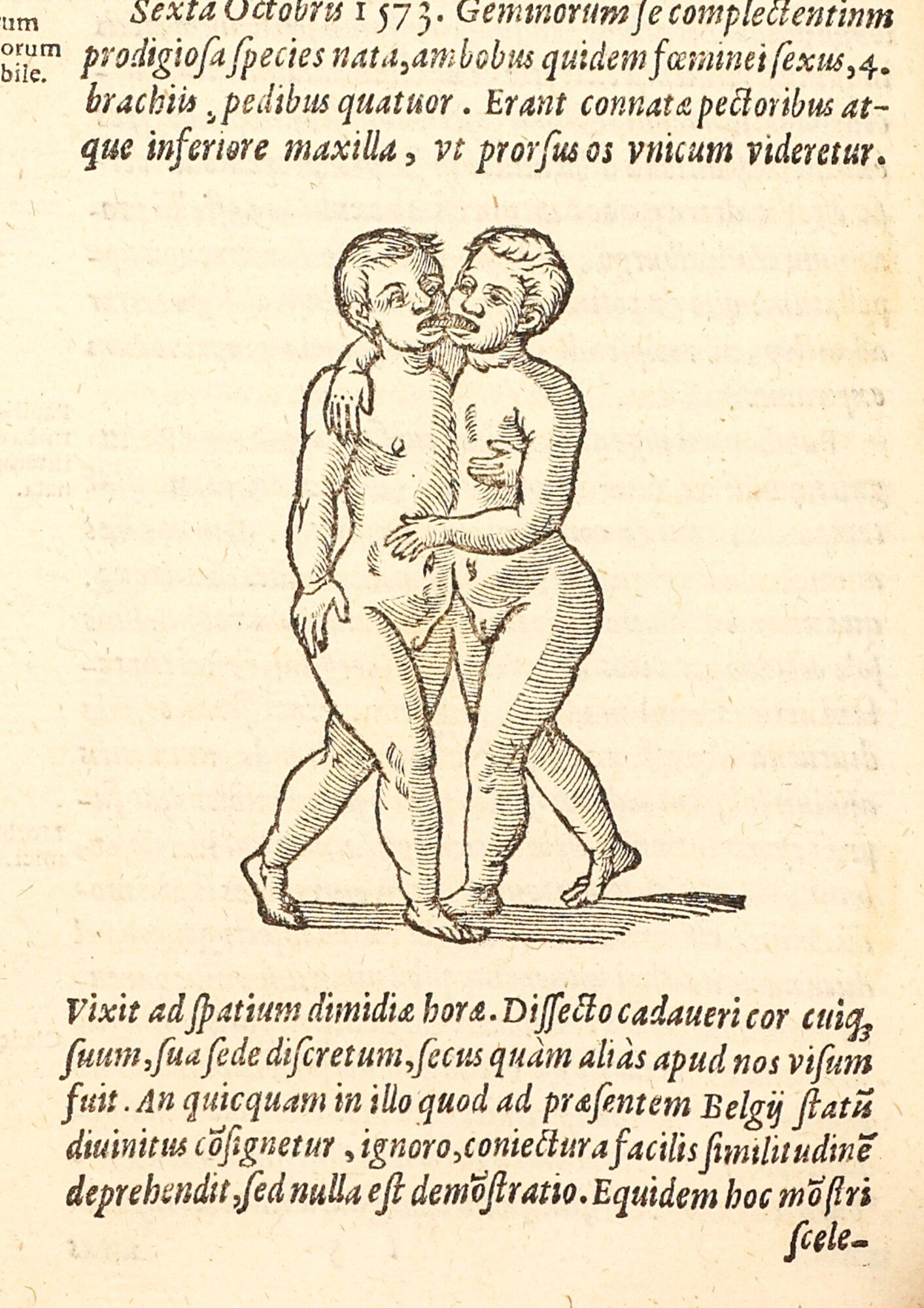
Antwerp: Ex officina Christophori Plantini, 1575. SOLE EDITION. Hardcover. Fine. A fine, tall copy in its original limp vellum binding (vellum lightly soiled, ties perished). Occasional light marginal foxing and the occasional light ink stain. Some short passages neatly underlined. Small damp-stain at the head of gathering a. Deaccession stamp (and duplicate stamp of the Bayerische Staatsbibliothek, Munich) on title verso. Illustrated with numerous woodcuts of deformities and monstrosities; anatomical illustrations (relating to obstetrics); kidney stones, minerals and bones; astronomical and atmospheric phenomena, including three woodcut star charts (two of which show the Nova of 1572; the third shows the recorded positions of the comet of March-April, 1556), the forms of various comets, and several eclipses (including a partial solar eclipse). Woodcut Plantin device on both title pages. This work also includes the first scientific illustration of an aurora ever published. Cornelius Gemma, physician, astronomer, mathematician and son of the famous Gemma Frisius, was born at Louvain, where he later held the chair of medicine at the University. He occupied himself largely with astrology and mathematics but is remembered for his observations of a comet in 1556, an eclipse of the moon in 1569 and the "New Star" (Nova) in Cassiopeia in November 1572. He recorded this nova on the evening of the 9th, on which night Gemma tells us "it appeared with a splendor surpassing all the fixed stars and scarcely less bright than Venus".
Gemma observed the nova two days before it was seen by Tycho Brahe. An examination of Tycho's personal copy of the present work reveals that Tycho read Gemma's description closely while composing his pivotal "Astronomiae instauratae progymnasmata" (Prague 1602). "Tycho's observations of the nova of 1572, and his revolutionary calculations concerning their distance from the earth, constitute one of his principal achievements in the history of astronomy, leading to the abandonment of the traditional view of the celestial spheres." (Martayan Lan, Inc., Catalogue 28, describing Tycho's annotated copy of Gemma's work).
''The present work is a disquisition on portents and prodigies in nature of every description, with their supposed connection with human affairs. Monsters, of which he gives curious pictures, were viewed as special works of the Creator intended to foretell or indicate coming events.'' (Ferguson)
Gemma sought to develop "a cosmocritical art which was to scrutinize not only the occult virtues and causes of bodies and singular affections, but also the critical mutations of things which occur in the triple world. More especially, Gemma sought to forecast events that are divinely proffered contrary to the usual run of nature, such as prodigies, monsters and dreams. Cornelius felt that he was the first to develop this particular field, although he recognized that his treatise belonged in the same general category as that of Fracastoro on the sympathy and antipathy of things, that of Fernel on the hidden causes of things, that of Levinus Lemnius on occult miracles of nature, that of Pomponazzi on incantations, and that of Peucer on divination." (Thorndike, History & Magic VI.406-7)
It is interesting to note that the author's father, Gemma Frisius, died of complications from "stones". What influence, if any, this fact had on the author's interest in the nature and significance of renal stones and other "lapides" formed within living beings, is unknown.
Gemma observed the nova two days before it was seen by Tycho Brahe. An examination of Tycho's personal copy of the present work reveals that Tycho read Gemma's description closely while composing his pivotal "Astronomiae instauratae progymnasmata" (Prague 1602). "Tycho's observations of the nova of 1572, and his revolutionary calculations concerning their distance from the earth, constitute one of his principal achievements in the history of astronomy, leading to the abandonment of the traditional view of the celestial spheres." (Martayan Lan, Inc., Catalogue 28, describing Tycho's annotated copy of Gemma's work).
''The present work is a disquisition on portents and prodigies in nature of every description, with their supposed connection with human affairs. Monsters, of which he gives curious pictures, were viewed as special works of the Creator intended to foretell or indicate coming events.'' (Ferguson)
Gemma sought to develop "a cosmocritical art which was to scrutinize not only the occult virtues and causes of bodies and singular affections, but also the critical mutations of things which occur in the triple world. More especially, Gemma sought to forecast events that are divinely proffered contrary to the usual run of nature, such as prodigies, monsters and dreams. Cornelius felt that he was the first to develop this particular field, although he recognized that his treatise belonged in the same general category as that of Fracastoro on the sympathy and antipathy of things, that of Fernel on the hidden causes of things, that of Levinus Lemnius on occult miracles of nature, that of Pomponazzi on incantations, and that of Peucer on divination." (Thorndike, History & Magic VI.406-7)
It is interesting to note that the author's father, Gemma Frisius, died of complications from "stones". What influence, if any, this fact had on the author's interest in the nature and significance of renal stones and other "lapides" formed within living beings, is unknown.
Details
Title
De Naturae Divinis Characterismis; seu Raris & admirandis spectaculis, causis, indiciis, proprietatibus rerum in partibus singulis universi, Libri II. Auctore D. Corn. Gemma, Louaniensi, Regio Medicinae professore. Peculiarem partis utriusque materiem vel argumentum sequens pagina planius explicabit
Author
Gemma, Cornelius (1535-1579)
Binding
Hardcover
Condition
Fine
Publisher
Ex officina Christophori Plantini: Antwerp
Date
1575
Edition
SOLE EDITION