

Anthologia gnomica; illvstres vetervm graecae comoediae scriptorvm sententiae, prius ab Henrico Stephano, qui & singulas latine conuertit, editae. Nvnc dvplici insvper interpretatione metrica singulae auctae, inq̄. gratiam studiosorum, quibus et variae scutorum natalitiorum imagines libello passim insertae vsui erunt, in hoc enchiridion ... collectae a Christiano Egenolpho
- Hardcover
- Frankfurt am Main: apud Georgium Coruinum, impensis Sigismundi Feyerabendij, 1579
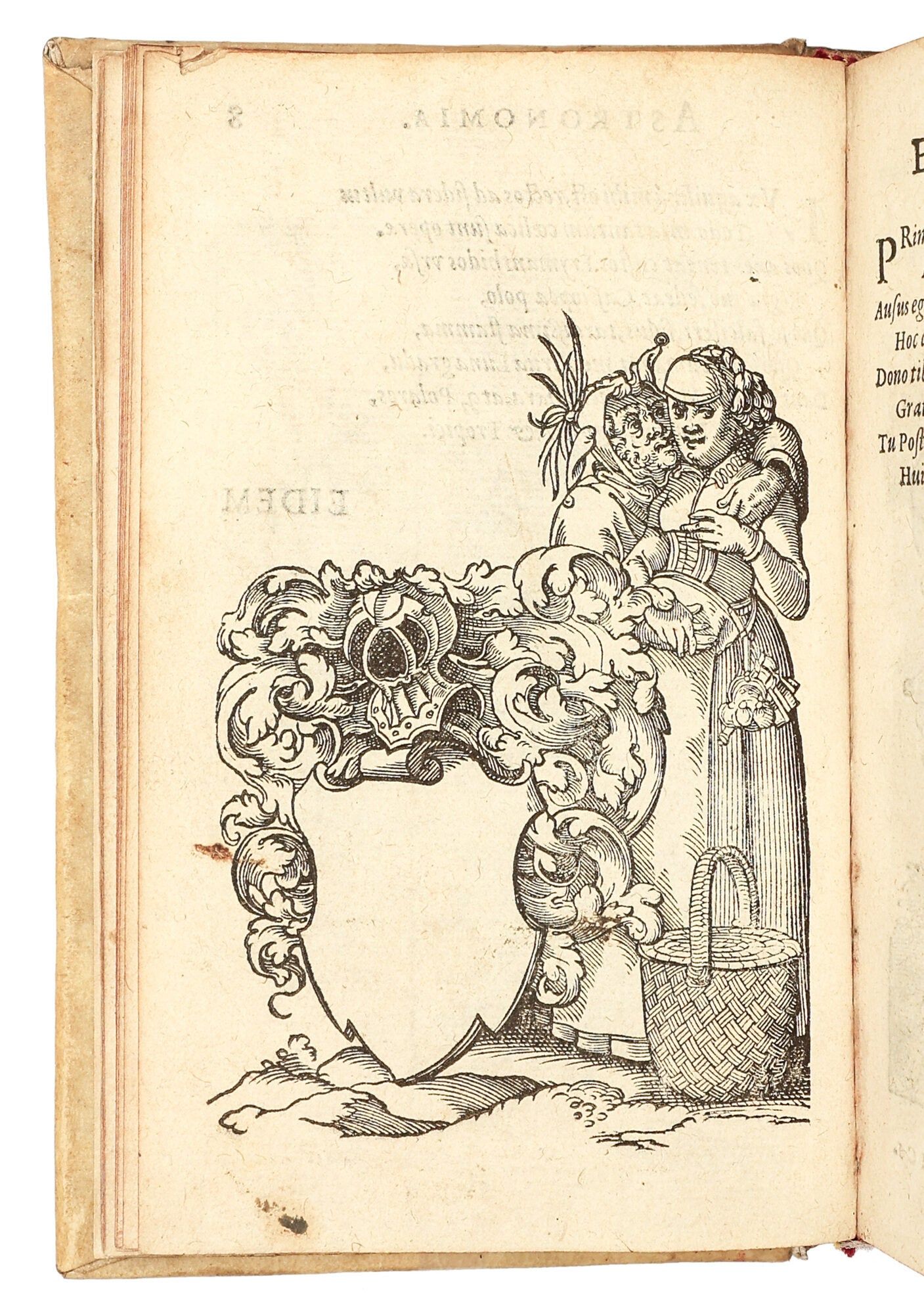
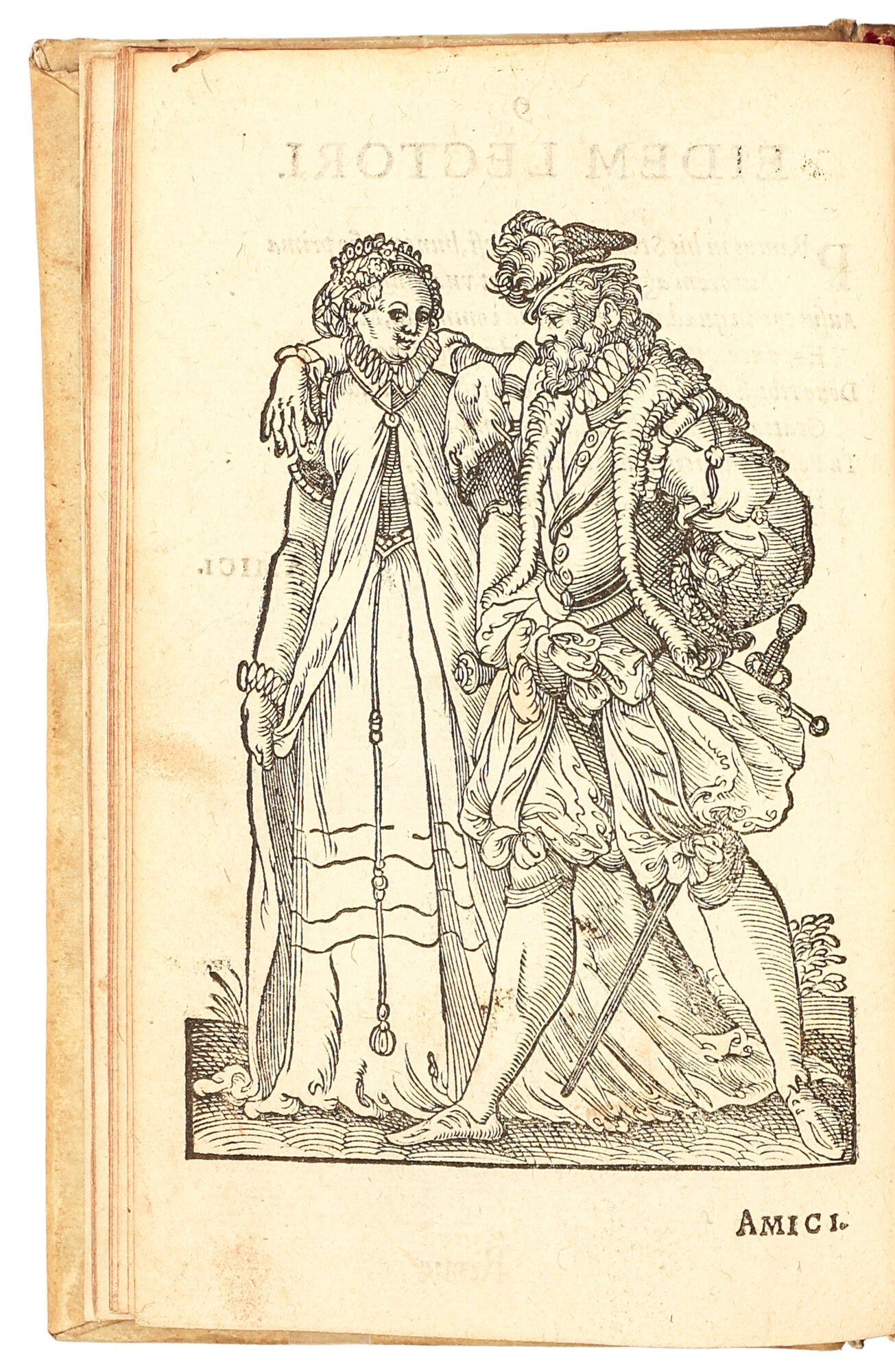
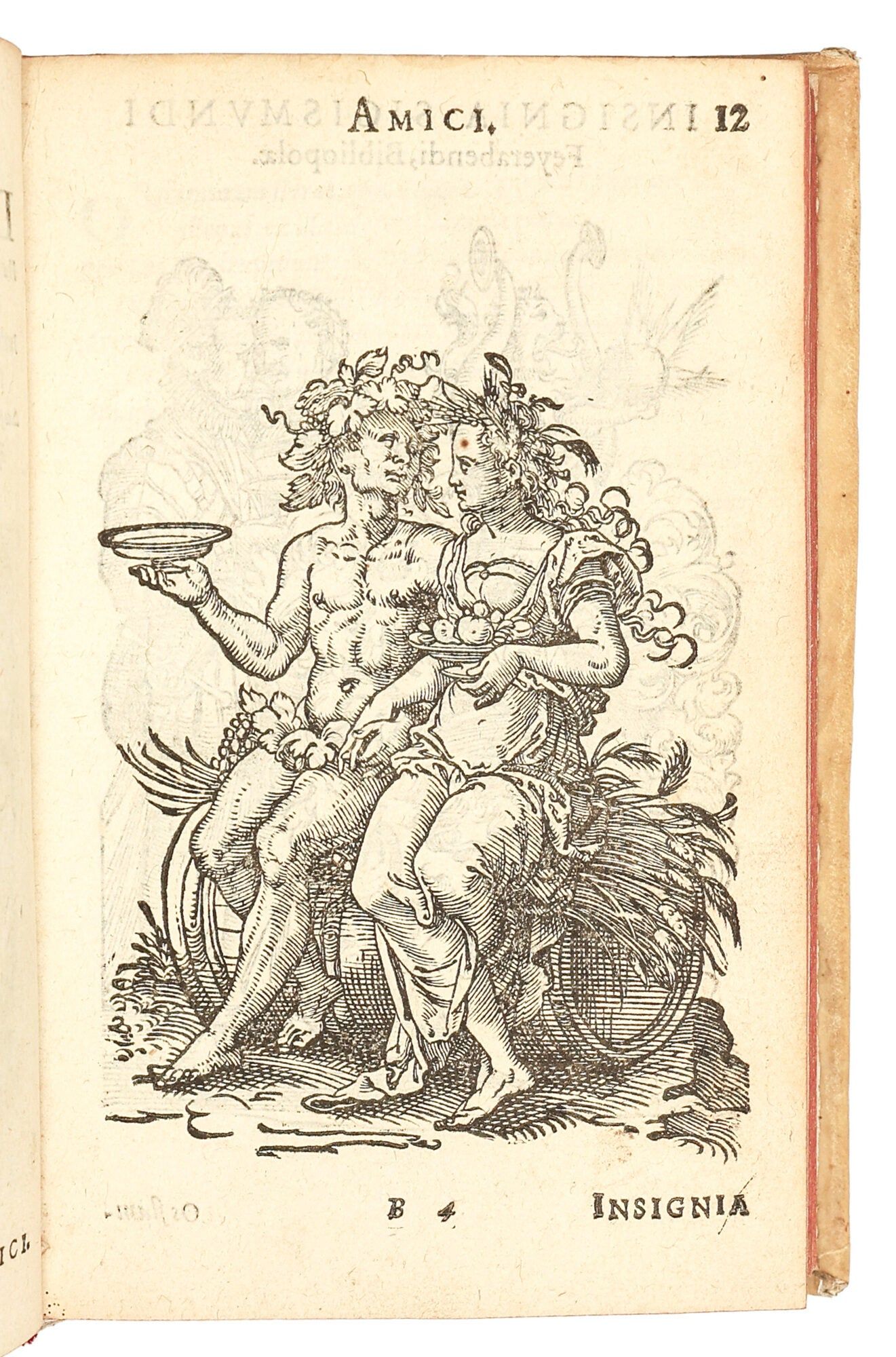
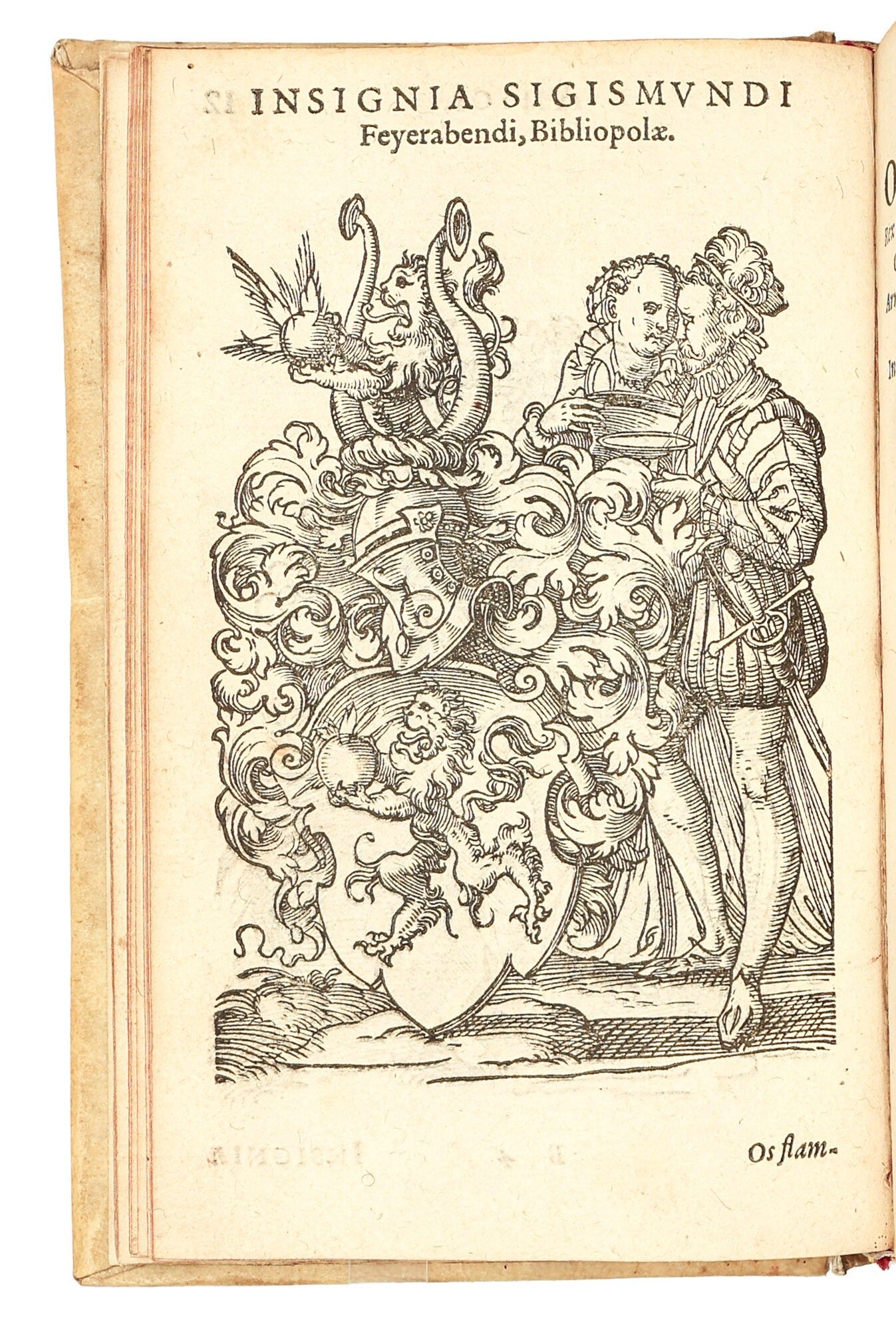
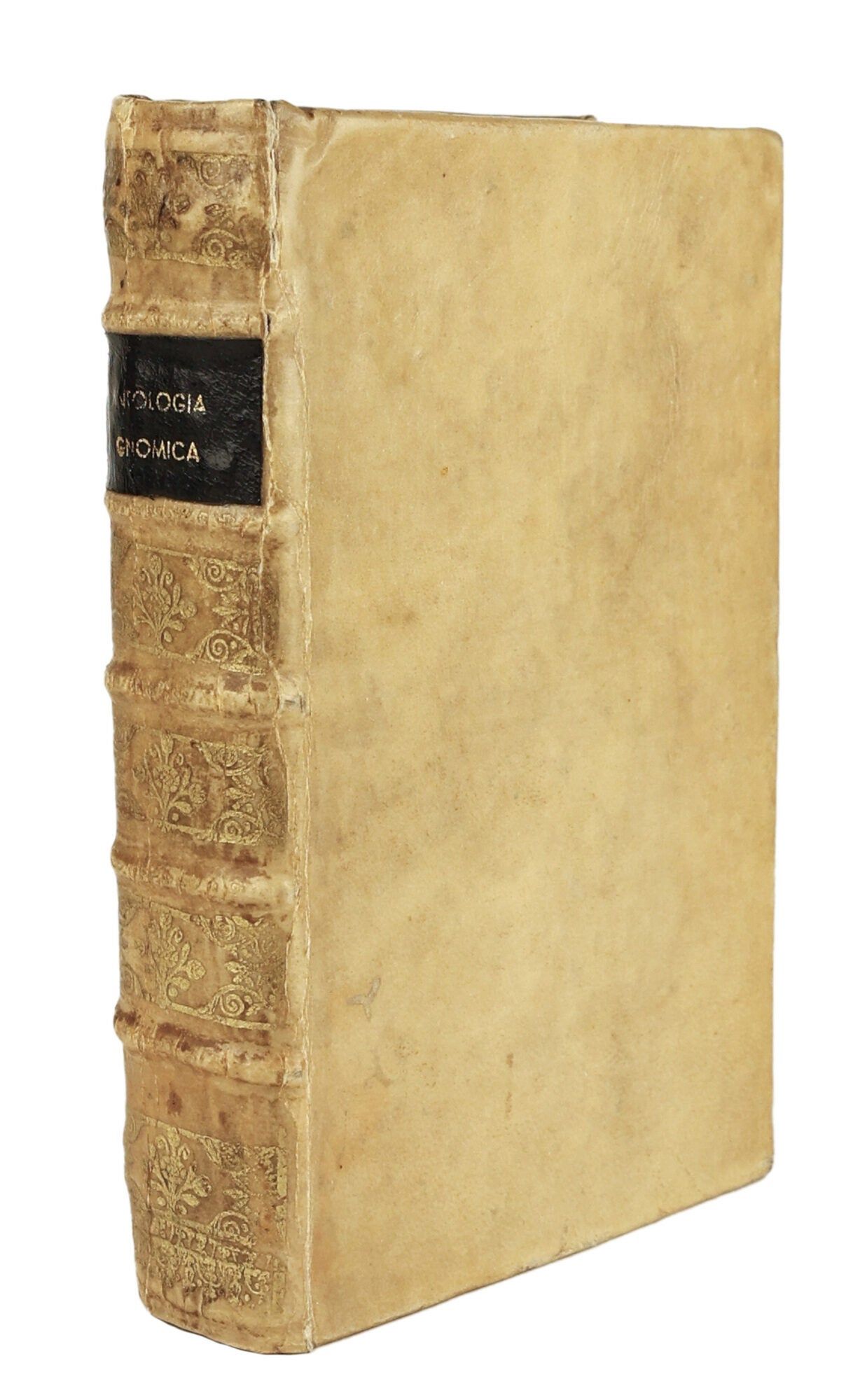
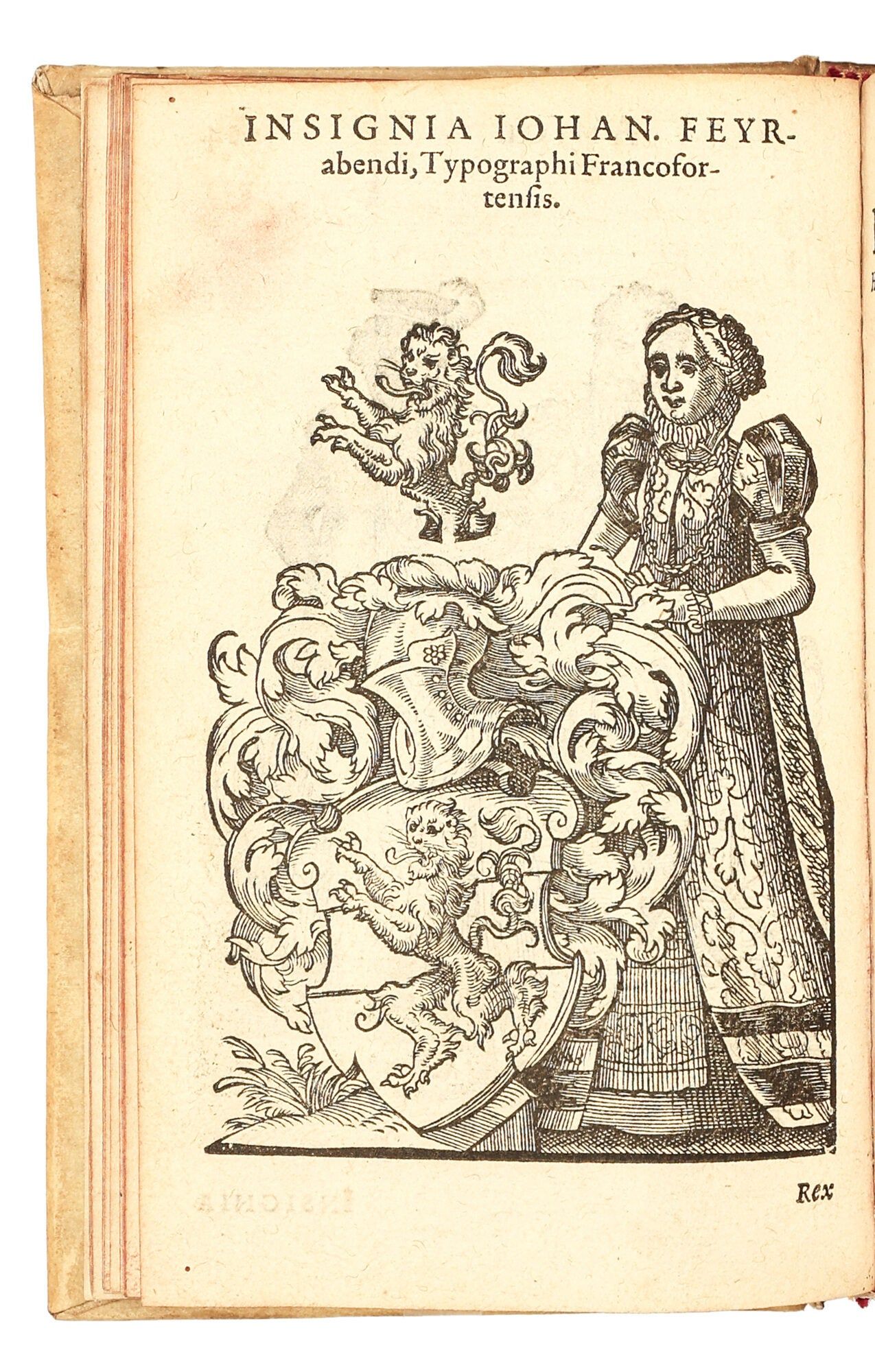
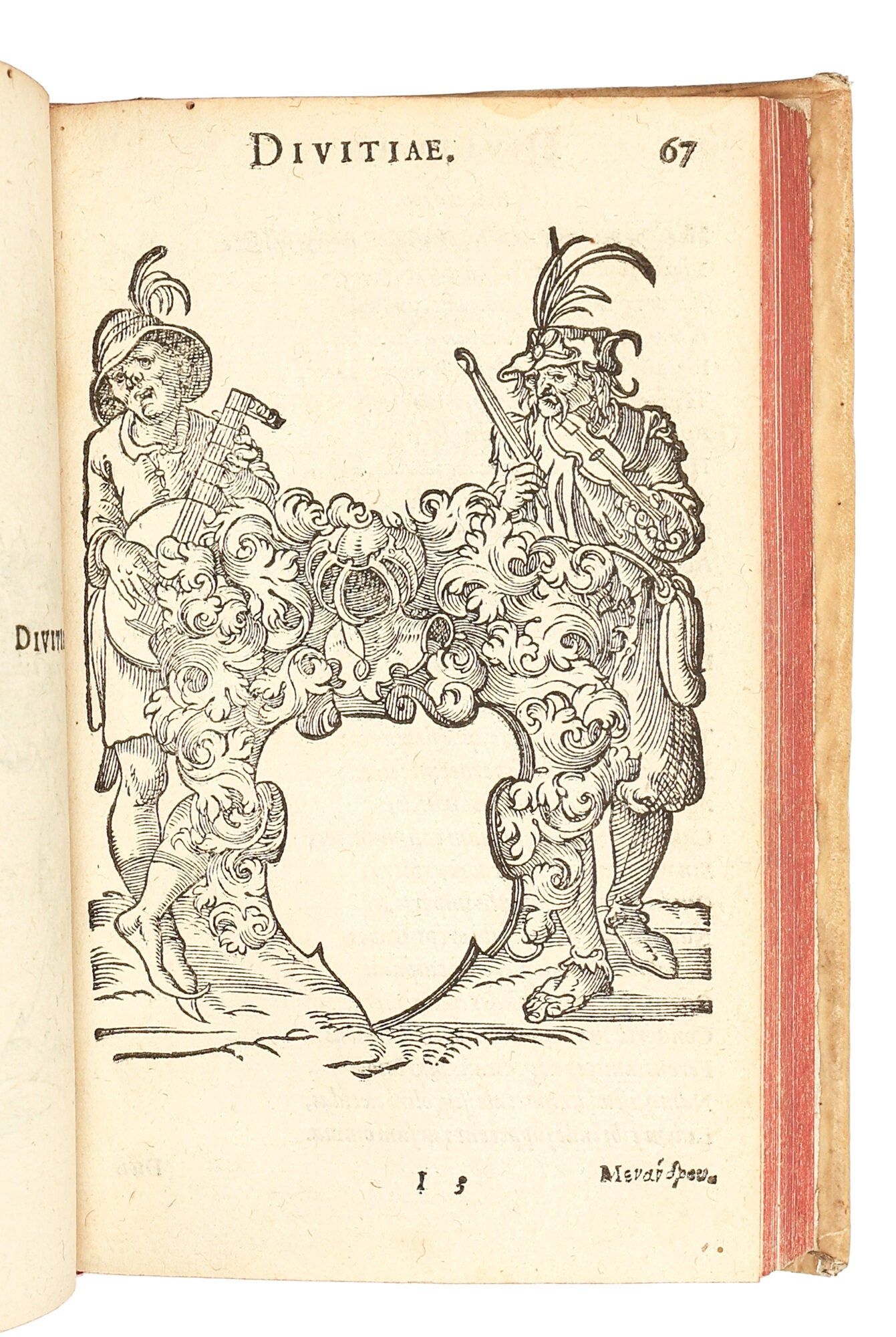
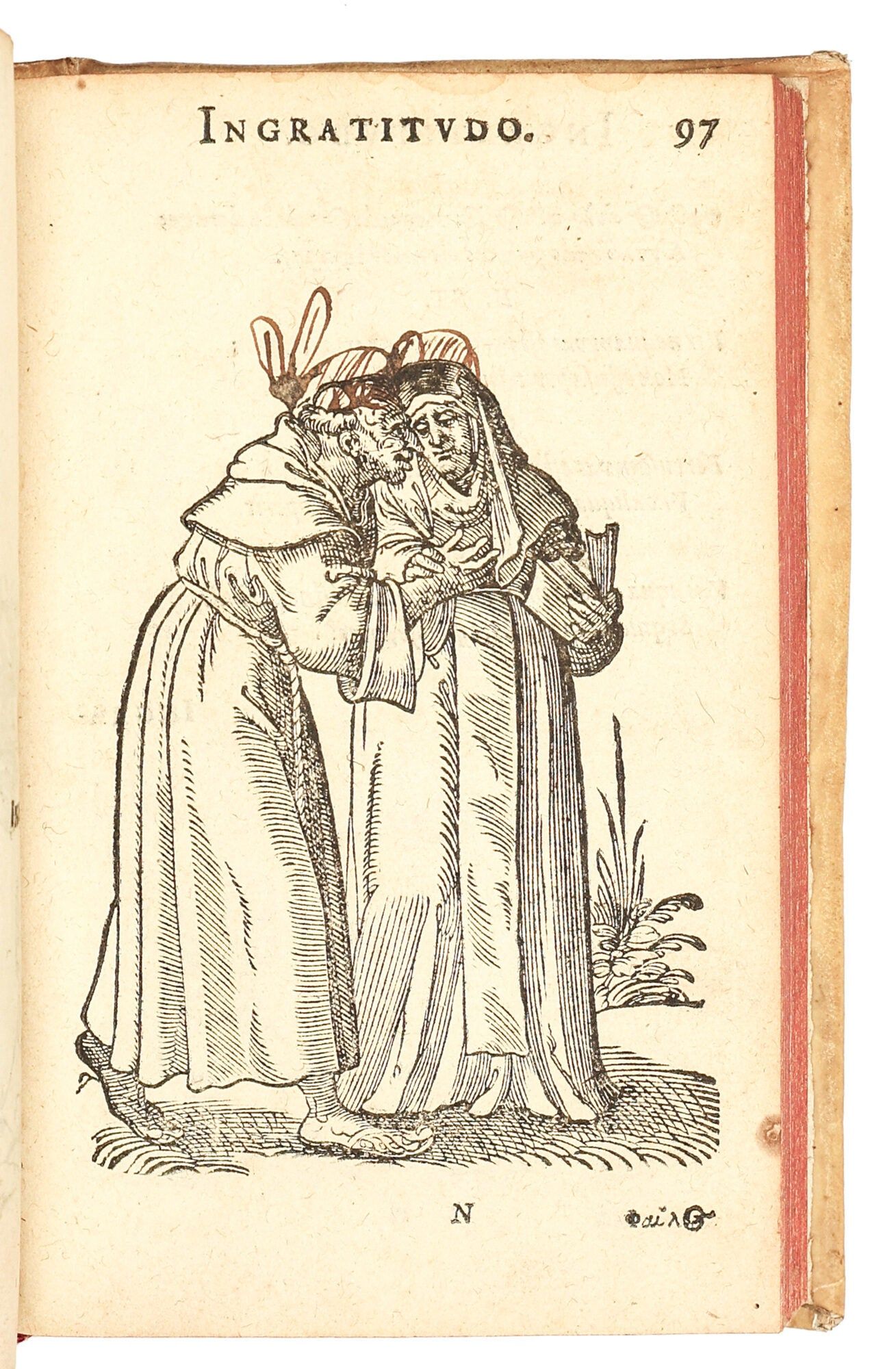
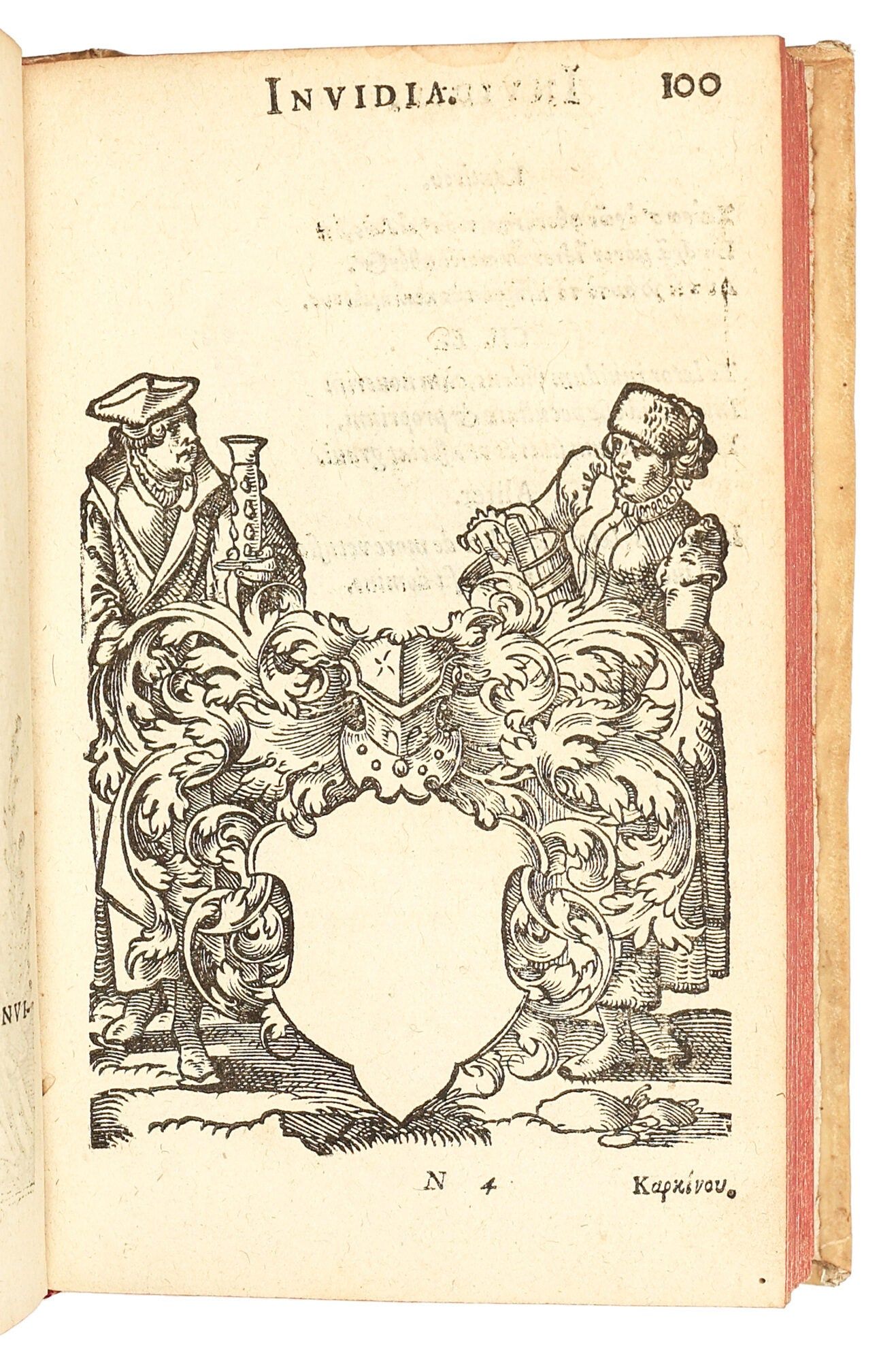
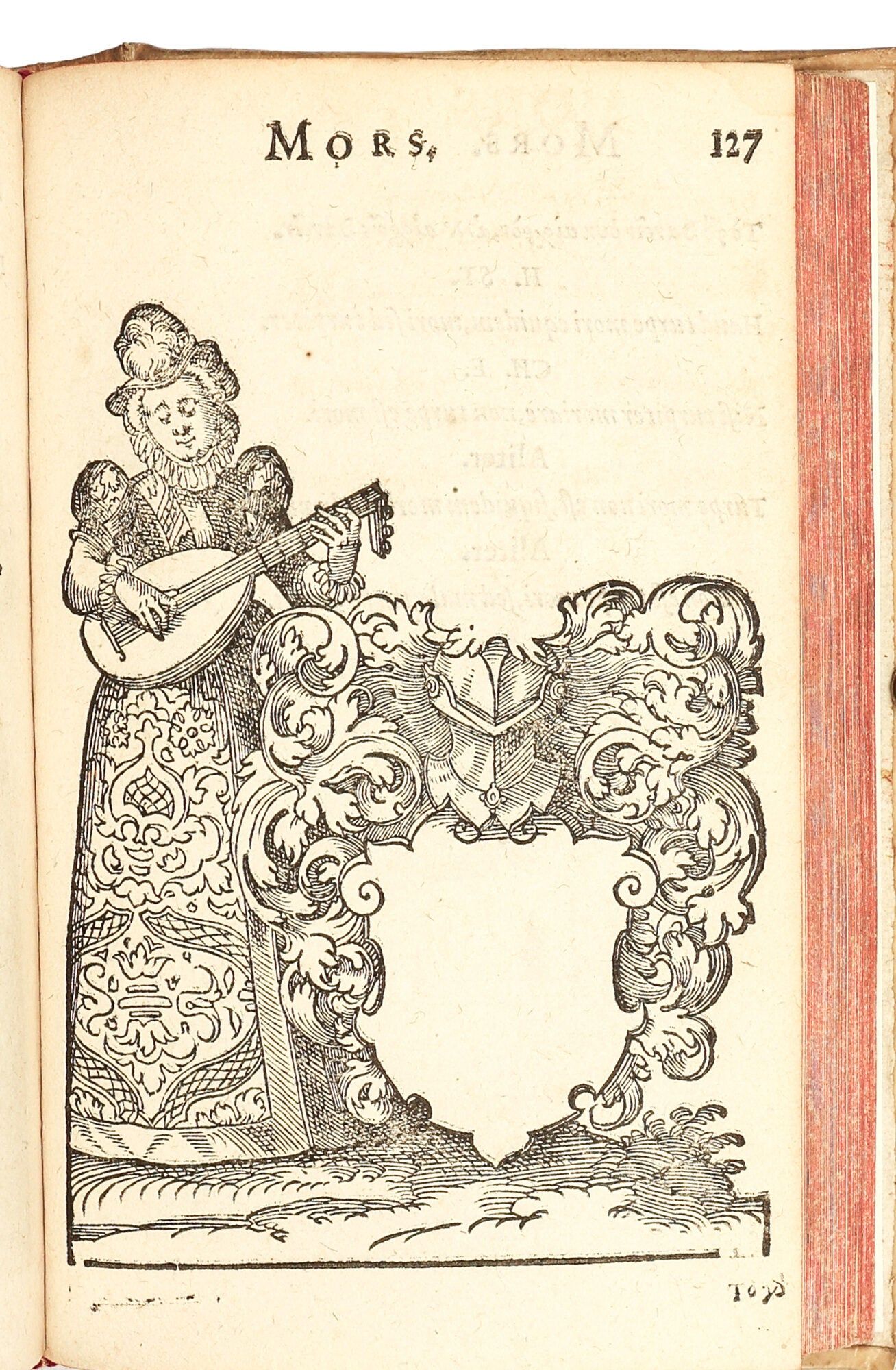
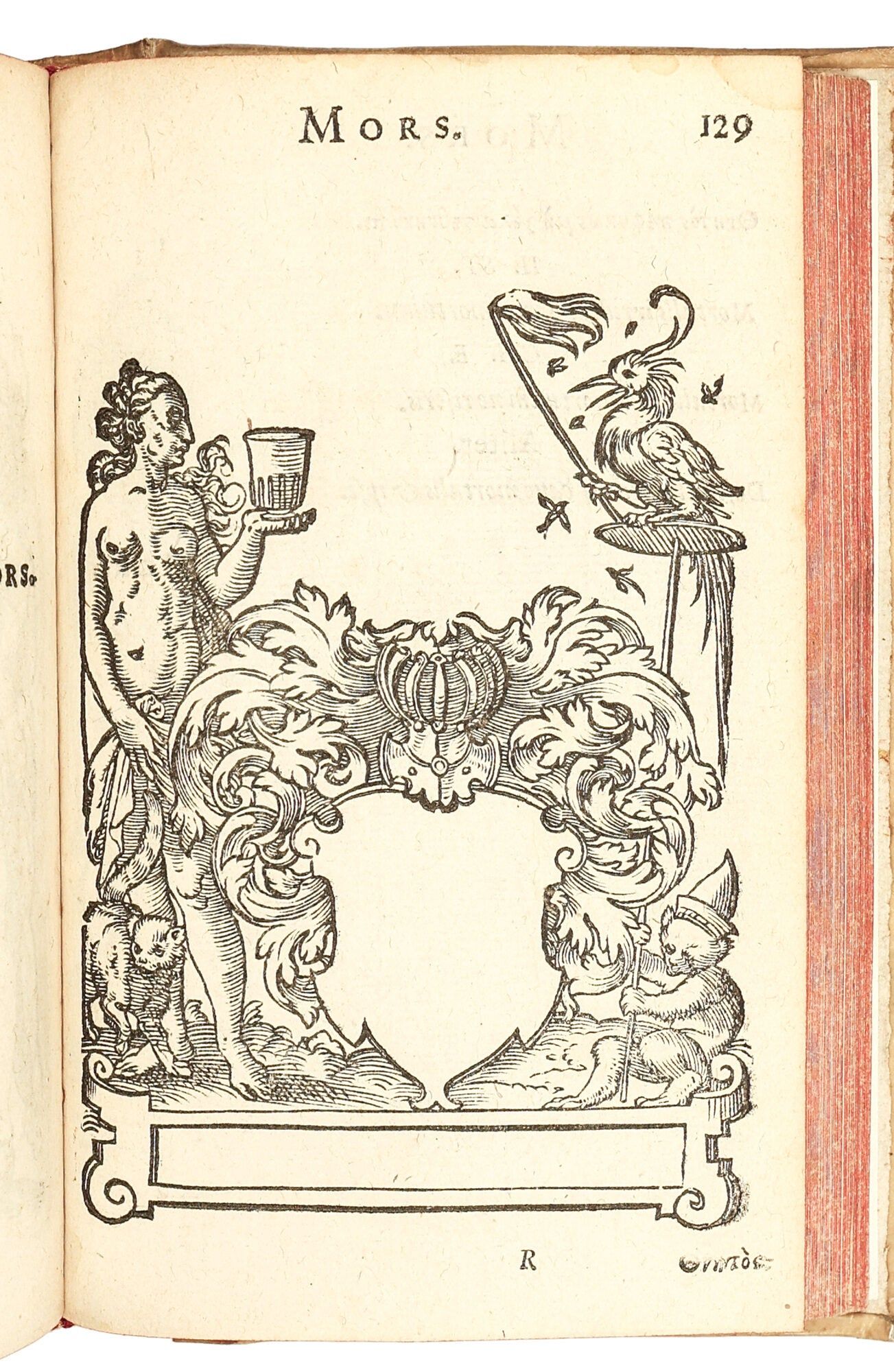
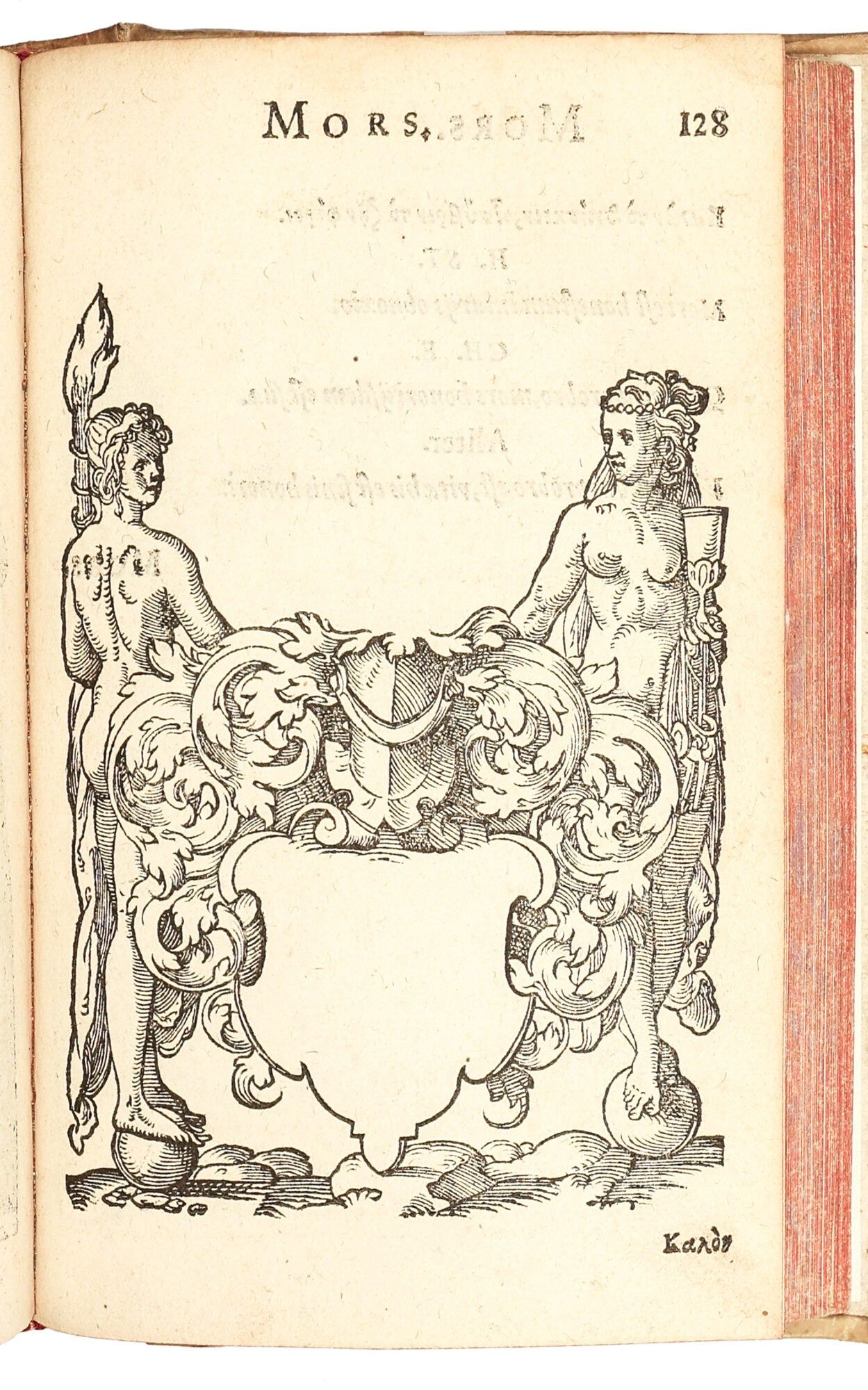
Frankfurt am Main: apud Georgium Coruinum, impensis Sigismundi Feyerabendij, 1579. SECOND EDITION, EXPANDED (1st ed. 1574). Hardcover. Fine. Bound in 18th c. parchment, either re-cased or a remboîtage, parchment lightly soiled, 2 short splits to the vellum, text block re-sewn, end-papers renewed, spine richly tooled in gold and with later label. The text is in very good condition, bound a bit tight, the first three leaves lightly soiled; scattered light soiling and a few trivial stains elsewhere in the text. Two headlines slightly shaved, 1 small nick in upper margin of final leaf; a couple of small holes; small nicks in the upper blank margin of a few leaves, short worm-trail at extreme upper edge of the opening leaves, far from the text. Two of the woodcuts -a lascivious monk trying to seduce a nun- have been modified by an early reader (in the first instance, the monk is given ass's ears, in the second, just a swirl above the characters' heads.). A printed album amicorum (a friendship album), illustrated with 165 full-page woodcuts (with some repeats) by the renowned Swiss-German artist Jost Amman (1539-1591). The text and woodcuts are printed in such a way that the blank space could be used by the owner's friends to add their names, arms, and sentiments. The lighthearted text, which functions as a sort of conduct book, consists of extracts from Henri Estienne's "Comicorum graecorum sententiae"(proverbs of the Greek comic writers), with the Greek followed by Latin translations by Estienne and Christian Egenolff.
The woodcuts combine basic templates for coats-of-arms flanked by various figures: some of them personifications of the liberal arts, musicians, lovers, elegantly-dressed women, the aforementioned monk and nun, etc. The maxims are arranged by subject: Love, Art, Friendship, Drunkenness, Anger, Death, Old Age, Patience, etc.
The book is a significant resource for the study of 16th c. fashion.
"Whereas in the early days of album-keeping entries mostly consisted of signatures only, it became increasingly popular in the second half of the sixteenth century to add the coat of arms of the person making the entry. These coats of arms were usually executed by a professional artist... It seems, however, that some contributors preferred to reproduce their coats of arms themselves (perhaps in order to save paying the artist!); where this was the case they often used one of the models Feyerabend provided in his books, there described as 'offene Schilde'. These are woodcuts in which the escutcheon and crest have been left blank. These incomplete designs could be filled in with whatever coat of arms was required; some colour and a motto or a Classical quotation could also be added to the image, as well as a signature and the date." (O'Dell, Jost Amman and the "Album Amicorum" Drawings after Prints in Autograph Albums" in Print Quarterly, March 1992, Vol. 9, No. 1, pp. 31-36)
The author and publisher identified young people, among whom the creation of friendship albums had become particularly popular, as their target audience. As Egenolff writes in the preface to his German edition:
"It is customary to say the quality of a commodity corresponds to the nature of its buyer. Since today there is a need for everyone, especially those sent to universities to study, to make new acquaintances and form friendships with strangers, this has given rise to the Stammbücher, as they are called, though they might often more properly called 'Schädtbücher' [books causing mischief]. Many an honest man considers making use of such a Stammbuch or writing in those of others. To meet this need, this model 'Stammbuch' has been prepared by one of their fellow students at the suggestion of the honorable and distinguished Sigmund Feyerabend, bookseller at Frankfurt am Main, in the hope that whoever comes across it in future will find something suitable in it; indeed, will see himself in it as in the Socratic mirror, and will find what defects in himself he must improve. For though one does not know other men's dispositions, yet Horace's dictum 'Change but the name, and it is of yourself that the tale is told' will soon be found to apply to everyone. May this work, kind-hearted reader, not displease you."(translation by O'Dell)
The first version of the book -which much more basic woodcuts, without figures- was first published as "Flores Hesperidum" in 1574. This expanded 1579 edition was also issued in German as "Stam[m] oder Gesellenbuch". The volume concludes with verse interpretations of the arms (shown in woodcut) of the dedicatee, the humanist poet and physician Johannes Posthius of Germersheim (1537-1597).
See Rosenheim, "The album amicorum" in Archaeologia, v. 62, p. 251-308, esp. p. 254.
About the artist:
"Jost Amman was born in Zurich in 1539, the son of a noted scholar. Despite opting to train as an artisan, he maintained connections with humanist scholars throughout his career. Little is known of his early years or where he received his training, but by 1561 he had relocated to Nuremburg where he became one of northern Europe's most prolific printmakers and book illustrators of the late sixteenth century.
"Amman may have trained in the workshop of Virgil Solis (1514-1562), whom Amman essentially replaced as the premier illustrator for Frankfurt publisher Sigmund Feyerabend (1528-1590). Solis had begun illustrations for a bible that would be published in 1564, and Amman may have been an apprentice tasked with cutting the woodblocks for Solis's drawings. Although he maintained his own workshop, Amman became essentially an employee of Feyerabend, one of the most productive publishers of the late sixteenth century. He provided Amman with a majority of his commissions as the two collaborated on at least fifty books.
"Little is known of Amman's working methods beyond an anecdote from one of his pupils attesting to the master's prolific work as a draftsman. In addition to the illustrations, he designed other typographic elements in his books including ornamental borders, initial letters, tailpieces, and printer's marks. We know that Amman cut most of his own blocks, at least early on. Later in his career he likely would have overseen the translation of his drawings into woodblocks by others, and we are aware that he had several apprentices. Yet evidence of his financial difficulties raises the possibility that he continued to prepare many of his own blocks."(National Gallery of Art, "Jost Amman and Sixteenth-Century Woodcut Illustration", exhibition (2018)).
The woodcuts combine basic templates for coats-of-arms flanked by various figures: some of them personifications of the liberal arts, musicians, lovers, elegantly-dressed women, the aforementioned monk and nun, etc. The maxims are arranged by subject: Love, Art, Friendship, Drunkenness, Anger, Death, Old Age, Patience, etc.
The book is a significant resource for the study of 16th c. fashion.
"Whereas in the early days of album-keeping entries mostly consisted of signatures only, it became increasingly popular in the second half of the sixteenth century to add the coat of arms of the person making the entry. These coats of arms were usually executed by a professional artist... It seems, however, that some contributors preferred to reproduce their coats of arms themselves (perhaps in order to save paying the artist!); where this was the case they often used one of the models Feyerabend provided in his books, there described as 'offene Schilde'. These are woodcuts in which the escutcheon and crest have been left blank. These incomplete designs could be filled in with whatever coat of arms was required; some colour and a motto or a Classical quotation could also be added to the image, as well as a signature and the date." (O'Dell, Jost Amman and the "Album Amicorum" Drawings after Prints in Autograph Albums" in Print Quarterly, March 1992, Vol. 9, No. 1, pp. 31-36)
The author and publisher identified young people, among whom the creation of friendship albums had become particularly popular, as their target audience. As Egenolff writes in the preface to his German edition:
"It is customary to say the quality of a commodity corresponds to the nature of its buyer. Since today there is a need for everyone, especially those sent to universities to study, to make new acquaintances and form friendships with strangers, this has given rise to the Stammbücher, as they are called, though they might often more properly called 'Schädtbücher' [books causing mischief]. Many an honest man considers making use of such a Stammbuch or writing in those of others. To meet this need, this model 'Stammbuch' has been prepared by one of their fellow students at the suggestion of the honorable and distinguished Sigmund Feyerabend, bookseller at Frankfurt am Main, in the hope that whoever comes across it in future will find something suitable in it; indeed, will see himself in it as in the Socratic mirror, and will find what defects in himself he must improve. For though one does not know other men's dispositions, yet Horace's dictum 'Change but the name, and it is of yourself that the tale is told' will soon be found to apply to everyone. May this work, kind-hearted reader, not displease you."(translation by O'Dell)
The first version of the book -which much more basic woodcuts, without figures- was first published as "Flores Hesperidum" in 1574. This expanded 1579 edition was also issued in German as "Stam[m] oder Gesellenbuch". The volume concludes with verse interpretations of the arms (shown in woodcut) of the dedicatee, the humanist poet and physician Johannes Posthius of Germersheim (1537-1597).
See Rosenheim, "The album amicorum" in Archaeologia, v. 62, p. 251-308, esp. p. 254.
About the artist:
"Jost Amman was born in Zurich in 1539, the son of a noted scholar. Despite opting to train as an artisan, he maintained connections with humanist scholars throughout his career. Little is known of his early years or where he received his training, but by 1561 he had relocated to Nuremburg where he became one of northern Europe's most prolific printmakers and book illustrators of the late sixteenth century.
"Amman may have trained in the workshop of Virgil Solis (1514-1562), whom Amman essentially replaced as the premier illustrator for Frankfurt publisher Sigmund Feyerabend (1528-1590). Solis had begun illustrations for a bible that would be published in 1564, and Amman may have been an apprentice tasked with cutting the woodblocks for Solis's drawings. Although he maintained his own workshop, Amman became essentially an employee of Feyerabend, one of the most productive publishers of the late sixteenth century. He provided Amman with a majority of his commissions as the two collaborated on at least fifty books.
"Little is known of Amman's working methods beyond an anecdote from one of his pupils attesting to the master's prolific work as a draftsman. In addition to the illustrations, he designed other typographic elements in his books including ornamental borders, initial letters, tailpieces, and printer's marks. We know that Amman cut most of his own blocks, at least early on. Later in his career he likely would have overseen the translation of his drawings into woodblocks by others, and we are aware that he had several apprentices. Yet evidence of his financial difficulties raises the possibility that he continued to prepare many of his own blocks."(National Gallery of Art, "Jost Amman and Sixteenth-Century Woodcut Illustration", exhibition (2018)).
Details
Title
Anthologia gnomica; illvstres vetervm graecae comoediae scriptorvm sententiae, prius ab Henrico Stephano, qui & singulas latine conuertit, editae. Nvnc dvplici insvper interpretatione metrica singulae auctae, inq̄. gratiam studiosorum, quibus et variae scutorum natalitiorum imagines libello passim insertae vsui erunt, in hoc enchiridion ... collectae a Christiano Egenolpho
Author
Egenolff, Christian (1502-1555); Estienne, Henri (1531-1598); Amman, Jost (1539-1591), artist
Binding
Hardcover
Condition
Fine
Publisher
apud Georgium Coruinum, impensis Sigismundi Feyerabendij: Frankfurt am Main
Date
1579
Edition
SECOND EDITION, EXPANDED (1st ed. 1574)