

L'Archittettura civile preparata su la geometria, e ridotta alle prospettive. Considerazioni pratiche di Ferdinando Galli Bibiena cittadino Bolognese Architetto Primario, Capo Mastro Maggiore, e Pittore di Camera, e Feste di Teatro della Maestà, Dissegnate e descritte in cinque parti. La prima contiene la Geometria, e avvertimenti, prima che à fabbricar si pervenga. La seconda. un utile Trattato dell'Architettura civile in generale, e le divisioni di essa molto facilitate. La Terza. La Prospettiva commune, orizontale, e di sotto in sù. La Quarta. Un brieve discorso di Pittura, e la Prospettiva per li Pittori di Figure, colla nuova Prospettiva delle Scene Teatrali vedute per angolo, oltre le praticate da tutti gli altri. La Quinta. La Mecanica, ò arte di movere, reggere, e traspostar pesi. Dedicata Alla Sacra Cattolica Real Maestà di Carlo III. Re delle Spagne, d'Ungheria, Boemia &c
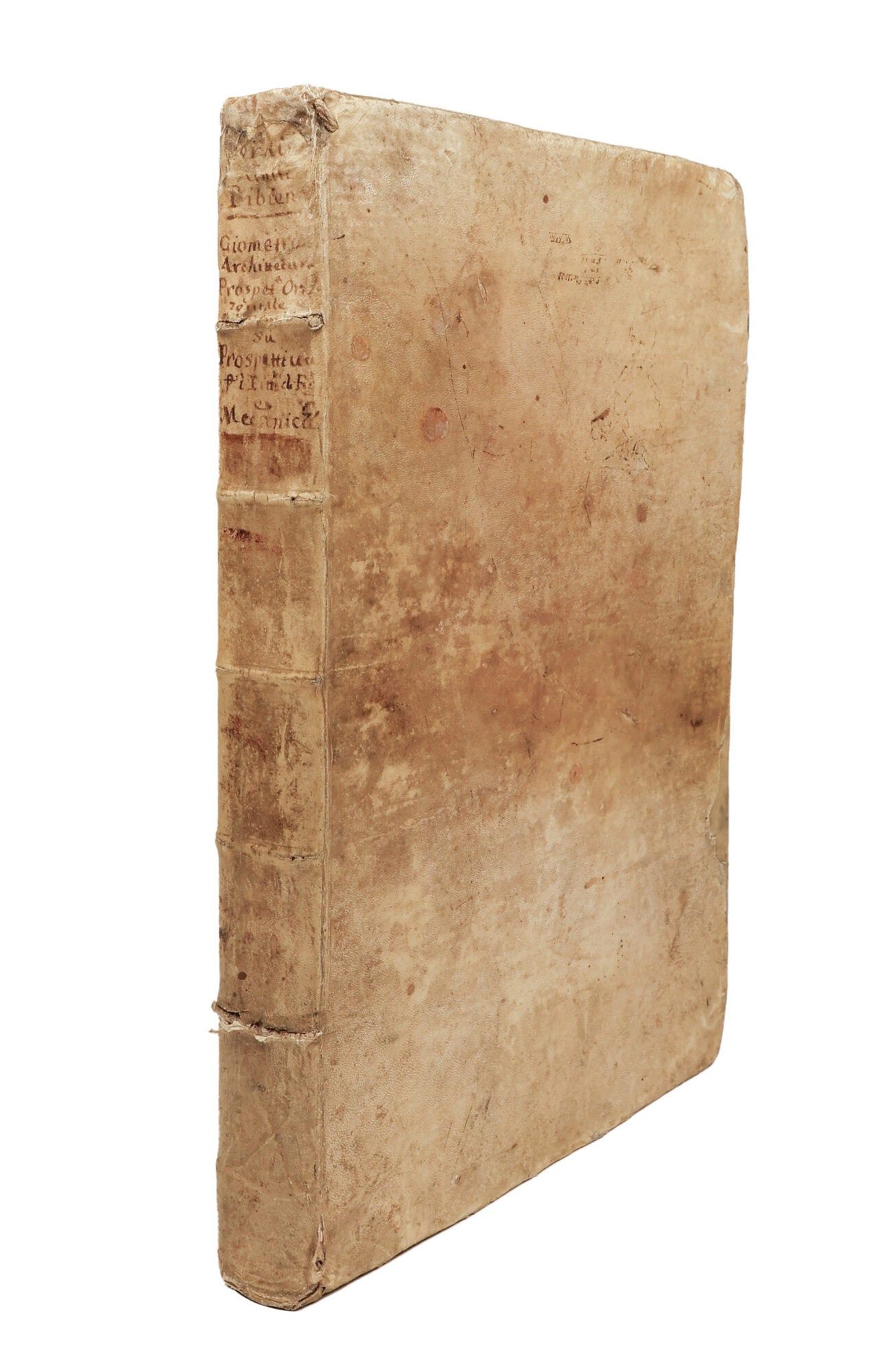
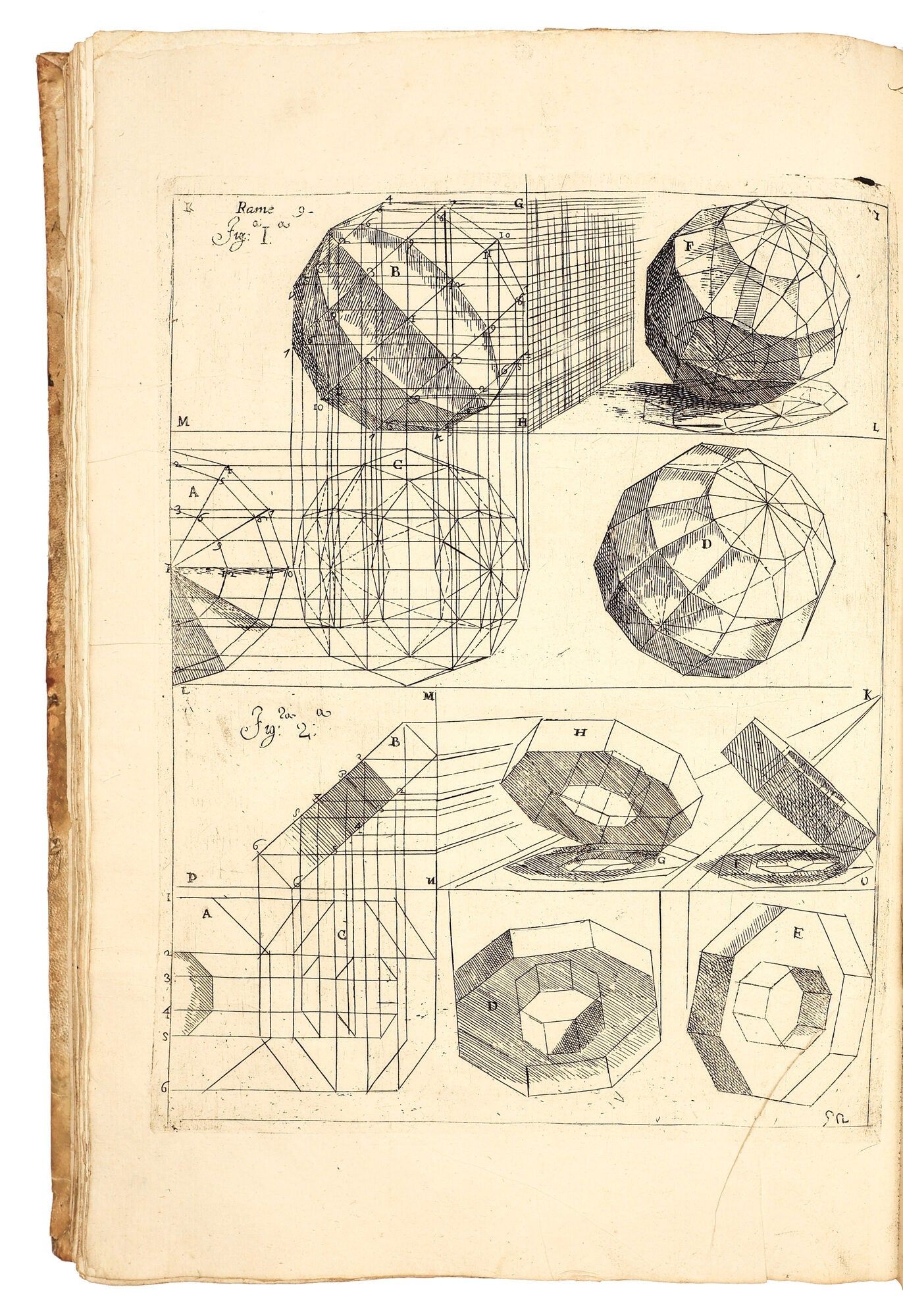
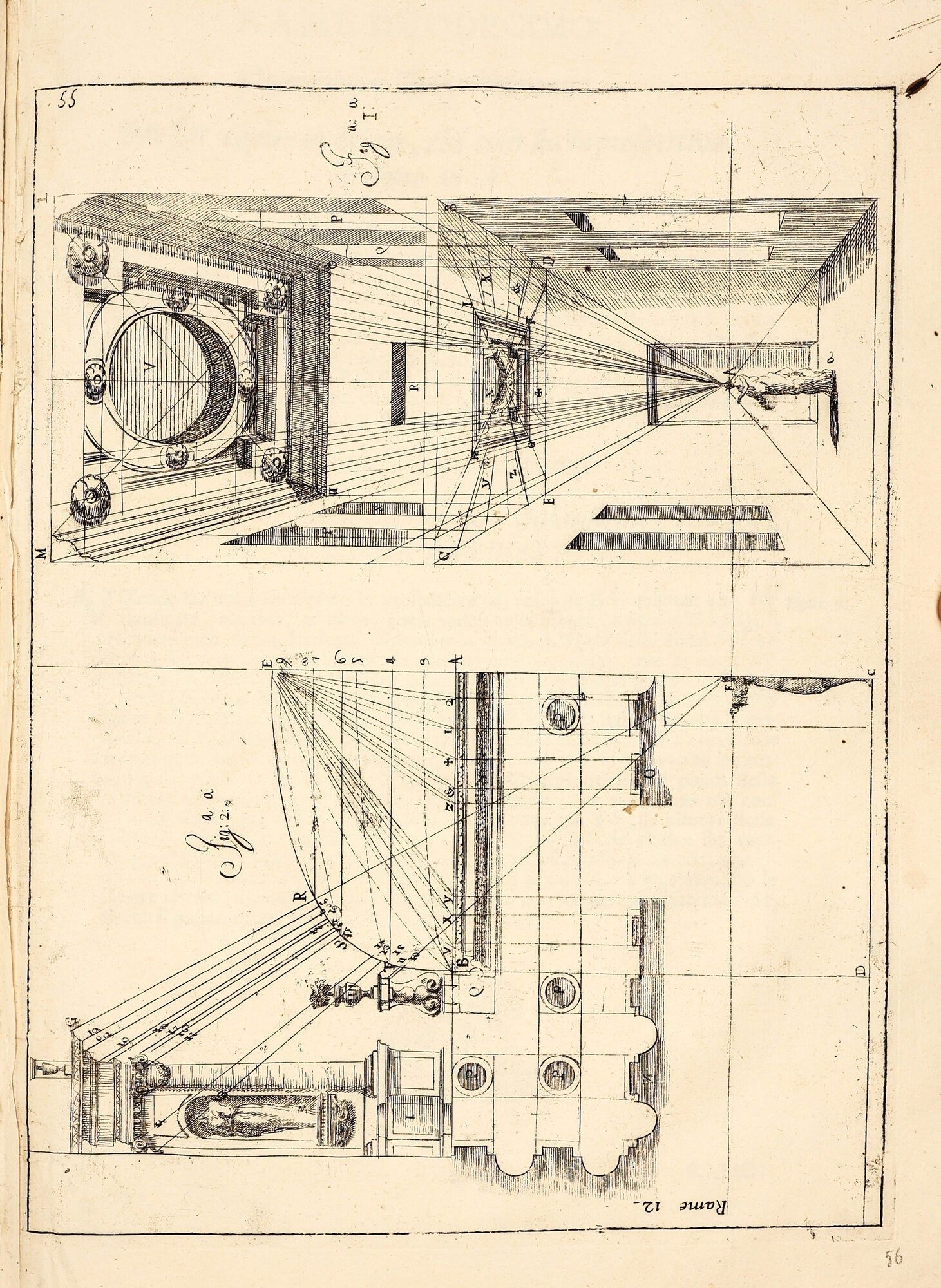
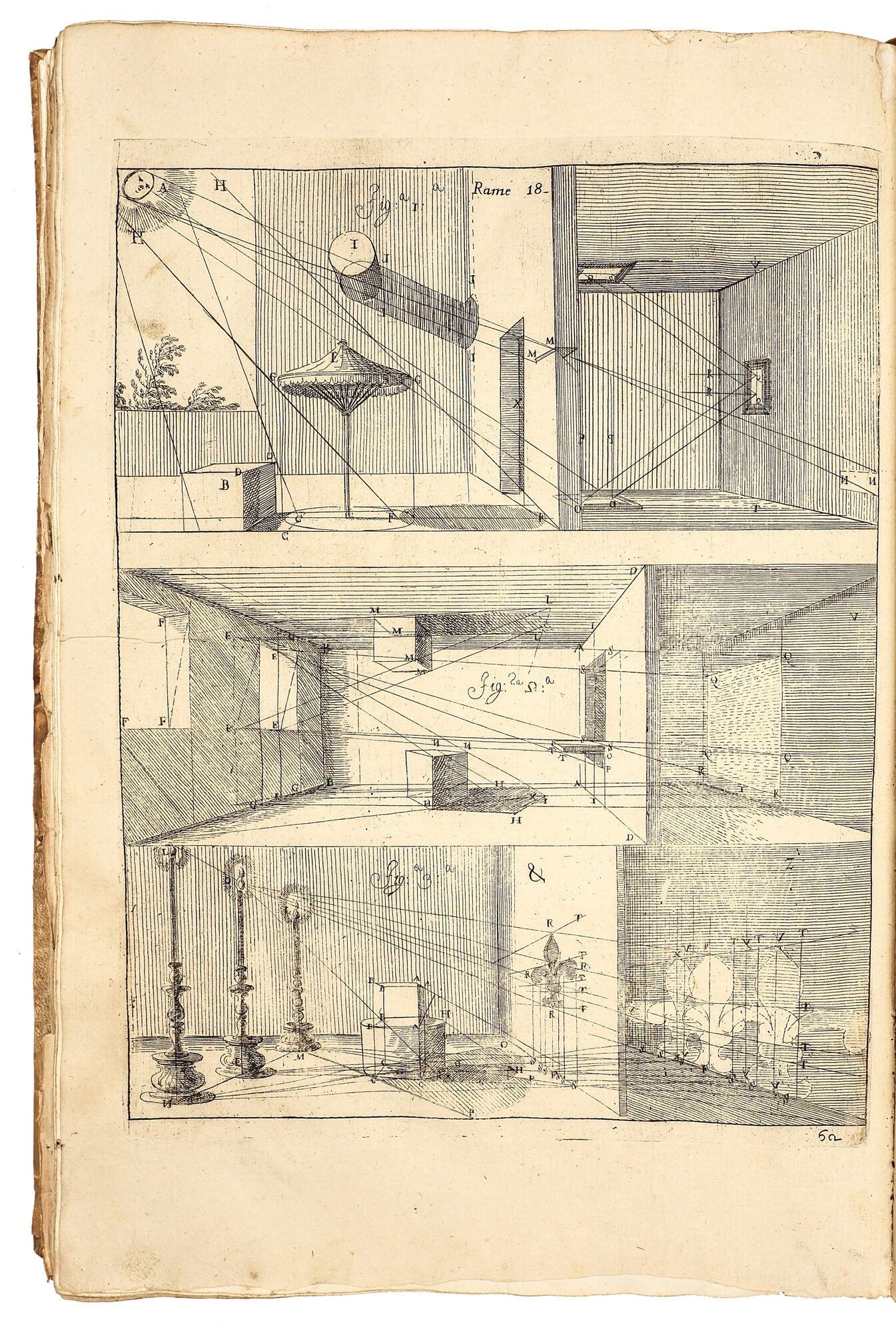
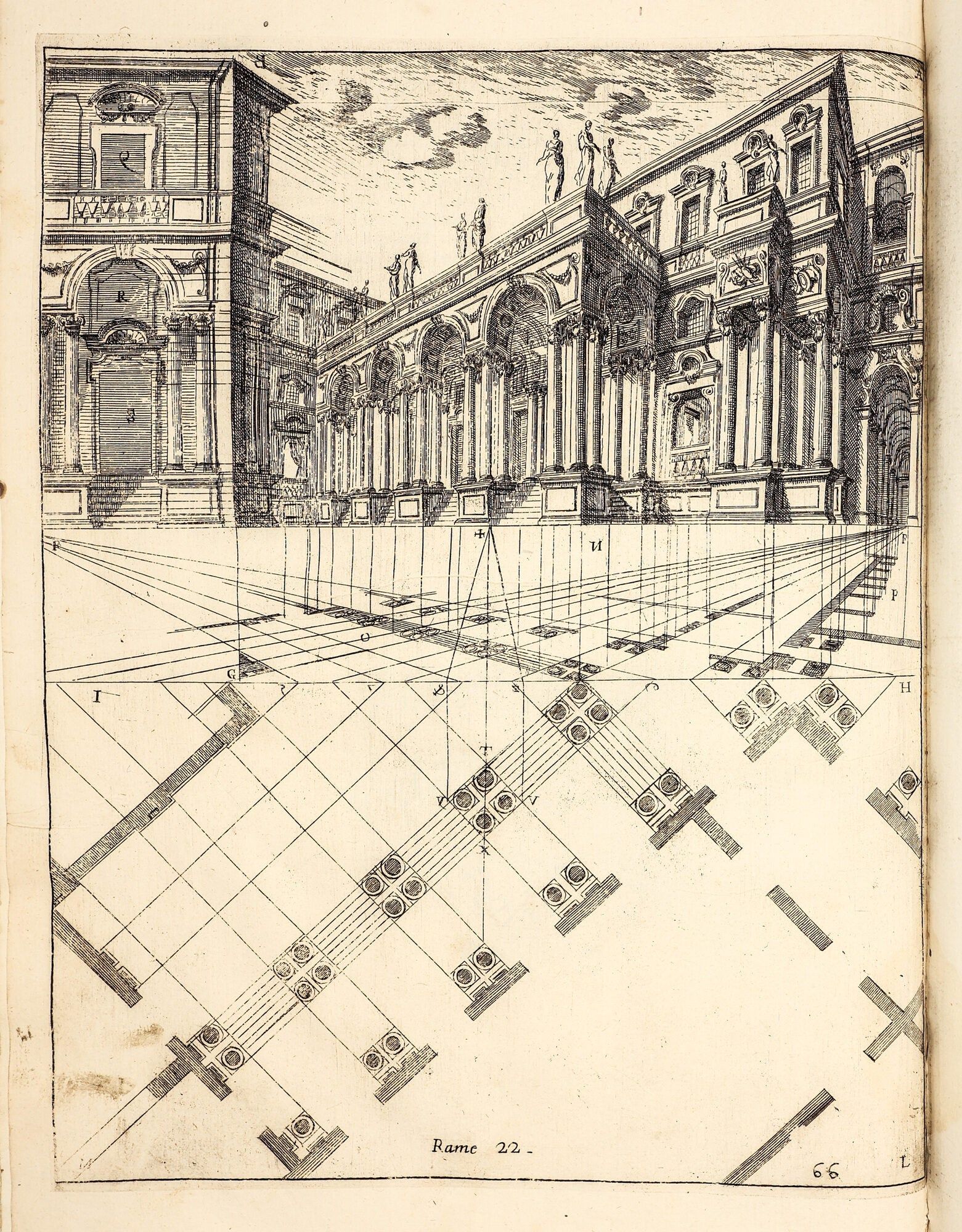
- Hardcover
- Parma: Paolo Monti, 1711
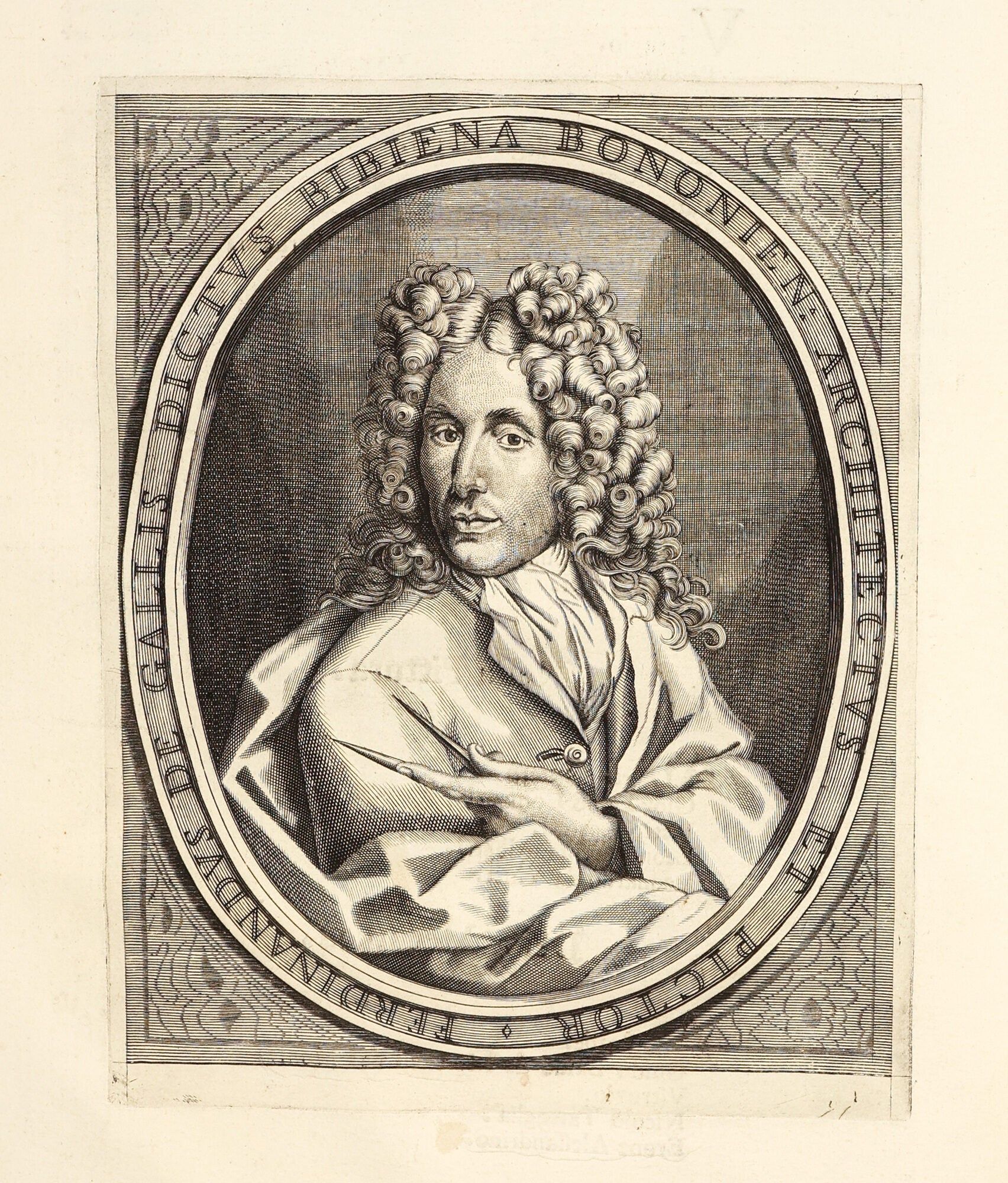
One of Baroque theater's most important innovators, Ferdinando Galli Bibiena founded a dynasty of eight artists whose work, produced largely for the Farnese family and the House of Austria, shaped stage and theater design from the 1680s to the 1780s. Trained in painting, draftsmanship, and architecture, Ferdinando developed the family's distinctive style while creating stage sets, decorations, buildings, and gardens for the Farnese court in Parma and Piacenza.
He is best known for inventing the scena per angolo - the "angled scene" - which broke with the rigid symmetry of seventeenth-century stages and introduced dynamic, immersive perspectives. This innovation established him as one of Europe's leading stage designers. His reputation brought commissions from major Italian theaters and, in 1708, an invitation to Barcelona to direct festivities for the marriage of Archduke Charles (later Emperor Charles VI). Later, together with his sons Giuseppe and Antonio, he worked at the Viennese court, further refining this revolutionary perspective system.
Ferdinando codified his ideas in L'architettura civile, an influential manual for students of art and architecture. It is the first treatise to formally define scena per angolo, explained in Part Four's Della prospettiva delle scene, o teatri di nuova invenzione as a means of transforming static scenery into dynamic, spatially rich theatrical environments.
The work is divided into five sections: geometry, civil architecture, perspective, including illusionistic "sotto in sù" perspective; instructions for painting perspective for theatrical scenes, including the "scena per angolo" technique; and the mechanics of transporting and supporting stage scenery.
"The five-part text of Architettura civile contains references to the principal canonical writers on architecture (Vitruvius, Leon Battista Alberti, Andrea Palladio, Sebastiano Serlio, Vincenzo Scamozzi, and Giacomo Barozzi da Vignola) and on painting (Leonardo and Albrecht Durer), but is more circumspect in its references to experts on perspective; neither Nicola Sabbatini nor Andrea Pozzo is mentioned, the latter an especially glaring omission. The section on geometry includes a comparative table of scaled measurements, and although this was not a new idea (Serlio had provided scaled comparative measurements in his treatise), it added to the documentation of the widely diverse measurements used in European cities. In the section on architecture, Ferdinando follows Palladian principles of architecture, discussing types of buildings and appropriate kinds of ornament. The first two parts of the treatise establish several methods for the mastery of spatial illusionism in architecture and offer a repertory of architectural forms.
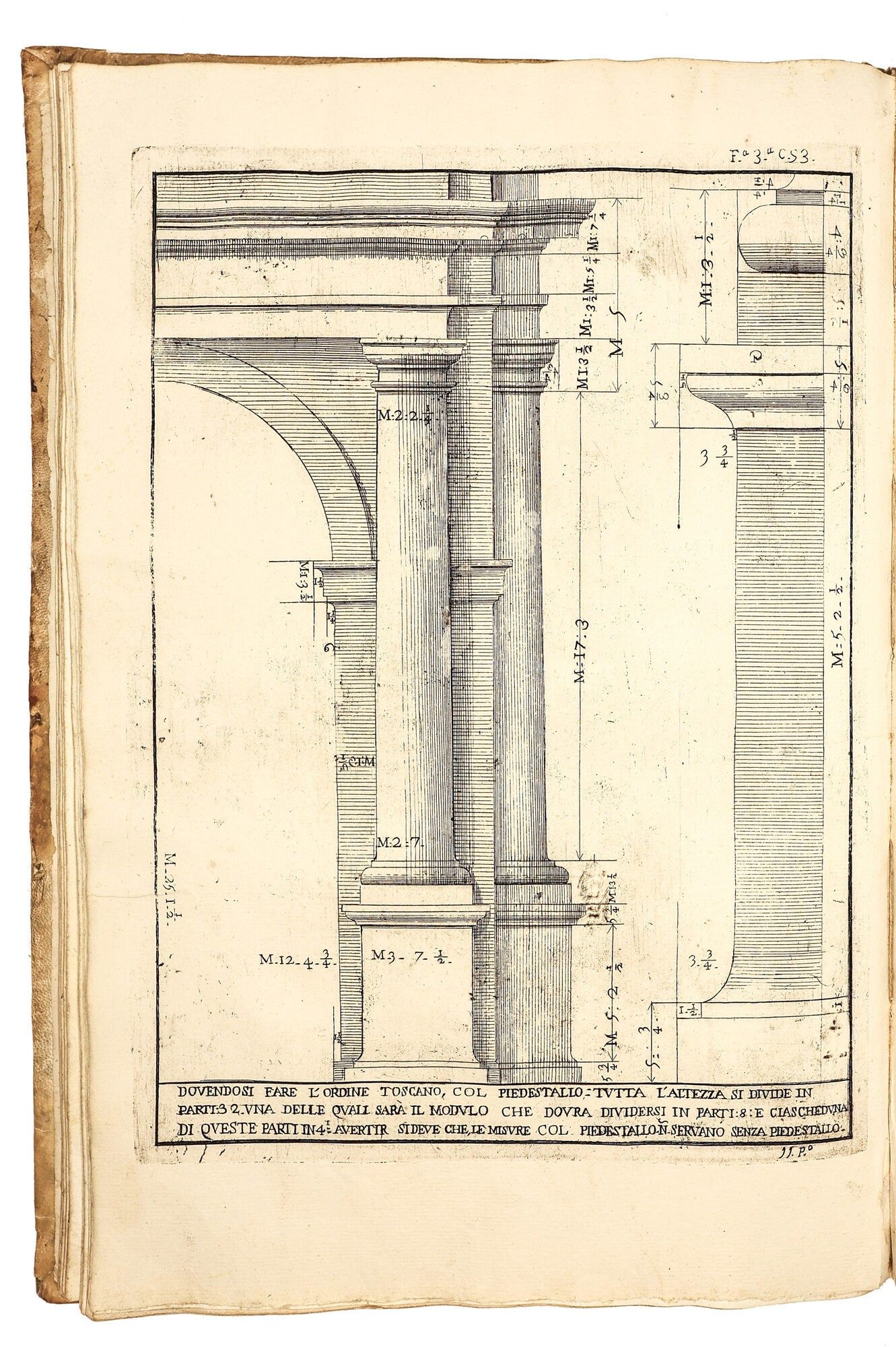
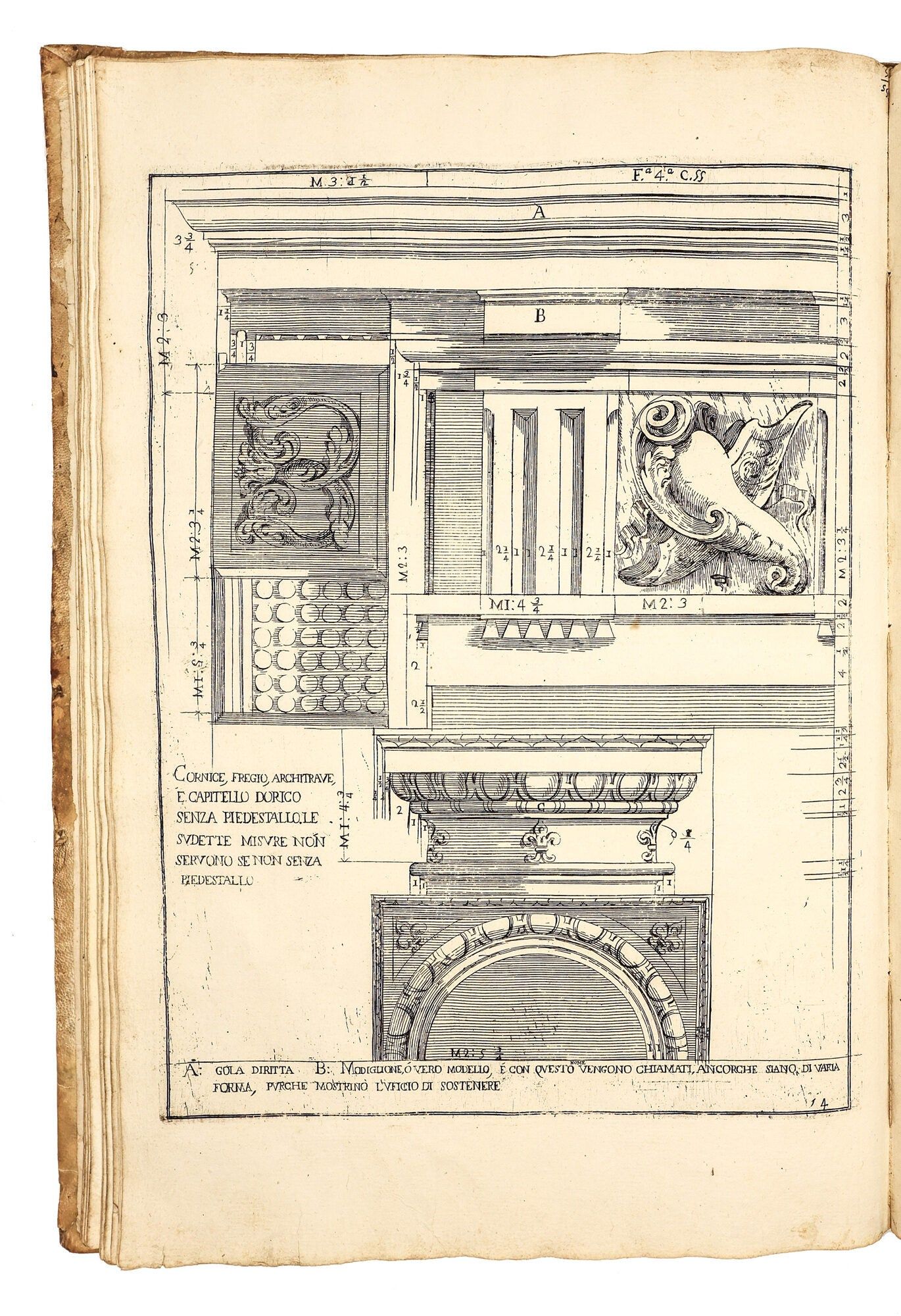
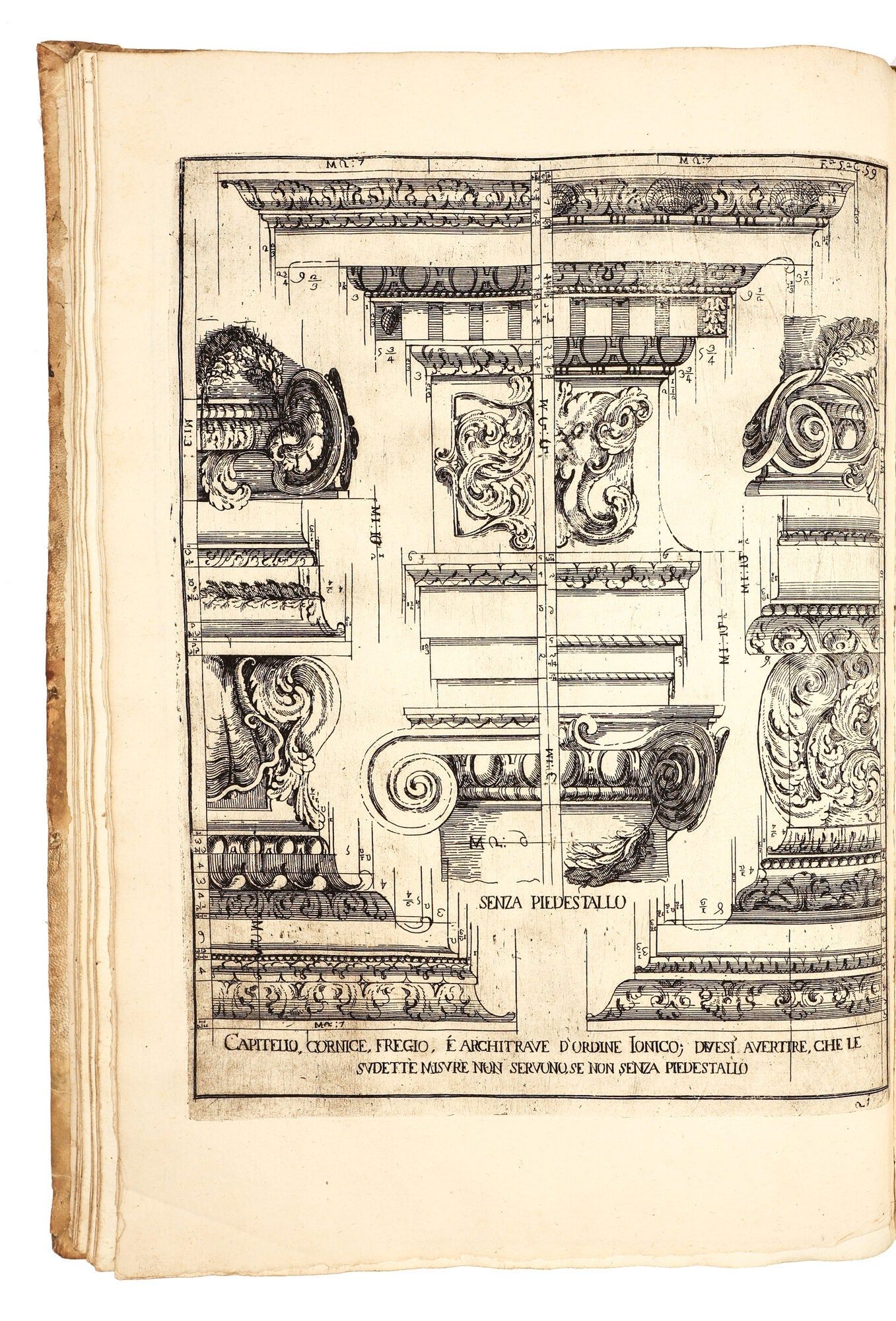
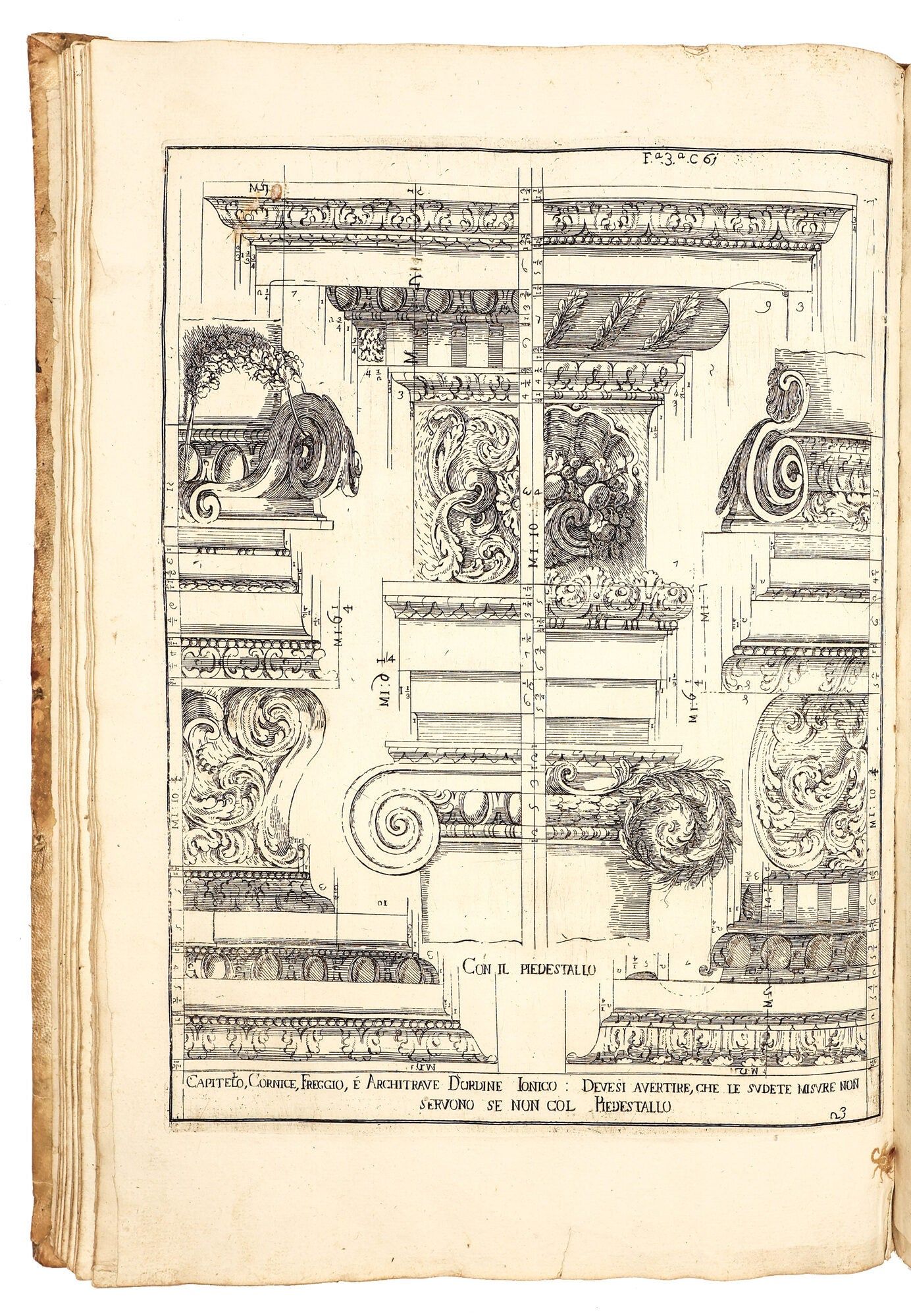
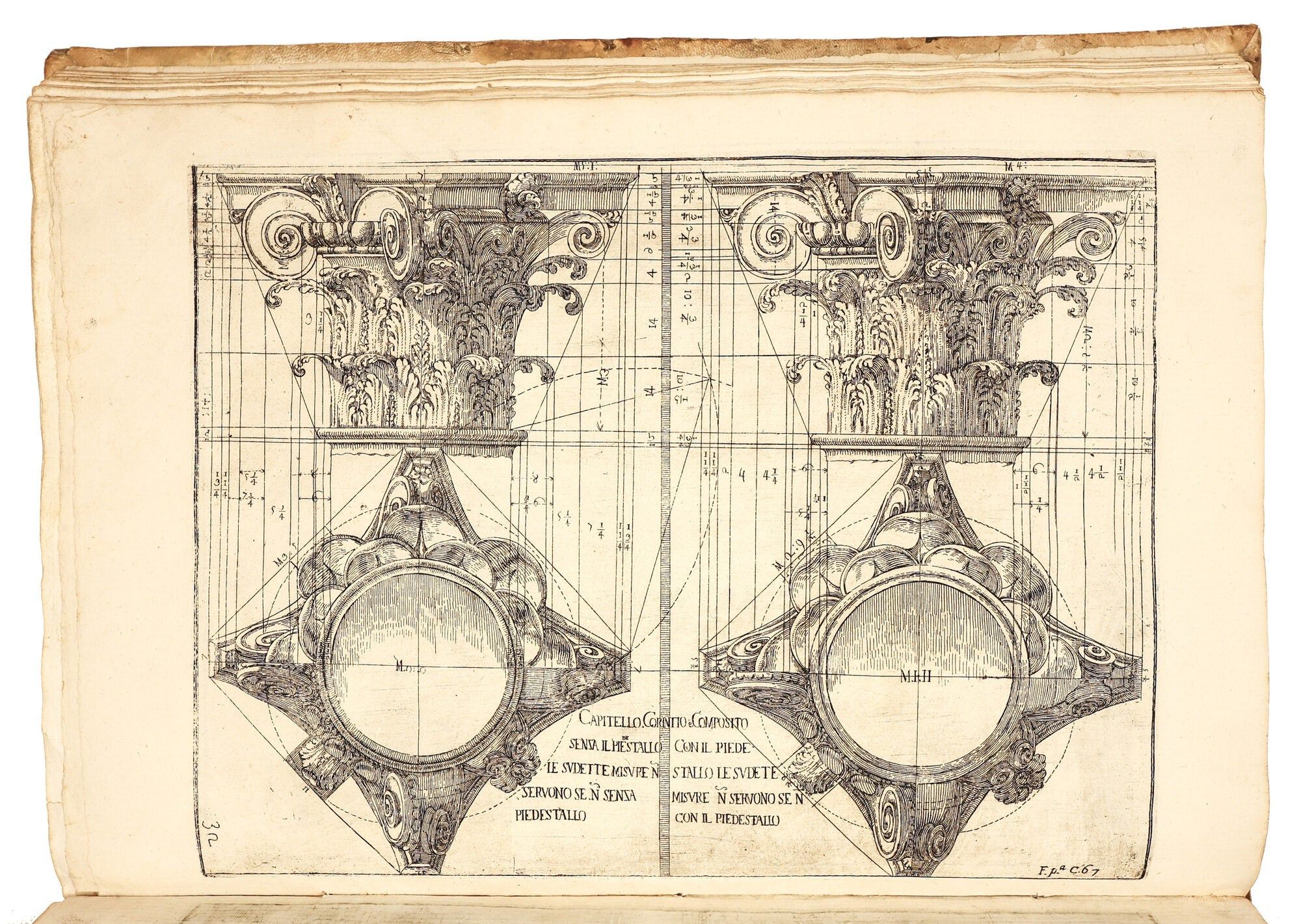
"Ferdinando's Architettura civile is written in a very pithy style, with brief notes that make it resemble a recipe book. (His intention was to help average readers of 'mediocre ingegno' find what they want rapidly.) The first part, ostensibly on geometry, also provides a list of architectural principles regarding composition, preconstruction deliberations, typology of architecture, and construction materials. In part 2, Ferdinando turns to the architectural orders, admittedly following 'the most followed' that is, Vignola and Palladio. His illustrations for the orders of columns are densely composed, rich plates. His innovations for the composite order are quite extraordinary and include several figurative suggestions, such as trophies and serpents. Many of the details echo Francesco Borromini's architecture.
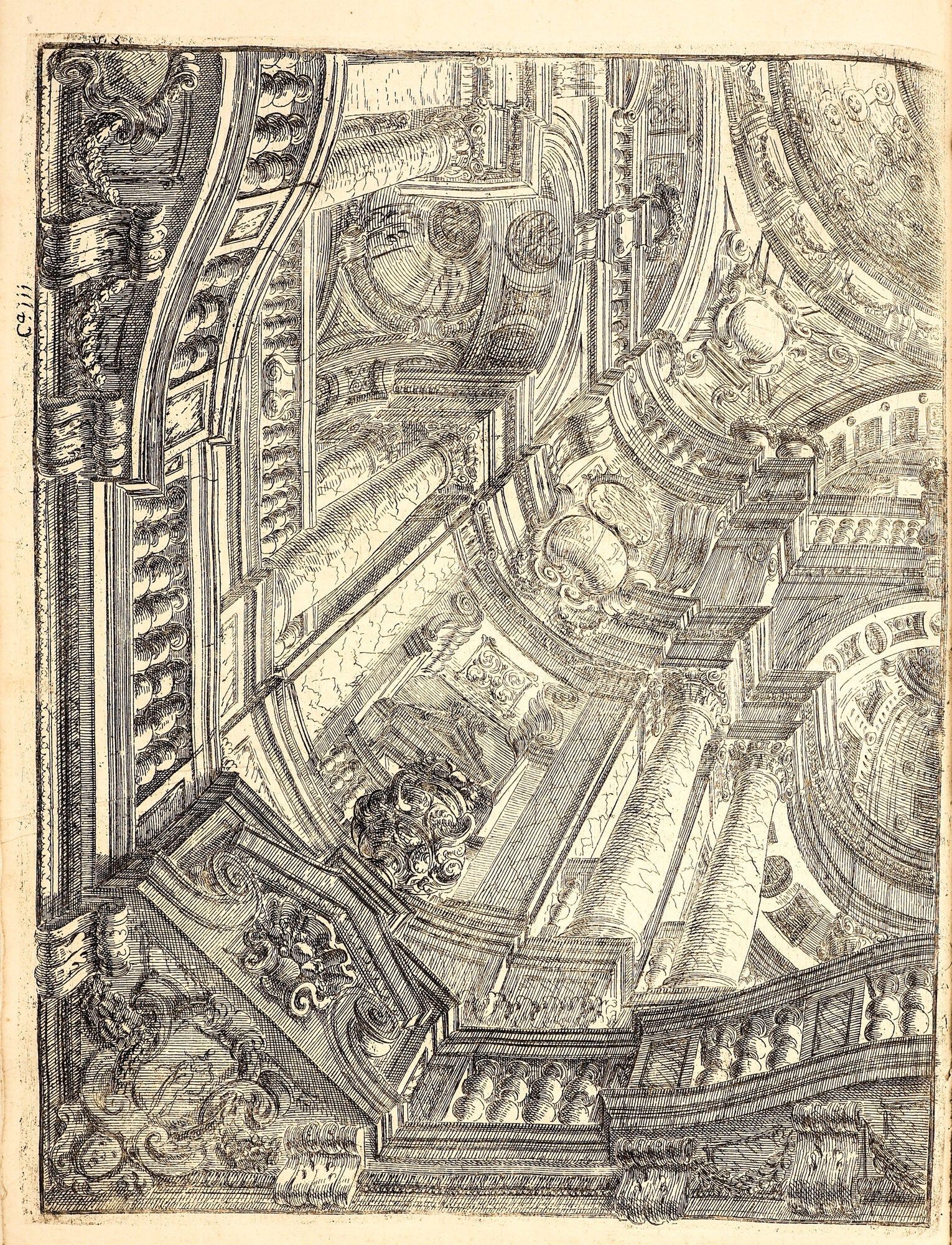
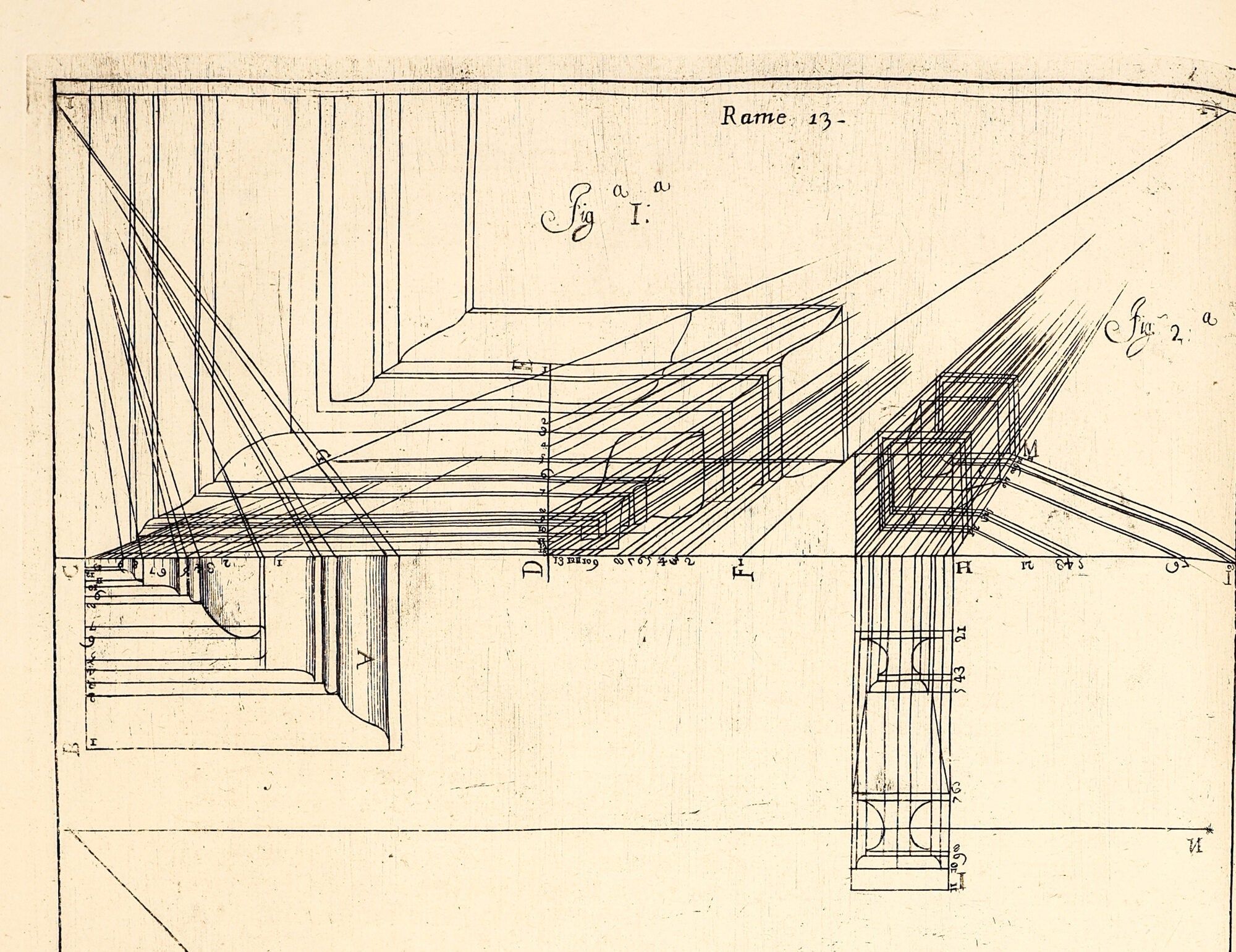
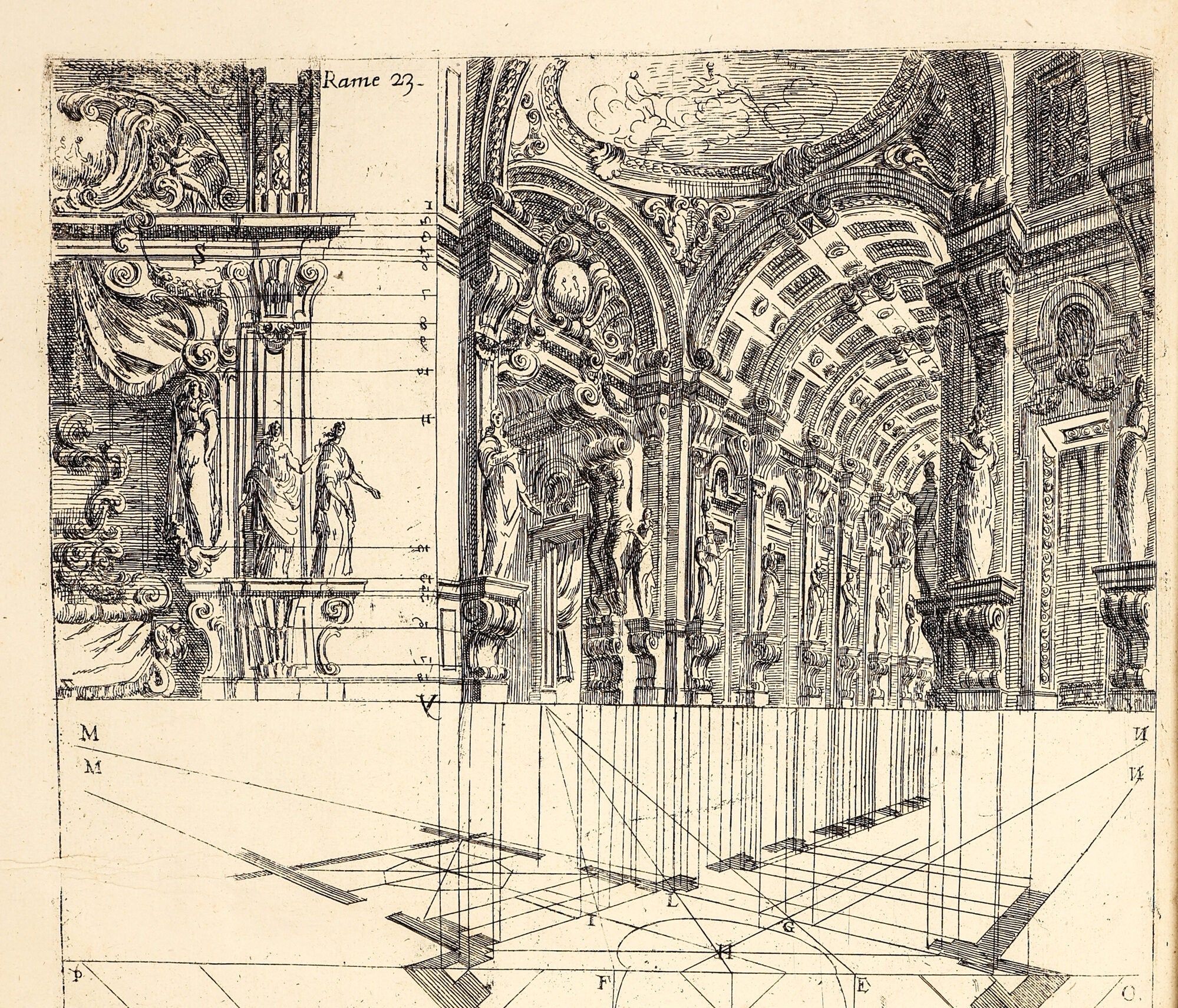
"The third part on perspective is the core of the book. There Ferdinando deals with the theoretical aspects of optical perception, including the visual pyramid, and historical predecessors among whom he prefers Vignola's second manner of constructing perspective. He divides perspective into common, horizontal, and sotto in su (worm's-eye view). It is in the fourth part that he introduces the reader to his innovation of the scena per angolo, preceded by a short discussion of painting. In the conclusion, part 5, Ferdinando discusses the art of moving weights, which corresponds to the engineering and mechanical aspect of stage design hidden from the view of the public. Thus, although the treatise provides the basics of geometry, mechanics, and principles of architecture, it is principally intended to instruct theater and stage designers.
"The fourth part of the treatise provides detailed instruction on stage design. To an even greater extent than Andrea Pozzo, Ferdinando did not allow the physical form of the stage to constrain his artistic principles, abandoning the axial continuity between auditorium and stage and placing his sets at 45 degrees to the proscenium opening. His scenery was composed of as many as fifteen pairs of flat wings mounted on carriages and maneuvered below the stage floor. These wings converge toward the stage's backdrop. Each pair of wings has a border above it, which is lowered from above and is needed in order to mask the top of the scenes. Their perspective is complicated by the incline of the stage floor, which rises toward a horizon pitched at the elevation of the main floor in the theater; in Ferdinando's eighteenth-century theaters, this would be the first row of boxes occupied by the prince and his immediate court (since the privileged hierarchies of the court audience were not entirely abandoned in princely theaters). Ferdinando's scenes, architectural in conception, are the first to deal with the implications of two-point perspective, as he claims at the beginning of this part. His two examples of the scene per angolo illustrate parts of a court and of a great room. By offering fragmented and partial views, Ferdinando stimulates the imagination of the spectator to supplement a visual space beyond the offered one.
"But the treatise is not a mere work of perspective. An entire section is dedicated to the theory of painting, since the scenographers had to know how to paint the sets. In this area Ferdinando's work is continuous with the painted architectures of Baldassare Peruzzi and Vignola, as well as Pozzo, but goes beyond his predecessors in providing a much more specific and detailed series of instructions and operations. According to Werner Oechslin (1975), this is due to the much greater specialization of Ferdinando's enterprise: while going beyond the normative scheme of painting/quadratura/architecture, Ferdinando can be seen as translating back into practical architecture his feigned spatial compositions.
"Ferdinando takes pains to demonstrate the superiority of his methods in comparison to older, more conservative techniques. His Architettura civile, organized like a scientific publication, is subdivided into operazioni. Thus operazioni 39-45 illustrate his subtle variant of the sotto in su composition, which was also favored by Andrea Pozzo. But Ferdinando does not refer to Pozzo, who not only published his own influential treatise on perspective in the last decade of the seventeenth century, but also worked in Vienna between 1702 and 1709, just before Ferdinando's own arrival. Operazioni 60-69 provide a glimpse of the step-by-step planning of sets and directions about the machinery needed to change the scenery. Of these operazioni, 67, 68, and 69 are the most technical. It becomes clear that Ferdinando used a very deep stage (twice as deep as it was wide) and that only the front of the three-part stage could be used by the actors. Nonetheless, 'clearly articulated fore-, middle, and back stage' transformed the 'static and artificial confrontation of figures and architecture' of earlier performances."(Millard IV, no. 45).
Details
Title
L'Archittettura civile preparata su la geometria, e ridotta alle prospettive. Considerazioni pratiche di Ferdinando Galli Bibiena cittadino Bolognese Architetto Primario, Capo Mastro Maggiore, e Pittore di Camera, e Feste di Teatro della Maestà, Dissegnate e descritte in cinque parti. La prima contiene la Geometria, e avvertimenti, prima che à fabbricar si pervenga. La seconda. un utile Trattato dell'Architettura civile in generale, e le divisioni di essa molto facilitate. La Terza. La Prospettiva commune, orizontale, e di sotto in sù. La Quarta. Un brieve discorso di Pittura, e la Prospettiva per li Pittori di Figure, colla nuova Prospettiva delle Scene Teatrali vedute per angolo, oltre le praticate da tutti gli altri. La Quinta. La Mecanica, ò arte di movere, reggere, e traspostar pesi. Dedicata Alla Sacra Cattolica Real Maestà di Carlo III. Re delle Spagne, d'Ungheria, Boemia &c
Author
Galli Bibiena, Ferdinando (1657-1743)
Binding
Hardcover
Condition
Fine
Publisher
Paolo Monti: Parma
Date
1711
Edition
FIRST EDITION, SECOND ISSUE