

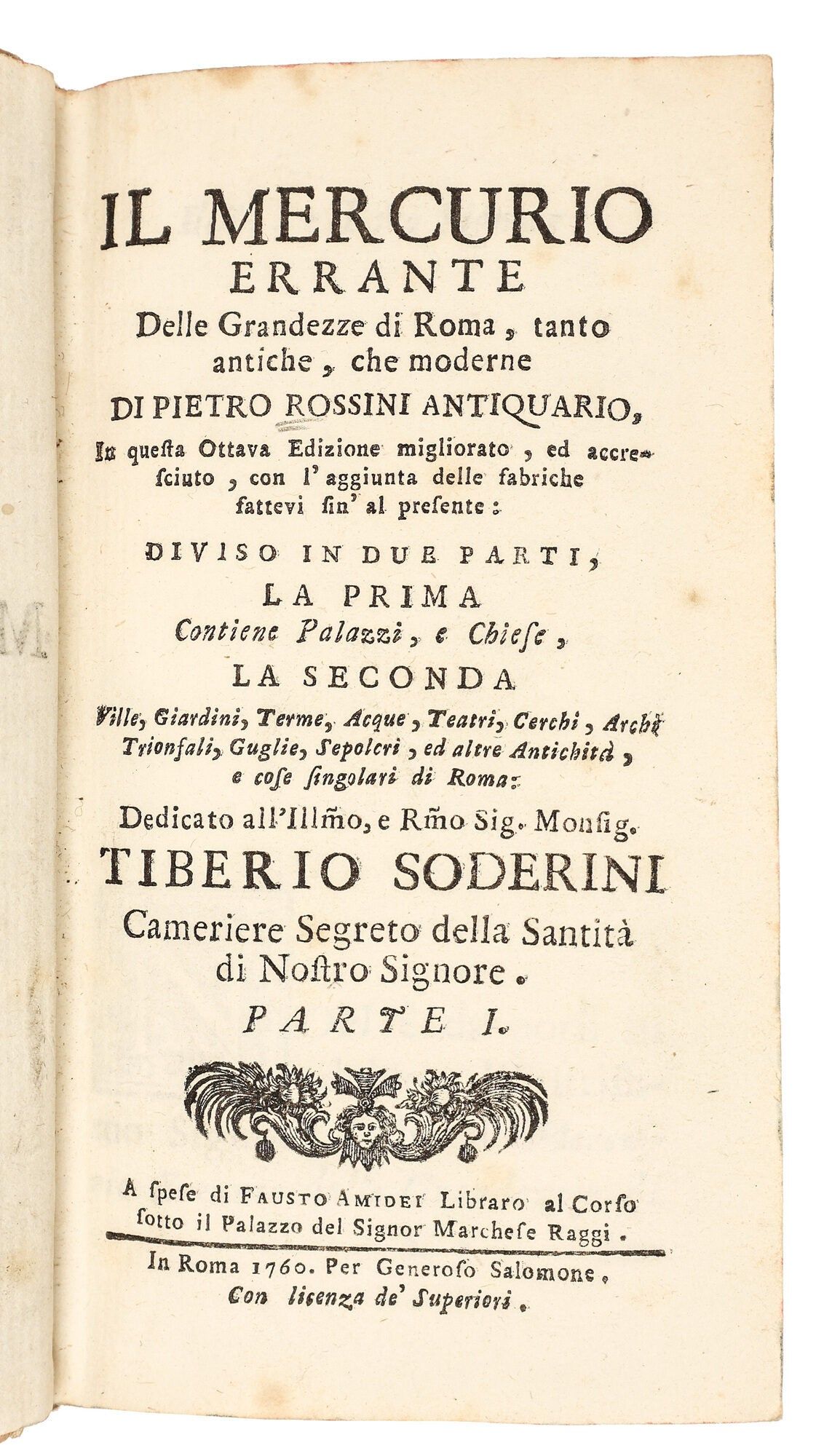
Il Mercurio Errante Delle Grandezze di Roma, tanto antiche, che moderne... In questa Ottava Edizione migliorato, ed accresciuto... Diviso in due parti. La Prima contiene Palazzi, e chiese. La Seconda Ville, giardini, terme, acque, teatri, cerchi, archi trionfali, guglie, sepolcri, ed altre antichità, e cose singolari di Roma
- Hardcover
- Roma: A spese di Fausto Amidei Libraro al Corso sotto il Palazzo del Signor Marchese Raggi, per Generoso Salomone, 1760
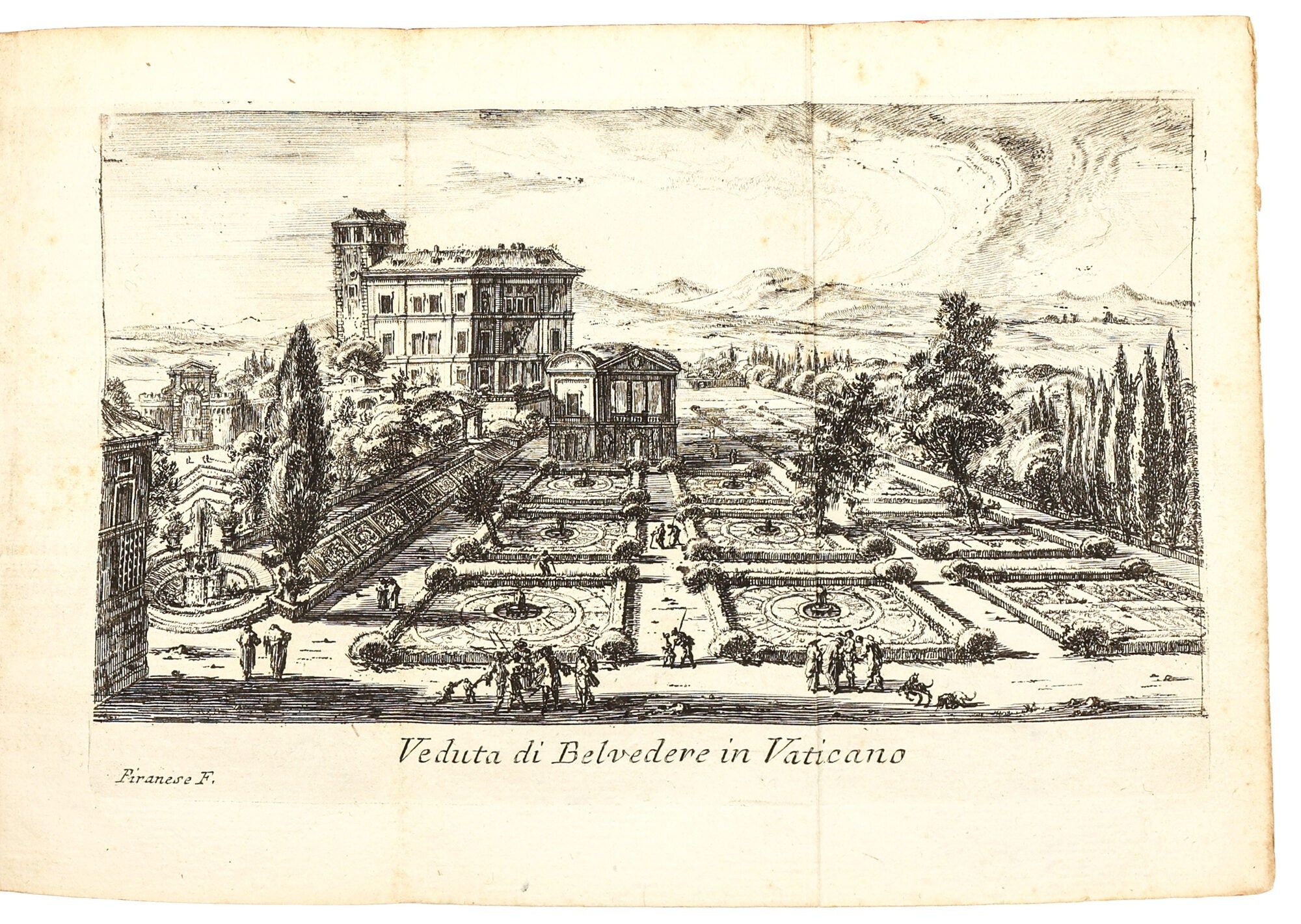
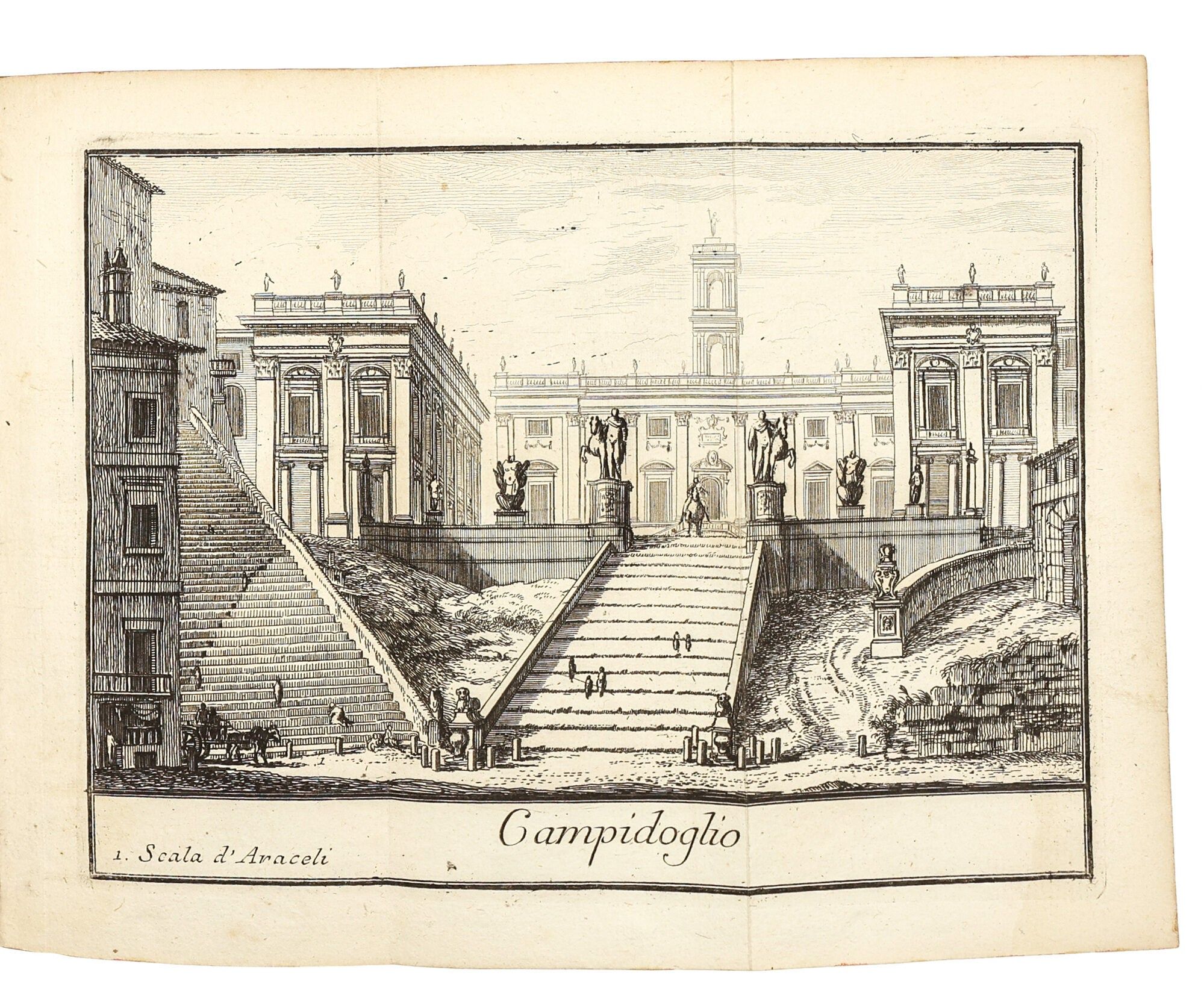
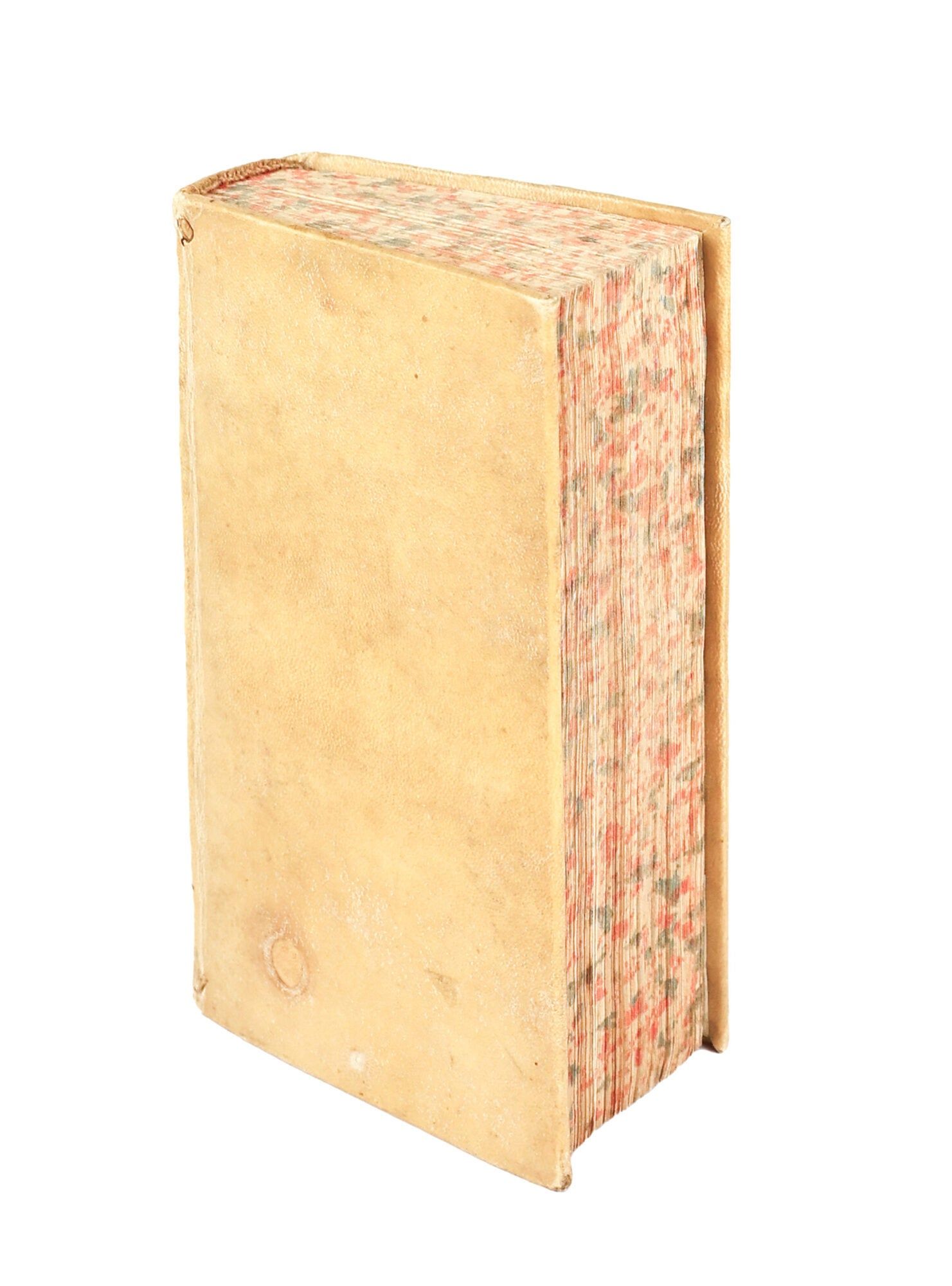
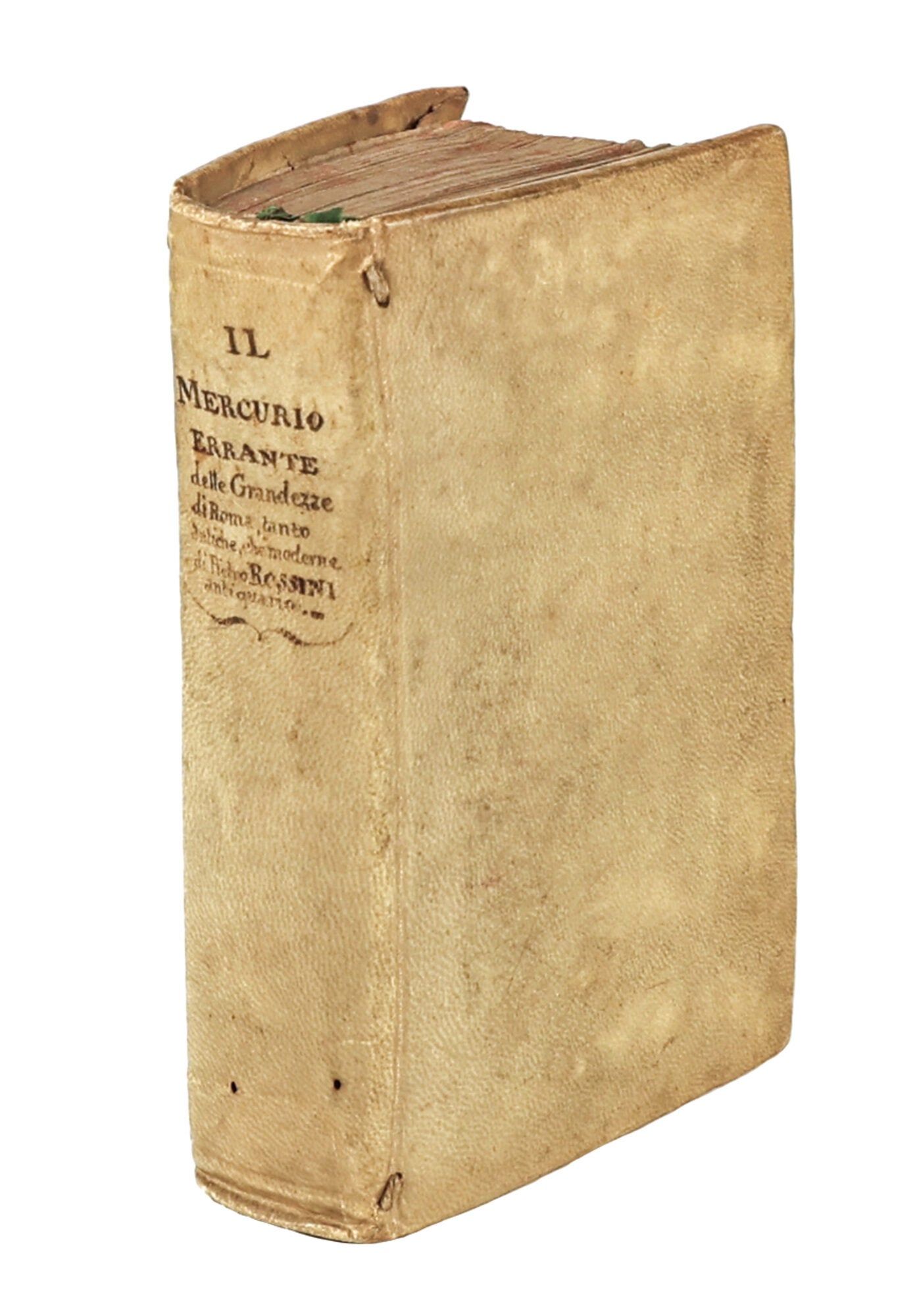
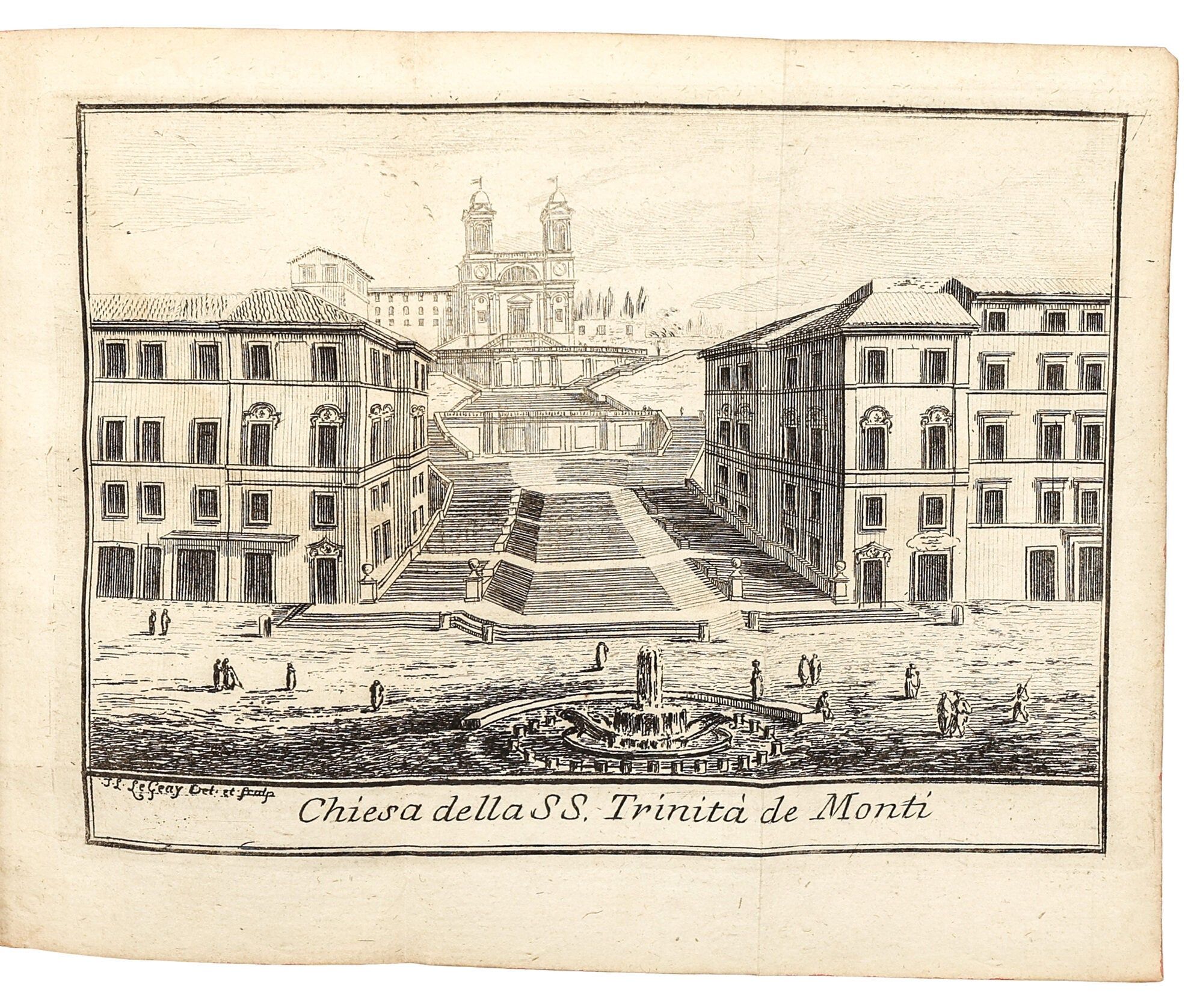
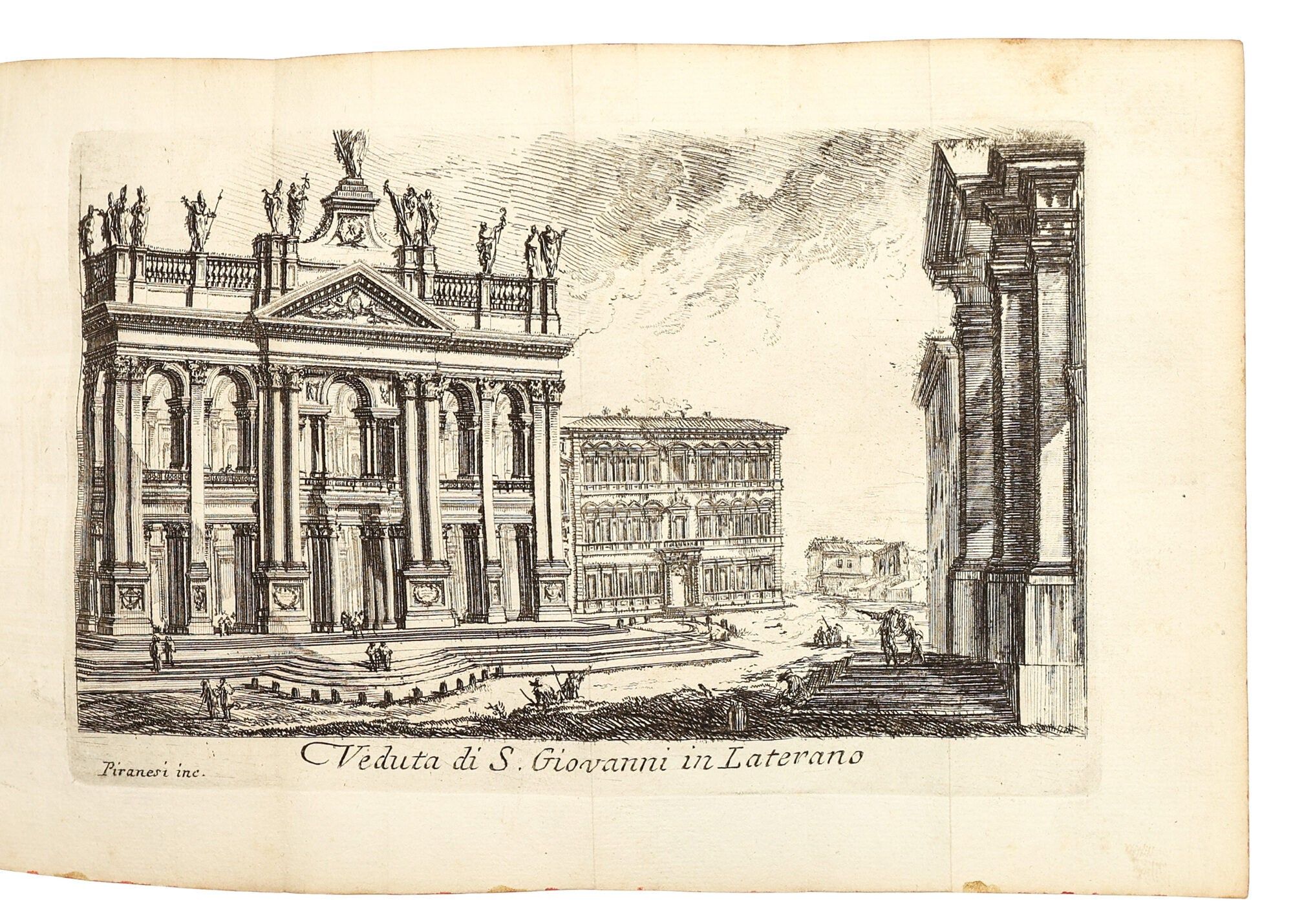
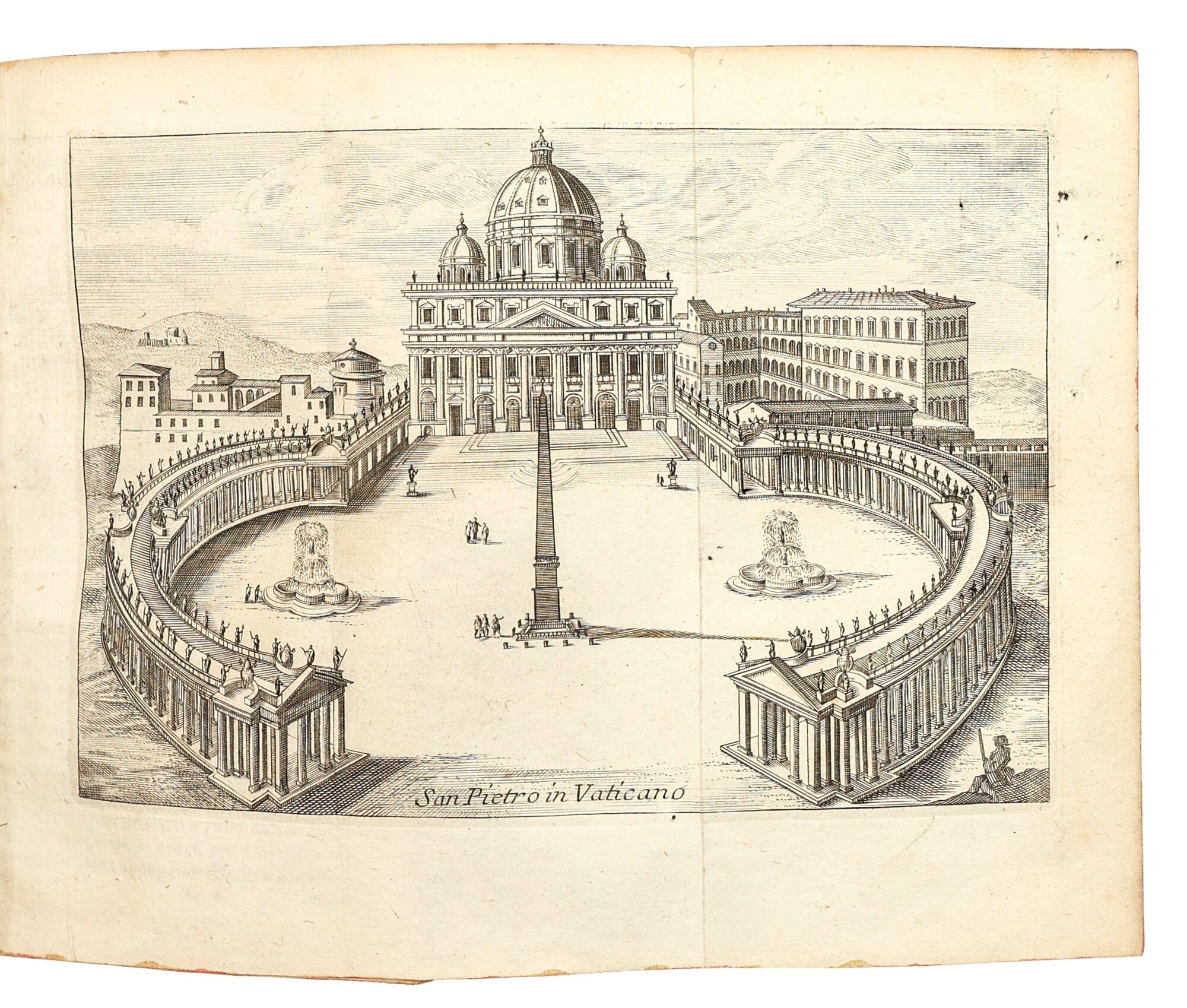
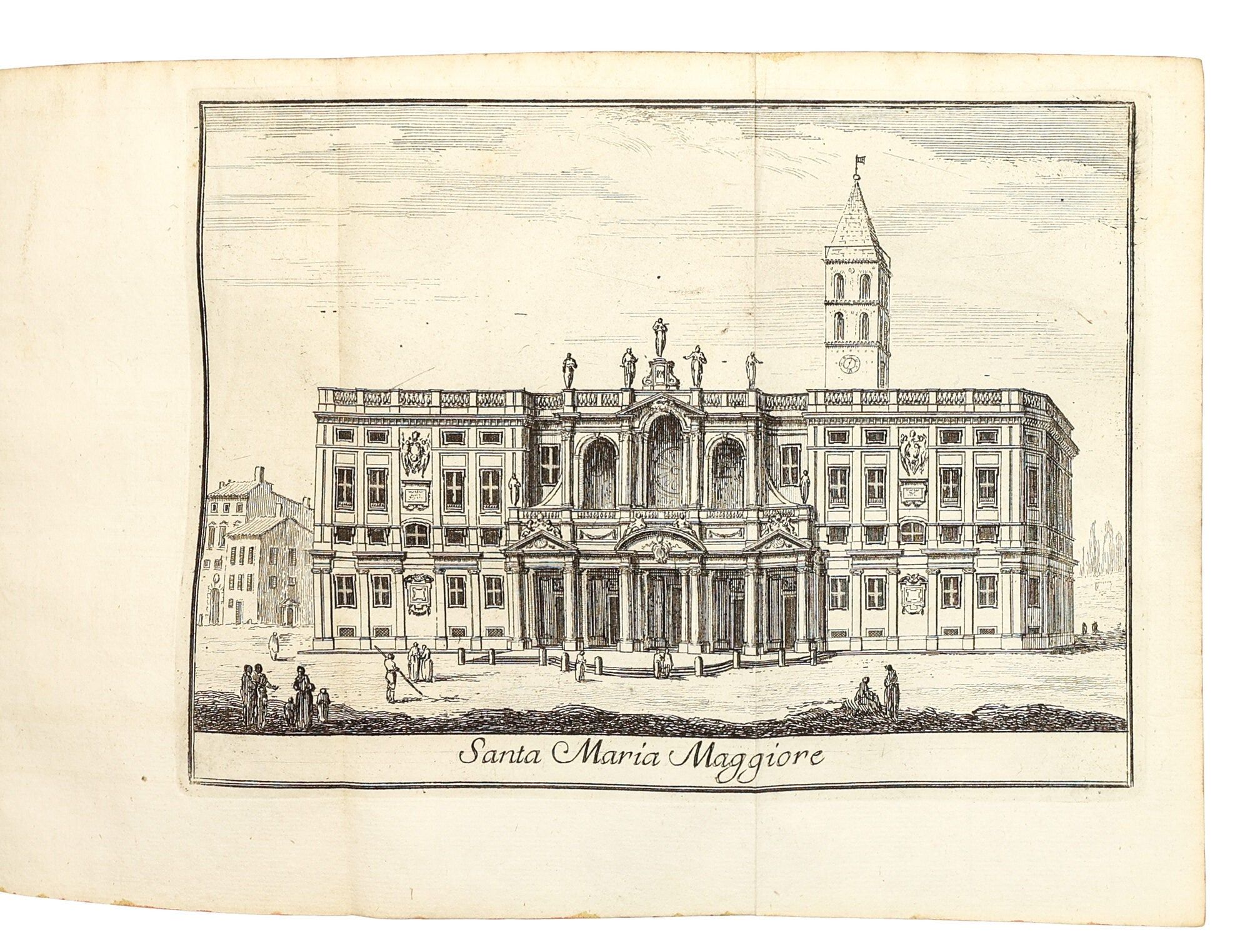
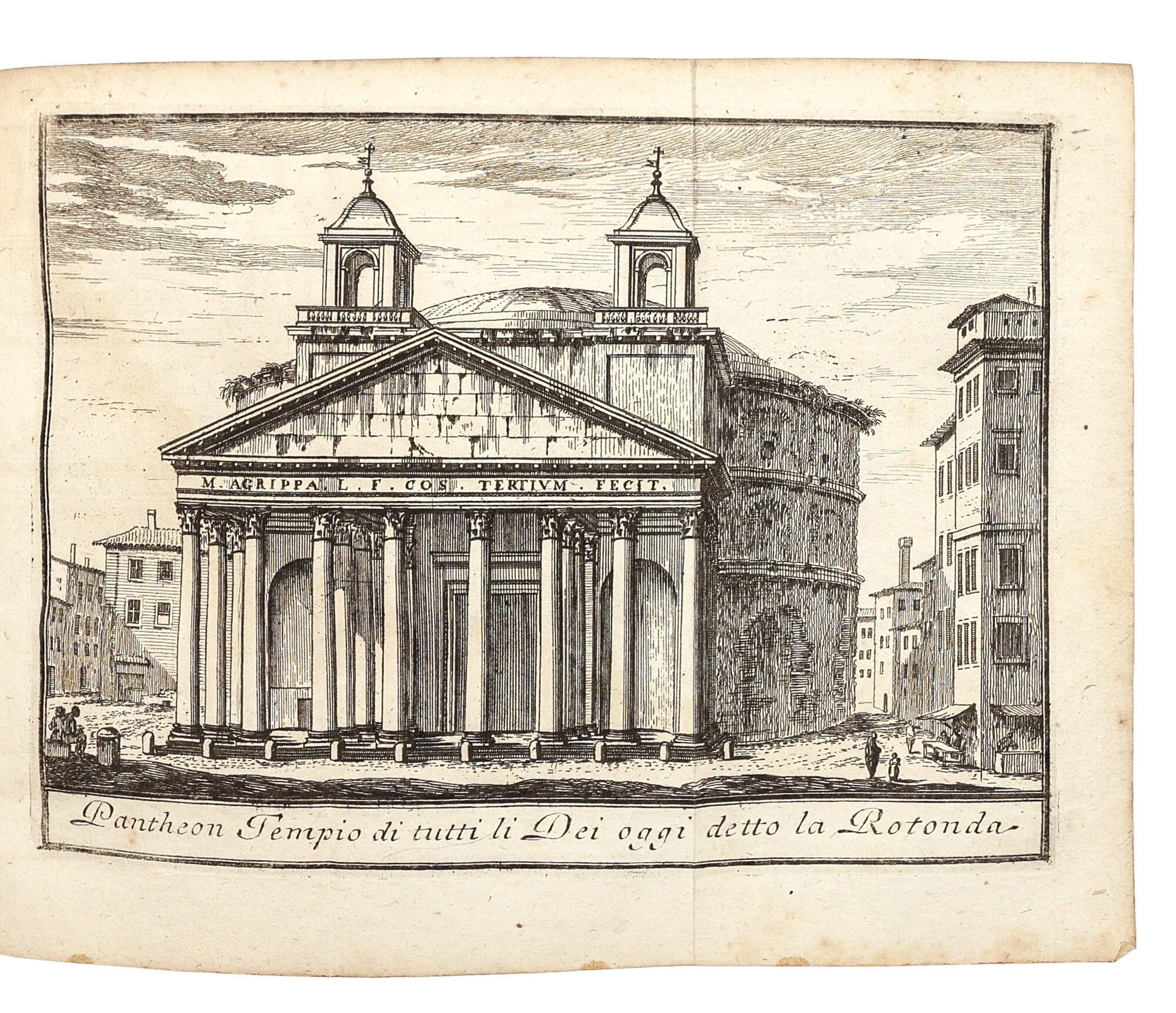
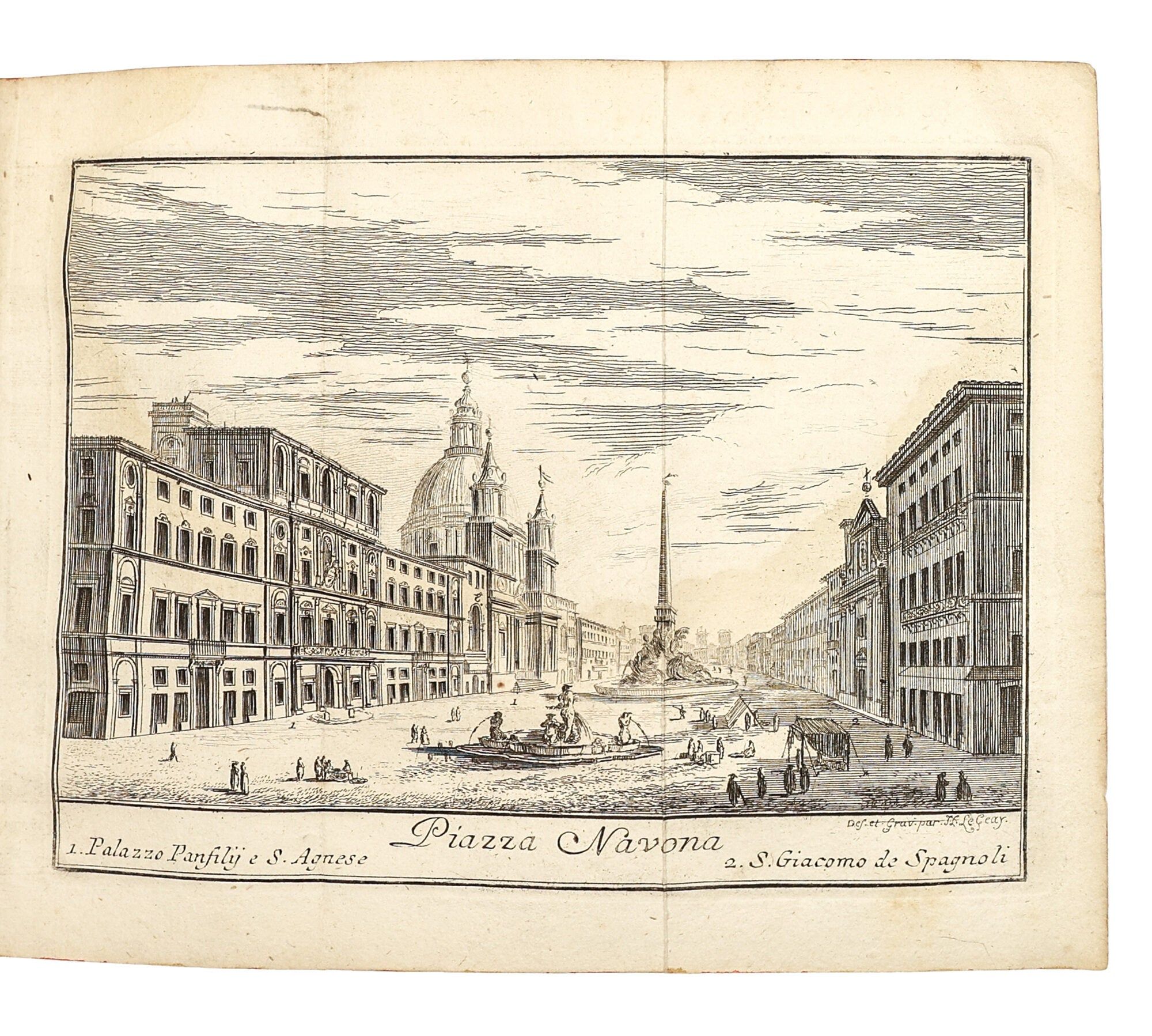
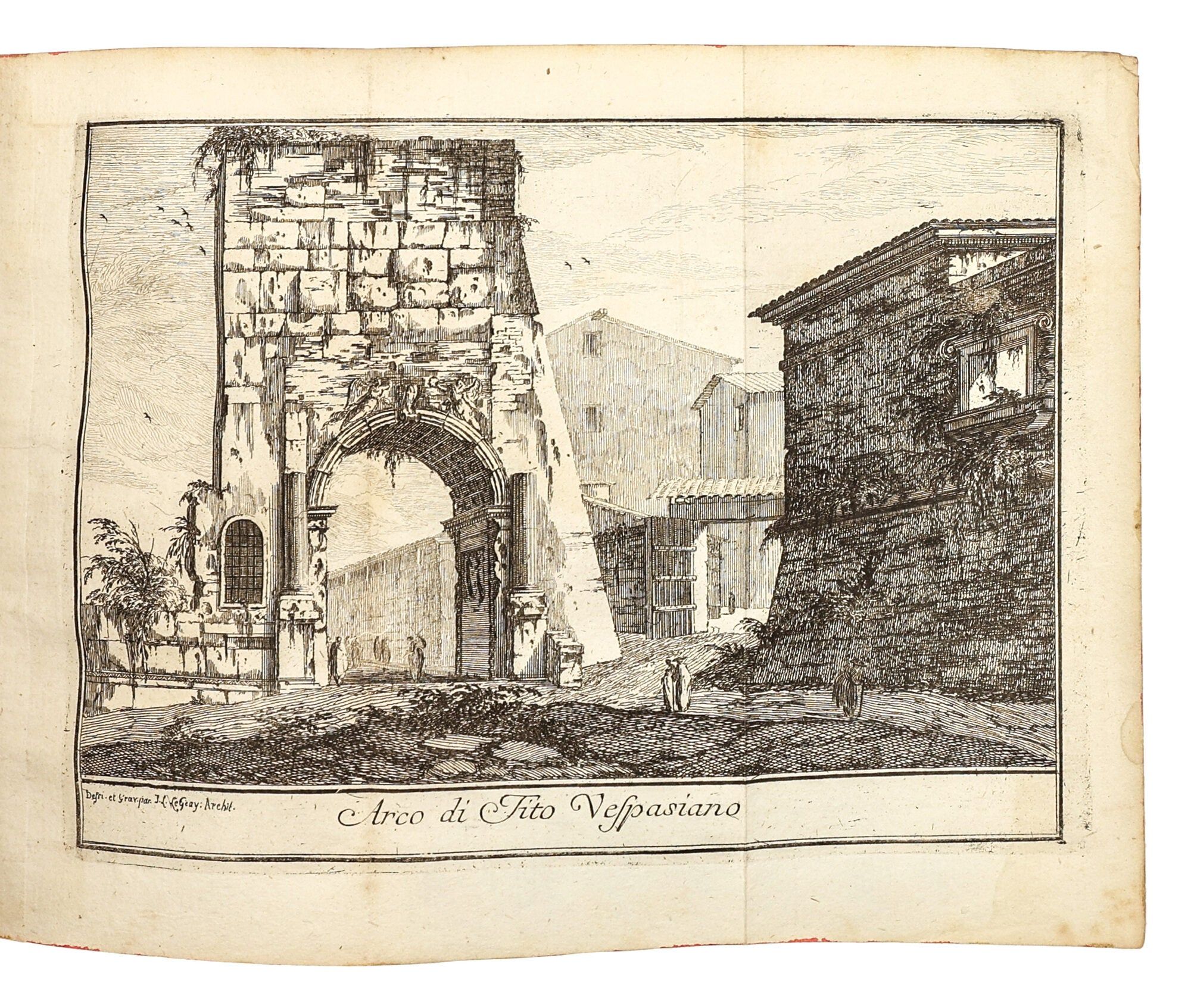
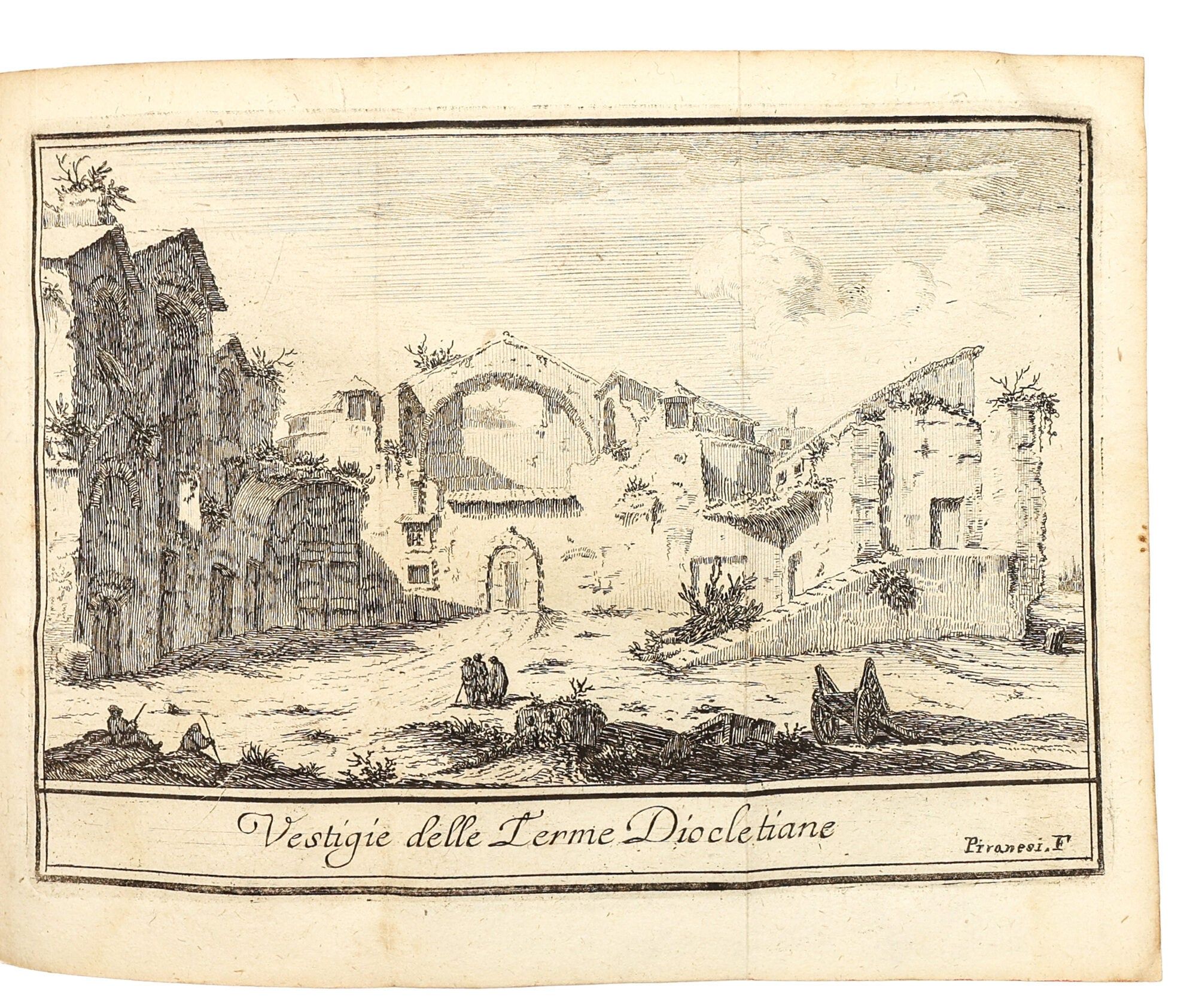
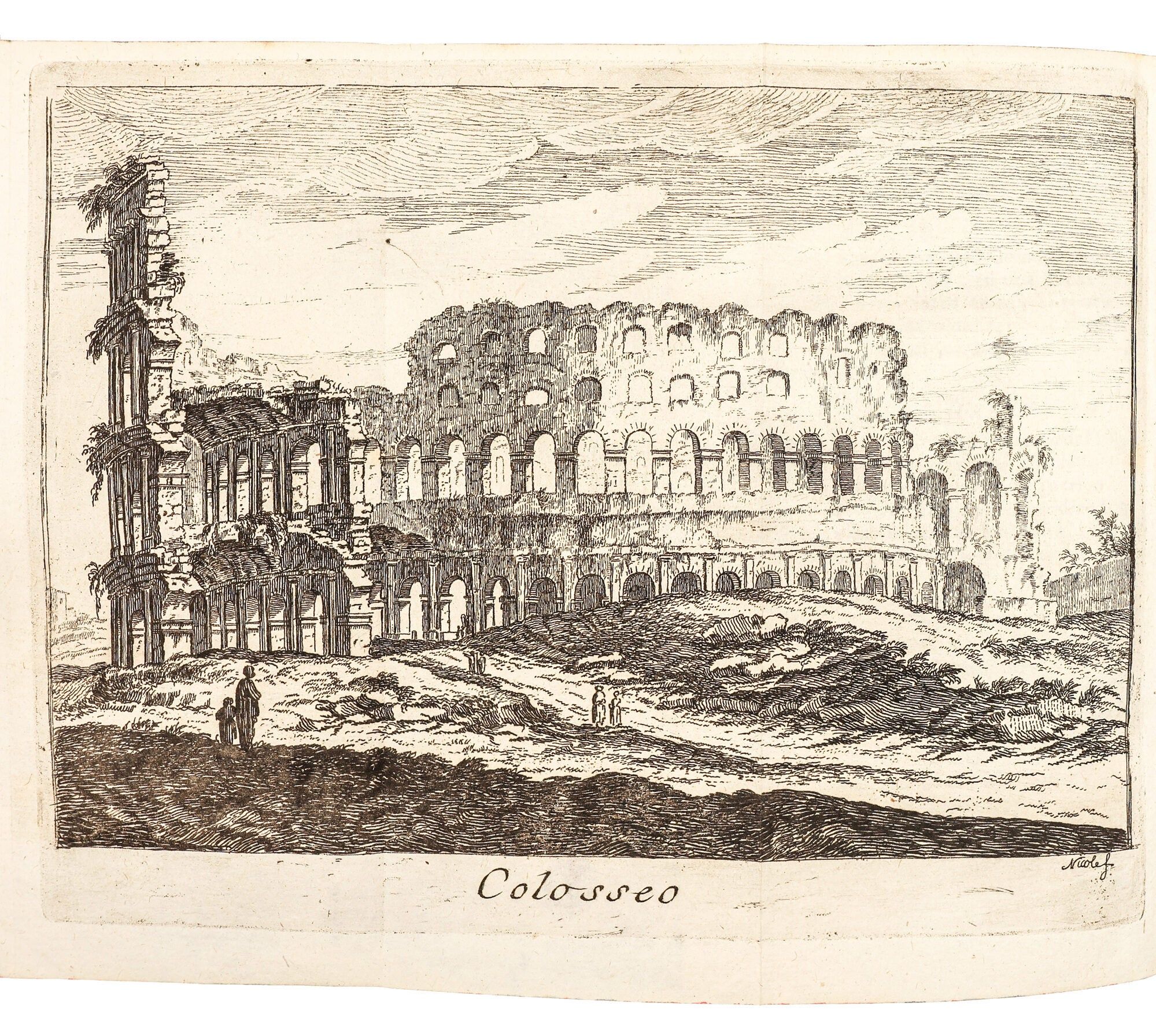
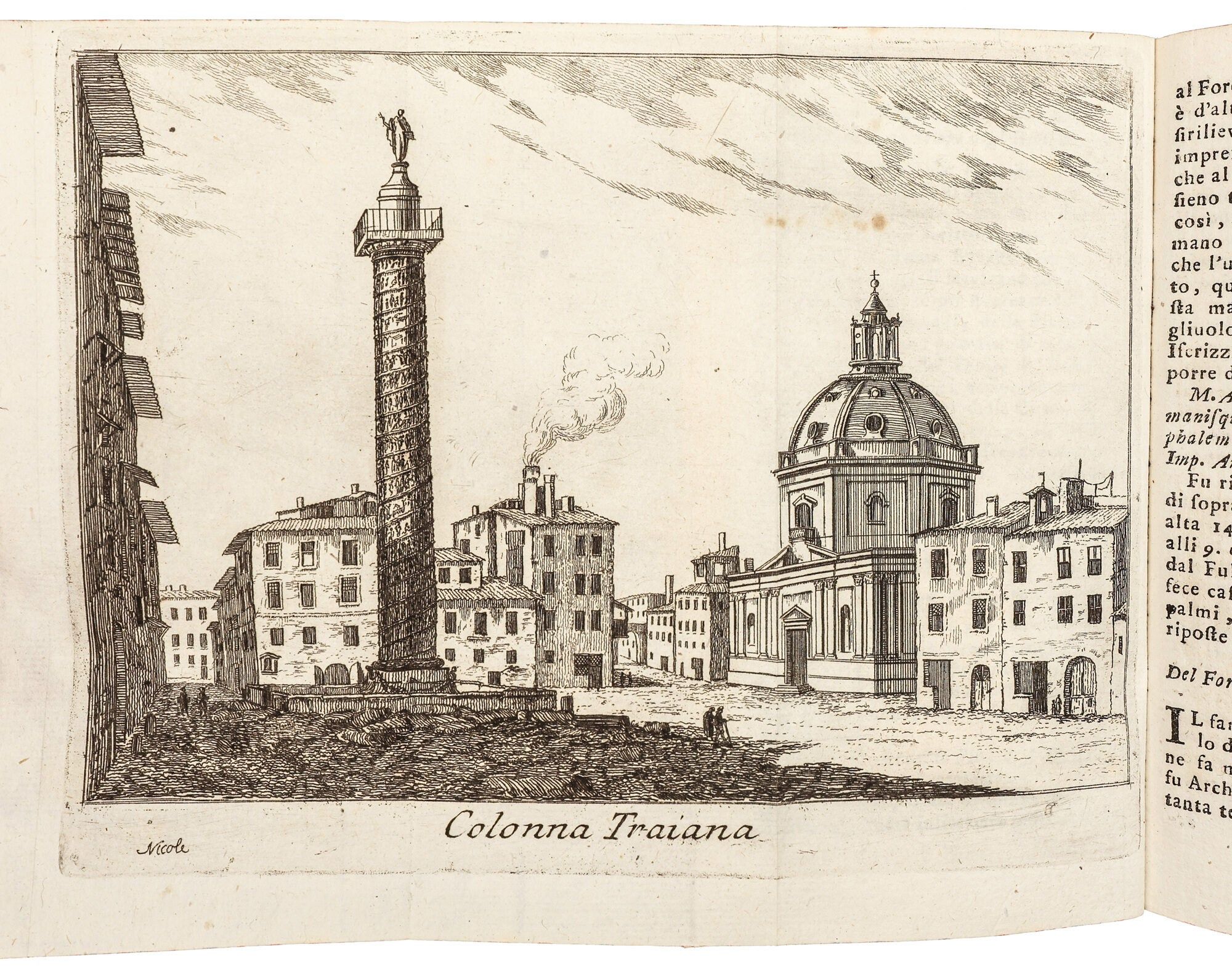
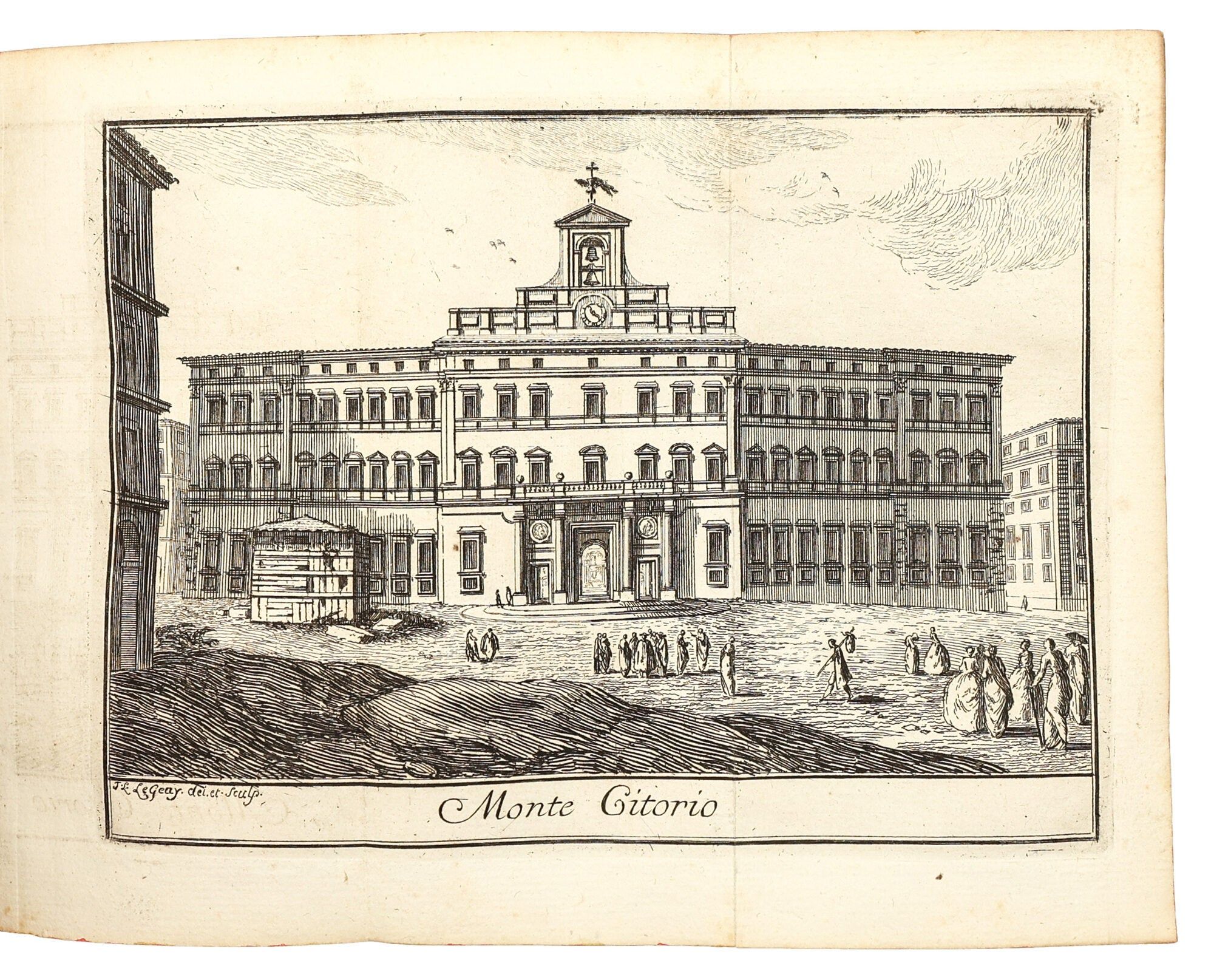
Roma: A spese di Fausto Amidei Libraro al Corso sotto il Palazzo del Signor Marchese Raggi, per Generoso Salomone, 1760. EIGHTH EDITION, EXPANDED. THIS IS THE SECOND ILLUSTRATED EDITION (1st 1750). Hardcover. Fine. TWO COPIES, both bound in contemporary stiff vellum with speckled edges (the first soiled; the second with small stains.) Fine copies, each with a little bit of light foxing and a few light stains. Second copy with light spots on plate 12 and a small stain on the half-title. The 30 folding plates are in excellent condition. This pairing, each with variant plates, provides a good opportunity for analysis of the composition of this edition. In the first copy there are twelve plates; in the second there are eighteen. Seven of the twelve plates in the second copy are different versions -two of them by Piranesi- of those in the first. These depict: the Campidoglio, Piazza Trinità dei Monti, the Lateran, the Pantheon, the Baths of Diocletian, the Arch of Titus, and Piazza Navona. In the eighteen-plate copy, two plates (the Belvedere and the Quirinal) are by Piranesi; in the twelve-plate copy, three are by Piranesi (the aforementioned Belvedere, the Lateran, and Baths of Diocletian).
The 1750 edition of "Mercurio Errante"(the first with illustrations) had twelve plates only, though a number of them were not re-used for the 1760 edition. Some of the plates, including those by Piranesi, had been in use by the publisher, Fausto Amadei, since the 1740s. See, for instance, his "Roma moderna distinta per rioni", 1741; and "Varie vedute di Roma", 1745. The Piranesi plates, among the artist's earliest, were some of the only plates sold by Piranesi to other publishers. From 1748 on, Piranesi would print his own works, maintaining control of his plates.
"Pietro Rossini, an antiquarian from Pesaro and a professional guide for foreign visitors in Rome, first published 'Il Mercurio Errante' in 1693. The guidebook quickly became very successful: ten more editions were published before 1788 (including editions in 1704, 1715, 1739, 1750, 1760, 1771, and 1776), according to Ludwig Schudt (1930). The structure of the book, divided into three parts focused respectively on palaces, villas and ancient Roman ruins, and Christian churches, remained unchanged through the 1715 edition, which was expanded and revised by the author's son, Giovanni Pietro Rossini. While the overall structure remained constant, successive editions were updated, like a Baedecker guide. For example, new palaces are included, and the current owners are identified for palaces that have changed hands. In the 1715 edition the buildings of Innocent XII are recorded in a separate chapter. Rossini's description of palaces is richer than those by his competitors, and his expanded history of Roman private art collections is of greater importance. The discussion of antiquity is especially interesting for art historians since the transformation of ancient buildings into Christian churches is carefully charted. The nine principal churches are also dealt with in a separate chapter in the third part of the guide. The examination of current restorations makes Rossini's book an important document for archaeologists as well.
"Schudt (1930) has shown how each successive edition offers additional material. The 1739 edition is important for the buildings sponsored by Clement XII; the second part includes not only the principal churches but also fifty more. In the 1750 edition the section on churches is further expanded, including observations on Sant'Apollinare, San Niccolo dei Lorenesi, and San Lorenzo in Damaso, as well as valuable information regarding the Lambertini pontificate. The 1760 edition adds further information about the pontificate of Benedict XIV, describes the coffeehouse in the Quirinal Palace, and includes Villa Albani...
"The 1750 edition of the 'Mercurio errante' was rendered exceptional by the inclusion of a collection of remarkable illustrations. The authors of the plates are Giovanni Battista Piranesi, Jean-Laurent Legeay, and Philothee-François Duflos.
"The structure of the guide in the 1750 edition (and the 1760 edition that followed it) is in two parts, each divided into two books. The first book, on palaces, begins with a discussion of the foundation of Rome, indelibly linked with the Capitoline whose palaces are the first to be described. Then follows the description of the Vatican beginning with the impressive statistics of the palace (12,522 rooms) and the library (35,000 volumes; 1,900 manuscripts from the collection of Christina, the queen of Sweden, bought by Alexander VIII), and a more detailed examination of the painted wall decorations moving on to art objects, whose origin and subsequent movements are often and usefully traced. Thus the bronze pineapple in the hemicycle of the Belvedere villa is traced to its previous locations in the atrium of Saint Peter's and on top of Hadrian's tomb, now the fortress of the Vatican.
"The sequence of palaces described does not follow any apparent order. However, since the first one is the Palazzo Odescalchi, the family palace of Innocent XI, one could assume an attempt on Rossini's part to flatter the pope that was reigning when he began the composition of his guide to Rome. The painting collection in the Odescalchi, bought from the heirs of Queen Christina, was complemented by the family's distinguished collection of marble statues. Next Rossini examines the two residences of the duke of Parma in Rome, the Farnesina villa and the Farnese palace, both considered supreme examples of their building type, architecturally and in their extraordinary decorations. Rossini explicitly appreciates the cornice of the Palazzo Farnese, fashioned by Michelangelo from travertine taken from Vespasian's amphitheater, the Colosseum. The Palazzo Giustiniani is distinguished by the largest art collection in Rome, with its 1,867 statues and 636 paintings. The Altieri palace across the street from the Gesù church, another papal family residence, is praised for its staircase and library. The Borghese palace is singled out for its seventy-two walnut doors and its one hundred columns of oriental granite supporting the porticoes of the ground floor, as well as its collection of 1,700 paintings. Rossini occasionally provides the price of a decorative object. He singles out the Chigi family palace for its design by Gian Lorenzo Bernini; the Colonna palace for its gallery paved in Sicilian jasper and giallo antico columns; the papal palace on the Quirinal for its superlative view; and the Barberini palace for its ten separate apartments, the vault frescoed by Pietro da Cortona, Poussin's Death of Germanicus (which he considers the most beautiful painting in Rome), and the silver furniture designed by Cortona.
"From these heights of papal family houses and hilltops, Rossini descends to the Corso and the Campo Marzio. He enjoys the staircase of the Palazzo Ruspoli, the bibliophilic collections of the Palazzo Gualtieri (eventually administered by his own son as librarian), the paintings by Gentileschi then in the Palazzo Verospi, and the gallery of Prince Pamphili frescoed by Cortona, and mentions that the palace of the French Academy contained plaster copies of all the principal statues of Italy.
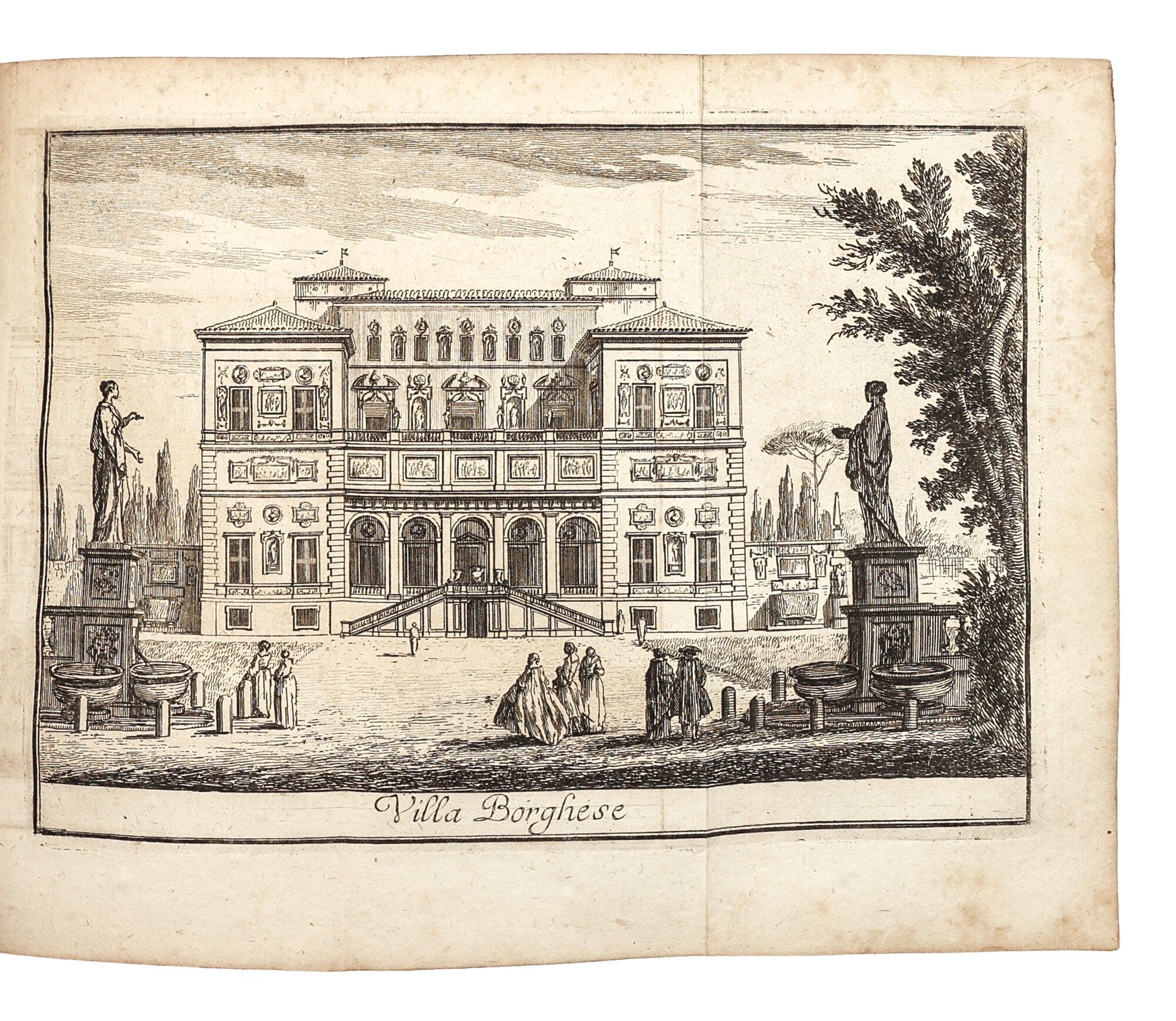
"This dazzling tour of urban residences is followed in the third book by an equally impressive group of country houses located near Rome. The Villa Borghese, just outside the city's walls, is accorded the longest entry, detailing the attractive grounds, the grotto, the flower garden, and aviary, as well as the highly ornate building by the mannerist architect Giovanni Vasanzio. Rossini claims that the Villa Borghese is richer and more beautiful than any ancient equivalents; he offers vivid anecdotes about the history of the collections. For example, he explains that Cardinal Scipione Borghese obtained one of the two famed hermaphrodite statues found in the foundations of the new Santa Maria della Vittoria by paying for the facade of the church in exchange for the statue.
"Like the palaces, the villas were veritable museums of ancient and modern statuary. At the Villa Ludovisi was Bernini's Rape of Proserpina (now in the Borghese collection). A statue of Neptune by the same artist decorated the Villa Montalto's fish farm, while the Villa Mattei on the Celium had the largest number of marble urns with ancient inscriptions. The Farnese gardens on the Palatine Hill housed a triumphal arch, in parts, which was raised for every papal possesso at a cost of 3,000 scudi each time; the gardens of the Villa Pamphili were (and still are) the largest in Rome, surrounding a building that housed an armory with enough equipment for five hundred men. Rossini describes the muchadmired Aldobrandini wedding, the ancient fresco that had been found in the baths of Titus (now in the Vatican museum), the battle of Lepanto frescoed by Antonio Tempesta in the Villa Medici, and the view of Castro destroyed by Innocent X at the Villa Pamphili. The third book concludes with a section on villas further from Rome, such as the Villa d'Este at Tivoli, the Palazzo Farnese in Caprarola, and the Villa Aldobrandini in Frascati.
"The fourth book, dealing with the antiquities of Rome, is in some ways the most traditional. Reiterating the story of Rome's foundation, Rossini now turns in the other direction, to discuss the ancient public center of the city in the forum, which at the end of the seventeenth century was still largely a handful of unexcavated ruins. In Rossini's time the arch of Septimius Severus, for example, was half buried, but considered beautiful nonetheless, since contemporaries understood that there was more to the monument than was visible. Rossini renders past glory vividly. In his account of the temple of Peace, he explains that it had been the safe deposit for the property of the aristocrats, serving as a storehouse for the spoils from the Temple of Solomon, and when the Roman temple burned, the great quantity of gold and silver melted and flowed like water from the fire. For Rossini, the Colosseum of Vespasian, named after the colossal statue of Nero that stood on the site, was another imposing symbol of Roman conquest since it had been built by the twelve thousand Hebrews taken in slavery after the destruction of Jerusalem. As the reader of the first book on palaces would remember, the Colosseum in turn served as a quarry for construction materials used in various Renaissance palaces, such as the Cancelleria and the Farnese.
"From the forum and its adjacent areas, Rossini turns to a discussion of the hills of Rome, providing an etymological history of each site and its most distinguished associations. Beyond the seven traditional sites, he also includes the smaller Vatican, Gianicolo, Pincio, Citorio, Testaccio, Giordano, and Savelli hills, largely associated with postclassical events and settlers. The topographic discussion of Roman hills concludes with a section on tombs and bridges, connected through the Castel Sant' Angelo (citadel and burial mound linked by the bridge over the Tiber to Rome).
"The next large group of ancient buildings unified by type and discussed by Rossini are the baths, which provide another opportunity to bandy large numbers about. Thus Rossini claims that the baths of Diocletian were built by forty thousand Christian slaves, thirty thousand of whom perished during construction, and that thirty-two hundred people could bathe there simultaneously. He continues with an extensive accounting of the forty-two obelisks of ancient Rome and a history of Rome's triumphal arches, gates, fountains, and streets. Bringing to a close the 1750 edition is a chapter on the sacks of Rome, with the cemeteries and sites of Christian martyrdom.
"In the 1750 illustrated edition there is a separate section on churches. Previously included in the third part of the guide that discussed antiquities, the Christian monuments now occupy the second book, placed between palaces and villas. This discussion of churches is thus more substantial than in the previous editions, with extensive sections on the nine principal basilicas followed by shorter entries on other churches arranged in alphabetical order, and was perhaps prompted by the Jubilee Year. It includes a catalogue of the most beautiful places of worship in Rome. A breathtaking compendium, Rossini's transformed book is more like a cultural history of the contemporary city than a mere topographical vade mecum to be used on visits through Rome."(Millard, Entry 117, p. 367-370).
The 1750 edition of "Mercurio Errante"(the first with illustrations) had twelve plates only, though a number of them were not re-used for the 1760 edition. Some of the plates, including those by Piranesi, had been in use by the publisher, Fausto Amadei, since the 1740s. See, for instance, his "Roma moderna distinta per rioni", 1741; and "Varie vedute di Roma", 1745. The Piranesi plates, among the artist's earliest, were some of the only plates sold by Piranesi to other publishers. From 1748 on, Piranesi would print his own works, maintaining control of his plates.
"Pietro Rossini, an antiquarian from Pesaro and a professional guide for foreign visitors in Rome, first published 'Il Mercurio Errante' in 1693. The guidebook quickly became very successful: ten more editions were published before 1788 (including editions in 1704, 1715, 1739, 1750, 1760, 1771, and 1776), according to Ludwig Schudt (1930). The structure of the book, divided into three parts focused respectively on palaces, villas and ancient Roman ruins, and Christian churches, remained unchanged through the 1715 edition, which was expanded and revised by the author's son, Giovanni Pietro Rossini. While the overall structure remained constant, successive editions were updated, like a Baedecker guide. For example, new palaces are included, and the current owners are identified for palaces that have changed hands. In the 1715 edition the buildings of Innocent XII are recorded in a separate chapter. Rossini's description of palaces is richer than those by his competitors, and his expanded history of Roman private art collections is of greater importance. The discussion of antiquity is especially interesting for art historians since the transformation of ancient buildings into Christian churches is carefully charted. The nine principal churches are also dealt with in a separate chapter in the third part of the guide. The examination of current restorations makes Rossini's book an important document for archaeologists as well.
"Schudt (1930) has shown how each successive edition offers additional material. The 1739 edition is important for the buildings sponsored by Clement XII; the second part includes not only the principal churches but also fifty more. In the 1750 edition the section on churches is further expanded, including observations on Sant'Apollinare, San Niccolo dei Lorenesi, and San Lorenzo in Damaso, as well as valuable information regarding the Lambertini pontificate. The 1760 edition adds further information about the pontificate of Benedict XIV, describes the coffeehouse in the Quirinal Palace, and includes Villa Albani...
"The 1750 edition of the 'Mercurio errante' was rendered exceptional by the inclusion of a collection of remarkable illustrations. The authors of the plates are Giovanni Battista Piranesi, Jean-Laurent Legeay, and Philothee-François Duflos.
"The structure of the guide in the 1750 edition (and the 1760 edition that followed it) is in two parts, each divided into two books. The first book, on palaces, begins with a discussion of the foundation of Rome, indelibly linked with the Capitoline whose palaces are the first to be described. Then follows the description of the Vatican beginning with the impressive statistics of the palace (12,522 rooms) and the library (35,000 volumes; 1,900 manuscripts from the collection of Christina, the queen of Sweden, bought by Alexander VIII), and a more detailed examination of the painted wall decorations moving on to art objects, whose origin and subsequent movements are often and usefully traced. Thus the bronze pineapple in the hemicycle of the Belvedere villa is traced to its previous locations in the atrium of Saint Peter's and on top of Hadrian's tomb, now the fortress of the Vatican.
"The sequence of palaces described does not follow any apparent order. However, since the first one is the Palazzo Odescalchi, the family palace of Innocent XI, one could assume an attempt on Rossini's part to flatter the pope that was reigning when he began the composition of his guide to Rome. The painting collection in the Odescalchi, bought from the heirs of Queen Christina, was complemented by the family's distinguished collection of marble statues. Next Rossini examines the two residences of the duke of Parma in Rome, the Farnesina villa and the Farnese palace, both considered supreme examples of their building type, architecturally and in their extraordinary decorations. Rossini explicitly appreciates the cornice of the Palazzo Farnese, fashioned by Michelangelo from travertine taken from Vespasian's amphitheater, the Colosseum. The Palazzo Giustiniani is distinguished by the largest art collection in Rome, with its 1,867 statues and 636 paintings. The Altieri palace across the street from the Gesù church, another papal family residence, is praised for its staircase and library. The Borghese palace is singled out for its seventy-two walnut doors and its one hundred columns of oriental granite supporting the porticoes of the ground floor, as well as its collection of 1,700 paintings. Rossini occasionally provides the price of a decorative object. He singles out the Chigi family palace for its design by Gian Lorenzo Bernini; the Colonna palace for its gallery paved in Sicilian jasper and giallo antico columns; the papal palace on the Quirinal for its superlative view; and the Barberini palace for its ten separate apartments, the vault frescoed by Pietro da Cortona, Poussin's Death of Germanicus (which he considers the most beautiful painting in Rome), and the silver furniture designed by Cortona.
"From these heights of papal family houses and hilltops, Rossini descends to the Corso and the Campo Marzio. He enjoys the staircase of the Palazzo Ruspoli, the bibliophilic collections of the Palazzo Gualtieri (eventually administered by his own son as librarian), the paintings by Gentileschi then in the Palazzo Verospi, and the gallery of Prince Pamphili frescoed by Cortona, and mentions that the palace of the French Academy contained plaster copies of all the principal statues of Italy.
"This dazzling tour of urban residences is followed in the third book by an equally impressive group of country houses located near Rome. The Villa Borghese, just outside the city's walls, is accorded the longest entry, detailing the attractive grounds, the grotto, the flower garden, and aviary, as well as the highly ornate building by the mannerist architect Giovanni Vasanzio. Rossini claims that the Villa Borghese is richer and more beautiful than any ancient equivalents; he offers vivid anecdotes about the history of the collections. For example, he explains that Cardinal Scipione Borghese obtained one of the two famed hermaphrodite statues found in the foundations of the new Santa Maria della Vittoria by paying for the facade of the church in exchange for the statue.
"Like the palaces, the villas were veritable museums of ancient and modern statuary. At the Villa Ludovisi was Bernini's Rape of Proserpina (now in the Borghese collection). A statue of Neptune by the same artist decorated the Villa Montalto's fish farm, while the Villa Mattei on the Celium had the largest number of marble urns with ancient inscriptions. The Farnese gardens on the Palatine Hill housed a triumphal arch, in parts, which was raised for every papal possesso at a cost of 3,000 scudi each time; the gardens of the Villa Pamphili were (and still are) the largest in Rome, surrounding a building that housed an armory with enough equipment for five hundred men. Rossini describes the muchadmired Aldobrandini wedding, the ancient fresco that had been found in the baths of Titus (now in the Vatican museum), the battle of Lepanto frescoed by Antonio Tempesta in the Villa Medici, and the view of Castro destroyed by Innocent X at the Villa Pamphili. The third book concludes with a section on villas further from Rome, such as the Villa d'Este at Tivoli, the Palazzo Farnese in Caprarola, and the Villa Aldobrandini in Frascati.
"The fourth book, dealing with the antiquities of Rome, is in some ways the most traditional. Reiterating the story of Rome's foundation, Rossini now turns in the other direction, to discuss the ancient public center of the city in the forum, which at the end of the seventeenth century was still largely a handful of unexcavated ruins. In Rossini's time the arch of Septimius Severus, for example, was half buried, but considered beautiful nonetheless, since contemporaries understood that there was more to the monument than was visible. Rossini renders past glory vividly. In his account of the temple of Peace, he explains that it had been the safe deposit for the property of the aristocrats, serving as a storehouse for the spoils from the Temple of Solomon, and when the Roman temple burned, the great quantity of gold and silver melted and flowed like water from the fire. For Rossini, the Colosseum of Vespasian, named after the colossal statue of Nero that stood on the site, was another imposing symbol of Roman conquest since it had been built by the twelve thousand Hebrews taken in slavery after the destruction of Jerusalem. As the reader of the first book on palaces would remember, the Colosseum in turn served as a quarry for construction materials used in various Renaissance palaces, such as the Cancelleria and the Farnese.
"From the forum and its adjacent areas, Rossini turns to a discussion of the hills of Rome, providing an etymological history of each site and its most distinguished associations. Beyond the seven traditional sites, he also includes the smaller Vatican, Gianicolo, Pincio, Citorio, Testaccio, Giordano, and Savelli hills, largely associated with postclassical events and settlers. The topographic discussion of Roman hills concludes with a section on tombs and bridges, connected through the Castel Sant' Angelo (citadel and burial mound linked by the bridge over the Tiber to Rome).
"The next large group of ancient buildings unified by type and discussed by Rossini are the baths, which provide another opportunity to bandy large numbers about. Thus Rossini claims that the baths of Diocletian were built by forty thousand Christian slaves, thirty thousand of whom perished during construction, and that thirty-two hundred people could bathe there simultaneously. He continues with an extensive accounting of the forty-two obelisks of ancient Rome and a history of Rome's triumphal arches, gates, fountains, and streets. Bringing to a close the 1750 edition is a chapter on the sacks of Rome, with the cemeteries and sites of Christian martyrdom.
"In the 1750 illustrated edition there is a separate section on churches. Previously included in the third part of the guide that discussed antiquities, the Christian monuments now occupy the second book, placed between palaces and villas. This discussion of churches is thus more substantial than in the previous editions, with extensive sections on the nine principal basilicas followed by shorter entries on other churches arranged in alphabetical order, and was perhaps prompted by the Jubilee Year. It includes a catalogue of the most beautiful places of worship in Rome. A breathtaking compendium, Rossini's transformed book is more like a cultural history of the contemporary city than a mere topographical vade mecum to be used on visits through Rome."(Millard, Entry 117, p. 367-370).
Details
Title
Il Mercurio Errante Delle Grandezze di Roma, tanto antiche, che moderne... In questa Ottava Edizione migliorato, ed accresciuto... Diviso in due parti. La Prima contiene Palazzi, e chiese. La Seconda Ville, giardini, terme, acque, teatri, cerchi, archi trionfali, guglie, sepolcri, ed altre antichità, e cose singolari di Roma
Author
ROME. Pietro Rossini (fl. 1693); Piranesi, Giovanni Battista (1720-1778)
Binding
Hardcover
Condition
Fine
Publisher
A spese di Fausto Amidei Libraro al Corso sotto il Palazzo del Signor Marchese Raggi, per Generoso Salomone: Roma
Date
1760
Edition
EIGHTH EDITION, EXPANDED. THIS IS THE SECOND ILLUSTRATED EDITION