

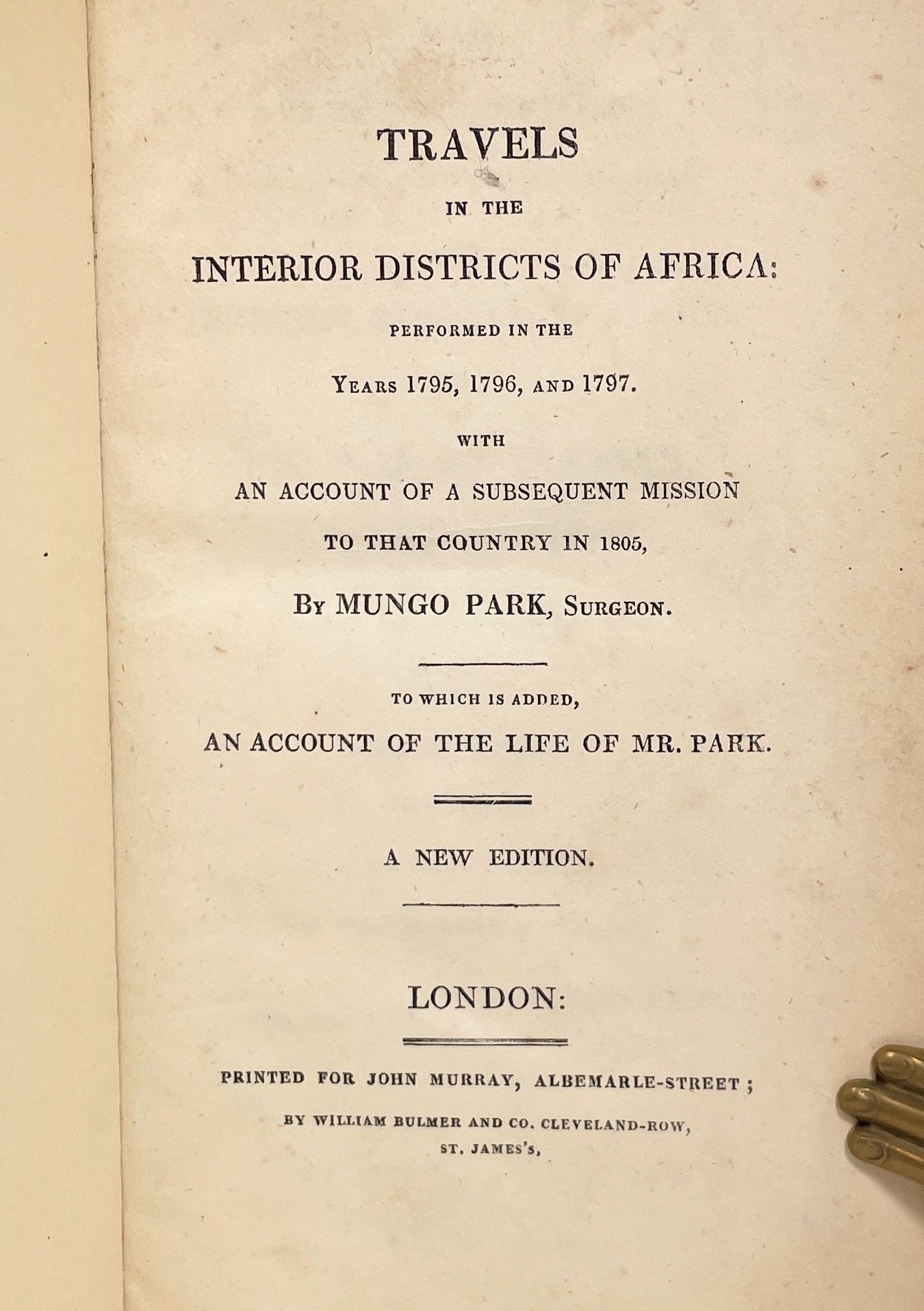
Travels in the Interior Districts of Africa; Performed in the years 1795,1796,1797 with an Account of a Subsequent Mission to that Country in 1805 [in volume II]
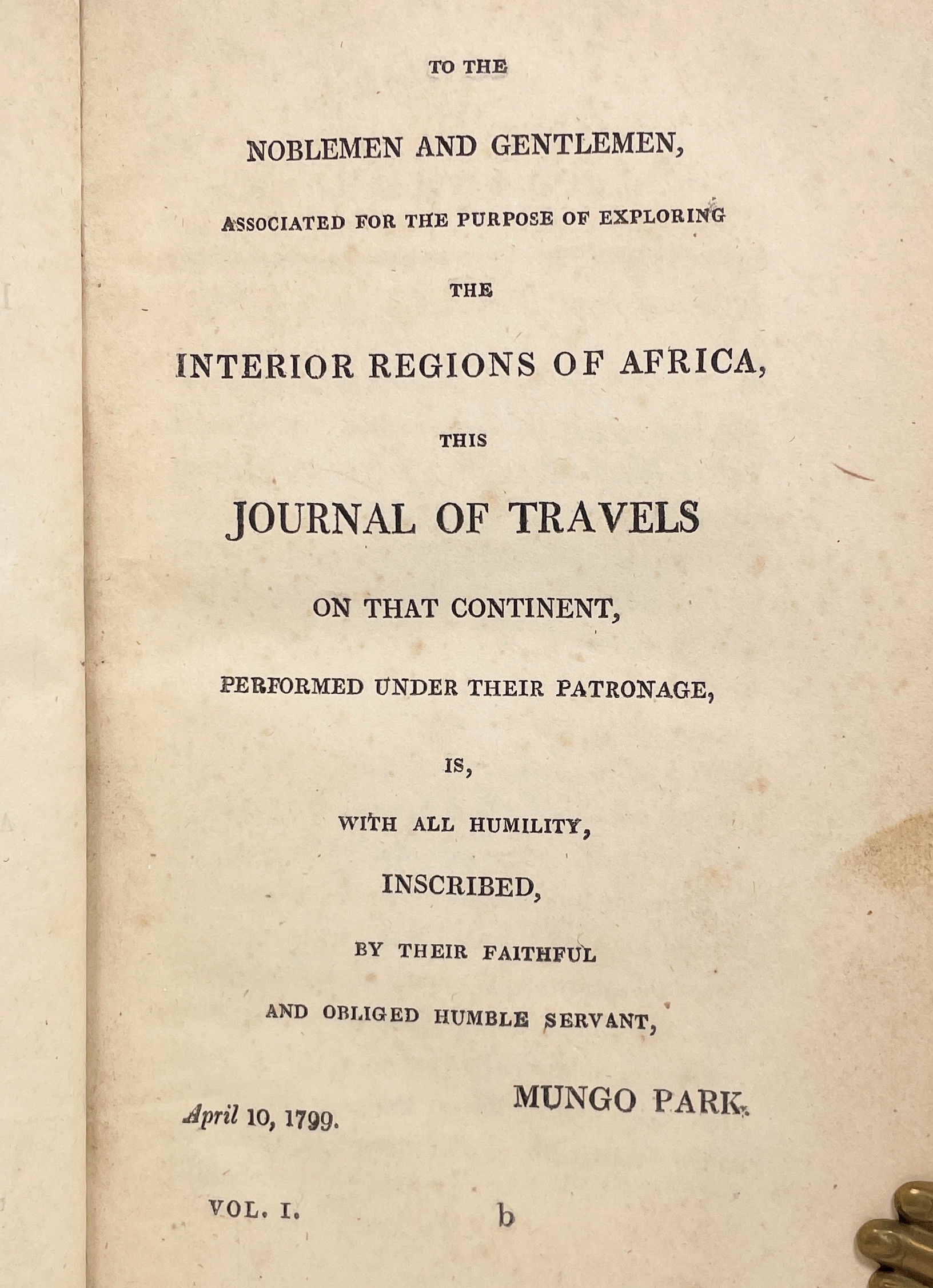
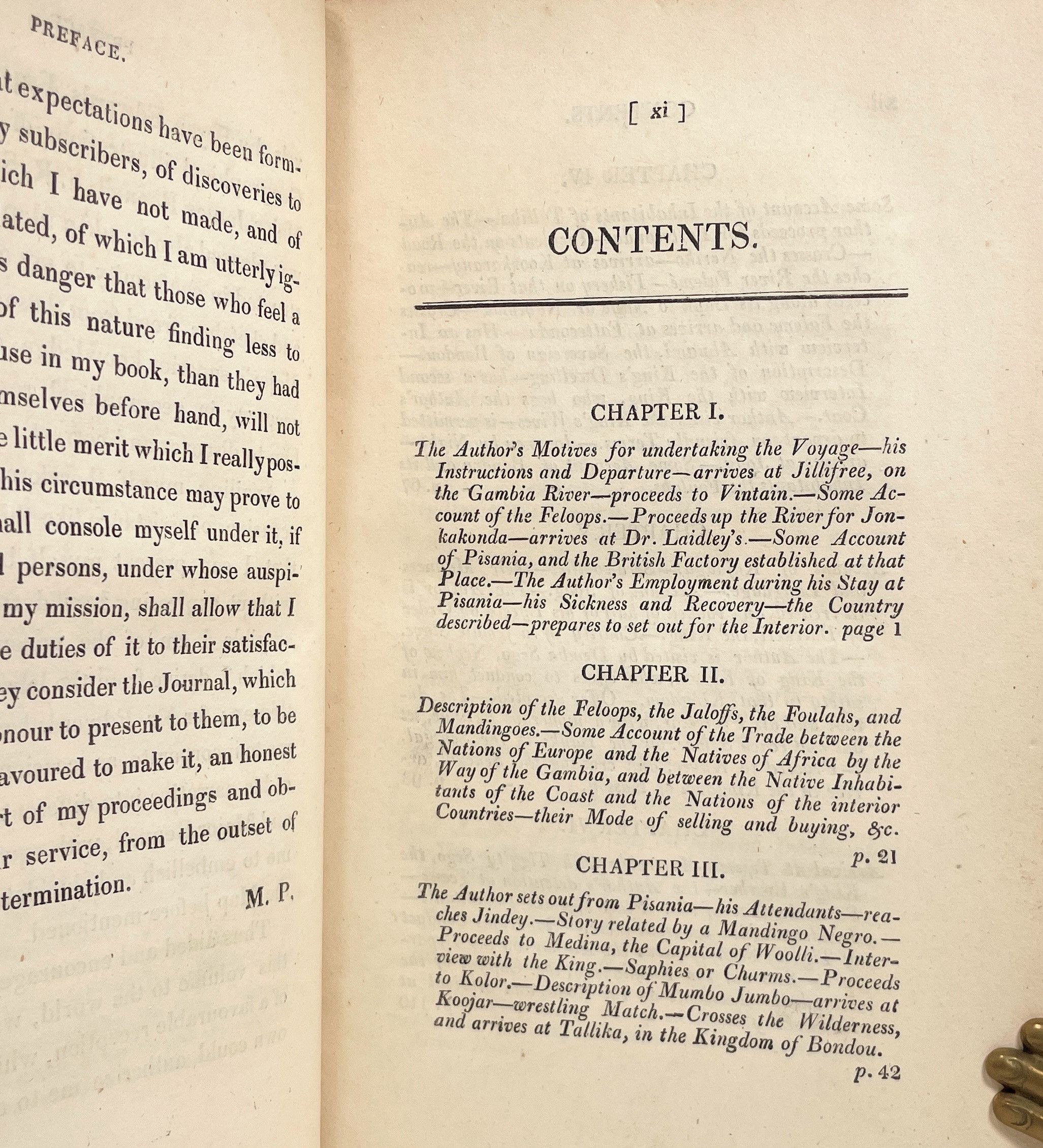
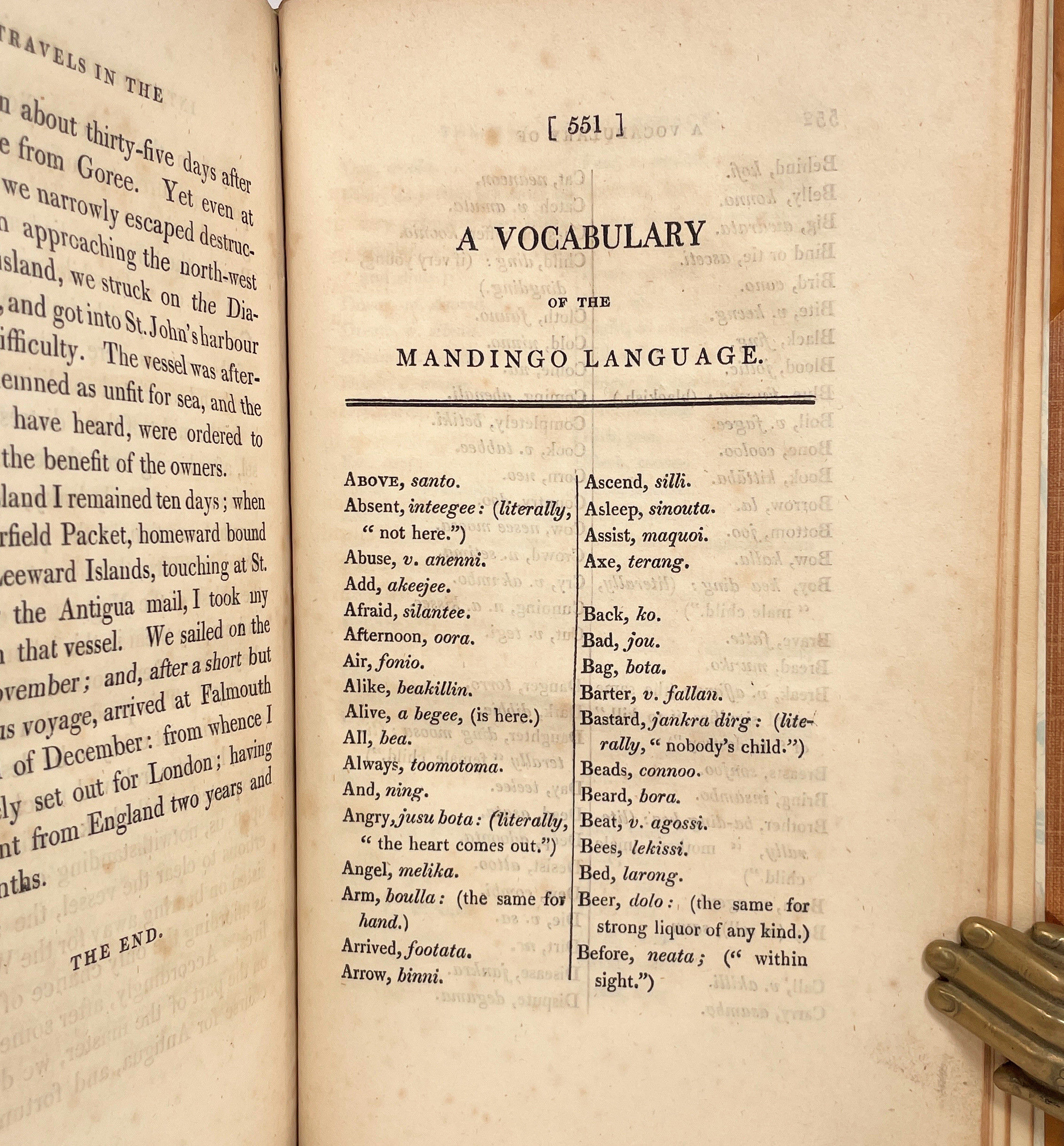
- London: John Murray (by William Bulmer and Co.), 1816
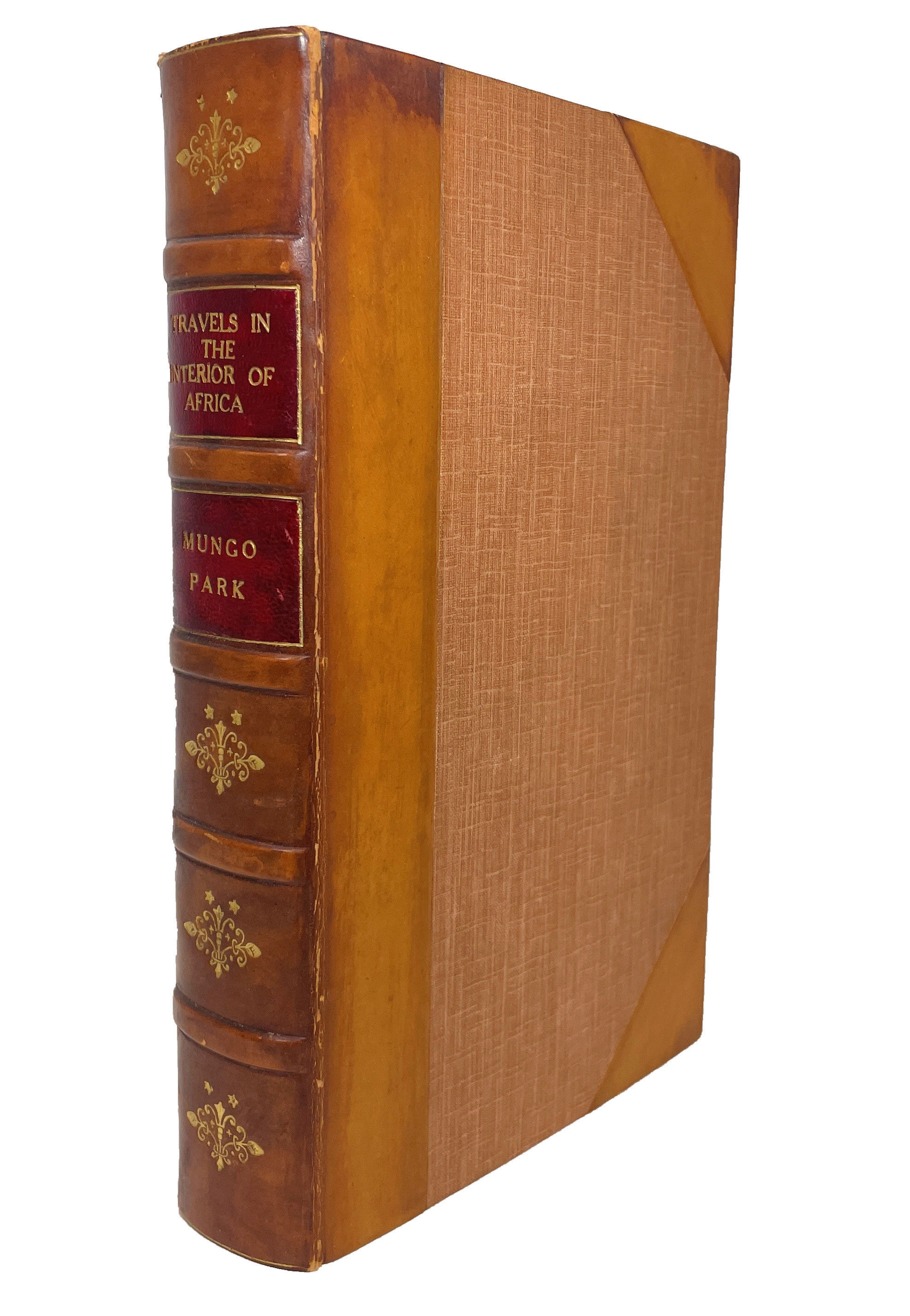
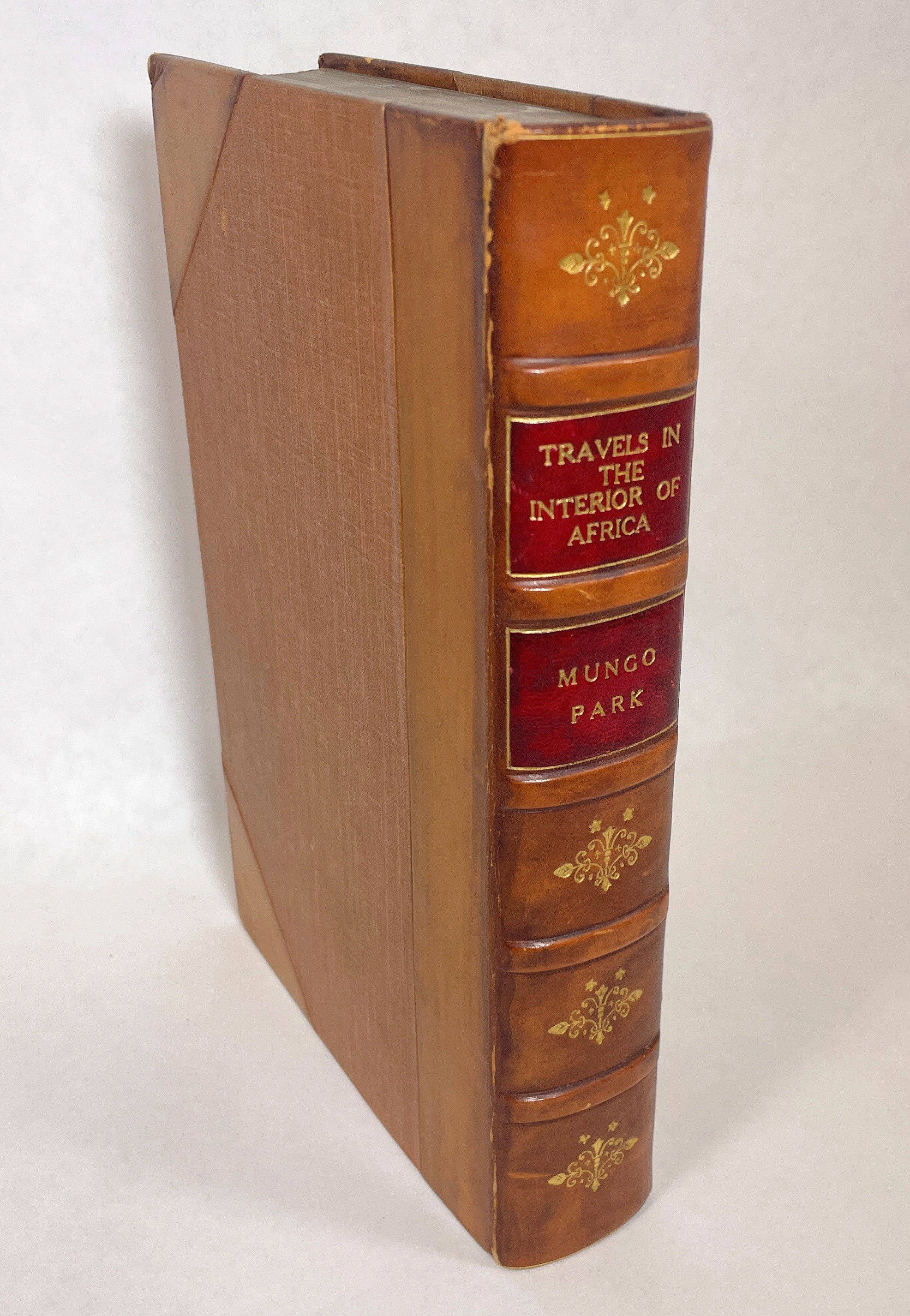
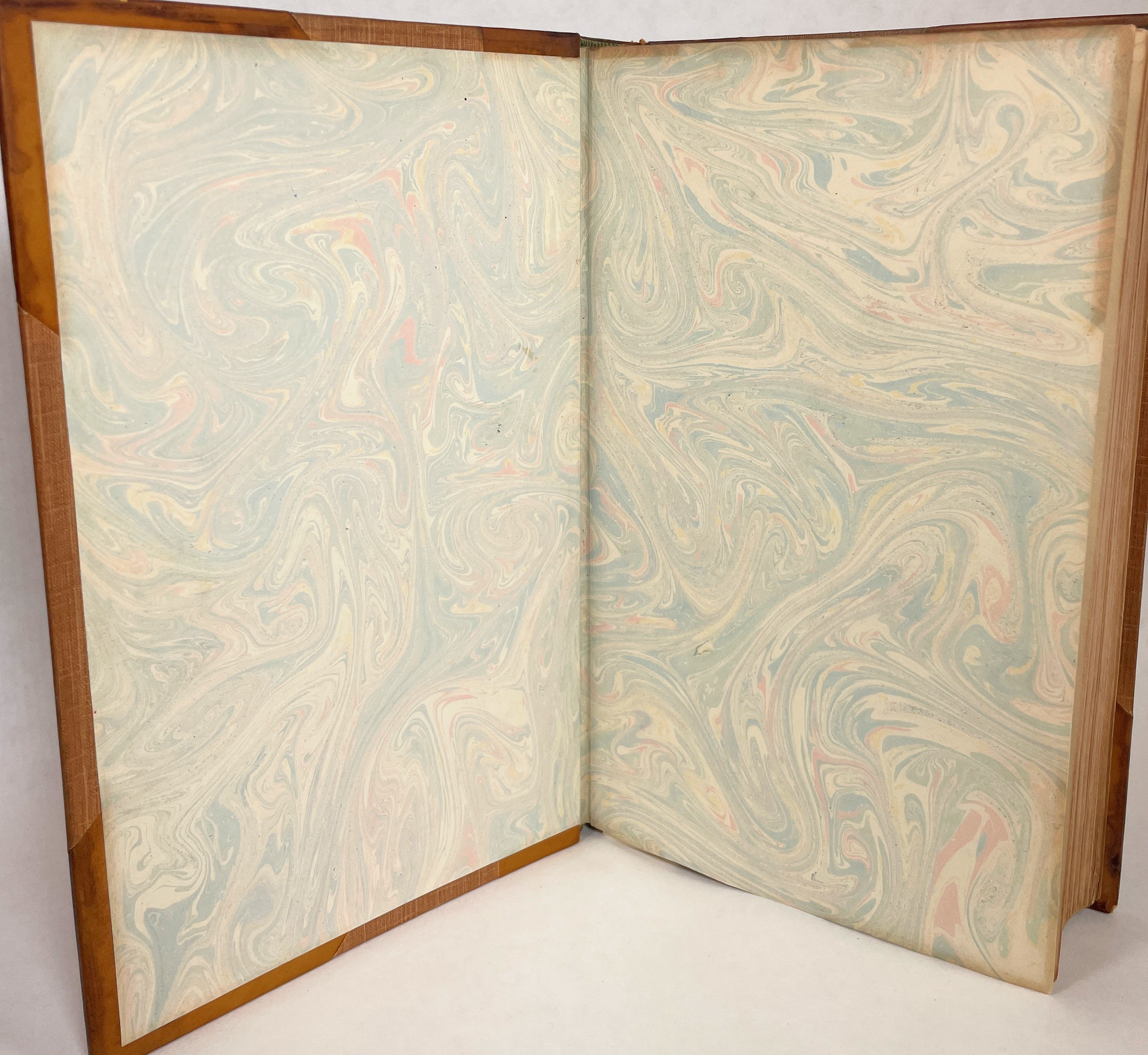
London: John Murray (by William Bulmer and Co.), 1816. First Edition, 3rd Printing. Very Good Plus. VOLUME I only, [9x5.75in], xx, 559 pp., vocabulary and postscript, [1] a Negro song; Later three-quarter binding with light brown linen cloth and calf, gilt lettering on spine on red leather with gilt designs and five ribs, top edge gilt, other edges trimmed, light marbled new end papers; Minor shelf wear to covers, edges and corners with rubbing along edges and joints, top corners worn, leather has varying patina, lacking frontispiece of Park, very light age toning and no foxing to text. [Howgego I P21] DK. Mungo Park (1771-1806) was a Scottish country doctor and explorer of West Africa. Park was one of a group of African explorers hired by the Association for Promoting the discovery of the Interior Parts of Africa, known as the Africa Association, a British club founded in 1788. Several earlier British explorers made discoveries of the interior from the Gambian coast and river. In 1795, Park follow up on Daniel Houghton's route to press on to discover the source of the Niger river. In 1799, Park's "Travels into the Interior Districts of Africa" became the first significant publication on the interior, and was very popular and reissued in many languages. He failed to reach or find the source of the Niger River, but brought back much experience in travels in Africa and knowledge of the tribes, culture and geography.
From John Keay's introduction in a 1989 reprint... "Travels in the Interior of Africa describes a journey from Gambia through the present day states of Senegal and Mali in the years 1795-7. The dates and the places are important. They set Mungo Park at the very dawn of African exploration and in a corner of the continent which was to engage British interest only briefly. Park was out of context and overshadowed within a few decades of his travels. But the improbable setting of his tale and its inconsequential aftermath also help to account for its timeless quality. Rarely if ever out of print, the book has become a classic because it transcends the limitations of later travelogues. . It is ironical that while Park chose to present to the world a pensive, cool and distant aspect, what distinguishes his book is it charm, warmth and even its humour. Park himself insisted that it had only one merit. 'As a composition it has nothing to recommend it but truth. It is a plain unvarnished tale.' Unlike most other solitary travellers he would never be accused of exaggeration. There is evidence that he in fact suppressed some details because they were so horrific they might strain credulity. This transparent honesty is part of the book's charm. Complemented by the simplicity of an 'unvarnished' style it proves hard to resist. The greatest paradox of all is that a man so remote in life should have become the one traveller with whom some five generations of readers have happily identified.
Details
Title
Travels in the Interior Districts of Africa; Performed in the years 1795,1796,1797 with an Account of a Subsequent Mission to that Country in 1805 [in volume II]
Author
Park, Mungo
Condition
Very Good
Publisher
John Murray (by William Bulmer and Co.): London
Date
1816
Edition
First Edition, 3rd Printing