

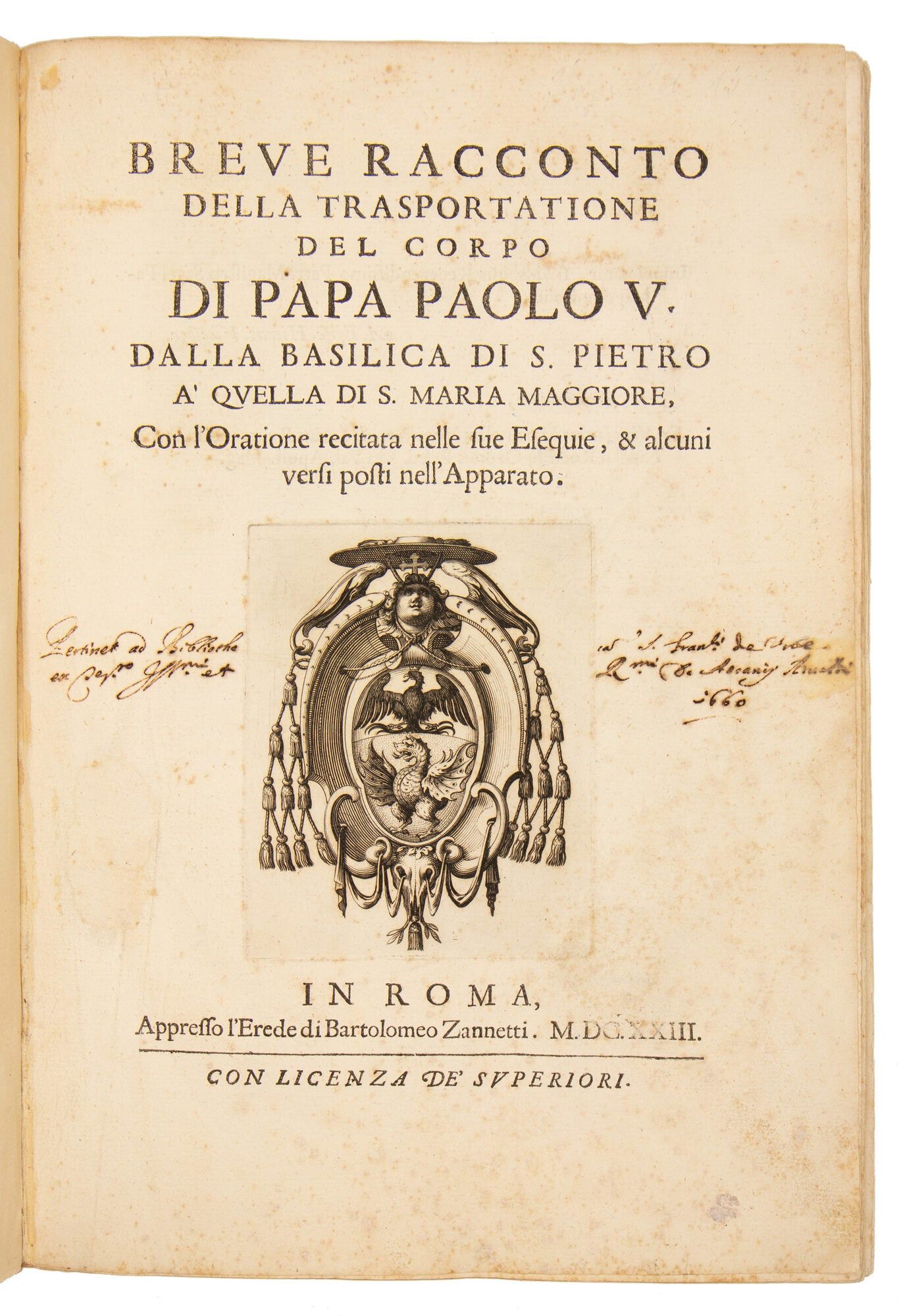
Breve racconto della trasportatione del corpo di Papa Paolo V dalla Basilica di San Pietro a quella di Santa Maria Maggiore
- Hardcover
- Rome: Appresso l'Erede di Bartolomeo Zannetti, 1623
Rome: Appresso l'Erede di Bartolomeo Zannetti, 1623. SOLE EDITION. Hardcover. Fine. Bound in early parchment, re-cased, endpapers renewed, repairs to spine, some abrasions and light soiling. Title foxed and with early repair. Possibly an early stamp removed (but this is unclear.) Seventeenth-century (1660) ownership inscription on title. Some plates with mild foxing. Closed tear with discoloration in blank margin of final leaf. Very rare. 7 North American copies traced: Getty, Yale, Illinois, Princeton, Harvard, Emory, The Met. Sole edition of this rare and important funeral book documenting the lavish ceremonies surrounding the re-burial of Pope Paul V (Camillo Borghese) (1550-1621) on the anniversary of his death. Paul V had been interred in the Vatican but a year later the mortuary chapel that he had commissioned on the Esquiline was now ready to welcome the pope's earthly remains. The pope's nephew, Cardinal Scipione Borghese (1577-1633), sponsored and financed the ceremonies and re-burial. Borghese entrusted the poet Lelio Guidiccioni -a member of the cardinal's cultural circle- with the tasks of preparing a funeral oration and preparing a description that would "immortalize" the event and the largely-ephemeral décor.
The book holds the distinction of being the sole visual record of this project by the young Gian Lorenzo Bernini (1598-1680), the preeminent genius of the Roman Baroque. The statues created for the re-burial anticipate iconographic motifs developed by Bernini in his mature work. The artistic program marks an important collaboration between the artist and Lelio Guidiccioni for their mutual patron, Scipione Borghese (of whom Bernini sculpted two marble portrait busts under Guidiccioni's supervision.) It has been suggested that three of five figures in the catafalque plate are Gian Lorenzo and his father Pietro (1562-1629).
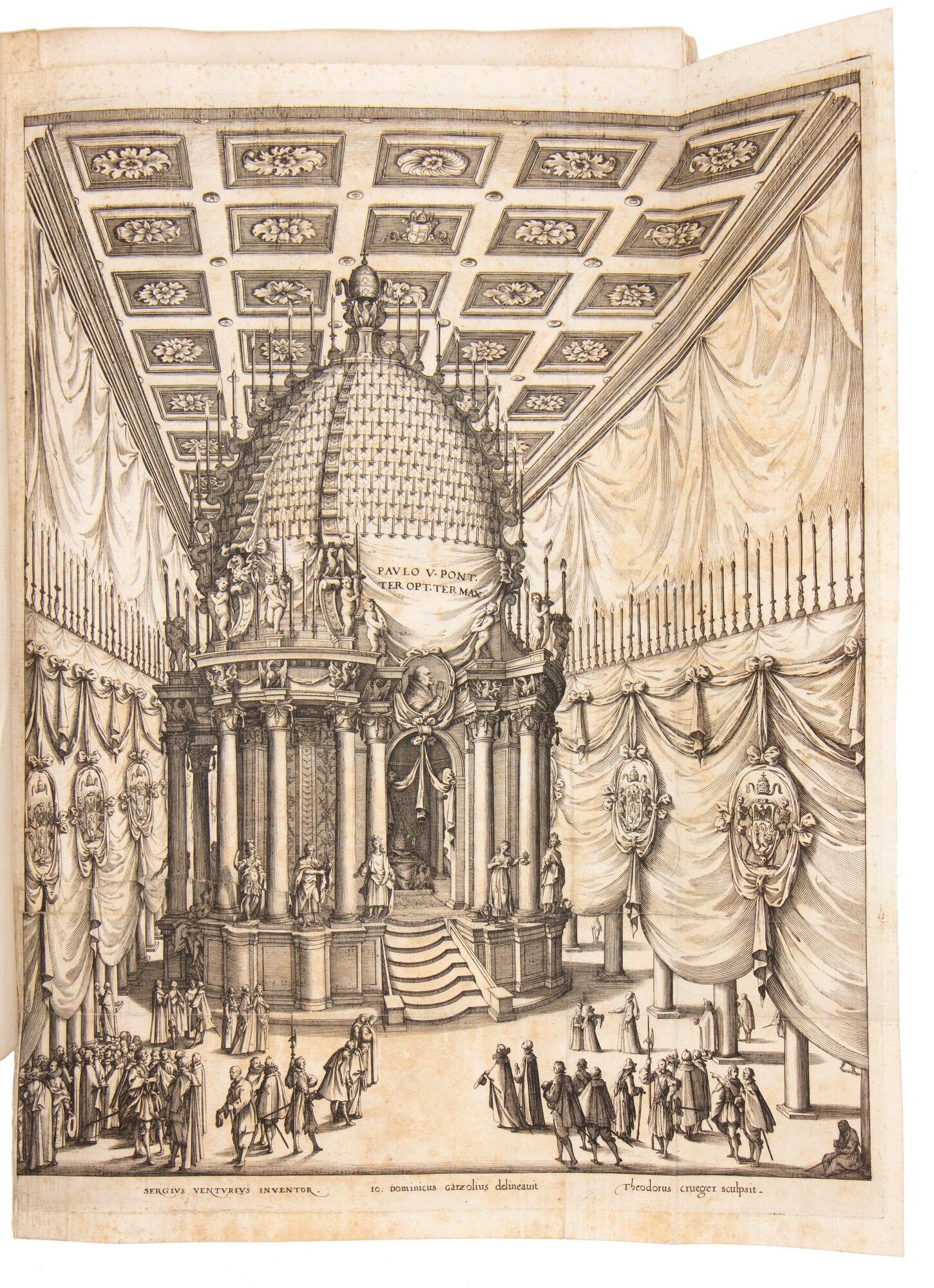
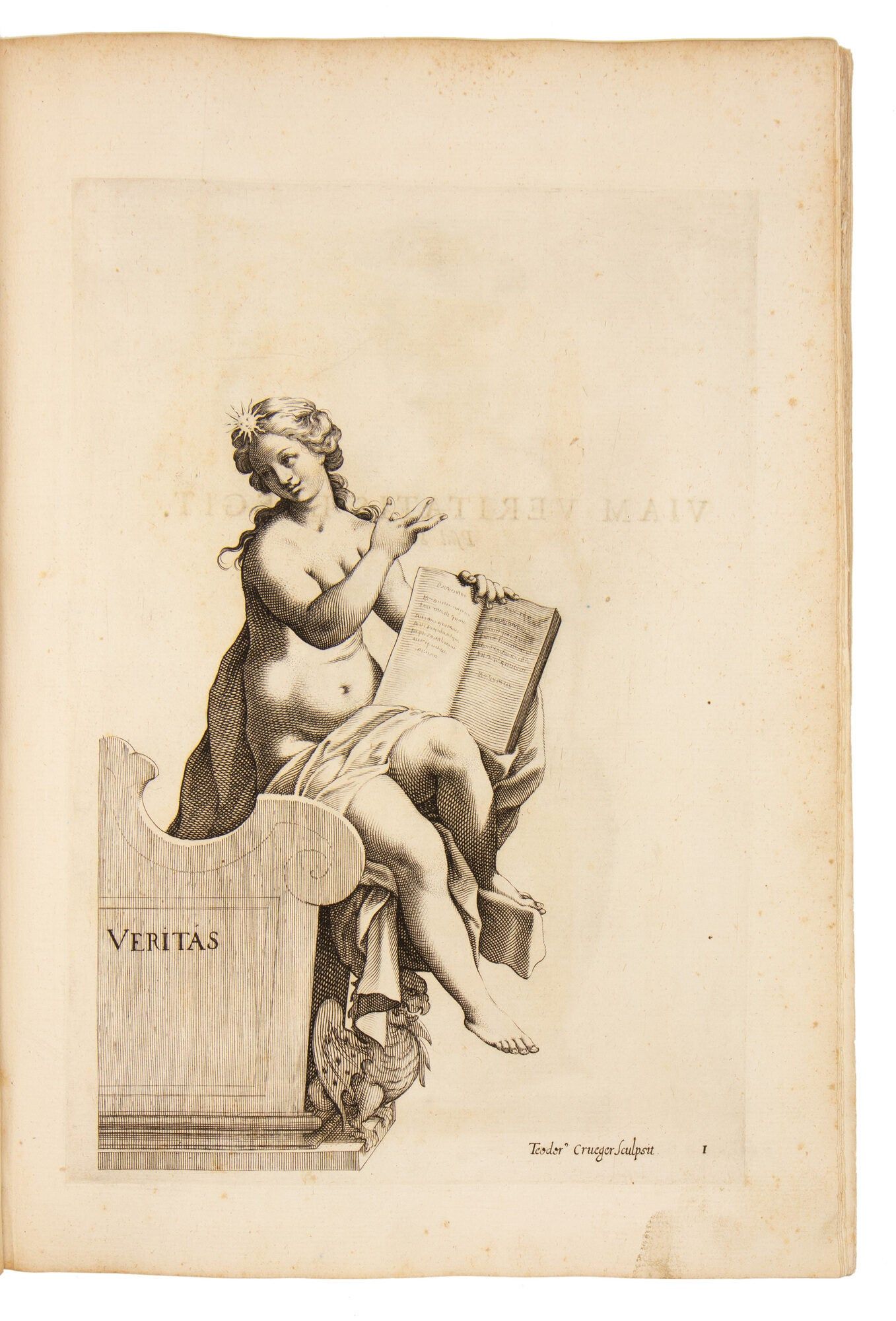
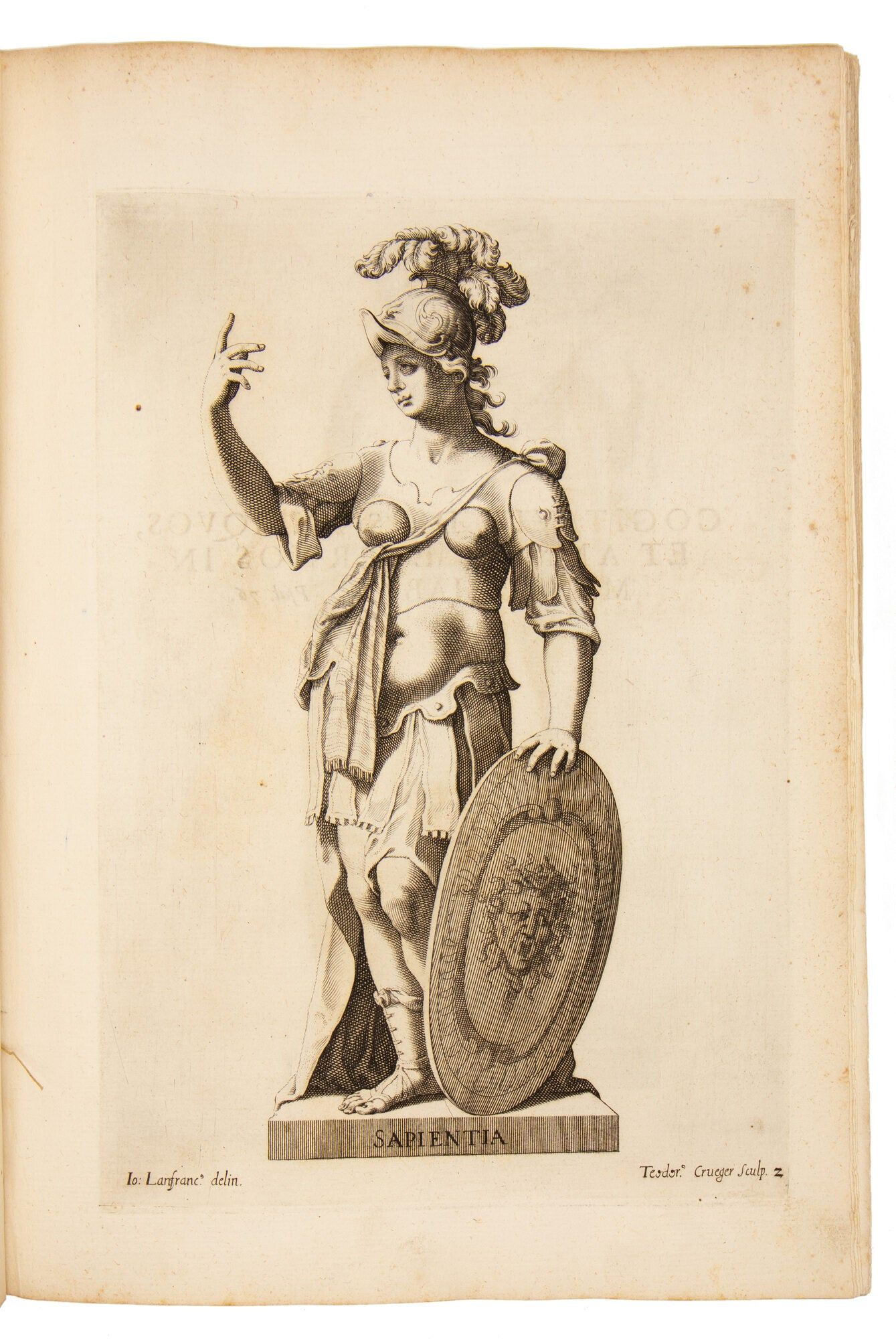
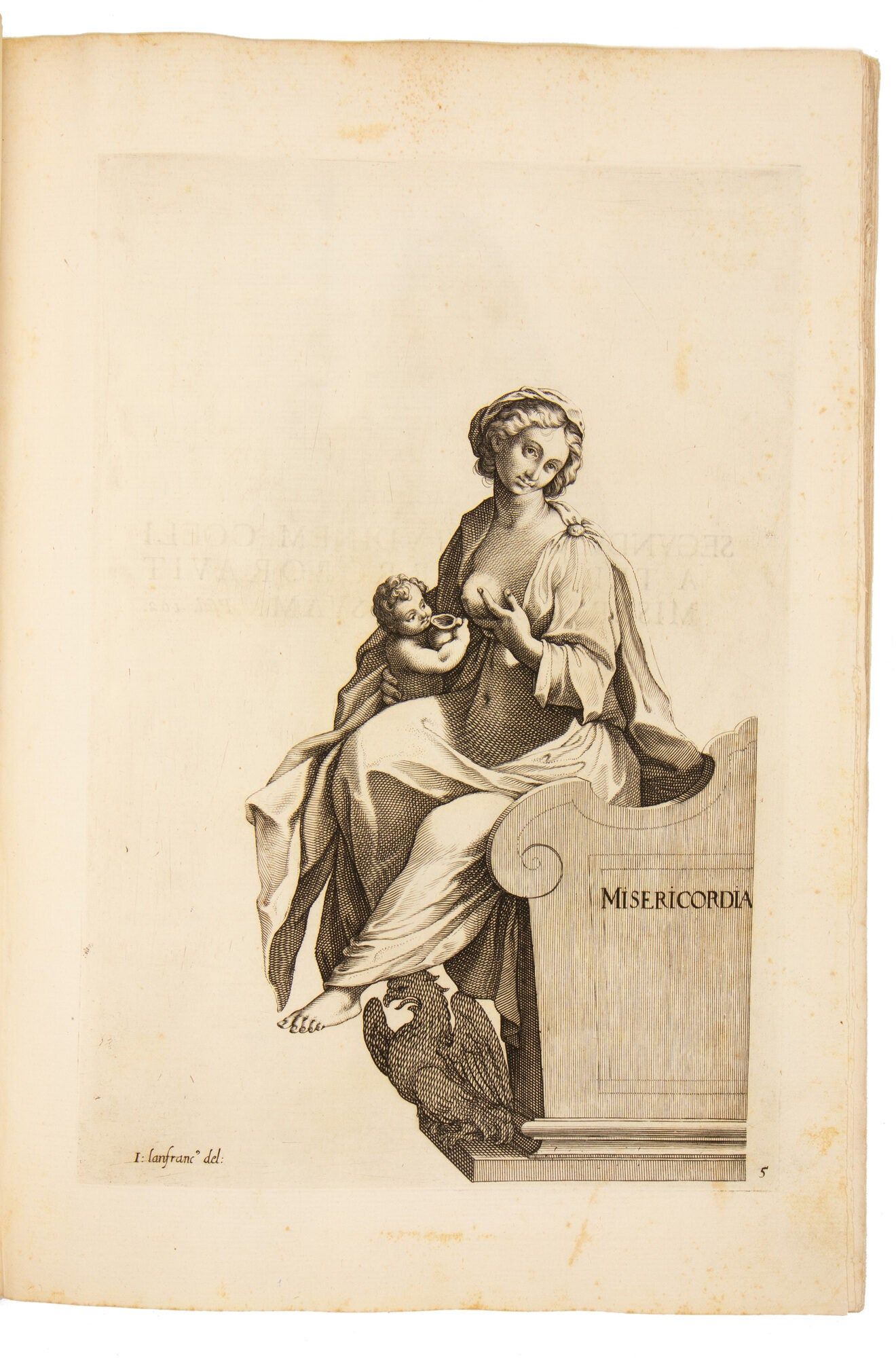
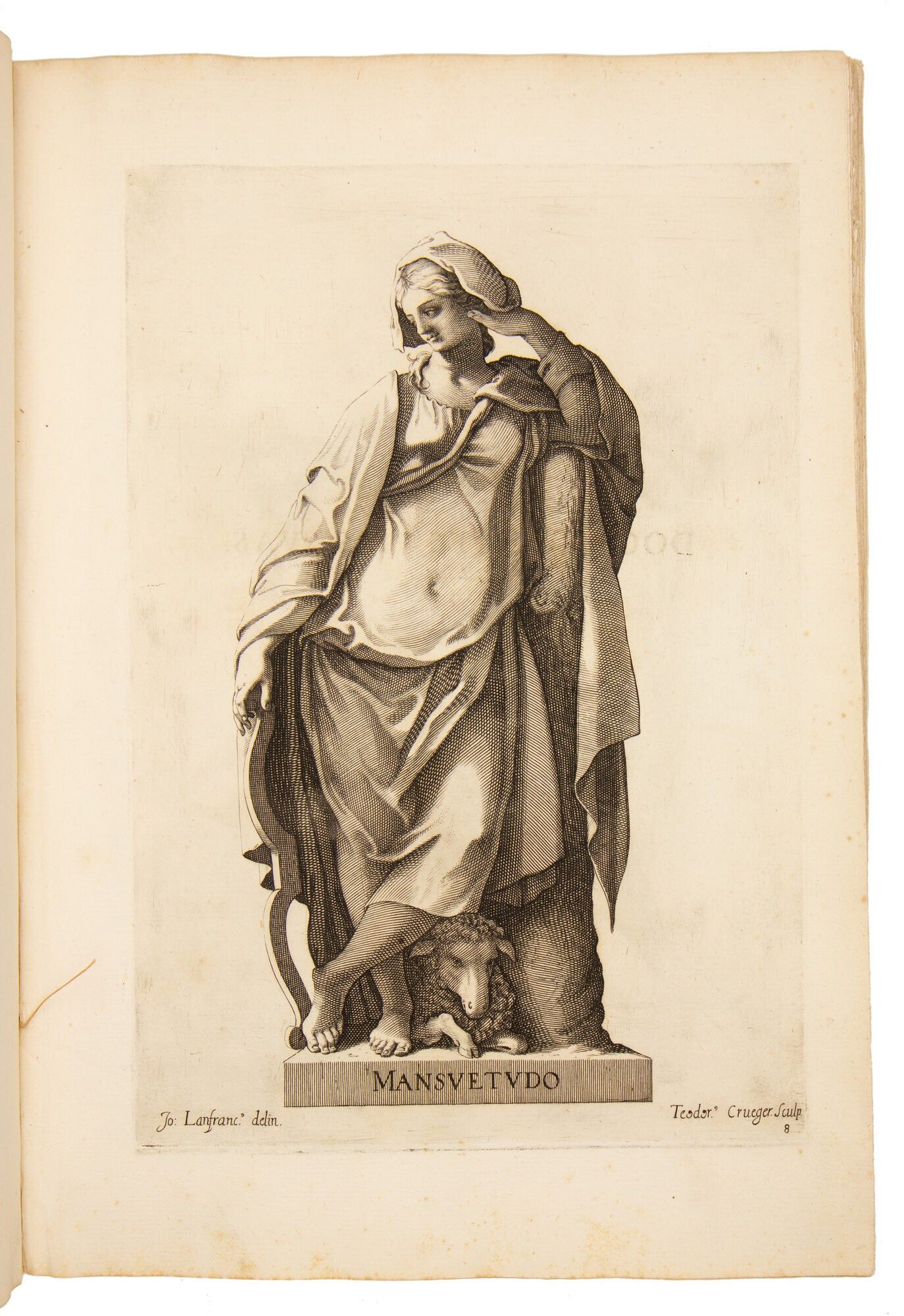
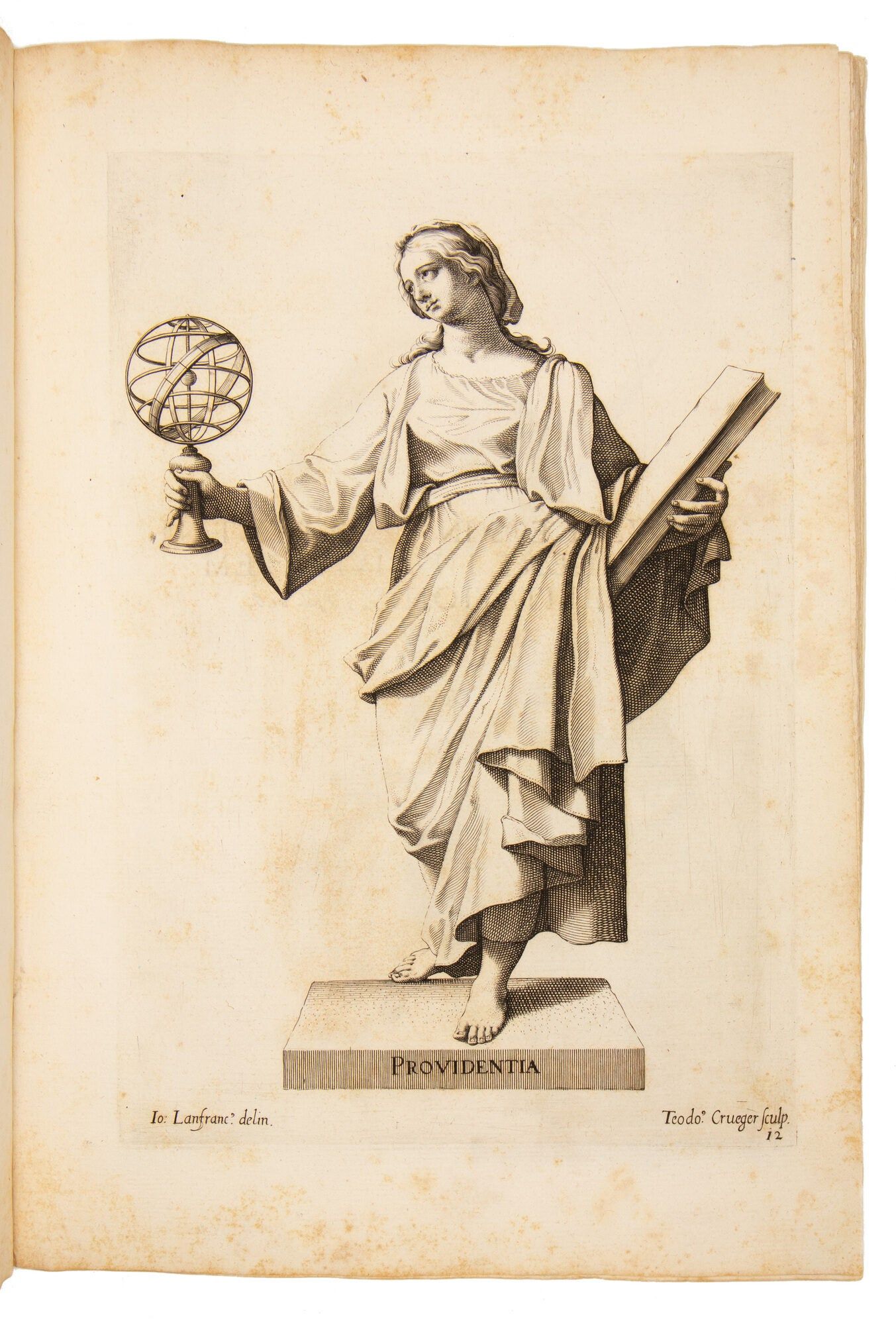
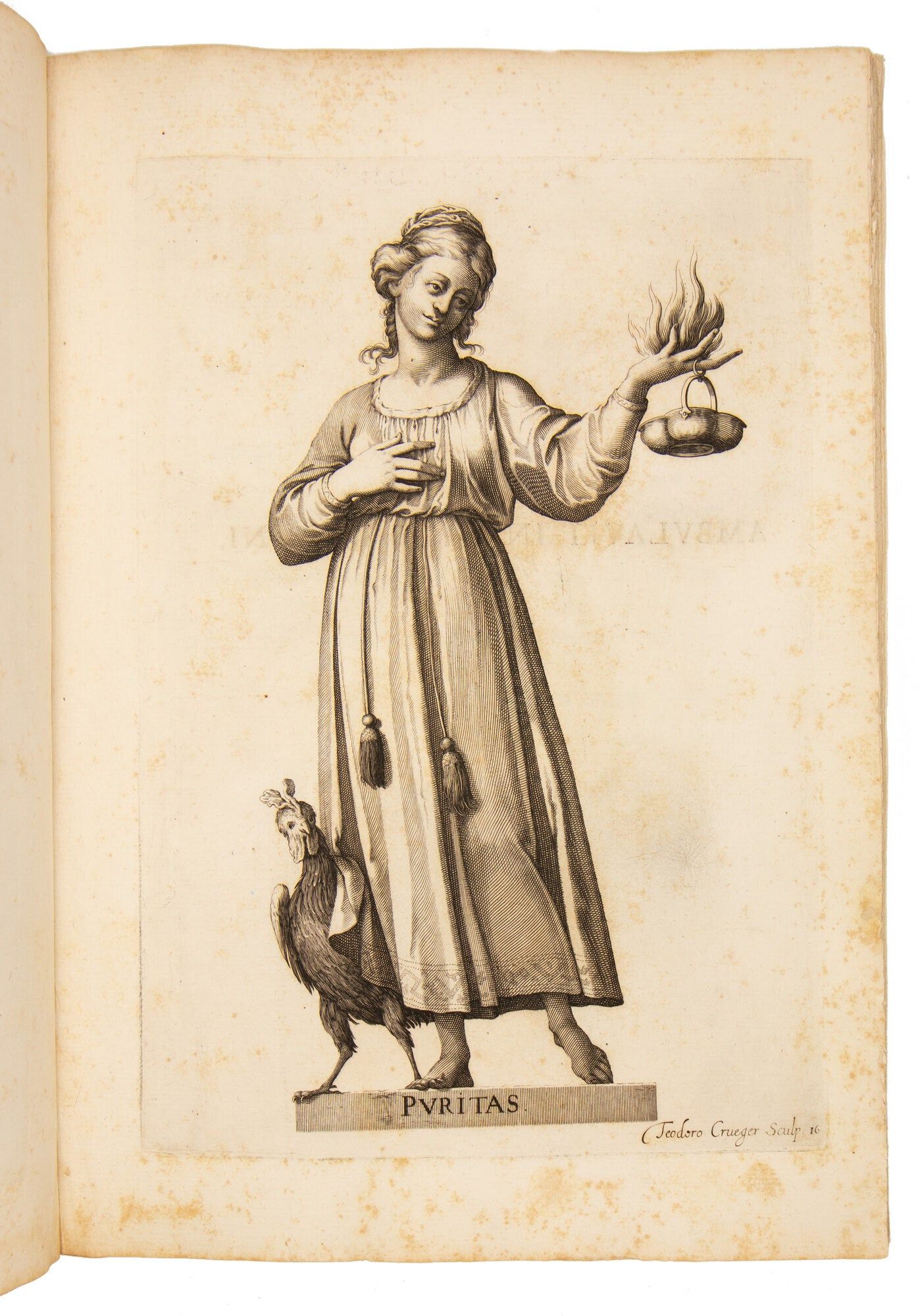
The book is illustrated with 19 engravings. The illustrations are the sole visual record of the ephemeral décor and apparatus created for the ceremonies. The folding plate shows the church interior and the monumental catafalque, in the form of a tempietto, designed by the architect Sergio Venturi, and fabricated in wood for the occasion by Giovan Battista Soria. The 16 engravings of personified virtues are based on stucco sculptures made for the funeral by a certain "Cavalier Bernino", a "sculptor of great acclaim in our age", i.e. Bernini.
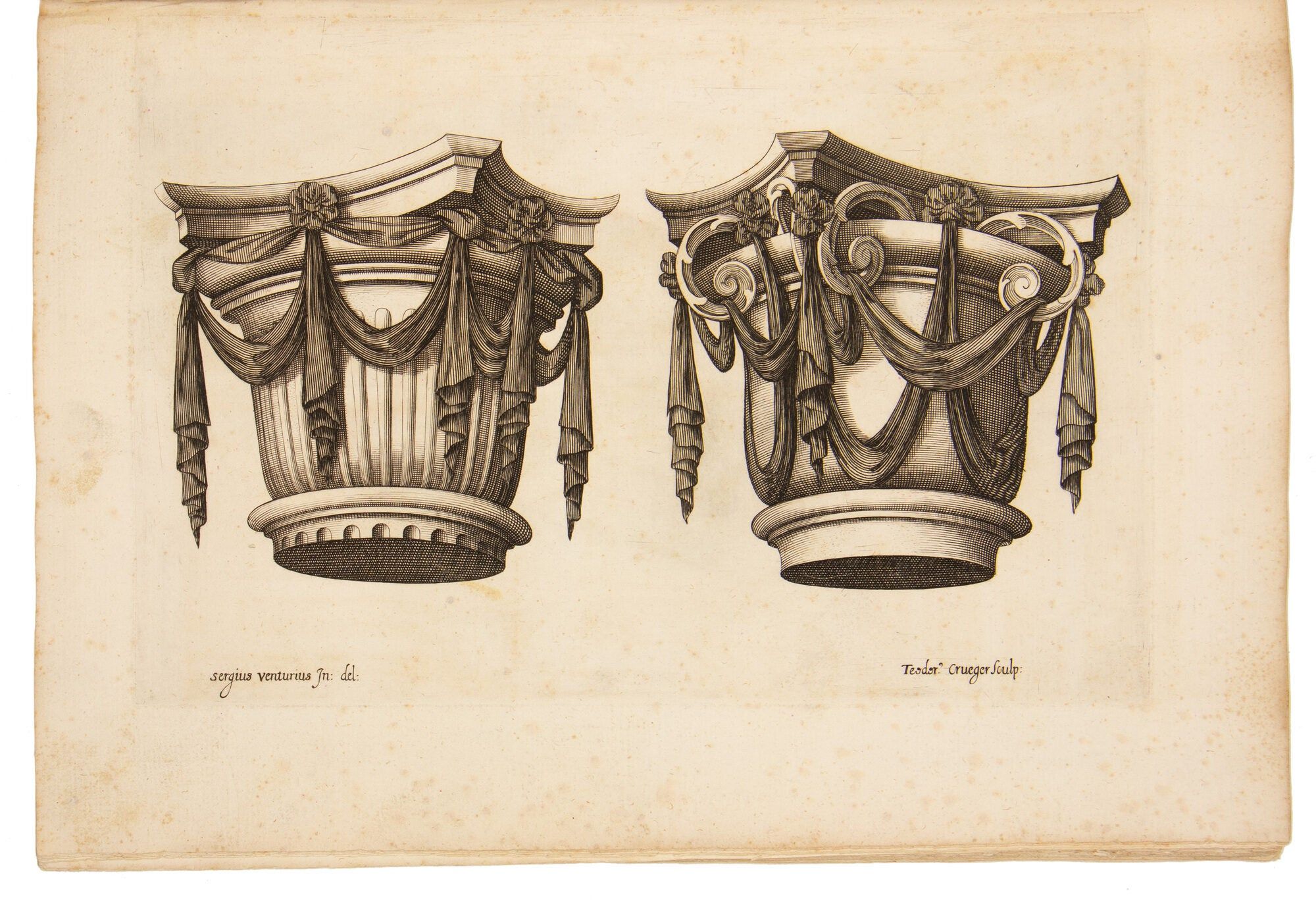
The images were all engraved by Theodor Krüger (ca. 1575-1624). They comprise: a title vignette with the arms of the dedicatee, the folding view of the church interior and catafalque, drawn by Domenico Gargiulo; two capitals designed and drawn by Sergio Venturi; and the aforementioned 16 statues representing personified virtues, drawn by Giovanni Lanfranco (1582-1647).
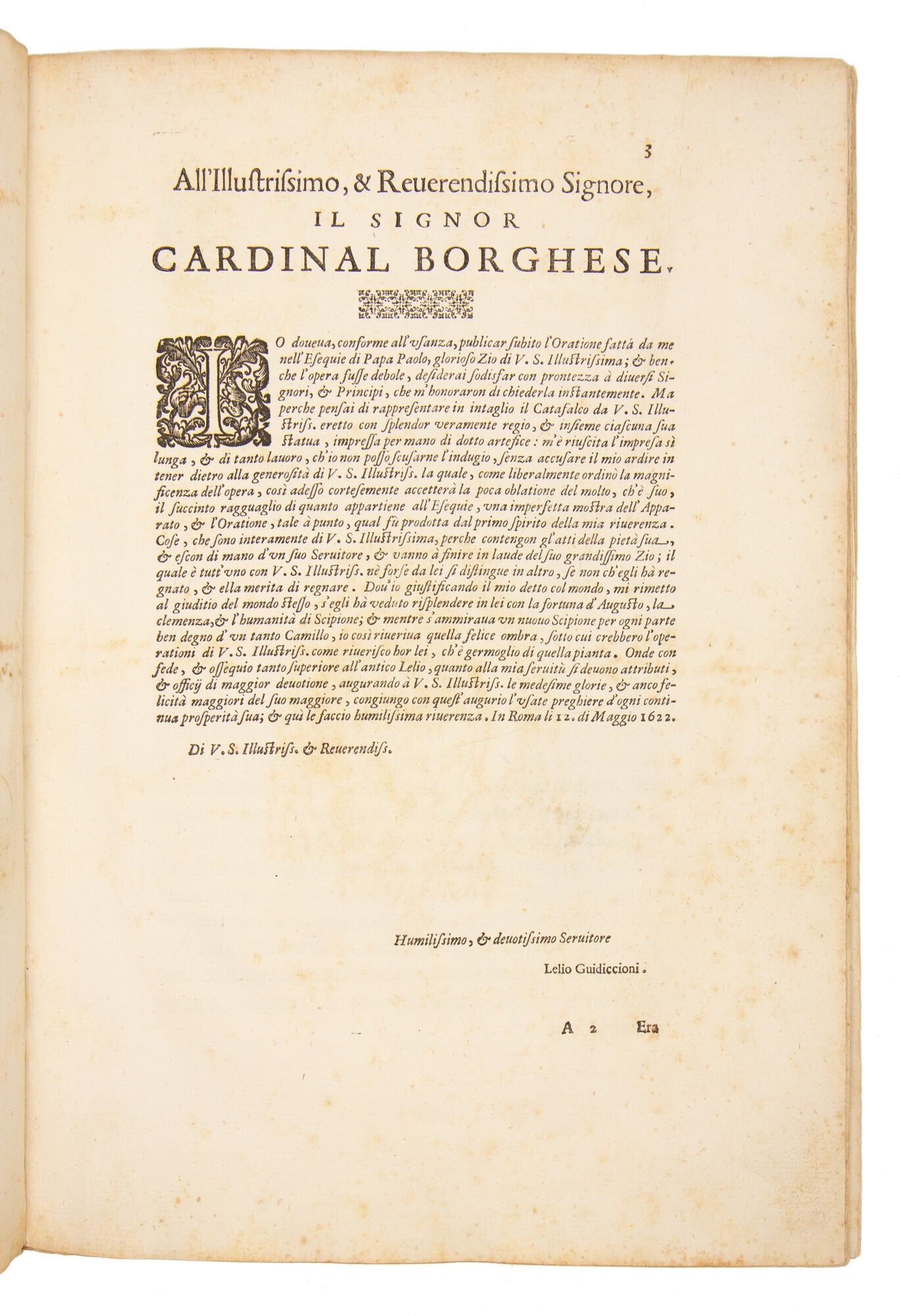
Guidiccioni's dedication to Cardinal Borghese is dated at Rome, May 12, 1622.
Guidiccioni's 'Breve racconto' contains a wealth of information about the catafalque and the funeral service. It has several parts: an Italian text detailing the history of the project, the procession from the Vatican, the catafalque's appearance and creators; a transcription of the Latin oration read at the obsequies; transcriptions of odes and epigrams which were read at the service; and a series of engravings of the monument. These images include sixteen engravings of the sculpted virtues, an engraving of two separate column capitals, and an oversized image of the entire catafalque in the nave of the church. These eighteen plates constitute the only extant visual evidence for the catafalque's appearance.
"The publication of this book was undertaken by Lelio Guidiccioni at Scipione Borghese's behest. Guidiccioni was a poet, aesthete, and member of Scipione Borghese's court. While largely forgotten today, Guidiccioni's scholarship (and pedanticism) were renowned in the Seicento. Happily, Guidiccioni's account can be substantiated and supplemented by payment records and the accounts of two eyewitnesses: the Roman gentleman diarist Giacinto Gigli and the papal ceremony master Paolo Alaleone.
"The ceremonies began early in the morning on Sunday the thirtieth of January. Scipione and a group of cardinals, prelates, and canons gathered in St. Peter's to witness the opening of Paul's casket. The pontiff's body had been removed from its tomb in the Vatican catacombs two days earlier on the first anniversary of his death. From there it was brought up to the basilica where it was prepared for transportation to Paul's final resting place in the Cappella Paolina in S. Maria Maggiore, the building of which had occupied much of his long papacy.
"His body was placed on a portable platform designed to be carried and richly decorated with ornaments, Borghese arms, and inscriptions. Covered with a blanket of gold brocade, the body was surrounded by twenty four torch-bearing candelabras.
By evening representatives of the monastic orders, mendicants, and confraternities had assembled in St. Peter's and the procession began. This group included members of the Seminario Romano, Collegio Germanico, the Carmelites of San Crisogono, the Dominican protectors and titularies, the Camaldolesi monks of San Gregorio, and the Olivetan monks. There were also mendicants, a group of beggar children called the letterati after their protecor Leonardo Cerusi di Salerno, known as "il Letterato," and other orphans. This group carried 600 torches. After these came the capitals of the Vatican, Esquiline, and Lateran, and then the coffin itself borne by mercenaries. Finally came the pontifical cavalcade with members of the pope's retinue and household. This large group made its way slowly through the streets of Rome, which were thronged with spectators.
"The facade of S. Maria Maggiore, the destination of this procession, was draped in black fabric, illuminated by candles and decorated with Borghese arms. Inside, the nave was draped in black fabric with a cornice of candles. Large panels depicting the Borghese arms and supported by skeletons hung between the columns. Set up in the crossing was an enormous catafalque, eighty meters tall, painted to resemble bronze, with its dome draped in black fabric and covered with candles. So towering was the structure, that part of the basilica's roof had been removed as a precaution against fire.
"In addition to the fabric and candles, it was adorned with thirty six life-sized statues fashioned of stucco... The combination of Guidiccioni's text and payment records certainly indicate that Bernini was indeed responsible for their design. Because the actual sculptures do not survive, questions of workshop versus master are largely moot: Bernini would surely have determined the basic form of all the figures for such an important commission and patron. And, sadly, these basic outlines are all that we can glean from the extant engravings.
"The sculptural decoration consisted of sixteen female personifications arranged into four groupings, all of which were carefully chosen to represent aspects of Paul's character both as pope and as Borghese paterfamilias: Iustitia (with Maestà, Puritas, and Religio), Pax (with Annona, Providentia, and Tranquillitas), Veritas (with Sapientia, Magnificenza, and Magnamitas) and Misericordia (with Eleemosina, Clementia, and Mansuetudo). Guidiccioni identifies these figures all as virtues. Strictly speaking they are not: some are benefits or results of virtues, a problem which will be discussed in chapter seven. All of the figures were painted to resemble marble and placed in the intercolumniation of the catafalque. Twenty more stucco figures of putti were placed around the dome."(Packard, The Catafalque of Paul V: Architecture, Sculpture and Iconography).
The book holds the distinction of being the sole visual record of this project by the young Gian Lorenzo Bernini (1598-1680), the preeminent genius of the Roman Baroque. The statues created for the re-burial anticipate iconographic motifs developed by Bernini in his mature work. The artistic program marks an important collaboration between the artist and Lelio Guidiccioni for their mutual patron, Scipione Borghese (of whom Bernini sculpted two marble portrait busts under Guidiccioni's supervision.) It has been suggested that three of five figures in the catafalque plate are Gian Lorenzo and his father Pietro (1562-1629).
The book is illustrated with 19 engravings. The illustrations are the sole visual record of the ephemeral décor and apparatus created for the ceremonies. The folding plate shows the church interior and the monumental catafalque, in the form of a tempietto, designed by the architect Sergio Venturi, and fabricated in wood for the occasion by Giovan Battista Soria. The 16 engravings of personified virtues are based on stucco sculptures made for the funeral by a certain "Cavalier Bernino", a "sculptor of great acclaim in our age", i.e. Bernini.
The images were all engraved by Theodor Krüger (ca. 1575-1624). They comprise: a title vignette with the arms of the dedicatee, the folding view of the church interior and catafalque, drawn by Domenico Gargiulo; two capitals designed and drawn by Sergio Venturi; and the aforementioned 16 statues representing personified virtues, drawn by Giovanni Lanfranco (1582-1647).
Guidiccioni's dedication to Cardinal Borghese is dated at Rome, May 12, 1622.
Guidiccioni's 'Breve racconto' contains a wealth of information about the catafalque and the funeral service. It has several parts: an Italian text detailing the history of the project, the procession from the Vatican, the catafalque's appearance and creators; a transcription of the Latin oration read at the obsequies; transcriptions of odes and epigrams which were read at the service; and a series of engravings of the monument. These images include sixteen engravings of the sculpted virtues, an engraving of two separate column capitals, and an oversized image of the entire catafalque in the nave of the church. These eighteen plates constitute the only extant visual evidence for the catafalque's appearance.
"The publication of this book was undertaken by Lelio Guidiccioni at Scipione Borghese's behest. Guidiccioni was a poet, aesthete, and member of Scipione Borghese's court. While largely forgotten today, Guidiccioni's scholarship (and pedanticism) were renowned in the Seicento. Happily, Guidiccioni's account can be substantiated and supplemented by payment records and the accounts of two eyewitnesses: the Roman gentleman diarist Giacinto Gigli and the papal ceremony master Paolo Alaleone.
"The ceremonies began early in the morning on Sunday the thirtieth of January. Scipione and a group of cardinals, prelates, and canons gathered in St. Peter's to witness the opening of Paul's casket. The pontiff's body had been removed from its tomb in the Vatican catacombs two days earlier on the first anniversary of his death. From there it was brought up to the basilica where it was prepared for transportation to Paul's final resting place in the Cappella Paolina in S. Maria Maggiore, the building of which had occupied much of his long papacy.
"His body was placed on a portable platform designed to be carried and richly decorated with ornaments, Borghese arms, and inscriptions. Covered with a blanket of gold brocade, the body was surrounded by twenty four torch-bearing candelabras.
By evening representatives of the monastic orders, mendicants, and confraternities had assembled in St. Peter's and the procession began. This group included members of the Seminario Romano, Collegio Germanico, the Carmelites of San Crisogono, the Dominican protectors and titularies, the Camaldolesi monks of San Gregorio, and the Olivetan monks. There were also mendicants, a group of beggar children called the letterati after their protecor Leonardo Cerusi di Salerno, known as "il Letterato," and other orphans. This group carried 600 torches. After these came the capitals of the Vatican, Esquiline, and Lateran, and then the coffin itself borne by mercenaries. Finally came the pontifical cavalcade with members of the pope's retinue and household. This large group made its way slowly through the streets of Rome, which were thronged with spectators.
"The facade of S. Maria Maggiore, the destination of this procession, was draped in black fabric, illuminated by candles and decorated with Borghese arms. Inside, the nave was draped in black fabric with a cornice of candles. Large panels depicting the Borghese arms and supported by skeletons hung between the columns. Set up in the crossing was an enormous catafalque, eighty meters tall, painted to resemble bronze, with its dome draped in black fabric and covered with candles. So towering was the structure, that part of the basilica's roof had been removed as a precaution against fire.
"In addition to the fabric and candles, it was adorned with thirty six life-sized statues fashioned of stucco... The combination of Guidiccioni's text and payment records certainly indicate that Bernini was indeed responsible for their design. Because the actual sculptures do not survive, questions of workshop versus master are largely moot: Bernini would surely have determined the basic form of all the figures for such an important commission and patron. And, sadly, these basic outlines are all that we can glean from the extant engravings.
"The sculptural decoration consisted of sixteen female personifications arranged into four groupings, all of which were carefully chosen to represent aspects of Paul's character both as pope and as Borghese paterfamilias: Iustitia (with Maestà, Puritas, and Religio), Pax (with Annona, Providentia, and Tranquillitas), Veritas (with Sapientia, Magnificenza, and Magnamitas) and Misericordia (with Eleemosina, Clementia, and Mansuetudo). Guidiccioni identifies these figures all as virtues. Strictly speaking they are not: some are benefits or results of virtues, a problem which will be discussed in chapter seven. All of the figures were painted to resemble marble and placed in the intercolumniation of the catafalque. Twenty more stucco figures of putti were placed around the dome."(Packard, The Catafalque of Paul V: Architecture, Sculpture and Iconography).
Details
Title
Breve racconto della trasportatione del corpo di Papa Paolo V dalla Basilica di San Pietro a quella di Santa Maria Maggiore
Author
BAROQUE ROME. Lelio Guidiccioni (1582-1643)
Binding
Hardcover
Condition
Fine
Publisher
Appresso l'Erede di Bartolomeo Zannetti: Rome
Date
1623
Edition
SOLE EDITION