

Mine Safety and Mining Union Protections Archive, Documenting Labor Practices and Regulatory Laws in the U.S., 1893-1922
- 1893
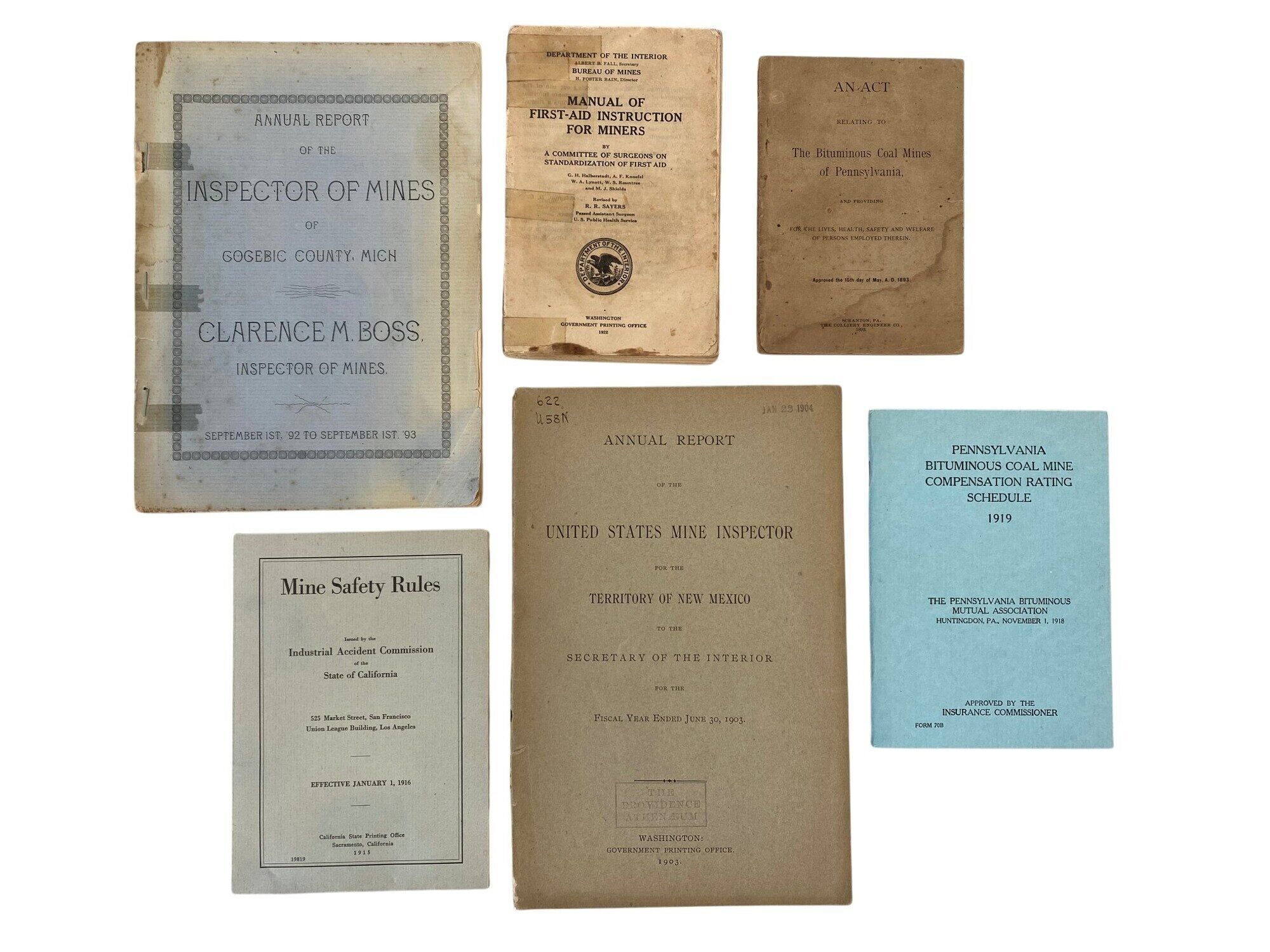
1893. Mine inspection and safety archive of six booklets dating from 1893 through World War I, documenting evolving labor practices and safety standards in the mining industry. Mine safety practices expanded rapidly after lethal mining disasters and labor conflicts of the late nineteenth century forced government intervention in regulating ventilation, machinery, explosives, compensation liability, and emergency medical response. This six-item group preserves that transition across multiple jurisdictions and administrative levels. The materials document the dangerous conditions that lead to the founding of the United Mine Workers of America, including an 1893 inspection report with a "tabulated list of fatal accidents" from Michigan iron mining operations, and Pennsylvania's 1893 Bituminous Coal Mines act, which codified requirements for safety catches, signaling apparatus, and shaft protection. By the 1910s the regulatory framework had broadened into compensation systems and standardized industrial enforcement: materials from California's Industrial Accident Commission, the Pennsylvania Bituminous Mutual Association, the Pennsylvania Department of Mines, and the Federal Bureau of Mines detail ventilation and sanitation standards, worker's compensation insurance, and first-aid instruction for mine workers covering gas poisoning, fractures, hemorrhage control, burns, rescue transport, and artificial respiration. The materials span nearly 30 years, from the early days of the United Mine Workers of America to the rapidly expanding demand for coal during WWI, documenting the evolution of safety practices and federal regulation demanded by workers in this dangerous industry.
Six mining safety and regulation publications issued between 1893 and 1922, covering Michigan, Pennsylvania, New Mexico, California, and federal Bureau of Mines administration.
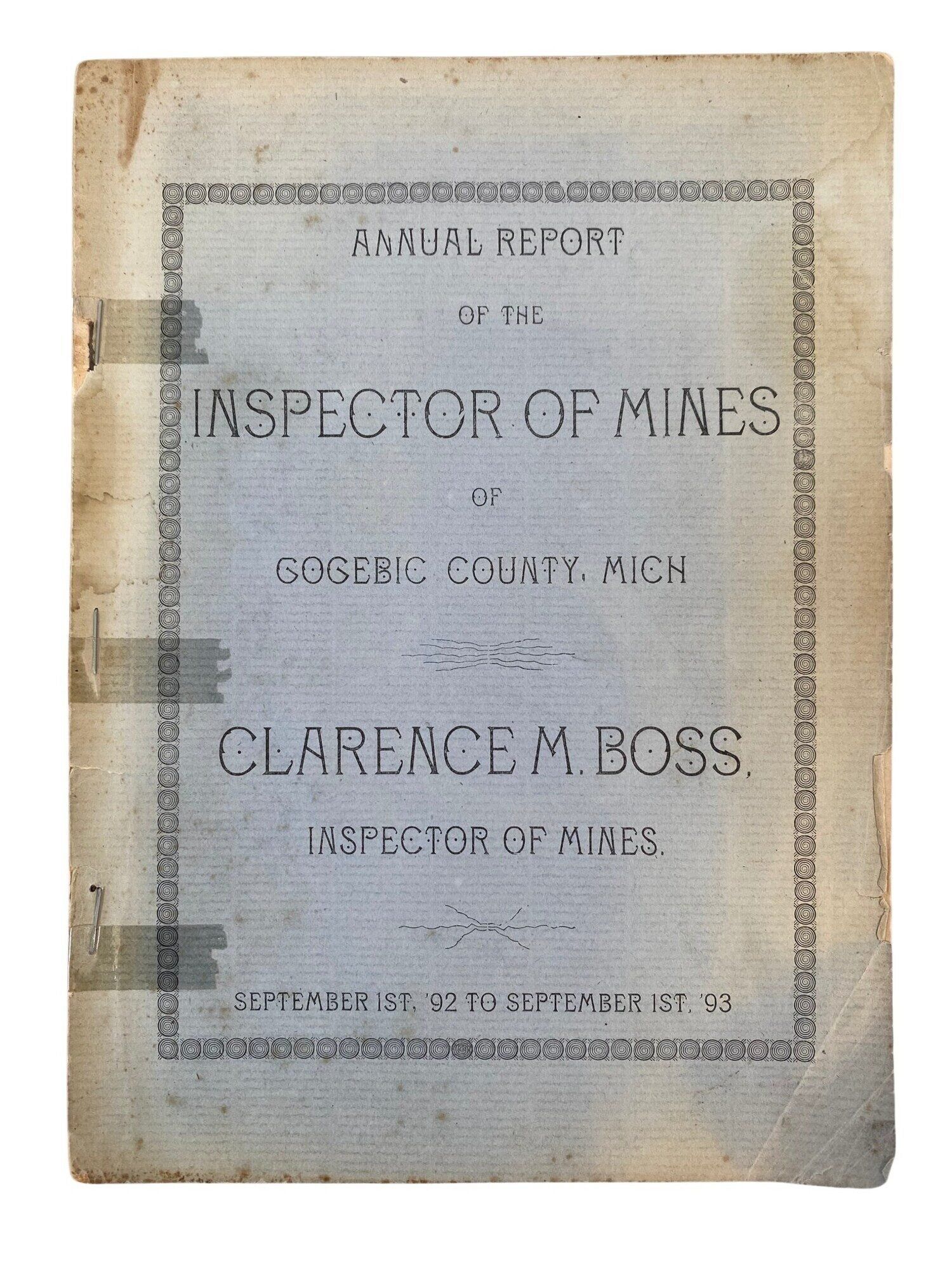
[1] Boss, Clarence M. Annual Report of the Inspector of Mines of Gogebic County, Mich. Ironwood, Mich.: The American Citizen Print, 1893. Issued for the year ending September 1, 1893, during the peak development of Michigan's Gogebic iron range. The report opens with a "Scene on Ninth Level of the Colby Mine" and includes tables covering producing mines, ore tonnage, underground and surface employment, fatal accidents, and accident classifications. The descriptive section recounts flooded shafts, underground development delays, pumping operations, and reduced production after the collapse of ore prices in 1893.
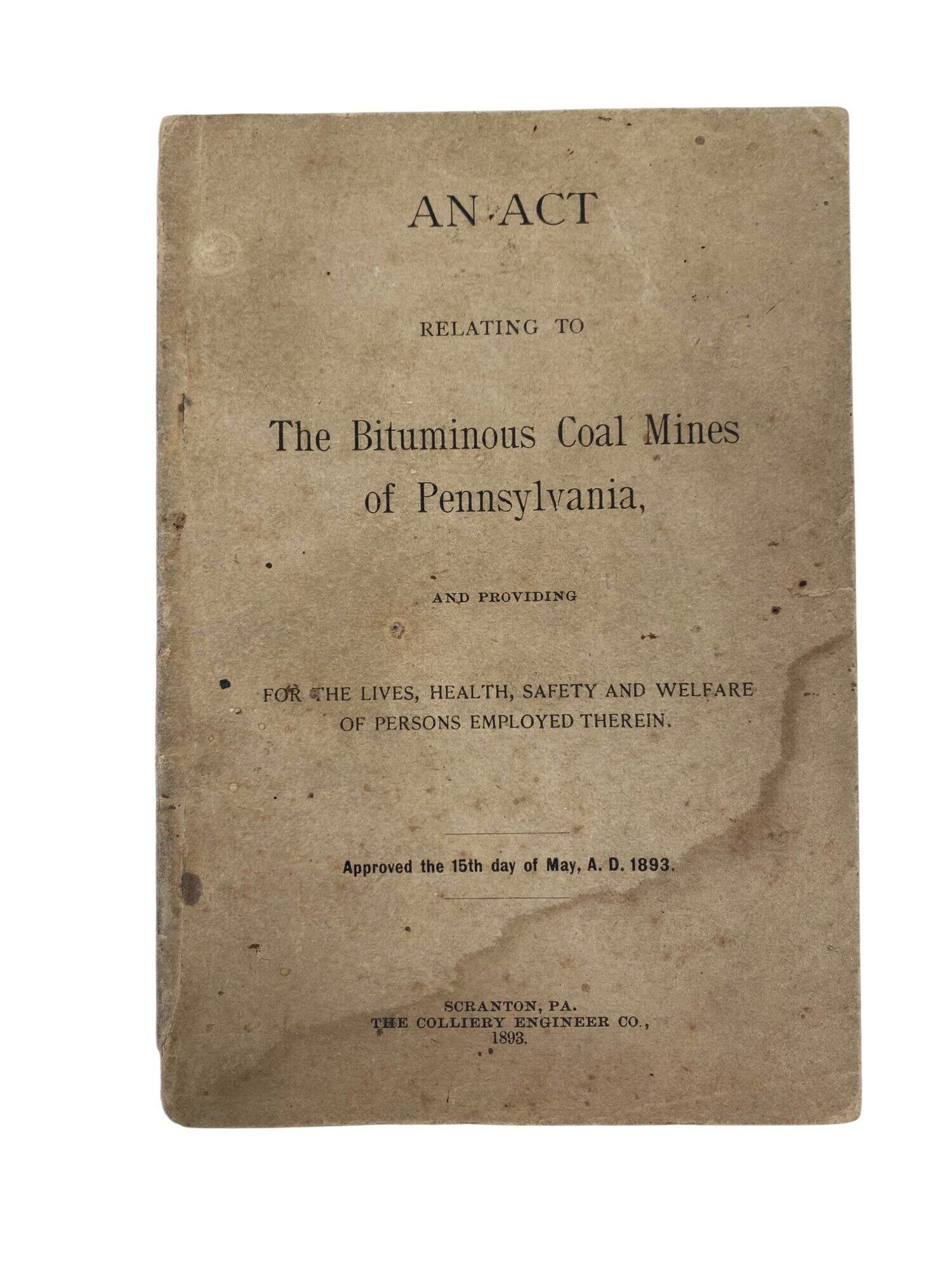
[2] An Act Relating to the Bituminous Coal Mines of Pennsylvania, and Providing for the Lives, Health, Safety and Welfare of Persons Employed Therein. Scranton, Pa.: The Colliery Engineer Co., 1893. Pennsylvania's comprehensive post-disaster mining law requiring detailed underground survey maps, ventilation systems, shaft signaling apparatus, safety catches, and approved hoisting machinery. Article I mandates mine maps showing excavations, openings, air currents, and adjoining coal lands, while Article III specifies requirements for shaft communication tubes, overhead cage protection, brakes, and safety gates. Issued in the same decade as the Mammoth Mine and Twin Shaft disasters that intensified pressure for stricter state oversight of coal operations.
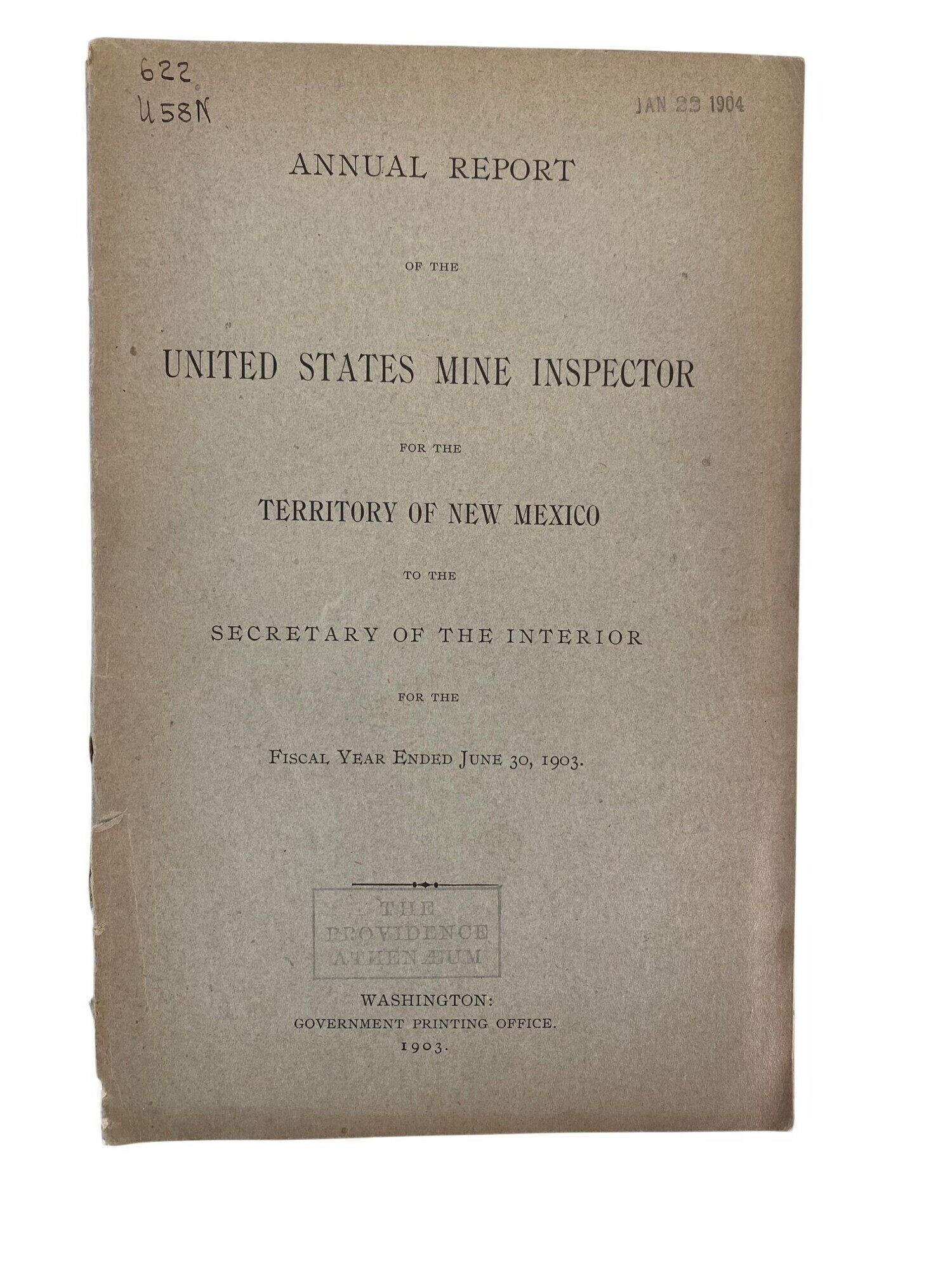
[3] Annual Report of the United States Mine Inspector for the Territory of New Mexico to the Secretary of the Interior for the Fiscal Year Ended June 30, 1903. Washington: Government Printing Office, 1903. Submitted by United States Mine Inspector Jo E. Sheridan to Secretary of the Interior Ethan Allen Hitchcock. The contents include county-by-county reports on coal mines in Colfax, McKinley, Rio Arriba, Santa Fe, San Juan, San Miguel, and Socorro Counties, together with "Prices paid for labor," "List of fatal accidents," "Coroner's inquests," and "United States laws governing the working of coal mines in the Territories." Sheridan's opening report discusses railroad fuel demand, competition with California fuel oil, and expansion of coal production across Arizona and New Mexico.
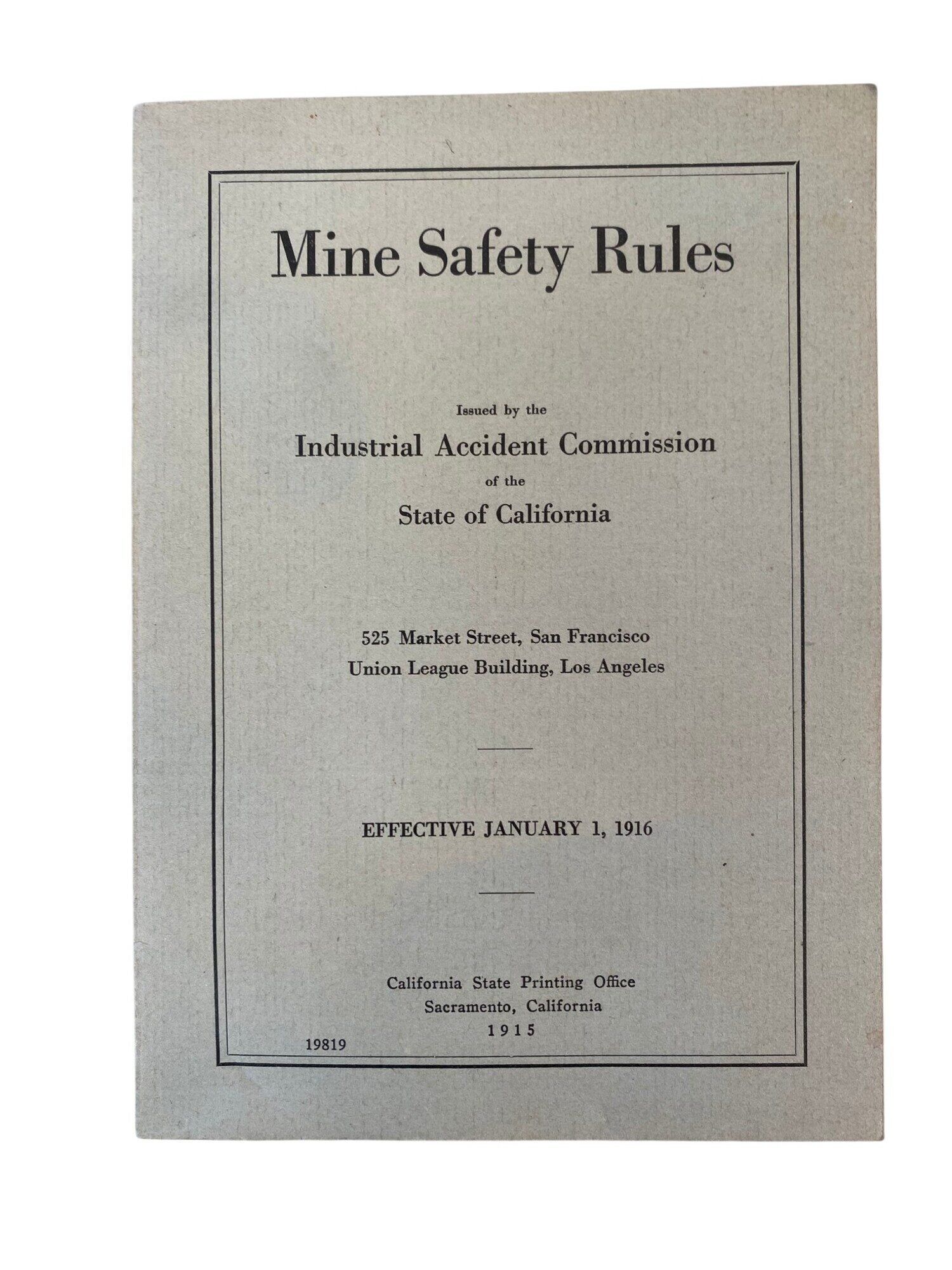
[4] Mine Safety Rules. Sacramento: California State Printing Office, 1915. Effective January 1, 1916. Issued by the Industrial Accident Commission of the State of California under the Workmen's Compensation, Insurance and Safety Act. The prefatory material names representatives of the California Metal Producers' Association, Amador County Miners' Union No. 135, Grass Valley Miners' Union No. 90, Randsburg Miners' Union No. 44, and the United States Bureau of Mines who drafted the rules. The contents cover ventilation, sanitation, women and children in mines, explosives storage, electrical equipment, shaft protection, ladders, abandoned shafts, signaling systems, hoisting regulations, and accident reporting requirements.
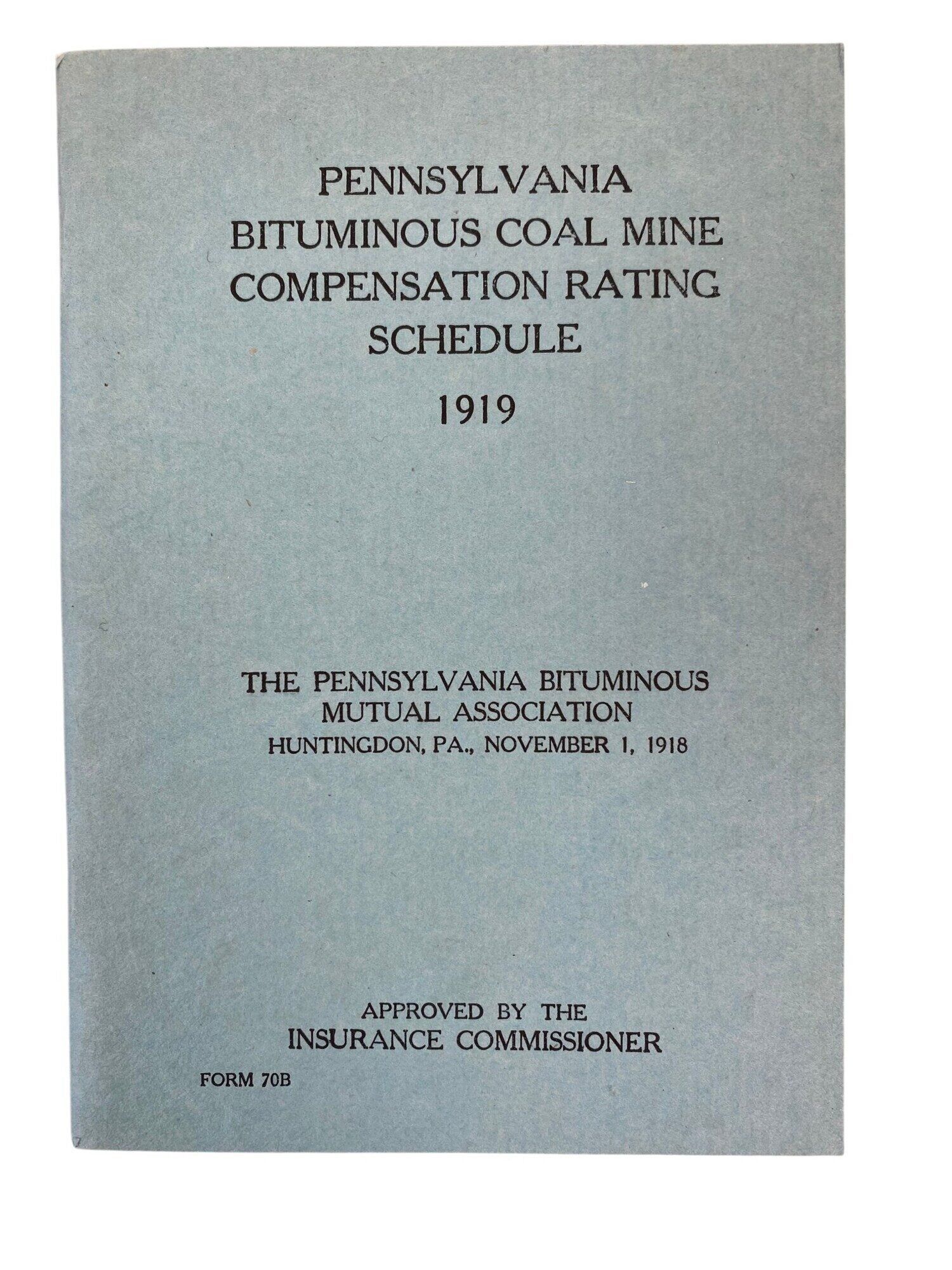
[5] Pennsylvania Bituminous Coal Mine Compensation Rating Schedule, 1919. Huntington, Pa.: Pennsylvania Bituminous Mutual Association, November 1, 1918.
Prepared for use in workers' compensation insurance administration after the adoption of state compensation laws. The schedule divides coal mines into "nine classes or groups" coordinated with accident statistics from the Federal Bureau of Mines and the Pennsylvania Department of Mines. Sections address catastrophe elimination, valuation losses, electrical hazards, ventilation, hoisting ropes, explosives, safety catches, sanitation, and experience-based premium calculations. An "Appeals" notice grants operators hearings before the Committee on Coal Mine Schedule Rating and directs correspondence to Harrisburg and the Pennsylvania Insurance Commissioner.
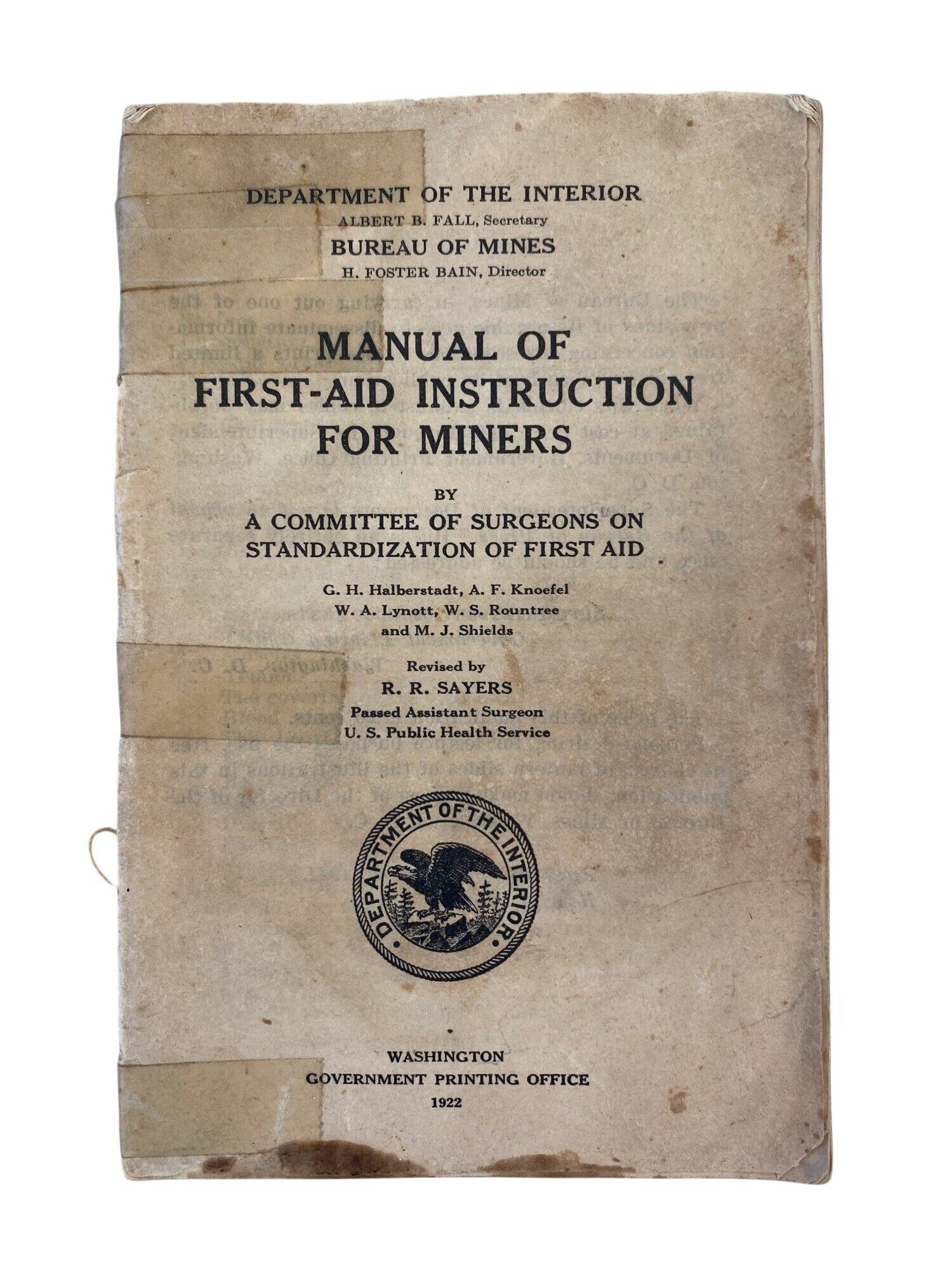
[6] Manual of First Aid Instruction for Miners. Washington: Government Printing Office, 1922. Issued by the Department of the Interior, Bureau of Mines, under Director H. Foster Bain and revised by R. R. Sayers of the United States Public Health Service. The contents include carbon monoxide poisoning, electric shock, fractures, burns, hemorrhage control, stretcher transport, splints, artificial respiration methods, and advanced first-aid instruction for mine rescue work. The manual also advertises lantern slides available "for lecture purposes" through the Bureau of Mines, reflecting the federal government's growing use of standardized safety instruction after the Bureau's formation in 1910.
Edge wear, toning, occasional staining, rusted staples, and scattered chipping to wrappers and spines; several items with old tape reinforcement or minor separation at folds and hinges. Overall good condition.
Six mining safety and regulation publications issued between 1893 and 1922, covering Michigan, Pennsylvania, New Mexico, California, and federal Bureau of Mines administration.
[1] Boss, Clarence M. Annual Report of the Inspector of Mines of Gogebic County, Mich. Ironwood, Mich.: The American Citizen Print, 1893. Issued for the year ending September 1, 1893, during the peak development of Michigan's Gogebic iron range. The report opens with a "Scene on Ninth Level of the Colby Mine" and includes tables covering producing mines, ore tonnage, underground and surface employment, fatal accidents, and accident classifications. The descriptive section recounts flooded shafts, underground development delays, pumping operations, and reduced production after the collapse of ore prices in 1893.
[2] An Act Relating to the Bituminous Coal Mines of Pennsylvania, and Providing for the Lives, Health, Safety and Welfare of Persons Employed Therein. Scranton, Pa.: The Colliery Engineer Co., 1893. Pennsylvania's comprehensive post-disaster mining law requiring detailed underground survey maps, ventilation systems, shaft signaling apparatus, safety catches, and approved hoisting machinery. Article I mandates mine maps showing excavations, openings, air currents, and adjoining coal lands, while Article III specifies requirements for shaft communication tubes, overhead cage protection, brakes, and safety gates. Issued in the same decade as the Mammoth Mine and Twin Shaft disasters that intensified pressure for stricter state oversight of coal operations.
[3] Annual Report of the United States Mine Inspector for the Territory of New Mexico to the Secretary of the Interior for the Fiscal Year Ended June 30, 1903. Washington: Government Printing Office, 1903. Submitted by United States Mine Inspector Jo E. Sheridan to Secretary of the Interior Ethan Allen Hitchcock. The contents include county-by-county reports on coal mines in Colfax, McKinley, Rio Arriba, Santa Fe, San Juan, San Miguel, and Socorro Counties, together with "Prices paid for labor," "List of fatal accidents," "Coroner's inquests," and "United States laws governing the working of coal mines in the Territories." Sheridan's opening report discusses railroad fuel demand, competition with California fuel oil, and expansion of coal production across Arizona and New Mexico.
[4] Mine Safety Rules. Sacramento: California State Printing Office, 1915. Effective January 1, 1916. Issued by the Industrial Accident Commission of the State of California under the Workmen's Compensation, Insurance and Safety Act. The prefatory material names representatives of the California Metal Producers' Association, Amador County Miners' Union No. 135, Grass Valley Miners' Union No. 90, Randsburg Miners' Union No. 44, and the United States Bureau of Mines who drafted the rules. The contents cover ventilation, sanitation, women and children in mines, explosives storage, electrical equipment, shaft protection, ladders, abandoned shafts, signaling systems, hoisting regulations, and accident reporting requirements.
[5] Pennsylvania Bituminous Coal Mine Compensation Rating Schedule, 1919. Huntington, Pa.: Pennsylvania Bituminous Mutual Association, November 1, 1918.
Prepared for use in workers' compensation insurance administration after the adoption of state compensation laws. The schedule divides coal mines into "nine classes or groups" coordinated with accident statistics from the Federal Bureau of Mines and the Pennsylvania Department of Mines. Sections address catastrophe elimination, valuation losses, electrical hazards, ventilation, hoisting ropes, explosives, safety catches, sanitation, and experience-based premium calculations. An "Appeals" notice grants operators hearings before the Committee on Coal Mine Schedule Rating and directs correspondence to Harrisburg and the Pennsylvania Insurance Commissioner.
[6] Manual of First Aid Instruction for Miners. Washington: Government Printing Office, 1922. Issued by the Department of the Interior, Bureau of Mines, under Director H. Foster Bain and revised by R. R. Sayers of the United States Public Health Service. The contents include carbon monoxide poisoning, electric shock, fractures, burns, hemorrhage control, stretcher transport, splints, artificial respiration methods, and advanced first-aid instruction for mine rescue work. The manual also advertises lantern slides available "for lecture purposes" through the Bureau of Mines, reflecting the federal government's growing use of standardized safety instruction after the Bureau's formation in 1910.
Edge wear, toning, occasional staining, rusted staples, and scattered chipping to wrappers and spines; several items with old tape reinforcement or minor separation at folds and hinges. Overall good condition.
Details
Title
Mine Safety and Mining Union Protections Archive, Documenting Labor Practices and Regulatory Laws in the U.S., 1893-1922
Author
Mine Safety; Labor Protection
Condition
Unknown
Date
1893