

British Indian Army From the First World War to the Final Years of British Colonial India, Archive of 31 Photographs, 1914-1945
- 1914
1914. British Indian Army photo archive spanning both World Wars, depicting colonial recruitment, military training, the Indian Air Force, military ceremonies, and Burma-front service into the final decades of British rule in India, circa 1914-1945. The British Indian Army was the largest non-conscript force in history: roughly 1.3 million men were recruited during the First World War and 2.5 million during the Second. Indian troops were deployed to the Western Front, Mesopotamia, East Africa, and Egypt during the First World War, and to North Africa, Italy, the Middle East, and Burma during the Second. British power in India had grown from East India Company conquest in the eighteenth century, passed to Crown rule after the 1857 uprising, and was nearing collapse during the time which these press photographs document. The Quit India movement, the 1943 Bengal famine, wartime censorship, and anti-colonial organizing made British authority increasingly untenable even as Indian troops mobilized in record numbers. The archive records the last colonial wartime mobilizations of India before independence in 1947 and Partition remade the subcontinent.
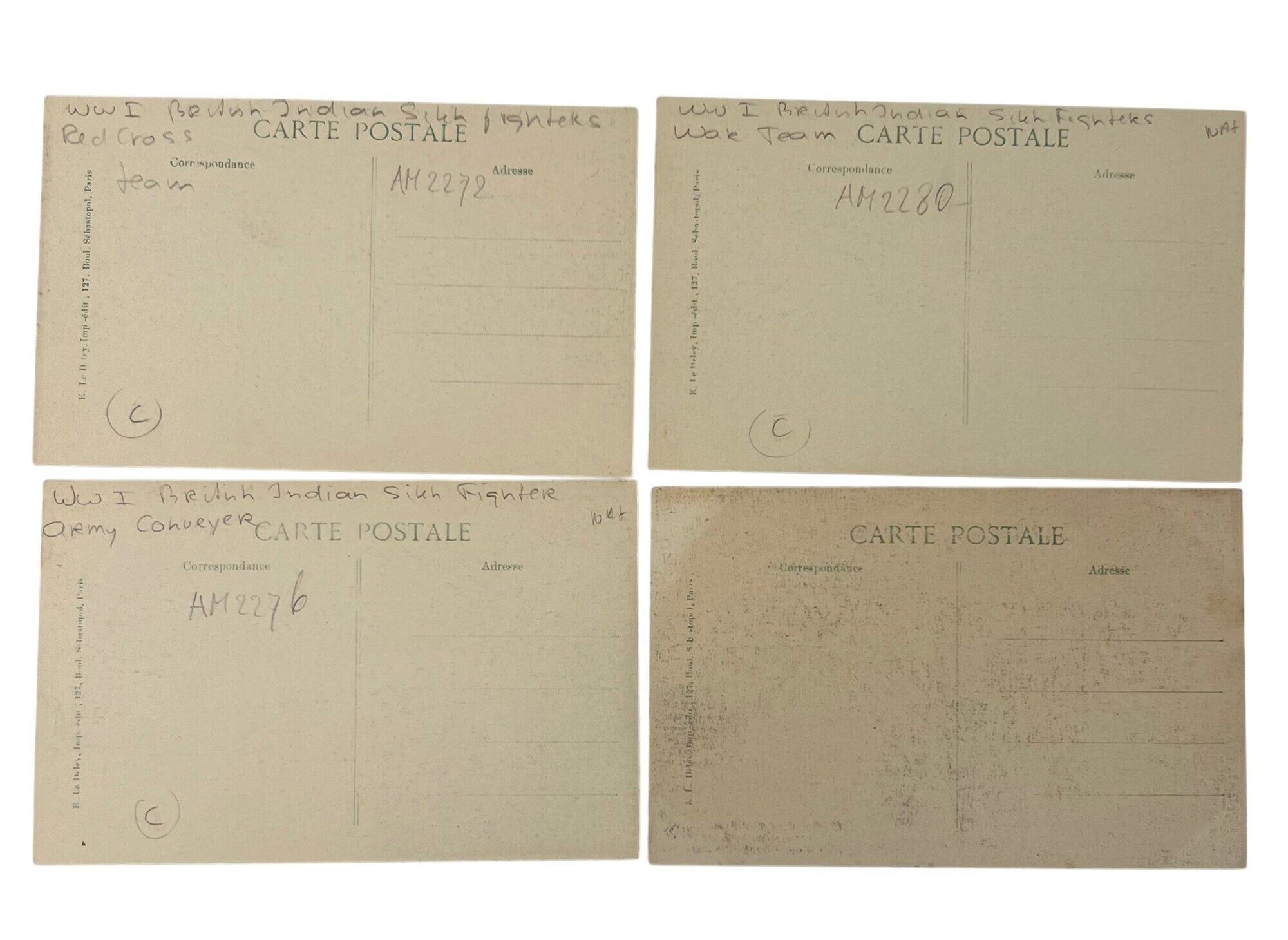
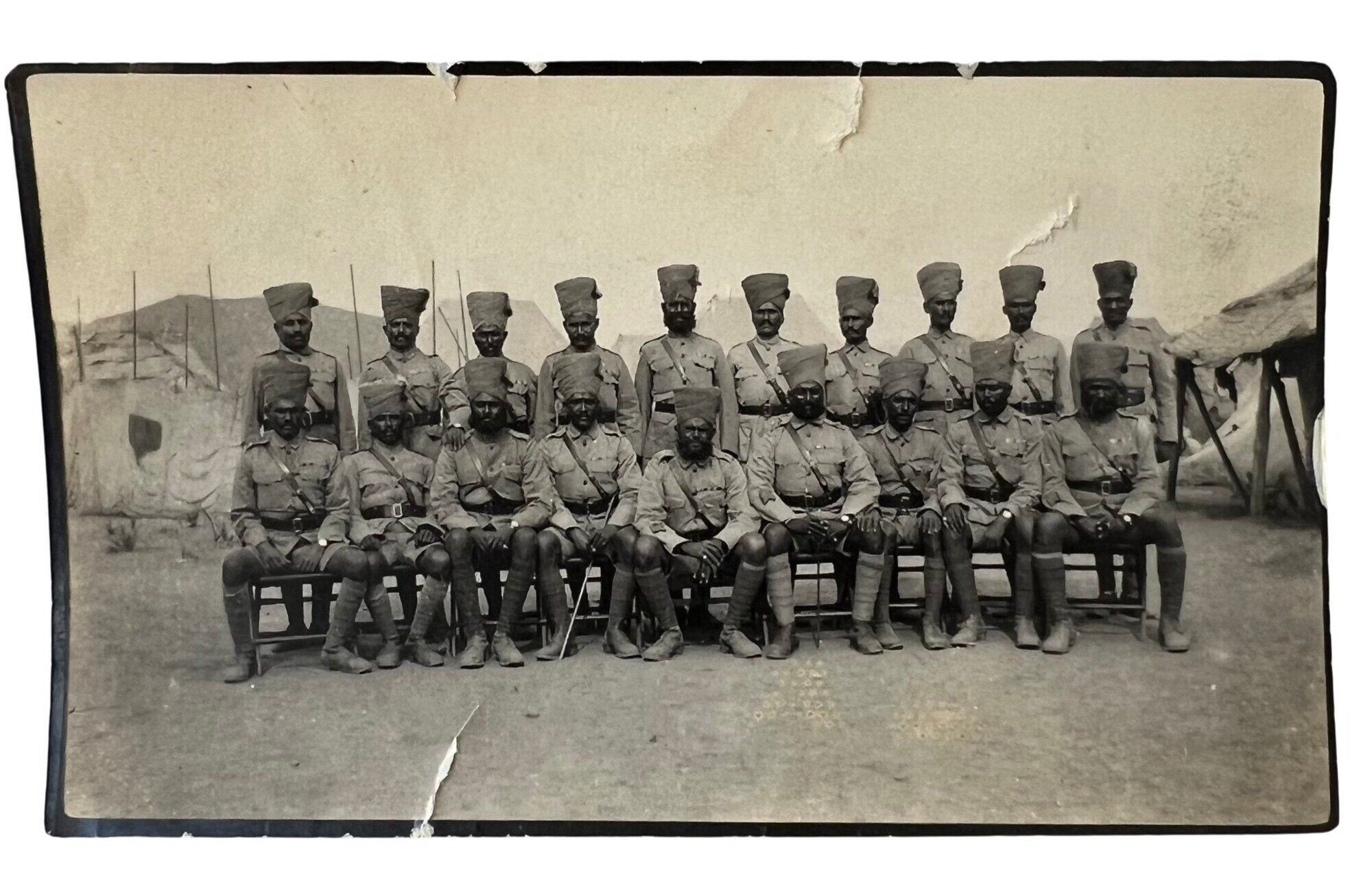
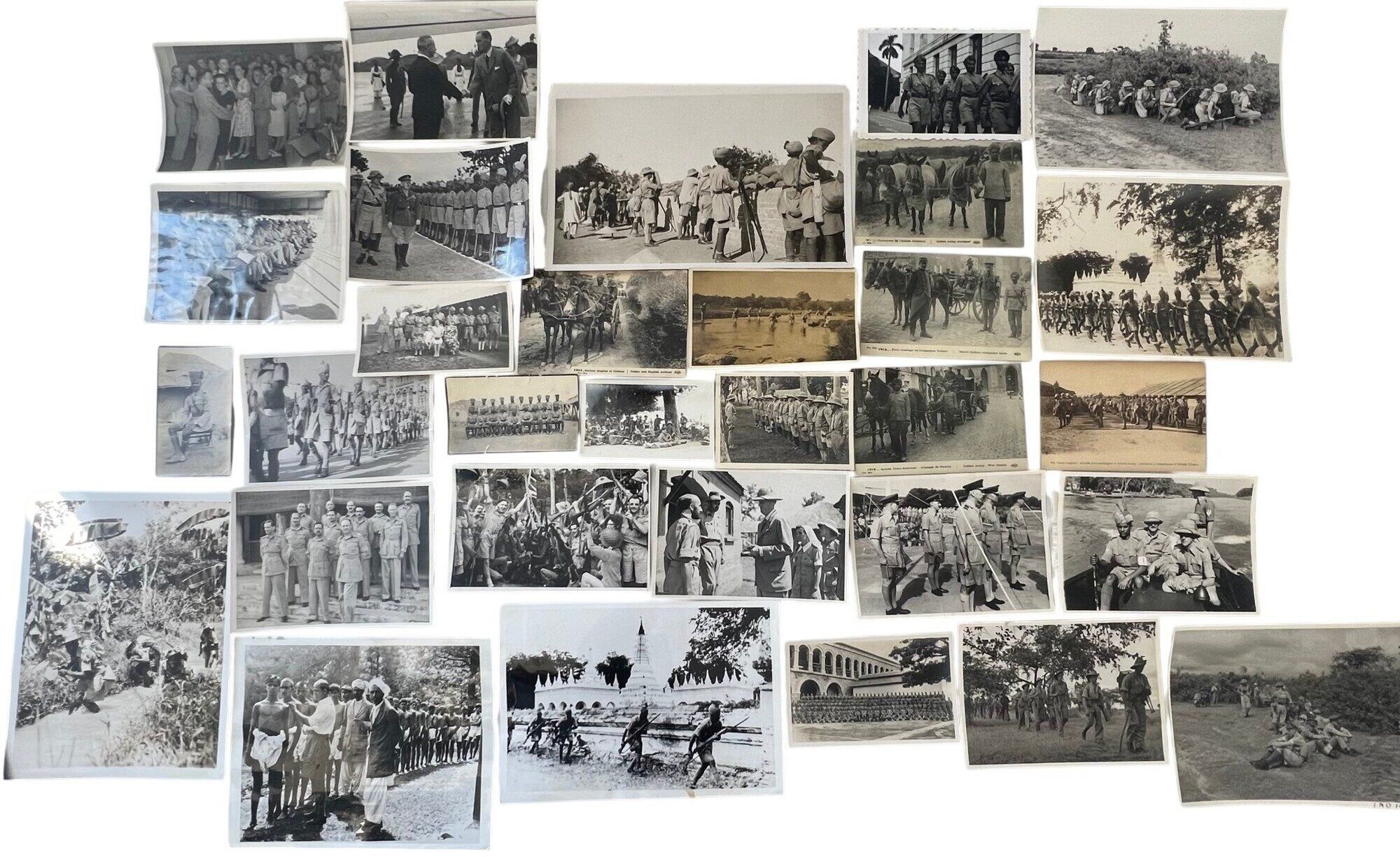
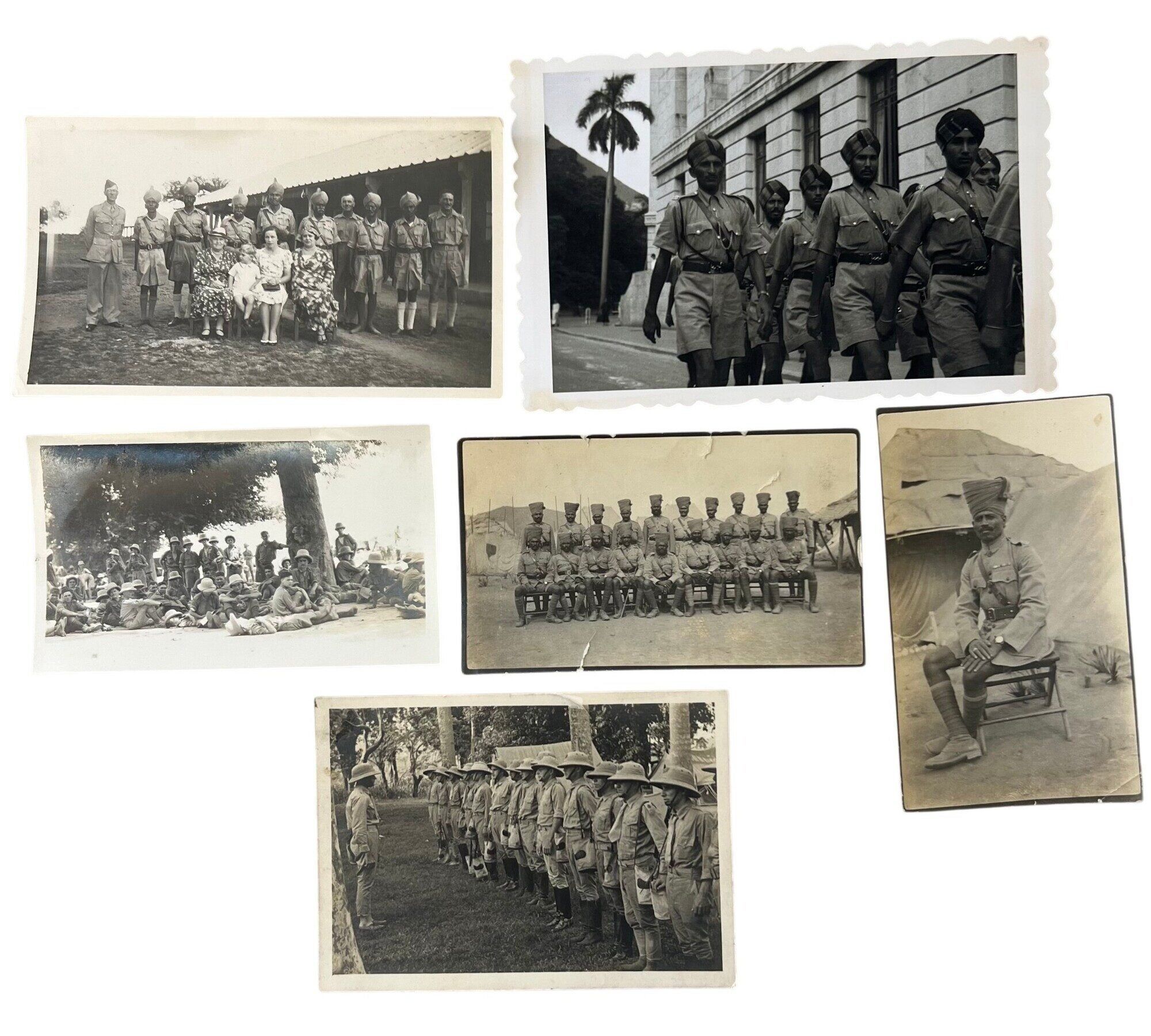
Photo archive of 31 silver gelatin photographs and four real-photo postcards, various sizes ranging from 4 x 2" to 10 x 6.5 inches, India, France, and Burma, circa 1914-1945. The four French-printed real photo postcards, date to the First World War and document Indian Expeditionary Force service: "1914 - Soldats anglais et indiens / Indian and English soldiers," showing a horse-drawn carriage driven by an Indian man with three uniformed soldiers seated inside; "1914 Indian Army - Attelage de Guerre / War Team," depicting a military draught team; "Indian Army Conveyer," showing an Indian soldier with four pack donkeys; and a 1919 postcard documenting the arrival of a British detachment at a colonial camp. A formal group portrait of approximately nineteen Sikh soldiers in khaki service dress and regulation dastaars stands before a row of tents at a North-West Frontier camp. Sikh troops fought throughout both World Wars in their turbans, the only major military force to refuse steel helmets on religious grounds.
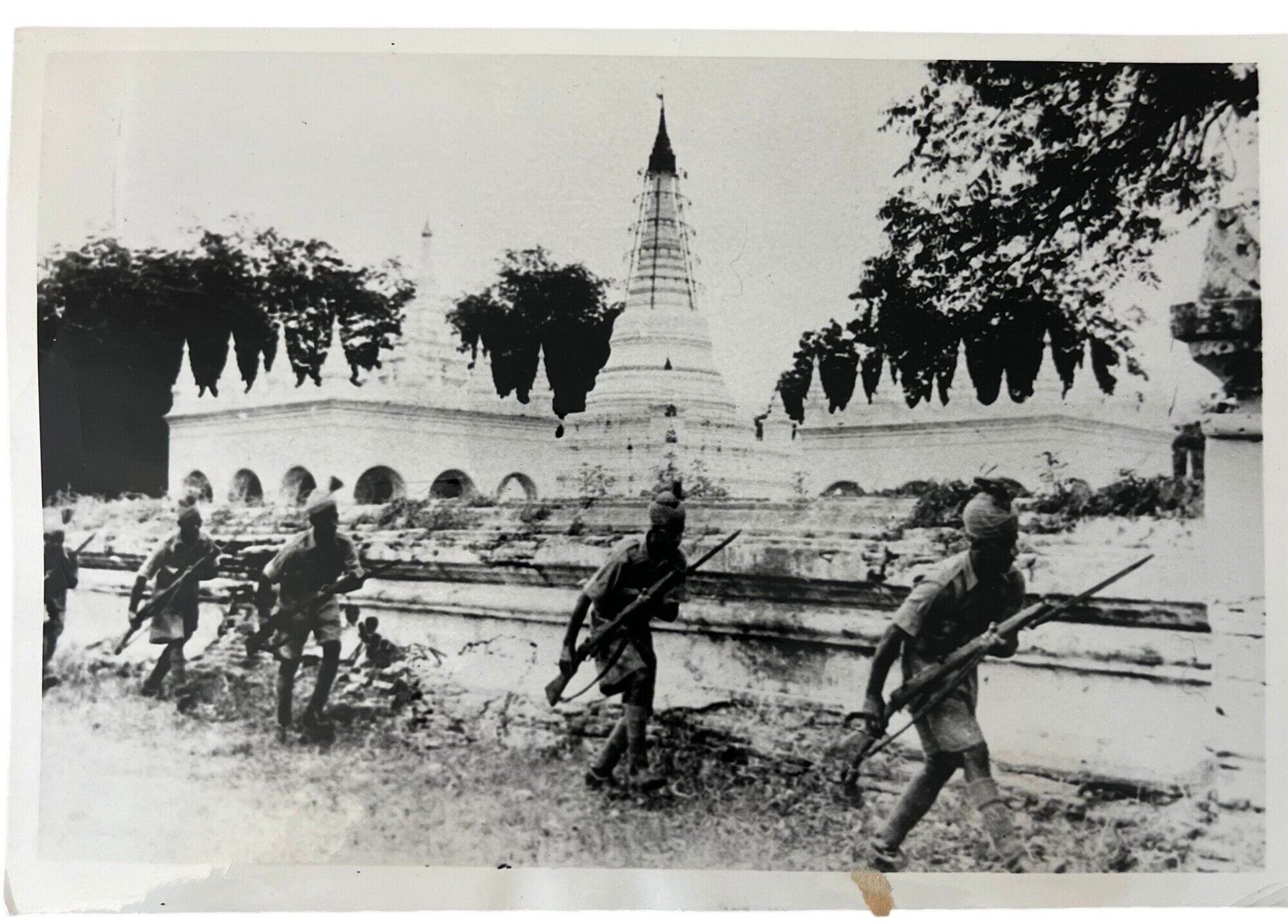
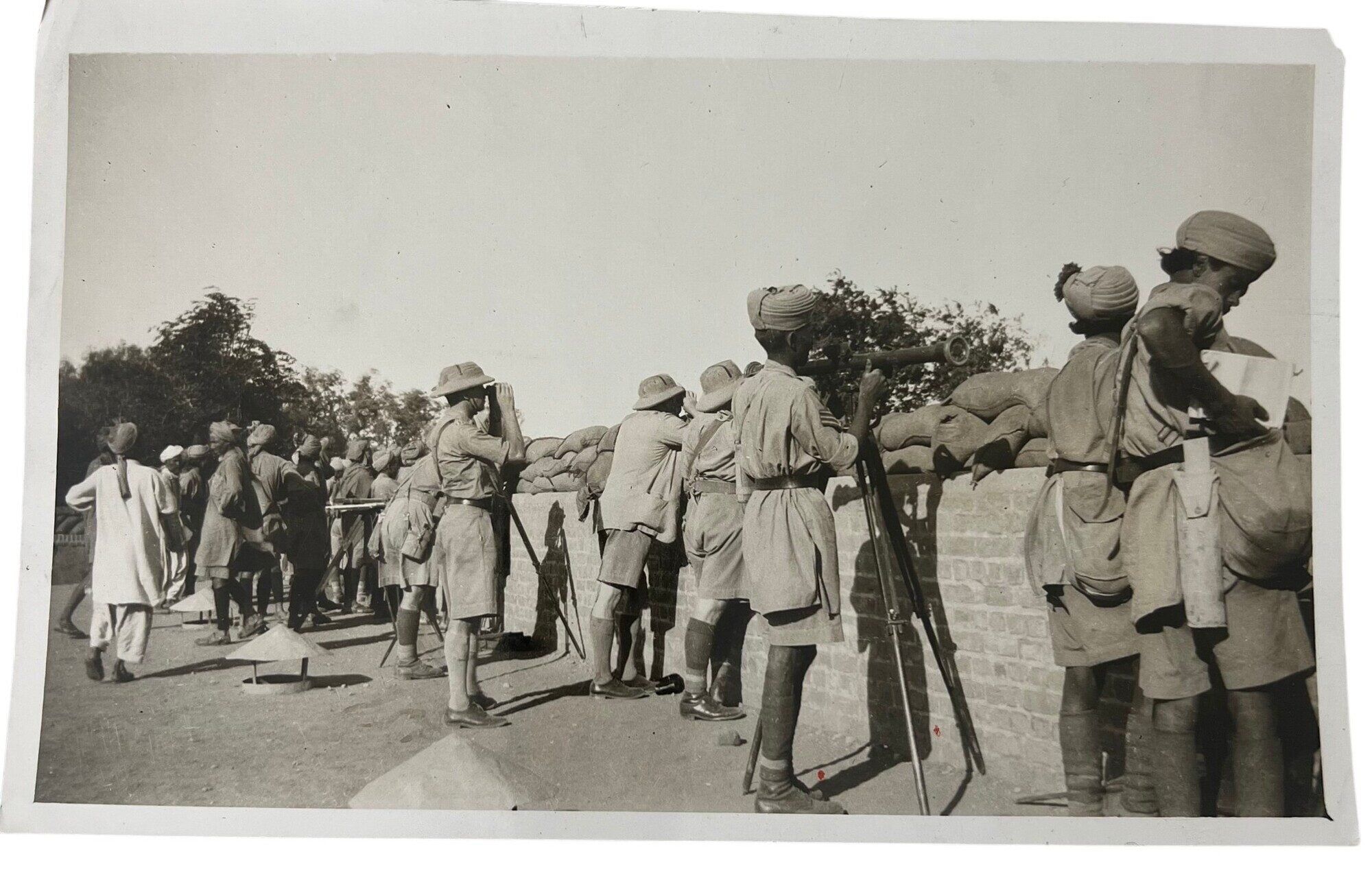
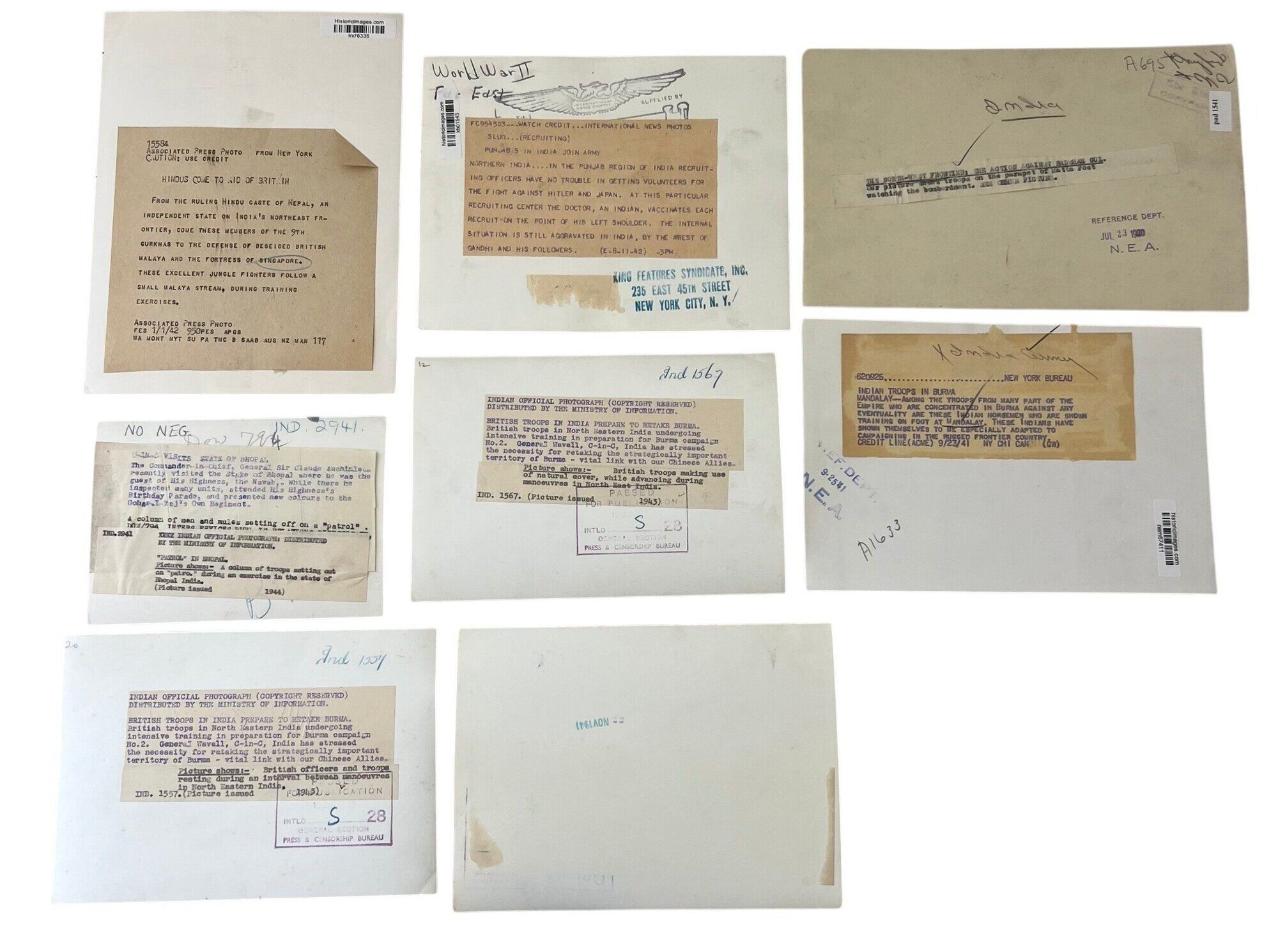
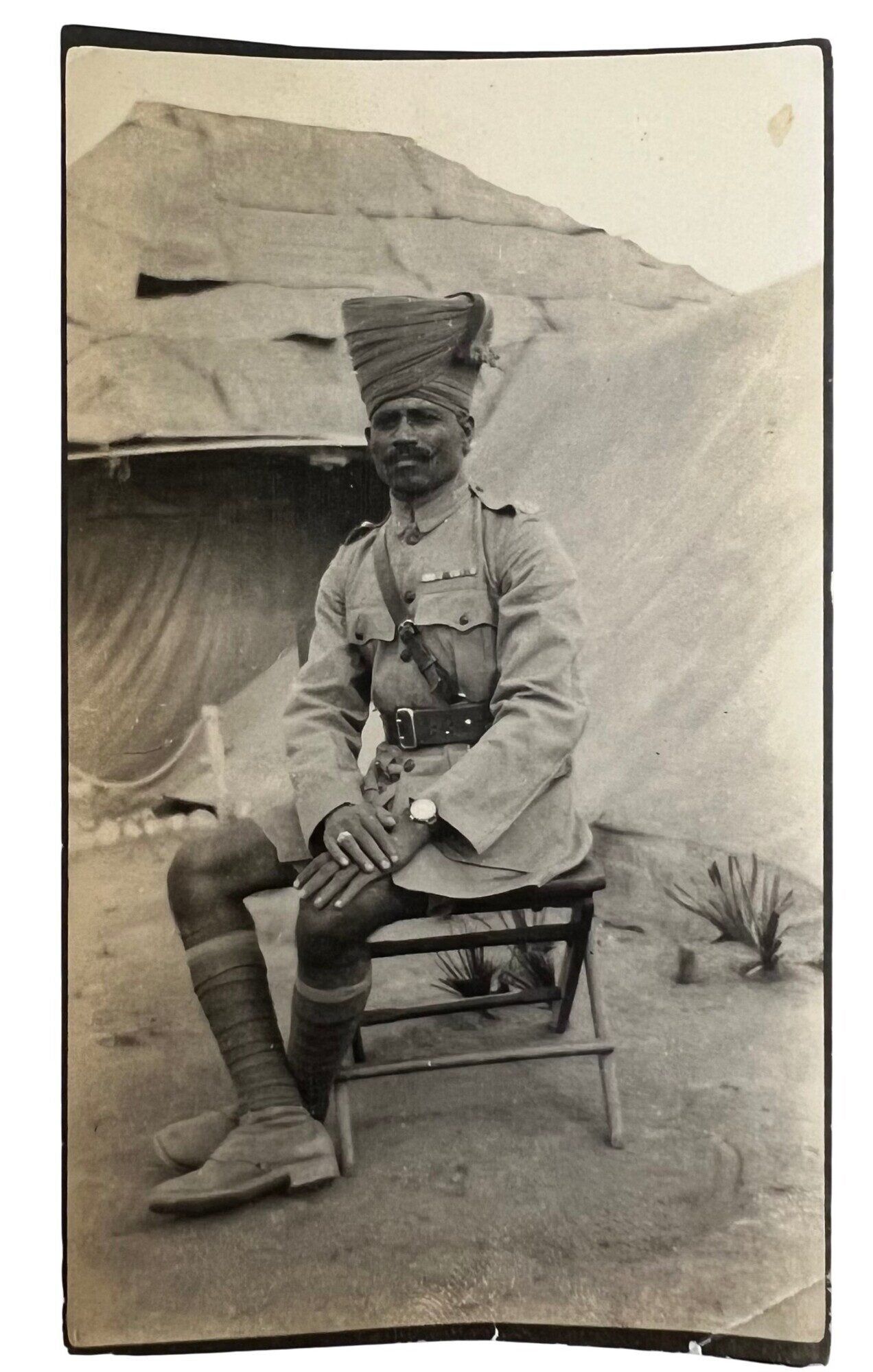
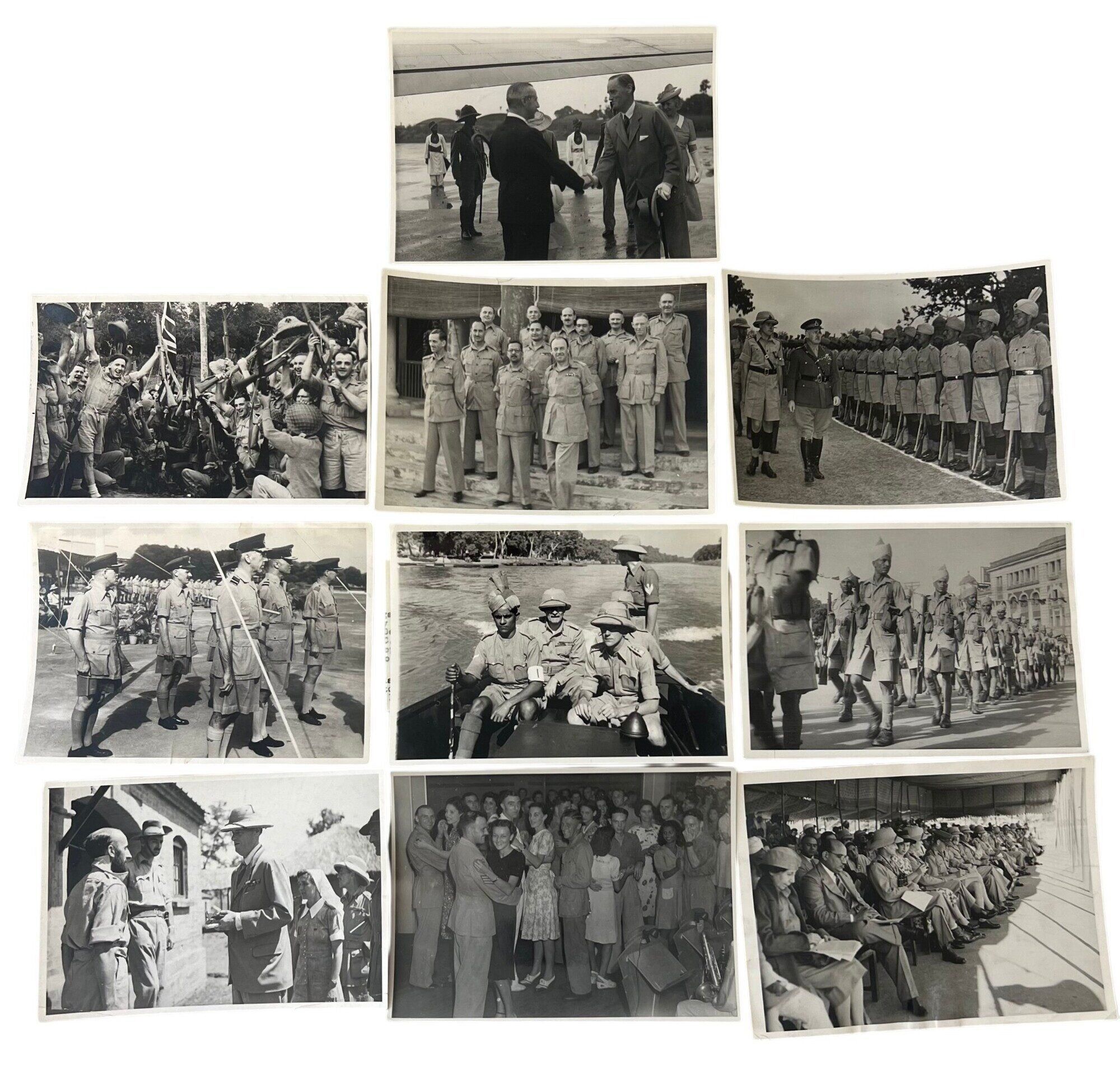
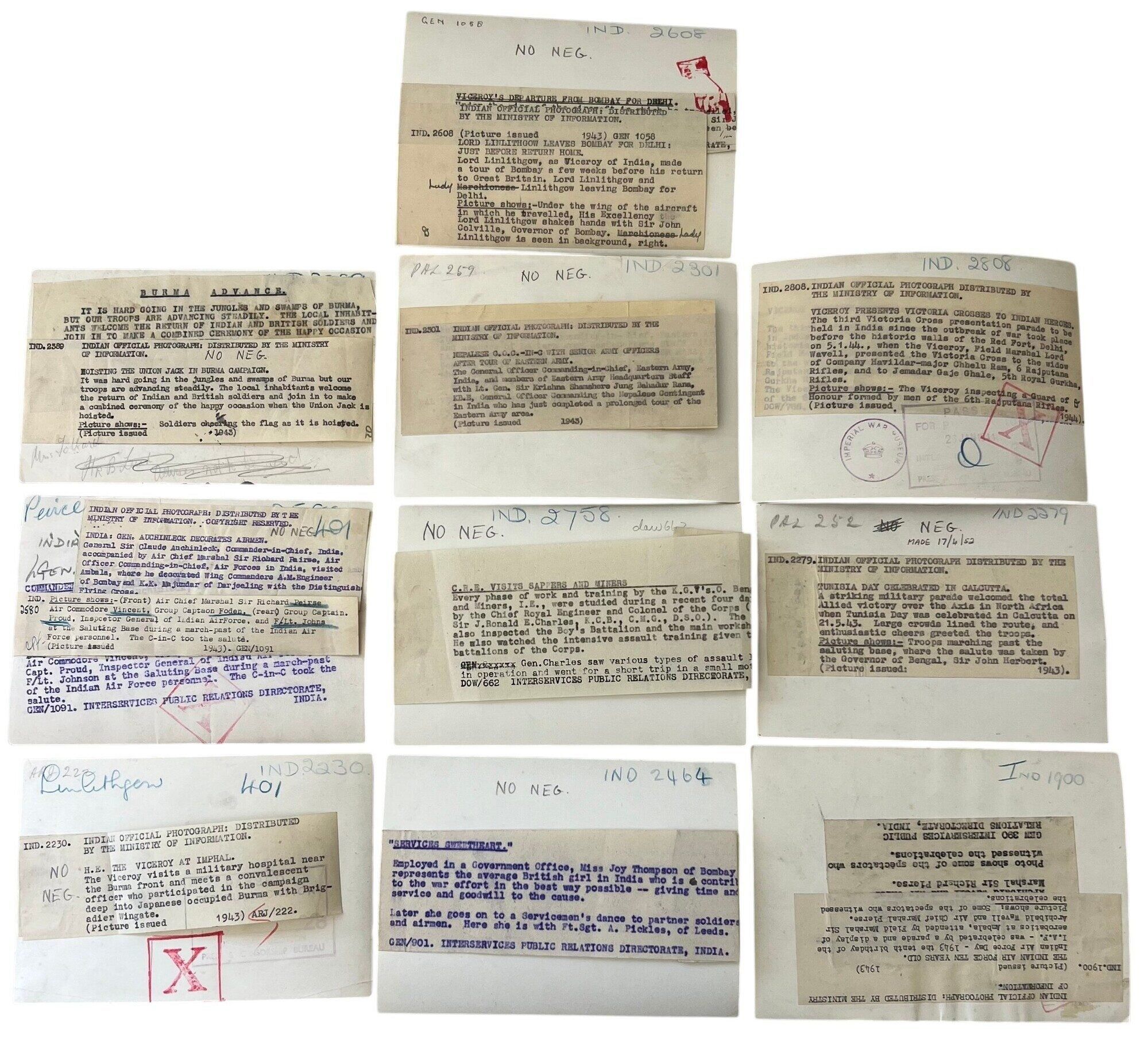
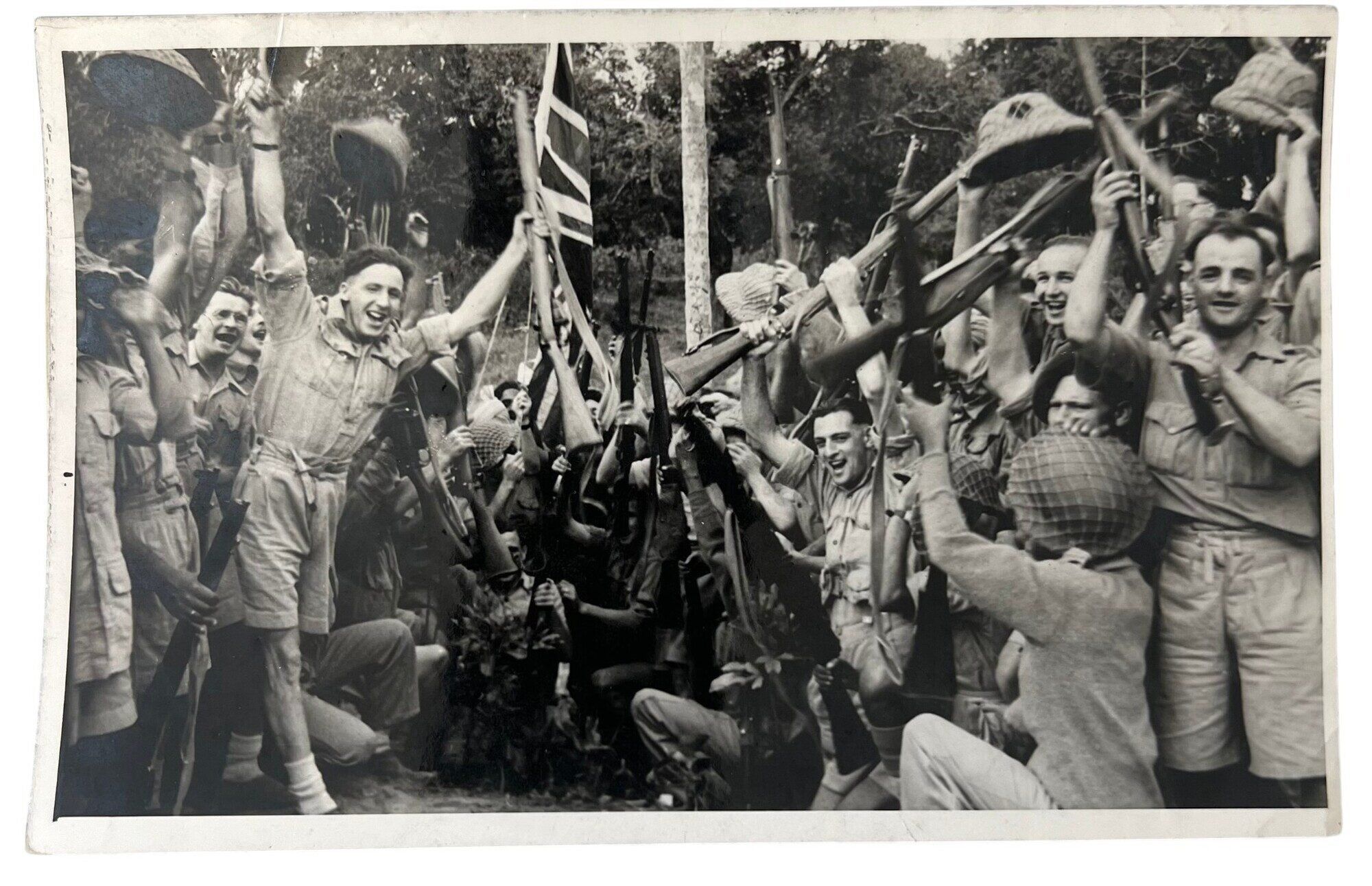
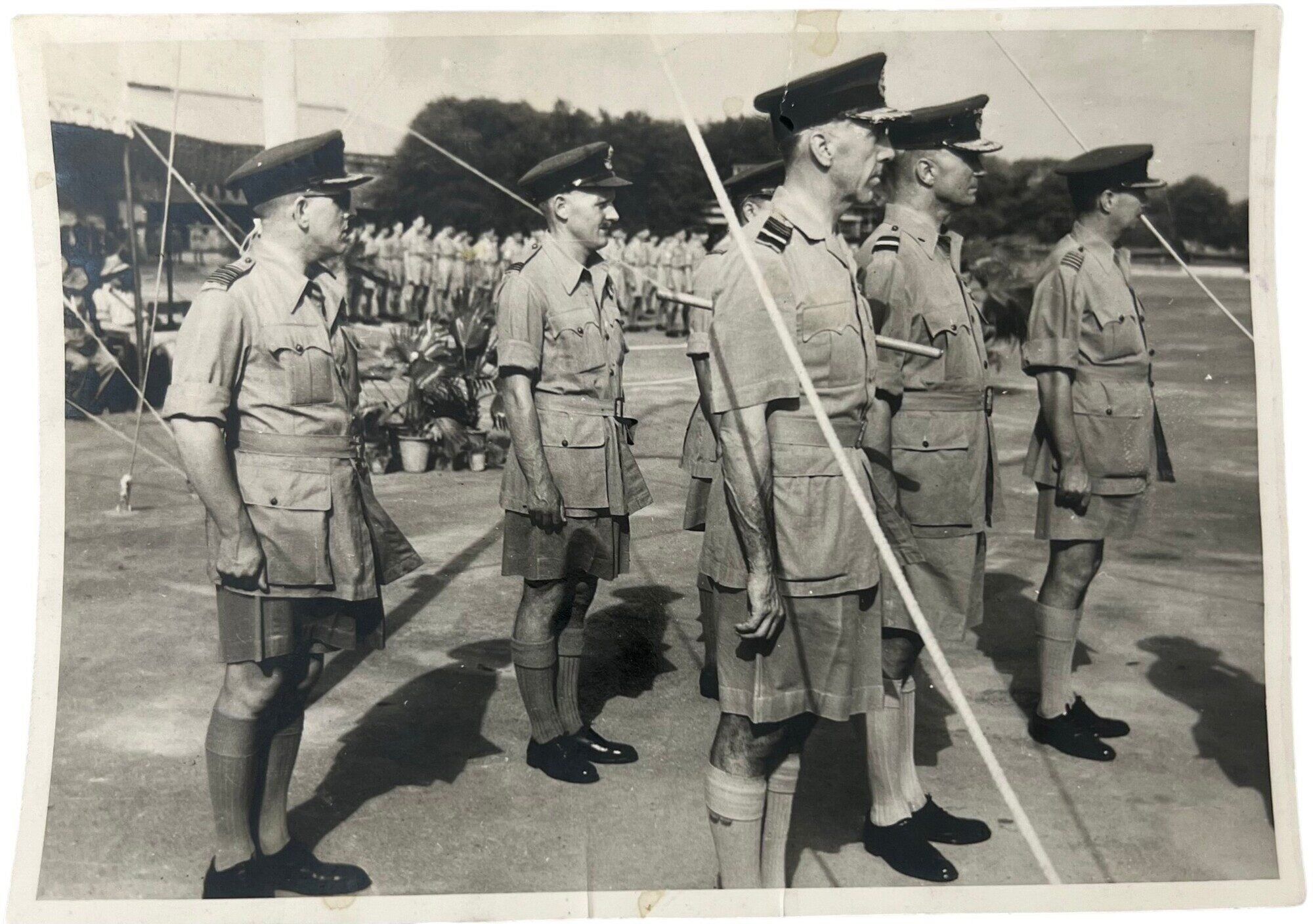
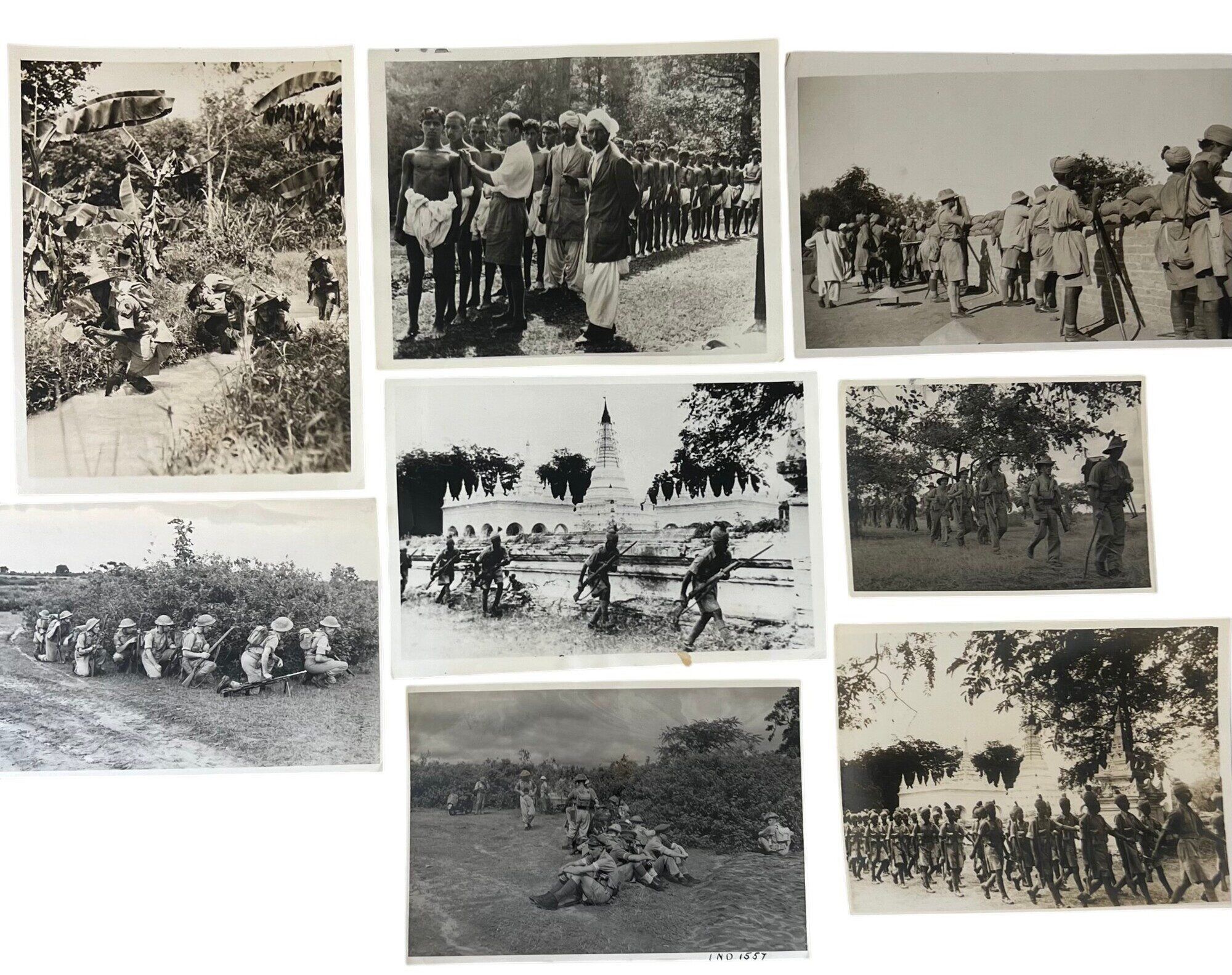
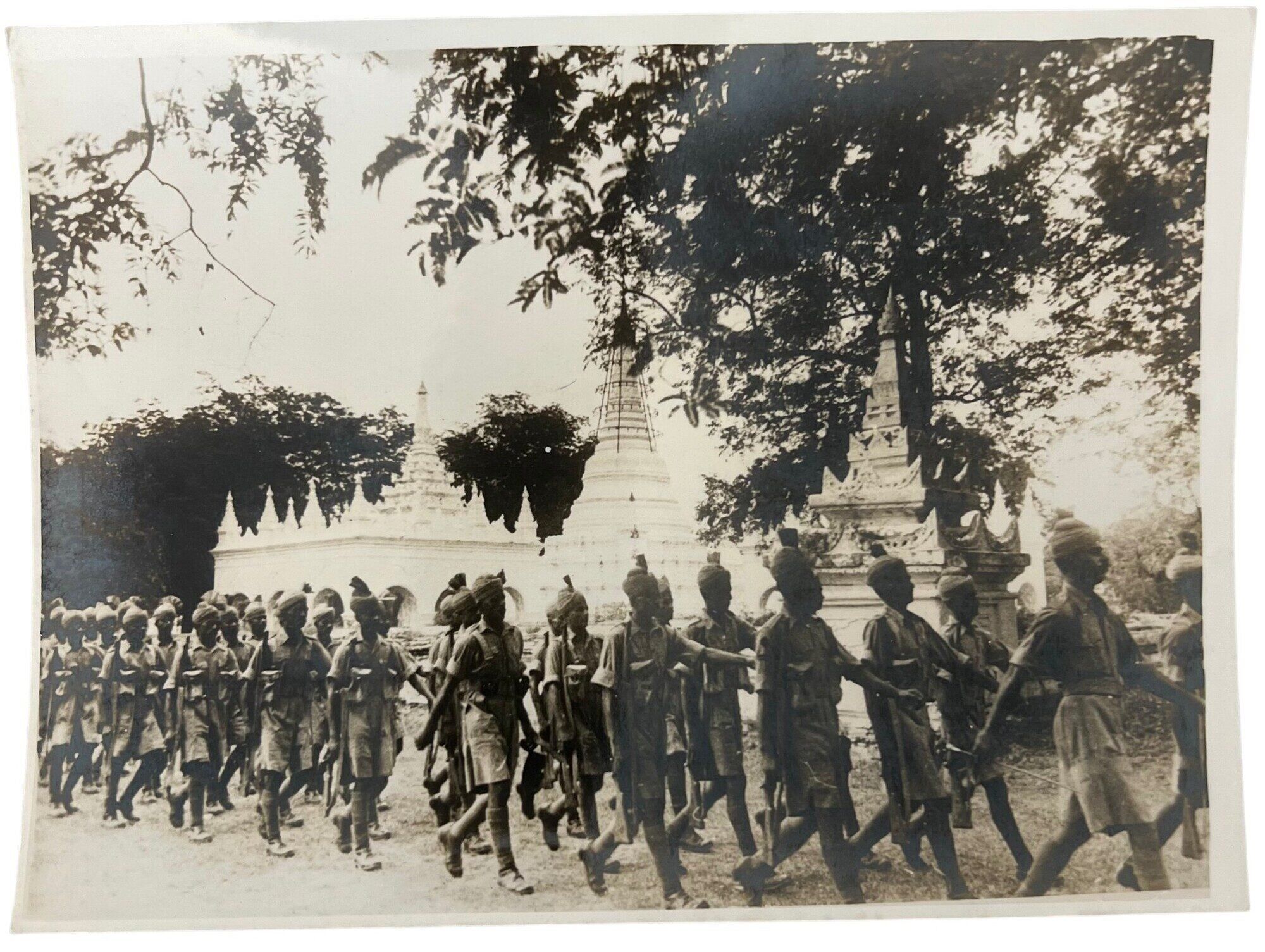
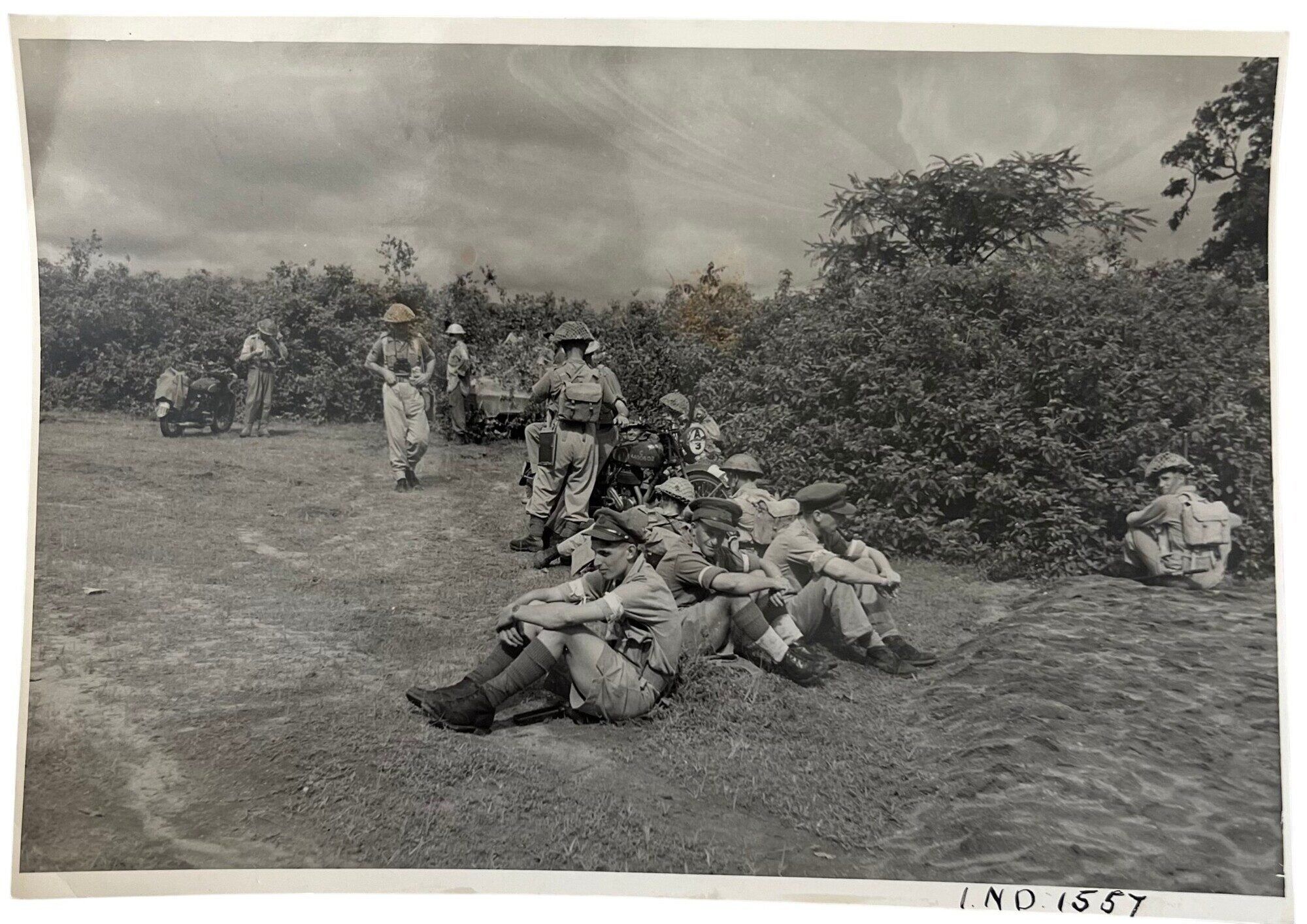
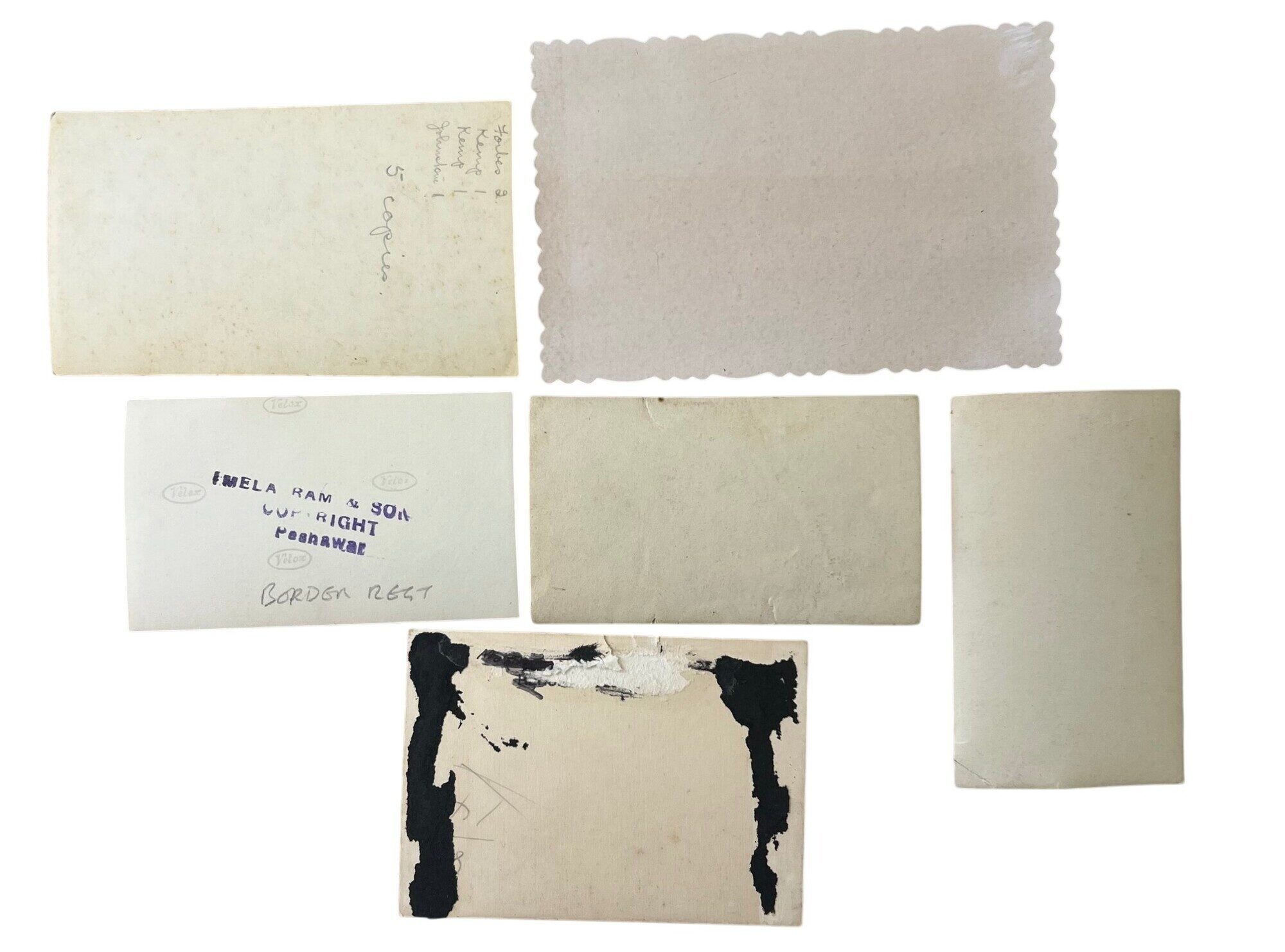
The remaining photographs, 1940-1945, document Sikh, Gurkha, Punjabi, and other Indian troops in khaki drill tunics, shorts, puttees, regulation turbans (dastaars), kullahs, slouch hats, pith helmets, steel helmets, and web belts, carrying rifles at the shoulder or raised in training exercises. The combination of regulation turbans with British-style khaki uniforms was standard British Indian Army dress, formally accommodating Sikh and other religious traditions within Empire military regulation. A vernacular view captioned "Some of our boys at camp, Ksli India" records ten uniformed men wading through a knee-high river with rifles held across their shoulders. Troops march past Buddhist stupas in Burma, kneel in brush with bayoneted rifles, fire from jungle cover, operate a field telescope behind sandbags, and sit beside motorcycles and jeeps on a rough military road. One photograph carries the studio stamp of Mela Ram & Son, Peshawar, a leading early-twentieth-century North-West Frontier military photographer. Press captions identify "Punjab's in India join army," "Gurkhas open fire during a training exercise," "British troops in India prepare for Burma campaign," "Indian troops in Burma," "Burma advance," "Viceroy presents Victoria crosses to Indian heroes," "Tunisia Day celebrated in Calcutta," "Troops on the parapet of Matta Post watching the bombardment" (North-West Frontier, July 1940), "Supreme Commander," and "Services Sweetheart," the last identifying Miss Joy Thompson of Bombay and Sgt. A. Pickles of Leeds.
British India entered both world wars by imperial decision. The same years that produced the photographs in this archive also produced the Quit India arrests of 1942, the Bengal famine of 1943, and intensified military recruitment across a country already moving toward independence. The archive preserves official publicity, press distribution, and soldier-level record-making from a colonial army fighting for Britain while British authority in India was approaching its end. Creasing, surface wear, fading, caption-label remnants, press stamps, and occasional abrasions; overall very good condition.
Photo archive of 31 silver gelatin photographs and four real-photo postcards, various sizes ranging from 4 x 2" to 10 x 6.5 inches, India, France, and Burma, circa 1914-1945. The four French-printed real photo postcards, date to the First World War and document Indian Expeditionary Force service: "1914 - Soldats anglais et indiens / Indian and English soldiers," showing a horse-drawn carriage driven by an Indian man with three uniformed soldiers seated inside; "1914 Indian Army - Attelage de Guerre / War Team," depicting a military draught team; "Indian Army Conveyer," showing an Indian soldier with four pack donkeys; and a 1919 postcard documenting the arrival of a British detachment at a colonial camp. A formal group portrait of approximately nineteen Sikh soldiers in khaki service dress and regulation dastaars stands before a row of tents at a North-West Frontier camp. Sikh troops fought throughout both World Wars in their turbans, the only major military force to refuse steel helmets on religious grounds.
The remaining photographs, 1940-1945, document Sikh, Gurkha, Punjabi, and other Indian troops in khaki drill tunics, shorts, puttees, regulation turbans (dastaars), kullahs, slouch hats, pith helmets, steel helmets, and web belts, carrying rifles at the shoulder or raised in training exercises. The combination of regulation turbans with British-style khaki uniforms was standard British Indian Army dress, formally accommodating Sikh and other religious traditions within Empire military regulation. A vernacular view captioned "Some of our boys at camp, Ksli India" records ten uniformed men wading through a knee-high river with rifles held across their shoulders. Troops march past Buddhist stupas in Burma, kneel in brush with bayoneted rifles, fire from jungle cover, operate a field telescope behind sandbags, and sit beside motorcycles and jeeps on a rough military road. One photograph carries the studio stamp of Mela Ram & Son, Peshawar, a leading early-twentieth-century North-West Frontier military photographer. Press captions identify "Punjab's in India join army," "Gurkhas open fire during a training exercise," "British troops in India prepare for Burma campaign," "Indian troops in Burma," "Burma advance," "Viceroy presents Victoria crosses to Indian heroes," "Tunisia Day celebrated in Calcutta," "Troops on the parapet of Matta Post watching the bombardment" (North-West Frontier, July 1940), "Supreme Commander," and "Services Sweetheart," the last identifying Miss Joy Thompson of Bombay and Sgt. A. Pickles of Leeds.
British India entered both world wars by imperial decision. The same years that produced the photographs in this archive also produced the Quit India arrests of 1942, the Bengal famine of 1943, and intensified military recruitment across a country already moving toward independence. The archive preserves official publicity, press distribution, and soldier-level record-making from a colonial army fighting for Britain while British authority in India was approaching its end. Creasing, surface wear, fading, caption-label remnants, press stamps, and occasional abrasions; overall very good condition.
Details
Title
British Indian Army From the First World War to the Final Years of British Colonial India, Archive of 31 Photographs, 1914-1945
Author
British Indian Army
Condition
Unknown
Date
1914