

2600: The Hacker Quarterly" on Free Speech, Code, and the Surveillance Era, Archive of 10 Issues, 2000-2008
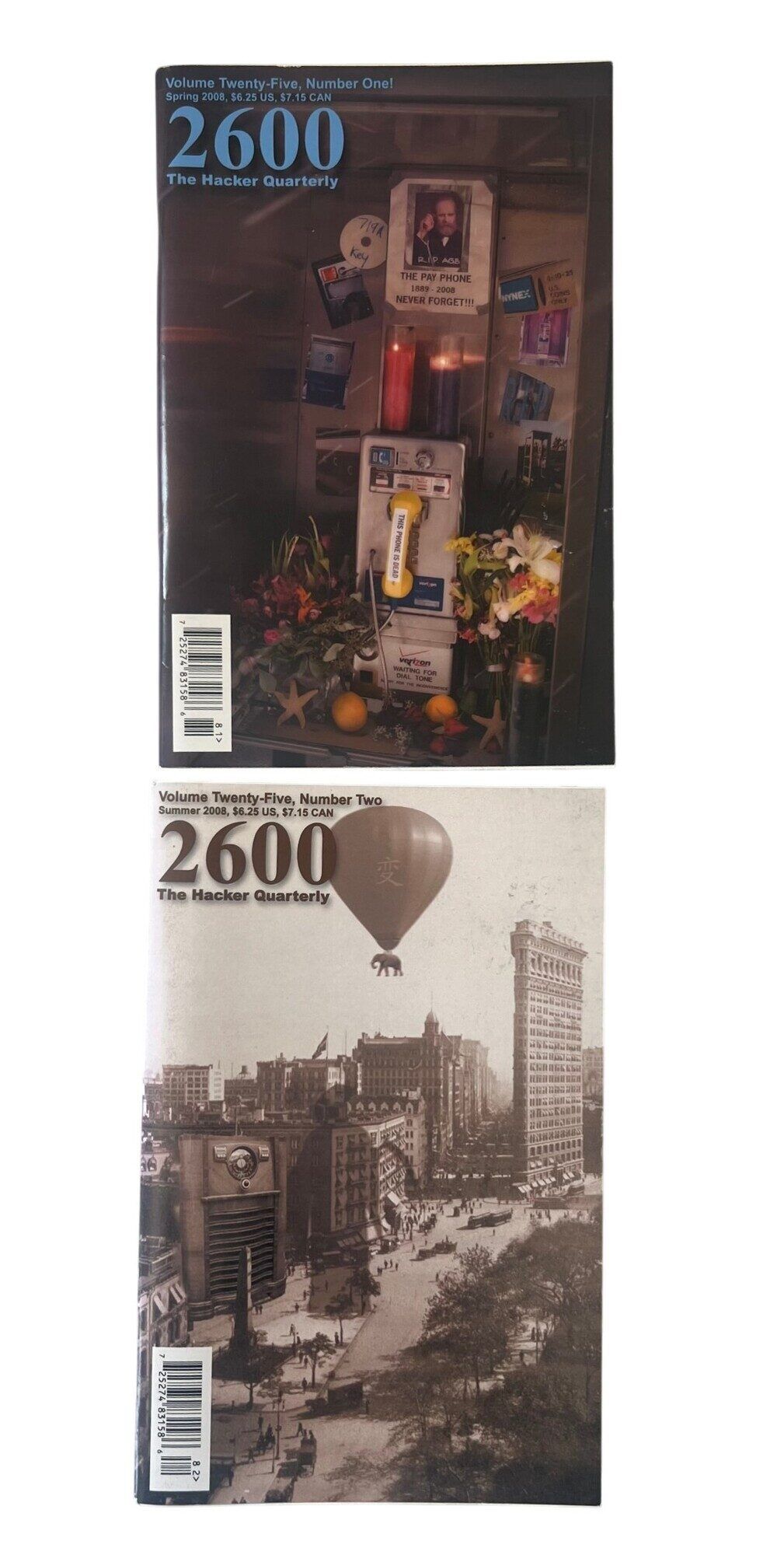
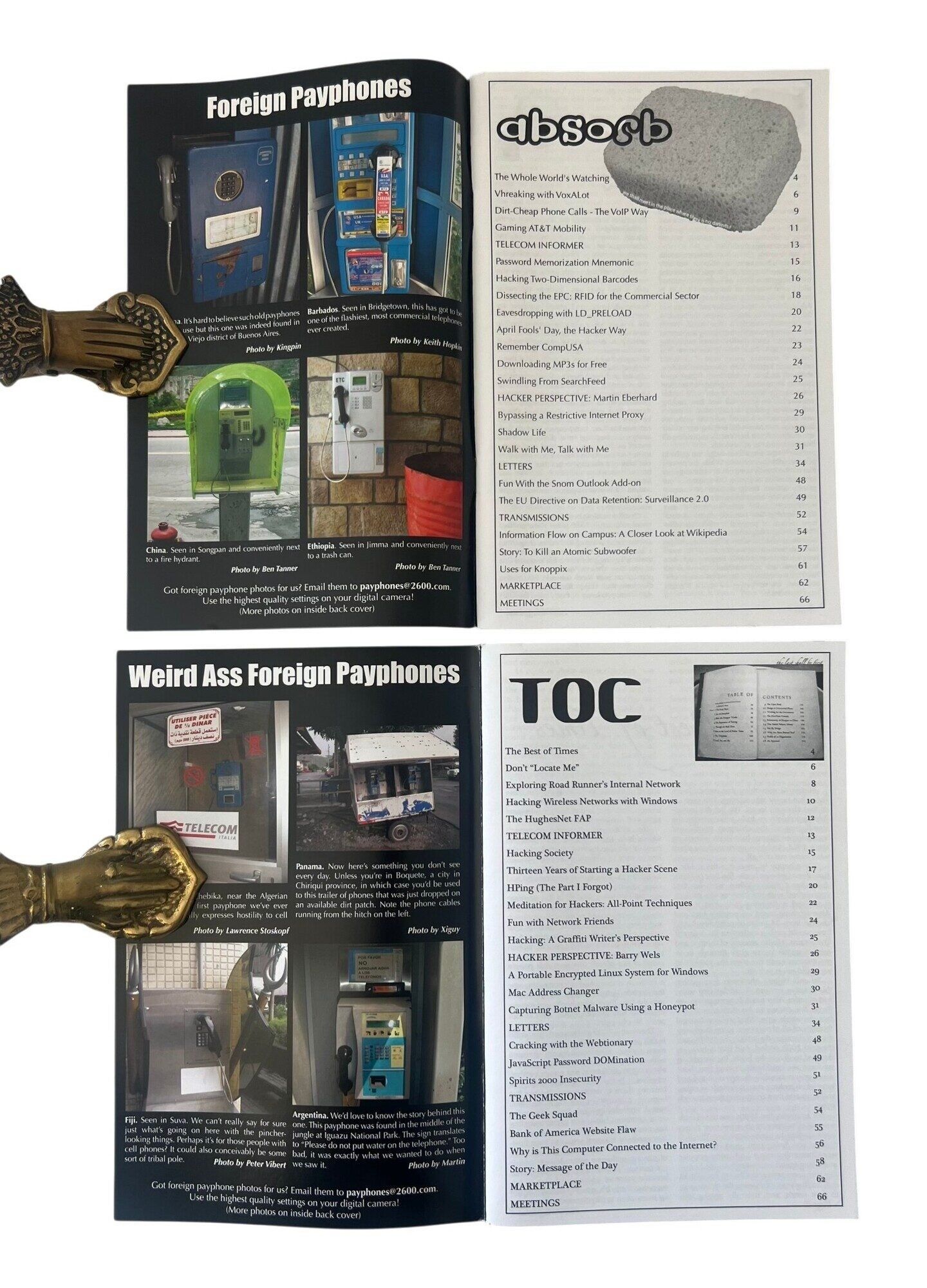
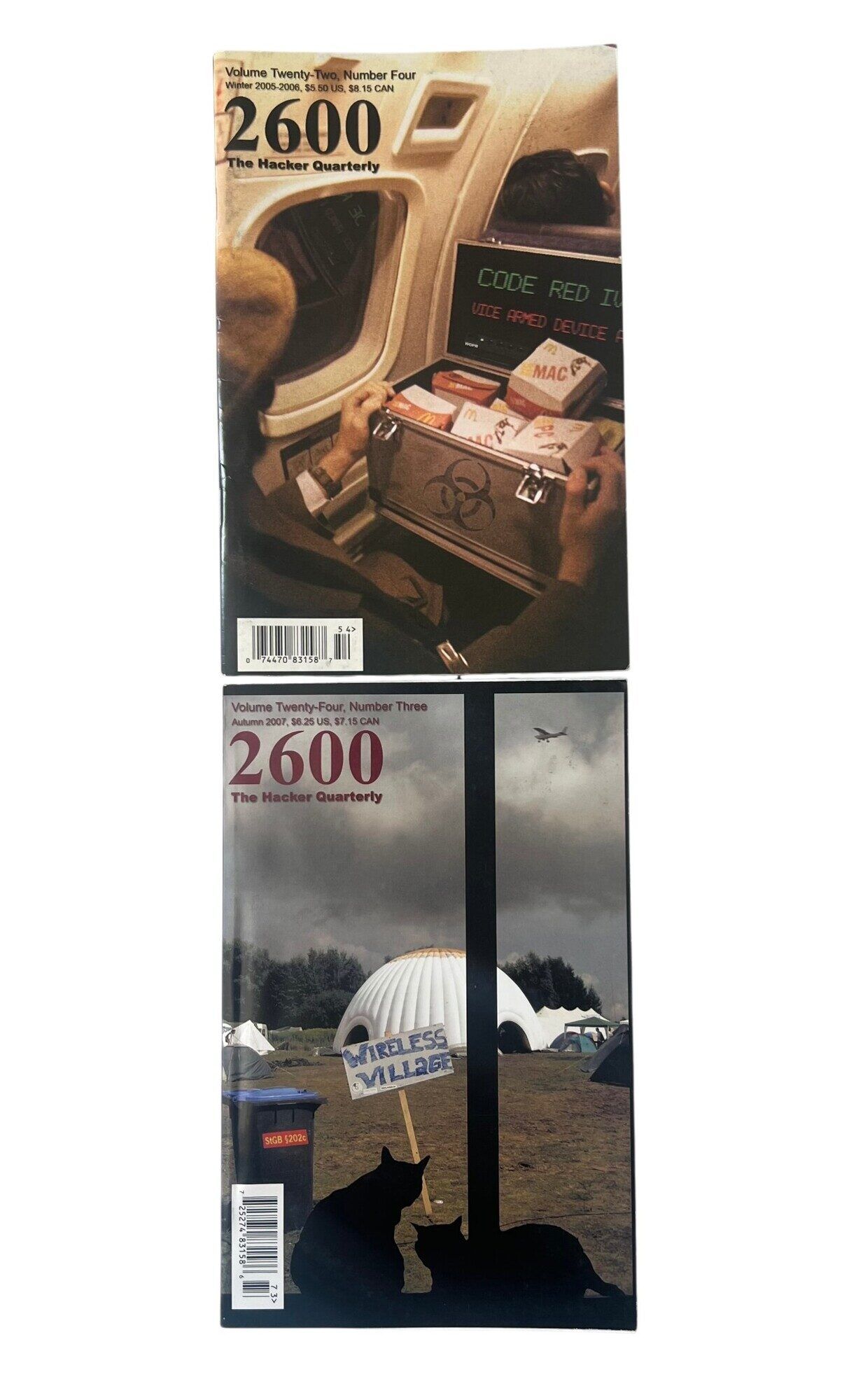
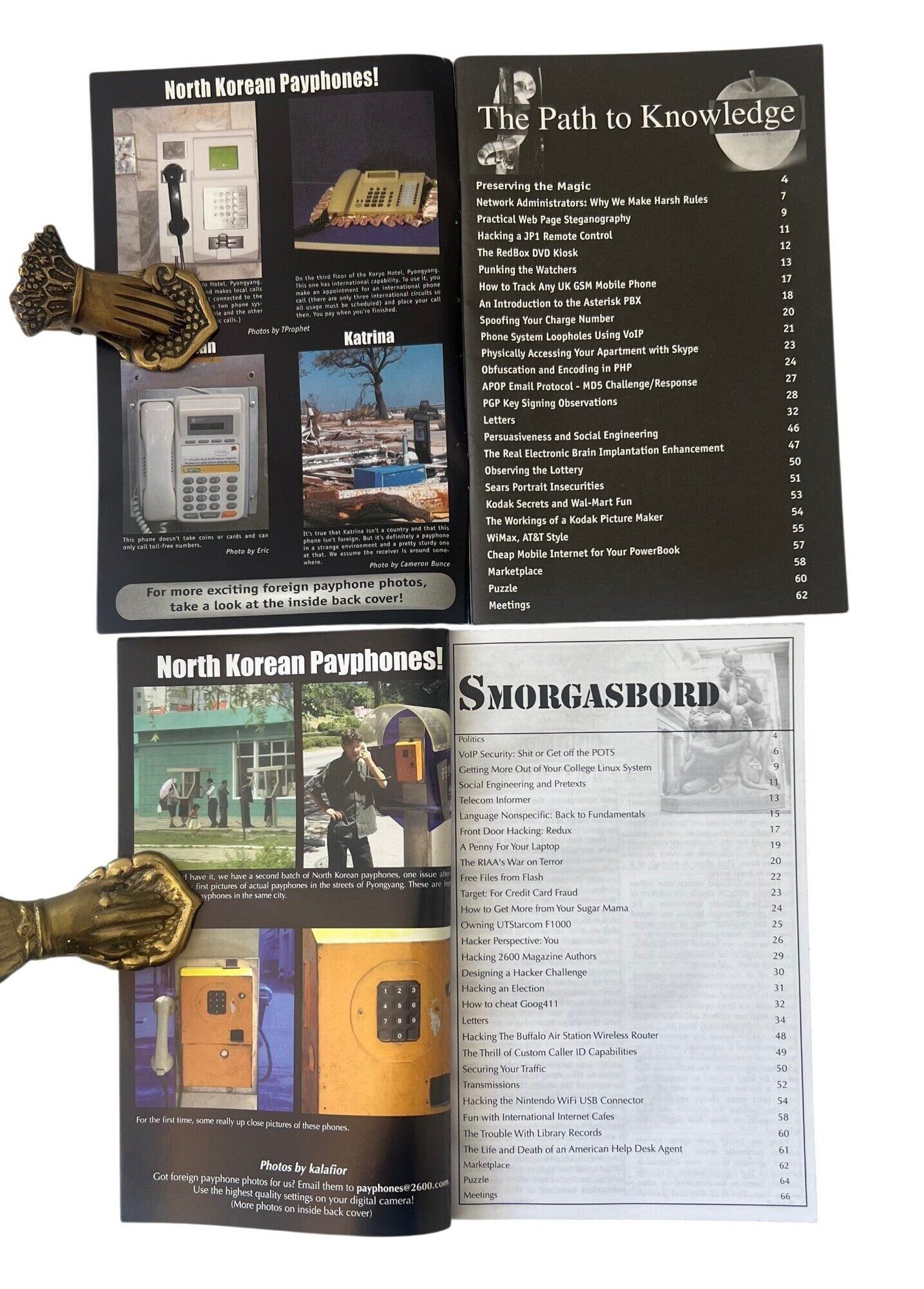
- 2000
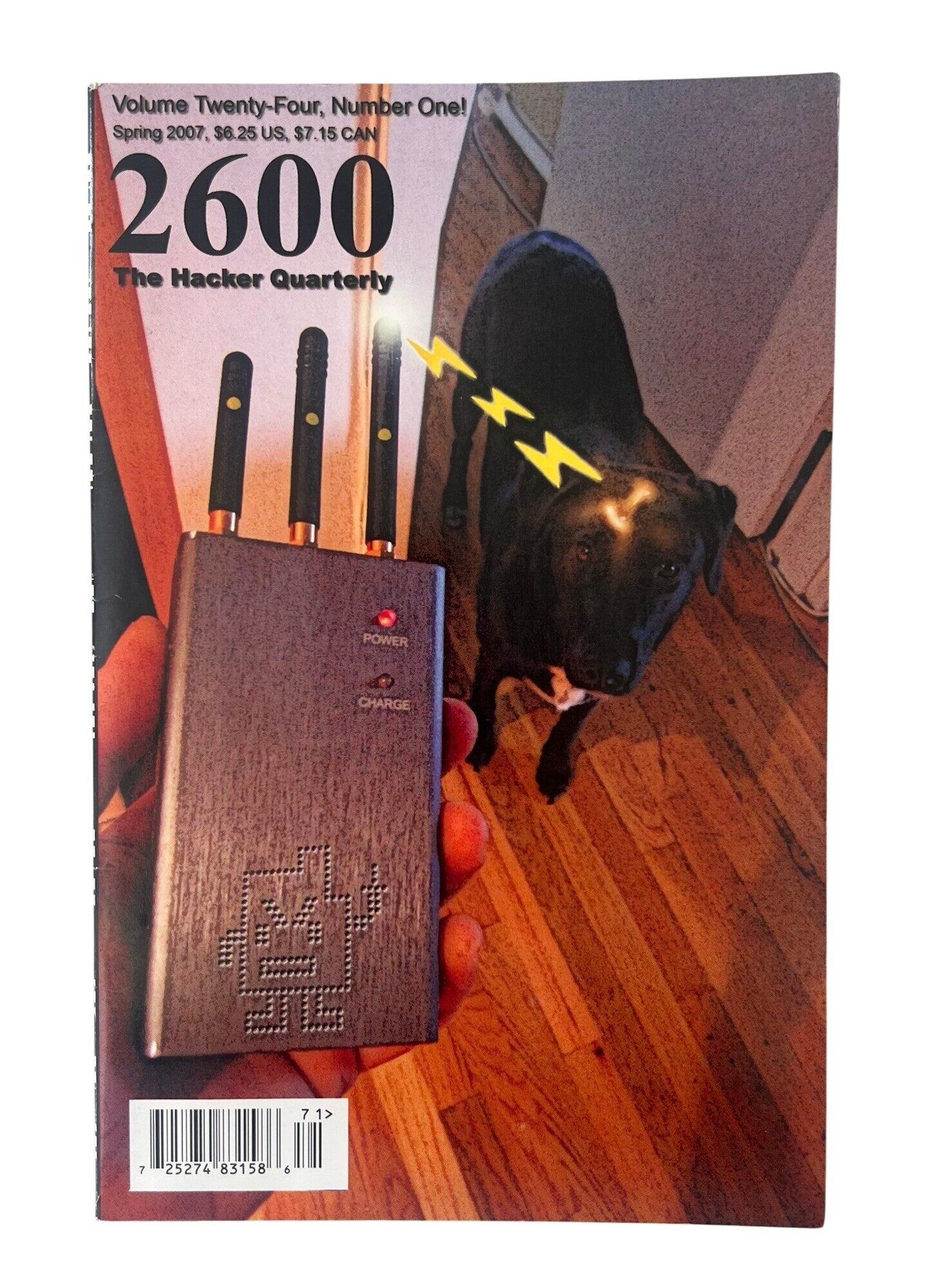
2000. 2600: The Hacker Quarterly which document the technical practice of hacking ranging from telephone and computer systems, networks, encryption, consumer hardware to the legal and political questions it raised, from the status of code as speech to state surveillance. Archive of 10 issues. This run of ten issues, spanning Fall 2000 to Autumn 2008, documents the longest running hacker periodical through the years in which the Internet became ordinary infrastructure and the legal treatment of code, privacy, and intrusion moved from specialist concern to open public dispute. Its readers ranged from computer scientists and telecom hobbyists to college students and a broader audience drawn to underground technical culture. The run documents the legal and cultural contestation surrounding a pivotal phase of technological change, as networked computing became ordinary infrastructure and the status of code, privacy, and security became matters of public dispute.
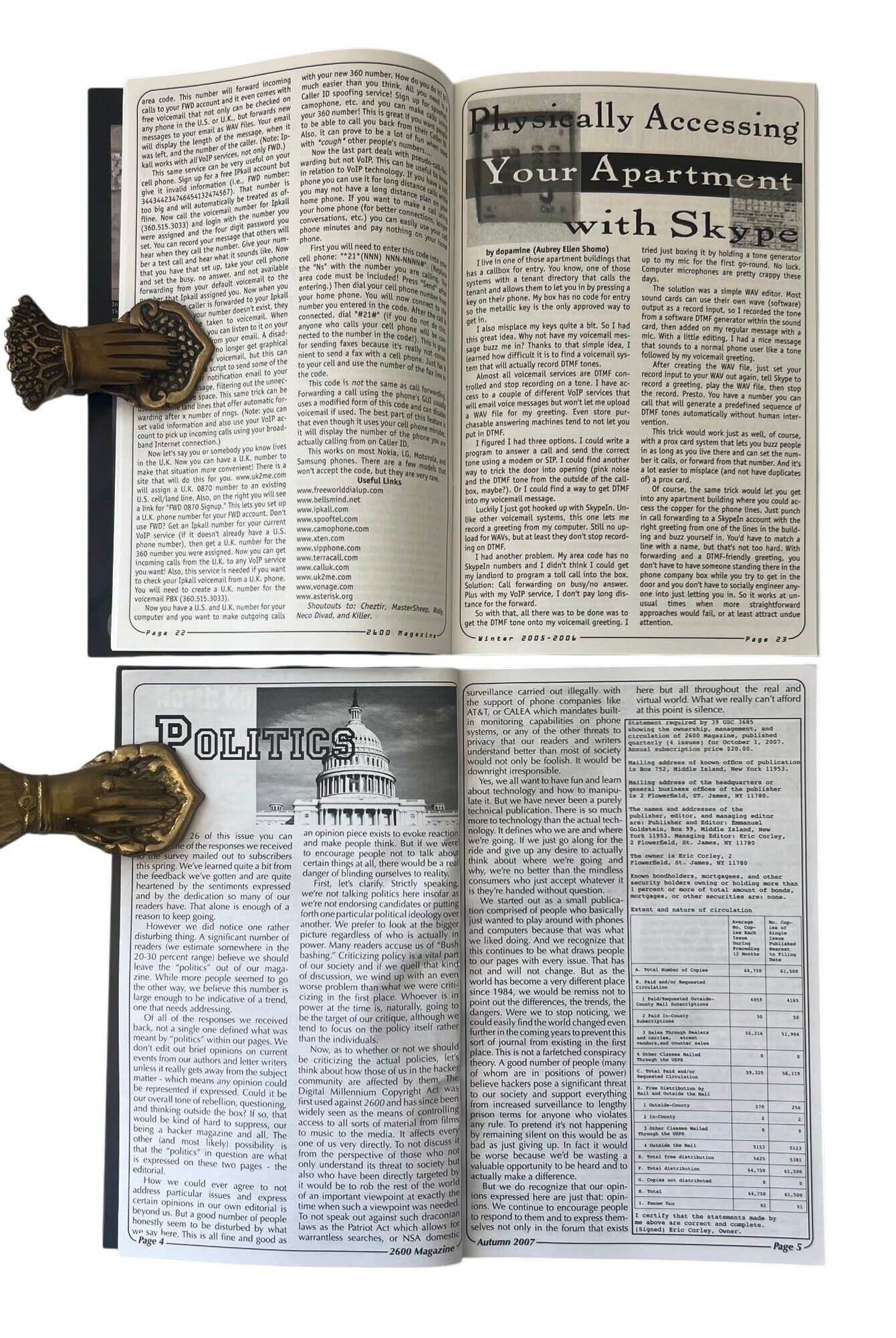
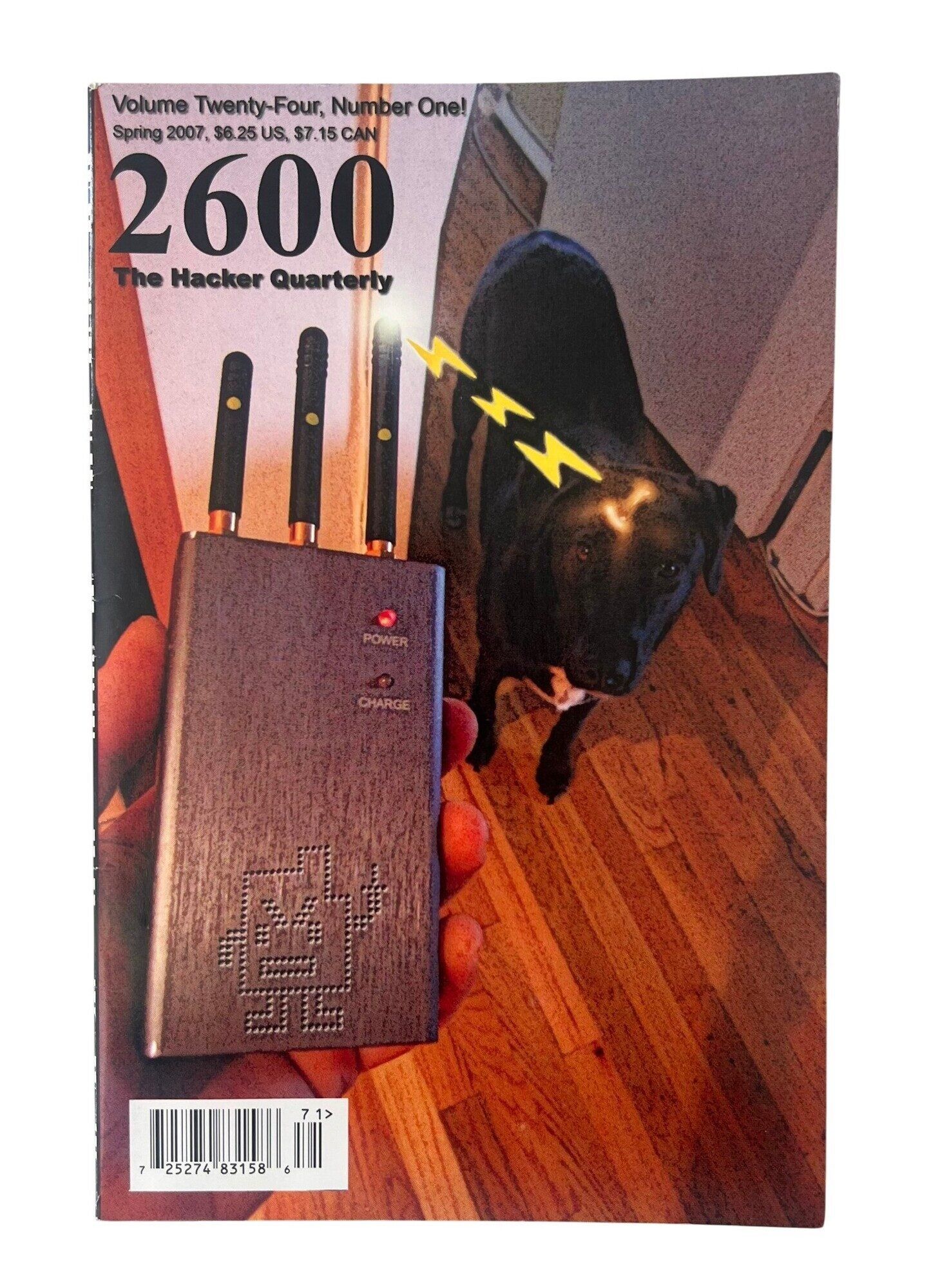
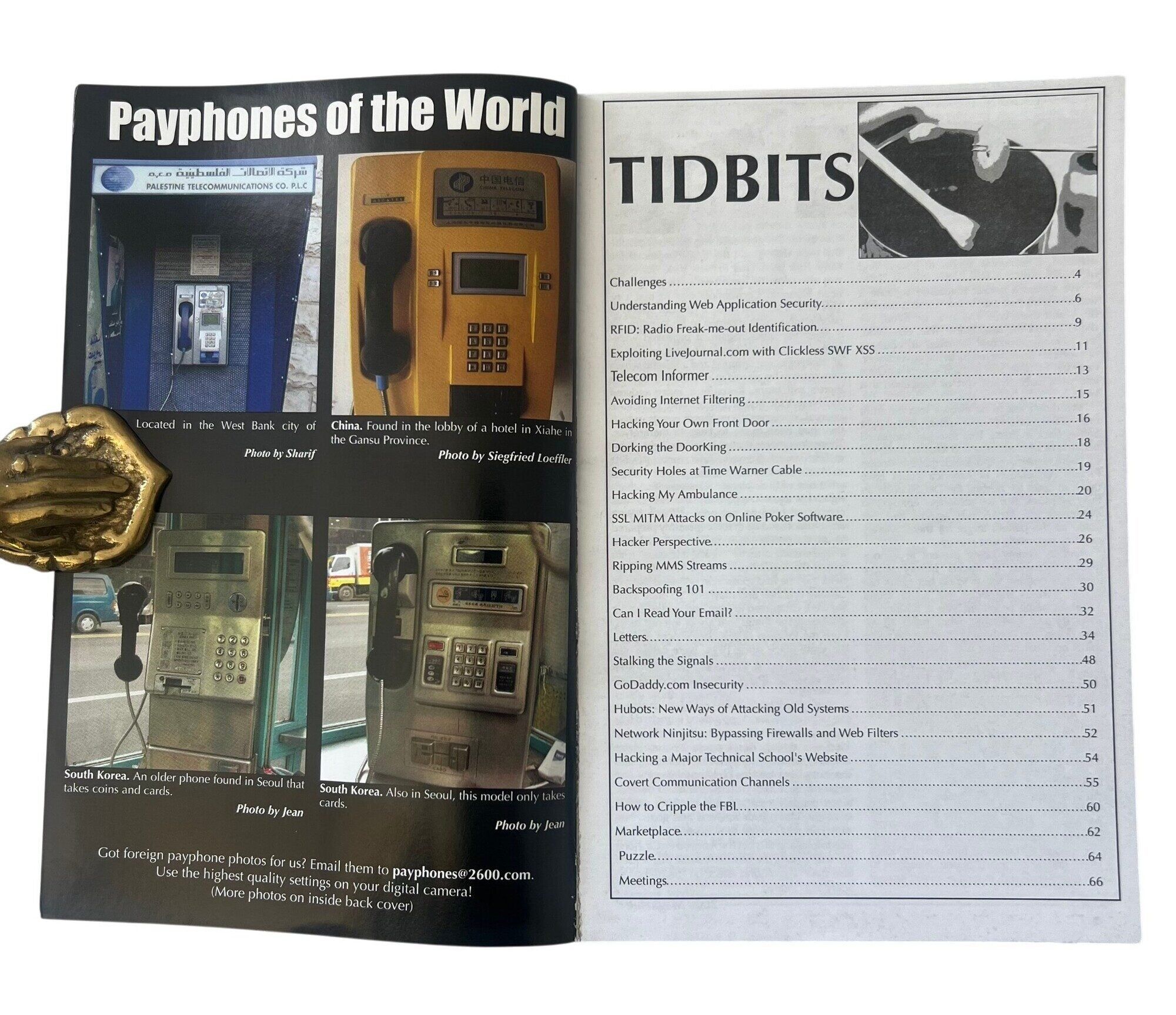
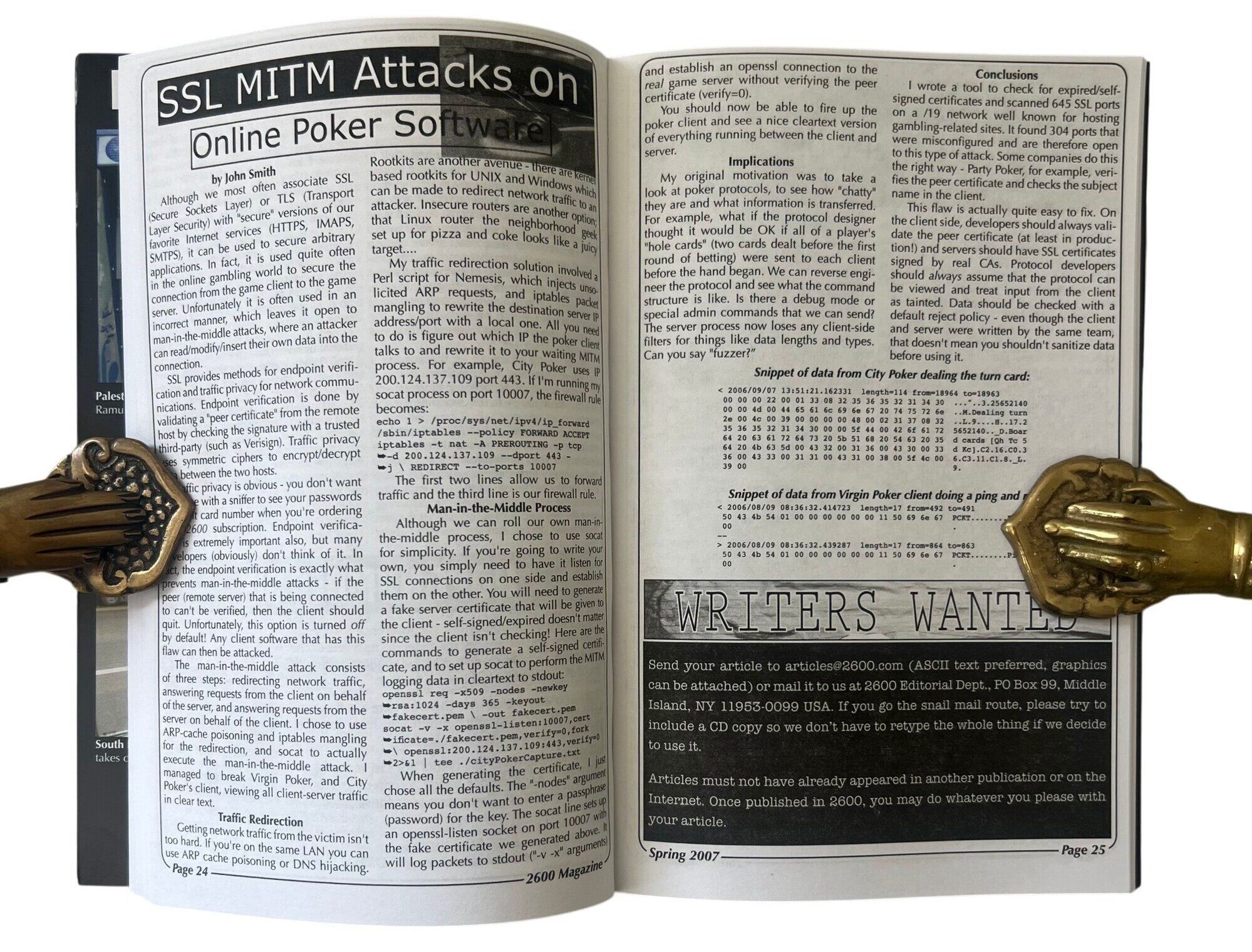
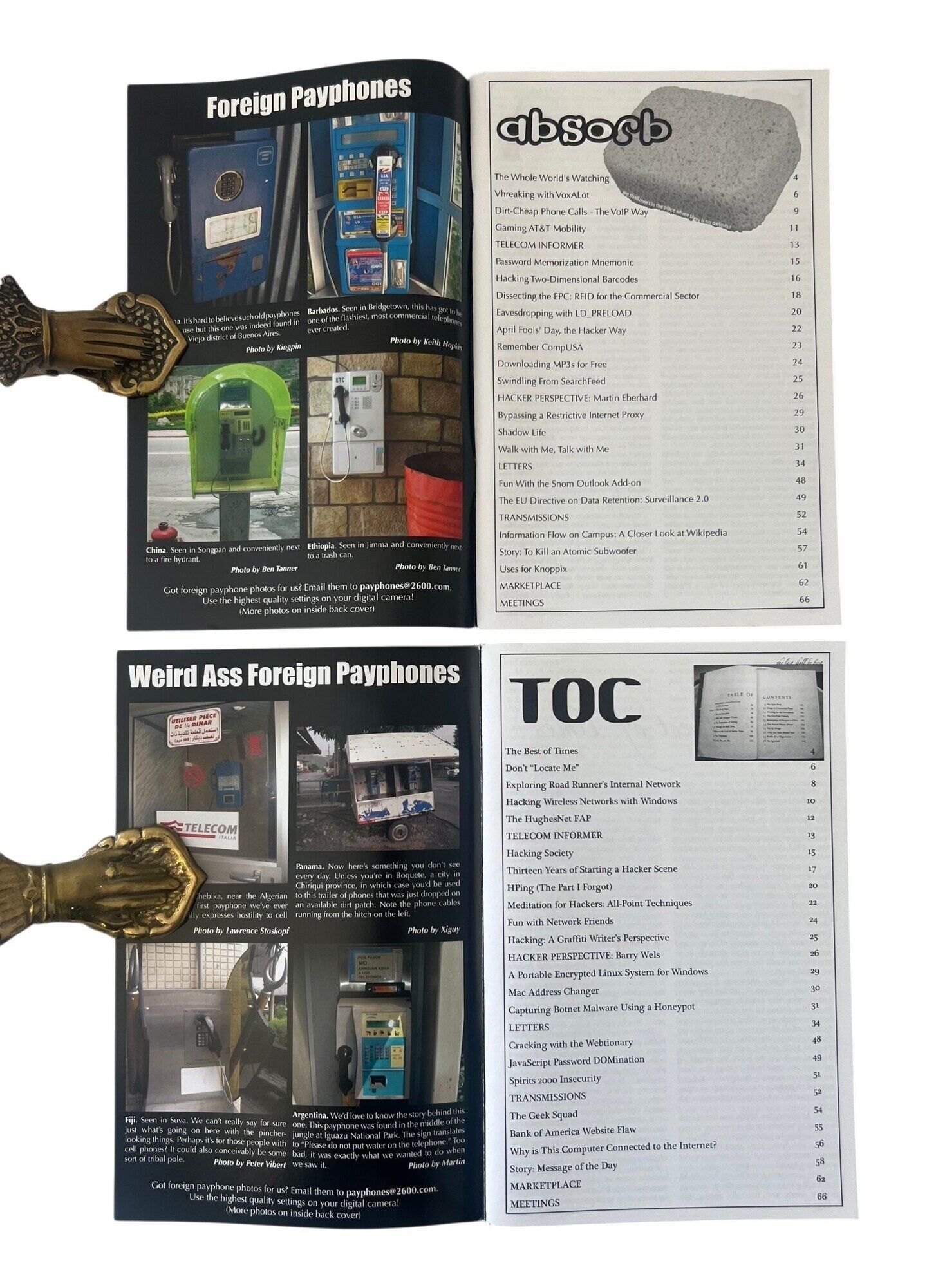
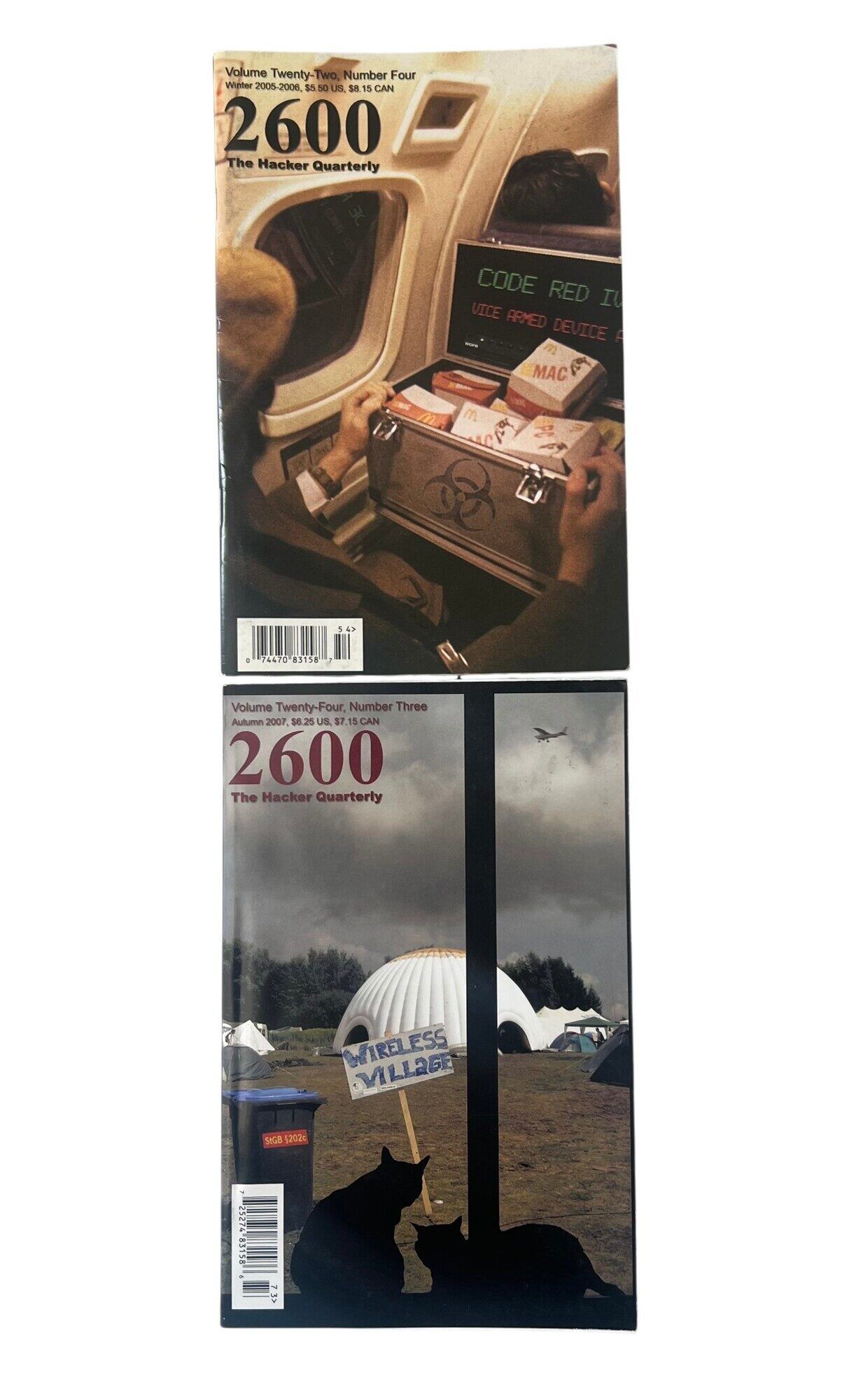
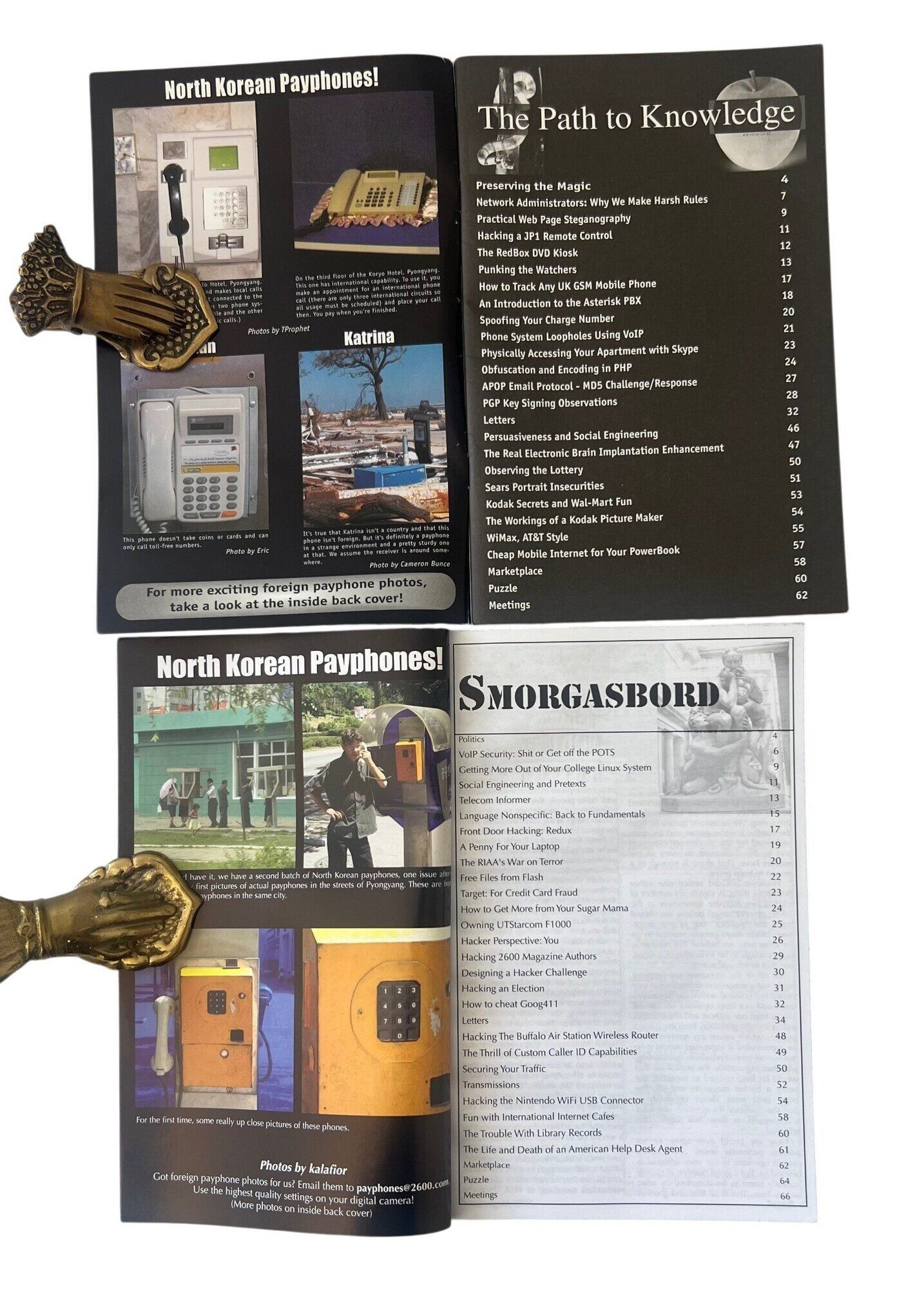
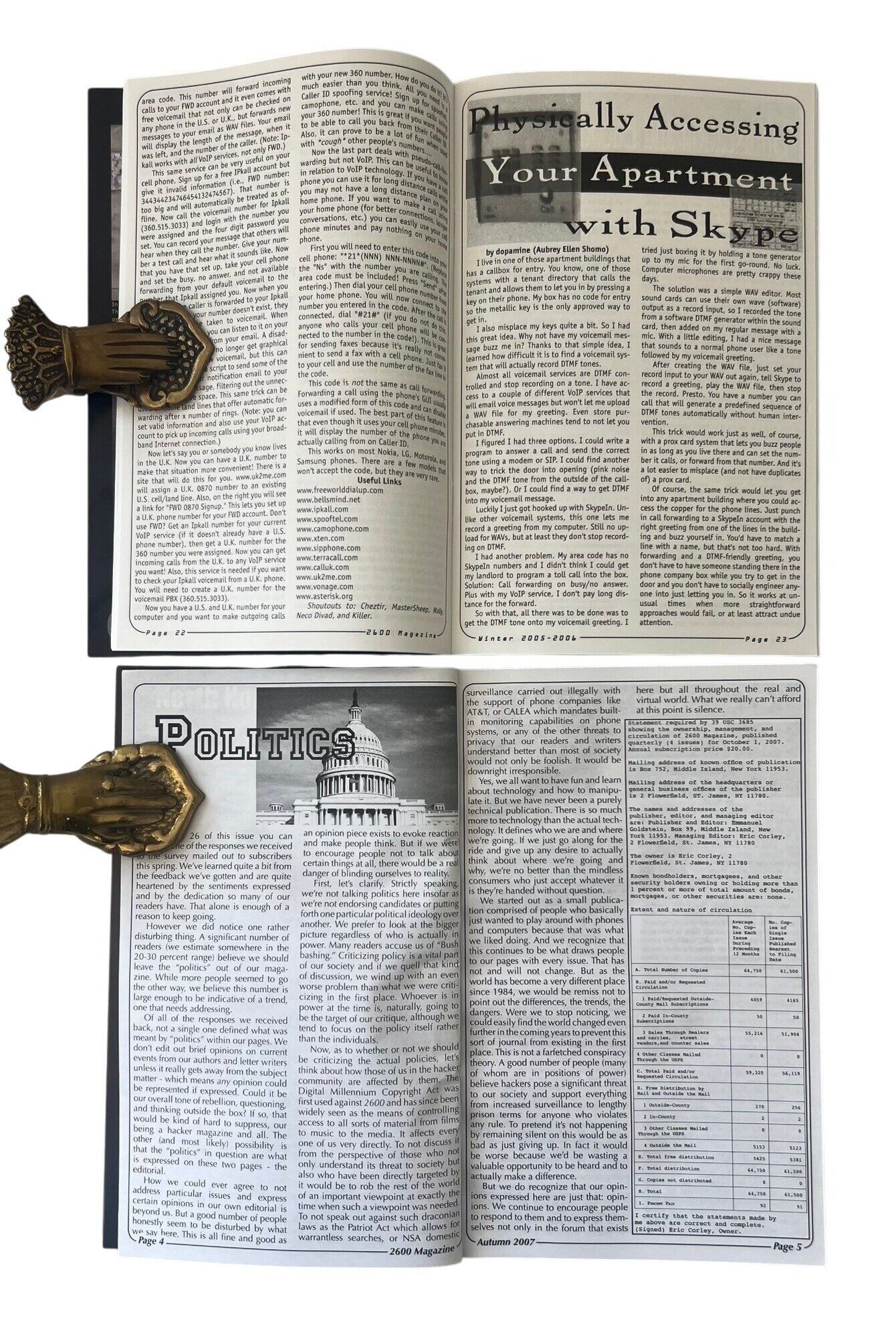
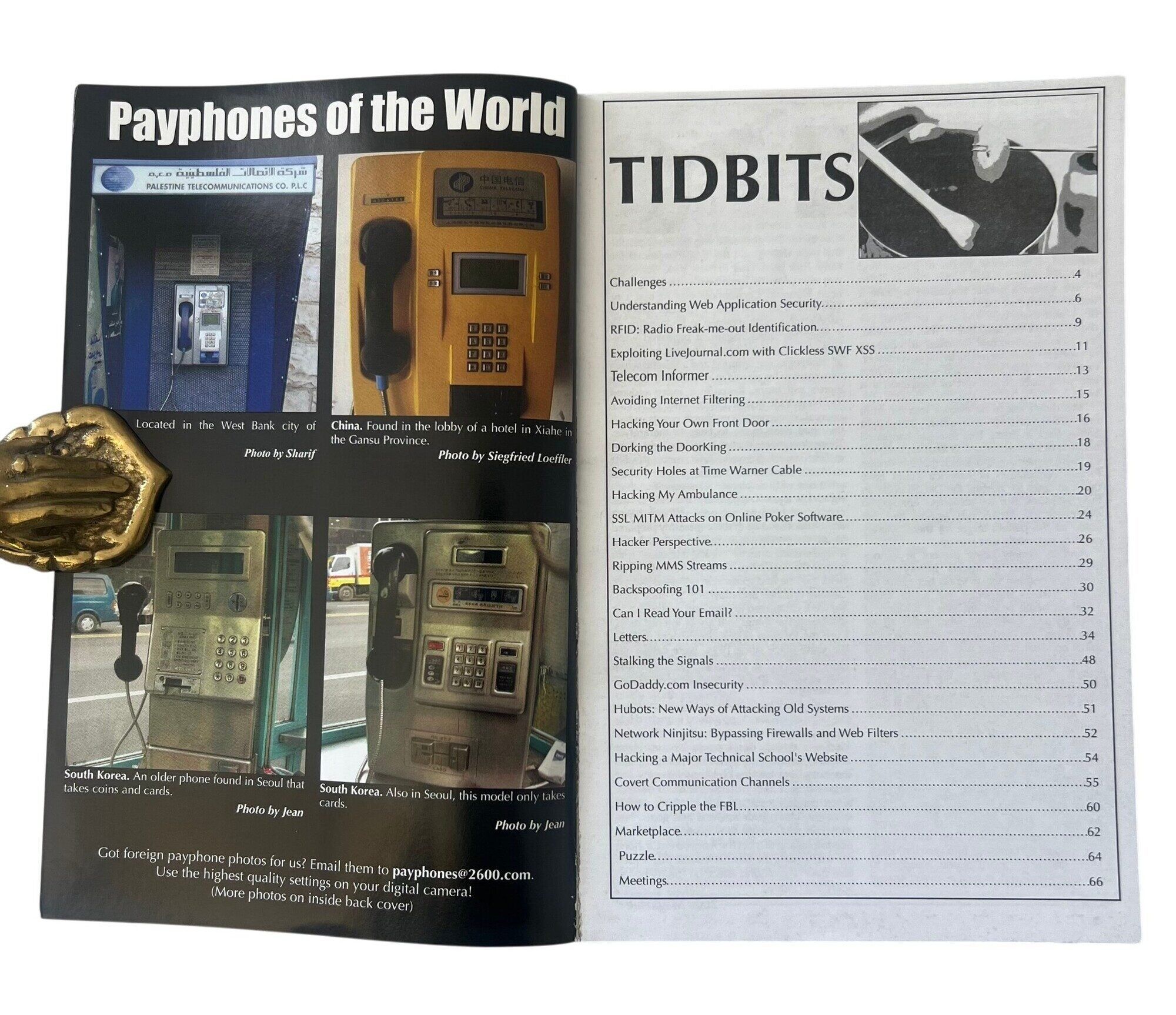
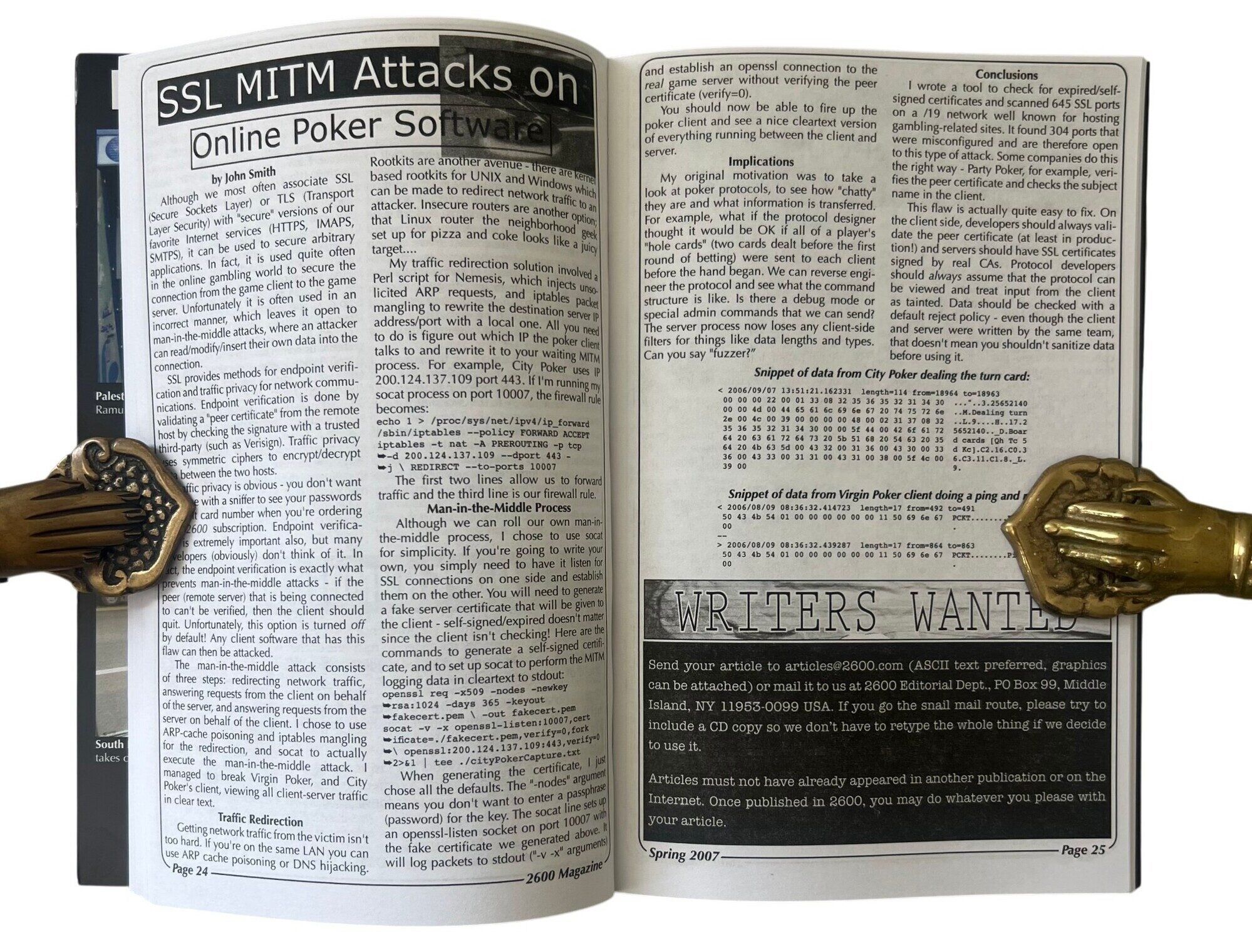
Eric Corley [Emmanuel Goldstein] (ed.). 2600: The Hacker Quarterly. Middle Island, NY: 2000 to 2008. Archive of Ten issues: Vol. 17, No. 3, Fall 2000; Vol. 22, No. 2, Summer 2005; Vol. 22, No. 3, Autumn 2005; Vol. 22, No. 4, Winter 2005-2006; Vol. 24, No. 1, Spring 2007; Vol. 24, No. 2, Summer 2007; Vol. 24, No. 3, Autumn 2007; Vol. 25, No. 1, Spring 2008; Vol. 25, No. 2, Summer 2008; Vol. 25, No. 3, Autumn 2008. The articles' contents join technical method with legal and political pressure: man-in-the-middle attacks against online poker software, Skype-based building access, proxy circumvention, RFID tracking, botnet capture, VoIP loopholes, campus information flows through Wikipedia, custom caller ID, charge-number spoofing, and European data-retention policy. Regular departments include "Politics," "Telecom Informer," "Hacker Perspective," "Marketplace," letters, puzzles, reader submissions, calls for articles sent to the Middle Island editorial office, and meeting lists tying the quarterly magazine to local hacker gatherings.
Founded in 1984 and named for the 2600 Hz signaling tone that phone phreaks had used to seize long-distance phone lines, 2600 entered the new decade as a named defendant in one of the first major tests of the Digital Millennium Copyright Act. In late 1999 the magazine posted the DVD-decryption program DeCSS, along with links to other sites hosting it on 2600.com; eight motion picture studios sued, and the resulting case, Universal City Studios, Inc. v. Corley, named for publisher Eric Corley, turned on the question at the center of the magazine's politics: whether computer code is speech protected by the First Amendment. The Southern District of New York rejected that defense and permanently enjoined 2600 from both posting DeCSS and knowingly linking to it. The litigation ran directly alongside this run's earliest issue, and the later issues then register the widening stakes of security research amid the PATRIOT Act, NSA warrantless wiretapping, RFID adoption, campus network controls, and European data-retention rules, with first-Friday meeting listings in each issue preserving the magazine's double identity as publication and organizing network. Wrappers with light rubbing, handling wear; interiors generally clean, complete, and sound. Adhesive residue from price stickers remain on several covers. Overall in very good condition. This run preserves 2600 during the years when hacker periodical culture treated Internet filtering, telecom systems, surveillance law, and practical security research as parts of the same public argument.
Eric Corley [Emmanuel Goldstein] (ed.). 2600: The Hacker Quarterly. Middle Island, NY: 2000 to 2008. Archive of Ten issues: Vol. 17, No. 3, Fall 2000; Vol. 22, No. 2, Summer 2005; Vol. 22, No. 3, Autumn 2005; Vol. 22, No. 4, Winter 2005-2006; Vol. 24, No. 1, Spring 2007; Vol. 24, No. 2, Summer 2007; Vol. 24, No. 3, Autumn 2007; Vol. 25, No. 1, Spring 2008; Vol. 25, No. 2, Summer 2008; Vol. 25, No. 3, Autumn 2008. The articles' contents join technical method with legal and political pressure: man-in-the-middle attacks against online poker software, Skype-based building access, proxy circumvention, RFID tracking, botnet capture, VoIP loopholes, campus information flows through Wikipedia, custom caller ID, charge-number spoofing, and European data-retention policy. Regular departments include "Politics," "Telecom Informer," "Hacker Perspective," "Marketplace," letters, puzzles, reader submissions, calls for articles sent to the Middle Island editorial office, and meeting lists tying the quarterly magazine to local hacker gatherings.
Founded in 1984 and named for the 2600 Hz signaling tone that phone phreaks had used to seize long-distance phone lines, 2600 entered the new decade as a named defendant in one of the first major tests of the Digital Millennium Copyright Act. In late 1999 the magazine posted the DVD-decryption program DeCSS, along with links to other sites hosting it on 2600.com; eight motion picture studios sued, and the resulting case, Universal City Studios, Inc. v. Corley, named for publisher Eric Corley, turned on the question at the center of the magazine's politics: whether computer code is speech protected by the First Amendment. The Southern District of New York rejected that defense and permanently enjoined 2600 from both posting DeCSS and knowingly linking to it. The litigation ran directly alongside this run's earliest issue, and the later issues then register the widening stakes of security research amid the PATRIOT Act, NSA warrantless wiretapping, RFID adoption, campus network controls, and European data-retention rules, with first-Friday meeting listings in each issue preserving the magazine's double identity as publication and organizing network. Wrappers with light rubbing, handling wear; interiors generally clean, complete, and sound. Adhesive residue from price stickers remain on several covers. Overall in very good condition. This run preserves 2600 during the years when hacker periodical culture treated Internet filtering, telecom systems, surveillance law, and practical security research as parts of the same public argument.
Details
Title
2600: The Hacker Quarterly" on Free Speech, Code, and the Surveillance Era, Archive of 10 Issues, 2000-2008
Author
2600: The Hacker Quarterly
Condition
Unknown
Date
2000