

Cuban Exile Protest, Refugee Processing, Caravan Of Sorrow; Miami Herald Press Photography Archive 1960 to 1966
- 1960
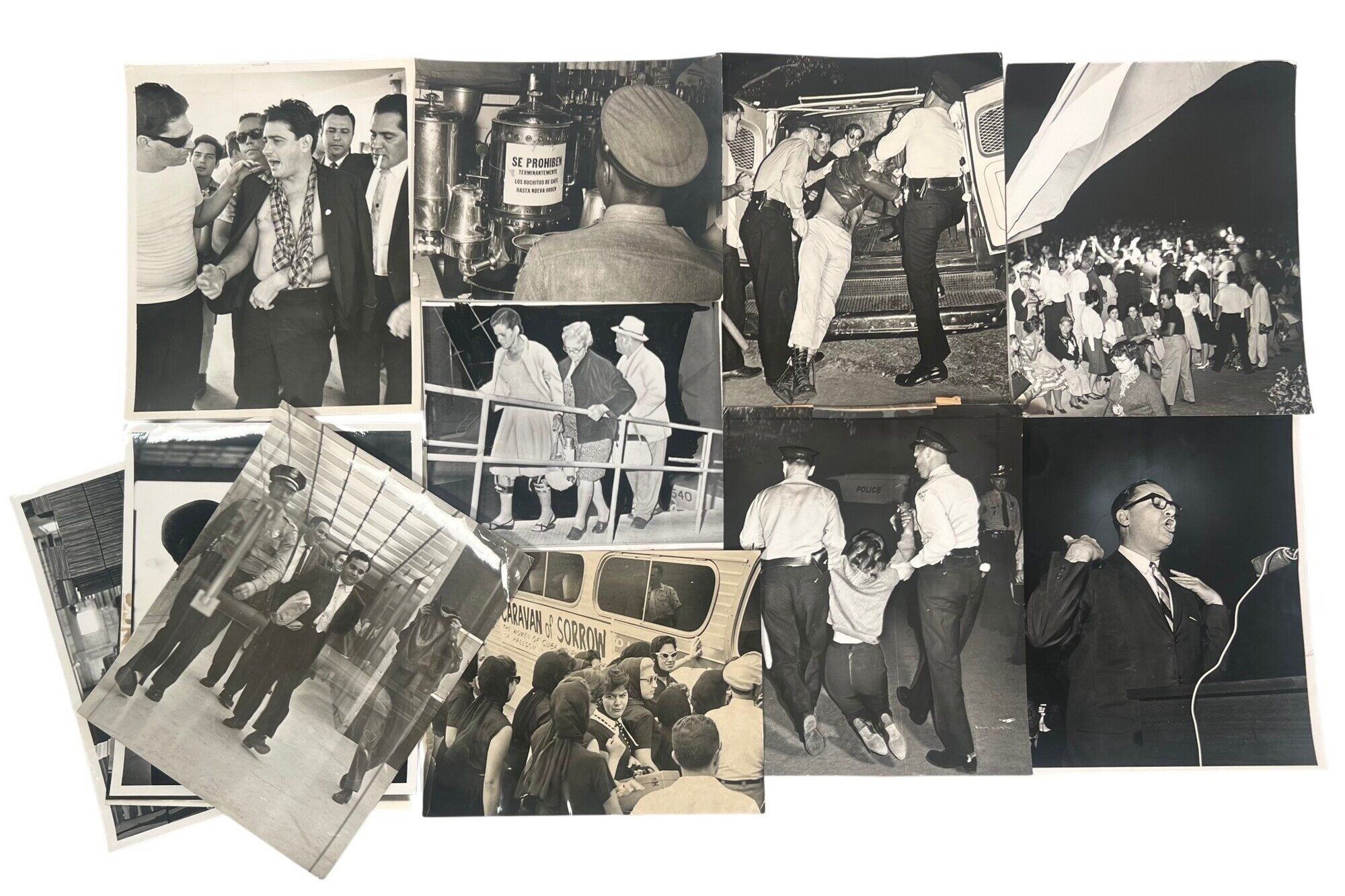
1960. [Cuban Refugees] [Caravan of Sorrow] Miami Herald press photograph archive, 1960 to 1966, documents Cuban exile political organizing, refugee displacement, and United States federal response in South Florida across the critical period between the Cuban Revolution and the Cuban Adjustment Act of 1966. The archive follows a defined sequence of events beginning with the September 1960 Caravan of Sorrow protest, a demonstration organized by Cuban exile women traveling from Miami to New York to confront Fidel Castro's appearance at the United Nations, and continues through the January 5, 1961 closure of the Cuban consulate in Miami following the United States' severance of diplomatic relations on January 3. Subsequent photographs document the Kennedy administration's February 1961 Cuban Refugee Assistance Program centered at Miami's Freedom Tower, the March 10-12, 1962 Bayfront Park hunger strike in which 152 Cuban exiles demanded arms rather than humanitarian aid, the October 1965 Key West arrivals during the Camarioca boatlift initiated on October 10, and the beginning of the federally organized Freedom Flights on December 1, 1965. Produced by Miami Herald staff photographers Albert Coya and John Pineda, both active documentarians of the Cuban exile community, the archive establishes a continuous visual record of exile political life and federal refugee policy during the early Cold War.
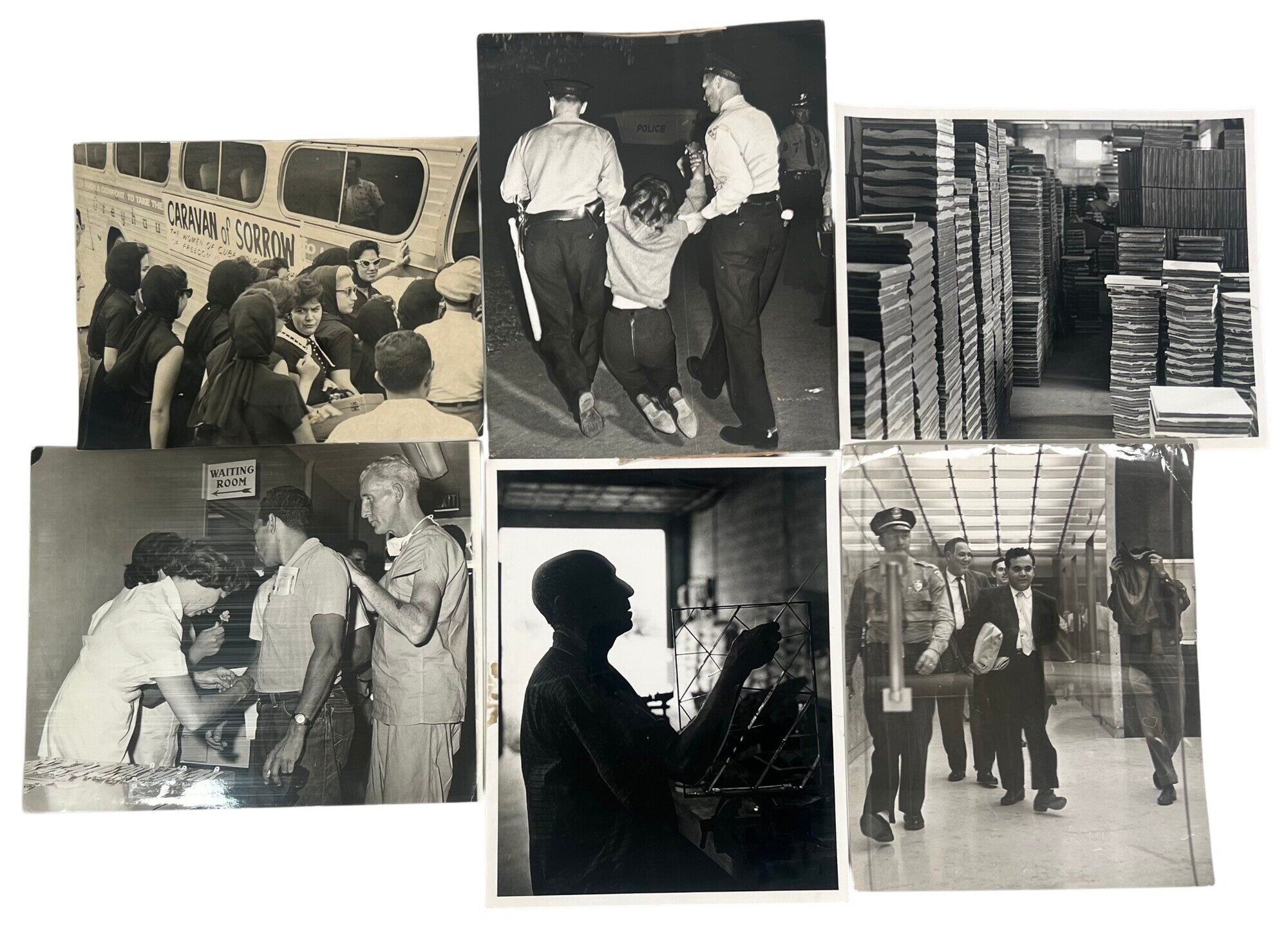
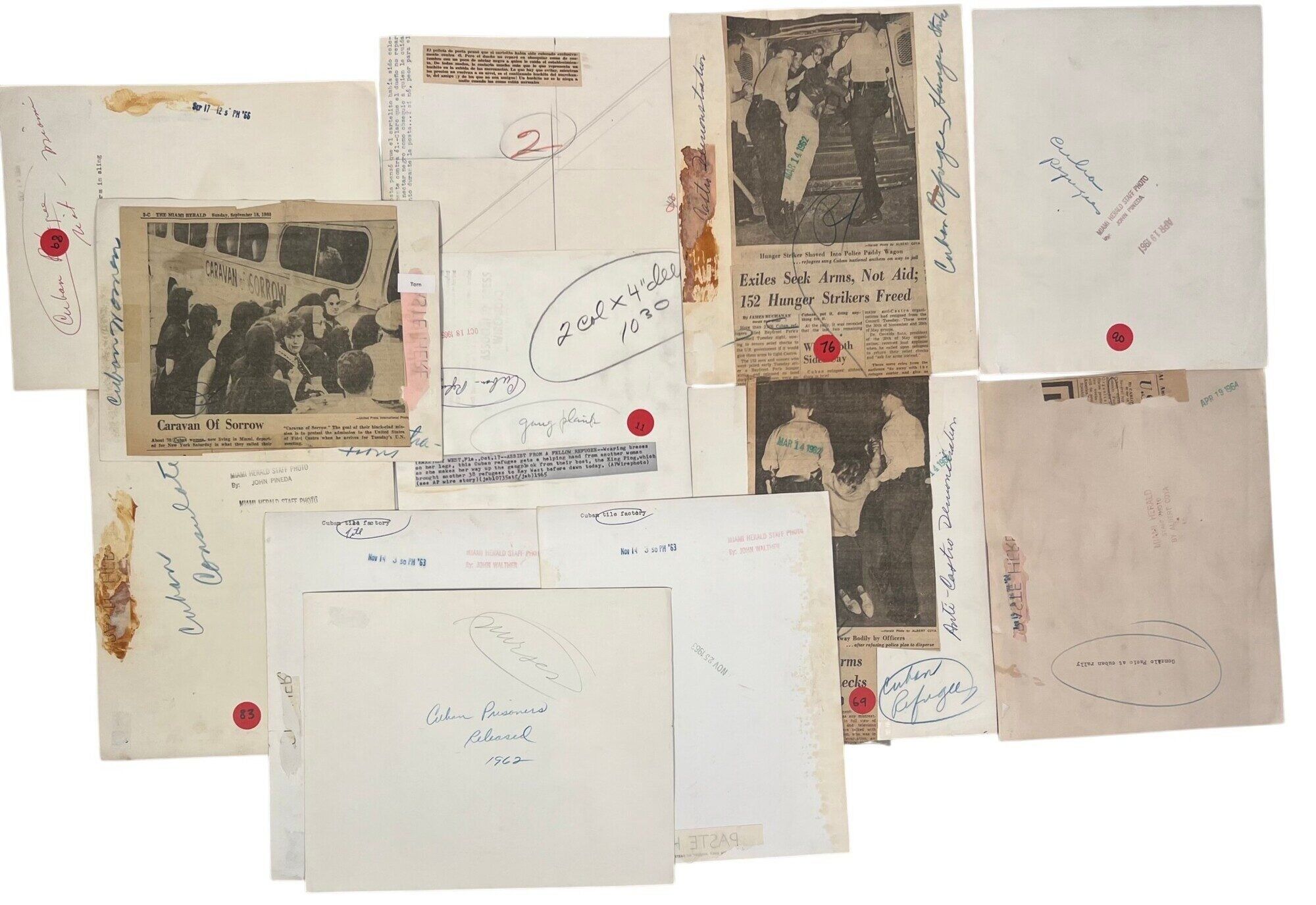
Archive of 12 Large silver gelatin press photographs, Miami Herald, South Florida, 1960 to 1966, Each 10 x 8 inches to 9 x 7 inches, with original verso annotations including dates, photographer credits, editorial markings, crop notations, and attached newspaper clippings consistent with Miami Herald press photo processing practices. Verso credits identify Albert Coya and John Pineda as staff photographers. Documented subjects include the Caravan of Sorrow bus and assembled Cuban women protesters; the January 5, 1961 Cuban consulate closure; refugee intake and processing operations; the Bayfront Park hunger strike accompanied by a clipped headline reading "Exiles Seek Arms, Not Aid; 152 Hunger Strikers Freed," dated March 14, 1962; police arrests of demonstrators; October 1965 Key West refugee arrivals; and anti-Castro protests. Two photographs dated March 14, 1962 document Cuban exiles being forcibly removed by police, including one image in which a protester is carried by multiple officers and another showing an individual being thrown into a police van by armed officers, providing direct visual evidence of state enforcement against exile demonstrators. One photograph depicts Costa Rican diplomat Gonzalo Facio addressing or attending a Cuban exile rally in April 1964, situating the archive within a broader hemispheric diplomatic context. Additional images show a speaker addressing a large crowd, police escorting a detained protester, Cuban women aboard a vessel, and interior scenes of stacked materials in a processing facility, including a sign reading "Se Prohiben Terminantemente." Verso notations such as "Cuban Prisoners Released 1962," "Cuban Refugees," "Anti-Castro Demonstration," and "Cuban Consulate" reflect contemporaneous editorial classification.
The six-year span of the archive crosses three presidential administrations and documents multiple defining events in Cuban American history through photographs produced on assignment at the moment of occurrence. The Caravan of Sorrow images carry particular research value given later declassification of United States involvement through the Cuban Revolutionary Council, placing these photographs among the few contemporaneous visual records outside government archives. The March 1962 Bayfront Park hunger strike, occurring after the Bay of Pigs prisoner negotiations and before the Cuban Missile Crisis, is documented with attached newspaper evidence confirming both the number of participants and their political demands, providing direct insight into divisions within the exile community over United States policy. Light handling wear, edge silvering, and areas of foxing are present across prints; verso clippings show toning and occasional edge loss consistent with newsroom use. Overall good to very good condition. A cohesive, photographer-attributed press archive documenting the development of Cuban exile political identity and United States refugee policy in South Florida during the formative early Cold War period.
Archive of 12 Large silver gelatin press photographs, Miami Herald, South Florida, 1960 to 1966, Each 10 x 8 inches to 9 x 7 inches, with original verso annotations including dates, photographer credits, editorial markings, crop notations, and attached newspaper clippings consistent with Miami Herald press photo processing practices. Verso credits identify Albert Coya and John Pineda as staff photographers. Documented subjects include the Caravan of Sorrow bus and assembled Cuban women protesters; the January 5, 1961 Cuban consulate closure; refugee intake and processing operations; the Bayfront Park hunger strike accompanied by a clipped headline reading "Exiles Seek Arms, Not Aid; 152 Hunger Strikers Freed," dated March 14, 1962; police arrests of demonstrators; October 1965 Key West refugee arrivals; and anti-Castro protests. Two photographs dated March 14, 1962 document Cuban exiles being forcibly removed by police, including one image in which a protester is carried by multiple officers and another showing an individual being thrown into a police van by armed officers, providing direct visual evidence of state enforcement against exile demonstrators. One photograph depicts Costa Rican diplomat Gonzalo Facio addressing or attending a Cuban exile rally in April 1964, situating the archive within a broader hemispheric diplomatic context. Additional images show a speaker addressing a large crowd, police escorting a detained protester, Cuban women aboard a vessel, and interior scenes of stacked materials in a processing facility, including a sign reading "Se Prohiben Terminantemente." Verso notations such as "Cuban Prisoners Released 1962," "Cuban Refugees," "Anti-Castro Demonstration," and "Cuban Consulate" reflect contemporaneous editorial classification.
The six-year span of the archive crosses three presidential administrations and documents multiple defining events in Cuban American history through photographs produced on assignment at the moment of occurrence. The Caravan of Sorrow images carry particular research value given later declassification of United States involvement through the Cuban Revolutionary Council, placing these photographs among the few contemporaneous visual records outside government archives. The March 1962 Bayfront Park hunger strike, occurring after the Bay of Pigs prisoner negotiations and before the Cuban Missile Crisis, is documented with attached newspaper evidence confirming both the number of participants and their political demands, providing direct insight into divisions within the exile community over United States policy. Light handling wear, edge silvering, and areas of foxing are present across prints; verso clippings show toning and occasional edge loss consistent with newsroom use. Overall good to very good condition. A cohesive, photographer-attributed press archive documenting the development of Cuban exile political identity and United States refugee policy in South Florida during the formative early Cold War period.
Details
Title
Cuban Exile Protest, Refugee Processing, Caravan Of Sorrow; Miami Herald Press Photography Archive 1960 to 1966
Author
Cuban Refugees in Florida
Condition
Unknown
Date
1960