

Black Women's Labor Across Farm Work, Nursing, Clerical Offices, and Strike Picketing, 1920-1960
- 1900
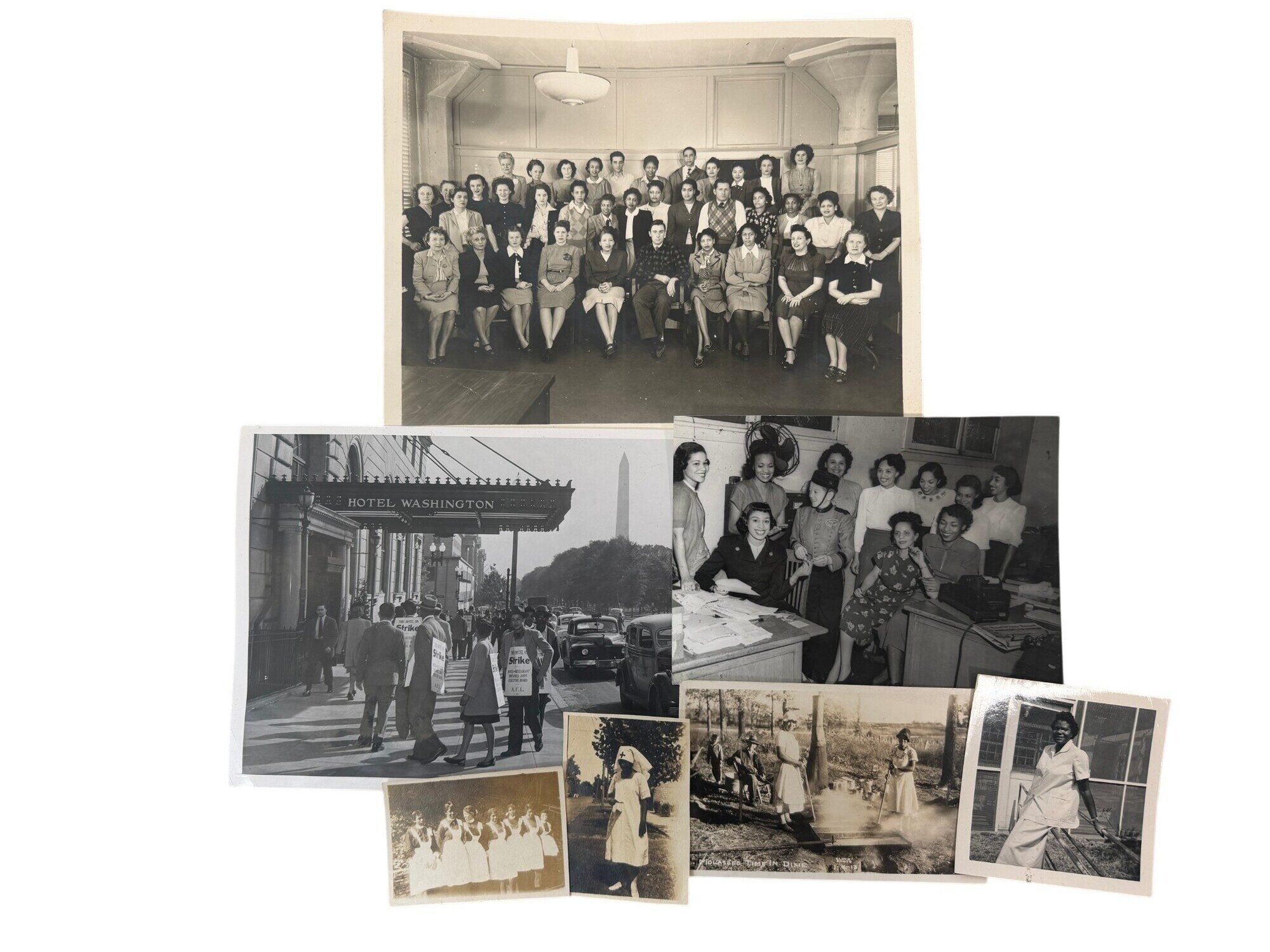
1900. Black women's labor photo archive depicting agricultural work, nursing, hospital training, clerical employment, service labor, and street protest from the turn of the century to 1960. Black women's labor photo archive depicting the long movement of Black women into paid work beyond domestic service and agricultural labor, from cane-processing and uniformed service roles to clerical offices, nursing education, and public union protest. During the first half of the twentieth century, Black women remained heavily concentrated in farm work, laundry work, cooking, cleaning, and private household labor, while wartime industry, hospital expansion, civil service employment, and postwar union activity opened limited but visible routes into wage work with uniforms, job titles, training credentials, and collective bargaining claims. The Hotel Washington strike, the 1960 Sonoma State Hospital nursing class, and the large named office workforce portrait place Black women inside the workplaces where that transition became visible: on picket lines, in state medical institutions, at typewriters and desks, and among mixed race and gender employee groups.
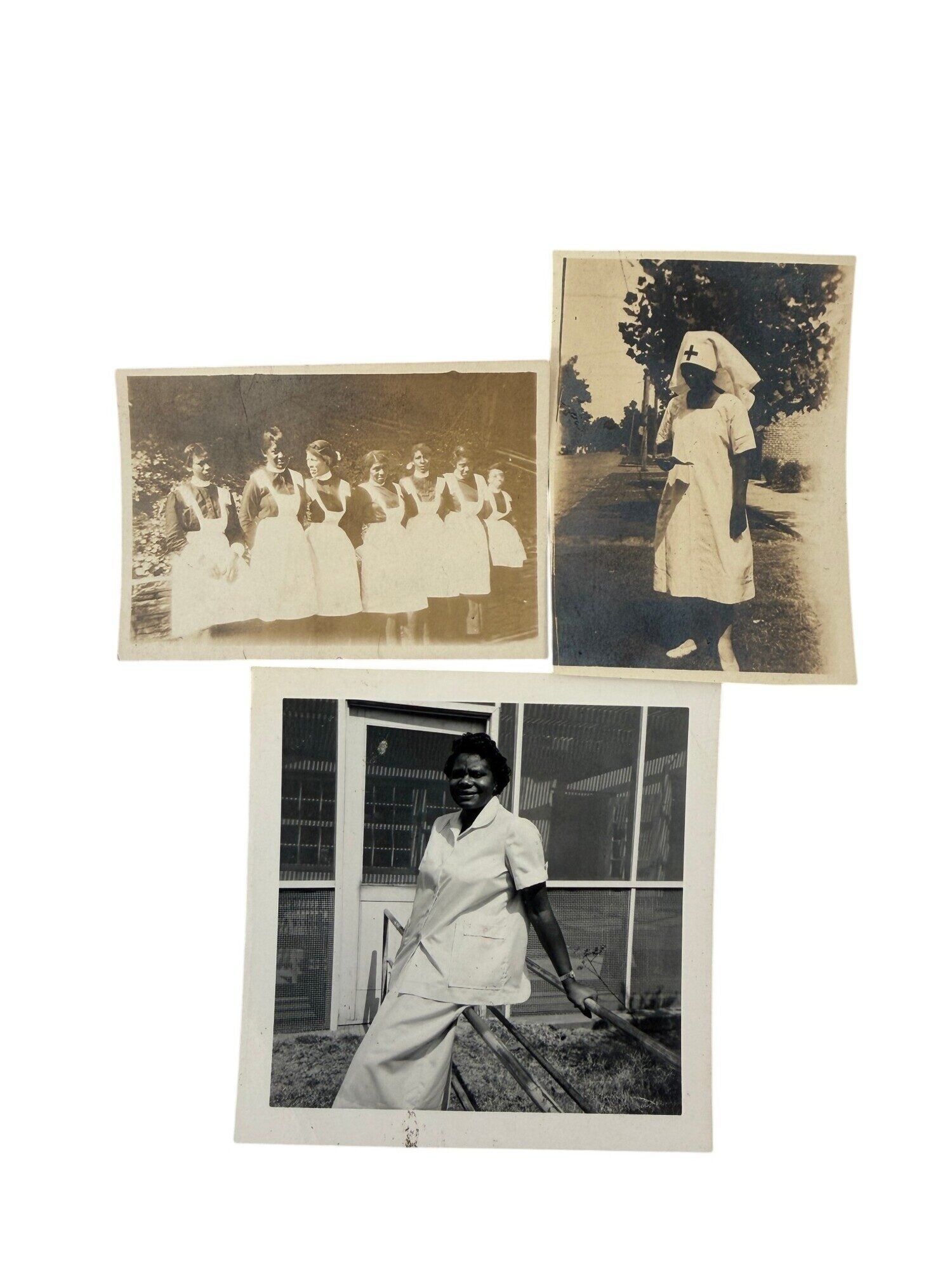
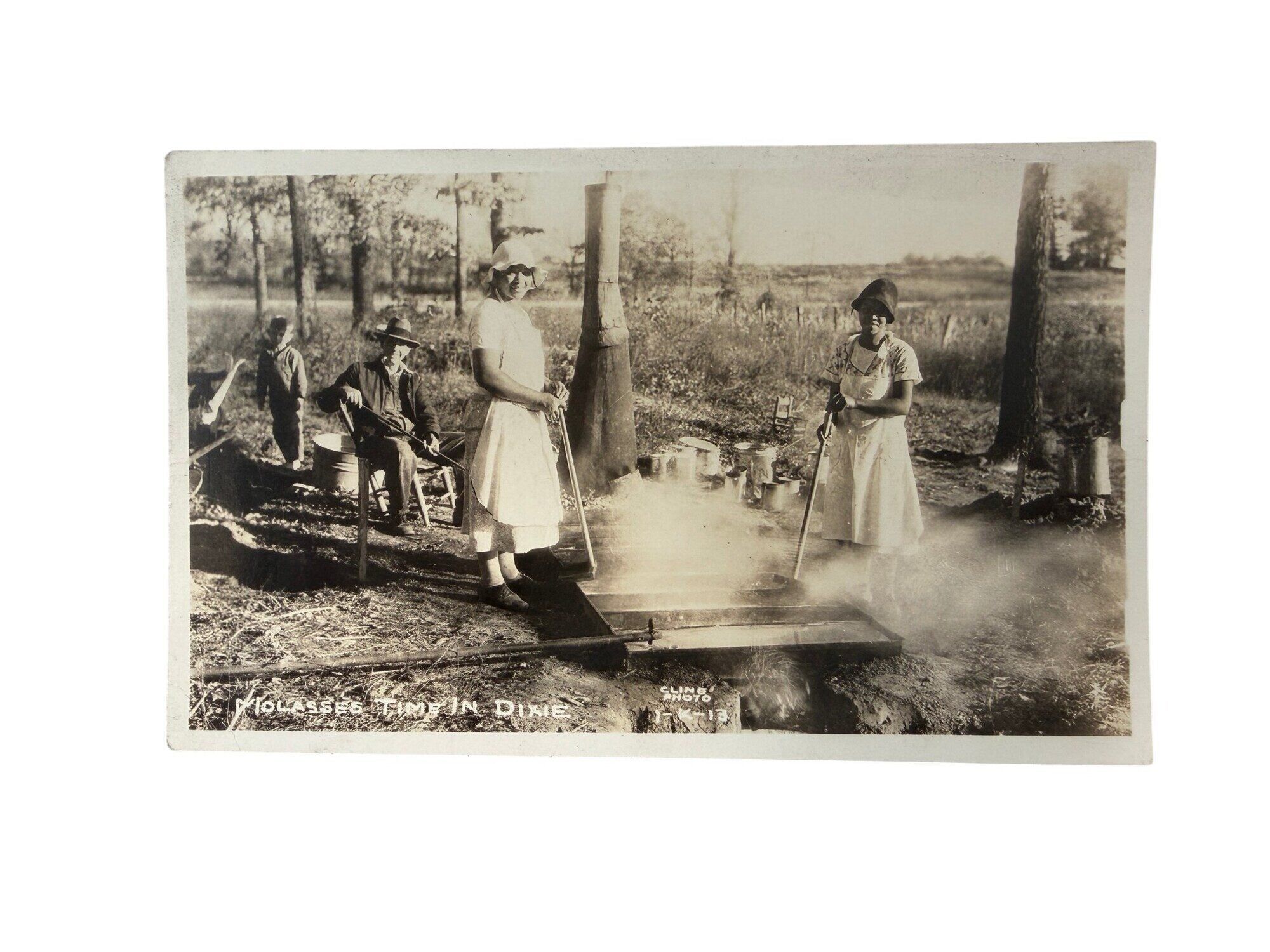
Photo archive of 10 silver gelatin photographs, various sizes ranging from 2" x 3" to 8" x 10", United States, circa 1920s to 1960s. A large interior staff portrait records a mixed race and gender office workforce, with verso first and last name identifications. Nurses in white uniforms stand in rows outside a brick institutional building, with "grad class of '60" and "S.S.H. Sonoma State Hospital" written en verso; another photo of a nurse is shown with her in uniform and identified en verso "Lillian Moore Johnson R.N."; another office interior includes Black women gathered around desks, papers, and a typewriter. Agricultural labor appears in a captioned rural scene reading "molasses time in Dixie," where Black women in aprons work around steaming kettles, a seated man, and children near a cane-processing setup, while smaller portraits show women in nursing or service dress, including a Red Cross uniform and a posed group in matching aprons. The strongest labor scene places picketers outside the Hotel Washington near the Washington Monument, with sandwich boards reading "on strike" for the Hotel and Restaurant Workers Union, A.F.L.; the October 1946 Washington hotel strike involved approximately 5,000 workers at 18 hotels and ended after 21 days with wage increases, improved tip arrangements, vacation changes, and schedule improvements. Sonoma State Hospital, identified en verso on the 1960 graduating nurses' class, was a California state institution at Eldridge serving residents with developmental disabilities and later became the Sonoma Developmental Center. A large office workforce portrait identifies workers by full name and job title on the verso, preserving Black women and their white coworkers as named clerks, typists, stenographers, receptionists, and supervisory staff rather than anonymous employees.
During the same decades, Black women's paid work moved unevenly from domestic, agricultural, and service labor into hospitals, state institutions, clerical offices, and unionized workplaces, while segregation and job discrimination continued to shape hiring, pay, and promotion. Light creasing, fading, and surface wear appear throughout, though photos generally clean and clear; overall in good condition. This archive showcases Black women's labor across the twentieth century, from plantation field work and uniformed care work to clerical offices, hospital training, and public labor protest.
Photo archive of 10 silver gelatin photographs, various sizes ranging from 2" x 3" to 8" x 10", United States, circa 1920s to 1960s. A large interior staff portrait records a mixed race and gender office workforce, with verso first and last name identifications. Nurses in white uniforms stand in rows outside a brick institutional building, with "grad class of '60" and "S.S.H. Sonoma State Hospital" written en verso; another photo of a nurse is shown with her in uniform and identified en verso "Lillian Moore Johnson R.N."; another office interior includes Black women gathered around desks, papers, and a typewriter. Agricultural labor appears in a captioned rural scene reading "molasses time in Dixie," where Black women in aprons work around steaming kettles, a seated man, and children near a cane-processing setup, while smaller portraits show women in nursing or service dress, including a Red Cross uniform and a posed group in matching aprons. The strongest labor scene places picketers outside the Hotel Washington near the Washington Monument, with sandwich boards reading "on strike" for the Hotel and Restaurant Workers Union, A.F.L.; the October 1946 Washington hotel strike involved approximately 5,000 workers at 18 hotels and ended after 21 days with wage increases, improved tip arrangements, vacation changes, and schedule improvements. Sonoma State Hospital, identified en verso on the 1960 graduating nurses' class, was a California state institution at Eldridge serving residents with developmental disabilities and later became the Sonoma Developmental Center. A large office workforce portrait identifies workers by full name and job title on the verso, preserving Black women and their white coworkers as named clerks, typists, stenographers, receptionists, and supervisory staff rather than anonymous employees.
During the same decades, Black women's paid work moved unevenly from domestic, agricultural, and service labor into hospitals, state institutions, clerical offices, and unionized workplaces, while segregation and job discrimination continued to shape hiring, pay, and promotion. Light creasing, fading, and surface wear appear throughout, though photos generally clean and clear; overall in good condition. This archive showcases Black women's labor across the twentieth century, from plantation field work and uniformed care work to clerical offices, hospital training, and public labor protest.
Details
Title
Black Women's Labor Across Farm Work, Nursing, Clerical Offices, and Strike Picketing, 1920-1960
Author
Black Women's Labor
Condition
Unknown
Date
1900