

California Ironworks and Machine Shop Labor Before Deindustrialization, 17 Work Photographs with captions
- 1970
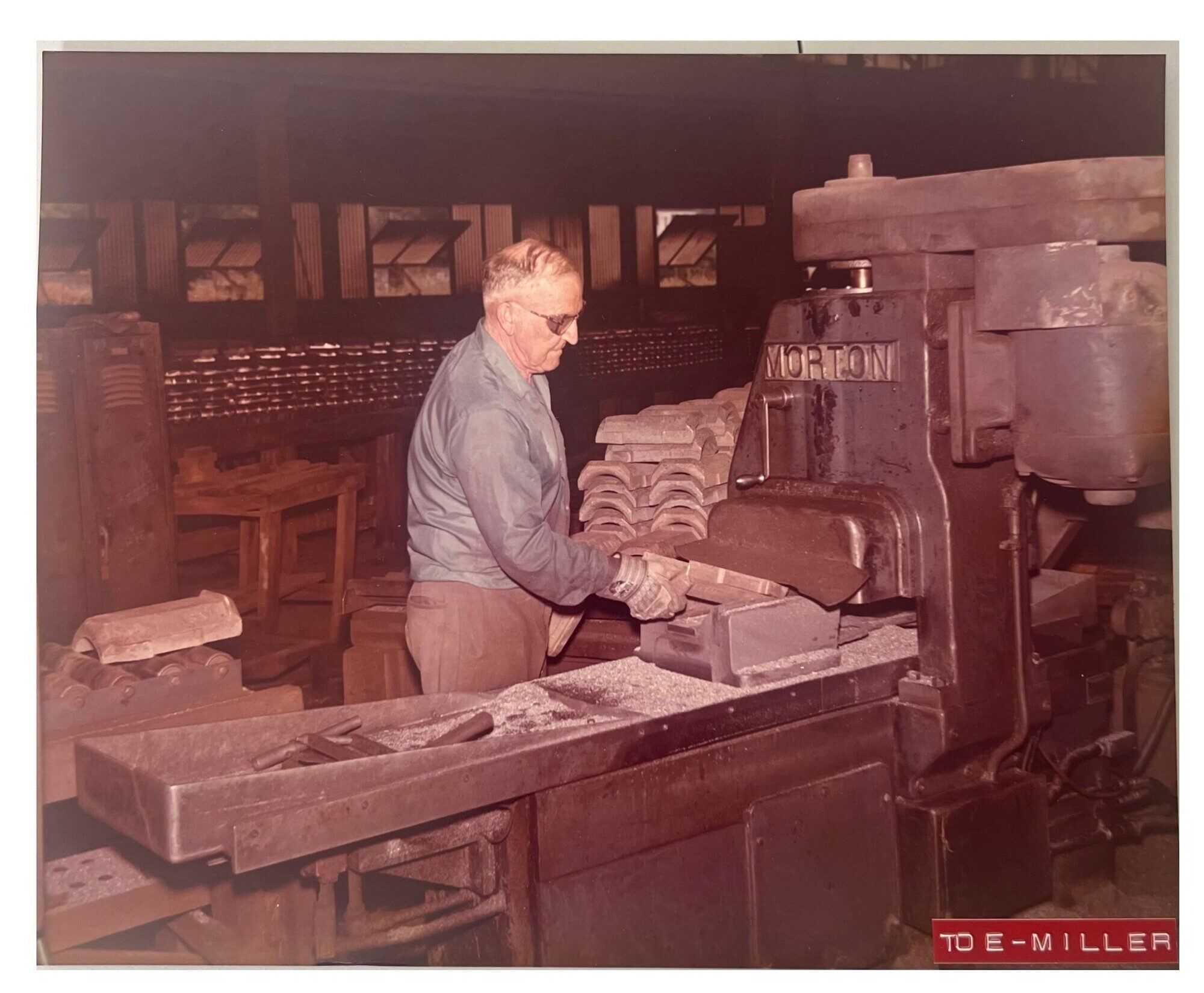
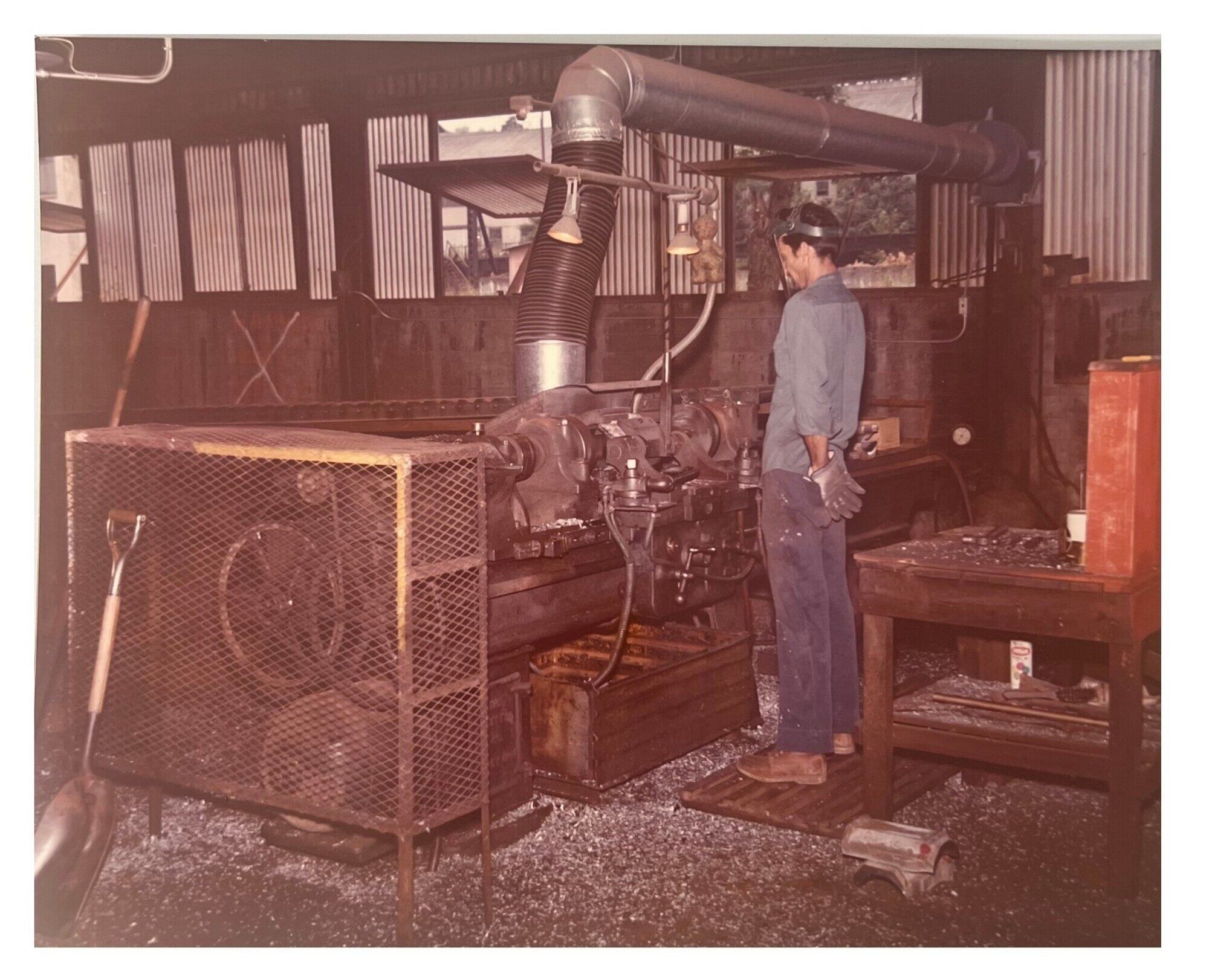
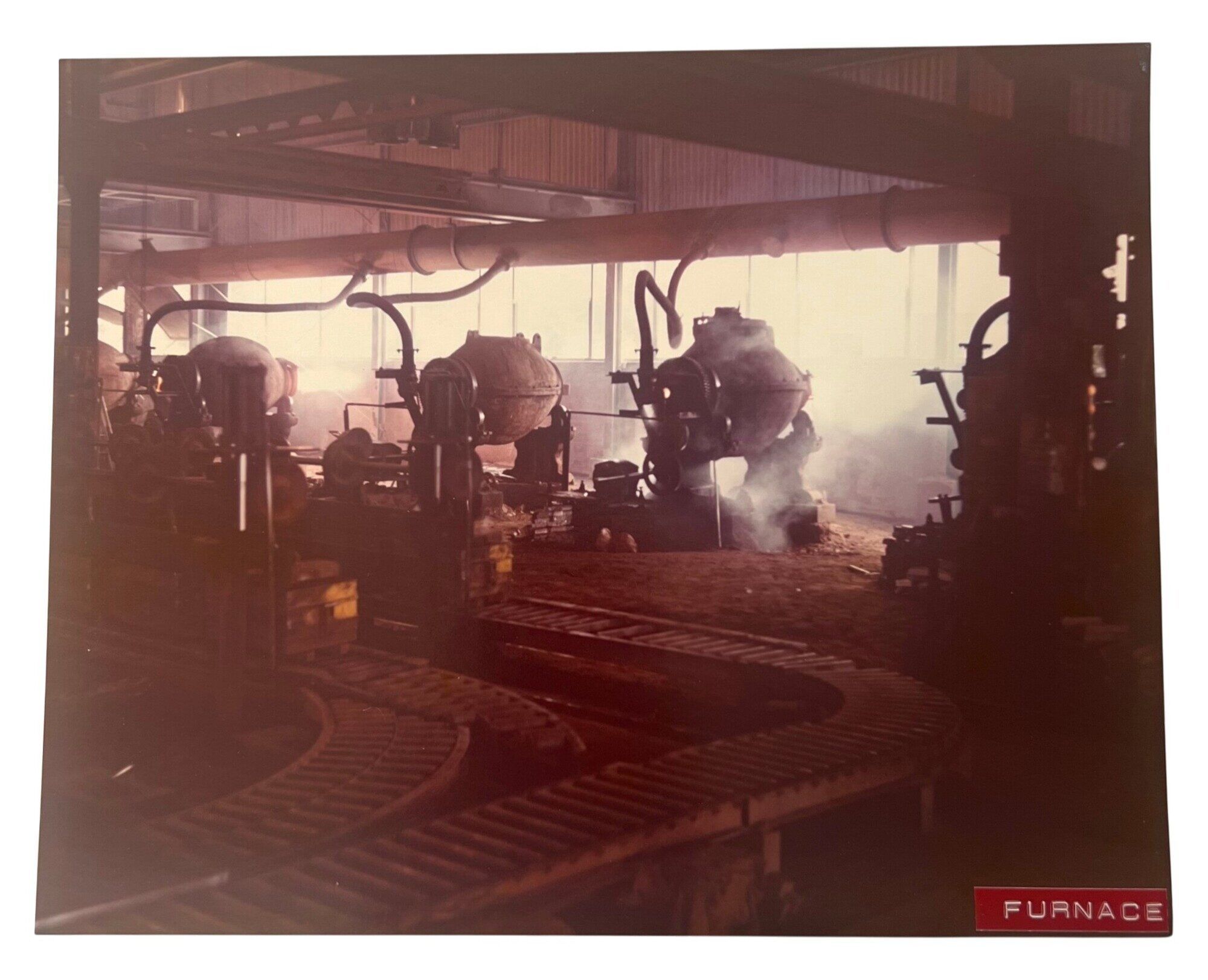
1970. California metal foundry photo archive depicting integrated casting and machining operations during the decade when the state's traditional ironworks industry entered rapid decline under new environmental regulation, OSHA enforcement, foreign competition, and industrial automation. California supported more than 2,000 foundries during the mid twentieth century, supplying cast metal components for construction, transportation, agricultural machinery, shipbuilding, and regional manufacturing before widespread closures accelerated during the late 1970s and 1980s. Passage of the Occupational Safety and Health Act in 1970 and expansion of California air pollution controls brought intensified scrutiny to foundries because of silica dust exposure, furnace emissions, grinding particulates, and high heat production environments. The archive preserves the internal workflow of a functioning foundry and machine shop while older labor-intensive production methods were beginning to disappear from California industry.
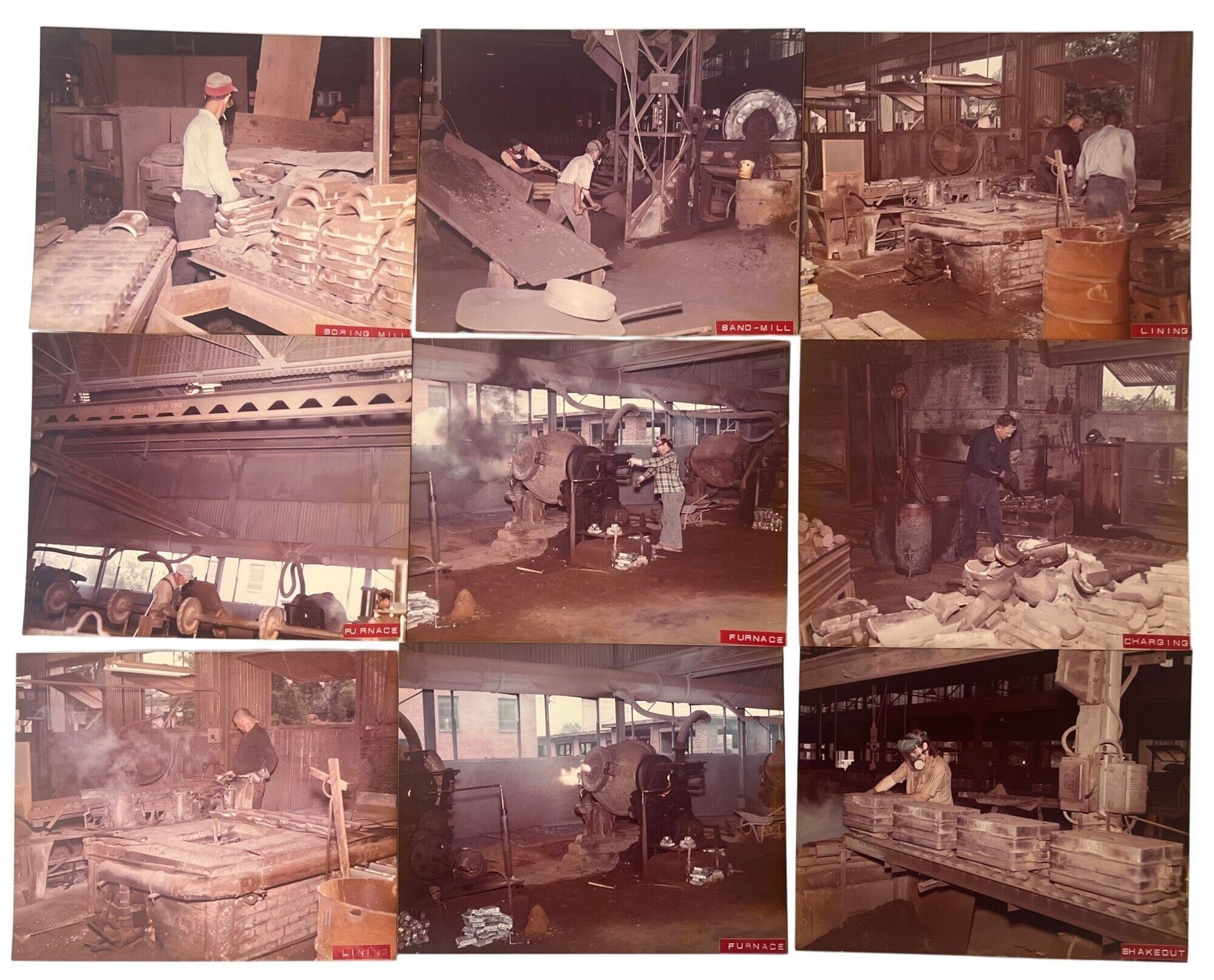
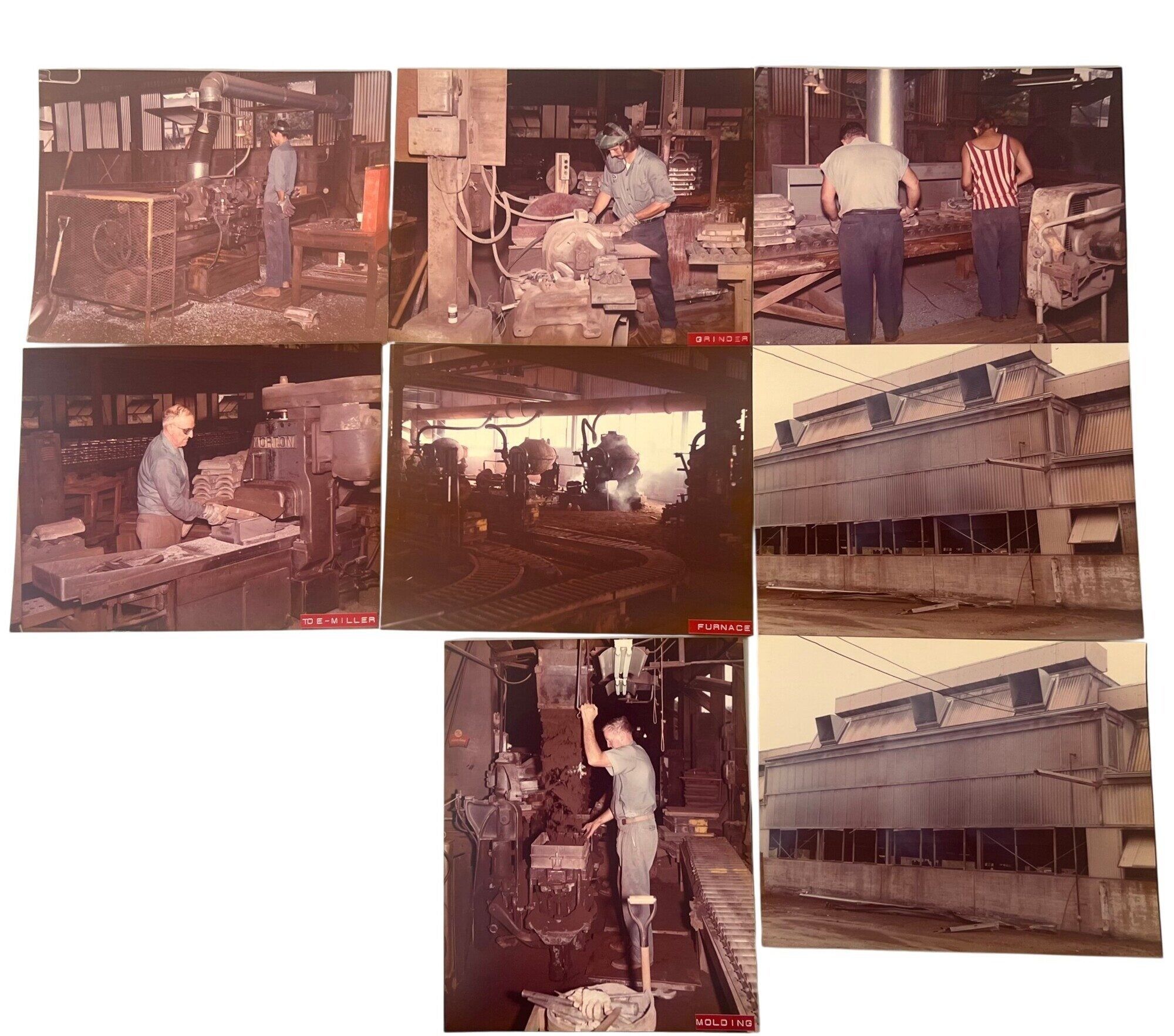
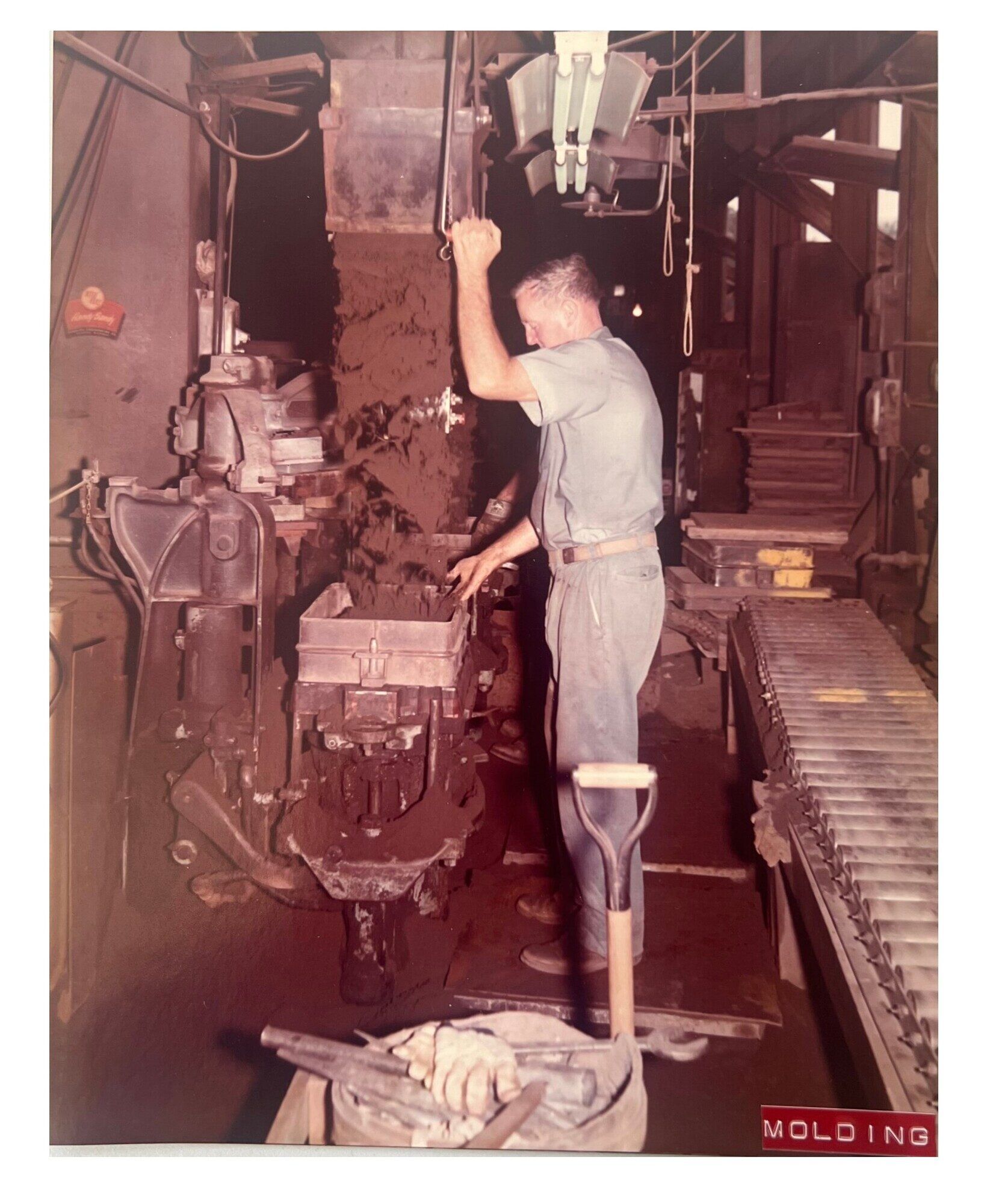
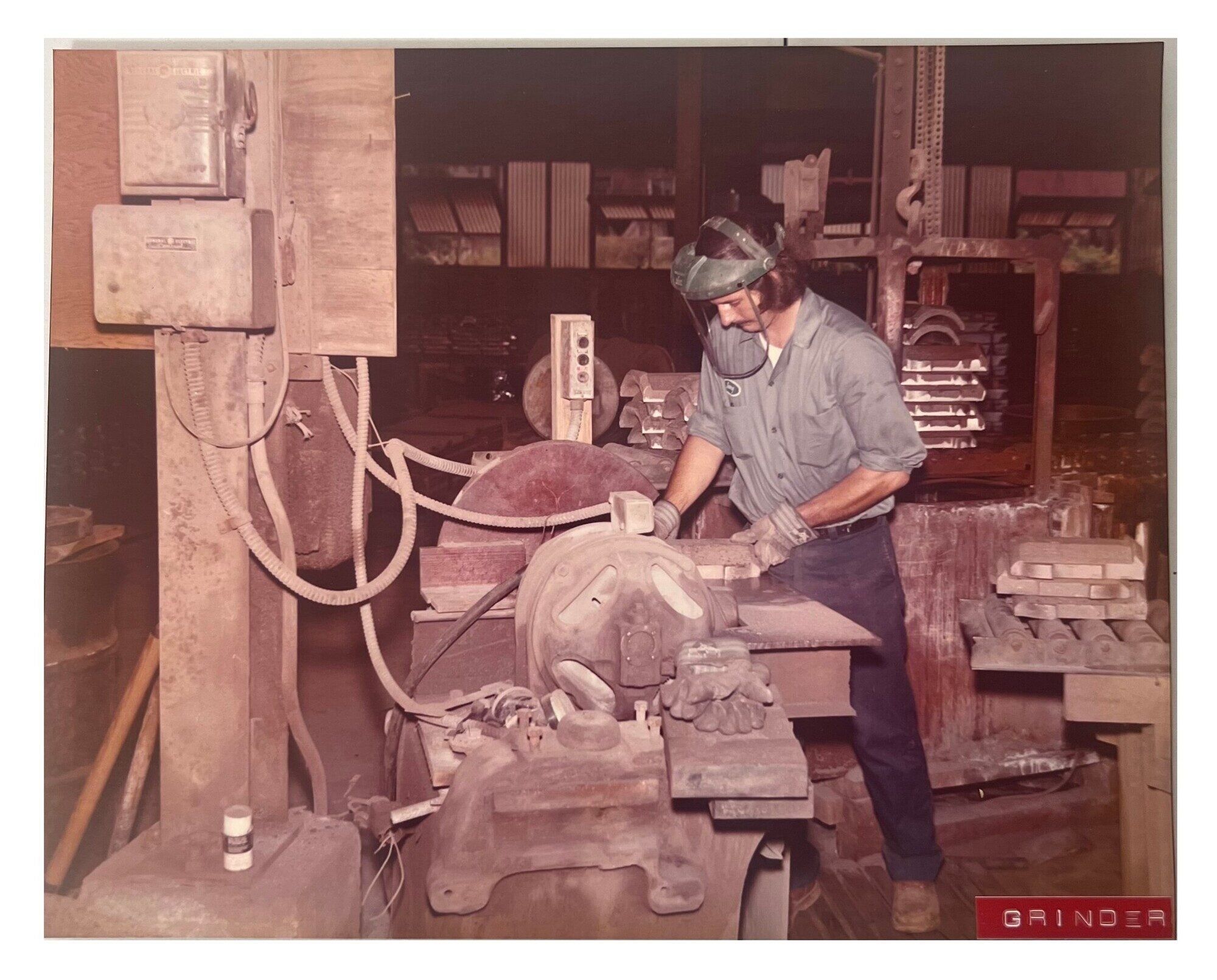
Photo archive of 17 large chromogenic color photographs, 8 x 10 inches, California, circa 1970s. Red operational captions identify sequential production stages including "Boring mill," "Sand-mill," "Charging," "Toe-miller," "Grinder," "Lining," "Furnace," "Molding," and "Shakeout," effectively tracing the movement of cast metal components from mold preparation through machining and finishing. Workers wearing respirators, protective shields, heavy gloves, and denim work uniforms operate grinders, shovel molding sand, feed conveyor furnace systems, remove excess metal from castings, and handle large industrial molds amid accumulations of casting residue and metal dust. Several interiors show overhead ventilation systems, brick-lined furnace structures, steel rollers, suspended piping, electrical conduit, and heavy machining equipment associated with mid century foundry production before widespread computerized automation transformed the industry.
The boring mill and toe milling stations distinguish the archive from generic factory photography by documenting on-site post-casting precision machining alongside furnace and molding operations, preserving a nearly complete industrial production chain inside a single plant. Light surface wear and minor color fading; several prints with slight corner wear. Overall in very good condition. The archive captures a form of California heavy industry that largely disappeared within a generation as foundries closed, relocated, or converted to smaller automated production systems.
Photo archive of 17 large chromogenic color photographs, 8 x 10 inches, California, circa 1970s. Red operational captions identify sequential production stages including "Boring mill," "Sand-mill," "Charging," "Toe-miller," "Grinder," "Lining," "Furnace," "Molding," and "Shakeout," effectively tracing the movement of cast metal components from mold preparation through machining and finishing. Workers wearing respirators, protective shields, heavy gloves, and denim work uniforms operate grinders, shovel molding sand, feed conveyor furnace systems, remove excess metal from castings, and handle large industrial molds amid accumulations of casting residue and metal dust. Several interiors show overhead ventilation systems, brick-lined furnace structures, steel rollers, suspended piping, electrical conduit, and heavy machining equipment associated with mid century foundry production before widespread computerized automation transformed the industry.
The boring mill and toe milling stations distinguish the archive from generic factory photography by documenting on-site post-casting precision machining alongside furnace and molding operations, preserving a nearly complete industrial production chain inside a single plant. Light surface wear and minor color fading; several prints with slight corner wear. Overall in very good condition. The archive captures a form of California heavy industry that largely disappeared within a generation as foundries closed, relocated, or converted to smaller automated production systems.
Details
Title
California Ironworks and Machine Shop Labor Before Deindustrialization, 17 Work Photographs with captions
Author
Foundry Labor and Machinery
Condition
Unknown
Date
1970