

2600: The Hacker Quarterly Archive Documenting Hacker Culture, Phone Phreaking, Encryption, and the Digital Free Speech Battles of the Early Internet, 1993-2008
- 1993
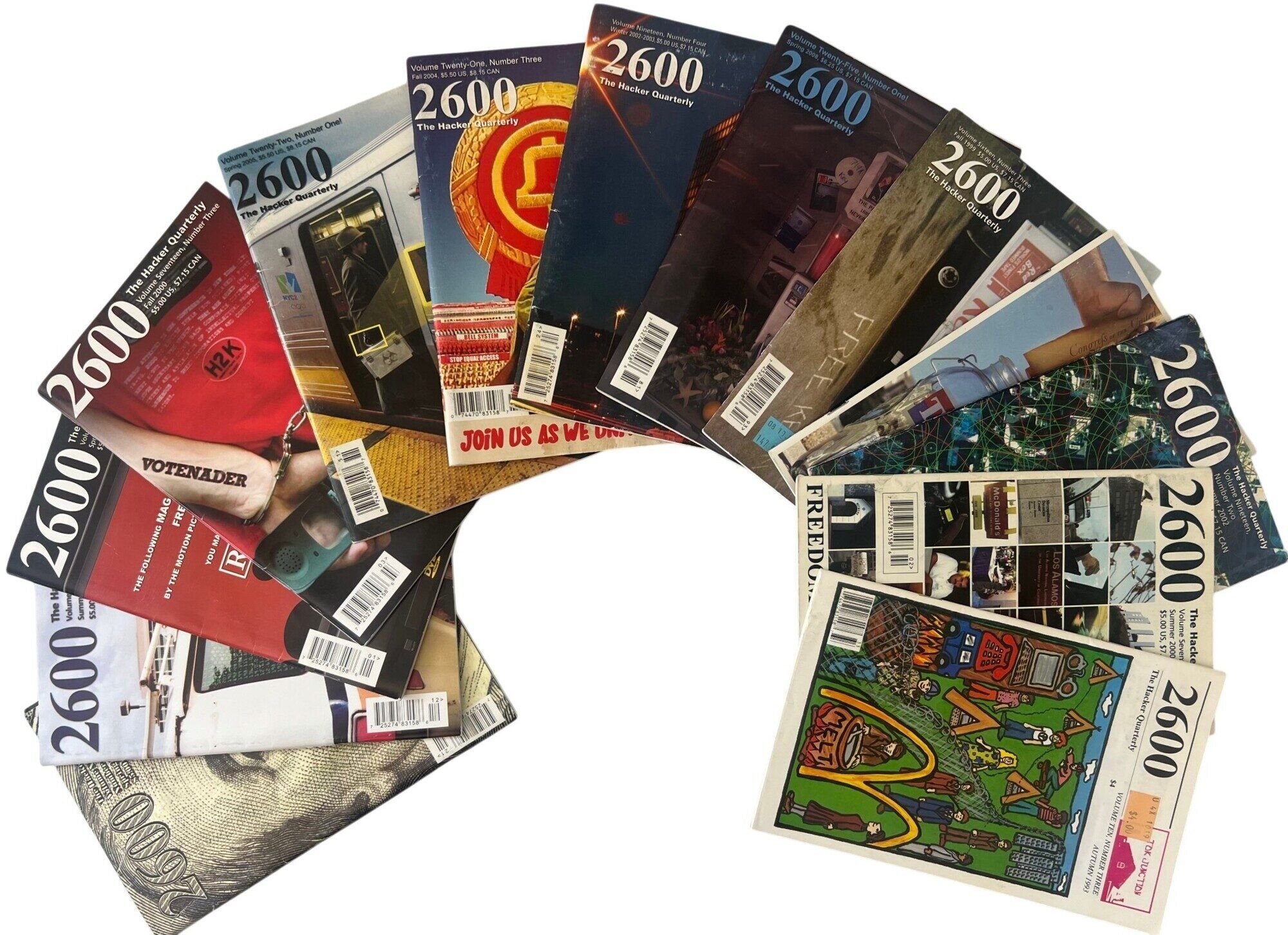
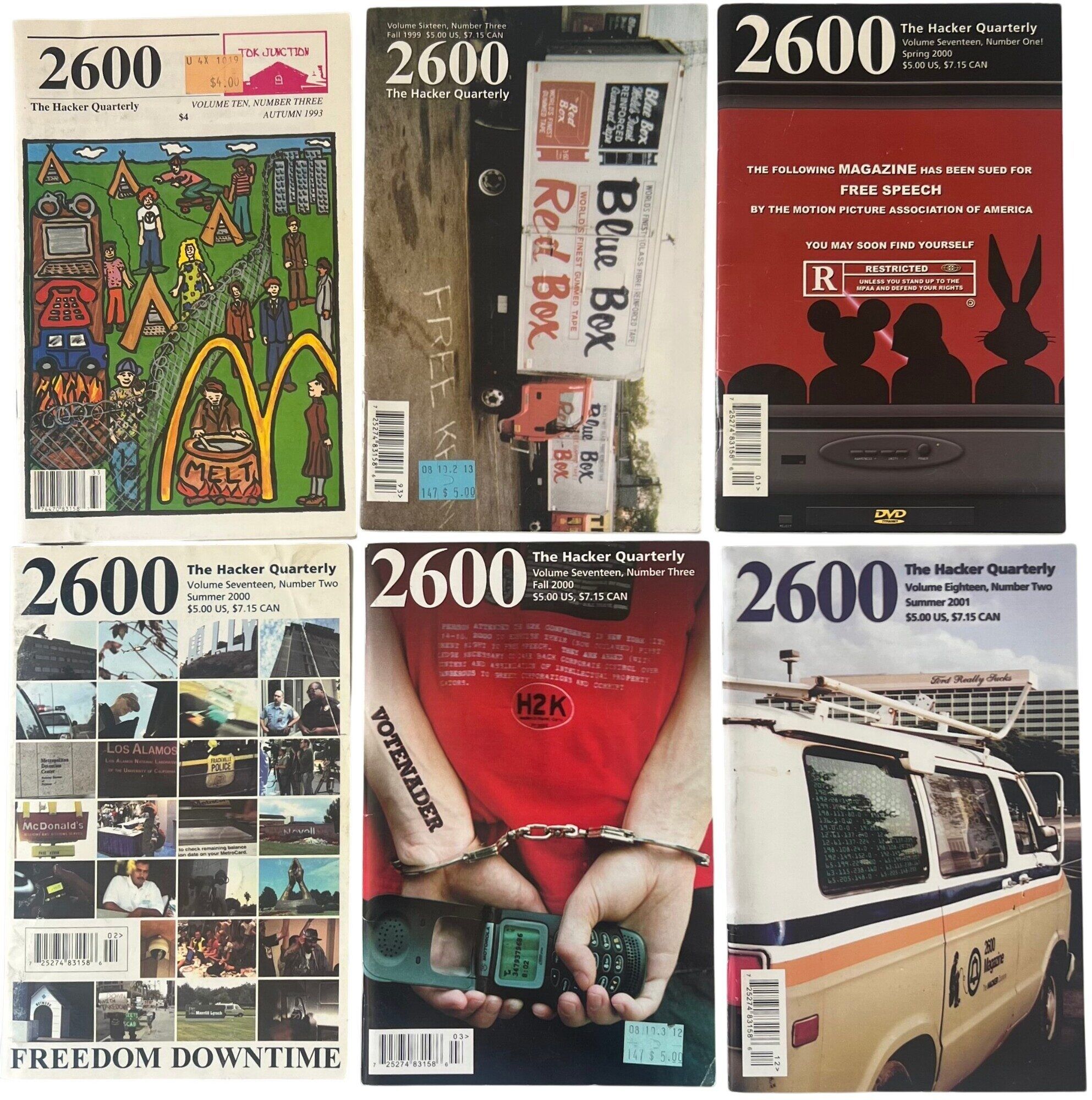
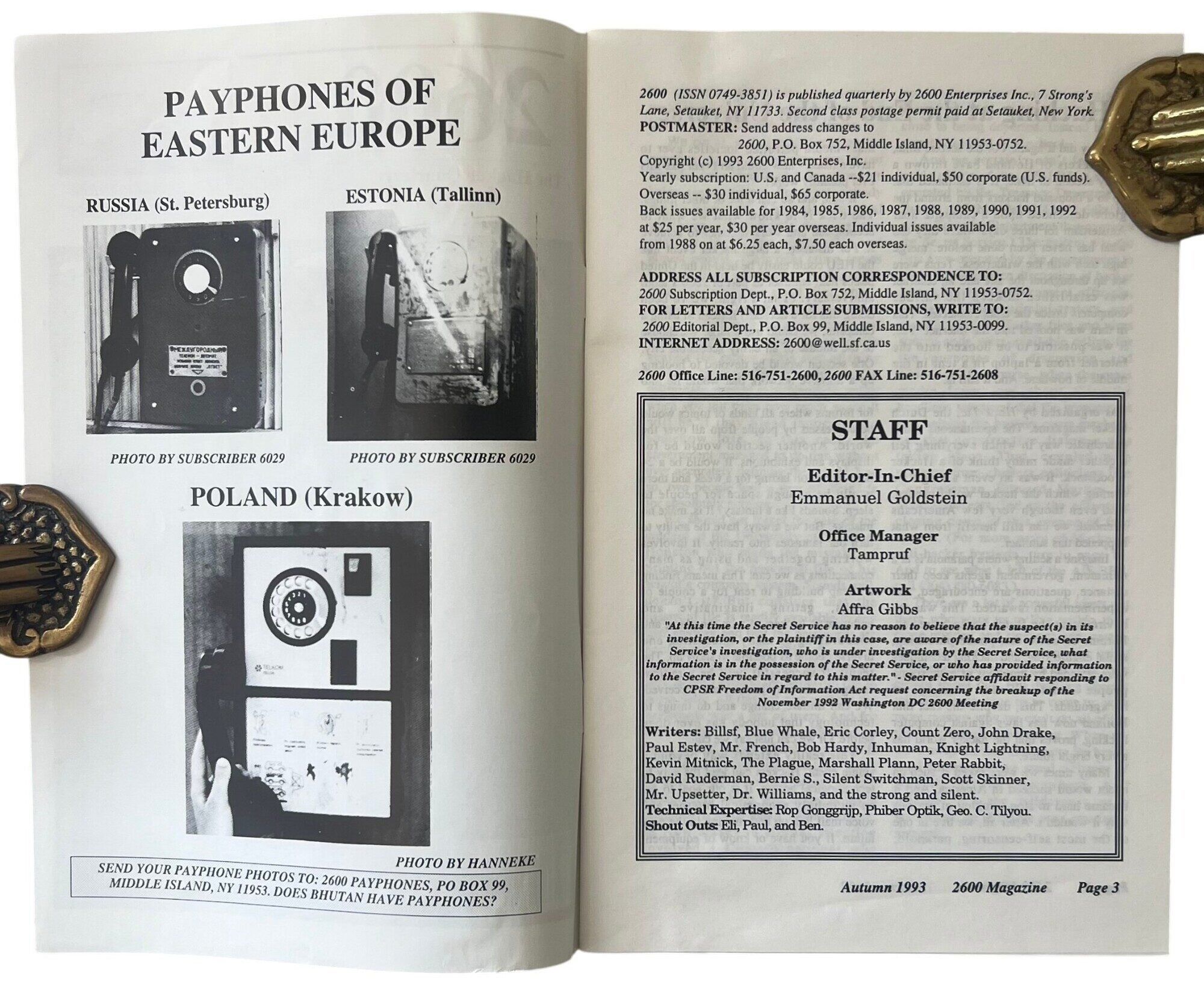
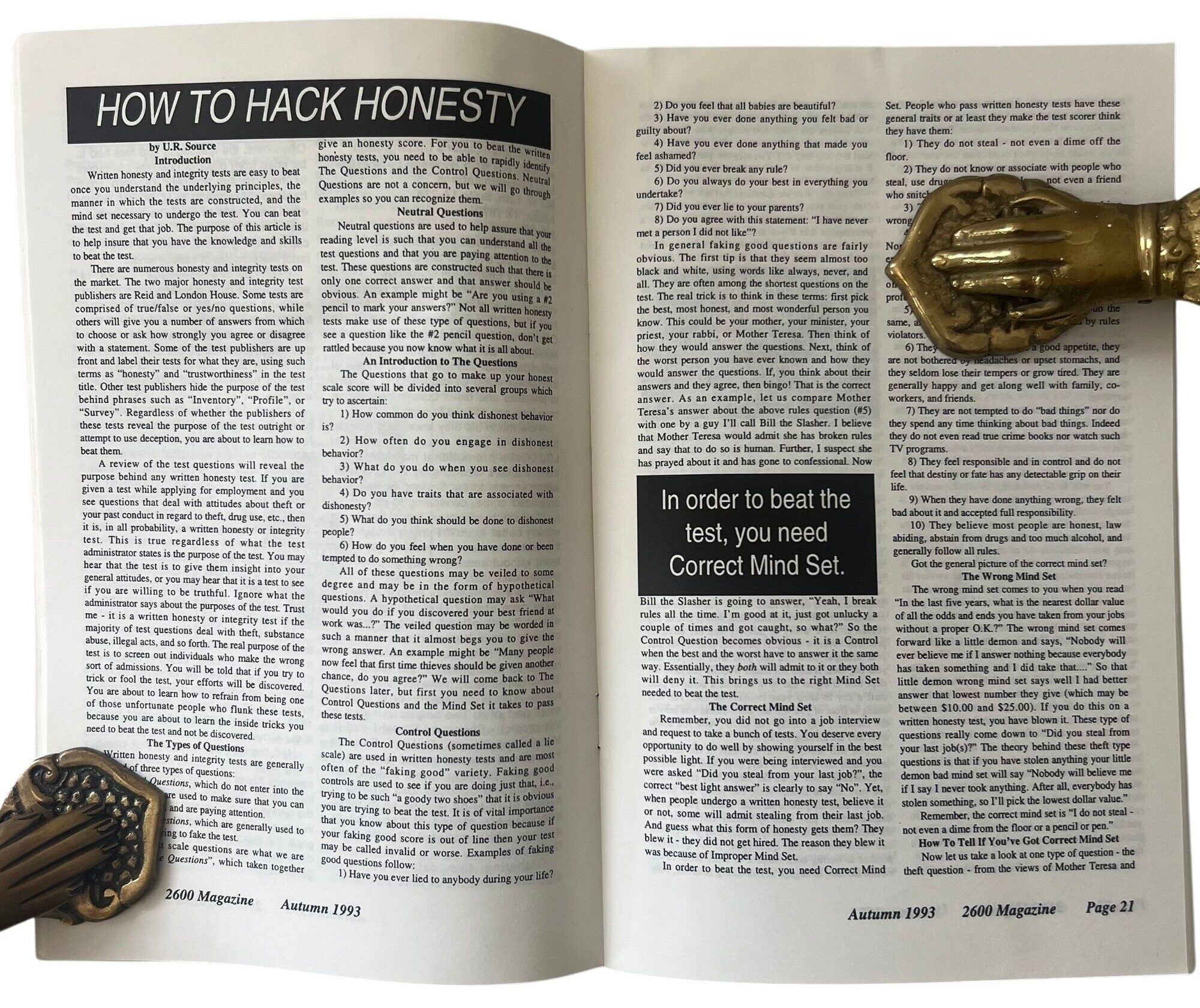
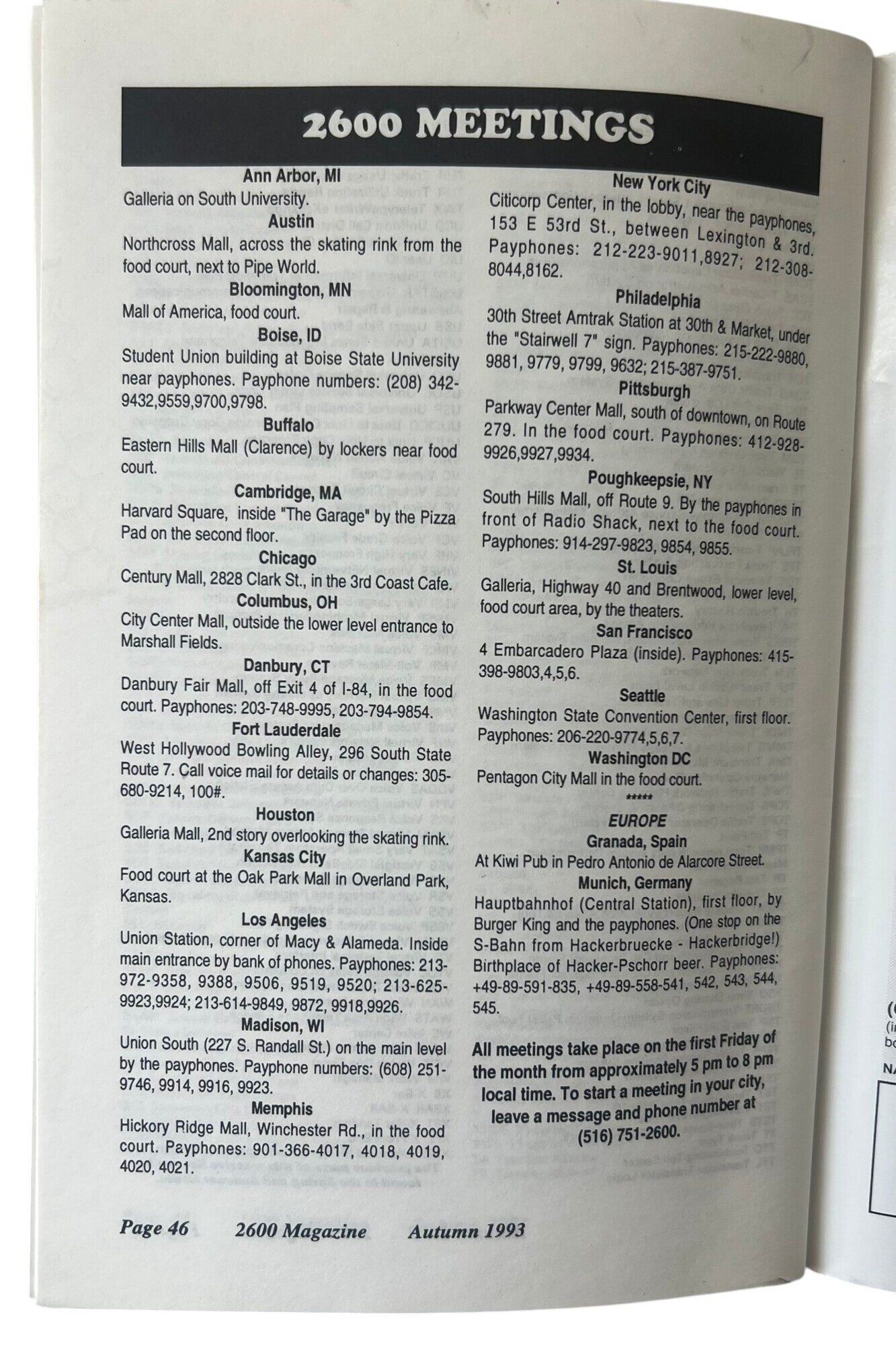
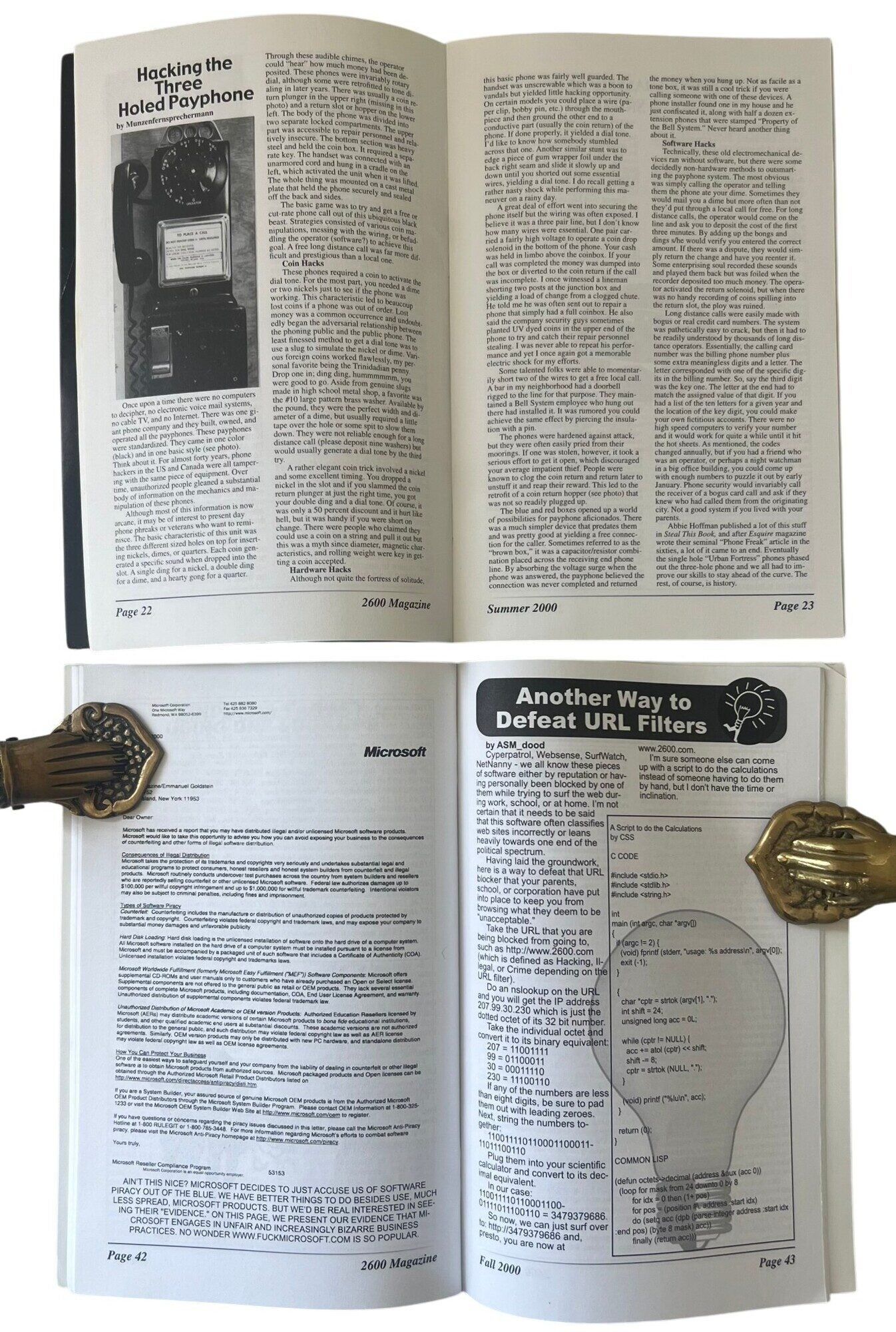
1993. 2600: The Hacker Quarterly archive of issues documenting the technical practice of hacking, ranging from phone phreaking, telephone and network investigation, encryption, and consumer hardware to the legal and political questions it raised, from the status of code as speech to state surveillance, as the magazine moved from the analog telephone network into the public Internet era. Eric Corley, publishing as Emmanuel Goldstein, began 2600 in 1984, and the magazine built a forum written by its readers around telephone switching systems, Internet protocols, underground computing culture, and disputes over civil liberties. This group preserves that transition through Autumn 1993 articles like "How to Hack Honesty" and a city by city "2600 Meetings" directory, then through 2000 and 2002 issues centered on Freedom Downtime, H2K, H2K2, DeCSS, URL filtering, biometrics, geospatial systems, and communications politics after 9/11. The DeCSS issues place the magazine inside Universal City Studios, Inc. v. Corley, named for publisher Eric Corley, where the Second Circuit upheld an injunction barring 2600 from posting or linking to DeCSS code under the DMCA.
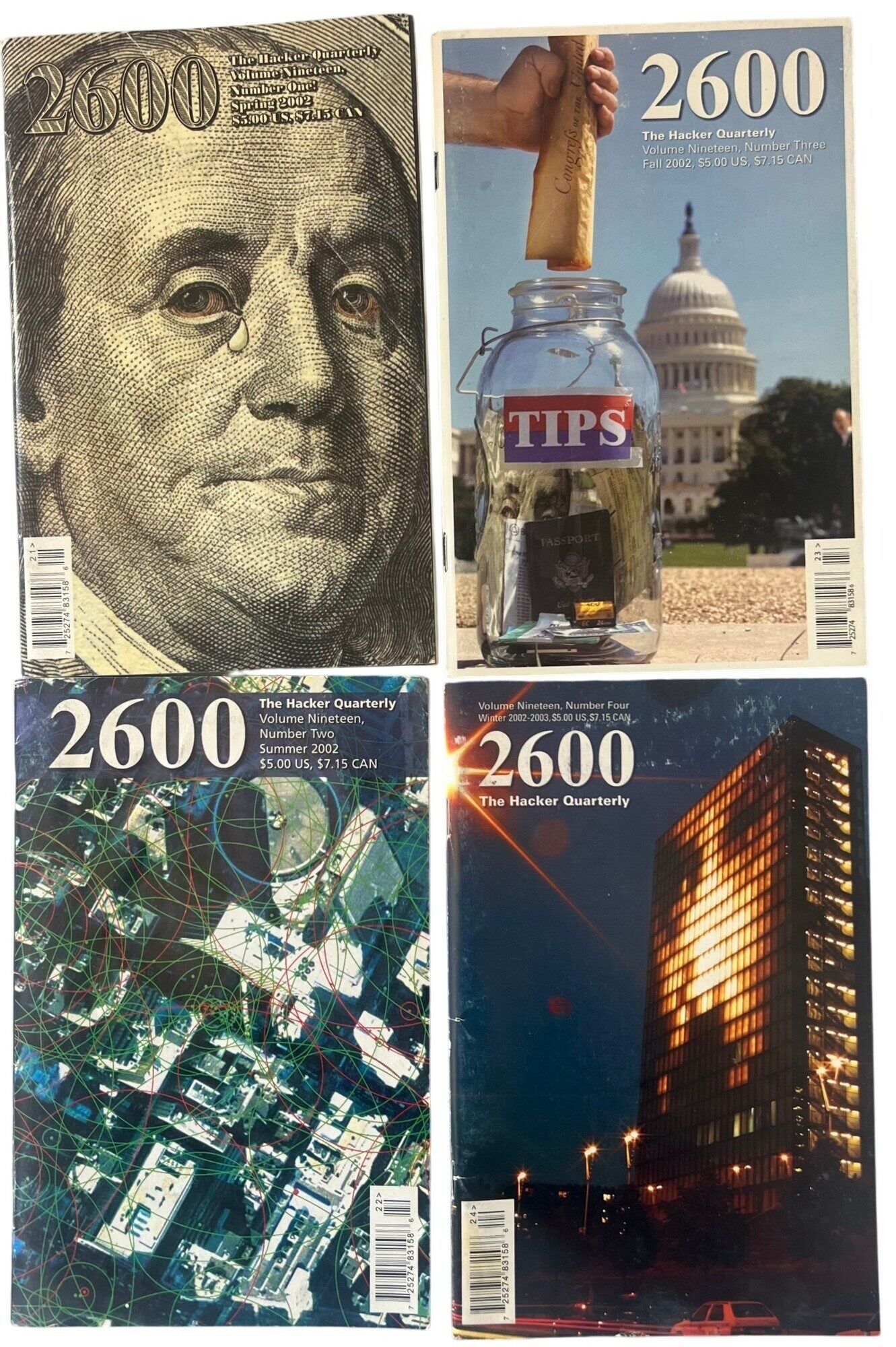
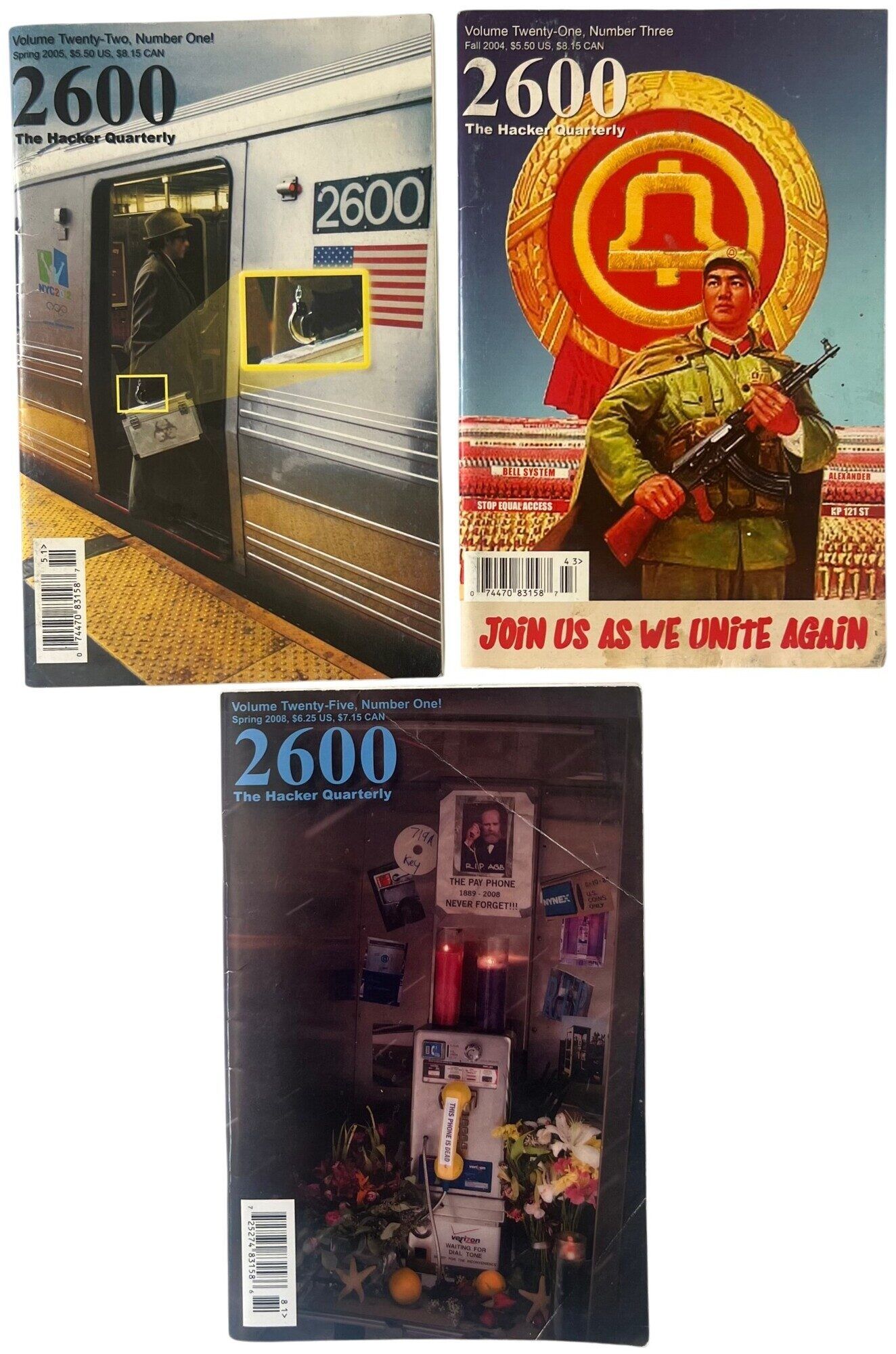
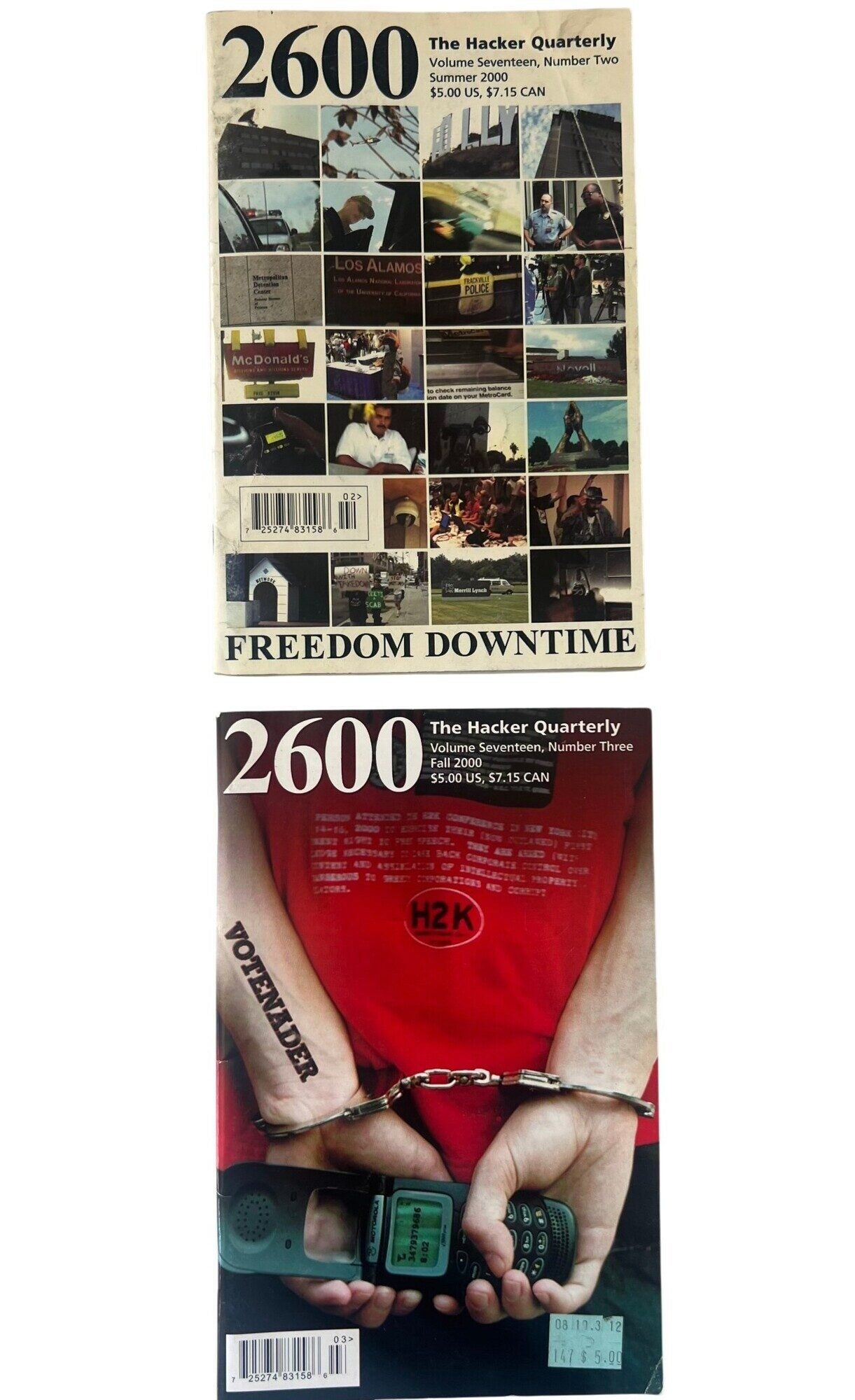
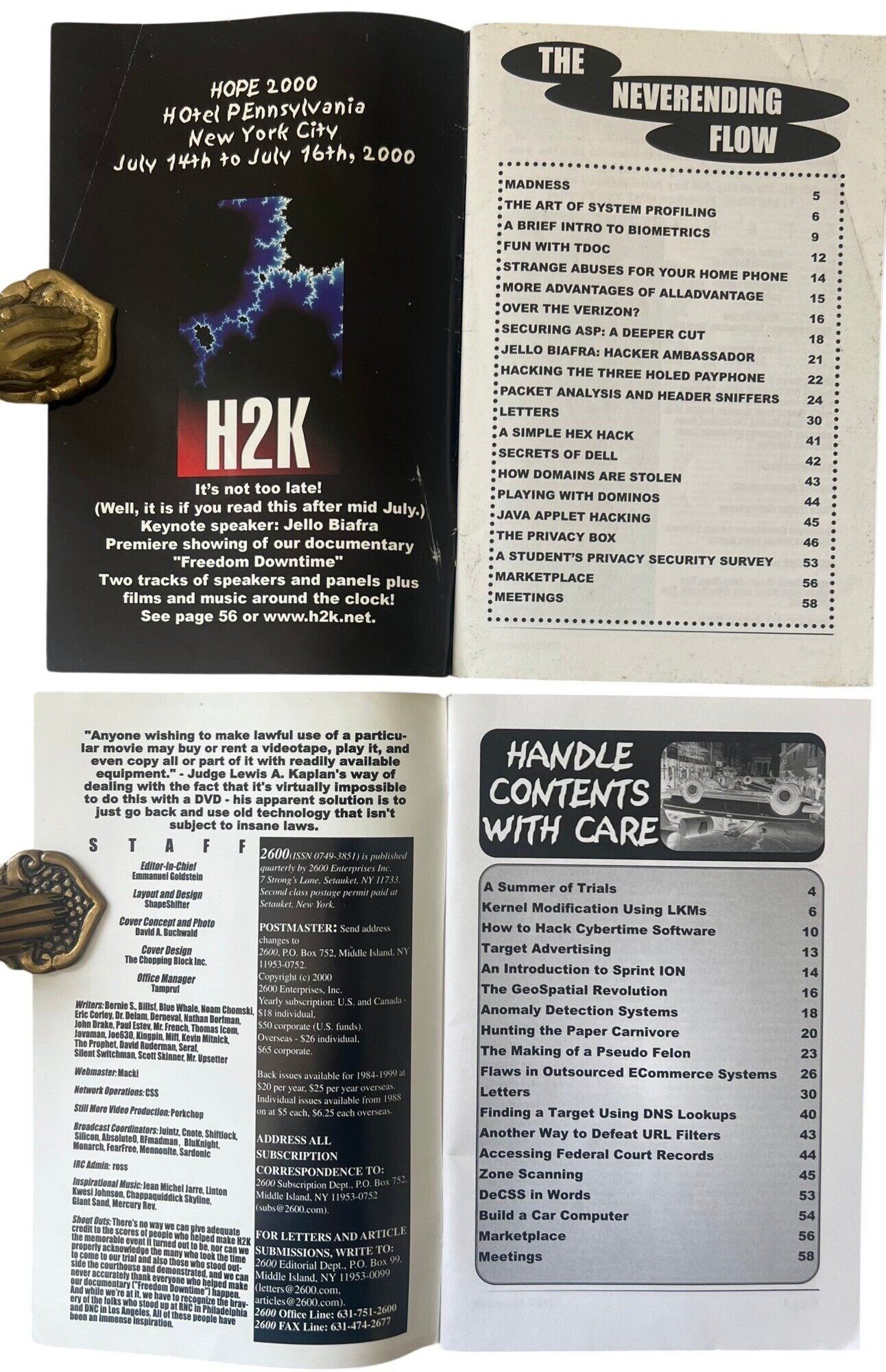
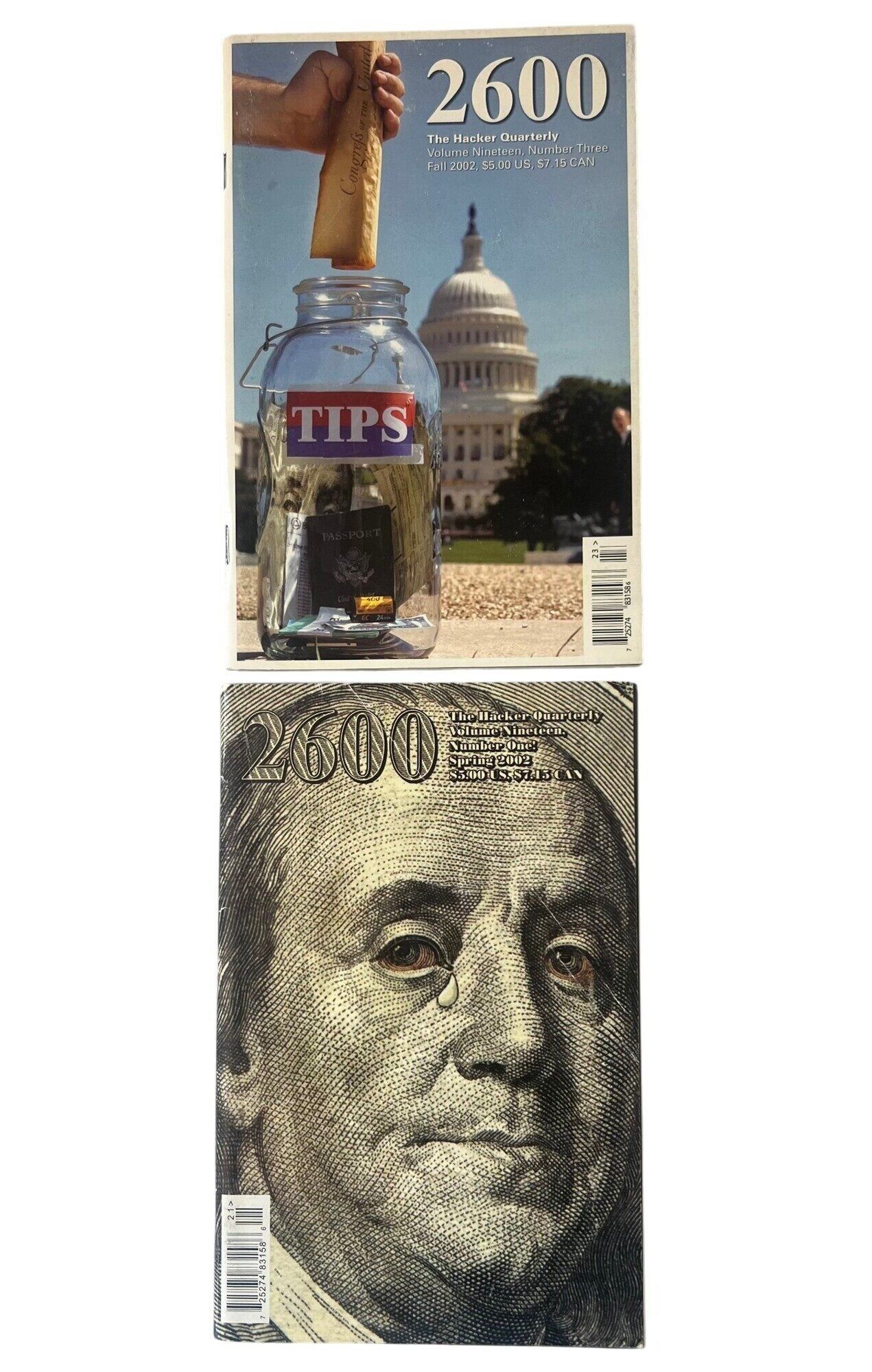
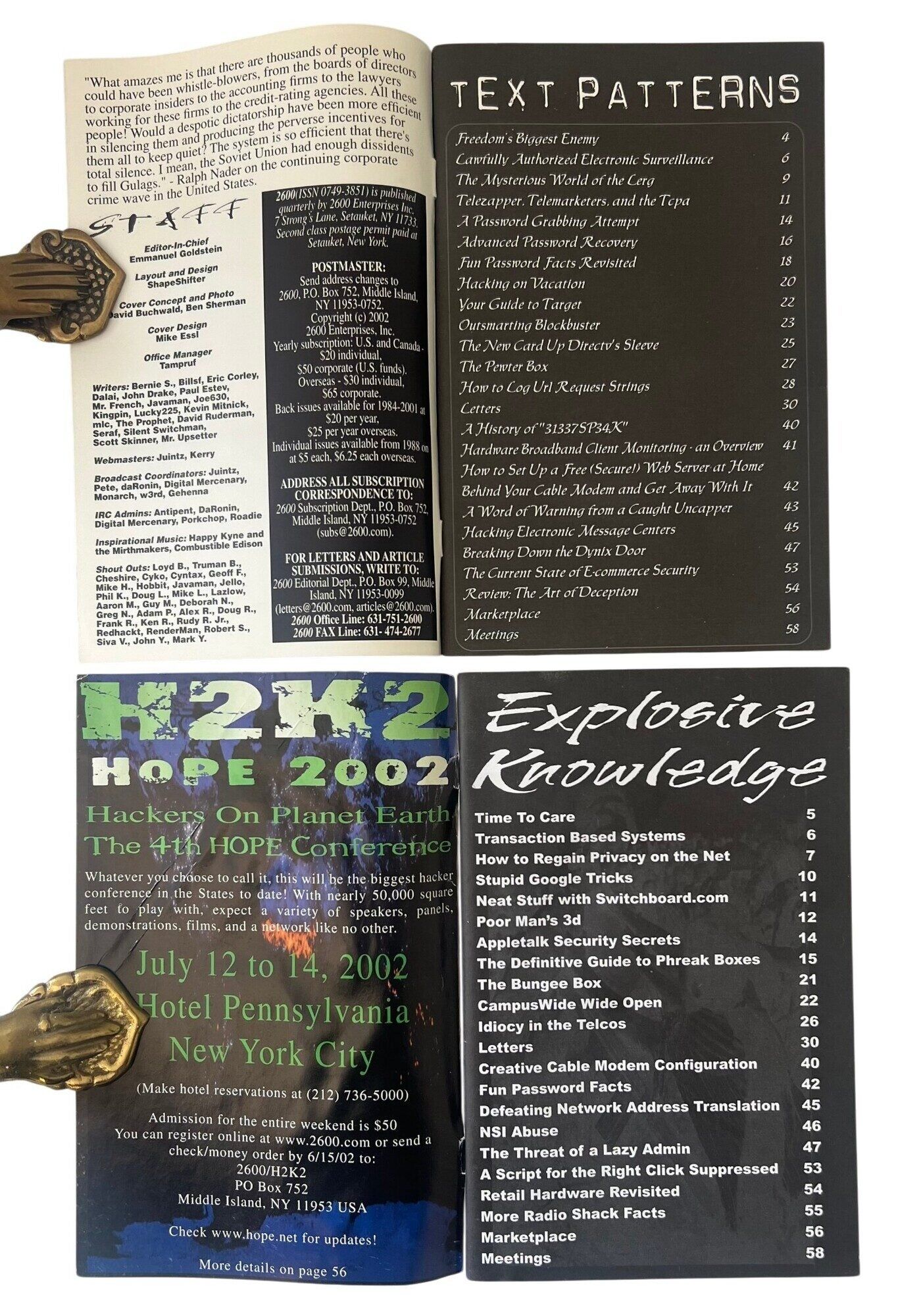
Eric Corley [Emmanuel Goldstein] (ed.). 2600: The Hacker Quarterly. Thirteen issues. Vol. 10, no. 3; Vol. 16, no. 3; Vol. 17, nos. 1-3; Vol. 18, no. 2; Vol. 19, nos. 1-4; Vol. 21, no. 3; Vol. 22, no. 1; Vol. 25, no. 1. Setauket and Middle Island, NY: 2600 Enterprises, 1993-2008. The Autumn 1993 issue lists Emmanuel Goldstein as editor-in-chief and reproduces a Secret Service statement quoted in response to a CPSR Freedom of Information Act request concerning the breakup of the November 1992 Washington DC 2600 meeting. Interior contents include "Hacking at the End of the Universe," "The Wheel Cipher," "Caller ID Technicalities," "How to Hack Honesty," and "The Last of the Acronym List," with the meeting page naming locations from Ann Arbor, Cambridge, Chicago, Los Angeles, New York City, Philadelphia, San Francisco, Seattle, and Washington DC to Granada and Munich. Later issues carry covers and contents tied to Freedom Downtime, "A Summer of Trials," "DeCSS in Words," "Kernel Modification Using LKMs," "Another Way to Defeat URL Filters," "Hacking the Three Holed Payphone," "The GeoSpatial Revolution," "How to Regain Privacy on the Net," and a review of Mitnick's The Art of Deception, with H2K at the Hotel Pennsylvania in July 2000 and H2K2 there in July 2002.
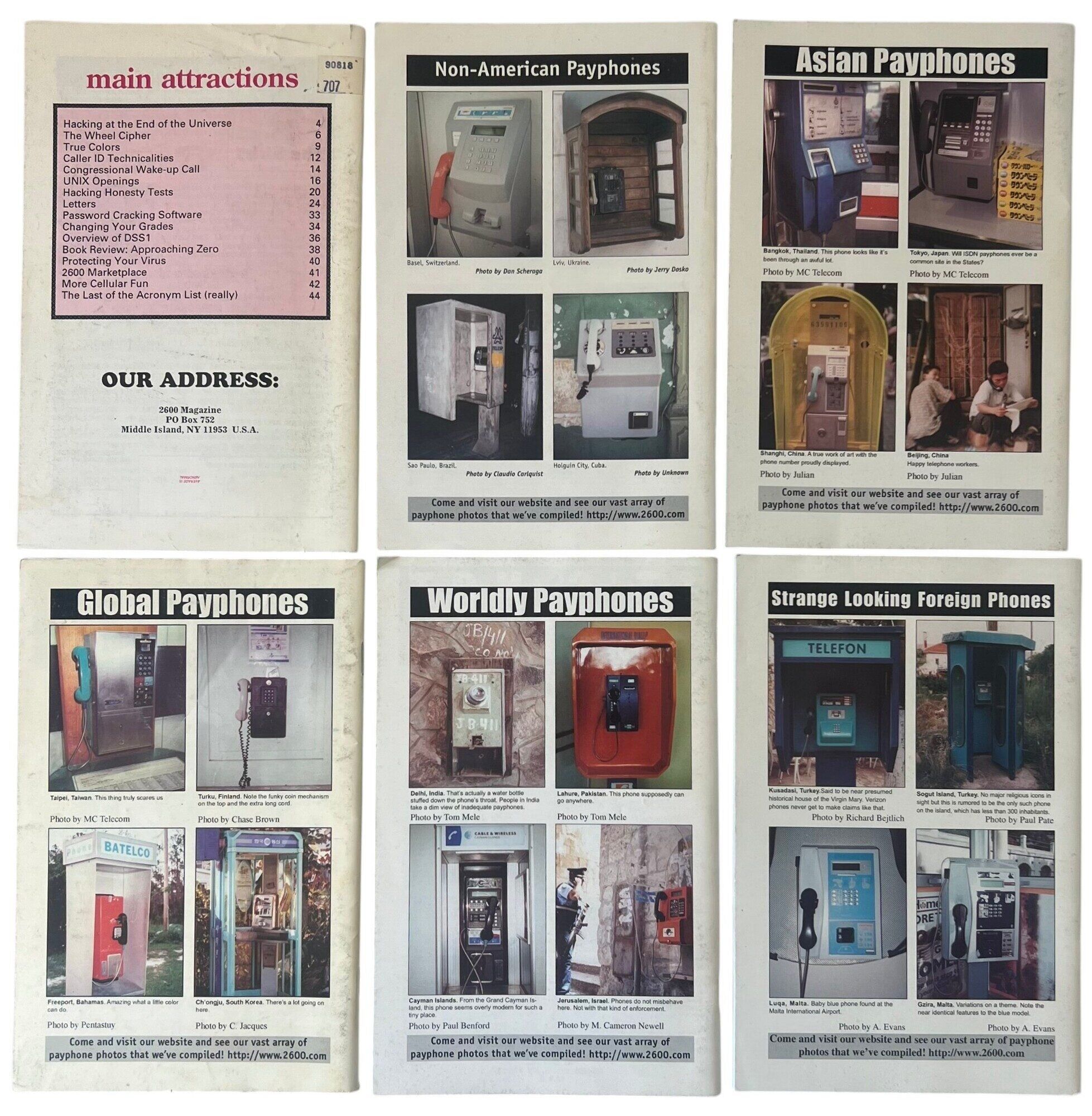
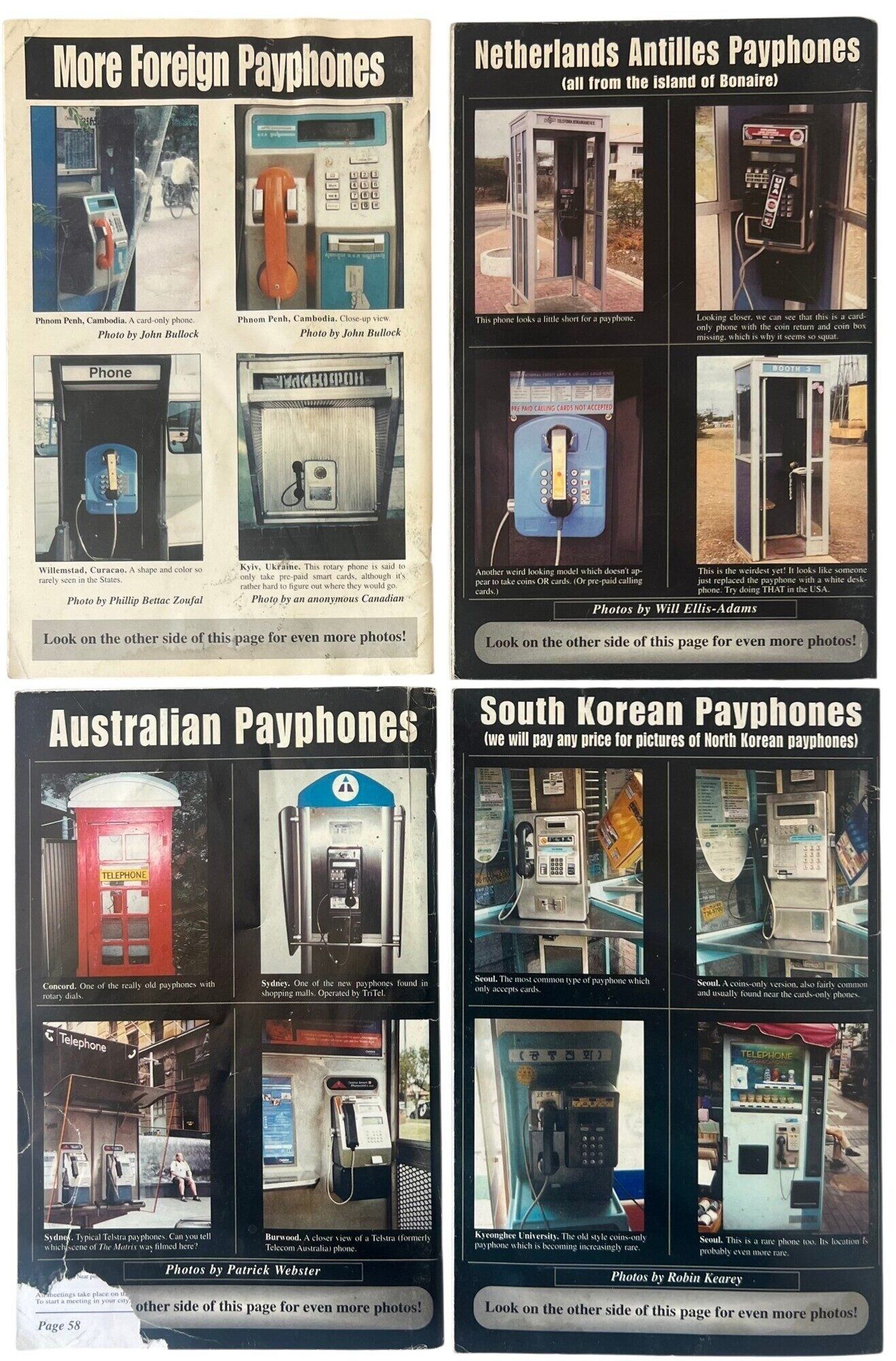
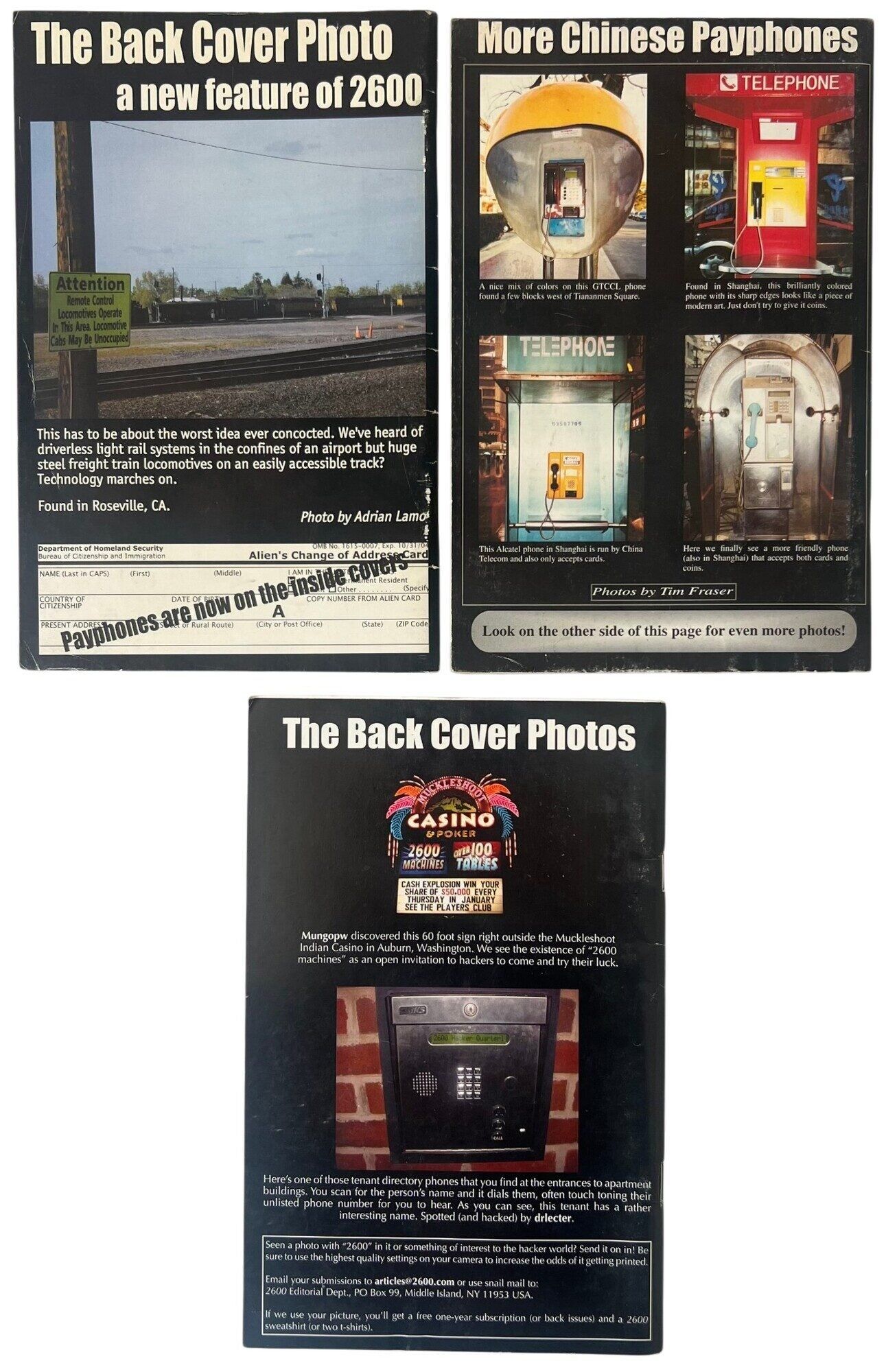
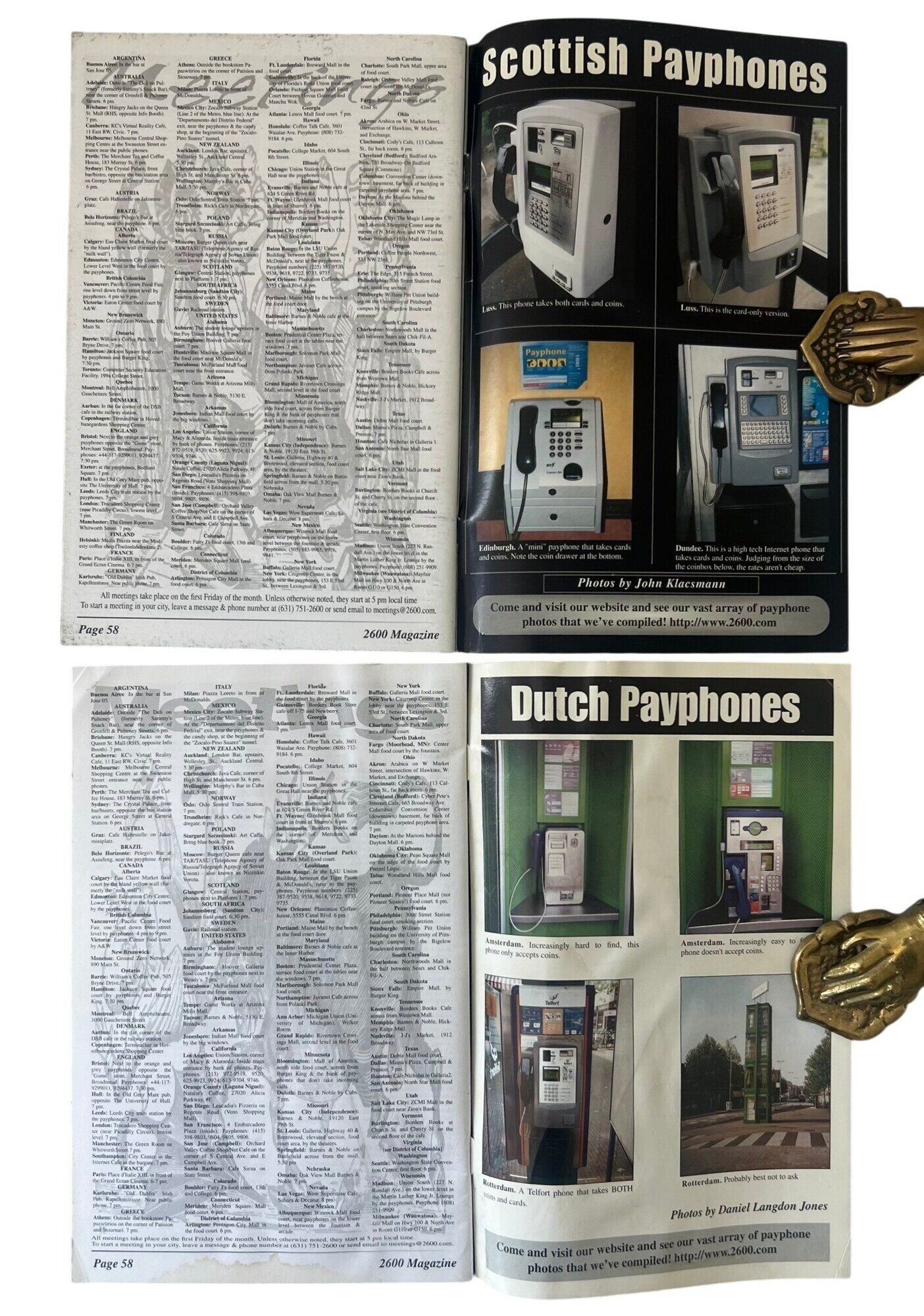
The run records a subculture that documented infrastructure at street level while contesting the legal and corporate control of digital information. Its recurring payphone features gather subscriber-supplied images and captions from Russia, Estonia, Poland, Switzerland, Ukraine, Brazil, Cuba, Thailand, Japan, China, Taiwan, Finland, the Bahamas, South Korea, Turkey, Malta, the Netherlands Antilles, and Australia, turning telephone hardware into a geographic index of communications access and technological change. The HOPE material connects the periodical to the conference series 2600 has sponsored since 1994, a public gathering point for hackers, journalists, activists, and technologists. Covers and interiors show handling wear, rubbing, creasing, toning, corner wear, and some heavier cover stress to individual issues; text blocks remain usable and the issues are intact overall. Overall good condition. The group preserves the print record of hacker culture at the moment when payphones, DVDs, courtrooms, hotel conferences, and Internet filtering all became contested sites of technical knowledge and public speech.
Eric Corley [Emmanuel Goldstein] (ed.). 2600: The Hacker Quarterly. Thirteen issues. Vol. 10, no. 3; Vol. 16, no. 3; Vol. 17, nos. 1-3; Vol. 18, no. 2; Vol. 19, nos. 1-4; Vol. 21, no. 3; Vol. 22, no. 1; Vol. 25, no. 1. Setauket and Middle Island, NY: 2600 Enterprises, 1993-2008. The Autumn 1993 issue lists Emmanuel Goldstein as editor-in-chief and reproduces a Secret Service statement quoted in response to a CPSR Freedom of Information Act request concerning the breakup of the November 1992 Washington DC 2600 meeting. Interior contents include "Hacking at the End of the Universe," "The Wheel Cipher," "Caller ID Technicalities," "How to Hack Honesty," and "The Last of the Acronym List," with the meeting page naming locations from Ann Arbor, Cambridge, Chicago, Los Angeles, New York City, Philadelphia, San Francisco, Seattle, and Washington DC to Granada and Munich. Later issues carry covers and contents tied to Freedom Downtime, "A Summer of Trials," "DeCSS in Words," "Kernel Modification Using LKMs," "Another Way to Defeat URL Filters," "Hacking the Three Holed Payphone," "The GeoSpatial Revolution," "How to Regain Privacy on the Net," and a review of Mitnick's The Art of Deception, with H2K at the Hotel Pennsylvania in July 2000 and H2K2 there in July 2002.
The run records a subculture that documented infrastructure at street level while contesting the legal and corporate control of digital information. Its recurring payphone features gather subscriber-supplied images and captions from Russia, Estonia, Poland, Switzerland, Ukraine, Brazil, Cuba, Thailand, Japan, China, Taiwan, Finland, the Bahamas, South Korea, Turkey, Malta, the Netherlands Antilles, and Australia, turning telephone hardware into a geographic index of communications access and technological change. The HOPE material connects the periodical to the conference series 2600 has sponsored since 1994, a public gathering point for hackers, journalists, activists, and technologists. Covers and interiors show handling wear, rubbing, creasing, toning, corner wear, and some heavier cover stress to individual issues; text blocks remain usable and the issues are intact overall. Overall good condition. The group preserves the print record of hacker culture at the moment when payphones, DVDs, courtrooms, hotel conferences, and Internet filtering all became contested sites of technical knowledge and public speech.
Details
Title
2600: The Hacker Quarterly Archive Documenting Hacker Culture, Phone Phreaking, Encryption, and the Digital Free Speech Battles of the Early Internet, 1993-2008
Author
2600: The Hacker Quarterly
Condition
Unknown
Date
1993