

Kroll's Stereoskop-Bilder zum Gebrauch fur Schielende
[Stereoscopical Pictures for the use of squint-eyed people.] [A Set of 26 Stereoscopic Cards with a Collapsible Stereoscope Viewer].
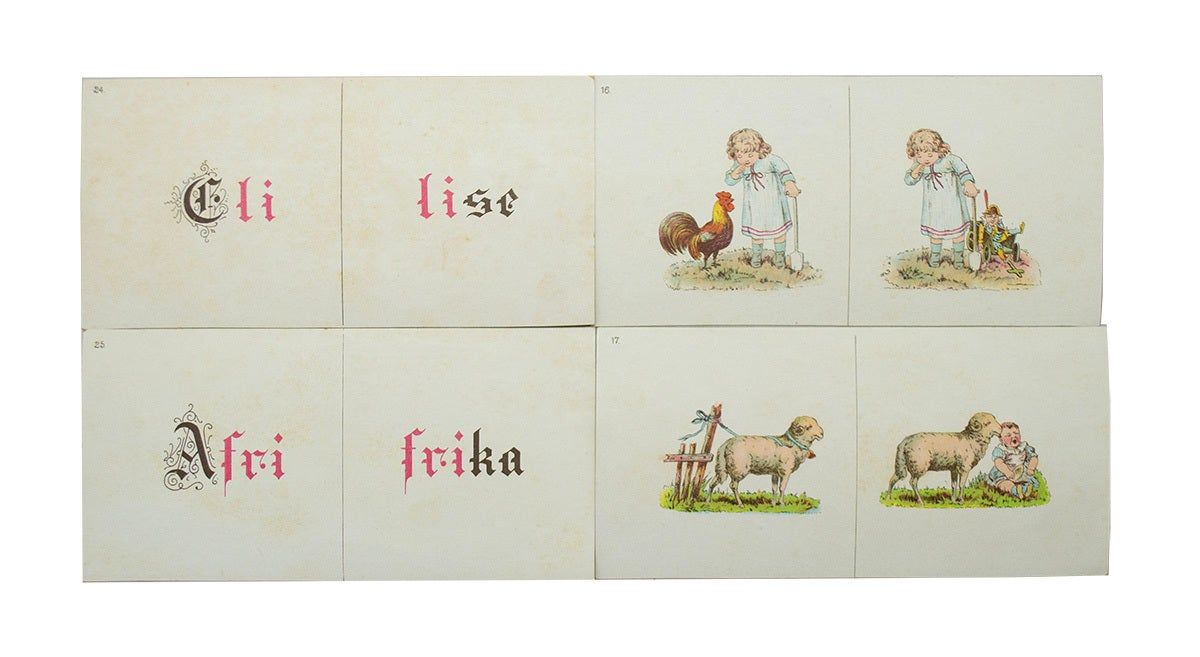
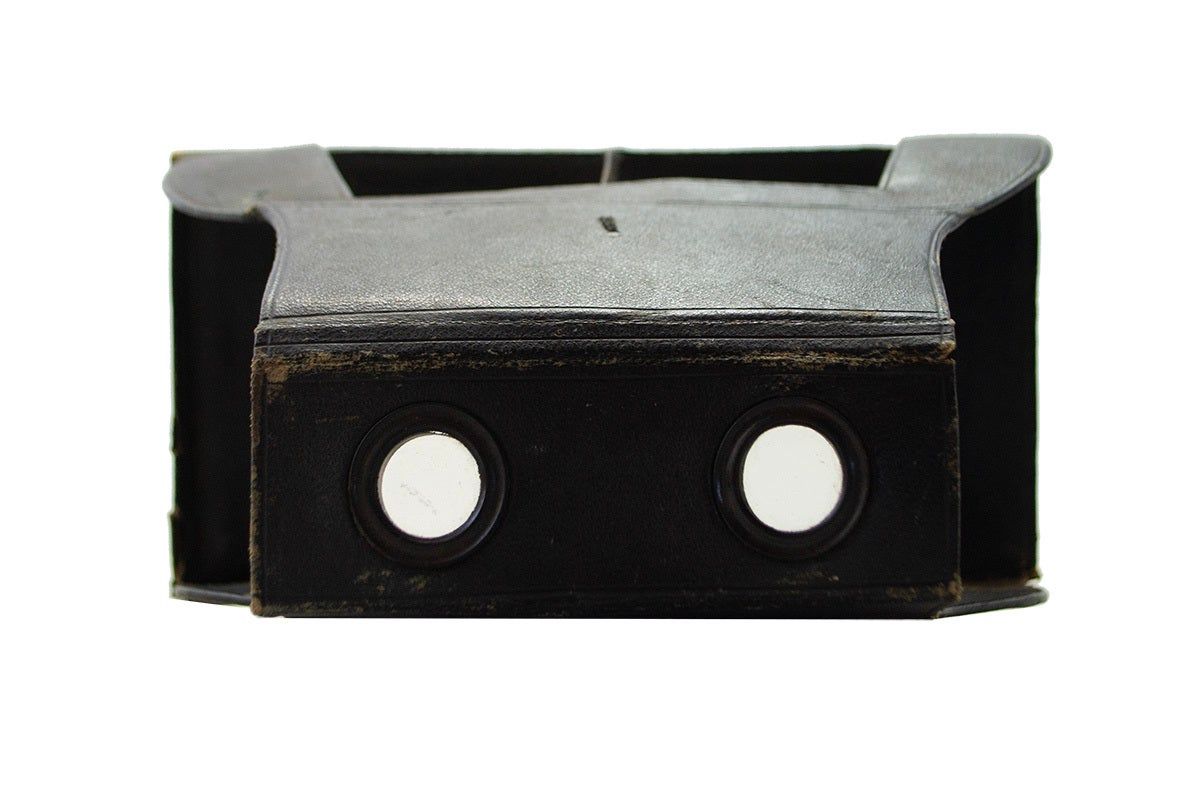
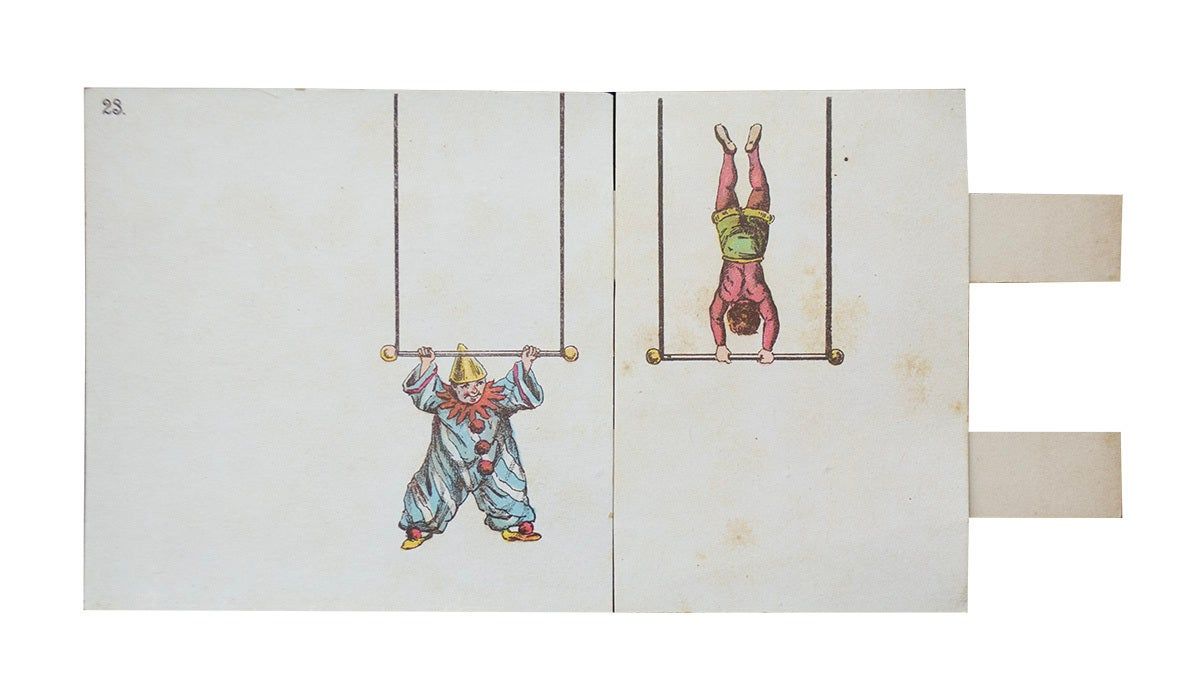
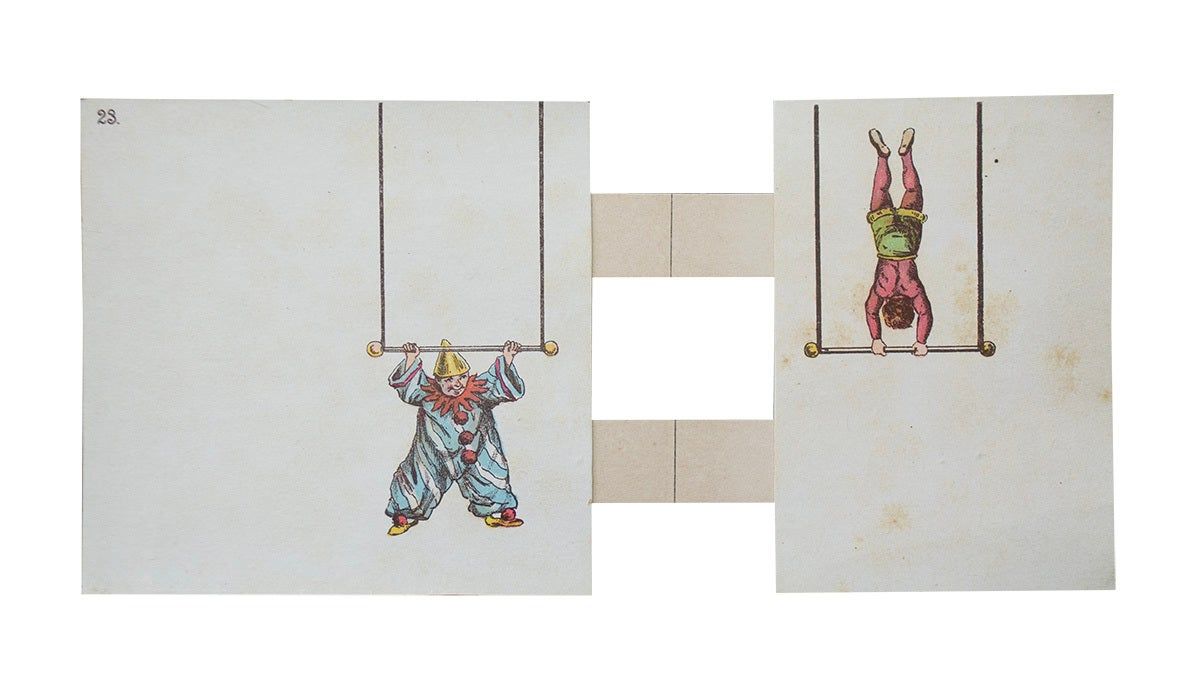
- [Germany]: [Verlag von Leopold Voss], 1895
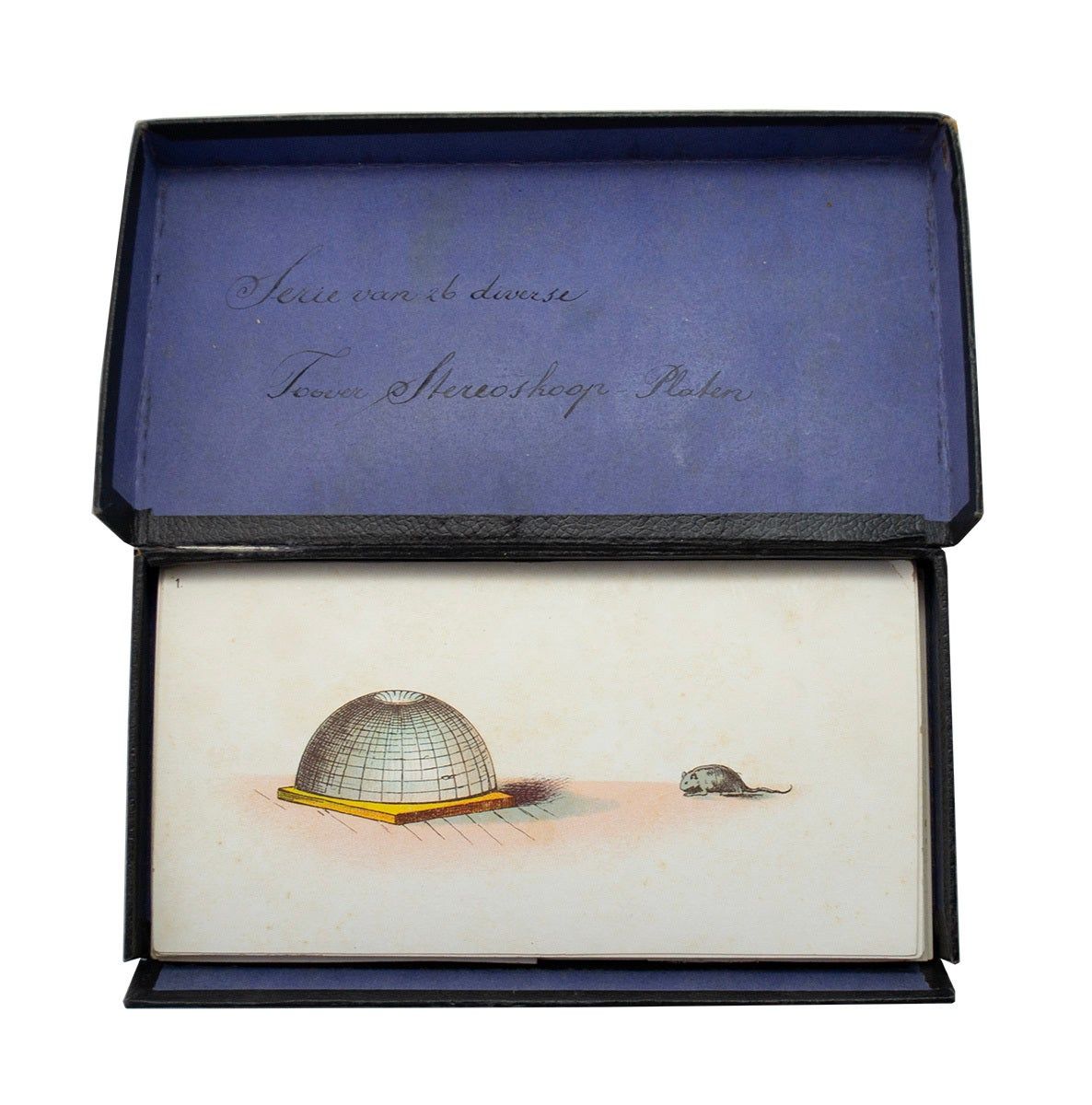
[Germany]: [Verlag von Leopold Voss], 1895. STEREOSCOPIC CARDS. Stereoscopical Pictures for the use of squint-eyed people.] [A Set of 26 Stereoscopic Cards with a Collapsible Stereoscope Viewer]. [Germany: Verlag von Leopold Voss, n.d.c.a. 1895].
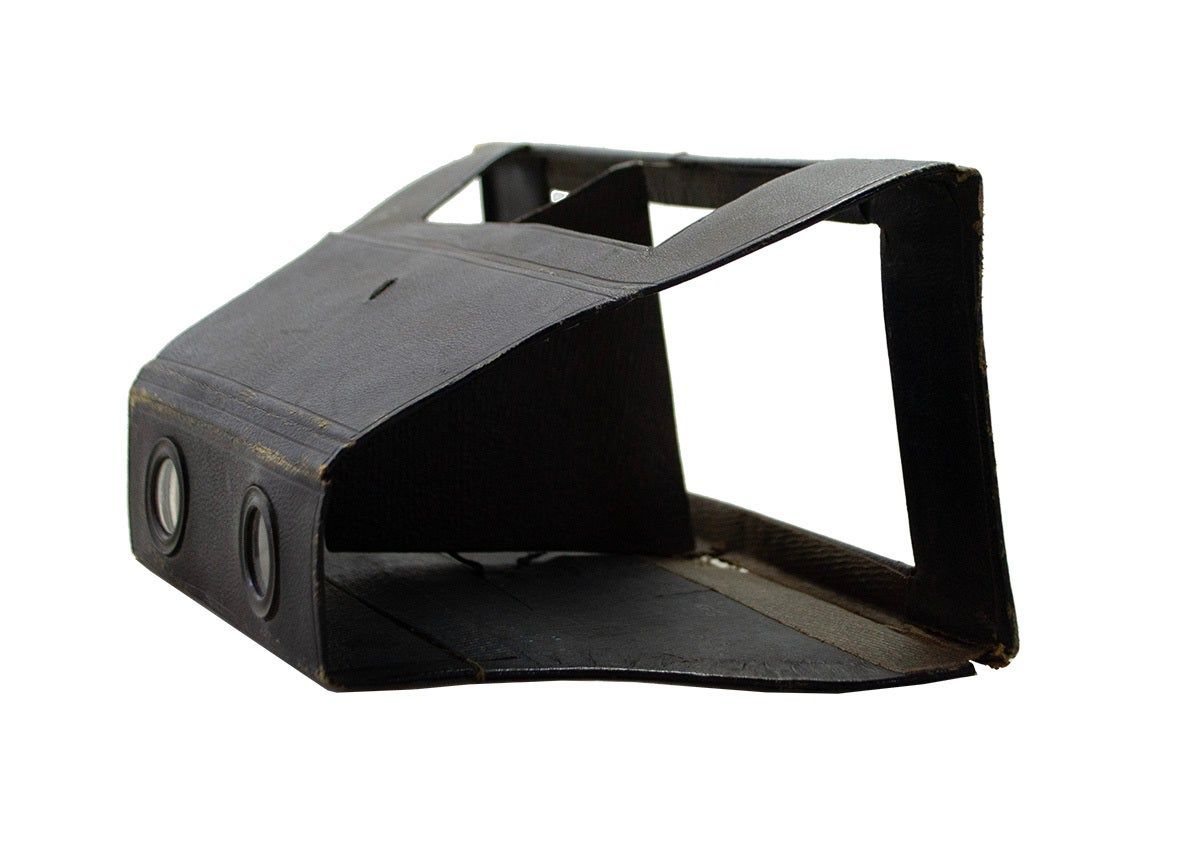
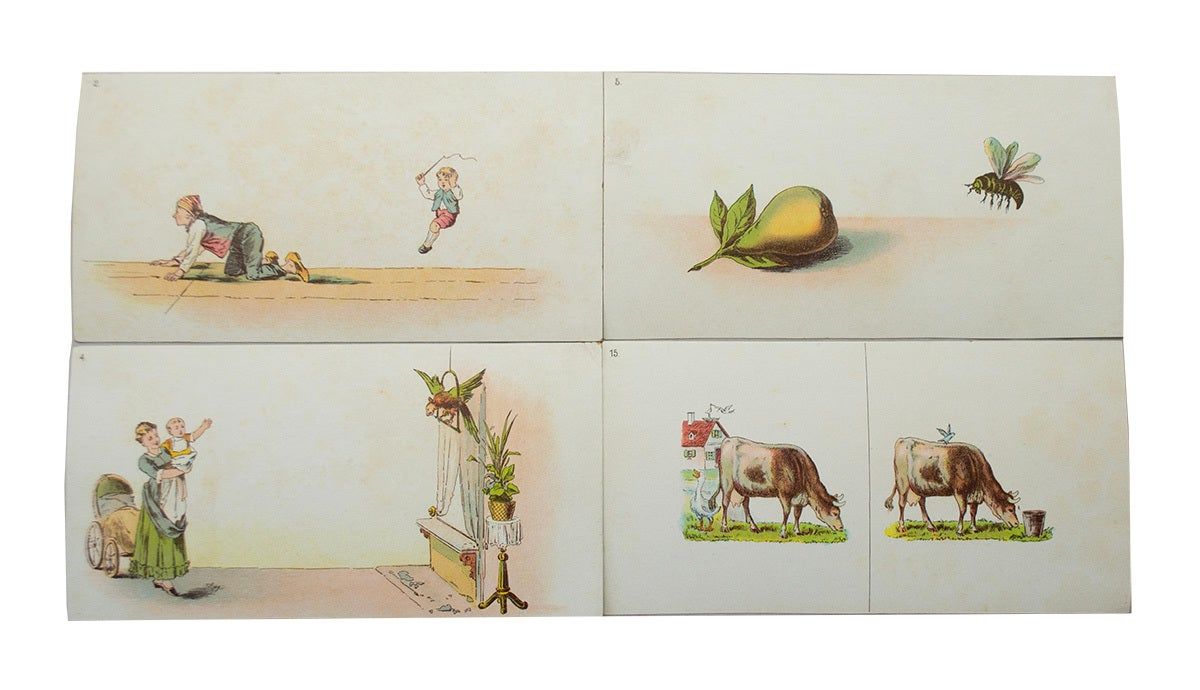
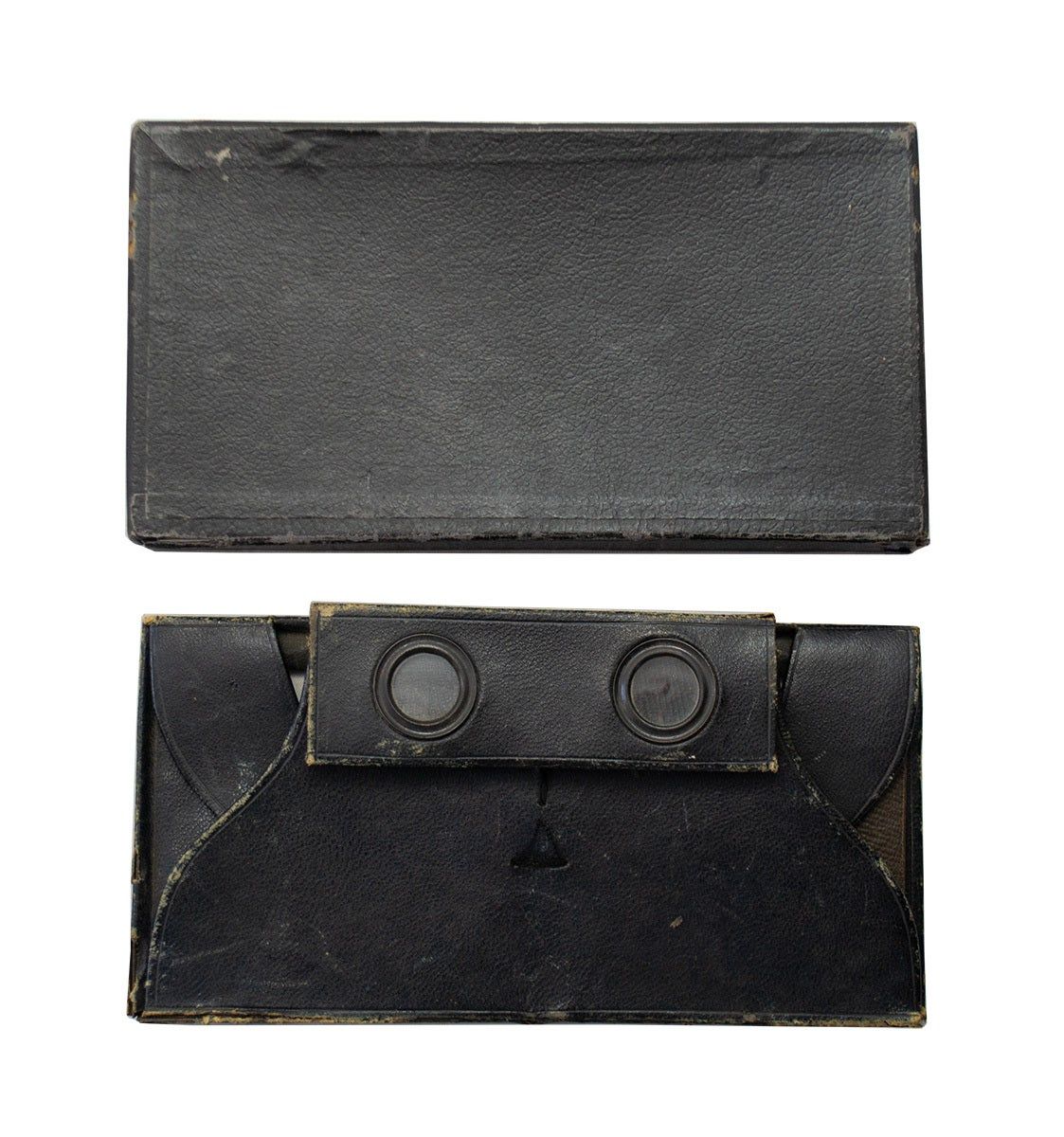
Early edition, possibly 3rd revised edition. A set of 26 lovely chromolithograph stereoscopic cards, including one which allows for two sides to be slid back and forth. Accompanied by a collapsible Stereoscope with which to view the cards. This was used in the diagnosis and theraputic care of children with optical difficulties. (7 1/4 x 3 3/4 inches; 190 x 95 mm). Each card is numbered 1-26. The cards are housed in a small faux leather box. Box with the stamp of "August. F. W. Vogt of Amsterdam." The stereoscope is in matching faux leather and is able to fold flat. A very nice, attractive set with cute color pictures mainly of animals and children. A few cards with letters that create the names Elise, Africa and Rafael. Previous owner's inscription on inside on the box. Some minor rubbing to edges of the box and the stereoscope. Overall very good.
This set, though without any printed labels or the instructional leaflet matches other copies of Kroll's and can be identified as possible the third revised edition as this was the first edition to include a sliding card according to a listing in 1896's "Zeitschrift für Psychologie und Physiologie der Sinnesorgane 10." (Journal of Psychology and Physiology of the Sense Organs 10, Published by Arthur Konig). According to Konig,
"The reappearance of a new edition of these stereoscopic images attests to the wide circulation they have achieved. They are designed for use by children with intermittent strabismus, who are intended- through exercises performed with the aid of these plates-to gradually and permanently correct the faulty alignment of their eyes. In preparing this new edition, the guiding principle was, in essence, to stimulate the impulse toward the stereoscopic fusion of the image halves more strongly than in previous editions. Serving this purpose are 12 new plates, which contain- partly- images featuring congruent main figures alongside incongruent secondary figures, and- partly- text-based exercises designed according to the same fundamental principle. A newly added image allows for the adjustment of the distance between its two halves.
"A stereoscope or stereo viewer is a device used for viewing a pair of stereoscopic, separate images mounted on a stereograph card. These images depict a left-eye and right-eye view of the same scene hosted on a card that when viewed through a stereoscope appear as a single three-dimensional image. This apparatus consisted of two prismatic lenses and a wooden extension, which held the stereo card at the correct distance from the viewer. The lenses made the image appear larger and more distant, as well as shifting their position so that the two images fuse into one stereo window. A view-limiting feature such as a divider is usually present on stereoscopes to prevent each eye by being distracted by the image intended for the other eye. Sir David Brewster debuted his lenticular stereoscope at the Great Exhibition of 1851 in England. Brewster is credited as the inventor of the stereoscope and stereographs intended for use by the general public. Oliver Wendell Holmes made further contributions to the stereoscope by introducing a handheld stereoscopic viewer in 1861 that was both streamlined and more economical than what had previously been available. The hype over this novel form of entertainment led to an industry in producing images for public consumption. Stereographs, stereoviews, stereo cards, and stereo pairs were produced and sold by the thousands. They usually included the pair of images on piece of cardstock of cardboard, along with some explanatory text. Stereographers traveled the world to capture images that would appear in 3D back home on the Victorian parlor. Subjects included famous people and places, historic events, dramatic recreations, beautiful settings, and flower arrangements, among other things. By the last quarter of the nineteenth century, viewing stereographs was a popular form of entertainment in Victorian homes. Almost as common as a television set is today, each American home typically had a collection of stereographs and a hand-held or table-stand stereoscope through which to view them." (Smithsonian Museum).
HBS 69607.
$2,000.
Early edition, possibly 3rd revised edition. A set of 26 lovely chromolithograph stereoscopic cards, including one which allows for two sides to be slid back and forth. Accompanied by a collapsible Stereoscope with which to view the cards. This was used in the diagnosis and theraputic care of children with optical difficulties. (7 1/4 x 3 3/4 inches; 190 x 95 mm). Each card is numbered 1-26. The cards are housed in a small faux leather box. Box with the stamp of "August. F. W. Vogt of Amsterdam." The stereoscope is in matching faux leather and is able to fold flat. A very nice, attractive set with cute color pictures mainly of animals and children. A few cards with letters that create the names Elise, Africa and Rafael. Previous owner's inscription on inside on the box. Some minor rubbing to edges of the box and the stereoscope. Overall very good.
This set, though without any printed labels or the instructional leaflet matches other copies of Kroll's and can be identified as possible the third revised edition as this was the first edition to include a sliding card according to a listing in 1896's "Zeitschrift für Psychologie und Physiologie der Sinnesorgane 10." (Journal of Psychology and Physiology of the Sense Organs 10, Published by Arthur Konig). According to Konig,
"The reappearance of a new edition of these stereoscopic images attests to the wide circulation they have achieved. They are designed for use by children with intermittent strabismus, who are intended- through exercises performed with the aid of these plates-to gradually and permanently correct the faulty alignment of their eyes. In preparing this new edition, the guiding principle was, in essence, to stimulate the impulse toward the stereoscopic fusion of the image halves more strongly than in previous editions. Serving this purpose are 12 new plates, which contain- partly- images featuring congruent main figures alongside incongruent secondary figures, and- partly- text-based exercises designed according to the same fundamental principle. A newly added image allows for the adjustment of the distance between its two halves.
"A stereoscope or stereo viewer is a device used for viewing a pair of stereoscopic, separate images mounted on a stereograph card. These images depict a left-eye and right-eye view of the same scene hosted on a card that when viewed through a stereoscope appear as a single three-dimensional image. This apparatus consisted of two prismatic lenses and a wooden extension, which held the stereo card at the correct distance from the viewer. The lenses made the image appear larger and more distant, as well as shifting their position so that the two images fuse into one stereo window. A view-limiting feature such as a divider is usually present on stereoscopes to prevent each eye by being distracted by the image intended for the other eye. Sir David Brewster debuted his lenticular stereoscope at the Great Exhibition of 1851 in England. Brewster is credited as the inventor of the stereoscope and stereographs intended for use by the general public. Oliver Wendell Holmes made further contributions to the stereoscope by introducing a handheld stereoscopic viewer in 1861 that was both streamlined and more economical than what had previously been available. The hype over this novel form of entertainment led to an industry in producing images for public consumption. Stereographs, stereoviews, stereo cards, and stereo pairs were produced and sold by the thousands. They usually included the pair of images on piece of cardstock of cardboard, along with some explanatory text. Stereographers traveled the world to capture images that would appear in 3D back home on the Victorian parlor. Subjects included famous people and places, historic events, dramatic recreations, beautiful settings, and flower arrangements, among other things. By the last quarter of the nineteenth century, viewing stereographs was a popular form of entertainment in Victorian homes. Almost as common as a television set is today, each American home typically had a collection of stereographs and a hand-held or table-stand stereoscope through which to view them." (Smithsonian Museum).
HBS 69607.
$2,000.
Details
Title
Kroll's Stereoskop-Bilder zum Gebrauch fur Schielende
Author
STEREOSCOPIC CARDS
Condition
Unknown
Publisher
[Verlag von Leopold Voss]: [Germany]
Date
1895