

Kyŏng-ŭn sŏngsaeng silgi 耕隱先生實紀 [True Record of Master Kyŏng-ŭn]
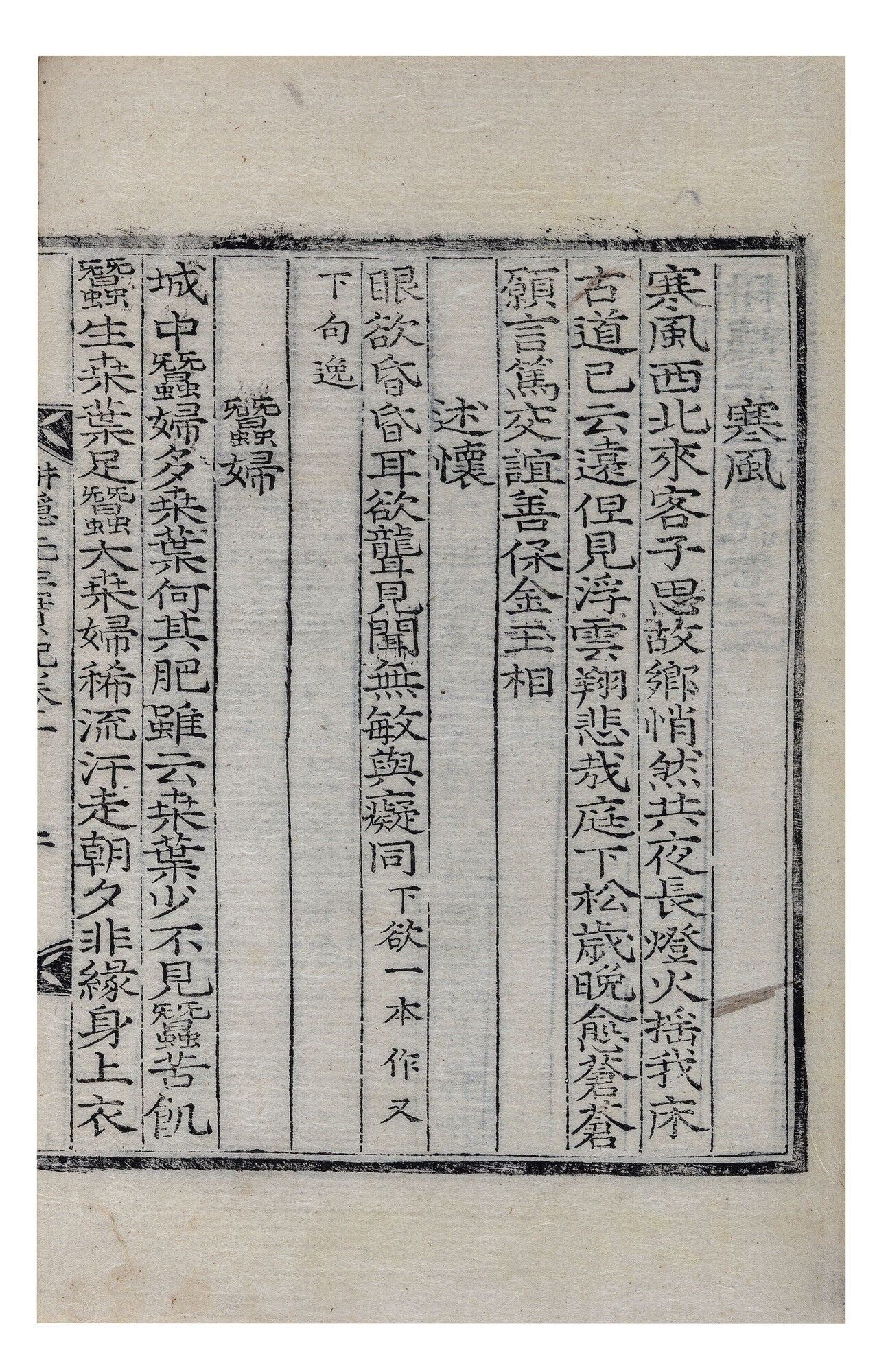
Compiled by Yi In-baek. 63 folding leaves. Three kwon in one vol. Large 8vo (302 x 204 mm.), orig. semi-stiff wrappers, new stitching. Korea: 1816.
A biographical record compiled and published in 1816 by Yi In-baek, preserving the literary works and official documents of his ancestor Yi Maeng-jŏn (1392-1480, pen-name Kyŏng-ŭn 耕隱, "Cultivating in Reclusion"). He was one of the "Six Survivors," six officials who disapproved of King Sejŏ (r. 1455-68) after the latter's usurpation of the throne from his nephew King Dangjong. These six scholarly officials did not die as martyrs but went into retiredment and avoided government service, unlike the "Six Martyrs of Loyalty" 生六臣, who were executed in 1456 for plotting against King Sejŏ. Yi maintained unwavering loyalty throughout his long lifetime - serving as a model of Confucian integrity. The work includes Prefaces by Yi Hŏn-gyŏng (1788) and Postscripts by Yu Sim-ch'un and Sin Wŏn-ju (both 1816), establishing contemporary scholarly appreciation of the subject.
The text comprises three distinct sections: Part One contains seven recovered poems attributed to Yi Maeng-jŏn; Part Two offers an extensive appendix of documents including including biographical accounts, epitaphs, petitions for posthumous rank and honors, and enshrinement documents from multiple Confucian academies; and Part Three has supplementary historical sources.
Kyŏng-ŭn song saeng silgi exemplifies late Chosŏn genealogical commemoration practices and the institutionalization of political resistance as yangban (elite scholar civil servants) sectarian identity. Published 336 years after Yi Maeng-jŏn's death, the compilation demonstrates the enduring valorization of principled loyalty within elite family memory, while its extensive appendices - including ritual texts, enshrinement documents, and official court records - illustrate the mechanisms through which Chosŏn society perpetuated and sanctified the memory of moral integrity in the face of political illegitimacy. The work thus constitutes a crucial primary source for understanding both early Chosŏn political ethics and the reconstruction of virtue in 19th-century scholarly culture.
Fine copy. According to WorldCat, no copy outside of Korea (the Harvard "copy" is digital).
A biographical record compiled and published in 1816 by Yi In-baek, preserving the literary works and official documents of his ancestor Yi Maeng-jŏn (1392-1480, pen-name Kyŏng-ŭn 耕隱, "Cultivating in Reclusion"). He was one of the "Six Survivors," six officials who disapproved of King Sejŏ (r. 1455-68) after the latter's usurpation of the throne from his nephew King Dangjong. These six scholarly officials did not die as martyrs but went into retiredment and avoided government service, unlike the "Six Martyrs of Loyalty" 生六臣, who were executed in 1456 for plotting against King Sejŏ. Yi maintained unwavering loyalty throughout his long lifetime - serving as a model of Confucian integrity. The work includes Prefaces by Yi Hŏn-gyŏng (1788) and Postscripts by Yu Sim-ch'un and Sin Wŏn-ju (both 1816), establishing contemporary scholarly appreciation of the subject.
The text comprises three distinct sections: Part One contains seven recovered poems attributed to Yi Maeng-jŏn; Part Two offers an extensive appendix of documents including including biographical accounts, epitaphs, petitions for posthumous rank and honors, and enshrinement documents from multiple Confucian academies; and Part Three has supplementary historical sources.
Kyŏng-ŭn song saeng silgi exemplifies late Chosŏn genealogical commemoration practices and the institutionalization of political resistance as yangban (elite scholar civil servants) sectarian identity. Published 336 years after Yi Maeng-jŏn's death, the compilation demonstrates the enduring valorization of principled loyalty within elite family memory, while its extensive appendices - including ritual texts, enshrinement documents, and official court records - illustrate the mechanisms through which Chosŏn society perpetuated and sanctified the memory of moral integrity in the face of political illegitimacy. The work thus constitutes a crucial primary source for understanding both early Chosŏn political ethics and the reconstruction of virtue in 19th-century scholarly culture.
Fine copy. According to WorldCat, no copy outside of Korea (the Harvard "copy" is digital).
Details
Title
Kyŏng-ŭn sŏngsaeng silgi 耕隱先生實紀 [True Record of Master Kyŏng-ŭn]
Author
YI, Maeng-jŏn 李象靖
Condition
Unknown