

Japanese American Soldier Reuniting with Family At The Gila River Incarceration Directly After W.W.II, Arizona, 1940s
- SIGNED
- 1945
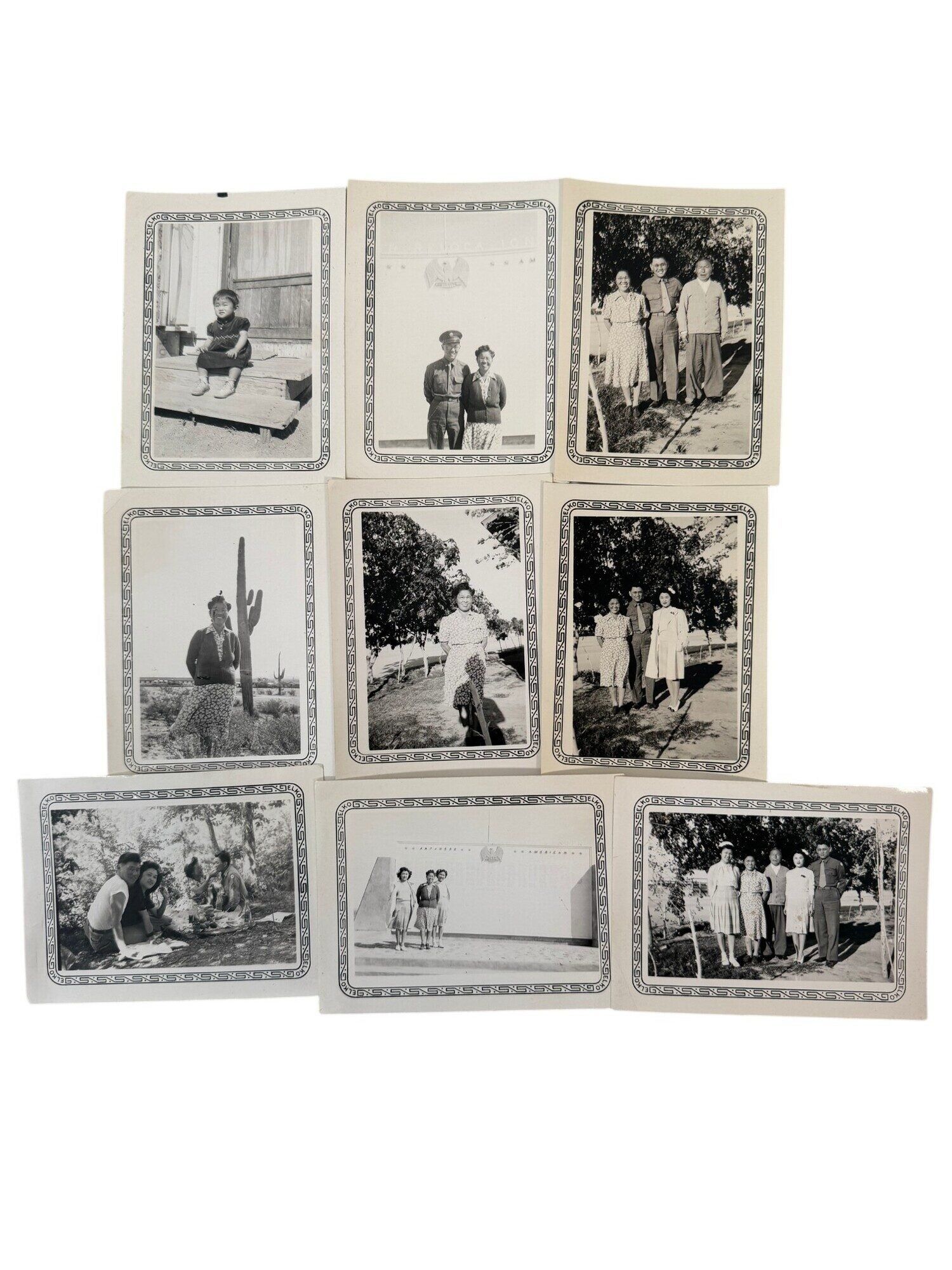
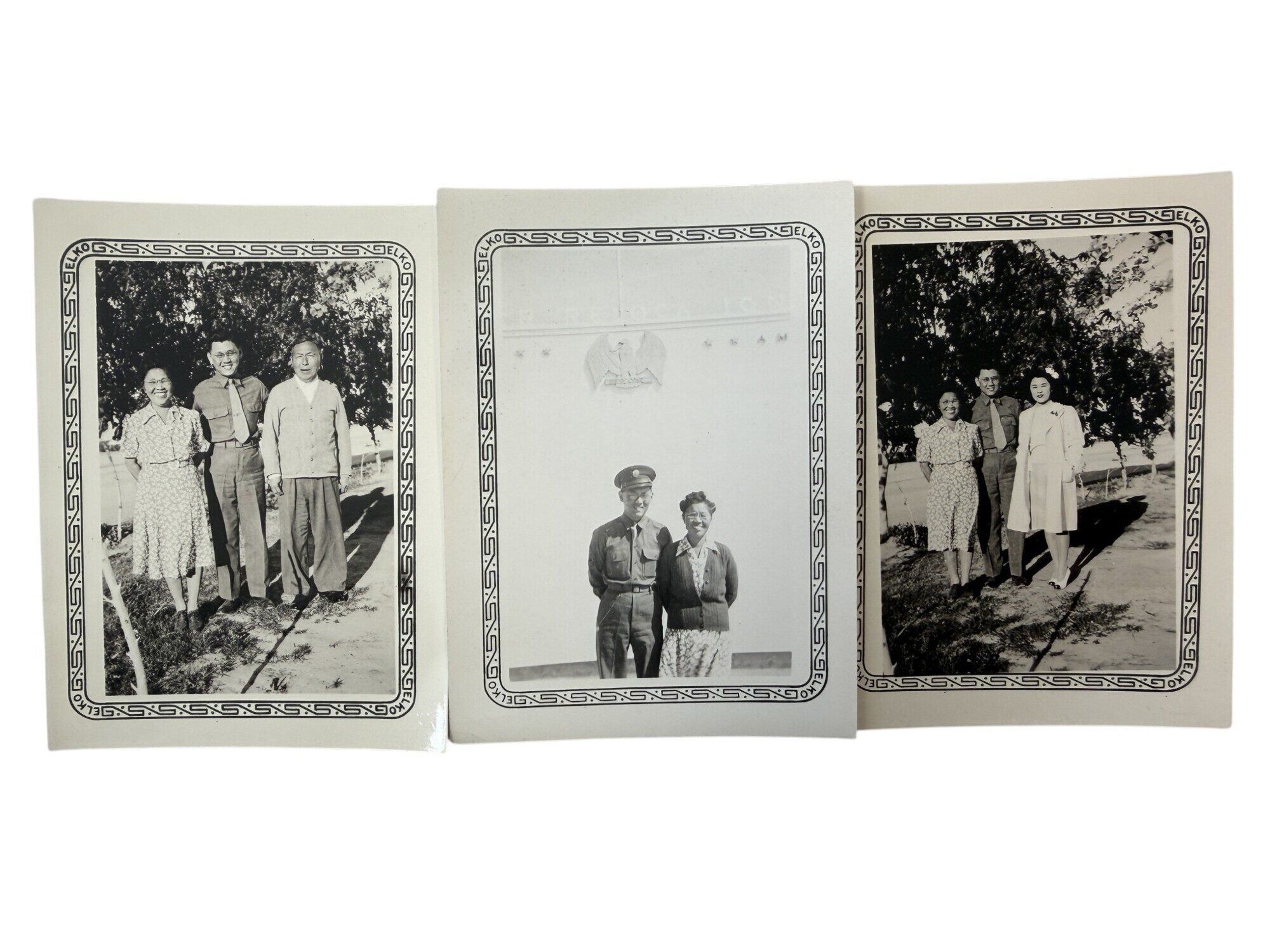
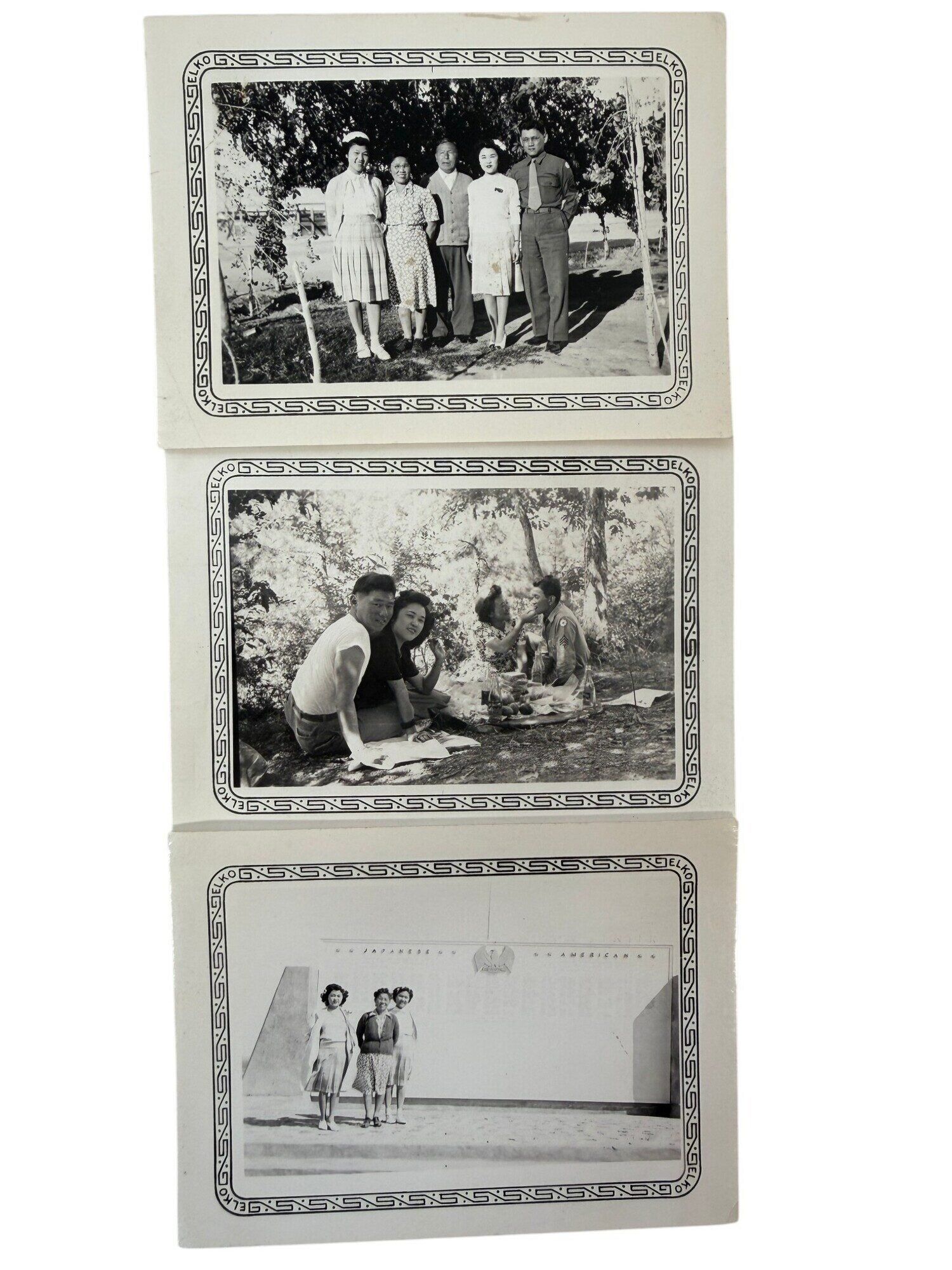
1945. Japanese American family photo archive documenting the intersection of Nisei military service and wartime incarceration through a postwar visit to the Gila River Relocation Center in Arizona, circa 1945-1948. Executive Order 9066, signed on February 19, 1942, authorized the forced removal of Japanese Americans from the West Coast, and Gila River opened on the Gila River Indian Reservation in July 1942, eventually confining more than 13,000 people. These photographs capture the striking contrast at the center of the Japanese American wartime experience: a U.S. Army serviceman in uniform returning to relatives whose lives had been shaped by incarceration under the same government he served.
Photo archive of 9 silver gelatin photographs, each approximately 3" x 4", Gila River Relocation Center, Rivers, Arizona, circa 1945-1948. A Japanese American soldier wearing his U.S. Army uniform and peaked cap stands beside an older Japanese American woman, with an older couple and two younger women in family group portraits, and at a picnic where fruit, bottles, and papers rest on a blanket beneath desert trees. Three Japanese American women stand before the Gila River Servicemen's Monument, the memorial dedicated in 1944 to honor Japanese American men serving in the armed forces while many of their parents, siblings, and relatives remained confined within relocation centers. Other photographs show a young child seated on a wooden porch outside a plain building and a woman standing in the Arizona desert beside a towering saguaro cactus. Together, the photographs place military service, family reunion, and memory within the landscape of one of the largest Japanese American incarceration sites in the United States.
This photo archive documents the family's visit to the Gila River center after the war. By the time these photographs were taken, the camp was closing or had recently closed, transforming a site of confinement into a place of remembrance and reunion. The Servicemen's Monument serves as the archive's symbolic centerpiece, linking the soldier's wartime service to the incarceration experience of his family. Rather than depicting combat or military life, the photographs show a serviceman returning to relatives and revisiting a landscape defined by wartime exclusion. The resulting images document one of the central paradoxes of Japanese American history during the Second World War: loyal military service performed alongside the mass confinement of family members whose constitutional rights had been suspended. Light edgewear and toning, with printed decorative "Elko" borders; overall in very good condition.
Photo archive of 9 silver gelatin photographs, each approximately 3" x 4", Gila River Relocation Center, Rivers, Arizona, circa 1945-1948. A Japanese American soldier wearing his U.S. Army uniform and peaked cap stands beside an older Japanese American woman, with an older couple and two younger women in family group portraits, and at a picnic where fruit, bottles, and papers rest on a blanket beneath desert trees. Three Japanese American women stand before the Gila River Servicemen's Monument, the memorial dedicated in 1944 to honor Japanese American men serving in the armed forces while many of their parents, siblings, and relatives remained confined within relocation centers. Other photographs show a young child seated on a wooden porch outside a plain building and a woman standing in the Arizona desert beside a towering saguaro cactus. Together, the photographs place military service, family reunion, and memory within the landscape of one of the largest Japanese American incarceration sites in the United States.
This photo archive documents the family's visit to the Gila River center after the war. By the time these photographs were taken, the camp was closing or had recently closed, transforming a site of confinement into a place of remembrance and reunion. The Servicemen's Monument serves as the archive's symbolic centerpiece, linking the soldier's wartime service to the incarceration experience of his family. Rather than depicting combat or military life, the photographs show a serviceman returning to relatives and revisiting a landscape defined by wartime exclusion. The resulting images document one of the central paradoxes of Japanese American history during the Second World War: loyal military service performed alongside the mass confinement of family members whose constitutional rights had been suspended. Light edgewear and toning, with printed decorative "Elko" borders; overall in very good condition.
Details
Title
Japanese American Soldier Reuniting with Family At The Gila River Incarceration Directly After W.W.II, Arizona, 1940s
Author
Japanese American Family WWII
Condition
Unknown
Date
1945